Tag: tourism

  • Bali expected to lure 40% of 2017 tourist arrivals

    Bali expected to lure 40% of 2017 tourist arrivals

    Bali is expected to attract 40 percent of the total target of 15 million foreign tourists to Indonesia in 2017.

    The province has been given a bigger portion than other regions because it still remains the prime destination for foreign tourists, according to the Assistant Deputy for Tourism Human Resource Development, Wisnu Bawa Tarunajaya, on Saturday (Jan. 21).

    “Bali is still number one compared to the other regions in Indonesia,” he said.

    The capital Jakarta is expected to attract 30 percent, while Batam in the Sumatran province of Riau Islands is expected to get 20 percent. All other regions of the country are expected to get the remaining 10 percent.

    The three major regions will play important roles in meeting the targets for attracting foreign tourism in Indonesia, added Tarunajaya.

    In order for the other regions to compete, the Ministry of Tourism is also planning to develop new tourist destinations. These include Toba Lake in North Sumatra, Tanjung Klayang in Bangka-Belitung province, Thousand Islands in Jakarta and Tanjung Lesung in Banten province, West Java. Mandalika in Lombok in West Nusa Tenggara, Labuhan Bajo in East Nusa Tenggara, Wakatobi in Southeast Sulawesi and Morotai in North Maluku are also listed for potential development.

    Through careful planning and sustainable development, the Ministry of Tourism is hoping to boost the promotion of new tourist destinations to attract more foreign visitors, said Tarunajaya.

    He also mentioned that most of the foreign tourists that are expected to visit this year are likely to come from China and other ASEAN countries, as well as Australia.

  • Cambodia’s new airline prepares to launch

    Cambodia’s new airline prepares to launch

    JC International Airlines expects to take delivery of its first aircraft in the coming weeks, ahead of the start of commercial operations from Phnom Penh in February 2017. The carrier has acquired two Airbus A320s from airberlin.

    Part-owned by China’s Yunnan Jingcheng Group, which also operates Kunming-based Ruili Airlines, JC International Airlines is planning to serve domestic and international routes to countries including Malaysia, Singapore and China.

    Cambodia was without an airline for several years until the launch of Cambodia Angkor Air in 2009. Since then a further four airlines have started operating in the country, including Apsara International Air, Bassaka Air, Cambodia Bayon Airlines and Sky Angkor Airlines.

    As such, JC International Airlines will become Cambodia’s sixth commercial airline.

  • Tourist arrival number 32m sets new Thai tourist record

    Tourist arrival number 32m sets new Thai tourist record

    The Tourism Authority of Thailand (TAT) says a new record was broken at the end of December when it received its 32-millionth visitor. The red carpet was laid out to welcome the fortunate arrival as part of ’Thailand’s Luckiest Visitor’ campaign which was originally started in 2015 to recognise and reward every millionth visitor to Thailand, from the 13 millionth to 29 millionth during June to December.

    TAT says that this campaign has subsequently proved to be hugely popular, with both tourists and media helping to enhanced Thailand’s brand image.

    So much so, that Thailand is expecting to earn total international tourism revenue of around Baht1.62 trillion (US$46bn) in 2016, representing a year-on-year increase of 11.68% compared to 2015.

    BIG PUSH TO ENCOURAGE MORE ARRIVALS

    To boost these numbers further, TAT says that several initiatives have been put in place to encourage more tourist arrivals, including visa waiver fees for visitors from 19 countries from 1 December, 2016, to 28 February, 2017 and a halving of visa-issue fees on arrival over the period.

    Meanwhile, the Tourism Authority of Thailand and the Tourism Ministry have announced newly revised tourism revenue targets for 2017 Bt2.71 trillion ($76.1bn) which represents an 8.2% rise on 2016.

    This follows earlier statements suggesting that Thailand’s tourist numbers for 2016 are now expected to total around 32.6m when the final count is in – an increase of around 8%.

    In addition, TAT has confirmed that it is bringing back its Thailand Tourism Festival (TTF) to coincide with Chinese New Year 2017 between 25-29 January this month. It is hoping his will attract more than 650,000 visitors.

  • Chinese tourists visiting Bali up 41.28 percent in number

    Chinese tourists visiting Bali up 41.28 percent in number

    The number of visits by Chinese tourists to Bali rose 41.28 percent to 907,028 in the first 11 months of 2016 from 642,000 in the same period in 2015.

    “Most of them flew directly to Bali via the Denpasar International Airport of Ngurah Rai with only 886 of the visits by sea as passengers of tourist boats, head of the Provincial Central Bureau of Statistics (BPS) Adi Nugroho said here on Thursday.

    He said Chinese made up 20.22 percent of the total number of 4.48 million visits by foreign tourists to Bali in the January-November period of 2016.

    China is now the second largest country of origin of foreign tourists to Bali after Australia.

    Adi Nugroho said the number of visits by Australian tourists to Bali in the same period totaled 1.04 million, up 19.46 percent from 876,748 visits in the same period in the previous year.

    Australia accounted for 23.35 percent of the total number of visits by foreign tourists to Bali topping other countries, he added.

    Meanwhile, tourism observer Tjokorda Gde Agung said Chinese, who had come in throngs for holidaying in Bali could soon overtake Australians in number.

    “It is very likely especially with the growing number of direct flights between Denpasar and Chinese cities,” Tjokorda said.

    The nations flag carrier Garuda Indonesia itself already served regular flights directly between Bali and China, he said.

    “The direct flights would certainly contribute greatly to growing number of Chinese tourists to Bali,” he said.

    The 41.28 percent increase was the second highest after a 60.59 percent increase recorded in the number of Indian visitors to Bali in the same period.

    The number of visits from 10 largest countries of origin all increased excepting from Malaysia and South Korea.

    With the trend , the target of 5.5 million visitors to Bali set for 2017 is expected to be easily reached.

    Indonesia hopes to draw more Chinese tourists to meet its target of 20 million visits by foreign tourists in 2019 from the target of 12 million in 2016.

    China has become a potential tourism market. A record high of 133 million Chinese tourists were estimated to make outbound trips by the end of 2016, according to the report released by the China Tourism Academy and the financial services company UnionPay International.

    The figure would mark an 11.5 per cent rise from 2015.

    Hong Kong, Macau and Taiwan remain the top choices for mainland tourists, according to a report.

    Chinese tourists are increasingly getting involved in leisure activities and learning about local lifestyles when traveling overseas rather than just shopping, according to the report.

    Chinese tourists spent US$104.5 billion overseas in 2015, up 16.6 per cent from 2014, and a growing number of foreign countries including Indonesia are relaxing their visa requirements for Chinese tourists to tap their purchasing power.

    Tourists from China along with many other countries are offered visa free travel by Indonesia.

  • Central province boosts tourism

    Central province boosts tourism

    The central province of Thừa Thiên-Huế expects to see a surge of investment in tourism this year in light of interest expressed by investors last year.

    Lê Văn Thu, director of the investment promotion and support centre of Thừa Thiên-Huế, said the province will conduct  more investment promotion to attract investors in 2017.

    In 2015, the province granted only nine Foreign Direct Investment (FDI) projects for a total of $451 million. In all, the province attracted 88 foreign direct investment projects with total investment capital of US$2.1 billion from 2000 to 2016.

    Thu said the PSH Group from Spain is eyeing development of a resort in Vinh Thanh with a registered capital of $145 million, while the BRG Group has approached authorities with plans to develop a resort and golf course complex in Vinh Thanh-Vinh Xuân with an investment of VNĐ2 trillion ($88.5 million).

    Bitexco also plans to invest VNĐ545 billion ($24.1 million) in the hot-spring resort in Mỹ An.

    According to the centre, Bitexco Group was granted an investment license for an eco-resort and an urban project in Lập An lagoon with a registered capital of VNĐ3.3 trillion ($146 million).

    The My Way Hospitality company also plans to invest in Bạch Mã resort with an estimated investment of VNĐ1.5 trillion ($66.4 million).

    Thu said the province is seeking investment in high-tech, tourism, logistics, health care and high-tech agriculture, offering competitive labour and land costs.

    Several financial incentives have been provided to attract investors, such as tax exemptions for the first four years of operation, a 50-per cent tax reduction for the next nine years, and a 50-per cent tax rate reduction for high-income employees, according to Thu.

    He said one of the largest planned tourism projects is a $875-million complex being financed by the Banyan Tree Group of Singapore.

    The Huế City area has 128km of coast and 22,000ha of lagoon for tourism development in connection with UNESCO-recognised world heritage sites in the central region.

    The province has developed six industrial zones to attract garment, industry, food processing and mining, projects and create nearly 14,000 jobs.

  • Indonesia seeks to boost tourist visits from Europe

    Indonesia seeks to boost tourist visits from Europe

    Indonesia is seeking to lure more European tourists to visit the country by promoting its national tourism industry in the Matka-Nordic Travel Fair 2017 that will be held from January 19-22 in Messukeskus, Helsinki, Finland.

    “Indonesia has set the target of attracting at least 2.1 million European tourists to Indonesia,” Deputy Assistant of Europe, Middle East, America and Africa Market Development of the Tourism Ministry Nia Niscaya said here Monday.

    Pointing out that the travel fair will be held in Finland, Niscaya stated the Nordic countries, including Denmark, Finland, Iceland, Norway and Sweden, offered great potentials for the countrys tourism industry.

    In 2015, the official data showed that as many as 98,960 tourists from the Nordic countries had visited Indonesia.

    “The number is predicted to be more in 2016, as until October itself, the number of tourists from the Nordic nations visiting Indonesia had reached 95,196,” Niscaya revealed.

    During the largest travel exhibition in Northern Europe, Indonesia will showcase several industries that will present and promote the countrys tourism potential at the Pavilion Indonesia booth.

    Several Indonesian traditional dances will also be performed during the travel fair. Visitors would also be invited to taste Indonesias traditional drink in the exhibition booth, Niscaya mentioned.

    “Using the tagline Wonderful Indonesia Explore Further, we want to showcase its biodiversity, unique handicrafts, music, variety of culinary delights, tourism destinations and most importantly, its diversity and the hospitality of the people,” Niscaya explained.

    The government of Indonesia has set a target of increasing the number of tourist visits from 9.5 million in 2014 to 20 million in 2019.

    The country has also developed 10 prioritized destinations, namely Lake Toba in North Sumatra, Tanjung Kelayang in Belitung, Mandalika in South Lombok, Wakatobi in Southeast Sulawesi, Morotai in North Maluku, Seribu Islands in Jakarta, Tanjung Lesung in Banten, Borobudur Temple in Central Java, Mount Bromo in East Java, and Labuan Bajo in East Nusa Tenggara.

    The government has also provided short stay free visa on arrival for tourists from 169 countries, including Finland, to increase the number of tourist visits.

  • Why Vietnam should care about how much Chinese tourists splurge

    Why Vietnam should care about how much Chinese tourists splurge

    More spending by Chinese visitors can boost Vietnam’s GDP by 1 percentage point. As more Chinese travel around the world, they leave bigger impacts wherever they go. Now experts say for countries that receive a large number of Chinese arrivals, including Thailand and Vietnam, their economic growth will be influenced by the spending habits of these visitors.

    A 30 percent increase in spending by Chinese tourists would boost Vietnam’s gross domestic product by nearly 1 percentage point, citing Credit Suisse. For Thailand, that would be around 1.6 points.

    Vietnam’s economy is expected to expand 6 percent this year, before speeding up to 6.8 percent next year.

    Mainland China accounted for 30 percent of all tourists to Vietnam, with more than 2.48 million coming in the first 11 months this year, up 54 percent from the same period last year. It was the biggest source market, and only came after Hong Kong in terms of growth.

    In October, the Chinese Tourism Administration released a top 10 list of favorite destinations for Chinese travelers, ranking Vietnam at seventh.

    Edward Lee, an economist with Standard Chartered Plc in Singapore, said that tourism in Southeast Asia will benefit from the growing Chinese demand.

    The number of Chinese tourists into Asia as a whole has grown tenfold since 2000, Lee said. They now account for a quarter of tourists in Thailand, which came first in the China’s list of top 10 favorite destinations.

    “Chinese tourism is pretty big for ASEAN now, and all the countries rely on Chinese visitors to keep coming and keep spending,” Lee was quoted as saying.

    Many direct flights are serving Vietnamese major cities from China. A large number also entered via northern border provinces, particularly Quang Ninh, home to the much loved Ha Long Bay.

    Quang Ninh has announced that it will ease visa requirements for Chinese visitors from January 1, allowing groups of Chinese travelers to stay for up to three days without a visa.

    Harry Sa, a research analyst at the S. Rajaratnam School of International Studies, told that “China can do wonders for the economy and the countries in the region understand.”

    Most countries welcome that, even those that have tensions with China, he said, referring to the overlapping claims in the South China Sea (which Hanoi calls the East Sea) that involve Malaysia, the Philippines and Vietnam.

  • China ivory ban a big win for elephants , if done properly

    China ivory ban a big win for elephants , if done properly

    At the end of 2016, elephants made headlines around the world as China finally announced a timeframe for closing its domestic ivory market – long affirmed by many conservationists to be the single biggest step that could be taken to end the slaughter of elephants.

    The news represents a major win for elephant conservation and the Chinese government deserves commendation. However, close examination of the recent announcement gives some potential causes for concern – it is now imperative that the ban be strongly publicised and enforced, and that any potential loopholes be closed.

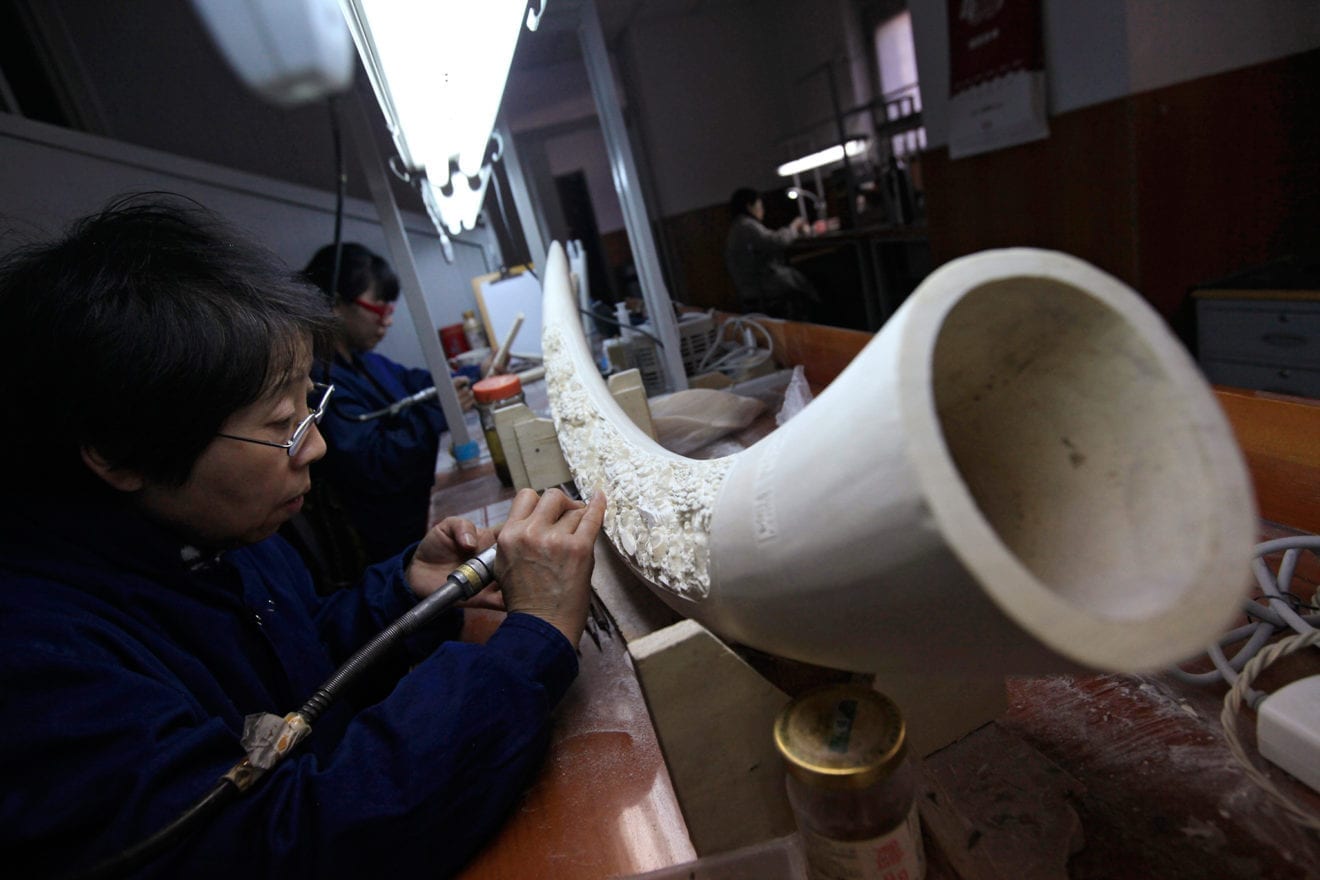
    Carved-ivory-legally-on-sale-in-China_2017_01_06.jpg
    Carved ivory legally on sale in China.

    China is by far the world’s biggest contemporary market for elephant ivory and the final destination for the majority of ivory from poached elephants. The continued existence of a legal ivory trade in China has been a major hindrance in combatting this illegal trade.

    As of the end 2016, there were 34 licensed ivory carving facilities and 130 licensed retail outlets in China permitted to process and trade in “legal” ivory derived from either old (pre-CITES) stock or a CITES-sanctioned one-off sale in 2008.

    However, EIA investigations and research by other groups documented widespread abuse of this poorly regulated system, which enabled the laundering of illegally sourced ivory. Closing this loophole could massively simplify enforcement operations – with no legal market to launder ivory, any processing or sale is illegal and can be immediately dealt with as such.

    China’s intention to close its domestic market was first announced in May 2015 and was restated by President Xi Jinping the following September. On December 28, 2016 a notification of plans to close the domestic market in its entirety by the end of 2017 was finally published.

    Looking into the detail of the document, there is potential for both celebration and concern.

    First, the positives. The notification sets out an impressively ambitious timescale for stopping all ivory carving and retail activities in previously licensed facilities by the end of 2017. Unlike the upcoming ban in Hong Kong, traders have not been given an unnecessary five-year grace period to dispose of stock – stock which should have been exhausted long ago and the imminent illegality of which was well known.

    Ivory-on-sale-in-China_2017_01_06.jpg
    Ivory on sale in China.

    Secondly, a compromise appears to have been reached to maintain the cultural heritage of ivory carving – the main argument from opponents of an ivory ban in China. The notification commits to “proactively guiding the transition of ivory carving techniques”, including providing guidance in using alternative materials and encouraging master carvers to move into museum restoration.

    However, the notification contains a worrying potential loophole which requires urgent clarification. It states that “cultural relics made of ivory that are of legal origin and have been verified by a specialist appraisal body may … be auctioned under strict supervision, to demonstrate their cultural value.” The term translated here as “cultural relic” usually refers to antiques, but not explicitly so. This indicates that limited sales of ivory antiques – and, possibly, even any item judged to have artistic merit created or sold under the previous licensing system and regardless of age – may be allowed to continue. Indeed, the potential loophole has already been interpreted as such by the antiques industry. The current language sends an ambiguous message to markets and risks undermining the effectiveness of the ban and demand-reduction campaigns.

    Also, the Chinese government and the international community must ensure that the ivory market does not simply shift to other areas with weak enforcement or lax legislation, especially in countries bordering China. The open sale of huge amounts of nominally illegal wildlife products – including ivory and tiger products – has been documented in border regions of Vietnam, Laos and Myanmar. In many of these markets, Chinese citizens represent the vast majority of buyers and trade is conducted in Chinese, often with Chinese currency. Targeted collaborative enforcement efforts are urgently required to close these markets and ensure illegal ivory cannot leak across the border into China.

    Overall, the Chinese domestic ivory ban is a major cause for celebration and optimism as we begin 2017. Although the potential loopholes need clarifying and closing, this notification sends a strong and timely signal that the global ivory market is progressively shutting up shop.


  • Tourism Lull Hits Hong Kong Jewelry Sales

    Tourism Lull Hits Hong Kong Jewelry Sales

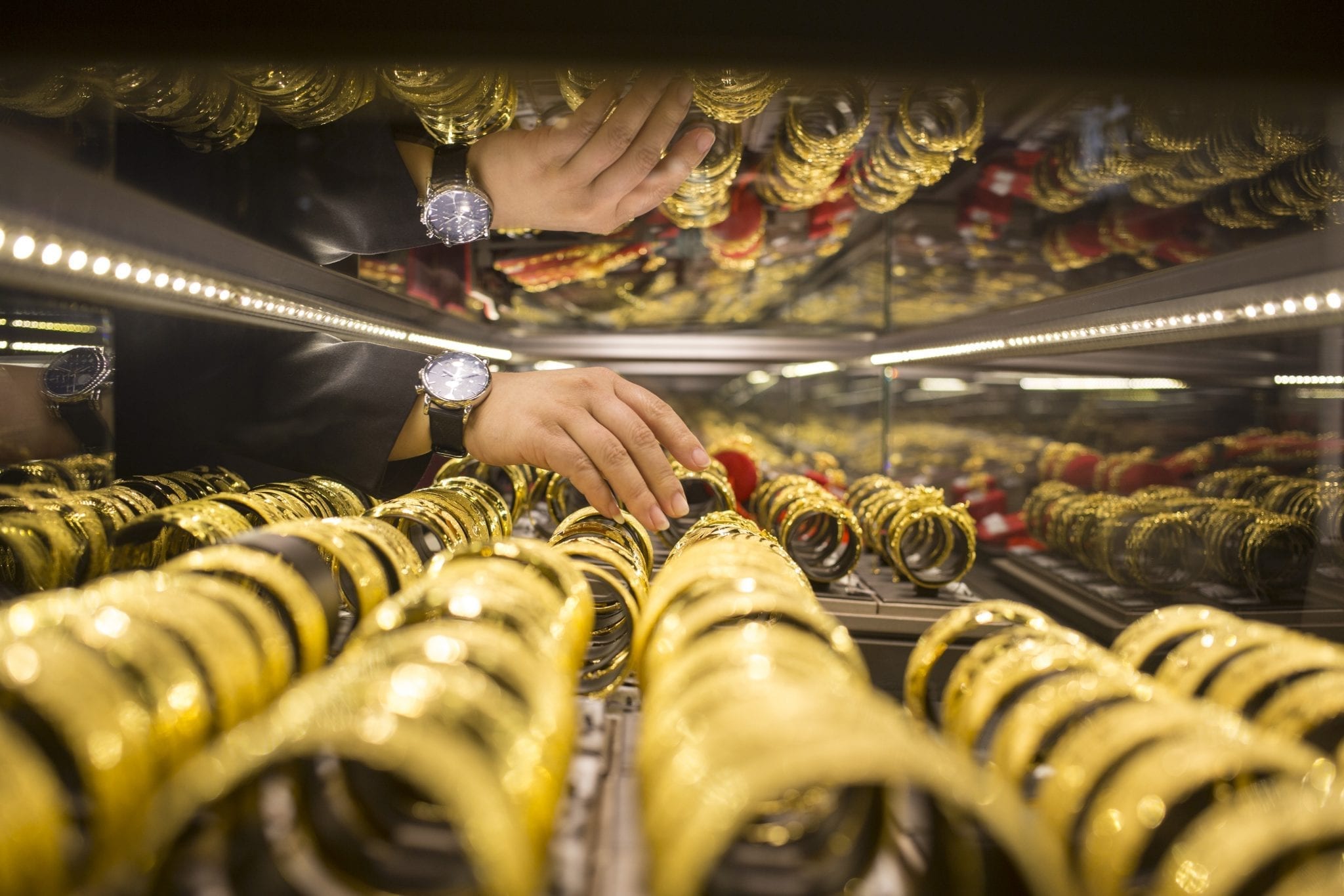
    Retail sales of jewelry and other luxury items in Hong Kong slumped in November as tourist arrivals continue to dwindle. Revenue from jewelry, watches, clocks and valuable gifts declined 14 percent to $731.6 million (5.67 billion) in November, according to provisional data from Hong Kong’s Census and Statistics Department. The number of tourists visiting Hong Kong fell 2 percent the same month, the Hong Kong Tourism Board reported.

    Hong Kong’s luxury retail sales suffered throughout most of last year as fewer tourists arrived. The data in October signaled a possible recovery as the growth in jewelry and luxury sales was flat from a year ago. However, the latest figures in November did not lend credence to any suggestion of an improvement, even as the drop in sales for that month was less steep than the 19 percent slump for the first 11 months combined.

    Overall retail sales slipped 5.5 percent, likely dragged down by lower tourist spending on select big-ticket items, a government spokesperson explained.

    “Looking ahead, the performance of retail sales will depend on whether inbound tourism will improve and whether the various external uncertainties will affect local consumer sentiment,” the spokesperson said.

  • Over 4.48 million tourists visit Bali

    Over 4.48 million tourists visit Bali

    More than 4.48 million foreign tourists visited Bali via the resort islands Ngurah Rai Airport from January to November 2016, up 23.52 percent from 3.63 million in the same period last year.

    Some 4.48 million tourists traveled to Bali by air, and 70,449 others by sea, Chief of the Central Statistics Agency (BPS) Office in Bali, Adi Nugroho said here Tuesday.

    The number of foreign tourists visiting the resort island from January to November 2016 exceeded the target of tourist arrivals for all of 2016 at 4.2 million, he said.

    Bali has set the target of tourist arrivals for 2017 at 5.5 million.

    In November 2016 alone, the number of tourist arrivals in Bali reached 413,232 consisting of 396,150 who traveled to the island by air and 17,082 by sea.

    The figure increased 52.52 percent compared to the same month a year earlier but declined 4.39 percent compared to the previous month.

    The number of tourists from eight out of top ten sources of tourist arrivals in Bali increased significantly, Nugroho said.

    The eight countries were Australia, China, Japan, Britain, India, France, the United States, and Germany, while the number of tourists from Malaysia and South Korea declined.

  • Reliance on China makes tourism vulnerable

    Reliance on China makes tourism vulnerable

    A senior director at Lotte Duty Free said the Korean retail giant has lost customers recently. “I don’t think the situation will get any better this year,” the director said. The duty-free company saw its customers decrease by at least 10 percent in December compared to the same period last year.

    This year will be tough for Korea’s tourism industry as a whole as more youke, or Chinese tourists, are turning their backs to what was until recently one of their favorite destinations.

    The main cause is geopolitical. After Korea decided to deploy an American Terminal High Altitude Area Defense system (Thaad) missile defense system, Beijing ordered retaliation against a range of Korean businesses, particularly its entertainment exports. The Chinese government denies issuing vindictive orders to reduce tourists to Korea by 20 percent, but the numbers tell a different story.

    Mismanagement of Chinese group tours, such as forcing them to buy merchandise, is another factor.

    In November, the number of Chinese tourists coming to Korea was 520,000, a mere 1.8 percent increase year on year, according to the Korea Tourism Organization. The growth rate in August was 70.2 percent – partly due to a base effect related to the low number in August 2015 during an outbreak of Middle East respiratory syndrome. This dropped to 22.8 percent in September and 4.7 percent in October.

    For the first time in three years, the rate of Chinese tourists to all tourists in Korea fell below 40 percent to 39.5.

    One internal problem in Korea’s industry is group tours that overly emphasize shopping. The tour groups get commissions from the merchants.

    Ms. Wong, a 32-year-old office worker, was hauled to six shopping places in a single day as part of a five-day group tour to Korea in November. The guide informed the group that the stores were certified by the government, adding that all the salesperson were public officials.

    “I really doubted whether any of the stores I visited today were approved by the government,” she said. “I’ve never heard of the brands before and yet the products were all so expensive.”

    Government approval of stores does exist – a system jointly operated by the Korea Tourism Organization and the Ministry of Culture, Sports and Tourism. Three of the six stores Wang went to were not among the 1,004 certified stores. The other three were well-known duty-free stores.

    “There is no case whatsoever in which a public official works as a sales person at a commercial store,” confirmed a KTO spokesman.

    To tackle the problems with group tours, the Korean and Chinese governments have started to launch regulation on the business.

    According to local industry insiders, China’s tourism companies, who organize and send tourists to Korea, have increasingly made demands such as requesting lower fees from the Korean side or charging incentives per person in exchange for sending groups.

    “I heard of one case in which a Chinese travel agency asked for 300 yuan ($43) per person,” said a source working for a domestic travel company.

    Because the local tourism industry depends so heavily on Chinese tourists, local companies find it hard to resist such requests.

    To make up for those concessions, local tour companies try increasing their revenue by taking groups to duty free shops, where they get commissions.

    After the government issued new duty-free licenses in Seoul, competition among the stores got fiercer.

    “About 10 to 20 percent of sales are given to travel companies as commissions when their customers spend money at our branches, but after the competition heated up, I heard some even started paying up to 30 percent,” said one source.

    That’s causing a kind of race to the bottom in terms of profitability. “The competition has gotten so cut-throat,” said another duty free source, “that even with rising sales, profits are constantly going down.”

    Tourism specialists say Korea’s tourism industry has to reduce its dependence on China and shopping.

    They emphasize the importance of enhancing the cultural experiences for visitors.

    Lee Sho wen, 52, and Lee Li Mei, 47, sisters from Taiwan, spent two of their six days in Korea at a cooking class they found on the internet. The OME Cooking Class has provided Korean cooking classes in English and Chinese for foreigners since March 2015.

    Ha Wong Ming, a 27-year-old from Hong Kong, came to Korea for four days to learn K-pop dancing. He practiced the choreography of Big Bang’s “Bang Bang Bang” for two hours at Coreart, which organizes classes in K-pop dance and samulnori, a traditional percussion performance. “The objective is to offer a chance to experience Korean culture,” said CEO Jee Yoon-seong.

    “Shopping tourism has a limit,” said Lee Ki-Jong, a professor of hospitality and tourism management at Kyung Hee University. “Korea is relatively short of natural scenery so we have to focus more on cultural tourism.”

    In terms of diversifying target markets, a rising alternative to Chinese is Southeast Asians, many of whom are already familiar with Korean culture from hallyu, or the so-called Korean wave of cultural exports like K-pop and television serials.

    The number of Indonesian tourists to Korea November jumped 49.2 percent from 2015, according to the Korea Tourism Organization. Visitors from Vietnam rose 38.7 percent and from Taiwan 35.3 percent during the same period.

    Widening the spectrum of visitors can open new opportunities. For example, Taiwanese tourists have a keen interest in visiting Korea’s strawberry fields and picking fruit.

    Indonesians, many of whom have never seen snow, enjoy ski trips to Korea.
  • Tourism Investment Grow 23 Percent

    Tourism Investment Grow 23 Percent

    Tourism Minister Arief Yahya said that investment realization in tourism sector during January to September 2016 reached US$1,094 billion (Rp14.7 trillion), a 23 percent increase year-on-year. “The highest [percentage of] investment was made in star hotel development,” Arief said yesterday as quoted from the Tourism Ministry website.

    Tourism investment realization comprised of foreign investment (PMA) of US$594.59 million and domestic investment (PMDN) of US$139.06 million. Foreign investment in star hotel development made up 56 percent of total investment. The rest consisted of management consulting (27 percent) and restaurant (7 percent). Domestic investment comprised star hotel development (65 percent), water tourism (21 percent) and amusement parks (4 percent). Some 51 percent were Singapore-based investors.

    On tourist arrivals, Arief said that the number of foreign tourist arrivals from January to October 2016 was 9,403,641 or grew 9.54 percent year-on-year. He expects that until late December, the target of 12 million foreign tourist arrivals will be exceeded, with an estimated 1.3 million arrivals in November and 1.5 million arrivals in December. “I’m optimistic that it will be surpassed as the said months are the peak periods,” he said.

    To attract tourists in 2017, Arief will roll out three priority programs: digital tourism, homestay and air connectivity. According to him, digital tourism is a strategy to win global markets, particularly that of 26 countries. Digital tourism program will kick off with the launch of ITX (Indonesia Tourism Exchange), which will bring together travel agencies, accommodation operators and attractions to facilitate transactions.

    Earlier, President Joko Widodo had instructed his subordinates to bring in up to Rp670 trillion worth of investment. According to Jokowi, investment proposals in tourism sector can help the government to achieve the target. “We must simply establish the product support, positioning, packaging and promotion.”

    The Investment Coordinating Board (BKPM) chairman Thomas Lembong said that several Chinese investors are interested to develop national tourism industry. He named Fosun International and HNA Group as prospective investors. Fosun International is a company actively investing in tourism and fashion industries. The HNA Group is China’s first airline company.

  • Retail sector key in attracting tourists

    Retail sector key in attracting tourists

    It is the most wonderful time of the year as far as the retail scene is concerned. Shopping malls are busy once again, cash tills are ringing ever merrily and, perhaps more important, Singapore’s tourist numbers are rising. Despite the threat of online shopping to the domestic market and poor footfall numbers at certain malls, the Singapore retail scene has been a star performer in wooing the tourist dollar.

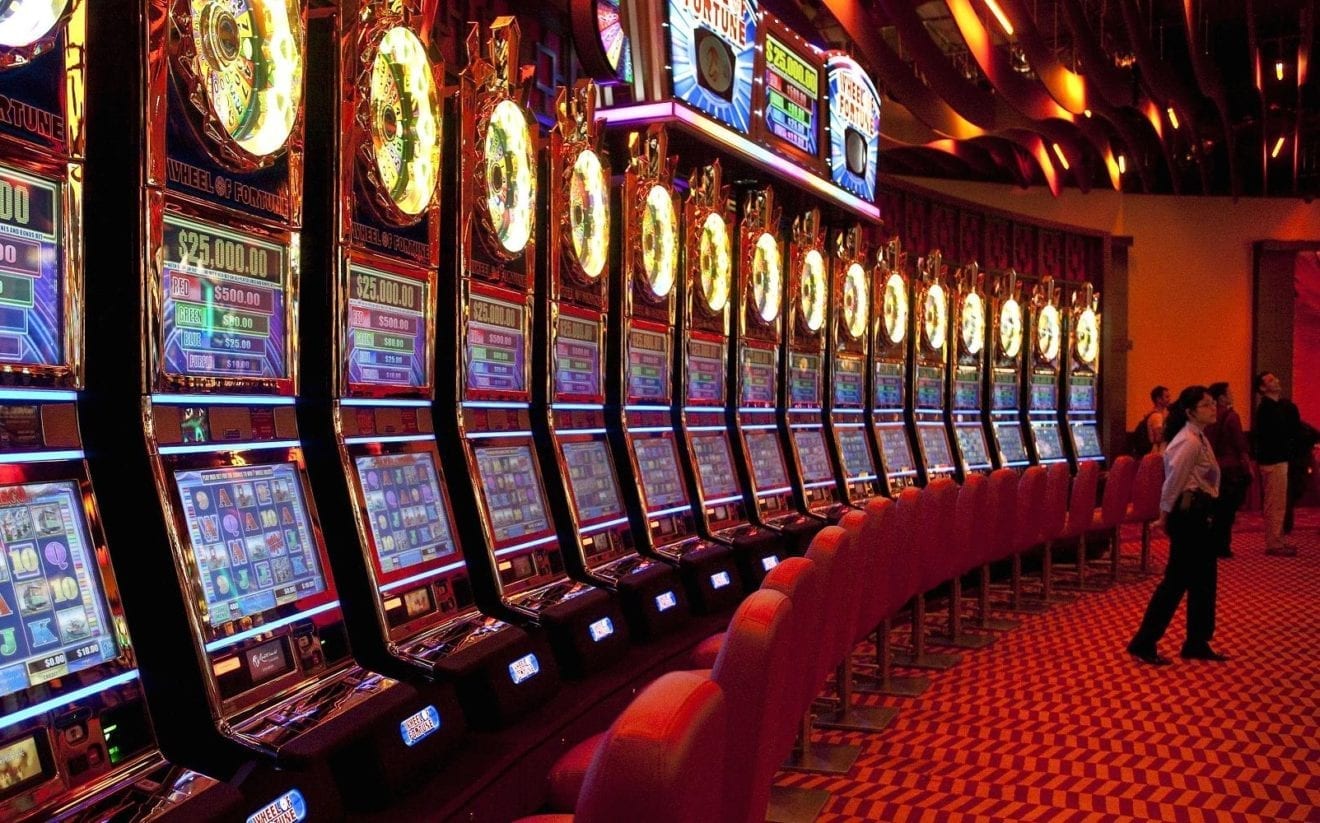
    A report reveals that for the first time since 2012, shopping has overtaken gambling as the biggest earner in Singapore’s tourism industry. Higher-spending visitors helped boost tourism receipts in the first half of this year. The readiness of tourists to spend more on shopping, accommodation, and food and beverage contributed, in fact, to offsetting a fall in sightseeing, entertainment and gaming. The Chinese, Indian and Indonesian markets played a strong role, with visitors from secondary cities such as Chongqing and Fuzhou attesting to the the vitality of the Singapore Tourism Board’s marketing efforts.

    Clearly, more attention could be paid to such markets within the broader imperative of attracting Asian visitors, given that more than one in four travellers at Changi Airport are either going to or coming from Jakarta, Bangkok, Kuala Lumpur or Hong Kong.

    Unavoidably, Singapore is running out of novelty factors to attract tourists: The integrated resorts and Gardens by the Bay, for example, are no longer new. The challenge for the tourism authorities, therefore, is to constantly create fresh reasons for visiting Singapore. The imaginative reworking of the retail scene could be useful here. As an indication of what is possible, this year’s Great Singapore Sale was held to coincide with China’s summer holidays. Livening up the retail scene is one way for Singapore to remain nimble in meeting the demands of tourists.

  • Tourists visiting Singapore chase bargains, not baccarat

    Tourists visiting Singapore chase bargains, not baccarat

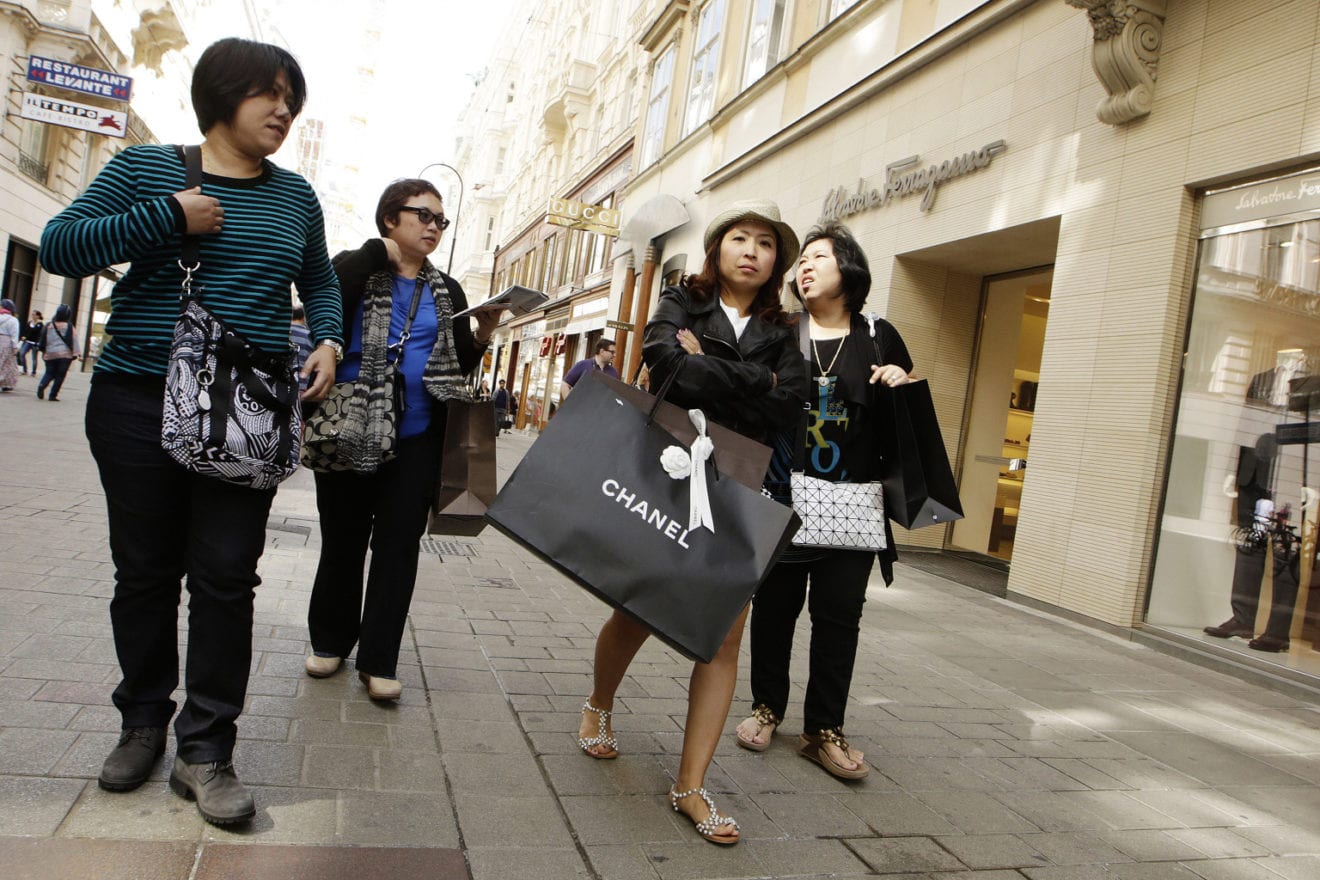
    Research from HSBC shows a growing number of Chinese tourists visiting Singapore fuelled a 44 per cent increase in retail spending in the first half of this year, versus the same period last year. That put retail ahead of casinos in terms of tourist spending for the first time in five years.

    The number of  Singapore-bound Chinese tourists totalled about 2.1 million in 2016 – twice the number of 2009, the year before the country opened the first of its two casinos.

    Erwan Rambourg, London-based global co-head of consumer and retail research with HSBC, said Chinese, Indonesian and Indian visitors were the top three spenders in the second quarter of 2016, accounting for 40 per cent of total tourist spending. A quarter of spending went on shopping – up from just 18 per cent in the same period last year.

    Last year, Chinese spent S1.15 billion in Singapore stores – compared with just $175 million spent by Indians and $112 million by Japanese. But they spent less than any other nationality on food and accommodation.

  • Indonesia, Singapore cooperate in tourism

    Indonesia, Singapore cooperate in tourism

    Coordinating Minister for Maritime Affairs Luhut Binsar Panjaitan said Indonesia and Singapore have agreed to cooperate in a number of sectors such as tourism and energy.

    The fields of cooperation include tourism, development of liquefied natural gas (LNG), development of IT Park and sea waste processing into electricity energy.

    “We hope they will all be realized at the end of 2017. In the tourism sector, Singapore agreed to invest in the development of Lake Toba, the Buddhist Borobudur Temple and the Mandalaika,” the coordinating minister said in a written statement in Jakarta on Sunday.

    Indonesia has set itself the target of 20 million foreign tourist arrivals in 2019. The government is making all efforts to achieve the target by building a number of supporting facilities.

    Therefore, in its cooperation with Singapore, Indonesia is planning to build cruise terminals.

    According to the minister, the government is planning to develop the terminals in Tanjung Benoa, Palembang, Medan and Semarang. This is to attract some 300 cruise ships per annum.

    So far, the number of cruisers visiting Indonesia is still small, despite the fact that Indonesia is part of foreign destinations.

    Luhut has the target that in the coming two to three years, at least 150 cruisers will come to Indonesia.

    “On Wednesday, we will hold a meeting to discuss the plan to develop the cruise ship terminals,” he said adding that Singapore also agreed to provide tourist service training assistance.

    Regarding LNG, Luhut added that Singapore agreed to develop power generating plants in isolated islands in Indonesia.

    Singapore is viewed to have the technology for increasing the electrification in Indonesia.

    He also referred to the plan to develop IT parks in the form of data reading centers. On the plan, minister Luhut said he would communicate with the Ministry of Communications and Informatics.