Tag: Travel Retail

  • Hong Kong luxury ambitions wane

    Hong Kong luxury ambitions wane

    New consumer research suggests the Hong Kong luxury market is set for another challenging year.

    While 42 per cent of consumers surveyed in China are looking to spend more on luxury items, in Hong Kong the figure is only 25 per cent. That marks a five percentage point drop from 30 per cent of last year, according to the seventh edition of the China Luxury Forecast, released by PR company Ruder Finn and Asian market research company Consumer Search Group (CSG).

    The report says the results further reinforce last year’s conservative approach to retail spending by Hong Kong consumers.

    Growing wealth has led to consumers broadening their international horizons, with spend on travel still the top luxury category for both mainland China and Hong Kong. More than half (53 per cent) of consumers on the mainland say they intend to spend more on luxury travel in the coming year, up from last year’s figure of 50 per cent. This is expected to drive more growth in luxury markets outside China.

    In Hong Kong the luxury travel picture again paints a decrease in purchase intention, down by 5 per cent compared to last year.

    Bright spot

    Meanwhile, eCommerce continues to be the bright spot for luxury brands, with online purchases by mainland Chinese and Hong Kong customers amounting to 26 and 20 per cent respectively of luxury spending.

    Surveying 1040 consumers from more than 120 cities in China and 301 from Hong Kong, the forecast covers people from tier 1, 2 and 3 mainland cities. For first-tier cities it interviewed 300 consumers, 400 from second-tier cities and 340 from third-tier cities. Their average annual household income was RMB 833,509 (US$128,293.35) in the mainland, and HK$957,006 (US$123,340.22) in Hong Kong.

    When it comes to online purchases, accessories and beauty are the favoured products, and official brand websites the most preferred digital channels. Customers have also indicated higher confidence in spending online without having first visited physical stores, with an average number of two visits, down from 2.3 and 2.6 visits last year in China and Hong Kong respectively.

    Word of mouth is the key influencer for product choice, surpassing celebrities, luxury communities and key opinion leaders.

    Hong Kong and China customers also value “Chinese” elements differently when it comes to buying products or services. On the mainland, 58 per cent of respondents said that “embedded Chinese elements” were “extremely or very important”, compared to sentiment in Hong Kong, at just 11 per cent. Also, 55 per cent of Chinese consumers said they appreciated “elements symbolising good luck” compared to 25 per cent of Hong Kong consumers.

    Most valued by Hong Kong consumers (44 per cent of respondents) were elements reflecting Chinese heritage, which were second-most appreciated by Chinese consumers (52 per cent).

    Travelling to shop

    China’s luxury travel market continues to grow, with Chinese respondents taking four domestic and three international trips, while in Hong Kong luxury consumers take 3.7 international trips annually. Japan, Taiwan and China are the top three destinations for those from Hong Kong, while Hong Kong tops the list for mainland travellers, followed by France and Japan.

    For mainland consumers, culture and history were the main reasons for destination choice (63 per cent), while Hong Kong travellers most valued transportation convenience (50 per cent). Shopping was the second most popular motivation in both markets (46 per cent and 47 per cent in China and Hong Kong respectively).

    Most luxury consumers in both Hong Kong and mainland China have a budget for shopping when travelling abroad. As many as 57 per cent of Chinese consumers and 46 per cent in Hong Kong know in advance what brands they will buy.

    “While the demand for luxury remains strong in mainland China, Hong Kong luxury consumers are showing lesser intent in luxury purchase,” says CSG Hong Kong executive director Simon Tye.

    “Hong Kong customers are still interested in discovering new luxury brands and experiences. They are very discerning customers who know and appreciate quality products.”

    Travel and beauty show the most significant growth in the luxury sector, according to Ruder Finn Asia GM for luxury Gao Ming.
  • HKIA passenger numbers grow as new stores open at Midfield Concourse

    HKIA passenger numbers grow as new stores open at Midfield Concourse

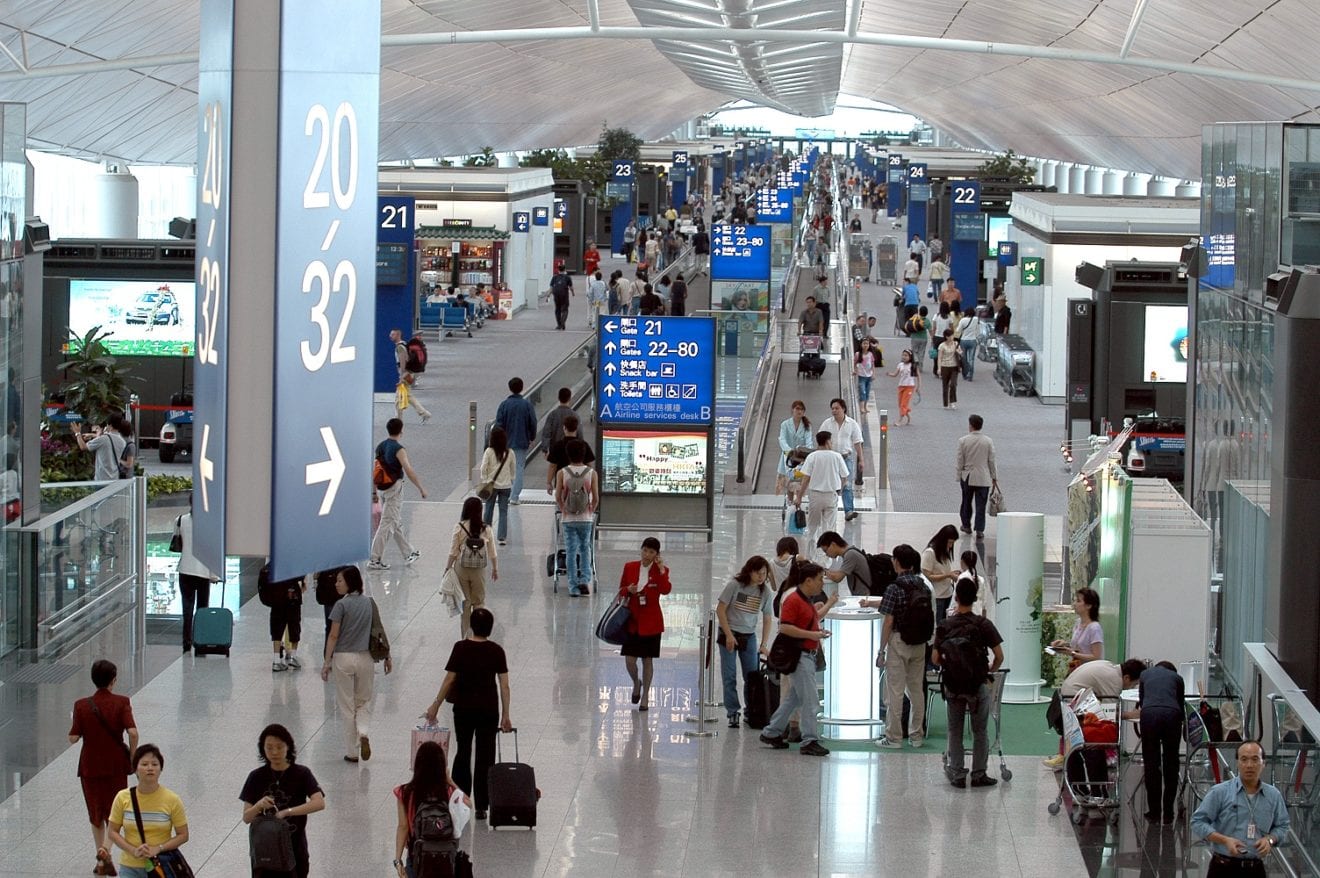
    Hong Kong International Airport (HKIA) recorded steady growth in passenger volume and flight movements last month. During the month, passenger traffic rose 4.9% year-on-year to 5.7 million, while flight movements increased by 4.5% to 32,625.

    The growth in passenger traffic in February was mainly driven by Hong Kong resident travel, which registered a 16% year-on-year growth over the same month last year. Passenger traffic to / from Southeast Asia and Japan increased most significantly.

    In the first two months of 2016, HKIA handled 11.6 million passengers and 67,820 flight movements, up 9% and 5% from the previous year respectively.

    On a rolling 12-month basis, HKIA has handled 69.5 million passengers and 409,255 flight movements, marking year-on-year increases of 8.4% and 3.8%, respectively.HKIA

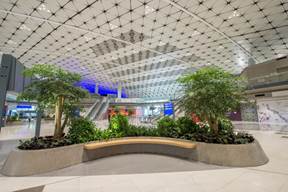
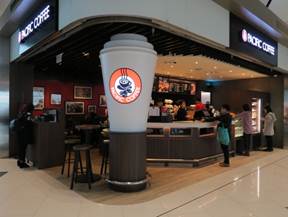
    Last month Airport Authority Hong Kong (AA) opened nine new retail shops and a café in the recently-inaugurated Midfield Concourse at HKIA. Additionally, eight retail and three catering outlets are soon to be opened at the 105,000 square metre concourse, including a new multi-category store concept from DFS. The catering outlets will offer café and casual-dining options to departing passengers who have limited time before boarding.

    “The Midfield Concourse will be able to serve an additional 10 million annual passengers in order to meet the increasing passenger volume at HKIA.

    “We are proud to offer extended retail and catering options throughout the concourse, which will let the passengers have a pleasant and enjoyable last-minute shopping and dining experience,”  said Cissy Chan, executive director, Commercial, Airport Authority Hong Kong.

    The airport has also introduced a mobile application, which provides travel information and says it hopes to explore more advances with airport technology.

    HKIA 2C K Ng, executive director of Airport Operations of Airport Authority Hong Kong, said: “To enhance the travel experience for HKIA’s passengers, we strive to provide customer-centric services by leveraging the latest technology, including the introduction of the HKG My Flight mobile application in 2013 that provides airport information, real-time flight status and more.

    “With the application of iBeacon technology, passengers using the HKG My Flight app can receive push notifications of airport information including dining and shopping offers and promotions at the airport. While arrays of initiatives are in the pipeline, we will continue exploring the application of different technologies in daily operations, aiming to enhance mobility, automation, efficiency and convenience for passengers.”

  • Changi retail +8% to $1.56bn is new record in 2015

    Changi retail +8% to $1.56bn is new record in 2015

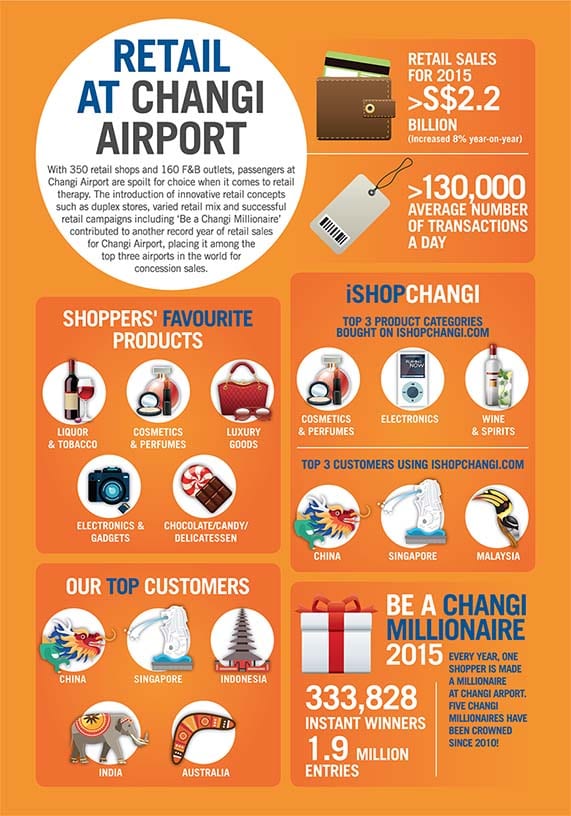
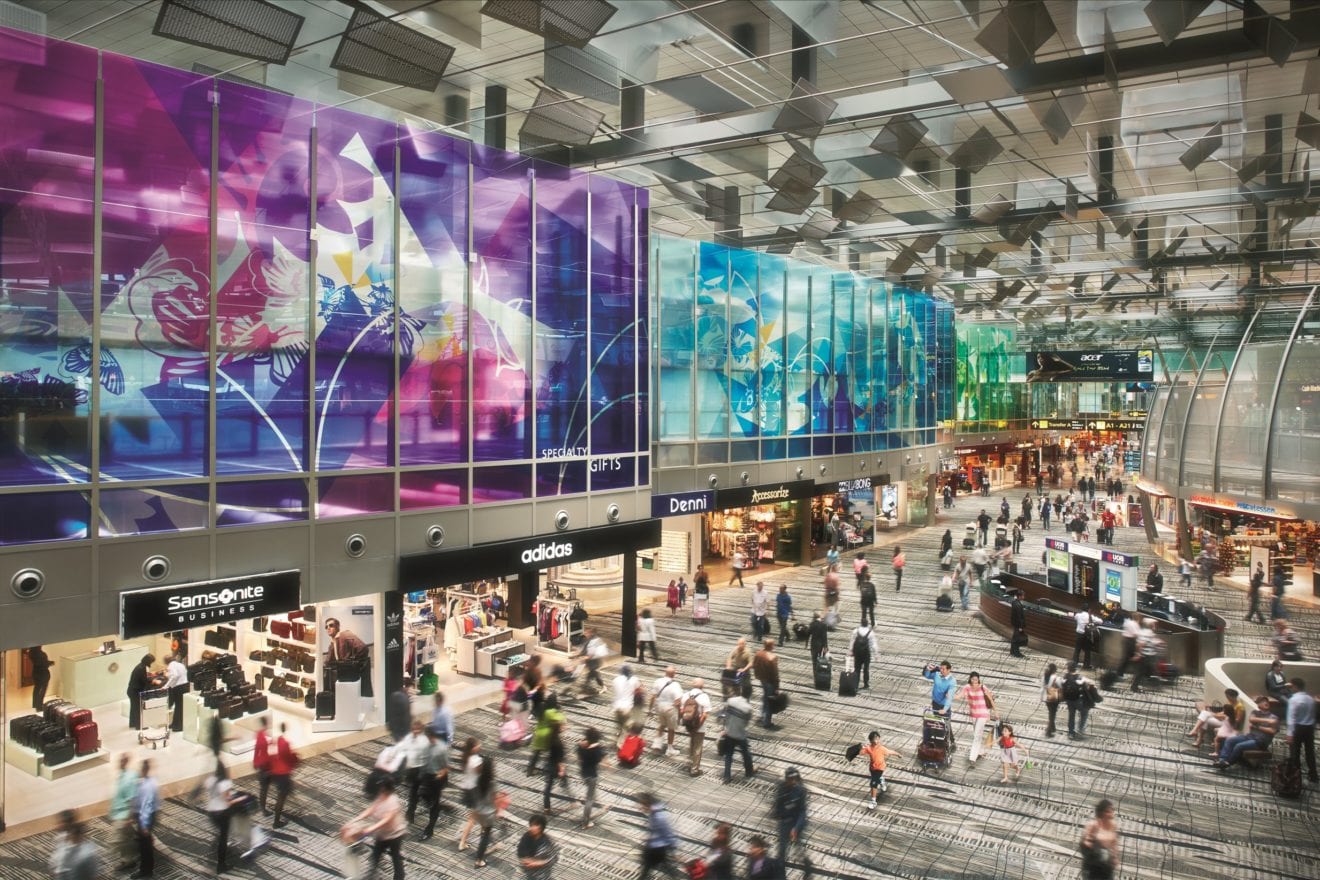
    Singapore Changi Airport has formally reported that it achieved an 8% record increase in retail and food and beverage sales worth S$2.2bn ($1.56bn) in 2015, compared with the previous trading period in calendar year 2014.

    The Changi Airport Group includes 350 retail shops and 160 food & beverage outlets within its ‘retail’ definition and it says that last year’s sales performance benefited from several innovative retail concepts.

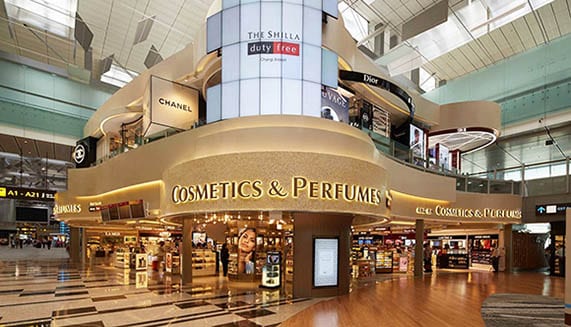
    These included the introduction of duplex stores for duty free liquor and tobacco (DFS Group) and beauty (Shilla), a varied retail mix and successful retail campaigns – including the hugely popular ’Be a Changi Millionaire’.

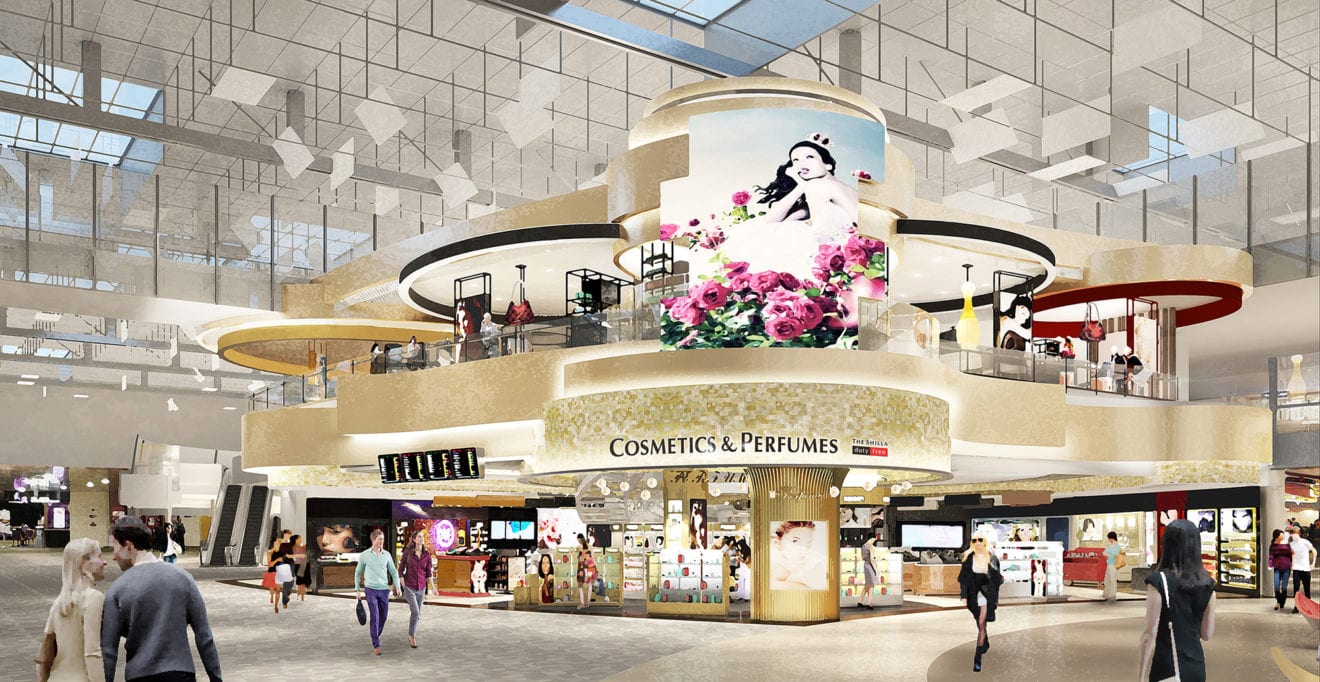
    New Shilla Duplex Sept 2015 opening

    The relatively new Shilla Duty Free duplex store in Changi Airport Terminal 3 which opened in September 2015.

    CAG says that its top customers by nationality were from China, Singapore, Indonesia, India and Australia, while its shoppers’ favourite product purchases (in order) were led by Liquor & Tobacco; Cosmetics & Perfumes; Luxury Goods; Electronics & Gadgets; and Chocolate/Candy/delicatessen.

    Interestingly, Changi Airport management added that the top three product categories bought on iSHOPCHANGI.COM were Cosmetics & Perfume, Electronics and Wine & Spirits, while the top three customers using this service were from China, Singapore and Malaysia.

    HUGELY POPULAR EVENT…

    Meanwhile, the ‘Be a Changi Millionaire’ campaign has literally crowned five winners since the competition draw began back in 2010, with another 333,828 instant winners drawn from an incredible 1.9m entries.

    Changi also claims that all of these sales and other achievements placed the airport amongst the top three in the world for concession sales.

    Singapore Changi Airport capped a resilient performance in 2015 with new benchmarks for passenger traffic and aircraft movements, handling a record 55.4m passengers and 346,330 landings and take-offs during the year. This represented a rise of 2.5% and 1.4% respectively.

    Changi Airport infographic retail 2015

  • China duty free push

    China duty free push

    Nineteen inbound China duty-free shops have opened to serve domestic travellers returning home.

    The state’s Ministry of Finance announced the stores have been built in 13 airports including Guangzhou Baiyun, Hangzhou Xiaoshan and Qingdao Liuting, as well as six sea ports.
    Passengers can carry up to 8000 yuan ($1230) worth of duty-free goods, up from the previous 5000-yuan limit, when clearing customs, the ministry said, claiming that the shops feature more products than existing inbound duty-free outlets.

    Isetan Mitsukoshi Holdings says its stores served about 50 per cent more international duty-free shoppers from February 7 to 13 compared with the same holiday week last year, thanks to a spike from mainland China – but customer spend was 15 per cent less this time.

    Visitors from mainland China doubled to five million, helping Japan’s overall tourist numbers reach nearly 20 million – a target the government had hoped to achieve by 2020.

    Shopping by Chinese tourists at department stores and electronics shops last year created a buzzword, “bakugai”, or “explosive buying”, and came as a boon for Japanese retailers smarting from decades of sluggish demand from domestic consumers. However, China’s economy has since sagged to a 25-year low, with stock markets slumping mid-year.

  • China’s ‘explosive shopping’ sprees bring chaos to Tokyo roads

    China’s ‘explosive shopping’ sprees bring chaos to Tokyo roads

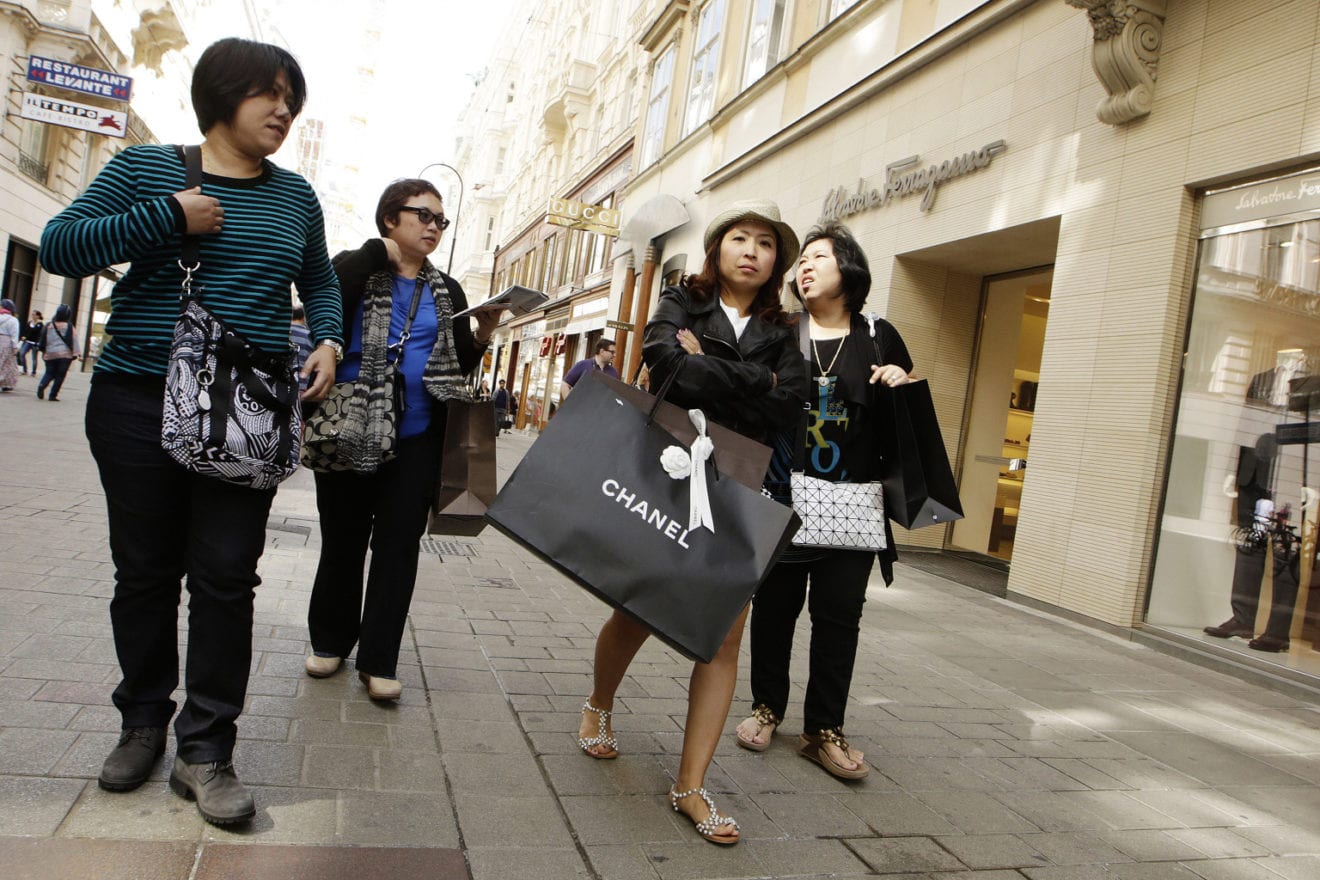
    Tensions between Japan and China are not confined to remote islands and historical disputes it seems – now an unlikely activity is causing tension between the two Asian powerhouses. Shopping.

    Japanese police are reportedly receiving increasing numbers of complaints about the surge in buses carrying Chinese shoppers who are causing parking chaos in Tokyo’s retail districts.

    The issue taps into the booming number of Chinese tourists indulging in intense shopping sprees in Tokyo, whose surge in prevalence has prompted the creation of the new Japanese buzzword “bakugai” (“explosive shopping”).

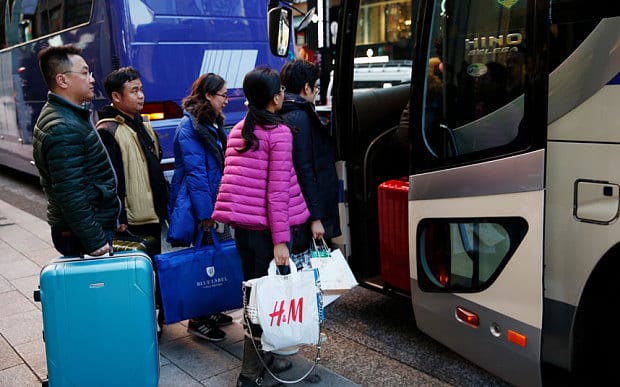
    Chinese tourists pack their shopping into a suitcase at a department store in Tokyo  Photo: Reuters

    From Ginza’s upmarket boulevards lined with department stores to the historic lanes of the old Asakusa area, large buses ferrying retail therapy-loving Chinese shoppers have apparently been causing parking chaos across the capital.

    On one recent occasion in the run up to Chinese New Year, a total of eight tour buses reportedly caused mayhem after blocking the left traffic lane on one of the main streets in Ginza, according to Kyodo News.

    Store security on the Ginza street also reportedly became involved in the retail chaos, asking Chinese shoppers laden down with bags outside the buses to step aside to allow other pedestrians to pass.

    One of the bus drivers said: “I usually stop here because there aren’t any other places. If we are lucky, we can leave here around 15 minutes behind schedule but a 30-minute delay is not unusual.”

    Japan’s economy received a welcome bolster from a surge in overseas visitors in 2015, with a record 19.73 million overseas tourists arriving in the country, many of whom were intent on shopping.

    Fuelled by a then-weakened yen, foreign tourists visiting Japan last year spent around 3.08 trillion yen – an increase of one trillion from the previous year, according to finance ministry figures.

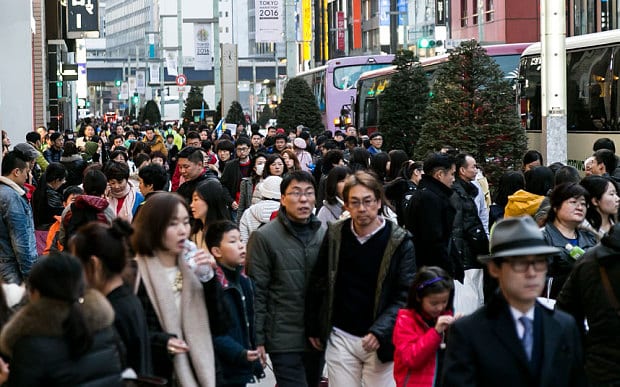
    Chinese tourists shopping during the Lunar New Year Holiday at Tokyo's Ginza shopping district in Japan

    However, the rise of shoppers – in particular groups of voraciously-consuming Chinese shoppers – has gone hand in hand with increasingly complex parking problems across the capital, according to Kyodo News.

    Japanese items coveted by Chinese shoppers range eclectically from swishy Japanese techno lavatories and rice cookers to designer handbags and green tea-flavoured KitKats.

    As the city braces itself for further increases in visitors in the run-up to the Olympics, retail associations are urging local authorities to help find long-term solutions to the problem.

    “The central and the Tokyo metropolitan governments need to take the initiative to provide more parking spaces if they are going to promote tourism,” one leader of a local business association for the Ginza shopping area told Kyodo.

    An official for the metropolitan police department added: “Instead of tightening regulations, we would like to unite with municipalities and stores to decide on appropriate rules to welcome tourists together.”


  • 2016, a crunch year for China luxury retail

    Fears of an economic slowdown in China, the devaluation of the yuan, and persistent turmoil in the stock market throughout January have grabbed media headlines.

    All raise questions about the continuing strength of demand for luxury goods among Chinese consumers in the year ahead.

    Global Blue data for December shows growth in Tax Free Shopping (TFS) spend by Chinese shoppers worldwide slowed to 16 per cent, after a peak of 42 per cent in November. Despite concerns around Chinese luxury spending worldwide, however, there are positive signs for luxury brands in 2016, provided they respond to modern consumer preferences and behaviour.

    Slower growth, continued travel

    China’s economy grew 6.9 per cent in 2015, following a 7.3 per cent rise in 2014, according to the Wall Street Journal. Economists predict growth of more than 5 per cent in 2016.

    “[This] may seem weak compared to the past, but it is still far above what other countries are experiencing,” said Philip Guarino, European director at China Luxury Advisors.

    “More people are becoming part of the country’s middle class every day, and millions more Chinese are travelling abroad each year, learning about new brands and purchasing luxury goods,” he added.

    According to a Consumer Life survey by market research firm GfK, more than 109 million Chinese travelled overseas in 2015, up from 100 million the previous year. By 2020, this figure is set to rise to more than 200 million.

    Travel bookings for the upcoming Spring Festival 2016 (Lunar New year) in February indicate strong demand from Chinese travellers. Online travel service Ctrip reports that more than 60 per cent of those Chinese taking holidays during the festival will do so overseas.

    Spending in China

    Despite expectations of a slowdown in global luxury sales and the impact Chinese consumers may have on worldwide sales, analysts at Goldman Sachs have backed the luxury market, upgrading investor advice on global luxury conglomerates LVMH and Kering, according to the Financial Times.

    One of the themes driving Goldman Sachs’ endorsement of the global luxury market is spending in China.

    Recent trading updates by luxury brands show a rebound in demand within mainland China. In Q3 trading, both Burberry and Richemont Group highlighted a reversal in the decline of luxury sales in China, attributed in part to a new breed of middle-class shoppers.

    Luxury spending in China should rise by 6 per cent in 2016, noted Goldman Sachs, the slowest rate since the Chinese luxury market opened up a decade ago, and less than the 10 per cent of 2015.

    Despite slower growth, the investment bank said: ”The emerged and emerging middle class have a lower propensity to spend on luxury, but the desire for branded, status luxury brands remains unchecked.”

    This means a greater focus on affordable luxuries to a more mass customer base, reducing the emphasis on status-driven purchasing. Three quarters of total growth in 2016 is expected to come from 70 million middle-class consumers in China with an annual disposable income of US$30,000-$65,000.

    Chinese consumers are also starting to buy more frequently, something that should benefit brands with a strong footwear, cosmetics and ready-to-wear offering, said Paul Swinand, analyst at investment firm Morningstar.

    “We believe Chinese consumers will behave more like their Western counterparts, with more frequent lifestyle purchases of aspirational luxuries on a per household basis and fewer purchases of status symbol goods that were often a store of wealth,” said Swinand.

    SHANGHAI, CHINA - MAY 28: Nanjing Road street night view on May 28, 2012 in Shanghai, China. Nanjing

    Chinese millennials

    Chinese outbound travel is dominated by millennials. More than 50 per cent of Chinese outbound travellers are aged between 15 and 29, according to GfK, while 37 per cent are aged 30 to 44, and just 10 per cent are aged 45 to 59.

    The behaviour of millennial travellers differs from that of older generations. They are increasingly likely to be looking for travel and dining experiences as well as products, especially as their income rises. This has given rise to a number of designer brand/gourmet crossovers within mainland China itself, as well as in other Asia tourist hotspots.

    Sharing on social media is central to any overseas travel experience for young Chinese travellers and is an opportunity that luxury brands are yet to fully leverage.

    Luxury purchases remain a big part of overseas trips, with just over half (51 per cent) of Chinese millennials aged 18-29 likely to buy luxury goods when travelling overseas, according to MasterCard research. This group is the biggest purchaser of luxury goods in Asia Pacific, and its members are set to spend an average of US$4362 per head on luxury goods in 2016, twice as much as the average across nationalities.

    Global Blue believes that despite concerns around Chinese luxury spending worldwide, there are positive signs for luxury brands in 2016, provided they adjust to modern consumer preferences:

    • A growing Chinese middle class and a shift away from conspicuous luxury consumption is opening up opportunities for affordable luxury goods purchases. Chinese millennials are the dominant age group for overseas travel and for luxury goods purchases on trips.
    • Luxury brands should not underestimate the quickly changing behaviours and preferences of millennial travellers; a desire for unique cultural experiences combined with luxury lifestyle opportunities is high on their agenda.
    • 2016 is an important year for luxury brands as they reexamine how they engage with Chinese consumers both at home and abroad.
  • Korean department stores offer instant tax refunds to tourist

    Korean department stores offer instant tax refunds to tourist

    South Korean department stores will start offering instant tax refund services to foreign customers from this month as part of an effort to boost sales.

    Under the new program, foreigners can buy products without paying the mandatory 10 per cent value-added tax (VAT) if the item costs 30,000-200,000 won (US$25-166), observers said. Each person can be exempt from VAT for up to the first 1 million won in purchases. Products that cost more than 200,000 won require the buyer to pay the VAT and get a refund later on.

    Seoul announced last year that it would implement changes to the way all local tax-free shops operate in 2016 by making it easier for tourists to spend in the country without the need to hold onto purchase receipts that must be shown at departure to get tax refunds.

    Lotte Department Store, South Korea’s No. 1 luxury retailer, said the instant tax refund will be given at its main Sogong-dong flagship store in downtown Seoul.

    Shinsegae Department Store said its main store in Jung-gu will offer the service to customers, while Hyundai Department Store plans to give immediate tax refunds at its main Apgujeong store and its Coex outlet in southern Seoul.

    Department stores said they picked the stores because they are the most frequented by foreign visitors, with more stores to be added later.

    “Foreign shoppers can buy products minus the 10 per cent VAT so there is no need to keep tabs on receipts or show the product they purchased at the airport when they leave the country,” a Lotte official said. “This can greatly reduce the hassle at airports and should fuel sales at our store.”

    In addition, local department stores said they will kick off promotion sales to attract Chinese tourists who are expected to arrive in large numbers during the Chinese Lunar New Year holiday. The traditional holiday runs from February 3 through February 13 this year.

    Lotte said it will give 50,000 won discounts for purchases exceeding 1 million won, with gift cards equal to 5 per cent of the purchase of the total to be given if the total tops 10 million won. Shinsegae said it too will give upwards of 30 per cent discounts and gifts to foreign tourists that buy items at its stores in February. The retailers said that to get the benefits the shopper needs to show his or her passport when making the purchase.

  • Changi Airport hits record high in retail sales

    Changi Airport hits record high in retail sales

    Sales at Changi Airport hit a record high of $2.2 billion last year, on the back of growing passenger numbers.

    Spending at the airport’s retail and food stores grew by 8 per cent year on year, it was revealed yesterday.

    Travellers from China accounted for a third of the airport’s retail market and Singapore consumers, a fifth. The other top spenders were from Indonesia, India and Australia.

    Passenger traffic figures are expected to be released next week.

    In 2014, Changi Airport was among the top three airports in the world in terms of retail business performance. Last year’s ranking is not available yet.

    Ms Lim Peck Hoon, executive vice-president (commercial) at Changi Airport Group (CAG), said yesterday: “We are delighted to achieve yet another record high for concession sales at Changi Airport in 2015. This is positive for the Singapore air hub as profits from our retail business help to offset the cost of our aeronautical operations.”

    Despite the depressed market conditions, Ms Teo Chew Hoon, senior vice-president of airside concessions, said CAG is gunning for an even better sales target this year.

    Shoppers’ favourite buys are liquor, tobacco, cosmetics and perfumes. These are followed by luxury goods, electronics and equipment and chocolates and sweets.

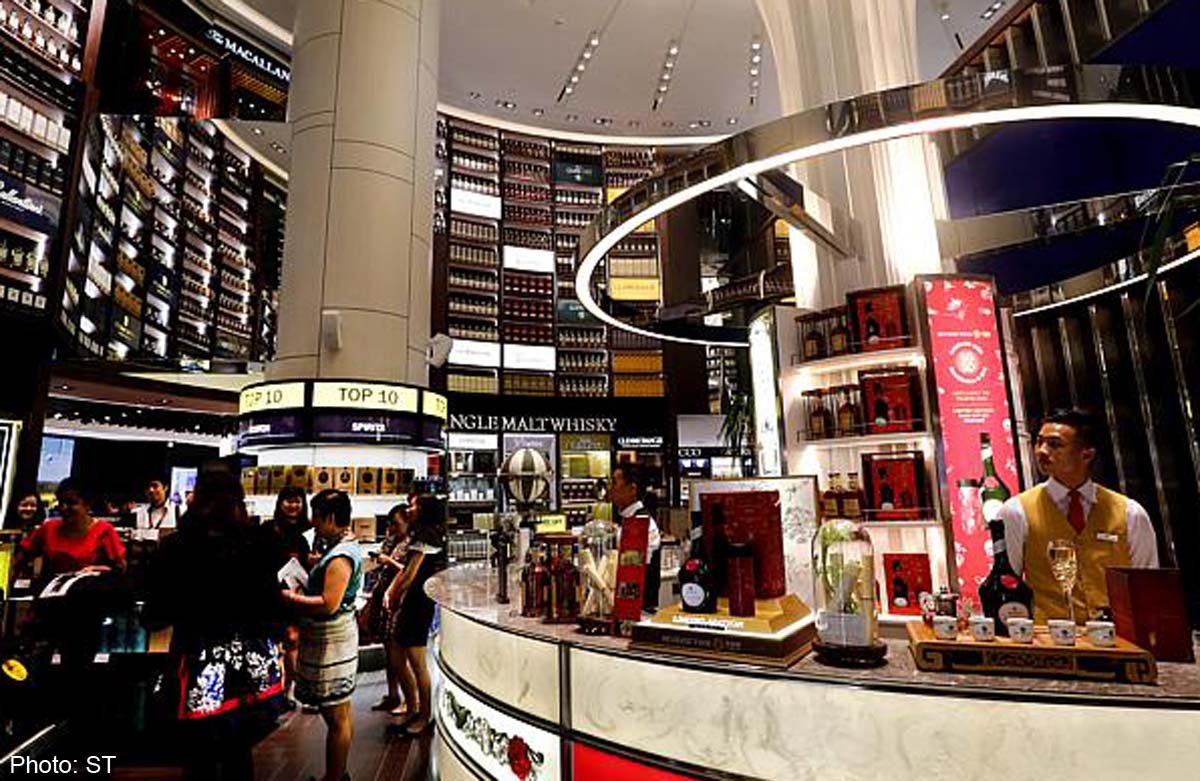
    Ms Lim said last year’s retail performance was down to a successful commercial strategy, which saw the introduction of three liquor, beauty and fashion duplex stores, the first of their kind in the world. They even have their own bar lounges and wine-tasting corners.

    Well-known brands such as Zara and Samsung also launched their first stores at Changi Airport.

    Other promotions, such as one for Star Wars soft toys during the year-end holidays and the “Be a Changi Millionaire” draw, contributed to the retail buzz.

    British administrator Linda Tobin walked away a million dollars richer yesterday, after she won the Changi Millionaire draw.

    The 52-year-old took the top prize after her niece suggested that she pick boarding ticket No. 3, which fitted into a jigsaw puzzle of a picture of a boarding pass.

    Ms Tobin, one of the seven finalists picked for the grand draw, was on her third flight through the airport. She qualified after buying a $412 bottle of whisky.

    “I am on top of the world,” said Ms Tobin, who plans to use the money to spruce up her home and garden and buy a car. She also promised her niece a trip back to Singapore.

  • Jalux opens duty-free outlets in Hanoi

    Jalux opens duty-free outlets in Hanoi

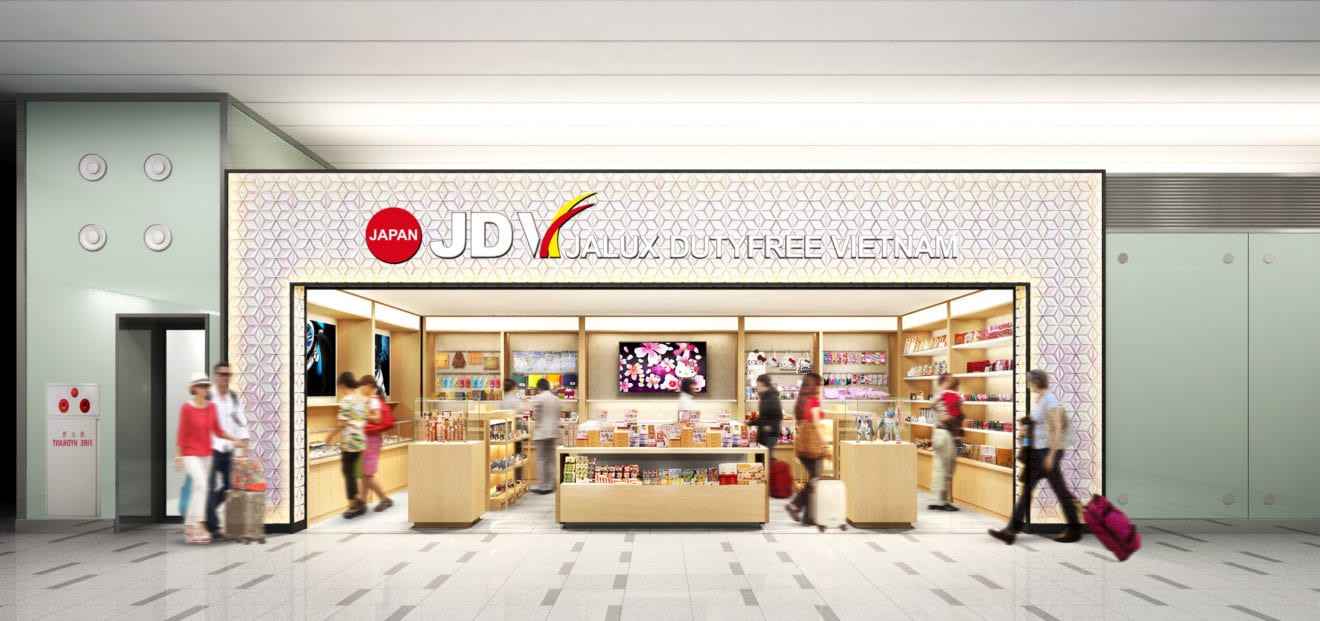
    Japanese travel retailer Jalux has launched its first airport outlets outside Japan, with three stores at Hanoi Noi Bai International Airport in Vietnam.

    Located in Terminal 2, the stores are trading as Jalux Duty Free Vietnam, with two in the Departures area and one in Arrivals. The stores focus on introducing Japanese brands to travellers, picking up on growing demand across Asia for genuine Japanese goods.

    Jalux Duty Free is a joint venture between Jalux (51 per cent) and Vietnamese company Thang Long Air Services (Taseco).

    Jalux has airport stores across Japan, including JAL Duty Free and Blue Sky stores.

    Taseco is engaged in retailing both on and off airport, as well as having interests in wholesale, beverages, hotels and restaurants.

  • Where Chinese tourists are spending their shopping dollar

    Where Chinese tourists are spending their shopping dollar

    Mainland China has become one of the main global suppliers of tourists, and that has been paying dividends for retailers globally.

    But as the Chinese are roaming further afield, Hong Kong and Macau retails have seen their sales dropping.

    A fresh analysis from international market research company GFK shows China had 109 million outbound tourists last year… and they spent US$229 billion in retail stores. These statistics consolidate China as one of the main global sources of tourists, both in terms of number of trips and money spent while travelling internationally.

    “At the same time, there have been profound changes in the behaviour of the typical Chinese traveller, with millennials firmly established as the core drivers of spending,” says GFK.

    Because of its cultural similarity, accessibility and lower travel costs, Hong Hong was the preferred destination for Chinese tourists up until 2013. Shopping was a big motivation for visiting. However, since 2014, says the report, more Chinese tourists have been opting for other destinations offering historical and cultural experiences – as well as shopping.

    Air travel and accommodation statistics show that at the start of November, the top five favourite destinations for Chinese travellers were South Korea (visits up 112 per cent since 2011), Thailand (up 263 per cent), Japan (up 157 per cent) and Taiwan (up 54 per cent. Surprisingly, given its loss of retail sales, Hong Kong had 37 per cent more Chinese visitors. This is explained by the new emerging middle class – consumers who do not have enough disposable income to travel further abroad, nor to spend on high-end purchases.

    Europe is the most popular destination outside Asia for Chinese tourists, with 97 per cent more visits in the past four years. This is followed by North America (up 151 per cent) and the Middle East (up 177 per cent).

    “China’s tourists remain strategic to Hong Kong and its businesses, as other destinations are jumping ahead in winning their favour,” says GFK global head of travel and hospitality Laurens van den Oever.

  • DFP upgrades Manila T2 duty free shop offering

    DFP upgrades Manila T2 duty free shop offering

    Duty Free Philippines has recently completed work on upgrading its duty free offer in Manila Airport Terminal 2, which is used exclusively by national carrier, Philippines Airlines.

    The T2 duty free shops currently record the second largest share of duty free sales at Manila Airport, generating a 30% slice of DFP’s total Manila Airport revenue. Arrivals sales in T2 are larger than departures, with the two stores selling liquor, tobacco and chocolates mainly to Filipino workers and travellers.

    “We did an upgrade of our T2 departure store in 2014. We used a Hong Kong designer,” said Duty Free Philippines Merchandising Division Manager Jennifer Start, talking exclusively to TRBusiness. “We have a cute store with boutiques for Chanel, Salvatore Ferragamo, Pandora, Lancôme and Longchamp.

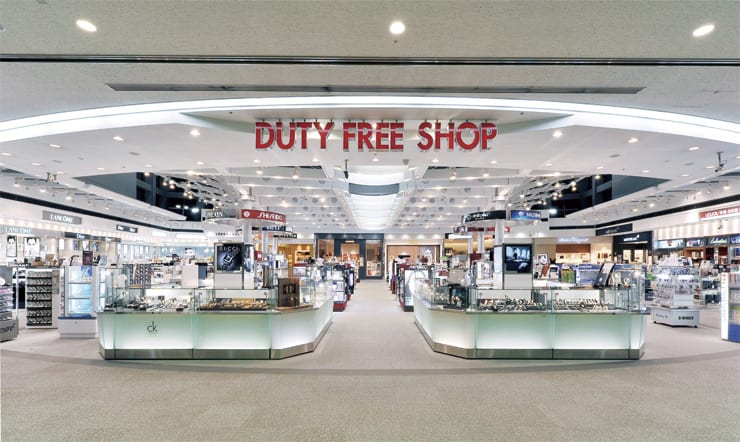
    DFP at Manila Airport T3 departure 3

    This image actually shows the newly refurbished Duty Free Philippines shop in Terminal 3 at Manila Airport – a standard the retailer has set for all of its new shops – including those in Terminal 2.

    “T2 departure hall has one long open shop with liquor, tobacco and confectionery on one side, while the other side is perfume, cosmetics and fashion.”

    DFP’s Internet shopping is also another new service that is planned to boost sales in future, allowing customers to collect pre-purchased goods on departure from the Philippines, or buy goods for collection in airport arrivals or at the downtown Fiesta Mall.

    “We have a website showing our products on offer,” Start said. “Our online shopping platform site is being developed. We are still talking to vendors and hopefully we can get this up soon. We are working on details with the Bureau of Customs.”


  • Macau gaming revenue falls 34% in 2015 due to corruption crackdown

    Macau gaming revenue falls 34% in 2015 due to corruption crackdown

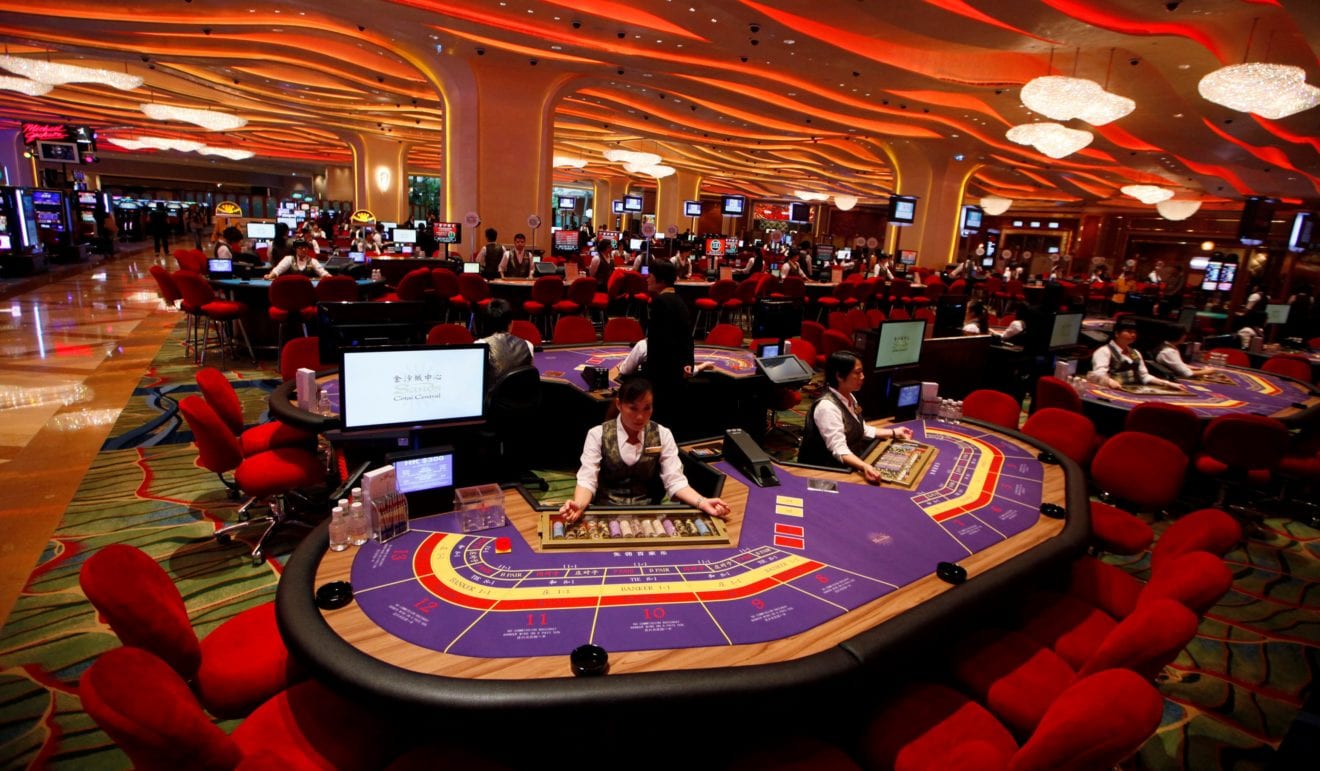
    Macau’s gambling revenue ended 2015 with a whimper, falling for a second straight year as mainland China’s corruption crackdown continued to keep high rollers from the Asian gaming hub.

    Revenue slid 34.3 percent to a five-year low of 230.84 billion patacas (US$28.92 billion), according to numbers released by Macau’s Gaming Inspection and Coordination Bureau. Gaming revenue fell 2.6 percent in 2014.

    December saw gaming revenue fall 21.2 percent, declining for the 19th consecutive month as China suffers a painful growth slowdown and Beijing’s hard-hitting campaign against corruption has hammered Macau’s key VIP sector.

    The figure for 2015 was in line with expectations of nine analysts polled by Bloomberg News who predicted a decrease of 35 percent.

    The city’s VIP section is also expected to fall 13 percent in 2016, analysts told Bloomberg.

    “Macau has been hit hard by China’s anti-corruption campaign which has deterred wealthy customers from visiting Macau,” Aaron Fischer, head of consumer and gaming research at CLSA, told AFP on Saturday.

    “2016 is not likely to be a very good year. However, after a 34 percent decline in 2015, consensus expects revenues to be roughly flat, which is a big improvement,” Fischer added.

    The slowdown in Macau, a semi-autonomous Chinese city, has been in part attributed to a high-profile corruption crackdown led by mainland Chinese leader Xi Jinping with Beijing making it clear it wants the former Portuguese colony to move away from gambling.

    Casino operators in Macau — the only place in China where casino gambling is allowed — are trying to lure mass market visitors to make up for the drop in high-roller gamblers who comprise the bulk of the city’s gaming income.

    This has led to a slew of of mega-projects on former swamp land on the coastal Cotai strip.

    The latest launch was of the Studio City hotel and casino resort in October — featuring the world’s first figure-of-eight rollercoaster — that was fronted by Robert De Niro, Martin Scorsese, Brad Pitt and Leonardo DiCaprio.

    Wynn Resorts founder billionaire Steve Wynn has previously said the situation in Macau was “uncertain.”

    “There’s no question that uncertainty is the plaguing word of the day in Macau,” he said in April.

    Wynn Resorts in November said the opening of its new US$4.1 billion Wynn Palace — a floral-themed 1,700-room resort featuring a lake with gondolas — would be delayed by three months to June 25, 2016.

    Macau soared past Las Vegas as the world’s gambling capital after opening up to international operators in 2001 and raked in more than seven times its U.S. counterpart in 2014.

    However, it is now being forced to follow Las Vegas’ lead and transform from a hardcore gambling hub into a destination with much broader appeal.

  • $316m ShillaI’Park Duty Free targets $578m

    $316m ShillaI’Park Duty Free targets $578m

    Just over half the floor area (16,500sq m) of the new $316m 30,400sq m ShillaI’Park Duty Free store complex opened in downtown Seoul this month, initially covering floors three to six at the I’Park Mall in the Yongsan District.

    The December 24 ‘soft launch’ by the HDC Shilla Duty Free joint venture, delivered 60% of the planned retail space, with the remainder due to open at the 16 March ’grand’ unveiling – including the seventh floor and an additional 13,900sq m balance of floor space.

    The HDC Shilla Duty Free Shop is a joint venture between Hotel Shilla and Hyundai Development, which was formed to win the downtown duty free license, and it now features more than 400 brands – including luxury offerings – along with ‘K-Discovery Duty Free’ and ‘the largest K-wave store’.

    The two partners are sharing the $316m cost of developing the project. [Significantly, this is also the first new downtown duty license to be issued by the Korea Customs Service in Seoul since the year 2000].

    By the grand opening next March it expects to be offering in excess of 600 brands as South Korea’s ‘largest urban duty free location’ [and also as the long-time major challenger to Lotte Duty Free’s sales dominance in South Korea’s downtown duty free sector].

    It is also expected to generate revenue of KRW670.8bn/$578m in 2016, and produce an operating profit of KRW57.7bn/$49.7m, according to bullish predictions by KDB Daewoo Securities Research.

    THE WORLD’S SECOND-LARGEST DOWNTOWN DFS

    According to detailed information already provided to TRBusiness by Hotel Shilla, the total duty free floor space is only slightly smaller than the world’s largest downtown duty free complex at Hainan Duty Free in Haitang Bay.

    However, this new complex is designed to be multi-recreational in purpose. Plans for the HDC Shilla complex also include a 1,700-room hotel, several restaurants and concert halls.

    The joint venture has already opened luxury branded shops for Salvatore Ferragamo, Valextra, Vivienne Westwood and Bally, along with luxury stores offering multiple luxury brands in their respective product categories of fashion and accessories, watches, cosmetics and other products.

    There is also a special emphasis on cosmetics brands, which are popular as a major draw with Mainland Chinese tourists.

    One of the huge benefits offered by the new complex – and a key component in its selection for the downtown duty free license in the first place – is its plentiful parking spaces for tour buses – an extremely rare luxury commodity in Seoul today. The store location is also a hub for provincial tours by KTX trains.

    In a statement, the company said: “In the first phase, there are around 100 bus parking lots in the building and outside of the building. From the bus parking lot, tourists can directly reach the entrance of the duty free store by exclusive escalators, ‘Crystal Gate’. Next year (2016), the bus parking lot will accommodate up to 400 buses based on the demand of tourists.”

    HDC Shilla’s Co-President, Changhoon Yang and Gilhan Lee said: “We will do our best to make Shilla I’Park duty free the world’s best duty free store and to make Seoul a global shopping destination. We will take the lead to promote the nation’s tourism industry.”

    The company adds that its ambition is that Shilla-I’Park will become the centre of the Korean-Wave tourism that promotes Korean-made cosmetics and fashion goods, provincial tourism and co-prosperity along with regional economies in Korea.

    This promise to boost sales and the profile of domestic goods and services should come as a politically popular message for the present Korean Government – especially President Park Geun-hye – who is reported (by the Yonhap News Agency) to have been openly critical of recent duty free customs law revisions. Particularly so, with regard to the downward revision of downtown duty free license terms from 10 to five years.

    Meanwhile, the Shilla-I’Park partnership claims that the new store is also equipped ‘with the largest cosmetics section’ covering a floor area of 6,300sq m featuring all of the Korean-made cosmetics brands and global brands popular amongst Chinese tourists.

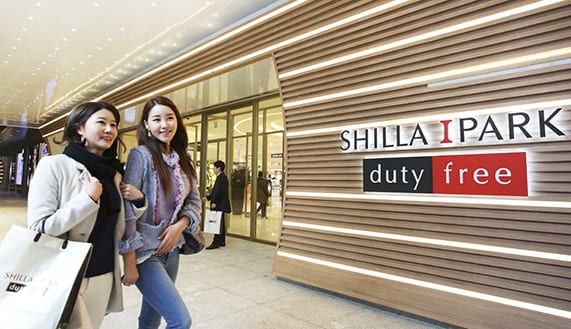
    HDC Shilla Duty Freec

    The new store entrance. (Photo credit: Shilla Duty Free).

    AIMING FOR 90% OF SALES GOAL – BEFORE FULL MARCH OPENING

    It also points out that it houses the biggest ‘K-cosmetics’ and ‘K-Bag’ store areas specialising in Korean-made cosmetics, fashion goods and accessories, comprising more than 270 cosmetics, fashion and accessory brands.

    In addition, the third and fourth floors feature luxury fashion and global cosmetics branded stores, with a special ‘Luxury cosmetics zone’ on floor three dedicated to imported cosmetics and high-end timepieces.

    HDC-Shilla said: “We have most of [the] cosmetics and luxury watch brands loved by Chinese visitors and have raised the portion of K-cosmetics that recently showed a large increase in sales, so we are expecting to achieve about 90% of our sales goal – even before the grand opening.”

    Meanwhile, the ‘K-Discovery Travel Package’ will be introduced in collaboration with each local government, Korail, travel agencies and the duty free store to boost provincial tours of Korea.

    The retailer adds: “In addition, I’Park mall will be upgraded to provide diverse tour contents and new shopping facilities to support [the] Shilla I’Park duty free store. In collaboration with character contents, the mall will be the tourist destination, by providing various attractions consistently.”

  • $1.3bn Midfield terminal inaugurated at HKIA

    $1.3bn Midfield terminal inaugurated at HKIA

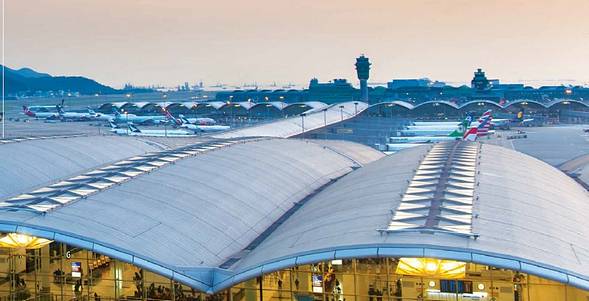
    Hong Kong International Airport (HKG) officially opened its HK$10bn/$1.3bn Midfield Concourse (MFC) and auxiliary facilities on Monday as scheduled – with the retail offer to be “gradually introduced” next year.

    The 105,000sq m, five-storey MFC is located between the airport’s two existing runways to the west of terminal one and is connected to it with an automated people mover. It has 20 parking stands and a capacity of 10m pax.

    On Monday, Jack So, Chairman of HKG’s operator, Airport Authority Hong Kong (AA), and Zhang Kui, President of Hong Kong Airlines, accompanied by CK Ng, Executive Director, Airport Operations of the AA and Ben Wong, Chief Operating Officer of Hong Kong Airlines officiated at the opening ceremony, and also welcomed the first batch of passengers.

    On the retail offer, AA says: “The concourse will gradually introduce restaurants, coffee shops and retail outlets to provide passengers with a one-stop shopping and dining experience.”

    On the significance of the concourse, So says: “The MFC is an important development as it will help the airport meet increasing passenger traffic demand. In the past 12 months, Hong Kong International Airport handled 68.2m passengers, marking a year-on-year increase of +8.3%.

    “With its capacity to serve an additional 10m passengers every year, the MFC will be able to increase the number of flights using airbridges to board and disembark, enhancing the overall passenger experience.”

    AA plans to gradually increase the usage of the MFC in the next few months. It is expected to serve about 20% of daily passenger flights from HKG when operating at full capacity by next March.

  • King Power opens downtown Phuket store

    King Power opens downtown Phuket store

    Thai duty-free monopoly King Power mixes international brands with local products in its new downtown Phuket store opened this month.

    The new store’s design was inspired by the nearby Andaman Sea and uses dimensional depth and lighting to mirror the ocean.

    King Power Phuket stocks perfumes, cosmetics, and skincare from leading brands such as Bobbi Brown, Clinique, Dior, Estee Lauder, Lancome, L’Occitane, L’Oreal, Mac, SKII, and Shiseido; apparel, jewellery, and eyewear from brands including Emporio Armani, Bally, Coach, Longchamp, Furla, Hugo Boss, Kate Spade, Michael Kors, Calvin Klein, Dunhill, and Ray Ban; and watches from Omega, Rolex, Chopard, Tudor, IWC, Longines, and Breguet.

    A range of products from leading Thai brands, as well as local Phuket goods are on sale in a dedicated Thai Pavilion and the store also sells electronics and gadgets.

    The store’s interior is painted in pearl white contrasted by fluid lines simulating the movement of water. Additionally, the design incorporates Phuket’s unique Sino-Portuguese patterns.

    King Power Phukhet store 1