Tag: Vietnam

  • Over 320,000 jobs in Asia-Pacific travel-retail industry under threat

    Over 320,000 jobs in Asia-Pacific travel-retail industry under threat

    Governments across Asia Pacific are being urged to protect more than 320,000 duty-free and travel-retail industry jobs at risk during the coronavirus pandemic.

    The Asia Pacific Travel Retail Association claims that the jobs in the US$36 billion industry may be overlooked by politicians devising financial rescue measures to deal with the economic fallout of the pandemic. It is asking governments to support the industry along with airlines, airports and maritime businesses.

    In a special report, the association outlines the industry’s almost $15 billion contribution to GDP across Asia Pacific.

    “Airport retail and commercial services, including food and beverage, constitute a crucial business sector providing up to 60 percent vital commercial income for airport owners, outpacing aeronautical revenue streams,” read a statement issued by the association.

    “It is the most significant direct contributor to the investment in Asia-Pacific’s aviation infrastructure and ongoing development of world-class national gateways, the region’s hubs to the world.”

    “The dynamics of duty-free and travel retailing are intrinsically linked to the aviation and maritime industries and its viability is entirely dependent on the return in passenger traffic,” said association president Grant Fleming.

    “This means 320,000 jobs are at risk that could be safeguarded if governments extend financial support packages to the industry.”

  • Uniqlo Vietnam opens new store in Ho Chi Minh City

    Uniqlo Vietnam opens new store in Ho Chi Minh City

    Uniqlo Vietnam is to open Ho Chi Minh’s second store this year despite the coronavirus outbreak.

    Located at SC Vivo City shopping mall in District 7, the city’s second Uniqlo Vietnam store will occupy more than 2000sqm of area, featuring its LifeWear products for males, females and kids.

    The opening date has yet to be disclosed, but the store is expected to open this spring/summer with the interior fit out well underway.

    “We are aware of the huge demand from Vietnamese customers for Uniqlo products,” said Osamu Ikezoe, Co-CEO of Uniqlo Vietnam. “We are excited to open the SC Vivo City store to introduce our fashion philosophy LifeWear to our customers.”

    Osamu said Uniqlo Vietnam plans three more stores this year. According to a prior company statement, the brand aims to operate at least three stores in Hanoi and eventually reach up to 20 nationwide.

    Earlier this month, Uniqlo Vietnam made its Hanoi debut, attracting more than 2000 people on its opening day.

  • Fake luxury goods seized at famous Vietnam markets

    Fake luxury goods seized at famous Vietnam markets

    Ho Chi Minh City authorities seized thousands of fake luxury goods at two famous local markets last week.

    According to Tuoi Tre News, market watchdog officers seized more than 1500 fake items worth US$6282 at Saigon Square and Ben Thanh Market, the latter one of Ho Chi Minh City’s most popular tourist attractions.

    All the products seized are copies of famous luxury brands including Prada, Montblanc, Gucci, and Rolex.

    Representatives of the General Department for Market Management said the unit will keep preventing vendors from selling counterfeit and pirated goods, focusing on hotspots where these items are commonly on show.

    Located in the city’s center, Saigon Square and Ben Thanh Market are renowned for selling fake luxury goods to tourists.

  • Aeon Vietnam plans a massive expansion

    Aeon Vietnam plans a massive expansion

    Japanese retail giant Aeon Vietnam says it will invest US$2 billion expanding its presence across the country.

    Aeon Vietnam opened its fifth shopping center in the country last November, its second in the capital city Hanoi. Now, the general director of Aeonmall Vietnam, Iwamura Yasutsugu, says the company is eyeing 25 centers across the country

    Aeon launched in Vietnam in 2013, opening its first mall, Celadon City, in a remote suburb of Ho Chi MInh City, which was expanded last June. More malls have been built in locations including the industrial city of Binh Duong, near Ho Chi Minh City, and Hanoi’s Long Bien district.

    The latest center, in the Duong Noi commune at Ha Dong, covers 150,000sqm and has about 200 tenant stores as well as the Aeon hypermarket and food anchor.

    Aeon’s strategy to date of expanding in Vietnam is to build centers in suburban districts rather than downtown locations, shaping its offer to local communities and mixing local goods with imported products.

    Aeon Vietnam also has a program to boost exports of Vietnamese goods to stores it operates outside the country. It aims to export US$500 million of goods this calendar year and reach $1 billion within five years.

    Last August, Aeon’s Japanese board held a meeting in Ho Chi Minh City and toured the Celadon City site, further evidence of the company’s commitment to the market.

    At the time, chairman Hiroshi Yokoo described Vietnam as “the most significant market of the company in Southeast Asia”.

    Aeon Vietnam plans US$2 billion expansion

  • South Korean carriers cut Vietnam flights as coronavirus infections spiral

    South Korean carriers cut Vietnam flights as coronavirus infections spiral

    South Korea’s largest carriers have decreased the frequency of flights to Vietnamese tourist hotspots over rising Covid-19 infections at home.

    Korean Air, the largest airline in South Korea, has announced that it will suspend many flights departing from Seoul and Busan to Ho Chi Minh City and Hanoi, Vietnam’s two largest metropolises, Da Nang and Nha Trang in central region and Phu Quoc Island in the south until the end of March.

    Asiana Airlines, the country’s second-largest carrier, has also canceled many flights from Incheon Airport in Seoul to Hanoi, Da Nang and Nha Trang at least until mid-March. This airline’s Incheon-Phu Quoc route will continue operations, but the frequency will be reduced from four flights a week to two.

    Korean Air normally operates 20 flights between the two countries a day, while Asiana Airlines has an average 4 flights a day. The two carriers did not reveal specific numbers of suspended flights.

    The flight suspensions follow the rapid spread of the novel coronavirus in South Korea, where more than 4,800 infections and 23 deaths have been recorded.

    Vietnam is a leading destination among South Koreans, ranked third after Japan and mainland China, according to Global Destination Cities Index (GDCI), released by Mastercard last year. South Korea is the second-largest feeder market of Vietnam’s tourism after China, with around 4.2 million visitors in 2019, up 23.1 percent year-on-year.

    Nha Trang and Da Nang are among top holiday destinations for South Koreans.

    The Covid-19 outbreak, with its epicenter in China, has severely cut the number of South Koreans traveling abroad, and Vietnam’s tourism sector has borne the brunt.

    Around 322,000 South Koreans came to Vietnam in February, down 16 percent from a year ago. Worse still, the number is expected to decrease dramatically in the coming months after the South Korean government declared a red alert, its highest level of epidemic alarm.

    The Vietnamese government, too, has deployed various measures to prevent the spread of the virus, including canceling many flights to South Korea and suspending visa-free entry for South Koreans starting last Saturday.

    In Vietnam, national flag carrier Vietnam Airlines has said it will suspend all flights to South Korea from Thursday while private carrier Bamboo Airways halted services to the country South Korea from February 26.

    Hanoi’s Noi Bai and Ho Chi Minh City’s Tan Son Nhat, Vietnam’s two largest airports, had stated they would stop receiving South Korea arrivals starting Sunday.

    Passengers scheduled to land in Noi Bai will have to do so at Van Don Airport in northern Quang Ninh Province, around four hours drive away, while those headed for Tan Son Nhat will have to travel a similar distance to Can Tho Airport in the Mekong Delta.

    This decision was taken after a large number of Vietnamese returning from South Korea overloaded medical quarantine facilities in both cities.

    All 16 people with Covid-19 recorded in Vietnam so far have been discharged from hospitals.

    Globally, the death toll has reached 3,069, mostly in mainland China, followed by Iran (66), Italy (52) and South Korea (34). The U.S and Japan which have reported six deaths each.


  • Vietnam says no more drinking scenes in movies

    Vietnam says no more drinking scenes in movies

    Scenes of actors drinking alcohol in films will be restricted under a new decree guiding the alcohol law.

    Cinemas will only show actors drinking if they are playing historical characters or acting in scenes that criticize alcohol addiction, Decree 24, which took effect on Monday to guide several provisions of the Law on Preventing Alcohol’s Harmful Effects, lays down.

    Movies are not allowed to admire or praise individuals and organizations achieving success by producing alcohol or doing any business related to alcohol.

    In June last year lawmakers approved time restrictions for advertising liquor on television and radio. According to the decree, advertisements for alcoholic drinks will be banned from 6 p.m. to 9 p.m. and immediately before and after and during children’s programs.

    Decree 24 relaxes it slightly and permits beverages with an alcohol content of under 5.5 percent and made by sponsors of regional, continental or global sporting events held in Vietnam to be advertised between 6 p.m. to 9 p.m.

    Producers of drinks with less than 15 percent alcohol must add warnings saying drinking alcohol can lead to traffic accidents, affect the fetus and those under 18 are not allowed to drink under the law.

    If an advertisement appears on TV or radio, the warning must be read out aloud at a speed equivalent to that of other content.

    If it is advertised on a website, social media or print publications, the warning must make up at least 10 percent of the advertisement’s content and be in a color that makes it easy to read.

    A ban on advertising hard liquor has been in place for long.

    The new drunk driving law, which came into effect on January 1, doubled existing fines and revokes driving licenses for up to two years.

    There are fines for the first time for cyclists and electric bicycle riders, and anyone caught driving under the influence will have to pay VND400,000-600,000 ($17-26).

    Motorcyclists and car drivers could be fined VND6-8 million and VND30-40 million (VND1,730) and lose their licenses for 22-24 months.

    The country consumed some 4.6 billion liters of beer in 2019 after rising 10 percent from 2018, but growth could fall to 6-7 percent this year due to the tough new penalties, top brokerage SSI Securities Corporation (SSI) said last month.

  • Vinamilk signs $20 mln Dubai export contract

    Vinamilk signs $20 mln Dubai export contract

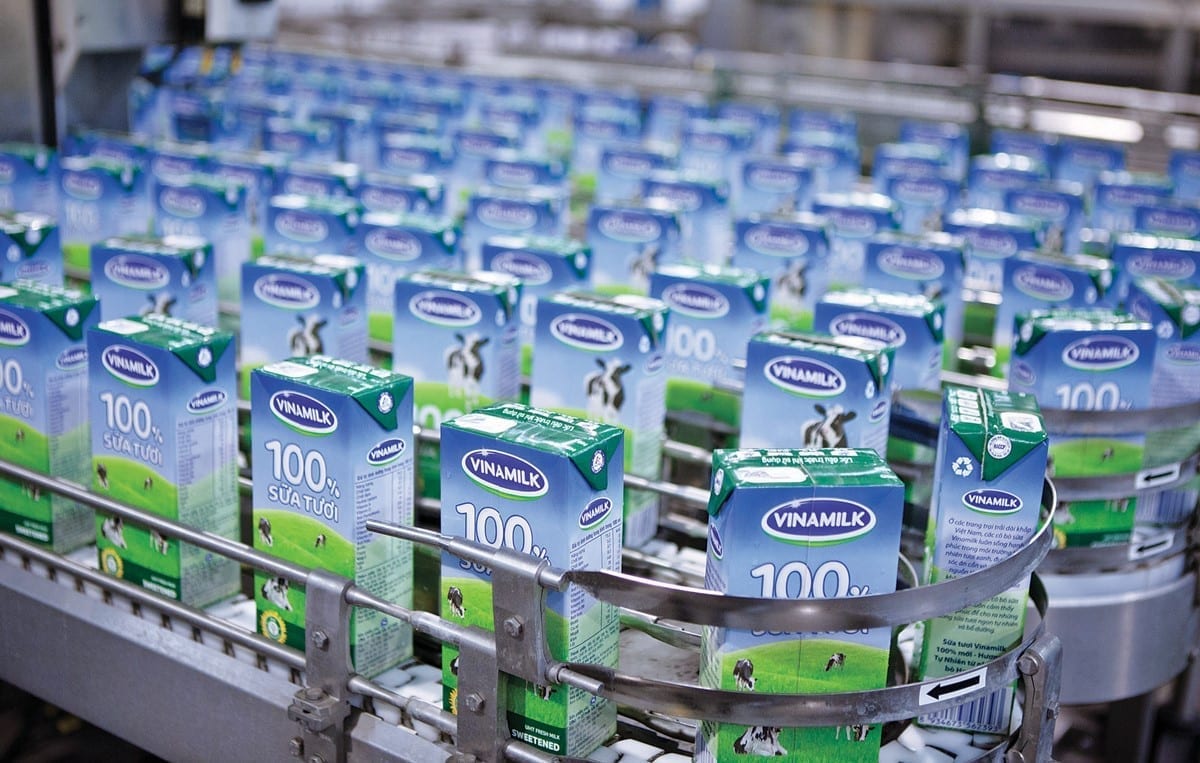
    Vinamilk has signed a $20 million deal with a distributor in Dubai to supply dairy products from the second quarter of 2020.

    Vietnam’s biggest dairy company said in a statement that the deal with the distributor, whom it did not identify, was signed at the Gulfood Dubai 2020 trade exhibition this week.

    The Middle East currently accounts for 75 percent of Vinamilk’s exports. Its other major foreign markets are Japan, South Korea, Singapore, and China.

    Vinamilk, one of the world’s 50 largest dairy producer, saw its export revenues rise 14.8 percent last year to VND5.17 trillion ($223 million).

  • Audi Vietnam recalls SUVs to fix loose fender trims

    Audi Vietnam recalls SUVs to fix loose fender trims

    Audi Vietnam is recalling 618 Q5 SUVs to fix loose rear wheel fender trims that could be a road hazard if they detach.

    The affected Q5 vehicles were manufactured between January 2017 and August 2019 in Mexico, according to Audi Vietnam’s filing with Vietnam Register, the vehicle registration, inspection and quality control agency of the Ministry of Transport.

    Due to errors in the assembly process, a piece of the rear wheel fender trim may loosen during use and eventually detach from the SUV, and could become a hazard to other vehicles on the road, Audi Vietnam said in its filing.

    Audi Vietnam said it has so far not recorded cases of the piece falling off, but urged customers to take their vehicles to Audi Vietnam’s authorized dealers as soon as possible, who will secure the trim piece free of charge. This would take about 30 minutes, the company said.

    The recall program will take place from February 25, 2020 to February 25, 2023. Audi Vietnam said it will also service cars that were not officially imported but brought into the country individually (like diplomatic vehicles, for instance), upon receiving approval from the parent company.

    Audi opened its first dealership in Saigon in 2008, and now possesses three dealerships, the other two in Hanoi and Da Nang. It does not publish official sales figures in Vietnam.

  • Gold prices hit 7-year high

    Gold prices hit 7-year high

    Vietnam’s gold prices hit a seven-year high Friday as the coronavirus outbreak pushed investors to seek safer assets.

    The country’s second-largest jewelry company, DOJI, was selling gold at VND45.59 million ($1,964) per tael (1.2 ounces), up 1.3 percent from Thursday, the highest since January 2013.

    Phu Nhuan Jewelry, meanwhile, sold its gold at VND45.75 million ($1,971), up 1.7 percent.

    The domestic price surge followed a global rise in gold prices of 0.9 percent to $1,635 per ounce Friday, the highest in seven years.

    Gold has become a more attractive investment option as the ongoing novel coronavirus outbreak will have negative impacts on the global economy.

    The gold price rise has happened alongside a fall in stocks. On Friday, Vietnam’s benchmark VN-Index fell 3.5 percent from the beginning of the year to 933.09 points.

  • Bamboo Airways suspends S.Korea flights to contain coronavirus

    Bamboo Airways suspends S.Korea flights to contain coronavirus

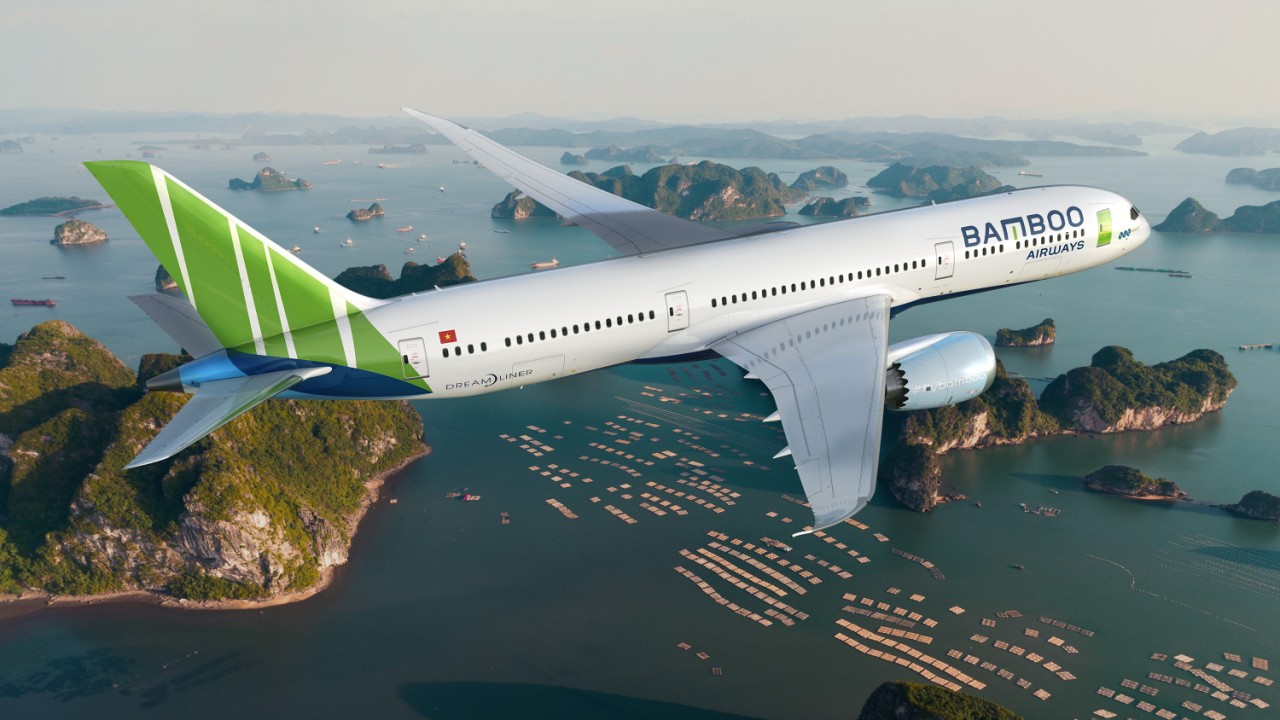
    Vietnam’s private airline Bamboo Airways will suspend all routes to and from South Korea to stem the spread of the novel coronavirus.

    Both routes from central Da Nang and Nha Trang to Seoul’s Incheon International Airport will cease operation starting February 26, it stated Monday.

    The airline is currently operating seven trips a week on each route with the narrow-body Airbus A21neo capable of carrying nearly 200 passengers.

    It stated flight suspension is vital to warding off the coronavirus from South Korea where the number of confirmed cases has reached 763, and death toll 7 as of Monday.

    Last year, South Korea was Vietnam’s second-largest tourism market behind China with 4.3 million visitors, up 23 percent year-on-year.

  • Mos Burger launching in Vietnam

    Mos Burger launching in Vietnam

    Mos Burger in Vietnam will open its first store in Ho Chi Minh City later this year.

    The company plans to set up a joint venture in the country next month and open 10 outlets in the next three years.

    Last October, Mos Burger partnered with Danang Tourism College to run a training program called Bentonamu Kazoku where Vietnamese candidates could undertake training courses at Mos Burger stores in Japan before returning home to work as managers.

    The company said it will recruit 350 people in four years under its work-visa program.

    Mos Burger in Vietnam’s recruiting strategy is not only to enhance the quality and training of staff there but also to help its Japanese franchisees address labor shortages arising from the country’s ageing population.

    While Vietnam may be the fast-growing retail market in Southeast Asia, it could prove a challenge for Mos Burger as other fast-food franchises have discovered that changing local consumers’ habits of eating cheap street food to relatively expensive burgers is not an easy mission.

  • Vietnam loosens regulations for car imports

    Vietnam loosens regulations for car imports

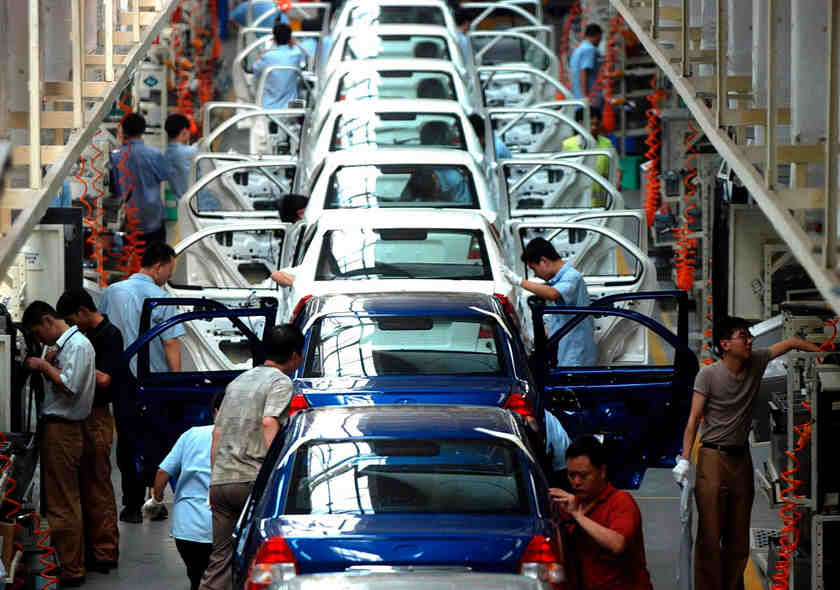
    Vietnam has scrapped the requirement for vehicle type approval certificates for car imports and eased customs clearance procedures.

    On February 5 the government amended provisions of Decree 116, which had imposed stringent conditions on the assembly, import and maintenance of automobiles since 2018.

    Importers no longer need to produce vehicle type approval certificates (VTAs) issued by authorities in the country of origin. VTAs, which confirm that production samples of a design meet specified performance standards, had been made compulsory by Decree 116.

    Besides, imported cars no longer need to undergo rigorous quality tests if they are identical to previously imported vehicles that had been tested in the last 36 months.

    Decree 116 had required each individual batch, without exception, to be tested at the time of import.

    “Decree 116 was enacted to tighten quality control of imported cars,” the owner of a Japanese car dealership said. “But once it has fulfilled its mission to get businesses in line with Vietnam’s quality standards, VTAs and other such certificates become redundant.”

    Immediately after Decree 116 came into effect on January 1, 2018, car imports plummeted 85 percent year-on-year in the first quarter as importers scrambled to procure the document.

    Governments in Vietnam’s major car supplying countries such as Thailand and Indonesia, which had never issued this type of document before, had to start doing so to prevent losing exports.

    According to industry insiders, Decree 116 was enacted as a non-tariff barrier to protect the domestic industry against a potential flood of car imports as a result of zero tariffs under the ASEAN Free Trade Agreement in 2018.

    Businesses quickly adapted to the new regulations, and car imports picked up again in the second half of the year, and have been rising until now.

    Unlike importers of Japanese vehicles, who took a lot of time to get VTAs, German carmakers such as Mercedes, Porsche, Truong Hai (BMW), Volkswagen, and Audi were not affected much since their country already issued the document.

    However, stricter customs clearance procedures did slow down luxury car imports from Europe, and dealers had to delay delivery to customers.

    “The removal of the VTA requirement and other customs procedures will not affect us too much other than reducing the time it takes to get our cars cleared by customs,” a German car dealer said.

    The new regulation only applies to the import of unused cars, and Decree 116 still applies in full to second-hand imports.

    According to the Vietnam Automobile Manufacturers Association (VAMA), 4,281 completely built-up (CBU) cars worth $111 million were imported in January this year, down 35.4 percent year-on-year.

    Overall car sales were down 52 percent from the previous month and 53 percent year-on-year to 15,787 units.

  • Saigon metro to test run in Q3

    Saigon metro to test run in Q3

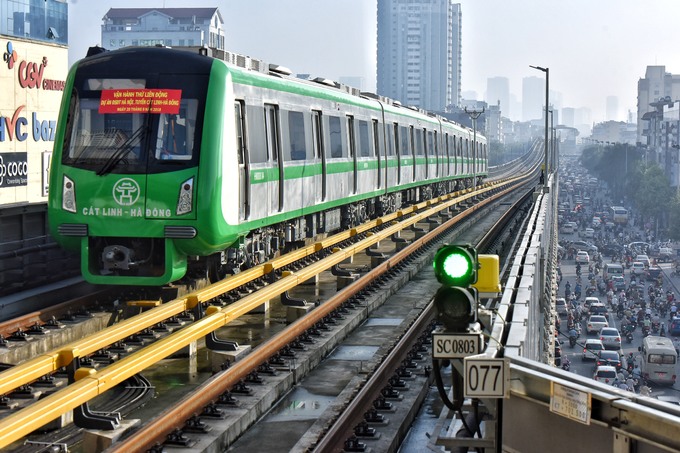
    An elevated section of Ho Chi Minh City’s Ben Thanh-Suoi Tien Metro Line 1 will be tested out within the third quarter this year.

    This elevated section crosses Ho Chi Minh City’s District 9, spanning from central Binh Thai Station to Long Binh Depot, a train maintenance center, the HCMC Management Authority for Urban Railways (MAUR) said in a report to the city’s People’s Committee.

    Once testing is complete, MAUR said it would test another section between Binh Thai and Van Thanh stations in District 2.

    The city targets project completion to advance to 85 percent before the end of this year, to officially enter operation by the end of 2021, it was added.

    The first locomotives and trains for the line, produced by Japanese manufacturer Hitachi, are set to arrive in HCMC from Japan in June.

    Hitachi is currently testing out two trains to deliver first, then will send over another 15, all of which will have three carriages each, as Metro Line 1 is being completed, the MAUR said.

    All 17 trains are part of a $370 million package signed with Hitachi in 2003, which includes delivery of other equipment such as signaling and communication, electricity generation, and electronic fee collection systems.

    On Monday, the city removed a barrier between the metro line’s two underground segments, integrating the entire length of Ben Thanh-Suoi Tien Metro Line 1. Removal of the barrier, erected to facilitate construction of both segments, paves the way for the next phase of the project – equipment installation, officials said.

    When completed, HCMC’s Metro Line 1 will span 19.7 kilometers from Long Binh in District 9 to Ben Thanh in District 1 with a total of 14 stations.

    Work on the line started in August 2012, with the elevated segment cleared in June 2018.

    It was approved in 2007 with a total investment of VND17.4 trillion ($747 million). This was raised to VND47 trillion ($2.02 billion) in 2010 after design changes and fluctuations in the exchange rate of the Japanese Yen, though the increase was not approved by relevant ministries.

    Last November, the National Assembly allowed HCMC authorities to approve a new total investment of VND43.6 trillion ($1.87 billion).

  • Vietnam IT recruiting firm raises million dollars from South Korean investor

    Vietnam IT recruiting firm raises million dollars from South Korean investor

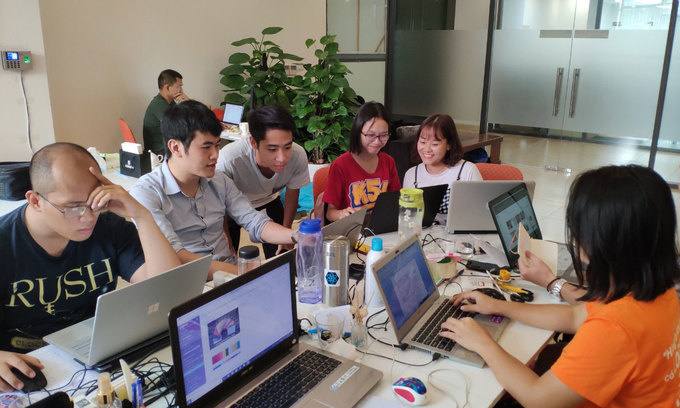
    IT recruitment firm TopDev has secured a million-dollar investment from South Korea’s leading recruitment company Saramin HR.

    The Ho Chi Minh City-based company said in a statement Monday that the deal, whose exact value it did not reveal, would be used to increase the supply of developers through training programs for graduates.

    Saramin HR, which is listed on South Korea’s KOSDAQ, said the investment is part of its global development plan and would support TopDev’s potential expansion in Southeast Asia.

    TopDev said Vietnam has 350,000-400,000 developers now but 500,000 would be needed by 2021 as the country remains a popular outsourcing software destination for multinationals.

    Vietnam is seeing increasing investment in tech startups.

    Last year the total investment in Vietnamese tech startups surged 2.5 times to $741 million, second only to Indonesia in Southeast Asia.

  • Vietnam’s Coffee Queen abdicates Trung Nguyen throne

    Vietnam’s Coffee Queen abdicates Trung Nguyen throne

    Le Hoang Diep Thao has transferred all shares in the Trung Nguyen empire she ran with her ex-husband, pursuant to their final divorce ruling.

    Thao, former deputy director of Trung Nguyen Group (TNG), is no longer on the company’s list of shareholders, TNG announced in a statement Wednesday.

    She and her ex-husband were referred to in the media as the King and Queen of Vietnamese coffee.

    Her ex-husband, Dang Le Nguyen Vu, founder, chairman and CEO of TNG, now owns all shares in the coffee giant and its subsidiaries and has full control of the group. He has also completed a VND1.19 trillion ($51.1 million) “difference in assets” payment to Thao following their divorce ruling on December 5 last year, TNG said.

    On January 13, the Ho Chi Minh City Civil Judgment Execution Department had confirmed that it received Vu’s payment of the above VND1.19 trillion ($51.1 million) in full. The same day, the department also received a written request from the Supreme People’s Procuracy to postpone the execution of the ruling, to give it time to “consider a cassation request Thao had submitted on the judgment.”

    But because Vu had already fulfilled his obligations in accordance with the judgment in question, the City Civil Judgment Execution Department went ahead with the execution and notified the Supreme People’s Procuracy of its action on January 16.

    Vu and Thao, who got married in 1998, differed on how the group, which had developed one of the biggest brands in the country, should be run. In 2015, Thao filed for divorce.

    In March, the court of the first instance had ruled that the stocks and cash of TNG shared by Vu and Thao, as well as the couple’s cash deposits, would be split 60:40 in Vu’s favor.

    Both Thao and Vu had appealed against the entire verdict. The HCMC People’s Appellate Court on December 5 quashed both appeals, finalized the divorce, and upheld the previous judgment.

    Vu will receive all of his and Thao’s stocks in the Trung Nguyen Group, estimated at over VND5.7 trillion ($244.74 million), and have sole management rights over the Trung Nguyen coffee empire, the court had ruled.

    Vu would also receive six properties worth VND350 billion ($15.03 million) that were jointly owned by the couple, while Thao would get the remaining seven worth over VND376 billion ($16.48 million).

    Thao would also receive cash and cash equivalents, gold and foreign currency belonging to TNG that have been deposited at banks totaling VND1.76 trillion ($75.57 million). Vu was liable to pay the difference in assets to Thao, valued at VND1.22 trillion ($52.38 million), the court had ruled.

    Trung Nguyen Group, founded in 2006, is the leading coffee brand in Vietnam. The group began experiencing difficulties six years ago when Vu and Thao fell out on how the corporation should be run.