Tag: Vietnam

  • Indonesia to promote national products at exhibition in Vietnam

    Indonesia to promote national products at exhibition in Vietnam

    The Indonesian Embassy in Hanoi, Vietnam, will promote national products through an exhibition to be held in Ho Chi Minh City from November 30 to December 3, 2016.

    The exhibition showcasing Indonesian products will help enhance bilateral trade between Indonesia and Vietnam, targeted to reach US$ 10 billion by 2018, according to information received from the Indonesian Consul General in Ho Chi Minh City. This was reported on the official website of the Ministry of Foreign Affairs on Tuesday.

    The Indonesian Ambassador to Vietnam, Ibnu Hadi, has held a meeting with representatives of Indonesian companies operating in Vietnam, especially those located in southern Vietnam.

    The meeting was attended by 14 Indonesian companies engaged in the business of aluminum extruders, travel agents, paints, snacks, pharmaceuticals, herbal supplements, paper, investment consultant, language courses, as well as animal feed.

    At the meeting, the ambassador said the Indonesian companies could participate in the exhibition without having to pay any money.

    According to him, the Indonesian Embassy in Hanoi will bear the cost of the exhibition, which will be organized by the Vietnam National Advertising Company and Trade Fair (Vinexad). Vinexad is a state-owned enterprise under the Ministry of Industry and Trade of Vietnam.

    The exhibition of Indonesian products will be a part of the 14th Vietnam International Trade Fair. Indonesia will have a pavilion featuring 76 booths.

    The Indonesian Pavilion will showcase superior products made in Indonesia and already accepted in the Vietnamese market. A number of new products will also be marketed soon.

    The Vietnam International Trade Fair is the largest trade fair in the southern part of Vietnam.

    In 2015, a total of 450 companies from 16 countries participated in the event, including the United States, China, Indonesia, Japan, Malaysia, Nepal, Singapore, Spain and Thailand.


  • ZALORA Ties the Knot with Customers through Oracle Marketing Cloud

    ZALORA Ties the Knot with Customers through Oracle Marketing Cloud

    ZALORA, the largest e-commerce fashion company in Southeast Asia, has extended its partnership with Oracle Marketing Cloud. ZALORA has relied on Oracle Marketing Cloud technology since 2013 to send its customers targeted and personalized marketing communications at scale.

    ZALORA is the fastest growing online fashion retailer in Asia, operating across eight countries (Singapore, Indonesia, Malaysia & Brunei, the Philippines, Thailand, Vietnam, Hong Kong and Taiwan). The e-commerce platform works with a good mix of over 500 international and local labels, providing consumers with a diverse range of apparel, footwear and accessories, tech products, beauty essentials, sporting equipment and more.

    “We are happy to have achieved the success we have today, and want to continue offering the best-in-class customer experience across our digital channels. For us it is not just about understanding our customers preferences, but making sure we listen and respond to their digital body language to develop a personalised dialogue with each and every customer,” said Joshua Tan, Head, Regional CRM, ZALORA.

    ZALORA communicates with more than 10 million app users, 7 million Facebook fans, 500,000 Instagram followers, 120,000 Twitter followers, and over 2.2 million email, call and online chat requests. Today, the platforms cater to the varying customer profiles where ZALORA provides individualized experiences for each of their customers’ interests.

    “Our earlier marketing efforts were batch and blast, but as the business evolved, we saw the need to respond to increased expectations from our customers for a personalized dialogue. Being able to orchestrate individualized communications and make informed, data-driven decisions is key. Having the right tools makes our job much easier, that’s why we chose to extend our investment in Oracle’s Marketing Cloud technology,” said Mr. Tan.

    With Oracle Marketing Cloud, ZALORA is able to speak to customers in a relevant and personalized way. Automated programmes equip ZALORA with the ability to analyse customer behaviour and better understand how to incentivise customers.

    ZALORA has since managed to half the time needed for lead conversion to capture a larger customer base, which has resulted in a multifold increase in revenue. Oracle’s marketing cloud technology allows ZALORA to create automated programmes that have helped reduce the resources previously required.

    “ZALORA is an innovative company that appeals to a young, constantly engaged audience. We are happy that Oracle Marketing Cloud is able to support their marketing organisation with a platform that allows them to intelligently and creatively communicate a cohesive brand message across channels, and deliver a world-class customer experience,” said Paul Cross, Group Vice President, Customer Success, Oracle Marketing Cloud Asia Pacific.

    ZALORA currently has 10 automated programmes in place and has plans to expand the number of triggered touchpoints with customers, to further enhance cross-channel marketing and grow their customers into strong brand advocates.

  • New lifeline for sagging Rocket Internet fashion sites

    New lifeline for sagging Rocket Internet fashion sites

    Investors have injected US$339 million lifeline into GFG, which owns the struggling Rocket Internet fashion websites.

    Rocket Internet and others have sunk the euro 300 million into its Global Fashion Group, raising GFG’s valuation to €1 billion – which is about a third of what it was worth hardly a year ago, when it raised €150 million.

    Launched in Luxembourg in 2014, GFG is a holding company formed from a merger of five eCommerce fashion companies – India’s Jabong, Latin America’s Dafiti, Russia’s Lamoda, Middle East firm Namshi, and Zalora (Southeast Asia and Australia).

    GFG acting CEO Romain Voog says the financing will provide the group with the capital it needs to continue with its strategy of “building out its leading position” in the online fashion sector in emerging markets.

    Rocket claims GFG’s performance has improved in the past year, easing its losses and raising its adjusted EBITDA margin. But it has been struggling to gain market share, and pulled out of Thailand and Vietnam, one of the fastest-growing eCommerce and internet markets in Asia.

    And GFG’s Jabong business in India, considered the next big market after China, has reportedly been up for sale for months with its valuation eroded by a tenth in just a year. Meanwhile, rival eCommerce companies like Flipkart and Snapdeal have soared in value.

    Voog is optimistic the reduced losses combined with this funding round will help accelerate the GFG’s path to profitability while it expands. A third of the €300 million raised came from Rocket. Swedish investor Kinnevik was also involved, along with existing shareholders.

  • Hanoi Telecom taps Infinera to expand backbone

    Hanoi Telecom taps Infinera to expand backbone

    Vietnamese wireless operator Hanoi Telecom Corporation has expanded its backbone network using equipment from Infinera.

    Hanoi Telecom extended its existing Infinera TM-Series metro network with the vendor’s DTN-X technology for its backbone connecting Ho Chi Minh City and Vung Tau.

    The new technology is allowing Hanoi Telecom to deploy 500Gbps super-channels – a first for the Vietnam market.

    Infinera’s Instant Bandwidth is also being used to allow optical capacity to be easily software-activated in 100Gbps increments.

    “We intend to advance the deployment of high bandwidth solutions to our customers in the Vietnam market by using the DTN-X XTC Series based on the innovative PIC technology,” Hanoi Telecom chairwoman and CIO Trinh Minh Chau said.

    “Infinera’s Instant Bandwidth allows us to differentiate our services through pre-deployed capacity which can be delivered on-demand via software defined activation. In addition, Infinera’s platforms have demonstrated the type of reliability and quality we are looking for in our network.”

    Infinera’s local partner Nissho Electronics Vietnam oversaw the rollout.

    Hanoi Telecom provides carrier and wholesale services focused mainly on wireless, broadband and VoIP services, as well as retail operations under the Vietnam Mobile brand. The company is one of Vietnam’s lagest wireless operators with more than 13 million subscribers.

  • Siam Makro plans $258m expansion

    Siam Makro plans $258m expansion

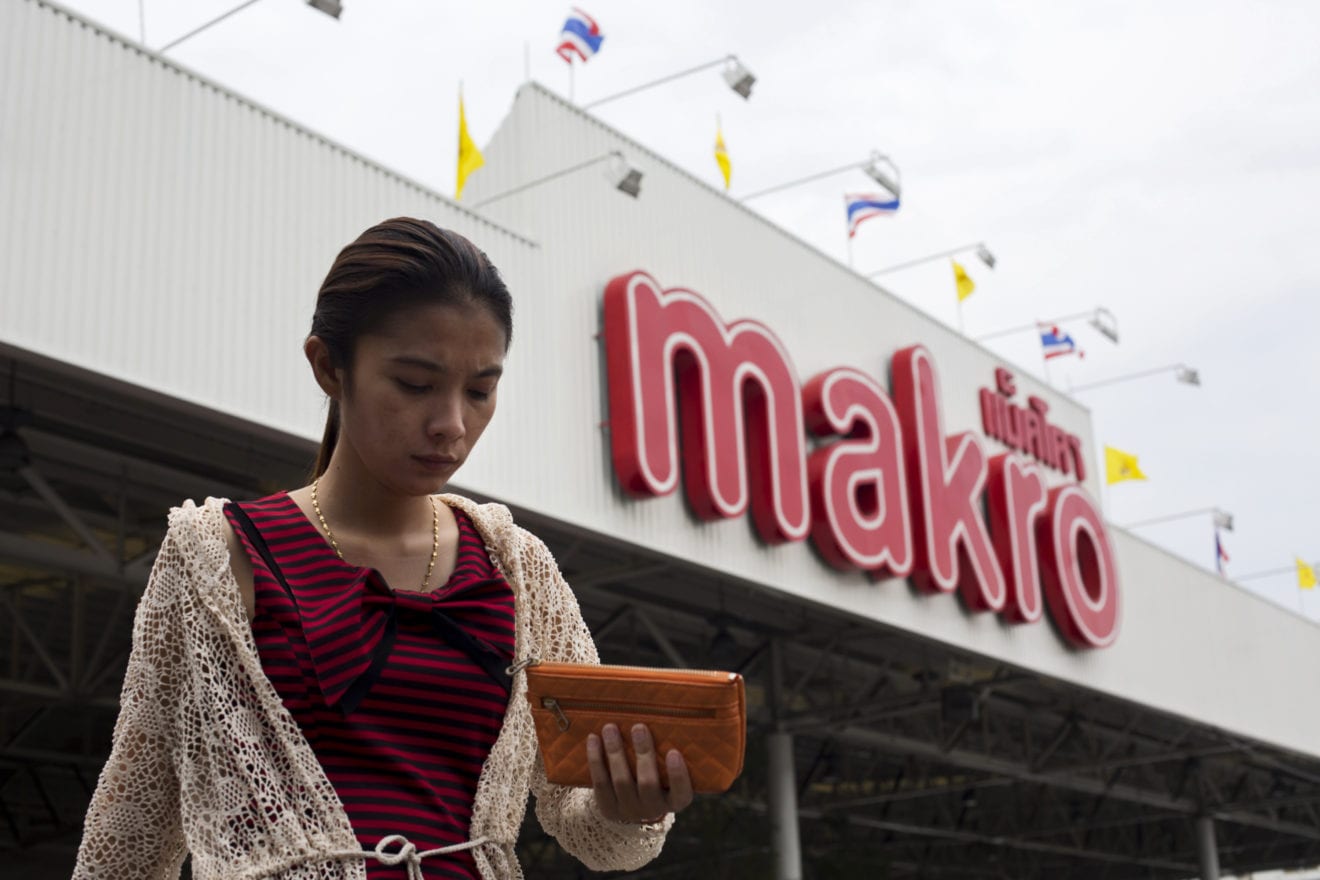
    Thai cash-and-carry chain Siam Makro plans to invest up to 9 billion baht ($258 million) in opening stores this year in Thailand and overseas.

    Its parent company, CP All, which through its ownership of 7-Eleven Thailand is the country’s largest convenience store operator, plans to sell some of its 97 per cent stake in Siam Makro. It has appointed Siam Commercial Bank as financial advisor for a public share sale.

    It is reported CP All aims to keep a stake of more than 50 per cent in Siam Makro, whose main customers are hotels, restaurants and small convenience stores.

    Siam Makro plans to spend 6 billion baht to open 20 stores in Thailand this year, plus 3 billion baht to expand elsewhere in Southeast Asia. CFO Saowaluck Thitaphant says possible markets include Cambodia, Laos and Vietnam.

    She says the company is also interested in India, and plans a store for Myanmar once the political climate is clearer following elections.

    Siam Makro expects revenue to rise by less than 10 per cent this year.

    CP All, controlled by billionaire Dhanin Chearavanont’s Charoen Pokphand Group, says it will use proceeds of the share sale to repay debt.

  • Central Group wins Big C Vietnam auction

    Central Group wins Big C Vietnam auction

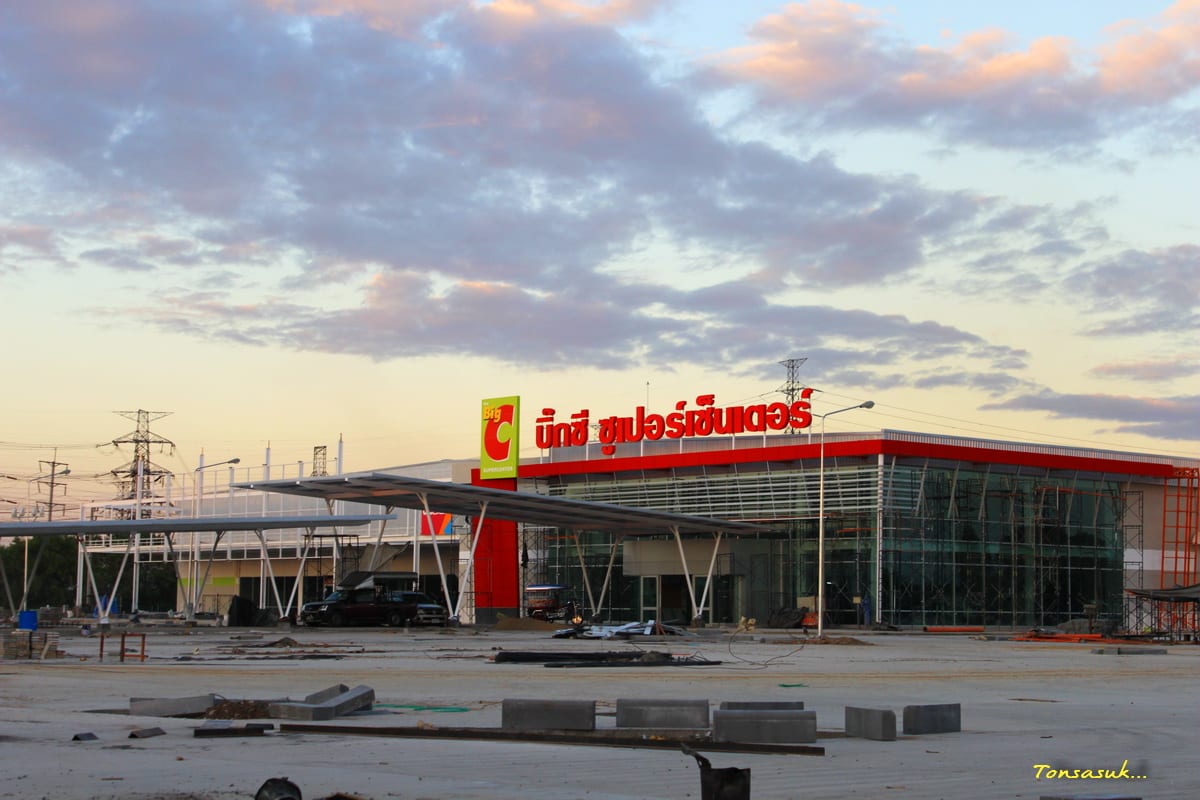
    Thai retail conglomerate Central Group has won the bidding battle for Groupe Casino’s Big C Vietnam business.

    Groupe Casino has confirmed Central paid €1 billion (US$1.14 billion), which will be used to pay down debt.

    That price is as much as $300 million more than the French retailer reportedly expected to get for the business whose value was earlier publicised at around US$800 million.

    One of the rival bidders – Lotte Group of Korea – is believed to have withdrawn from the process when it became clear the price would exceed $1 billion.

    Casino says it will net €920 million after sale costs.

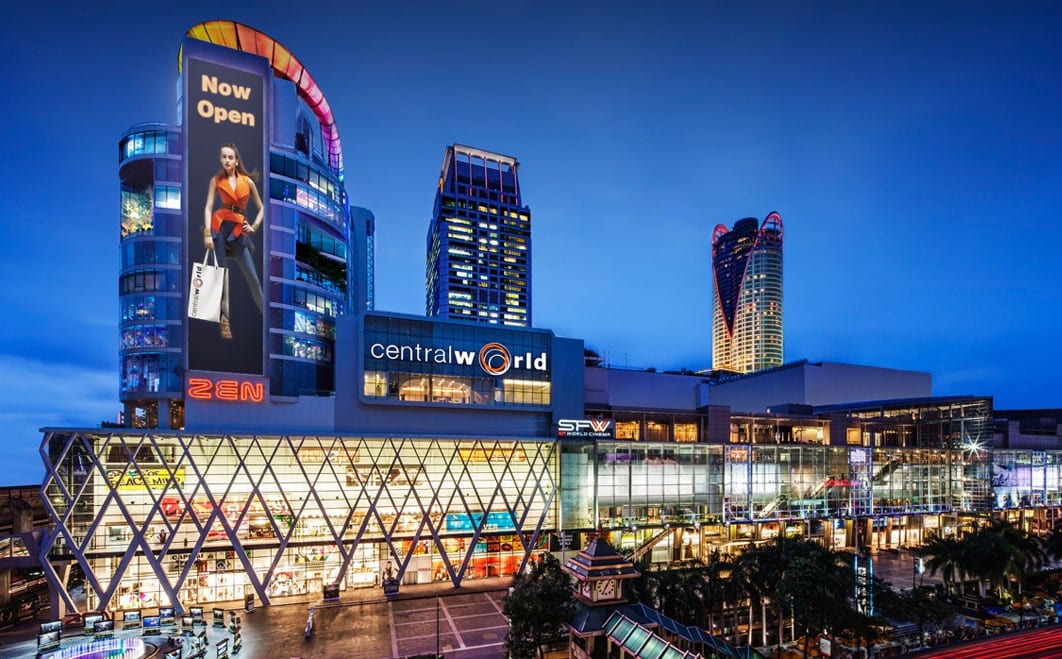
    Central Group is already building a substantial collection of assets in Vietnam, rolling out Robins department stores in main centres and acquiring a controlling interest in the country’s largest electronics retail chain Nguyen Kim. Outside Vietnam it owns department stores in Italy, Germany and Indonesia, amongst other markets. Worldwide it boasts 4400 stores under various brands.

    In an odd twist, Central was a minority shareholder in the Big C Thailand operation which Groupe Casino sold a majority 58.6 per cent stake to rival Thai retailer Berli Jucker last month. Berli Jucker is controlled by tycoon Charoen Sirivadhanabhakdi, who last year paid €3.1 billion for German owned Metro Group’s hypermarket business in Vietnam. Berli Jucker is believed to have bid for Big C Vietnam but lost out to Central.

    The Big C Vietnam operation comprises 43 stores and 30 shopping malls. It turned over  €586 million in 2015.

  • On Pedder takes first step into eCommerce

    On Pedder takes first step into eCommerce

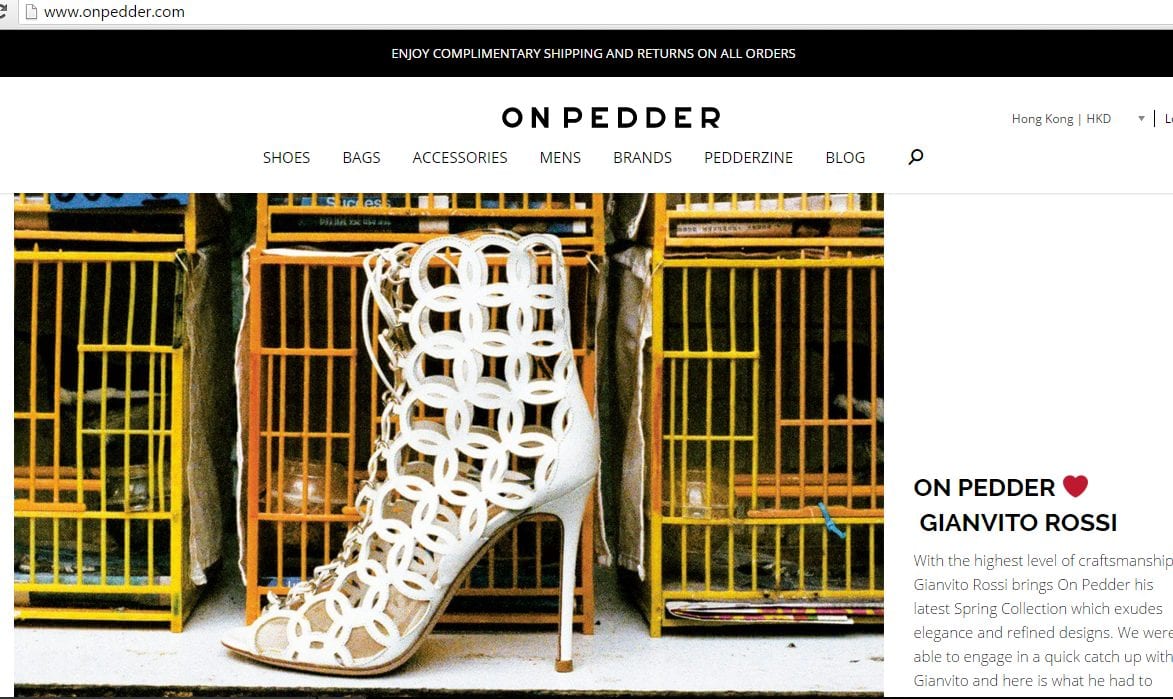
    Hong Kong shoe retailer On Pedder has launched an eCommerce site featuring a curated mix of luxury footwear.

    It is centered around the retailer’s Pedderzine, a seasonal art-fashion hybrid magazine distributed to customers.

    Complimentary shipping is being offered by the site, with returns possible, for customers in Hong Kong, Japan, Macau, Philippines, Singapore, South Korea, Taiwan and Vietnam, as well as Australia and New Zealand.

    Brands include 3.1 Phillip Lim, Aquazzura, Chloe, Common Projects, Gianvito Rossi, Giuseppe Zanotti Design, N⁰21 , Neil Barrett, Nicholas Kirkwood, Paul Andrew, Rene Caovilla, Sophia Webster and Valentino.

    More brands are showcased under the “On Pedder Love” section of the site, along with exclusive product.

    On Pedder collaborated with Hong Kong photography and video artist Luke Casey for Pedderzine this season, which focuses on Hong Kong and Kowloon’s roots and was shot on the streets of Jordan and Sham Shui Po and Jordan, including karaoke bars, back alleys, markets and brothels.

    “We wanted to create an online destination for our customers to enjoy the energy and aesthetics of our in-store curation,” says Pedder Group president Peter Harris.

  • Central Group to buy Zalora’s businesses in Thailand and Vietnam

    Central Group to buy Zalora’s businesses in Thailand and Vietnam

    Central Group is set to buy Zalora’s businesses in Thailand and Vietnam, according to reports.

    Zalora is a fashion-focused e-commerce site.

    Central Group’s assets, which include multiple shopping malls and national department store chains, are worth close to $10 billion and it employs some 70,000 people.

    The deal to buy the country businesses from Zalora will cost Central Group around $10 million each, reported TechCrunch.

    Sources close to Zalora suggest that the company is selling the businesses in an effort to streamline its costs and move towards becoming profitable.

    Even though Zalora was only started four years ago, the company claims 10 million people have downloaded its mobile apps and the company makes 1.4 million transactions per year across 10 countries in Asia-Pacific.

  • Lotte pulls out of Big C Vietnam race

    Lotte pulls out of Big C Vietnam race

    South Korean retail heavyweight Lotte has reportedly withdrawn from the bidding battle for Big C Vietnam.

    Reuters, quoting unnamed sources familiar with the matter, said the company was not keen to bid aggressively for the supermarket network. Lotte already has its own network of hypermarkets in Vietnam and will no doubt have costed a bid for Big C based on the value of the market share and assets it would acquire versus the cost of continuing its own organic store network growth.

    France’s Groupe Casino is auctioning off the Vietnam business having earlier sold its stake in Big C Thailand to Thai import and export firm Berli Jucker for about US$6.2 billion.

    Lotte Group, which controls Lotte Shopping, declined to comment on the report.

    Big C opened its first Vietnam store in 1998 and has 30 stores in cities across the country.

    At the time it put the business on the market, Groupe Casino said it hoped to be paid about US$813 million, which would be spent paying down debt.

    However based on current bids for the business, sources are now estimating the sale could net closer to $1 billion.

    Thailand’s Central Group, which is has been approached by Berli Jucker to buy its minority stake in Big C Thailand and has a growing portfolio of retail businesses in Vietnam, is thought to remain in the hunt, along with Berli Jucker which through an affiliated company bought Metro Vietnam from Germany’s Metro AG last year and is building a convenience store network in the country under the banner B’Smart.

    Reuters reports at least 10 offers were initially received for the business, with the final round of tender due this week.

  • Ninja Van gets $30m capital boost

    Ninja Van gets $30m capital boost

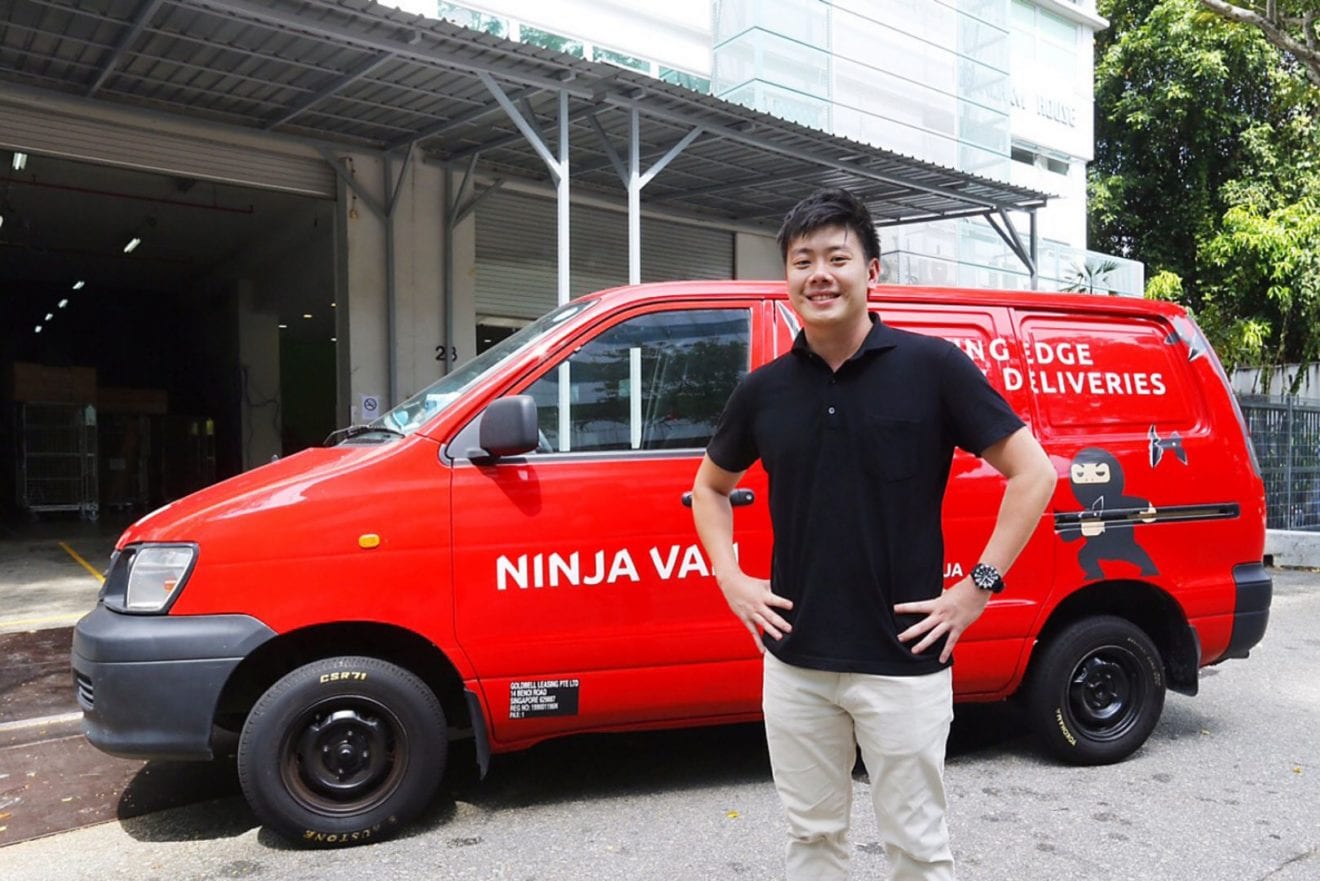
    Dubai-based Abraaj Group has led a US$30-million Series B round of fundraising for Singapore’s Ninja Logistics (Ninja Van), a technology-enabled last-mile logistics provider with a presence in Indonesia, Malaysia and Singapore, and just lately Vietnam.

    Ninja Van plans to use the fresh capital to roll out in the Philippines and Thailand this year, and to also upgrade its systems and triple its customer service headcount.

    Others in the funding round were existing investor Monk’s Hill Ventures joined by B Capital Group and YJ Capital. In its Series A in March last year, the startup raised US$2.5 million. This latest transaction is subject to customary closing conditions and is expected to wrap by the end of the month, according to Abraaj.

    Ninja Van uses algorithms to solve complex logistics issues and optimise delivery routes. It also forges partnerships with complementary transport fleets through a capacity-sharing model.

    While starting out as a logistics provider for eCommerce businesses, Ninja Van now supports more than 3000 clients across a range of industries, delivering about 15,000 parcels a day.

    “This vote of confidence from Abraaj and our other new investors will allow us to expand beyond tier-one cities in Southeast Asia,” says Ninja Van cofounder/CEO Lai Chang Wen.

    Abraaj is an investment firm specialising in private-equity investments in the Middle East, North Africa and South Asia. This is its 28th investment into Southeast Asia.

  • Singapore’s SoftPay Mobile buys Vietnam MPOS

    Singapore’s SoftPay Mobile buys Vietnam MPOS

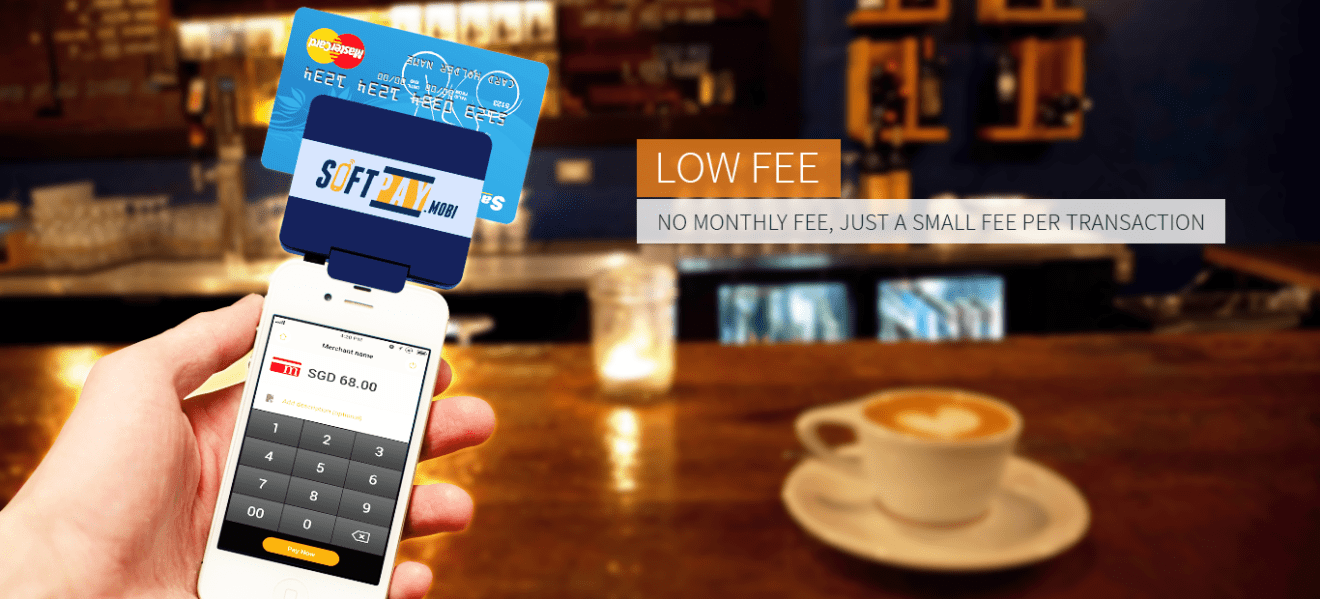
    Singapore-based mobile point of sale (mPOS) provider SoftPay Mobile International has arranged to buy out Vietnam MPOS Technology.

    Vietnam MPOS customers include Mai Linh Taxi Group, one of the largest taxi groups in Vietnam, as well as insurance companies. Lazada Vietnam, the largest e-commerce group in the country, is also a customer.

    mPos has proven incredibly popular in Southeast Asia where a vast majority of people living in rural areas have no access to traditional banking infrastructure.

    With the advance of mobile technology, mPos devices such as SoftPay’s mobile terminal are able to take advantage of these devices to provide merchants anywhere with a full suite of options for receiving payments.

    “With this investment, SoftPay Mobile will be able to work closely with our new Vietnam MPOS company to further consolidate our market position as the leading mPOS company in Southeast Asia,” said Christopher Low, CEO of SoftPay Mobile.

    SoftPay Mobile is a venture-backed mPOS company with a presence in Vietnam, Malaysia, Singapore and Indonesia. Since its incorporation in late 2014, it has been aggressively pursuing expansion in Southeast Asia.

  • Viettel to roll out 3G-only network in Myanmar

    Viettel to roll out 3G-only network in Myanmar

    Vietnamese military-run operator Viettel has provided details of its plans for entering the Myanmar mobile market, including a goal of connecting 95% of the country’s population within three years.

    Viettel was recently selected as the international partner for a consortium of 11 local technology and other companies selected to become Myanmar’s fourth mobile operator.

    As part of this consortium, Viettel announced plans to roll out a 3G-only network on the 900-MHz and 2100-MHz frequency bands. The operator also aims to launch 4G services on the 1800-MHz bands if it secures the required licenses.

    The consortium will have a total investment of $1.5 billion, and Viettel will take a 49% stake in the venture.

    “We enter Myanmar at this historic phase in the country’s reform era, when the country is forecast to witness accelerated economic growth, enhanced also through increased foreign direct investment,” Viettel deputy general director Le Dang Dung commented.

    “Advancing the country’s telecom infrastructure will help us drive a surge in mobile and smartphone subscription penetration, to achieve the government’s target of reaching 90% of the population by 2020. We believe that the role of telecommunications is fundamental in driving Myanmar’s next phase of economic growth.”

    The consortium will be competing with Telenor Myanmar and Ooredoo Myanmar, as well as the joint venture between Myanmar Posts and Telecom and Japan’s KDDI.

  • Asian retail leaders in Forbes most powerful businesswomen

    Asian retail leaders in Forbes most powerful businesswomen

    Two Asian retail leaders have been added to Forbes magazine’s annual list of 50 most powerful businesswomen in Asia – in The Philippines and Vietnam.

    They are Robina Gokongwei-Pe, the president and COO of Robinsons Retail Holdings, the second-largest multi-format retailer in The Philippines, and chairman/general director Cao Thi Ngoc Dung of Vietnam’s largest jewellery brand, PNJ, which she founded in 1998.

    Robinsons started as a department store in Manila in 1980, expanding into the supermarket business five years later. It entered the DIY business in 1994, the convenience store and specialty store businesses in 2000, and the drug store business in 2012.

    There are six business segments: supermarkets (Robinsons Supermarket and its two new subformats, Robinsons Easymart and Robinsons Selections); department stores (Robinsons Department Store); DIY stores (Handyman Do it Best, True Value, True Home by True Value, and the newly acquired big-box hardware subformat A.M. Builders’ Depot); convenience stores (Ministop); drugstores (South Star Drug and Manson Drug); and specialty stores (from consumer electronics and appliance retailer Robinsons Appliances and Savers Appliances to toys retailer Toys ’R’ Us, one-price-point retailer Daiso Japan, coffee chain Costa Coffee and international fashion brands such as Dorothy Perkins, Topman and Topshop, and international cosmetics brands such as Shiseido).

    Robina Gokongwei-Pe is also a director of Cebu Air, JG Summit Holdings, Robinsons Bank Corporation and Robinsons Land Corporation. She is a trustee of the Gokongwei Brothers Foundation, Immaculate Conception Academy Scholarship Fund and the Ramon Magsaysay Awards Foundation, and is also a member of the University of the Philippines Centennial Commission.

    After attending the University of the Philippines-Diliman, she obtained a Bachelor of Arts degree, majoring in journalism, from New York University in 1984. Pe joined the Robinsons group in 1984 as a management trainee. She is the daughter of the chairman and CEO of the company, John L Gokongwei Jr.

    Cao Thi Ngoc Dung founded PNJ as a store in 1998, and now has a 17 per cent stake of the company, which has more than 3000 employees in 200 stores. The group grossed $350 million in revenue and made a profit of $23 million in its latest trading year.

    Based in Ho Chi Minh City, PNJ opened its own jewellery factory in October 2012. A VND120 billion (US$ 5.38 million) investment, the factory has the capacity to produce 4 million items a year. PNJ’s national expansion started in 1994 with the establishment of a branch in Hanoi.

    This year’s Asia’s Power Businesswomen list represented 14 countries, with China and Hong Kong dominating (14 women), followed by India (8), Thailand (5) and Japan (4). Australia, Indonesia, Singapore and Vietnam each had three, while South Korea and The Philippines each had two. Macau, New Zealand and Taiwan had one each. There were 27 newcomers, about a quarter of them from the tech sector.

  • Amway Vietnam under investigation

    Amway Vietnam under investigation

    Vietnam’s Ministry of Industry and Trade (MoIT) is investigating seven multi-level marketing companies, including Amway Vietnam.

    With a focus on uncovering illegal pyramid schemes masquerading as business opportunities, the investigation is expected to be completed next month.

    In late March, the MoIT assembled a team to look into Amway Vietnam, Unicity Marketing Vietnam, Thien Ngoc Minh Uy, Tap Doan Lien Ket Vietnam, Lien Ket Tri Thuc, Lien Minh Tieu Dung Thang Long and Nhuong Quyen Thang Long.

    Amway Vietnam, Unicity Marketing Vietnam and Thien Ngoc Minh Uy have the largest revenues of multi-level marketing companies in Vietnam.

    In the investigation team are representatives from MoIT’s  Vietnam Competition Authority (the government’s management body for multi-level marketing businesses) and Market Management Department, which works in tandem with the Police Investigative Department on Economic and Corruption-related Crimes.

    Since March 9, the Vietnam Competition Authority has revoked the registration certificates of five companies for fraudulent activities, and the Hanoi Department of Industry and Trade has punished several companies for violating regulations on multi-level marketing businesses in the capital city.

    The investigations were launched after MoIT’s minister Vu Huy Hoang issued a directive requiring agencies to search out pyramid schemes falsely labelled as multi-level marketing companies.

    In February, the Lien Kiet Viet company was caught after swindling about 60,000 people in more than 27 cities and provinces, appropriating a total of VND1.9 trillion ($87.15 million) since 2014.

    Multi-level marketing firms were allowed into Vietnam at the request of foreign countries during Vietnam’s negotiations to join the World Trade Organization. Since 2009, foreign-owned companies have been permitted to run these businesses, and now nearly half of the 61 companies in this segment are wholly foreign-backed.

  • FPT Vietnam to sell stake

    FPT Vietnam to sell stake

    One of Vietnam’s largest private tech firms, FPT Corporation is planning to sell a large stake in its retail and distribution units, providing an opportunity for regional players to buy into the fast-growing Vietnamese market.

    Funds from the sale will be used to help with mergers and acquisitions (M&A) in the information technology area.

    At a shareholder meeting, the company said it will reduce its holdings in FPT Shop, a mobile device retailer, and FPT Trading, which makes, imports and sells telecommunications and electronic products.

    FPT Shop has reached its target of having 250 outlets by this year, and the distribution arm’s profit margins are steady 46 per cent, the meeting was told. FPT still expects the major part of its revenue to come from retail and distribution, estimated at VND28.58 trillion (US$1.27 billion) – about 63 per cent of turnover.

    “The IT industry has a lot of potentials, and the opportunities are universal,” says deputy-CEO Nguyen The Phuong.

    He says some of the money raised will be used to increase the company’s stake in FPT Telecom.

    FPT chairman Truong Gia Binh last year unveiled his goal to invest US$50 million through M&A every year, in both local and international companies. The targeted markets include the US, Japan, Singapore and Europe. Two years ago, the company acquired RWE IT Slovakia for an undisclosed amount and rebranded it to FPT Slovakia.

    One of the main competitors of FPT Shop, Mobile World, has expressed an interest in buying the retail unit. Another candidate could be Thailand’s Central Group, which bought 49 per cent of Vietnamese electronics retailer Nguyen Kim early last year and reportedly wants to also acquire Pico, another local electronics store.

    FPT Vietnam has retained VietCapital Securities and Japan’s Nomura Securities for advisory services on the sale.