Tag: Vietnam

  • Zalora Thailand and Vietnam to be offloaded

    Zalora Thailand and Vietnam to be offloaded

    Rocket Internet is selling its Zalora Thailand and Vietnam eCommerce fashion sites.

    This follows the Alibaba Group investing in Rocket Internet’s Lazada, valued at US$1.5 billion. Zalora, which raised more than $250 million, was once on an equal footing with Lazada, according toTechCrunch.

    Southeast Asia did not have service from Amazon or eBay when Rocket started Lazada and Zalora in 2012, but the two outlets have posted heavy losses and experienced slow market growth.

    Zalora, part of the Global Fashion Group (GFG), covers 11 countries across Asia Pacific, including Australia, Indonesia and Taiwan. While its revenue rose 78 per cent to US$234 million last year, its net loss blew out 36 per cent to $105 million.

    Meanwhile, Rocket has announced a new strategy that takes it back to its roots, launching early-stage startups. It sold India-based Fab Furnish this month and Foodpanda Vietnam last year, and is said to be seeking buyers for Foodpanda India and eCommerce site Jabong.

  • eCommerce won’t dent Asian retail real estate demand

    eCommerce won’t dent Asian retail real estate demand

    Growing online sales will not undermine demand for Asian retail real estate, according to the last CBRE study of major international brands.

    For the seventh edition of How Active Are Retailers Globally?, the real-estate company looked at more than 150 major international brands based in Americas, Asia Pacific and EMEA (Europe, the Middle East and Africa) countries.

    China is the top target market in the Asia Pacific (APAC) and fourth-ranked globally, with 27 per cent of retailers looking to expand there. Hong Kong follows in sixth position (24 per cent), Japan in seventh (22 per cent) and Singapore in ninth (21 per cent). The top three globally were Germany (35 per cent), France (33 per cent) and the UK (29 per cent).

    China and Hong Kong maintained their placings, while Japan, Singapore and Australia (11th) all rose higher in the ranking, up from 13th, 18th and 15th positions respectively.

    “Hong Kong will remain a desirable market for retailers, particularly as it continues to serve as a popular shopping destination for mainland Chinese tourists,” says CBRE Hong Kong executive director for retail services Joe Lin.

    “The main difference is a shift from luxury to mid-range brands. This is forcing luxury retailers to consolidate their footprint, leading to a drop in rental cost in prime locations and therefore opportunities for non-luxury retail brands.”

    Most APAC markets saw increased interest for this year, with the exception of China and South Korea. Malaysia (10 per cent), Indonesia (9 per cent), Thailand, Vietnam and The Philippines (all 8 per cent) received more than double the interest they saw last year, when all markets secured between 1 and 3 per cent.

    Asked about the risk factors for the coming year, brands indicated that real-estate cost escalation (56 per cent) and unclear economic prospects (42 per cent) continue to be at the forefront of their minds.

    “We’re seeing more of a challenging economic environment, and concerns such as high operating costs and a lack of quality space means retailers are somewhat more wary this year,” says CBRE head of Asia Pacific research Dr Henry Chin. “However, even as markets such as China and Hong Kong are experiencing a slowdown, we see increasing numbers of opportunistic retailers looking to enter markets like Hong Kong, supported by strong underlying consumer demand.

    “Japan and Australia remain attractive, while Southeast Asia showed strong growth because of opportunities for retailers around an expanding middle class and stronger economic growth.” CBRE senior director and head of retailer representation for Asia Joel Stephen says there are still opportunities for retailers to grow their business in Asia, underscored by the region having four of the 10 most popular destinations. “The goal now for all brick-and-mortar retailers is to build an engaging offer that encourages people to stay longer and spend more.”

    The survey shows that 83 per cent of brands suggest their physical store expansion plans for this year will not be affected by the growth of eCommerce. From a retailer perspective, only 22 per cent of the brands see stiff competition from online retailing as a threat to their business.

    At the same time, retailers are cautiously optimistic on physical expansion. Of those canvassed, 17 per cent have large-scale ambitions, many of them looking to open more than 40 stores this year (up from 9 per cent last year), while 67 per cent plan to open up to 20 stores.

    “A physical store presence in key locations is still critical to the strength of a brand’s image,” says Stephen. “Customers still feel a need to go into stores, to physically touch a product and enjoy the feel-good factor associated with a particular brand experience. The store is integral to the shopping journey and can be used in different ways, such as to click and collect, research of the product or brand, or to test the product. It isn’t solely about the transactional side.”

    A new trend is brands looking to expand into travel hubs, such as airports and train stations, giving them access to high footfall in busy locations. But for APAC retailers, shopping malls are still the preferred destination by far, at close to 90 per cent.

    While globally the key concern for brands in negotiations for premises is lease length, APAC retailers are most concerned with turnover rent clauses (GP). They are also particularly concerned about changing consumer behaviour (40 per cent), which is higher than the global average (31 per cent).

  • Vietnam payment platform wins PE funds

    Vietnam payment platform wins PE funds

    A Vietnam payment platform start-up has received a US$28 million shot in the arm from private equity investors.

    M_Service, which launched the mobile e-wallet MoMo, received the boost from Standard Chartered Private Equity (SCPE), which invested $25 million, and existing shareholder and strategic investor Goldman Sachs, which added $3 million to its initial $5.75 million investment of 2013.

    More than half of Vietnam’s population of 90 million use the internet, and the app provides a useful service in a country where there are few debit or credit card users. Government data shows that mobile phone subscribers in Vietnam grew 26 per cent to 124 million during 2009-2013..

    Smartphone app MoMo provides eWallet services and over-the-counter remittance and payment platforms for a customer base of 2.5 million people, and already claims to have more than 1 million customers.

    “It is extremely exciting to see financial support and the customer base for MoMo growing,” says M_Service general director Pham Thanh Duc.

  • Jucker votes for Big C buy

    Berli Jucker shareholders have voted in favour of the US$6.2 billion acquisition of a majority stake in Big C Thailand.

    The vote – virtually unanimous – followed news the listed company had secured funding for the purchase from a syndicate of 15 banks and means the deal is now all but complete. Settlement is expected late this month.

    But while the future of Big C Thailand now appears to be resolved, negotiations continue over the fate of Big C Vietnam, a smaller, less profitable business controlled by France-based Casino Group, which is shedding overseas assets to reduce its debt exposure.

    Casino has a 58.6 per cent controlling interest in Big C Thailand, which Berli Jucker will now acquire.

    In Vietnam, Thai tycoon Charoan Sirivadhanabhakdi, through another business, has recently purchased the Metro hypermarket business from Metro AG of Germany, to bolt on to Berli Jucker’s B’Smart convenience store network.

    Charoan was thus a favourite to acquire the Big C Vietnam operations to build even greater critical mass, and lodged a bid prior to the first round deadline with his soon to be Big C Thailand partner, Central Group.

    But sources within Asia’s business community are now confident Korea’s Lotte and Japan’s Aeon are frontrunners. Lotte runs the market leading Lotte Mart hypermarket business in Vietnam and would gain a significant foothold in the nation if it could secure Big C as well.

    Aeon, which is building shopping centres in Vietnam main cities, reportedly submitted an offer that valued the business at more than US$800 million according to sources quoted in Vietnam media.

    Lotte also submitted a bid prior to the first round deadline.

    Casino has declined comment on the Vietnam sale other than to say it was “progressing well” when it reacted to ratings agency Standard & Poor’s decision to cut its credit rating to junk status  on Monday

  • HSBC sets sights on Vietnam

    HSBC sets sights on Vietnam

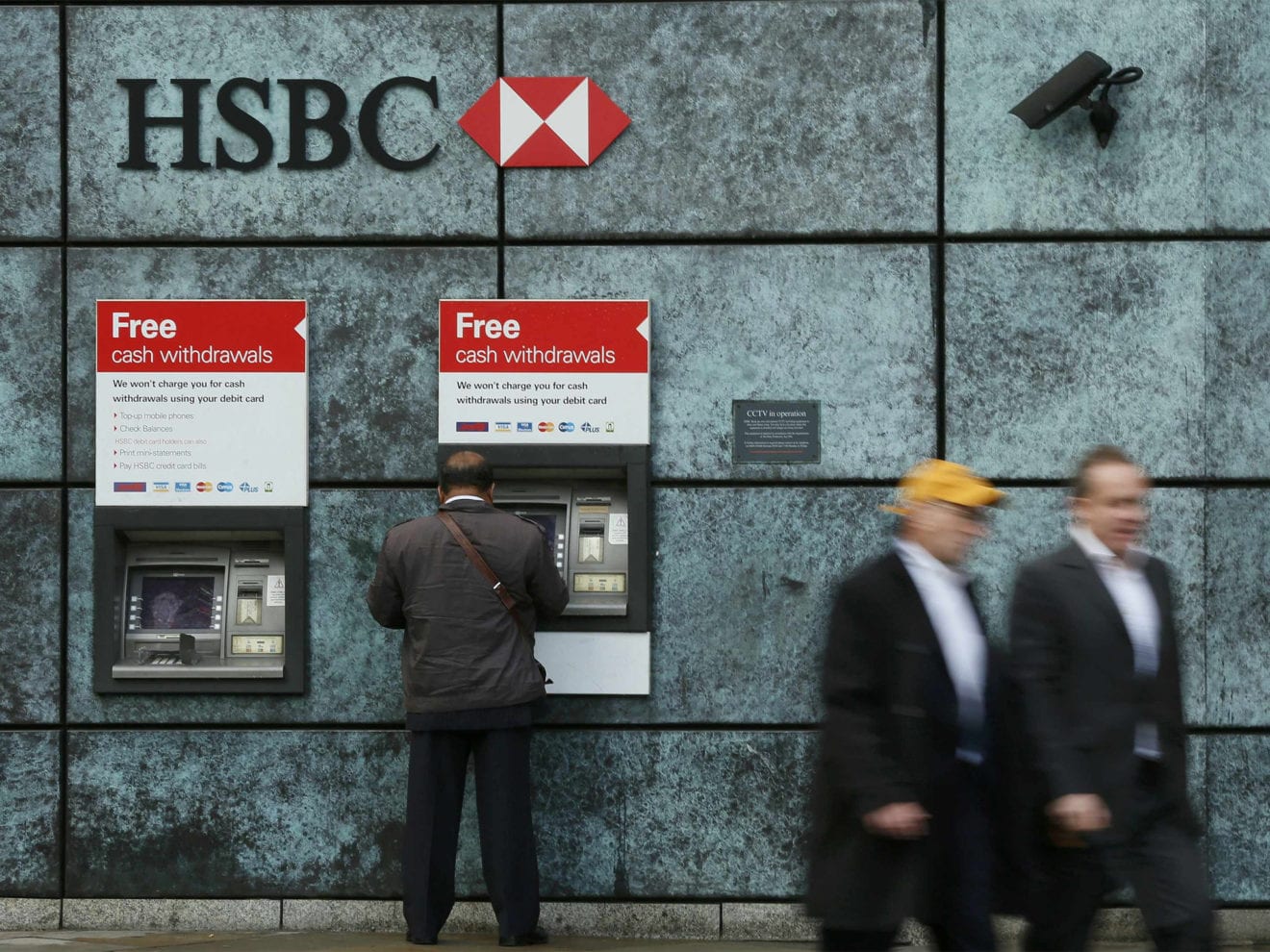
    HSBC Bank (Vietnam) chief executive Pham Hong Hai (right) and Kelvin Tan, chief executive of HSBC Thailand, say HSBC aims to capitalise on its presence in seven of the 10 Asean countries.

    HSBC seeks to offer a better integrated regional service with the increase of cross-border investment following the formation of the  Asean Economic Community (AEC).

    The bank in particular is looking at Vietnam, where investment is set to surge under government policies to attract foreign investment.
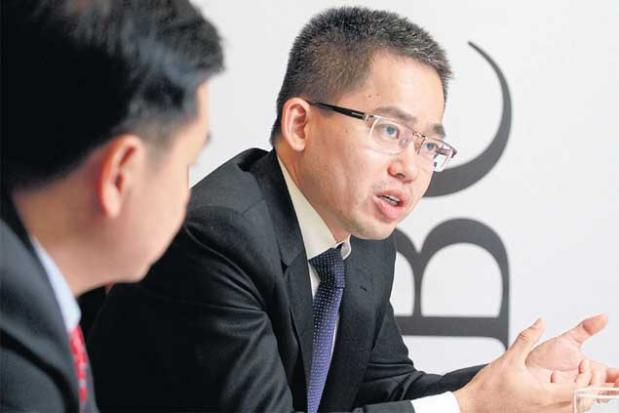
    Kelvin Tan, chief executive of HSBC Thailand, said the company aimed to capitalise on its presence in seven of the 10 Asean member countries. Only Myanmar, Cambodia and Laos do not have branches of HSBC.

    “We made it very clear to our investors since last year that Asean will be one of our main focuses to help HSBC’s future growth,” said Mr Tan.

    HSBC will also focus on the Pearl River Delta, which consists of Hong Kong and Guangzhou, China.

    Mr Tan said the company will enhance the connectivity between its subsidiaries in each country to serve customers better and expand business.

    “We add value to our services by offering well-connected financial services in this region.”

    When a Thai customer expresses an interest in investing in another country in which HSBC operates, the bank will refer the customer to the office in that country, which can provide local information for doing business.

    Many HSBC customers have already expanded their businesses in other countries, especially Vietnam, to tap into a bigger market as well as take advantage of low labour costs, he said. Thai investors should benefit from the cheaper labour by setting up production bases there and using Thailand as their regional headquarters, which is the policy that the Thai government is promoting.

    “Thailand is in a very strategic location for logistics and air transport so pushing the RHQ concept is a step in the right direction, but the government will also have to include stakeholders as part for this development,” said Mr Tan.

    Pham Hong Hai, chief executive of HSBC Bank (Vietnam), said Vietnam had attracted heavy investment from Asean countries over the past few years as well as from other Asian countries such as South Korea, Japan, Taiwan and China.

    Vietnam’s low labour costs and political stability are the major draws that attract a huge amount of foreign direct investment, he said. Given the low wage rate for unskilled labour, the country has attracted a lot of labour-intensive industries.

    “Cambodia, Laos and Myanmar also have cheap labour, but Vietnam has the added positive factors of political stability and good infrastructure,” said Mr Pham.

    He said the low wage rate would last for about five years.

    However, one problem that has emerged in Vietnam is a shortage of workers at management level. Mr Pham said he expected the AEC integration to attract more white-collar workers to the country.

    He said Vietnam’s ruling party just elected a new central committee, which is expected to maintain the current policies to strengthen the country’s economy.

    The policies that will be continued include privatisation of state enterprises, modernising the banking sector, enhancing the effectiveness of fiscal policy and improving the business environment, he added.

    Vietnam’s state enterprises contribute 35% of GDP. The government is due to allow private firms to gradually own bigger stakes in the enterprises in order to enhance their effectiveness.

    The government is improving Vietnam’s business environment by passing new laws that will shorten the time required to start a new business and also to obtain a licence, Mr Pham said. There there are a lot of opportunities in businesses such as logistics, retail and manufacturing, which are growing quickly.

    “When the manufacturing sector grows it is always followed by logistics services to support the industries,” he said. “We also see that the retail sector’s growing fast with Thai companies such as Central and TCC Group investing in Vietnam.”

    He said with a population of 90 million, with young people forming a large proportion, Vietnam’s demographic make-up offers great opportunities for retail businesses to benefit from their purchasing power, which will grow significantly.


  • Robinson Department Store plans growth

    Robinson Department Store plans growth

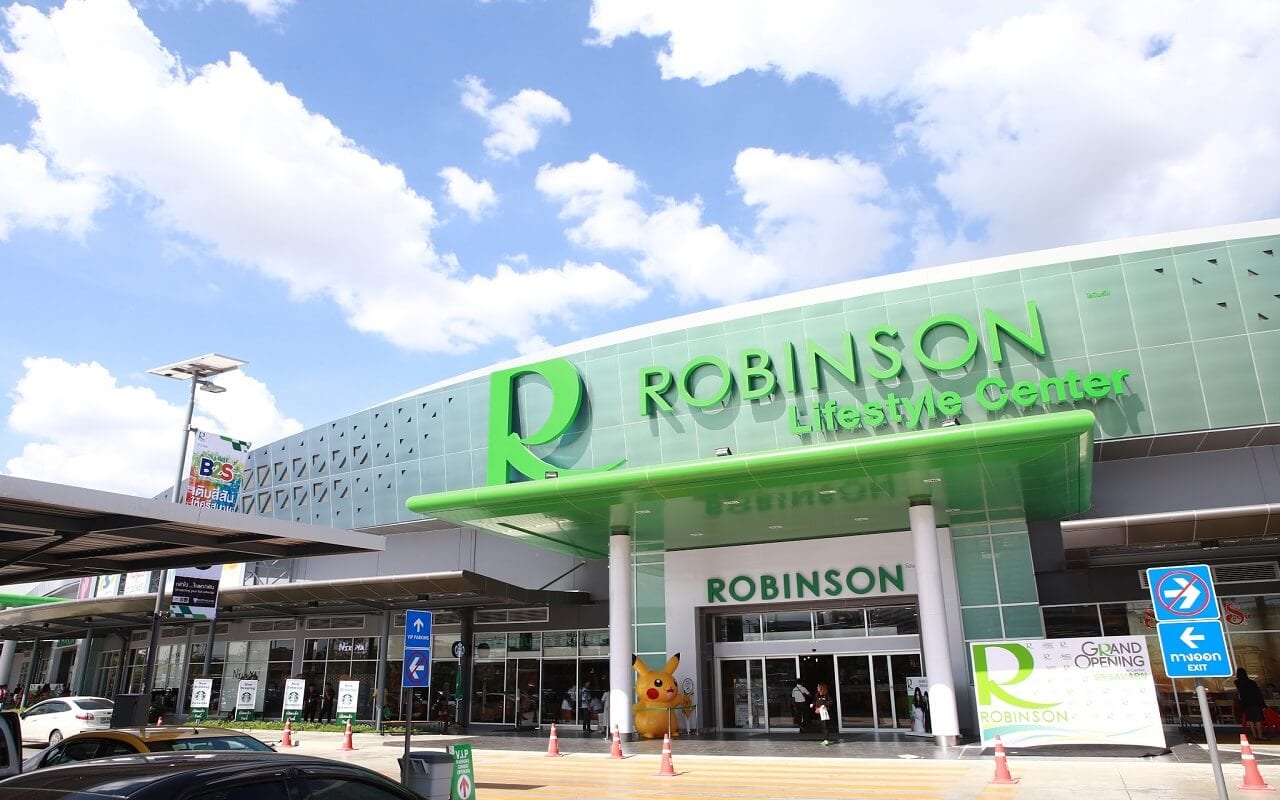
    Thailand’s Robinson Department Store aims to invest about 16.8 billion baht (US$479 million) on opening stores over the next five years with the aim of boosting average sales growth by 5 to 7 per cent a year.

    Majority-owned by Central Group, Thailand’s largest retail conglomerate, Robinson plans to boost store numbers to 56 by 2020 from 42 now, pinning its hopes on government economic-stimulus measures, says president Alan Thomson.

    That growth would equate to an average of 2.8 new stores a year, but the store’s rate of expansion has slowed with it dropping to two new stores this year, whereas it had four last year and five two years earlier. Thomson says this reflects Thailand’s current economic weakness.

    Its two new branches this year will cost it 1.6 billion baht, but it is hoped sales overall will rise 7 per cent from last year’s 25 billion baht, reaching 35 billion baht by 2020.

    Thomson says Robinson also plans to outlay 2.5 billion baht on renovating 20 outlets.

    Robinson also has two stores in Vietnam, and aims to double that by 2020. “We are trying to identify challenges before we expand in Vietnam,” says Thomson, indicating the company may invest more in Thailand’s neighbour next year.

    Meanwhile, the company’s same-store sales rose 3.1 per cent in the fourth quarter of 2015, versus a drop of 2.1 per cent for the full year.

  • Viettel launches carrier billing for Google Play

    Viettel launches carrier billing for Google Play

    Viettel has become Vietnam’s first operator to offer to offer direct carrier billing for the Google Play store.

    The operator has teamed up with carrier billing company Fortumo to offer carrier billing to its 55 million subscribers.

    Both postpaid and prepaid customers will be able to take advantage of the new function.

    Announcing the move, the companies said that smartphone penetration in Vietnam has reached 36.2% of all mobile users, but only 1.9% of the population have a credit card and 26.5% have a debit card. This makes the market well-suited to carrier billing services.

    “The key reason for Viettel selecting Fortumo was our industry-leading technical platform that is capable of simultaneously handling large app stores as well as leading OTTs,” Fortumo chief business officer Gerri Kodres said.

    “Additionally, Fortumo has been preferred choice for carriers in Asia because of our strong focus on the region and local presence.”

    In Asia, the operator’s platform is also used by music and streaming providers such as Sony, Alibaba’s UCWeb, Tencent and Huawei.

  • Apple eyes Vietnam R&D centre

    Apple eyes Vietnam R&D centre

    US tech giant Apple is mulling a $1-billion regional data hub in Hanoi, according to the Dien dan doanh nghiep, the official publication of the Vietnam Chamber of Commerce and Industry.

    “Apple is studying the sites for the construction and completing the investment procedures,” the publication said, cited its source.

    This will be Apple’s first investment in Vietnam and it will be following in the footsteps of South Korean conglomerates Samsung and LG, and US-headquartered Microsoft, which have been present in the country for years.

    However, while the others have invested in manufacturing facilities in Vietnam, Apple will reportedly build a data centre meant for its entire Asian operations.

    Reuters reported in November last year that Apple had set up a subsidiary in the Southeast Asian country to import and sell its mobile phones directly in this market.

    Samsung is one of the biggest investors in Vietnam with $13 billion direct investment in factories and a research hub in Bac Ninh, Thai Nguyen and Ho Chi Minh City. LG Electronics is also building a $1.5-billion producing complex in northern Vietnam. Microsoft has shifted its smartphone production from China, Hungary and Mexico to Vietnam in 2014.

    Meanwhile, the iPhone maker has been aggressively investing in R&D with a spend of $8 billion last year. Apple already has R&D facilities in the UK, China, Taiwan, US, Israel and Japan.

    “It is unclear when Apple will deploy the Hanoi-based centre, but the size of the project has shown the high potential of the Vietnam market to the US tech major,” the Dien dan doanh nghiep commented.

    Samsung, as Apple’s biggest competitor in the Vietnam’s mobile phone market, is also investing in two R&D centres, a $300-million new one in Hanoi and a facility within the $1.4-billion complex in Ho Chi Minh City.

    Several other global tech and electronics firms have chosen Vietnam as base for their global back-end and manufacturing activities, including Hewlett-Packard, Panasonic and Nissan Techno.

    Vietnam is considered as the next manufacturing powerhouse of Asia, fueled by its growing economy, young and urbanised population and cheap labour cost.

    Also, US has been Vietnam’s biggest export market for the last couple of years, accounting for the largest proportion of 20.7 per cent of the total exports, according to a latest update of Trading Economics.

  • Vietnam’s Coffee sales slow, Indonesian premiums rise

    Vietnam’s Coffee sales slow, Indonesian premiums rise

    Vietnam’s coffee premiums held steady, with farmers slowing sales on concerns over dry weather affecting output, while domestic buying and thin stocks in Indonesia helped to raise outright prices, traders said on Thursday.

    The dry season in Vietnam, the world’s top robusta producer, is peaking, with water shortages forecast to cut 2016/2017 output. Rival producer Indonesia has low stocks, which has helped to push up export price quotations to a 15-month high.

    “Most activities are focused on domestic markets, where exporters in short position have to raise their buying prices to secure beans,” said a trader in Ho Chi Minh City.

    Domestic prices in Daklak, Vietnam’s biggest growing province, advanced to 31.1 million-31.4 million dong ($1,400) per tonne, tracking gains in the ICE robusta futures.

    At 31.4 million dong, the price is on par with that on Feb. 6, according to data.

    Premiums of Vietnamese robusta grade 2, 5 percent black and broken were stable at $50-$70 a tonne to the May ICE contract in the past week. Beans grade 1, similar to Indonesia’s Sumatran coffee, were steady at premiums of $95-$110 a tonne.

    ICE May robusta coffee settled up 0.9 percent at $1,420 per tonne on Wednesday.

    As dry weather intensifies in Vietnam’s Central Highlands coffee belt, underground water might sustain trees only until the end of this month, traders said.

    The current El Nino weather event is likely to delay the usual arrival of the rainy season by 10-15 days.

    The government has announced financial aid worth $23.5 million to help 34 provinces fight drought and salination, it said in a statement on Wednesday.

    About 40 of Vietnam’s 63 provinces have now been affected by the dry weather.

    In Indonesia, premiums rose to $300-$320 a tonne for beans grade 4, 80 defects COFID-G4-USD to the ICE May contract, from a premiums of $300 last Thursday, due to thin stocks, traders said.

    At $320 a tonne, the premium is the highest since at least December 2014, according to data available on Reuters.

    “Prices were good and went up because there was support from Java factories, while there were little stocks,” a Lampung-based trader said, adding that purchases by small traders also supported prices.

    Indonesia’s main harvest will pick up from late this month.

    Indonesia’s coffee bean production is targeted to increase by up to 27 percent to 700,000 tonnes in 2016, a manager at the country’s coffee association said on Thursday, up from 550,000 tonnes in 2015.

  • Vietnam joins world`s largest rubber producers to cut exports

    Vietnam joins world`s largest rubber producers to cut exports

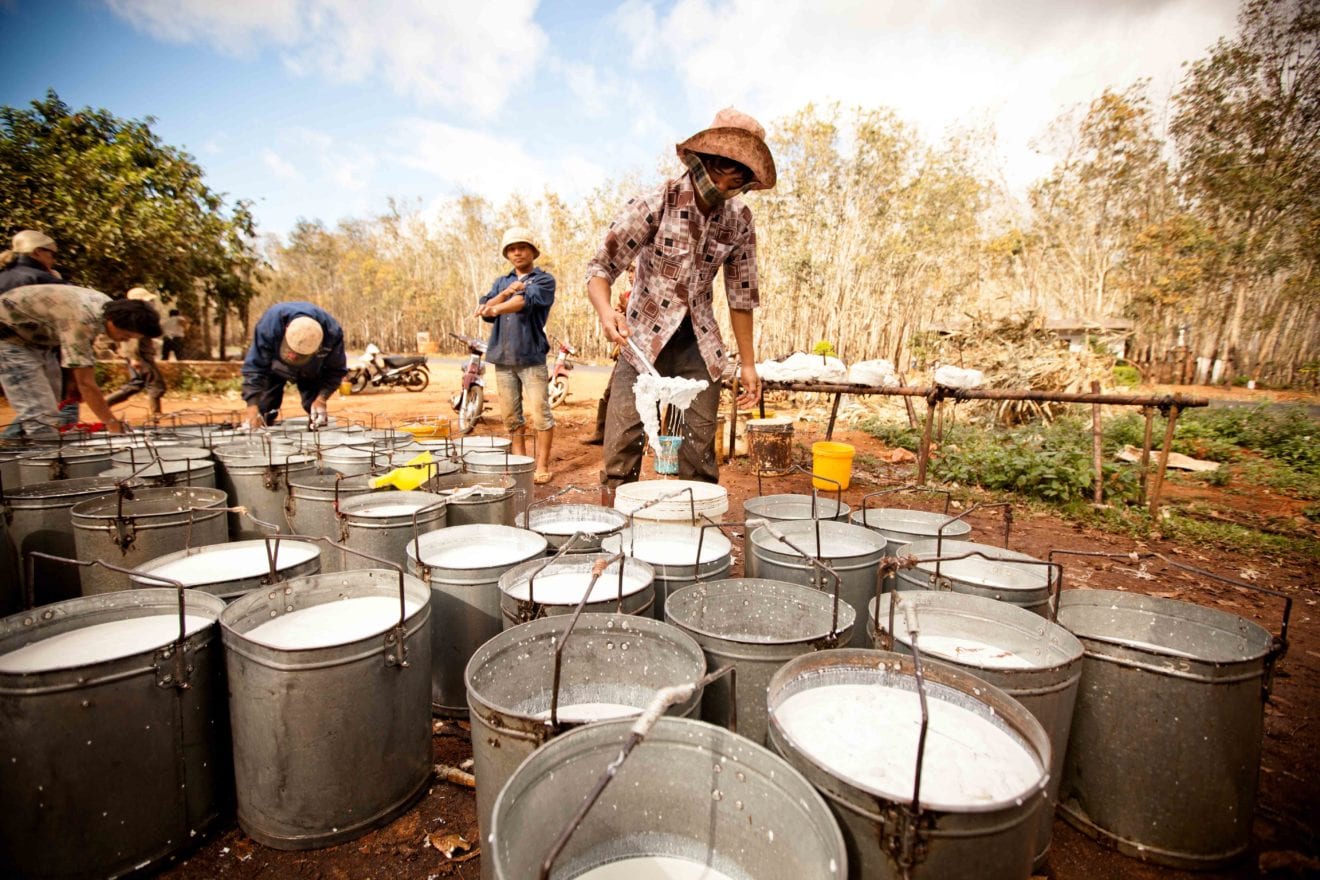
    Vietnam will join worlds largest natural rubber producers to cut exports in a bid to shore up the shrinking price of that commodity.

    Vietnam will follow Thailand, Indonesia and Malaysia to cut its imports of natural rubber by 15 percent starting March 1 until August 31, the Indonesian association of rubber companies (Gapkindo) said.

    Earlier the three member countries of the International Tripartite Rubber Organization (ITRO) which control 70 percent of the world supply of natural rubber agreed to cut exports by 615,000 tons from March to August.

    With Vietnam joining the cartel the price of natural rubber is expected to rise in international market, Executive Secretary of the North Sumatra branch of Gapkindo Edy Irwansyah said here on Monday.

    Under the arrangement, Thailand, the worlds largest producer is to reduce its exports of natural rubber by 324,005 tons, Indonesia, the second largest producer by 238,736 tons, and Malaysia, the third largest by 52,259 tons.

    North Sumatra, one of Indonesias largest natural rubber producing provinces, contributes to the scheme by cutting exports 38,000 tons.

    The decision of the four ASEAN countries would have impact on the rubber market, as they control more than 70 percent of the supply of natural rubber in the world, Edy said.

    Edy said rubber price has remained low but in March the price began to climb, adding, he was confident the price of that commodity would continue to increase .

    In January 2016, North Sumatras exports of natural rubber and rubber products fell again by 16.43 percent year-on-year in value.

    The province earned only US$78.083 million in January 2016 down from US$93.375 million in the same period last year, head of the regional office of the Central Bureau of Statistics (BPS) Wien Kusdiatmono said here last week.

    The production and price of rubber and rubber goods have continue to shrink, Wien said.

    According to Edy though rising, the price of natural rubber is still much below the level considered ideal of around US$1.90 per kg.

  • Thai investment in VN concentrated in processing, manufacturing

    Thai investment in VN concentrated in processing, manufacturing

    According to the agency, there are about 200 Thai projects in such industries, with combined investment of US$7 billion or 88 per cent of Thailand’s total investment in Vietnam.

    These sectors are followed by agriculture, forestry and seafood sectors, which have 31 projects worth $235 million. The rest are in retail and construction sectors.

    As the end of February this year, Thai businesses had invested in 428 projects in the country, with a total investment capital of $7.88 billion, ranking 11th among countries and territories that have invested the largest capital in Vietnam.

    A Thai project was worth $18.4 million on average, about $14 million more than the average value of a foreign investment project in the country.

    The southern Ba Ria – Vung Tau Province attracted the highest number of foreign direct investment projects from Thailand, worth $3.77 billion. It’s followed by the northern Vinh Phuc Province with projects worth $744 million and the southern Binh Duong Province with $513.4 million.

    The statistics also showed that Thai joint venture investments comprised 70 per cent of Thailand’s registered investment in Vietnam, worth $5.5 billion.

    Vietnam has become a favourite destination of many Thai billionaires in recent years, with many large projects and merger and acquisition transactions taking place in retail and consumption areas.

    These include Thai company Berli Jucker’s (BJC’s) purchase of Metro Cash & Carry Viet Nam for more than $870 million; and Power Buy, a subsidiary of the Central Group of Thai billionaire Chirathivat, also acquired a 49 per cent share in New Solution and Technology Development Company NKT, the owner of Viet Nam’s leading retailer Nguyen Kim Trading JSC.

  • Two-pronged approach for Giordano Vietnam

    Two-pronged approach for Giordano Vietnam

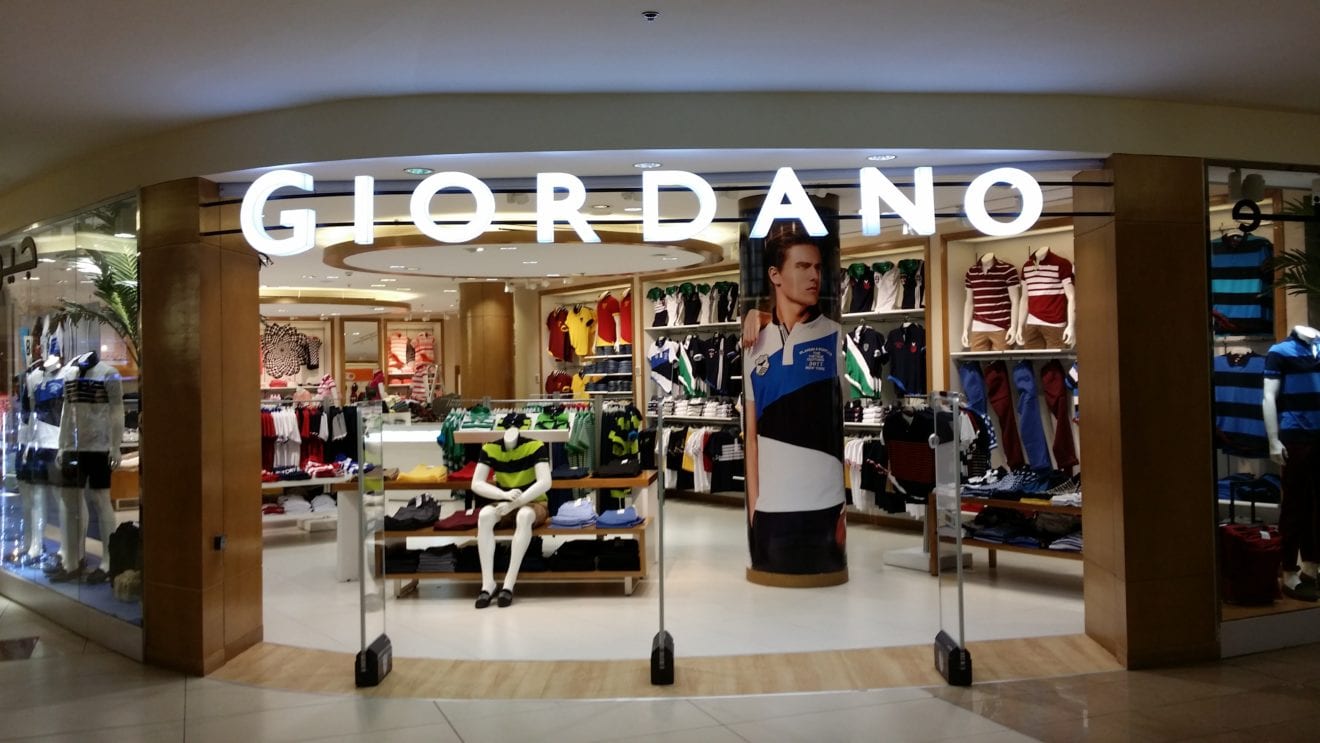
    Vietnam is on the radar for Hong Kong clothing retailer Giordano International, both as a market and supplier.

    With its steady growth in the emerging market, the company is planning to establish a legal entity Giordano Vietnam.

    It is also eyeing the country as a source market for product, while it continues to develop sourcing opportunities in Bangladesh.

    While Giordano still sees opportunities for growth in developing markets such as Indonesia, Malaysia and Thailand, the company says in its annual review that those opportunities are fading.

    Meanwhile, the group has plans to launch digital sales channels outside mainland China this year, initially through the development of its own eShops.

    “Market conditions in Southeast Asia have been challenging in the past two years,” says the group, which improved its merchandising, and therefore profitability, in Singapore last year – “but this will be a tough market going forward”.

    In the 2015 financial year, consolidated sales eased by 3 per cent – but increased by 1 per cent on a constant currency basis. Global brand sales were down 1 per cent for the year, but comparable same-store sales grew by 3 per cent.

    As a strong Chinese New Year offset the impact of 81 store closures, brand sales in the first half of the year grew by 1 per cent. But in the second there was a 3 per cent drop because of unseasonably warm weather in Greater China.
    Gross profit margin declined by 0.4 percentage points to 57.6 per cent, with higher purchasing costs caused by a strong US dollar eroding margins in Southeast Asia and Taiwan.
    “Weak consumer demand in many markets has led to fierce competitive pressure on selling
    prices,” says the group.

    Nevertheless, in the second half of the year, improved purchasing and merchandising resulted in gross margin improving from 57.4 to 57.9 per cent.

  • SHB new Club sponsor in Vietnam, Laos & Cambodia

    SHB new Club sponsor in Vietnam, Laos & Cambodia

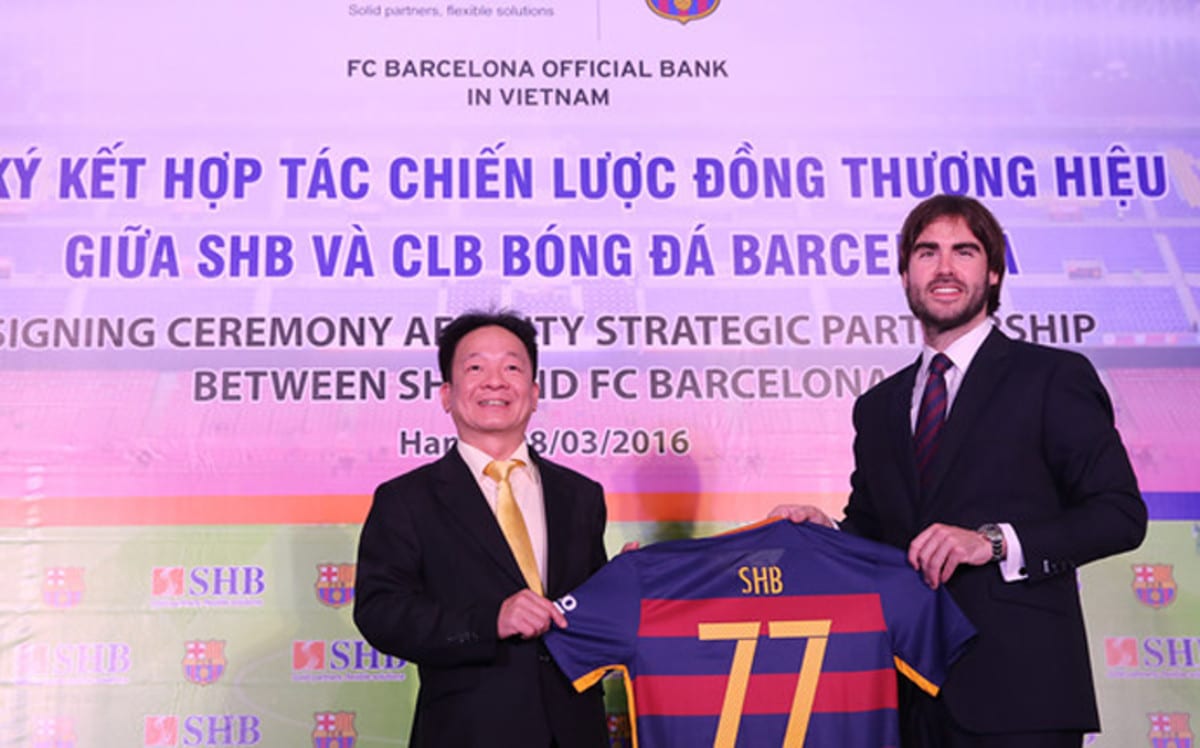
    On 8 March 2016 in Hanoi, FC Barcelona unveiled a sponsorship agreement with Saigon – Hanoi Commercial Joint Stock Bank (known as SHB), the top 5 Private Commercial Banks in Vietnam. This agreement will make SHB the first and only banking partner of FC Barcelona in Vietnam, Laos and Cambodia and enable SHB to open various business opportunities in retail sector in the territories, and bring the club closer to the Vietnamese Barça fans.

    A signing ceremony was held in Melia Hanoi Hotel today. Xavier Asensi, Asia-Pacific Managing Director, attended the event in representation of FC Barcelona, while SHB was represented by Chairman Do Quang Hien and CEO Nguyen Van Le. The ceremony also received the participation of the Representative of Vietnam Football Federation (VFF) – Mr. Tran Quoc Tuan, Vice President, Mr. Nguyen Xuan Gu, Vice President, as well as the coach of local football team SHB Da Nang Football Club, Mr. Le Huynh Duc.

    Strategic partnership for SHB and FC Barcelona

    With this partnership begins, SHB and FCB will cooperate to expand the Barça fan base in Vietnam, Laos and Cambodia. SHB also aims at opening up great business opportunities in retail sector through the development of co-branded cards in the territories. In the time to come, SHB will organize exchange and fan activities in the territories as well as bringing the local Barça fans to Camp Nou, contributing to build the foundation of culture, tradition and Barça spirit we found in millions of our fans.

    Statement by Manel Arroyo, FC Barcelona Vice president, Marketing and Communication department

    “The signing of this new regional sponsorship deal reaffirms our interest in increasing our presence in this continent and also reflects how our Club is gaining notable levels of popularity in this strategic zone, which is encouraging us to continue focusing our presence in Southeast Asia. The agreement with SHB also means a partnership with a highly prestigious entity and will be the vehicle for the name and colours of FC Barcelona to spread to Vietnam, Laos and Cambodia. FC Barcelona’s experience shows that football is a driver that generates cooperation and success, and hand in hand with SHB, we hope to achieve major social objectives.”

    Statement by Xavier Asensi, FC Barcelona Asia Pacific Managing Director:

    “We are so happy to have SHB as our first ever bank partner in Vietnam, Laos and Cambodia. Through partnering with SHB, we will be closer to the 90 million Vietnamese, including a growing fan community. SHB is young and taking up the leading part in the industry; while FCB is deep-rooted and has been successful in defending the glory. I do believe that the collaboration between these two different but yet, similar entities will create a huge buzz and synergy.”

    SHB, a dynamic bank

    SHB has become one of the leading urban banks in Vietnam with the image of a dynamic, modern, and efficient bank after establishment from 23 years ago. By the end of 2015, SHB total assets reached more than VND 205,000 billion, charter capital of nearly VND 9,500 billion with 7,000 employees and transaction network of more than 500 points all over Vietnam and overseas. Not only having an extensive presence in Vietnam, SHB is currently the second Vietnamese private Bank which opened a 100% foreign capital Bank in Laos in January 2016. Along with 4 branches operating in Cambodia, the reputation and financial capacity of SHB have been appreciated in Indochina. SHB has always actively participated in social and charity activities making great contributions to the development of the community, especially sports.

    Statement by Do Quang Hien, Chairman of SHB:

    “The partnership between SHB and FC Barcelona may be considered a perfect cooperation of the leaders. SHB and FC Barcelona share the commons in brand and development philosophy on the road to success, the objective of sustainable development and the desire of devoting to fans and customers. SHB is proud to be the first and only partner bank of FC Barcelona in Vietnam, Laos and Cambodia. This is not only a business opportunity for SHB but firstly it is for a large number of football fans in particular, sports fans in general. Customers are now able to see, feel, and more easily access to their idols daily, hourly … when using and enjoying benefits of Barça – SHB co-branded card and banking products. Moreover, this is also an opportunity for SHB to contribute to the promotion of a beautiful, peaceful, hospitable, dynamic and deeply imbued with the culture Vietnam all over the world.”

  • Toys’R’Us Asia Pacific chief retires

    Toys’R’Us Asia Pacific chief retires

    Toys’R’Us has announced that Monika Merz, president, Asia Pacific, will retire effective May 31. Her successor will be named later.

    Monika-Merz

    As president of Toys’R’Us Asia Pacific, Merz oversees all operations and business activities for the company’s more than 300 stores in Japan, Southeast Asia, Greater China and Australia, responsible for the continued growth, profitability and success of the company in those markets.

    Since she started working at Toys“R”Us, Merz has been instrumental in the development of new store formats and merchandising concepts that have been successfully translated to other markets, ultimately strengthening the company’s position in the global marketplace.

    Dave Brandon, chairman and CEO, described Merz as a highly regarded leader “who has inspired new ideas, demonstrated innovative thinking and unwavering passion for the business and grown our Toys’R’Us brand internationally, even through challenging times and market transitions”.

    Merz’s retirement will bring to a close a remarkable career of nearly 20 years of continuous service to the company. She joined in 1996 as VP and GM, Toys’R’Us, Canada and was promoted to president, Toys’R’Us, Canada four years later. In 2007, she assumed leadership of Toys’R’Us, Japan. Her role was expanded to include responsibility for the company’s stores in Australia in 2011, and, later that year, she gained oversight of the company’s locations and corporate offices in Southeast Asia and Greater China when the company entered a joint venture agreement with Li & Fung to operate these formerly licensed stores.

    “During my time at Toys’R’Us I’ve had many experiences and challenges, but I’ve always been supported by exceptional teams and leaders,” she reflected. “I’m proud of all that we have accomplished and confident that the work we have done to provide a fun and memorable shopping experience for customers will continue after my retirement. After more than eight years in Asia Pacific, I’m now looking forward to returning to Canada and a new stage in my life.”

  • Central denies hypermarket ambition

    Central denies hypermarket ambition

    Central Group chief executive Tos Chirathivat says the group has set aside 39 billion baht for investments at home and abroad this year. PHRAKRIT JUNTAWONG

    Central Group yesterday insisted it is not seeking to establish its own hypermarket chain to counter TCC Group’s entry into the big retail segment with the recent acquisition of a major stake in SET-listed Big C Supercenter Plc.

    Instead, it is considering buying Big C store operations in Vietnam from Casino Group, a leading French retailer.

    Tos Chirathivat, the group’s chief executive, said Central did not have any plan to sell its 25% stake in Big C Supercenter in Thailand after TCC Group’s Berli Jucker Plc successfully bought a 58.56% stake in Big C.

    Berli Jucker will make a tender offer for the remaining shares in Big C soon.

    “The hypermarket business has entered the mature stage and its growth may not be as high as in the past 20 years, but we won’t sell our Big C shares,” Mr Tos said.

    Central will not create a new hypermarket store brand because it already has Tops Superstore, which is similar to Big C.

    Mr Tos said he would decide on March 10 whether Central would enter bidding for Big C assets worth 20 billion baht in Vietnam.

    “We have not made our decision yet because there are several factors to be considered carefully, including the complicated process of mergers and acquisitions over there,” he said.

    A market analyst said it was possible Central would join the bidding because Vietnam is one of the group’s strategic investment countries in the Asean region.

    Central’s retail business in Vietnam has more than 6,000 staff and generated revenue of US$600 million last year. If Central wins the bid for Big C assets, its business value will double to 40 billion baht overnight.

    Mr Tos said the group would put more focus on opening new branches and renovating its Thai stores while expanding some new stores in Cambodia, Laos, Myanmar and Vietnam.

    “We will invest cautiously because we are concerned about the impact on the world economic situation from the Chinese slowdown, falling oil prices and the volatility of foreign exchange,” he said.

    The group plans to spend about 39 billion baht this year, 30% more than last year, to open new shopping centres, department stores and other outlets nationwide and renovate some stores.

    It also plans to open five new hotels and some convention centres in destinations including Pattaya, Chiang Mai and Koh Samui.

    It has signed management contracts with 29 new hotels with 6,716 hotel rooms.

    Centara Muscat Hotel in Oman, Centara Grand West Bay Hotel Doha in Qatar and Centara Grand Lykia World Resort & Spa in Turkey will be opened in the third quarter.

    The group also plans to invest in two more four-star hotels in the Maldives and a four-star hotel in Dubai.

    Central Group has 70 hotels with 14,583 rooms in 11 countries.

    The group will allocate 10.4 billion baht to renovate its department stores in Europe from 2016-20. About 3.6 billion will be used for La Rinascente in Italy, 2.4 billion for Illum in Denmark and 4.4 billion for three stores under the KaDeWe Group in Germany.

    Last year, Central’s revenue totalled 283 billion baht, up 13.5% from 2014. The group projects to increase its revenue by 18.9% to 337 billion baht this year. About 76% of sales will come from Thailand.