Tag: Volkswagen

  • Volkswagen To Cut Up To 5,000 Jobs

    Volkswagen To Cut Up To 5,000 Jobs

    Carmaker Volkswagen plans to cut up to 5,000 jobs in Germany by offering early or partial retirement to older employees in a move that could cost 500 million euros ($598 million), the Handelsblatt newspaper reported on Sunday.

    The newspaper quoted a spokeswoman confirming that the company had agreed on the plan with the works council to open partial retirement to those born in 1964, while also offering early retirement to older employees.

    Handelsblatt cited company sources as saying Volkswagen was putting aside 500 million euros for the plan as it would compensate the employees who leave by topping up their pension, although it would save billions in the longer term.

    The newspaper said Volkswagen is also extending a hiring freeze until the end of the year. It had previously only been in place until the end of the first quarter. External hires can only be made in areas like information technology and software.

    The Volkswagen Group said in January it would cut overhead costs by 5% and procurement costs by 7% over the next two years.

  • Volkswagen’s Market Value Crosses 100 Billion Euro Mark For The First Time Since 2015

    Volkswagen’s Market Value Crosses 100 Billion Euro Mark For The First Time Since 2015

    When the market value of Germany’s Volkswagen briefly rose above the 100-billion-euro mark on Wednesday for the first time since 2015, the boss of the normally staid carmaker took to Twitter, Elon Musk-style, to crow about it.

    VW shares soared as much as 6% after investment bank UBS raised its price target on the stock by 50% and said the company’s new electric vehicle platform was set to challenge Tesla’s dominance in the battery electric vehicle (BEV) market.

    Herbert Diess, chief executive of VW Group, highlighted the UBS note on Twitter and shared the market capitalization milestone.

    “The market has been waiting for our #BEV-ramp-up and wanted to see some proof points,” Diess posted.

    Traders reacted with comparisons to Tesla chief Elon Musk who frequently uses Twitter to talk up products developed by his companies, cryptocurrencies or other buzzing technologies.

    The comparison, at least for now, must end there.

    Diess sent his first tweet using the “@Herbert_Diess” handle less than two months ago and has since tweeted 51 times. While he has managed to amass almost 25,000 followers in this time, Musk can boast of 48.3 million.

    “The sheer fact that he started his own account apart from the official VW account tells me, that between the lines he wants to express: We are here,” a Germany-based trader said.

    Though unrelated and more a market-moving tweet, another trader highlighted instances of a probe by the U.S. Securities and Exchange Commision on Musk’s tweet in 2018 that he was considering taking Tesla private at $420 a share.

    But despite recent share price gains — up 20% this year — VW’s market capitalization is just one-sixth that of Tesla. Shares trade 7.5 times 12-month forward earnings; possibly its role in the EV transition is not fully priced.

    Despite recent share price gains – up 20% this year – VW’s market capitalisation is just one-sixth that of Tesla

    Tesla meanwhile trades at 160 times 12-month forward earnings, levels many consider bubble-like.

    On the market capitalization gap, UBS said VW’s only takes into account its EV business out to 2025, and doesn’t price its cash flow-rich legacy business, indicating there is room for the share price to rise.

    It added that VW would likely “master” the transition to close the volume gap with Tesla in 2022.

    At 300 euros, UBS has the most bullish price target on VW. Analysts’ median price target on its shares was 191 euros, according to Refinitiv data.

    Preferred shares, which are listed in Germany’s benchmark DAX index, hit January 2018 highs on Wednesday, while ordinary shares rose as much as 5.6% to their highest since July 2015, two months before the diesel scandal broke.

    VW closed 4.7% higher at 185.18 euros per share on the day, taking its market value to 99 billion euros.

  • Volkswagen Taigun Teased Ahead of Launch

    Volkswagen Taigun Teased Ahead of Launch

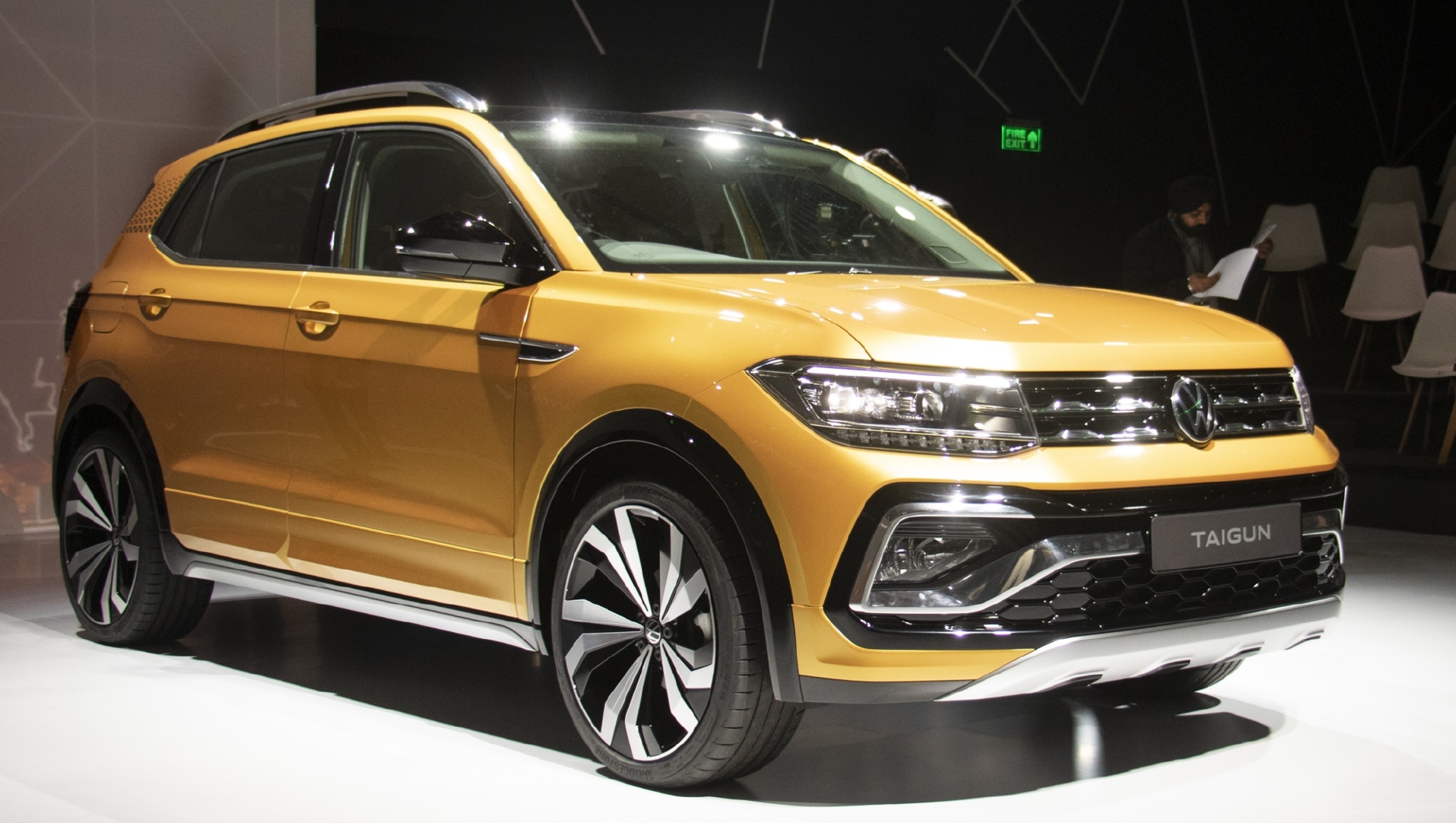
    Volkswagen India has officially teased the upcoming Taigun compact SUV, suggesting the launch is around the corner. The carmaker released a teaser video of the Taigun on its official social media account. The SUV has been listed on VW’s official India website for collecting online enquiries. Specifically designed for the Indian market, the SUV was showcased at the 2020 Auto Expo in February. It will be based on the company’s MQB A0 IN platform, which will also be used on VW Group’s upcoming models, such as the production version of Skoda’s Vision-IN concept.

    This all-new product from Volkswagen will be slightly inspired by the T-Cross that is already on sale in the international markets. It will flaunt elements like wider grille with horizontal chrome slats and logo in the center, horizontally positioned LED headlights with LED DRLs, muscular bonnet, neatly designed bumper, large intakes, fog lamps. The production version is expected to get sporty alloys, wheel arch cladding, roof rails and LED taillamps connected by a reflective strip and smoked details similar to the concept model. The rear profile will be underlined by a muscular rear bumper, faux diffuser, heavy chrome/silver details, and matching side skirts.

    On the inside, the SUV will feature dual-tone black and grey upholstery along with a premium interior with body-colored panels on the dashboard, centre console and doors. The SUV is expected to come equipped with an all-digital instrument console, bigger touchscreen infotainment system, fast-charging USB slots, and app-based connected features, flat-bottom steering wheel, rear AC vents, automatic climate control and more.

    Mechanically, the soon-to-be-launched Taigun compact SUV will be powered by a 1.0-liter three-cylinder turbocharged TSI petrol engine. The unit is likely to develop 113 bhp and 200 Nm of peak torque. Transmission options could include a 6-speed manual gearbox as standard along with an optional 7-speed DSG automatic. The company will not offer an all-wheel-drive (AWD) variant of the SUV. When launched, it will rival the Hyundai Creta, Kia Seltos, Renault Duster and the MG Hector.

  • What Volkswagen India’s SUVW Strategy Entails

    What Volkswagen India’s SUVW Strategy Entails

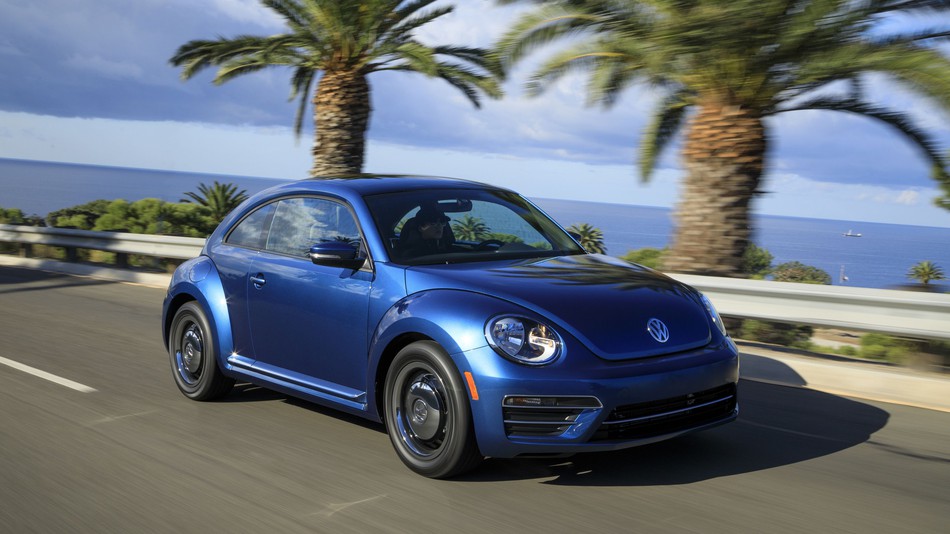
    How many times have you seen a Volkswagen Beetle and not given it another look? Well, the answer is zero and that’s because its design is timeless, ageless. That’s also why we can’t help but look at the new-gen models from Volkswagen India like the Jetta, Polo, Vento, Polo GTI or now even the Tiguan, T-Roc, and even the Tiguan AllSpace. It’s the design of all these cars evoke the same reaction – wow!

    And it’s because these cars have a strong lineage. They all are a culmination of what the company has been able to learn in so many years of being part of the global automotive fraternity. That’s why you see the technology funnel down to cars like the Polo GT TSI making it one of the best hot hatches in the country. In fact, it was the car that started the hot hatch trend in India and remains to date one of the most loved driver’s car in the country.

    But with SUVs fast becoming a trend in global markets, VW had to go back to the drawing board and figure out what it could do. It’s not as if the company had no SUV in the market earlier. Remember the Touareg? Yes, the one with the V6 engine. But it was ahead of its time, in fact, Indian buyers weren’t looking at buying SUVs back then, they were more into sedans. But as the market matured, VW India adapted to the change. The big step then in the SUV direction was in 2017, when the company introduced customers to the 5-seater Tiguan.

    With the Tiguan, Volkswagen tested the shores to understand the response and yes, it was a good one. The fact that you get German engineering, precision driving capabilities and of course great build quality, customers knew exactly what to expect from these products. And that was one reason why there’s a more strong focus on bringing in SUVs to India under the India 2.0 Project.

    With the Group investing ₹ 8000 for the India 2.0 project, there was going to be a strong focus on three aspects a) building cars with a high amount of localization content, b) align the business to make sure that service costs come down, and finally, make cars in India for the world!

    The company has already inaugurated a tech center in Pune in 2019 which will look into the development of these upcoming products but the attention is more on the new localized MQB-A0-IN platform. Just like the modular architecture of the MQB platform, where a number of body styles are made on a single platform, the A0-IN will also serve a similar purpose but given the high level of local content on the cars, all the products based on it will be price competitive. To put things into perspective, currently, the localized content in VW cars like the Polo and Vento is around 82 percent that will go up to 95 percent and that’s a massive leap.

    The Volkswagen Taigun will be one of the first SUVs to be built on the new localised MQB-A0-IN platform.

    The first car to be based on this platform is going to be the Taigun which was showcased just ahead of the Auto Expo 2020 and you got to see the car in the flesh back then. And this car will lead the charge for everything that comes post it. Now, the Tiguan AllSpace and the T-Roc have already had their fair share of success, so yes, it’s perfect timing for the Taigun to enter the market. The SUVW strategy then is falling into place and in 2021, we’ll see the Taigun and one more product coming to India. We can’t wait to drive everything that comes our way!

  • Volkswagen adopts new sales model in Mainland

    Volkswagen adopts new sales model in Mainland

    Volkswagen AG is launching another sales model in China that will see the automaker open showrooms in city centres for electric vehicles (EV) and offer fixed prices.

    The move marks a departure from the conventional sales system used by the wider industry in China.

    Last week, Volkswagen’s joint venture with SAIC Motor opened its first showroom under this system in the eastern city of Hangzhou, according to a social media post. The store, named “ID. Store X”, sells its ID. range of family cars.

    The German automaker said customers can order vehicles at a fixed price directly through the company website, phone app or from authorized dealers. The stores are invested and operated by selected dealers, not the automaker.

    The dealers get a commission from vehicle sales and do not need to maintain the car inventory, Volkswagen said.

    Traditionally automakers including Volkswagen, GM and Toyota set the official price, but dealers are expected to keep an inventory of vehicles and often allowed to offer discounts or price them higher depending on the demand for the models.

    The German automaker’s new attempt still differs from Tesla’s direct sales model that bypasses dealers entirely. Tesla’s model allows the US carmaker to manage the process from production to pricing to sales to delivery while adding operational costs of running the wholly-owned stores.

    Showroom strength is becoming an important differentiator for EV makers in the world’s biggest auto market, as they line up model launches. Tesla currently has over 150 showrooms and service centres in China while Nio has 189 stores. Xpeng had 116 and Li Auto has 45 showrooms, as of the end of September.

    SAIC-Volkswagen said it would open 40 ID. Store X stores in 29 Chinese cities in the next 18 months. Volkswagen’s other venture with FAW Group has yet to announce a detailed sales plan for EVs.

    Volkswagen said last month that it will launch eight ID. family models in China by 2023 with its local partners SAIC and FAW.

    Sales of electric, plug-in hybrid and hydrogen-powered vehicles in China are forecast to rise to 20 percent of new car sales by 2025 from just 5 percent now, the State Council said last month.

  • Volkswagen Bets On Porsche Racecar Engineer To Help Overtake Tesla

    Volkswagen Bets On Porsche Racecar Engineer To Help Overtake Tesla

    Alexander Hitzinger, a 49-year-old engineer who defected to Apple after helping to develop Porsche’s winning 919 racecars, has been lured back to Volkswagen Group for perhaps his biggest challenge yet – building an electric car to take on Tesla. While Volkswagen, the world’s largest automaker, has been rolling out electric vehicles from the ID.3 compact to the high-end Porsche Taycan, analysts say it needs a more comprehensive system that integrates electric power with new self-driving and infotainment technologies if it hopes to overtake Tesla.

    It has turned to Hitzinger, whose ability to conceptualize clean-sheet designs and manage projects helped Porsche develop a racecar that won the Le Mans endurance race in 2015, 2016, 2017. After a stint working on Apple’s autonomous cars, Hitzinger now heads up Volkswagen’s “Project Artemis”, named after the Ancient Greek goddess of hunting, with the aim of chasing down electric car pioneer Tesla. “At Porsche, I always thought of a vehicle as a comprehensive system. This is a very important point. It is what Tesla does well,” he explained in a video interview.

    The task of building a car has gotten more complex with the advent of electric and autonomous driving technologies, forcing new battery-driven powertrains to compete for electricity with camera, radar, and lidar sensors, plus infotainment systems. Rather than stitching together separately designed systems, Artemis wants to create something new and seamlessly integrated, from the ground up, Hitzinger told Reuters. “The idea behind Artemis is to have a comprehensive understanding of the vehicle. When something is optimized, this has knock-on effects and these need to be understood.”

    Volkswagen’s “Project Artemis”, named after the Ancient Greek goddess of hunting, with the aim of chasing down electric car pioneer Tesla

    Allocating processing power between propulsion, automated driving and infotainment systems such as satellite navigation and music streaming is a key challenge, he said.

    “The human-machine interface, the interior design, the exterior design, aerodynamics and the range are all interconnected. If I modify something on the exterior, it will impact the aerodynamics and the efficiency,” Hitzinger said.

    Volkswagen Group, whose brands range from budget Seats and Skodas to high-end Audis and Bentleys is now focussing on developing systems that can handle all these new demands.

    The car, which is due to be produced in 2024, will make use of components developed for Porsche and Audi’s premium electric vehicle platform, PPE. The group’s factory in Hanover, Germany, is being retooled to build an electric sport-utility vehicle for Audi, Bentley and Porsche.

    Having a small team of highly qualified engineers, who are empowered to take decisions unencumbered by the corporate bureaucracy of the Volkswagen empire, should end up producing a better vehicle more quickly.

    Analyst say VW needs a more comprehensive system that integrates electric power with new self-driving and infotainment technologies if it hopes to overtake Tesla.

    Project Artemis will have between 200 and 250 staff once Hitzinger is done hiring, up from 10 at present.

    “I am putting the team together on a top-down basis. The managers come first. Then I look for A-players, who will attract other A-players. I don’t want managers, but people who love to develop technologies, who are prepared to take risks,” he said.

    Artemis will seek to draw on existing skills within the Volkswagen Group, such as expertise in making vehicle bodies at Audi, but take the lead in developing new techniques that speed up production and improve the customer experience.

    “We want to set new standards for what a customer can do in a vehicle and how he interacts with the car,” Hitzinger said.

    He declined to elaborate on what user experiences the new car would offer, citing the confidential nature of the project.

    He also declined to comment on a power struggle unfolding at Volkswagen, which has convened its executive committee to meet on Tuesday to decide whether to extend CEO Herbert Diess’s contract.
  • Volkswagen To Invest 1 Billion Euros In Slovakia Plant

    Volkswagen To Invest 1 Billion Euros In Slovakia Plant

    Volkswagen plans to invest 1 billion euros ($1.18 billion) in its Slovak plant, including 500 million euros to produce next-generation Passat and Skoda Superb models, VW Slovakia Chairman Oliver Gruenberg said on Monday.

    The German carmaker’s investment will be in projects across the model range made in Slovakia and will create 2,000 jobs in the coming years, personnel chief Sebastian Krapoth said.

    The auto industry, led by Volkswagen and three other carmakers, is the backbone of Slovakia’s manufacturing and export sectors.

    Skoda had announced on Friday that production of its higher-end model, Superb, would move to Slovakia. The Superb and Passat share the same platform and many parts.

    That followed the cancellation of plans to source production in Turkey. It also upset unions at Volkswagen’s Czech unit, Skoda Auto, home to the Superb brand over the past two decades.

    “Total investments for Bratislava are being planned in the range of 1 billion euros,” Gruenberg told a news conference broadcast live on television. “It is an investment across the entire model range at Volkswagen Slovakia.”

    He said the plan will not add overall production capacity at the plant, which made 377,750 cars last year. The plant, which mostly produced top-end models such as the Audi Q7 and Porsche Cayenne, exports more than 99% of its output.

  • My Volkswagen Connect App Launched

    My Volkswagen Connect App Launched

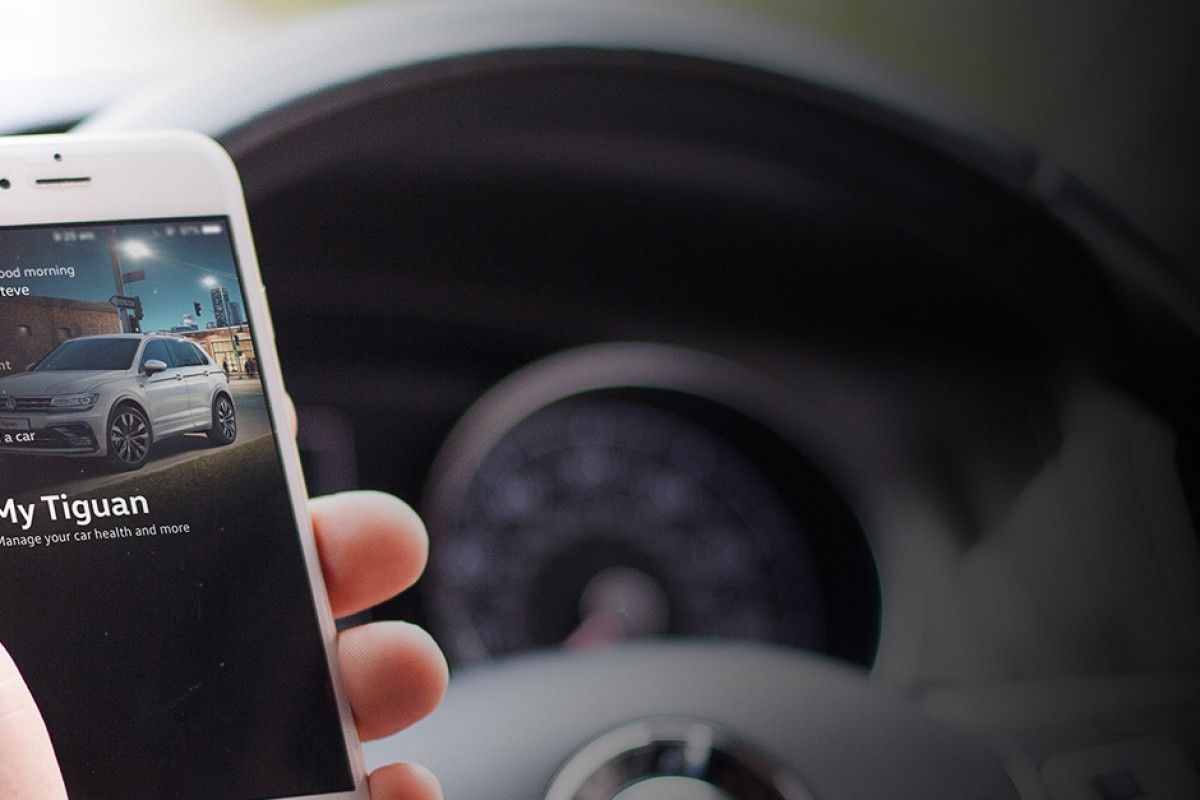
    Volkswagen India has joined the connected car bandwagon with the launch of the ‘My Volkswagen Connect’ mobile app. The new interactive sim-based app brings connected car technology to Volkswagen cars sold in the country and provides access to a host of features like vehicle telematics, geofencing, remote tracking and more. The app is available for both Android and iOS devices. The new Polo GT TSI and the Vento Highline Plus will get the new My Volkswagen Connect app as standard, the company has said in a statement.

    Commenting on the launch, Steffen Knapp, Director, Volkswagen Passenger Cars India said, “At Volkswagen India, we have relentlessly been working towards enhancing and providing our customers the best of technology and connected solutions. Today, we introduced the upgraded ‘My Volkswagen Connect’ app that offers customer convenience and safety at their fingertips. Customers will have access to real-time vehicle analysis and assistance that would make them aware of their vehicle condition, driving patterns, and enhance the overall fun-to-drive experience that a Volkswagen stands for.”The new Volkswagen connected car app essentially uses a dongle that’s plugged in the car’s on-board diagnostics (OBD) port that relays information on the mobile app. The app offers a range of data that includes the user’s driving style quantifying speed, braking behavior, coolant temperature, acceleration, and rpm. The app also enables users to locate the point of interest and also reach out to customer care or roadside assistance, in case of emergencies.

    The My Volkswagen Connect app also has the provision to scan and store vehicular documents for a paperless record. You can also use the app to set reminders for vehicle insurance renewal. Volkswagen India is offering the app with a three-year subscription for free and three years of warranty. Similarly, Honda Cars India also offers the Honda Connect app on its cars, while Nissan offers the Nissan Connect app on the same lines. It is noteworthy to mention that both companies among several others have been offering the technology for about a few years now.

  • Volkswagen Sees Mild Growth In China’s Premium Car Segment This Year

    Volkswagen Sees Mild Growth In China’s Premium Car Segment This Year

    German automaker Volkswagen AG expects slight growth in China’s premium car segment this year despite a slide in broader market sales, a senior executive said.

    Volkswagen Group’s China chief, Stephan Woellenstein, made the remarks to reporters in Beijing on Friday.

    Volkswagen replaced Herbert Diess as chief executive of the VW brand on Monday and installed Chief Operating Officer Ralf Brandstaetter to lead cost-cutting efforts.

    In China, the world’s biggest auto market, Volkswagen has joint ventures with local partners including SAIC Motor, FAW Group, and JAC.

  • Volkswagen Appoints Ralf Brandstaetter As VW Brand CEO

    Volkswagen Appoints Ralf Brandstaetter As VW Brand CEO

    Volkswagen replaced Herbert Diess as chief executive of the VW brand on Monday and installed chief operating officer Ralf Brandstaetter to lead cost-cutting efforts at the company’s largest plants in Germany.

    The management reshuffle comes after weeks of squabbling between Volkswagen’s powerful labor leaders and managers over the pace and scale of cost-cutting plans to free up resources for a radical shift toward electric cars.

    Volkswagen said Brandstaetter would take over on July 1 to give Diess, who remains group chief executive, more leeway to run the rest of the company, which includes brands such as Audi, Bentley, Skoda, Lamborghini, and Porsche.

    Herbert Diess to continue to hold his position as the Chief Executive Officer of the Volkswagen Group

    “Ralf Brandstaetter is one of the company’s most experienced managers,” Diess said in a statement. “I am therefore very pleased that Ralf Brandstaetter will be forging ahead with the development of the brand as CEO.”

    Volkswagen said Diess retained overall responsibility for Volkswagen passenger cars and that the management reshuffle would also result in the departure of procurement and components chief Stefan Sommer.

    Sommer joined VW in 2018 and oversaw ambitious procurement plans, including the construction of large factories to power Volkswagen’s ambitious electrification shift as the carmaker encountered supply bottlenecks.

    Volkswagen India has launched the Polo and Vento TSI Edition in India. Hero announces the price hike of Destini BS6. Bajaj Auto Opens Showrooms

    Earlier on Monday, sources told Reuters that Volkswagen’s supervisory board was hosting an extraordinary meeting to discuss replacing Diess as CEO of the VW brand.

    Diess is trying to get the company’s powerful labor leaders, who control nine of the 19 seats on the supervisory board, to agree to painful cost cuts.

    The savings are designed to help pay for a 34 billion euro (29.89 billion pounds) investment in electric and autonomous cars and 50 billion euros for EV battery procurement.

    Diess also came under pressure after Volkswagen was forced to halt sales of its newest VW Golf model because of software glitches at a time when the company is preparing to mass-produce VW’s ID.3 electric car.

  • Volkswagen To Install Porsche’s CEO As Volkswagen Brand Chief

    Volkswagen To Install Porsche’s CEO As Volkswagen Brand Chief

    Volkswagen Chief Executive (CEO) Herbert Diess will promote Porsche CEO Oliver Blume to become head of the Volkswagen brand as part of a broader management reshuffle, Auto Motor and Sport said on Tuesday citing company sources.

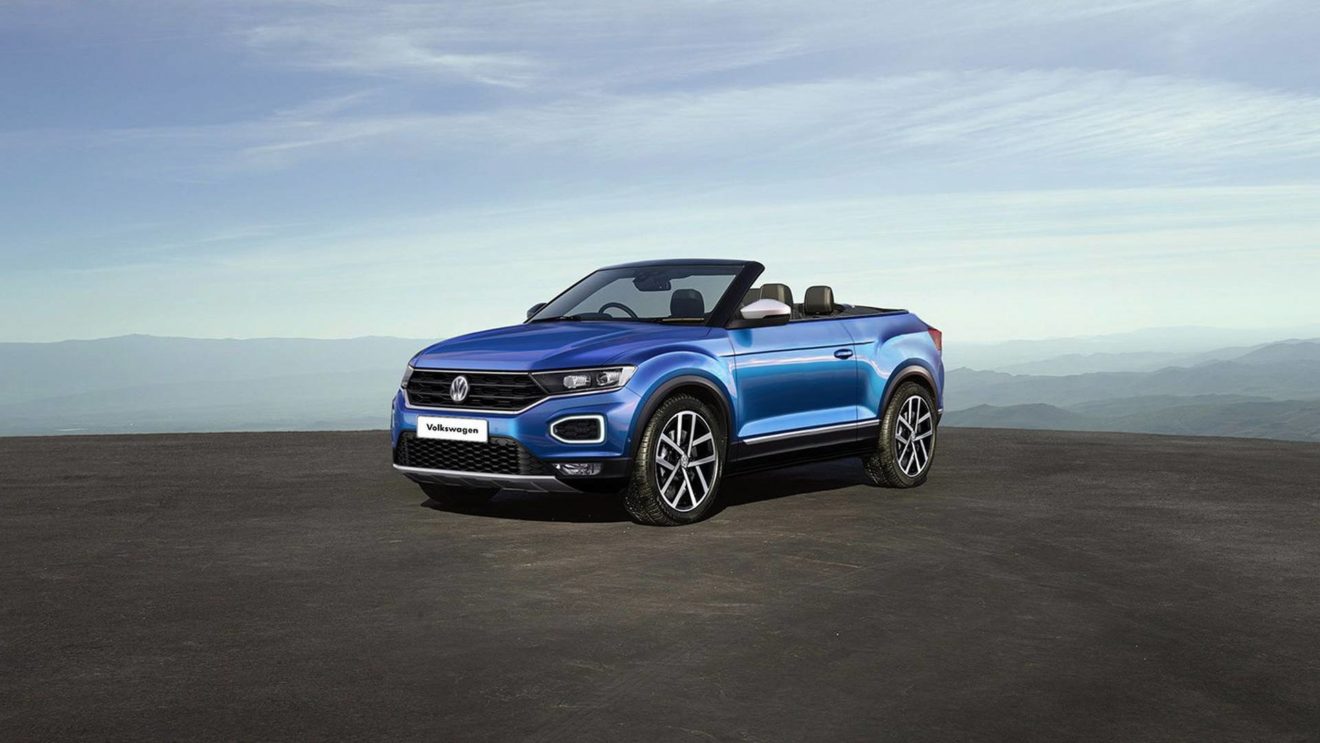
    Blume will be moved to the VW brand to help the company get a grip on production issues with the VW ID3 electric car and the Golf 8, the auto industry publication said on Tuesday. Launch And The Volkswagen T-Roc compact SUV has been finally launched and is the brand’s most affordable SUV in India at present. The T-Roc comes to India as a CBU and despite that gets a highly competitive price tag for its fully-loaded variant.

    Bernhard Maier, currently head of VW’s Skoda brand, will become head of Porsche, Auto Motor and Sport said.

    Herbert Diess is currently head of multi-brand Volkswagen Group as well as head of the VW brand.

    Volkswagen declined to comment.

  • Volkswagen Group Announces Personnel Changes In Technical Development and Product Line Organisation

    Volkswagen Group Announces Personnel Changes In Technical Development and Product Line Organisation

    The Volkswagen Group has announced personnel changes in technical development and product line organization. Dr. Matthias Rabe has been named Member of the Board for Engineering at Bentley effective August 1, 2020. He succeeds Werner Tietz, who moves to SEAT as Executive Vice-President for Research and Development as of July 1. Dr. Matthias Rabe joined the Volkswagen Group in 1988 after completing his studies in mechanical engineering at RWTH Aachen. Having held several senior management posts, he moved to Shanghai Volkswagen as Head of Chassis and Electrical Development in 1992. He took over as Head of Group Research at Volkswagen AG in 2003.

    He then assumed responsibility for Body Development at the Volkswagen Passenger Cars brand from 2007 to 2011. In January 2011, he moved to SEAT in Martorell as Executive Vice-President for Research and Development. Matthias Rabe is currently Chief Technology Officer of the Volkswagen Passenger Cars brand in Wolfsburg.

    Axel Andorff will take over from Tietz, who assumes responsibility for the midsize and MEB Product Line at Skoda. He takes over from Matthias Glodny, who becomes Head of the Modular Toolkits, Drivetrains and Modules Product Line at Volkswagen Passenger Cars brand.

    Axel Andorff holds a degree in industrial engineering and joined the Volkswagen Group a year ago. He began his professional career as a trainee at DaimlerChrysler in Stuttgart in 2000. In 2001, he became assistant to the Purchasing Director at Mercedes-Benz Cars and was placed in charge of the series purchasing interior at Mercedes-Benz in 2004. Three years later, Axel Andorff was given responsibility for setting up and heading purchasing at Daimler Greater China in Beijing. He moved to Stuttgart to head project management for Mercedes-Benz New Compact Cars in 2009. In 2013, he became Head of Product Concepts and Planning Mercedes-Benz Compact Cars and Electric Vehicle Architecture. He was appointed Executive Vice-President for Research and Development at SEAT in Martorell in 2019.

  • Volkswagen Passenger Cars India Appoints Abbey Thomas As Head of Marketin

    Volkswagen Passenger Cars India Appoints Abbey Thomas As Head of Marketin

    Volkswagen Passenger Cars India has announced the appointment of Abbey Thomas as Head of Marketing effective immediately. He will spearhead the company’s marketing strategy in India. Abbey Thomas replaces Bishwajeet Samal, who embarks on a new assignment at Volkswagen’s headquarters in Germany. Abbey has over 25 years of automotive industry experience and has previously worked with Audi India as Head of Planning (Product & Sales).

    He joined the Group in 2011 and has ranked up by leading various Marketing and Product functions. Steffen Knapp, Director, Volkswagen Passenger Cars India said, “At Volkswagen, our philosophy is to nurture our in-house talent and create a growth journey for our employees within the Group. We are extremely delighted to have Abbey on-board with us, whose extensive experience will strengthen our brand salience across our stakeholders in the automotive ecosystem.”

    Abbey Thomas will be reported to Steffen Knapp in his new role as Head of Marketing. Volkswagen India has already charted its course in the country by focusing on SUVs for the market and now with the ‘SUVW’ strategy in place, there’s a lot to look forward to in terms of cars. While we already know that the company’s next launch is the Taigun next year, the Tiguan AllSpace and the T-Roc are already in the market and we wait to see how the cars will do in terms of sales.

  • Volkswagen Group Sales Down 23% In Jan-March

    Volkswagen Group Sales Down 23% In Jan-March

    Volkswagen Group on Friday said sales of its cars dropped by 23% on the year to 2 million cars in the January to March period.

    In March alone, deliveries were down 37.6% overall at 623,000 vehicles, the figures showed, reflecting the coronavirus crisis which triggered plant closures and falls in sales as consumers were tied up at home in lockdown measures across the world.

    German carmakers to resume production as lockdowns ease

    German carmakers including Volkswagen and Mercedes-Benz will restart production at some German factories next week. It’s part of a partial reopening of business and shops over the next few weeks.

    More specifically, March sales were down 44.6% year-on-year in western Europe, down 23.1% in central and eastern Europe, down 42% in North America, and down 35% in China, the company said.

    Experts believe that declines in April sales could be steeper as the full impact of the lockdowns works its way through the system.

    Volkswagen on Thursday withdrew its outlook for 2020 due to the uncertainty related to the virus outbreak which caused operating profit to drop 81% in the first quarter.

  • Volkswagen To Aid U.S. Dealers Supporting Coronavirus Relief Efforts

    Volkswagen To Aid U.S. Dealers Supporting Coronavirus Relief Efforts

    Volkswagen AG said on Monday it would give financial assistance to its U.S. dealers who wish to use their loaner fleet to pick up and deliver essential supplies in areas affected by the COVID-19 pandemic.

    The loaner cars, typically offered to customers to drive while their vehicles are in a shop for repairs, can be called upon for delivering food to a local food bank, transporting masks and gowns, and dropping off necessary items to those who are unable to leave their home, the automaker said.

    Dieselgate’ made headlines around the world. For deliberately cheating the system, Volkswagen was made to pay a record $20 billion fine. But, as this investigation shows, they were far from the only culprits.

    Volkswagen said its dealers would not charge the group or person making such a request.

    “Only dealership employees will be permitted to drive vehicles. Volkswagen corporate will offer dealers a daily stipend per vehicle to cover fuel and lease costs,” the automaker said.

    Volkswagen’s network of more than 600 U.S. dealers maintains a loaner fleet of nearly 7,000 vehicles, although some dealerships could be closed or working with reduced personnel due to state and local guidelines.