Tag: Volkswagen

  • 2020 Volkswagen Golf To Come With Car2X Technology As Standard

    2020 Volkswagen Golf To Come With Car2X Technology As Standard

    We all loved the way the new Golf looks and there are many of you who have asked us on multiple occasions, about its arrival in India. Sadly, the Golf isn’t coming here, but while it’s turning a lot of heads across the world, there’s another reason why it’s become the talk of the town. The Volkswagen Golf is the first car that can help drivers to prevent accidents, and that’s thanks to its innovative Car2X technology, which allows it to wirelessly connect with other vehicles and the traffic infrastructure. Now the impressive part about this is that the technology will come standard on the Golf.

    The new Golf is the first car on the European market to come standard-equipped with Car2X technology, which is based on the Wi-Fi p wireless standard. This type of Wi-Fi is specifically tailored to local communication between vehicles and does not use the mobile phone network, which means it provides blanket coverage within the limits of the system. Within a radius of up to 800 metres, connected vehicles directly exchange positioning data and information with one another. This allows them to warn each other of danger or make contact with the traffic infrastructure within a matter of milliseconds.

    The German automotive association ADAC tested Volkswagen’s Car2X technology, during which it sent the new Golf into eight typical hazardous situations in which a driver, without being warned, would not be able to react at all, or would only be able to react much later. In all eight situations, the vehicle warned the driver reliably and in time, often even 10 or 11 seconds before the impending accident.

    In the initial development stage, which Volkswagen is introducing with the new Golf, Car2X technology is active at speeds over 80 kmph. In the future, it should also be able to improve safety in city traffic. It also offers major advantages if the car communicates with nearby traffic lights – in this way being better able to control traffic flow and protect the environment.
  • Volkswagen Tests Ventilator Output As Carmakers Join Coronavirus Fight

    Volkswagen Tests Ventilator Output As Carmakers Join Coronavirus Fight

    German carmaker Volkswagen said on Friday it was joining other manufacturers around the world to explore using 3D printing to make hospital ventilators to combat the coronavirus.

    Governments are enlisting automakers including Ford, General Motors, Ferrari and Nissan to ramp up production of ventilators and other equipment they are short of to treat the fast-spreading disease.

    In a statement, Volkswagen said it had assembled a task force, was testing materials, and checking supply chains, to see how it can use 3D printing to help manufacture hospital ventilators and other life-saving equipment.

    Carmakers consider making ventilators at plants

    Automakers are thinking about making ventilators at their plants to help in the battle against the coronavirus. It’s an idea that at least one expert says comes with some complications.

    “Medical equipment is a new field for us. But as soon as we understand the requirements, and receive a blueprint, we can get started,” Volkswagen said, adding that prototype components had been printed and its Skoda arm was included in the project.

    A spokesman said the Wolfsburg-based, multi-brand company, which has more than 125 industrial 3D printers, was in close contact with governments and other authorities to assess needs.

    Volkswagen’s sports car brand Porsche also said on Friday it wanted to help in relief efforts. “We are collecting ideas about what we could do in terms of humanitarian help,” Chief Executive Oliver Blume said on a call to discuss earnings.

    US’ Electric Carmaker Tesla too has offered to make ventilators at its plants

    Munich-based carmaker BMW said it too was ready to help. “The production of components using 3D printing technology is a possibility,” it said.

    Sweden’s carmaker Volvo urged all governments to take the crisis equally seriously and limit movements.

    “I think for the economy, we need to do something drastic, rather then trying half-hearted measures that drag on forever,” Chief Executive Hakan Samuelsson said. “We are seeing the effect of this coronavirus is increasing every day.”

    The auto industry’s chances of recovery depended on coordinated action, Samuelsson told Reuters.

    “There is a big difference between countries. Some have curfews, with restaurants and schools closed. In other countries, there are less drastic measures. I just think we need to synchronize that more.”

  • Volkswagen Plans To Tap Electric Car Batteries To Compete With Power Firms

    Volkswagen Plans To Tap Electric Car Batteries To Compete With Power Firms

    Volkswagen’s expansion in electric cars will open up new business opportunities in storing and managing energy, encroaching on business currently dominated by utilities and energy firms, chief strategist Michael Jost said on Thursday.

    Electric car batteries could be used to stabilize the energy grid by charging the battery in times of excess supply and selling electricity back to the grid at times when supplies of electricity from wind and solar power are low, Jost said.

    An automotive analyst says the car industry will potentially suffer as the world economy is negatively impacted by the coronavirus pandemic

    “By 2025 we will have 350-gigawatt hours worth of energy storage at our disposal through our electric car fleet. Between 2025 and 2030 this will grow to 1 terawatt-hours worth of storage,” Jost told journalists in Berlin.

    “That’s more energy than is currently generated by all the hydroelectric power stations in the world. We can guarantee that energy will be used and stored and this will be a new area of business.”

    The German carmaker is not alone in looking into this field. German utility E.ON has been working with Japanese carmaker Nissan to develop so-called vehicle-to-grid (V2G) services.

    Volkswagen is launching the ID:3 electric car this year. A basic version will cost less than 24,000 euros ($27,000) in Germany, once green car tax breaks and incentives are deducted, putting electric cars on par with combustion-engined variants.

  • Volkswagen Tiguan Diesel To Be Discontinued From April 2020

    Volkswagen Tiguan Diesel To Be Discontinued From April 2020

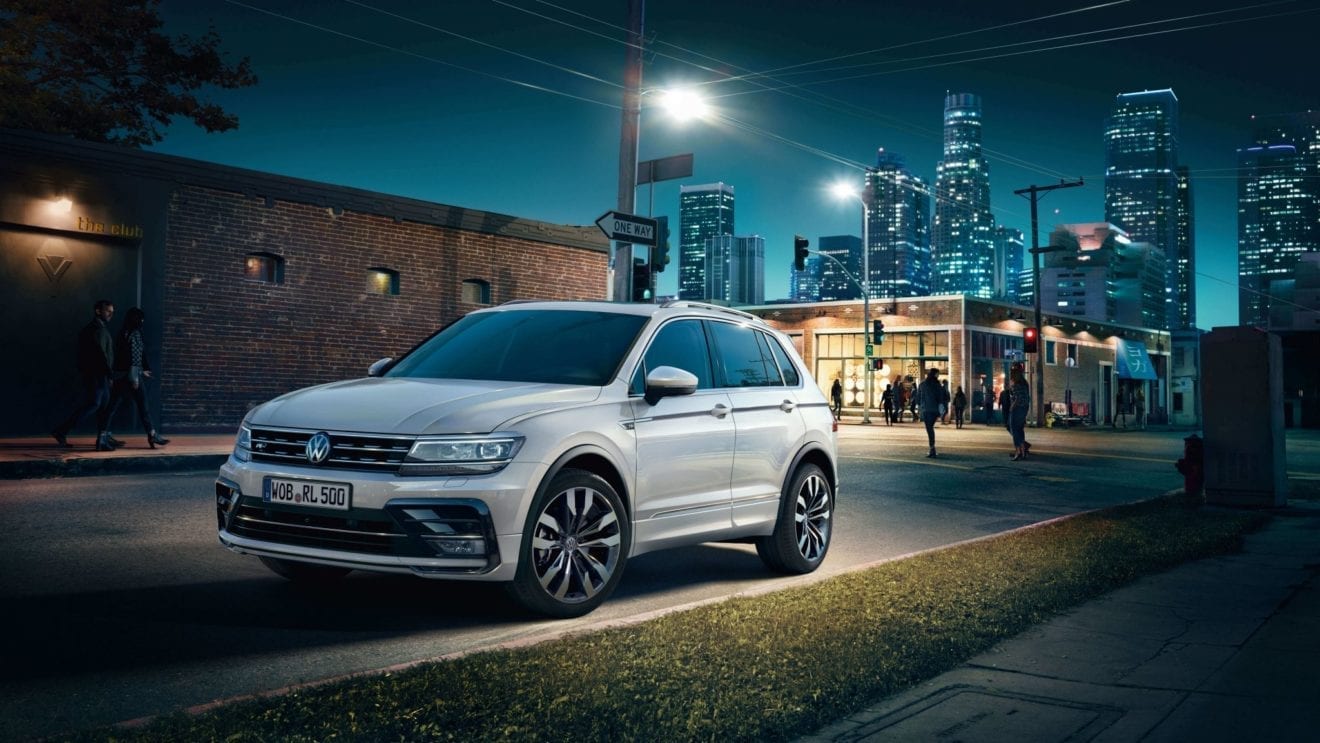
    With the BS6 norms kicking in, Volkswagen India has done some major restructuring to its current lineup. While the automaker has launched the updated Polo and Vento with the 1.0-litre petrol motor, the diesel versions have been discontinued. Similarly, the German auto giant is all set to boot the Tiguan diesel from its Indian line-up by the end of this month. The five-seater Volkswagen Tiguan diesel won’t be upgraded to meet the BS6 emission norms that kick-in from April 2020.

    The Volkswagen Tiguan was launched in India in May 2017 as a five-seater premium SUV. The model is powered by a 2.0-litre TDI diesel engine and does not get a petrol engine, even as an option. With the VW Group going petrol-only in India, the engine won’t be upgraded to meet the BS6 emission norms. Although, it is likely that the company will bring a petrol version of the Tiguan, if it has strong demand for it.

    Volkswagen has shifted its focus to the SUV segment starting 2020 and it launched the Tiguan AllSpace, which is the long wheelbase, seven-seater version of the SUV at a price tag of Rs 33.12 lakh (ex-showroom). The AllSpace is a more practical alternative for the Indian market and is more suited to lock horns with rivals in the segment including the Toyota Fortuner, Honda CR-V, Mahindra Alturas G4 and the likes. The Tiguan Allspace’s introductory price makes it just ₹ xx lakh expensive than the top-end Tiguan 5-seater and that’s one reason why the company can expect the demand for this 7-seater to surge.

    The Volkswagen Tiguan AllSpace is a petrol-only offering and comes with the 2-litre turbocharged TSI motor that develops 187 bhp. The model is offered only with the 7-speed DSG automatic transmission and is fully loaded on the feature front with All-Wheel Drive as standard. Nevertheless, the void of a five-seater SUV from Volkswagen will be soon filled by the T-Roc compact SUV that is slated to be launched on March 18, 2020. Like the Tiguan AllSpace, the T-Roc is being brought to India as a Completely Built Unit (CBU) and will be priced around the ₹ 20 lakh (ex-showroom) mark. The SUV will be sold in a single-variant with power coming from the 1.5-litre TSI turbo petrol engine that belts out 148 bhp. The new T-Roc will take on the Jeep Compass, MG Hector, Tata Harrier and the likes, and will be sold in a fully-loaded single variant.

  • Volkswagen’s Group Deliveries In China Fall 11.3% In January 2020

    Volkswagen’s Group Deliveries In China Fall 11.3% In January 2020

    Volkswagen, one of the world’s biggest carmakers, on Friday said deliveries in China declined by 11.3% in January as the auto sector feels the effects of the coronavirus outbreak.

    The German company said the group, which includes brands like Volkswagen and Audi, delivered 343,400 vehicles in China and Hong Kong. The country is VW’s biggest market.

    Worldwide, group deliveries dropped by 5.2% to 836,800 vehicles, Volkswagen added.

    The China Association of Automobile Manufacturers said on Thursday that the country’s vehicle sales likely fell by almost a fifth in January, marking a 19th consecutive month of decline, hurt by Lunar New Year holidays that started earlier than last year and by the coronavirus outbreak.

  • VW CEO Says Carmaker Faces Same Fate As Nokia Without Urgent Reforms

    VW CEO Says Carmaker Faces Same Fate As Nokia Without Urgent Reforms

    Volkswagen Chief Executive Herbert Diess said the German carmaker needs to accelerate its transformation to avoid becoming another Nokia, which lost its dominance in the handset market to Apple.

    “The big questions is: Are we fast enough?,” Diess told VW’s senior managers following a global board meeting on Thursday. “If we continue at our current speed, it is going to be very tough.”

    Volkswagen needs to shift from being a manufacturer of vehicles toward a maker of mobile devices, he said.

    “The era of the classic carmakers is over,” Diess added.

    Volkswagen needs to get a grip on software and vehicle electronics as well as producing a raft of electric vehicles and batteries so it can comply with stringent anti-pollution rules.

    “In summary this is probably the most difficult challenge Volkswagen has ever faced,” Diess said, adding that in 2020 the carmaker should seek to maintain profit margins.

    Volkswagen will seek to cut down on complexity, hike productivity and slash costs, particularly in Germany, Diess said.

    VW will cut resources devoted to fuel cells, since they will not be as competitive as electric vehicles for at least another decade. VW will also cut the resources devoted to its MOIA mobility services unit.

    “We need to reduce our engagement and stretch it, until the prerequisites for better profitability are given,” Diess said.

  • Volkswagen Passenger Cars Global Sales Remain Flat In 2019

    Volkswagen Passenger Cars Global Sales Remain Flat In 2019

    Volkswagen passenger cars have recorded a sales growth of 0.5 per cent in 2019 selling 62,78,300 units worldwide as compared to 62,44,900 units it sold in the previous year. Volkswagens have been quite in demand in Brazil last year which has lead the growth chart at 16.7 percent selling 391,800 units as compared to 335,800 units which were sold in 2018.

    Sales in the entire South American region (including Brazil) went up by 3.7 percent at 491,500 units against 474,000 units which were sold in 2018. The European market recorded an uptick of 0.9 percent at 17,63,800 units as compared to 17,47,900 units in 2018.

    Sales in Western Europe were up by 1.8 percent at 14,96,200 units as compared to 14,69,200 units sold in the previous year. However, Central and Easter Europe were down by 4 percent at 267,600 units as compared to 278,700 units sold a year ago.

    North American region recorded a 1.6 percent year-on-year (YoY) decline in sales at 564,900 units as compared to 573,800 units sold in the previous year. The Asia-Pacific region, which is Volkwagen’s largest market, saw sales rising 0.8 percent at 33,12,500 units as compared to 32,87,100 units sold in 2018.

    Chief Operating Officer Ralf Brandstatter said, “2019 was an important year for the Volkswagen brand. With the ID.3 and Golf 8, we have successfully presented groundbreaking new products and consistently focused on earnings power.

    The digital transformation roadmap which we have agreed with the employee representatives and is now to be implemented will also make a key contribution to improving efficiency and safeguarding the future. We will continue to work on costs in a disciplined way so that we can make the necessary investments for the future. Thanks to fantastic team performance, we have exceeded the high delivery level of 2018 despite a difficult market environment.”

    Volkswagen electrified vehicles have also been quite in demand in 2019. The German carmaker has seen demand for electrified vehicles going up by 60 percent in 2019 selling over 80,000 units. More than half of electrified vehicles sold were all-electric cars while remaining were plug-in hybrid models. The Volkswagen Group is driving forward with the transformation to e-mobility and announced that it will be producing battery-powered vehicles in 16 locations around the globe by the end of 2022.

    It will be launching 34 new models worldwide in 2020 and this includes 12 SUVs and 8 electric or hybrid vehicles and will be investing 20 Billion Euros, a major part of which will go in electric mobility.

  • Volkswagen Starts Settlement Talks With German Consumer Groups Over Diesel Scandal

    Volkswagen Starts Settlement Talks With German Consumer Groups Over Diesel Scandal

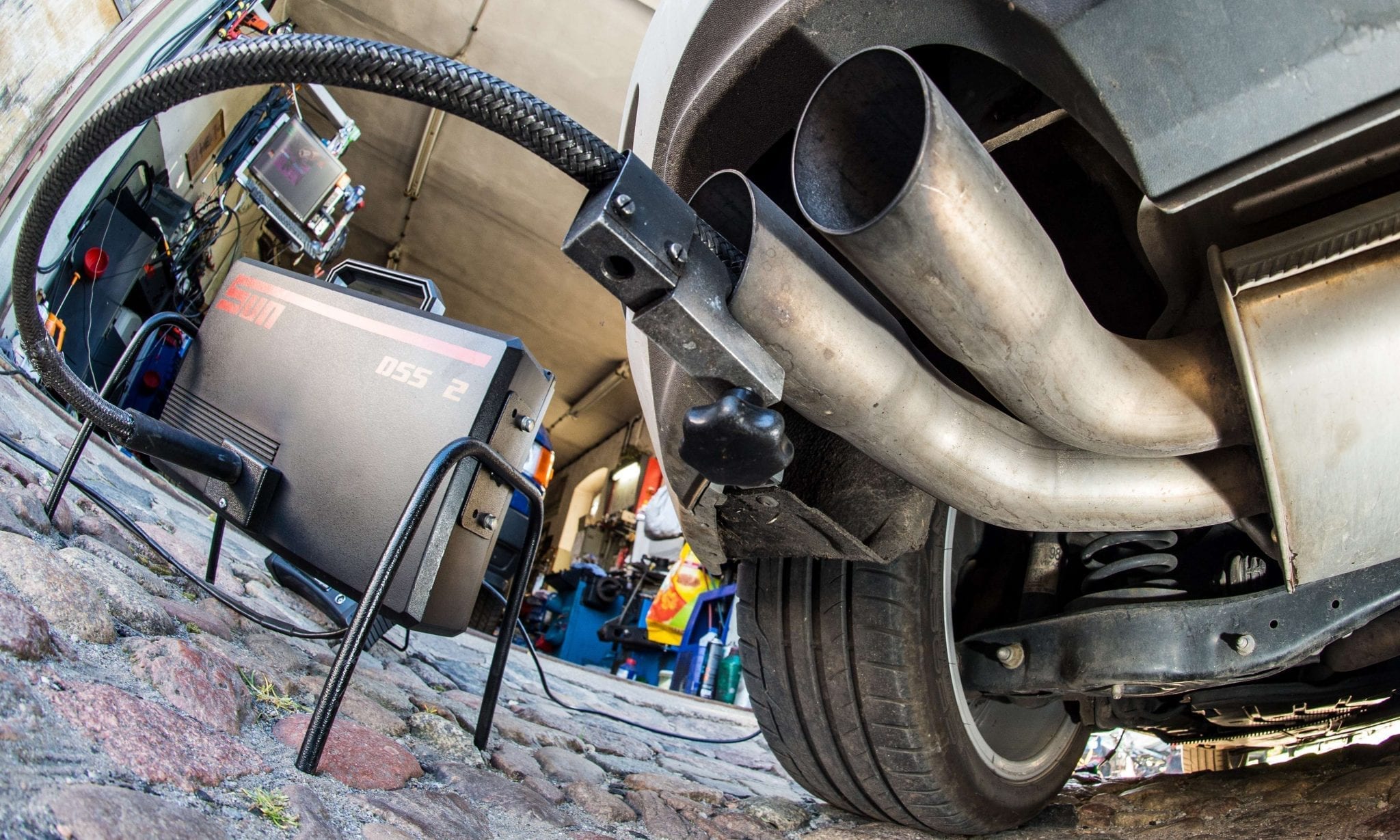
    Volkswagen on Thursday said it was in talks to discuss a settlement with German vehicle owners who are suing the carmaker over excessive pollution caused by VW’s diesel cars. In 2015 the carmaker admitted to using manipulated engine management software to mask excessive pollution levels in its diesel cars, sparking a raft of prosecutions and lawsuits that have led to at least 30 billion euros in legal costs and fines.

    “Volkswagen and the Federation of German Consumer Organisations have agreed to enter into discussions regarding a possible settlement,” the carmaker said.

    “The discussions are at a very early stage, and there is no guarantee that they will result in a settlement. Both parties have agreed that the discussions should remain confidential.”

    German consumers have had less success than vehicle owners in the United States in securing compensation from VW because German cars did not lose their road worthiness certification in the wake of the diesel scandal.

    In Germany VW’s diesel vehicles retained their road worthiness certification if customers agreed to an update of vehicle engine management software, leading VW to take a different approach to compensate consumers.

  • Volkswagen Takes One-Two Punch In Australia With Fine, Regulatory Proceedings

    Volkswagen Takes One-Two Punch In Australia With Fine, Regulatory Proceedings

    Volkswagen AG took two raps in Australia on Friday as a federal court upheld a fine on the German car maker as part of a global diesel emissions cheating scandal and a regulator started penalty proceedings against one of its financial units.

    The court upheld a record A$125 million ($86 million) penalty imposed by the Australian Competition and Consumer Commission (ACCC) to settle lawsuits brought on behalf of thousands of Australian customers caught up in the emissions issue from 2015.

    The settlement follows revelations that Volkswagen was using prohibited engine-control software to pass pollution tests. The company has already paid billions of dollars in legal costs around the world.

    ACCC Chair Rod Sims told reporters on Friday that the fine imposed on Volkswagen was just a taste of what companies could expect in the future.

    The agency would use its new expanded powers to punish illegal activity with the largest fines possible and penalties of more than A$100 million would not be unusual, he said.

    Volkswagen did not immediately respond to a Reuters request for comment.

    Separately, the country’s corporate watchdog, the Australian Securities and Investments Commission (ASIC), said it started civil penalty proceedings in a federal court against Volkswagen Financial Services Australia Pty Ltd for allegedly not making appropriate checks before giving out 49,380 loans to consumers.

    ASIC alleges that the unit, which operates nationally to provide borrowers with consumer loans to purchase new and used cars, did not make required inquiries into borrowers’ living expenses or if the loans were unsuitable for them.

    These instances of alleged breaches in lending laws occurred between Dec. 20, 2013 and Dec. 15, 2016, ASIC said. The maximum penalty for one contravention equates to A$1.7 million ($1.2 million) in the period till July 31, 2015, and to A$1.8 million for a contravention in the period after that, the watchdog said.

    ASIC said proceedings commence on a date to be determined by the court.

    A spokeswoman for the unit said it takes its compliance obligations seriously and that it was cooperating with ASIC.

  • c is developing an Android replacement since it doesn’t trust Google

    c is developing an Android replacement since it doesn’t trust Google

    You don’t need to be a Chinese smartphone manufacturer cut off from the Google Play services version of Android to start developing an alternative operating system. You can also be a large global social-media company headquartered in the U.S. that seeks to control all personal data and aspires to world domination. The former, of course, is Huawei whose placement on the U.S. Commerce Departments entity list prevents it from accessing the U.S. based supply chain that it spent $11 billion on last year.

    Without being able to include the Google Play Store on its new phones, Huawei’s new handsets cannot run Google’s core Android apps like Search, Maps, Gmail and more. That doesn’t matter in China where most Google apps are banned, but does hurt Huawei’s international shipments. The company developed its own operating system called HarmonyOS as an alternative to the licensed version of Android. Ironically, the OS is not for smartphone use, at least not yet. So for now, Huawei is using an open-source version of Android for its phones.

    Can you guess the second company we outlined in the first paragraph? If you guessed Facebook, you’re 100% correct. The company is building a new campus where it will design new hardware. And to make sure that it is completely self sufficient, Facebook is working on making its own Android replacement; the social media giant has named Mark Lucovsky as General Manager of Operating Systems; Lucovsky was part of the team that developed Windows NT for Microsoft. Facebook also wants to design its own chips and create a new virtual assistant. Currently, its Portal smart display uses Amazon’s Alexa to handle complex tasks thrown at it by users.

    While Facebook will continue to offer Android-based apps, the problem is simply a matter of trust. Ironically, the company that allowed 87 million user profiles to be used without permission (resulting in a violation of a signed FTC consent decree and a $5 billion fine) says that it doesn’t trust that other tech companies like Google will work with it. Facebook’s VP of hardware, Andrew ‘Boz’ Bosworth said, “We really want to make sure the next generation has space for us. We don’t think we can trust the marketplace or competitors to ensure that’s the case. And so we’re gonna do it ourselves.”

    Facebook is also concerned that if it has any issues with Google, it could lead to product delays and other issues. Facebook is said to be is extremely concerned about the augmented reality glasses that it is developing. And by using its own hardware and software in a range of products, Facebook could make it difficult for the government to force it to spinoff some of its acquisitions. For example, if Facebook decides to use the Instagram name on its AR glasses as rumored, it could be harder to request that Instagram be spun off as an independent outfit if it is using Facebook’s parts in such a device.
    Facebook hasn’t proven yet that it can produce a smash hit tech device. Besides the Portal smart display, sales of its Oculus VR headsets are not exactly soaring. Still, the company is taking its self-sufficiency seriously as seen by discussions it reportedly held to acquire Cirrus Logic. The latter makes digital signal audio chips (DSP) for Apple and has a market cap close to $4.7 billion. And that is the problem with Facebook. The firm has billions of dollars available for it to spend on its most devious plans. Consider that the company has a brain-scanning system that uses optical scanning to figure out what words someone is thinking of and turn it into text. And Facebook has been shrinking the size of this down to that of a handheld device and hopes to eventually include it on smartphones.
    But hasn’t that been Facebook’s goal all along? The social media company wants to know exactly what you’re thinking at all times and profit from this knowledge.
  • Volkswagen Says Production Suspended In Algeria

    Volkswagen Says Production Suspended In Algeria

    Carmaker Volkswagen has suspended production in Algeria, where the head of its local partner has been detained since June in a corruption probe, a spokesman for the German auto giant said.

    “Volkswagen is aware of a corruption investigation by Algerian authorities into Mourad Oulmi”, who heads Algerian partner Sovac, the spokesman told AFP.

    “Production at the factory, operated in a co-venture with Sovac, is suspended, as are deliveries by Volkswagen” to Sovac, the spokesman added.

    The Sovac-Volkswagen factory opened in 2017 at Relizane, some 250 kilometers (150 miles) southwest of Algiers, and assembles kits provided by the German parent.

    In 2018, it produced around 50,000 Volkswagen, Audi, Seat and Skoda vehicles.

    Contacted by AFP, a spokesman for Sovac refused to comment but promised a statement later in the day.

    Several Algerian news outlets reported that Sovac announced Sunday output at the factory stopped in October, effectively leaving 700 employees without work.

    Several prominent politicians and businessmen linked to Abdelaziz Bouteflika have been detained or questioned in connection with corruption since the ailing president was forced to step down in the face of mass protests in early April.

  • Volkswagen Charged With Violating Vehicle Emission Standards In Canada

    Volkswagen Charged With Violating Vehicle Emission Standards In Canada

    German automaker Volkswagen AG on Monday was charged with importing nearly 128,000 vehicles into Canada contravening the country’s environmental legislation, a Canadian government agency said.

    Volkswagen was charged with 60 counts of breaching the Canadian Environmental Protection Act by importing vehicles that did not conform to prescribed emission standards, Environment and Climate Change Canada (ECCC) said.

    The charges included two counts of providing misleading information. The court hearing is scheduled for Dec. 13 in the Ontario Court of Justice.

    A Volkswagen spokesman said the company has cooperated fully with the investigation by the ECCC.

    “At the hearing, the parties will submit for the Court’s consideration a proposed plea resolution and seek its approval,” he added.In 2015, the agency launched an investigation into the importing of certain vehicle models allegedly equipped with a prohibited “defeat device”.

    In this case, the device was software that reduces the effectiveness of the emission control system during normal vehicle use, according to the agency.

    News in 2015 that Volkswagen had used such devices to cheat emissions tests has so far cost the company about 30 billion euros (26 billion pounds) in fines, vehicle refits and legal costs, and also triggered a global backlash against diesel vehicles.

  • VW’s German Plants Need To Shape Up

    VW’s German Plants Need To Shape Up

    Volkswagen’s German plants need to boost efficiency to match overseas operations, production chief Andreas Tostmann was quoted as saying, targeting 2 billion euros ($2.2 billion) in savings by 2023. German carmakers, including Volkswagen’s Audi brand, have announced thousands of job cuts in recent weeks to address an expected 5% drop in global auto sales this year, with declines likely to spill into 2020.

    “The pace of improvement is better abroad. In Germany, despite all the successes we’ve achieved, we have to do better,” Tostmann told trade journal Automobilwoche.

    Tostmann wants to implement the savings in the production of VW branded cars through a bundle of measures on top of automation, including a leaner logistics operation.

    “The result is that we need 15% less space, 60% fewer logistics vehicles and are able to move 20% more product,” said Tostmann, according to extracts from his Automobilwoche interview.

    VW’s luxury Audi division last month said that it would cut up to 9,500 jobs, equating to 10.6% of total staff, by 2025 in a move to free up billions of euros to fund the shift towards electric vehicle production.

    Rival Daimler, as well as car suppliers Continental, Robert Bosch and Osram, have also recently announced staff and cost cuts.

  • Volkswagen Teases Nivus Subcompact Crossover

    Volkswagen Teases Nivus Subcompact Crossover

    Volkswagen has teased the Nivus subcompact Crossover and has said that the car will first be introduced in the Brazilian market after which it will be introduced in Europe. The car was earlier called the T-Sport and it looks like a small crossover coupe. Of course, the Nivus is the new name and it will slot below the T-Cross when it is unveiled and launched in markets. The Nivus is significant because it is based on the Polo and yes, it looks very different when compared to the hatchback. Though the teaser does not showcase much, we do get to see that the Nivus Coupe crossover comes with a different front grille and the coupe-like roofline with the roof rails bodes well with its crossover tag.

    So why are we interested in the Nivus? Well, it’s based on the company’s MQB A0 platform which has been specifically made by Volkswagen for emerging markets, but as we told you earlier, it will be the Brazilian market that will get the car first. While Volkswagen’s MQB A0 IN platform will also spawn a whole bunch of cars for our markets, we cannot rule out that the Nivus for the country. We’ve already told you that Volkswagen has given a big push for SUVs in India and we will see cars like the T-Roc, Tiguan AllSpace and even the T-Cross based compact SUV hitting the market by 2020.

    The Nivus then fits the bill to complete the company’s SUV assault in the country. It will definitely give consumers a lot of options to choose from while also riding on the rising SUV trend not just in India but globally as well. With a similar wheelbase as the new-gen Polo (2560 mm) so expect it to have good space on the inside. The Nivus crossover coupe will be launched in Brazil in mid-2020 and we wait to hear from Volkswagen India whether it plans to bring this car to India.

  • Volkswagen Cuts Medium-Term Outlook For Operating Profit

    Volkswagen Cuts Medium-Term Outlook For Operating Profit

    German carmaker Volkswagen on Monday cut its medium-term outlook for operating profit as the industry is being hit by a global downturn.

    VW now expects operating profit before special items to grow by at least 25% in the 2016-2020 period, down from a previous forecast of more than 30%, slides for a presentation showed.

    The Wolfsburg-based company also cut its forecast for medium-term sales growth to 20% from more than 25%.