Retail News CRM

Tag: Volkswagen

  • Volkswagen Expects Chip Supply To Remain Tight In Coming Months

    Volkswagen Expects Chip Supply To Remain Tight In Coming Months

    Volkswagen expects semiconductor supplies to the car sector to remain tight in coming months, the head of the carmaker’s namesake brand was quoted as saying on Saturday.

    “I think the situation will remain tense,” Ralf Brandstaetter, CEO of the Volkswagen brand and member of the carmaker’s management board, told German news agency dpa.

    He said a fire at a factory operated by automotive chip maker Renesas Electronics Corp, as well as snowstorms in Texas that have hurt factory production, had effectively idled output.

    “The impact will certainly be felt in the coming months,” Brandstaetter said, adding Volkswagen’s procurement task force was busy around the clock dealing with the issue which remained at the top of the agenda of Volkswagen’s management board.

    Volkswagen AG has been unable to build 100,000 cars due to the shortage, CEO Herbert Diess said in March, adding the group would not be able to make up for the shortfall in 2021.

    Brandstaetter said the situation was expected to ease somewhat in the second half of the year.

    Wayne Griffiths, president of Volkswagen’s Spanish brand SEAT, said last month the challenges caused by the shortage were likely to intensify in the second quarter.

  • Volkswagen’s CEO To Step Aside At Skoda

    Volkswagen’s CEO To Step Aside At Skoda

    Volkswagen boss Herbert Diess is stepping down as head of the supervisory boards at subsidiaries Seat and Skoda to focus on building up a stronger software-development team, a person familiar with the matter said on Thursday.

    Volkswagen declined to comment.

    Handelsblatt had reported the news earlier.

    At Seat, Diess would be succeeded by current technology head Thomas Schmall and at Skoda by Murat Aksel, head of procurement on the Volkswagen board, the source added.

    Volkswagen has been heavily focused on regaining lost ground in the fast-growing field of software-heavy electric cars, where United States and Chinese manufacturers are seen as having a lead.

  • Volkswagen Begins Construction Of New Electric Plant In China

    Volkswagen Begins Construction Of New Electric Plant In China

    Volkswagen Group China has begun construction of an all-new MEB plant at Volkswagen Anhui recently. As the third of the Group’s pure-electric vehicle manufacturing facilities in China, following completion of the Anting (SAIC VW) and Foshan (FAW-VW) plants, the Volkswagen Anhui plant will be powered by green energy from day one. Due for completion mid-2022, the plant is set for the start of production in the second half of 2023.

    By 2025, Volkswagen Group China plans to deliver up to 1.5 million new energy vehicles (NEVs) per year. Dr. Stephan Wollenstein, CEO of Volkswagen Group China, said, “As China is the world’s largest single market for NEV vehicles, we need to strengthen our local competence, and Volkswagen Anhui is a significant part of it. With the plant to be powered by green energy from day one, we are demonstrating our commitment to reducing carbon emissions beyond our fleet.”

    The new body shop will cover roughly 141,000 square meters and makes up part of the total project area, together covering around 500,000m2. The new plant will incorporate a number of energy-saving strategies as part of comprehensive efforts to reduce overall carbon emissions, including the adoption of low energy consumption production equipment. A supplier park for batteries and components is also planned for construction in the area.

    Volkswagen Anhui will have a staff of around 500 on board by 2025, with a focus on R&D and engineering innovations. Combining R&D, quality assurance, pre-sales manufacturing, and testing under one roof, Volkswagen Anhui will provide the Group with a faster time-to-market for new e-mobility products.

  • Volkswagen Mulls Board Change That Could See Labour Chief Move On

    Volkswagen Mulls Board Change That Could See Labour Chief Move On

    Volkswagen is considering a change to its supervisory board that could lead to the replacement of Bernd Osterloh, the head of its powerful works council who clashed with CEO Herbert Diess last year, sources familiar with the matter said on Thursday.

    Osterloh’s departure, if confirmed, could weaken resistance to faster and more drastic restructuring at the German carmaker.

    Last year, the 64-year-old opposed an attempt by Diess to extend his contract as the CEO strives to cut costs and free up resources to invest more in electric vehicles.

    One source said Osterloh had been offered the position of personnel director at Traton, Volkswagen’s truck unit that was spun off and separately listed in 2019.

    Osterloh’s departure could weaken resistance to faster and more drastic restructuring at the German carmaker.

    A second source said the group was considering proposing a new labor representative to its board but did not give a name.

    The company, its main shareholder Porsche SE and the works council declined to comment.

    Five sources in total said Volkswagen would in the near future debate an important change in the composition of its supervisory board, adding no final decisions had been taken.

    The move follows a surge in Volkswagen’s shares, as investors warm to its efforts to overtake Tesla and become a world leader in electric cars.

    The shares have risen by more than half in value so far this year, giving the company a market value of 132 billion euros ($159 billion).

    Osterloh has been a member of Volkswagen’s supervisory board since 2005. Labour representatives make up half the board, under Germany’s system of corporate governance.

    Should Osterloh leave the supervisory board, as would be required should he take up an executive role at Traton, the most likely candidate to replace him would be deputy works council head Daniela Cavallo, the sources said.

    Any nomination would be subject to a confirmatory vote by shareholders at the annual meeting in July.

  • New GTX Brand Joins The Volkswagen ID. Family

    New GTX Brand Joins The Volkswagen ID. Family

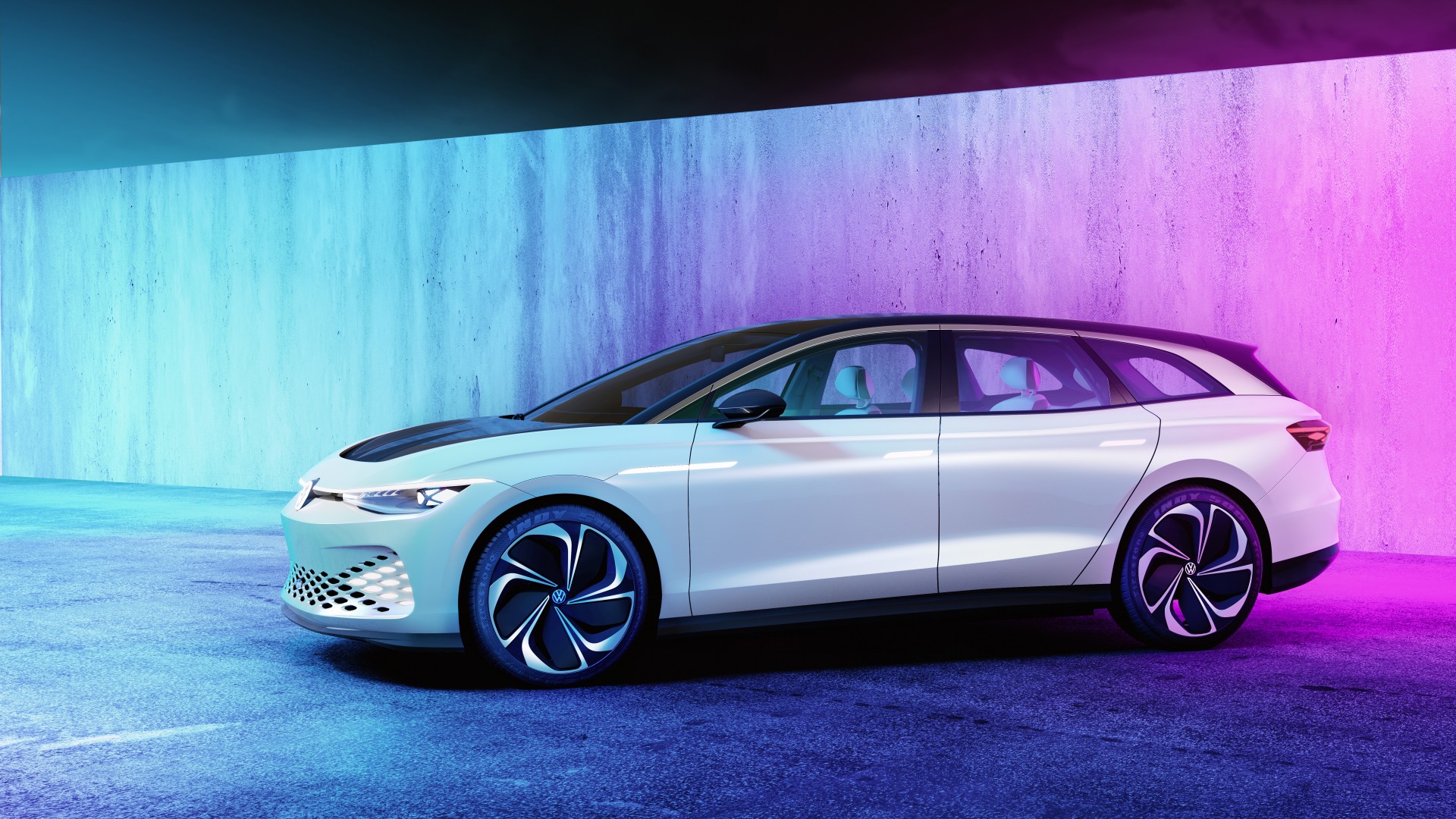
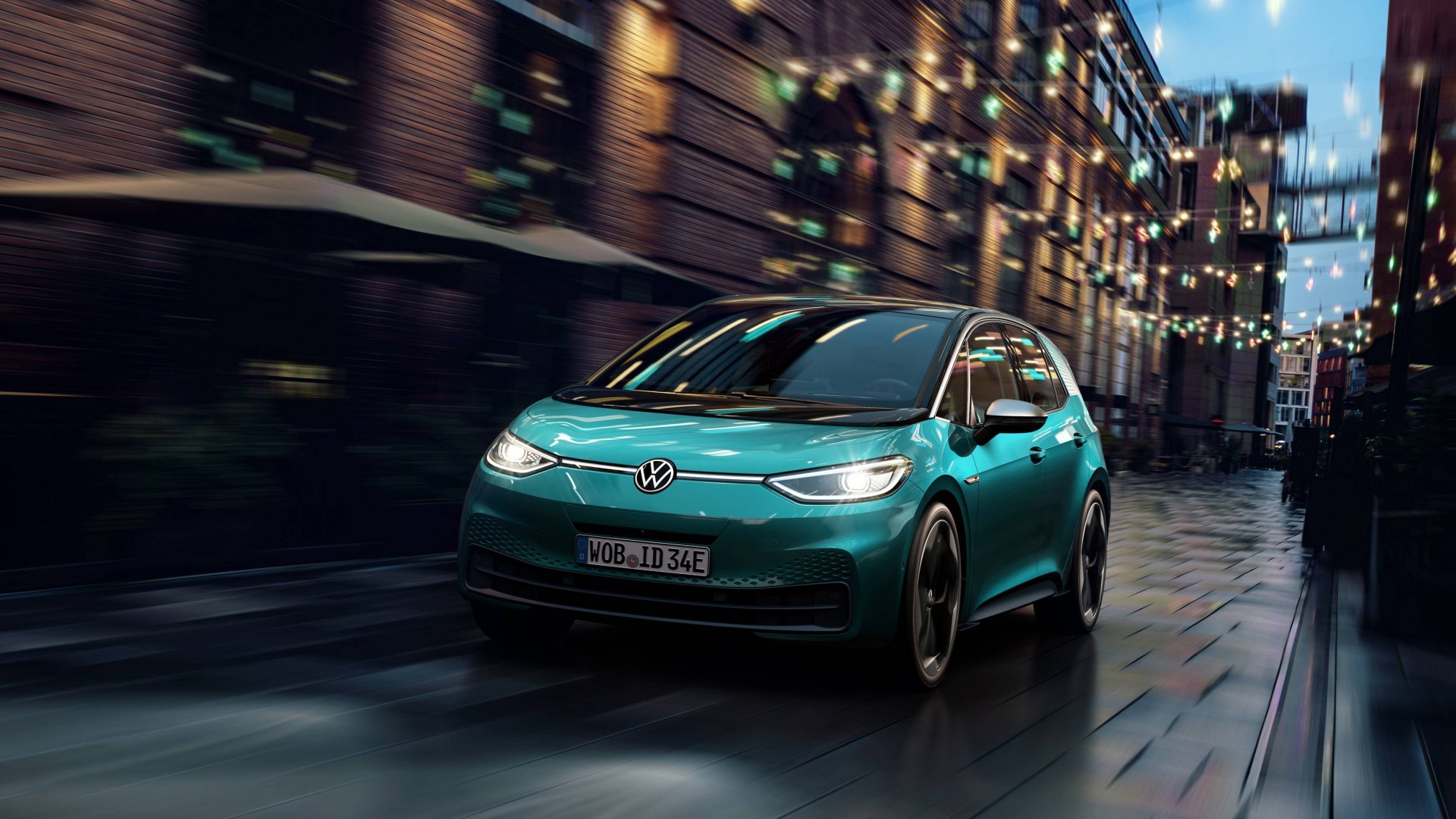
    We knew it would happen sooner or later but Volkswagen is all set to bring in a sporty top-of-the-range model to its electric vehicle range – the new ID.4 GTX. The car will be unveiled on April 28 and the company has already teased the logo. Similar to GTI and GTE, it stands for its own product brand.

    We’ll know more about the car itself, but we know a few details for now. Volkswagen says that the GTX models will impress when it comes to performance and design. An additional electric motor on the front axle brings the all-wheel-drive into the ID. Family. The additional motor switches on intelligently within a few milliseconds when very high performance or strong traction are required. In the new “Traction” driving mode, it is even permanently activated.

    Klaus Zellmer, Board Member for Marketing and Sales at the Volkswagen brand said, “Now the X is building the bridge to the mobility of the future. Sustainability and sportiness are not mutually exclusive but complement each other intelligently. ”

    The new product brand for the ID. Family gives the ACCELERATE corporate strategy a further boost. Volkswagen wants to become the most desired brand for sustainable mobility. The goal is to increase the share of pure electric cars in Europe to 70 percent of sales by 2030. Volkswagen wants to become climate neutral by 2050; around 16 billion euros will be invested in e-mobility, hybridization and digitization by 2025.

  • Volkswagen Taigun Cabin Image Officially Released

    Volkswagen Taigun Cabin Image Officially Released

    The Volkswagen Taigun has been one of the much-anticipated launches for 2021. Expected to go on sale in India ahead of the festive season, the German carmaker has already revealed a fair bit about the SUV, however, so far the cabin of the SUV was kept hidden. But not anymore. Yes, Volkswagen India has officially released an image of the upcoming Taigun’s interior, giving us a good look at the SUV’s dashboard, center console and a section of the front seats.

    Now, visually, the design and styling are different, but the dual-tone black and grey color treatment is very similar to that of the T-Roc. The center stage on the dashboard is taken by the large touchscreen infotainment display, which is expected to be a 10-inch unit, and beside it, we see a large instrument cluster, which is also a fully digital unit. The Taigun also gets a flat-bottom steering wheel with controls for music, telephony, and possible cruise control. Overall the cabin comes with some sharp lines and boxy elements, like the air-con vents and the gaps for the inner door handles. Below the central vents, we have more bottoms for other in-car functions, including the air-con system. We also get to see a pair of USB charging ports, a 12V charging socket and an engine start-stop button. The SUV also gets a bunch of storage pockets, a central armrest and two-tone fabric, and faux leather upholstery.

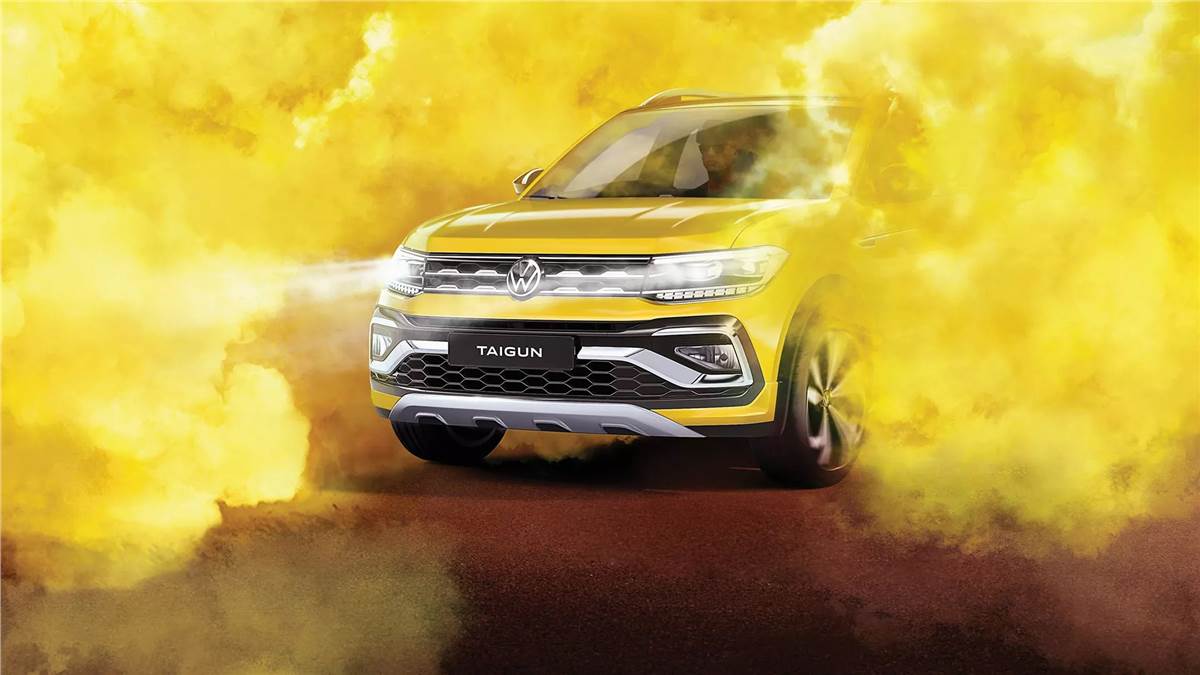
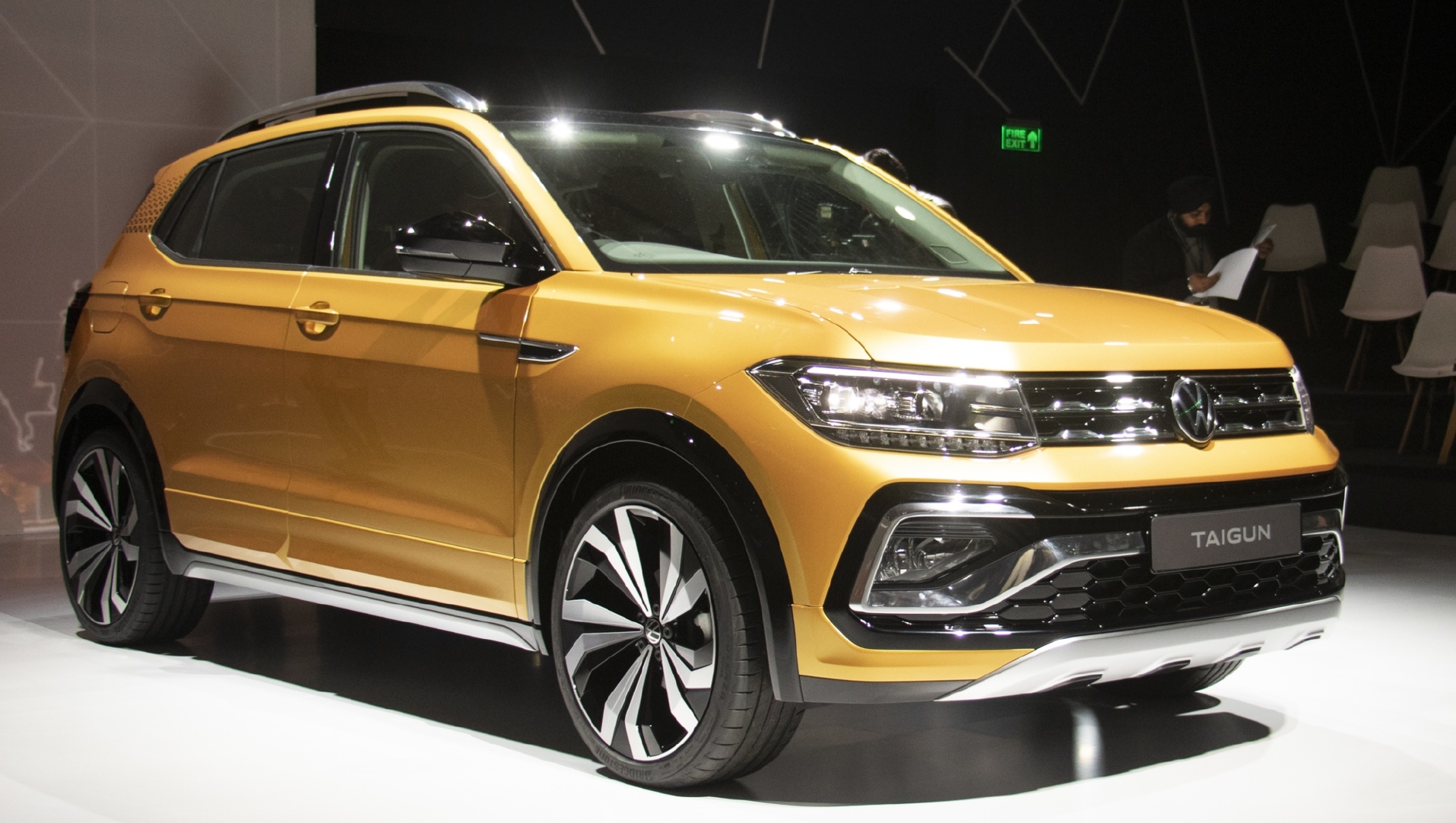
    As for the exterior, the Taigun comes with a blast of chrome on the front grille and even around the fog lamp housing. Enhancing the SUV feel of the vehicle is the skid plate upfront and the plastic cladding on the profile, while the roof rails too make it look a bit taller and upfront, plus we also get LED headlights and DRLs. Volkswagen will also have a GT variant on offer, which will get some plush features like red brake calipers and a big dose of chrome with the addition of features on the inside, and a GT badge on the grille. At the rear section of the SUV comes attractive LED taillights connected by a large LED light bar that adds to the premium design, with the centrally positioned Taigun lettering.

    Under the hood, the Taigun will come with two turbocharged petrol engines – 1-litre TSI and 1.5-litre TSI. There is no diesel engine on offer. The first one will be the 1-litre engine that also powers the Polo and Vento, and is tuned to make 113 bhp and 175 Nm of torque. It comes mated to a 6-speed manual and an optional 6-speed automatic transmission. VW will also offer a 1.5-litre TSI engine, borrowed from the T-Roc, which makes 148 bhp and 250 Nm of torque and will be available with a 6-speed manual and a 7-Speed DSG.

  • Volkswagen To Buy Credits From Tesla In China To Comply With Environmental Rules

    Volkswagen To Buy Credits From Tesla In China To Comply With Environmental Rules

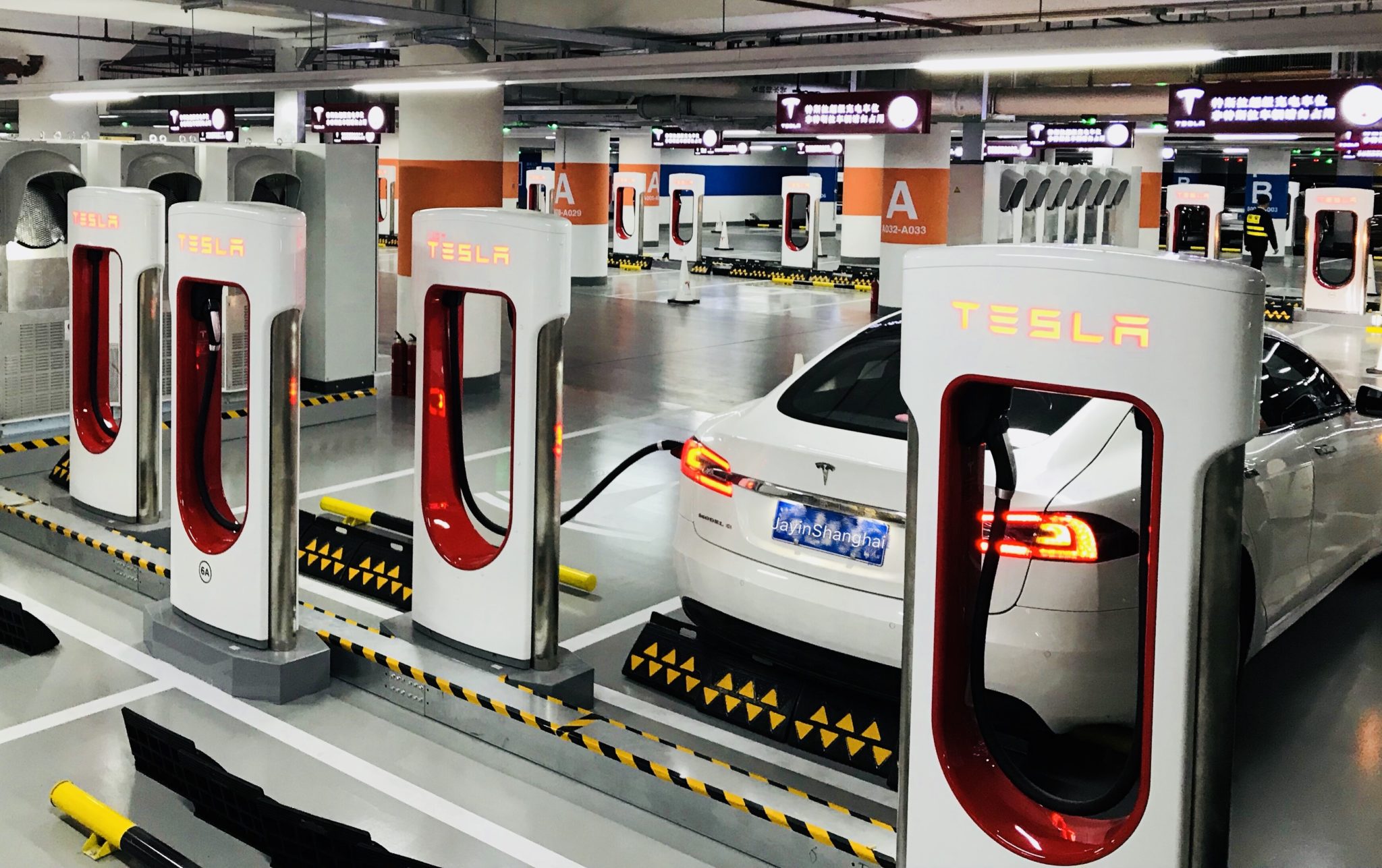
    A Volkswagen joint venture in China has agreed to buy green car credits from Tesla to help meet local environmental rules, three people briefed on the matter told Reuters. The deal, the first of its kind to be reported between the two companies in China, highlights the scale of the task Volkswagen faces in transforming its huge petrol carmaking business into a leader in electric vehicles to rival Tesla. Shares in Volkswagen, the world’s second-biggest automaker, have soared this year as investors warm to its plans to go electric. But in China, and elsewhere, the German company is still heavily reliant on traditional combustion-engine vehicles.

    China, the world’s biggest auto market where over 25 million vehicles were sold last year, runs a credit system that encourages automakers to work towards a cleaner future by, for example, improving fuel efficiency or making more electric cars. Manufacturers are awarded green credits that can be offset against negative credits for producing more polluting vehicles. They can also buy green credits to ensure compliance with overall targets, though trade is usually between affiliated companies that share a major stakeholder.

    To help meet increasingly tough targets, Volkswagen’s joint venture with state-owned Chinese automaker FAW, or FAW-Volkswagen, has agreed to buy credits from Tesla, the sources said, declining to be named as the talks were private. Volkswagen declined to comment on the deal. It said in a statement it was “strategically targeting to be self-compliant” with rules in China, but that if required it would buy credits. Tesla did not respond to requests for comment.

    FAW-Volkswagen sold 2.16 million cars last year. The business and another Volkswagen venture in China – with SAIC Motor – were among the most negative credit-generating automakers in the country in 2019, according to data from China’s Ministry of Industry and Information Technology. The ventures’ gasoline sedans and SUVs have so far proved far more popular in China than their electric vehicles. It is unclear how many green credits FAW-Volkswagen will buy from Tesla, but FAW-Volkswagen’s offer was around 3,000 yuan per credit, higher than prices in previous years, the sources said.

    The deal effectively sees Volkswagen, the biggest foreign carmaker in China, subsidising a rival while the German group ramps up production of electric vehicles. Its ventures in China plan to roll out five electric ID series models this year.

    In the United States, where regulators also set environmental requirements, Tesla has sold regulatory credits to rivals such as Fiat Chrysler, now part of Stellantis, but it has not so far reported any deals in China, where it started making cars in late 2019. Tesla’s revenue from selling regulatory credits totalled $1.58 billion in 2020, according to a regulatory filing.

  • Volkswagen Clarifies That It’s Not Rebranding To Voltswagen In The US

    Volkswagen Clarifies That It’s Not Rebranding To Voltswagen In The US

    Earlier today we told you about Volkswagen’s plan to change its name to Voltswagen in the US. Volkswagen US in fact issued a statement that it had changed from Volkswagen of America to ‘Voltswagen of America’ to show the clear emphasis on the brand’s electric aspirations in the market.

    The news clearly had a big impact given that there were official quotes from the company’s top management and soon, there was a lot of confusion about how the shares were going to be transferred to the new name. The announcement also saw Volkswagen’s stock price rise by 5 percent on Tuesday as well.

    Scott Keogh, president and CEO of Volkswagen of America, said in the release, “We might be changing out our K for a T, but what we aren’t changing is this brand’s commitment to making best-in-class vehicles for drivers and people everywhere,”

    However, it’s come to light now, that the company had intended it as an ‘April Fools’ post. VW issued a statement confirming that it won’t be changing its brand name to ‘Voltswagen’. The company sent out a statement saying that “The renaming was designed to be an announcement in the spirit of April Fool’s Day,”

    Volkswagen clearly fooled retail news as well like the many other media houses around the globe and kudos to the team for it. However, it will be interesting to see if the rise in the stock price of the company will prompt an inquiry from the SEC in the US.

  • Volkswagen Takes Aim At Tesla With Own European Gigafactories

    Volkswagen Takes Aim At Tesla With Own European Gigafactories

    Volkswagen plans to build half a dozen battery cell plants in Europe and expand infrastructure for charging electric vehicles globally, accelerating efforts to overtake Tesla and speed up mass adoption of battery-powered cars. The world’s No. 2 carmaker, which is in the midst of a major shift towards battery-powered cars, said on Monday it wants to have six battery cell factories operating in Europe by 2030, which it will build alone or with partners.

    “Our transformation will be fast, it will be unprecedented,” Chief Executive Herbert Diess told Volkswagen’s Power Day, which also featured the CEOs of BP, Enel and Iberdrola in an effort to match some of the buzz of Tesla’s Battery Day last September.

    “E-mobility has become core business for us,” he added.

    Volkswagen, whose shares rose as much as 3.8%, did not specifically say how much the plan will cost. It said in December that it planned to spend 35 billion euros ($41.7 billion) on e-mobility as a whole by 2025.

    The group had been laggard on electrification until it admitted in 2015 to cheating on U.S. diesel emissions tests and had to deal with new Chinese quotas for electric vehicles. It now has one of the most ambitious programs in the industry.

    Volkswagen said the European factories will have a joint production capacity of up to 240 gigawatt hours (GWh) a year, adding the first 40 GWh would come from Sweden’s Northvolt, with production starting in 2023.

    As part of the deal, Volkswagen will raise its 20% stake in Northvolt and also take over the Swedish firm’s stake in a planned battery cell venture in the German city of Salzgitter, which will form the second factory from 2025.

    This will be followed by a factory in Spain, France or Portugal in 2026 and a site in Poland, Slovakia or the Czech Republic by 2027. Two more plants will be set up by 2030.

    While the first two factories are already reflected in Volkswagen’s financial planning, the group is currently in “deep discussions” about how the subsequent plants fitted with financial targets, board member Thomas Schmall said.

    Volkswagen is also working on a major expansion of charging infrastructure, a lack of which is still seen as a big barrier to the mass adoption of battery-powered cars. Via existing efforts and partnerships with oil major BP as well as top European utilities Enel and Iberdrola, Volkswagen aims to operate about 18,000 public fast-charging points in Europe by 2025.

    This represents a five-fold expansion of the existing fast-charging network, Volkswagen said, adding it would invest 400 million euros in the initiative.

    In North America, Volkswagen targets 3,500 fast-charging points by the end of 2021 via its Electrify America unit, while in China, the world’s largest car market, the group aims for 17,000 by 2025.

    In China, where Volkswagen last year acquired 26.5 percent of battery maker Guoxuan High-tech Co Ltd, the carmaker now aims to sell more than 2 million electric vehicles a year by the end of the decade.

    Shifting to design, Volkswagen unveiled plans to have a new unified prismatic battery cell from 2023, which will support cost cuts generated by the higher level of in-house cell production and could impact its current suppliers.

    South Korean battery makers’ shares, including in LG Chem, whose unit LG Energy Solution makes batteries for Volkswagen, and SK Innovation, fell as much as 5.8% and 5.3% respectively on Tuesday after the news.

    Electric vehicle makers, including Tesla, are using cylindrical battery cells, which resemble flashlight batteries and are relatively inexpensive and easy to manufacture.

    Prismatic cells, which resemble a thin hardcover book, are housed in a rectangular metal case and are more expensive. Pouch cells, another alternative, are thinner and lighter, and resemble a flexible metal mailing envelope.

    “On average, we will drive down the cost of battery systems to significantly below 100 euros ($119) per kilowatt hour,” Schmall said. “This will finally make e-mobility affordable and the dominant drive technology.”
  • Volkswagen Plans Six European Battery Cell Plants By 2030

    Volkswagen Plans Six European Battery Cell Plants By 2030

    Volkswagen plans to have six battery cell production plants operating in Europe by 2030 to secure supply for the world’s No.2 carmaker’s electric vehicle ambitions. The plants, to be built in partnerships, will have a production capacity of 240-gigawatt hours a year, VW said.

    “E-mobility has become core business for us. We are now systematically integrating additional stages in the value chain,” Chief Executive Herbert Diess told VW’s Power Day.

    “We secure a long-term pole position in the race for the best battery and best customer experience in the age of zero-emission mobility,” Diess added on Monday.

    The group also said it would enter partnerships with oil major BP and top European utilities Enel and Iberdrola to expand electric vehicle charging infrastructure, still seen as a major hurdle to the mass adoption of battery-powered cars.

  • Volkswagen To Cut Up To 5,000 Jobs

    Volkswagen To Cut Up To 5,000 Jobs

    Carmaker Volkswagen plans to cut up to 5,000 jobs in Germany by offering early or partial retirement to older employees in a move that could cost 500 million euros ($598 million), the Handelsblatt newspaper reported on Sunday.

    The newspaper quoted a spokeswoman confirming that the company had agreed on the plan with the works council to open partial retirement to those born in 1964, while also offering early retirement to older employees.

    Handelsblatt cited company sources as saying Volkswagen was putting aside 500 million euros for the plan as it would compensate the employees who leave by topping up their pension, although it would save billions in the longer term.

    The newspaper said Volkswagen is also extending a hiring freeze until the end of the year. It had previously only been in place until the end of the first quarter. External hires can only be made in areas like information technology and software.

    The Volkswagen Group said in January it would cut overhead costs by 5% and procurement costs by 7% over the next two years.

  • Volkswagen’s Market Value Crosses 100 Billion Euro Mark For The First Time Since 2015

    Volkswagen’s Market Value Crosses 100 Billion Euro Mark For The First Time Since 2015

    When the market value of Germany’s Volkswagen briefly rose above the 100-billion-euro mark on Wednesday for the first time since 2015, the boss of the normally staid carmaker took to Twitter, Elon Musk-style, to crow about it.

    VW shares soared as much as 6% after investment bank UBS raised its price target on the stock by 50% and said the company’s new electric vehicle platform was set to challenge Tesla’s dominance in the battery electric vehicle (BEV) market.

    Herbert Diess, chief executive of VW Group, highlighted the UBS note on Twitter and shared the market capitalization milestone.

    “The market has been waiting for our #BEV-ramp-up and wanted to see some proof points,” Diess posted.

    Traders reacted with comparisons to Tesla chief Elon Musk who frequently uses Twitter to talk up products developed by his companies, cryptocurrencies or other buzzing technologies.

    The comparison, at least for now, must end there.

    Diess sent his first tweet using the “@Herbert_Diess” handle less than two months ago and has since tweeted 51 times. While he has managed to amass almost 25,000 followers in this time, Musk can boast of 48.3 million.

    “The sheer fact that he started his own account apart from the official VW account tells me, that between the lines he wants to express: We are here,” a Germany-based trader said.

    Though unrelated and more a market-moving tweet, another trader highlighted instances of a probe by the U.S. Securities and Exchange Commision on Musk’s tweet in 2018 that he was considering taking Tesla private at $420 a share.

    But despite recent share price gains — up 20% this year — VW’s market capitalization is just one-sixth that of Tesla. Shares trade 7.5 times 12-month forward earnings; possibly its role in the EV transition is not fully priced.

    Despite recent share price gains – up 20% this year – VW’s market capitalisation is just one-sixth that of Tesla

    Tesla meanwhile trades at 160 times 12-month forward earnings, levels many consider bubble-like.

    On the market capitalization gap, UBS said VW’s only takes into account its EV business out to 2025, and doesn’t price its cash flow-rich legacy business, indicating there is room for the share price to rise.

    It added that VW would likely “master” the transition to close the volume gap with Tesla in 2022.

    At 300 euros, UBS has the most bullish price target on VW. Analysts’ median price target on its shares was 191 euros, according to Refinitiv data.

    Preferred shares, which are listed in Germany’s benchmark DAX index, hit January 2018 highs on Wednesday, while ordinary shares rose as much as 5.6% to their highest since July 2015, two months before the diesel scandal broke.

    VW closed 4.7% higher at 185.18 euros per share on the day, taking its market value to 99 billion euros.

  • Volkswagen Taigun Teased Ahead of Launch

    Volkswagen Taigun Teased Ahead of Launch

    Volkswagen India has officially teased the upcoming Taigun compact SUV, suggesting the launch is around the corner. The carmaker released a teaser video of the Taigun on its official social media account. The SUV has been listed on VW’s official India website for collecting online enquiries. Specifically designed for the Indian market, the SUV was showcased at the 2020 Auto Expo in February. It will be based on the company’s MQB A0 IN platform, which will also be used on VW Group’s upcoming models, such as the production version of Skoda’s Vision-IN concept.

    This all-new product from Volkswagen will be slightly inspired by the T-Cross that is already on sale in the international markets. It will flaunt elements like wider grille with horizontal chrome slats and logo in the center, horizontally positioned LED headlights with LED DRLs, muscular bonnet, neatly designed bumper, large intakes, fog lamps. The production version is expected to get sporty alloys, wheel arch cladding, roof rails and LED taillamps connected by a reflective strip and smoked details similar to the concept model. The rear profile will be underlined by a muscular rear bumper, faux diffuser, heavy chrome/silver details, and matching side skirts.

    On the inside, the SUV will feature dual-tone black and grey upholstery along with a premium interior with body-colored panels on the dashboard, centre console and doors. The SUV is expected to come equipped with an all-digital instrument console, bigger touchscreen infotainment system, fast-charging USB slots, and app-based connected features, flat-bottom steering wheel, rear AC vents, automatic climate control and more.

    Mechanically, the soon-to-be-launched Taigun compact SUV will be powered by a 1.0-liter three-cylinder turbocharged TSI petrol engine. The unit is likely to develop 113 bhp and 200 Nm of peak torque. Transmission options could include a 6-speed manual gearbox as standard along with an optional 7-speed DSG automatic. The company will not offer an all-wheel-drive (AWD) variant of the SUV. When launched, it will rival the Hyundai Creta, Kia Seltos, Renault Duster and the MG Hector.

  • What Volkswagen India’s SUVW Strategy Entails

    What Volkswagen India’s SUVW Strategy Entails

    How many times have you seen a Volkswagen Beetle and not given it another look? Well, the answer is zero and that’s because its design is timeless, ageless. That’s also why we can’t help but look at the new-gen models from Volkswagen India like the Jetta, Polo, Vento, Polo GTI or now even the Tiguan, T-Roc, and even the Tiguan AllSpace. It’s the design of all these cars evoke the same reaction – wow!

    And it’s because these cars have a strong lineage. They all are a culmination of what the company has been able to learn in so many years of being part of the global automotive fraternity. That’s why you see the technology funnel down to cars like the Polo GT TSI making it one of the best hot hatches in the country. In fact, it was the car that started the hot hatch trend in India and remains to date one of the most loved driver’s car in the country.

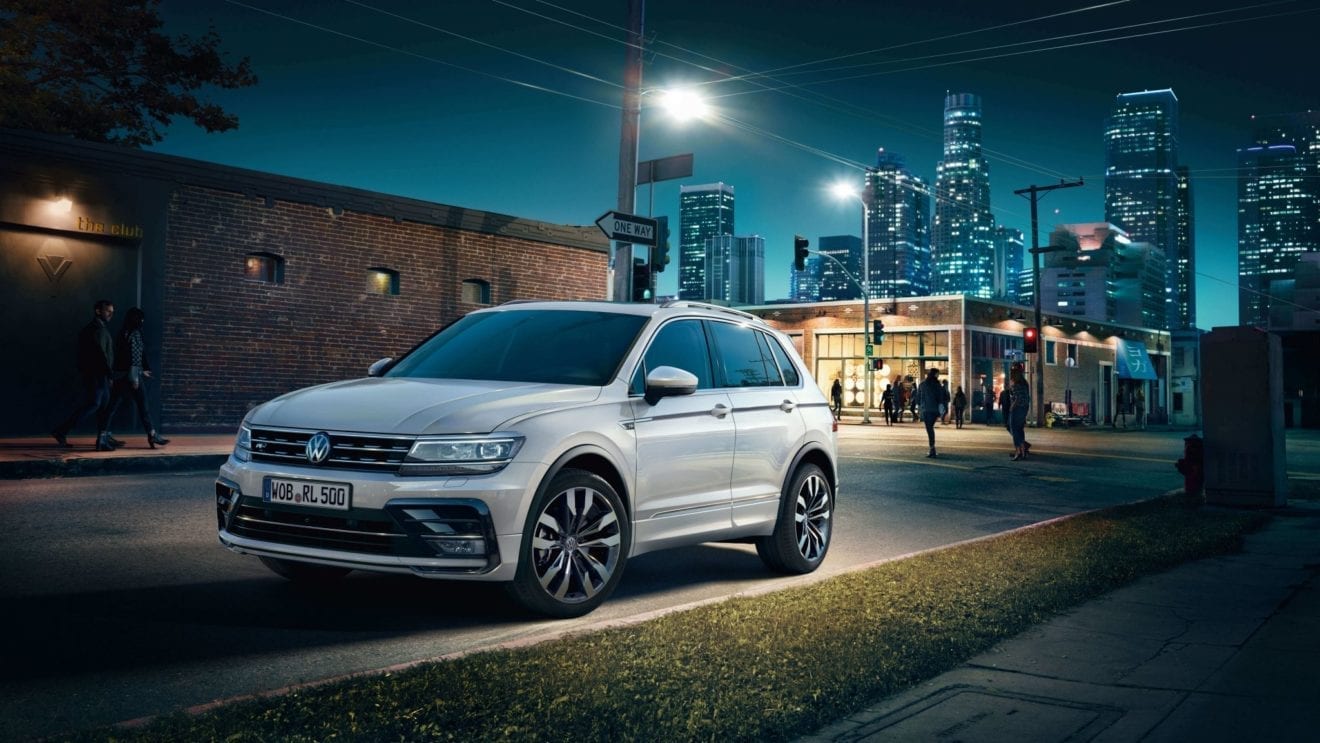
    But with SUVs fast becoming a trend in global markets, VW had to go back to the drawing board and figure out what it could do. It’s not as if the company had no SUV in the market earlier. Remember the Touareg? Yes, the one with the V6 engine. But it was ahead of its time, in fact, Indian buyers weren’t looking at buying SUVs back then, they were more into sedans. But as the market matured, VW India adapted to the change. The big step then in the SUV direction was in 2017, when the company introduced customers to the 5-seater Tiguan.

    With the Tiguan, Volkswagen tested the shores to understand the response and yes, it was a good one. The fact that you get German engineering, precision driving capabilities and of course great build quality, customers knew exactly what to expect from these products. And that was one reason why there’s a more strong focus on bringing in SUVs to India under the India 2.0 Project.

    With the Group investing ₹ 8000 for the India 2.0 project, there was going to be a strong focus on three aspects a) building cars with a high amount of localization content, b) align the business to make sure that service costs come down, and finally, make cars in India for the world!

    The company has already inaugurated a tech center in Pune in 2019 which will look into the development of these upcoming products but the attention is more on the new localized MQB-A0-IN platform. Just like the modular architecture of the MQB platform, where a number of body styles are made on a single platform, the A0-IN will also serve a similar purpose but given the high level of local content on the cars, all the products based on it will be price competitive. To put things into perspective, currently, the localized content in VW cars like the Polo and Vento is around 82 percent that will go up to 95 percent and that’s a massive leap.

    The Volkswagen Taigun will be one of the first SUVs to be built on the new localised MQB-A0-IN platform.

    The first car to be based on this platform is going to be the Taigun which was showcased just ahead of the Auto Expo 2020 and you got to see the car in the flesh back then. And this car will lead the charge for everything that comes post it. Now, the Tiguan AllSpace and the T-Roc have already had their fair share of success, so yes, it’s perfect timing for the Taigun to enter the market. The SUVW strategy then is falling into place and in 2021, we’ll see the Taigun and one more product coming to India. We can’t wait to drive everything that comes our way!

  • Volkswagen adopts new sales model in Mainland

    Volkswagen adopts new sales model in Mainland

    Volkswagen AG is launching another sales model in China that will see the automaker open showrooms in city centres for electric vehicles (EV) and offer fixed prices.

    The move marks a departure from the conventional sales system used by the wider industry in China.

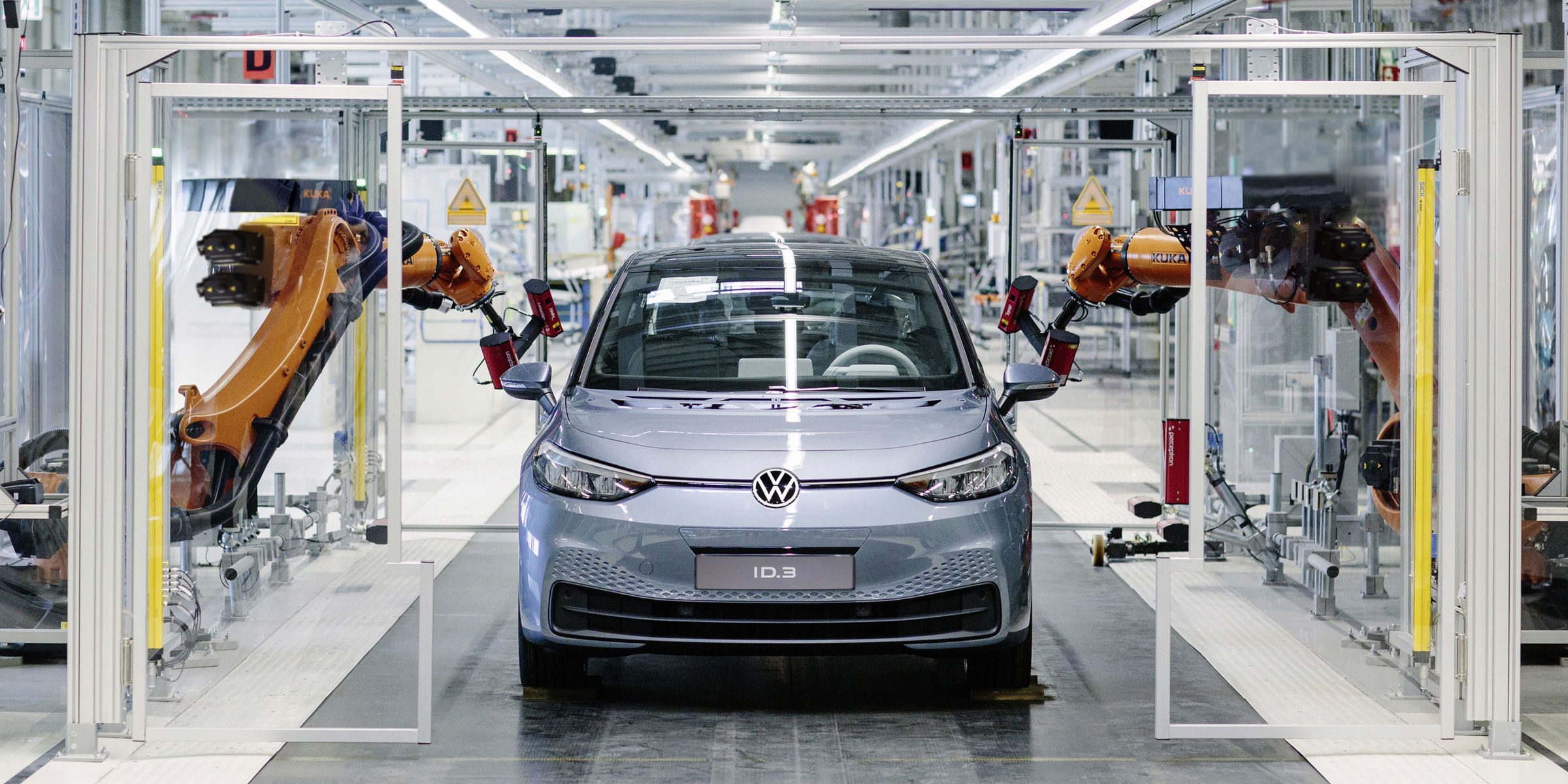
    Last week, Volkswagen’s joint venture with SAIC Motor opened its first showroom under this system in the eastern city of Hangzhou, according to a social media post. The store, named “ID. Store X”, sells its ID. range of family cars.

    The German automaker said customers can order vehicles at a fixed price directly through the company website, phone app or from authorized dealers. The stores are invested and operated by selected dealers, not the automaker.

    The dealers get a commission from vehicle sales and do not need to maintain the car inventory, Volkswagen said.

    Traditionally automakers including Volkswagen, GM and Toyota set the official price, but dealers are expected to keep an inventory of vehicles and often allowed to offer discounts or price them higher depending on the demand for the models.

    The German automaker’s new attempt still differs from Tesla’s direct sales model that bypasses dealers entirely. Tesla’s model allows the US carmaker to manage the process from production to pricing to sales to delivery while adding operational costs of running the wholly-owned stores.

    Showroom strength is becoming an important differentiator for EV makers in the world’s biggest auto market, as they line up model launches. Tesla currently has over 150 showrooms and service centres in China while Nio has 189 stores. Xpeng had 116 and Li Auto has 45 showrooms, as of the end of September.

    SAIC-Volkswagen said it would open 40 ID. Store X stores in 29 Chinese cities in the next 18 months. Volkswagen’s other venture with FAW Group has yet to announce a detailed sales plan for EVs.

    Volkswagen said last month that it will launch eight ID. family models in China by 2023 with its local partners SAIC and FAW.

    Sales of electric, plug-in hybrid and hydrogen-powered vehicles in China are forecast to rise to 20 percent of new car sales by 2025 from just 5 percent now, the State Council said last month.