Retail News CRM

Tag: vr

  • AI for India’s BFSI & NBFC Sectors Move Beyond Experimentation

    AI for India’s BFSI & NBFC Sectors Move Beyond Experimentation

    As the global race for Artificial Intelligence (AI) leadership intensifies, India has begun to catch up with countries like United Arab Emirates, South Korea, the United States, Germany, Singapore and Japan in the mainstream adoption of AI-based technologies. The Indian BFSI & NBFC sectors are undergoing a dramatic change with the growing realization of AI’s importance among business leaders and have put them at the forefront of exploring the full enterprise potential of AI use-cases for their businesses.

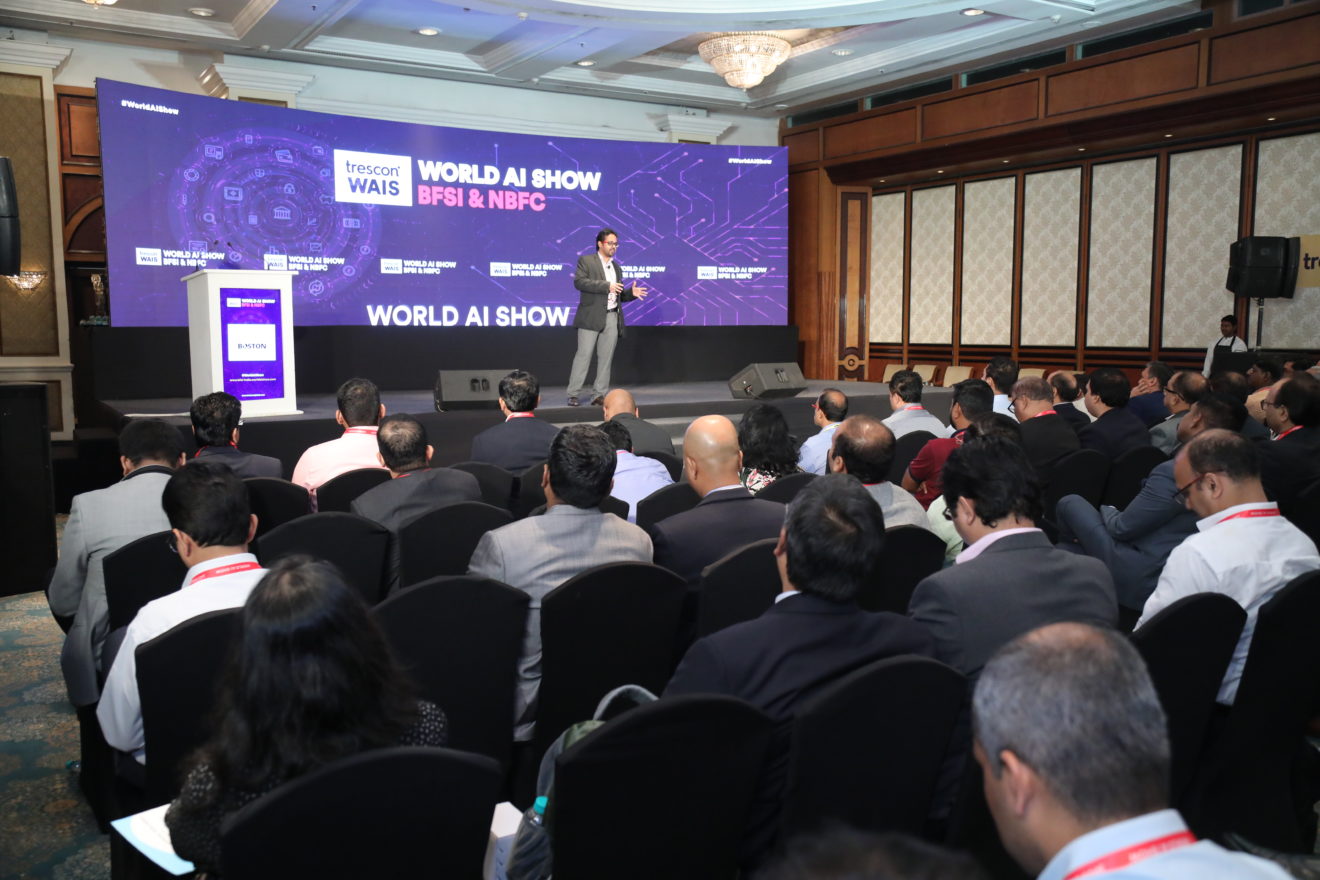
    The applications of emerging technologies in the banking and non-banking sectors has become a critical topic of discussion today. Given that India is serious about digitization, Trescon hosted its 11th global edition of World AI Show which was a dedicated spin-off of the global AI series that focused on business applications of AI in BFSI and NBFC. The conference was held in Mumbai – ‘Financial Capital of India’ to hear what industry leaders had to say about the progress in AI adoption across India’s BFSI & NBFC sectors. On Friday, Mumbai saw top C-level executives such as Inderjit Sehrawat, Managing Director for Kryon; Vivek Zakarde, Head – Analytics, BI & DWH at Reliance General Insurance Company Limited; Dr. Puneet Kaur Kohli, CTO of Manappuram Finance Limited and Sunit Vakharia, CIO for Bank of Baroda Financial Services Limited among other top speakers who came together to break down real-world industry use-cases, workshops and discussions on adoption challenges of AI & RPA for enterprises.

    The theme for the conference revolved around “Enabling the Use of AI for the Future of Finance“, especially AI’s significant application in areas such as customer experience, automation, fraud and risk management and enterprise digitization growth in the Indian BFSI and NBFC industry.

    Few key high-level takeaways from the conference:

    • A Tech Talk from Amod Kabade, Head SSG (Specialist Solutions Group) at Boston Limited on how the challenge of digital transformation is leading to an explosion in technology opportunities.
    • Inderjit Sehrawat, Managing Director for Kryon gave a tech talk on automation at scale and the right way for organizations to accelerate its digital journey.
    • A comprehensive workshop was conducted by Rajkumar Devulapalli, Head of Professional Services and Support APAC at Spirent Communications on proactive Cybersecurity training which covered the Cyber Range as an important tool to effectively evaluate network elements and train cybersecurity professionals across enterprises and organizations.
    • Ramprakash Ramamoorthy, Product Manager – AI & Machine Learning for ManageEngine which is a division of Zoho Corp, delivered a tech talk on how to build an AI-powered IT infrastructure.
    • Maneesh Jhawar, Founder & CEO of QualityKiosk Technologies; Prateek Kapoor, Director Transformation & Automation COE for Aon and Ankit Goenka, Head of Customer Experience at Bajaj Allianz General Insurance Company Ltd, were part of a panel discussion that highlighted how AI is radically changing customer experience by creating human-centric digital services in the BFSI Sector.
    • Discussions at the conference also centred on how NBFCs can adopt AI into their current digital infrastructure to reduce time-to-decision and boost pro-active risk management.
    • AI’s ability to detect patterns in data to help identify fraudulent claims in the insurance industry.

    World AI Show (BFSI & NBFC) also featured the Big BFSI & NBFC Awards that honoured the top thought-leaders who are bringing about a significant change in their organisations and industries through technology implementation and strategies in applying future technologies.

     

  • Apple’s rumored mixed-reality headset could use gloves as a controller

    Apple’s rumored mixed-reality headset could use gloves as a controller

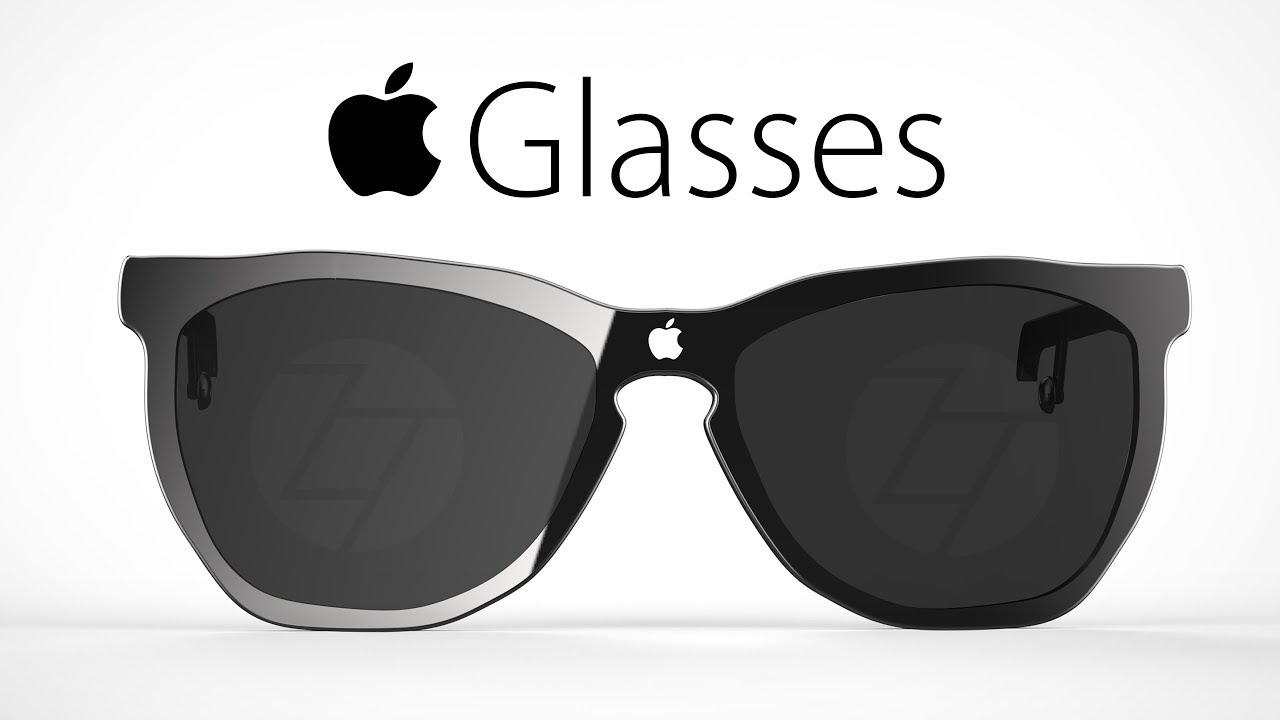
    By now, many of you know that Apple’s next big thing is NOT going to be the HomePod. Actually, for a few years now, analysts have been expecting Apple to introduce AR glasses as soon as 2020-2021. There have been two schools of thought here; one is that this will be a standalone device while others, including reliable TF International analyst Ming-Chi Kuo, expect your iPhone to carry the brains of the headset. Kuo, in fact, says that production on the Apple Glasses will start no later than the second quarter of next year.

    A couple of patent applications filed by Apple reveals a pair of features that the company is apparently working on for the headset which has been dubbed Apple Glasses. The patent applications were submitted with the U.S. Patent and Trademark Office (USPTO) in February. The first one, titled Scanning Mirror Display Devices, discusses the technology that uses lasers and mirrors to project images directly into the eyes of the person wearing the glasses in lieu of a display. This could be done in a way to support Augmented Reality (AR) by allowing the images to be overlayed over a real-world view. The patent application says that this technology might be used to replace “overly complex, bulky, and uncomfortable to wear” head-mounted displays.

    The second patent application, Magnetic Sensor Based Proximity Sensing, uses magnetic sensing technology to detect the position of a user wearing a special glove on his or her hand. This could be used to control VR or AR features on the Apple Glasses through the use of hand gestures. A person wearing the headset would also don the gloves which have special material on the fingertips.

    Last month, a report stated that Apple had decided to terminate the Apple Glasses project, but that might not have been the case based on subsequent reports. In fact, just 10 days after that story made the rounds, a huge leak revealed that the tech giant was working on a mixed-reality headset supporting both AR and VR. The glasses will supposedly offer 8K resolution of  7680×4320 for each eye. The device has a codename of T288, according to this leak, and uses a newly developed operating system called rOS for reality Operating System. A 5nm chip will reportedly power the glasses and TSMC is expected to start producing components using this process starting next year.

    The same report said that Apple’s headset would also include eyebrow and jaw sensors to determine the expression being made by the user, hand sensors (which might include the technology found in the second patent that we discussed in this article), sensors to track the eyes and left and right cameras. Many of these features were also discovered in a patent that Apple filed with the USPTO this past March.

    Back in June of 2017, analyst Gene Munster, now with Loup Ventures, said that the Apple Glasses would end up being bigger than the iPhone. At the time, Munster said, “In 10 years we expect the iPhone will be around, but be a much smaller part of Apple’s business as Apple Glasses slowly gains market adoption.” The analyst originally expected the glasses to launch in 2020, but changed that forecast to December 2021 back in May. Munster forecasts that 10 million Apple Glasses will be rung up during the device’s first year on the market.

  • Audi Hong Kong opens Drivers experiential centre

    Audi Hong Kong opens Drivers experiential centre

    Audi Hong Kong has opened an experiential retail concept store focusing on technology and lifestyle.

    The store, billed as the Audi Innovation Space, was unveiled earlier this year at Kowloon Tong’s Festival Walk. It uses digital technologies such as a VR experience to engage customers and offer new ways to experience the brand. The store supersedes the former Audi Kowloon Showroom in Tsim Sha Tsui, which was shuttered in June.

    Audi will roll out the new experiential store concept at its other Hong Kong locations, beginning with a new outlet at The Elements in Tsim Sha Tsui later this month.

    Audi’s exclusive distributor in the territory is Dah Chong Hong, which has provided sales and service on behalf of the brand for 20 years.

  • Commune launches high-tech AR app in Singapore

    Commune launches high-tech AR app in Singapore

    Furniture-design and lifestyle-brand Commune in Singapore has unveiled a cloud-based, omni-channel furniture retail solution and mobile augmented-reality (AR) app.

    Commune: In Motion is designed to transform the shopping experience and reduce the time taken to serve customers by about 70 per cent. It is the product of a design development process underway since 2016 to discover new values and growth in the evolving digital landscape.

    “The retailers who thrive in the next decade will be those who reimagine and redefine their stores for the digital age,” said CEO Joshua Koh. “Brick-and-mortar retailers have enormous opportunity to leverage the distinct benefits of ‘old fashioned, in-person shopping’ in ways that digital sites can only dream about. The winners of tomorrow will be those who are able to transport the digital world into their stores in a manner that delights customers, builds loyalty and generates brand value,” he said.

    The app enables the integration of online and offline data across various touch points – for example, customers’ browsing behaviour and the management of purchase and delivery orders in real-time – to provide a personalised shopping experience for homeowners and furniture enthusiasts.

    “Commune: In Motion exemplifies Services 4.0 where next-generation services are end to end, frictionless and anticipatory to customers’ needs,” said development partner Infocomm Media’s executive Jane Lim. “Commune has shown us how retail businesses can meet changing customer needs quickly in the digital age by effectively harnessing emerging technology and data.”

    Some of these initiatives undertaken by Commune in Singapore include the development of a VR and 3D space planner, implementation of an e-learning portal for in-house training, and the participation in overseas business missions.

    For Commune, the system aims to further improve business operations and speed up customer-service efficiencies, as well as provide a platform whereby the company can build a better relationship with its customers.

    Commune in Singapore has a vision is to create a seamless, online-offline shopping experience that is more immersive, fun and explorative while encouraging other companies in the industry to embark on similar journeys.

  • Refinitiv Launches Cloud-Based Data Access in Asia

    Refinitiv Launches Cloud-Based Data Access in Asia

    Major financial data provider Refinitiv has launched a new service providing real-time data through cloud-based delivery in Asia, leveraging Amazon Web Services.

    The service, named Elecktron, is designed to simplify access to real-time price information and eliminate the need to invest in physical infrastructure. In addition, delivery through Amazon Web Services enables greater flexibly in how the data is used.

    «It’s clear to us that Asia-based firms are starting to aggressively accelerate their cloud plans as they realize how leveraging the cloud across their market data infrastructure can help them move faster, grow their business, reduce their costs and better manage their risks,» said Alfred Lee, APAC managing director at Refinitiv.

    According to a Refinitiv survey with senior tech and market data managers, investments in the public cloud are expected to increase with 86 percent of firms in Asia claiming to use it for the majority of market data needs in less than four years.

    The initial success of our Elektron real-time cloud delivery shows the benefits of combining high quality data with simple access across a broad range of innovative use cases,» added Brennan Carley, global head of enterprise at Refinitiv, which is onboarding an increasing number of clients in the region including Hong Kong-based global payments and FX platform Currenxie.

    We believe the cloud is transformational for how the financial community consumes data.

  • Google Maps AR navigation is rolling out in beta on Android and iOS

    Google Maps AR navigation is rolling out in beta on Android and iOS

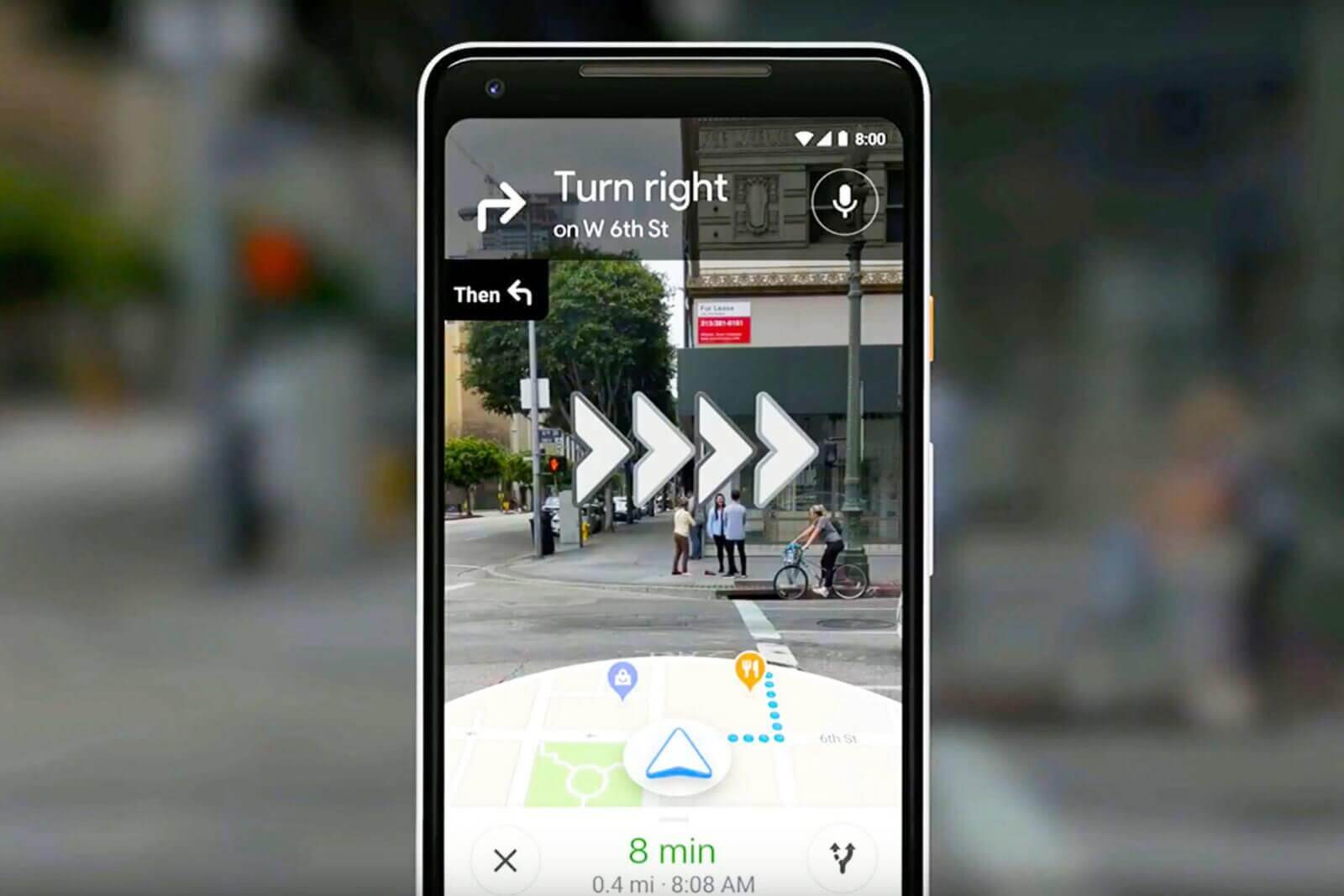
    Google Maps Live View—a new AR navigation mode that uses imagery from your phone’s camera—will be rolling out in beta on Android and iOS in the coming weeks. Live View takes advantage of your phone’s camera and Google Maps’ vast database to deliver a unique AR (augmented reality) navigation experience that layers the Maps interface over a real-time feed from the camera. It was previously demoed last year, and has been available to Google Local Guides level 5 and up, as well as Pixel phone owners, but it’s about te see a broader release later this month.

    To use Google Maps Live View, you’ll need a phone that supports ARKit, in the case of iPhones, and ARCore, in the case of Android devices. Of course, Live View is also going to be available only in regions where Street View is available, TechCrunch reports.

    To use Live View, you’ll need to tap the “Start AR” button and hold up your phone like a viewfinder. This brings up a screen that’s quite reminiscent of a video game, in that you’ll see the world around you, but with virtual elements (like arrows and signs) layered over your surroundings.

    To pinpoint your coordinates, Maps uses your phone’s rough GPS location and Street View’s vast image database to determine exactly where you are. To achieve this, the app takes a series of images, which have a known location, and analyzes them for key visual features (like the outlines of buildings and bridges), in order to create a large-scale index of these features. Then, to localize you, the system compares features in the database to imagery from the live camera feed. Using machine learning, it is able to discern between transient features, such as dynamic lighting and construction work, and the permanent features of the scene.

    Google warns that using Live View in Maps will lead to slightly increased battery and mobile data consumption. The feature is expected to roll out in beta on Android and iOS in the coming weeks.

  • L’Oreal and Shopee partner to launch AI(R) powered beauty tools

    L’Oreal and Shopee partner to launch AI(R) powered beauty tools

    Shopee, the leading e-commerce platform in Southeast Asia and Taiwan has teamed up with L’Oréal the world leader in beauty and skincare to roll out artificial intelligence (AI) and augmented reality (AR) powered tools on Shopee’s platform. The joint partnership demonstrates both Shopee’s and L’Oréal’s commitment to continuously innovate and power Southeast Asia’s beauty and skincare categories into the future, and to provide shoppers a convenient and personalised online shopping experience. The AI and AR powered tools will also benefit millions of users across Southeast Asia, especially digitally-savvy millennials who are drawn to innovation, creativity and a sense of self-discovery.

    With L’Oréal’s AI and AR powered tools, Shopee BeautyCam by ModiFace and the Effaclar Spotscan by La Roche-Posay, Shopee users are able to digitally try on different shades of L’Oréal’s lipsticks as well as receive personalised advice on the best L’Oréal skincare treatments to tackle acne. Users only need Shopee’s app and a front-facing camera on a mobile device to access these tools. The partnership also sees L’Oréal tapping into Shopee’s key interactive entertainment features such as Shopee LIVE and Shopee Slice to deepen consumer engagement.

    Ian Ho, Regional Managing Director, Shopee said, “We are excited to partner L’Oréal to bring these AI and AR powered tools to our platform. This partnership demonstrates our joint commitment to transform Southeast Asia’s beauty and skincare market with innovation and technology. With more consumers purchasing their beauty and skincare essentials with Shopee, we are confident that shoppers will enjoy a more personalised and seamless shopping experience with these digital innovation tools.”

    With more consumers entrusting mobile self-diagnostic tools to help uncover what best suits them,  the digital innovation tools, Shopee BeautyCam and Effaclar Spotscan on Shopee, will help consumers better understand their individual beauty and skincare needs as they shop online. With more than 95% of Shopee’s transactions occurring on mobile across the region, the partnership promises shoppers a seamless mobile shopping experience, from the use of L’Oréal’s mobile AI and AR powered tools to discover products, to delivering the products right to their doorstep. The launch of these digital innovation tools is done in collaboration with both of L’Oréal’s make-up and skincare divisions.

    The Shopee BeautyCam employs AR simulation to allow Shopee users to try different shades of make-up, resulting in photo-realistic results in the form of a video or a selfie. To achieve this, ModiFace by L’Oréal uses AI-enabled shade calibration, AI-powered analysis of information provided by makeup brands, as well as images and descriptions available on social media. The Shopee BeautyCam will launch on Shopee Singapore during L’Oréal’s campaign, ‘International Lipstick Day’, from 27 to 29 July and in conjunction with International Lipstick Day on 29 July. Shopee users will be able to try the feature first with L’Oréal lipsticks. The proprietary technology will eventually be extended across other L’Oréal make-up products in the future across Southeast Asia.

    L’Oréal’s other AI-powered digital innovation tool, Effaclar Spotscan, harnesses artificial intelligence technology to offer users instant, personalised and professional acne analyses. Users are awarded an acne score and are given a personalised Effaclar routine with specific skin care tips to best tackle their acne spots. Featured during selected campaigns, the tool was launched in conjunction with other in-app activations such as in-app dermatologist consultations. Effaclar Spotscan was launched successfully on Shopee Singapore in March this year, and will be incorporated in the upcoming L’Oréal campaign, ‘Your Best Skin Yet’, from 12 to 15 August.

    Ninell Sobiecka, Vice President, Active Cosmetics Division, APAC said, “We are pleased to partner Shopee to make our first acne diagnostics tool, the Effaclar Spotscan by La Roche-Posay, available to users across Southeast Asia. This AI-powered tool helps users make more educated skin care choices based on their own unique skin type, all in the comfort of their own homes with the Shopee app. Together with Shopee, we are committed to empowering users and making lives better with innovative technology.”

    Chris Driver, Commercial General Manager, Consumer Products Division, APAC adds, “We are thrilled to partner Shopee to bring the Shopee BeautyCam by ModiFace to millions of users across the region and to reinvent the beauty industry. This technological innovation gives consumers the freedom and creativity to explore L’Oréal’s wide array of lipsticks and helps users learn more about which lipstick suits them best. All done within Shopee’s app, this provides users a convenient, effective and simple way to discover more make-up products as they make their next make-up purchase online.”Coupled with L’Oréal’s digital innovation tools, the partnership sees L’Oréal tapping into Shopee’s key interactive entertainment features such as Shopee LIVE, Shopee’s in-app live streaming feature, and Shopee Slice, a popular in-app game, to deepen engagement with consumers for a more personalised online retail experience. Through this, Shopee and L’Oréal are able to provide users higher entertainment value and benefits, as they learn more about L’Oréal’s extensive array of products, digital innovation tools, as well as make-up and skincare tips.

    All L’Oréal make-up and skincare products can be found via their respective official stores on Shopee, under Shopee Mall, which offers 15-days free returns, 100% authenticity, and free shipping.

    Download the Shopee app for free on the App Store or Google Play Store.

  • Samsung brings new messaging feature, more AR Emoji options to Galaxy S9/S9+

    Samsung brings new messaging feature, more AR Emoji options to Galaxy S9/S9+

    More than a year after the release of the Galaxy S9/S9+, Samsung continues to bring new features and important improvements to its last year flagship. The month of July comes with one new feature aimed at Samsung fans and more customization options for AR Emoji.

    These changes come in addition to the July security patch, which is now rolling out to Galaxy S9 and S9+ devices across the world. The update weighs in at 533MB and includes a new feature – Call and Message Continuity. Call and Message Continuity is meant for customers who own not just a Samsung smartphone, but a tablet as well.

    With the new feature, those using Galaxy tablets will be able to accept calls and read their messages from their slate as long as they are logged in to the same Samsung account as their Galaxy phone. The new feature uses either Wi-Fi or mobile data connection, so your phone doesn’t have to be close by to be able to take calls from the tablet. You can find the new feature in the Connections menu.

    Furthermore, the latest update brings the Galaxy S9/S9+ closer to the newest Galaxy S10 series by adding a couple of new customization options for AR Emoji. Also, the UI has been updated to be cleaner and easier to use.

    For the time being, the update is only available in Germany, but Exynos-powered Galaxy S9/S9+ units all over the world should get it as well in the coming weeks.

  • Porsche To Use Holoride’s Virtual Reality Tech To Keep Rear Passengers Entertained

    Porsche To Use Holoride’s Virtual Reality Tech To Keep Rear Passengers Entertained

    Porsche has collaborated with Munich-based entertainment firm Holoride to come out with a special Virtual Reality (VR) based entertainment device for rear passengers. Recently unveiled at the Start-up Autobahn Expo Day, the immersive virtual entertainment tech uses a VR headset with sensors, which is paired to the vehicle so that its content can be adapted to the car’s driving movements in real-time. With this new tech, the German luxury and sports carmaker is trying to show what entertainment could be like in the future for the backseat passenger in a Porsche.

    How this device essentially works is, suppose the car is being driven around the curve, the virtual vehicle that the passenger is traveling in, let’s say, for example, a space shuttle, will also change direction. The company says that this results in a highly immersive experience, which significantly reduces the symptoms of motion sickness. Although still in prototype stage, Porsche says In future, the system will also, for example, be able to evaluate navigation data to adapt the length of a VR game to the calculated duration of the journey. This technology can be used to integrate other entertainment services such as watching a film or even virtual conferences, the applications are many. Also, as Holoroid has an open platform approach, car manufacturers and content producers can customize the content to adapt to driving time, motion, and context.

    Nils Wollny, CEO of Holoride founded the entertainment tech start-up at the end of 2018 with his partners, Marcus Kuhne and Daniel Profendiner. Using the Start-up Autobahn platform, the up-and-coming company has now shown that their “holoride” software works seamlessly with manufacturers’ vehicle data for motion-synchronized, real-time generation of virtual reality (VR) and cross-reality (XR) content.

    Porsche will have the new VR technology on display and to experience at the upcoming Frankfurt Motor Show, from September 20, 2019. Under the motto “Next Visions. Change the Game – Create tomorrow”, Porsche is inviting innovators and partners to the motor show to discuss the future of mobility.

  • How to use and unleash the power of artificial intelligence

    How to use and unleash the power of artificial intelligence

    Artificial intelligence has been a buzzword in the retail industry for some time now. But rather than just talk about it, retailers are now at a stage where they are putting words into action and starting on their first AI projects.

    Over the last year, an increasing number of retailers have started to adopt the technology. Uniqlo, for instance, uses machine learning to power a digital assistant on its app, which is able to give highly personalised recommendations. In Hong Kong, convenience-store operator Circle K unveiled an AI-driven checkout solution last year that uses image-recognition technology in the self-checkout process.

    While there are clear benefits to implementing artificial intelligence – improving operational efficiencies and gaining a better understanding of the customer are just two – it can also be a daunting task to embark on. Here we identify three key considerations for retailers that are looking to unleash the power of AI…

    Quality of data

    Through machine learning, retailers are able to take data from multiple channels and turn that into actionable predictions and recommendations. But the biggest success factor is not the algorithm behind these insights, but rather the quality of the data that feeds into it. Retailers that do not have their data estates in order risk having underwhelming outcomes from their AI investment. This is something that must be considered beforehand.

    Choosing which areas to focus on

    There is a multitude of areas in which artificial intelligence can be deployed in a retail setting. Aside from the different applications of AI technology – for instance, machine learning, natural language processing and robotics – there is also a choice to be made in terms of the operational area, be that the customer-facing side of the business or processes that run behind the scenes.

    AI initiatives that help to improve the customer experience can be an ideal starting point as this is an area that benefits from a wealth of data and can provide a quick win for a retailer.

    Bringing in external expertise

    Many retailers will lack the skills and expertise to confidently start leveraging AI technology. The solution is often a combination of recruiting talent to bridge the skills gap and working with credible technology partners. The advantage of both these approaches is that retailers can hit the ground running and be able to accelerate their first move. Speed is critical if a retailer wants to be a disruptor rather than disrupted.

    Digital Transformation Survey

    Is your organisation looking at emerging technologies such as artificial intelligence, augmented reality and automated deliveries? And how do technology partnerships form part of your digital strategy?

    Tofugear is conducting its annual digital transformation survey and is asking C-level executives and senior managers across Asia about their approach to innovation.

  • Apple Buys Self-Driving Car Startup Drive.ai

    Apple Buys Self-Driving Car Startup Drive.ai

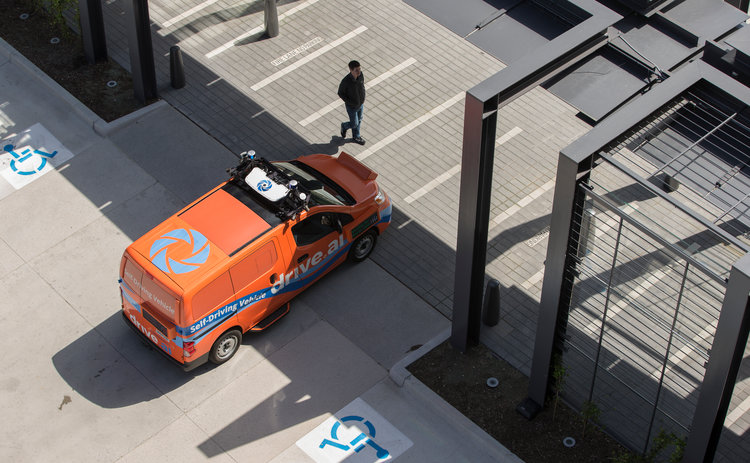
    Apple Inc on Tuesday confirmed that it has acquired self-driving shuttle firm Drive.ai.

    Technology news website The Information reported earlier this month that the iPhone maker was considering acquiring the firm as a move to bring aboard some of its engineering talent to boost Apple’s own self-driving efforts.

    One of hundreds of startups pursuing autonomous vehicles, Drive.ai had been running a small fleet of test shuttles in Texas, The Information reported. But the startup told California regulators that it plans to lay off 90 people in a permanent closure. The San Francisco Chronicle earlier reported the closure.

    In Silicon Valley, it is common for larger companies to acquire struggling startups primarily to hire their engineers, a move known in the industry as an “acqui-hire.”

    Apple is vying against rivals such as Alphabet Inc’s Waymo to develop self-driving vehicles. In the past year, Apple has revamped its efforts, bringing former Tesla Inc engineering chief Doug Field to oversee the operation, which includes more than 5,000 workers.

    Apple is also working on key components such as sensors in addition to holding talks with potential suppliers.

  • GreyOrange to showcase Flexible Automation solutions at the India Warehousing Show 2019

    GreyOrange to showcase Flexible Automation solutions at the India Warehousing Show 2019

    GreyOrange, a global  distribution automation software and robotics company will showcase its family of Flexible Automation solutions, including the new mobile and modular sortation system, FlexoTM and the AI-powered goods-to-person system, Butler, at the 9th edition of the India Warehousing Show 2019 from June 20-22 in New Delhi.

    The retail sector in India is expected to grow to US $1.2 trillion by 2021, up from US$795 billion in 2017. Modern supply chains must deliver the advanced productivity, efficiency and sophistication to handle omnichannel distribution models, exponential growth in the variety and volume of products shipped, and increasing volatility and unpredictability in order patterns. GreyOrange Flexible Automation solutions are specifically designed to help businesses master these complexities to optimize fulfilment performance while also controlling costs.

    Vivekanand, Country Manager- India and SAARC, GreyOrange said, “We are proud to associate with the India Warehousing Show, a leading event for the logistics and supply chain industry. We are excited to showcase our advanced solutions, technical expertise and innovation live at this event; and help customers understand the complexities of modern distribution, including those created by omnichannel pressures. With our multi-industry expertise and robust portfolio of products and services, we are leading Flexible Automation across the globe. At IWS, we invite everyone to visit our booth and witness our solutions in action and learn more about how they optimize performance and throughput.”

    Vivekanand will speak at IWS 2019 on 20th June at 12:30pm IST on “Flexible Automation: The Future of Fulfillment.” During the session, he will highlight how Flexible Automation solutions future-proof supply chains to create and extend operating advantages.

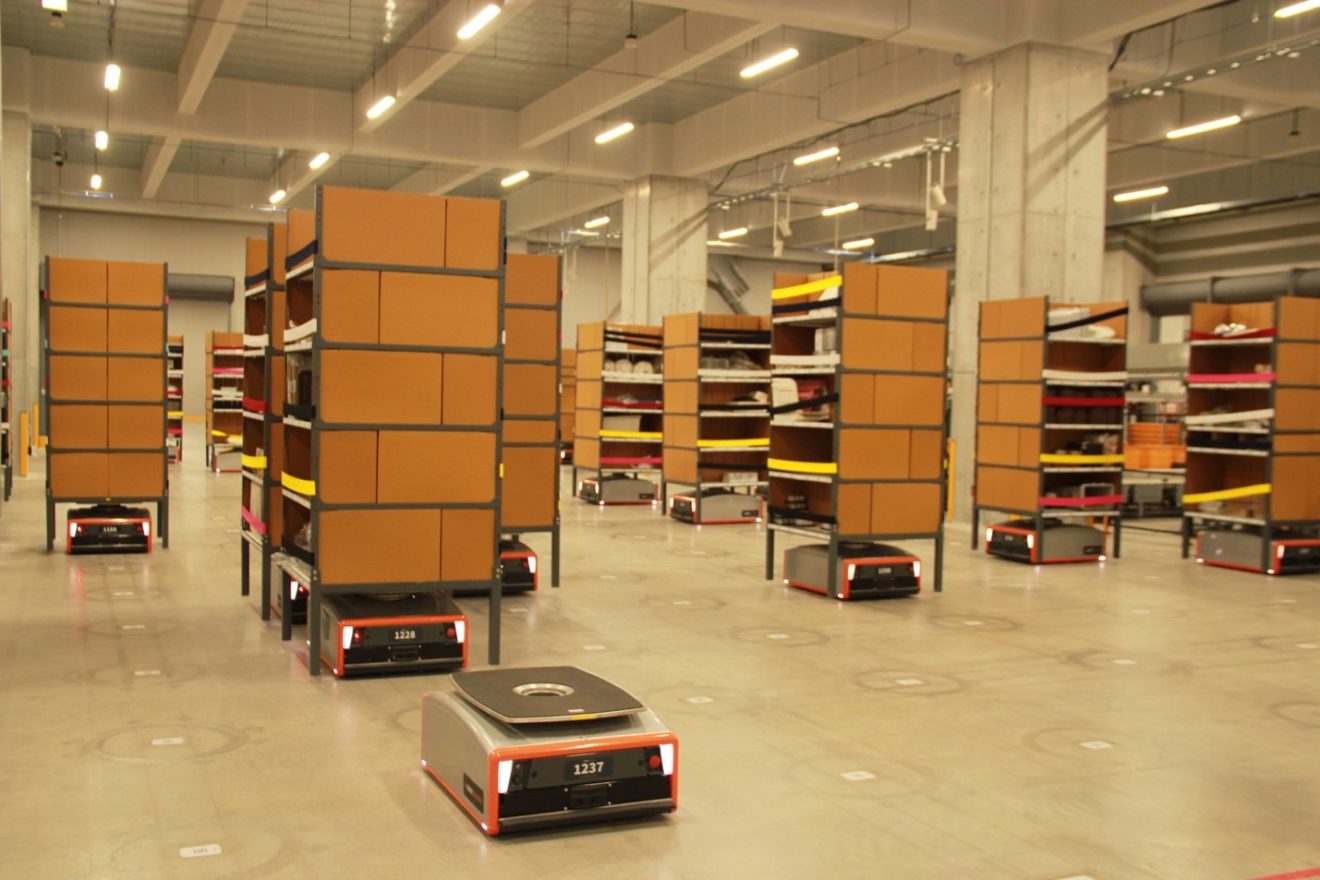
    The GreyOrange booth will showcase live demonstrations of its mobile and  modular sortation system, FlexoTM. Companies can deploy Flexo to enable inbound and outbound destination sortation  in fulfillment, distribution and logistics centers to better utilize space, reduce operating costs and flexibly adapt sortation to handle seasonal order patterns and spikes. This AI-enabled robotics system, which is capable of running 24/7, can be easily scaled making it investment-friendly and usable for a range of applications. GreyOrange also will showcase its globally deployed AI-enabled ButlerTM goods-to-person system, designed to handle high volumes, changing inventory profiles and fluctuating demand.

    Both the Butler and Flexo solutions are powered by GreyOrange’s warehouse execution software GreyMatter, which integrates multiple automation systems and drives higher efficiencies by leveraging Artificial Intelligence and Machine Learning in real-time.

    Visit GreyOrange at the India Warehousing Show 2019, stand C27, Hall 12, Pragati Maidan, from 20th to 22nd June 2019 to meet with Solutions Experts and experience a hands-on demo of GreyOrange high-performance solutions.

  • New Facebook Portal devices are launching this year

    New Facebook Portal devices are launching this year

    New versions of Facebook’s Portal home smart speakers are coming out this year, while the first-gen models that launched in November 2018 will be making their way outside of the US. The Portal product lineup is the social network’s attempt to grab a piece of the smart home speaker market, where competition from Amazon and Google is stiff. Facebook’s take on the gadget is very camera-centric and allows users to make encrypted video calls through Messenger, while Portal’s camera follows them around.

    At the Code Conference in Scottsdale, Arizona, Facebook’s Vice President of AR/VR, Andrew “Boz” Bosworth, announced that the next-gen Portal speakers are coming “this fall.” There will be “new form factors” available as well, Bosworth said, though he didn’t elaborate on what this means, exactly. “Hardware is coming to the home, and we want to make sure that human connection, connection between two people, is a first-party experience on that hardware,” Bosworth added.

    Since one of the product’s differentiating features is the camera tracking, it’s not going anywhere, but the new models might make it even more prominent. According to rumors over the past months, Facebook may be working on a considerably smaller device than the first-gen Portals—pretty much just a camera—that can be attached to TV sets. This will also make the device cheaper and allow people to use their TVs as smart displays.

    The success of Facebook Portal was questioned ever since the company announced it. On the heels of some big privacy scandals over the past couple of years, having doubts over a Facebook-branded tracking camera isn’t all that far fetched. However, at the conference in Scottsdale, the company reassured that the first generation of Portal smart speakers sold “very well,” although the claim wasn’t backed by official numbers.

  • Kiehl’s pop up opens at Sha Tin, using AR to engage

    Kiehl’s pop up opens at Sha Tin, using AR to engage

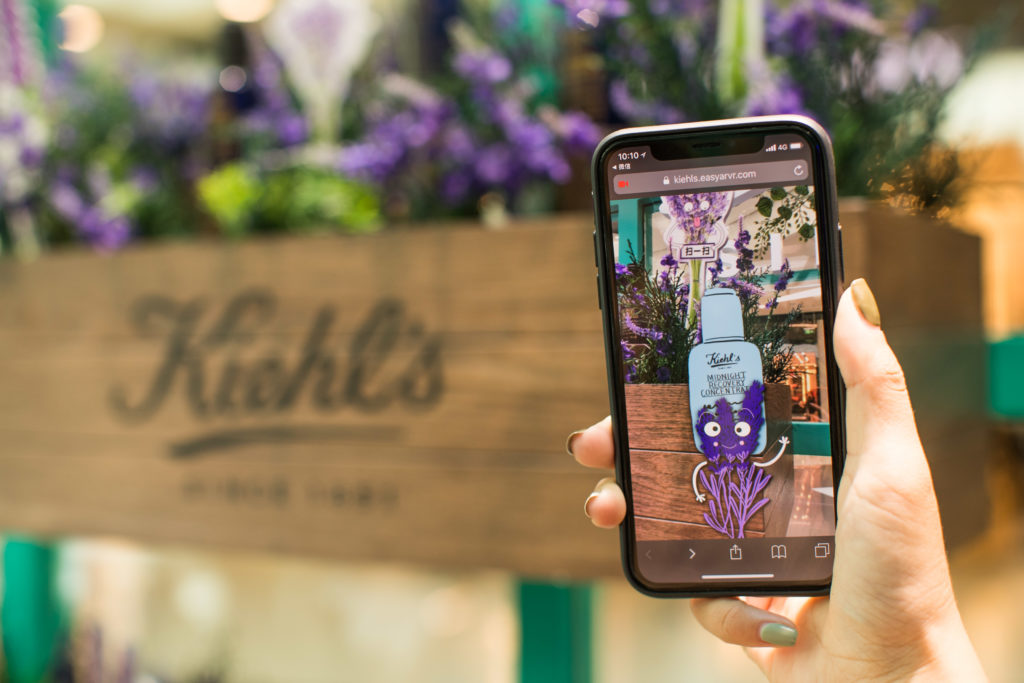
    A Kiehl’s pop up at Sha Tin features an AR gaming app to engage with shoppers.

    The beauty products retailer’s short-term store at the New Town Plaza in Sha Tin has been launched to promote Kiehl’s Calendula Serum-Infused Water Cream, and displays a giant 3D Calendula flower in the centre of the atrium that is only visible through visitors’ mobile phones.

    Visitors who upload images from the pop-up to their social media can redeem a special cosmetics product. Other product samples and a skin analysis are available for customers browsing the store.

    Kiehl’s has also designed an AR game that can be used at its regular stores after the pop-up closes, which will be playable until June 30. The game has collected 8000 registrations over the course of the campaign.

  • Volvo Cars and Varjo Launch Mixed Reality Application For Car Development

    Volvo Cars and Varjo Launch Mixed Reality Application For Car Development

    Volvo Cars and Varjo, the maker of high-end augmented reality headsets, have created a world-first mixed reality approach to evaluating prototypes, designs and active safety technologies. The collaboration will be further strengthened by the Volvo Cars Tech Fund’s decision to invest in Varjo. With these new augmented reality headsets, it will be possible for the first time to drive a real car while wearing a mixed reality headset, adding virtual elements or complete features that seem real to both the driver and the car’s sensors, for development purposes.

    The Varjo XR-1 headset, provides photorealistic mixed or virtual reality at a high-definition resolution and the big claim is that it’s better than anything out there in the market currently. With the XR-1 Volvo Cars can radically reduce development timeframes by creating the new ability to evaluate features and designs almost immediately. Volvo Cars designers and engineers will be able to ‘drive’ future cars and evaluate all features in a simulation environment many years before they exist, enabling the company to develop the safest cars as also a refined user experience.

    Henrik Green, Chief Technology Officer, Volvo Cars, said, “With this mixed reality approach, we can start evaluating designs and technologies while they are literally still on the drawing board. Instead of the usual static way of evaluating new products and ideas, we can test concepts on the road immediately. This approach offers considerable potential cost savings by identifiying priorities and clearing bottlenecks much earlier in the design and development process.”

    With the XR-1 Volvo engineers will be able to develop and evaluate active safety solutions much easier. Safety experts are able to drive real cars while wearing the XR-1 headset at Volvo’s research facilities in Sweden, testing virtual active safety systems imposed via augmented reality on the real-life environment. Highly accurate eye-tracking technology embedded inside the XR-1 makes it easy to assess how drivers use a new functionality and whether they are distracted in any way. This technology-based approach to measuring distraction levels ensures that Volvo Cars can develop new features without causing additional distraction.