Retail News CRM

Tag: vr

  • CES 2019 Gadgets that will define the online casinos of tomorrow

    CES 2019 Gadgets that will define the online casinos of tomorrow

    Consumer Electronics Show or CES serves as the best time of the year when manufacturers and developers all over the world get to showcase their greatest and latest technologies. And none of them disappointed this time around as well, especially with regard to the developments in the augmented in virtual reality technologies, and their application in the gaming industry of tomorrow.

    Right from the latest VR headsets to the system peripherals that are going to completely transform the way we interact with our surroundings in virtual reality, there were all kinds of impressive offerings in the CES 2019. You could very well see how the future of online slots and various other online casino games is going to unfold in the times to come. Let’s take you through some of the best AR and VR tech products that were showcased in this year’s edition of CES.

    Oculus Quest

    Nothing denying the fact that Oculus Rift is an excellent option for virtual reality enthusiasts, but we all know that it needs continuous tethering to a PC to be able to enjoy it. Oculus Quest does away with that requirement. It’s an all-in-one gaming headset which is absolutely wireless, enabling players to enjoy the VR games to the fullest, even while being on the move.

    Once you set up Oculus Quest with the help of the oculus mobile app, it can start tracking your movements without the need of any external cameras. It instead uses the camera situated on the headset’s front, implying that you’ll be able to play anywhere you like as long as the place has room for the two controllers and the headset. It’s not without a reason that Time.com has called Oculus Quest the Virtual Reality’s best bet yet.  Furthermore, you can operate Oculus Quest both from the sitting and standing positions. Although it lacks the power of Vive or Rift, the PC-powered headsets, the Quest still supports some of the highly popular VR games, including The Climb and Moss.

    Vivo Pro Eye

    This one’s a premium VR headset which is a version better than the earlier one, after integrating the Tobii eye-tracking technology. With Vivo Pro Eye headset you can enjoy an even more immersive VR experience, and get to navigate menus and execute all kinds of functions using nothing but your gaze. The headset is already being used in popular apps such as Major League Baseball’s Home Run Derby VR. It’s also expected to make it easier for businesses to use eye-tracking technology with minimum resources.

    3D Rudder for Playstation VR

    With PlayStation VR you can explore your virtual environment in 360° and PlayStation has done an excellent job in making this experience very realistic. However, people felt that something was slightly off as they were unable to use their feet in this environment. The 3D Rudder for PlayStation VR is meant to fix this problem, and allow the players to apply pressure, spin or tilt using their feet, and move around freely inside their favourite VR environments.


     

  • Google is still working on an exciting AI feature

    Google is still working on an exciting AI feature

    Tweets sent by Google Photos product lead David Lieb indicate that the company has not given up on the Colorize feature it unveiled at Google I/O last year. The feature uses machine learning tools to add colors to old black and white photos. He said that Google hopes to have Colorize out in beta form soon and said that he’d love to hear feedback from Android users. The Colorize feature, when it does get pushed out, will show up as a filter in the Google Photos app.

    Lieb did say that Colorize needs some more work, and for proof of that, he showed a black and white photo taken during his grandparents’ wedding day (his grandmother is 104!). While Colorize did add color to the image, it also added a pink tinge to his grandfather’s pants. The Googler assures us that his grandfather did not wear pink pants at his wedding.

    Meanwhile, another feature that Google introduced at its 2018 developers conference, Color Pop, was pushed out just a week after the feature was unveiled. Using AI, Color Pop takes the background of a photo shot in Portrait mode and changes it to black and white; the subject matter remains in color. The stark difference between the two makes the subject pop, or stand out. Color Pop appears as a filter option in the Google Photos app after you snap a Portrait.

  • Nokia, FAW Group to use 5G to transform China’s automotive sector

    Nokia, FAW Group to use 5G to transform China’s automotive sector

    Nokia has signed a strategic MoU with FAW Group, the Chinese state-owned automotive manufacturing company, to carry out joint research in smart connected cars, industrial IoT (IIoT), smart manufacturing and digital transformation.

    Nokia will deploy a 5G trial network on FAW’s campus in Changchun, the capital of northeast China’s Jilin province, to support R&D in autonomous driving and connected car applications.

    As well as the commercial 5G solution, Nokia will provide security, big data, cloud and 5G slicing technology to accelerate FAW’s digital transformation, according to a company statement.

    In addition, Nokia will provide end-to-end system integration, helping FAW to implement smart manufacturing with automation solutions, such as autonomous AGVs, AR/VR machine vision, and AI-enhanced quality inspection.

    FAW Group is one of the biggest automakers in China. Through collaboration with Nokia, the company intends to maintain its dominant position in the market by using digital technologies to enable autonomous driving, IoT and smart manufacturing.

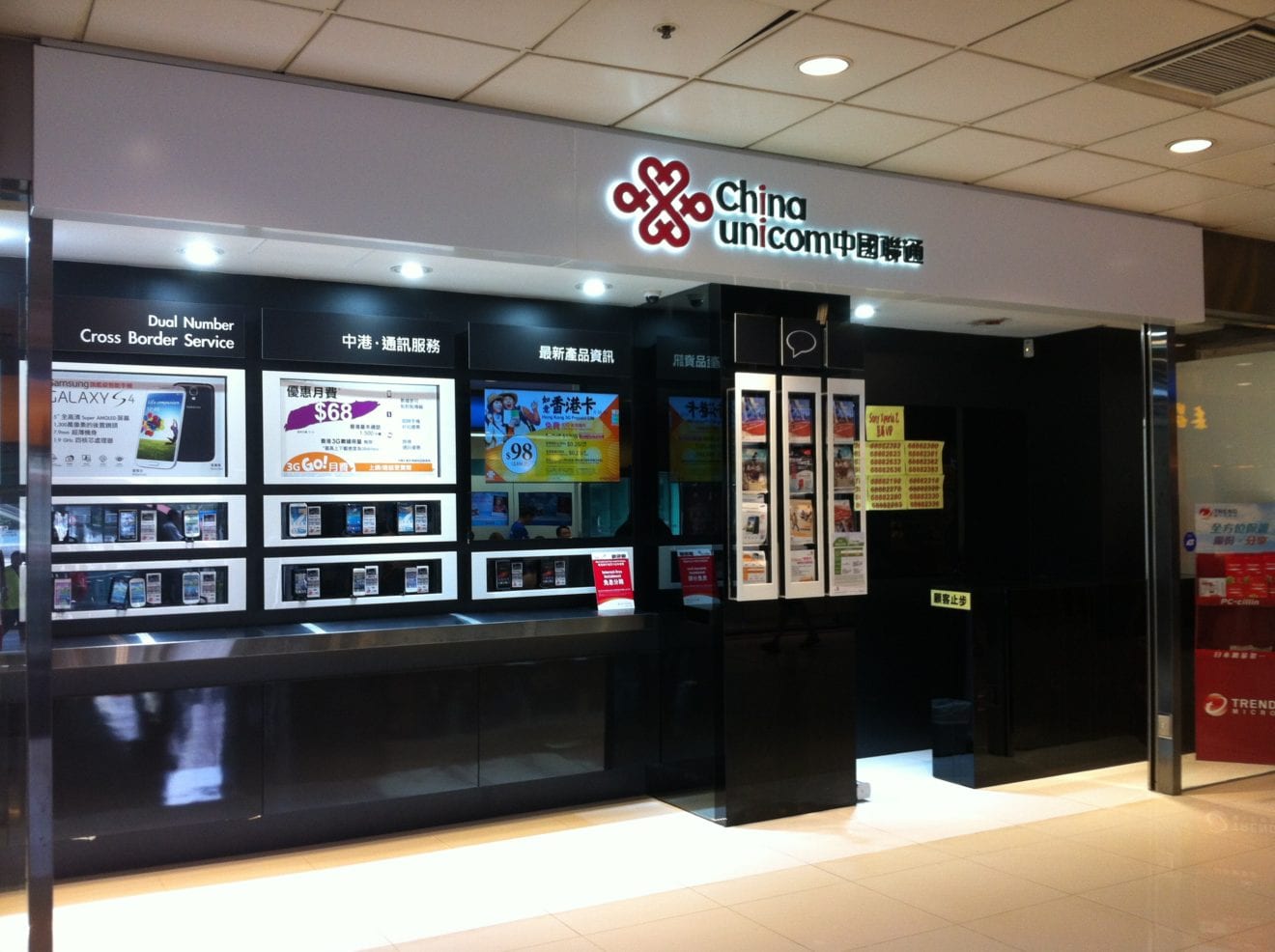
    FAW, together with eight automobile OEMs including Guangzhou Automobile Group and Dongfeng Motor Group, has recently acquired a combined 31.2% in Smart Connection Technology, the Internet of Vehicle unit of China Unicom.

  • Unicom, Ericsson to collaborate on 5G development

    Unicom, Ericsson to collaborate on 5G development

    China Unicom and Ericsson have signed an agreement to accelerate the development of commercial 5G technology.

    The agreement signed at China Unicom’s 5G Innovation and Cooperation Conference in Shenzhen involves further co-operation on a 5G test network.

    The companies have already completed innovative 5G projects, such as the live 4K HD broadcast of a marathon; live 8K HD broadcast of the Women’s World Club Volleyball Championship; 360 degree panoramic live broadcasting, and driving demos.

    Meanwhile China Telecom and Ericsson announced they are collaborating to provide an end-to-end 5G network for the Beijing Expo 2019 horticultural exhibition in Beijing’s Yanqin district.

    The two companies are providing an end-to-end 5G network for the expo offering a combination of garden art and 5G mobile edge computing (MEC) technology to provide visitors with 360-degree panoramic UHD video VR live broadcasting, 5G+VR live broadcasting, and 5G cloud gaming services.

  • Apple poached one of Google’s best AI specialists recently

    Apple poached one of Google’s best AI specialists recently

    We all get to see changes in market share percentages, sales numbers and all sorts of data showing how competing companies on the mobile market exchange blows all over the world. In California’s Silicon Valley there is another, less covered fight going on between the tech giants that call it home: the war for talent. There are only a few people at the top of each field and if you want to be the best, you have to get them.

    It seems that Apple did just that last month, CNBC reports, as it managed to bring a very important specialist to Cupertino. His name is Ian Goodfellow and for the last two years, he was a Senior Staff Research Scientist with a focus on machine learning at Google. Since March, however, he’s the Director of Machine Learning in the Special Projects Group at Apple, according to his LinkedIn profile.

    Just by comparing the two titles, Senior Staff versus Director, you get an idea about why Ian might have taken the job at Apple. Of course, we have no doubt that the new position came with a significant salary bump as well. Which seems completely justified considering his expertise. According to his own summary, Goodfellow is “an industry leader in machine learning”, and while that might sound a bit cocky, it’s not wrong. Ian has co-authored tens of publications about machine learning, including the book Deep Learning. He’s also invented multiple machine-learning algorithms that we’re not even going to try to describe here.

    As you might have noticed if you’re following closely the mobile technology scene, AI and machine learning are already deeply integrated within smartphones and other gadgets. This makes it harder to guess what exactly is Ian going to work on as part of Apple’s Special Projects Group. Is he tasked with the development of a brand new product? Is the “special project” making Siri actually useful? Are we going to see even more AI in Apple’s upcoming smartphone cameras? With a company the size of Apple, the possibilities are endless.

    It will take months, if not years before we see the results of Mr. Goodfellow’s work at Apple, but one thing is certain, the move is a huge win for Apple and an equally huge loss for Google. It’s not like AI geniuses are dime a dozen. At least we shouldn’t see any regression in Google Assistant if that’s any consolation.

  • Revolt Motors To Launch India’s First A.I Enabled Motorcycle this Year

    Revolt Motors To Launch India’s First A.I Enabled Motorcycle this Year

    Electric mobility is the future and with India being one of the largest two-wheeler markets in the world, it holds immense potential for electric two-wheelers. And Revolt Motors, an up and coming EV startup, founded by Rahul Sharma, who is also the co-founder of Micromax mobile phones, looks to cash on this potential. Revolt Intellicorp is wholly owned by Rahul Sharma and the company has been setup on an investment of about ₹ 400 crore to ₹ 500 crore.

    Revolt will be launching its first product, an electric and artificial intelligence enabled motorcycle in June 2019. The company is headquartered in Gurgaon; Revolt Motors has a manufacturing facility in Manesar, which has a capacity of 1.2 lakh units of electric motorcycles in the first phase, which is actually more than twice the size of the entire electric two-wheeler market. The company also has an in-house R&D team, which has worked on the new A.I enabled motorcycle for two years.

    Rahul Sharma, Founder, Revolt Intellicorp Pvt. Ltd. said, “As a mechanical engineer by qualification, I always found mobility and the expanse of opportunities it offers, very intriguing. There is a colossal need for using technology to disrupt urban commute and make it cleaner and sustainable. I’m doing my bit and I feel this is the right time for every player operating in this space to come together for the greater good of our environment. My vision is to see every household in India have access to sustainable mobility.”

    Coming to the motorcycle itself, Revolt is confident that it will be a game-changer in the Indian two-wheeler market. It will be fully electric, enabled with A.I and will have an embedded 4G LTE SIM as well. The product will have a range of about 150 kilometres on a single charge and will have a lithium-ion battery pack which can be swapped. The top-speed has been limited to 85 kmph. While the battery and the electric motor will be imported, the battery management system and the electronic control unit were designed in house.

    The company will also offer innovative charging solutions when the EV is launched in June 2019. Delhi NCR will be the first market and Revolt Motors says that it will have online sales along with on-ground dealerships and experience centres as well. The company is of the idea that it has to grab double digit market share in the first few years of its operation and it is looking at the entire two-wheeler segment and not just electric two-wheeler space as its market.

  • Telcos to use AI to fight SMS fraud and drive A2P messaging revenue

    Telcos to use AI to fight SMS fraud and drive A2P messaging revenue

    Juniper Research is forecasting that total operator revenues from A2P (Application-to-Person) messaging services will reach $62 billion by 2023, up from $43 billion in 2019.  This represents a growth of 42% over the next 4 years.

    The research firm also claimed that revenue growth will be driven by operator efforts in mitigating messaging fraud over grey routes, alongside the emergence of rich-media messaging technologies including RCS (Rich Communications Suite).

    The Juniper research, A2P Messaging: SMS, RCS & OTT Business Messaging 2019-2023, also found that increased investment in SMS firewalls and AI (Artificial Intelligence) will drive down operator loss due to grey route SMS messages to $4 billion by 2023. This represents a fall from $10 billion in 2019, further contributing to operators’ messaging revenue growth over the next four years.

    Grey route SMS includes A2P messages disguised as P2P (Peer-to-Peer) traffic to exploit the lower costs compared to directly connected A2P SMS. Juniper estimates that 24% of A2P SMS messages will be delivered via grey routes in 2019, however efforts in improving SMS firewall capabilities will drive this down to below 10% by 2023.

    Meanwhile, RCS business messaging will account for under 10% of operators’ A2P messaging revenue by 2023. However, the research claimed that RCS business users will continue to use SMS for simple notifications, such as OTPs (One Time Passwords) owing to the low cost and simplicity. The research identified the integration of mobile payment capabilities directly into the RCS client to provide a differentiation point to SMS and increase RCS traffic.

    Research author Sam Barker added “RCS will provide operators with additional revenue opportunities beyond simple message termination. Operators must explore the advertising ecosystem and mobile payments over RCS to exploit their substantial subscriber bases to generate fresh revenue streams.”

  • Hyundai Venue Subcompact SUV Launch Date Revealed

    Hyundai Venue Subcompact SUV Launch Date Revealed

    Hyundai has been teasing its new subcompact SUV – the Venue for quite some time now and we’ve even got details about the company testing the car around the country. While we already know, that the car will be revealed in India on April 17, 2019, coinciding with its public reveal at the 2019 New York Motor Show, we now have details on when the car will be launched in the country. Hyundai will launch the Venue subcompact SUV in India on May 21, 2019. The Venue will be the company’s first subcompact SUV in India and will rival the likes of the Maruti Suzuki Vitara Brezza, Tata Nexon, Ford EcoSport and even the Mahindra XUV300. While Hyundai’s entry into the subcompact SUV segment is delayed, the company is going to pack the Venue with a ton of features making it India’s first connected car.

    The Hyundai Venue will get the company’s ‘BlueLink’ connected technology and it will have 10 India-only features with a total of 33 connectivity features. Some of the features that BlueLink will offer in India are geo-fencing, speed alerts, SOS, panic notifications, destination sharing, and road-side assistance and so on. Hyundai said that it has tested its BlueLink technology rigorously in India, keeping the conditions in mind along with the needs of the customers. This also includes voice guidance and recognition in Indian-accented English which means that the software will be able to recognise spoken English from different regions in India. The Hyundai Venue will also have remote-control operated functions such as climate control, horn and headlamps on, vehicle status, engine start/stop and so on. The best thing is that Hyundai BlueLink can use your smartphone interface as a remote control.

    Hyundai BlueLink will also have a tamper-proof eSIM which will be provided by Vodafone Idea and a cloud based voice recognition platform from Global AI Company, which will offer real time traffic navigation and live local search as well. Features such as panic and medical assistance, geo-fencing and stolen vehicle notification will sit well with customers in India.

    The company has not yet revealed the engines that it will offer, but we have gotten a glimpse of what the front end of the car would look like. The leaked images revealed the upright stance of the Hyundai Venue, while the rear gets a massive ‘H’ badge in the centre with the ‘Venue’ moniker, and the very Polo-esque squared-off taillights along the lines of the Carlino concept. The tailgate also carries the ‘Turbo’ badge and ‘SX’, the latter denoting the range-topping variant.

    Under the hood, the new Hyundai Venue will be available with a 1.4-litre petrol and 1.4-litre diesel engine options. The turbo badge that was on the tailgate holds special importance, which nearly confirms the a 1.0-litre turbocharged petrol engine for the SUV, and will come paired with a 7-speed dual-clutch automatic transmission.

  • AR version of Angry Birds comes to iOS this spring

    AR version of Angry Birds comes to iOS this spring

    Remember when Angry Birds was the most popular mobile game around? Many of you who played religiously ended up moving on to more graphically complex games. Maybe Rovio’s characters, which the company once said would make it the next Disney, suffered from overexposure with licensing deals. The fowl foul had their faces plastered all over the place from Band Aids to board games to underwear.

    You can’t say that Rovio hasn’t tried to keep up with the times. VR versions of Angry Birds are available for Oculus Rift and Vive, and an AR variant of the game can be played on the Magic Leap headset. And today, the company has announced that Angry Birds AR: Isle of Pigs will soon be available for certain Apple iPhone and Apple iPod models. Using Apple’s ARKit, a flat surface like a coffee table is overlaid with different stages while the phone itself becomes the slingshot.

    Players can walk around each stage, looking for hidden items and areas where the pigs might be most vulnerable to attack. Rovio is offering the game for free in partnership with Resolution Games, although we are pretty sure that there will be some in-app purchasers that players can make.

    “We’re delighted to bring the beloved physics-based gameplay of Angry Birds to life through augmented reality. It’s an especially timely moment to bring our avian friends to mobile AR for the first time, as this year marks the tenth anniversary since the release of the first Angry Birds game.”-Kati Levoranta, CEO, Rovio Entertainment

    “This game evokes the core of what makes AR gameplay truly AR. With its engaging characters, classic Angry Birds slingshot gameplay and ability to move around the structures, it utilizes the unique elements of Apple’s ARKit and showcases what AR gameplay is capable of, which is pretty amazing when you see it come to life.”- Tommy Palm, Resolution Games.

    Angry Birds AR: Isle of Pigs is available today to pre-order from iTunes and it will be released in the late spring of 2019. Don’t expect to see an AR version of Angry Birds for Android anytime soon since the phone version of the new AR Angry Birds game is an Apple exclusive for now.

    For those familiar with the old Angry Birds games, the rules are the same. You try to knock down as many pigs as possible by using a slingshot to propel one of the Angry Birds toward the swine. One difference is that now you see the slingshot from a first-person perspective. Fling back on your phone to send the Angry Bird flying toward its target. Originally, there will be as many as 40 different levels in the game.

    Angry Birds AR: Isle of Pigs is compatible with all iPhone models dating back to the iPhone 6s, all iPad Pro models, iPad fifth and sixth generation, and the new iPad Air and iPad Mini tablets introduced yesterday.

  • Consumers are in control and searching for Experiences

    Consumers are in control and searching for Experiences

    Retailers must recognise consumers are in control and they are looking for experiences above all else, according to US trend expert Tom Mirabile.

    Speaking at the International Housewares Association’s annual show in Chicago, Mirabile said housewares suppliers and retailers need to focus all their efforts on what the consumer wants, how the consumer sees themselves, and how the industry can help create solutions for them.

    “We need to stop looking at objects and start looking at what those objects deliver,” he said. “People aren’t buying objects, they’re buying experiences.”

    Mirabile began his presentation with an overview of generational distinctions and key “need-to-knows” about each generation right now. Generation Z is on track to be the most well-educated generation (according to Pew Research), with a liberal set of attitudes and openness to emerging social trends. They also may be the first generation where cooking is truly no longer a gendered task, viewing “cooking as a craft or a skill,” according to Mirabile. This generation skews more toward traditional life cycles, with many saying they want to start a family and own a home.

    A much less traditional generation, millennials prefer staying home over going out. But they’re less likely to eat around the kitchen table; many eat in their bedrooms and even bathrooms. They also report replacing one meal a day with snacks.

    Another way of bucking the norms: “Millennials don’t see a brand as religion,” said Mirabile. “Loyalty does exist, but you have to constantly earn it.”

    Generation X is smaller in numbers but is entering its prime earning years. Thirty-one percent of discretionary spending in the US right now is coming from this generation, Mirabile said.

    Gen X is very self-sufficient and does more product research than any other generation. They’re also a true shopping hybrid; they still enjoy a trip in-store but have fully embraced online shopping.

    Many Baby Boomers are retiring, moving or remodeling their homes, which means they will be buying more items for their homes. Many are also in a period of personal reinvention. “Boomers are still looking to Millennials and Generation Z to see what they want to be,” Mirabile said.

    As for seniors, many are still economically active but much of their consumption has shifted to experiences and healthcare. By 2035, one in three US households (versus today’s one in five) will be headed by someone over 65 years old.

    Next up, Mirabile shared some key tenets that are important for housewares suppliers and retailers as they adjust to the quickly-changing marketplace where consumers hold all the control. He tied them to the acronym ‘FASTR’:

    F – Be flexible, be fun, be fearless. Change is constant, but even the most established brands can reinvent themselves. Mirabile cited Ikea and KitchenAid as examples. He also cited recent amusing commercials from Skittles, Wayfair and Geico, “(Brands) who can have fun and make fun of themselves send a message of self-confidence,” Mirabile said. And be fearless – don’t be afraid to take a stand or do something different from the norm. It helps make your brand feel authentic and helps you stand out from the crowd.

    A – Be addictive, be aware, be aspirational. American adults spend more than 11 hours per day listening to, watching, reading or generally interacting with media, according to the Nielsen Total Audience Report. The challenge is in hooking them in. Be aware: there’s a tremendous amount of information out there, but “you’ve got to be self-educated, you’ve got to be a culture vulture,” said Mirabile, and keep up with what consumers want. Be aspirational: “Today’s consumer doesn’t dream of owning, but of becoming,” said Mirabile. “Stop telling the customer who you are and start telling them you know who they are.”

    S – Be surprising, be shareable, be simple. The subscription e-commerce market has grown by more than 100 per cent a year over the past five years, said Mirabile. A reason? They deliver boxes of surprising items a consumer may never had found on their own (or without a lot of time and effort). Be shareable: these days, this doesn’t simply mean sharing an image, though that still does have value. It’s more about inspiring people to physically share something, such as the opportunity for a family to cook and eat a meal together. And be simple: “Instead of big claims, sometimes it’s about the little obsessions,” was a finding shared from PHD Worldwide.

    T – Be true, be transparent, be trustworthy. Consumer trust levels are at an all-time low, whether it comes to government institutions, businesses or media. Be transparent: This is important whether you’re talking about ingredients, labor usage, or product materials. Significant numbers of people across all generations will pay more money for eco-friendly materials, said Mirabile. Be true: this often starts within your own company culture and then rises through the ranks of everything you do.

    R – Be real world, be responsible, be reactive. “To me, this is all about looking at real-world problems people are having, and how you’re going to solve them for them,” said Mirabile. Be responsible: a large part of this has to do with sustainability, a key issue for many generations of consumers these days. Be reactive: getting negative reviews? You must be quick to react, explain and make things right online. eMarketer data finds that roughly two-thirds of US internet users reference product reviews at least often before making a purchase.

  • Tech startup Blinq to focus on Southeast Asia

    Tech startup Blinq to focus on Southeast Asia

    Tech startup Blinq is targeting Southeast Asia with software which allows users to virtually try on and purchase designer apparel and accessories from online luxury and contemporary fashion retailers globally. “Blinq uses AR and algorithmic patterns to provide users with the latest trends and personalised fittings from their digital devices,” explains entrepreneur and Blinq founder Bob Chua.

    “It also allows users to choose how they would like to consume fashion, which may not necessarily be to buy, but to also rent, subscribe, or pay later for latest luxury designs from major and upcoming brands across Southeast Asia.”

    A rental-subscription model provides users the option of renting designer apparel and accessories, while the back-end automated warehousing operation enables brands to fulfil their products throughout the Asia-Pacific region.

    Citing McKinsey’s global fashion report, Chua says the personal luxury market is predicted to grow to US$500 billion by next year, with close to 44 per cent coming from Asia.

    “There is clear retail disruption happening everywhere, and e-commerce adoption in the luxury space is growing at a staggering rate here in Asia. We see a major opportunity.

    “In a way we are fusing the successful models of Asos, Farfetch, Rent-the-Runway and The Real Real into a single platform, while targeting affluent Asians.”

    Chua says the company plans to monetise its platform by white-labelling its virtual changing room AR features to other e-commerce sites, which will ultimately reduce returns and increase purchasing propensity for retailers.

    He says Blinq has secured significant seed funding and is currently en route to a next fundraising round.

  • Korean start-ups also shine at CES in Las Vegas

    Korean start-ups also shine at CES in Las Vegas

    Industry big boys aren’t the only companies exhibiting at this year’s Consumer Electronics Show (CES). Over 1,200 start-ups have set up at the event’s Eureka Park, reserved for smaller companies, to capture the attention of consumers and possibly become the next unicorn (a start-up valued at over $1 billion).

    Of the start-up companies from Korea, those that developed through the “Israeli start-up” model have grabbed the most attention from the media. The model refers to companies with a weak capital base that grows with investment from other IT companies or venture capital firms. Many Korean start-ups that took part in CES this year got investments from IT giants such as Naver or Kakao.

    Augmented reality (AR) and virtual reality (VR) company LetinAR is one of the hottest start-ups. LetinAR produces smart glass lenses that makes use of “Pin Mirror” technology. The company incorporates the pinhole effect, which makes vision clearer by looking through a small hole, and applies it for use in VR and AR.

    LetinAR also created a lens that provides vision of up to 80 degrees. While humans can see up to 150 degrees, existing products are typically limited to 50 degrees.

    “The 80-degree vision is like looking at a 120-inch TV from a meter away [3.28 feet],” said Choi Kyung-on, a director at the company. “If our product becomes commercialized … we will be able to release smart glasses the size of large conventional glasses within three years.”

    While smart glasses got a lot of headline in 2013 with the introduction of Google Glass, the product failed due to the difficulty of developing a lens with a wide-viewing angle.

    Meanwhile, beauty artificial intelligence (AI) start-up lululab won the CES Innovation Award in the biotech sector for its AI skin care assistant Lumini.

    The device analyzes skin conditions such as its wrinkles and pores and provides product information and recommendations personalized for a user.

    “[Users] can use personalized AI skin analysis service without the help of a store employee,” explained Choe Yong-joon, CEO of lululab.

    The company was born in Samsung Electronics’ start-up incubator, C-Lab.

    AMO Lab is another promising start-up from Korea. The company, which got investment from Naver last September, specializes in products that improve users’ quality of sleep.

    The company recently developed AMO+, a device worn like a necklace, which sends out minute electrical signals to the body to improve sleep.

    According to recent test results, users’ parasympathetic nervous systems became active when wearing the device.

    “We are currently discussing collaboration with U.S. and European companies after prototype development,” said Kim Min-kyu, CEO of AMO Lab.

    WELT, another alumnus of Samsung’s C-Lab, gained attention for releasing a smart belt in collaboration with French luxury brand S.T. Dupont. WELT’s smart belt can be used for two months with a single charge and provides basic health information.

  • Crocs opens its 100th store in India at VR Mall Chennai

    Crocs opens its 100th store in India at VR Mall Chennai

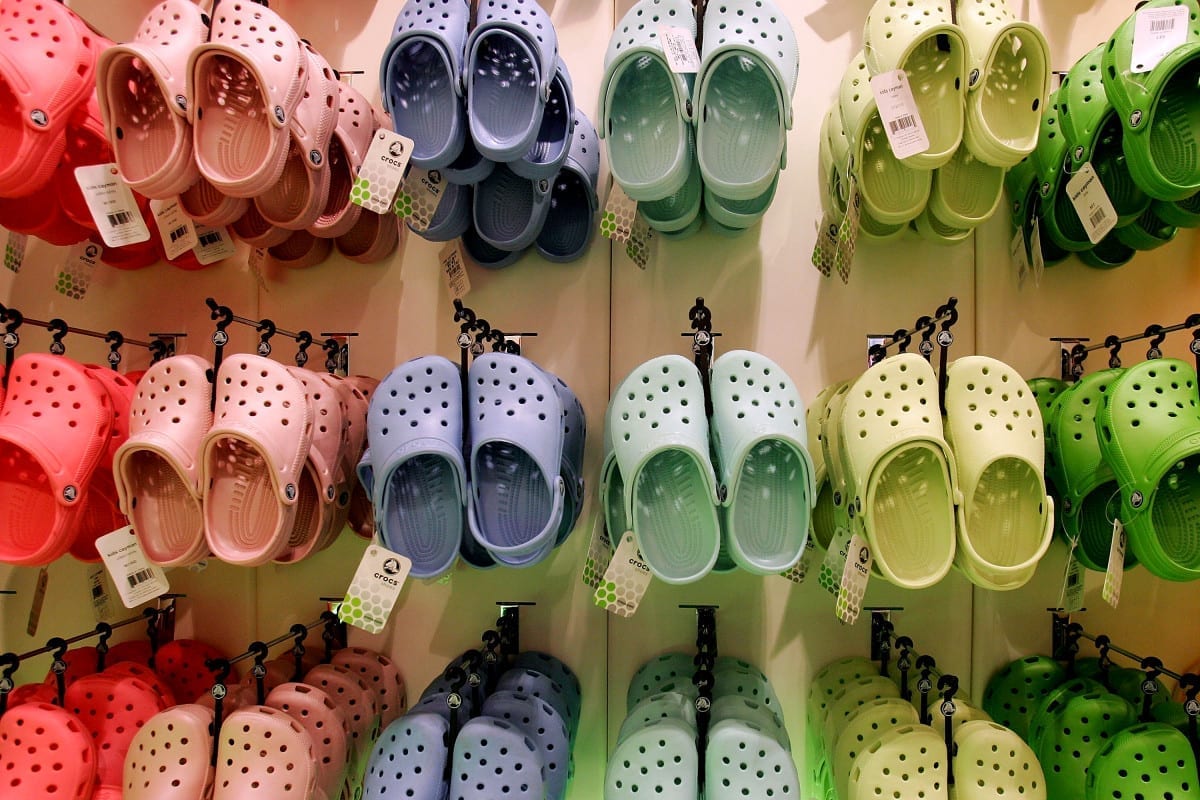
    The new store, which spreads across 625 sq. ft., is Crocs’ third store in the city and 5th in the state of Tamil Nadu. Boasting a premium location at VR Mall, the hub for luxury and international brands in Chennai, the store promises to strengthen the reach of the iconic brand in the state capital.

    Since the opening of its first store in India in 2008, Crocs has successfully carved a distinct positioning for the brand amongst the Indian consumers akin to its global positioning and is growing at a robust pace with presence across 50 cities in India.

    Crocs, which is known globally for its iconic Clogs, is turning towards India to fuel its next phase of growth. India is currently the 6th biggest market for Crocs globally with a high double-digit growth year on year.

    Metro Shoes, the national franchise partner of Crocs India, will be operating this 100th store located in Chennai. The partnership with Metro Shoes began in 2014 which has helped the iconic footwear brand in expanding its reach to over 50 cities through its EBO operations.

    Speaking on occasion, Deepak Chhabra, CEO & MD, Crocs India, said, “We are excited on reaching the century mark in India. India is one of the rare markets where even after opening 100 stores we still feel under-penetrated. Our absolute focus for the next phase of geographical expansion will continue to be on top 6 metro cities across the country along with state capitals. Exclusive brand stores are a very significant part of our growth strategy. In addition to aggressively growing our EBOs, we will be strengthening our presence in Tier-II cities via MBOs and Kiosks. Further, e-commerce will remain an integral part of our distribution strategy and help us reach out to consumers where our brick and mortar presence is limited. Region-wise South India, due to its demographics and very high brand recall, contributes the highest amongst all regions in the country and will remain an integral part of our India growth strategy.”

    Commenting on the occasion, Rafique Abdul Malik, Chairman & MD, Metro Shoes, said, “We would like to congratulate Crocs India on the launch of their 100th store and are confident that this is just one of many more milestones to follow. Metro Shoes is glad to partner with a brand which despite being just 16 years old has an iconic status with probably the highest brand-recall across the globe. India as a nation has a high affinity for open shoes and sandals owing to the climatic conditions, making Crocs highly relevant in this market.”

    With its unique brand awareness and break-through product innovations, Crocs is progressing towards becoming India’s top non-athletic casual footwear brand. Other than its EBOs, Crocs asserts its strong presence in MBO channels through which its overall offline reach extends to more than 150 cities via 1,500 + points-of-sale. Additionally, it caters to 20,000+ pin codes translating to 400 cities via its e-commerce presence.

    Over the past 16 years, Crocs has sold more than 350 million pairs of shoes worldwide. Crocs as a brand will continue to focus on clogs and sandals, along with new product innovations and extensions of the current product line. This year, Crocs India launched LiteRide™, Drew Barrymore ♥ Crocs Collection, Crocband™ Platform Collection, and Luxe Lined Collection. Last year internationally, the brand has associated with designers like Balenciaga and Christopher Kane bringing in some exciting trends to the runway which further elevated the appeal of the iconic clog in fashion space.

  • HTC Opens Flagship Vive Store in China

    HTC Opens Flagship Vive Store in China

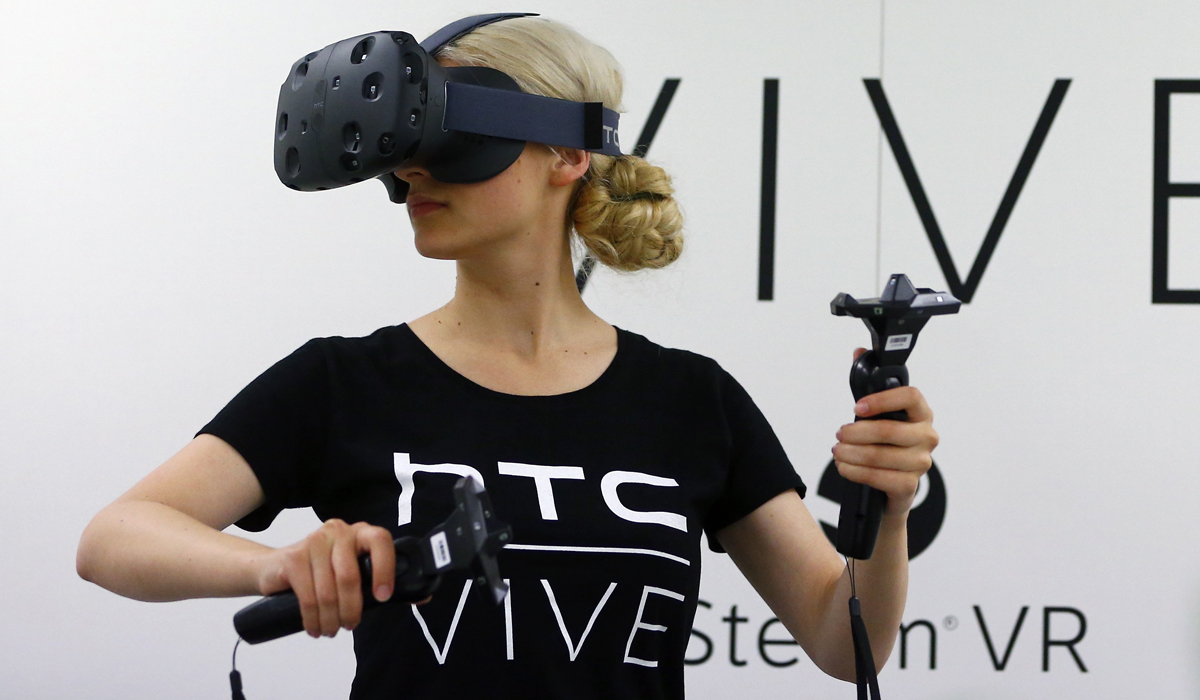
    Taiwanese smartphone maker HTC has opened the doors of its first global flagship store for its Vive VR headset. The Shenzhen store will offer consumers the chance to experience VR technology in a relaxed in-store environment. The brand wants consumers to build a better understanding of how VR works, the content available, and how it can enhance their lives – through entertainment and practical applications.

    HTC launched its first Vive headset three years ago and is now a predominant player in the Chinese VR market, claiming 82 per cent market share at one point last year.

    It is now partnering with video game maker Ubisoft Entertainment, Warner Brothers and the McLaren Formula 1 team to participate in the China Digital Entertainment Expo and Conference, nicknamed ChinaJoy, where it will have a VR gaming carnival.

    HTC has long been running at a loss as sales of its handsets fall in the highly competitive smartphone market and it sees VR technology as an opportunity to return to profitability.

  • Samsung buys Spanish AI firm Zhilabs in prep for 5G

    Samsung buys Spanish AI firm Zhilabs in prep for 5G

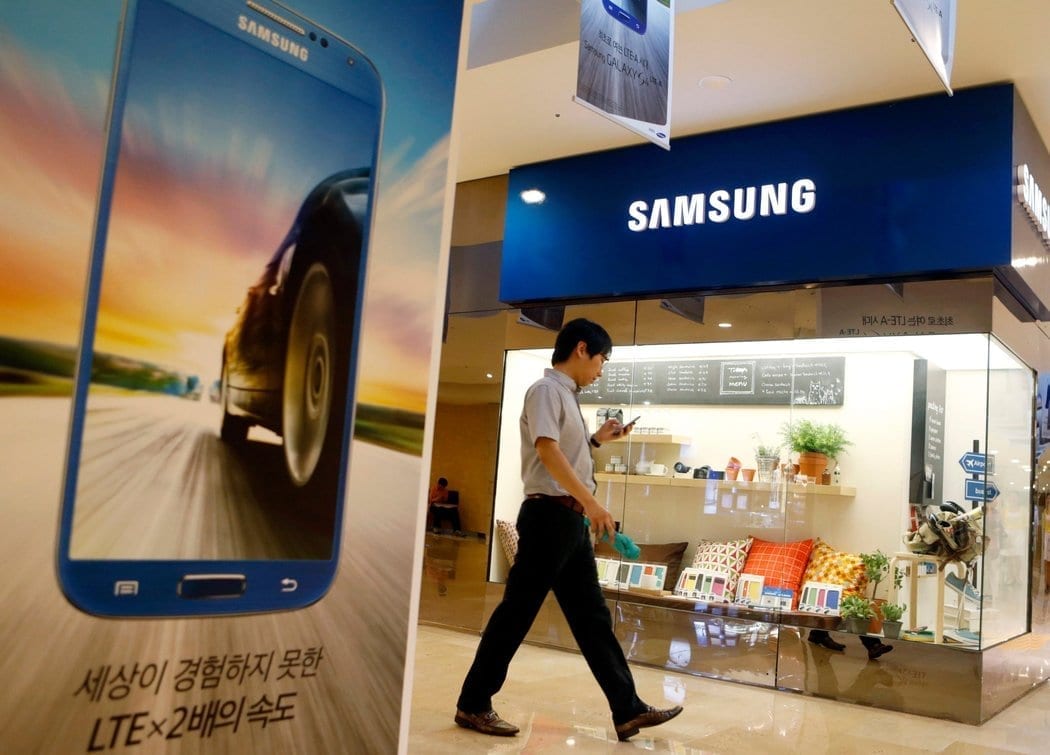
    Samsung Electronics announced that it has acquired Barcelona-based artificial intelligence startup Zhilabs in a bid to further enhance its 5G capabilities.

    Financial details of the deal were not disclosed.

    Zhilabs will be fully owned by Samsung, but it will continue to operate independently under its own management, the South Korean vendor said in a statement.

    Zhilabs provides AI-based network and service analytics solutions and its products are used by telecoms carriers including Celcom, Maxis, NTT East, Telenor, O2, Vodafone, TIM, and Telefonica.

    Samsung said AI-based automation will play a central role in the introduction of new services driven by 5G, such as industrial Internet of Things (IoT) and connected cars, as carriers seek to implement new automated solutions and network virtualization features.

    “5G will enable unprecedented services that generate exponentially greater data traffic, for which automated and intelligent network analytics tools are vital,” said Youngky Kim, president and head of networks business at Samsung Electronics.

    “The acquisition of Zhilabs will enable Samsung to help carriers meet these demands to measure and ensure the quality of each subscriber’s service experience.”

    The acquisition of Zhilabs is also part of the company’s pledge, announced in August, to invest 25 trillion won ($22 billion) in AI, 5G, automotive electronics components and biopharmaceuticals technologies.