Retail News CRM

Tag: vr

  • Myanmar’s startups map past, shape future with virtual reality

    Myanmar’s startups map past, shape future with virtual reality

    Few countries in the world have experienced such rapid discovery of technology than Myanmar.  Gasps echo across the hall as the Myanmar school kids trial virtual reality goggles, marveling at a device that allows some of Asia’s poorest people to walk on the moon or dive beneath the waves.

    “In Myanmar we can’t afford much to bring students to the real world experience,” beamed Hla Hla Win, a teacher and tech entrepreneur taking virtual reality into the classroom.

    “If they’re learning about animals we can’t take them to the zoo… 99 percent of parents don’t have time, don’t have money, don’t have the means,” she added.

    Few countries in the world have experienced such rapid discovery of technology than Myanmar which has leapfrogged from the analogue to the digital era in just a few years.

    During the decades of outright junta rule, which ended in 2011, it was one of the world’s most isolated nations, a place where a mobile phone sim card could cost up to $3,000.

    For half a century its paranoid generals cut off the country, restricting sales of computers, heavily censoring the Internet and blocking access to foreign media reports.

    But today phone towers are springing up around the country and almost 80 percent of the population have access to the Internet through smartphones, according to telecoms giant Telenor.

    Budding startups

    Tech startups are emerging around the commercial capital Yangon, many seeking to improve the lives of rural people, most of whom still live without paved roads or electricity.

    “The increase in activity from last year till now — new startups, more people determined to become entrepreneurs and working in the tech sector in general — is significant,” said Jes Kaliebe Peterson, CEO of community hub Phandeeyar.

    Virtual reality is the latest advance to cause a stir, with a handful of entrepreneurs embracing tech for projects including preserving ancient temple sites to shaping young minds of the future.

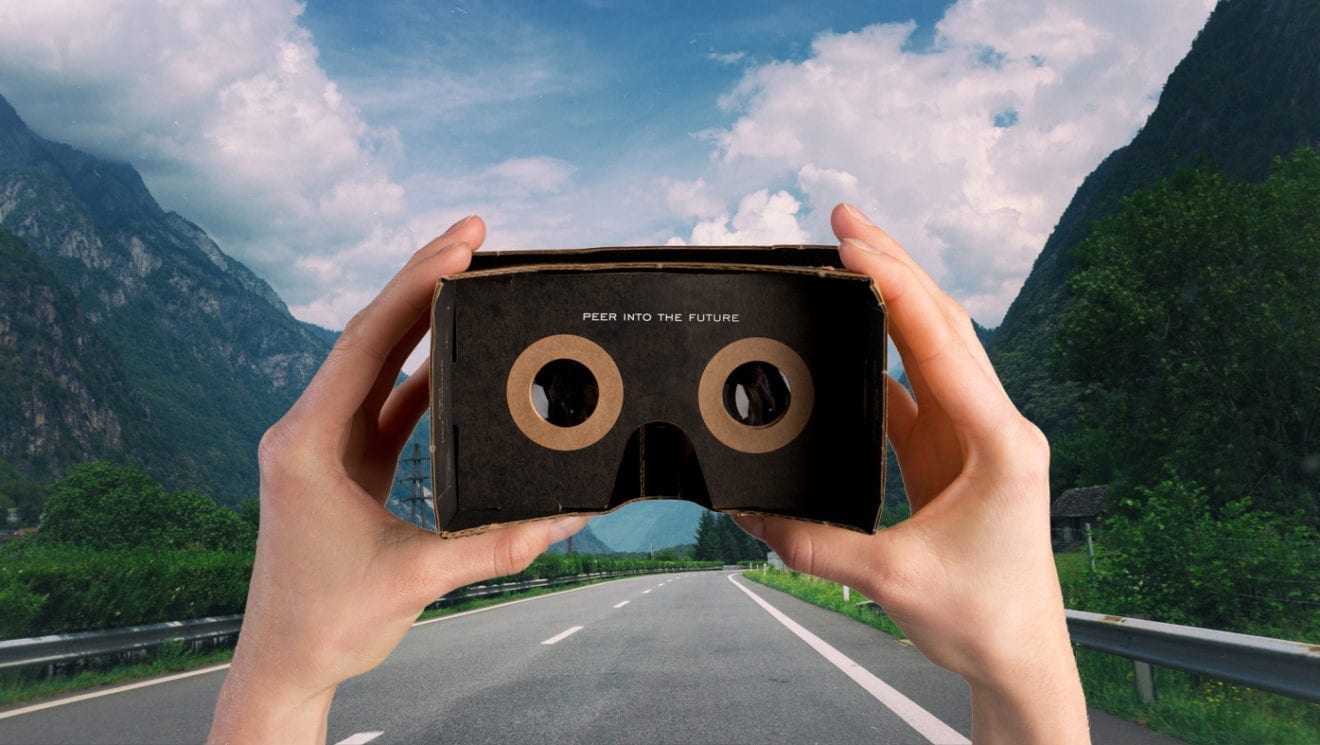
    The Phandeeyar incubator works with more than 140 startups. Among them Hla Hla Win’s virtual reality social enterprise 360ed which is using affordable cardboard VR goggles attached to smartphones to break down barriers in Myanmar’s classrooms.

    She founded the non-profit last year after 17 years working in the woefully underfunded education system in a bid to bring learning to life.

    “I see it as an empathy machine where we can teleport ourselves to another place right away,” she told.

    And it’s not just school children who benefit from stepping into places they could only ever dream of visiting.

    360ed has used virtual reality to help Myanmar teachers attend training courses in Japan and Finland and is working on setting up deals with schools in India, Pakistan, China and Bangladesh.

    “With VR there’s no divider, there’s no distance,” Hla Hla Win said.

  • Wireless VR headsets to strain data networks

    Wireless VR headsets to strain data networks

    Wireless VR headsets will further strain telecoms networks, with data consumption from the devices set to grow by over 650% over the next four years to over 21,000 petabytes by 2021, Juniper Research predicts.

    When combined with traffic generated by VR headsets connected to PCs and consoles, this consumption will reach over 28,000 petaytes, the research firm said in a new report.

    VR requires fast data speeds to stream content effectively, ensuring that by 2021 data demand for each VR device is expected to exceed that of 4G, Juniper Research said. Growth in traffic will be driven by the need for higher image quality and framerates as VR becomes more mainstream.

    The report recommends that operators be brought into the VR standards conversation now to prepare for the growth in consumption and help make VR more accessible.

    Technologies designed to reduce the amount of data processing required, such as foveated rendering, will also need to be universally adopted.

    Meanwhile, although the first wave of the new generation of VR headsets has concentrated on single-user experiences, the report predicts that social VR will play a more important role in the future of the technology.

    Companies such as Facebook and WeChat are developing VR platforms and several popular VR games are incorporating social elements.

    “VR is currently seen as very isolating,” research author James Moar said. “The promise of having new worlds to explore is much more compelling when other people can share the experience, which needs social games and social interfaces, as well as the development of cross-platform standards.”

  • Companies to need new skills as VR enters workplace

    Companies to need new skills as VR enters workplace

    Enterprises need to start thinking now about ways virtual reality (VR) can be used within the workplace, according to recruiting experts Hays.

    While the technology is yet to become more commonplace across the wider world of work, experts say the possibility for its wider application is already here.

    As the technology sees an increase in its use, businesses will need the skills essential for its use. However, the skills required have yet to be standardized and may struggle to keep up with demand initially.

    VR came into existence seventy years ago and has been used across a number of applications since. In the 1970s it was utilized in the workplace for the first time, as it was used by the medical industry, military and in flight simulators.

    With the more recent technological leaps in VR, such as augmented reality (AR) seen in gaming, the technology is starting to make deeper inroads into the world of work.

    While the technology is still used by the military and in medical training, other sectors are beginning to use it to good effect too. One example is in the construction industry, with VR Developers being hired to give their clients a walkthrough of a building before construction has begun.

    One area where VR’s potential is being fully realized already is within training, historically it has been used in high-risk or high-value industries, such as aeronautical and engineering, but it is now being used to help train trade skills.

    In property and real estate, virtual reality platforms are enabling prospective buyers to view and look around the rooms of properties for sale without even leaving the comfort of their current home.

    “The number of possibilities virtual reality creates is astounding,” commented Lynne Roeder, managing director of Hays in Singapore. “While everyday use of the technology within business could still be some way off, there are a number of practical ways the tech could be implemented in the meantime to introduce a more personalized service to customers or to be used internally while managing remote workers.”

    Lynne continues, “Once we start exploring the many ways it could be implemented, it could have a big impact on the world of work. For example, interviews could be conducted in virtual rooms, allowing workers to be interviewed face-to-face, albeit virtually, for a job on the other side of the planet. Remote workers could easily connect to the office for one-to-one or team meetings, even on boarding or one to one training for an employee thousands of miles away would become so much easier.”

    But she added that  new technology creates new job roles and in turn the need for new skill sets. “Employers will need to look at their existing staff and see if there is the opportunity to upskill any of their employees, or whether it will involve bringing an entirely new skill base.”

  • Vietnamese property developers see new tricks in VR

    Vietnamese property developers see new tricks in VR

    As competition in the property market heats up, developers are seeking new ways of attracting buyers – one recent attempt makes use of virtual reality and augmented reality (VR/AR).

    It’s expected that VR will boom this year, with a wide number of sectors taking advantage of the latest technology, including real estate, which will allow potential buyers “real” experiences of property projects.

    A recent report by Cushman & Wakefield estimated that VR and AR would become a US$2.6 billion market in real estate by 2020, as headsets such as the Oculus Rift and the Microsoft Hololens become common place over the next few years.

    “It’s essential to begin preparing for the expansion,” Cushman & Wakefield said. “In addition to virtual walkthroughs of both finished and unfinished buildings and virtual models projected onto desks and tables in the real world – innovations which are already in development – companies see opportunities for more game-changing features a little further down the road, once mass adoption takes hold.”

    Cushman & Wakefield cited a research report released last year by Goldman Sachs, saying that VR/AR hardware and software is finally catching up with consumer expectations, and are posed to disrupt a number of markets, including real estate.

    Catching up with the trend, several Vietnamese developers have started to use VR and AR in their marketing to promote sales, such as Vingroup, Sun Group and BIM Group.

    At a recent sale opening of Citadines Marina Ha Long, BIM Group used the Microsoft Hololens to demonstrate every detail of the project in front of buyers’ eyes.

    A representative from the developer said that the use of new technologies would help make up for the gaps in traditional marketing tools.

    Phan Thanh Hue from Booyoung Vina was quoted by Dau Tu Bat Dong San (Real Estate Investment) newspaper as saying that the new technologies brought life-like experiences to customers.

    Dinh Anh Tuan, director of 3D Vni, which provides the hardware, said that many customers were excited about the new experiences. Tuan said that developers were staring to use VR and AR in marketing and more expansion was expected.

    Tuan said that VR was forecast to become an indispensable trend, changing the face of marketing and sales in many sectors, including real estate. This technology would also help increase the competitiveness of property products, he added.

    According to Pham Ngoc Mai Anh, director of ADT Creative, a start-up in VR applications, there is an increasing interest in using VR by property developers.

    However, because of current prices, VR is now only appropriate for high-end segments rather than having broad appeal, experts say.

  • A Chinese unicorn backed by Google ready to take on the Amazon Alexa

    A Chinese unicorn backed by Google ready to take on the Amazon Alexa

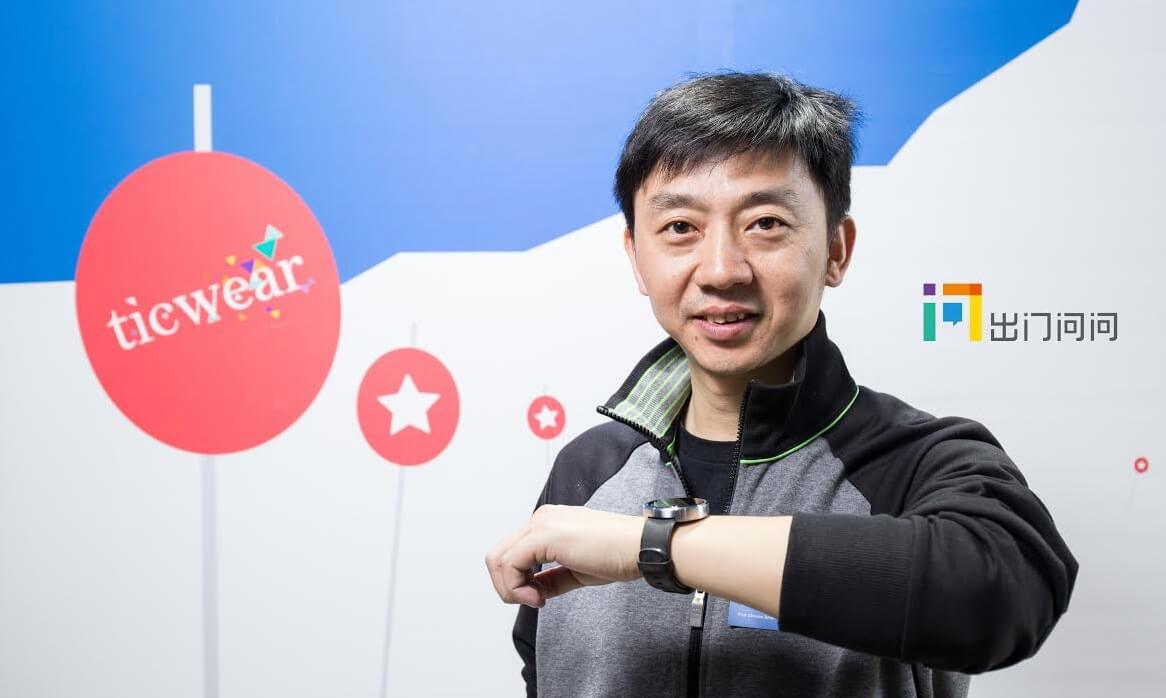
    China’s Google-backed artificial intelligence (AI) start-up, Mobvoi, could soon take on the world’s leading smart voice assistant technologies, according to the firm’s founder and CEO. Speaking at the Consumer Electronics Show in Shanghai, Mobvoi’s Li Zhifei told that the firm could “absolutely” compete with the likes of Amazon in the digital voice assistant market space.

    “We are just like Amazon‘s Echo … We are making our own device and putting the technology into this device but gradually we are also going to open this AI service into third parties so that we can empower more devices,” Li Zhifei told on Thursday.

    In Western markets, Google Assistant, Amazon Alexa, Apple’s Siri, and Microsoft’s Cortana are the dominant voice assistants. Amazon has continued to push Alexa across numerous products, while Google has rolled out Assistant across Android devices and its own Google Home device. Even Apple came out with its own smart speaker called HomePod this week.

    Though Mobvoi’s CEO acknowledged his signature chatbot device still has long way to go in order to improve its sophistication and compete on a global scale, he stressed the company was making a “huge amount of progress” in its development.

    The Beijing-based start-up was founded by a group of former Google research scientists five years ago and gained prominence after launching its flagship smartwatch, Ticwatch, in June 2015. The watch’s success led to a direct investment from Google and by May 2017, Mobvoi unveiled Tichome, its Chinese language chatbot designed to facilitate human-machine interaction.

    “In the last few years we have made a huge amount of progress in speaker recognition but we haven’t made much progress in natural language understanding, which makes the device not that smart (yet),” he added.

  • Virtual Reality: The Future of Retail in Asia Pacific?

    Virtual Reality: The Future of Retail in Asia Pacific?

    New research from Worldpay, a global leader in payments, has revealed that Virtual Reality (VR) and Augmented Reality (AR) technology are slowly gaining ground across Asia Pacific. Chinese consumers are leading the region – and the world – with 95% of survey respondents saying they’ve used VR or AR technology in the past three months. Other APAC markets are more cautious in their VR/AR uptake, yet remain confident that the technology may play an important role in the future of retail.

    Worldpay’s study queried more than 16,000 consumers across eight markets – including China, Japan and Australia in Asia Pacific – to get their viewpoints on VR/AR adoption; from current uptake and future potential, to the technology’s benefits and barriers. In Asia, the research revealed that although China is a leader in the virtual reality revolution, other markets are only at the start of their VR journey.

    In Australia, less than a quarter of survey respondents (22%) say they’ve used VR technology at some point, and a mere 14% describe themselves as early adopters. It’s a similar situation in Japan, where only 19% have tried VR technology – the least of any market surveyed by Worldpay. In contrast, nearly 100% of Chinese consumers surveyed say they’ve tried AR or VR technology at least once, and more than half use these technologies at least once per week.

    Phil Pomford, General Manager for Asia Pacific at Worldpay, said: “China is blazing a trail for VR/AR adoption and showing other Asia Pacific markets what the future could look like. At the moment, the technology isn’t driving a huge amount of uptake in markets like Australia and Japan – but as we’ve seen before, technology can go from zero to a hundred in a very short amount of time. Therefore, with China leading the way, Asian businesses should start investigating the future of VR/AR technology now, so that they’re ready to meet consumer demands as and when they arise.”

    Already, even cautious Asia Pacific markets are demonstrating interest in how VR/AR can improve retail experiences. Of Australian survey respondents, 61% think VR and AR could someday change the way we shop. Two thirds (66%) of Japanese consumers surveyed would like to see more physical stores using VR and AR, and a full 70% would like to see the technology used in retail apps. Unsurprisingly, Chinese consumers’ interest in VR/AR retail experiences is even more enthusiastic – 84% of respondents believe that VR/AR is the future of shopping, 92% say they’d like to see more retail apps make use of VR/AR, and only 1% say they’d never be comfortable making a purchase in a virtual environment.

    Pomford added: “Many merchants are already looking at how VR/AR technology might create new Omni-channel experiences, enhance mobile shopping, and drive the next generation of consumer-led retail innovations. A compelling, immersive and seamless VR experience can drive higher customer engagement and may even have the capability to increase sales. As more companies experiment with VR/AR, they need to consider if VR technology can support purchases as well. Whatever the sales channel, it’s vital to make the payment process both slick and secure for customers. ”

    In response to this, researchers at Worldpay are investigating how shoppers can pay using a credit or debit card while remaining immersed within a virtual environment. The global payments processor has created a proof of concept, which provides the same levels of convenience, and security that shoppers have in-store and online, without needing to leave the virtual world.

    The prototype design uses Host Card Emulation (HCE) to virtualise the purchasing process. The payment uses EMV* technology, and for purchases under £30 (RMB268.25), the prototype works in the same way a contactless payment does – with a tap of the (virtual) card across a (virtual) card machine. For higher value purchases, Worldpay has created a technology called AirPIN. This first of its kind system allows the consumer to see a range of numbers whilst immersed in the virtual world, and then collect the four numbers that make up their PIN, one by one, using their virtual controller.

  • Using artificial intelligence in the supply chain

    Using artificial intelligence in the supply chain

    Leveraging artificial intelligence (AI) for supply chains is an important next step to lower costs, improve productivity and drive growth by helping businesses reduces time-to-market.

    There are many opportunities to utilize AI along the chain from buying raw materials/components, converting them into finished products, selling to customers and delivering to end customers. Supply chains, generally, still comprise large amount of repetitive manual tasks and this is where AI can offer the most value.

    AI can be used in selling to customers using an AI-driven software platform, warehouses, transport, analysis of data and many other areas. AI allows companies to reallocate time and resources to their core business, and other high value, judgment-based jobs by using AI for low value, high frequency activities.

    In an AI-driven selling platform, the chat bots handle many of the sales, customer services and operations tasks traditionally done by humans, for example, interacting with buyers, taking down their orders and passing them on along the supply chain. This way, there is significant reductions in staff costs and also can help to overcome manpower shortage. Moreover, this solution is very applicable to green-field markets where there is explosive growth and multiple languages are required.

    In warehouses, distribution and fulfillment centers, AI can be seen in the use of robotics and sensors for conveying, stacking and retrieval systems, order picking, checking on stock level and re-ordering when stock is low. Furthermore, powerful algorithms also allow AI to automatically adapt in real-time to events in the supply chains, for example the arrival of new orders over the Internet for delivery in a few hours, changes in manufacturing schedules, or even a hiccup in the transportation schedule.

    Amazon is using robotic shelves in warehouses where robots the size and shape of a footstool carry shelves on top. These robots can glide quickly across the floor to rearrange the shelves in neatly arranged rows or bring them over to human workers, who stack them with new products or retrieve goods for packaging.

    Amazon’s robotic shelves also allow more products to be packed into a tighter space. They also make stacking and picking more efficient by automatically bringing empty shelves over to packers or the right products over to pickers. The process is more efficient than having humans walk around, so it also a good example of how automation can be combined with human labor to increase productivity.

    Autonomous vehicles and drones, for example, deploy a combination of sensors and algorithms to perform the complex work of driverless navigating. DHL is using autonomous forklifts and other self-driven equipment in warehouse operations. The next step for autonomous vehicles in logistics is to overcome regulatory and security challenges to deploy them on public roads for goods delivery operations. In the US, the use of drones is governed by the Federal Aviation Administration’s regulation known as Part 107 that went into effect on 29 August 2016.

    Supply chains are generating a huge amount of data and rather than let them go to waste, AI can help businesses make sense of them so that better decisions can be made. AI is able to quickly analyze and organize this data to enable users to see trends, and gain a better understanding of the many variables in the supply chains. Users are thus able to anticipate future scenarios and plan accordingly for uncertainties.

    Driving force of AI

    Powerful algorithms are fueling the rise of using AI in supply chains. Algorithms are instructions to the robots, drones, and autonomous vehicles etc. for calculations, data processing and automated reasoning. In a nutshell, algorithms give instructions on what and how to do in order to reach a specified end goal. More advanced algorithms, rather than follow only explicitly programmed instructions, can even go a step further in allowing AI to learn on its own in what is known as machine learning.

    Using algorithms that continuously and repeatedly learn from new data, machine learning allows AI to find hidden insights without being explicitly programmed where to look. Machine learning is a method of data analysis that automates analytical model building.

    The pioneering technology within machine learning is the neural network, which mimics the pattern recognition abilities of the human brain by processing thousands or even millions of data points. This technology is not just about optimization

    Take the example of supply chains. The algorithms are able to engage in forward thinking to predict all the volatility in the industry, come up with solutions for different scenarios and then base on the available data, choose and execute the most efficient solution. Whenever the AI is faced with a new situation, the algorithms are also adept at making real-time adjustment to pre-programmed instructions. Moreover, compare to humans, the speed and decisiveness of making decisions for AI is so much faster, because for one thing, AI is void of emotion and biasness.

    As a final testament to the power of AI, consider the following example. In January, two researchers from Carnegie Mellon University developed an AI poker player that beat four world champions and won US$1.77 million in poker chips. This is groundbreaking as it signals the ability to deal with incomplete information and to deal with situations that require bluffing and an opponent that generates misinformation.

    AI can process huge amount of possibilities and can outthink humans in terms of unpredictability if the algorithms are programmed correctly.

    AI is the future of supply chains. AI strengthens a company’s core business and opens up new opportunities that can even lead to a new business model.

  • Korea to launch virtual reality shopping mall

    Korea to launch virtual reality shopping mall

    A virtual reality shopping mall is set to be launched in Korea, backed by the government.

    The Ministry of Trade, Industry & Energy says it will be rolling out the mall during this year’s Korea Sale Festa – Korean Black Friday – in October.

    The ministry hopes that consumers will be able to use to shop and place orders and have the goods delivered to their doorstep.

    This video gives an idea of what shoppers can expect when the design is complete.

    According to the ministry, although the global retail industry recognises VR or AR shopping as the industry’s future, key players such as eBay and Alibaba are still in the testing phase.

    Korean VR technology 2

    The ministry is inviting retailers to join its initiative starting this week to establish virtual outlets on the upcoming platform. The deadline for applications is April 10.

    “We’re hoping for our project to provide new business opportunities and create a whole new market,” a ministry official said.

  • Augmented Reality Empowers Indonesian Women to Operate Online Stores

    Augmented Reality Empowers Indonesian Women to Operate Online Stores

    While its direct-selling model echoes brands like Avon and Tupperware, Indonesia’s MindStores gives the approach a modern twist—with augmented reality.

    Recognized as the first partnership store network to use augmented and virtual reality, MindStores equips its store owners with their own unique partner cards which customers use to access the stores virtually. The whole process is relatively simple, and takes place in-person only.

    A store owner, who can be located anywhere—from their living room to a public coffee shop—shows a customer their partner card. Using a dedicated app on their own smartphone, that customer scans the card to see a 3D retail store appear on their screen. From there, the customer enters that partner’s virtual store and can browse and purchase merchandise to have shipped to them. The store owner then gets a cut of the sale.

    Slingshot, the Indonesian technology and media company that operates MindStores, announced this week that the store network has opened more than 7,000 stores in Indonesia since its launch last June. They estimate that they will have more than 150,000 active stores by the second quarter of 2017, with the potential to open more than 4 million new stores in the country over the next two years.

    As part of the pilot program, MindStores partnered with Alfamart, a large Indonesian convenience store chain, to have their wares sold through branded Alfamind virtual stores by individual store owners. However, augmented reality gives MindStores the potential to expand their retail partnerships to other companies, with many stores appearing side by side on each scanned store owner card.

    “The future will be an augmented reality city that is working flawlessly with people, with stores, with consumers,” said Daniel Surya, CEO of Slingshot and its parent company, WIR Group, in an interview with NextReality. “Now is just the first phase. We’re looking at a data-driven city using augmented reality.”

    Surya noted that MindStores already has an agreement with one of the largest insurance companies in Indonesia, Astra Life, in collaboration with UK-based Aviva, as their next retail partner. Eventually, MindStores will also give its store owners the ability to sell their own merchandise and crafts—not just partner brands—like on Etsy.

    The company expects to expand to China and India by the end of the year, Latin America and Africa next year and, eventually, the United States. Each expansion will require recruiting partners that resonate with consumers in those markets.

    Working in emerging markets presents challenges in rendering AR and VR animations, since most consumers are equipped with lower-end phones running on processors two or three generations old.

    The stores are designed to render smoothly through its Android or iOS app. To ensure consistent operation, the company built the stores on their own engine, which is compatible with more modest hardware. For instance, minimum requirements to run on Android include OS version 4.2 Jelly Bean, quad-core 1.8 GHz CPU, and 2 GB RAM.

    “We need to be able to present this technology on the simplest, most modest phone available on the market,” said Surya. The app is also optimized to compensate for available connectivity in the emerging markets. According to a spokesperson, the app is designed to allow for offline browsing, though an internet connection is required to place an order.

    Nonetheless, they are also testing the experience with smart glasses, namely Vuzix and HoloLens, and their research and development team maintains relationships with the leading hardware makers so that they are familiar with the next wave of devices.

    Empowering Women Through Community-Based Selling

    Along with the eye-catching AR and VR aspects, community-based selling has been a significant component of the company’s success.

    The direct selling model appeals to mothers of single-income families as supplemental income, according to Surya. Since brand loyalty is low in Indonesia, the ability to offer goods at a discount to friends and neighbors gives store owners and their partner retailers an advantage.

    Through Mindstores we’ve used innovative technology to create something as equally innovative as it is meaningful, through its proven ability to make a positive impact to empower women worldwide. Slingshot will continue enhancing the Mindstores experience, for the benefit and futures of an often-overlooked population: women in less developed regions of the world.

    — Daniel Surya, CEO of Slingshot and WIR Group

    Compared to the cost of opening a brick-and-mortar store or securing a franchise license, the start-up cost for MindStores is relatively modest. Store owners invest a minimum fee (the equivalent of about $100) to serve as capital to purchase inventory credit from Alfamart, the partner retailer.

    Their customers order products through the store and pay the customer in cash. The retailer applies the purchase towards the inventory credit and ships to the customer. Customers pay the store owners directly in cash. Store owners can purchase additional credits once the initial investment is exhausted.

    The store owners receive about 15% of each sale for most of Alfamart’s product categories, such as fashion and household goods, which have 30-40% margins. MindStores takes a 2% cut, with the remainder of the proceeds going to Alfamart. Slingshot reports that participants average $900–$1,200 per month in sales.

    Next Stop: SXSW

    Slingshot is one of five Indonesian companies appointed by BEKRAF (Indonesian Government Agency for Creative Economy) to attend the South by Southwest (SXSW) Conference and Festival, taking place March 10–19 in Austin, Texas. The companies will exhibit in the Indonesian section named Archipelageek.

    “It is a tremendous honor to represent our Country at such a prestigious event,” said Surya. “We’re proud to showcase the creative and innovative technological achievements from Indonesia, which we believe are highly relevant in today’s worldwide marketplace.”

    In addition to its MindStores business unit, Slingshot also operates AR&Co., which specializes in augmented reality content development, and DÄV, an AR media placement company. Founded seven years ago as the AR Group, Slingshot has offices in New York, Los Angeles, Silicon Valley, Jakarta, Singapore, Barcelona, and Malta.

    Slingshot has completed more than 500 projects in 20 countries, working with brands such as Disney, Cartoon Network, Samsung, LG, Intel, Lenovo, and Sony, to name a few.

    Among their notable campaigns include AR-enabled ads for the successful Nigerian presidential campaign of Muhammadu Buhari, holographic Star Trek collectible pins, and the first AR children’s books in Spain.

    “We’ve always been excited about the possibilities of augmented reality and the power it has as an engaging and immersive platform,” said Surya.

  • Hugo Barra leaves Xiaomi to join Facebook

    Hugo Barra leaves Xiaomi to join Facebook

    Hugo Barra, the international head at Xiaomi, is returning to Silicon Valley to head Facebook’s VR efforts, after spending three and half years in Beijing leading the Chinese smartphone maker’s global division.

    The announcement was made by Facebook head Mark Zuckerberg via his Facebook page last Wednesday.

    “I’m excited that Hugo Barra is joining Facebook to lead all of our virtual reality efforts, including our Oculus team,” Zuckerberg said in an announcement made in virtual reality.

    Barra will spearhead virtual reality efforts as Facebook’s VP of virtual reality. His relationship with Zuckerberg goes back years to when he broke ground on the Android operating system.

    More recently he worked at Xiaomi’s Beijing office as VP of International, serving as the face of the company and taking active part in product launches. Barra joined Xiaomi in 2013 from Google, where he worked as head of product management for Android, to oversee the company’s international expansion.

    Barra’s appointment comes over a month and a half after former Oculus CEO Brendan Iribe stepped down from his position in order to assume a leadership position within the company’s VR group.

    Telstra’s Cynthia Whelan to chair Foxtel

    Telstra has appointed group executive of new businesses Cynthia Whelan as the new chairman of Foxtel, the Australian incumbent’s 50/50 pay-TV joint venture with News Corporation.

    Whelan replaces Robert Nason, who retired from Telstra in 2015 and has been Foxtel chairman since June 2012. She has been a member of the Foxtel board since September last year.

    “Cynthia Whelan is an ideal chairman for Foxtel and will provide suitable leadership for the organization as it navigates a period of intense competition and technological evolution. She has significant experience in Australia and overseas in senior management and director roles,” Telstra CEO Andrew Penn said.

    Telstra’s partnership with News Corp over Foxtel allows Telstra to appoint the pay-TV firm’s chairman, while News Corp has the management control.

    Whelan will assume her new role on February 17. Telstra CFO Warwick Bray is also on the Foxtel board and the company will soon appointed a third director to replace Nason, the telco said in a statement.

  • Youku picks Nokia for 3D 360 VR content

    Youku picks Nokia for 3D 360 VR content

    Youku in China has chosen the Nokia OZO VR ecosystem of technologies “to bring the most immersive” VR content to the more than 500 million monthly active users engaged in its online video platform which has daily views of more than 1.1 billion.

    Youku users and content creators are promised the ability to experience and share the highest quality VR content including natively captured spatial audio.

    “China is one of the most progressive VR markets in the world with an appetite for high-quality virtual reality experiences that is enormous and growing,” said Paul Melin, VP of digital media at Nokia Technologies.

    Youku will use the entire OZO VR solution, which includes the OZO Camera, OZO Software Suite, OZO Live and OZO Player SDK in the creation and distribution of content ranging from film and television to news and documentary, as well as professional user-generated content featuring Youku’s top talent.

    Youku will be the first Chinese content producer and distributor to have fully integrated the Nokia OZO ecosystem of technologies.

    Also, Youku will integrate Nokia’s OZO Player SDK and OZO Audio solutions, which are designed “to deliver a superior consumer experience,” into all its platforms, mobile apps and consumer offerings, enabling its enormous audience to enjoy 3D 360 degree VR.

    The OZO Player SDK allows VR professionals to create amazing VR app experiences on most major platforms with a single, unified development interface. Full-featured reference players are also included in the SDK for all supported platforms.

    The multi-platform OZO Player SDK is now available in a free version as well as a Pro tier with more features and larger deployment options.

  • AI to fuel smartphone sales rebound in 2017

    AI to fuel smartphone sales rebound in 2017

    Consumer purchases of smartphones dropped to a three-year low in 2016, but Accenture believes sales will rebound this year, fueled by demand for new capabilities including AI-driven digital assistants.

    A new global Accenture survey finds that the expected resurgence will be also fueled by the introduction of better security, new functions, improved performance and device refresh schedules.

    Accenture polled 26,000 consumers in 26 countries. Results show that more than half (54%) of consumers surveyed said they plan to buy a smartphone in the next year, up from 48% in last year’s survey.

    Chinese consumers are the main drivers of this upturn, with three-quarters (74%) of respondents in China saying they intend to purchase a smartphone in the coming 12 months, up from less than two-thirds (61%) in last year’s survey.

    The number of respondents in India and the United States who said they plan to buy a smartphone in the coming 12 months also increased by double digits over last year, to 79% in India (from 68% last year) and 52% in the United States (from 38% last year).

    Among all consumers surveyed, the leading driver of purchase intent is the ability to access the newest and most innovative features and functions, cited by 51% of respondents in this year’s survey, compared with only 41% last year.

    Another reason consumers are opting to buy new smartphones is the inadequate performance of their existing devices, cited by 45% of customers this year – up from 33% last year.

    “Improved features and falling prices are key reasons consumers around the world are signaling a desire to buy new smartphones,” said David Sovie, global managing director for Accenture’s Electronics and High-Tech business.

    “Growing acceptance of services powered by artificial intelligence, such as voice assistants, is also fueling this market upswing. 2017 will be the year when artificial intelligence goes mainstream in consumer devices.”

    For the first time, the annual survey polled consumers about their intentions to buy digital voice-enabled assistants such as Amazon Echo and Google Home. Powered by artificial intelligence, the products recognize a human’s voice commands, such as ‘Turn on the light’ and ‘Play music’ and answer questions such as ‘What time is it?’ and ‘What is the temperature outside?’

    While only 4% of the respondents said they own such a device today, two-thirds (65%) of these said they use their device on a regular basis, showing strong acceptance of this new technology.

    Voice assistants on smartphones are also becoming increasingly popular as the AI technology powering these services has improved dramatically. Younger consumers are leading the adoption, with more than four in five (84%) of 14-to-17-year-olds saying they either use this technology today or are interested in doing so.

    Consumers are also willing to embrace a wide array of potential AI-powered, personalized services, with a majority of respondents saying they are interested in personal health assistants (cited by 60%), smart trip assistants (59%) and entertainment advisors (51%).

  • Sony Pictures signs VR content deal with Nokia

    Sony Pictures signs VR content deal with Nokia

    Nokia and Sony Pictures have inked a new multi-year worldwide agreement whereby the latter will use Nokia OZO hardware and software tools to explore the creative potential of virtual reality production and distribution.

    The studio will also integrate the OZO Player SDK into Sony Pictures Home Entertainment’s Privilege Plus app, available through Google Play.

    “VR is a fast growing medium that is rapidly changing how we communicate and bringing a deeper connection to how we experience content,” said Paul Melin, VP of digital media at Nokia Technologies. “We’re thrilled to partner with Sony Pictures and its talented storytellers to apply our technology and create experiences only possible with OZO — like 3D 360 live VR broadcast.”

    Nokia will collaborate with Sony Pictures and provide equipment and VR technology to support the creation of special VR content. Sony Pictures will also leverage OZO Live to transport fans to Sony Pictures events that they couldn’t otherwise attend.

    OZO Live allows content creators to produce fully immersive live experiences through 3D 360 degree video and audio playback technologies.

    While the OZO solution offers many advantages for content creators, it also extends several benefits for playback. OZO Player SDK will be integrated into Sony’s Privilege Plus app, which will bring unique content straight to fans.

    The OZO Player SDK allows professionals to create amazing VR apps and experiences on any major platform. The SDK supports the creation of immersive apps with the highest quality playback of OZO content including 360 spatial audio, while also providing support for standard VR video and audio formats.

  • Six Flags is Blazing a Trail to Vietnam

    Six Flags is Blazing a Trail to Vietnam

    John Odum is President of the company’s international division. He believes the country’s growing tourist market and rising middle-class make it a land of opportunity for Six Flags. “The dynamics fit nicely with what we bring to a market,” he says. Odum embodies the American dream – he joined Six Flags Over Georgia as a costumed character when he was just sixteen.

    He knows the business inside out, having worked his way through the ranks in a number of departments including operations, finance and retail. Among his many roles, he has been President of Six Flags St. Louis and Six Flags San Antonio before a stint in the corporate world, overseeing lesser parks from an operational perspective.

    “And then, a couple of years ago, Jim Reid Anderson, our CEO at the time, came to me and asked me if I’d be interested in starting up the international division of Six Flags,” he says.

    “We felt that, domestically, we were very strong and solid. We had found a good business model that had been working well for several years, and we were ready to take that step internationally.

    “That brings me to where I am today. In my role as the President of our international division, we are really leading the charge in finding new markets and building new parks and bringing Six Flags to the world.

    “In the 43 years that I’ve been with Six Flags I’ve experienced a lot of different things. It’s been quite exciting. It’s great to be able to take that depth of experience and spread it throughout the world.”

    Lands of Opportunity

    Asia’s theme park industry, while growing quickly in certain regions, is broadly still very much in its infancy.  This is particularly true of Vietnam, which has so far escaped the attention of any of the big-hitters.

    Yet, despite being under the radar, Odum believes it is ripe for theme park development.

    “It has a growing middle class with an increasing propensity to spend. It also has a travel market that’s starting to feed Vietnam. We really think the dynamics fit nicely with what we bring to a market.”

    What’s more, detailed psychographic research in the area has revealed that, despite what one might expect, people already ‘get’ the Six Flags brand.

    “What we’ve found is our brand is so well-known, much more so than any of us had anticipated it might be. People know exactly what we are: we are all about thrill.

    “People tell us they’re eager to see the biggest and best rides. Some say ‘I’m not sure I’m ready to get on the largest and the best – but I love seeing other people do it.’

    “We’ve got such a diversity of rides that it really gives a thrill to all ages. We feel we’re a good fit for a region that’s really growing very quickly.”

    The Six Flags Franchise Model

    “The business model that has been found to be optimal for Six Flags and its partners is a franchise-type model. With this, the chosen partners take on all capital investment in the park, while Six Flags charges a fee for bringing the brand name and licenced IP.

    “We will bring the management expertise to the park. The right people that understand the safety that is so critical to our business, and understand how to operate a strong financial model while protecting that safety. Nobody does safety better than we do.”

    “Six Flags will also bring the design and project services, helping design the park, its layout, overseeing construction and procuring the rides.

    “They will gain the value of all of our negotiating clout – we buy rides so much more cheaply than anybody else; they get the benefit of our buying power.”

    Because Six Flags does not invest any money, it costs them nothing to enter these partnerships. It also gives the new operators the flexibility to run things in a way that suits their particular market.

    “Most of our partners are interested in a bigger resort development.  They may be adding hotels, they may be adding retail, dining and entertainment and all of the other resort amenities,” explains Odum.

    “What this model allows them to do is to operate a little differently from the way we would. If they want to put heads in beds in the hotels, they might discount the park a little bit more, or run ‘specials’ at times that we might not normally be open.

    “There are no operating encumbrances on the way they can operate the park when we go in with a franchise-type model like this.

    “We think it’s the best for both partners. It seems to be working really well so far.”

    The First Six Flags Theme Park in China

    Six Flags has already announced its first theme park in China. It will be located in Haiyan on the coast of Hangzhou Bay in Zhejiang province.

    China is already well-served by big name brands such as Wanda, DreamWorks and Disney. However, Odum insists the market is a long way from reaching anywhere close to saturation point.

    “In the US, we have about 300 theme parks the size of a Six Flags park or larger. These serve 320 million people. In China, there are around 150 parks of this size or larger, serving 1.2 billion people.

    “When we look at the sheer numbers, we feel there’s tremendous untapped potential for growth and development of this market set. Especially as we see this growing middle class. We also see the family size growing from the single child to the multi child family and as we see the middle income growth and prosperity that is developing in China.”

    “In fact, I would say the Chinese theme park industry is probably where the North American theme park industry was 20 or 30 years ago. We feel like we’re moving in at the right time and there are tremendous opportunities for this market.”

    Chinese Love the Regional and the Thrill

    Odum dismisses the generally-held belief that China is less interested in thrill rides than other markets. He cites data from recent psychographic research:

    “What that market told us is. We love thrills in all different forms. And, with Six Flags, while we’re known best for our world record roller coasters and the larger rides, it comes in all forms. There are a lot of smaller types of rides that are unique to Six Flags.

    “The ability to match up that different level of thrill to the different components of a family, we believe, is really a thing that will help us grow and prosper in the market.”

    “The Chinese know Six Flags. They are very eager for Six Flags to come to China,” he says. “One of the things they have also told us they especially like about Six Flags is the fact that we are a regional theme park. Each of our parks is different and built to focus on that region of the country.”

    Unlike the giant brands that reproduce the same model time and again, each Six Flags park will be customised to a particular region, taking on the local culture, the local foods.

    “Yet, we will also offer enough Western experience that they will get a sense of the best of both worlds,” says Odum.

    Relevant Storytelling

    Odum believes that storytelling relevant to the local market will be crucial to each park’s success.

    “One of the first things we do when we go into a region is send in a team to study the history and culture. They talk to the people of the area and try to understand the types of things that they hold important in their history; the things that they like to honour.”

    “What we have done for our first theme park in Haiyan is to take a section of our park and replicate the local ancient tale of a sailor who went off to sea while his girlfriend stayed behind waiting on him.  There’s this whole story of how he went through battles and adventures then came back to meet her and they lived happily ever after.

    “We’ve replicated the entire story. Everything from the big ships and the sailing town, and all those things that make that story come to life.”

    But, he says, it is still very much a Six Flags park:

    “There are sections of the park that reflect much of the Western culture. There are things the Chinese might enjoy learning about North America.”

    Rising Customer Expectations in a Tech-Savvy Market

    Customer expectations are constantly changing in the light of developing technology. This is particularly true, Odum says, across much of Asia, where the market is innovative and tech-savvy.

    “This is another reason why they really like Six Flags. It is because they see us as being on the cutting-edge of technology,” he says.

    “We were the first in the entire industry to introduce VR in our rides. We went into our roller coasters and partnered with Samsung and RealD 3-D and Oculus. Then we put together an experience that cannot be replicated anywhere else.”

    “We took some of the older rides intentionally. They weren’t quite as popular. We created storylines, and we created these virtual worlds. In some you’re a fighter pilot, and some we’re adapting to our Hallowe’en experiences and you’re fighting gargoyles.

    “As we get towards the holiday in the park you’ll be flying in Santa’s sleigh. There are a lot of ways that we can use VR. We can really take some of the older rides and bring them into a new world.”

    VR – Lifting Existing Rides to the Next Level

    Technology has also been used to take some of the newer rides to another level.

    “The Superman ride is popular. We have been able, through VR, to create an opportunity for people on the Superman ride to literally fly with Superman.”


    “We were pitching this concept to the head of the licensing with Warner Brothers. After we had taken him through it, he sat back and said: ‘You know what? The reason I joined DC Comics and Warner Brothers was because as a little kid I had always wanted to fly with Superman.’ He was one of the first ones on the ride when we introduced it.

    “VR is one of the many different things that we are doing to really take the entertainment of the theme park industry into this new world.”

    Dubai Parks and Resorts

    A Six Flag theme park is currently in development at the UAE’s mammoth leisure destination, Dubai Parks and Resorts.

    “It’s just an unbelievable market,” says Odum. “When I first visited seven or so years back it had tremendous potential. I was amazed at what the city was. And then, when we came back a second time. I was blown away at how far it had come in those few years.

    “We had studied the market early on. I think we realised this is a burgeoning market that is just growing like none other in the world.”

    The economy has largely recovered from the effects of the global recession. This had put ambitious developments such as Dubailand on hold.

    “I think, in that earlier phase, they were growing so very rapidly so it probably hit them harder,” he says.

    “When things settled to a more positive economic climate and we went back in, it is just unbelievable what they are doing to develop that market.  I’m especially excited about the resort that DPR is creating. We will be one of four major theme parks in this resort. There will be tremendous retail, dining and entertainment, a world-class resort and many other amenities including a large upscale outlet mall that really fills this out as an entertainment mecca.

    “Dubai is bound in intent to be the Orlando of the Middle East. They are well on their way to doing just that.

    “We’re going in with some of our biggest and best; we’re excited in that development because each of the parks fills a unique niche.

    “As long as there’s a unique niche filled, instead of dividing the pie into more pieces, you just make the pie bigger,” says Odum.

    “And, a rising tide raises all ships.”

  • China Unicom developing 5G VR streaming tech

    China Unicom developing 5G VR streaming tech

    The China Unicom Network Technology Research Institute is working on a new use case for advanced technologies including 5G and VR – panoramic VR streaming of live video using drone technology.

    China Unicom and wireless broadband technology provider Baicells are developing a prototype mobile edge computing VR live video technology using Artesyn Embedded Technologies’ MaxCore mobile edge computing acceleration platform.

    The technology uses the emerging panoramic video collage algorithm and transmission protocol to provide VR video streaming from drones equiped with 360-degree high-definition cameras.

    Users can manipulate their perspective in real-time, providing a more immersive live VR experience.

    “This end-to-end solution can be applied not only to concerts, sporting events, films and other entertainment industries, such as the Mid-Autumn festival, live CCTV broadcasts using VR panoramic technology, but it can also be applied to public safety, emergency communication, UAV inspection, and much more,” Baicells research director Mingyu Zhou said.

    “We believe China Unicom and Baicells’ joint research and development can help users experience live HD VR video transmissions more quickly and smoothly.”

    “MEC provides a distributed computing environment for application and service hosting, bringing cloud technologies closer to the RAN and ultimately, closer to consumers,” Artesyn marketing VP Linsey Miller added.

    “Carriers are telling us that for these applications they need telco-grade features, which is Artesyn’s expertise.”