Retail News CRM

Tag: vr

  • KT expands reach of AI-powered smart city solution to SEA

    KT expands reach of AI-powered smart city solution to SEA

    South Korea’s KT has announced plans to expand the reach of its self-developed AI technology with the launch of services for hotels and smart cities in Southeast Asia.

    The operator will introduce customized AI solutions for the market, starting with Vietnam.

    KT last month entered an agreement with Vietnam’s largest construction company Hoa Binh Construction Group (HBC) JVC for the provision of AI-powered hotel and apartment services in Southeast Asia. The partners have also agreed to subsequently co-operate on smart building and city projects in major metros in the region.

    KT used its platform to launch the first hotel in South Korea to offer AI-assisted room services in July – a Novotel Ambassador hotel in Seoul – and plans to open three more smart hotels across Seoul by 2020.

    The company’s hotel AI service platform is a customization of KT’s GiGA Genie AI powered smart home media hub, which launched in 2017 and now has more than 1 million subscribers in South Korea.

    “It’s a big first step for KT’s AI platform to reach out to the world, thanks to the partnership with HBC,” KT marketing group senior vice president Lee Pil-Jai said. “With great success in South Korea, we will step up efforts to localize our AI hotel service and smart city solutions for Southeast Asia and beyond.”

  • Blockchain, AI the next big thing for advertisers

    Blockchain, AI the next big thing for advertisers

    The integration of analytical and data-driven technologies with AI and Blockchain can help businesses better understand customers’ behaviors, habits, interests, and needs. Thus, direct advertisements are easy to access consumers at the right time and the right situation, experts say.

    “Blockchain can be a game changer when it comes to marketing. The technology will create transparency, reliability, and positive values,” said blockchain consultant David Lang.

    “While users can better manage their personal information, blockchain can help brands not only reach the right customers more effectively but also more accurately measure the performance of each advertising campaign,” he added.

    At present, certain weaknesses have become apparent in the advertising industry. Studies have shown that fraud in digital advertising costs $1 for every $3 in advertisement expenditure. Online advertisers estimate that total losses from fraudulent activities in the industry will reach $19 billion in 2018.

    Bigbom, an online advertising solution built on the blockchain platform, has clearly identified three major issues that the advertising industry needs to address.

    Second, manual advertisement management takes too much time and is inefficient.First is the building of trust between the advertisers and ad platforms or publishers. It takes a huge amount of time for advertisers to find and establish a partnership with absolute strangers.

    Third, the budget for advertisement campaigns is still poorly allocated.

    Bigbom, a Singapore company has rolled out Bigbom Ads, Bigbom Contract and Bigbom Marketplace as the promising solution to soothe the mentioned sore of this industry. The first one is a tool which helps advertisers optimize their ads in such an efficient and simple manner. Through their innovative algorithm, this is the flagship product in the journey to change the conversation of digital advertising and make the one-click optimization come true. Bigbom Marketplace powered by Bigbom Contract creates a transparent economy for advertising community to join by harnessing the power of blockchain technology.

    Those are Bigbom’s trinity force to revolutionize the online advertising industry. Currently, their products have been launched with the very first attributes and received positive feedback from the interested audience. According to their plan, these services will be up and running in the first two quarters of 2019 with more advanced features.

    More information regarding the project is available at bigbom.com as well as their whitepaper.

  • TUMI pop-up store opens at Pacific Place, Hong Kong

    TUMI pop-up store opens at Pacific Place, Hong Kong

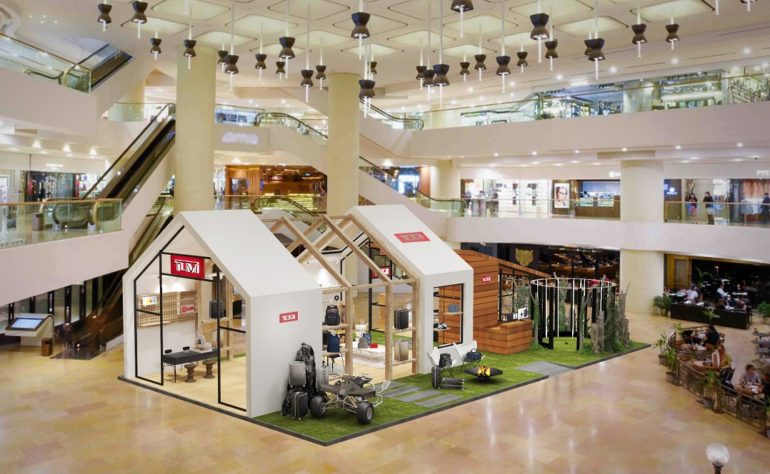
    TUMI unveils the ‘TUMI Scandinavian Lodge’ in the Garden Court of Pacific Place, Hong Kong.

    The pop-up celebrates the brand’s Fall 2018 collection inspired by the Scandinavian landscapes.

    The Scandinavian Lodge welcomed celebrities and fashionistas including Alex Fong, Gaile Lok, Kathy Yuen, Kelvin Kwan, Tsang Lok Tung, Janet Ma, Kayla Wong, Irisa Wong, Huang Xiao Chao, Sean Lee-Davies, Ingrid and Thierry Mandonnaud, Antonia Cruz, Pearl Shek, Sarah Zhuang etc., with an opening celebration on 31 August. Guests had the chance to immerse themselves in the world of the Fall 2018 collection through an innovative and interactive Scandinavian journey.

    A serene retreat amidst the busy city at the Garden Court in Pacific Place, the ‘TUMI Scandinavian Lodge’ showcases not only the latest travel, men and women collections, but also different interactive and tech-driven experiences for guests to explore TUMI’s renowned designs with a Scandinavian-inspired journey.

    The lodge highlights the first-ever personalized fashion ‘My Avatar’ experience to the city, where guests can create their own customized avatars and enjoy a virtual adventure all over the world without setting foot on a plane.

    TUMI lovers can discover more augmented reality (AR) surprises by downloading the interactive TUMI Club App.

    TUMI’s pop-up will be open till September 12.

  • Lotte near university to get big VR ‘theme park’

    Lotte near university to get big VR ‘theme park’

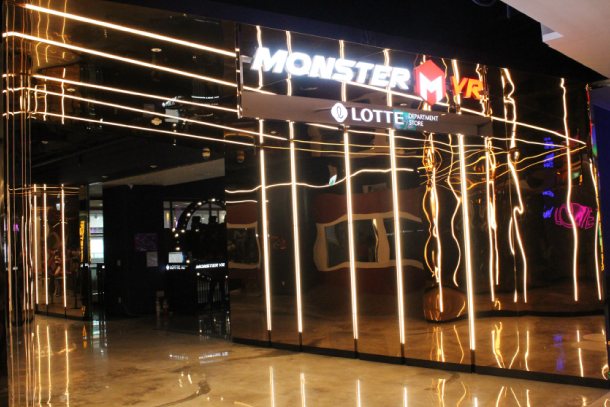
    Lotte Department Store will open a big virtual reality (VR) theme park on the 10th floor of its branch near Konkuk University, eastern Seoul, on Friday.

    The operation, named Lotte Monster VR, will offer more than 60 VR attractions or rides. Previously, the 10th floor of that store had restaurants and a culture center.

    The project was developed over a year with local company GPM, which runs a chain of VR theme parks or arcades.

    Lotte’s VR rides will mimic the experience of rafting, bungee jumping and riding a roller coaster. On a lower grade of the thrill scale, it will offer a virtual balloon ride. Lotte also will have a small VR film theater with 14 seats called the Monster Cinema, continuing the monster theme.

    Monster Cubes is an enclosed attraction with a huge screen in which a small group of people can play around 50 VR games and videos. One corner of the 10th floor with have a nearly 150-square-meter (1,614-square-feet) cafe.

    The retail giant said in a statement that it was trying to reverse the trend of young customers “turning away from brick-and-mortar stores in favor of ecommerce.”

    Because Lotte’s store is near Konkuk University, 35 percent of its sales come from customers in their 20s and 30s – a much higher figure than at other branches.

    The company said it first realized the potential of VR attractions when it operated a small VR arcade in el CUBE’s Hongdae branch, western Seoul, from September 2017 to last March.

    The arcade was only 148 square meters, but there were queues of people waiting for as long as one hour to get in on weekends, the company said. It was particularly a success among customers in their teens and 20s.

    “A VR theme park is a new kind of attraction for a local department store,” said Yoo Hyeong-ju, who heads Lotte Department Store’s development team. “We’re expecting the arcade to extend the amount of time people will spend in the store, particularly customers in their 20s and 30s, as well as families.”

  • New VR amusement park for Korea

    New VR amusement park for Korea

    As virtual reality becomes recognized as a viable film technology internationally, the Korean film industry is not hesitating to join the trend: film tech labs and visual effects houses are producing VR content more aggressively than ever, while major exhibitors are developing new technologies to screen this material.

    Until quite recently, VR content was rarely available in cinemas as most VR productions have been designed for theme parks and experiential games. But now South Korea is catching up the global trend – a movement in which VR animation such as Eugene Chung’s “Arden’s Wake” draw wide attention and leading film festivals launch competition sections specifically for VR films.

    South Korea has showcased quite a few notable VR film projects: in 2017, Gina Kim’s VR documentary “Bloodless” competed in the Venice film festival’s VR competition and won the best VR Story Award. Based on a true event in 1992, the film is about the murder of a Korean sex worker by an American soldier.

    More recently, VR romance drama “Stay With Me” opened in the immersive 4DX format at the CJ-CGV cinema chain. Directed by Bryan Ku, “Stay” revolves around the relationship between a boy who dreams of becoming a musician but is too afraid to go on stage, and a girl who aspires to become an actress.

    “When you think about VR, most of the time it would be either adventure, action or horror films,” Ku said at a press event for “Stay.” “I believe the greatest quality of VR lies in its capacity to let the audiences relate to the film emotionally, and romance drama is the genre that corresponds the most to this quality,” he continued.

    The world’s first film production that was both shot in VR and screened in 4DX format, “Stay” was specifically designed for 4DX screening from the beginning and was shot in 360 degrees, for which CGV’s 4DX effect team joined the project from the development stage.

    “4DX effects for VR should be different from those for other movies,” says Yoo Young-gun of CGV. “Visual elements are not enough to accomplish what VR is up to, which is to expand to a form of storytelling with its immersive characteristics maximized. With 4DX technology, the audiences can touch, smell and feel the films, meaning that virtual reality in its literal sense can be achieved.”

    CJ CGV is aiming to globally introduce 4DX VR by applying VR technology to its 500 4DX theaters across the world.

    “We are planning a VR add-on package, which allows exhibitors to show VR films, and are offering it to the 500 4DX theaters across the globe,” says Yoo.

    On the other hand, Lotte Cinema, South Korea’s second-largest exhibition chain, arranged a special program dedicated to VR content earlier this year. The program’s selection included Patrick Kwon’s “Nine Days,” South Korea’s first VR movie designed for theatrical release.

    “For this event we collaborated with Samsung and could use its HMDs and smartphones, but if we start regular VR screenings, it will be a lot costlier,” says Lotte’s Kang Seung-hyuk. “We will need to determine whether there’s enough content in VR that can cover these costs.”

    Since VR is still at an early stage and barely has a stable market, most VR productions rely on support funds. The Ministry of Culture, Sport and Tourism and institutes such as Korea Creative Content Agency and National IT Industry Promotion Industry are funding VR projects. Also, the Korean Academy of Film Arts launched a special course for VR production.

    At the same time, companies in the private sector are also making investments. Leading visual-effects house Dexter Studios is running a digital human virtual reality research lab and is working on a string of VR films that are set for theatrical releases at CGV within this year. The studio’s lineup includes sci-fi animation “From the Earth” and live-action horror picture “Trapped.”


  • Alibaba backs virtual showroom startup Ordre

    Alibaba backs virtual showroom startup Ordre

    Alibaba Group has bought a minority stake in Ordre, a European online luxury wholesale platform.

    Ordre, launched in 2015, allows fashion designers to show off their collections via 360-degree photography and virtual reality to interested wholesale buyers. The technologies make it more convenient for buyers, who aren’t always able to travel due to time and distance constraints, to build inventory each season. The reduced travel translates into lower carbon emissions at a time when sustainability is increasingly important to the industry, said Ordre.

    Dianne Von Furstenberg, Vivienne Westwood and Jason Wu are among the world’s leading designers who have established digital showrooms on Ordre. They also work with fashion brands such as Joseph.

    For Alibaba, the investment is a further push into the luxury sector, which is among its top strategic priorities, given the rising spending power and increasingly sophisticated tastes of Chinese consumers. The Hangzhou, China-based company plans to leverage Ordre’s technologies for consumers, however, delivering a more-enhanced shopping experience on platforms such as B2C marketplace Tmall.

    “Matching Ordre’s technology with Alibaba’s unique data insights and capabilities – of which our recently launched Luxury Pavillion is a great illustration—we can provide our consumers with a personalised and differentiated experience, helping brands develop a deeper engagement with them,” said Jessica Liu, president of Tmall Fashion and Luxury.

    The Luxury Pavillion, which lives within Tmall, was launched last August to deliver to China’s high-end consumers the same kind of brand exclusivity and tailored shopping experience online that they would expect at a brick-and-mortar store. About 50 brands, including l, offer products ranging from apparel and cosmetics to watches and luxury cars.

    The pavillion is driven by Alibaba’s New Retail technologies, which blend online and offline commerce to deliver a better buying experience for consumers. Simon Lock, founder and CEO of Ordre, said the company’s digital assets, including 360-degree images, 360 video and VR fashion shows and designer interviews, are in line with this strategy and could serve Tmall shoppers and brands.

    “Our 360-view allows consumers to understand every aspect and every view of a garment,” he said. “When you’re purchasing online, as much detail as can be provided is going to make your purchasing decision much more confident,” which can help drive down the product return rates.

    The companies are currently discussing a number of potential initiatives that would expand on these technologies. One of which would create new direct-to-consumer channels for Ordre’s partner brands by leveraging content to communicate their brand story and provide more information about products. For example, Ordre’s VR technology was able to recreate Stella McCartney’s Coachella-inspired 2018 fall show and the theatrical experience of Thom Browne’s latest showcase in Paris, so that buyers could watch fashion shows from the front row.

    Other potential collaborations include “fit avatars,” which allow buyers to see collections on models in 360-view and technology that allows buyers to remotely feel fabrics on a touch pad.

    Lock said he was also interested in Alibaba’s “See Now, Buy Now” technology, as well as the company’s artificial intelligence and cloud-computing capabilities.

    “We can work together to create the ultimate global fashion cloud,” he said.

  • Embracing body diversity, Asos invests in virtual fit tech

    Embracing body diversity, Asos invests in virtual fit tech

    Online fashion giant, Asos, is making it easier for consumers to see how items of clothing fit different body types and saving time and money on photography in the process.

    The retailer recently started working with Israeli tech startup Zeekit, which uses augmented reality (AR) to digitally ‘map’ the same item of clothing on various models using existing photographs of the item and models.

    A customer noticed the change while shopping on the site last month, eliciting a response from Asos that the new feature will be rolling out across the app soon.

    In a statement, Asos explained, “We’re always testing new technology that can make our customers’ experience even better.

    “In this case, we’re experimenting with AR to show product on different size models, so customers can get a better sense of how something might fit their body shape.”

    The race to solve the fit problem

    Fit is one of the biggest sticking points for online clothing retailers, which still by and large rely on size-8 models. With the average Australian woman being closer to a size 14, most consumers are left to guess how an item will fit and look in real life.

    A study by global research firm, IHL, pegs the annual cost of preventable returns at US$642.6 billion globally, and while it is difficult to pinpoint the average return rate for online purchases, (one analyst suggested 17-25 per cent is normal, it is decidedly higher than for items purchased in-store.

    Solving the fit – and return – problem becomes even more important for online retailers that offer free shipping, delivery and returns, which consumers have come to expect in the age of Amazon.

    A number of digital startups have sprung up in this space in recent years, such as Virtusize, which helps customers compare the measurements of an item they want to purchase with a garment they already own, and Fit.me and Metail, which let customers create 3D models to virtually ‘try on’ clothes.

    Asos struck a deal with Virtusize – which lacks a visualisation component – in 2013. The partnership with Zeekit crucially enables customers to also see how an item will fit.

    Zeekit differs from existing players, since it digitally maps garments onto the bodies of real models, not virtual avatars or faceless mannequins, which not only creates a more seamless shopping experience for customers, but also potentially saves Asos an enormous amount of time and money on photographing different size garments on different size models.

  • Zara AR experience unveiled in over 100 stores

    Zara AR experience unveiled in over 100 stores

    Spanish fast-fashion retailer Zara will unveil an augmented-reality experience for two weeks in 120 flagship stores globally.

    Aimed at encouraging customers both outside and inside the store to shop and share, the innovative concept superimposes technology on the retail environment via the Zara AR app. The activation plays out at three different sites: store windows, central podiums and atop e-commerce boxes.

    When smartphones focus on the signs, models Lea Julian and Fran Summers seemingly come to life in seven- to 12-second sequences on the phone’s screen. They pose, move around and even speak while dressed in the SS18 Zara Studio collection. Their clothes and accessories can be bought instantly through a single touch on the app, as well as in store.

    The experience will have high visibility from the street, with store windows appearing completely empty aside from bold signs encouraging people to access the Zara AR app. Downloading is easy by connecting to a dedicated Wi-Fi network, or by QR code, via iTunes and Google Play, or through the link on Zara.com or the app.

    As well as the shopping feature, a social-media sharing feature invites people to take and send photos alongside the holograms, establishing a virtual connection. To maximise the limited-time experience, different sequences of new looks will be introduced after the first week.

    Zara’s AR venture is the conception of Paris-based creative director Ezra Petronio, who developed the app with French technology company Holooh and research partner Inria (the French national Institute for computer science and applied mathematics). The 12 dynamic sequences were captured as holograms in a 170sqm studio involving 68 cameras, among the largest recording systems of its type in the world.

  • FamilyMart Taiwan launches digital prototype, including VR

    FamilyMart Taiwan launches digital prototype, including VR

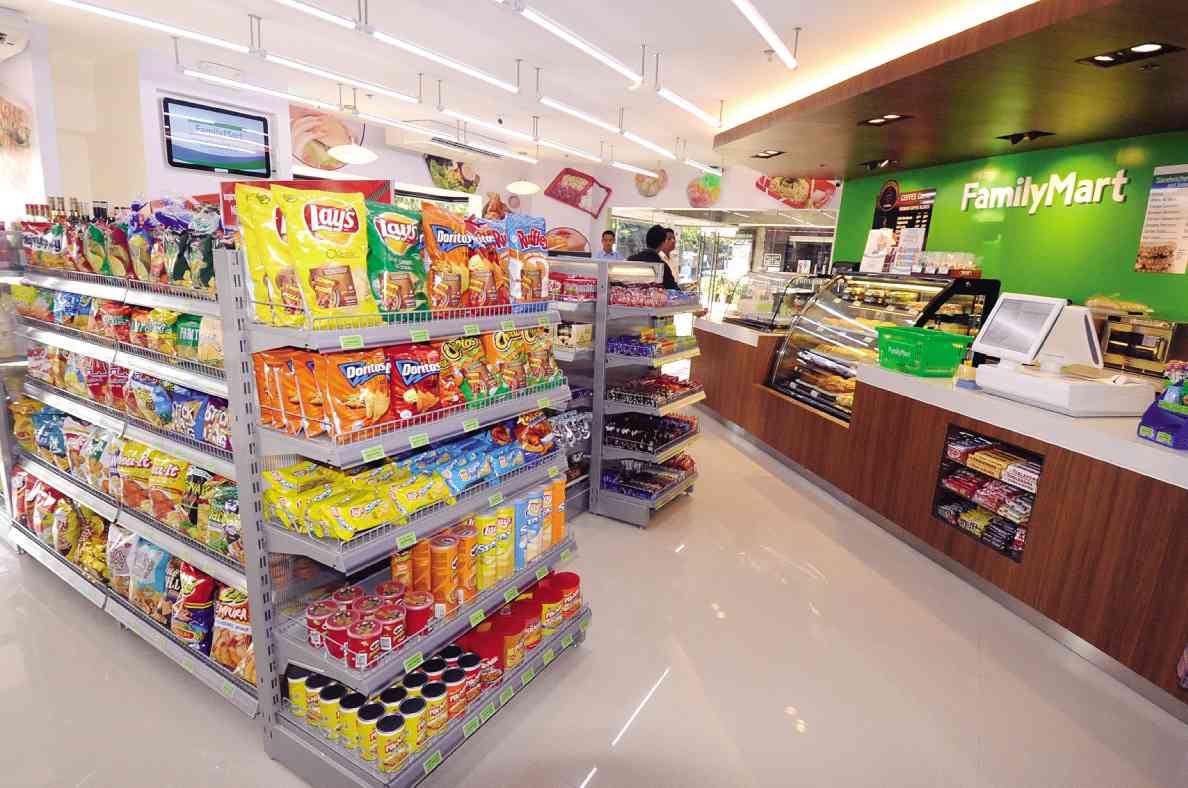
    FamilyMart Taiwan has launched a pilot convenience store concept that incorporates a range of digital technology including robots, VR interfaces, interactive projection screens, smart shelves and blockchain applications.

    A Fujitsu Robopin communication robot is stationed at the entrance to highlight offers and in-store events, while video content about products is projected on to the doors of freezer units.

    Electronic price tags interact with POS registers to update automatically, and product information is available through QR codes and NFC(5) technology built into the price tags.

    FamilyMart says it will study the results of the prototype store with a view to rolling out the technology to other stores.

    FamilyMart Taiwan chairman Yeh Jung-ting says convenience stores need to be modernised according to the world around them, as well in preparation for workforce shortages.

    He says Family Mart still wants locations to be personable, and while there will be fewer staff, the new stores will not be devoid of staff like some 7-Eleven outlets. The idea is to add efficiency to shopping for both customers and staff.

    One of the greatest advantages will be eliminating the time spent ordering stock. Previously ordering goods took around two hours, whereas smart shelves whittle down that time to seconds.

    Ultimately, there will be 17 technological upgrades made by possible by 15 new partnerships.

  • Alibaba teams up with Singapore university on AI

    Alibaba teams up with Singapore university on AI

    Chinese tech giant has set up a joint research facility at Singapore’s Nanyang Technological University to develop artificial intelligence-based technologies in retail, transportation and healthcare

    Chinese e-commerce and technology giant Alibaba has partnered Singapore’s Nanyang Technological University (NTU) in a joint research facility aimed at harnessing artificial intelligence (AI) to solve societal issues such as Singapore’s ageing population.

    The first of its kind outside China, the Alibaba-NTU Singapore Joint Research Institute will bring together NTU’s AI capabilities, including efforts to develop an artificial companion for the elderly, and Alibaba’s expertise in natural language processing, machine learning and cloud computing.

    The multimillion-dollar partnership between Alibaba and NTU is expected to involve 50 scientists and engineers from both parties over five years. Besides addressing the needs of ageing societies, they will also develop AI technologies in areas such as retail, urban transport and healthcare.

    For example, NTU’s expertise in healthcare research and Alibaba’s knowhow in AI to diagnose and prevent diseases will be pooled to achieve breakthroughs in health-related AI. Both parties will also conduct research to improve urban mobility and reduce Singapore’s carbon footprint.

    Alibaba said its contribution to the research facility will come from a $15bn fund earmarked for its Damo research and development (R&D) programme, which includes establishing research labs across the globe, including one in Singapore.

    The joint research institute is located on the NTU campus, but it is open to researchers and academics worldwide. Alibaba will also build a crowdsourcing platform to connect researchers and industry practitioners in an AI-focused R&D community.

    Jeff Zhang, Alibaba’s chief technology officer, said the AI technology developed by the institute will first be rolled out in NTU, followed by other parts of Singapore and Southeast Asia at a later date.

    “By launching our first joint research institute in Singapore, we hope to work with talent in Singapore and researchers worldwide to explore technology innovation that can address common issues faced by the society at large,” said Zhang.Alibaba’s efforts to develop AI capabilities in Singapore follows the recent launch of Chinese facial recognition specialist Yitu’s regional headquarters in Singapore that will mainly serve as a sales, marketing and operations outfit for now.

    Yitu said plans are also in the pipeline to establish R&D capabilities in the city-state by the end of 2018.

    In May 2017, Singapore’s National Research Foundation said it would invest up to S$150m (US$107m) over five years in a programme called AI.SG to drive adoption of AI to solve business problems.

    To nurture a local AI community, AI.SG will also work with startups and corporate laboratories through new facilities that will provide software tools, anonymised datasets and high-performance computing resources.

  • Retailer spending on AI to rise, says Juniper Research

    Retailer spending on AI to rise, says Juniper Research

    Juniper Research predicts global retailer spending on AI will reach US$7.3 billion a year by 2022, up from an estimated $2 billion for this year.

    Its report AI in Retail: Disruption, Analysis and Opportunities: 2018-2022 says retailers will heavily invest in AI tools that let them differentiate and improve customer services. These range from automated marketing platforms that generate tailored, timely offers to chatbots that provide instant responses to customers.

    Juniper found that spending will be strongest in customer service and sentiment analytics, where AI can be applied to understand reactions to purchased products and service received.

    It predicts retailer spending share in 2022 as:

    1. Customer service/sentiment analytics, 54 per cent
    2. AI-based automated marketing, 30 per cent
    3. Demand forecasting, 16 per cent.

    Juniper predicts retailers will use AI insights to design product ranges as well as create targeted promotional offers.

    “Retailers are looking to replicate the success of Amazon in making AI a core part of their business,” says research author Nick Maynard.

    He says retailers will increasingly turn to tactics such as AI-optimised pricing and discounting, as well as demand forecasting.

    With the advent of specific days for shopping, such as the Black Friday phenomena, understanding customer demand and planning appropriately is more important than ever, says the report.

    Juniper says retailers need to invest in this area in order to stay competitive, particularly in low-margin retail segments. Also, the cost of AI tools, now uneconomical for many players, will drop by 8 per cent over the next four years, helping realise 300 per cent growth in software spend.

  • Huawei teams with Baidu on AI development

    Huawei teams with Baidu on AI development

    Huawei has entered a partnership agreement with Chinese search giant Baidu covering AI platforms and technology, internet services and content ecosystems.
    The two companies plan to develop an open mobile and AI ecosystem using Huawei’s HiAI platform and Baidu Brian, a collection of AI assets and services.
    The HiAI platform is being developed on Huawei’s embedded AI chipset, the Kirin 970. The chipset was used in the Huawei Mate 10, the world’s first smartphone powered by an embedded AI chipset, which launched earlier this year.
    The planned joint AI ecosystem will use Huawei’s neural network processing unit and Baidu’s PaddlePaddle deep learning framework to empower AI developers and provide consumers with a rage of AI offerings and smart services.
    In addition, the partners will work together on voice and image recognition for smart devices to enable more efficient human-machine interaction, and jointly build an augmented reality ecosystem for consumers.
    “The future is all about smart devices that will actively serve us, not just respond to what we tell them to do,” commented Richard Yu, CEO of Huawei’s consumer business group.
    “With a strong background in R&D, Huawei will work with Baidu to accelerate innovation in the industry, develop the next generation of smartphones, and provide global consumers with AI that knows you better.”
  • DHL shows how smart glasses can help improve warehouse operations

    DHL shows how smart glasses can help improve warehouse operations

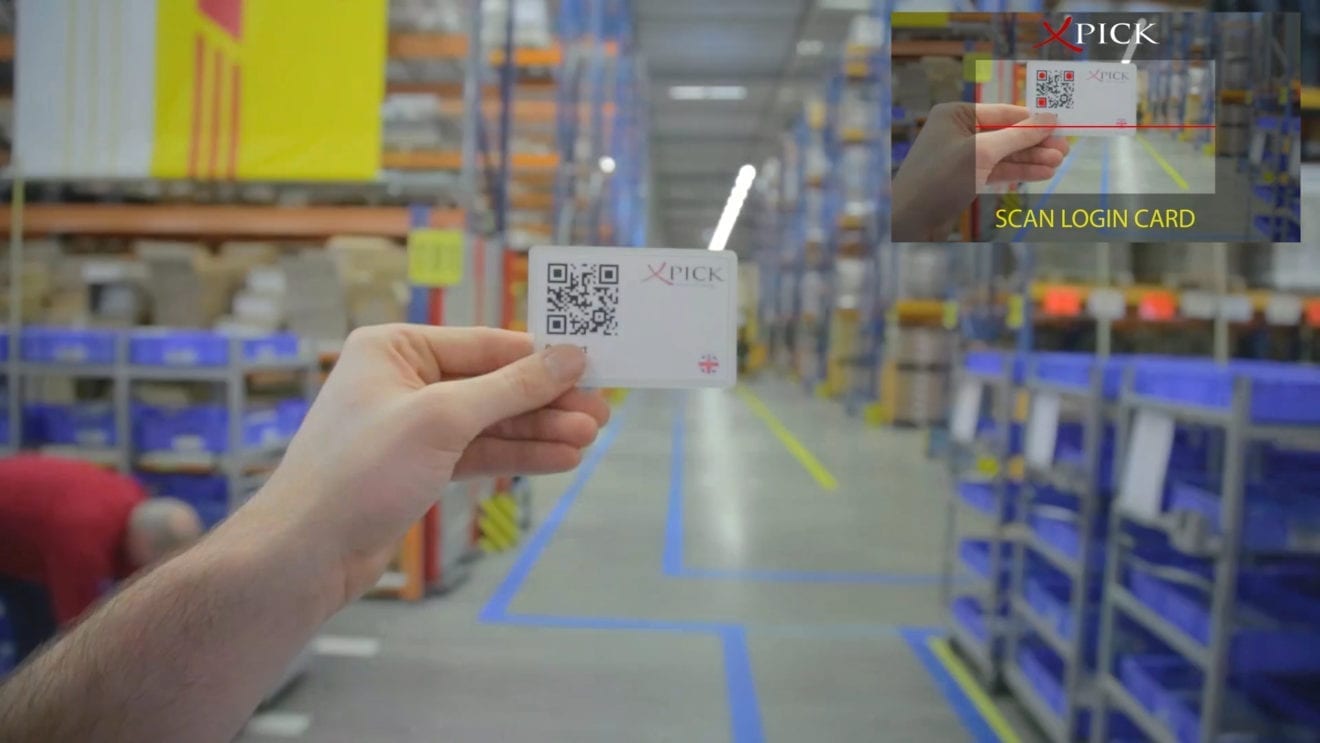
    Augmented reality (AR) is increasingly finding its way into the enterprise. For instance, DHL Supply Chain completed its AR pilots earlier this year in a bid to improve efficiency and productivity in its warehouses, Keya Chaturvedi, Trend Research Manager at DHL, told delegates at the recent Tech Summit 2017 in Singapore.

    Since the wearable provided visual displays of order picking instructions along with information on where the items are located and where they need to be placed on a cart, pickers no longer needed to rely on paper instructions. This enabled higher accuracy rates, and productivity to improve by an average of 15 percent, said Chaturvedi.

    In addition, the pickers were pleased with how the smart glasses has made the now hands-free picking process more comfortable and efficient , she added.

    Driven by the positive outcome, DHL has expanded the use of smart glasses to more warehouses around the world.

    Chaturvedi also anticipates that smart glasses will be of greater use in other areas of her business such as being used to scan and identify delivery vans. With smart glasses, it will be easier to record critical information, such as cargo temperature and security threats on the road which may affect delivery conditions, she explained.

  • Tata Comms trials live 360-degree video streaming

    Tata Comms trials live 360-degree video streaming

    Tata Communications and Formula 1 have conducted a test of truly live 360-degree video streaming at the 2017 Formula 1 Singapore Airlines Singapore Grand Prix.

    To-date, any 360-degree video experiments in sports have been hampered by a 30-second delay between the 360-degree video and live TV feeds, preventing a widespread adoption of the technology.

    This proof-of-concept by Tata Communications and Formula 1 is the first time when the live 360-degree video feeds and TV broadcast have been shown in complete sync.

    There were two 360-degree cameras at the Marina Bay Street Circuit in Singapore in the trackside and paddock to show how viewers at home could immerse themselves in the world of F1 and experience these exclusive areas through a virtual reality (VR) like environment via the Official F1 App.

    For example, during a Grand Prix build-up, fans could use their tablet to access a live 360-degree video feed from the paddock and see the biggest names in the sport. Or, during a race, as a driver pulls into the pits for a tyre change, fans could complement the action on TV with a 360-degree view of everything that is happening in the pit lane in real-time.

    The live video feeds from the two cameras were distributed from the Marina Bay Street Circuit in Singapore back to Europe using Tata Communications’ Media Ecosystem. This includes the Video Connect service, which brings together traditional video contribution and IP connectivity globally in the cloud, underpinned by Tata Communications’ global network.

    “Eliminating the delay in 360-degree video means that, for the first time, it’s possible to offer fans truly live 360-degree video experiences on a global scale,” said Mehul Kapadia, managing director of Tata Communications’ F1 Business.

    “This will enable sports and entertainment organisations to engage with their audiences in new ways and generate new revenue streams – helping the 360-degree video and VR market achieve its $60 billion potential,” said Kapadia.

  • Redbubble adds augmented reality to mobile app

    Redbubble adds augmented reality to mobile app

    Global online art marketplace, Redbubble, has this week released a new feature in its mobile app, which lets users see products in their own home before buying.

    The feature is powered by Apple’s augmented reality (AR) toolkit, which Ikea has also harnessed for its recently-released augmented reality app.

    Customers can now place virtual pillows on couches and chairs, view fabric texture up close, see how items interact with lighting and compare colours and size to surrounding objects.

    The feature is only available to those who have downloaded Redbubble’s app on an Apple mobile device running iOS 11.

    Redbubble plans to add AR support for three more objects before Christmas and will continue to add support for other categories where it makes sense.

    The marketplace currently offers 65 everyday objects, which customers can print over 11 million different designs onto. The range extends across apparel, stationery, homewares, bags, wall art and other categories.

    “At the moment, we are focused on home décor. We know it’s a product range that people want to see in their home [before buying]. It provides value,” Alex Lunnon, Redbubble’s product manager for mobile.

    “We may take AR to every category, but it won’t be overnight. We’re really trying to understand the problem space around specific categories first,” he said.

    For instance, customers could create and rearrange a gallery wall of various artworks using AR, or see how several different sticker designs look together on a laptop case.

    Redbubble wants to be Pinterest for e-commerce

    It took just a few weeks for Redbubble’s mobile development team to build the tool, according to Lunnon.

    “The framework itself is provided by Apple, so they take care of the complexity of understanding flat surfaces and the actual scale, so we can place a pillow in a way that reflects its actual size in real life,” he said.

    Redbubble needed to create a 3D model of the pillow and overlays that show texture, light and shadows and other details to make the object appear as it does in real life.

    The company has a team of 60 developers who are primarily based in Melbourne. Eight people are dedicated specifically to the company’s mobile app, which launched globally in May of this year.

    The app has had almost one million downloads so far.

    Lunnon said AR supports the app’s purpose to be more of a browsing and discovery tool, rather than a transactional one.

    “What we’re trying to create with the Redbubble app is an experience similar to Pinterest for self-express and exploration,” he said.

    Redbubble listed on the ASX in May 2016. It has offices in the US and Germany, and last year launched German, French and Spanish language versions of its website.