Retail News CRM

Tag: zara

  • Uniqlo joins Zara, H&M in tackling waste problem

    Uniqlo joins Zara, H&M in tackling waste problem

    In an effort to help the homeless restart their lives, UNIQLO Malaysia recently launched a clothing corner at Kuala Lumpur’s Homeless Transit Centre (Pusat Transit Gelandangan KL), a government initiative to help those on the streets get back on their feet. With the help of the centre, those who seek jobs can access proper attire as they embark on their new lives

    The clothes include casual wear, sports attire, and workwear – all of which are donated by UNIQLO’s customers.

    Many praised the company for its initiative in restoring hope for those in need

    UNIQLO’s All-Product Recycling Initiative encourages customers to donate old clothing, which is then recycled into new products

    If the clothes are wearable, they will be donated to refugees, disaster victims, and the underprivileged.

  • Zara parent posts US$229m first-half loss during Covid-19

    Zara parent posts US$229m first-half loss during Covid-19

    Zara-owner Inditex posted a net loss of US$229 million during the six months to 31 July, after a successful second quarter largely helped mitigate a disastrous start to the year.

    The first three months suffered a $481 million loss due to the sudden impact of the Covid-19 pandemic, while the second quarter rebounded to a profit of $253 million.

    Online sales soared 74 percent during the same period, as with many businesses during the pandemic, as customers moved online while up to 87 percent of the business’ stores were closed.

    Inditex executive chairman Pablo Isla said he is pleased with the online result, and that it shows the importance of an integrated omnichannel strategy.

    “This is a cornerstone of our unique business model with three key pillars – flexibility, digital integration, and sustainability,” Isla said.

    “Day to day this combination is proving its solidness.”

    The third quarter has continued to see a return to normalcy, the business said. Online sales have continued growing sharply, while store sales are recovering. Sales from August 1 to September 6 are improving, however down 11 percent year on year.

    And a number of new omnichannel initiatives that launched in the first half will be furthered moving forward, such as a plan to shut down smaller stores and absorb them into larger format locations that lend themselves better to an integrated model.

    During the first half 72 stores were refurbished, 35 of which were store expansions.

    Last week the business launched ‘Store Mode’, which saw 25 of its stores across Spain offer new features to customers using the Zara app: Click & Go, Click & Find, and Click & Try.

    Click & Go allows a click and collect offer that will see a product ready to be picked up within 30 minutes, Click & Find allows customers to find garments in-store using a RFID-enabled store map, while Click & Try allows customers to book time in a fitting room to avoid waiting.

  • Inditex eyes online presense and about to close 1200 smaller stores

    Inditex eyes online presense and about to close 1200 smaller stores

    Inditex plans to close up to 1200 smaller stores globally as it invests more than €2.7 billion in expanding its online capacity and focusing on an integrated network of large-format stores.

    Unveiling a strategic plan for the next two years, Inditex executive chairman Pablo Isla said the company expects online sales to account for 25 percent of total revenue by 2022, compared with just 14 percent last year.

    Most of the stores set for closure are older shops carrying banners other than Zara. They collectively account for 5 to 6 percent of total sales.

    Ultimately, Inditex will have a network of between 6700 and 6900 stores, down from the 7412 it operates today. About 450 new stores will be opened fitted with “all the latest sales integration technology” and effectively replacing the smaller-sized stores, which Isla says are less well-positioned to offer new-generation customer experiences.

    “This strategy is a culmination of the project the company has been investing in steadily and significantly since 2012, a project that will transform its profile notably,” said Isla. “The overriding goal between now and 2022 is to speed up full implementation of our integrated-store concept, driven by the notion of being able to offer our customers uninterrupted service no matter where they find themselves, on any device and at any time of the day.”

    The company believes that boosting online sales, underpinned by an integrated online-store network, with larger, higher-quality stores, will help generate 4 to 6 percent like-for-like sales growth annually.

    Part of the plan will see a boost to Inditex’s Bershka, Pull&Bear and Stradivarius brands in China and Japan.

    Inditex’s two-year strategy was revealed alongside the company’s first-quarter results announcement where it said it had limited the overall decline in sales to 44 percent in the wake of the Covid-19 crisis, despite 88 percent of its store network being shuttered at some point. Online sales surged 50 percent during the quarter and by 95 percent year on year in April.

    Global sales totaled €3.3 billion in the three months to April 30, gross margin remained at 58.4 percent of sales and inventories reduced by 10 percent during the past year.

    A net loss of €175 million was recorded and the company has made a provision of €308 million related to its restructuring plan.

    Inditex closed the year with a cash position of €5.8 billion, compared to €6.7 billion a year earlier.

  • Inditex profit growing faster than sales

    Inditex profit growing faster than sales

    Zara parent Inditex profit grew by 12 percent in the first nine months of this year, a rate significantly ahead of sales growth.

    Sales across its brands, which also include Massimo Dutti, Stradavarius, Bershka and Zara Home, rose 7.5 percent to €19.8 billion. The company says it expects its full-year like-for-like sales to increase by between 4 percent and 6 percent.

    The Spanish-headquartered company said its success is due to a focus on “enriching its customers’ unique experience” with inventory management and “tight coordination of every step in the value chain: design, production, logistics, and distribution”.

    During the first half of this year, sales reached €12.8 billion, the highest level to date, and net profit set a new record of €1.6 billion, up 10 percent year on year.

  • Inditex achieves record first-half sales

    Inditex achieves record first-half sales

    Zara parent Inditex achieved record revenue and profits during the first half of this year.

    Net sales rose 7 per cent year on year to €12.82 billion, while net profit rose 10 per cent to €1.55 billion.

    According to Inditex executive chairman Pablo Isla, the results reflected strong first-half performance, with like-for-like growth across all brands and geographies.

    “The investments we have made in the stores as well as in logistics and technology have been key elements in the development of our customer focused integrated online and offline store platform,” Isla said.

    However, gross margin stayed steady at 56.8 per cent, up from 56.7 per cent. According to Isla, the business works to maintain gross margin, rather than maximise it.

    “We are always thinking about the medium and the long-term evolution of the company,” Isla told analysts.

    “Gross margin is a combination of many different things. You have, of course, the like-for-likes as growth. You have the product mix. You have the fashion trends. You have currencies. You have raw material costs. There are many, many elements involved.”

    Inditex said it opened, enlarged and refurbished stores across all regions during the half year, and continued to expand its online platform into new markets – seeing 7420 stores open across 96 markets, with 62 sporting the group’s online platform.

    During the beginning of its second half, Inditex has seen sales in local currencies increased 8 per cent for the period between August 1 and September 8.

    The business expects like-for-like sales growth of between 4 and 6 per cent for the full year.

  • Zara in defense mode after IFC mall store closure

    Zara in defense mode after IFC mall store closure

    Fashion retailer Zara has reassured customers that its decision to close its IFC mall store in Hong Kong on Monday was not related to protests currently taking place in the city.

    The statement emerged after social media users in Mainland China speculated that the store closures were a show of support for the demonstrators and to allow staff to participate.

    “Zara has never made any comments or undertaken any actions related to a strike in Hong Kong,” read the firm’s statement on its Weibo account. “Zara does not back a strike and supports ‘one country, two systems’.”

    The controversy was sparked after an image of a sign posted on the IFC mall store’s shutters was circulated online, apparently going viral.

    Major businesses have come under close scrutiny for their actual or suspected support of the protestors, including Cathay Pacific, HSBC and PWC.

    The protests have been held in the city over the past three months, and have become seen as a challenge to Beijing’s sovereignty over the territory.

    Zara has declined to offer any explanation as to why the majority of its Hong Kong island stores were closed during the time in question.

    However, the store reopened yesterday with new interior design to coincide with the opening of the Sephora store in a space carved out of Zara’s previous footprint in the mall.

  • Zara parent fast-tracks online expansion

    Zara parent fast-tracks online expansion

    Clothing retailer Inditex has announced the launch of online platforms in nine new markets and says it will open in 10 more this autumn to meet its 2020 vision.

    Zara launched an online store in Brazil during the first quarter, and has recently inaugurated its platforms in Morocco, Egypt, Lebanon, Israel, Serbia, Indonesia, the United Arab Emirates and Saudi Arabia.

    This autumn, Inditex said it will launch Zara online platforms in South Africa, Qatar, Kuwait, Bahrain, Oman, Jordan, Colombia, Philippines and Ukraine.

    Last year, Inditex chairman and outgoing CEO Pablo Isla announced all products from the company’s brands will be made available online by 2020, including markets where it does not have any stores.

    Inditex posted a 5 per cent increase in net sales in the first quarter from February 1 to April 30, which, according to the company, has reached a new record of €5.93 billion ($9.48 billion), driven by the ongoing digital transformation of its integrated store and online sales platform.

    Store and online sales increased by 9.5 per cent in local currencies from May 1 to June 7 and from February 1 to June 7, sales increased 6.5 per cent in local currencies.

    During the first quarter, the company has opened new physical stores in 23 different markets and is also in the process of expanding, refurbishing and absorbing stores as part of the process of differentiating its sales footprint.

    “Among the stores worth highlighting are the Zara store that opened in Hudson Yards in New York, in the US, one of the world’s highest-profile retail developments, the new store on Rue Jean de Rouiffe in Cannes, France, and the store in the Time World Mall in Daejeon, South Korea,” Inditex stated.

    Massimo Dutti also opened a new store in Ibiza fitted with ‘scan-and-shop’ technology and click and collect. The store also features the brand’s new ‘style advisor’ and ‘express alteratrions’ services with same-day collection or delivery in three hours.

    The brand also opened a new store in the Manama shopping centre in Bahrain and flagship stores in Seoul, South Korea and Vladivostok, Russia, in the Kalina Mall, which also welcomed Bershka, Stradivarius, Oysho, Pull&Bear and Zara Home stores during the quarter. Oysho made its debut in Latvia and Singapore and opened a huge flagship store, spanning over 2200sqm, in Mallorca, on the emblematic Paseo del Born, while Stradivarius opened its doors on France’s Cote d’Azur, specifically in Cagnes-Sur-Mer, and Zara Home opened its maiden store in Bulgaria.

    According to Inditex, all of these new stores are fitted with the latest customer-oriented technology and all of the breakthroughs on the eco-efficiency front, bringing the store count meeting the group’s green criteria to 90 per cent of the total, in line with its commitment to making the platform fully sustainable by 2020.

    Isla had said earlier all of the group’s brands will be adopting an integrated stock management system by 2020 in all the countries where there is a physical store presence.

    Other than Zara, the world’s largest clothing retailer also sells the brands, Massimo Dutti, Pull & Bear, Bershka, Stradivarius, Oysho and Uterque across its network of almost 7,500 physical shops. It also operates online in 49 markets.

    Underpinned by sales growth in all geographies and at every brand, the group’s solid operating performance lifted net profit to €734 million, a growth of 10 per cent year-on-year.

    Excluding the effect of IFRS on leases from February 1, EBITDA grew 9 per cent, EBIT 7 per cent and net profit 7 per cent.

    “The recent figures demonstrate solidity of the company’s model, whose profitability and cash flow generation continues to grow owing to the group’s commitment to customer-driven quality fashion,” Isla said, emphasising the “strong momentum in the digital transformation of the integrated store and online sales platform and in sustainability as a key pillar of the company’s strategy.”
  • Tata Group Launching first fast-fashion chain

    Tata Group Launching first fast-fashion chain

    Zara’s Indian partner Tata Group is launching its own fashionable apparel chain in the territory with prices well below Zara levels.

    Tata’s retail offshoot Trent Ltd has launched an “extreme-fast-fashion” model that brings new styles from the runway to the store within two weeks, similar to Zara’s own timeline.

    Trent is seeking to launch 40 locations the flagship Westside chain per year as well as hundreds of mass-market Zudio stores for budget items. The chain is targeting fashion-conscious Indian consumers without the means to afford Zara items, with a view to becoming as ubiquitous in Asia as Zara is in Western markets.

    The firm has a strong focus on fashion-savvy staff, and spends 65 per cent more on personnel per square foot than its local competitors.

    “The middle class is growing, incomes have grown, Indians are traveling more and they have more money to spend,” said chairman Noel Tata. “Now that we’ve built this capability and this model that’s working so well, it’s time to grow faster … The value proposition we offer is much stronger than the international brands.”

    Less than a quarter of Indian households earnt US$8500 or more last year.

  • Zara owner Inditex’s omnichannel strategy helps boost sales

    Zara owner Inditex’s omnichannel strategy helps boost sales

    Clothing retailer Inditex has posted record first-quarter sales and a rise in profits helped by the retailer’s push of stitching together its online and physical businesses.

    The fashion retailer’s online business, which accounts for 12 per cent of its net sales, and expansion plans have contributed to its robust first quarter sales of €5.927 billion ($10.18 billion), up 5 per cent from last year’s €5.654 billion ($9.56 billion).

    Net profit amounted to €734 million ($1.26 billion), up more than 10 per cent in the first quarter of 2018. The company’s net cash position increased by 9 per cent to €6.66 billion ($11.44 billion).

    The retailer, which owns the brands Zara and Pull & Bear, said its in-store and online sales showed a 9.5 per cent increase in local currencies between May 1 and June 7 – up from the 6.5 per cent in the previous corresponding period.

    “The figures demonstrate the solidarity of the company’s model, whose profitability and cash flow generation continues to grow owing to the group’s commitment to customer-driven quality fashion,” said Pablo Isla, Inditex’s chairman and outgoing CEO.

    Isla underscored the strong momentum in the digital transformation of the integrated store and online sales platform and sustainability as key pillars of the company’s strategy.

    Last month, the retailer has named chief operating officer Carlos Crespo as its new chief executive to spearhead a bigger push into e-commerce.

    Crespo will continue in his existing position until his appointment as CEO becomes effective in July, when he will begin taking some of the responsibilities currently held by executive chairman and current CEO Pablo Isla, the company announced.

    The appointment of Crespo, who oversaw the integration of Inditex’s online and bricks-and-mortar stores, puts an emphasis on the retail giant’s digital efforts amid changing consumer habits.

    Last year, Isla announced all products from all Inditex’s brands will be made available online by 2020, including markets where it does not have any stores.

    Other than Zara and Pull & Bear, the world’s largest clothing retailer also sells the brands, Massimo Dutti, Bershka, Stradivarius, Oysho and Uterque across its network of almost 7,500 physical shops. It also operates online in 49 markets.

    Isla also said all of the group’s brands will be adopting an integrated stock management system by 2020 in all the countries where there is a physical store presence.

  • Zara Posts Dramatic Growth in Vietnam

    Zara Posts Dramatic Growth in Vietnam

    Zara is outpacing archrival H&M in one of their fastest-growing markets, Vietnam.

    Zara Vietnam’s revenue reached US$73 million last year, six times the 2017 figure.

    The Spanish fast-fashion retailer has opened two stores in Vietnam – one in Hanoi and one in Ho Chi Minh City.

    During three years of operations, Zara Vietnam has achieved US$128 million. Rival H&M, which runs seven Vietnam stores, reportedly achieved revenue of $33 million last year, double that of its first year in the country.

    Along with three other Inditex’s brands, Massimo Dutti, Pull & Bear and Stradivarius, Zara is distributed by Indonesia’s Mitra Adiperkasa Group.

    According to Mitra Adiperkasa’s financial report, Zara remains its main revenue earner and Vietnam is its second-largest market after Indonesia.

    The company’s revenues in Vietnam last year were almost double the previous year’s figure and four times higher than its sales in Thailand.

  • VF Corporation to collaborate with Redress

    VF Corporation to collaborate with Redress

    Global apparel, footwear and accessories retailer VF Corporation is entering an exclusive collaboration with environmental charity Redress to deliver the Redress Design Award 2019 x VF Challenge in Hong Kong.

    The award is the world’s largest sustainable fashion design competition and works to educate emerging fashion designers around the world about sustainable design techniques to drive growth towards a circular fashion system.

    The collaboration is being supported by financial contributions from VF and charitable grants from the VF Foundation, a private philanthropic foundation funded by VF Corporation.

    “This collaboration presents a unique opportunity for VF to provide mentorship to the next generation of fashion leaders while also learning from them,” said VF executive VP & group president APAC region Kevin Bailey, “all with an emphasis on advancing a more sustainable business model for our industry.”

    VF’s collaboration with Redress will provide 10 shortlisted emerging designers the opportunity to learn from one of the world’s foremost leaders in apparel and footwear.

    Designers will present their competition collections on September 5th at the live Grand Final at Centrestage in Hong Kong.

  • New CEO For Zara Owned Inditex

    New CEO For Zara Owned Inditex

    Zara owner Inditex has named chief operating officer Carlos Crespo as its new chief executive to spearhead a bigger push into e-commerce.

    Crespo will continue in his existing position until his appointment as CEO becomes effective in July, when he will begin taking some of the responsibilities currently held by executive chairman and current CEO Pablo Isla, the company announced.

    The appointment of Crespo, who oversaw the integration of Inditex’s online and bricks-and-mortar stores, puts an emphasis on the retail giant’s digital efforts amid changing consumer habits.

    Isla said Crespo’s contribution to the company in this new role will be vital “at a time marked by Inditex’s strategic digital transformation and far-reaching commitment to sustainability”.

    Isla, who until now has held the positions of both chairman and CEO, will continue to lead the apparel company as executive chair. Crespo will work with Isla to define the overall company strategy, Inditex said.

    The new chief joined Inditex in 2001 as the head of accounting policies in the finance department. Going forward, he will be responsible for technology, procurement and sustainability.

    “I am very excited to play a role at this important time for the company in which digital transformation and sustainability in all its manifestations represent exciting challenges,” Crespo said.

    Last year, Isla announced all products from all Inditex’s brands will be made available online by 2020, including markets where it does not have any stores.

    Other than Zara, the world’s largest clothing retailer also sells the brands Pull & Bear, Massimo Dutti, Bershka, Stradivarius, Oysho and Uterque across its network of almost 7,500 physical shops. It also operates online in 49 markets.

    Isla also said all of the group’s brands will be adopting an integrated stock management system by 2020 in all the countries where there is a physical store presence.

  • Zara’s local profit after E-commerce Launch

    Zara’s local profit after E-commerce Launch

    Inditex Group’s Australian business, Group Zara Australia, posted a 35 percent increase in net profit for the year ending January 31, 2019, lifting the figure from $8.9 million to $12 million, according to documents lodged with the Australian Securities & Investments Commission.

    This came off the back of strong sales growth, with Zara’s full-year revenue in Australia grew 10.5 percent to $311.7 million, up from $282 million in the previous corresponding period.

    This is due in part to the launch of Zara’s local e-commerce site in Australia and New Zealand in 2018, which opened up a new sales channel for the business and gave more customers the ability to shop with the fashion brand.

    Zara’s parent company Inditex launched online stores in a further 106 markets in November last year, which led to a group-wide online sales increase of 27 percent to $5.19 billion (€3.2 billion) – contributing 12 percent of group net sales for the year.

    Zara had 21 stores in Australia on January 31, 2019, including 19 Zara and two Zara Home stores.

    In a statement about its full-year earnings, Inditex highlighted the growing risk fast fashion brands face of being perceived by stakeholders, including customers, employees, shareholders, suppliers and society in general, as unsustainable.

    The retail giant noted that it was ranked as the ‘most sustainable company in the global retailing industry’ by the Dow Jones Sustainability Index for the third straight year based on the progress it has made in its environmental strategic plan and laid out various initiatives it is undertaking to lessen its impact on the planet.

    These include gaining greater control over the materials used in the creation of its products, reducing the amount of water used in its supply chain and using energy efficiently.

    Additionally, in September of last year, Inditex piloted an at-home pick-up service for recycled garments in China, an initiative that is already operating in Spain, though has yet to make it to Australian shores.

    Inditex is far from the only fashion retailer tackling the issue of sustainability. The Iconic recently launching Considered, an initiative that allows customers to more easily filter products based on their own personal values, such as sustainable materials, eco-production, fair production, animal-friendly, and community engagement.

    Swedish fashion retailer H&M has also committed to add more information to its website to allow customers to understand where its products come from – a move to create greater product transparency.

  • Instagram users can now buy items from ads inside the App

    Instagram users can now buy items from ads inside the App

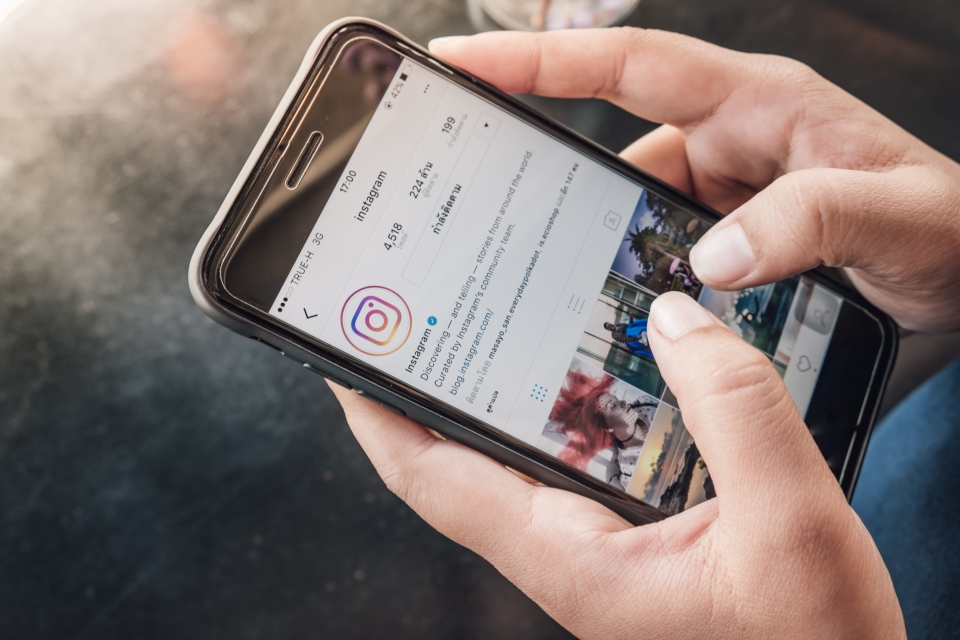
    Instagram is taking its Shopping ads one step further by making it possible for people to buy the products in the ads without leaving the app.

    The feature, called Checkout on Instagram, is currently being tested in a closed beta program by nearly two dozen businesses and is only available to users in the US.

    Retail News has asked for details about if and when the feature will be available outside the US but had not received a reply at the time of this writing.

    Adidas, Burberry, Dior, H&M, Michael Kors, Nike, Outdoor Voices, Uniqlo and Zara are among the 23 fashion, beauty and accessories brands now rolling out the feature. Others will be added in future, according to Instagram, which is owned by Facebook.

    When users tap on a product in a Shopping ad from one of these businesses, they now see a “Checkout on Instagram” button. By tapping the button, they can select the size and colour of the item they want and enter their payment and shipping details to purchase.

    Users receive notifications about shipment and delivery within the Instagram app, and the platform saves all their information for future purchases.

    In the past, if users wanted to purchase a product linked to a Shopping ad, they were redirected to the brand’s website. The new feature removes this step and – crucially for Instagram – keeps consumers in the app.

    “Social selling is really taking shape both in Australia and globally and it’s great to see Instagram leading the way through the next stage of the social selling journey. Giving consumers the option to complete a purchase right then and there in the app will simplify the shopping process and allow brands to connect more easily with shoppers,” said Jordan Sim, group product manager at BigCommerce, an e-commerce platform that has been active in offering integrations with Shopping on Instagram to its users.

    “We’ve seen our merchants both globally and locally in Australia have a great deal of success using BigCommerce’s integration with Shopping on Instagram and are looking forward to unlocking the power of this new integration for our Aussie retailers in the near future. We know the value of simplifying the checkout process to drive sales and this new function on Instagram will facilitate just that.”

    Many brands have said that Shopping ads drive sales, but there’s a trade-off: visibility and control over their customer data. As Instagram continues to make the purchasing process more seamless – that is, takes control of the process – some businesses will undoubtedly question whether the trade-off is worth it.

    It is unclear whether the Checkout feature applies to Shopping posts in Instagram Stories, or only to posts in the feed. Last June, Instagram revealed that of the 500 million people using Instagram every day, 300 million use Stories every day.

  • Zara growth slows down

    Zara growth slows down

    Zara growth is slowing substantially and analysts fear worse is to come.

    The fast-fashion brand’s Spanish parent Inditex says the slowing growth is due to a stronger euro, flat margins, less-frequent discounting and a store optimisation strategy that focuses on larger stores in prime locations and online growth at the expense of smaller stores.

    While the retail giant reported a 7 per cent sales increase at constant currency rates year on year to 26.1 billion, this was less than half the rate of growth the company reported a few years ago, Morgan Stanley said in a note.

    “[W]e believe it is evidence that the group’s growth profile is slowing sharply,” Morgan Stanley said.

    Like-for-like sales grew 4 per cent in last financial year, compared to 5 per cent in 2017. Online sales grew 27 per cent to 3.2 billion, or 12 per cent of net sales. This is on the low end for an apparel company, where online penetration tends to be higher.

    Inditex opened 370 stores during the year, and closed 355, which was nearly twice as many as the 200 stores it said it was planning to close last year. This may have had an impact on sales growth , an investor told, but could prove to be the right strategy long term.

    The group increased gross new space in prime locations by 8 per cent and is continuing to roll out its omnichannel store format, which integrates bricks-and-mortar and online channels. The group said it sees strong opportunities for growth in this space going forward.

    Inditex said global online sales are on track. Zara launched online in Australia and New Zealand last March and entered an additional 106 markets online in November, bringing the total number of markets it sells online in to 202.

    The company has reported a profit of 3.44 billion for the year, up 2 per cent on the previous year.

    In its first five weeks of the new fiscal year, the group lifted store and online sales 7 per cent at constant-currency rates. The company said it expects like-for-like sales to grow between 4 and 6 per cent this fiscal year, and gross space in prime locations to grow between 5 and 6 per cent.

    The fashion giant expects to open around 300 stores and close around 250 in the year ahead. As at  January 31, Inditex had 7490 stores worldwide across the Zara, Pull & Bear, Massimo Dutti, Bershka, Stradivarius, Oysho and Uterque brands.