Author: Mei Ling Tan

  • Kakao starts carpool recruitment

    Kakao starts carpool recruitment

    Kakao Mobility has opened recruitment for its carpool app, infuriating taxi drivers who are vehemently opposed to the move. According to the mobility company that operates taxi-hailing app Kakao T, recruiting drivers is one of the crucial steps in preparation for the launch of its carpool service. The hiring process opened on Tuesday with the launch of a driver registration app, dubbed Kakao T Carpool for crews.

    Kakao Mobility was quick to point out that recruitment does not mean it will immediately launch a carpool app, adding that there is no set date for release. Instead, Kakao is looking to move drivers registered on Luxi to the new Kakao app, although this process will mean that it has a pool of drivers readily available, allowing it to immediately launch the app whenever it wants.
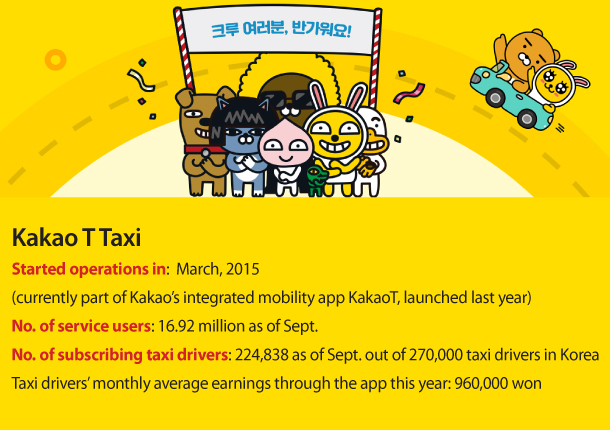
    Kakao Mobility has actually been attempting to launch its own carpool service since it acquired Luxi for 25.2 billion won ($22.4 million) in February. At the time, the company made it clear that it would only use the carpool service to cover shortages in taxis during peak hours, “within the legal boundaries.”

    Kakao’s statement did little to appease taxi drivers back in February, and they’re not any happier with the service now. Korea’s taxi drivers are fiercely opposed to ride-sharing apps, which they consider an unlicensed threat to business.

    This is the main reason why popular international ride-hailing companies like Uber are illegal in Korea under Article 81 of the Passenger Transport Service Act, which says that personal vehicles cannot be exploited for business purposes.

    Carpooling services, however, have been operating by taking advantage of a loophole that says that carpooling during commuting hours is permitted. Still, the vagueness of the term “commuting hours” has caused conflicts between carpool service providers and taxi drivers.

    Taxi drivers argue that Kakao is taking work away from them. As Kakao operates Kakao T, which thousands of taxi drivers rely on for work, the feeling of betrayal is even stronger.

    “It feels as if we are being backstabbed by Kakao, who we have been thinking of as a business partner,” said a spokesperson from the Korea National Joint Conference of Taxi Association, a group representing over 100,000 corporate taxi drivers nationwide, in a phone call Tuesday. “I can’t believe Kakao is making this announcement without delivering any message to drivers who have been holding a series of rallies against the company’s plan to start the carpool business.”

    The drivers held two rallies in Pangyo, Gyeonggi, where the Kakao Mobility office is located, on Oct. 4 and 11. About 500 people gathered at the second rally from four taxi driver unions, including the Korea National Joint Conference of Taxi Association. Tomorrow, a bigger protest is due to take place in Gwanghwamun Square in central Seoul at 2 p.m.

    To participate in tomorrow’s rally, about 4,000 drivers from Incheon, about half the city’s taxis, are expected to walk out, according to Incheon’s taxi association. About 2,000 taxis in Jeonju, the capital city of North Jeolla, are also due to stop operations for the rally, according to the city’s government.

    Some other cities are also facing similar problems as taxi drivers say they will leave for the rally.

    Despite the controversy, Kakao Mobility maintained Tuesday that carpool apps could be a great complementary service for taxis, citing data that on Sept. 20 there were 205,000 calls for taxis on the Kakao app from 8 a.m. to 9 a.m., but only 37,000 taxis were available.


  • First Victoria’s Secret Lingerie Store to open in Malaysia

    First Victoria’s Secret Lingerie Store to open in Malaysia

    The first full-range Victoria’s Secret Malaysia store has opened. Located in Mid Valley Megamall, the boutique has been launched by the US brand’s regional partner Valiram Group, which is also behind Victoria’s Secret stores in Macau, Bali and Singapore, (but not Hong Kong and Mainland China). It is reportedly planning more stores in Jakarta, Bangkok and Melbourne, Australia.

    The Kuala Lumpur store takes up 8233sqft, and has dedicated space for diffusion lines Pink and Victoria Sport, as well as the beauty products and perfume ranges stocked in earlier Victoria’s Secret stores in Malaysia.

    Many celebrities attended a formal opening earlier this month and social media key influencers including Joi Lynn have been photographed at the store.

  • Why Vietnam’s auto industry never stepped on the gas

    Why Vietnam’s auto industry never stepped on the gas

    Vietnam’s auto industry has suffered from rewards not being connected to production and the neglect of domestic suppliers.

    It is evident that while joint ventures have continually received financial support and incentives without developing production, domestic suppliers have been ignored.

    In this context, the emergence of VinFast – the year-old auto-making subsidiary of Vietnamese realty and retail giant Vingroup – is being seen as a keystone element in the development of the Vietnamese auto industry.

    Standing alongside Vingroup are major incumbents, like Truong Hai Auto Corp and Hyundai Thanh Cong. Although it seems the right time has come for Vietnam’s car industry to move to a new level, the industry has failed to take shape for the last 20 years.

    Car making projects in Vietnam have been around since the 90s. Production was first undertaken by the Hoa Binh (Vietnam Motors Corporation-VMC) and Mekong Auto Corporation in the form of business cooperation contracts (BCC) with other automobile manufacturers.

    VMC assembled and manufactured different product lines for BMW, Mazda and Kia, while Mekong produced for Fiat and Ssangyong.

    Subsequently, foreign companies began to invest in Vietnam in the form of joint ventures, like Toyota, Honda, Daihatsu, Ford and Mercedes.

    The developmental strategy for the first stage of the industry was clear: attract FDI, create jobs, and create a favorable environment to nurture local producers of materials needed to produce cars.

    The social rationale for this strategy was also to use the projects to provide growth opportunities for low-income provinces such as Vinh Phuc and Hai Duong.

    At that time, even though consumption was primarily in the south of Vietnam, most manufacturers were located up north. To protect the fledgling joint ventures, which primarily manufactured CKDs (completely knocked down cars, to be assembled by the buyer), the government enforced a protectionist policy, closing the market for imported CBUs (completely built up cars).

    In the early 2000s, tariffs on imported CBUs were very high, at 120 percent. This rate was reduced to around 60-80 percent after Vietnam joined the WTO in 2007; and it was to be further lowered pursuant to the ATIGA trade agreement’s reduction schedule.

    2018 is the first year in the schedule where imported cars of ASEAN origin (C/O form D) are subject to zero percent tariffs.

    Since the Common Effective Preferential Tariff (CEPT) agreement was signed between ASEAN countries in 1992, car manufacturers have been forced to reconsider the strategy of producing and consuming cars within this region.

    With Vietnam’s accession to ASEAN, a country with a large population and unrealized market potential, car makers revised their long-term business strategy, reducing CKD production and moving towards 100 percent importing of CBUs from other countries in the region.

    The only manufacturing hope lay with Korean firms Kia and Hyundai, both of whom had just begun to establish production and consumption in the Vietnamese market.

    The emergence of Vietnam’s first home-made brand, VinFast, is a notable step forward, but it is still far too early for this to mean anything.

    A strategy that failed

    The strategy of using FDI to foster growth of the auto industry and increase localization has not been successful. Why?

    A new car must go through a rigorous testing process by the manufacturer and the relevant independent accreditation bodies. Therefore, manufacturers are very careful when choosing components for their car models. Original Equipment Manufacturing Suppliers (OEM), otherwise known as parts suppliers, are selected at the development stage of the model, long before the car is introduced to the market.

    Each vehicle has a Homologation Document that contains a complete set of vehicle assembly information. This kit must be approved by an independent body after testing, prior to the issuance of a Vehicle Type Approval. Compliance with technical documentation is compulsory to ensure quality and safety of the car.

    Because Vietnam’s auto market is small and production is predominantly in CKD form, models are usually introduced to the markets one to two years late. This makes it impossible to change component suppliers. There have been many cases of joint ventures in Vietnam suggesting replacement of components with those sourced from inside the country, but not getting the parent company’s approval.

    The Kia models sold in Vietnam are a good example. They run on Continental tires from Germany instead of Kumho, a Korean brand produced locally.

    In 2006, import taxes on CKD cars were restructured. Instead of being taxed per whole kit, the tax was levied on individual components to make it more favorable for manufacturers who source components locally. Despite this, the localization ratio has not increased as desired by policy makers.

    According to statistics compiled by McKinsey & Company, components sourced overseas make up 55 percent of the total cost of a car. Manufacturers cannot achieve the 40 percent localization rate required by the ATIGA trade agreement if the supply source is not available.
    Because of the failed developmental strategy for domestic manufacturers, Vietnam is instead becoming a market for major production centers based in Thailand and Indonesia.

    Over a long time, policies and resources have been poured into automotive joint ventures, but OEM Suppliers are key players in shaping the game. Most companies in the list of the 100 largest OEM suppliers are from Japan, Germany or the United States.

    While China is the largest market for automobile production and consumption, accounting for 30 percent of the world market, only two companies make the above list, mainly producing aluminium chassis components.

    So how can any real change happen?

    If local OEMs, not joint ventures, receive these huge resources and are facilitated to build factories in Vietnam, then the production and business strategies of automakers in the ASEAN region might not be what they are now. -Bui Sinh-

  • Spotlight on ASEAN for Korean retail, beauty and entertainment biz

    Spotlight on ASEAN for Korean retail, beauty and entertainment biz

    With Southeast Asia becoming the center stage for South Korean businesses in expanding their global presence, retail conglomerates like Lotte, Shinsegae and CJ have been successfully tapping into the markets. Lotte Group has focused its investments on its retail arm Lotte Shopping’s entrance to the Indonesian market. According to the company, the Indonesia market accounts for 17 percent of total sales earned from overseas Lotte Group businesses.

    Lotte Mart, a discount chain operated by Lotte Shopping, currently runs 46 stores in 25 cities in Indonesia. These stores raked in 1.1 trillion won (US$971 million) in sales as of the end of last year.

    By 2020, the company aims to open 36 more stores in 10 additional Indonesia cities.

    Following a successful entrance in the Indonesian market, Lotte Shopping now targets large-scale investment in Vietnam.

    The company will inject 330 billion won to complete the construction of Lotte Mall Hanoi by 2020.

    Shinsegae Group has been also speeding up its expansion into countries in the Southeast Asia.

    In 2015, Shinsegae’s discount chain operator E-mart opened a two-story mall located in the heart of Ho Chi Minh City at Go Vap District, one of the most developed and densely populated areas in the capital.

    The Go Vap branch marks E-mart’s first overseas store since the brand redirected its focus to the Southeast Asian market in 2011 after officially exiting the Chinese market.

    For over the next three years, E-mart will invest 549 billion won to open four more stores in Vietnam by 2020.

    The second outlet in Ho Chi Minh will open in the first half of next year, the group said.

    Singapore is another crucial country — geographically and economically — for the groups.

    SPC Group opened the first Paris Baguette store in Singapore in 2012. Now nine outlets are operated there, including one at Changi Airport.

    The group said its Singaporean branch Paris Baguette Singapore PTE marked a 12 percent increase in sales from 12.9 billion won in 2015 to 14.4 billion won in 2016.

    SPC Group said it has taken care to localize its services as much as possible to meet the needs and lifestyle of Singaporean consumers.

    Entertainment businesses have also penetrated Southeast Asian markets.

    CJ ENM, a merged corporation of CJ O Shopping and CJ E&M that officially launched in July, will open Asia’s largest virtual commerce content production center in Ho Chi Minh City, Vietnam, targeting audiences in Southeast Asian countries.

    The center, called DADA Studio Vietnam, will create and distribute at least 1,000 pieces of virtual commerce content from early next year.

    Focusing on making use of the low-cost production system and high efficiency of the talent pool in Vietnam, CJ ENM said its attempt to operate a content hub abroad would lead to boosted content sales from the global market.

    “CJ O Shopping and CJ E&M had already witnessed the possibility of the v-commerce content business through our DADA Studio and online creators’ platform DIA TV. To dominate the expanding global content market, a merger of the two CJ companies will show the synergized effect of CJ’s digital content and channel operation,” said Kim Do-han, a director at CJ O Shopping.

    Following the K-pop boom and popularity of Korean style makeup trends, Amorepacific opened an outlet of its high-end makeup and skin care brand Hera this year at the Takashimaya Department store in the heart of Singapore’s shopping district.

    “Targeting the Singaporean market is important with the K-pop and Korean culture wave’s sensational influence to surrounding countries. Hera’s trendy brand image will suit well with Singapore consumers’ taste,” said Na Jung-kyun, head of Amorepacific’s Southeast Asian region division.

  • Honestbee risk losses with new experimental offerings

    Honestbee risk losses with new experimental offerings

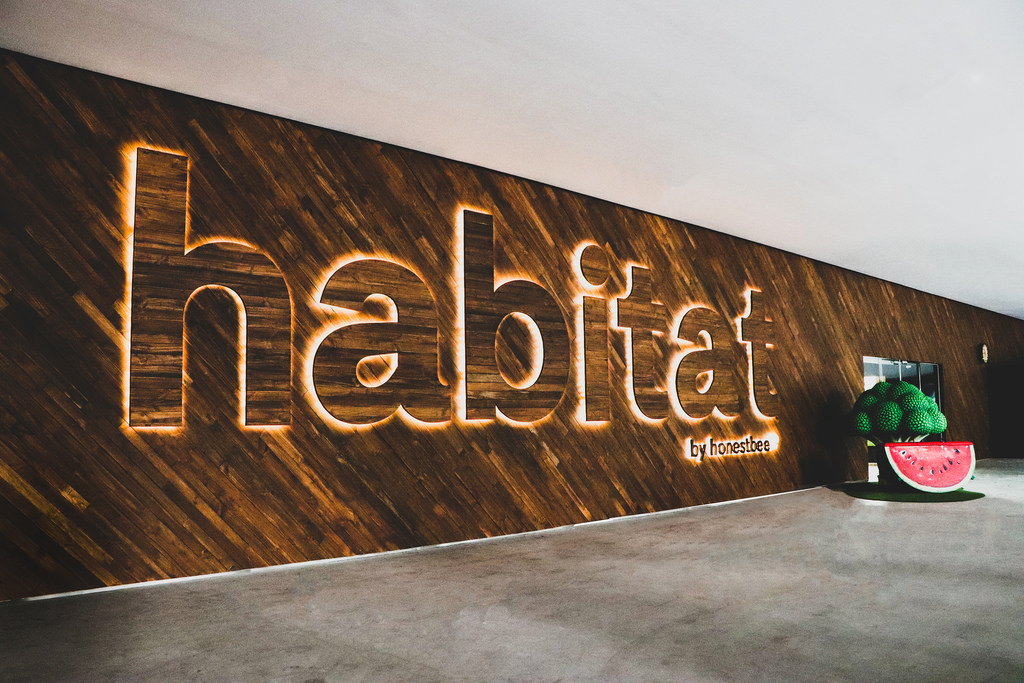
    Online grocery service Honestbee has opened a retail space which merges cashless grocery store with a restaurant and a testbed for new retail technologies.

    Habitat by Honestbee in Pasir Panjang is billed as “the world’s first tech-integrated multi-sensory grocery and dining destination of its kind”. While Chinese online behemoth Alibaba may well challenge that claim, Habitat is certainly a revolution in Southeast Asia, boasting a cashless checkout experience and a fully automated robotic collection point, called RoboCollect.

    Spanning 60,000sqft, Habitat by Honestbee is a full supermarket with more than 20,000 Asian and global foods and ingredients as well as daily essentials, which can be purchased both online and offline.

    The store also features 15 unique food and beverage concepts ranging from grain bowls and grilled wagyu meats to Japanese souffle pancakes and homemade kombuchas, all available to eat on site or take away.

    More features are under development, including an invitation-only private dining space, an oyster bar, an entire section devoted to charcuterie and cheese, and a hidden bar.

    Honestbee says the new space heralds the arrival of NewGen Retail, a concept defined as “innovation in retail technology that inspires more human engagement for a multi-sensory experience” and not hugely dissimilar to Alibaba’s New Retail concept.

    For purchases of 10 items or less, shoppers can use the Scan & Go function on the Honestbee app, so they can skip the checkout line and get their items on the spot. Those with bigger shopping lists can drop off their trolleys at the convenient AutoCheckout and Habitat will take care of the scanning and packing, with bags ready for collection at the RoboCollect Stations.

    Honestbee says customer orders can be processed between checkout and collection in as little as five minutes.

    Online grocery orders are fulfilled by ‘Shopper Bees’ (Honestbee staff) using overhead conveyor belts for greater productivity before ‘Driver Bees’ pick them up for delivery.

    Purchases can be paid for securely using BeePay, Honestbee’s own digital wallet, either online or offline.

    “Habitat by Honestbee is a beautiful, physical extension of the honestbee brand we all love,” said VP and MD at Habitat by Honestbee, Pauline Png.

    “With its launch, we now provide tech-enabled convenience, value and quality through food in both the online and offline experience. It is a unique combination of a full supermarket, speciality grocer, dining and interactive lifestyle destination. In this innovative space, one can expect a multi-sensorial food experience that nourishes, educates and inspires. We designed it so that customers can get their groceries and meals efficiently but also linger and enjoy the experience.”

    View the full gallery of the newest Habitat store below (16 images) :

  • The 15 hottest online luxury brands in 2018

    The 15 hottest online luxury brands in 2018

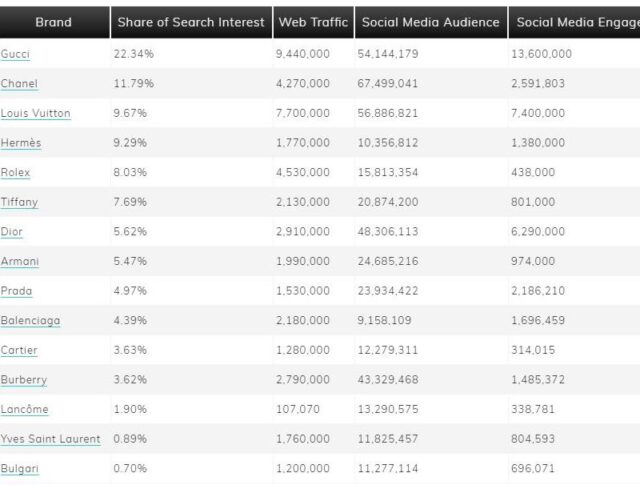
    Some brands have embraced digital better than others, as evidenced by their popularity online. According to a new report by Luxe Digital, the top 15 most popular luxury brands online are particularly successful at building online awareness but also at forging deep emotional connections with their audience—particularly young affluent consumers.

    The ranking provides a good gauge of the sales potential of the brands for this coming year-end.

    It’s also a great source of inspiration and best practices for luxury leaders. By exploring how the top high-end brands are performing online, one can understand the reasons for their popularity and how their approach could be replicated.

    Gucci is leading the 2018 ranking, followed by French houses Chanel and Louis Vuitton.

    Interestingly, it is Italian fashion brand Balenciaga that saw the most impressive growth thanks to its fresh take on luxury streetwear.

    The Direct-to-Consumer approach emerges as a winning strategy for luxury

    The ranking is largely dominated by fashion brands, although Rolex and Tiffany made it to the top 10.

    It is worth noticing that Lancôme is the only beauty brand to appear in the list, finishing at the 13th position.

    A noticeable trend is the Direct-to-Consumer retail model which is increasingly more adopted by luxury brands. The DTC approach emerges as a great way for high-end brands to control their brand identity online and own their customers’ data.

    Influencer marketing is also playing a key role in 2018. Virtually every brand in the top 15 has collaborated with social media influencers to shape the conversations online and drive brand discovery amongst untapped audiences.

    For luxury fashion specifically, high-end streetwear is clearly making the buzz this year.

    Other noticeable trends for 2018 include more interest in sustainable practices and social causes. Natural cosmetics, natural and vegan beauty products, in particular, are also generating a lot of online interest.

    The rising share of affluent Millennials and Gen Z consumers

    These trends are mainly driven by the growing portion of more socially-conscious, affluent Millennials and Generation Z consumers.

    This shift in consumers’ values and preferences combined with the disruptive impact of new technologies are challenging the traditional notions of luxury.

    As the sophisticated younger generations become important luxury shoppers, modern luxury brands are evolving their offerings to appeal to their specific tastes.

    Luxury brands are also adapting their marketing strategy to offer a seamless shopping experience both online and offline in line with the younger affluent consumers’ growing expectations.

    Conscious of the essential role that new technologies play in driving their narrative, luxury leaders are finally embracing digital technologies.

    For brands, it is clear that the ability or inability to pivot to this new reality will continue to widen the gap between the successfully agile luxury brands and the slow adopters.

  • H&M lingerie line that fits Asian lauched

    H&M lingerie line that fits Asian lauched

    H&M has launched its first Asian-fit lingerie collection. The collection, now available at H&M stores with lingerie departments within Hong Kong as well as on hm.com, has been designed to impress Asian women with its comfortable fabric and skin-friendly design.

    The label’s 44-stitch superfine fibre has been used to bring a soft touch to the skin, while the wire-free feature and triangle-cup design is intended for comfort and fit for all sizes and cups, with side support for comfortable body shaping.

    Promotional materials for the collection emphasises the use of superior materials to offer a high level of skin-friendly, breathable comfort.

  • Alibaba’s Robust Ecosystem Supercharges  2018 11.11 Global Shopping Festival

    Alibaba’s Robust Ecosystem Supercharges 2018 11.11 Global Shopping Festival

    Alibaba Group Holding Limited (NYSE:BABA) today officially kicked off the 2018 11.11 Global Shopping Festival in China’s capital, promising this year’s mega-event will be the largest-ever in terms of scale and reach.

    Businesses within the Alibaba ecosystem will jointly offer hundreds of millions of consumers an enriching experience that supports their pursuit of high-quality products, entertainment and fast, reliable services. The Festival will also demonstrate the enthusiasm of consumers and brands embracing Alibaba’s New Retail strategy – the convergence of online and offline retail through technology.

    “This year marks the 10th anniversary of 11.11. On the back of China’s explosive digital transformation, the Festival’s astounding growth over the past decade has powered the steady growth of quality consumption sought by Chinese shoppers. The evolution also showcases the development of the Alibaba ecosystem over time expanding well beyond e-commerce,” said Alibaba Group CEO Daniel Zhang.

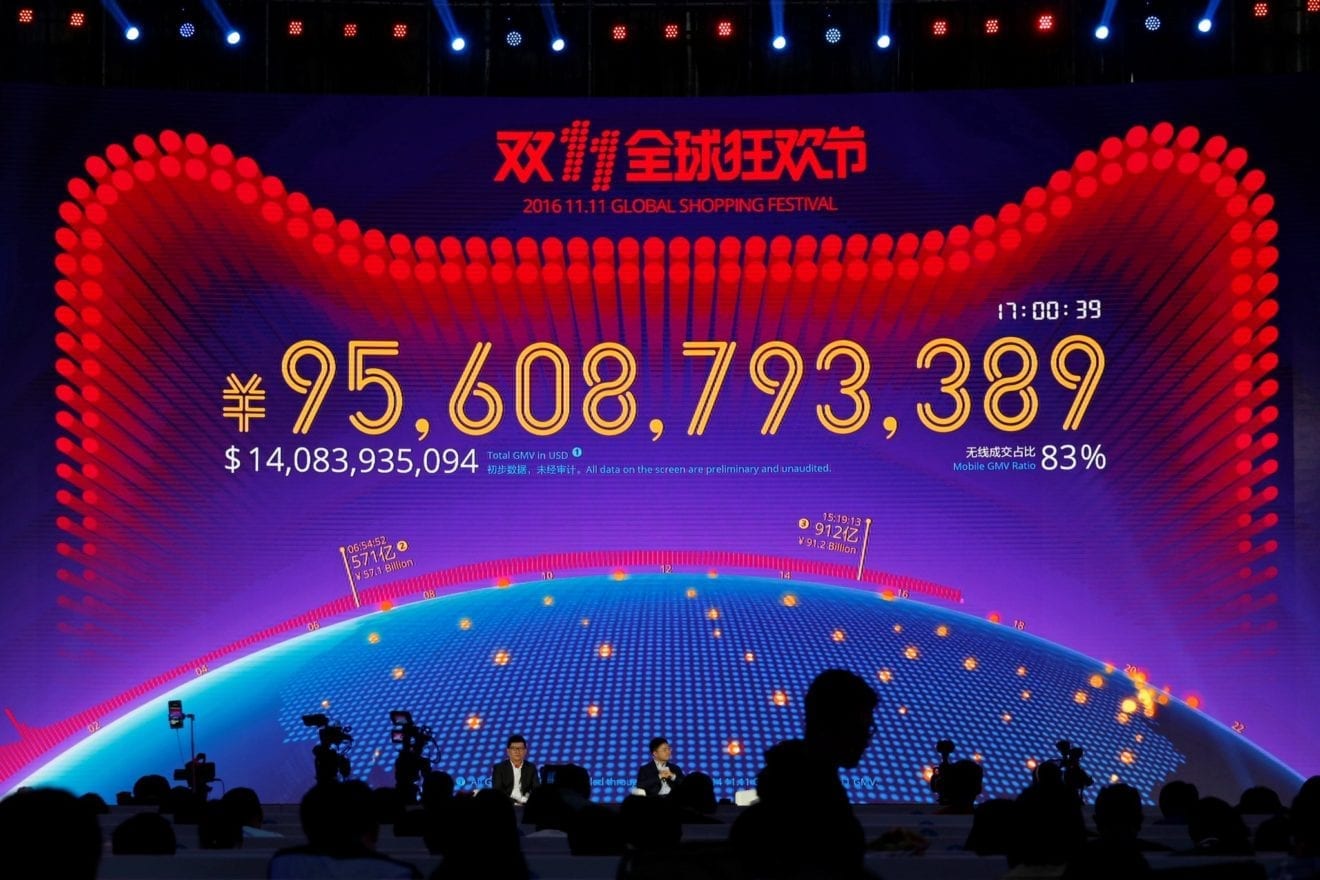
    Zhang conceived 11.11 as a concept a decade ago, turning “Single’s Day” on the Chinese calendar into the world’s largest annual shopping event. The first 11.11 in 2009 brought in US$7.8 million in gross merchandise value (GMV). Total GMV generated in 2017 was US$25.3 billion. Over the past decade, China’s number of Internet users has risen to 802 million and 98% of them are mobile1. Alibaba has captured the hearts and minds of these Chinese consumers and expects to keep leading the way in retail innovation.

    “Over the last two years, we have pioneered the concept of New Retail to accelerate the digital transformation of the offline. We are excited by the impressive results achieved to date and will continue to be the driving force innovating for merchants and customers in the coming decades. We aim to become both the number-one business partner for brands and the number-one shopping destination for consumers,” Zhang added.

    This year, 500,000 items will be available for pre-order on Tmall from October 20. Customers can enjoy additional promotional coupons on Mobile Taobao and Mobile Tmall. Specifically, the 2018 11.11 Global Shopping Festival will have the following features made possible by New Retail and interactive initiatives:

    • Brand Innovation Tmall will continue to give brands access to new digital capabilities – 180,000 brands from China and around the world will participate in this year’s celebration. 200,000 smart stores in China across the apparel, fast-moving consumer goods, beauty products, automobile and home décor industries will help boost traffic to offline and online shopping destinations. Tmall Global provides 3,700 categories of imported goods from 75 countries and regions on its platform.
    • International Consumers Tmall World, AliExpress and Lazada will bring the event to hundreds of millions of overseas users, making 11.11 a truly global event. Lazada will host its first 11.11 Shopping Festival across six countries in Singapore, Malaysia, Thailand, Indonesia, the Philippines and Vietnam, offering more engaged consumer experience and the biggest discounts of the year from LazMall and Lazada marketplace.
    • Participation of Local Services Ele.me’s on-demand platform will provide delivery services for select Starbucks stores across 11 Chinese cities, including full-service coverage in Beijing and Shanghai. In addition, 150,000 merchant partners of Koubei will offer half-price discounts on catering, beauty and hair salons and karaoke bars.
    • New Opportunities for Small Merchants 200,000 mom-and-pop stores powered by Alibaba’s Ling Shou Tong (which translates as “retail integrated”) will provide online sales promotions, along with augmented reality-based red packets that offer discounts at 3,000 “Tmall Corner Stores.” Rural Taobao will also bring coupons to its services in 800 counties across 29 provinces in China.
    • Dining and Supermarket Hema supermarket will designate 11.11 signature stores featuring a number of promotions. RT-Mart will complete the makeover of its nearly 400 stores, fully equipping them with New Retail capabilities.
    • Star-studded Entertainment Tmall Collection’s “See Now, Buy Now” Fashion Show will be broadcast live on ten platforms including Taobao, Youku, Weibo and Toutiao on October 20, starting at 6pm in China. This will provide millions of customers the opportunity to buy their favorite items on the spot and vote for their favorite looks to create a trend report. In addition, the signature countdown Gala will be held on November 10 in Shanghai’s Mercedes Benz Arena, featuring renowned stars.
  • Aber ride-hailing service hits the road in Hanoi

    Aber ride-hailing service hits the road in Hanoi

    The ride-hailing market has seen new entrants after Uber’s departure, including Vietnamese firm FastGo, GoViet – a subsidiary of Indonesia’s Go-Jek, and the latest Aber. Aber estimates it will attract 5,000 taxi drivers and 5,000-10,000 motorbike drivers in Hanoi this year. In HCMC, the company is working with 7,000 drivers serving  more than 60,000 customers. Aber general director Huynh Le Phu Phong said the company was not afraid of major competitors such as Grab because it offers a wide variety of transport services.

    The firm will offer similar rates as other competitors, but give better benefits to its drivers, he said.

    “We do not force drivers to only work for Aber. They can also work for other companies to increase their income and improve their lives,” Phong said.

    In its latest update, Aber has added new features including a navigation system and accurate positioning to each alley, village, district and province in Vietnam.

    Vietnamese engineers designed the software.

    Next year, the company will focus on expanding its services, including Aber Express for delivery services, Aber Track for freight services, Aber Business for companies and Aber Travel for travel services, Phong said.

    Aber focuses on serving individual customers to help them save money, as well as drivers, when their vehicles are vacant, he added

    Instead of having to drop off items at the post office or delivery centers, drivers will come and pick things up right at the customer’s house.

    Current market dominator Grab has expanded its service to include GrabFood and GrabCar Business, the latter targeting the corporate sector. These moves pose further challenges for local long-standing taxi firms like Mai Linh, Taxi Group and Vinasun.

  • Vietnam remains among 50 most valuable brands

    Vietnam remains among 50 most valuable brands

    Its brand value is estimated at $235 billion, up $32 billion from the previous year. It has risen two places in the list this year. The global brand valuation consultancy firm evaluates a country’s national brand on the brands based there and the economy as a whole by weighing up various socio-economic factors.

    A “strong” national brand denotes a highly attractive environment for investment, encouraging inward investment, adding value to exports, and attracting tourists and skilled migrants, it explained.

    Vietnam’s continuing rise in the list is primarily due to “Vietnam Value”, a national program to endorse products and services that meet minimum standards set out by the government, and concentrated efforts to promote economic growth by the government, it said.

    In Southeast Asia, Vietnam is only in sixth place in terms of value, below Indonesia, Singapore, the Philippines, Malaysia, and Thailand.

    The Top 10 in the world did not see much change with the U.S., China and Germany continuing to lead in terms of value.

    The U.S.’ value has shot up by 23 percent to $25.9 trillion this year as a result of falling tax rates and a more business-friendly environment despite the negative public image that President Trump may have cultivated, the report said.

    Founded in 1996, Brand Finance is the world’s leading independent branded business valuation and strategy consultancy. Headquartered in London, the firm is present in over 20 countries.

  • Surge in Hong Kong Cybercrime

    Surge in Hong Kong Cybercrime

    Hong Kong has experienced a surge in fraudulent banking websites this year. In August alone, there were 15 reports of such incidents, compared with only two cases of fake websites or phishing attempts in the same month a year ago, according to the Hong Kong Monetary Authority (HKMA). In September, seven incidents were reported, up from one a year ago.

    And the trend seems to continue, with eight cases reported in October so far. Customers of DBS, Hongkong and Shanghai Banking Corporation, as well as Dah Sing have been among the targets of the criminals. With the rise of financial technology firms and mobile banking apps, experts predict that novice mobile banking users will become prime targets.

    Digital Banks Attract Attackers

    While the use of digital banking tools is spreading quickly, the technology is also attracting the attention of cybercriminals, said cybersecurity specialist Securelist in a report earlier this year. «We are sure that the world of cybercrime will see increasing attacks against this type of banks and their customers,» Securelist said in its report

    Fraudsters have long tried to trick users to visit fake bank website via e-mail messages pretending to be from the bank. On these fake websites, they try to trick account holders into revealing their access credentials. On mobile devices, the connection with the bank is typically via an application, rather than a website.

    Tricks Of Criminals

    Banks’ usage of chat applications increases the possibility that criminals could try impersonating the bank in social media chats and try to trick users into downloading and installing an «updated» version of the bank’s app. In reality, such an app would be malicious and could help attackers steal credentials from the phone.

    «Other social engineering scams have emerged which try and trick the genuine user into revealing the authentication code for their chat app and hence lose control of the account. Even if this is only temporary, it may allow enough time for a fraud to be perpetrated,» Jackson said in an interview.

    Attacks Focused On Smaller Vendors

    Experts predicts there could be more attacks on fintechs or payment providers going forward. This is due to lower investments into cybersecurity versus traditional banks, and criminals’ evolving technological skills.

    «Large financial organizations invest considerable resources in cybersecurity, thus the penetration of their infrastructure is not an easy task. However, a threat vector that is likely to be actively used by cybercriminals in the coming year is attacks on software vendors supplying financial organizations,» Securelist said. Most of these vendors have a lower level of protection compared with the financial organizations themselves.

    Attacks Via Software

    For the coming year, the cybersecurity experts expect criminals to stage attacks via software for the finance business, including such for ATMs and PoS terminals. «A few months ago we registered the first attempts of this kind, when attackers embedded a malicious module into a firmware installation file, and placed it on the official website of one of the American ATM software vendors,» Securelist wrote.

    Based on a 2017 study by Accenture, the financial services industry posted annual costs of nearly $18.3 million per firm from cyber attacks.

  • Vietnam fruits, vegetables struggle to enter overseas market

    Vietnam fruits, vegetables struggle to enter overseas market

    Dragon fruit, which accounts for 40 percent of Vietnam’s fruit and vegetable exports in value, is facing the biggest challenge as China, which used to buy 80-90 percent of Vietnam’s dragon fruit mainly through border gates, has tightened the import through the channel. The importer has also improved standards on quarantine and food safety and origin tracking to Vietnamese fruits, including dragon fruits.

    Facing the difficulties, many traders have recently stopped buying the fruit in some major growing regions.

    As a result, prices of the fruit have plummeted. Recently farmers in Binh Thuan Province told VnExpress that prices are down 90 percent to VND1,500-2,000 ($0.06-0.08) per kilogram.

    Vietnam’s dragon fruit exports might see more pain since China may reduce purchases after expanding its own cultivation, warned by industry insiders. Saigon Giai Phong Online quoted Vietnam’s Plant Protection Department as saying China has planted dragon fruit on 20,000 hectares in places such as Guangxi and Hainan. The department said this area would increase to 30,000 hectares next year. Chili, which accounts for a third of Vietnam’s total vegetable export value, is struggling in the Malaysian market. Malaysia is among the three largest buyers of chili from Vietnam along with South Korea and China.

    But it announced to cease licensing the import of chili from Vietnam from September 14 after detecting excessive residues of plant protection products in chili shipments.

    Together with dragon fruits and chilli, papaya has struggled to enter overseas market.

    The South Korean Ministry of Food and Drug Safety has informed Vietnam’s Plant Protection Department that it discovered genetically modified papaya in shipments from Vietnam.

    South Korea does not allow entry of genetically modified organism (GMO) products.

    A spokesperson for a large papaya exporter in southern Long An Province said that farmers knew about this policy, and some GMO fruits went into the consignments despite their efforts to prevent it.

    It is working with farmers to grow non-GMO fruits, the spokesperson added.

    Nguyen Quoc Vong, a researcher in the GMO fruit industry, said the trend in developed countries is to consume non-GMO products.

    He warned that Vietnam would be shut out of high-end markets if it exports GMO products since food safety standards around the world are rising.

    “Our competitors like Thailand do not grow GMO produce, so they will have an advantage in high-end markets where we cannot compete,” local newspaper Thanh Nien reported him as saying.

    Vietnam earned $3 billion from fruit and vegetable exports in the first nine months of this year, up 15.2 percent over the same period last year, according to the General Statistics Office.

  • Porsche Mission E Cross Turismo To Go Into Series Production

    Porsche Mission E Cross Turismo To Go Into Series Production

    It was at the 2018 Geneva Motor Show, that Porsche first unveiled the Mission E Cross Turismo concept. Back then, we’d told you that the car looked great and did not have that concept feel to it. It’s very close to something you’d see on actual roads and it was as production ready as it gets. However, Porsche still called it a concept as the Supervisory board of the company had not given the green light for the project. But now the company has said that the Supervisory Board of Porsche AG gave the green light for series production of the concept study Mission E Cross Turismo. The sports car manufacturer will create 300 additional jobs at its headquarters in Zuffenhausen for production of the vehicle, which was presented at the Geneva Motor Show next year.

    The Porsche Mission E Cross Turismo is a derivative of the Taycan

    The Porsche Cross Turismo includes an emotional design with striking off-road elements as well as an innovative display and operating concept with touchscreen and eye-tracking control. It measures in just under 5 metres and has all-wheel drive and can also be charged by induction, at a charging station or using the Porsche home energy storage system.

    The four-door Cross Turismo has an 800-volt architecture and is prepared for connection to the fast charging network. It has a system output of 600 horses and a range of 500 km (NEDC). This enables the Mission E Cross Turismo to accelerate to 100 km/h in less than 3.5 seconds and to reach a speed of 200 km/h in under 12 seconds. The vehicle is a derivative of the Taycan which is the first purely electric Porsche that will be launched in the market in 2019. Porsche plans to invest more than six billion euros in electromobility by 2022.

  • Chatbots: Convenience vs Risks

    Chatbots: Convenience vs Risks

    Banks increasingly are introducing popular messaging platforms to reach their mobile-savvy clients – DBS for instance launched its banking services on WhatsApp and WeChat in September while Citibank added its Facebook messenger banking chatbot a year ago.

    «Banks are caught between a rock and a hard place. The reality is that customers are familiar with these everyday communication tools and would be reluctant to accept bespoke communication apps developed by the banks themselves,» said Paul Jackson, managing director, APAC leader of Cyber Risk at Kroll.

    Banks have little choice but to rely on popular applications, because they help attract customers already familiar with their use. However, the convenience of such communication channels paves the way for fraud, impersonation and even hijacking of WhatsApp/WeChat accounts via social engineering.

    Top Security Risks

    In a 2018 survey undertaken by Synopsys, 36 percent of respondents indicated that customer-facing web applications remain the top security risk to businesses in Asia-Pacific. Last month’s admission by Facebook that a security breach had affected more than 50 million accounts came as a timely reminder that even tech giants aren’t spared.

    Whilst the underlying technology powering chat platforms tend to be secure, criminals are looking closely at how the communication channels work in practice and what information is potentially being transmitted via them, Jackson said.

    Criminal Ingenuity

    Historically, fraudsters have long tried to trick users to visit fake bank website via e-mail messages pretending to be from the bank. In these fake websites, they try to trick account holders into revealing their access credentials. On mobile devices, the connection with the bank is typically via an App rather than a website.

    Banks’ usage of chat Apps raises the possibility that criminals could try impersonating the bank in social media chats and try to trick users into downloading and installing an «updated» version of the bank’s app  but in actuality, such an app would be malicious and could help attackers steal credentials from the phone.

    «Other social engineering scams have emerged which try and trick the genuine user into revealing the authentication code for their chat app (usually sent via SMS) and hence lose control of the account. Even if this is only temporary, it may allow enough time for a fraud to be perpetrated,» Jackson explained.

    A Game of Cat and Mouse

    The introduction of two factor authentication a few years ago was seen as the solution to impersonation in the online banking website world. However, attackers then developed more advanced ways to steal both of the two-factor credentials.

    Other advanced attacks involve creating a layer in the victim’s computer to mask the identity and activities of the impersonator, and make it appear that any transactions were actually originating from the victim’s computer.

    «As a result, security is a constant cat and mouse game that is pitted against the need for customer convenience. Time will tell whether there will be any successful campaigns to process-hack these new initiatives by the banks,» said Jackson.

    Please Confirm

    Following the launch of its banking services via chat, DBS will progressively introduce investment-related transactions in 2019. Hence, it has put in place safeguards to prevent erroneous keying of instructions.

    «Relationship managers and assistant relationship managers will confirm each request with their client before placing an order,» Evy Theunis, head of digital wealth at DBS Private Bank, told.

    While clients and their relationship managers may delete or recall a message on WhatsApp and WeChat on their cellphones, all messages are still archived by the banks for compliance purposes.

    User Beware

    «Anything that makes our lives easier needs to be encouraged but this should come hand in hand with education and awareness. For example, users of legitimate platforms will never be redirected to websites which ask them to confirm their credentials,» said Jackson.

    Neither should users ever be asked to reveal personal information via chat as a means of verification, or go to another site to download an updated version of the app, he added.

    Other Precautions

    Adding the bank’s official verified address in the chat application contacts inside the phone will also help to ensure that the customer knows that communications are with the authorised source and not via a fake forwarded message.

    But this then means that customers must carefully guard access to the device – if physical access can be gained, then the official contact details could be changed to a fraudulent one.

  • Mahindra Marazzo MPV Gets Apple CarPlay

    Mahindra Marazzo MPV Gets Apple CarPlay

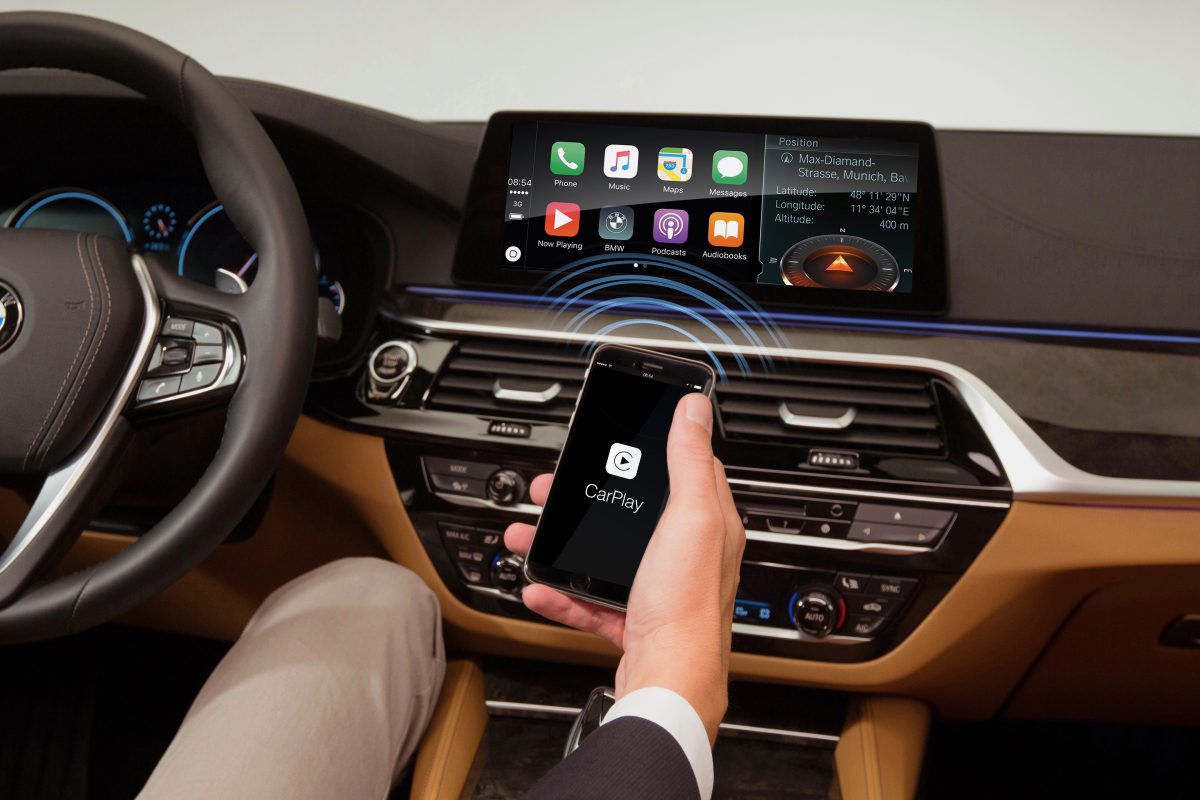
    Mahindra’s latest launch- the Marazzo will now be equipped with Apple CarPlay. The MPV was launched in India on September 3 and it’s infotainment system was Android Auto compatible. The UV maker has now confirmed to carandbike of having received the licence for Apple CarPlay. The company has sold over 4500 units of the Marazzo, which were rolled out of the Nashik plant. All these units did not have Apple Carplay but the company has informed us that all the models sold will be updated with the Apple CarPlay in their schedule service, without any additional cost.

    The timing for the license couldn’t have come at a better time as Mahindra is all set to launch the Y400 in the country in November this year and well, the SUV of course will get both Apple CarPlay and Android Auto now.

    The 7-inch touchscreen infotainment system in the Mahindra Marazzo is claimed to be the most updated unit in Mahindra’s product portfolio boasting of some cool features, for example configurable home screen. Buyers can add personalized images on the infotainment system’s internal memory via the USB socket and select it as the background wallpaper. Moreover, Mahindra has also been innovative with the creature comfort features in the Marazzo.

    The new Mahindra Marazzo is powered by a new 1.5-litre four-cylinder diesel engine that has been tuned to offer a maximum of 121 bhp and develops a peak torque of 300 Nm. The engine only comes mated to a 6-speed manual gearbox, and right now, there is no automatic transmission on offer. Mahindra is also working on the petrol engine and an automatic transmission for the Marazzo and could introduce the same when the BS VI emission norms come into effect from April 2020.