Author: Mei Ling Tan

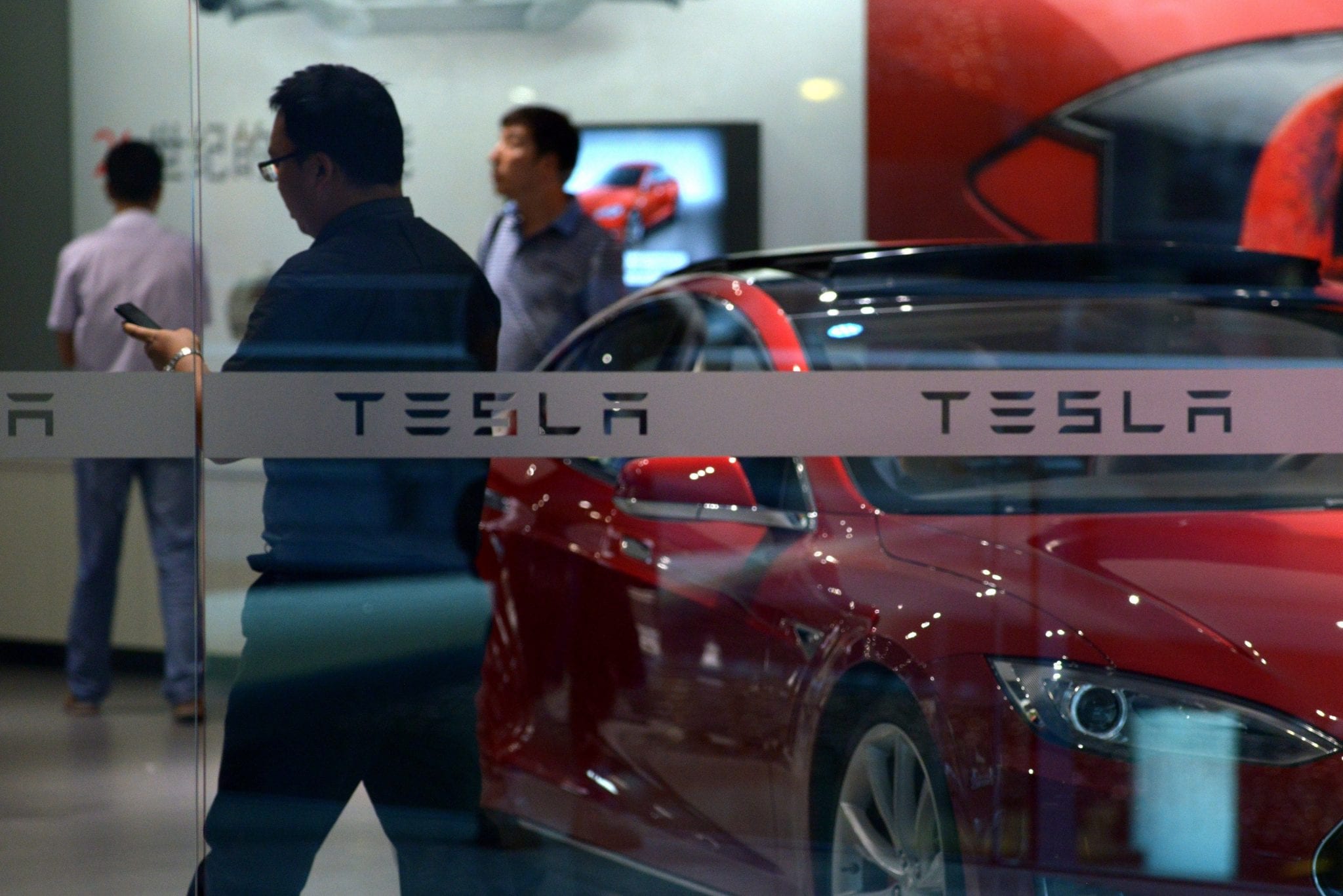
  • Tesla Chief Elon Musk Unveils a $35,000 Model 3

    Tesla Chief Elon Musk Unveils a $35,000 Model 3

    Tesla chief Elon Musk said late Thursday that the automaker was preparing to sell the cheapest version yet of its newest electric car, the Model 3, signaling an attempt to get back to business after months of controversy. Musk said on Twitter that the sedan, with its “midrange” battery pack, would cost $35,000, bringing it in line with the mass-market model he had promised for years would revolutionize the availability of electric cars.

    But that price takes into account federal and state tax rebates. Before the discounts, it will sell for $45,000 – though the company says buyers should think of the car as far cheaper, because of the money they’ll save on gas.

    Musk sparked a frenzy of customer reservations in 2016 when he said the Model 3 would cost $35,000 before incentives, such as a $7,500 federal tax credit – a price point that would help Tesla expand beyond its traditional range of well-heeled buyers. That model, however, remains delayed until 2019, the company said Thursday.

    The surprise announcement, delivered via tweet to Musk’s 23 million followers, comes as Tesla seeks to steer attention away from a chaotic period in which Musk battled with critics, smoked marijuana during an interview and pledged that he had the money to take Tesla private – a promise for which he was sued by the Securities and Exchange Commission, and which he recently settled.

    Musk agreed as part of the settlement to step down as the company’s chairman for three years, opening a prominent void for which the company has yet to fill. But the announcement again highlights Musk’s enduring role as the company’s chief executive, designer and hype man.

    Musk said Thursday the car would be sold via Tesla’s “super simple new order page,” which estimated that delivery for its midrange model would take six to 10 weeks. That model, the company said, could go 260 miles on a single charge.

    The only available Model 3 for the last year has been a long-range version, offered mostly at luxury prices. But Musk said a “truer cost of ownership” for the midrange version would be about $31,000, his estimate for discounting the cost of gas.

    The move could ratchet up the pressure on Tesla’s already-straining California factory and its nationwide system built to deliver cars to customers, which Musk described last month as mired in “delivery logistics hell.”

    “As Model 3 production and sales continue to grow rapidly, we’ve achieved a steady volume in manufacturing capacity, allowing us to diversify our product offering to even more customers,” a Tesla spokesperson said in a statement.

    The move could frustrate Tesla fans who put down a $1,000 deposit two years ago for what they believed would be a sleek electric sedan costing about $27,500 after tax incentives.

    Tesla says the “standard battery” version will not be available for another 4 to 6 months. Musk has said the company, a cash-burning giant that faces billions of dollars in impending debts, must push out more profitable and expensive versions first: Shipping the cheapest “Model 3 right away (would) cause Tesla to lose money & die,” he tweeted in May.
  • DHL Express Malta to expand capabilities on next-day deliveries

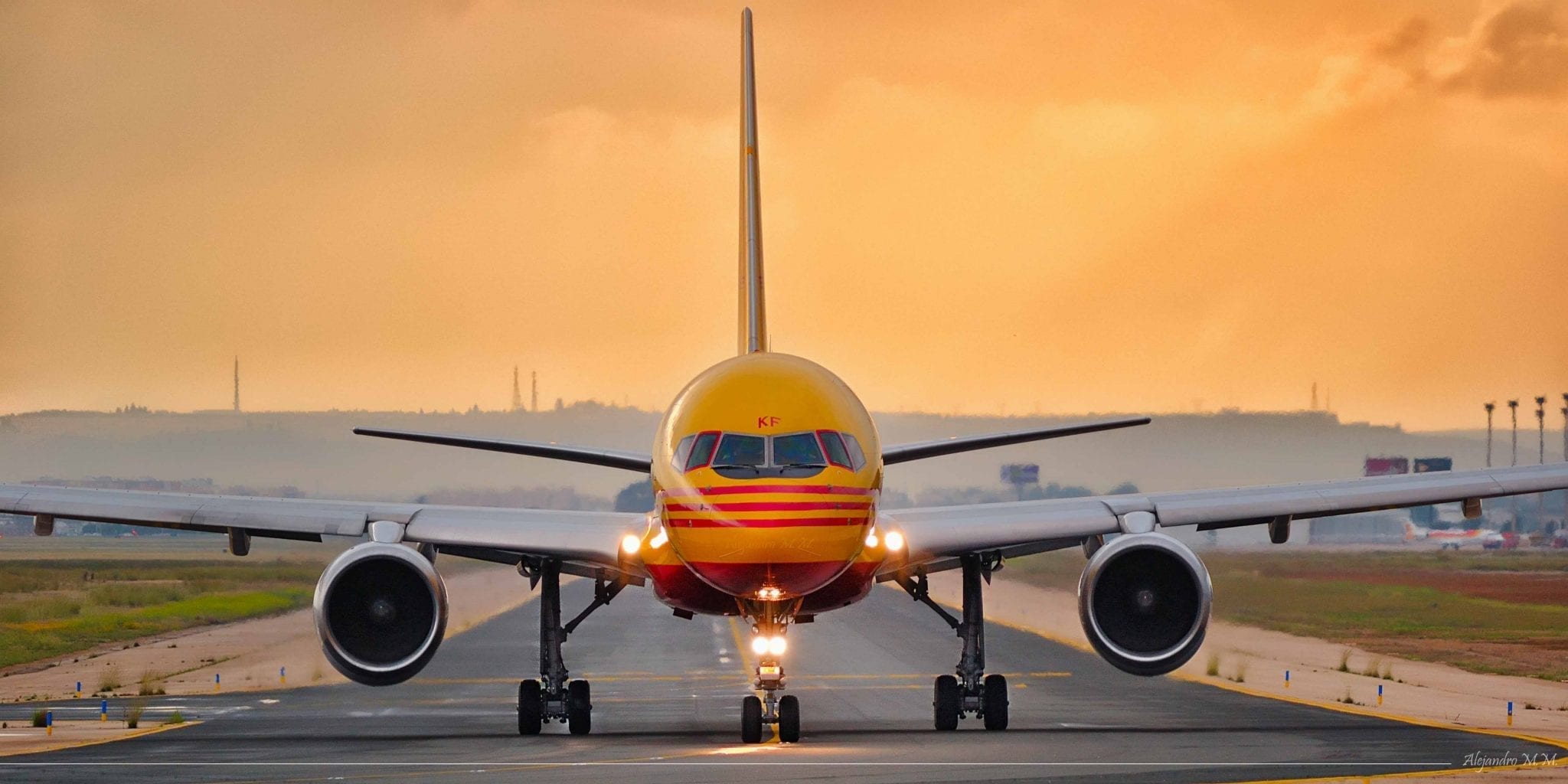
    DHL Express Malta to expand capabilities on next-day deliveries

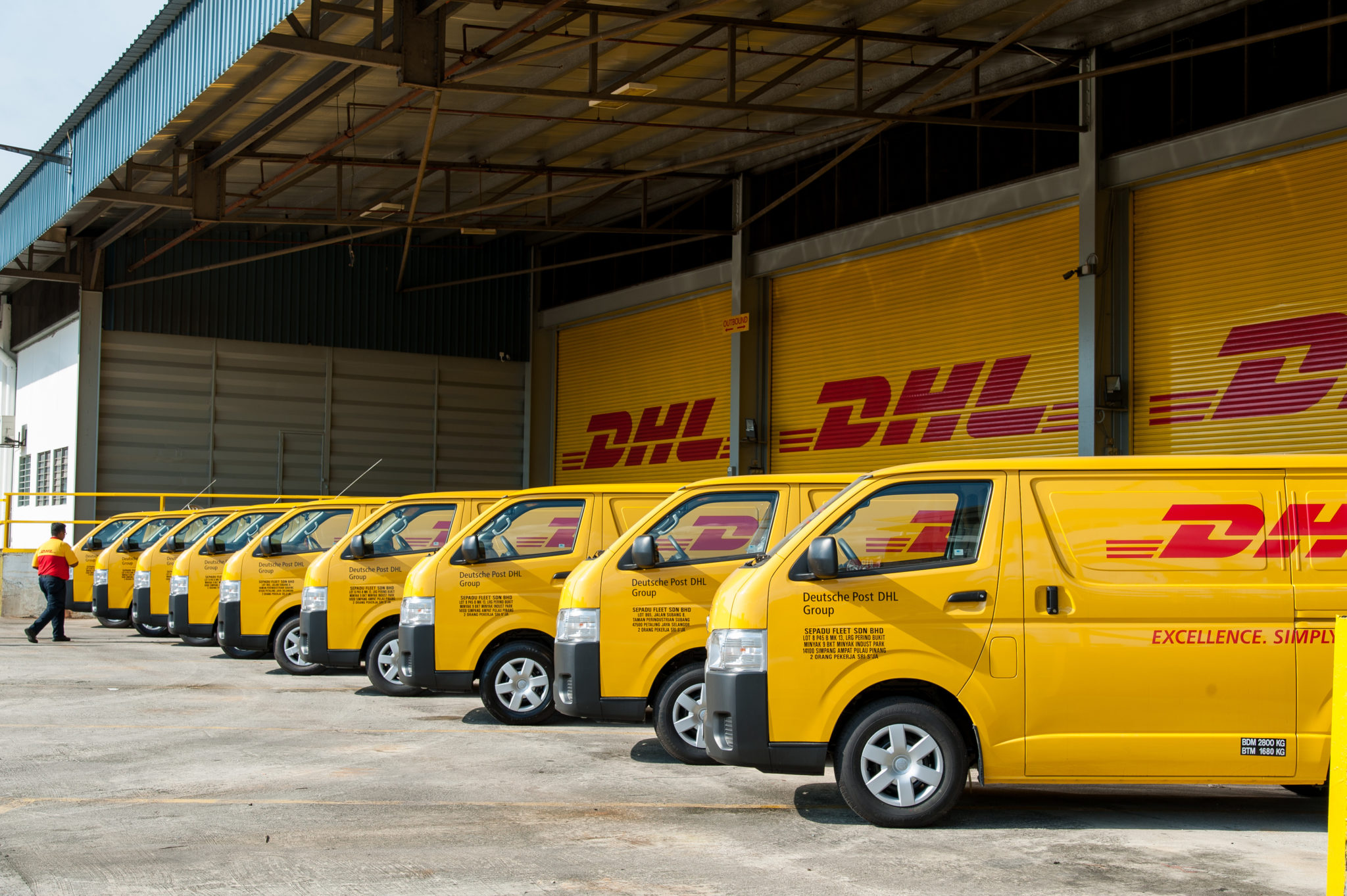
    DHL Express, the world’s leading international express services provider, has taken a strategic decision to focus the activities of its Malta operation solely on Time Definite International (express) deliveries, reinforcing its commitment to ensure its parcels and documents are delivered on time.

    “Our express business is growing, and we want to focus on the cross-border e-commerce opportunities,” Charles Schiavone, Country Manager of DHL Express, said. “We will dedicate our resources on Express Services and achieve growth through quality.”

    As the company gears up for the forthcoming seasonal peak, Schiavone is keen to ensure the amount of successfully delivered shipments grows even higher. This service promise is backed by a further strengthening of the On Demand Delivery infrastructure through strategically placed automated DHL Parcel Lockers that are highly popular with its clients and can be accessed 24/7.

    DHL Express Malta has plans for five new Parcel Lockers in localities around Malta, including Mellieha, Zabbar, Zebbug and Zejtun, taking the total to 13. Additionally, another three add-on units will increase capacity to existing lockers. This will ensure that customers have a broader range to choose their preferred hi-tech unit.

    “We have seen our shipments growing by 20 per cent in the first six months of this year and we expect a similar increase in inward e-commerce business towards the end of the year,” Schiavone said.

    DHL Express Malta also plans to double the size of its facility in Luqa by the end of next year.

  • Citi Hires UBS Banker For Taiwan

    Citi Hires UBS Banker For Taiwan

    Citi Private Bank appointed Sally Yeh as global market manager for Taiwan, who joins immediately. She joins the American bank from UBS, where she most recently led a team of offshore bankers working with entrepreneurs from Taiwan.

    She will be responsible for growing Citi’s with ultra-high net worth individuals from Taiwan and manages teams based in both Hong Kong and Singapore. Yeh, who is based in Hong Kong, reports to Rudolf Hitsch, Citi’s head of north Asia.

    Veteran Banker

    Yeh brings with her over 20 years of experience in various financial fields focused on the needs of business owners and investors from Taiwan.

    She started her career in Taiwan in asset management, before moving on to work in investment banking for eight years. In 2009, she joined UBS as a private banker  in Hong Kong for the ultra-high net worth segment.

  • Honda Active Has Crossed The 2 Crore Sales Milestone

    Honda Active Has Crossed The 2 Crore Sales Milestone

    Honda Motorcycle and Scooter India (HMSI) has announced that the company’s top-selling two-wheeler, the Honda Activa, has recently breached the 2 crore sales mark in India. Evidently, the popular Honda Active is now the first scooter in the country to cross this huge sales milestone. Interestingly enough, it took the Honda 15 years to breach first one crore sales mark, while the next one crore units were sold in just 3 years, which is four times faster than the time taken to acquire the first 1 crore customers.

    Minoru Kato, President & CEO, Honda Motorcycle & Scooter India Pvt. Ltd. today announced this feat and expressed his gratitude to the 2 crore happy Indian customers, and said “Over 18 years and 5 generations, Honda 2Wheelers India continuously added value to exceed Customers expectations & making Activa the most preferred choice of Indian 2wheeler buyers. We are delighted that Activa partnered over 2 crore Indian families on the move in realizing their dreams. As India’s Love for Activa grows, we remain committed to take on new challenges and bring joy to our customers.”

    2018 Honda Activa 5G was launched at the Auto Expo

    The Honda Active was first launched in the year 2001, and since then we have seen five generations of the scooter in India. The fifth-gen model, the Honda Activa 5G, was launched this year in February, at the 2018 Auto Expo. The Activa was truly a ground-breaking product from the Japanese two-wheeler manufacturer and it has been the country’s top-selling two-wheeler for quite some time now. In fact, in 2017 the Activa becomes not just India’s, but the World’s largest selling two-wheeler.

    The current-generation model – Honda Activa 5G, is powered by a 109 cc, single-cylinder engine which puts out 8 bhp at 7,500 rpm and 9 Nm of peak torque at 5,500 rpm. No other scooter on sale in India has been able to come close to the Activa’s sales success in its segment. In addition to features like Honda’s Combi-break system and HSE technology, the new Activa also comes with a semi-digital instrument cluster with the display showing information like additional service due indicator and ECO options. The scooter also gets a 4-in-1 hook with the seat opener switch like the Grazia and a retractable rear hook.

  • Vietcombank files for private issue of 360 million shares

    Vietcombank files for private issue of 360 million shares

    The commission (SSC) said the country’s third largest bank by assets proposes to make a private issue of 360 million shares, equivalent to 10 percent of its charter capital. The lender plans to sell nearly 54 million shares to its strategic partner, Japan’s Mizuho Bank, to ensure it retains its 15 percent stake post dilution. It will sell the remaining 306 million shares, or 7.73 percent of its charter capital, to other undisclosed investors. The bank has not disclosed the issue price either. Its shares closed at VND58,000 ($2.5) Friday on the HCMC market.

    The State Bank of Vietnam recently gave Vietcombank approval to increase its charter capital by 10 percent to VND39.58 trillion ($1.69 billion).

    The lender has also received approval from its shareholders to make the private placement. Vietcombank and other top lenders, including BIDV and Vietinbank, have been struggling to increase their capital to meet international capital adequacy norms.

    The second Basel Accords, or Basel II, prescribe minimum capital adequacy of 8 percent of risk-weighted assets for all financial institutions to cover operational risks. In 2016 Vietcombank signed a deal with Singapore sovereign wealth fund GIC Private Limited to sell a 7.73 percent stake. The deal has yet to be consummated, with the bank’s chairman, Nghiem Xuan Thanh, saying they have been unable to agree on a price.

    As a state-owned bank, Vietcombank’s issue of new shares must not be at a price lower than their current market price or a minimum value set by the government.

    However, the price offered by GIC did not meet this requirement.

    If the private issuance of VND3.6 trillion ($156.5 million) is successful, Vietcombank will have the highest chartered capital in the industry of nearly VND40 trillion ($1.74 billion).

  • DHL looks to pilot driverless trucks

    DHL looks to pilot driverless trucks

    A driverless car on Indian roads may still be a distant dream, but companies are actively looking at ways to use other autonomous vehicles like tractors, buses, trucks, and even choppers. German logistics giant DHL, for instance, feels driverless trucks can halve logistics costs and improve customer service.

    “In the last mile, on the line haul itself, the driverless technologies that are being piloted in Germany, we believe, have the potential to reduce line haul costs by 50 per cent,” Malcolm Monteiro, CEO, DHL eCommerce India told.

    About 65 per cent of logistics movements in India happen by road and about 85 per cent of these are in the unorganised sector; typically, a driver takes a truck for a long distance, and has to make stops for rest and food, which reduces the efficiency of truck use.

    “There’s a tremendous shortage of skilled drivers. We’re looking to see whether these vehicles can ply driverless in line haul on the last mile. If that happens, it brings in a lot of reliability into the system, besides reducing cost. Then we’ll probably not have to work on a hub-and-spoke model; we can even work point to point. So the entire business models could be looked at afresh with these technologies,” Monteiro said.

    Govt ‘favourable’ to idea

    Monteiro said the initial discussions with the Indian government over driverless technologies have been positive. “The government is favourable in terms of looking into it because it does realise there is a tremendous shortage of skilled drivers. So it will look at any technology to make sure the demand side is addressed. But we don’t have a concrete timeline. The intent is there, there’s ongoing discussion,” he added.

    Safety aspects

    But Moteiro said the company will test the safety aspects of driverless technologies in Germany before beginning pilots in India to ensure there is no scepticism about the technology here.

    “If we get this to work, it might look at it, pilot it. The intent is there, there’s ongoing discussion,” said Monteiro.

    DHL, however, is taking it one step at a time. “For a vehicle to be autonomous, driven fully, one of the first things that needs to happen is the electrification; we have a concrete target for electrification. And for autonomy to happen, we need everything electric. So, we are really focussing more of our efforts to electrify all our vehicles as a first step,” said Pang Mei Yee, Vice-President, Head of Innovation, Asia Pacific, Customer Solutions & Innovation, DHL.

    Yee feels these technologies can make the existing trucks a lot safer and more efficient even as the company prepares itself for a fully autonomous future.

    “Our smart trucks are a fantastic example where we are introducing a lot of optimisation efforts, notification to drivers for their behaviours. There are sensors that allow drivers to get reminded when they are eating while driving or when they are dozing off. So, progressively you’ll see intelligence built into the truck. Full autonomous vehicles are still some time off,” Yee said.

  • New Hyundai Santro Bookings Cross 14,000 Units

    New Hyundai Santro Bookings Cross 14,000 Units

    The Hyundai Santro is back with a bang. And as if to proclaim that this nameplate still commands the kind of strength it used to, the small car has already garnered over 14,000 bookings. Sources have shared with carandbike that the small car has notched up 14,208 bookings within the first 9 days of pre-bookings having been opened for a token of ₹ 11,000, on October 10 2018. This is even though the variants and prices are not known, and customers have shown a preference for the top spec (Asta) manual variant followed by the top spec (Sportz) AMT version.

    These are pan-India bookings, but sources have shared with carandbike that a large chunk of the bookings are from the southern states, with Tamil Nadu, Andhra Pradesh, Telengana, Karnataka and Kerala accounting for just under half the total bookings so far. The above figure does not include bookings taken on Dussehra (celebrated on October 18 in Western India, October 19 in North India), and so the overall number is expected to shoot up with Dussehra bookings and then more so over this weekend too. Bookings are only open online, and not at dealerships since there is no car in showrooms as yet that people can see. But a number of dealers have shared with carandbike that many potential customers have been visiting their showrooms, and then making the bookings online with their help.

    The Hyundai Santro has bagged over 14,000 bookings in just 9 days

    Hyundai had opened online pre-bookings for the Santro the day after it unveiled the car to media at its Chennai plant. At the time, the Hyundai India MD, YK Koo had also announced a price protection for the first 50,000 customers. and had pretty much guaranteed that the prices announced at launch will be hiked soon after. At that preview we had the chance to see and drive the car, and have told you plenty about it. What we have been unable to do is share our pictures and videos. And while that remains embargoed until launch day – i.e. October 23 2018 – a lot of leaked pictures have already emerged that show the car’s exterior and interior in fairly good detail.

    The 2018 Hyundai Santro will get a 6.5-inch touchscreen infotainment system

    We know there will be a base version – most likely the Era variant, followed by the Magna variant, the fairly well-loaded Sportz trim and the top spec Asta. All variants will sport a driver-side airbag and ABS (anti-lock braking) as standard equipment. The Asta will have dual airbags standard. The Sportz will also get the 7-inch touchscreen with Apple CarPlay, Android Auto, MirrorLink and Voice Commands. The car’s cabin will be finished in a dual-tone palette of beige and black. On the outside, buyers will have 7 colours to choose from, though only the green will get a special interior package in its Asta trim.

    Under the hood, the new Hyundai Santro features a 1.1-litre four-cylinder petrol engine that comes from the company’s Epsilon engine family. The motor is capable of churning out a maximum of 68 bhp and develop a peak torque of 99 Nm, and Hyundai says that it’s already BS-VI ready. Additionally, the 2018 Santro will also come with a factory fitted CNG kit, which can hold up to 8 kg of gas, and offer a reduced power output of 58 bhp, while developing the same 99 Nm of peak torque. Transmission duties are taken care of by a 5-speed manual gearbox in both the versions, however, the petrol trim also gets an optional 5-speed automated manual transmission (AMT) unit. The AMT unit is developed by Hyundai in-house and uses an electric actuator instead of a hydraulic, which is controlled by a separate electric unit. The petrol engine offers a mileage of 20.3 kmpl, while the fuel efficiency of the CNG version is yet to be revealed.

  • HSBC Appoints New Chairman for Singapore

    HSBC Appoints New Chairman for Singapore

    HSBC Singapore appointed Mukhtar Hussain as chairman effective this week, the company said in a statement. The local subsidiary of HSBC  includes the retail banking and wealth management business in the city-state. It was formed when the bank incorporated its retail operations in May 2016.

    «Mukhtar’s presence, experience and counsel will go a long way to support our three-year growth plans – not just for retail banking – but across all of our business lines,» said Tony Cripps, chief executive officer of HSBC Singapore.

    Regional Knowledge

    On the consumer banking side, HSBC will tap on Mukhtar’s regional knowledge to provide oversight of the bank’s strategy to capture the personal wealth that is flowing from Asean markets into Singapore.

    «On the institutional side, his role in spearheading HSBC’s regional activity in support of BRI will be invaluable in advising Singapore on how it can further position itself as a strategic partner of this multi-decade investment programme,» said Cripps.

  • Shopee Sellers in China to use DHL to Delivery across Thailand

    Shopee Sellers in China to use DHL to Delivery across Thailand

    DHL eCommerce, a division of logistics company, Deutsche Post DHL Group (DPDHL), has announced a partnership in China with Shopee, a leading e-commerce platform in Southeast Asia and Taiwan. The partnership enables sellers in China to access consumers nationwide in Thailand, with an expansion of the partnership to other Southeast Asian markets in the pipeline. According to Statista, the e-commerce gross merchandise revenue in Thailand will exceed US$5 billion by 2022, making it the second largest e-commerce market in Southeast Asia.

    “Direct selling to overseas consumers has never been easier and has become a key growth driver for many businesses, with e-commerce as an easy platform to enable international expansion. With logistics as a key enabler for cross-border retailing, we want to empower our customers to tap into this huge growth opportunity,” says Zhi Zheng, Managing Director, DHL eCommerce Greater China & North Asia.

    “Over the past few years, we have witnessed extremely strong growth of B2C parcels from China, mainly powered by e-commerce. We are pleased to partner Shopee to enable Chinese sellers to easily sell and deliver in Thailand, whether it’s doorstep delivery or for consumers to collect their orders from our growing network of easily accessible ServicePoints — which is set to reach over 1,000 in Thailand by end-2018.”

    With DHL eCommerce integrated on Shopee in China, sellers can easily sell and deliver on one single platform and keep track of all shipments directly on the app.

    “In recent years, we have witnessed the rapid development of Southeast Asia’s e-commerce market, and a growing number of Chinese brands and sellers are staking a claim in this e-commerce goldmine. However, the geographical complexity of this region has created some logistical challenges. As a leading e-commerce platform in Southeast Asia, Shopee has built its Shopee Logistics Servcies (SLS), a highly efficient logistics delivery network that links China with Southeast Asia. We are delighted to work with DHL, the world’s leading logistics service provider, to grow SLS from strength to strength. Our collaboration will make Shopee the e-commerce platform of choice for cross-border sellers in China who aspire to sell into Southeast Asia,” said Jianghong Liu, Head of Shopee Cross Border eCommerce.

    Currently, Shopee’s SLS is operational in seven markets in Southeast Asia and Taiwan. With shipping costs 20% to 30% lower than typical market rates and better transit times, SLS makes cross border logistics a breeze for Chinese sellers. The collaboration between Shopee and DHL eCommerce will further enhance the capabilities of SLS. DHL will provide Shopee sellers with door-to-door logistics services, ensuring products will reach consumers in Thailand safely and quickly.

  • Ericsson posts first quarterly profit since 2016

    Ericsson posts first quarterly profit since 2016

    Corrupt business practices dating back to 2007 have led to the dismissal of 50 employees and will likely result in a “material” fine for Ericsson once the Justice Department and Securities and Exchange Commission complete their investigation into the matter, the Swedish company said Thursday.

    During an earnings call with analysts, CEO Börje Ekholm said the company found evidence of corruption during an internal investigation and reported those findings to authorities. “We don’t know how the discussions will go, but we think it is likely that some measures will be taken,” he said.

    Top executives at the company were allegedly involved in a bribery scandal in Africa, Asia, Europe and the Middle East. Ekholm said the company has declined to make provisions against the expected financial penalties because it’s unsure of the magnitude of what the ongoing investigation will uncover.

    The tempered admission of guilt on the part of Ericsson overshadowed an otherwise successful quarter for the business, its first profitable quarter since June 2016.

    Investments in research and development along with 18 months of cost reductions are finally contributing to the company’s financial performance, according to Ekholm. The company has laid off 22,000 employees since June 2016 and had a total head count of 95,000 workers at the end of September.

    Strong demand for 5G network equipment in the United States also boosted sales to almost $6 billion during the quarter. “There is strong momentum in the global 5G market with lead markets moving forward,” Ekholm said in a statement. “More work remains, however, to get all parts of the business to a satisfactory performance level.”

    Net sales in North America, the company’s biggest regional market behind Europe, jumped 21% year over year and network equipment sales increased 24% in North America during the same period.

    Ericsson banked a net profit of $304 million during the quarter. Sales in North America reached nearly $1.7 billion during the quarter, representing almost 28% of its entire business. The company forecasts a steady research and development cost during the final quarter of 2018 and says it will primarily focus those expenses in the network division.

  • UOB Launches Southeast Asia eLab

    UOB Launches Southeast Asia eLab

    UOB launches its pan-regional Engagement Lab (eLab) on Thursday, making it the first dedicated unit set up by a Southeast Asian bank that focuses on using the latest technology and behavioural insights to deepen customer engagement.

    «We believe that designing a simple and easy-to-navigate app interface to create an intuitive user experience is just the beginning. We want to build on this and to ensure that every touchpoint – from the on-boarding process to day-to-day banking – at the Digital Bank is relevant to our customers and resonates deeply with their lifestyle needs and priorities,» said Dennis Khoo, head of digital bank at UOB in a press statement.

    eLabs Serves Southeast Asian clients 

    The Bank will set up eLabs across its network of ASEAN countries such as Indonesia, Malaysia, Singapore, Thailand and Vietnam. UOB’s Digital Bank, set to launch in the next few months, has been modelled such that digital interactions with the customers are designed to deepen client relationships.

    Through the eLab, the Bank will use the insights drawn to design, to test and to trial ways to encourage customers to save and spend more wisely. Given ASEAN’s cultural and linguistic diversity, these conversations will be in the customers’ own mother tongue.

    Digital Capabilities

    In August, the bank had announced plans to introduce a Digital Bank for Asean customers that will use a data-centric business model to understand individual customer banking needs and habits through their digital interactions with the bank.

    «We will use next-generation digital capabilities to anticipate our customers’ needs and to prompt them to make better financial decisions to achieve their goals. This will be done through meaningful real-time digital conversations that guide customers to better financial choices,» Khoo said.

    UOB Accelerates Hiring For Digital Bank

    The Bank aims to increase its Digital Bank team by 50 per cent in the next 12 months. Of these new hires, a quarter will join the eLab. Other roles include those in areas such as user experience and user interface design, behavioural science and research, data analytics and design thinking.

    This helps to accelerate the Digital Bank’s initiatives in the region, it said. The new hires will join the 120-people strong team already working on the roll-out of UOB’s digital bank across ASEAN.

    In addition, it is looking to hire software engineers and architects to develop solutions such as in-house application programming interfaces (APIs) which tap UOB’s secure IT architecture to drive real-time data analytics.

  • Nokia launches Fixed Access Health Index

    Nokia launches Fixed Access Health Index

    Nokia has announced it has developed a new metric for measuring the quality and performance of fixed access networks in a standardized way.

    The Nokia Fixed Access Health Index for service providers uses Nokia’s automation and analytics capabilities to benchmark the performance and health of fixed line networks against those of industry peers.

    It is designed to act as the foundation for network optimization programs, and measure their performance and progress over time through regular performance measurements.

    The index is already in use by multiple operators, including a major Asian service provider that used the tool to optimize the network health and quality of its recently introduced IPTV service.

    “The initial results we saw with our pioneering customers in this domain were so impressive that we decided to go for a ‘standardized’ approach, which can be replicated with other service providers,” Nokia president of fixed networks Federico Guillén said.

    “Based on a series of playbooks, each operator gets a personalized evaluation and improvement plan. To offer this kind of service, we build on our expertise in all 20 of the largest access networks globally, and with more than 300 fixed broadband customers worldwide, which gives us an endless source of knowledge to tap.”

  • Asian Private Banking Abuzz with UBS China Fiasco

    Asian Private Banking Abuzz with UBS China Fiasco

    Onshore China, and its rapidly growing billionaire population, is a target for most private banks in the region. UBS has arguably the best-established franchise in the competitive onshore market. Chinese regulators require foreign banks such as UBS to obtain licenses in each jurisdiction that they operate. UBS opened branches in both Beijing in 2014 and Shanghai in 2016 offices, amidst much fanfare and presumably at great cost.

    Due for Interview Next Week

    A female relationship manager at Switzerland’s biggest bank this week was detained at the airport in Beijing, according to a source familiar with the matter. The authorities allegedly held the UBS banker on grounds of illegally soliciting business, the source told.

    The relationship manager may have violated stringent Chinese onshore regulations, which declare illegal the marketing and sale of offshore financial products.

    The banker will be interviewed by Chinese authorities next week, according to information obtained. She has however received back her passport, which had been confiscated. The reasons for her detention remain unclear.

    Strong Message

    The Swiss bank will not comment on the detention of one of its bankers, but said that it had very stringent rules set for its bankers. «This is a strong message from the regulator that it will not tolerate fly in banking,» says one senior banker at another Swiss finance firm. The practice of «flying in» bankers, ostensibly for legitimate onshore reasons ranging from client meetings to golf trips – was one favored by many banks in capital controlled markets such as Taiwan and India.

    It was, however, abandoned as banks – Swiss wealth managers in particular – ran into trouble with regulators in these onshore jurisdictions.

    «Breached Lines»

    «Chilling» is how another senior manager at a European bank described the developments. «The fact that it is a UBS banker – and not one at a smaller shop – is indicative of how determined the regulator is,» he explains.

    A head of Taiwan business at another private bank says, «the line continues to be breached several times in onshore markets,» but it is likely there will be systemic reluctance among both bankers and their banks after the latest incidence.

    Hands-Off in China

    What this means for banks that have made deep investments in the China onshore market and are under considerable pressure to «move out of investment phase» is unknown. For the savvier ones, this is likely to be an inflection point.

    «It is certainly hands-off China for the moment and we will implement no-fly restrictions in any case where it is ambiguous whether the purpose of the visit is strictly onshore,» confirms the senior manager.

  • AirAsia probe may ground Vistara international flights

    AirAsia probe may ground Vistara international flights

    Vistara, the joint venture airline of Tata Sons Ltd and Singapore Airlines Ltd (SIA), may face the cascading effect of an ongoing probe into AirAsia India’s operations. The Central Bureau of Investigation (CBI)-led probe into AirAsia India, in which Tata Sons own a 49% stake, may be forcing the government to withhold permission sought by Vistara to start international flights, two people familiar with the matter said.

    AirAsia India is being investigated by the central agency for allegedly lobbying the government for international flight permits and violating rules that prevent foreign airlines from controlling an Indian operator.

    According to the people cited above, Vistara had applied in June for rights to start international flights, after it took the delivery of its 20th aircraft, and was hoping to fly out from October. The deadline has now been moved to December, Vistara chief executive Leslie Thng said in July.

    “With the general elections coming up next year, bureaucrats may be wary of granting Vistara overseas flight permits in the backdrop of CBI investigating another airline,” one of the two people mentioned above said.

    CBI had in May raided the offices of AirAsia India and filed a complaint against Tony Fernandes, chief executive of the company’s Malaysian parent. Fernandes has rebutted the charges.

    Airlines were earlier required to fly for at least five years on domestic routes, and have a fleet of 20 aircraft before being allowed to fly international. Now, they can fly just by having 20 aircraft in its fleet or 20% of total capacity (in term of average number of seats on all departures put together), whichever is higher for domestic operations, according to the new civil aviation policy.

    Vistara became eligible to fly international in June when it added its 20th plane. The same month, it submitted a list of potential overseas destinations to the government.

    However, the civil aviation ministry is yet to clear Vistara’s proposal. “Once cleared, the Directorate General of Civil Aviation will also have to clear the airline to fly international. But, the file hasn’t moved from the ministry yet,” one of the two people mentioned above said.

    Civil aviation secretary R.N. Choubey did not respond to an email.

    A Vistara spokesperson said, “We await necessary approvals from the authorities and aim to start our international operations by end of this year. Vistara’s expansion plans are on course at present.”

    Vistara, which started operations in 2015, has a fleet of 22 Airbus A320s. The airline, which had listed out a plan to fly to destinations like Sri Lanka, Maldives, Thailand and other neighbouring countries, according to reports, may have seen rivals grab some of these routes in recent days.

    For instance, GoAir recently launched flights on Delhi-Phuket route, while Jet Airways will start flights on Pune-Singapore route from 1 December. Yet, Vistara is willing to wait it out to begin its international operations, the first person quoted in the story said.

    Vistara, in July, announced its decision to order 19 planes worth $3.1 billion from Airbus SE and Boeing Co. It plans to lease 37 new A320neo planes.

    The letter of intent with Airbus includes a firm order for 13 A320neo and A321neo jets, as well as options for seven more aircraft from the A320neo family. Another 37 new A320neo-family planes will be added from leasing companies.

    The Boeing order includes six firm-ordered 787-9 Dreamliner and purchase rights for four more from the 787 Dreamliner family.

    “The aircraft purchase will help Vistara expand both within and outside India and on all routes that this aircraft could support us on,” Vistara’s chief executive Leslie Thng said at that time.

    “For medium to long-haul destinations, we decided that Boeing 787-900 (Dreamliner) would be best for us and would allow us to start medium-haul operations from 2020,” Thng had said.

    “When India’s third FSC (full service carrier) launched, it did so with its eye on the opportunity in the international market. More than three years later Vistara remains a solely domestic carrier, thanks to Indian regulations,” said CAPA India’s Mid-Year Outlook for FY19. “Although the airline technically qualified to operate international services earlier this year when it inducted its 21st aircraft, it is experiencing delays in securing an international flying permit, which is surprising.”

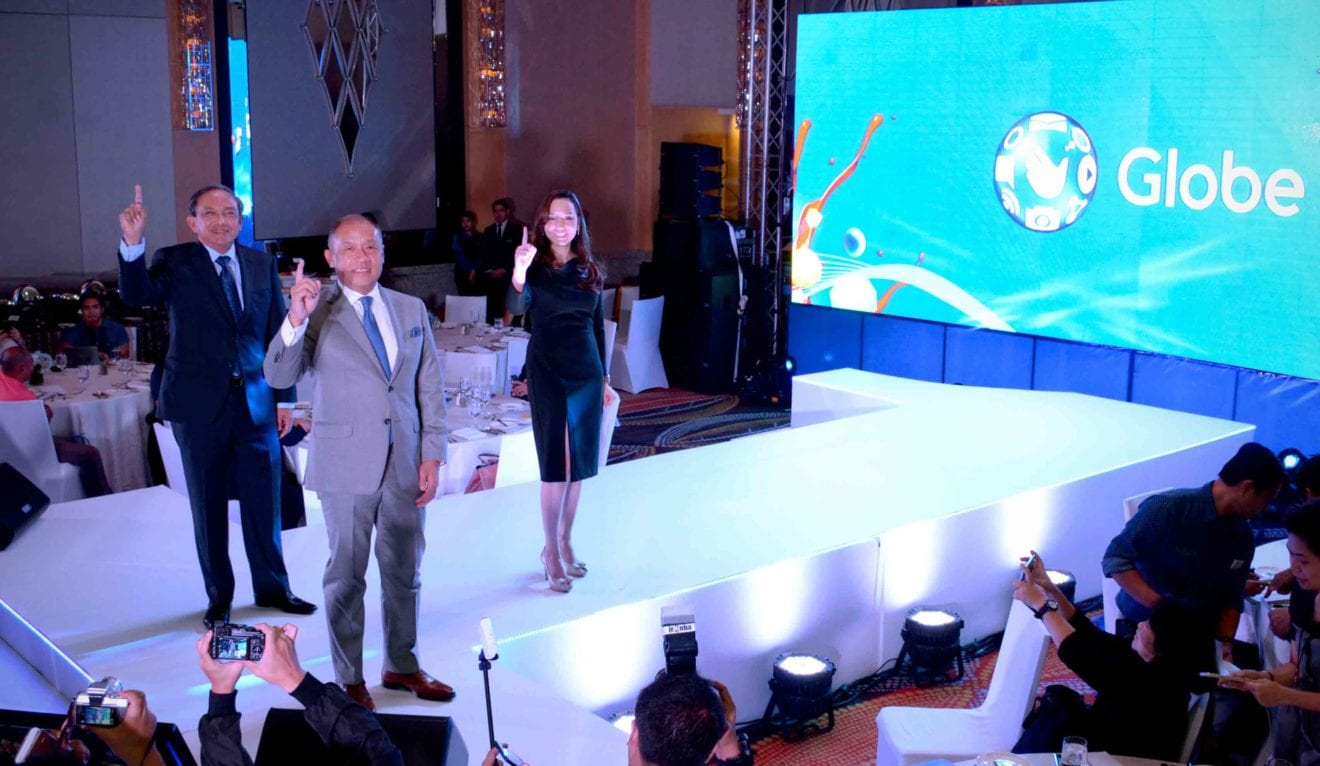
  • Globe interconnects with DE-CIX

    Globe interconnects with DE-CIX

    The Philippines’ Globe Telecom has enhanced its peering capacity in Europe through a new agreement with Deutscher Commercial Internet Exchange (DE-CIX). DE-CIX is the world’s largest internet exchange point with a peak traffic of over 6.4Tbps. Globe has peered at the company in Germany via its location in Frankfurt. The carrier neutral DE-CIX exchange interconnects more than 800 member networks, and provides peering and interconnection services to over 1,500 network operators, ISPs and content providers from more than 100 countries.

    The company offers peering and interconnection services from 13 locations in India, the Middle East, Europe, and North America.

    “This initiative will further complement existing infrastructure and enable users direct access to European content. At the same time, it functions as alternate internet gateways to the Philippines from that region as the internet is two-way,” Globe CTO Gil Genio said.

    “Improvements may also be observed in reaching networks that are part of the exchanges as the set-up will avoid the traditional via US traverse.”

    He said Globe Telecom now has connections to 23 internet exchange providers worldwide.