Author: Mei Ling Tan

  • MR PORTER Launched “The Luxury Watch Guide” A Global Destination For Luxury Watches

    MR PORTER Launched “The Luxury Watch Guide” A Global Destination For Luxury Watches

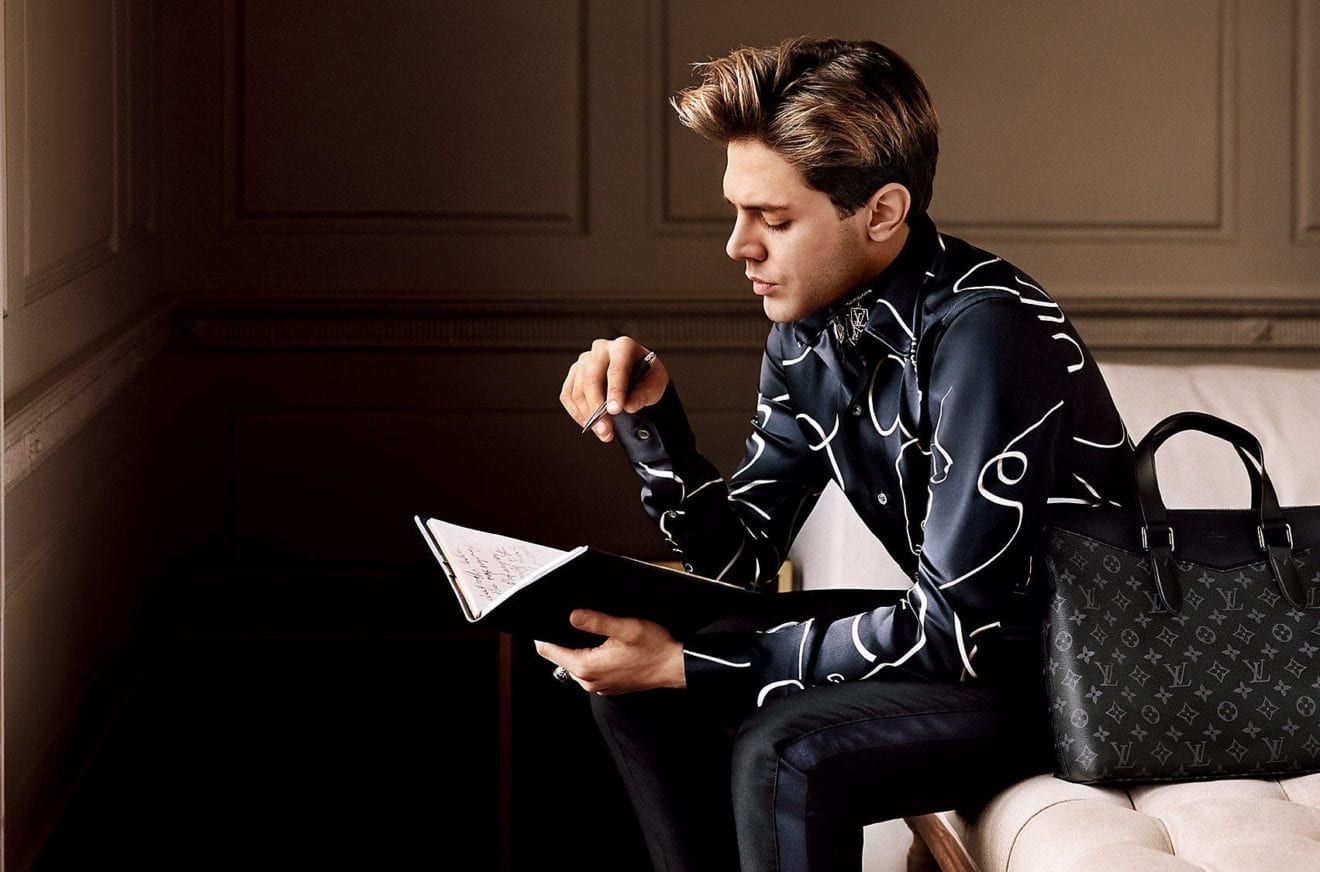
    MR PORTER launched The Luxury Watch Guide, a new online destination for its ever-expanding selection of the world’s leading watch brands, including IWC Schaffhausen, Jaeger-LeCoultre, Breitling, TAG Heuer, Officine Panerai, Ressence and more. The Luxury Watch Guide will showcase curated content, educational features, and style advice, alongside details on how best to select and maintain your luxury timepiece through MR PORTER.

    The Luxury Watch Guide establishes MR PORTER as the leading global online retailer for customers to shop luxury timepieces alongside MR PORTER’s vast offering of menswear and lifestyle items, further bolstering its commitment to providing the best in product, content and service across all of its categories.

    The Luxury Watch Guide features:

    • Dedicated pages for customers and readers to gain insight into each brand’s story, alongside each of their current product offerings onsite.
    • Shoppable content aimed to inspire, educate and advise customers during their purchase experience, including: “The Knowledge”, covering topics such as “how to choose the right watch” and “how to take care of your watch”; MR PORTER’s Tick Talk video series, which dives deep into a brand’s heritage; specific product focused stories on discovering a particular novelty; and lifestyle features of inspiring men highlighting the relationship they have with their own timepieces.
    • Direct access to MR PORTER’s team of dedicated Personal Shoppers and first-class service propositions, including: same-day delivery in London and New York; “Try Before You Buy”, a service allowing customers to try product before purchasing; 24/7 customer service; and, secure hand delivery available for all luxury watches.

    “We are thrilled to launch our new Luxury Watch Guide – a dedicated online home for all things watches at MR PORTER. This was a natural next step in our continued growth of the category and not only delivers an engaging platform for both novice and enthusiast watch customers, but also allows us to better serve and inspire them.”, said Mr Toby Bateman, Managing Director, MR PORTER

    For each luxury watch purchase online, MR PORTER has also established a unique aftercare programme, which includes a five-year warranty for all working parts and manufacturing faults. (More than twice as long as the industry’s standard two-year warranty.)

  • Vietjet to launch Zero Fare Tickets promo, again

    Vietjet to launch Zero Fare Tickets promo, again

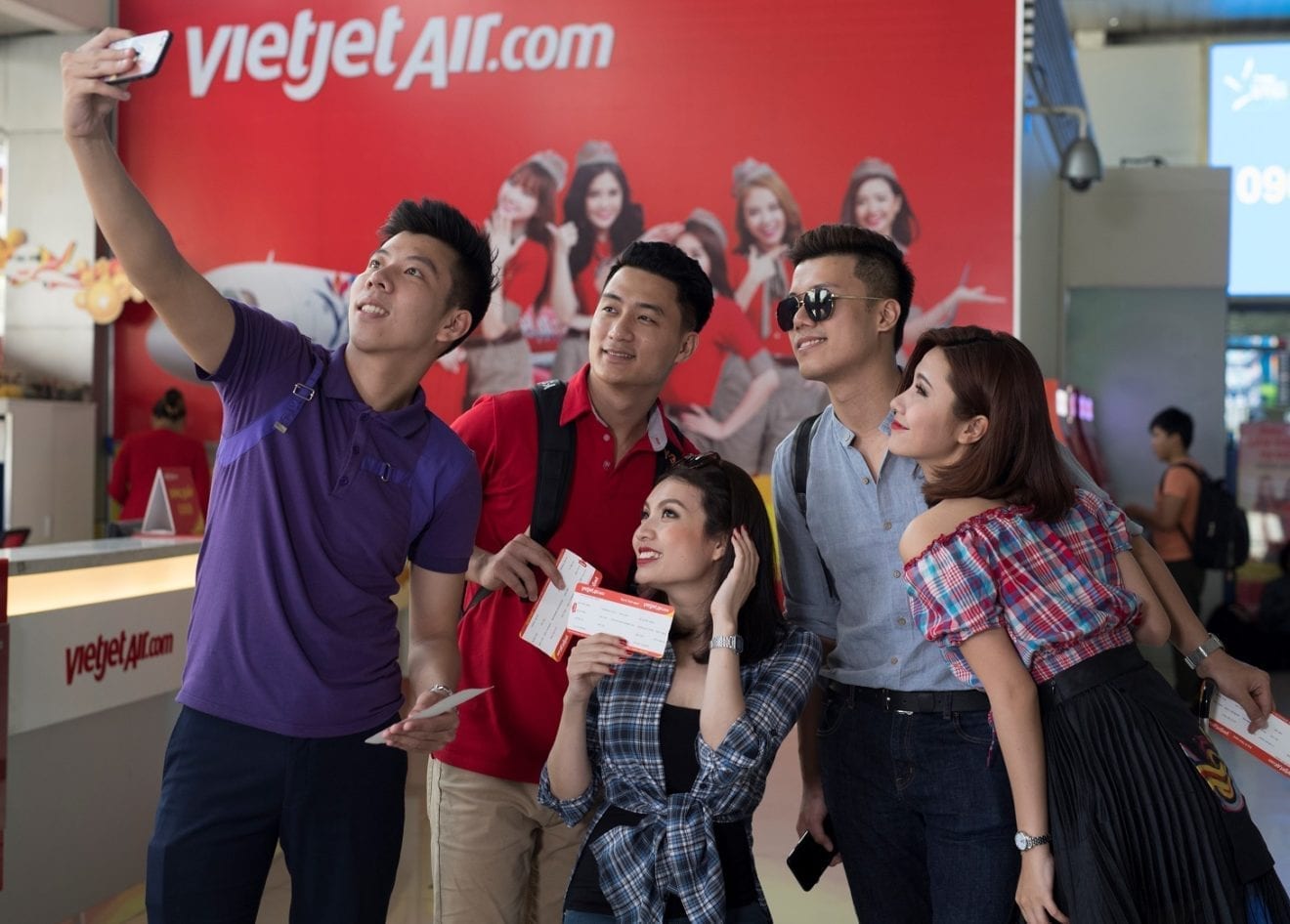
    If the weekday blues are getting you down, fret not as fast growing Vietnamese carrier – Vietjet is offering the ultimate midweek pick-me-up with its latest zero fare ticket promotion.

    Starting today until 8 June 2018, the airline is offering 400,000 tickets priced from only VND0 as part of its ongoing ‘Free up Your Summer with Vietjet’ campaign. The promotional tickets are applicable on all international routes to Seoul (South Korea); Hong Kong; Kaohsiung, Taipei, Taichung, Tainan (Taiwan); Singapore; Bangkok, Phuket, Chiang Mai (Thailand); Kuala Lumpur (Malaysia); Yangon (Myanmar); Phnom Penh, Siem Reap (Cambodia) for travels between 1 August to 31 December 2018 (excluding national holidays).

    These tickets are available for booking during the golden window of 1pm – 3pm (local time) daily at Vietjet website.

  • Easypaisa facilitates online payment of Zakat and Donations

    Easypaisa facilitates online payment of Zakat and Donations

    Easypaisa, country’s largest and most trusted branchless banking service this Ramadan is enabling you to donate to your preferred charitable organization through the ‘Easypaisa Donate Online’ portal.

    The portal – bringing together the country’s leading philanthropic organizations under its umbrella including Shaukat Khanum Memorial Cancer Hospital and Research Centre, Edhi Foundation, Pink Ribbon Pakistan, Sahara For Life Trust, Akhuwat, Zindagi Trust, Aman Foundation, Saylani Welfare, SOS Children’s Villages, Development in Literacy, Pakistan Children’s Heart Foundation (PCHF) – enables people to pay Zakat or Donation to their preferred charity reliably from the comfort of their homes.

    ‘Easypaisa Donate Online’ will give donors the convenience of making their contributions to any of the listed organizations by choosing to pay via Visa or MasterCard, Easypaisa Account, or through any of the Easypaisa agents across Pakistan.

    “Telenor Microfinance Bank is proud to bring leading charitable organizations on to a single, convenient platform to enable donors make easy contributions with complete trust,” said Shahid Mustafa, President & CEO – Telenor Microfinance Bank.  “As a nation, we give a lot of charity and donations to every cause that comes our way, and we are committed to digitizing these payment flows to make it easier for registered charitable organizations and customers to collect and donate funds respectively in a hassle-free, safe and transparent way.”

    Telenor Microfinance Bank has revolutionized the financial landscape of the country through groundbreaking digital financial services. The Bank’s mobile banking service Easypaisa has been instrumental in empowering the society by ensuring the inclusion of the underserved masses into the fold of mainstream banking and financial system.

  • OCBC BANK Is First Singapore Bank To Let You Open Account Digitally

    OCBC BANK Is First Singapore Bank To Let You Open Account Digitally

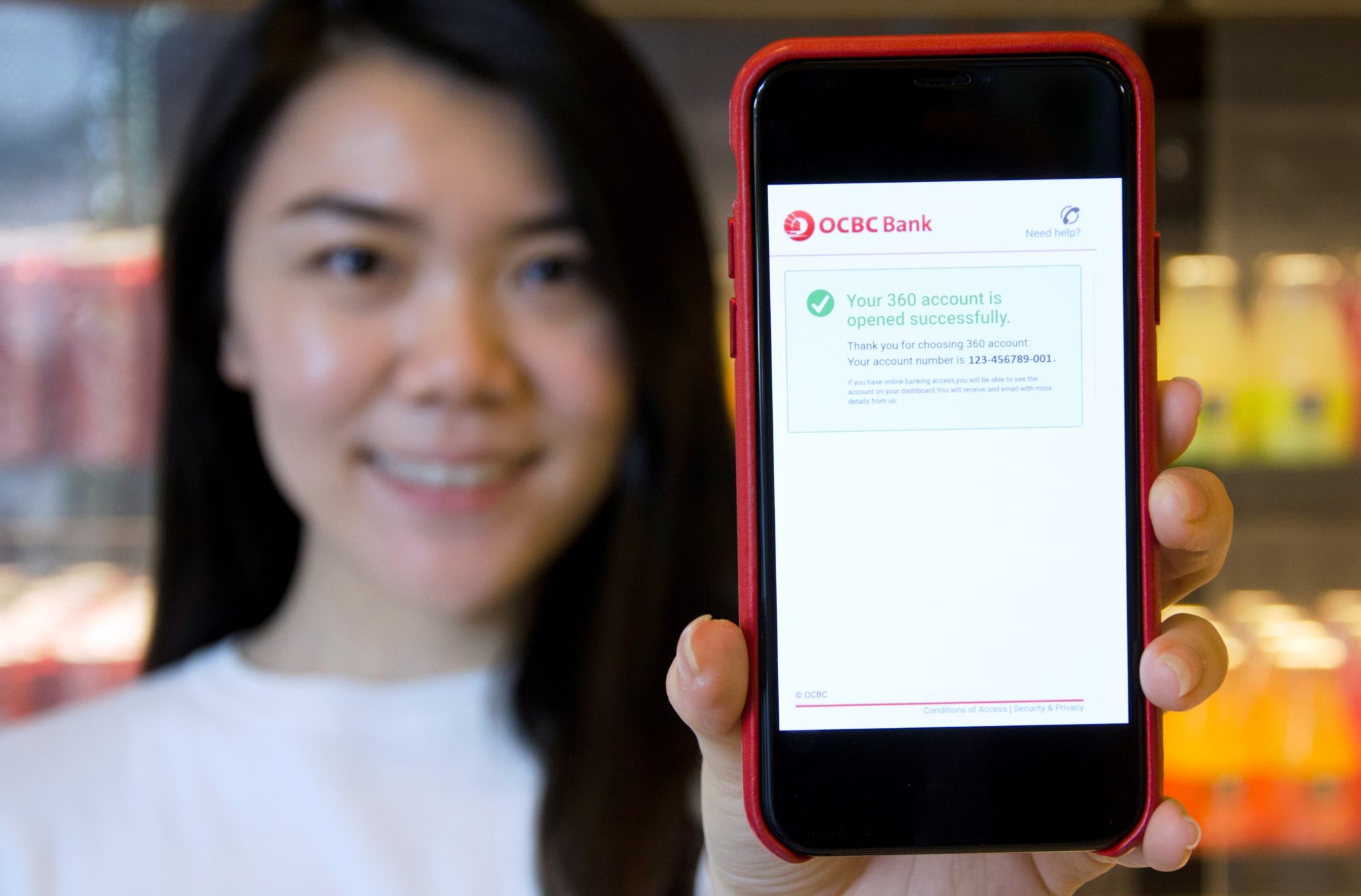
    OCBC Bank is the first Singapore bank to roll out a digital instant account-opening service for all customers who are Singaporeans or permanent residents. Even if you do not currently have any relationship with OCBC Bank, you can leverage national data repository MyInfo and – for the first time – OCBC Bank’s real-time, digital KYC process (e-KYC) to open an OCBC 360 Account using your mobile device or desktop. It all takes less than five minutes via the bank’s website, with no need to visit a bank branch or provide documents. Verification and authentication happens in real time; once this is completed, you get a new account number within seconds of a successful application. You can start using the account right away for functions like electronic transfers, rather than having to wait a few days for application approval.

    There are two main processes involved in OCBC Bank’s digital instant account opening. The first is submitting an application, which is made fussfree thanks to MyInfo, the digital vault of verified personal data designed by the Singapore government. Logging in using your SingPass, you simply consent to OCBC Bank using your MyInfo profile to set up a new account. An online OCBC 360 Account application form is then pre-filled with your personal details, so you do not need to key in details or submit any additional documentation.

    The second process is to verify that you are who you say you are, which is known as KYC or “know your customer”. Even after OCBC Bank successfully integrated its systems with Myinfo in May 2017 in a successful industry pilot – so you could pre-fill application forms with your government-verified personal particulars – you still had to wait for your account to be approved because KYC checks had to be conducted, typically using humans. Now, however, OCBC Bank has digitised the KYC process, and for the first time, is able to authenticate customers in real time using electronic means so that approval for successful account applications is granted instantly.

    Mr Aditya Gupta, OCBC Bank’s Head of E-Business Singapore, said: “Instant is the new black. I believe this instant, hassle-free and secure access to our core banking products will make it hugely compelling for people to initiate and deepen their primary banking relationship with OCBC Bank. Our ambition is to have one in every two customers on-boarded digitally with zero human intervention, and this launch is a significant milestone in that journey. We will be extending this service to a broader suite of our products shortly.”

    Driving digital with the OCBC 360 Account In 2014, OCBC Bank was the first bank in Singapore to enable customers to apply for a bank account online with the launch of the OCBC 360 Account, the first account in Singapore to reward customers with bonus interest for doing more banking transactions using their account, such as crediting their salary, making bill payments or spending on their credit cards. Since then, more than

    20 per cent of OCBC 360 Accounts have been applied for remotely on a mobile device or desktop, with account approvals taking up to three days.

    Now, with the MyInfo integration and the bank’s real time e-KYC process in the account opening journey, account approvals are instant for successful applications. Customers will be able to use the OCBC 360 Account opened online to immediately make funds transfers via PayNow or Fast, and start earning bonus interest from performing various transactions. This fast and seamless on-boarding proposition will sit well with time-strapped PMETs and young professionals who are highly digitally engaged and who make up twothirds of OCBC Bank’s existing OCBC 360 Account base. The OCBC 360 Account customer base has grown 30 per cent year-on-year and has captured a sizable base of PMETs’ salary crediting – over 40 per cent of deposits growth comes through OCBC 360 Accounts – while also driving day-to-day banking and the use of PayNow.

    More than 90 per cent of OCBC 360 Account customers are digitally active and have accessed OCBC Bank’s digital platforms at least once in the past three months. Digitally active customers are found to own twice as many banking products as those who are not digitally active, and the number of OCBC 360 Account customers who take up financial products has grown by more than 10 per cent since a wealth bonus interest was introduced in 2015.

  • Tug-of-War: Will Blockchain Bring Data Ownership Back to Users?

    Tug-of-War: Will Blockchain Bring Data Ownership Back to Users?

    Since the advent of the internet, users have marvelled at the ability to create a persona of themselves online – be it in the first virtual communities, social networks, retail sites and multi-player games. Increasingly, a greater proportion of our personal lives and information can now be found on digital platforms.

    Coupled with a plethora of emerging technologies such as the Internet of Things (IoT), 5G and Artificial Intelligence (AI), we can only expect that generated data, particularly of the individual, will increase exponentially. In fact, the global datasphere is projected to hit a staggering 163 Zettabytes (163 trillion GB) in 2025, according to a recent IDC-Seagate study.

    Even as data continues its exponential increase, recent cyber breaches and incidents around the misuse of user data have also cast the spotlight on the ownership of user data and how blockchain is disrupting this.

    Growing concern over data ownership

    The notion of one’s identity in the online world has evolved over time – once solely defined by a username and password, the increased integration of social media profiles, shopping history and other personal data has meant that our digital identity is fast becoming a reflection of our physical lives.

    Such data can be beneficial for businesses to better understand their customers and provide tailored services and offerings for an improved overall customer experience, particularly in e-commerce.

    However, the issue arises when individuals no longer have control over how their data is used and collected, particularly in the scenarios where organisations monetise user data without the user’s knowledge or request for more personal information than required.

    It’s unsurprising that consumers are increasingly becoming concerned about how their data is used and shared, and policies such as the European Union’s recent General Data Protection Regulation (GDPR) are also a reflection of the growing demand for greater ownership over personal data.

    Gaining a foothold on one’s data

    Blockchain, a technology that has seen success in cryptocurrency and beyond through its security, efficiency and non-centralised control, has been seen as a way of democratising data and putting ownership back into the hands of users.

    As compared to the current practices where ownership of user data is held by the enterprise, blockchain would enable the creation of a self-sovereign identity, where individuals control their own identities and personal data and are able to decide who to share it with, and to what extent.

    In addition, blockchain offers the possibility of micro-incentivising people to share data at their own will, which can significantly disrupt current ways of working for industries such as advertising and content.

    Organisations will need to come to terms with this new reality and be aligned with the changing mindsets and desires of their users when it comes to management of personal data. While a selfsovereign identity that is enabled by blockchain could revolutionise how personal data is managed, it does not come about without hurdles.

    For starters, the burden of managing and allocating access would have to be borne by the individual. Education would be crucial to familiarise users themselves with treating and managing data as assets that they now control and use to their benefit. Additionally, users themselves should be aware of the pros and cons of self-managing their data, rather than having organisations manage these on their behalf.

    At the broader level, this new approach also requires organisations to evaluate and adapt existing systems to ensure compatibility and that they continue to deliver the same user-friendly experience for their users.

    Despite the hurdles, blockchain will undoubtedly bring about changes with regard to personal data and digital identities as barriers to adoption gradually decrease for both enterprises and individual consumers. Given the rallying call for organisations to be more open about the data they collect about their users and how it is used, organisations will need to be prepared for the possibility of a future of acquiring data on the conditions of their users.

    Blockchain may pave the road to a future where large scale cyber breaches involving millions of stolen personal identities could be a thing of the past. Organisations too will need to evolve accordingly and bear responsibility for the just use and management of user data. After all, personal data belongs solely to the individual, and blockchain might well enable users to regain that control.


  • Geely Holding Announces Management Change at Group Lotus

    Geely Holding Announces Management Change at Group Lotus

    Zhejiang Geely Holding Group (Geely Holding), China’s leading privately-owned automotive group, announced today that Mr. Feng Qingfeng, vice president and chief technical officer of Geely Auto Group, has been appointed to succeed Jean-Marc Gales as chief executive officer of Group Lotus effective immediately. Mr. Jean-Marc Gales has chosen to leave for personal reasons and will become Chief Strategic Advisor to Lotus Chairman, Daniel Donghui Li.

    Geely Holding, which acquired a controlling stake in Group Lotus in 2017, thanked Mr Gales for his contribution to the company over the past four years.

    Daniel Donghui Li, chief financial officer of Geely Holding and Lotus Cars Chairman, said: “Jean-Marc has stabilised and turned Lotus to profitability for the first time in the iconic brands history with new industry leading products and unique business models since joining the company in 2014. Lotus is poised for the next phase of growth under Feng Qingfeng’s leadership, where its expertise in lightweight materials and sport cars-engineering will form part of the wider expansion of Geely ‘s automotive portfolio. At the same time I will welcome Jean-Marc‘s Council as Chief Strategic Advisor to myself and the Board of Directors.”

    Geely acquired a majority holding in UK-based Lotus – a world leader in high-performance lightweight sports cars – as part of its agreement last year to acquire 49.9 percent of the shares of PROTON from HICOM Bhd (DRB) of Malaysia, Lotus’s former parent.

    Feng Qingfeng (Mr. Feng) said: “I am honoured to have been appointed to lead this iconic British sports car group. With Geely’s global synergies and total support I am confident that Lotus has an exciting opportunity to achieve its full potential as a luxury sports brand, based around its engineering legacy and its future product pipeline.”

    In 2017 Group Lotus sold 1600 sports vehicles, an increase of 10% versus 2016, produced at its plant in Norfolk, England. In 2017 the company showed a profit for the first time in history.

  • Samsung tops Asia’s top 1000 brands ranking

    Samsung tops Asia’s top 1000 brands ranking

    Samsung again tops Asia’s Top 1000 Brands list, produced by Campaign Asia-Pacific and Nielsen.

    In its 15th year, the list again has Apple at second place.

    Rounding out the top 10 are Panasonic (up two spots), Sony (down one place), Nestle (down one), LG, Google (up six), Chanel, Nike (down two) and Philips (up 10).

    While the past 12 months have seen Samsung riding high on social awareness and release a string of hot new products, it is the brand’s size and “traditional” marketing methods that keep it at the top, say experts.

    It has emerged as the top brand in Asia for the seventh year in a row, despite the disastrous exploding Note 7 phone saga.

    Google jumped five places in the list this year, breaking into the hallowed Top 10 for the first time since 2011 and finishing in position seven. The company emerges as Asia’s favourite search engine in all markets except China and South Korea, and it is also rated top for “digital experience” in all markets except China (where consumers cited Apple) and India (Amazon).

    Still climbing

    Chinese brands are still climbing the chart. Huawei, which jumped 661 spots last year, and Xiaomi (up 577 spots) have been more moderate this time. Huawei has gained another 44 spots to rank 158th overall, while Xiaomi leapt 88 places to land at 128, making it China’s top home-grown brand throughout Asia-Pacific for this year.

    Best dressed among fast-fashion brands were Zara, which reached 52nd place in the Top 1000, and H&M, which climbed to 65th. Both brands improved significantly on their positions last year. Japanese clothing brand Uniqlo also leapt up the charts, landing in 38th position.

    Not all e-commerce brands are capitalising on the steady rise in online shopping. While top players Amazon, Lazada and Taobao saw strong gains, others like Ebay, Rakuten, Zalora and Flipkart still have work to do.

    Amazon jumped 20 spots to become Asia’s 23rd top brand overall. Lazada, powered by Alibaba, surged even more (35 places) to cement its position at 62nd overall. Alibaba’s Taobao, top in China but slower to grow outside of it, moved 31 spots higher but is still a distant third across the region, ranking 210th.

    However, other key players have been losing ground. EBay, ranked 144th two years ago, has steadily dropped to 237th this year. Japan’s Rakuten slipped slightly this year to 331st after a larger drop last year. Fashion-focused Zalora tumbled significantly this year to place 409th, while strong players in specific markets like Flipkart (second in India) and Qoo10 (first in Singapore) both dropped more than 60 places overall to land at 564th and 592nd respectively.

  • Korean retailers to focus on men

    Korean retailers to focus on men

    Shinsegae Department Store will open a Gucci Man and Dior homme in June and July.

    Lotte Department Store is also promoting ‘Louis Vuitton Man’ and ‘Gucci Man’ in line with the reorganization of stores this fall.

    Korean retailers are actively targeting men’s luxury goods market as men’s luxury market is growing faster than other fashion segments in the market.

    Luxury goods in Shinsegae Department Store this year increased by16.5 percent, which is much higher than that of women’s wear (2.4 percent) and men’s wear (7.5 percent). Men’s luxury goods rose by 39.2 percent.

    The same goes for Lotte Department Store. In the first quarter of this year, sales of luxury goods grew 10.7 percent, much higher than general men’s wear (0.9 percent) and women’s wear (1.5 percent). Hyundai Department Store’s sales of luxury men’s grew 24.2 percent this year.

    In addition to exclusive luxury stores, there is also a fierce competition to attract men’s multi shops. It is a strategy to increase the number of different multi shops to aim at the younger generation who are looking for a unique product.

    In 2013, Lotte Department Store opened its first ‘Eli’den men’, targeting to male consumers in their late 20s and 30s. The ‘David Collection’, which is multi shop specializing in men’s apparel and articles in 2014, and ‘Men issue’, a men’s shoe editing shop in 2015 are attracting a mania.

    Shinsegae Department Store has men’s exclusive multi shops “BOONTHESHOP” in Gangnam store, Busan Centum City store, and Daegu. Sales of over 100 brands such as vêtement, ‘Lardini’, ‘Off White’ and ‘Marni’ were higher than expected, which is 31.7 percent up from the same period last year.

    According to an industry officer, “Grooming men who open their wallets for their own looks and fashion, mainly in their 30s and 40s, are increasing,” he said. “We plan to expand contemporary men’s products “He added.

  • Starbucks Hong Kong to ban plastic utensils

    Starbucks Hong Kong to ban plastic utensils

    Starbucks Hong Kong will stop displaying disposable plastic utensils in all stores from July 4 and will launch the policy at its new Causeway Bay store this month.

    All disposable plastic utensils will be removed from the condiment bar and will be provided only upon request. The new sustainable living policy will apply to both in-store and takeaway orders.

    Meanwhile, Starbucks is billing its new Lee Garden store as the territory’s first flagship.

    The 5500sqft ‘Third Place’ experience will open on June 22 in Lee Garden Three. It will be the largest single-story Starbucks cafe in Hong Kong, featuring the city’s first Teavana Bar, an expanded food menu and Starbucks Reserve coffee selection.

    The Teavana Bar is described as “a modern tea experience re-interpreted by Starbucks through an artful combination of the finest tea and botanicals”.

    The broader store’s interior design has been inspired by a coffee plantation.

    Following the successful launch of coffee-infused craft beers at the Starbucks IFC Mall store in March, a coffee-inspired cocktail will make its debut at the flagship-exclusive Mixology Bar.

    From June 21-27 a Starbucks cup installation will be set up at Lee Garden One on the ground floor facing the pavement by the taxi station. Limited-edition dock coasters will be given away at the pop-up.

  • Shinsegae and Shilla to fight out Incheon T1 duty free bids

    Shinsegae and Shilla to fight out Incheon T1 duty free bids

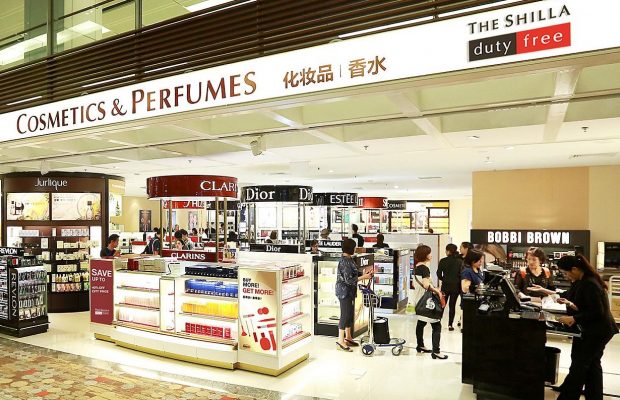
    Shinsegae Duty Free and The Shilla Duty Free will fight out the contest for two Incheon International Airport Terminal 1 duty free contracts on offer, despite rival Lotte Duty Free tabling the highest bids in each case.

    The tenders followed incumbent Lotte Duty Free’s resignation from both concessions in February.

    As reported, four retailers – Lotte Duty Free, The Shilla Duty Free, Shinsegae Duty Free and Doota Duty Free – bid for the two packages, DF1 and DF5.

    While Lotte Duty Free submitted the highest offers for both packages (see figures below), Incheon International Airport Corporation opted to shortlist only Shilla and Shinsegae. The two retailers must now table their business plans to Korea Customs Service and Incheon International Airport Corporation by 5 June. A winner will be selected in mid-June.

    A Shinsegae Duty Free spokesperson confirmed the shortlist to The Moodie Davitt Report. A Lotte Duty Free spokesman said the company was “despondent”, given that it had tabled the highest bid.

    Lotte’s DF1 bid was +1.6% higher than Shinsegae’s and +27.2% higher than Shilla’s. On DF5, Lotte’s offer was +13.2% better than Shinsegae’s and +38.8% above that of arch-rival Shilla.

    Some Korean duty free market sources expressed shock at the result. One veteran retailer told The Moodie Davitt Report, “Lotte must have been penalised for dropping the [former] concession in the mid-term. Yet as evaluations are based 60% on the business plan and 40% on the monetary offer, it is not easy to understand that Lotte did not qualify… especially as it had paid a KW187 billion penalty (for its premature exit).

    “There is no specific regulation or degrading for a company which gives up a government concession in the mid-term.”

    One source told The Moodie Davitt Report, “The most probable scenario is that the licence evaluation committee of Korea Customs Service will award DF1 to Shinsegae and DF5 to Shilla in order to avoid potential monopoly issues [as Shilla also holds the rest of the airport’s P&C business reserved for major retailers -Ed].”

    Not surprisingly, Shilla is known to dispute that position. Korea’s Fair Trade Commission will not have a problem with the proposed structure, sources close to the company believe. Shilla could reasonably point to many other international airports which have a single retailer for one category (or in fact for all categories), the sources contend.

  • Jatenergy announces flagship retail store in China

    Jatenergy announces flagship retail store in China

    Monetising Chinese retail shoppers is turning from a distribution to direct shopper experience for cross-border goods company Jatenergy (ASX: JAT).

    Jatenergy has signed a binding agreement to open a retail outlet, which it intends to call ‘JAT Maternity and Children’ within the 80,000-square metre Hui Yue Shopping Mall, to open “in the next few months.”

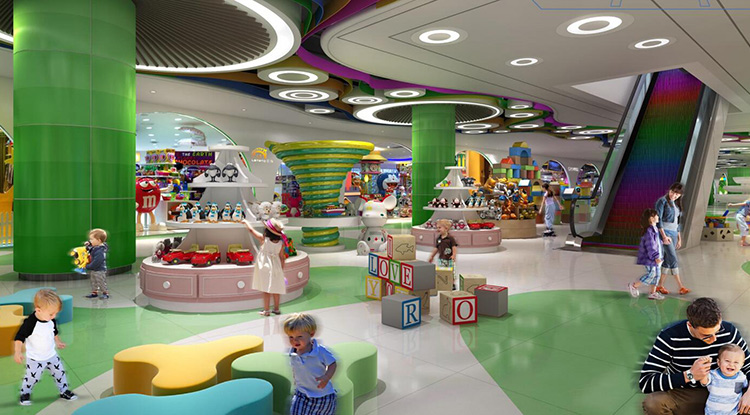
    Jatenergy says the kid’s section of the shopping complex will be the largest indoor children’s themed shopping centre in Zhengzhou spanning 18,000 square meters over three levels, called “Kid’s City”.

    The expansive Chinese-based company has said it intends to open a “cornerstone retail outlet” within the shopping complex, that caters for mums and children within ‘Hui Yue Kid’s City’, a dedicated “one-stop shopping destination” in Zhengzhou, the capital city of Henan province which is home to around 100 million people.

    The Hui Yue shopping complex is owned by the Henan Sheng Rung Holding Group, a Chinese company owned by current Jatenergy Director Mr Xipeng Li. As part of the close ties with Sheng Rung, Jatenergy will obtain a “three-year rent-free period” with a negotiated term expected to be agreed thereafter, sometime in 2021.

    Jatenergy will still need to spend an uncertain amount to set up and equip the store but says there are “no conditions precedent contained in the agreement with no other payments to be made”.

    “This is an unsurpassed opportunity for JAT to build its China presence and generate revenue,” said Mr Wilton Yao, Director of Jatenergy.

    In 2021, Jatenergy expects to establish a “flagship store agreement” with sales volumes being measured and used to gauge whether further stores will be opened in other parts of China at other Henan Xipu shopping centres. If the upcoming retail store is successful, Jatenergy is likely to expand its retail store footprint in China by opening stores in other cities.

    Just last week, Jatenergy revealed its intention to acquire a controlling interest in Green Forest International, a Sydney-based wholesaler, distributor and exporter to Hong Kong and mainland China. Today’s announcement of a retail store in China is likely to supplement the deal and is likely to stock many of the brand names marketed and sold by Green Forest.

  • BGF Retail outlines KRW30bn online investment

    BGF Retail outlines KRW30bn online investment

    BGF, owner of Korean c-store chain CU, has boosted its stake in online grocery business Hello Nature.

    Founded in 2012, Hello Nature offers compact packaged-grocery deliveries. It was bought by SK Planet in 2016. Its sales reached US$9 million last year.

    Investing 30 billion won (US$28 million) for a controlling 50.1 per cent stake, BGF will run Hello Nature as a joint venture.

    “The online premium grocery shopping market is a blue ocean which has been growing rapidly every year,” said BGF chief Lee Keon-jun.

    BGF aims to build Hello Nature into the leading online grocery platform within the next five years by connecting its delivery service to 13,000 CU stores across Korea.

    Hello Nature will also consider consider expanding into the offline market.

    Demand for online delivery services for fresh food in Korea has been increasing rapidly thanks to the growing number of one-person households – 5.28 million in 2016, accounting for 27.8 per cent of all household types in the country.

  • Brooks Brothers reveals China retail rebrand

    Brooks Brothers reveals China retail rebrand

    Iconic American brand Brooks Brothers has revealed it plans to reposition retail efforts in China, a market which currently ranks third in revenue value behind the U.S. and Japan.

    In a recent visit to China, Brooks Brothers CEO Claudio Del Vecchio said he would like Chinese consumers to be reintroduced to the US heritage men’s brand, which turns 200 years old this year.

    “I think within less than two years, [China] will be our number-two country,” Del Vecchio told reporters, while speaking at one of the brand’s global bicentennial celebration parties, held in Shanghai, after events in Florence and New York this year.

    “We’ve been in Japan for 40 years and it’s still very strong and growing, but not growing as strongly as China. It’s certainly our biggest opportunity for the next 10 years.

    Within 10 years, it might actually be our number-one country,” he added.

    As part of its celebrations, Brooks Brothers inaugurated its store at the HKRI Taikoo Hui mall, inviting brand ambassador Louis Koo, to celebrate.

    With 20 retail stores and 20 outlets in mainland China, Brooks Brothers is looking to tweak its key store locations and rebrand, by positioning stores alongside recognised luxury retailers in China, not necessarily brands with the same price-point.

    “Today in China, our biggest challenge is actually that customers don’t know us, [so] they might judge the quality by the price. Because our price is not that high they might not have the perception of quality that we actually have,” said Del Vecchio.

    “There is a disconnect,” he added. “Our prices are so good, they don’t believe it.”

    The retail shift compliments the firm’s recent efforts to attract more Chinese custom, by shifting distribution partners and tapping online marketplaces.

    In 2016, Brooks Brothers shifted its China distribution from Dickson Concept, which was more of a licensee model, to being more directly operated. Still in retail partnership, Brooks Brothers changed to a new regional partner, working with Walton Brown, part of the Lane Crawford Joyce Group.

    In the same year it signed an agreement to stock its namesake suits and apparel on Alibaba’s Tmall, as well as its more affordable line, Red Fleece.

    “There are other opportunities we want to explore,” Del Vecchio added.

  • Abercrombie and Hollister lead A&F path to recover

    Abercrombie and Hollister lead A&F path to recover

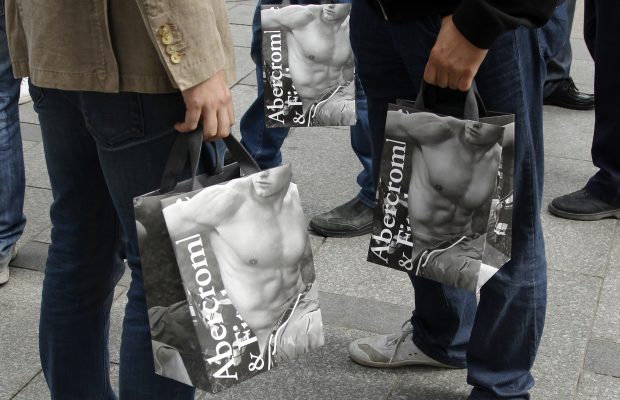
    Following on from a robust fourth quarter, Abercrombie & Fitch has continued its run of success with another solid set of sales numbers. Although growth has come off the back of soft prior year comparatives, the positive comparable sales numbers are an indication of momentum at both the Abercrombie and Hollister brands.

    Under the leadership of Fran Horowitz and her team, the business now has a much clearer sense of direction and a strategy that is producing results.

    Last quarter the Abercrombie brand delivered its first positive comparable sales number in five years, an advancement that has continued into this period with the division reporting a 3 per cent uplift. While this represents something of a bottoming out of sales declines, we also believe that Abercrombie is benefitting from the many improvements that have been made over the past year.

    One of the biggest shifts at Abercrombie has been the change in tone of the business. It has moved from a brash brand to a somewhat confused brand to a brand with a much clearer and more focused identity.

    While we would argue that this reinvention is still a work in progress, we think that the more authentic tone and the coalescing around an effortless American casual theme has paid dividends.

    A key part of the reinvention has been a focus on the product. There are two things we particularly like here. The first is the more disciplined approach to merchandising, which has involved having fewer items in the assortment but making sure that the pieces stocked are a mix of staples and on-trend garments.

    This has made the range much easier to shop. Alongside this, there have been significant improvements to quality and styling. Most of this is subtle and seen in small details like stitching, discrete monograms, or the design of buttons and zippers. The net effect is a range that is more mature and sophisticated, with many more ‘must have’ elements.

    Although it has traditionally been a stronger business, Hollister has also benefited from a more focused approach. Its carefree casual position resonates with the target audience and this is helping to differentiate it and drive sales in a crowded marketplace.

    Across both brands, there are some impressive changes which are supporting sales growth. Marketing efforts are much more comprehensive, with social channels and influencers being used to gain attention.

    Importantly, the company is now marketing where its customers are rather than just through traditional channels, using platforms like Snapchat and app-based games to create brand awareness and affinity.

    Stores have also been an area of focus and we applaud the continued efforts to rightsize the chain.

    Moreover, we remain impressed with the new store formats of both Abercrombie and Hollister. These represent an enormous shift in thinking and allow customers to see and experience the new face of the brands. Digital has not been neglected and we equally welcome changes made to the websites and the development of more omnichannel services.

    Admittedly, all of this has added to costs, which contributed to this quarter’s loss. That said, the company is a lot less in the red than it was this time last year, which represents progress.

    Abercrombie & Fitch’s work is not yet complete. The past couple of years were about stabilising and transforming the business, something we think has been achieved.

    In the year ahead, the focus must be on accelerating growth.

  • The $1,290 Balenciaga “T-shirt shirt” goes viral

    The $1,290 Balenciaga “T-shirt shirt” goes viral

    Pushing all those social media buttons and getting everyone het up to such an extent that they have just become complicit in making an item in the men’s collection a veritable phenomenon simply on the back of an Instagram post.

    When will we stop swallowing the bait? One moment there’s a picture online, and the next it has spawned 1,000 memes — all of which lead back to the source, and all of which play right into the hands of the very canny designer Demna Gvasalia.

    He understands as well as anyone how to ride the hype cycle and bend the free-floating and often indiscriminate desire of the digisphere to use fashion as target practice to his own advantage.

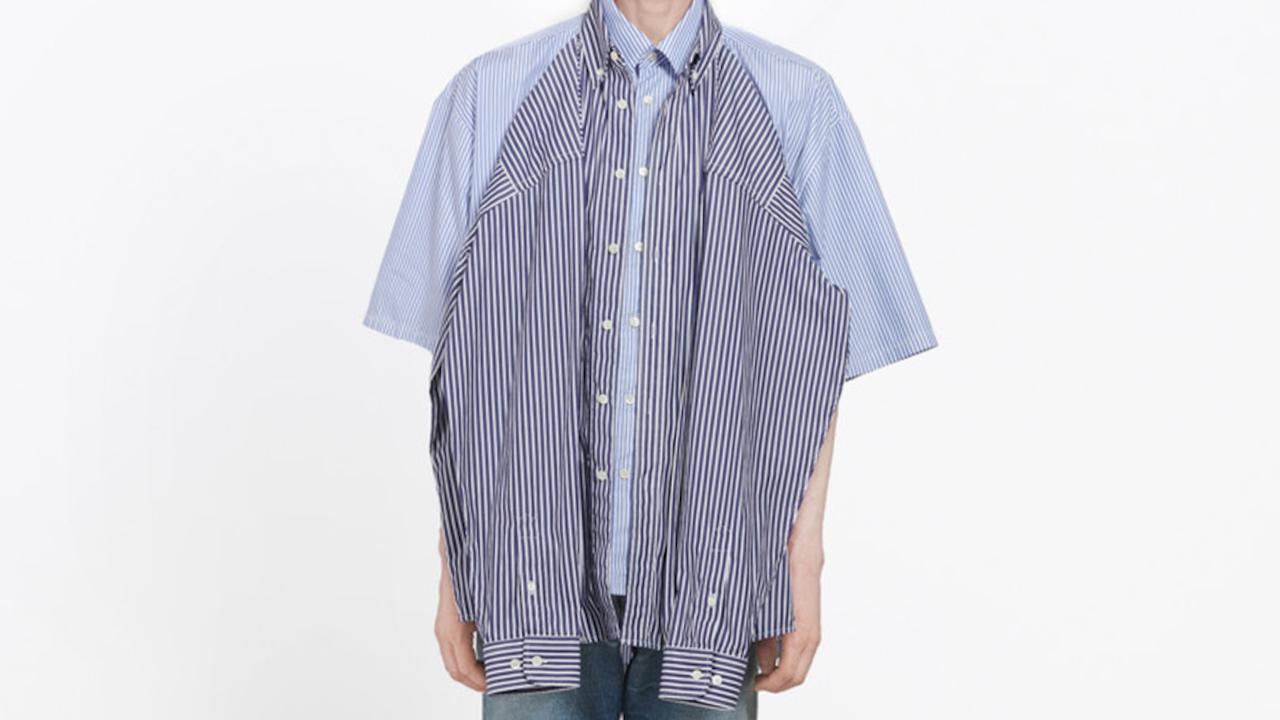
    It is, of course, of the T-shirt shirt, a men’s wear product from the Balenciaga fall 2018 collection that is exactly what it sounds like: a cotton T-shirt twinned to a cotton button-up shirt in complementary colors that can be worn with the long-sleeved shirt draped on the front, or the T-shirt draped off the back.

    It costs $1,290 and is currently available to order. It’s not quite two-for-one, but close. It’s in the same family as the Double Shirt (a short-sleeved button version with the long-sleeved one that costs $1,490) and has a sibling in the spring women’s collection (a version that costs $1,690 is sold out at the Balenciaga store online), though no one seems to have registered any outrage about that one yet.

    In collection context, the T-shirt shirt could be seen as smart, pointed commentary on our conflicted relationship with the whole idea of smart casual dressing and obsession with becoming the next Mark Zuckerberg by shedding the corporate uniform.

    But on its own in various Instagram posts, with a young man looking serious and pouty while draped in multiple empty sleeves, it went viral on tides of self-amused commentary about fashion’s ridiculousness.

    The Twitterati had a field day! The Daily Mail weighed in! So did Perez Hilton. Fortune and CBS did stories. Those are just a few of the reactions, which have come from India, Mexico, Germany, Britain and Canada, among other places. Most of them could be summed up as: Look at everyone freaking out about the crazy fashion types making weird stuff.

    Though Balenciaga declined to comment on the reactions, this is not the first time the brand has turned the potential of social media mockery over what is perceived as a silly product into a strategy.

    It began just over a year ago, when a leather version of the classic IkeaFrakta shopper that cost $2,145, instead of the original’s 99 cents, sent the internet into a similar frenzy about apparent fashion excess — and then sold like hot cakes.

    That may have been a fluke, but then came the embellished platform Crocs for $850, which again produced shock and horror online — and were sold out on some sites before they even arrived, thanks to the number of pre-orders engendered by all that chat. And now we have the T-shirt shirt.

    Are you seeing the same pattern I am seeing? With both Balenciaga, where Mr. Gvasalia has been creative director since October 2015, and his own brand, Vetements, the designer has made something of an art form out of appropriating the basic clothing (or high fashion) common denominators that we have long taken for granted and twisting and torquing them into new forms that demand a rethink. Now he is doing exactly the same thing with our reactions.