Author: Mei Ling Tan

  • Who’s who of retail CEOs at Consumer Goods Forum

    Who’s who of retail CEOs at Consumer Goods Forum

    Next month’s Consumer Goods Forum to be held at the Marina Bay Sands will feature a ‘who’s who’ of international retail leaders.

    This year marks the first time in a decade the event is being held in Asia. Running from June 12-15, it is themed Consumer Centricity in a Data-Driven World.

    Industry leaders including Alibaba CEO Daniel Zhang, Dairy Farm International CEO Ian McLeod, Coca-Cola Company CEO James Quincey, Majid Al Futtaim Holding CEO Alain Bejjani, Ahold Delhaize CEO Dick Boer, JD international president Winston Cheng, Central Retail CEO Nicolo Galante, Carrefour China president and CEO Thierry Garnier and Metro AG CEO and chairman Olaf Koch are all on the speaking roster.

    Former US Secretary of State Madeleine Albright will deliver a keynote address.

    Consumer Goods Forum MD Peter Freedman says the summit is often described as the most important leadership event on the consumer goods industry’s calendar.

    “The key focus of this year’s conference will be on how to ensure that we continue to keep consumers at the centre of the digital transformation in our industry. In that context we will also be discussing how we can accelerate our work on global positive change, which millennials and younger consumers are so concerned to see. We are delighted to be holding the event in Singapore, one of the world’s leading smart cities, with some of the most digitally sophisticated consumers, and geographically close to so many Asian digital innovations.”

    More than 1000 delegates, from more than 400 leading retailers and consumer goods companies will engage with this year’s theme through sessions focused on stories such as:

    • Investing in the age of disruption;
    • Evolving retail for the smart consumer;
    • The future of work: people & technology;
    • Positive change in action: driving a circular economy;
    • New Retail: creating new value for consumers;
    • Global millennials: the data-driven facts;
    • Executing a digital and omni-channel growth strategy; and
    • Transforming customer experiences through big data.
  • Samsung to open AI centers in three countries

    Samsung to open AI centers in three countries

    Samsung Electronics is opening research centers dedicated to artificial intelligence technology in the United Kingdom, Canada and Russia.

    That will bring the number of Samsung’s AI research centers to five, adding to existing ones in Korea and California.

    The Cambridge center in the U.K. opened yesterday, the Toronto center in Canada opens on Thursday and the Moscow center in Russia opens next Tuesday.

    In November, the electronics giant established an AI center under Samsung Research, a unit that heads development of future technology for the company. Two months later, a Samsung AI center was opened in Silicon Valley in the United States.

    The Korean center will function as headquarters for all five AI research centers, making it a global hub for AI research. Samsung has grand plans to expand the number of specialized researchers in the AI field to more than 1,000 by 2020, and some 40 percent will be foreigners.

    “[The AI center] will be a game-changer for Samsung to make a new world for the era of artificial intelligence,” said Kim Hyun-suk, president of Samsung’s consumer electronics unit at Tuesday’s inauguration ceremony of the AI center in Cambridge. Kim also heads Samsung Research.

    The Cambridge center will be led by Andrew Blake, who was director of the Microsoft Research Lab in Cambridge. Professor Maja Pantic of Imperial College London will also lead AI research as part of the unit. Her area of expertise is machine analysis of human emotions, for which she was chosen by the science journal Nature to speak at the 2016 World Economic Forum in Davos.

    Larry Heck was appointed to head the Toronto center. He is an expert in voice recognition and was a former leader of Samsung’s Silicon Valley center. The Moscow center will be led by Higher School of Economics Prof. Dmitry Vetrov and Skoltech Prof. Victor Lempitsky.

    Samsung Electronics has been active in artificial intelligence technology this year. It introduced its AI assistant Bixby in April 2017.

    At the Consumer Electronics Show in January, President Kim vowed to use the virtual assistant in all of its products, including home electronics, by 2020.

    Samsung Vice Chairman Lee Jae-yong reportedly intends to invest in future growth areas such as AI following his return to management this year after months in jail.

    With Lee back at the helm, there is anticipation that Samsung may be more aggressive about acquiring companies with promising research.

  • Giordano faces backlash over ‘sexist’ clothing line

    Giordano faces backlash over ‘sexist’ clothing line

    Hong Kong fashion brand Giordano is scrambling to remove an advertising campaign slammed as “sexist” on social media.

    Promoting the “Team Family Series”, the advert shows a family posing together with the man wearing a t-shirt emblazoned “Work” while the wife’s shirt proclaims “Cook”. When posted on social media last week, it outraged dozens of users, some of whom threatened to boycott the store.

    One user wrote that it was an “absolute disgrace” and unforgivable for a modern brand to stereotype men and women.

    Giordano has responded with a statement on social media saying the advertising materials would be removed “where physically possible”.

    “The spirit of the campaign is to celebrate the power of the family, with the corresponding merchandise using words to depict different, random aspects of life,” says the statement.

    “Stereotyping and sexism, or any kind of prejudice, however unintentional or passive, has no place at Giordano or in society.”

    Removing the ads is unusual for Hong Kong, which does not have any laws against sexist or gender-specific advertising.

    Lisa Moore, senior research and advocacy manager at Hong Kong-based non-profit The Women’s Foundation, says the city is overloaded with examples of such advertising. “Whether on billboards, buses, in print or on television, gender stereotyping in advertising is still quite prevalent in Hong Kong,” she says. “From financial loan commercials to ads for household products, women are often depicted in domestic roles.”

  • Experts fear potential real estate bubble in Vietnam

    Experts fear potential real estate bubble in Vietnam

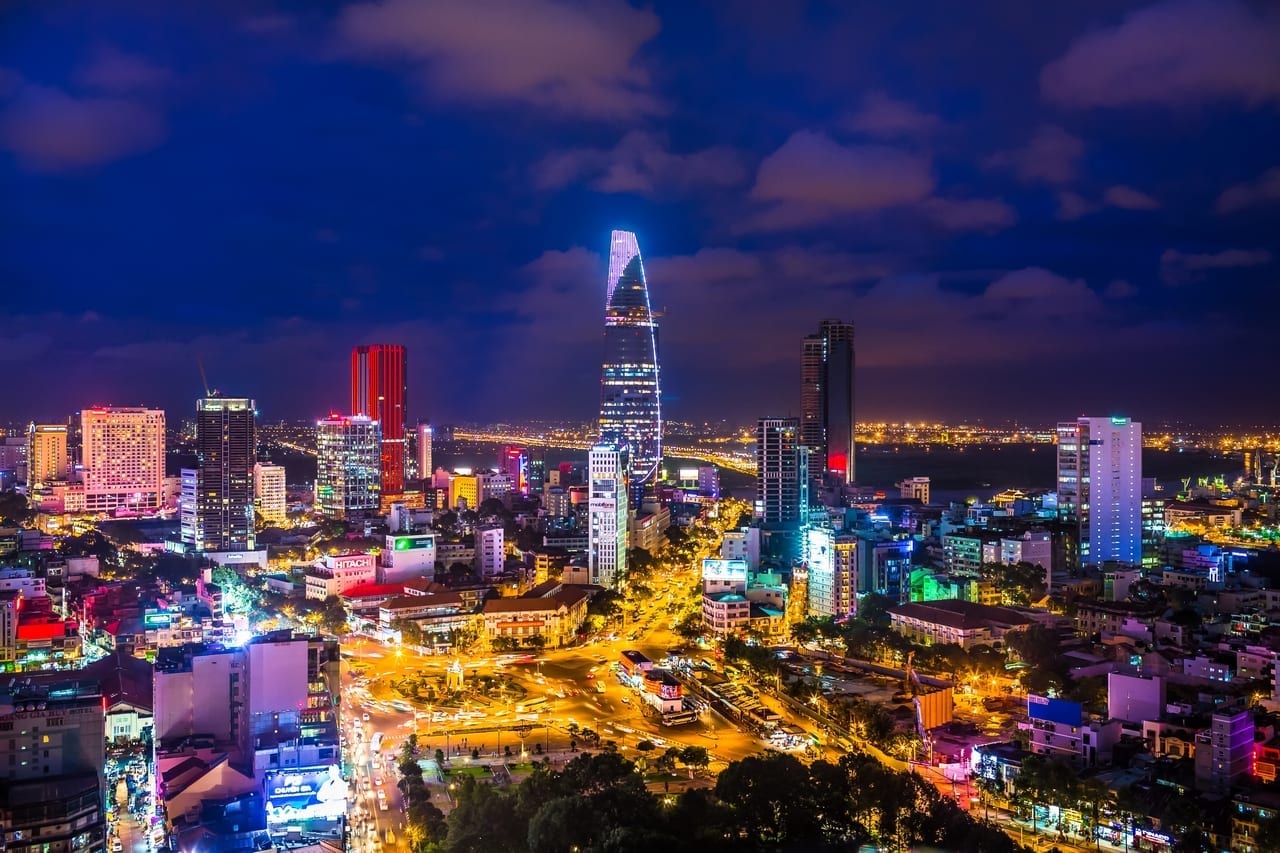
    Recent reports of land fevers have raised concerns over the possibility of a real estate bubble in Vietnam similar to the historic one in 2008.

    Eight out of 10 signs of a real estate bubble have been identified in the Vietnamese market, said Tran Kim Chung, deputy director of the Central Institute for Economic Management (CIEM) at a conference last week.

    They are increased numbers of transactions, new constructions, areas under development, participants in the market; rising prices; and presence of projects that are bigger in terms of scale, value and funding.

    The real estate market in Vietnam has seen a rush for land from late last year in Ho Chi Minh City and neighboring areas. Land in Dong Nai Province, northeast of Ho Chi Minh City, costs from VND72-90 million per square meter ($3,150-$3,980), which is nearly equal to some urban areas in HCMC.

    Local residents and real estate agents said the price doubled last year’s, and has climbed a further 30-50 percent so far this year.

    Land prices have also increased rapidly in three areas which are poised to become Vietnam’s special economic zones (SEZs) with promising benefits for investors. These areas include Phu Quoc Island in the far south, Bac Van Phong in central Khanh Hoa province and Van Don in the northern Quang Ninh province.

    On Phu Quoc Island, land prices in April were 10 times higher than in February, according to local invetsors. A square meter of land on the island can now fetch from VND20-60 million ($875 to $2,625), the Vietnam Real Estate Agency (VREA) said.

    The two remaining signs that would nail down a real estate bubble are a hike in public investment and housing capital, Chung said. But since these factors are currently actually counteracting market overheating, the worst is yet to come.

    Echoing Chung, chairman of Vietnam Real Estate Brokerage Association (VREBA) Nguyen Manh Ha said that the land fever in the first few months of the year, if not contained, will result in a land bubble.

    Some experts, however, beg to differ.

    The real estate market is actually stable and recovering, said Nguyen Van Dinh, vice chairman of VREBA adding that the current land fever is the result of short-term speculative trading that’s pushing up the price, which has destabilized the market.

    Amidst the land fever, Vietnam’s central bank has recently ordered lenders to tighten control over investment loans intended for the stock and real estate markets, warning of bad debt risks.

    Authorities of the three areas earmarked to be SEZs need to take control of the land market and prevent speculartors from creating instability, Vietnam’s Prime Minister Nguyen Xuan Phuc said last month.

  • UNIQLO hits Hawaii with Ala Moana Center store

    UNIQLO hits Hawaii with Ala Moana Center store

    Japanese clothing retailer Uniqlo will open a 2500sqft pop-up store at Ala Moana Center on June 1, ahead of the grand opening of its first Hawaii store at the same mall.

    With the concept “A Little Pop From Tokyo”, the pop-up will feature 200 men’s, women’s and children’s t-shirts depicting Tokyo pop culture.

    In March, the company announced it would occupy a retail space of about 17,300sqm across two levels at the centre, the country’s largest outdoor shopping mall.

    Uniqlo has more than 1900 stores in 19 markets worldwide including Japan, China, Hong Kong, Indonesia, Malaysia, Philippines, Singapore, South Korea, Taiwan and Thailand.

  • Duty-free operators to get licenses for a decade

    Duty-free operators to get licenses for a decade

    Retail giants like Lotte and Shinsegae don’t have to worry about getting their duty-free licenses renewed every five years anymore.

    A task force on improving duty-free regulations decided on Wednesday to propose the government extend duty-free licenses for conglomerates to a maximum 10 years. Additionally, duty-free stores managed by small and medium-sized companies will be allowed to have their licenses renewed two times.

    Under the current law, conglomerate have to bid for duty-free licenses from scratch every five years. Small and medium-sized duty-free operators are allowed to renew their licenses once.

    If the government and lawmakers accept the proposal, it will undo the regulation changes made by the previous Park Geun-hye administration in November 2013, which cut the contract terms from 10 years to five.

    According to Yoo Chang-jo, a business professor at Dongguk University who is leading the task force, the goal is to make the changes effective from Jan. 1.

    “Currently, those with duty-free licenses have until next year or three years from today before their licenses expire,” Yoo said on Wednesday. If the revised regulation passes the National Assembly, “they will be allowed to renew their licenses once” for another five years.

    There have been complaints in the industry that extending licenses to a maximum 10 years is still too short and harms the duty-free operators’ competitiveness by limiting investment and contributing to uncertainty.

    The task force claimed that it limited the maximum to 10 years for a reason.

    “If the license is renewed after 15 or 20 years, there will be criticism that [the government] is favoring existing operators, which will not be accepted by the public,” Yoo said.

    He said the possibility is high for duty-free operators that are competitive to be picked again.

    The task force was formed last July after the Board of Audit and Inspection of Korea came to the conclusion that license reviews by the Park government lacked transparency and fairness.

    Park was accused of influencing the government to strip the duty-free license held by Lotte Group in 2015.

    Lotte regained its license in a revaluation the following year after allegedly complying to several demands from the Blue House.

  • Ride-Hailing Firm Go-Jek to Expand Abroad

    Ride-Hailing Firm Go-Jek to Expand Abroad

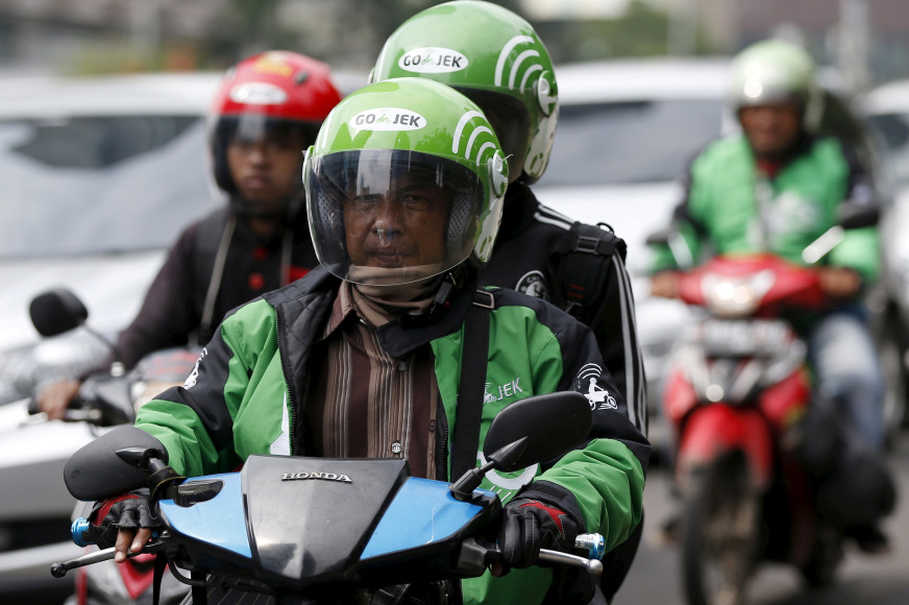
    Indonesian ride-hailing and online payment firm Go-Jek on Thursday said it would enter Vietnam, Thailand, Singapore and the Philippines in the next few months, investing $500 million in its international push.

    The move will start with ride-hailing services before expanding to other sectors, Go-Jek said in a statement.

    “People in Vietnam, Thailand, Singapore and the Philippines don’t feel that they’re getting enough [choice] when it comes to ride-hailing,” chief executive Nadiem Makarim said in the statement.

    The announcement comes after Uber Technologies Inc sold its Southeast Asian operations to local competitor Grab.

    Go-Jek said it was working with regulators and other stakeholders across the region to prepare for the new operations.

    The expansion follows Go-Jek’s latest round of fundraising, which brought investment from companies including Astra International, JD.COM, Tencent and Temasek.

  • Benoy wins international design competition for COFCO

    Benoy wins international design competition for COFCO

    International architectural company Benoy has won the bidding for the Cofco Joy Breeze project in Suzhou, beating out several other global design firms.

    It is another Cofco project for Benoy following the Joy City development in Hangzhou.

    Joy Breeze is in Suzhou’s central Xiangcheng district, close to the entrance to the city’s planned central park. With a GFA of 300,000sqm, the mixed-use project brings together a retail mall, retail streets, public transport hub and parking.

    “Our brief was to create a major commercial opportunity on this site as well as capture the interest of the district’s 25- to 45-year-old community,” says Benoy Shanghai studio director/head Qin Pang. “We were inspired by a passage from the Analects of Confucius which speaks of former eras and the feeling of enjoyment in the springtime. Our design has aimed to evoke these feelings and memories of happy spring days spent exploring new places.”

    Subsequently, the retail, recreation and entertainment hub emphasises diversity through the variety of its spaces. It offers a network of balconies, rooftops, public squares, retail streets and boxes. The various sections are linked by a multi-level thoroughfare through each floor, ensuring the scheme can be navigated as a whole.

    “We’ve paid attention to that special element of surprise,” says Qin. “For visitors coming day to day to do their shopping or meet with friends, each visit will bring a new experience.”

    Through the openness of its design as well as multiple entry points and extensive street frontage, the Joy Breeze development also integrates with its surrounding urban and natural environments and nearby residential areas.

    As a transport hub, the project is close to Longdaobang Metro Station and includes a bus station terminal.

    Construction is expected to start next year.

  • Cebu Pacific Air deepens Japan presence with first branch office

    Cebu Pacific Air deepens Japan presence with first branch office

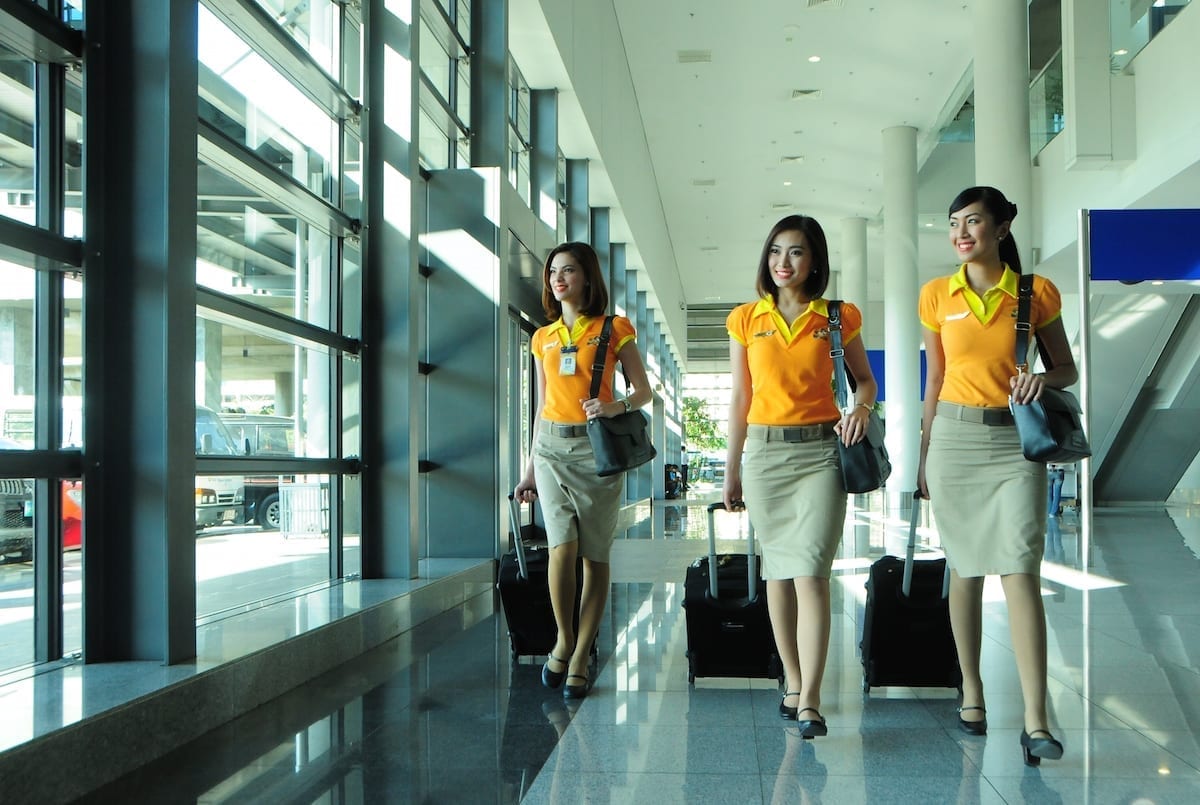
    Cebu Pacific Air has opened its first branch office in Japan to serve as the hub for all its activities and business transactions in the country.

    Heading the office in Chou-ku Tokyo is Tomohiko Matsumoto, who was appointed country manager for Japan in December 2017. A veteran in the travel and aviation industries with over 25 years’ experience, he served as country manager and international air cargo manager for Qatar Airways and more recently, as sales and marketing manager for Japan for Tigerair Taiwan.

    The airline’s first Japan branch office has an address in Chuo-ku, Tokyo

    Mike Szcus, chief executive adviser at Cebu Pacific Air, commented that the airline’s new branch office in Japan will bring the airline into the “next stage of growth” in the market, which is today “one of the most important across our network”.

    “In 2017, we flew over 435,000 passengers between the Philippines and Japan. Compared to the (size of the Japan outbound market), there is much room to grow,” noted Alex Reyes, vice president for cargo at Cebu Pacific Air.

    Now on its 10th year of operations in Japan, Cebu Pacific Air operates a total of 70 flights a week between Japan and the Philippines. Cebu Pacific Air flies between Manila and Narita, Osaka, Nagoya and Fukuoka, as well as between Cebu and Narita, utilising its fleet of Airbus A330 and A320 aircraft for these routes.

    Aside from B2B and B2C transactions such as group reservation services, ticket sales and customer support, the Japan brance office will also drive marketing strategies and promotional activities of Cebu Pacific Air in the country.

  • Higher oil prices to weigh on AirAsia X

    Higher oil prices to weigh on AirAsia X

    CIMB Equities Research expects significantly weaker performance for the rest of the year for long-haul low-cost carrier AirAsia X due to higher oil prices, with FY18F estimated to be loss-making.

    The research house said on Wednesday that based on prior-year quarterly trends, AAX’s 1Q18 core net profit (CNP) of RM91mil was 30% more than its previous full-year forecast.

    While Malaysia AirAsia X (MAAX) reported in-line CNP, Thai AirAsia X’s (TAAX) CNP was 80% more than expected due to strong inbound tourist arrivals into Thailand.

    “We downgrade our call from Hold to Reduce and lower target price to 29 sen, based on a lower CY18F P/BV multiple of 1.3 times (one standard deviation below mean), from 1.5 times previously,” it said.

    CIMB Research raised its spot jet fuel price assumption from US$75/bbl to US$85/bbl for all forecast years; jet fuel is trading at US$88/bbl currently.

    With a light hedge of only 12% at US$68/bbl, AAX is caught unprepared. AAX also does not have a fuel surcharge mechanism in place, it said.

    “Separately, MAHB is entitled to collect RM73/pax airport tax from Feb 1 but AAX is still collecting only RM50/pax. AAX is on the hook for the remaining RM23/pax or c.RM50m up to May 31, which we have factored into our FY18F forecasts,” it said.

    CIMB Research said MAAX reported CNP of RM36.8m, up RM8.3m on-year (+29%) due to a lower net interest expense position as the net debt balance was cut on loan installment repayments.

    MAAX’s EBIT was merely flat on-year while cargo revenue grew and ASK capacity expansion of 10% was well absorbed without any load factor or yield dilution. Operating costs rose at a faster rate of 13% on-year due to the 33% on-year rise in fuel prices to US$88/bbl, partially offset by the 12% depreciation of the US$.

    TAAX was the star of the show, growing 1Q18 CNP by 151% on-year.  AAX’s 49% share of TAAX’s 1Q18 CNP amounted to RM47.7m, up 151% on-year from RM19m in 1Q17.

    Passengers carried rose 19% on-year as inbound tourist arrivals into Thailand rose 15% on-year. TAAX grew its ASK capacity 19% on-year and kept its load factor unchanged at 94%.

    On top of that, TAAX managed a 25% on-year rise in average base fares to US$163/pax in 1Q18 from US$130/pax in 1Q17.

    Indonesia AirAsia X (IAAX) reported a breakeven CNP in 1Q18, against RM31m losses in 1Q17 as it relaunched services since 2Q17 on two routes, Bali-Mumbai and Bali-Tokyo Narita. The 1Q18 performance was commendable given that one of its two A330s had been sent for scheduled maintenance.

    MAAX currently has 22 A330s and plans to add two to three more planes this year via operating leases, with all-economy seats.

    “Given its excellent performance, TAAX plans to take delivery of three to four more operating lease planes (all-economy seats) to add to its current fleet of six A330s.

    TAAX launched Don Mueang-Sapporo in April and more North Asia route launches are expected throughout the year.

    As for IAAX, it cancelled its Bali-Mumbai route in May, presumably due to route underperformance, replacing it with Jakarta-Tokyo Narita, and its fleet of two A330s will remain unchanged.

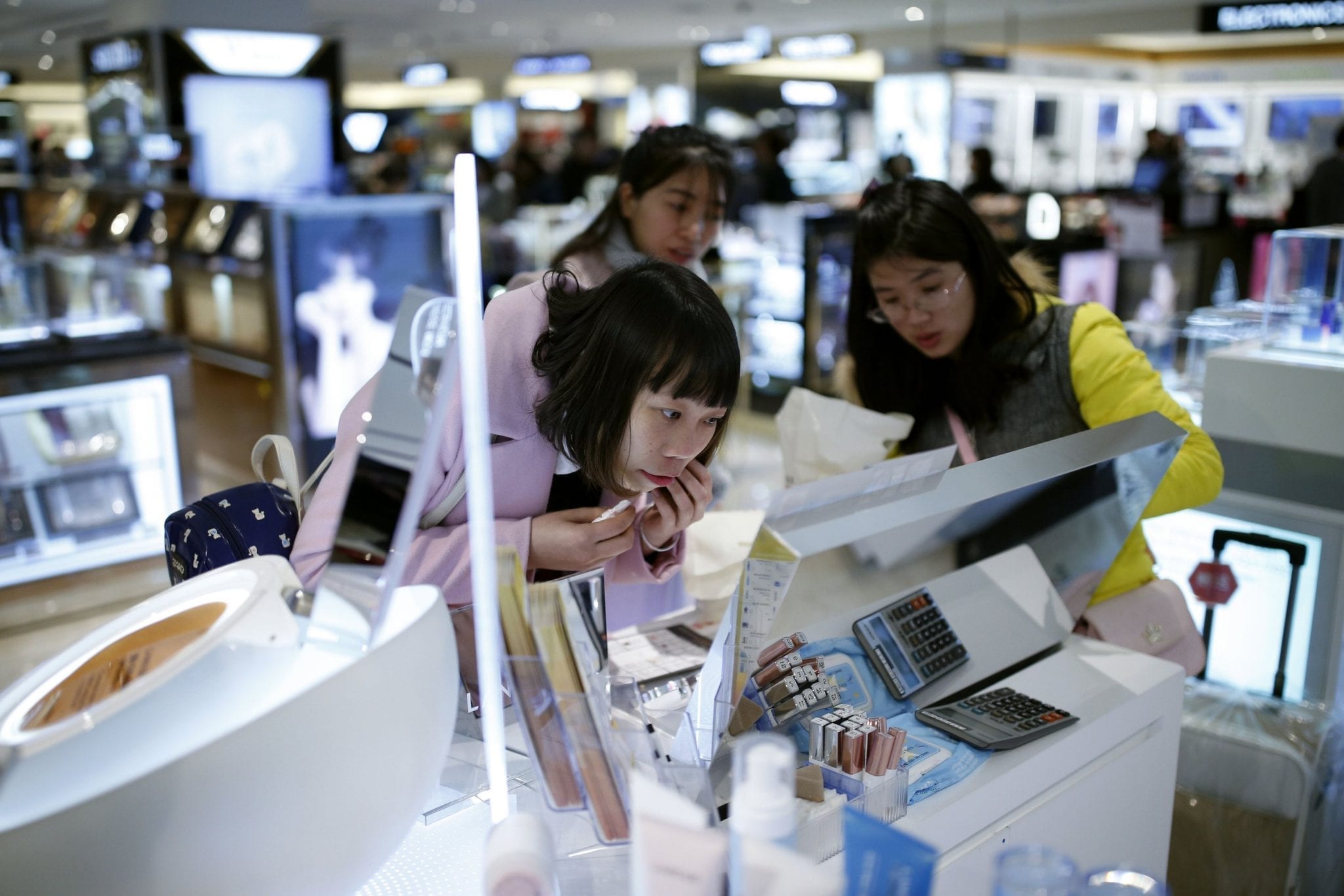
  • Korea department store sales benefit from holidays

    Korea department store sales benefit from holidays

    Department store sales rose this month on the strength of several family-oriented holidays and special occasions, retail industry data showed Tuesday.

    Numbers provided by major Korean retailers showed Children’s Day, which falls on May 5 every year, a substitute day off, and May 8 Parents’ Day all contributed to more consumption at department stores.

    In addition, Buddha’s Birthday, which is a national holiday that fell on Tuesday, created a long four-day break for some workers, giving them more time to spend.

    In the first 20 days of this month, sales at upper-end department stores like Shinsegae, Lotte and Hyundai all rose, with some reporting close to double-digit gains compared to the year before.

    Shinsegae said its sales shot up 9.9 percent on-year, which is an improvement on the 1.5 percent contraction reported for May 2017.

    The store said sales of men’s and women’s clothing rose 16.1 percent and 12.6 percent, respectively, while demand for sports products moved up 12.6 percent. It said demand for expensive designer goods soared 26 percent.

    The increase in sales was also reported by Hyundai and Lotte department stores during the same period. Hyundai said it sold 6.1 percent more goods, with Lotte trailing with a gain of 5.3 vis-a-vis the year before.

    Clothing, cosmetics, sports and imports generated growth for the stores with demand for consumer electronics and home fashion items contributing to the overall good showing.

    “Holidays and special occasions requiring gift buying played a part in better sales numbers this year,” a Lotte Department Store representative said.

    He said sales ahead of Children’s Day and Parents’ Day were good.

    On the other hand, less demand for fresh produce that make up a large part of hypermarket sales caused a drop in numbers for such retailers.

    Emart, the country’s largest discount store chain, said sales for April and May were off slightly compared with the year before. It said demand for both fresh and processed food fell last month and coming into May.

    The company said sales of TVs, refrigerators and washers did rise, although not enough to offset the dip in demand in other areas.

    This trend was repeated at Lotte Mart, which said sales were off 1.8 percent so far in May, affected in part by negative growth in fresh produce.

    An industry expert said sluggish economic conditions were having an effect, with department stores that tailor to the more wealthy less vulnerable than hypermarkets.

  • DBE Gurney to open Harumi fried chicken brand quick service restaurants in Thailand

    DBE Gurney to open Harumi fried chicken brand quick service restaurants in Thailand

    D.B.E. Gurney Resources Bhd’s subsidiary, D.B.E. Poultry Sdn Bhd (DBEP) has on May 23, 2018 entered into a joint venture agreement with Farmmesh Foods Co LTD (FFCL) to open and jointly operate Quick Service Restaurant operations with Harumi™ fried chicken brand concept in Thailand.

    The deal is following a Memorandum of Understanding signed between the parties on March 8, 2018.

    DBEP will hold a 30% interest in Super Harumi Thailand, while FFCL will take the remaining 70%. DBEP will inject an initial capital of RM37,000 into the joint venture, along with providing training and the running of the business.

    DBE Gurney said the JV business will enable it to expand its retailing business through HARUMi products and allow it to expand to Thailand following its early expansion into Taiwan, in addition to the existing outlets in Malaysia.

    The stock trading half a sen lower at three sen with some 1.3 million shares changing hands.

  • Adidas India to open 4-5 stadium inspired outlets this year

    Adidas India to open 4-5 stadium inspired outlets this year

    After opening its first stadium-format store in Delhi, Adidas India plans to roll out four or five more of the outlets this financial year.

    Designed to showcase the brand’s performance wear, the format will become standard in India from next year. Already used in Japan and South Korea, the format features interactive zones for customers to showcase product benefits, says Adidas India senior director for sales and retail Manish Sapra.

  • How To Prevent Shoplifting

    How To Prevent Shoplifting

    The definition of shoplifting is the taking of merchandise offered for sale without paying for it.  Shoplifting, according to the National Association for Shoplifting Prevention, has resulted in more than $25 million worth of merchandise being stolen from retailers every day.  This is one of the big causes of retail shrinkage.

    Regardless of the size of the retail store, all types of retailers will be susceptible to the growing issue of shoplifting.  This is why retailers need to determine how to identify shoplifters and common shoplifting methods.  They will also need to create an environment that is less attractive to shoplifters through implementing policies and procedures which protect their stores.

    Knowing What To Look For

    If you want to stop a shoplifter, you first need to be familiar with the different types of shoplifters, the commonly used methods and what you should be looking for when customers exhibit strange behavior.  The main thing that you will need to consider is the visual cues that you get.

    According to this NYC shoplifting lawyer, most shoplifters use other items to conceal their theft.  Grab and run shoplifting is actually rare and will generally not be what you have to worry about.  Most shoplifters will have a plan for how they are going to remove the merchandise from the store.  An example of this will be a long coat which provides a great place to conceal merchandise or a female shoplifter who carries more than one purse or handbag.

    The use of a handbag or purse is common because it is an item that will generally not cause additional attention.  However, the presence of more than one should be noted.  Other places that are commonly used by thieves will be strollers, umbrellas and inside bags with items that they have paid for.  An example of this will be a shoplifter who buys a pair of shoes and then returns to stuff the bag full of socks and belts.

    There are other sides of a shoplifter that you need to be aware of.  Shoplifters will often pay more attention to the employees in the store than the merchandise.  They will also pick up random items and pretend to be looking at them.  Walking in the opposite direction of employees is another sign particularly when they move when the employee moves.

    If you run a clothing store, you need to take note of the number of items they take into the dressing room.  You should then do a quick count when they exit to ensure the number is the same.

    Use Preventative Measures

    Good store management is one of the most effective tools when you want to prevent shoplifting.  You should look at using the store layout, common security practices, and inventory controls to fight shoplifting.  You should look around your store and try to find some of the hidden places that shoplifters will use.  These locations will generally be where an employee will not see what the customer is doing.  This will not only make it easier for shoplifters, you will also impact your ability to provide a service.

    Thinking about service, another way to prevent theft will be to offer a proactive service.  If there is an employee actively engaging the customer, they will have a hard time stealing something.  They will know that they are being watched and this type of customer service will be the best weapon you have.

    Keeping your store shelves organized is also important. Disorganized shelves will make it harder for you to determine if something has been stolen.  However, an empty space on the shelf or display table will be a sign that something is wrong.  However, this will only help when you are focused on your merchandise.

    Stopping Shoplifters

    It is important that you have policies and procedures for shoplifting set up early in the business planning process.  While you hope this will never happen in your store, the truth is that it is going to happen.  When it does, you and your staff will need to be prepared to handle the situation.  When you create your shoplifting procedures, you should take some of these points into consideration.

    How are you going to approach a customer you suspect of shoplifting?

    Will you confront the suspect or will your policy be to not confront them?

    Who will you be calling or contacting?

    What documentation are you going to need?

    You should take some time to role-play the proper procedure with your employees.  This is not something that they should try to complete at the time.  Train them correctly and everything will go smoothly.

    Retailers are being struck by outside influences every day.  The truth is that most shoplifters are not professionals and only 3% are estimated to be professional thieves.  However, it is possible to control your losses through shoplifting prevention.
     

  • Overlook to the future Chinese Real Estate market

    Overlook to the future Chinese Real Estate market

    Since the origination of REITs in the United States, in the 50 years of its development, REITs in the United States, Singapore, Japan has been running on a rather perfect system, with legal policies and tax system. REITs was able to help the countries in growth, sustainable decisions, and the industry coordination. China had the first REITs in 2005. Since then, REITs in China have been moving forward, to seek further opportunity.

    The new age of investment has come. PE is the most anticipated type of investment that most of the investors that are eyeing for. According to Asset Management Association of China, by the end of Februrary 2018, PE Fund pool have reached monthly growth of 250 billion Yuan, totaling 12 trillion Yuan. It has its competition to Public Placement.

    With the development of Real Estate Equity Fund and REITs, an increase in the amount of firms are interested to be a part of it. As the fundamental, Finfo Global along with CaishiV is going to host the 2nd Real Estate Equity Investment & REITs in Shanghai on May 17. The event have gathered worldwide trust firms, insurance company, law firms, securities, asset managements and banks. The event is excepting more than 300 managerial positioned attendees.

    At the event, Weida Kuang from China Remin University, National Development and Strategy Institution, City and Real Estate Institution with be introducing his ideas over the macro economy and the effect of the industry of real estates. Also, there are newly added topics such as low-cost rental housing, public rental housing, rental housing REITs, investment opportunities in second and third tier cities, offshore real estate PE Fund and its structuring,

    To learn more, please go to: https://www.peinreits.com/index.php/en/index.html