Author: Mei Ling Tan

  • Malaysia’s 2018 economic growth expected to remain above 5%

    Malaysia’s 2018 economic growth expected to remain above 5%

    Malaysia’s first quarter (1Q18) gross domestic product (GDP) growth came in at 5.4% year on year, lower than the consensus projection but AmBank Research is maintaining its 5.5% GDP growth for this year as it expects private consumption and the services sectors to continue to support growth together with other areas of business activities.

    “Apart from private consumption and services, we noticed that most of the other economic segments showed some loss of growth momentum. Still, our current 5.5% GDP growth for the full year remains, as we expect private consumption and services sectors will continue to support growth together with other areas of business activities,” it said in a report.

    “With the announcement of the Goods & Services Tax removal, added with the potential reintroduction of fuel and electricity subsidies as well as the review of toll roads, these suggest that the underlying inflation will pick up gradually.

    “While our base case for OPR (Overnight Policy Rate) remains with a total of one rate hike by Bank Negara Malaysia (BNM) that took place in January with the OPR now at 3.25%, the probability for a second rate hike in September 2018 remains at a low 45%,” said AmBank.

    However, Kenanga Research has revised its 2018 GDP growth forecast to 5.1% in 2018 from 5.5% (2017: 5.9%), as it said the change in government will likely put a damper on private investment due to policy uncertainty and disrupted public spending, which pose downside risks to its GDP forecast going forward.

    “The only upside to growth could possibly be derives from higher private consumption following the government’s decision to scrap the Goods and Services Tax (setting its rate at zero from June 1) and take its time to implement the sales and services tax. External factors may also weigh on growth mainly the expectation that exports would continue to slow on the back of the slowing global demand for consumer electronics especially mobile devices.”

    Nonetheless, it said there could be offsetting factors if the government takes an aggressive approach to review major infrastructure projects. It then can prioritise or strategically delay projects that have high import content as it did in the 1990s. Less import could help boost net exports and support GDP growth.

    Kenanga expects monetary policy to remain accommodative. It said although the central bank has left interest rates unchanged since it raised the OPR in January, the outlook for monetary policy may have turned considerably uncertain following the change in government.

    “The biggest risk to the monetary policy outlook is that a post-election sharp decline in investment would exacerbate an economic slowdown. This may prompt BNM to loosen its monetary policy and cut interest rates. For now we are maintaining our view that the OPR will remain on hold until the end of the year.”

  • Lippo Urges Deeper Indonesia-Japan Business Ties

    Lippo Urges Deeper Indonesia-Japan Business Ties

    The Lippo Group, one of Indonesia’s largest conglomerates, has called for deeper ties between the Japanese and Indonesian business communities to help realize the Southeast Asian country’s high investment potential over the next decade.

    Japan has long been a major source for foreign direct investment in Indonesia, influencing a wide range of sectors, from mining and basic industries to automotive and public transportation.

    “Japan has been critical to Indonesia’s modern development. Today, as Indonesia continues to be a go-to market for textile, automotive, chemical and technology manufacturing, and more, Indonesia continues to be an attractive, high-potential business opportunity,” Lippo Group chief executive James Riady said on the sidelines of the Nikkei Asia300 Forum in Tokyo on Monday.

    “We began our relationship with the Japanese business community over 30 years ago. It began with investment projects with various reputable Japanese banks,” James said.

    “Today, we are proud to have partners in a wide range of industries, from telecommunications to data centers, property to health care, financial technology to e-commerce. We are excited about deepening and widening this range of partnerships,” he added.

    Among the Lippo Group’s Japanese partners is Itochu Corporation, which is involved in the group’s health care business outside Indonesia. Lippo has worked with Mitsui & Co. since 2014 to expand mobile broadband services in Indonesia.

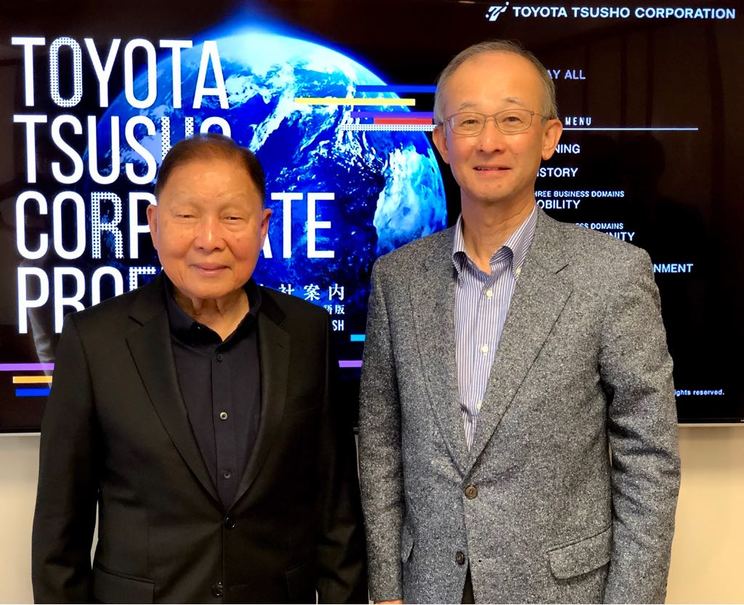
    Lippo opened the way for the Toyota Tsusho Corporation, the trading arm of the Toyota Group, in the Indonesian property market for the first time in 2013 with a hotel-style apartment tower project in Bekasi, West Java.

    Mochtar Riady, Lippo Group founder and chairman, used the Nikkei Asia300 Forum as an opportunity to thank Japanese partners and friends for putting their trust in the Lippo Group and the Indonesian economy. The Lippo Group believes in growing with partners and working together to achieve long-term results, he said in a statement.


  • Seoul Garden celebrates 35th anniversary with exciting deals

    Seoul Garden celebrates 35th anniversary with exciting deals

    Asian-Korean restaurant chain Seoul Garden has marked its 35th anniversary with a celebration at its first Malaysian outlet, in Gurney Plaza, Penang.

    The brand’s grill and steamboat buffet included marinated meats such as coffee chicken and beef bulgogi.

    Seoul Garden Group COO Siow Yong Wu says the brand has come a long way since its establishment in Singapore in 1983 as an a-la-carte eatery catering to Korean expatriates. He says they switched to a buffet concept before entering the Malaysian market in 2005 with the Gurney Plaza outlet.

    Penang franchisee Joseph Lee says Seoul Garden outlets were among the most popular dining venues because of their vast buffet, offering about 120 items.

    With 35 outlets across peninsular Malaysia, Sabah and Sarawak, the brand has also obtained halal certification.

    Group CEO Andrew Lee says all food items come from halal suppliers. “We have also re-engineered our proprietary grilling system to give customers a more comfortable, smoke-free dining environment.”

    Siow says the group intends to expand heavily, both within Malaysia and in neighbouring countries. Currently, the brand has a presence in Indonesia (Medan), Vietnam, the Philippines, Brunei and Myanmar.

  • Alibaba supports Thailand’s TrueMoney

    Alibaba supports Thailand’s TrueMoney

    Chinese e-commerce giant Alibaba Group Holding is backing Thai conglomerate Charoen Pokphand’s TrueMoney payment service, which will expand to Bangkok’s train services as early as September.

    Passengers will be able to pay fares and shop at station kiosks by scanning a QR code on their smartphone screen.

    Alibaba’s Ant Financial owns about 20 per cent of TrueMoney, which aims to expand its network 10-fold to 100,000 locations by the end of this year. Users can charge their accounts at Thailand’s more than 10,000 7-Eleven convenience stores, which are run by the Charoen Pokphand group in Thailand, or link them to a credit card or bank account. The group also has 27 million subscribers of its telecom company True.

    Next, say industry observers, cafes and fast-food chains, including KFC, are on the radar for TrueMoney, which aims to overtake Rabbit Line Pay, the market-leading service from Japanese messaging app provider Line and elevated train service BTS Group Holdings. About 60 per cent of Thailand’s population uses the Line chat app, with users of the mobile pay service now numbering about 3 million.

    Alibaba partnered with Philippine conglomerate Ayala last year and launched mobile payments mainly at shopping malls and supermarkets.

  • Grab Malaysia partners Maybank for mobile wallet launch

    Grab Malaysia partners Maybank for mobile wallet launch

    Grab announced a strategic partnership with Maybank to drive the acceptance and usage of Grab’s new cashless payment method, the GrabPay mobile wallet.

    The announcement comes as Grab, which received its e-money license from Bank Negara Malaysia in December 2017, is set to launch its GrabPay mobile wallet in beta in the coming weeks.

    With the partnership and support of Maybank, Grab consumers will not only be able to use GrabPay mobile wallet at GrabPay merchants, but will also be able to eventually use their mobile wallet at Maybank’s key merchants thereby making GrabPay accepted at a wider network of merchants.

    Similarly, Maybank customers will also eventually have the option of paying via Maybank QRPay at GrabPay merchants.

    Through the partnership, consumers will soon also have the added convenience of directly topping-up cash to their mobile wallet via Maybank2U.

    Maybank group president and CEO Datuk Abdul Farid Alias said that the collaboration with Grab is part of Maybank’s ongoing efforts to provide customers with even more digital conveniences that would not only enrich their online experience but also enhance their lifestyles.

  • China Tech Giants Bet on Untangling Logistics of Indonesian E-Commerce

    China Tech Giants Bet on Untangling Logistics of Indonesian E-Commerce

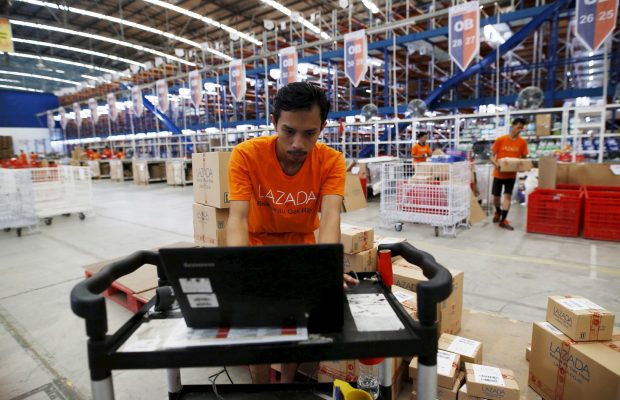
    In a warehouse on the outskirts of Indonesia’s capital, supervisors at e-commerce company Lazada use bikes or electric scooters to zip around a floor the size of four soccer fields, where up to 3,000 staff pack and dispatch goods around the clock.

    The warehouse is one of five that Lazada has opened across Indonesia to cut costs and expand its reach in an archipelago whose 17,000 islands are sprinkled across an area bigger than the European Union.

    Chinese tech firms, including Lazada’s top investor, Alibaba Group Holding, have poured at least $6 billion into nearly every aspect of Indonesian e-commerce.

    Lazada uses Alibaba’s inventory management systems and has tied up with ride-hailing companies, often using their motorbikes to deliver goods in a country with creaking infrastructure and traffic-clogged cities.

    The payoff could be huge. It is a market forecast to grow from about $7 billion last year to $63 billion by 2027, according to Morgan Stanley.

    “Indonesia, both in terms of the customers and behaviour, is a very unique challenge and we need to adapt,” Florian Holm, co-chief executive at Lazada Indonesia said.

    Lazada and Tokopedia, in which Alibaba is also an investor, dominate Indonesia in customer traffic, with more than 117 million monthly website visits each, according to data from e-commerce aggregator iPrice.

    Alibaba doubled its investment in loss-making Lazada to $4 billion in April, underscoring its global ambition to secure a bigger share of the e-commerce market.

    Between the investment and the rewards, however, lie enormous complexities.

    The World Bank has said logistical costs swallow up around a quarter of Indonesia’s gross domestic product, citing bottlenecks in supply chains, long dwelling times in ports and lengthy trade clearances.

    Lazada has opened warehouses in places like Balikpapan, on the coast of Borneo, to avoid hauling everything from Jakarta. Holm said that had in some cases reduced shipping costs by 90 percent. Competitive pressure is growing. Another Chinese heavyweight, JD.com, arrived in Indonesia in 2016. And the US giant Amazon, which opened a warehouse in Singapore last year, may be prepared to dip a toe into the Indonesian market soon.

    Chinese Influence

    Indonesia’s e-commerce sales are set to rise from 3 percent of retail activity now to 19 percent by 2027, Morgan Stanley estimates. The same report said there were 159 million smartphones in Indonesia at the end of 2016, a number that could rise to 275 million by 2021.

    Indonesia’s young population and room for improvement in transportation and communications add to the prospects for growth, the bank said.

    That has attracted other Chinese companies. Tencent Holdings, which owns regional e-commerce player SEA, has entered the fray.

    Tencent and JD.com have stakes in Indonesia’s ride-hailing firm Go-Jek, while JD.com has invested in online travel company Traveloka.

    But Usman Akhtar, a partner at Bain & Co in Jakarta, said Indonesian companies such as Blibli, backed by a unit of the Djarum group, remain a force.

    “I would not characterize Indonesia as turning into a replica of China’s e-commerce market, at least not yet,” said Usman, referring to how JD.com and Alibaba dominate in China. Kusumo Martanto, who heads Blibli, said that the company had seven warehouses in Indonesia with seven more planned, and said it was important for local e-commerce companies to compete against Chinese players.

    Alibaba founder Jack Ma is on an Indonesian government steering committee for e-commerce, advising on areas such as tax, cyber security and human resources.

    Indonesia’s communications minister, Rudiantara, said there was no conflict of interest in Ma’s role, describing him as a “guru” who could help sell the country’s potential.

    But some policies seem to be turning toward Ma’s home turf.

    Indonesia, which is trying to tackle a shortage of talent in the digital sector, dropped sponsorships for 20 students to study in places like Australia and the United States.

    Instead, 10 students will go to India and 10 to China to study this year “because the future of the digital economy is in China and India,” said the minister, who uses one name.

    Eying Amazon

    Caterine, a 30-year-old housewife who lives west of Jakarta, used to shop in conventional stores once a week, but after her baby was born six months ago, she has been shopping online two to three times a week for convenience.

    “I prefer online shopping because it is quick. I can just click and click and the goods will arrive,” she said, adding she mostly used Shopee and Tokopedia for goods such as diapers and clothing.

    Morgan Stanley said delivery times of all types across Indonesia are down to about 3 days from 10 days, while deliveries in big cities can take 24 hours or less.

    While in urban areas delivery times have greatly improved, other parts of Indonesia’s e-commerce supply chain are still inefficient, said Willson Cuaca, co-founder of East Ventures, a tech investment fund.

    “To send goods from point A to B, the logistics company needs at least two modes of transport,” he said, referring to the complications of operating across so many islands.

    Amazon, by contrast, prefers to control its own supply chains from start to finish. But entering a market like Indonesia could require it to revisit that strategy.

    Amazon Singapore did not respond to a request for comment on whether it had plans for Indonesia.

    Much of the U.S. giant’s international focus has been on developing its business in India, even though some view its entry into Singapore last year as a stepping stone for expansion in the region.

    “At this moment, I believe it is trying to test the market, by selling products through third-party sellers,” said Daniel Tumiwa of the Indonesian e-commerce Association.

    Zhang Li, who heads JD.com’s Indonesian joint venture with Provident Capital JD.ID, was not overly concerned about competition from the likes of Amazon.

    “E-commerce is a global and borderless business, so we have to prepare and do continuous improvement to make our customers happy,” Zhang said.

  • 92% of Malaysians prefer to own than rent

    92% of Malaysians prefer to own than rent

    Despite the rising perception that more Malaysians would choose to rent than to buy a home, statistics from the recent PropertyGuru Consumer Sentiment Survey show that 92% of those polled would rather own the roof over their heads than to lease.

    Among those polled, about 33% were presently renting with 67% residing in their “own homes”. Own homes are regarded as homes that are owned by their dwellers or it could be a family home, staying with a sibling or relative and other non-rental residences.

    A total of 817 respondents participated in the PropertyGuru’s Consumer Sentiment Survey for the second half of 2017.

    The survey shows that the traditional aspiration of owning a home remains largely unchanged despite evolving property market trends and demographics.

    For those who would prefer to rent, the majority cited a location that is close to their office or workplace as the most important criterion (71%), followed by family considerations (55%) and public transportation accessibility (52%) respectively. High-rise homes are the preferred option for renters with condominiums and serviced apartments being the top choice.

    “It appears that despite rising living costs, higher loan rejection rates and price unaffordability, Malaysians including the younger generation still would make home ownership a key lifestyle aspiration. The desire is very strong perhaps due to family or peer pressure or due to the prevalence of traditional perceptions of owning a home as being a sound foundation for one’s future,” said PropertyGuru Malaysia country manager Sheldon Fernandez.

    “Beyond providing a place to stay, a home to Malaysians still represents stability, security and continues to be a key asset class for wealth accumulation via capital appreciation and rental yields.”

    Fernandez added that the PropertyGuru survey also showed that even many of those who are presently renting also aspire to buy a home if they can afford it.

    Renters believe that RM501-RM800 monthly to rent a room was a realistic budget while those looking to rent a home would ideally wish to pay RM801-RM1100 per month, depending on location, property type, unit size and other factors.

  • China agrees to import more from US, no sign of $200 billion figure

    China agrees to import more from US, no sign of $200 billion figure

    China has agreed to significantly increase its purchases of U.S. goods and services, the two countries said on Saturday, but made no mention of a $200 billion target the White House had touted earlier.

    Beijing and Washington agreed they would keep talking about measures under which China would import more energy and agricultural commodities from the United States to close the $335 billion annual U.S. goods and services trade deficit with China.

    A joint statement issued at the conclusion of intensive trade talks in Washington did not indicate whether the two countries would delay or drop their tariff threats on billions of dollars worth of each country’s goods, which has sparked fears of a wider trade war and roiled financial markets.

    “There was a consensus on taking effective measures to substantially reduce the United States’ trade deficit in goods with China,” the joint statement said.

    “To meet the growing consumption needs of the Chinese people and the need for high-quality economic development, China will significantly increase purchases of United States goods and services.”

    U.S. President Donald Trump has threatened to impose tariffs on up to $150 billion on Chinese goods to combat what his administration says is Beijing’s misappropriation of U.S. intellectual property through joint venture requirements and other policies that force technology transfers.

    Beijing denies such coercion and has threatened equal retaliation, including tariffs on some of its largest U.S. imports – among them aircraft, soybeans and autos.

    A report described the statement from the two governments as “vowing not to launch a trade war against each other.”

    While the statement said the two sides would engage at high levels and “seek to resolve their economic and trade concerns in a proactive manner,” it made no mention of tariffs.

    It said there was consensus between Washington and Beijing on the need to create “favorable conditions to increase trade” in manufactured goods and services. This could be a reference to China’s previous pledges to open up more economic sectors to services.

    U.S. LNG EXPORTS

    The United States will also send a team to China to work out the details of increased agricultural and energy exports, the countries said, without specifying timing.

    A senior U.S. official said that during discussions with a member of President Xi Jinping’s office, China was considering a package that relied on major purchases of U.S. liquefied natural gas, including a contract for a U.S. firm to build LNG receiving and processing facilities in China.

    The package, which also would include new commitments on intellectual property protections, could be agreed by a potential mid-year visit to Washington by China’s Vice President Wang Qishan, the official said.

    Trump made cutting the U.S. trade deficit with China a promise in his presidential campaign.

    During an initial round of talks earlier this month in Beijing, Washington demanded that China reduce its trade surplus by $200 billion – a figure most economists say is impossible to achieve because it would require a massive change in the composition of commerce between the two countries.

    IP VAGUENESS

    The statement was vague on the Trump administration’s core intellectual property complaints, saying that both countries “attach paramount importance to intellectual property protections … China will advance relevant amendments to its laws and regulations, including the Patent Law.”

    There are concerns among some legislators and trade experts that Trump could give priority to a narrower trade deficit over tackling what they say is China’s abuse of intellectual property rights. Any deal under which China would import more goods could easily be reversed, economists say.

    The statement made no mention of whether there would be a relaxation of paralyzing restrictions on Chinese telecommunications equipment maker ZTE Corp (000063.SZ) (0763.HK) imposed last month by the U.S. Commerce Department.

    The action, related to violation of U.S. sanctions on Iran, banned American companies from selling semiconductors and other components to ZTE, causing the Shenzhen-based company to cease operations.

    Earlier this week, Trump tweeted that he directed the Commerce Department to put ZTE back in business and said the company’s situation was part of an overall trade deal with China.

  • Marks and Spencer set to close 40 more stores

    Marks and Spencer set to close 40 more stores

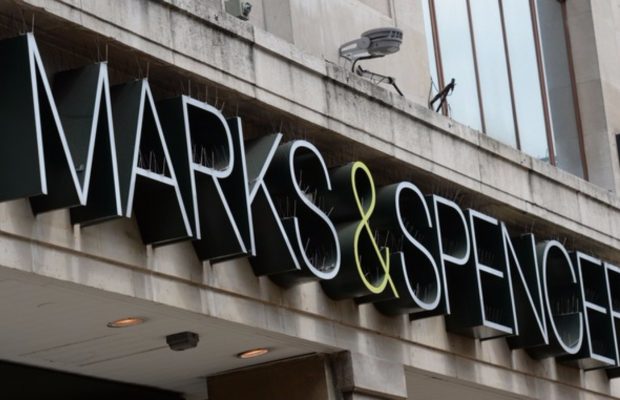
    British department store retailer Marks & Spencer will close a further 40 stores in its home market as it struggles to improve its bottom line.

    According to reports, M&S will announce which of its 140-strong full-store network will close on Wednesday UK time, adding to the 20 already shuttered. The full stores stock both fashion and food.

    Rationalising the store network was a key plank of a turnaround program announced 18 months ago by CEO Steve Rowe, which also included retrenching from overseas markets. Since then, the company’s Mainland China operations have been closed down and its profitable Hong Kong business divested to Middle East-based Al-Futtaim under a franchise arrangement.

    The decision to accelerate the closure program was prompted by early results from the closure of a store in Warrington town centre which led to increased sales in a newer off-high-street store nearby.

    “We have been clear about our plans to accelerate our store closure program and the action we must take to build a business with sustainable, profitable growth,” an M&S spokesperson said.

    On Wednesday, M&S is expected to report further under performance in its food arm, with analysts projecting a drop in sales, but an improved bottom line.

  • Malaysia vehicle sales up 10% in April from a year ago

    Malaysia vehicle sales up 10% in April from a year ago

    Total vehicle sales in April 2018 increased 10.2% or 4,343 units to 47,089 units, compared with 42,746 units a year ago, according to the Malaysian Automotive Association (MAA).

    On a month-on-month basis, April saw a decline of 5.8% or 2,896 units as consumers adopted a wait-and-see attitude due to the general elections.

    Meanwhile, the association said vehicle sales in May are expected to increase, with many car companies announcing zero-rated Goods and Services Tax (GST) prices following the government’s move to abolish the tax on June 1. This will be boosted by promotional campaigns for Hari Raya Aidilfitri.

  • Bank of Indonesia Hikes Key Interest Rate to Boost Fragile Rupiah

    Bank of Indonesia Hikes Key Interest Rate to Boost Fragile Rupiah

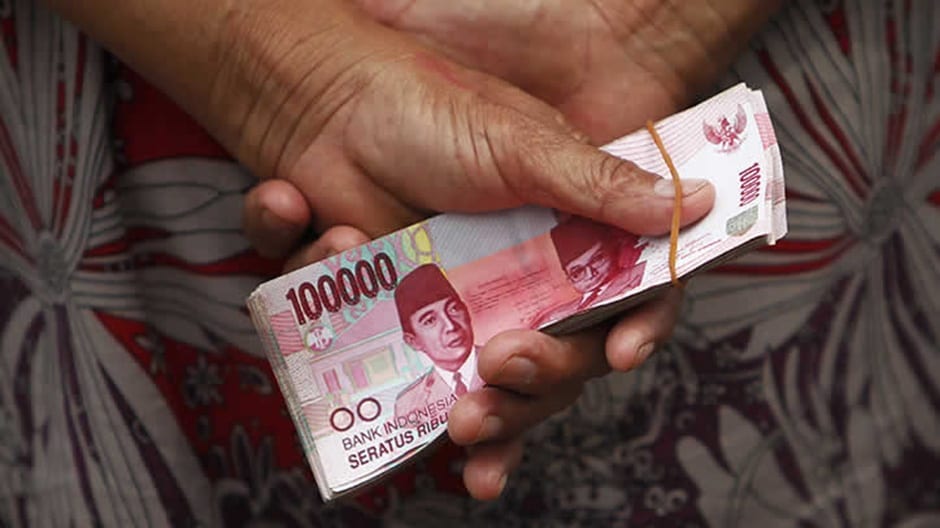
    Indonesia’s central bank on Thursday (17/05) hiked its benchmark interest rate for the first time since November 2014, as expected, in a bid to bolster the fragile rupiah.

    Bank of Indonesia (BI) raised the 7-day reverse repurchase rate by 25 basis points to 4.50 percent. In 2016 and 2017 combined, BI cut the key by 200 bps to try to spur lending and faster economic growth.

    In a Reuters poll, 13 of 21 economists had predicted a rate at Thursday’s meeting, the last for Governor Agus Martowardojo.

    The governor, who will be succeeded by Perry Warjiyo later this month, said the hike was in response to rising global financial uncertainty amid tighter US dollar liquidity.

    “BI will continue to monitor economic developments and is ready to take firmer actions to ensure macroeconomic stability,” Agus said.

    In the month since BI last met on April 19 and said it would be an “overkill or counterproductive” to be raising rates, consensus expectations swiftly turned to see a rate rise as needed to put a floor under the falling rupiah.

    Southeast Asia’s largest economy is one of the region’s worst affected by the combination of rising US yields and higher oil prices, and has seen about $4 billion leave its markets over the past month as foreign investors review their exposure to higher-yielding emerging markets.

    The rupiah has fallen more than 5 percent to past 14,000 per dollar in four months as Indonesian 10-year bond yields jumped more than a percentage point over that period, and the stock market is down 8 percent this year.

    On Thursday, BI maintained its 2018 economic growth outlook at 5.1-5.5 percent and said that annual inflation would remain within its target range of 2.5-4.5 percent.

  • Turning point for Hong Kong retail space

    Turning point for Hong Kong retail space

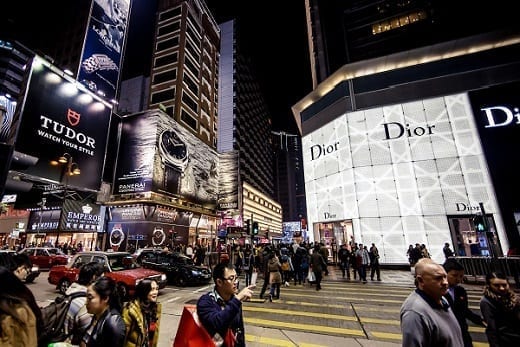
    For the first time in five years, the demand for retail space in Hong Kong has not declined.

    Results from the RICS (Royal Institution of Chartered Surveyors) Hong Kong Commercial Property Monitor for this year’s first quarter indicate that the demand for retail space has not changed from last year’s fourth quarter.

    The Occupier Sentiment Index (OSI) increased modestly to 14 from 10 the previous quarter, while the Investment Sentiment Index (ISI) grew six points to 19.

    There was a moderate increase in the number of retail properties available or rent, with respondents reporting an increase in landlord incentives for retail space.

    “Occupier demand continued to rise at a headline level for the first quarter,” says RICS Hong Kong external affairs committee member Frank Wong.

    There was a minor decrease in foreign demand for retail properties.

  • Bursa Malaysia opens lower

    Bursa Malaysia opens lower

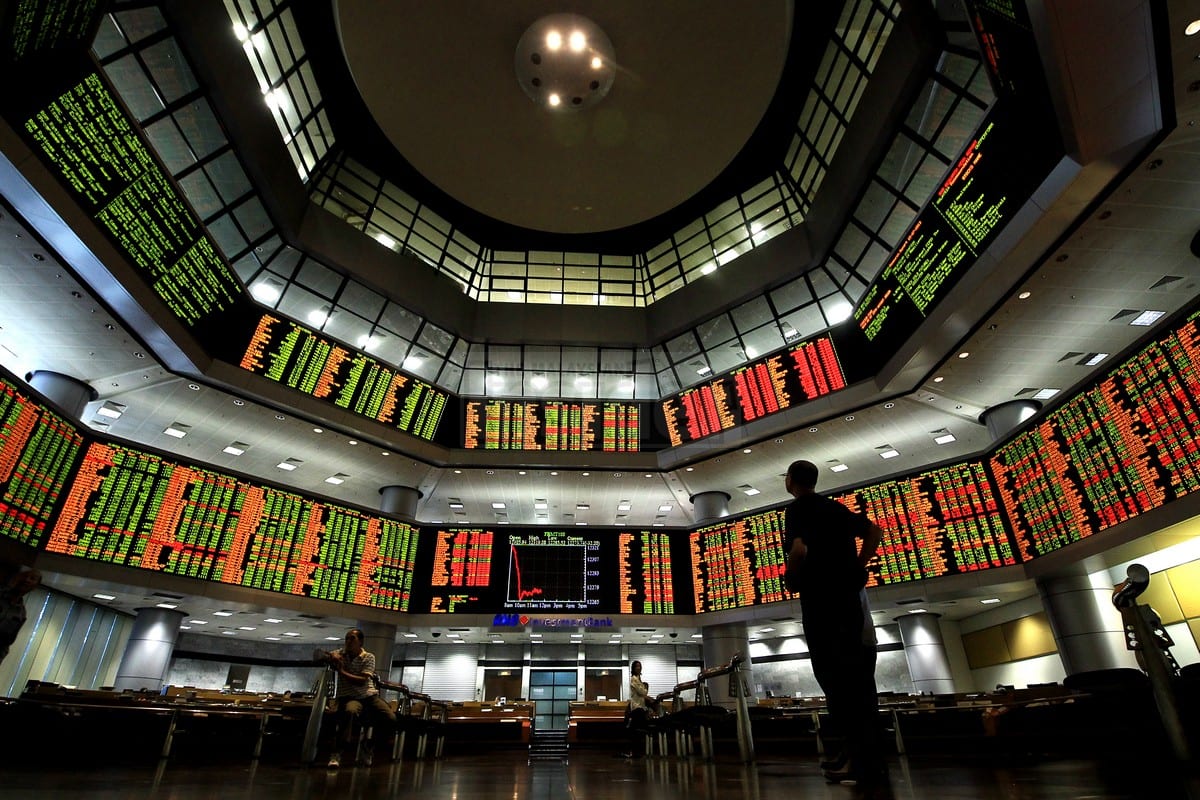
    Bursa Malaysia opened lower, extending yesterday’s losses on continued selling in selected heavyweights and in line with most regional peers, dealers said.

    At 9.17am, the benchmark FTSE Bursa Malaysia KLCI (FBM KLCI) was 6.01 points lower at 1,839.02 from Tuesday’s close of 1,845.03.

    The index opened 1.63 points weaker at 1,843.40.

    On the broader market, losers led gainers 202 to 137, while 183 counters were unchanged, 1,386 untraded and 20 others suspended.

    Volume stood at 185.91 million units valued at RM105.46 million.

    Public Investment Bank Bhd said the FBM KLCI may trade lower today as attention remains on Italian politics, with the benchmark sovereign debt yield turning around, as buyers re-emerged for the country’s 10-year paper.

    “On Wall Street, the S&P 500 gained as much as 0.3%, helped by signs the US-China trade war appeared to be abating, but suffered a late afternoon swoon to close 0.3% down for the day,” it said in a research note today.

    Among heavyweights, Maybank was two sen higher at RM10.90, Public Bank rose 22 sen to RM25.42, Petronas Chemicals improved one sen to RM8.44, while TNB shed 10 sen to RM15.24 and CIMB declined five sen to RM6.60.

    For actives, AirAsia X and Destini gained one sen each to 39 sen and 23.5 sen respectively, MyEG earned half-a-sen to 94 sen, while Hubline and PUC were flat at nine sen and 20.5 sen.

    The FBM Emas Index slid 38.07 points to 12,806.52, the FBMT 100 Index decreased 38.69 points to 12,609.62 and the FBM Emas Syariah Index dipped 81.97 points to 12,793.51.

    The FBM 70 lost 37.48 points to 15,068.35, but the FBM Ace advanced 1.60 points to 5,282.82.

    Sector-wise, the Finance Index was 30.89 points higher at 18,476.08, while the Plantation Index improved 4.71 points to 7,944.63 and the Industrial Index fell 18.83 points to 3,286.82.

    The physical price of gold as at 9.30am stood at RM159.97 per gramme, up 33 sen from RM159.64 at 5pm yesterday.

  • Capillary Technologies grows its global business by 200% YoY

    Capillary Technologies grows its global business by 200% YoY

    Capillary Technologies, with presence in 30+ countries and helping consumer businesses achieve digital transformation, using its AI Powered technology platform; today announced that it has grown its global business by 200% YoY and has elevated Abhijeet Vijayvergiya as its President & Managing Director, Global Accounts and Asia Pacific.

    In his new role, Abhijeet will not only be continuing to own sales for Asia Pacific but will also be responsible in nurturing and scaling Capillary’s global accounts such as Pizza Hut, KFC, Bata, Asics, VF Brands and Siam Makro. He will be based out of Singapore.

    “Abhijeet is responsible for the three times business growth in Southeast Asia as well as scaling up India. Asia Pacific countries are strategic markets for us. Abhijeet will play a vital role in growing our Asia Pacific business, excluding India and China. He will also lead our global accounts segment across all geographies,” said Ganesh Lakshminarayanan, COO, Capillary Technologies.

    “Increasingly, our global customers are leveraging our product suite across multiple countries. Brands are unlocking tremendous value with us for many reasons. Firstly, as the brands scale to multiple countries with our product suite, they realise better ROI. Secondly, our co-innovation focused agile delivery model helps brands to launch new ideas across markets in faster time. Finally, our global Center of Excellence (CoE) set-up helps brands to leverage learnings across countries,” added Ganesh.

    Till date, Capillary has raised more than $100 million in funding, including the recent $20 million round. While Capillary has a strong presence in India, South East and Middle East, it is looking to further strengthen presence in China and the Middle East, besides penetrating further into Southeast Asia. Its opening second office in China at Guangzhou and then another at Beijing later this year.

  • Raya Online Sales Will Likely Peak inEarly June With 0% GST

    Raya Online Sales Will Likely Peak inEarly June With 0% GST

    ShopBack, the leading online Cashback platform that partners more than 500 online shops in Malaysia, foresees Raya sales will reach its peak in the first week of June, given the 0% GST implementation from June 1st onwards.

    “Our partners have started to prepare for an early June promotion as that will likely be the week when consumers rush into Raya preparation. For example, Lazada is planning for a Mega Sale from June 1st until June 4th with onsite games, flash sales, and up to 11% cashback for ShopBack users. Around 40 partners are joining our Raya campaign and we are looking to have at least 100% growth this year,” says Alvin Gill, Country General Manager of ShopBack Malaysia.

    Other online partners that are joining the campaign include Traveloka, 11street, foodpanda, FashionValet, Booking.com, Senheng, Hermo, Expedia, Sephora, ASOS, JD sports, PappaDelivery etc. and the highest Cashback on offer is 30%.

    “There was a 25% drop in sales during the 14th General Election week and it was expected. As people resume working and Ramadan begins, the number of online sales has started to recover to the previous level. According to ShopBack data, the number of sales powered by ShopBack during Ramadan 2017 VS 2016 grew by 100%. We are confident to achieve beyond this number as the market sentiment looks very positive after GE14.

    “The 0% GST may allow Malaysians to have better purchasing power when spending for their Raya needs. Based on our historical data, sales normally surge at the second week of Ramadan but for this year, it may start after the 0% GST takes effect and will prolong to the fourth week,” Alvin says.

    Malaysians Spent More Compared to Indonesians

    ShopBack regional’s data also hows that in a comparison with Indonesians, Malaysians’ average spending during Ramadan 2017 was USD 54.54. Indonesians instead spent USD 49.04 on average. Overall, Fashion appeared as one of the top selling categories in both countries. Malaysians spent more on Health & Beauty and Electronic items while Groceries, Toys & Games had a great demand among Indonesians.

    “Larger electronic items, for example, household appliances could be the reason of higher spending found among Malaysians,” Alvin explains.

    Both Malaysia and Indonesia experienced a dip in traffic during Iftar hour. Website and app traffic during peak hour remained unchanged except for an increase of 15% during Ramadan month.

    “This year, ShopBack has integrated its app with regional partners like Lazada, especially Lazada app users can get better cashback when they shop through our app during Ramadan. We aim to integrate with more partners’ apps in the future to enhance our user experience. It will continue to propel our growth in the next half of 2018 together with the implementation of 0% GST,” Alvin adds.

    Currently, more than 1 million Malaysians are using ShopBack for their daily purchases. ShopBack has given over RM25 million worth of cashback since 2015. The cashback savings can be transferred out to a user’s bank account upon validation. Other than Malaysia, ShopBack also operates in Singapore, Thailand, Indonesia, the Philippines, Taiwan and Australia.