Author: Mei Ling Tan

  • Ecommerce sales record for Yves Saint Laurent

    Ecommerce sales record for Yves Saint Laurent

    Yves Saint Laurent Beaute has set a record for the most sales by a beauty brand in its first day on Tmall, reports the Chinese B2C shopping platform.

    In just 14 hours, the L’Oreal-owned brand generated more than RMB30 million (US$4.77 million) in sales when it opened its Tmall flagship store. Ten hours later, sales had reached RMB38 million, with the store’s followers totalling 1.2 million.

    French fashion brand Givenchy set the previoussingle-day sales record of RMB29 million when it made its Tmall debut last month.

    L’Oreal says the appetite for high-end make-up has accelerated this year, largely driven by Chinese consumers. Its luxury labels also include Giorgio Armani Beauty, Kiehl’s and Lancome.

    “The luxury market is really flying right now,” says L’Oreal Group chairman/CEO Jean-Paul Agon. “In geographic terms, the highlight of the first quarter is the return to strong growth in the new markets, especially in Asia Pacific.”

    Interactive offering

    YSL Beaute has also joined Tmall’s Luxury Pavilion, making it one of the first brands to launch on the site’s dedicated section for premium brands. Tmall and YSL Beaute have developed interactive features that can display make-up shades in various ways. For example, when Tmall app users tilt their smartphones they can see images of models with and without lipstick applied.

    “Our product pages should be the coolest on Tmall to date,” says YSL Beaute China brand director Sebastian Xing.

    Tmall is more than a sales channel, he says. It is able to tell brand stories and heighten engagement with consumers.

    YSL Beaute is already tapping into the platform’s consumer analytics to inform product research and development, and will design marketing campaigns catering to Tmall user preferences, says Xing.

    Tmall’s latest figures show that more than half of YSL Beaute customers on the platform fall within the 18-25 age group, while consumers’ 26 to 30 years old make up 22.4 per cent – a far younger turnout compared to YSL Beaute offline counters, where the average customer age is about 27.

  • StarHub appoints Peter Kaliaropoulos as CEO

    StarHub appoints Peter Kaliaropoulos as CEO

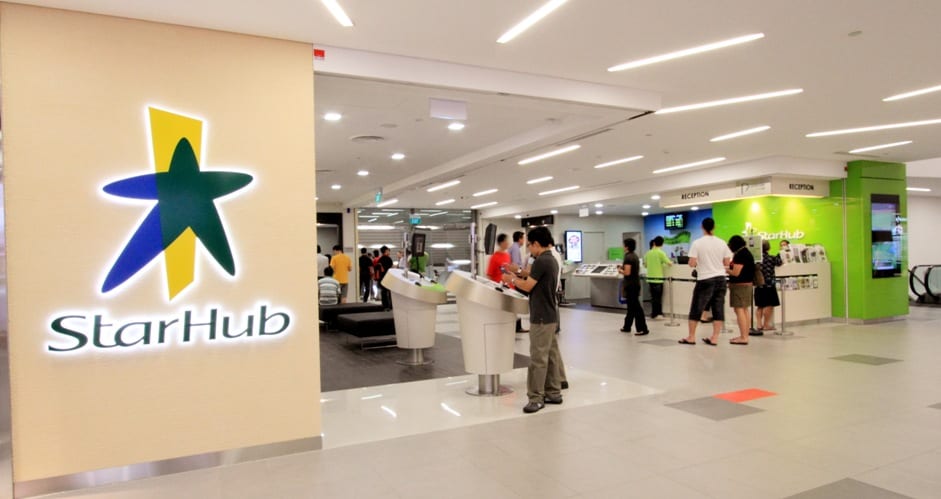
    Singaporean telecoms operator StarHub has appointed Peter Kaliaropoulos (pictured)  as its next chief executive officer.

    In a statement, StarHub said Kaliaropoulos will take over as Group CEO on July 9. He replaces Tan Tong Hai, who will step down from his roles as CEO and executive director from May 1.

    Kaliaropoulos, who was most recently CEO of Zain Saudi Arabia, has 35 years of experience in the global Information and communication technology sector.

    He has previously worked at telcos across Asia Pacific and the Middle East including BT, Telstra, Optus, Clear, Batelco and Ooredoo. Kaliaropoulos was even with StarHub way back in 2000 when the company began operations in Singapore, the Singapore telco said.

    Kaliaropoulos has also led a significant number of acquisitions and contributed as a board director to a number of telcos and ICT start-ups in Australia, USA, Singapore, India and the Middle East.

    In selecting its new CEO, StarHub said key criteria included strong leadership beyond conventional frameworks; understanding of the new market dynamics around intense competition; and one with diverse experience in the telco industry to better lead the team to deal with the rapid changes in the highly competitive environment.

    “This appointment is the result of an extensive and rigorous global executive search. As a telco veteran with a proven track record of achievements across a wide range of markets, and broad industry knowledge, the board is confident that Peter is well qualified to lead StarHub in pursuing new opportunities and managing the challenges that operators face today,” Terry Clontz, chairman of StarHub, commented.

    “My fellow directors and I are delighted to welcome Peter to the StarHub Group and look forward to working closely with him.”

  • Cebu Pacific to cancel flights during 6-month Boracay closure

    Cebu Pacific to cancel flights during 6-month Boracay closure

    Cebu Pacific will cancel its flights to and from Caticlan and Kalibo over the 6-month period that Boracay Island, the world-famous tourist destination, will be closed.

    The airline made the announcement close to midnight of Thursday, April 5, a few hours after President Rodrigo Duterte announced in a Cabinet meeting that he had accepted the recommendation of 3 agencies to shut down the island amid environmental concerns.

    In a statement on April 5, Cebu Pacific listed 19 flights – mostly catering to tourists – that would be stopped from April 26 to October 27.

    However, there are 6 flights it would retain “to serve local residents and ensure continuity of commerce in Northern Panay island” during the period.

    Flights canceled from April 26 to October 27:

    Manila-Caticlan-Manila (daily)

    • 5J 891/892
    • 5J 895/896
    • 5J 899/900
    • 5J 901/902
    • 5J 905/906
    • DG 6241/6242
    • DG 6243/6244
    • DG 6247/6248

    Cebu-Caticlan-Cebu (daily)

    • 5J 132/133

    Caticlan-Clark-Caticlan (daily)

    • DG 6298/6299

    Manila-Kalibo-Manila (daily)

    • 5J 331/332
    • DG 6317/6318

    Manila-Kalibo (Sunday-Thursday)

    • 5J 339

    Kalibo-Cebu

    • 5J 413 (daily)
    • 5J 415 (Sunday/Friday)

    Cebu-Kalibo-Cebu

    • 5J 416/417 (Sunday)

    Clark-Kalibo

    • 5J 351 (Tuesday/Thursday/Saturday)

    Kalibo-Clark

    • 5J 352 (Monday/Wednesday/Friday)

    Kalibo-Incheon-Kalibo (starting June 1)

    • 5J 180/181 (daily)
    • 5J 182/183 (daily)

    Cebu Pacific will operate the following flights from April 26 to October 27:

    • Manila-Kalibo 5J 337 – daily (except May 1-4)
    • Kalibo-Manila 5J 338 – daily (except May 1-4)
    • Manila-Caticlan DG 6245 – daily
    • Caticlan-Manila DG 6246 – daily
    • Cebu-Caticlan DG 6272 – daily
    • Caticlan-Cebu DG 6273 – daily

    The airline advised affected passengers to take any of the following options:

    • Get a full refund
    • Place the full value of the ticket in a travel fund for future use
    • Rebook the flight, subject to seat availability (via the ”Manage Booking” section in the Cebu Pacific website)
    • Reroute to any domestic destination, subject to seat availability

    “Guests who booked through a travel agent or any other third party are encouraged to provide us with their own contact details so they are directly advised about any flight changes,” Cebu Pacific said.

  • APAC cloud video collaboration market booming

    APAC cloud video collaboration market booming

    New business models and advances in cloud computing capabilities are driving adoption and expansion of the Asia-Pacific cloud video collaboration market, according to Frost & Sullivan.

    Cloud video conferencing services grew a strong 43.1% in 2017, and the total video collaboration market is on track to grow at a CAGR of 11.3% over the next five years, the research firm predicts.

    But while newer and agile cloud services are allowing providers to fuel the direction of next-generation video conferencing, a complete overhaul of business models will be required for video conferencing device vendors to match pace with evolving market trends.

    “Cloud, mobility, and innovative use cases are set to drive new growth opportunities within the Asia-Pacific video collaboration market with cloud penetration rates to be around 30% by 2022,” Frost & Sullivan Research Manager Jesse Yu said.

    “Vertically customized solutions and video analytics will become strong areas for differentiation and new growth opportunities.”

    Yu recommends cloud vendors looking to gain a competitive advantage focus on product innovation to support compatibility with Skype for Business or Cisco Spark and offer a flexible approach to cloud services.

    Providers should adopt agile business models that can target SMEs and mid-market customers, pursue collaborations with local telecoms operators on specific industry verticals and use cases and move to reduce bandwidth usage, complexity and costs to improve the user experience.

    “Furthermore, players should explore different strategies to enter the market; for example, local channel partnerships, all-in-one UC/collaboration bundles, freemium deals, eCommerce, and free trials. This will enhance their customer base and reinforce the advantages of video conferencing,” Yu said.

  • HKBN profit surges 423.4% in 1H18

    HKBN profit surges 423.4% in 1H18

    Hong Kong’s HKBN has reported a strong 423.4% increase in net profit for the six months ending in February to HK$241 million ($30.7 million), partly as a result of strong residential and enterprise growth.

    Adjusted for amortisation and non-recurring finance costs, profit grew 70% year-on-year to HK$295.4 million, the operator said.

    Revenue for the six month period increased 22% to HK$1.86 billion, with residential revenue up 17% to HK$1.1 billion and enterprise revenue growing 19% to HK$679.2 million.

    Total residential customers grew 8% to just over 1 million. HKBN’s mobile customer base grew fourfold year-on-year to 222,000, but broadband subscriptions declined 1% to 872,000 and voice subscriptions fell 2% to 515,000 over the same period.

    The company attributed its strong performance to the introduction of its quad-play broadband, voice, mobile services and OTT video strategy.

    HKBN’s enterprise customer base meanwhile increased 10% to 56,000, and enterprise ARPU increased 4% to HK$1,526.

    “We are proud to have delivered remarkable, across-the-board growth in the industry, executing in line with our pledged J-curve strategy,” HKBN CEO William Yeung said.

    “We are moving full steam ahead to harvest higher returns for our investors in the years to come, and simultaneously bring exceptional value for our customers.”

  • AirAsia to step up flights within Sabah and Sarawak

    AirAsia to step up flights within Sabah and Sarawak

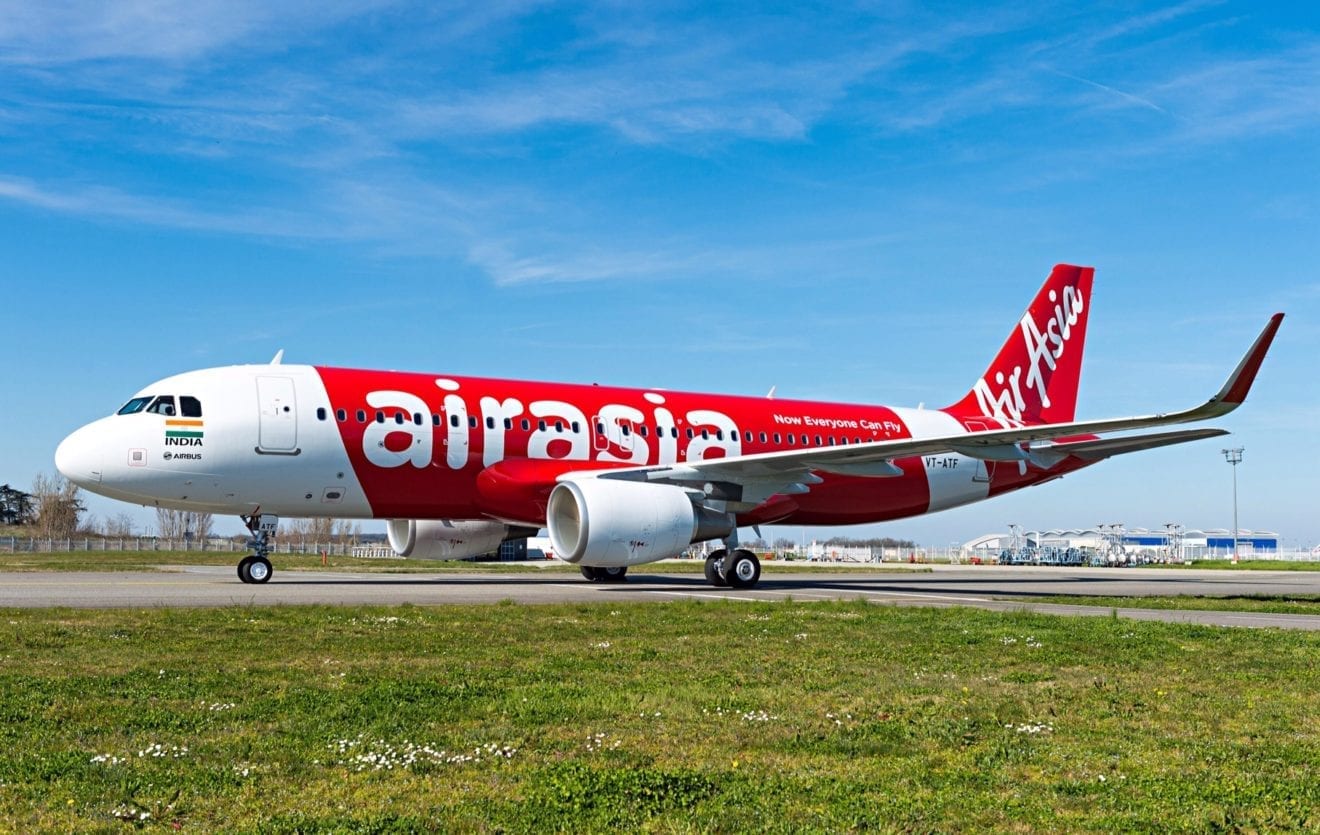
    Low-cost carrier AirAsia Bhd sees room for expanding its domestic operations, which contribute about 40% to its revenue currently, with intercity flights within Sabah and Sarawak.

    The airline’s CEO Riad Asmat (pix), who recently took over the reins of the Malaysian unit, told SunBiz in an exclusive interview that the airline has a strong foothold in Sabah and Sarawak, but there are areas where it could “still serve”.

    He said its domestic market share ranges between 50% and 60% depending on the state it operates in.

    According to international aviation research entity Centre of Asia Pacific Aviation (CAPA), AirAsia’s share in the domestic market has significantly increased “over the past six months, benefiting from capacity reductions by both of its competitors at Kuala Lumpur International Airport (KLIA)”.

    “AirAsia’s share of the domestic traffic at KLIA is now 66%, compared to 55% a year ago. KLIA accounts for 65% of total domestic traffic in Malaysia, which increased by 4% in 2017, to 25 million,” CAPA said.

    Domestic flights account for 31% of the flight breakdown based on the number of routes and international 69%. AirAsia Malaysia’s total number of routes stands at 114.

    “So we are working with authorities and state governments to see how we can get more rights to fly internally within the state … that is work in progress,” Riad, who marked his 100th day in office last week, said.

    “We have also committed ourselves to aircraft that we are likely to put into Sabah and Sarawak and that is to increase our frequency, again because the current ones will serve a certain expectation … what we have learnt and what we have studied now is that there are still a lot more passengers who want our services,” he explained.

    AirAsia, which has hubs in state capitals Kuching and Kota Kinabalu, its busiest routes, will look into timings, putting in the right aircraft and rescheduling flights once it obtains approvals for the routes, which Riad declined to reveal.

    According to the Malaysian Aviation Commission, airports which can accommodate passenger jets in Sabah are Kota Kinabalu International Airport, Sandakan Airport, Tawau Airport and Labuan Airport while in Sarawak, it is the likes of Kuching International Airport, Sibu Airport, Bintulu Airport and Miri Airport.

    Statistics provided by the commission showed Kota Kinabalu-Tawau as the busiest transcity route in Sabah while Kuching-Miri was the busiest for Sarawak. The least busiest are Kota Kinabalu–Lahad Datu and Miri–Sibu respectively.

    Malaysia Airports Holdings Bhd noted that passenger traffic from Kota Kinabalu to Tawau rose to 630,864 in 2017 from 586,570 in 2016, while Tawau to Kota Kinabalu rose to 630,949 from 586,567.

    As for Sarawak, Miri to Kuching increased to 546,235 from 543,295, and Kuching to Miri to 549,646 from 546,351.

    The route with the highest increase in passenger traffic is Bintulu-Kuching which saw a passenger traffic growth of 50,859, to 343,081 from 292,222.

    The airline has also been strategising its asset and resources utilisation, by releasing capacity from certain segments and increasing flights to routes with good pickup in terms of load factor and better earnings potential.
    Terengganu is one of the routes to have seen an increase in flights, to 24 weekly flights from 21 previously.

    On whether there are any untapped markets, Riad said the group is constantly on the lookout for new destinations.

  • Chunghwa may need to change bands for ST-2 satellite

    Chunghwa may need to change bands for ST-2 satellite

    Taiwan’s Chunghwa Telecom could be required to the change frequencies it is using for its ST-2 satellite in order to accommodate the use of 5G on the 3.4-GHz to 3.6-GHz frequency range.

    Taiwanese regulator NCC plans to conduct experiments to see if the operator’s satellite system can coexist with 5G servicesv.

    If it is found that there are potential interference problems, the regulator may order Chunghwa Telecom to use different frequencies for its satellite service, which is used by a number of TV channels to transmit broadcast signals.

    The NCC believes that the order would not cause much disruption as it would affect only one transponder of the satellite system.

    The ST-2 contains 10 transponders in the frequency band in question – the C-band in satellite parlance, which uses 3.7-GHz to 4.2-GHz spectrum for downlink and 5.9-GHz to 6.4-GHz for uplink. It also has 41 transponders in the 12-GHz/14-GHz Ku-band.

    The report adds that the NCC may offer compensation to Chunghwa Telecom to cover the costs of the spectrum relocation.

    Meanwhile the Taiwanese government is expected to make its final decision over the use of spectrum in the 3.4-GHz to 3.6-GHz range for 5G by June, while the NCC has established a taskforce to draw up the rules for a 5G auction.

  • RCom faces fresh hurdle over wireless asset sale

    RCom faces fresh hurdle over wireless asset sale

    Reliance Communications has been hit with a fresh roadblock to its attempt to sell its tower and fiber assets to Reliance Jio Infocomm.

    India’s National Company Law Appellate Tribunal (NCLAT) has withdrawn aninterim order that had cleared RCom to proceed with the asset sale.

    RCom has instead been instructed to wait until the outcome of an NCLAT ruling to be released next Wednesday.

    The NCLAT’s about face was prompted by a Supreme Court decision staying the interim order, which was in response to a petition to India’s apex court from HSBC Daisy Investments, which represents a group of investors holding nearly 5% of RCom.

    RCom is still free to proceed with the sale of its spectrum, real estate and media convergence node assets as part of its 250 billion rupee ($3.02 billion) asset fire sale.

    The operator is planning to exit the wireless market and monetize other assets in order to avoid insolvency as a result of mounting debt. The zero writedown debt restructuring program is expected to reduce RCom’s residual net debt by around 390 billion rupees ($5.89 billion).

  • Big C Engages Its Customers Across Southeast Asia with Personalized Marketing

    Big C Engages Its Customers Across Southeast Asia with Personalized Marketing

    Symphony RetailAI, the leading global provider of Artificial Intelligence-enabled decision platforms, solutions and customer-centric insights that drive validated growth for retailers and CPG manufacturers, today announced that Big C is implementing its SR Personalized Marketing solution.

    Headquartered in Bangkok, Thailand, Big C is a leading omnichannel retailer in Thailand and Southeast Asia with hypermarkets, supermarkets, convenience, health and beauty formats, and online and ecommerce channels. With Asia accounting for four out of the top 15 countries globally where internet users spend the most time on social media worldwide, the region’s consumers are highly connected, tech-savvy, socially fluid and vocal. They want personalization, crave rewarding experiences and have a strong desire for convenience and immediacy.

    Shifting strategic engagement to meet cultural changes in what consumers want

    Thailand is undergoing significant lifestyle changes. Urbanization, millennial influence, mobile technology, and rising incomes are driving demand for and the rapid growth of the convenience channel, with Big C alone opening two new convenience outlets every three days. Already one of the leading nations for eating away from home, Thais have significantly increased their appetite for ready-to-eat options from convenience channels. Adding to these significant shifts, the country currently has one of the highest social-media adoption rates worldwide. With this as a backdrop, Big C relaunched its loyalty program which had been initiated years prior, but wanted to engage its 6.2 million customers on a deeper, more emotional level.

    The company is now aggressively moving to build a new personalization program founded around the customer lifecycle. It is working towards personalization at basket and/or category level(s) and sending personalized digital offers via text, a mobile app and a program website. In addition to using SR Personalized Marketing — an omni-channel solution that leverages embedded algorithms and a relevancy engine to ensure that each shopper’s communication is appropriate, timely and individualized — Big C is adopting the solution’s mobile capabilities. This will allow the retailer to leverage a geofencing mobile app that interacts with shoppers at the right moment and in the right place, delivering timely and relevant messages. This is a key component of the Big C strategy around its changing customer demographic.

    “The Southeast Asia region is one of the most rapidly changing regions of the world when we consider grocery,” said Gary Hardy, Chief Operating Officer, Big C. “Our customers are demanding more variety, convenience, flexibility, and an enhanced service. They want ‘round-the-clock omnichannel experiences that match their changing lifestyles. As a result, we need to engage customers on a more 1:1 basis, focusing on digital touchpoints and moment marketing to improve the entire shopping experience for our customers.”

    “We’ve had a great working partnership with Big C for over six years,” said Oscar Garcia-Velasco, Regional Vice President, Symphony RetailAI, Asia. “We are very excited to see Big C taking this next step in their ongoing evolution to serve their customers. Understanding how to best use customer data to enhance relationships through more relevant, personalized offers is key to success. Embracing the role of mobile in how their customers want to engage with them, will help Big C create a competitive edge and increase customer loyalty.”

  • JD.com and Yiguo to exhibit at Asia Fruit Logistica

    JD.com and Yiguo to exhibit at Asia Fruit Logistica

    Exhibitors from close to 40 different countries have already signed up to showcase their products and services at ASIA FRUIT LOGISTICA 2018.

    Asia’s premier continental trade show for fresh fruit and vegetable marketing returns to AsiaWorld-Expo in Hong Kong on 5-7 September, and it is on course for significant growth.

    Bookings for stand space are up by more than 30 per cent on this stage last year. That brings them close to the total exhibition space booked for 2017, with more than five months to go before this year’s edition opens its doors.

    China’s two leading online food retail platforms will both be exhibiting at ASIA FRUIT LOGISTICA for the first time.

    E-commerce giant JD.com, which has been selling fresh food online since 2012, offers a wide range of products, sourcing from over 2,000 partners worldwide. The group also recently ventured into physical stores, with its high-tech New Retail format 7Fresh.

    “ASIA FRUIT LOGISTICA is a world-class fresh produce event, and JD.com must be part of it,” said James Ye, president of JD.com’s fresh division. “We look forward to getting together with industry leaders and specialists and discussing supply chain solutions for the fresh e-commerce sector as we work to bring healthy and safe products from around the globe to our online consumers.”

    Alibaba-invested fresh food e-tailer Yiguo is also making its debut appearance at ASIA FRUIT LOGISTICA, showcasing its new supply chain platform.

    “Yiguo Group has been able to meet many fruit supply partners over the years and has brought its products to tens of millions of consumers through Tmall Fresh, Suning Fresh and new retail channels,” said Andy Zhang, vice-president of Yiguo Group’s Win-Chain Supply Chain Management. “This year, we have a new platform to connect our global fruit resources, Win-Chain. We look forward to meeting industry friends new and old at ASIA FRUIT LOGISTICA, and to discussing our new platform with them.”

    Other key e-commerce players are ramping up their presence at the Hong Kong show. A debut exhibitor in 2017, Beijing-based MissFresh is doubling the size of its stand this year.

    More Middle East and Central Asian countries will also feature at this year’s show. Oman and Azerbaijan will both be exhibiting for the first time, while Jordan and the United Arab Emirates will be showcasing their wares again.

  • Sequential Brands signs deal for Chinese market

    Sequential Brands signs deal for Chinese market

    Sequential Brands Group has signed a multi-year deal that will take its Avia sports shoes to Greater China.

    Its agreement with Beiying Sports Technology, a manufacturer and distributor, involves the companies developing and distributing men’s, women’s and children’s footwear, apparel and accessories. The new collection will launch this year across all retail channels.

    Beiying also plans to open Avia stores, including flagship outlets in key metropolitan Chinese cities, over the next few years.

    China is an important market with its growing sports industry, says Sequential’s active division president Eddie Esses.

    “With a rich heritage since 1979, the brand resonates extremely well with the Chinese consumer,” says Beiying MD Jinzhang Lin.

    Advisory group Symphony Investment Partners, helped the US group with the transaction.
    Based in Fujian Province, Beiying is a subsidiary of the industrial group Hengchong.

  • Gloria Jeans to expand with 40 stores in Germany

    Gloria Jeans to expand with 40 stores in Germany

    A local scandal hasn’t dampened Retail Food Group’s international ambitions, with the franchise giant announcing that its troubled Gloria Jeans brand will expand into Germany.

    A 10-year master franchise agreement has been signed with a group of local businessmen who are slated to open 40 Gloria Jeans outlets in Germany over the next five years.

    The deal follows a slate Master Franchise Agreements signed by RFG across the Donut King and Crust Pizza Gourmet Pizza brands in recent months as it looks to diversify its operations outside of Australia.

    Gloria Jeans already has master franchise deals in the Czech Republic, Poland and Romania but Germany will considerably bolster its presence outside of eastern-Europe.

    The first German Gloria Jeans store will be in Cologne and will open by the middle of this year.

    Retail Food Group has been embarking on a modernization plan for the coffee brand recently, unveiling new store concepts to try and excite shoppers after sales from its beverages division struggled to gain traction last year.

    RFG’s chief executive of international Mike Gilbert said Europe was an important market for the business and that Gloria Jeans was positioned for success in Germany.

    “Germany has a growing speciality coffee market and Gloria Jean’s Coffees has an outstanding offering to meet that need. It’s an offering that is already very successful with close to 900 outlets throughout the world,” he said.

    “Retail Food Group is actively marketing our brands in Europe and see this region as a key part of our international growth strategy.”

    International has been one of the few bright spots for RFG in recent months as it navigates slowing trading and the fall-out from media reports that its business model is treating franchisees poorly.

    In March the business booked a $87.8 million half-year loss, flagging the closure of up to 200 stores of its thousand-plus stores.

  • Adairs on track for record results

    Adairs on track for record results

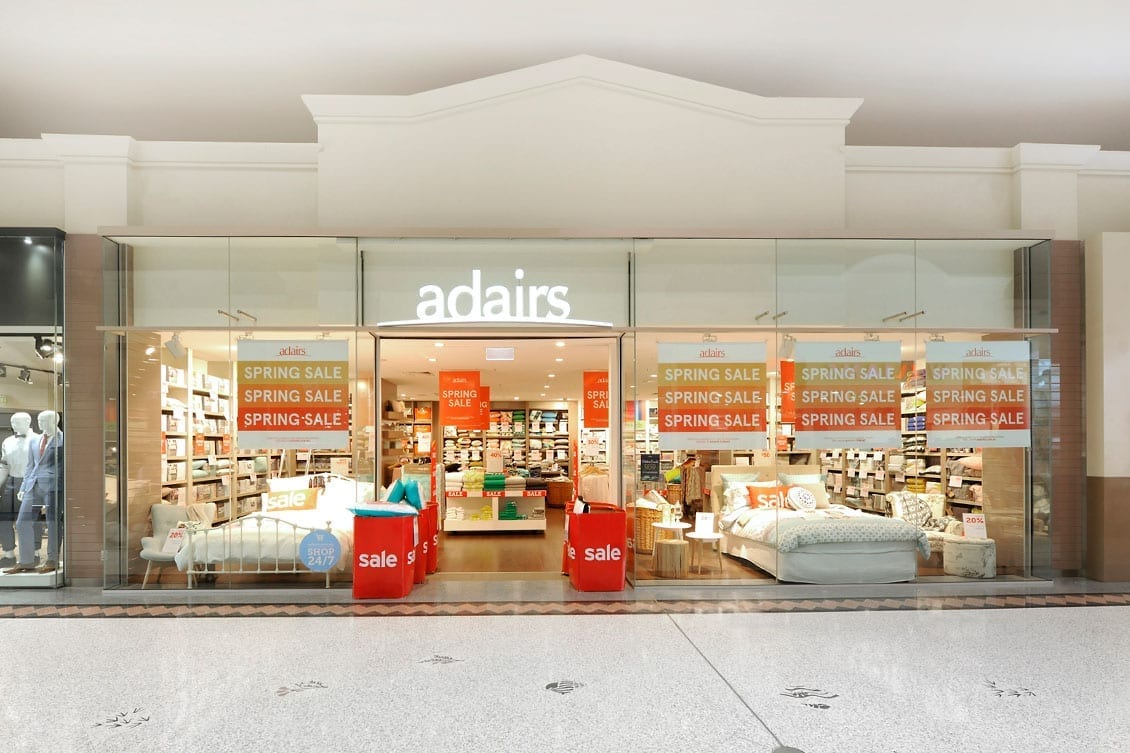
    Bedding retailer Adairs says its on track to book record sales and earnings in fiscal 18, upgrading its guidance for the second time in as many months on better than expected third quarter trading.

    Adairs said on Thursday that strong demand for its autumn and winter range had underpinned an 18 per cent increase in year-to-date like-for-like sales growth, bringing financial year-to-date LFL growth to 16 per cent.

    It now expects earnings for fiscal 18 to come in between $44 – 46.5 million, up from the $40 – 44 million upgraded guidance it provided in February.

    Sales are now expected to be between $310 – $315 million, up from the $300 – $310 million forecasted in February.

    “This further upgrade to our FY18 earnings guidance reflects both the continued higher sales performance observed the last two months and our confidence in the momentum we carry into the remainder of this financial year,” chief executive Mark Ronan said.

    The update is the latest of a string of solid trading periods for the business after it embarked on a shift in its strategy last year by reworking its range and tightening its promotions.

    Online sales have been a bright spot for the business so far this year, with sales up 99 per cent to around 12.8 per cent of total revenue.

    Ronan said Adair’s full year result will represent a significant improvement over the prior year, when the business was weighed down by a particularly bad first-half.

    “Our FY18 result will be underpinned by a significant rebound in performance, the capacity of our strategy to grow market share profitably and the effectiveness of our omni channel strategy. Further, we believe the FY18 result will provide a solid platform for continued growth into FY19,” he said.

    Adairs also tightened its gross margin guidance on Thursday from its previous 59.5 – 61.5 per cent range to 60 – 61 per cent.

    Capital Investment forecasts were revised downward from $9 – $11 million to $7 – $9 million.

  • Macau the cornerstone for Cartier

    Macau the cornerstone for Cartier

    Cartier jewellery company and luxury travel retailer DFS Group are jointly hosting an exhibition at T Galleria by DFS, Macau, Shoppes at Four Seasons to showcase Santos de Cartier timepieces.

    Running until the end of next month, the exhibition involves lighting effects and contrasting textures, with an emphasis on lacquered black and brushed metal. It has two spaces, with the Santos de Cartier watches in one while the other has a data hub with LED lighting and digital screens.

    Santos de Cartier revolutionised watchmaking when launched in 1904. It came four years after master jeweller Louis Cartier met aviation pioneer Alberto Santos-Dumont, who spoke about the difficulty of checking the time on his pocket watch while flying. Cartier invented the first purpose-designed wristwatch for his friend.

    A feature of the watches today is the strap, with steel, gold, calfskin or alligator skin options. All versions are interchangeable thanks to the Cartier QuickSwitch system, an invisible mechanism that blends into the structure of the case making it easy for the wearer to activate. Another feature is the SmartLink self-fitting technology, which enables the length of the metal bracelet to be adjusted to the nearest link without the use of a tool.

  • Myer’s reputation suffers and on the way back

    Myer’s reputation suffers and on the way back

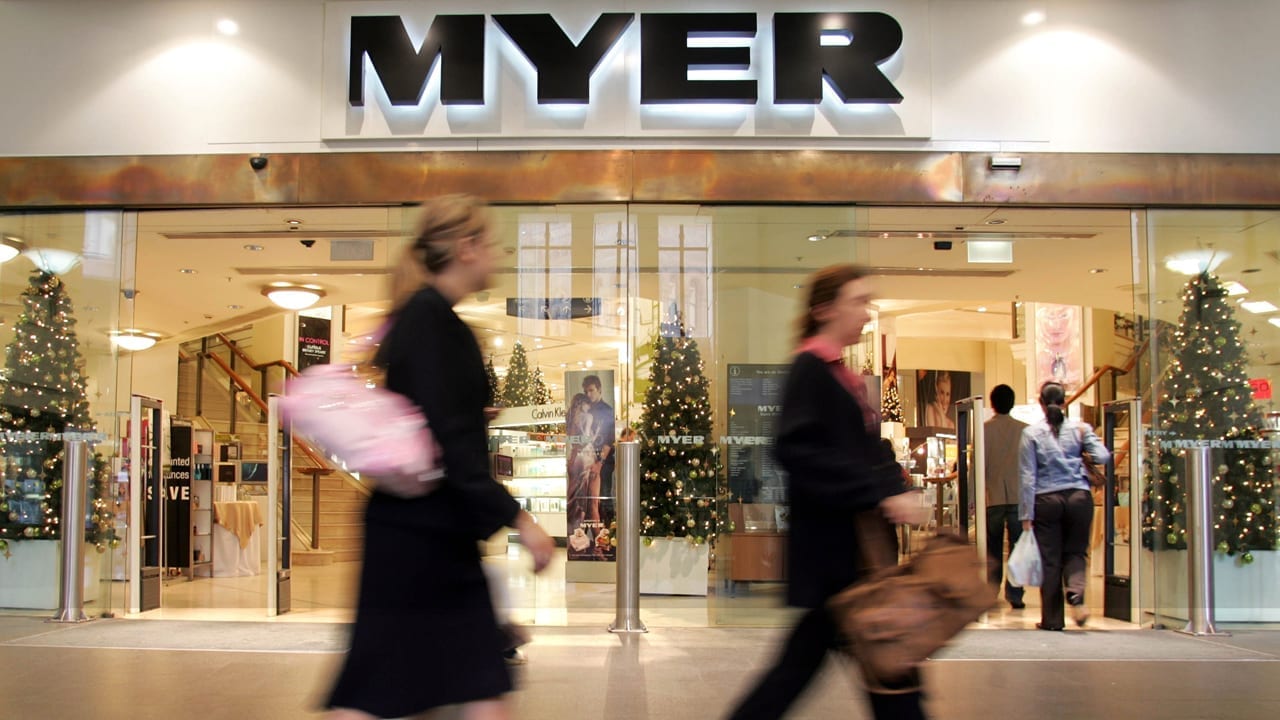
    In 2009, when former Myer CEO Bernie Brookes listed the department store on the Australian stock exchange, Myer was ranked as one of the top 10 most reputable companies in Australia.

    Today, of the 60 companies ranked on the Australian Corporate Reputation Index, it is ranked 45th.

    The Reputation Institute’s Index, the 2018 edition of which was released yesterday, has tracked a steepening decline in how consumers view the beleaguered department store chain relative to other Australian businesses.

    Myer ranked in the top 10 Australian companies on the index from 2008-2012, but in tandem with its ailing trading performance had dropped to 22nd last year, a result that has again worsened with the largest contraction in points on the index.

    It comes just a month after the retailer incurred a $515 million write down on the value of its brand names and goodwill, reflecting the erosion of the iconic business in recent years.

    Consumers were clear on what Myer was lacking – it ranked 60th on the individual measurement of innovation in 2018.

    “These results indicate that Myer has not met the challenge of adapting to the changing demands of consumers and an increasingly competitive landscape,” Reputation Institute ANZ managing director Oliver Freedman said.

    Just under 6000 Australian consumers were surveyed in late February/early March for the index, which encompasses Australia’s top 60 companies by revenue.

    JB Hi-Fi was once again the top ranked retailer on the index, despite its rank falling from 3rd to 6th in 2018 as airlines such as Virgin, Qantas and rank one business Air New Zealand surged.

    German entrant Aldi maintained its position at rank 9, well above Wesfarmers at rank 20 (19th in 2017) and Woolworths, which improved from rank 26 in 2017 to rank 22 in the latest index.

    Myer’s reputational woes are worsening, but it still fares better than 7-Eleven, which failed to change its rank in 2018 and remains at 58th on the overall measurement, above Telstra and News Corp Australia.

    Freedman said that the overall results indicate that Australian companies are bucking the trend in relation to how consumers are viewing reputation.

    “Globally, the Reputation Institute is seeing a trend of nationalism, where local consumers rank local companies higher in terms of overall reputation,” he said.

    “However, Australia is veering from this pattern, with our top 10 containing a mix of Australian and international companies, showing even those organisations headquartered overseas can make an impact locally with good leadership, a strong product and community involvement among other measures.”