Author: Mei Ling Tan

  • Reel Cinemas launches dine-in movie theatres

    Reel Cinemas launches dine-in movie theatres

    Dubai-headquartered Reel Cinemas has launched dine-in movie theatres in the UAE, with one planned for The Dubai Mall.

    The theatres – designed with comfortable seats and tables to eat while watching a movie – will feature meals created by chef Guy Fieri. The first has opened at the Jebel Ali Recreation Club, with the third location to be The Pointe in The Palm Jumeirah.

    Combined, the theaters will have 14 dine-in screens, with session tickets covering not just the film but also a meal comprising an appetiser and main course from Fieri’s American Kitchen concept. And none of the Dine-In Cinemas will serve popcorn!

    “Reel Cinemas is setting new benchmarks in providing moviegoers with unprecedented entertainment experiences,” explains Damien Latham, CEO of Emaar Entertainment, the operator of Reel Cinemas.

    “Guy Fieri represents the latest in strategic partnerships that underlines our commitment to pioneering innovative trends for the cinema industry in the Arab world.”

    Restaurant-prepared meals from Guy Fieri’s American Kitchen are delivered to the table of movie-goers, as they enjoy blockbusters with Dolby Atmos and Barco Flagship Laser projection.

    The menu takes inspiration from Fieri’s best-known dishes, such as his signature Mac & Cheese Burger, Trash Can Nachos and New York marbled Cheesecake.

    Fieri, an Emmy Award-winning chef, restaurateur, TV personality and author, has 45 restaurants located across the US and Mexico and will soon be launching in South Africa. This is his first venture into the Middle East.

    “The concepts we are building are truly a first of their kind venture for both of us,” says Fieri. “I know how to give guests a real-deal food experience and I know that Reel Cinemas has the expertise to apply it to the theatre space – so it’s a great partnership.”

  • Triwa Hong Kong opens it’s first flagship store

    Triwa Hong Kong opens it’s first flagship store

    Swedish watch brand Triwa Hong Kong has opened a flagship store at Plaza Hollywood, Diamond Hill.

    Its third international flagship after Stockholm, where it is based, and Tokyo, the store showcases the new SS18 collection.

    Founded in 2007 by four friends, Triwa stands for “Transforming the Industry of Watches”. The company now has a creative studio of 30 friends who develop all designs following the original motto: to produce only what they want to wear themselves.

    Triwa’s collection comprises eight watch “families”, Aska, Elva, Falken, Klinga, Lansen Chrono, Niben, Spira, Svalan and the original Nevil.

    New this spring 2018, Slate Nevil updates the original chronograph with a quartz Miyota OS21 movement and an exterior of steel, black and white, and black Swedish tanned leather.

    Also new, Smoky Falken pays homage to classic 1950s watches, mixing stainless-steel dark
    grey and polished gold detailing with a black organically tanned leather strap and with vintage styling. It has a Citizen Miyota 1L45 movement. Other new styles include the Ebony Svalan, Rose Svalan and Slate Aska.

    Also in the Triwa collection are sunglasses and fashion jewellery pieces including new brass and steel cuffs.

    Triwa has about 3000 outlets in 30 countries. In Hong Kong, it launched a pop-up store two years ago and has been available online.

  • Uniqlo launches a new line of t-shirts

    Uniqlo launches a new line of t-shirts

    Japanese fast-fashion brand Uniqlo has collaborated with rhythm machine manufacturer Roland on a UT graphic t-shirt collection.

    The Roland t-shirts collection comprises limited-edition shirts designed around the iconic TR-808 by Roland.

    Retailed at ¥990 in Japan, the t-shirts can also be found at Uniqlo stores in 19 countries, and online, from April 9.

    Uniqlo’s graphic t-shirt brand “UT” launched in 2003, and has been featuring many artists, brands, and characters all over the world such as Disney, Line Friends, and Star Wars.

    A UT Doraemon range is set to launch this month.

  • E-commerce upgrade for Benetton

    E-commerce upgrade for Benetton

    Benetton Group is upgrading and expanding its e-commerce platforms with new online stores for the Sisley and United Colors of Benetton brands.

    Meanwhile, the Italian fashion brand has overhauled its www.benetton.com e-shop to offer customers an increasingly immersive shopping experience. The renewed website is available in seven languages ​​in 24 countries, and features fresh graphics plus an easier browsing experience even on mobile devices.

    Its clean design, including a reorganised menu and improved search engine, follows an analysis of buying behaviour and interviews with consumers.

    The new e-shop and the further development of e-commerce are an integral part of  Benetton Group’s strategy to focus more on an omnichannel approach. It also marks a new phase in the company’s online strategy, as Benetton Group is taking over direct management of the online channel.

  • Bauhaus sales goes up

    Bauhaus sales goes up

    Despite fewer shops, apparel company Bauhaus International saw same-store sales edge up for its year to 31 March.

    While the rise was 3 per cent for its self-managed offline shops for the 12 months, the last quarter saw sales jump 12 per cent.

    Bauhaus designs and makes apparel and accessories which it wholesales and retails under its brand names including Bauhaus, Salad and Tough, and retails third-party labels including Superdry.

    At the end of the year, the group had 182 self-managed stores, 14 fewer than 12 months earlier.

    An extra outlet in Mainland China took its total there to 26 shops, while Taiwan’s total dropped by nine to 82, and six store closings in Hong Kong and Macau saw the year end with 74 shops.

  • Ikea Plans Mini Stores for Southeast Asia

    Ikea Plans Mini Stores for Southeast Asia

    Ikea mini-stores are planned by the Swedish furniture giant to boost its presence in Southeast Asia.

    It regards showrooms in smaller cities as a low-cost way to reach the growing middle class. Research firm Nielsen Holdings has estimated the population in Southeast Asia’s regional cities will have grown 18 per cent by 2025 since 2015.

    Ikea is starting its Southeast Asia roll-out in Thailand, with plans for compact stores in Chiang Mai, Pattaya, Udon Thani and other Thai cities during the next three years. These mini-stores will not keep large furnishings in stock, with items being delivered as needed from larger stores in major cities.

    Ikea already has a small store prototype in Phuket. The 2600sqm shop cost the retailer THB175 million (US$5.6 million) to build – a 30th the cost of Ikea’s full-scale store on the outskirts of Bangkok.

    Computers in the store centre can be used by customers to order furniture and accessories online they have inspected in store. Their purchases arrive from the Bangkok store two to three days later, ready for pickup. For an extra fee, customers can have their orders delivered to their homes.

    When it opened in 2015, the pioneering store struggled, but last year turned a profit for the first time.

    Meanwhile, Luxembourg-based Ikano, which runs Ikea’s Southeast Asian stores, aims to have a location in Manila by 2020 and hopes to expand to Vietnam’s Ho Chi Minh City by 2022.

    While Ikea has compact stores internationally, the idea failed to catch on in Japan, with a 1500sqm location in Kumamoto set to close at the end of July.

    Ikea has more than 400 stores worldwide. Global sales topped €38.3 billion (US$46.8 billion) for the year to the ended of August 2017. Yet the company has just nine stores so far in Southeast Asia.

  • Singtel, VMware to accelerate DX in APAC

    Singtel, VMware to accelerate DX in APAC

    Singtel has entered a partnership with VMware International to set up a Digital Transformation Foundry in Singapore.

    The new facility will be designed as a virtual sandbox for customers to conduct proof-of-concept experiments aimed at bringing digital solutions to market more quickly.

    Enterprises will be able to test their solutions in a hybrid cloud environment before deploying them across the organization.

    The companies will initially focus on providing a suite of four cloud services aimed at allowing customers to modernize their data centers, integrate public and private clouds, improve information security and develop cutting edge digital workspaces.

    These include a private cloud service that aims to provide similar agility and scalability to public clouds, a hybrid cloud service designed to facilitate seamless application mobility, disaster recovery and migration across multiple clouds, and a multi-cloud managed security service.

    Singtel and VMware also plan to establish similar cloud foundries in Australia and Hong Kong in the future.

    “Digitalization lies at the heart of most companies’ transformation. Many companies share the need to migrate to and operate in the cloud, get their networks software-driven in order to create workplaces of the future,” Singtel CEO group enterprise Bill Chang said.

    “The Foundry will empower customers to implement an integrated cloud solution with ease. We will help them design, secure and deploy cloud-enabled solutions, in short, customize the flexible infrastructure they need to accelerate digital transformation, adopt new and disruptive technologies, and boost competitiveness.”

  • Telenor Pakistan taps Nokia to manage network

    Telenor Pakistan taps Nokia to manage network

    Telenor Pakistan has contracted Nokia to expand and modernize its network based on a new customer centric network operating model.

    Under the terms of the deal, Nokia will manage the complete multi-vendor network operations for Telenor Pakistan using the Nokia Global Service Delivery Tools.

    Nokia will also deploy its AVA cognitive services platform to enable predictive and customer-centric approaches to network planning, optimization, operations and maintenance.

    Nokia’s cognitive analytics for customer insight software will also help Telenor Pakistan prioritize network investments based on insights collected from customers, using a combination of cloud service delivery, intelligent analytics and automation.

    Under the new operating model, 233 engineers and technology experts from Telenor Pakistan will work with Nokia to develop new ways of delivering services. Telenor Pakistan will increase its focus on network governance strategy while Nokia will exclusively manage field operations.

    “The decision to onboard Nokia is in line with Telenor Pakistan’s ongoing strategy for network expansion, transformation and virtualization,” Telenor Pakistan CTO Khurrum Ashfaque said.

    “Our ambition is to set up data ready operations by bringing capabilities of automation, intelligent field operation, smart planning and customer insights with new and advanced tools which we shall leverage through our new global partner.”

  • AirAsia India expands its flight operations in India

    AirAsia India expands its flight operations in India

    Earlier last week, a top official of AirAsia India reported that the carrier has charted out expansion plans to connect more tier-II and III cities and set a target to commence flights to overseas destinations by January 2019. This statement followed the induction of AirAsia’s 16th aircraft and the addition of Nagpur and Indore to its list of destinations.

    According to AirAsia India, Managing Director and CEO, Amar Abrol, the airliner has planned to commence overseas operation by January 2019 once it has 20 or more planes. “Our strategy is that once we get to 20 planes (operating in domestic operations) we will start flying international. Mostly, it will be to South East Asian countries,” he told.

    A spokesperson of AirAsia told that the expansion plans were adopted to survive the competitive aviation market. He stated, “One has to evolve in a competitive market to stay relevant. Many of our flyers are first time flyers and we plan to tap this and make it a sustainable relationship. To do so, we have to connect more destinations that were still untapped by our flights and more importantly expand our operations overseas. Even though there is existing competition but the demand is there.”

    Amar Abrol stated that the plan is to connect more and more tier II and III cities in India, wherever A320 can go and also start flying international after crossing 20 aircraft. Elaborating, he said, the company would serve those markets which were already connected by the airliner’s group entities—AirAsia Malaysia, AirAsia Indonesia, AirAsia Thailand. “We will be flying mostly to Malaysia, Indonesia, and neighbouring SAARC countries as well. Bangladesh, Nepal and so on and so forth,” he said.

    Closely following the announcement of expansion, AirAsia India expanded its fleet size to 18 planes with the induction of a new Airbus A320, which will help it add new routes and enhance the frequency between Kolkata and Bagdogra.

    The 18th A320 aircraft will be stationed in Kolkata, which is the third base for the Tata Sons-AirAsia invested domestic carrier. Bengaluru and New Delhi are the two other bases of AirAsia India besides Kolkata, which serves as the gateway to its North-East operations. The induction of 18th plane in the fleet, AirAsia India will mark the launch of new daily flight services from Kolkata to Visakhapatnam, Imphal, Guwahati, Pune, and Bagdogra, starting May 11.

    Bookings for all the new routes opened from early morning today. The airline said that it is offering promotional fares as low as INR 1,699 for flights connecting Kolkata to Visakhapatnam, Imphal, Guwahati and INR 3,499 for the Kolkata-Pune services. This is seen as one of the many steps towards realising the carrier’s expansion goals.

  • SKT raises $500m to refinance debt

    SKT raises $500m to refinance debt

    SK Telecom has raised $500 million in offshore private loans to help refinance existing debt and secure enough capital to weather a destabilized global economy.

    The company has issued five-year loans at a coupon rate of 3.75% after holding financial roadshows across Asia, the US and Europe, receiving favorable responses from around 60 global bond investors.

    Despite the impact of the recent US-China trade war on the global financial market, SK Telecom managed to draw a positive response from global investors due to its high credit rating, stable cash flow and strong growth potential, the company said in a statement.

    The offer was around seven times oversubscribed from SK Telecom’s estimated bond issuance of $500 million, and the final interest rate was set at 22.5 basis points lower than the initially proposed level.

    “Diversifying the loan maturity structure is expected to improve the company’s financial structure,” SK Telecom said in a statement.

  • Is there any Alexa advantage?

    Is there any Alexa advantage?

    The Australian market is approaching 5 months since Amazon launched its highly anticipated marketplace service, and by many accounts its entry hasn’t been all it was cracked up to be.

    While Amazon has said that Australia brought in its higher launch day volumes in the company’s history, the overwhelming market response to its immediate impact has been a shrug and a sigh of relief.

    In his second public appearance since taking the reigns of Amazon in Australia yesterday company veteran Rocco Brauniger conceded that he and his team still have a lot of work to do as the business moves towards a launch of the Prime loyalty program locally.

    “There’s still a long way to go,” he said. “We’re really working hard to bring a lot of innovation here.”

    Brauniger faces an interesting challenge. Amazon is estimated to account for more than 50 per cent of total e-commerce sales in the US, but the business is far from an early mover in the online or marketplace space in Australia – local retailers have had years to learn from the mistakes of their international peers.

    But those trying to go toe-to-toe with Amazon’s e-commerce platform could be in for a surprise.

    Earlier this year Amazon’s voice assistant Alexa launched locally with its suite of accompanying echo products to little fanfare, which is interesting given founder Jezz Bezos’ clear focus on the service.

    “Our 2017 projections for Alexa were very optimistic, and we far exceeded them. We don’t see positive surprises of this magnitude very often — expect us to double down,” he said when Amazon reported fourth quarter earnings in February.

    The Alexa advantage

    Bezos isn’t the only one excited about Alexa either, Brauniger has two echo devices in his home and uses Alexa every day to do everything from getting the headlines to checking the surf at his local beach.

    Despite only being a few months into its Australian life, Alexa has more than 15,000 ‘skills’ (applications) available on its platform, providing customers with voice access to movie tickets, pizza, news, public transport and banking.

    A myriad of local brands is already on board, from Qantas to National Australia Bank, Domino’s and Hoyts.

    In a presentation yesterday, Alexa’s recently hired managing director of Alexa skills in ANZ, former Intel Australia MD Kate Burleigh, said that voice interaction was a game changer that will take the Australian market by storm.

    “It is the biggest leap forward we’ve seen in a number of years and we can do it now because its technically possible,” she told a crowd of thousands gathered in Sydney.

    “Voice is how we like to interact, it’s the most natural way for all of us to communicate with each other … and bring our ideas to life.”

    Alexa is an important part of Amazon’s end-to-end customer strategy in the US, embedding Amazon into the living rooms of consumers that have been turning to voice shopping in droves.

    In Australia voice shopping is still relatively under-developed but is expected to take off in the next few years, with a recent survey conducted by Salmat finding that as many as 46 per cent of Aussies are excited to take voice shopping for a spin.

    For Amazon it represents an opportunity to ground floor and catch many otherwise prepared Australian competitors off guard – Alexa could be the key to cementing its presence in the local market.

    Competitors responding

    Amazon’s closest local competitors are already responding though, with Ebay one upping its rival late last year by launching voice shopping in partnership with Google’s voice assistant. Amazon shopping is still not available to Australian Alexa users.

    Meanwhile, Ruslan Kogan is looking to launch his range of own-branded smart speakers with Google Assistant built in and Catch Group is actively looking into the channel.

    “Voice will be the future of search, there’s no doubt about that,” Catch’s head of marketing Ryan Gracie has said.

    But for traders outside of the marketplace space voice is a tricky proposition. Voice lends itself to convenient product searches that are light on detail about things like brand or preferred seller, raising the possibility that Amazon, which also sells its own products, could gate-keep shopper queries.

    Alexa in the home – completing the closed loop

    Burleigh, who will be working on implementing Alexa’s voice shopping capabilities locally, didn’t delve into the details of Amazon’s plans on Tuesday, but outlined Amazon’s ambition to put the voice assistant at the heart of the Australian household.

    “We’ve already had such excitement in the marketplace around the potential that Alexa can bring into our homes,” she said.

    In the US, where Alexa now has more than 30,000 skills, large appliance businesses such as LG are embedding Alexa into their products.

    “You can build your own devices and solutions and embed Alexa’s voice service,” Burleigh explained.

    Aside from its hope that Alexa can become part of millions of Australian homes, it will also form a cornerstone of the infamous closed-loop model it has implemented in the US, synergising with its forthcoming Prime loyalty program by enabling exclusive deals for subscribers.

    The highly anticipated loyalty program is expected to launch later this year and is expected to deliver a step-change for Amazon’s Australian plans as it expands its fulfilment capabilities here.


  • Ex 7-Eleven manager fined for underpaying staff

    Ex 7-Eleven manager fined for underpaying staff

    The Federal Circuit Court has fined a former Brisbane 7-Eleven operator for about $193,000 for short-changing workers and failing to keep proper pay records.

    Jason Yuan, who operated two 7-Eleven stores in the Brisbane CBD in 2013 and 2014, was said to have underpaid 21 staff a total of $31,507, and he also failed to keep records of cash payments made to staff on public holidays.

    The court penalised Yuan $36,559 and for two companies in which he was a director, Viplus Pty Ltd, $88,140 and Vipper Pty Ltd, $68,262. Viplus Pty Ltd operated the store in Adelaide Street until July 2017, while Vipper Pty Ltd operated the store in George Street until May 2017.

    The Federal Circuit Court imposed the fine following a lengthy investigation by the Fair Work Ombudsman, which has taken legal action against 11 7-Eleven operators since 2009.

    During the investigation, inspectors found the workers at both stores were paid flat rates for all hours worked, save for public holidays where they received an additional $20 per hour in cash.

    According to a statement from the Ombudsman, given the 24-hour, seven-day nature of the businesses, this resulted in significant underpayments of Saturday and public holiday penalty rates, overtime rates and shift work rates stipulated by the General Retail Industry Award 2010.

    Two workers at the Adelaide Street store were also found to have been paid at the incorrect classification.

    Individual underpayments ranged from $98.36 to $5080.16, which have all now been rectified.

    The respondents were also penalised for failing to meet record-keeping and payslip requirements, including by failing to include information in respect of cash payments made to some of the employees.

    In her judgment, Judge Mercuri noted that the underpayments were “substantial”, particularly given the low-skilled nature of the work and the vulnerability of the workers due to their age and, in some cases, their visa status.

    “Given that many of the employees of both Viplus and Vipper were in Australia on various visas, with many being young workers, the impact of the underpayments was significant for each of the affected employees,” Mercuri said.

    In determining the penalties, Mercuri also pointed out that Yuan had been running the stores for over twelve years, had a background in finance, banking and project management and had access to significant training and support from the 7‑Eleven head office.

    Acting Fair Work Ombudsman Kristen Hannah businesses should be aware that serious breaches of workplace laws have increased ten-fold and can now attract penalties of up to $630,000 per contravention for companies and $126,000 for an individual.

  • Daigou retailer to expand into over 150 pharmacies

    Daigou retailer to expand into over 150 pharmacies

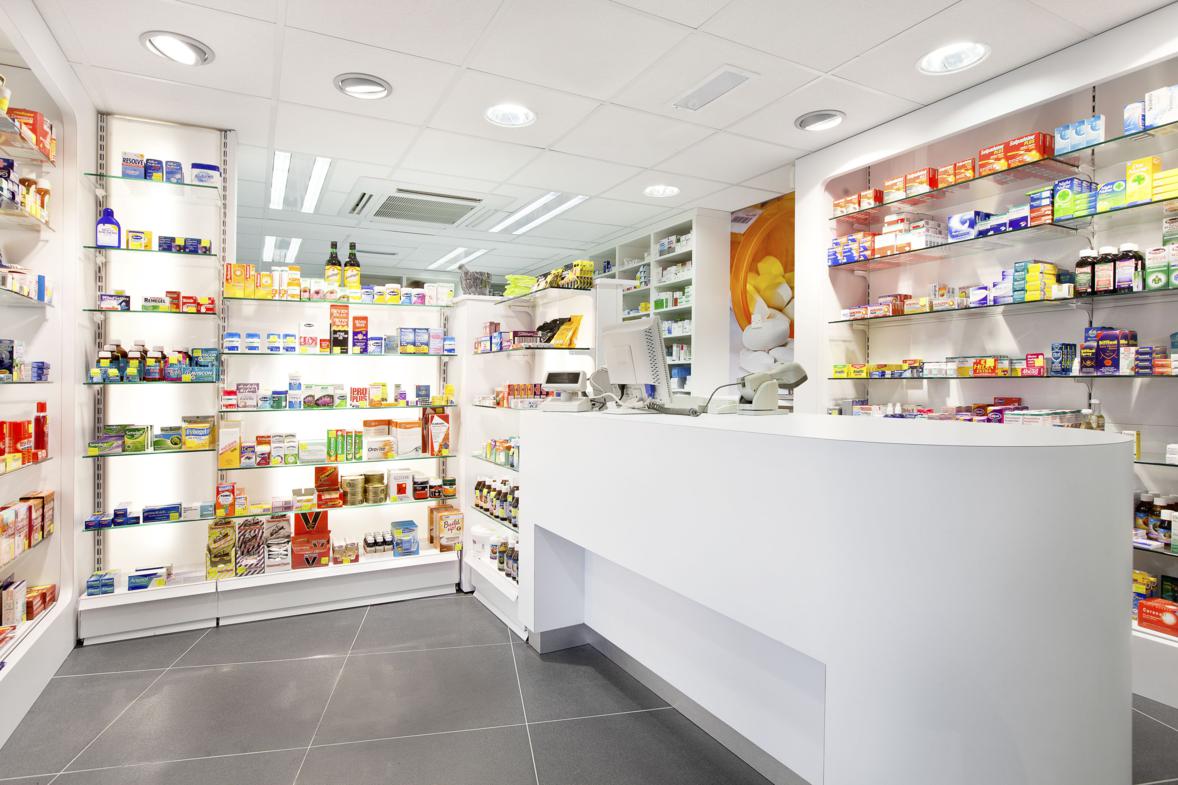
    Daigou retailer AuMake has inked a deal with pharmacy network Chemsave which will see its own branded products distributed through a network of 150 pharmacies across the country.

    The announcement, which follows the listed retailer declaring a trading halt earlier this week, will see Aumake’s own-branded health supplement and honey products distributed initially, prior to further expansion.

    Cross promotional marketing will accompany the products, with AuMake’s recently launched live streaming functionality to move into some Chemsave pharmacies.

    The listed retailer hopes that the partnership will bolster its credibility of its private label range, while Chemsave is looking to increase its exposure to the Chinese market.

    “Aumake is thrilled to have formed this strategic partnership with Chemsave, which is a significant milestone,” Aumake executive chairman Keong Chan said of the deal.

    “This partnership with Chemsave allows us to significantly expand the reach of our products across Australia … this is not simply a distribution agreement but a long-term mutually beneficial strategic alliance.”

    Chemsave CEO Michael Dixon concurred, saying that the Chinese market represents a lucrative opportunity for its network.

    “Over the last year we have had the opportunity otm eet with a number of groups with a view to forming a partnership that will allow us to grow our members’ businesses and increase our presence with the important and influential Chinese consumer,” he said.

    The initial terms of the contract are set out across two years, with an option for a further two-year extension if mutually agreed.

    Aumake shares rose 10 per cent to 27 cents in early Wednesday trading.

  • A lot of work for Amazon in Australia

    A lot of work for Amazon in Australia

    Amazon’s second public outing since launching in Australia last December was light on new detail about its plans for the local market but heavy on ambition for what it believes it can achieve here.

    Drawing thousands to a concert-sized auditorium in Sydney on Tuesday morning, the e-commerce giant flew in top brass from the states to underline their excitement about enabling Australian businesses to expand their horizons locally and abroad.

    SVP of international consumer Russ Grandinetti, one of Amazon’s first 200 employees, was quick to combat the prevailing narrative that the company’s local launch fell short, saying that its first day order volumes were the highest in the company’s history.

    “[Country manager Rocco Brauinger] and the team here have done a great job, I’m super proud of them,” he said.

    But appearing on a brief panel alongside Grandinetti, Brauniger conceded that there’s still a lot of work to do to make Amazon as compelling to Australians as it is elsewhere in the world.

    “There’s still a long way to go,” he said in his second public event since taking his role last August.

    “We’re really working hard to bring a lot of innovation here, expanding the selection and making the customer experience for Australian shoppers much better.”

    Since launching Amazon has endured a barrage of criticism from prominent retailers and analysts, some of whom have dismissed concerns that the US-based business would have an adverse impact on the Australian market.

    “Working hard” on Prime

    The Innovation Day, which also included a “metropolis of the future” exhibition, comes at a crucial time for the business Down Under as it looks to build out the various aspects of its complete offer that have made it so successful in the United States.

    Fulfilment by Amazon (FBA) and voice assistant Alexa both launched locally earlier this year and while the services are still in relative infancy locally they are important pre-cursors for the Amazon Prime loyalty program, which is expected to launch later this year.

    “I don’t have any news to report about Prime other than we’re working hard on it and it will come soon,” Grandinetti said, dashing any hope that Amazon would detail its plans for the program locally.

    The launch of Prime is thought to be a potential turning point for the business that rounds out its end-to-end customer strategy, similarly to what it has done in the US where an estimated two-thirds of households are Prime members.

    Cross border contribution

    The prospect of Prime in Australia also continues to face questions about whether its signature two-day free delivery model would work in a market with such sparse population density, but Grandinetti explained that the program has always been about making a difficult commitment.

    “Prime is all about making a hard promise and keeping it as often as possible,” he said. “Telling customers they can subscribe to get free two day shipping is easy, doing it .. is much harder.”

    But, as Grandinetti noted, the fully-fledged Amazon experience is already a reality for many Australian businesses selling on the company’s platforms internationally.

    A growing number of local retailers are turning to the e-commerce giant to decrease the cost of international expansion, with the likes of Showpo recently revealing that they are in talks with the giantto supercharge their growth in the US.

    “Among the most enduring contributions [we make] will be helping Australian businesses around the world,” Grandinetti contended, underscoring Amazon’s focus on cross-border e-commerce.

    As was repeatedly stressed though, Amazon is playing a long game and is content with being “misunderstood” in the local market for the time being as it lines up its ducks for a fully-fledged assault.

    Brauniger said the Australian Amazon team was busy iterating its offer, trying new things on local shoppers to glean a better view into what works here.

    “We’re fine making decisions with 60 per cent of the information, not being experimental means you’re not being innovative,” Brauniger said of his leadership philosophy on Tuesday.

  • Alfamart Dreaming Big in the Philippines

    Alfamart Dreaming Big in the Philippines

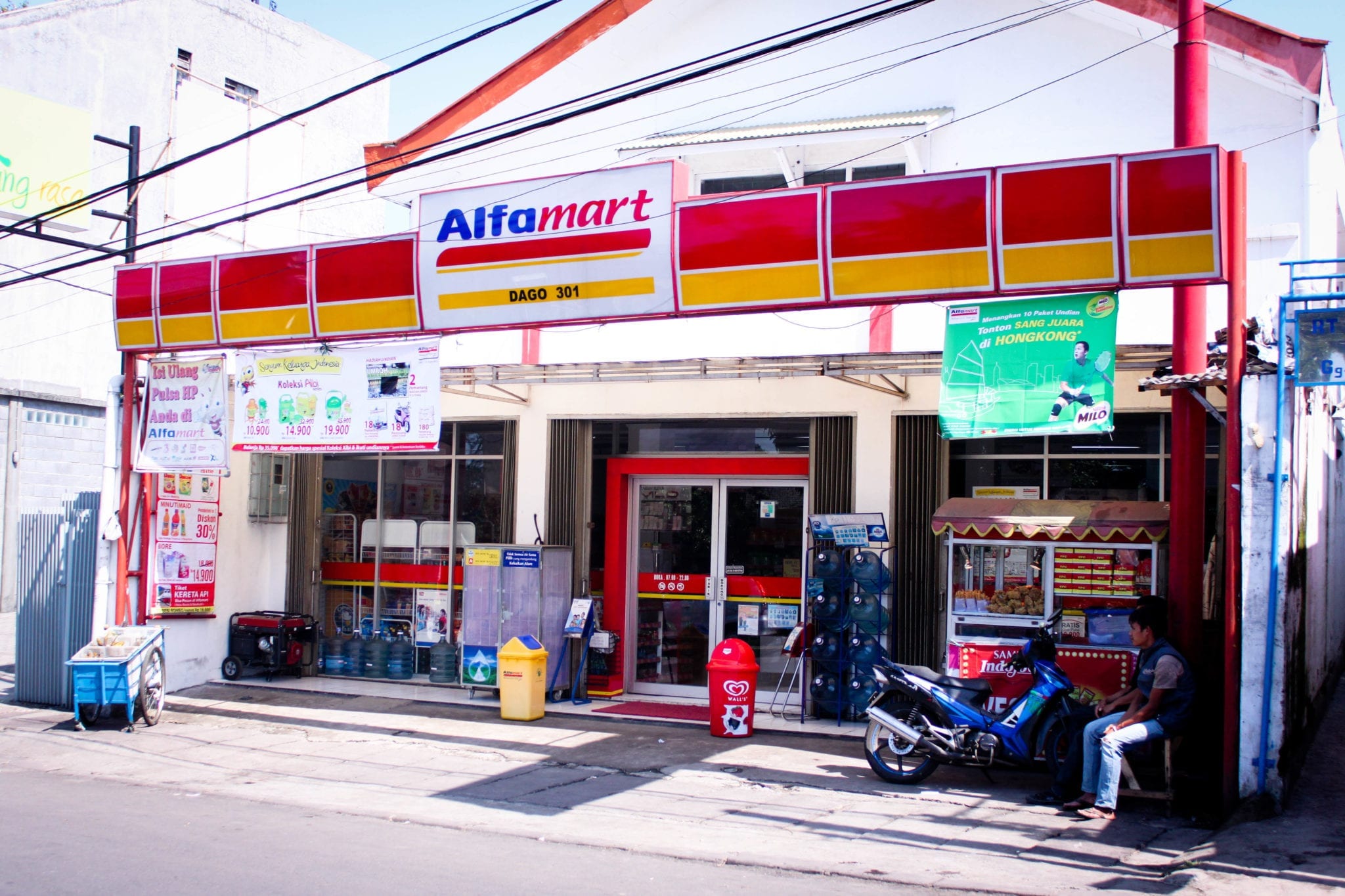
    Alfamart Philippines owner Sumber Alfaria Trijaya plans to add 150 more outlets to its present 400.

    The Indonesian convenience store’s president/director Hans Prawiraafter says a deal for financing has been signed with Standard Chartered Bank in Jakarta.

    He says the current outlets are in greater Manila, but following “significantly positive” market response based on same-store sales growth, the brand is set to enter regions outside of Manila.

    In Indonesia, Alfamart plans 800 more outlets this year including 150 franchises. There are presently 13,477 outlets. Half of the new outlets will be on Java Island while other regions will have distribution centres in Kalimantan, Sulawesi and Sumatra.