Author: Mei Ling Tan

  • Pop-ups leading way for Dickies Vietnam

    Pop-ups leading way for Dickies Vietnam

    Dickies Vietnam is planning to open its first Ho Chi Minh City flagship store.

    Meanwhile, the American apparel brand is paving the way by opening pop-up stores at Diamond Plaza, Parkson C&T, Parkson Hung Vuong, Parkson Saigon Tourist and Takashimaya from this month through to June.

    Dickies arrived in Vietnam in November under distribution deal between Son Kim Fashion and Williamson-Dickie, with a flagship store being opened at Vincom Royal City in Hanoi.

    The group plans to open 30 Dickies stores in five years.

  • Starbucks Coffee Korea walks the talk

    Starbucks Coffee Korea walks the talk

    Voice recognition ordering has been introduced by Starbucks Coffee Korea, thanks to a 50/50 JV between Starbucks Coffee International and Shinsegae Group.

    Starbucks Coffee Korea has become the first retailer to use Samsung’s intelligent assistant Bixby, available on certain Samsung Galaxy devices, to allow for end-to-end ordering and payment.

    The features are an extension of Starbucks Siren Order, the company’s mobile order-and-pay technology that lets customers in South Korea order and pay for their purchases before arriving at the store.

    Bixby allows members of Starbucks loyalty program (My Starbucks Rewards) to place an order and pay through voice recognition “on command”. Customers simply speak as they would to a barista, including modifying their drinks to meet their preferences.

  • Fung Group’s Explorium probes future plans

    Fung Group’s Explorium probes future plans

    Fung Group has unveiled a new iteration of its Explorium research centre in Shanghai.

    Dubbed Explorium 2.0, the 23,000sqm mock mall has been converted by the supply-chain specialist company into what it describes as a “value-generating ecosystem for commercial enterprises”.

    In a modern building that occasionally doubles as a meeting and event venue, technology and business-model innovation come together as an experimental platform for developing a full range of consumer products, supply-chain technology and services related to branding and retailing.

    Originally, Explorium – described by Fung Group as a retail “omniplatform lab” – comprised a physical space with an interconnected digital network of services, providing brands and retailers with the chance to observe in real time how customers interact with new technologies, products and environments. This enabled them to gather valuable insights into customer behaviour along the way.

    For 12 months, such retailers as Build-A-Bear Workshop, Gymboree, Hello Kitty, Stride Rite and Toys R Us experimented at Explorium using data-analytics tools supplied by IBM as well as retail technologies from various startups.

    Explorium 2.0 builds on the knowledge gained from Explorium in line with Fung Group’s strategic vision to build the supply chain of the future.

    Rapid prototyping

    Now the platform will act as an incubator for companies whose ideas, innovations and technologies are relevant to the Fung Group’s businesses, allowing for rapid prototyping of new business models, products and retail technologies.

    Explorium 2.0 has a strong focus on collaborative innovation, with such partners as the Beijing Institute of Fashion Technology, Microsoft Accelerator and TechNode, and has a mandate to showcase the capabilities Fung Group has developed over its 111-year history.

    Fung Group says the goal of Explorium 2.0 is to move away from traditional approaches to provide a customer experience that balances content and interaction. The space showcases the full breadth of product categories covered by the group, as well as the retail channels it serves, with an emphasis on importing brands and retail concepts into China. In this sense, Explorium 2.0 serves the supply chain end to end, while Explorium focused on front-end retail.

    The new space features a range of elements:

    • A fabric library for apparel manufacturing, equipped with the latest digital tools offering 3D product rendering and virtual sampling
    • A studio for photographing products, tailored to e-commerce business models, as well as a StyleShoots 3D photography studio for fashion shoots
    • A 3D printing experimentation platform based on the premise that in the future 80 per cent of items will be mass produced with the remaining 20 per cent being customisable
    • A multi-use space, The Maze, for product launches, demonstrations and sample sales
    • Showrooms for Macy’s China, a JV between the US department store and Fung Retailing Group, and Fung Omni, Fung Group’s omnichannel systems provider which helps foreign brands enter the Chinese market.

    These spaces fall within the recurrent themes of the Fung Group and Li & Fung – digitalisation, innovation and speed – and will be open to strategic external collaborations.

    Go-to platform

    The Fung Group’s goal is for Explorium 2.0 to become the go-to platform for retail innovation, connecting with stakeholders globally. Explorium 2.0 has already established partnerships with key players in the innovation and technology ecosystem in China such as the Microsoft Accelerator, GBLab and TechNode. Using the space, these partners will draw on Fung Group’s expertise in supply-chain management, logistics and retail to create synergies for the technology startups in their portfolios, as well as the Chinese ecosystem at large.

    At the same time, the goal is for Explorium to also become a bridge for technology companies entering China, and for Chinese startups ready to venture out into global markets, such as Europe and the US, where the group has distribution capabilities.

    At the opening ceremony for Explorium 2.0, Fung Group chairman Dr Victor K Fung said the unit would play a key role in helping the group chart a course through the  transformation under way in the retail industry. The group expects the future of retail lies in omni-channel, as indicated by moves being made offline by Alibaba and Amazon, as well as moves by traditional brick-and-mortar retailers into the online space.

    Dr Fung highlighted the importance of continuing to invest in technology and innovation to create more value across the entire supply chain, taking advantage of the capabilities of all companies in the group to shape the future of the industry.

  • ShopBack Thailand Announces Partnership With Shopee

    ShopBack Thailand Announces Partnership With Shopee

    ShopBack, the biggest online Cashback platform connecting retailers and consumers, is partnering with Shopee, the leading e-commerce platform in Southeast Asia and Taiwan, in response to Shopee being the top-requested merchant by ShopBack customers. This strategic collaboration is set to enhance the ShopBack shopping experience, broaden the range of brands available and provide Shopee users up to a whopping 6.5% Cashback on their purchases.

    Since ShopBack’s launch in Thailand in July 2017, demand has been high, with shopping trends revealing that Thailand is leading the way in online retail therapy.  Top favoured products by Shopback users include health and beauty products and electronics – two of Shopee’s leading categories. Interest in these categories is growing and ShopBack has experienced huge buying peaks during big online sale events, with a 10 times increase in purchases – another reason why the ShopBack-Shopee partnership is destined to capture more of the online market.

    Now, ShopBack fans can click on the Shopee logo on the ShopBack app, and conveniently shop millions of products on Shopee, while earning Cashback as they spend on their favorite products. New Shopee users can enjoy a special 6.5% Cashback rate while existing Shopee users can also benefit from a 2.5% Cashback rate on the purchase price of Shopee goods. The Cashback will be paid directly to users’ bank accounts, allowing for greater convenience.

    Kawin Prachanukul, Country Head of ShopBack Thailand explains how important the relationship with Shopee is, “The success of ShopBack is that we give power to consumers, not only by giving them Cashback for their loyalty and their custom, but also by listening and responding to the platforms, brands, and types of products they want. They want Shopee and now they’ve got it. ShopBack has experienced a great milestone in Thailand with over 1,300 merchants, over 4 million users and around 1,000 orders per hour.”

    Agatha Soh, Head of Marketing at Shopee, said, “We look forward to working closely together with Shopback to provide a great online shopping experience for users all across Thailand, and to further drive the growth of the Thai e-commerce industry.”


  • Thai Airways ban obese flyers and young kids from business class on new Dreamliner

    Thai Airways ban obese flyers and young kids from business class on new Dreamliner

    The ban was explained on Friday by the airline’s director of security and flight standard division, Flight Lieutenant Pratthana Pattanasirim. Thai Airways received two new 787-9 Dreamliners in September, which included brand new Zodiac Cirrus seats for their Royal Silk business class in a more spacious 1-2-1 configuration.

    The seats convert to a fully flat bed and allow privacy and direct aisle access.

    In accordance with the US Federal Aviation Administration, the seats have been installed with new airbag systems and safety belts, which cannot accommodate passengers with a girth wider than 56 inches (142.24 centimetres).

    This also rules out parents flying with young children seated on their laps, who will now be forced to fly cattle class on the Bangkok to Auckland and Taipei routes the new Dreamliners operate.

    The new Boeing 787-9 planes were introduced to bring the most technologically advanced aircraft  to its fleet for passenger comfort, and to open up opportunities to fly new long distance, non-stop routes to destinations such as North America.

    This is in addition to their existing fleet of Boeing 787-8s (slightly smaller than the 787-9s) and Airbus A350s (a direct competitor to Boeing’s Dreamliner) – which operate on flight routes to Europe, Melbourne and Singapore.

    Of course, this is not the first time international airlines have sidelined overweight passengers.

    In 2013, Samoa Air was the world’s first airline to charge passengers according to their weight. The now defunct airline asked passengers for one Samoan tala –around 55 cents – for each kilo that they were bringing aboard (including luggage). Samoa has one of the highest rates of obesity in the world, with nearly three quarters of its adult population considered obese.

    Hawaiian Airlines also introduced a new policy for those flying to or from Pago Pago, American Samoa’s capital, whereby passengers were no longer allowed to choose their seats online and were subject to weighing before boarding, so that the airline could redistribute weight in its cabins accordingly.

    The enforced weigh-in was made after the airline discovered their fuel burn on Pago Pago flights were consistently much higher than projected, indicating their estimated weight for the flight route was inaccurate.

    In late 2017, Finnair began weighing their boarding passengers as they believed the average weight estimates from the European Aviation Safety Agency (EASA) – a report compiled nine years ago – were off.

    The EASA estimates the average male weighs 84.6 kilograms, and the average female 66.5 kilograms. Yet average weights for the Finnish population tend to be slightly higher at 85 kilograms for males and 70 kilograms for females.

    So Finnair set about conducting its own report, surveying 2000 voluntary passengers to gain more current figures on passengers’ weight.

    To estimate how much fuel is required for a flight, airlines must know the weight its aircraft carries.

    The heavier the plane, the more expensive the flight, but safety is an important factor too as planes have a maximum take-off weight.

    The new seats in business have been installed with new airbag systems and safety belts, which cannot accommodate passengers with a girth wider than 142.24 centimetres.

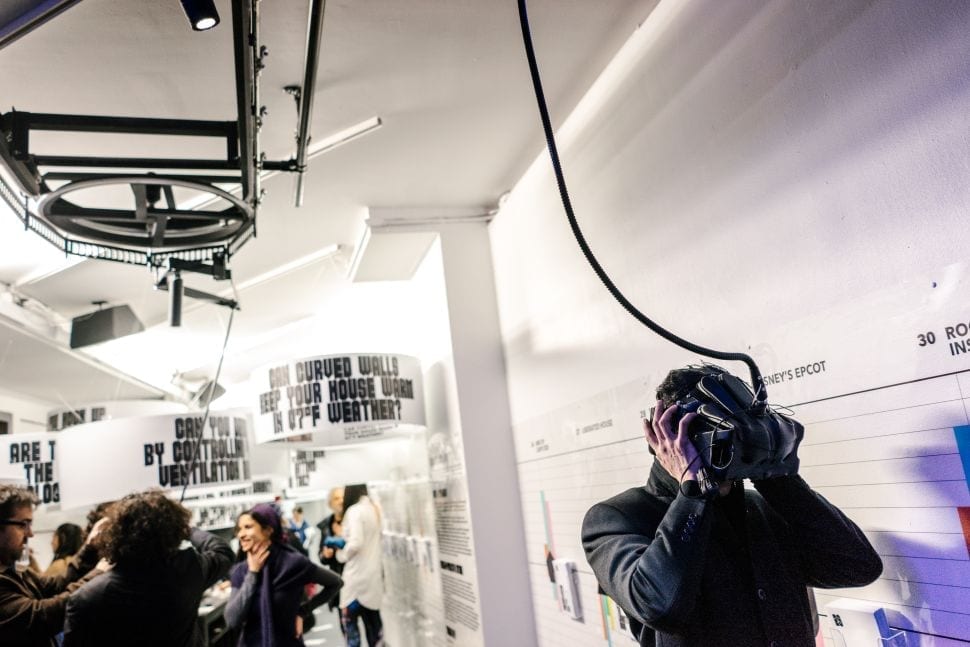
  • Storefront partners with Obsess to create virtual reality stores

    Storefront partners with Obsess to create virtual reality stores

    Storefront is pushing the boundaries of the retail industry by giving brands for the first time ever the opportunity to rent Virtual Reality pop-up stores right on its platform.

    Retailers and e-commerce brands can now launch a virtual, fully customisable store powered by Obsess’ VR technology, featuring their own inventory and choosing any layout, decor and style.

    The ‘Future of Retail’ is retail everywhere, according to Storefront

    Storefront is making retail accessible to anyone in the world by now giving customers a unique selling and buying experience through Virtual Reality, in addition to its current retail space offerings. Now, anyone has the ability to experience a physical store with the ease of online shopping.

    “We see this Virtual Reality pop-up store as creating a new category between e-commerce and a physical retail space. It’s a great in between,” says Joy Fan, Storefront’s CCO.

    Get a taste of (virtual) reality

    With this new partnership with Obsess, brands and retailers can now easily book space through a New York City, Los Angeles, or San Francisco themed virtual store.

    Now with this virtual pop-up store, e-commerce brands can get a branded store environment without the need to invest in a physical space – just yet.

    “Our goal is to bring the visual merchandising and curation of retail stores into online shopping to make it a more guided and enjoyable experience,” explains Obsess founder and CEO Neha Singh.

    By booking this virtual reality experience, brands will be able to increase digital engagement, reduce costs, create more traffic and acquire new data.

    A unique initiative that allows Storefront to open all doors to all ideas.

    About Storefront

    Storefront is the world’s largest marketplace for short-term retail space rental, making it possible for brands to sell their idea anywhere; for space owners to activate their space with a click and for consumers to buy local; globally.

    Storefront’s platform powers more than 10,000 listings, which represent more than 30 millionsqft of retail space. The company offers greater access to spaces in leading retail cities around the world, including Hong Kong, New York, Paris, London, Milan, Amsterdam, Los Angeles and San Francisco.

    Since its launch in 2013, it has helped thousands of brands all over the world, including Google, Samsung, L’Oréal, Everlane, Shopify, Indiegogo; open temporary retail stores.

  • AWS launches Aurora via Singapore cloud region

    AWS launches Aurora via Singapore cloud region

    Amazon Web Services has announced the availability of Amazon Aurora in the AWS Asia Pacific (Singapore) region.

    Amazon Aurora is a MySQL and PostgreSQL compatible database engine for the Amazon Relational Database Service (Amazon RDS) that aims to combine the speed and availability of high-end commercial databases with the simplicity and cost-effectiveness of open source databases.

    Amazon Aurora provides up to five times better performance than the typical MySQL and is three times faster than standard PostgreSQL databases. Customers pay a simple hourly charge for each Amazon Aurora database instance they use and Amazon Aurora can automatically scale storage capacity with no downtime or performance degradation.

    “Historically, customers have had to choose between performance and price when evaluating database solutions. Our customers have consistently told us that they wished for an easier way to get the performance of commercial databases, at the price of open source engines,” said Nick Walton, Managing Director, ASEAN, AWS.

    “Amazon Aurora is a database engine that gives customers the best of both worlds – the performance and availability of the highest-grade commercial databases at a cost more commonly associated with open source.”

    Amazon Aurora automatically replicates data across multiple Availability Zones and continuously backs up data to Amazon Simple Storage Service (Amazon S3), which is designed for 99.999999999% durability without performance impact.

    Amazon Aurora is designed to offer greater than 99.99% availability, and to automatically detect and recover from most database failures in less than 60 seconds, without crash recovery or the need to rebuild database caches. Amazon Aurora continually monitors instance health and if there is a failure, it will automatically failover to a read replica without loss of data.

  • Fook Tai Holdings seeking to go on the stock exchange

    Fook Tai Holdings seeking to go on the stock exchange

    Jewellery retailer Hong Kong Fook Tai Holdings is seeking an IPO on the growth enterprises market board with the aim of opening more retail stores and improving brand recognition.

    Fook Tai runs seven retail shops under the Fook Tai Jewellery brand in Hong Kong, while also selling products to VIP customers at its office. The company is a wholesaler of products mainly to a few jewellery retailers with stores outside Hong Kong and is a trader of recycled gold products. The company’s products come under three major categories – gold jewelry, platinum, karat gold and silver jewellery, as well as gem-set jewellery for mid- to high-end customers. Those categories accounted for 32.4, 4 and 24.3 per cent of total revenue respectively last year.

    Recycled gold products bought from the public and sold to recycled gold products collector/dealers, who resell them to goldsmiths, generated 39.3 per cent of total revenue.

    All the retail shops of Fook Tai are in residential areas of non-prime districts in Hong Kong, including Tsuen Wan, Jordan, Sham Shui Po, Tseung Kwan O, Sheung Shui and Kwun Tong. Fook Tai believes these locations will help grow a loyal customer base.

    The company intends to grow sales in major shopping and residential areas after going public. It plans to open two street-level shops in North Point and Sheung Shui in June and October respectively this year.

    Fook Tai directors believe the company should broaden its customer base and try to attract mainland customers. The new Sheung Shui store is near the border and is expected to benefit from mainland tourists. Also, North Point’s population includes high-income immigrants from the mainland.

    Fook Tai also plans to refurbish its retail stores after going public, and aims to attract younger buyers.

    Meanwhile, in its IPO prospectus, Fook Tai says its business may be adversely affected by the fluctuation of gold prices, while turnover from retail stores is subject to the risk of decline in the coming years.

  • PastaMania flagship opens in Colombo

    PastaMania flagship opens in Colombo

    PastaMania, Singapore’s largest Italian casual-dining restaurant chain, has opened its first restaurant in Sri Lanka.

    The PastaMania Sri Lanka flagship is located in Colombo on R A De Mal Mawatha, Colombo 3 (otherwise known as Duplication Road).

    Sri Lanka is the company’s 14th international market and it now has more than 50 outlets, with plans to continue expansion.

    Finding the right location and building the restaurant in Colombo took more than a year.

    “Our architect and contractors work with the PastaMania international design team from external facade to interior space planning. PastaMania’s brand elements from the Italian grocery shop ‘Alimentari’, open-kitchen ‘Pasta Al Dente’, newspaper stand ‘Edicola’ to details like the mural wall and signage are all carefully designed and fabricated,” said Hilme Azeez, MD (F&B business) of licensee Azeez Brothers.

    “The PastaMania Sri Lanka flagship is designed to reflect Italy’s piazza concept, creating the ambience of the day-to-day public life of an Italian ‘City Square’.

    “The timing is right as we see a lot potential for casual dining in Sri Lanka. We want to bring a ‘piece of Italy’ and the pleasure of ‘living like an Italian’ to the local and expatriate communities in Sri Lanka.”

    Wilson Lim, executive director, international business, with PastaMania’s parent, Commonwealth Capital Group, said the restaurant will use top-grade ingredients from Italy, such as high-protein durum wheat pasta, extra virgin olive oil, coffee and gelato.

    PastaMania Sri Lanka, will roll out the ‘Doughworkz’ programme whereby young children will be taught how to make their own ‘pasta and pizza’ and to work within a community. They will also be taught on healthy eating habits and living through our series of ‘PastaMons’ characters and story books aimed at educating the young generation in a ‘Learn-as-You-Play’ mode.

  • Hema now delivering 24 hours a day

    Hema now delivering 24 hours a day

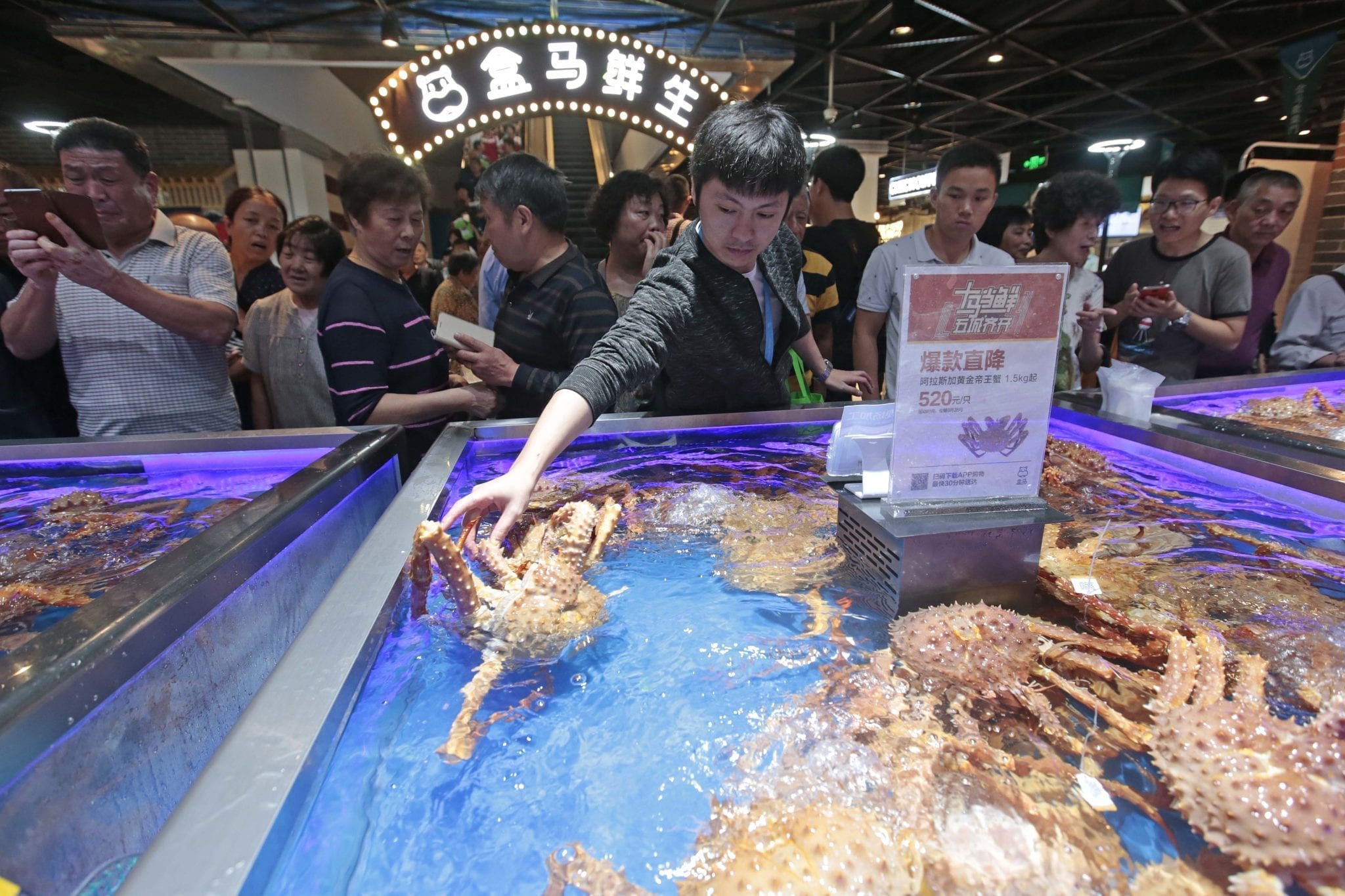
    Alibaba’s Hema supermarkets have launched 24-hour delivery services in a move to bolster the brand’s “New Retail” services.

    Initially the round-the-clock service is limited to the 25 Hema stores in Beijing and Shanghai. Consumers who live within 3km of a Hema store will be able to shop via the mobile app and order items for delivery between 10pm and 7am, when the bricks-and-mortar store is closed.

    Most items in store can be delivered with the exception of some fresh produce. Cooked meals will be available for delivery until 1am.

    “We found that New Retail doesn’t only merge online with offline, but also connects day and night,” says Hema chief executive Hou Yi. “There are definitely consumer demands that are specific to night time.”

    More than 80 million Taobao and T-mall users visit the sites between midnight and 4am, says Alibaba.

    Meanwhile, Alibaba has taken full ownership of the Ele.me online delivery service.

  • Amazon mulls taking over Toys R Us

    Amazon mulls taking over Toys R Us

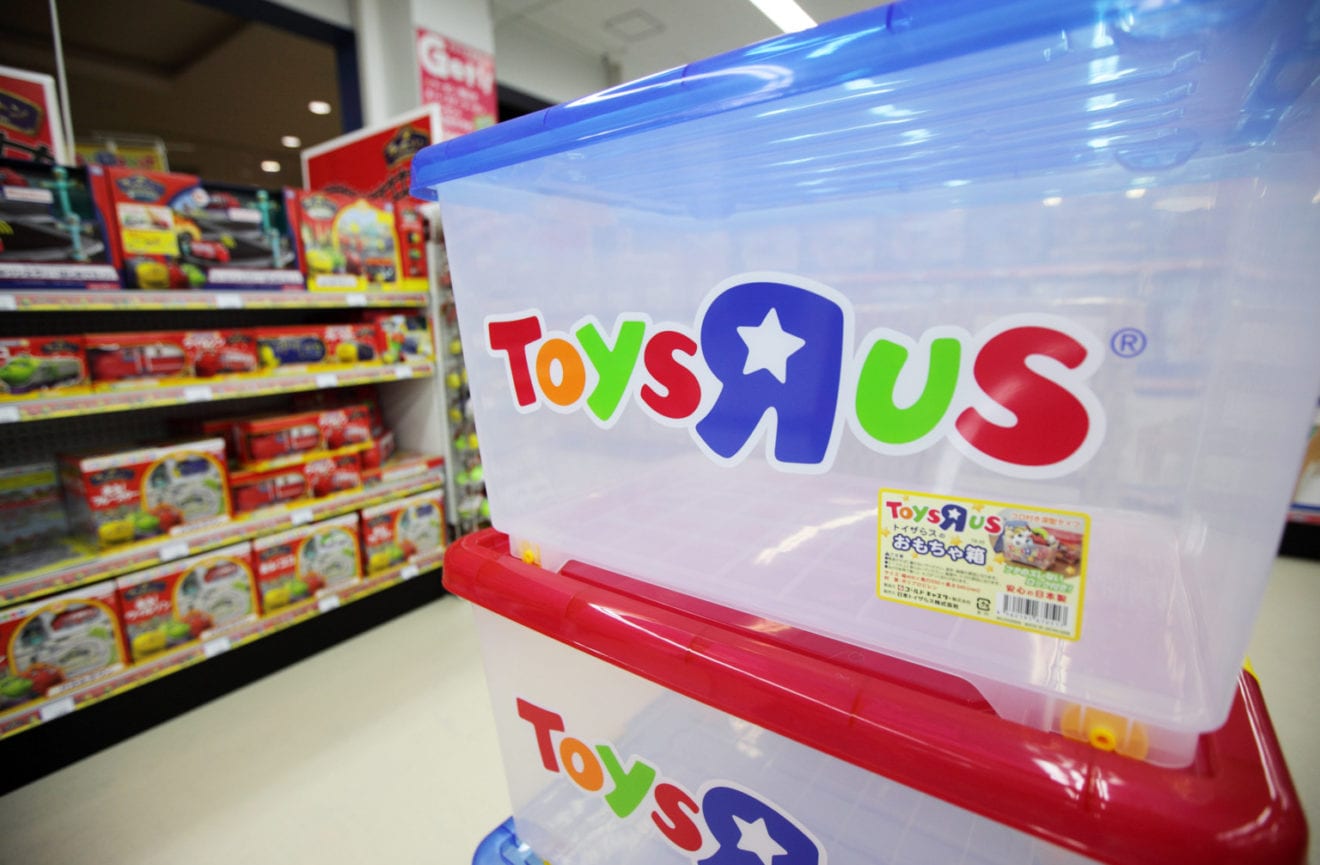
    Bloomberg reports the bankrupt toy retailer is in talks with the e-commerce giant over the future of an unspecified number of stores which could be converted to Amazon’s growing portfolio of offline retail spaces. The company recently acquired grocery chain Whole Foods, which has 450 sites, and has been opening physical book stores in selected US markets.

    Toys R Us US is closing down more than 700 stores, many of which have moderate- to large-sized footprints suited to bulky goods or grocery retailing.

    Bloomberg’s sources said Amazon is not interested in the Toys R Us brand but sees opportunities to use physical stores to deliver online purchases faster. It may possibly use the sites to demonstrate its Alexa voice-activated technology.

    Amazon has previously negotiated taking over Radio Shack stores after that chain collapse, but no deal was reached.

  • Qoo10 visitors balloon by 70%

    Qoo10 visitors balloon by 70%

    Visitors to e-commerce site Qoo10 ballooned 70 per cent to hit an average of 14.4 million in last year’s fourth quarter, according to Malaysian online aggregator iPrice.

    Qoo10 has about 3 million registered members and offers products ranging from women’s fashion to groceries, and services that include credit card and insurance policy subscriptions. The site offers daily deals, limited-time sales and coupons.

    Discounts and savings of up to 70 per cent off are offered through promotional deals.

    Qoo10’s Live10 mobile app includes a GPS-enabled interactive game with daily discounts, coupons or Qpoints as prizes.

    Based in Singapore as a JV established between founder Ku Young Bae and eBay, Qoo10 launched online in 2010 and has expanded its marketplaces to Korea, Indonesia, Malaysia, Hong Kong and Mainland China.

  • Fendi Thailand has launched two pop-up stores in Bangkok

    Fendi Thailand has launched two pop-up stores in Bangkok

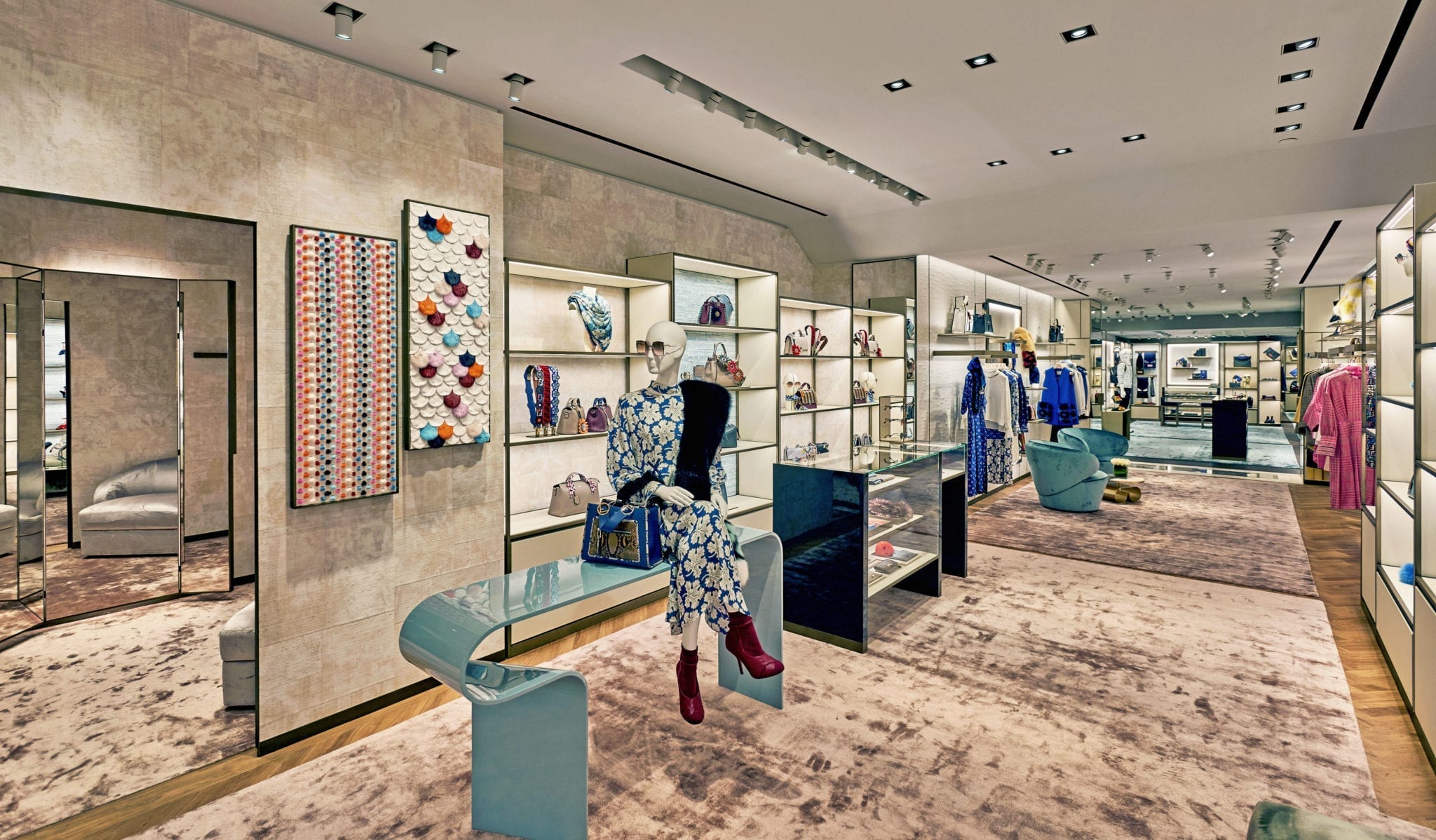
    Fendi Thailand has launched two pop-up stores in Bangkok’s Siam Paragon. Its concept is a luxurious reinterpretation of the Roman-style vintage newsstands typical of piazza in the heart of Rome. One kiosk is dedicated to the label’s spring/summer women’s collection while the other puts its focus on the men’s collection. Both outlets feature ready-to-wear, leather goods, small leather goods, accessories and shoes.

    To mark the launch of the pop-ups, Fendi hosted a Roman-inspired cocktail party with special guests including Chontida Asavahame, Mai Davika, Nattarat Nopparuttayaporn, Note Panayangkool, Pasakorn Vanasirikul, Sonya Singha, Sorawis Saengvanich and Violette Wautier.

    Included in the men’s collection are everyday Fendi items including illustrations done by British artist Sue Tilley. Items include a glossy red corkscrew, an antique set of keys, leaky bathroom taps, a plastic rotary telephone and a desk lamp.

    The kiosks will be active until June.

  • iPrice Thailand is profiling online shoppers

    iPrice Thailand is profiling online shoppers

    Thai online shoppers are most active before leaving the office or school, according to research from online shopping startup iPrice Thailand.

    Based in Kuala Lumpur, iPrice has a presence in seven markets across Asia and aims to uncover important e-commerce metrics from the perspective of thousands e-commerce practitioners, highlighting the differences and similarities in each market.

    Its research draws on its proprietary data from more than 1000 e-commerce players in Indonesia, Malaysia, Philippines, Singapore, Thailand and Vietnam.

    For Thailand, mobile traffic is the second-highest in Southeast Asia, where mobile traffic has grown by an average of 19 per cent in the past 12 months to now account for 72 per cent of overall e-commerce web traffic.

    Indonesia leads the field, accounting for 67 per cent in the third quarter of 2016 and 79 per cent in the second quarter last year.

    Therefore, mobile e-commerce traffic accounts for more than 70 per cent of overall web traffic, while desktop traffic is less than 30 per cent.

    Meanwhile, Thailand’s conversion rate is lowest in Southeast Asia (conversion rate is the percentage of website visits that result in a product purchase). Along with the Philippines, Thailand’s conversion rates are 20 per cent lower than average.

    The comparison between mobile and desktop conversion rates shows that mobile is 1.7 times higher on average. For Thailand, the desktop conversion rate is 1.3 times higher than mobile. However, there is an increasing trend of mobile e-commerce traffic.

    Thai basket size is fourth among the six countries in the study. This metric measures the average total amount spent for every order made by customer over a defined period of time. Singapore has the highest basket size of $91, with a GDP per capita of US$90,530; on the other hand, Vietnam was the lowest with a basket size of $23 and a GDP per capita of $6880. Thailand’s basket size is in the middle with the value of $42 and a GDP per capita of $17,000.

    On average, the basket size on desktop is slightly higher than the basket size on mobile. In Thailand, desktop conversion rate is 1.3 times higher than mobile, which implies that people in Thailand prefer using desktops over mobile phones when buying online.

    Also, Wednesday shows the highest peak in online shopping in Thailand. Taking Monday as a base value, e-commerce merchants have an increase in conversion rate on Wednesdays of up to 15 per cent, but it dips up to 30 per cent over weekends, which is consistent across the region. For Thailand, the Wednesday conversion rate increases 8 per cent above the average while the weekend conversion rate drops 19 to 22 per cent.

    For Thailand, orders increase in volume up to 53 per cent at 11am and reach up to 69 per cent at 3pm. A dip in conversion rate is noted across all countries between 5pm and 7pm.

    Bank transfer and offline POS are among popular payment methods in Thailand.

    Credit cards are used for 90 per cent of payments, but the credit-card transaction rate in Thailand is relatively low at 6 per cent, which is below the average of 9 per cent in Asean countries, according to Global Findex database 2014.

    To work around this issue, Thai e-commerce companies offer alternatives. For example, 81 per cent offer a bank transfer option such as ATM, making the country rank third in Southeast Asia. Also, 46 per cent of e-commerce sellers offer offline POS such as counter service at 7-11, ranking Thailand second place when it comes to frequency of using this type of payment.


  • Payments and lending dominate Indonesia’s Fintech scene

    Payments and lending dominate Indonesia’s Fintech scene

    Payment and lending focused Fintech startup companies dominate the overall Indonesia Fintech landscape in terms of maturity level, according to IDC Financial Insights.

    This was followed by marketplace, wealth management, company solution and accounting based software providers.

    “The collaboration between Fintech and traditional institutions (banks) becomes mandatory for now and in the future. There are several Indonesia banks that have done collaboration actions either in [the] operation aspect or through investment funds. We believe that speed to dominate the market is the key to win for Fintech especially in payments category,” said Handojo Triyanto, Senior Research Manager, IDC Financial Insights.

    “In the future Indonesia Fintech market will have consolidations by collaboration, mergers and acquisitions between the players. It has already happened as Go Jek (Go Pay) acquired Midtrans, Kartuku, and Mapan. The driver is the need to penetrate consumer market as soon as possible… not only to grab higher market share, but also to attract more investors.”