Author: Mei Ling Tan

  • Online retail sales in China to hit US$1 trillion

    Online retail sales in China to hit US$1 trillion

    Online retail sales in China are rising faster than previously predicted, and likely to surpass US$1 trillion this year according to a new report from Forrester.

    In the broader Asia-Pacific market, one in every four dollars spent on retail will be spent online by 2022, with China and South Korea the principal drivers.

    Forrester says rapid growth in mobile shopping and burgeoning online sales of fashion and food are likely to result on US$1.1 trillion in spending in China this calendar year.

    China already accounts for 83 per cent of online shopping in the region, although a projected annual growth rate of 4.6 per cent in the number of individuals buying stuff online suggests the market is becoming mature in terms of participation. Future growth will be driven by Chinese consumers buying more goods online rather in store.

    By 2022, Forrester estimates 631 million Chinese will shop online, compared with 502 million now.

    Japan is Asia-Pacific’s second largest online market, likely to account for $97 billion in sales this year, followed by South Korea with $69 billion. Australia is next, with $31 billion, followed by India, the region’s fastest-growing market, but currently worth $27 billion. India is expected to overtake Australia next year.

    Finally, Forrester projects mobile devices will account for 80 per cent of online retail sales in the region by 2022.

  • RCom gets court approval to sell wireless business

    RCom gets court approval to sell wireless business

    India’s Supreme Court has cleared Reliance Communications (RCom) to sell its wireless assets to Reliance Jio Infocomm for 250 billion rupees ($3.85 billion), vacating two stay orders on the sell-off.

    The court has vacated a stay on the sale of spectrum, media convergence nodes and real estate, and has directed the National Company Law Appellate Tribunal (NCLAT) to vacate the stay on the sale of the operator’s tower and fiber assets, RCom announced.

    In an interim order, the NCLAT has complied with the Supreme Court’s direction, but will require the proceeds from the tower and fiber asset sale to be deposited into an escrow account.

    Distribution of the proceeds will be subject to a final decision by the NCLAT expected next Wednesday.

    RCom arranged to sell off its wireless business to Reliance Jio Infocomm as part of a radical debt reduction program.

    But the tribunal issued an order prohibiting the sale of assets without court permission in response to an insolvency petition from Ericsson seeking a recovery of around $177.8 million in unpaid dues.

    According to RCom, minority investors are making a claim for part of the proceeds of the sale of its tower and fiber assets, a claim that the operator fully disputes. Based on legal advice, RCom estimates that this claim can be for at most 2 billion to 3 billion rupees worth of the proceeds.

  • Florentia Village ready to build seventh China site

    Florentia Village ready to build seventh China site

    Luxury outlet group Florentia Village is to invest RMB1 billion (US$159 million) in building an outlet in Chongqing, its seventh China location.

    Anticipated to be ready within 12 months, the new outlet will be in the Shapingba area of Chengdu, southwest China. It follows Florentia Villages in Shanghai, Beijing-Tianjin, Guangzhou-Foshan, Wuhan, Chengdu and Hong Kong.

    “With Florentia Village Chongqing, we will have completed our strategic enterprise growth in China’s main cities,” says MD Maurizio Lupi.

    He says the enterprise, which provides reductions of up to 80 per cent on high-end goods will next target lower-tier cities.

    Florentia Village will be seeking locales within a 60-minute drive from town centres but accessible by highways, public transport and airports.

  • Mobile wallets seeing strong adoption in SEA

    Mobile wallets seeing strong adoption in SEA

    A new study from Juniper Research predicts that 2.1 billion consumers worldwide will use a mobile wallet to make a payment or send money in 2019, up 30% from the 1.6 billion in 2017.

    The study claimed that while contactless card payments were far more prevalent than NFC mobile payments in many markets, leading wallets were seeking to redress the balance by enabling both online and offline options.

    The researcher cited a number of wallets have augmented payments offerings with banking services in a bid to deliver a holistic financial portfolio for consumers.

    Kenya’s M-PESA led the way in sub-Saharan Africa, focusing initially on P2P (Person-to-Person) money transfer services. China’s Alipay achieved critical mass as the de facto payment mechanism in the country’s burgeoning eCommerce market, although it continues to face strong challenge from Tencent’s Wexin Pay (known as WeChat Pay internationally).

    In India, the government’s demonetization initiative saw mobile wallets rapidly gain traction. However, this is now being threatened by new regulations on KYC checks imposed by the RBI (Reserve Bank of India), resulting in a sharp drop in transactions in March 2018.

    The Juniper report, Mobile Wallets: Service Provider Analysis, Market Opportunities & Forecasts 2018-2022, argued that while QR code-based in-store payments had seen quite astonishing levels of adoption in China, successful use cases in Europe and North America were likely to be limited to ‘closed loop’ wallets such as those deployed by Starbucks and WalMart.

    According to the research, the greater security offered by NFC-based wallets, which include tokenized credentials and, increasingly, biometric authentication, make them more attractive to both consumers and merchants.

    That said, technology deployment costs continued to limit adoption of such solutions at the point of sales counter.

    “QR code based payments are likely to have significant growth in markets such as India and sub-Saharan Africa, due to the negligible implementation costs. However, their greater susceptibility to alteration to include viruses and phishing scams is likely to act as a major deterrent elsewhere,” report author Dr. Windsor Holden observed.

  • AirAsia to expand services from Kolkata

    AirAsia to expand services from Kolkata

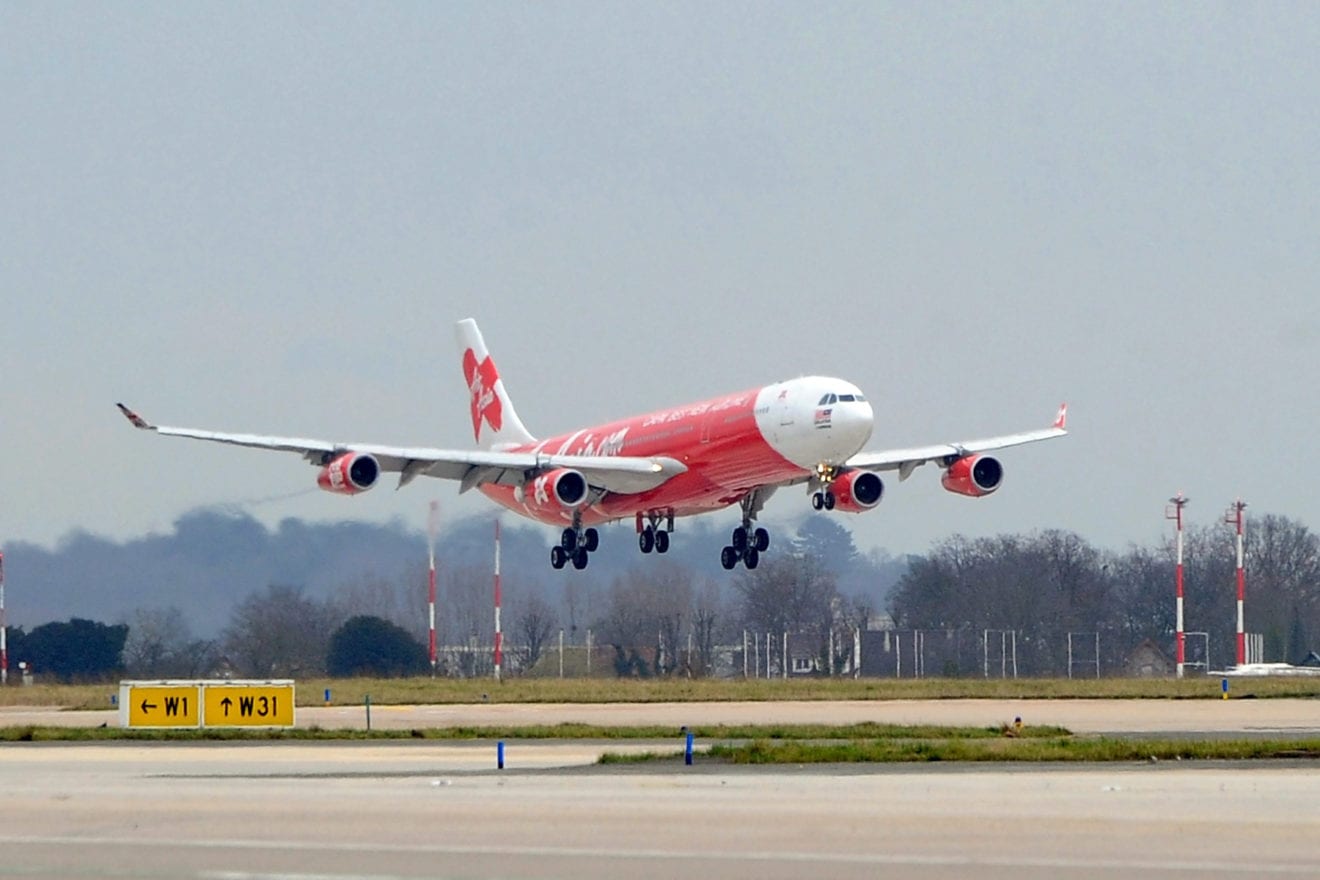
    AirAsia is rolling out tickets for a price of Rs 1,699. This offer comes as AirAsia India introduces new routes from Kolkata to Guwahati, Imphal, Pune and Visakhapatnam. The offer is available till April 15, 2018 and the travel period that starts on May 11, 2018 ends on May 30, 2018. Advance bookings are required to avail this offer.

    While the fares for rest of the routes begin from Rs 1,699, the ticket price to and from Kolkata and Pune is a little steep at Rs 3,499.

    The offer can be availed only through online bookings. The website also mentioned that seats are limited and might not be available for all the flights. Payments through credit, debit or charge cards would be subjected to a non-refundable processing fee.

    AirAsia India recently expanded its fleet to 18 planes with the induction of a new Airbus A320. This has been instrumental in adding the new routes for the airline and enhancing the frequency between Kolkata and Bagdogra.

    The 18th A320 aircraft has been stationed in Kolkata, the third base for the airline, as mentioned by AirAsia India in a release. The other two bases are Bengaluru and New Delhi.

    “We are happy to be expanding our presence in Kolkata with these new routes connecting tier-II/III cities. This year continues to be exciting for us and we look forward to enabling many more people to experience affordable air travel,” AirAsia India managing director and chief executive Amar Abrol said.

    The Bengaluru-based airline, which will be completing four years of operations in June this year, flies to 19 destinations covering Kochi, Goa, Jaipur, Chandigarh, Pune, Guwahati, Imphal, Visakhapatnam, Hyderabad, Srinagar, Bagdogra, Ranchi, Bhubaneswar, Nagpur, Indore and Chennai from three bases.

  • Paragon dip hits SPH Reit income

    Paragon dip hits SPH Reit income

    Lower revenue at Paragon mall hit net property income for SPH Reit Management for its second quarter to the end of February.

    The return of S$42.2 million (US$32 million) dipped 1.1 per cent from the same period last year. This reflected a rental reversion of -7.1 per cent for new and renewed leases at Paragon in the first half, mainly because of negotiations during the retail sales downturn since 2014. The decline was more moderated in the second quarter, says SPH.

    There were only three changes in tenancies at Clementi Mall, representing 1.4 per cent of the mall’s net lettable area.

    However, tenant sales have grown in the malls in tandem with the recovery in retail sales since June. Both properties also continued their track record of full occupancy.

    “In keeping with our philosophy of treating tenants as business partners, we work closely with them to ride through both cyclical and structural challenges in the retail environment,” says SPH Reit Management CEO Susan Leng.

  • Samsung tips record first quarter profit as chip boom winds down

    Samsung tips record first quarter profit as chip boom winds down

    Samsung Electronics tipped a surprise record first-quarter profit on Friday but market reaction was muted due to growing concerns that the semiconductor boom that has driven the South Korean tech giant’s earnings is about to end.

    Samsung shares fell after the announcement as analysts forecast similar or lower profit in the second quarter, due to slower growth in DRAM chip prices and higher marketing costs for the flagship Galaxy S9 smartphone.

    “Even if profits start falling in the second half, Samsung will have a strong balance sheet this year,” said Song Myung-sup, analyst at HI Investment & Securities, predicting looser supply of DRAM chips to start driving down prices.

    The global semiconductor leader and Apple Inc smartphone rival forecast January-March profit to leap 57.6 percent from a year earlier to 15.6 trillion won (US$14.7 billion), beating an average forecast of 14.5 trillion won from a Thomson Reuters survey of 21 analysts.

    Revenue for the quarter was tipped to rise 18.7 percent to 60 trillion won, Samsung said in a regulatory filing. The company did not elaborate on its performance and will disclose detailed earnings in late April.

    Samsung shares fell as much as 2.7 percent on Friday before paring losses to close down 0.7 percent, compared to a 0.3 percent drop in the wider market.

    Analysts said Samsung’s shares were affected by a UBS report forecasting an increase in the supply of DRAM chips used in servers, which dragged down Micron Technology Inc shares more than 6 percent on Thursday.

    The prices of NAND chips commonly used in mobile devices began falling late last year and analysts have been closely watching for signs of the peak in the DRAM price boom as well.

    Even if DRAM price growth is at its peak, analysts said Samsung remained on track for record annual earnings.

    “Although gains in memory chip prices have slowed from the height of the chip boom, lower prices could also increase demand for chips, and Samsung has the cost-cutting ability to keep profits up,” said Greg Roh, analyst at HMC Investment & Securities.

    MOBILE BUSINESS

    While the chip business underpinned Samsung’s profit growth, the mobile business – which accounted for 40 percent of 2017 revenue – appeared to have made a surprisingly solid contribution to first-quarter earnings, analysts said.

    They put this down to Samsung’s early launch of its flagship Galaxy S9 device in March, healthy sales of older devices as consumers balk at the high price of new premium models, and a short-term dip in advertising costs.

    “I think lower marketing costs for the mobile business helped, because the first quarter is traditionally not a boom season for rival Apple, so Samsung did not need to spend a lot on marketing,” said Claire Kim, analyst at Daishin Securities.

    Worldwide smartphone shipment volumes shrank for the first time in 2017, and Samsung is coming under increasing competition from the likes of low-cost Chinese rival Xiaomi .

    Concerns about the smartphone market and a subsequent fall in demand for components like OLED screens – used in Apple’s iPhone X – are behind a roughly 5.3 percent fall in Samsung Electronics’ share price so far this year, from a record high in November.

    In a separate development, prosecutors searched the offices of a Samsung Electronics unit on Friday as part of a probe into allegations the conglomerate had sabotaged worker’s efforts to strengthen labor unions, a South Korean prosecutors’ office said.

    A Samsung spokeswoman said prosecutors had secured labor-related documents. She declined comment further.


  • Xiaomi pushes smartphone component suppliers to invest more in India

    Xiaomi pushes smartphone component suppliers to invest more in India

    China’s Xiaomi said it wants its global smartphone component makers to set up base in India, in what is likely to bring as much as US$2.5 billion of investment to the South Asian nation while also creating up to 50,000 jobs.

    Xiaomi’s push could boost Prime Minister’s Narendra Modi’s flagship ‘Make in India’ drive that is aimed at adding tens of millions of new jobs and turning Asia’s No.3 economy into a global manufacturing hub.

    Xiaomi, which looks headed for a big initial public offering later this year, currently has six smartphone manufacturing plants in India. It hosted more than 50 of its global suppliers in New Delhi at an investment summit on Monday that was also attended by key government officials.

    If the suppliers at the summit were to set up shop in India, a top market for Xiaomi, it would bring in US$2.5 billion in investment and create as many as 50,000 jobs, the company said.

    The Chinese firm has unseated Korean rival Samsung Electronics to take the pole position in India’s smartphone market – the world’s second biggest.

    Xiaomi, which began assembling smartphones through Foxconn in southern India in 2015, will now assemble parts like memory and processors on printed circuit boards locally, said Manu Jain, managing director of Xiaomi’s India operations.

    “Today we are deepening this commitment with three more smartphone factories and our first surface-mount technology (SMT) plant dedicated towards local manufacturing,” Jain said in a statement.

    SMT is a method by which components are embedded onto printed circuit boards (PCBs). Once populated with components, PCBs that house memory, chips and other components, typically account for about half the cost of a smartphone.

    This announcement comes a week after New Delhi levied a 10 percent import duty on some key smartphone components, including populated PCBs. The South Asian nation is Xiaomi’s second-largest market after China.

    Xiaomi’s SMT plant will be run by Taiwan’s Foxconn, the world’s largest contract electronics manufacturer and a key Apple supplier.

    However, Xiaomi’s push to get suppliers to India could spark job loss concerns in neighbouring China that is currently among the top electronics manufacturers in the world.

    “India’s cheap labour offers more competitiveness to manufacturers, demand is vast and in India opportunity is also huge because the market is much less saturated compared to China,” said Jaipal Singh, a senior market analyst for client devices at tech research firm International Data Corporation.

  • Operator capex to return to growth in 2018

    Operator capex to return to growth in 2018

    Global operator capex will to return to growth this year after two consecutive years of decline, research firm Dell’Oro predicts.

    The company is expecting a compound annual growth rate of 1% in constant currency terms between 2017 and 2020. This is an improvement on the company’s previous forecast for the period.

    The more optimistic projection is largely due to signs of improvement in both the US and Chinese markets, Dell’Oro carrier economics lead Stefan Pongratz said in a blog post.

    But total capex spend in China [Figure 1] is still expected to decline year-on-year in 2018 and stay flat in 2019 before returning to growth in 2020.

    Pongratz noted that constrained operator revenue growth is expected to be one of the primary inhibitors of further capex acceleration that could be expected with the introduction of 5G.

    Currency adjusted operator revenues are projected to remain flat between 2017 and 2020, with operators expected to struggle to find new revenue streams to offset slower smartphone revenue growth.

    Likewise, while the IoT has long-term revenue generation possibilities, there is expected to be limited benefit over the next few years. Dell’Oro estimates that carrier IoT revenues will account for just 2% of total mobile revenues by 2020. This could be even lower if current pricing trends prevail.

  • Optus demos 5G during Commonwealth Games

    Optus demos 5G during Commonwealth Games

    Australian operator Optus is using the Commonwealth Games on the Gold Coast to showcase 5G use cases including 8K video streaming on its live 5G trial network.

    The showcase aims to provide visitors with a hands-on 5G experience in advance of a planned initial commercial rollout in 2019.

    The showcase will be open for the duration of the Games, which ends on Sunday. It includes demonstrations of technologies including a 5G and motion detection controlled robotic arm as well as a game of rock paper scissors with a robotic hand using the high speeds and low latency of 5G and machine learning to predict the player’s moves.

    Optus is also showcasing demonstrations of VR football, cycling and driving and 360 degree video streaming from the games themselves.

    Meanwhile Optus has demonstrated 8K video streaming in motion through a 5G van equipped with an 8K television and a prototype 5G device.

    “What we have here today is a spectacular simultaneous demonstration of 5G capability, powered by a live 5G network, rather than through simulations,” Optus managing director of networks Dennis Wong said.

    “For people to be able to walk off the street and interact with real 5G technology is an incredibly exciting development as we continue towards leading in the delivery of the first phase of 5G technology in 2019.”

    Optus subsidiary Optus Business was selected along with Cisco, to build the network for the 2018 Commonwealth Games. The company is providing free Wi-Fi services for 6,600 athletes as part of the contract.

    Rival Telstra  recently launched 5G-enabled Wi-Fi hotspots on the Gold Coast as part of the 5G trials from its newly launched 5G innovation center in the city.

  • Jollibee Foods causes long queues in Toronto

    Jollibee Foods causes long queues in Toronto

    Filipino fast-food chain Jollibee Foods Corporation has opened its first Toronto store to a queue of fans, some of them waiting up to eight hours.

    Its Canadian expansion comes as Filipino restaurants have been opening as well as a major grocery store catering to cooks of the cuisine.

    Jollibee entered Canada in 2016 with an outlet in Winnipeg, reporting that despite the freezing winter, thousands waited overnight for the store to open.

    Toronto’s store is the third, with another having opened in Winnipeg. The first 40 customers spending more than $3 each won a six-piece bucket of crispy chicken each month for a year. At the grand opening, customers were buying bucketfuls of chicken and taking photos with the chain’s mascot, a red and yellow bee.

    The Philippines was the top country of birth of new migrants to Canada, according to Statistic Canada. Its 2016 census shows that 188,805 people, or 15.6 per cent of recent immigrants, were born in the Philippines.

  • Adidas closes stores and strong focus on online

    Adidas closes stores and strong focus on online

    Global sportswear brand Adidas is shifting its retail model with the times and will look to store closures in coming years alongside an increase in its digital investment.

    In an interview, chief executive Kasper Rorsted, who has overseen a revitalisation in Adidas’ forward looking targets since stepping into the top job in 2016, said that the business would be thinning its portfolio of stores.

    “Our website is the most important store we have in the world,” Rorsted told. “It has priority when we hire [and] when we allocate our resources.”

    Adidas booked a 57 per cent increase in e-commerce sales in 2017, while total revenues increased by 16 per cent to more than $38 billion globally.

    The business hoping to double its e-commerce sales by 2020 to more than $7.3 billion and has been investing heavily in digital initiatives, including the launch of a shopping app last year that received more than 600,000 downloads in less than two months.

    To achieve its goal Rorsted has previously outlined around $1.64 billion in annual capital expenditure over the next few years, up from $1.378 billion in 2017 – with an emphasis on digital and online.

    Adidas has already begun to thin its store portfolio, having already closed around 50 per cent of its owned Reebok stores in the US market.

    There are still more than 2,500 company retail stores around the world though and approximately 13,000 mono branded franchise stores at the end of 2017, with no guidance provided on the extent of coming closures.

  • China to capture 40% of 5G subs by 2025

    China to capture 40% of 5G subs by 2025

    China is expected to dominate the 5G market by 2025, accounting for 40% of all subscriptions, according to CCS Insight.

    South Korea, Japan and the US are expected to be first out of the blocks with 5G, with launches planned on a limited scale as early as late 2018. But China will quickly take over, achieving 100 million connections in 2021 and over 1 billion in 2025, the research firm forecasts.

    Globally, 5G subscriptions are on track to reach 280 million in 2021 and grow to 2.7 billion in 2025, with most markets having deployed 5G by this time.

    CCS Insight has meanwhile raised its estimates for total 5G connections in 2020 by more than 50% from its previous forecast in October to nearly 60 million. Its projection for 2021 has also been increased by 25%.

    “The industry might be struggling to establish the business models for investment in 5G, but this isn’t stopping leading operators battling for bragging rights to launch the first networks,” CCS Insight principal analyst for operators Kester Mann said.

    “Competitive forces and the need for capacity are the leading drivers of early deployment, although we caution this could set unrealistic expectations for initial network capability.”

    Meanwhile the first 5G smartphones are expected to emerge in 2019, but there will be relatively few by this time, the company said. The real ramp up is expected in 2021, by which time over 350 million 5G handsets will be sold worldwide.

  • SookSiam centrepiece for IconSiam Thailand

    SookSiam centrepiece for IconSiam Thailand

    IconSiam will showcase the best products, services and artistic creations from Thailand’s 77 provinces in a single exciting destination when the massive THB 54 billion (US$1.7 billion) riverside landmark development opens later this year.

    Called SookSiam, the retail space will take up 15,000sqm of the ground floor of the massive shopping destination being built on the banks of the Chao Phraya River.

    The THB 700 million (US$22.4 million) SookSiam is expected to attract 21.9 million visitors, annually, and introduce a new retail concept to Thailand which IconSiam calls “co-creation”.

    Chadatip Chutrakul, IconSiam director and Siam Piwat CEO, promises SookSiam will be “an immersive, emotional and entertaining” drawcard to the mall.

    “It is a part of IconSiam’s commitment to bring all that makes Thailand great to the world’s attention. It will help small enterprise owners, artisans, artists, and performers who are local heroes from around the country access a globally visible, omni-channel platform on which to showcase their creations and become integrated into a greater commercial ecosystem. This will help local heroes become national heroes and global heroes,” she says.

    “SookSiam is conceived as a place that will present the cultural heritage of the four main geographic regions of Thailand, capturing their arts, handicrafts, performing arts, and local wisdom. Within SookSiam are outlets of varying types that are built in the style of their respective regions, and which offer regional specialties, whether they be crafts, foods, beverages, or services that are unique to that region.

    “We have layered on top of this a completely new, emotional dimension by letting visitors experience the stories behind everything they see, and we let them know about the people involved with each place, product, and service at SookSiam. It makes the offerings at SookSiam exciting and meaningful, and the destination very much more engaging because of the deeper knowledge that visitors will have about all that is around them,” says Chutrakul.

    Local builders drawn from each region will construct SookSiam and more than 200 artists have been commissioned to decorate it.

    “Their involvement in the creation of the regional zones has been the key to making the entire destination impeccably faithful to the artistic heritage of the localities and in a way that could only be done by a truly local person,” she says.

    Authenticity key

    “What’s never been done before and what makes SookSiam truly unique is its authenticity.

    The outlets at SookSiam are real stores that all also exist in towns and villages around Thailand and which have been transposed into SookSiam. They are small mom-and-pop operations that are famous in their localities but which have never had a chance to present themselves to a wider national or global audience. They are stores with real, extraordinary stories and real, multi-generational legacies that are rooted in their respective local communities,” says Chutrakul.

    “SookSiam is like a window into every province and into every corner of Thailand. People can see, feel, and experience with their every sense the true heart and soul of each locality.”

    She believes the destination will help every Thai and foreign visitor connect with and admire products, recipes and artistic creations that are the result of dedication and accumulated knowledge built up through generations.

    “Because of this, the destination has an emotional dimension that comes from the lives and life stories behind everything present at SookSiam. It is a very moving experience because it honours the heritage of so many great people who have been a living part of our culture and of Thainess, but who have been hidden from view. Nothing like this has ever been done in Thailand before,” she says.

    SookSiam is being produced and curated by Luckana Naviroj, who is known for her expertise in sourcing authentic products and foodstuffs from around Thailand.

    Naviroj said the outlets in SookSiam all have a real counterpart in small towns in Thailand, and that many of them are enterprises that have been operated by several generations of the same family.

    “We travelled the entire country to find these unique shops, artisans, and artists, and invited them into SookSiam, which will serve as an extraordinary platform onto which people – the “local heroes” from around the country – can place their talents and products, and draw global attention as well as expanded sales opportunities, 365 days a year.

    “Thai and foreign visitors to SookSiam will have the opportunity to experience or purchase some genuinely exciting and special offerings which have been hidden away in towns and villages around Thailand,” she says.

    Preserving the nation’s heritage

    Naviroj says helping these small operators will help preserve Thailand’s cultural heritage and the rapidly disappearing Thai way of life.

    “SookSiam offers a platform that will help the next generation turn their legacies into bigger enterprises that can challenge and reward them enough for them to continue in their families’ proud traditions while preserving Thailand’s priceless cultural heritage at the same time.  Without an opportunity to expand their businesses and become part of a greater commercial ecosystem, or for artists and artisans to attract more sponsors, the next generation will, almost certainly, abandon their occupations and turn to new sources of employment leading to the loss, forever, of our cultural heritage and the way of life that has defined what it means to be Thai.”

    Co-creation initiative

    Meanwhile, Chutrakul says SookSiam is the first example of a new retail approach called “co-creation” around which the entire IconSiam development is designed.

    “Everyone involved with IconSiam, whether they be outlets selling products, or designers and artists showcasing their creations, are an inseparable part of our business model and our design and development process. IconSiam is being created in collaboration with thousands of tenants and other partners. SookSiam represents that co-creation concept perfectly because everything special being presented at SookSiam is actually created by someone somewhere else in Thailand. We ‘co-create’ with them by adding our knowledge of consumer preferences and supporting them with innovation as well as retailing and marketing techniques based on our insights into the needs of Thai and foreign visitors. We also assist them in ‘curating’ the selection and presentation of their offerings at SookSiam, all in a way that is consistent with the government’s Thailand 4.0 program to help people add value to their intellectual property and proprietary skills,” she concludes.

    IconSiam will open in the last quarter of this year.

  • Davao chocolate boards AirAsia’s in-flight meals

    Davao chocolate boards AirAsia’s in-flight meals

    Davao City’s renowned chocolate brand will give flavor to a new AirAsia Philippines in-flight meal – an addition to the carrier’s Asian menu.

    On Thursday, April 5, AirAsia Philippines revealed its roasted dalandan chicken with pimiento sauce. While considered a main course, one of the meal’s ingredients is chocolate produced by Malagos Agri-Ventures Corporation.

    “This will put us into the spotlight, and hopefully more and more potential partners would be looking at us,” said Rex Victor Puentespina, sales and marketing head of the firm behind the Malagos Chocolate brand.

    AirAsia Philippines, which tapped Bacolod master chef JP Anglo for the concept, will carry the meal in all of its domestic and international flights beginning April 12.

    Dexter Comendador, the carrier’s chief executive officer, said they added the meal to their in-flight Santan menu to bring in social entrepreneurs “who all value a strong, innovative service culture.”

    The Puentespina family’s firm was recognized in Paris last year for its cacao beans. While the samples they sent to the International Cocoa Awards did not make it to the top 18, it was still a feat for the family who ventured into cacao farming more than a decade ago.

    It also recently hammered a deal with Krispy Kreme for a doughnut product in the region.

    The carrier also announced on Thursday its move to sell handwoven products made by social entrepreneurs from Manila, Davao, and Cebu “on all AirAsia flights across 180 destinations.”

    These include handwoven items by ANTHILL, which sources its items from direct partners in indigenous communities in the Philippines.