Author: Mei Ling Tan

  • Kerry invests in Thailand operations and opens Asia’s first Meat center

    Kerry invests in Thailand operations and opens Asia’s first Meat center

    Kerry, a global leader in taste and nutrition solutions for the food and beverage industry, today announced the opening of its expanded Regional Development and Application Centre that is also designated as the first Centre of Excellence for Meat in Bangpoo, Thailand. The opening is part of a larger series of upgrades to Kerry’s Bangpoo facility, designed to increase Kerry’s local innovation pipeline as well as its research and application capabilities.

    Spanning more than 8,500 square metres, and equipped with the latest technologies, Kerry will use the state-of-the-art facility to work with local customers on all stages of their product development – from ideation to application and manufacturing – for a range of categories including meat, snacks, bakery, dairy and beverages.
    The dedicated meat centre, unveiled today, includes best-in-class taste and functional technologies, allowing Kerry to co-develop signature meat profiles based on different protein types, helping customers keep pace with the technically challenging and fast changing meat markets in the Asia Pacific, Middle East and Africa (APMEA) region. With in-house application, sensory and culinary meat experts, the centre is well positioned to develop commercially viable and innovative products at an unrivalled speed to market.

    Another upgrade to Kerry’s Regional Development and Application Centre announced today is new facilities for food and beverage brands to develop authentic, savoury tastes and flavours. Drawing on Kerry’s expertise and market-leading position in cooking methods such as smoke and grill, the fully-equipped application lab includes the latest Clean Smoke technology, for F&B brands to experiment with using smoke condensate to add a signature taste and smoke profile to meat, vegetables, dessert and even beverages.

    The additional down packing and blending lines not only double the centre’s production capacity but also provide food service customers with greater flexibility and efficiency in how their food products are packed.

    “Thailand is a priority market and an important regional hub for many of our customers in South East Asia and beyond, so we’re delighted to be launching these new, world-class multi-application facilities in Bangpoo,” said John Savage, President & CEO, Kerry APMEA.

    “Consumer food and beverage tastes are changing rapidly due to the region’s growing urban middle class and this is creating huge opportunities for the F&B sector. We’re excited to combine our 15 years of heritage in Thailand with the very latest technologies and innovation to help our customers stay ahead of the curve and grow their market share now and into the future,” he added.

    Home to application labs, interactive customer suites and industry-leading research and sensory facilities, the centre also includes customer engagement kitchens and beverage bars where Kerry’s in-house chefs, mixologists and baristas will develop new menu concepts alongside customers.

    Experienced food scientists and technologists will also work alongside dedicated teams of sensory scientists to develop products that surpass consumers’ expectation when launched. As one of the largest food manufacturers in the world, Kerry is also committed to achieving the highest standards of sustainable best practice. As part of this commitment, the centre employs automated pouch filling technology to reduce energy consumption and improve operational efficiency.


  • The new LL Bean Urban store will open soon

    The new LL Bean Urban store will open soon

    US outdoor retailer LL Bean will open its first LL Bean Urban concept store on April 6.

    While the backbone of the famous brand’s physical store presence comprises large format, warehouse style stores, usually located in bulky-goods centres, rather than in high street precincts, the company believes an offer tailored more to city consumers will expand its customer base and sales.

    The 8600sqft LL Bean Urban store, smaller than its mainstream stores, will open at One Seaport in Boston, featuring a range of active and casual apparel as well as the traditional outerwear and footwear for which it is best known. The stock will be tailored to Bostonians’ most-favoured recreational preferences.

    As part of its overall national retail growth plan, LL Bean made the decision to expand its presence into Boston’s Seaport because of the high degree of awareness and affinity Boston residents have for the brand – and to capitalise on its relationship with the Boston Red Sox team.

    “The new Seaport store will allow the people of Boston and beyond to experience first-hand everything the legendary outdoor retailer offers: quality merchandise, exemplary customer service, excellent outdoor programming, a welcoming shopping environment and an ethos to always do what’s right by its customers, employees, the environment and the community,” said Greg Elder, VP of stores.

    “Boston is a city that’s as passionate about the outdoors as we are. We’re excited to bring the outdoor spirit to the heart of Boston at our first city store, and get to know the vibrant Seaport community.”

    LL Bean was founded in 1912 by Leon Leonwood Bean, in a single room, selling a single product: the Maine Hunting Shoe. Still family owned, LL Bean now operates 39 stores in 17 states across the US, along with 25 in Japan.

  • Asos wants to make online shopping more inclusive

    Asos wants to make online shopping more inclusive

    The millennial fashion company has stocked petite, tall, curve, plus size and maternity ranges for a while now, and this new step will help it embrace inclusivity even further.

    According to the reports, the images will be created using augmented reality, as the technology will enable to company to superimpose the pieces on women of different sizes rather than having to resort to countless and expensive photo shoots.

    The feature will be rolled out gradually across the brand’s app, it confirmed this week via social media.

    Asos said in a statement: “We’re always testing new technology that can make our customers’ experience even better. In this case, we’re experimenting with AR to show product on different size models, so customers can get a better sense of how something might fit their body shape.”

    The decision was praised by consumers on Twitter, with one user writing: “This helps massively, as I often wonder how clothes would look on me, when I’m clearly 5 sizes bigger than the model. Great move forward.”’

    With over 80,000 brand and own-brand products available on its platform, Asos is one of the largest fashion platforms in the e-commerce space. The company is continually innovating, having launched try-before-you-buy in November and a Christmas gift assistant on Facebook in December.

    The company overtook Marks & Spencer last year in market value, and is en route to reach a 25-30% sales growth in financial 2018.

  • More stagnant E-mart store to be closed

    More stagnant E-mart store to be closed

    Shinsegae Group’s discount chain E-mart has decided to shut several more stagnant stores this year to improve the company’s efficiency.

    Shinsegae says it has also sold its Deoki-dong branch in Ilsan, Gyeonggi Province. The outlet had initially been a Walmart store in 1996, but became an E-mart in 2006 after Shinsegae acquired the US-based discount chain’s Korean affiliate.

    “We realised we needed to reform our stores for continuous growth,” says an E-mart official, “so we began closing down our stores that showed sluggish sales.”

    The company sold its store in Hakseong in Ulsan, the store in Bupyeong in Incheon and the store in Siji in Daegu last year. It also sold land in Hanam and Pyeongtaek, Gyeonggi Province.

    Following the closure of an SSG Food Market Mokdong store in Seoul in January, E-mart plans to shut down the Bupyeong and Siji branches in the first half of this year. The restructuring is regarded as a move to offset the retailer’s sluggish growth rate over the past few years.

    E-mart posted KW566.9 billion (US$524.3 million) in operating profits last year, down 0.3 per cent from the previous year.

    Disposing of its stores showing losses, the company is considering opening a couple of new stores this year, as reported.

    E-mart left the Chinese market last year because of lingering losses in the world’s most populous country. After launching E-mart store there in 1997, at one time it had 30 outlets. However, the Chinese affiliate posted KW21.6 billion in losses in 2016, and its accumulated deficit between 2013 and 2016 reached KW150 billion.

    Meanwhile, E-mart will begin building its second store in Ho Chi Minh City in May. The company is using its Vietnamese affiliate as a base for its expansion in other Southeast Asian countries, such as Cambodia, Laos and Myanmar.

  • Expert urges Vietnamese firms to explore other markets

    Expert urges Vietnamese firms to explore other markets

    Vietnamese firms should expand their partnership to at least three markets to avoid sole dependence on a particular market, said economist Phạm Chi Lan.

    She also urged the firms to provide clear and transparent filings to meet the standards of exporting markets.

    Vietnamese enterprises must prove that they do not enjoy protectionism of the government and do not sell products at a dumping price level to ensure they are not affected by the anti-dumping tax policies of the exporting markets, she said.

    Given the context in which US regulators have planned to impose anti-dumping taxes on Vietnamese exports to protect their local fishery and steel industries, Lan suggested firms to explore other markets and diversify their targeted markets to ensure less reliance on a sole, large market.

    “A three-market strategy will ensure that a company’s export is balanced and that business will not depend on any particular market,” Lan said.

    Such business strategy will help Vietnamese firms to survive and exploit new opportunities in the context of a rising global trade war, following intense statements from China and the United States against each other, she said on the sidelines of a conference co-organised by the Vietnam Executive MBA Programme in Hà Nội, University of Hawai’i, and the European Chamber of Commerce in Vietnam last week.

    The United States announced a US$60 billion tariff bill on Chinese imports last week. China, in return, filed a list of 128 US products for retaliation, raising global concerns about a possible trade war.

    According to Jack Suyderhoud, professor of Business Economics at the Shidler College of Business, University of Hawai’i at Manoa, recent actions of the US government are aimed at protecting its local industries, such as fisheries and steel, against threats from cheaper imports from China and Việt Nam.

    Rising protectionism will encounter objection from those benefiting from free trade, Jack said, adding that the US government should notice how important the win-win principle is and how it exists in every trade deal.

    Lan urged local firms to strengthen their competency so that they can take advantage of benefits brought about by free trade agreements, to which Việt Nam must comply, and encounter less negative impacts from a possible global trade war.

    Besides the US and China, Vietnamese firms should increase its influence in other markets, such as the European Union, reducing its dependence on the world’s two largest markets, Lan said.

    “There are no winners in a trade war,” she said, adding that the United States and China are two of the largest trading partners of Việt Nam, thus, “we need to expand our trade relations to different markets to boost the country’s economy”.

    “The establishment of the CPTPP (Comprehensive and Progressive Trans-Pacific Partnership), signed on March 8 without the United States’ participation, is a good way to deal with the unpredictable policies of the United States and China at the moment,” Lan said.

    The CPTPP deal will help other economies to get to know each other, increase their cooperation and protect their economies, offsetting the damages caused by US protectionism and China’s responses, she added.

    “CPTPP is proving to be attractive to other economies that are not partners to the deal, such as South Korea and the United Kingdom,” she said.


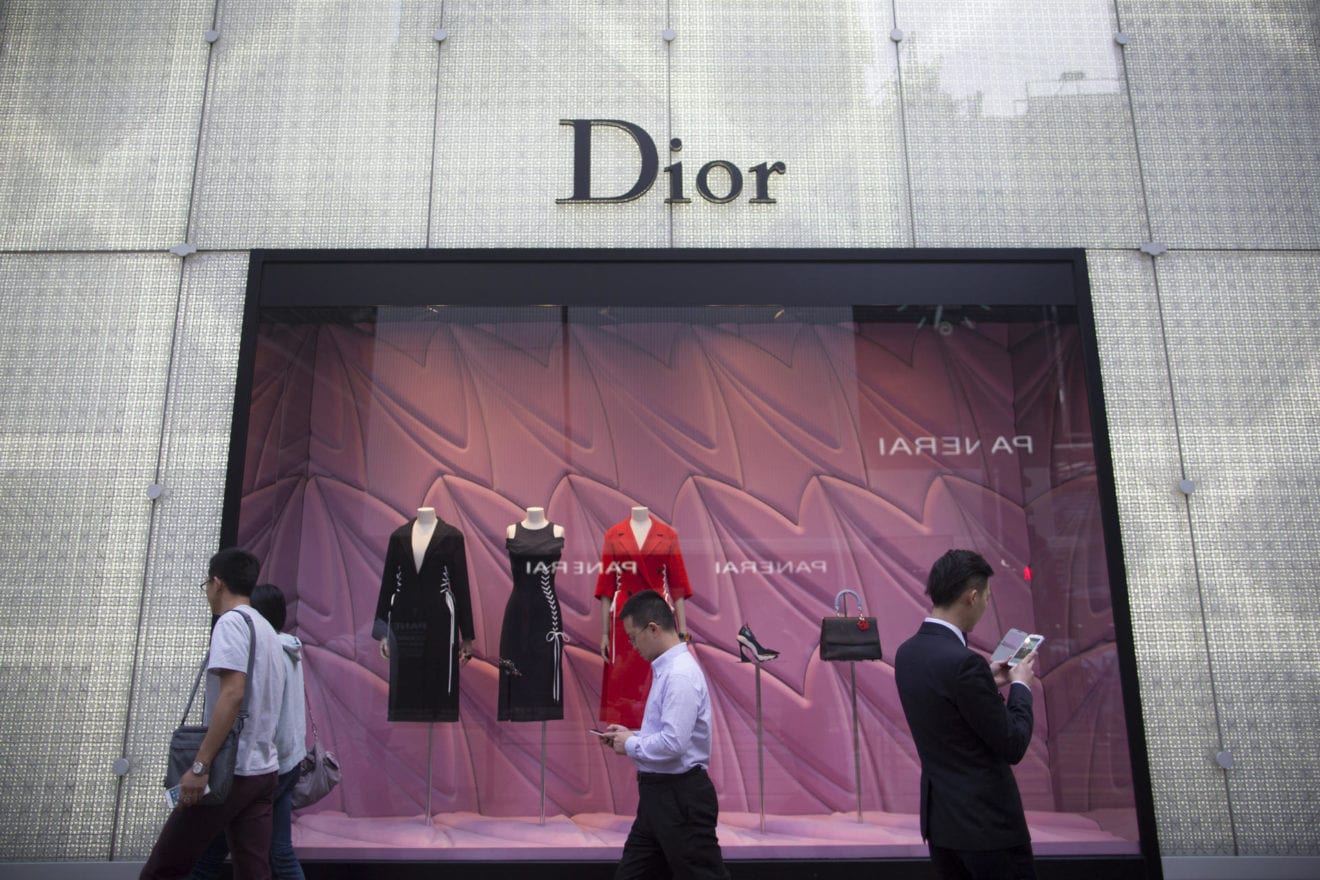
  • Kim Jones is the new artistic director of Dior Homme

    Kim Jones is the new artistic director of Dior Homme

    Kim Jones, the British menswear designer who left Louis Vuitton in January, will become the artistic director at Dior Homme in April. He replaces Kris Van Assche, who had helmed the menswear arm of Dior since 2007.

    Jones is a widely liked figure in fashion, with 345k Instagram followers and famous friends on speed dial including Kanye West and David Beckham, both regular guests at his show. His finale at Louis Vuitton took things to another level. He walked to applause, flanked by two of his best friends, Naomi Campbell and Kate Moss, wearing Louis Vuitton-monogrammed trench coats. Before the Dior Homme announcement, he was linked to top jobs at Versace and Burberry.

    In a statement, Jones said: “I am deeply honoured to join the house of Dior, a symbol of the ultimate elegance.” He also thanked Dior CEO Pietro Beccari for the opportunity, the man widely thought to be the mastermind behind the move. He worked with Jones at Louis Vuitton, and moved to Dior in February. Both brands are part of the LVMH luxury group. The CEO paid tribute to Jones in his own statement. “I admire his creative vision, which combines both his own inspirations of contemporary culture and his own reinterpretation of specific codes and heritage of a house,” said Beccari.

    Jones’s tenure at Louis Vuitton was characterised by just that combination. The designer managed to mix the wealthy traveller feel of the house that began as a luggage brand in 1854 with the cool streetwear references of his own history. As a young designer, he started his career in London in the 90s, working with sportswear brands including Umbro, peaking with a collaboration between Louis Vuitton and Supreme at the beginning of 2017. Something unthinkable the previous decade – in 2000 the streetwear label received a cease-and-desist letter from Vuitton for using their famous monogram on a skateboard – was made tangible by Jones. It was a big hit. Consumers queued up outside pop-up stores in July, with many of the pieces resold for 1.5 times their original price.

    Dior Homme will be hoping that Jones can bring his cool factor to the brand. Van Assche’s reign has been successful but without fireworks. His aesthetic was sharp suiting with graphic details, and he worked with celebrities including Robert Pattinson, A$AP Rocky, Mr Robot’s Rami Malek and Depeche Mode’s Dave Gahan.

    Van Assche was promoted from the design studio to lead Dior Homme in 2007, with the departure of Hedi Slimane. It was Slimane – due to present his first collection for LVMH brand Celine this autumn – who first gave Dior Homme a jolt of stardust in the noughties, during his seven-year stint. His ultra-skinny rock’n’roll tailoring was favoured by rock stars of the era including Pete Doherty and Johnny Borrell. Van Assche built on this work with similar silhouettes and references. It is understood that the Belgian designer will stay within the LVMH group with an announcement imminent.

    Jones’s first collection for Dior Homme will be in Paris in June. A-list stars in the front row and cool references on the catwalk can be expected.

  • Apples focuses on high-end audio market

    Apples focuses on high-end audio market

    Apple is returning to its roots when it comes to music products and is starting to embrace the world of audiophiles who are prepared to pay more for premium, higher-quality speakers and music devices.

    Take the release of the HomePod in February. Apple‘s new home speaker is designed to compete with Amazon’s Echo devices. A key part of Apple’s marketing for the device focuses on the audio quality.

    “HomePod is a powerful speaker that sounds amazing and adapts to wherever it’s playing,” Apple says on its website. “It is the ultimate music authority, bringing together Apple Music and Siri to learn your taste in music.”

    Apple already has its own line of headphones, and even has an entire separate brand for them: Beats. Apple bought Beats for $3 billion (£2.1 billion) in 2014, and got its hands on the company’s trendy headphones business, its fledgling music streaming service, and Beats founders Jimmy Iovine and Dr. Dre.

    But the Beats brand never felt like a natural fit for Apple. The company built up its profile by making sure that celebrities and sports stars wore its distinctive, colourful headphones. Apple, however, prefers to be far more low-key in its endorsements and design choices. Design chief Jony Ive favours white, minimalist products, for example.

    Apple now seems to be planning to start again on headphones and is reportedly working on something that seems much more Apple-y.

    High-end audio products are nothing new for Apple. In fact, it brings the company back to the release of the iPod.

    The iPod Classic was practically tailor-made for audiophiles with its 80GB or 160GB hard drive and support for lossless music. Wired said that it was “the natural choice for people who are serious enough about audio quality to include their listening equipment in their signature files.”

    But over the years Apple has moved away from catering to audiophiles. It’s a small market, after all, and Apple does not want to risk releasing niche products. So newer iPhones made it incredibly difficult to play lossless music, and Apple eventually discontinued the iPod Classic. “Farewell Apple iPod classic, We Audiophiles Will Miss You,” PC Magazine wrote.

    There have been glimmers of hope for audiophile Apple watchers over the years, though.

    Ive likes to play loud music in the Apple design studio. Maybe that was a sign that an Apple stereo system was on the way. Apple founder Steve Jobs had been working on a new, lossless music format with musician Neil Young. Maybe Apple was about to get back into lossless audio in a big way (it wasn’t). U2 singer Bono said that he was working on a top secret music format with Apple. Perhaps that was the high-resolution audio fans had been waiting for.

    The audiophiles revolted. “How do you justify an iDevice to an audiophile?” read one forum post. “With the lackluster audio properties inside the devices and the inability to make adjustments to the sound it is a hard sell to someone who cares about audio, for a company that claims to love music.”

    Another forum post had the title “Apple Music… Seriously?” Audiophiles bemoaned the lack of proper lossless audio support. Sure, some people made the point that Apple’s music format is basically identical to standard lossless formats. But audiophiles never saw Apple as a serious player in that space.

    Now, that all seems to be changing. The HomePod received positive reviews from Reddit’s audiophile community. Apple vice president of worldwide marketing Phil Schiller even tweeted a link to a post from the subreddit reviewing the speaker.

    The release of a line of premium Apple headphones would do even more to establish Apple’s audiophile credentials. Until recently, the closest thing you would find to an audiophile product in an Apple Store was a speaker made by a third-party company such as Devialet. But that is likely to change as Apple develops its own line of speakers and headphones.

  • Retail, office sectors will top investments in 2018

    Retail, office sectors will top investments in 2018

    Commercial real estate investors will continue to invest in the retail sector despite the oversupplied market, a commercial real estate investment sentiment survey done by Knight Frank Research revealed.

    The survey targeted key players in commercial property, namely developers (56%), fund/REIT managers (24%) and commercial lenders (20%), to grasp their sentiment in real estate investment.

    It showed that despite unfavourable market sentiment towards the retail sub-sector, all respondents intend to deploy more capital, citing opportunities available. For example, embarking on various asset enhancement initiatives will improve the competitiveness of their retail assets.

    Surprisingly, the office market, which is also viewed unfavourably, is also expected to generate much attention from developers and lenders, with the exception of fund/REIT managers, who plan to limit exposure in this sub-sector mainly due to the oversupply situation that will inevitably place downward pressure towards rental yields of office properties.

    The survey concluded that retail and office sub-sectors are expected to continue generating the most interest in 2018 despite their unfavourable outlook, due to the two sub-sectors generally having higher development values.

    As for the hotel/leisure sub-sector, lenders plan to retain a similar exposure in 2018, whereas developers are expected to deploy more capital into this sub-sector. However, fund/REIT managers will limit their exposure to this sub-sector in 2018.

    Developers’ plan to invest more in the hotel/leisure comes at a time where the tourism sector in Malaysia remains strong.

    Hence, this sub-sector acts as a logical avenue for developers to diversify beyond the weakening office and retail sub-sectors, which used to be the highly coveted sub-sectors for developers.

    Fund/REIT managers plan to limit their exposure towards the hotel/leisure sub-sector as they prefer to invest in the logistics/industrial sub-sector, due to higher yields and brighter prospects supported by the rise in e-commerce.

    Logistics/industrial and healthcare/institutional sub-sectors will garner more attention from fund/REIT managers and lenders while developers remain on the sideline.

    Besides that, the retail sub-sector is also better liked by fund / REIT managers although they will be more selective in the future.

  • Nike is world’s most valuable apparel brand, says Brand Finance Top 50

    Nike is world’s most valuable apparel brand, says Brand Finance Top 50

    Despite losing popularity with American teenagers and a drop in brand value of 41 per cent, Nike is still way out in front in the Brand Finance Top 50 list of the most valuable apparel brands in the world.

    In the list, just been release by the independent brand valuation and strategy consultancy, Nike’s main competitor Adidas was fourth behind H&M and Zara with an increase in brand value of 41 per cent.

    In the realm of luxury brands, Hermes overtook Louis Vuitton, jumping two spots from 7th to 5th from last year. Luxury brands including Cartier, Gucci, Hermes and LV had strong growth in value as more consumers in emerging markets buy into the market.

    Japan’s Uniqlo was the only Asian brand in the top 10, with Hong Kong jeweller Chow Tai Fook and China’s Anta Sports taking up the 13th and 33rd spots respectively.

    These are the top 50 most-valuable apparel brands in the world this year:

      1. Nike (brand value, US$2.8 billion)
      2. H&M ($1.8 billion)
      3. Zara ($1.7 billion)
      4. Adidas ($1.4 billion)
      5. Hermes ($11.3 billion)
      6. Louis Vuitton ($10.4 billion)
      7. Cartier ($9.8 billion)
      8. Gucci ($8.5 billion
      9. Uniqlo ($8 billion)
      10. Rolex ($6.3 billion)
      11. Coach ($6.1 billion); 12. Victoria’s Secret ($6.1 billion); 13. Chow Tai Fook ($5 billion); 14. Tiffany & Co ($4.6 billion); 15. Burberry ($4.5 billion);16. Christian Dior ($4 billion); 17. Polo Ralph Lauren ($4 billion); 18. Prada ($3.8 billion); 19. Under Armour ($3.7 billion); 20. Armani ($3.5 billion)
      12. Puma ($3.3 billion); 22. Ray-Ban ($3.2 billion); 23. Omega ($3.1 billion); 24. The North Face ($3.1 billion); 25. Pandora ($3 billion); 26. Michael Kors ($2.7 billion); 27. Tommy Hilfiger ($2.6 billion); 28. Anta ($2.6 billion); 29. Old Navy ($2.3 billion); 30. Bulgari ($2.2 billion)
      13. Bershka ($2.2 billion); 32. Calvin Klein ($2.2 billion); 33. Levi’s ($2.2 billion); 34. Primark/Penneys ($2.1 billion); 35. Moncler ($2 billion); 36. Boss ($2 billion) 37. Gap ($2 billion); 38. Ferragamo ($1.9 billion); 39. Saint Laurent ($1.8 billion); 40. Bottega Veneta ($1.8 billion)
      14. Valentino ($1.8 billion); 42. Skechers ($1.6 billion); 43. Swatch ($1.6 billion); 44. Tag Heuer ($1.5 billion); 45. Timberland ($1.4 billion); 46. Massimo Dutti ($1.3 billion); 47. Reebok ($1.3 billion); 48. Woolworths ($1.2 billion); 49. Stradivarius ($1.2 billion); 50. Pull and Bear ($1.2 billion).
  • Vera Wang Group appoints new president

    Vera Wang Group appoints new president

    Peggy Eskenasi has been named president of Vera Wang Group.

    A former Nine West Holdings and Kohl’s executive, Eskenasi succeeds Veronique Gabai-Pinsky, who has been at the helm since January 2016.

    An industry veteran, Eskenasi has served in multiple executive roles since debuting her career. She was executive chairwoman of Nine West Holdings, Inc. from late 2014 to mid 2016, following a stint as senior executive vice president of product development at Kohl’s Department Stores.

    For Kohl’s, which has held the license for Simply Vera Vera Wang for more than ten years, Eskenasi lead the building of a large stable of brands, made up of both Kohl’s exclusives and licenses of the company. Big names include Simply Vera Vera Wang, Jennifer Lopez, Candie’s, Rock & Republic and Juicy Couture.

    Prior to this, she was president of private brands at Saks Inc. from 1997 to 2004.

    According to WWD, Gabai-Pinsky is resigning for personal reasons.

    “Vera Wang personally thanks her for her valuable contribution to the company during her tenure and wishes her all the best,” the Wang spokeswoman said of Gabai-Pinsky.

    Neither Wang nor Eskenasi were available for comment.

    Vera Wang has dozens of flagship stores worldwide. In the Asia Pacifc region, Vera Wang stores are located in China, Japan, Taiwan, South Korea, The Philippines and Australia.

  • Vietnam’s tourism needs urgent reform to take off

    Vietnam’s tourism needs urgent reform to take off

    Vietnam’s tourism industry is booming and is fast becoming the driving force behind economic growth – but it also faces calls for reform to keep up with high standards.

    The “smoke-free” industry has witnessed spectacular success in the past few years with higher growth rate every year.

    Last year, nearly 13 million foreign visitors came to our shores, earning the country more than VNĐ500 trillion (US$22 billion). That’s up 30 per cent and 20 per cent year-on-year, respectively.

    Over the decade, the number of international visitors to Việt Nam has tripled while revenue has increased by nine times.

    Việt Nam’s tourism ranked sixth in the top 10 fastest growing tourism destinations globally and was crowned the best performer in Asia in 2017. The industry last year contributed 7.5 per cent to the nation’s GDP.

    With such impressive achievements, tourism has been identified a key economic sector by 2020. It can help boost the development of other sectors including construction, real estate, retail, education and job opportunities

    A Politburo resolution on developing tourism and seeing it evolve into a major player in Việt Nam’s economy was introduced last year.

    The nation hopes to welcome 17-20 million foreign arrivals and 82 million domestic tourists by 2020. Tourism revenue is expected to reach $35 billion, contributing 10 per cent to the country’s GDP by then, and the industry may create four million jobs, including 1.6 million direct jobs.

    Bottlenecks

    Tourism is forecast to maintain strong development in the next few years thanks to the Government’s support policies, determination of provincial authorities and dynamic development of both businesses and communities.

    However, such rapid expansion is exposing many challenges and if the industry cannot be restructured to break bottlenecks it could be beaten by overdevelopment.

    “Rapid increase in the number of visitors to Việt Nam in the short term is putting the industry under great pressure of transport infrastructure, human resource and destination management capacity,” said Nguyễn Quý Phương, director of Travel Management Department under the Việt Nam National Administration of Tourism.

    Phương said infrastructure deficiencies, particularly overloaded airports, will likely make tourists worn out due to long waiting while the lack of adequate human resource and public management capacity in destinations will affect service quality.

    In reality, airports in major cities such as Hà Nội, HCM City, Huế and Đà Nẵng, are facing the overload trouble.

    Half of the people who visited from overseas last year flew into Tân Sơn Nhất International Airport in HCM City. It was built to accommodate 25 million passengers per  year, but in 2016, 32 million came through its doors.

    According to Travel and Tourism Competitiveness Index 2017 of the World Economic Forum, Việt Nam’s tourist service infrastructure ranked 113th out of 136 economies, airport infrastructure 61st, ground traffic 71st, IT platform 80th, clean and safe environment 82nd and international openness (mainly visas) 73rd.

    “Urgent attention should be paid to upgrade of transport infrastructure, including seaports in the context of increasing demand for cruise tourism, as well as improvements in visa and immigration procedures,” Phương said.

    Vũ Thế Bình, deputy chairman of Việt Nam Tourism Association, also stressed the need to create a greater experience for visitors, highlighting the problems with visas.

    Việt Nam has granted visa waivers for visitors from 24 countries while applying electronic visa to citizens of 46 countries. However, according to Bình, these numbers are still feeble compared with Thailand which awards free-visa for tourists of 67 countries and Indonesia which waives visa for citizens of 169 countries and territories.

    “Not only that, also procedure of visa exemption applied for foreigners is quite complicated, creating inconvenience and displeasure for both foreign visitors and travel companies,” Bình was quoted as saying on the Thời báo kinh tế Việt Nam.

    Collective economic sector

    For a long time, Việt Nam’s tourism has been developed in a spontaneous manner.

    Individuality is key, and many regions hope to promote their own unique brands to showcase to the world but they mostly do so in keeping with the national strategy.

    Important things to consider include tourists’ needs, promotional campaigns, infrastructure, human resources and management.

    According to Trịnh Thị Mỹ Nghệ, vice chairman of Hà Nội City Tourism Association, tourism is not a  single industry but a collective one relating to other sectors and subjects.

    “Good infrastructure, management, safety, hygiene and friendly citizens are all surface factors to attract visitors,” Nghệ said.

    “Travel companies design and sell products to tourists and the local authorities are responsible for organisation and management of destinations.

    “Apart from visiting beautiful landscape, foreign tourists coming to Việt Nam want to learn more about Vietnamese culture, meet and experience the local living,” she said, adding that responsibility of businesses and community is to study customer demand to design attractive products.

    Tourism development also requires inter-regional coordination. Việt Nam has developed several successful regional tourism brands such as the connection of the eight Northwestern provinces and cluster of the three central provinces (Thừa Thiên-Huế, Đà Nẵng and Quảng Nam).

    The Government is also urged to improve the business environment to ensure the deep participation of private businesses and community in the national tourism development strategy.

    Việt Nam hopes for around 16 million foreign visitors, 80 million domestic arrivals and VNĐ620 trillion in total tourism revenue in 2018. These are considered achievable goals but collective efforts among management agencies, businesses, communities and professional organisations are needed to ensure sustainable development in the future.

    But as the country evolves, one thing that each and everyone can do, is welcome our visitors with the traditionally Vietnamese smile.


  • Benoy Designs Mixed-Use Precinct for Historic Nanjing Riverfront Site

    Benoy Designs Mixed-Use Precinct for Historic Nanjing Riverfront Site

    An historic ice-storage warehouse in Nanjing will be transformed into a commercial destination by Benoy China working with developer MCC Real Estate Group.

    Part of the development of a mixed-use retail and cultural experience for the community in the Yangtze River Bridge area, the riverfront warehouse was built in 1915. “It will become one of the largest commercial developments in the area,” says Benoy China director Qin Pang.

    Retaining the original form of the historical buildings, Benoy will insert modern blocks that will form a cultural plaza at the heart of the site. A refined architectural expression on the outer streetside elevations will be offset with more playful modern cubes. Through careful placement of the new buildings, Benoy can preserve the views of the historical structures, a crucial element of the design brief.

    Construction is scheduled to start this year.


  • Popular American furniture store Ashley Furniture HomeStore opens in Singapore

    Popular American furniture store Ashley Furniture HomeStore opens in Singapore

    US retailer Ashley Furniture HomeStore has opened its first Singapore outlet, in Kallang Way.

    On the ground floor, the 7000sqft store offers items for the living room, dining room, bedroom, family spaces and home office. These include beds, clocks, sofas and vases from five lifestyle collections: Contemporary Living, New Traditions, Family Spaces, Vintage Casual and Urbanology.

    The showroom offers the entire range of King Koil mattresses, as well as made-to-order sofas and sofa beds exclusive to Singapore. It also sell three types of the Sleepace sleep-tracking device. All products are also available online.

    A second Ashley Furniture HomeStore will open in Sungei Kadut Drive next month.

    Over the next three months, Ashley will set up augmented and virtual-reality headsets to help customers better visualise how various items of furniture might fit into their homes.

    Founded in 1945 in Wisconsin, Ashley Furniture has more than 800 stores in 45 countries, including China, Indonesia and Vietnam.

  • Automated stores with no human cashiers on the rise

    Automated stores with no human cashiers on the rise

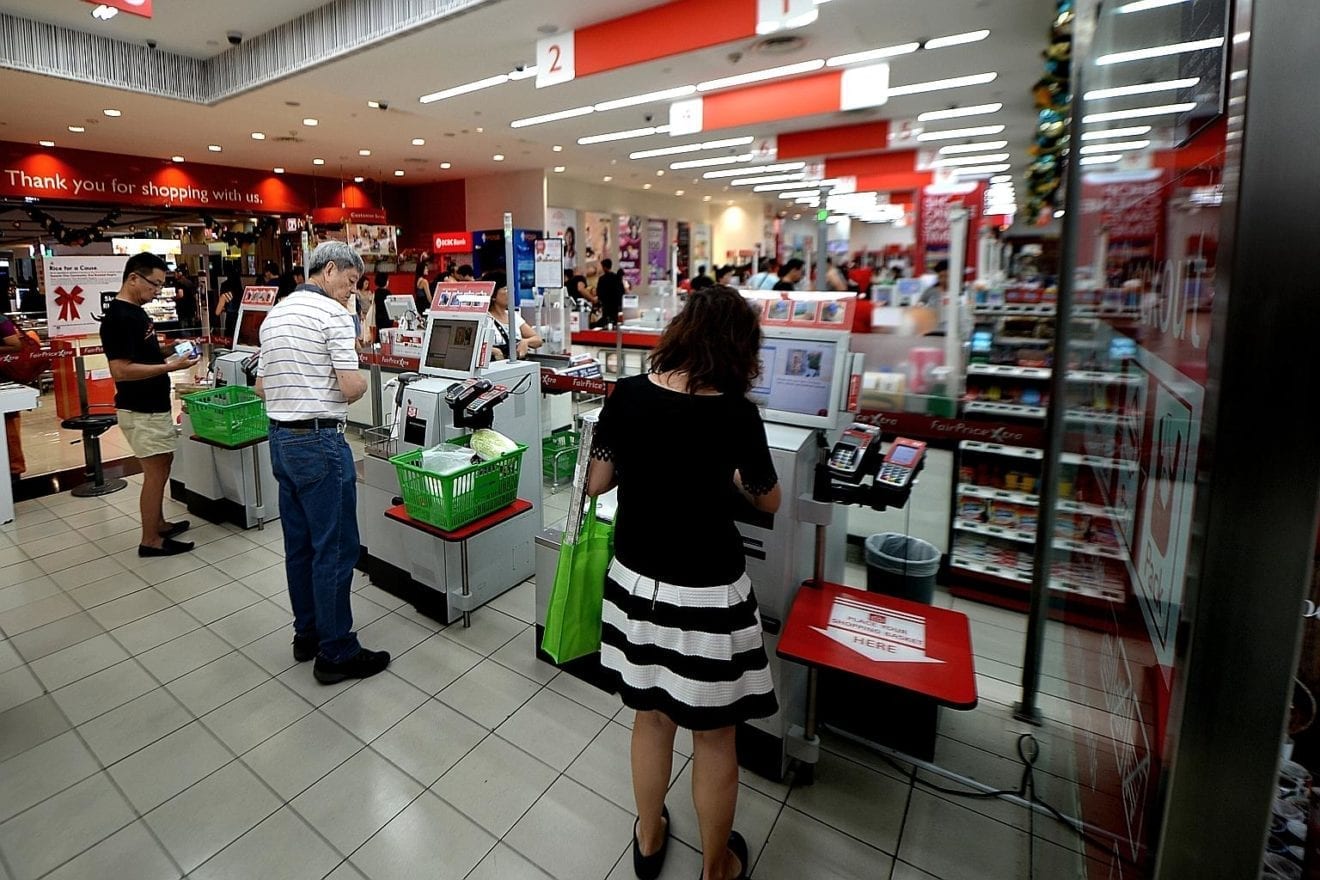
    Unmanned Stores without cashiers are on the rise, industry sources said, amid local retailers‘ efforts to find a breakthrough in the saturated market.

    Local software firm Danal Co., which operates coffee franchise dal.komm coffee, said it recently opened the country’s first cashier-less coffee shop at the country‘s main gateway, Incheon International Airport.

    The coffee shop, named Beat, is located at the newly opened second terminal and is activated by robots, the company said.

    The store is operated by smart robots that can take orders, make coffee and move cups to a pick-up location where customers can drink.

    “The company aims to add up to 100 stores by the end of this year at various locations, including banks, shopping malls, and universities,” said a company official who asked not to named.

    Unmanned convenience stores are also on the rise, since the country’s first cashier-less convenience store broke onto the retail scene in May. The local operator of 7-Eleven unveiled a shop that utilizes vein recognition technology at South Korean retail giant Lotte‘s 123-story skyscraper.

    Unlike other 24-hour shops, automated convenience stores feature self-service kiosks, where guests scan the bar codes of their items and pay.

    Emart24, an affiliate of leading discount store chain operator Shinsegae, currently operates six cashierless stores, having opened the first one last June.

    BGF Retail Co., the operator of CU, South Korea’s largest convenience store chain, said it is preparing to open an unmanned shop.

    The company currently provides mobile application called “Buy-Self,” which allows customers to search for an item, and provides a payment tool.

  • WeChat has now 1 billion monthly active users

    WeChat has now 1 billion monthly active users

    China’s popular messaging app WeChat now counts 1 billion monthly active users (MAU) worldwide, up 12% from 889 million MAU in Q4 2016, according to Tencent CEO Pony Ma.

    Ma said the platform reached the record figure during last month’s Lunar New Year Festival. However, it’s important to note that Tencent refers to MAU as user accounts, rather than individuals.

    WeChat users can create multiple accounts, and it’s common for a user to create both a personal account and a business account. For WeChat users, the app acts as a central hub of the digital world — consumers use it to perform tasks ranging from texting and calling friends, to paying bills for goods and services, to booking doctor appointments.

    WeChat’s recent user growth is likely driven by international users. Most of the recent user growth likely came from Southeast Asia, Europe, and the US, according to founder of WeChat-focused consultancy ChinaChannel Matthew Brennan.

    With WeChat nearing saturation within its domestic market, the Tencent-owned company is banking on international expansion to drive growth. Roughly 83% of all smartphone users in China use WeChat. WeChat’s penetration of smartphone users jumps up to 93% in China’s Tier 1 cities. As of August 2017, there were around 100 million international WeChat users.

    However, WeChat may hit a speed bump as it looks to expand further internationally. Although chat apps are rapidly spreading globally, many countries and regions already have one app or another that dominates. For example, WhatsApp and Facebook are the preferred chat apps for a majority of smartphone users globally, especially Android users, with a few exceptions including China, Japan, and South Korea. WeChat will face some difficulty swaying users already signed up to these apps.