Author: Mei Ling Tan

  • Pomelo Fashion CEO David Jou against the stream in SEA

    Pomelo Fashion CEO David Jou against the stream in SEA

    Pomelo recently had the largest-ever series B funding round for a Thai start-up, raising $19mn.

    Jou was previously Managing Director of Lazada Thailand, which was set up as to take advantage of digital adoption rates in emerging markets which lacked capital, technology and human resource investment. Why did he choose Thailand, and remain there to set up Pomelo?

    “I always thought Bangkok was a very international city, while simultaneously small and charming. It’s a central location, which is great for ecommerce. From Bangkok to Singapore, Hong Kong, Ho Chi Minh… it is all within a three-hour flight. In addition, the population and GDP per capita were at a level that can really support an online business – especially with accelerating trends in internet adoption rates. Another option was the Philippines, which Jou says would have been more challenging logistically due to its many islatnds, and Malaysia where the population is small and fragmented both ethnically and culturally. “A customer-facing brand serving such a hugely diverse population would have proved difficult,” says Jou, adding: “When I looked at Indonesia [four years ago] I thought maybe it was a bit early in terms of its technology development – but I was completely wrong; Indonesia has really leapfrogged other markets in terms of how quickly it was able to develop.”

    Thailand, in conclusion, was “a really great place to set up: 70mn people, 30-40% internet penetration, and social media adoption was greater than 100%, meaning there are more Facebook accounts than people”.

    For Pomelo, managing an efficient reverse supply chain is paramount to giving users what they require. “I think it’s really at the heart of the ecommerce problem fashion has. When people purchase fashion products like apparel and shoes fit and sizing are such important factor. We have a ton of customers and a huge online following, but when we look at the segment of people who have yet to make a purchase, they say the #1 roadblock isn’t brand or style, it is always fit and not wanting to deal with returns. That’s 95% of it.”

    “That is why in 2016 we recognized we’re not an online brand, we’re a digital brand. Online or offline, you can make it better through the use of technology. We do have an offline presence we’re rolling out very quickly. it is an omnichannel experience; we don’t think about it as ecommerce versus in-store retail, we think of it as offline and online both being ways to reach and interact with our customer.”

    Jou feels that an Asia-based fashion company is set to disrupt the fashion industry as the continent consumes 70% of fashion and produces the vast majority of clothing. In the Asian market, it’s important to look at what you are replacing with ecommerce, according to Jou: “It comes down to accessibility: they want trends localized to the climate and lifestyle people in these countries lead. In the US or Australia, every major town has multiple retail outlets selling all the high street brands, but here if you’re not in one of the major cities you don’t get that assortment. It is key that we’re able to provide that assortment of trendy fashion at a price point that works regardless of whether you’re in Bangkok, Chiang Mai or Phuket.”

    In the future, the brand hopes to expand its channels to reach a wider consumer base.

    “We are mostly online with a small offline footprint, but as we’ve recently realized the biggest barrier to purchase is fit, sizing and hassle of returns. This can be easily addressed by combining technology with the offline footprint that makes sense for the markets we operate in.”

    Next, Pomelo will expand geographically. “I like to call it multi-vector growth: all big companies have multiple vectors along which they are growing at any given time, simultaneously. Currently we are in Thailand, Indonesia, Singapore and are setting up our cross-border trade warehouse in Hong Kong which will allow us to reach customers across the world cost-effectively, efficiently and quickly. We will then be able to serve customers in India, Nigeria, the Middle East, Japan, Vancouver… all from the same warehouse. That will be possible due to recent innovations in the logistics space. That’s going to be really exciting.”

  • Ippin meets global demand for Japanese Sake with launch of vast online collection

    Ippin meets global demand for Japanese Sake with launch of vast online collection

    Cross-border e-commerce platform Ippin Japan Mall has launched one of the internet’s largest sake collections.

    Ippin, which specialises in direct sales internationally of quality items from Japan, has made available more than 1350 varieties of sake, with direct delivery within a week from supplier warehouses.

    Ippin Japan Mall is a part of the C-Connect Corporation, which also runs a printer ink retailing store. It is active in 16 countries.

  • Naver and Daum to track cryptocurrency prices

    Naver and Daum to track cryptocurrency prices

    Naver and Daum, Korea’s two largest search engines, will begin providing real-time cryptocurrency prices on their websites.

    Dunamu, an affiliate of Kakao which operates the cryptocurrency exchange Upbit, will run the service, the company said. Users can enter the name of a cryptocurrency in either search engine, and the current price will show up in the results.

    Service began on Daum, which is owned by Kakao, immediately after the announcement. Naver plans to start the service early next month.

    Users of KakaoTalk chat app could also check cryptocurrency prices inside the chat app.

    Dunamu already provides real-time cryptocurrency prices as well as information about highs and lows of the day, week, month and year, and transaction size on its own website.

    Its trading platform, Upbit, deals in 124 different cryptocurrencies.

  • Korea coffee market grows to 512 cups per person

    Korea coffee market grows to 512 cups per person

    Korea’s domestic coffee market surpassed 10 trillion won in 2017 for the first time ever as demand for the brew continues to rise, market data showed.

    According to the Korea Customs Service (KCS), the country’s coffee market stood at 11.7 trillion won (US$10.8 billion), up more than threefold from around the middle 3 trillion won level a decade earlier.

    This translates into 26.5 billion cups of coffee being served last year and an average of 512 cups being consumed per person. Asia’s fourth-largest economy has 51.7 million people.

    Broken down, coffee mixes ranked No. 1, accounting for well over 13 billion cups, followed by fresh roasted coffee making up 4.8 billion cups, with the remainder being canned coffee and various coffee-flavored drinks.

    The latest data showed that while people drank more, the price of a cup of coffee has also shot up in the past 10 years, with more people drinking expensive brews than before.

    The average price for a cup of fresh roasted coffee stood at 1,636 won, with this market reaching 7.85 trillion won market last year, while in 2007, it stood at just 900 billion won.

    In the past, Korea’s domestic market was dominated by coffee mixes and instant coffee, but this changed with the opening of Starbucks and Coffee Bean & Tea Leaf stores in the late 1990s and early 2000s.

    Starbucks Coffee Korea, the local unit of the global beverage company, reported sales topping 1 trillion won in 2016, 17 years after it opened its first outlet here in 1999, with the company’s operating profit hitting the 100 billion won mark for the first time last year.

    Besides the growth of big coffee chains, local trends are leading to more stores operating their own roasting machines and becoming more high-end to meet consumers’ diversified demands.

    But per capita consumption of coffee is far below that of such countries as the United States.

  • Salvatore Ferragamo wins US$60 million payout over counterfeit product

    Salvatore Ferragamo wins US$60 million payout over counterfeit product

    A New York court has confirmed an injunction against 60 unidentified holders of illegal online profiles and the transfer to Salvatore Ferragamo of about 150 domains that were infringing upon the luxury brand’s rights.

    The websites were selling counterfeit Salvatore Ferragamo products, and the court ruling acknowledged the substantial damage this had caused for the luxury Italian brand, ordering US$60 million in compensation.

    Also comprising exemplary damages, the ruling was the highest ever awarded for this type of violation, says Salvatore Ferragamo Group chairman Ferruccio Ferragamo.

    “The internet is the prime channel for traffickers of counterfeit goods and so is the focus of our monitoring and control efforts. In recent years, our group has implemented a series of anti-counterfeiting measures, both on- and off-line, to protect our customers and the value of our brand.”

    These measures last year enabled the group to have more than 35,000 items and illegal profiles removed from major social networks, as well as the interception, blocking and deletion of nearly 69,000 counterfeit products from online auctions.

    Furthermore, the group constantly monitors offline markets through court and out-of-court activities, focusing its efforts on China. About 62,000 counterfeit products were seized in China last year, out of the more than 268,000 counterfeit products seized around the world.

  • AirAsia in talks to set up airline serving Myanmar

    AirAsia in talks to set up airline serving Myanmar

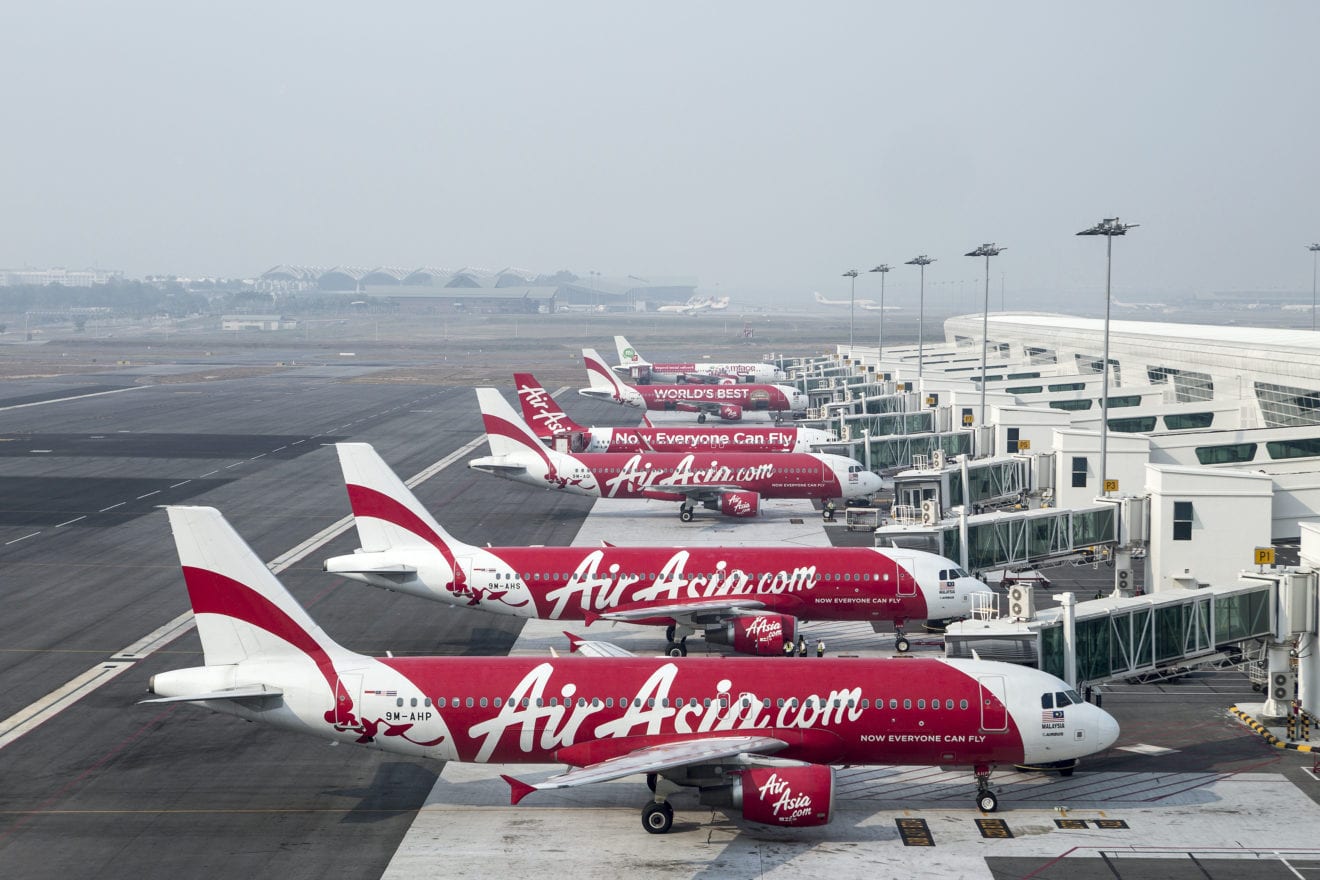
    AirAsia Bhd is in talks with a potential partner to open an airline serving Myanmar, in a move that would help the low-cost carrier cover up to 95% of the Southeast Asian travel market.

    In an interview with Reuters today, the airline’s group chief executive Tan Sri Tony Fernandes said he also expected AirAsia’s Vietnam joint venture to be flying by October.

    AirAsia now has businesses in Malaysia – its home – along with India, Indonesia, the Philippines, Japan and Thailand, as well as plans to launch an airline in China.

    “Once you’ve covered Vietnam and Myanmar, you’ve got all the big (Southeast Asian) populations,” Fernandes said. “Vietnam – we’re talking about October, we’ve had great support from the Vietnam government and we have a great partner. My team are very bullish.

    “It’s not going to be a big airline there (Myanmar), because the airport infrastructure is not there. But it is 50 million people and it will develop over time,” said Fernandes, who was in Sydney over the weekend for the Asean-Australia special summit.

    He added: “We had a good meeting with someone in Sydney – he’s got a good airline that we’ve known for a long time and he is a well-respected guy. We’re going through that process.”

    He did not name the potential partner.

    Fernandes was in Hong Kong for the launch of what he has termed a “We’re More Than an Airline” pitch, which he was due to present to analysts and investors at Credit Suisse’s Asia Investment Conference.

  • AmorePacific apologizes for tainted cosmetic products

    AmorePacific apologizes for tainted cosmetic products

    AmorePacific Group, Korea’s largest cosmetics company, apologized Tuesday for selling products that contained high levels of the dangerous heavy metal antimony.

    The company said it is in the process of taking the products off store shelves.

    On Monday, the Ministry of Food and Drug Safety said that 13 cosmetic items from a local contract manufacturer were found to have levels of antimony that were beyond legal limits. The ministry ordered the companies selling the products to pull them from the market.

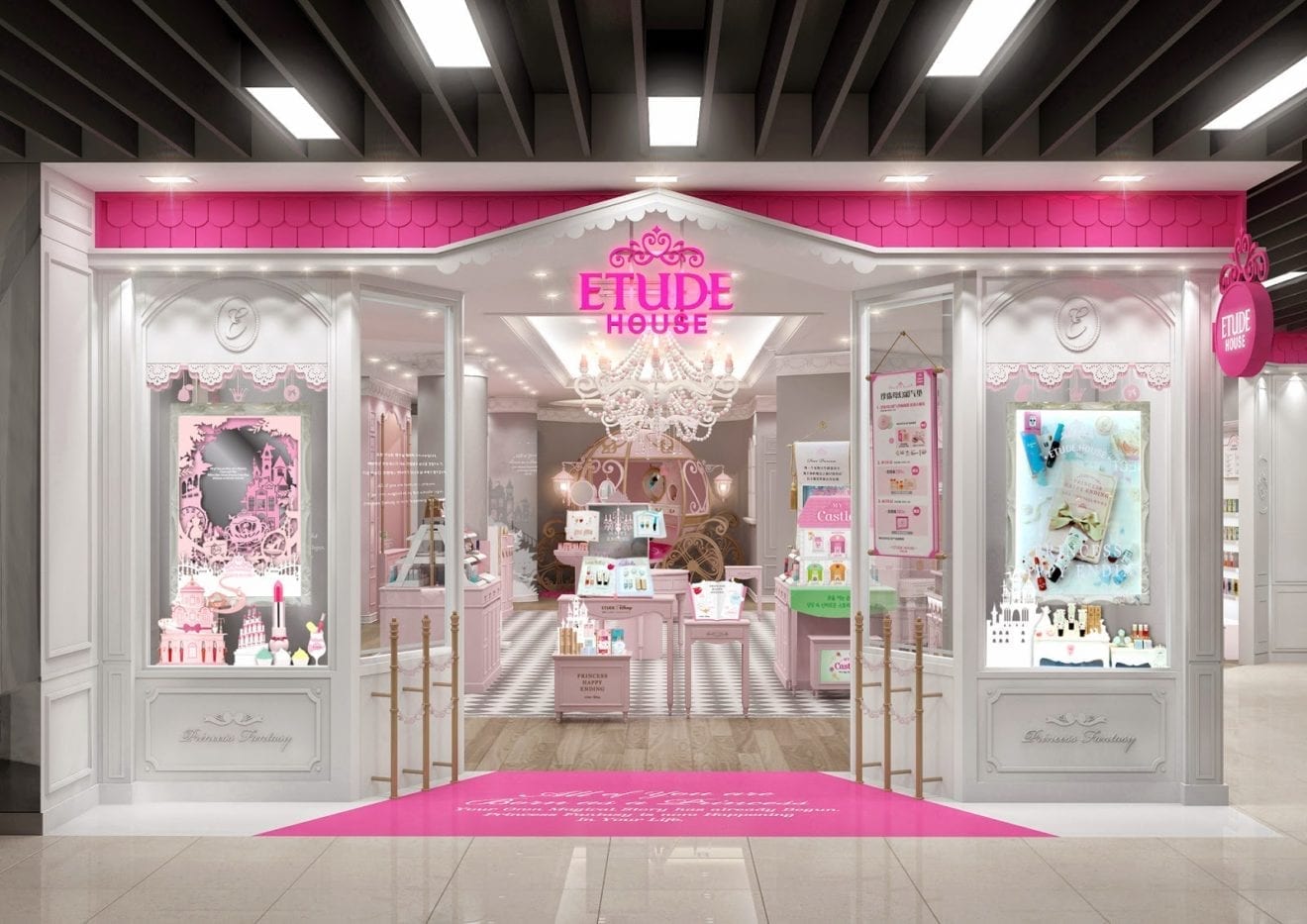
    Among the products, six were sold by AmorePacific’s brands – four concealers from Aritaum, and a concealer and an eyebrow pencil from Etude House.

    “As a manufacturer and distributor, we should have paid full attention to ensure quality control of all products sold,” AmorePacific said in a statement. “We are very sorry for causing inconvenience.

    “We will make every effort possible to minimize any further inconvenience in the process of retrieving the products.”

  • Céline to open first standalone Melbourne store

    Céline to open first standalone Melbourne store

    Paris fashion maison Céline has announced the opening of its first standalone Australian boutique in Melbourne.

    While it is the third official store for Céline Australia, the new Melbourne location will be the first localized store to bow outside the walls of a shopping mall or department store.

    Located in Melbourne’s city centre, the French luxury brand has signed a lease for 13 Collins Street – a 57-level office tower owned by the Commonwealth Superannuation Corporation.

    The specific Céline store will replace the retail lodgings of Cose Ipamena, a mixed-brand retailer that recently closed after 25 years. It will open alongside fellow international heavyweights Fendi, Cartier, Gucci, Versace and Bottega Veneta.

    Céline currently has a flagship within Melbourne shopping mall Chadstone, as well as a store in Sydney’s Westfield. The high-end brand also has concessions at luxury Australian department stores David Jones in specific locations such as Pacific Fair Gold Coast, Melbourne CBD and Sydney CBD.

    The news comes as global luxury brands continue to explore Australia’s retail landscape for profitable locations to set up shop.

    A CBRE leasing director said Melbourne CBD, particularly Collins Street, has attracted huge interest from major retailers resulting in leasing deals.

    Some of the names rumoured to be opening at the top end of Collins Street — and Exhibition and Russel streets — include YSL, Balenciaga, Hublot, Ferragamo, Chloe and Loewe.

  • Hite Jinro opens pub in Hong Kong

    Hite Jinro opens pub in Hong Kong

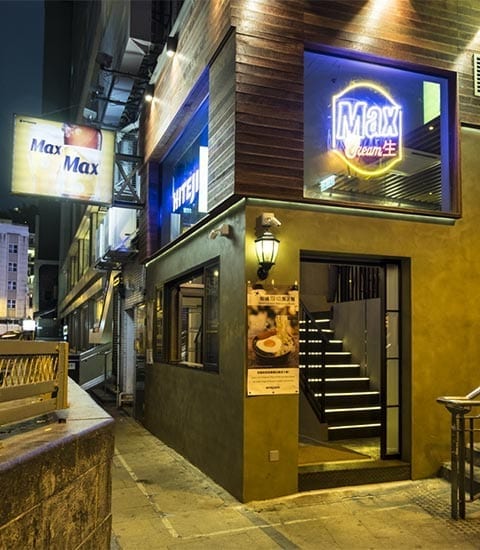
    South Korean liquor maker Hite Jinro has opened its second exclusive offshore bar, in Hong Kong, as part of its outreach campaign with its beer and soju labels.

    In Lan Kwai Fong, its bar is its second overseas flagship store following the opening of Jinro soju bar in Hanoi, Vietnam, in October. The two-storey Hong Kong pub sells draft and regular beer labels Hite and Max as well as the company’s distilled rice liquor soju Chamisul.

    Hite Jinro exported 400,000 boxes of beer – each containing 20 500ml bottles – to Hong Kong last year, up 30 per cent from a year ago.

  • Affirm Debuts Brick-And-Mortar Financing Option, Integrates With Apple Pay

    Affirm Debuts Brick-And-Mortar Financing Option, Integrates With Apple Pay

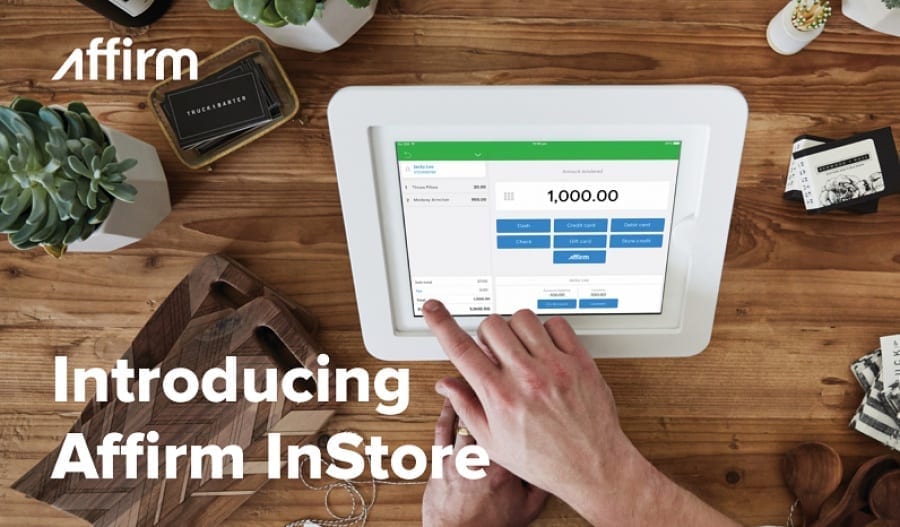
    Affirm, a startup that offers instant loans for online purchases, is expanding its financing services to brick-and-mortar retail. Shoppers can use Affirm InStore in physical locations, secure credit approval and pay for their purchase in fixed monthly installments.

    Additionally, the company revealed that consumers can instantly add a newly issued Affirm virtual card to Apple Pay, via the Affirm mobile app. The platform gives merchants two options to support the service: they can integrate the Affirm InStore API with their POS system or use the expanded virtual card experience.

    The in-store integration method is virtually identical to the online and mobile product experience, according to a company statement. To apply, shoppers complete a five-field application for a real-time credit decision. Once approved, the consumer enters the amount they wish to spend and selects a payment plan — usually three, six, 12, 18 or 24 months. Affirm pays the merchant in full at the time of settlement and takes on all fraud risk for the purchase.Affirm highlighted Apple reseller Simply Mac as a successful use case for the service in a press release. Afterswitching from offering a traditional private label credit card to Affirm InStore in its stores, Simply Mac saw average order values (AOV) increase 20%, credit applications per store boost 63% and credit approvals per store boost 34%.

    Affirm raised $200 million in Series E funding in December 2017, with Singapore-based sovereign wealth fund GIC leading the way. Khosla Ventures, Lightspeed Venture Partners, Founders Fund, Spark Capital, Caffeinated Capital, Ribbit Capital and others participated in the round.

    Affirm’s valuation is estimated to be between $1.5 billion and $2 billion. The company’s continued growth comes at a time when consumers are becoming increasingly wary of accumulating credit card debt, compound interest or late fees, and are often skeptical of traditional store-branded or private label credit cards that offer “too-good-to-be-true” financing options.

  • Delhi Duty Free relaunches refitted Hugo Boss store

    Delhi Duty Free relaunches refitted Hugo Boss store

    Delhi Duty Free Services (DDFS) has recently relaunched its Hugo Boss store at Delhi International Airport the first of many fashion outlets in the pipeline.

    This luxury brand offering includes the Boss Black and Boss Green collections for men. The store has been designed in line with DDFS’s vision to offer an “exclusive travel retail concept store”.

    Key design elements of the store emanate the brand essence of Hugo Boss, featuring a black façade and merchandise display areas to facilitate ease of shopper navigation.

    DDFS CEO Luke Gorringe said: “Hugo Boss was one of our most successful fashion stores before the refit commenced, so our objective was to minimise trading disruption.

    “In response to this, we fast-tracked the refurbishment project to ensure we reopened in advance of the summer period.”

  • Will Wearable Cards Gain Ground in Domestic Market?

    Will Wearable Cards Gain Ground in Domestic Market?

    All eyes are on whether “wearable credit cards,” which became a hit during the 2018 Winter Olympics in PyeongChang in South Korea, will be able to gain ground in the domestic market even after the closing ceremony of the Olympics. In the United Kingdom and Australia, the wearable card market is already being established.

    According to credit industry sources on March 20, Lotte Card Co. predicted earlier that 100,000 wearable payment devices for the 2018 PyeongChang Winter Olympics would be sold. However, more than 150,000 wearable payment devices have been sold as of the 18th of this month.

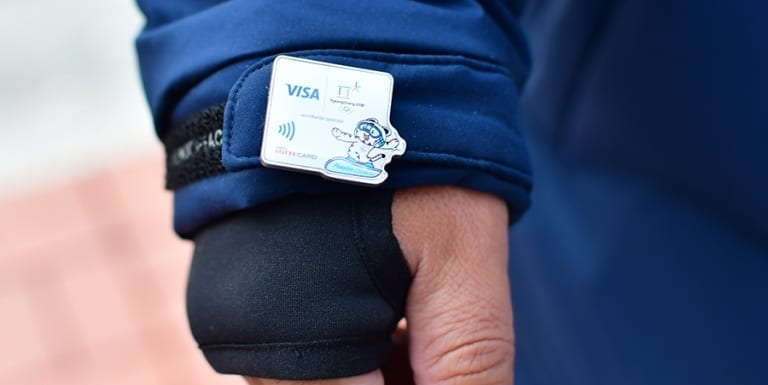
    Visa has developed three Near Field Communication (NFC)-enabled wearable payment products for the Winter Olympics: A commemorative sticker, a pair of gloves, and an Olympic pin in November last year. Visa teamed up with Lotte Card, the financial arm of the South Korean-based retail giant Lotte Department Store to produce these new pre-paid payment wearables. To use the devices, the wearer can tap or bring the wearable near any NFC-enabled terminal or reader and the secured microchip and antenna embedded within the device will allow a contactless payment to be completed.

    Credit card companies are paying attention to whether wearable credit cards will be able to sustain the momentum from the Winter Olympics and create the market in South Korea.

    Foreign major financial companies and payment and settlement companies have been already preparing for various types of payment services, including wearable credit cards, in order to dominate the future payment market in advance. U.K.-based Barclaycard joined hands with numerous accessory brands to develop NFC-enabled wearable payment products, such as bracelets, smartphone cases and keychains. Australia’s Bankwest also launched ‘Halo’, a ring that enables users to make ‘tap and go’ payments as an alternative to cash or a contactless card. The ring itself is water-resistant and does not need to be charged. In addition, The “Pay per Gaze” payment service using Google Glass also was released.

    However, there are big challenges for the wearable payment market due to no standards established for contactless payments and compatibility with other devices. In fact, some users had trouble making a payment during the Winter Olympics when they put their NFC-enabled commemorative sticker on the center or the upper side of their smartphones. This is because it conflicted with their smartphone’s NFC features.

    An official from the credit card industry said, “Commercialization of wearable credit cards is not too distant when we solve problems with technology verification and complementarities with wearable types of cards.”

  • China, Hong Kong stocks fall tracking Wall Street

    China, Hong Kong stocks fall tracking Wall Street

    Stocks in China and Hong Kong fell early on Tuesday, tracking losses on Wall Street, where concerns over increased regulation of large technology companies led to shares of Facebook plunging overnight.

    ** Facebook shares tumbled 6.8 percent as Chief Executive Mark Zuckerberg faced calls from both U.S. and European lawmakers to explain how a consultancy that worked on U.S. President Donald Trump’s election campaign gained access to data on 50 million Facebook users.

    ** Investors also worried about the potential for a trade war after Trump imposed tariffs on steel and aluminium.

    ** At 04:06 GMT, the Shanghai Composite index was down 0.26 percent at 3,270.82, and the blue-chip CSI300 index was 0.48 percent lower at 4,054.64. ** Chinese H-shares listed in Hong Kong fell 0.93 percent at 12,542.44, while the Hang Seng Index was down 0.54 percent at 31,344.20. ** The smaller Shenzhen index was down 0.55 percent, while the start-up board ChiNext Composite index was weaker by 0.06 percent.

    ** The Trump administration is expected to unveil up to $60 billion in new tariffs on Chinese imports by Friday, targeting technology, telecommunications and intellectual property, two officials briefed on the matter said Monday.

    ** U.S. businesses have been alarmed, with several large U.S. retail companies, including Walmart Inc and Target Corp , on Monday urging Trump not to impose massive tariffs on goods imported from China. ** Around the region, MSCI’s Asia ex-Japan stock index was weaker by 0.31 percent, while Japan’s Nikkei index was down 0.73 percent. ** The yuan was quoted at 6.3264 per U.S. dollar, 0.07 percent firmer than the previous close of 6.3308. ** The largest percentage gainers on the main Shanghai Composite index were Guodian Nanjing Automation Co Ltd up 10.1 percent, followed by Guizhou Yibai Pharmaceutical Co Ltd gaining 10.03 percent and Beijing AriTime Intelligent Control Co Ltd up by 10.02 percent. ** The largest percentage losers on the Shanghai index were Heilongjiang Interchina Water Treatment Co Ltd down 6.41 percent, followed by Cultural Investment Holdings Co Ltd losing 6.36 percent and Zhonglu Co Ltd falling by 5.46 percent. ** The top gainers among H-shares were CSPC Pharmaceutical Group Ltd up 10.4 percent, followed by China Gas Holdings Ltd gaining 4.74 percent and Huaneng Power International Inc up by 1.37 percent. ** The three biggest H-shares percentage decliners were Byd Co Ltd which has fallen 2.70 percent, China Vanke Co Ltd which lost 2.7 percent and New China Life Insurance Co Ltd down by 2.2 percent. ** About 8.25 billion shares have traded so far on the Shanghai exchange, roughly 45.9 percent of the market’s 30-day moving average of 17.96 billion shares a day. The volume traded was 13.80 billion as of the last full trading day. ** As of 04:06 GMT, China’s A-shares were trading at a premium of 25.94 percent over the Hong Kong-listed H-shares. ** The Shanghai stock index is below its 50-day moving average and its 200-day moving average. ** The price-to-earnings ratio of the Shanghai index was 14.91 as of the last full trading day, while the dividend yield was 2 percent. ** So far this week, the market capitalisation of the Shanghai stock index has risen by 0.24 percent to 29.29 trillion yuan. ** In Hong Kong, the sub-index of the Hang Seng index tracking energy shares rose 0.3 percent, while the IT sector fell 0.3 percent. The top gainer on Hang Seng was Sunny Optical Technology Group Co Ltd up 3.94 percent, while the biggest loser was Hong Kong Exchanges and Clearing Ltd which was down 1.81 percent.

  • Stock mostly higher but Facebook sinks again; Oracle plunges

    Stock mostly higher but Facebook sinks again; Oracle plunges

    Stock indexes finished mostly higher after a day of bouncing around Tuesday as retailers, energy companies and banks recovered some of their losses from the day before, but technology companies struggled as Facebook dropped again.

    Amazon led a rally among retailers, and it passed Alphabet, Google’s parent, as the second most-valuable U.S.-listed company, while energy companies rose with oil prices. Banks rose along with interest rates as the leaders of the Federal Reserve met. They are expected to raise interest rates on Wednesday.

    Facebook sank following reports that the Federal Trade Commission will investigate its handling of user data while authorities in the U.S. and U.K. demanded answers from the company. That came after reports that Cambridge Analytica, a data mining firm working for President Donald Trump’s campaign, improperly obtained data on 50 million Facebook users without their permission.

    While Facebook stock regained a portion of its losses at the end of the day, it has fallen more than 9 percent this week. Social media companies Twitter and Snap also fell as investors considered the possibility that the government will pass new laws affecting their businesses.

    “We don’t know what’s in store for an industry that isn’t really regulated,” said Samantha Azzarello, global market strategist at JPMorgan Exchange Traded Funds.

    The gainers Tuesday were mostly larger companies, which suffered the biggest losses Monday. Smaller companies struggled and more stocks fell than rose on the New York Stock Exchange.

    After a drop of 1.4 percent Monday, the S&P 500 index rose 4.02 points, or 0.1 percent, to 2,716.94. The Dow Jones industrial average gained 116.36 points, or 0.5 percent, to 24,727.27. The Nasdaq composite rose 20.06 points, or 0.3 percent, to 7,364.30. The Russell 2000 index of smaller-company stocks dipped 0.16 points to 1,570.41.

    Amazon jumped $41.58, or 2.7 percent, to $1,586.51 and Best Buy picked up $1.51, or 2.2 percent, to $70.04. Industrial companies including Caterpillar recovered much of their losses as well. Some major technology companies including Apple, Microsoft and Nvidia moved higher after significant drops a day ago.

    Facebook lost $4.41, or 2.6 percent, to $168.15. The drop in the last two days is the worst for Facebook in two years, and it knocked Facebook from its perch as the fifth most valuable publicly traded company in the U.S. Warren Buffett’s Berkshire Hathaway conglomerate, which owns insurance companies and railroads among many others, moved ahead of Facebook.

    Other social media companies also sank: after sharp losses Monday, Twitter plunged $3.63, or 10.4 percent, to $31.35 and Snap lost 42 cents, or 2.6 percent, to $16. Alphabet, which fell 3 percent Monday, lost another $427 to $1,095.80.

    Investors were disappointed with Oracle’s third-quarter report. While the company announced a bigger profit than analysts expected, they were less impressed once items like lower tax rates and stock repurchases were excluded, and its sales were lower than Wall Street had forecast. The company’s forecast for the fourth quarter also came up short of estimates. The stock dropped $4.90, or 9.4 percent, to $47.05.

    The Federal Reserve’s leaders began a two-day policy meeting that is expected to result in another interest rate increase on Wednesday. The Fed has said it expects to raise interest rates a total of three times this year, and one of the key debates on Wall Street is whether it will wind up increasing rates three times or four. The current meeting is the Fed’s first since Jerome Powell became chairman, and investors will be watching his comments at a press conference Wednesday afternoon.

    “Markets right now are hypersensitive to the Fed,” said Azzarello of JPMorgan. She said the Fed is trying to communicate clearly with investors and it won’t rush to raise interest rates.

    Bond prices fell. The yield on the 10-year Treasury note rose to 2.89 percent from 2.85 percent. When yields rise, it allows banks to charge higher interest rates on loans including mortgages.

    Banks and other financial companies rose, while companies that pay large dividends, including phone and utility companies, moved lower. Those stocks tend to fall out of favor with income-seeking investors when bond yields rise.

    Benchmark U.S. crude rose $1.34, or 2.2 percent, to $63.40 a barrel in New York. Brent crude, used to price international oils, gained $1.37, or 2.1 percent, to $67.42 per barrel in London.

    Wholesale gasoline gained 4 cents to $1.97 a gallon. Heating oil added 4 cents to $1.95 a gallon. Natural gas picked up 2 cents to $2.68 per 1,000 cubic feet.

    Gold fell $5.90 to $1,311.90 an ounce. Silver fell 14 cents to $16.19 an ounce. Copper lost 4 cents to $3.04 a pound.

    The dollar rose to 106.46 yen from 105.97 yen. The euro fell to $1.2253 from $1.2357.

    Germany’s DAX added 0.7 percent and the CAC 40 in France gained 0.6 percent. Britain’s FTSE 100 closed 0.3 percent higher. Japan’s benchmark Nikkei 225 lost 0.5 percent while South Korea’s Kospi edged up 0.4 percent. Hong Kong’s Hang Seng inched up 0.1 percent.

  • China’s luxury consumer drives global sales

    China’s luxury consumer drives global sales

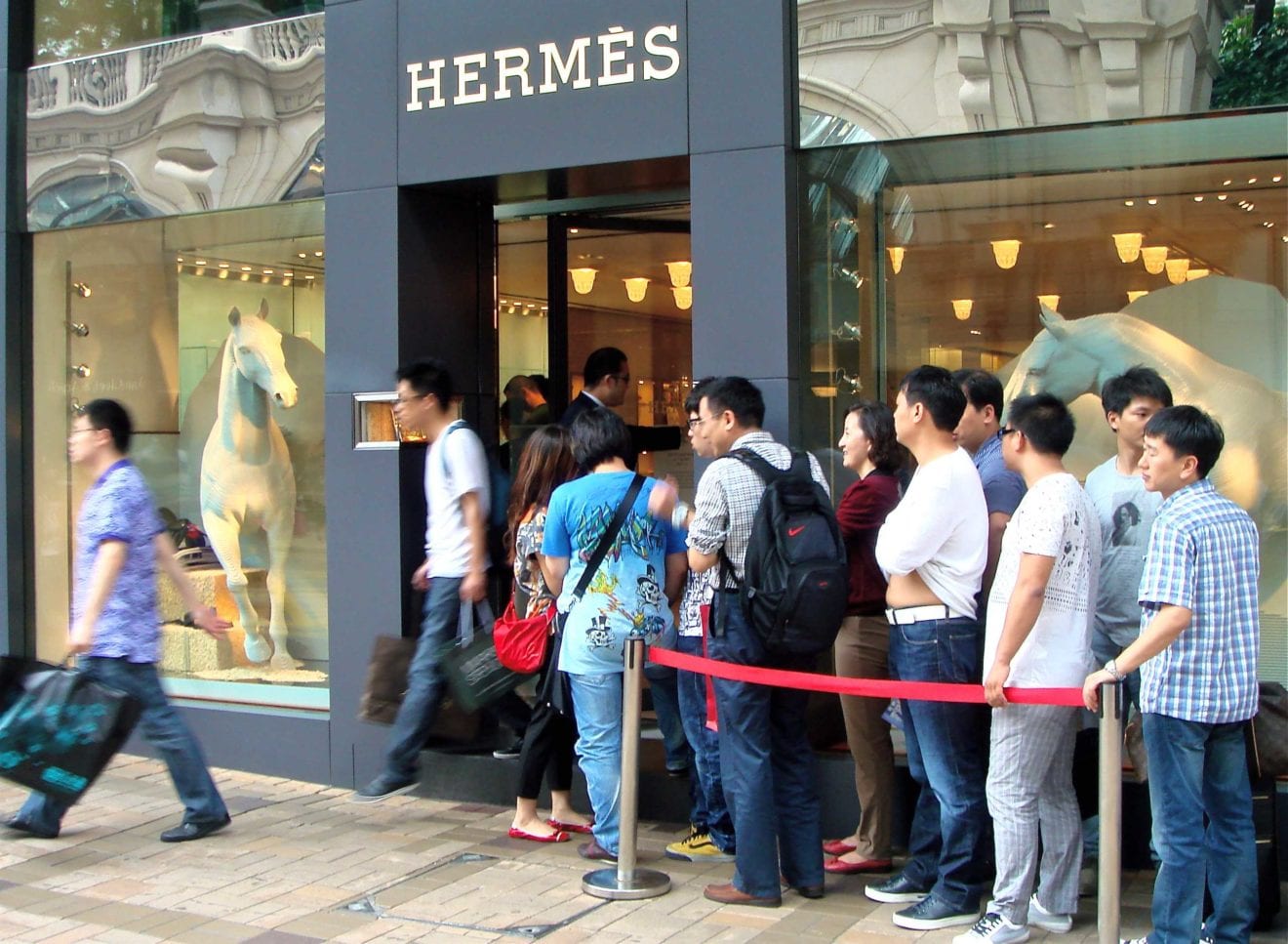
    With Chinese consumers now making up almost a third of all luxury purchases globally, premium brands are having to turn their minds to China-specific engagement strategies.

    “The vast social influence of the Middle Kingdom has shifted the ‘Made in China’ moniker to ‘Made for China’,” according to Chris Maier, Managing Director – Analytics, Research & Insight at Publicis Media for Greater China.

    He explains how this trend is “driving a cultural movement to inspire local product flavour, rather than languish with off-the-shelf Western styles.

    “More and more global brands – especially in the luxury sector – are creating China-specific products with local bents to cater to the key consumers,” he says.

    A Publicis Media study of 1,000 luxury consumers across North Asia – including China – delved into how luxury resonates through consumer lives, including attitudes, behaviours and time spent. One insight was that China continues to push ahead as the most digitally native and highly digital-social culture, particularly in the information gathering process before a purchase.

    When asked about top touchpoints of influence on luxury purchases, invariably the top five of digital were head and shoulders above others: official website (41%), e-commerce website reviews (35%), social media advertising (31%), official social content (30%) and message app advertising (26%).

    Likewise, e-commerce is booming among Chinese luxury consumers.

    “Across the consumer’s journey – from awareness to research and consideration to purchase – e-commerce reviews landed as the top touchpoint influence, barring reviews and recommendations on TV & OTV. Recommendations rated high, but the go-to point is online retail,” Maier says.

    To capture the Chinese market, several luxury brands are now creating product lines specifically targeted to the Chinese market. Maier singles out luxury fashion retailers LVMH and Loewe as early movers.

    “China consumers are, justifiably, voicing specific wants for unique, locally relevant products to go with their new-found authority on the world stage,” he says.

    “If brands are to successfully maneuver in this new consumer age, uniquely fitting the what, where and how together is the trifecta for success.”