Author: Mei Ling Tan

  • Singtel to link mobile wallets across Asia

    Singtel to link mobile wallets across Asia

    Singtel expects the service to launch mid-2018 in 20,000 points in Singapore and Thailand.

    Travellers with Singtel’s mobile wallets could soon continue to use their home wallet app to make payments when overseas.

    Singtel will link its mobile wallets across different ecosystems through an interoperable platform. It will begin with the mobile wallets of the company and its regional associates through the first commercial launch between Singtel and AIS, it said in an announcement.

    “This will be the first time that different mobile wallets across different markets are connected to offer seamless cross-border payments at physical merchants,” Singtel said, “The initiative to expand the Group’s mobile wallet services underscores the continued commitment of Singtel and its regional associates to enhance the mobile payments experience for customers.”

    The telco also noted that this will enable its 590 million mobile customers to securely and conveniently pay with their mobile wallets when they travel in Asia. “Other mobile payment apps can, in future, plug into the platform and gain ready access to the Group’s merchant and customer bases across the region,” it added.

    Singtel International Group CEO Arthur Lang noted that the mobile payments scene in Asia today is fragmented with many different systems and this poses a challenge to the adoption of mobile payments. “As a Group, we believe we can bring about change through our cross-border interoperable platform and collaboration with like-minded partners. Our vision is to unlock the growth potential of mobile payments in the region by providing customers with a convenient, seamless experience, and helping small merchants widen their reach to millions of consumers.”

    In 2017, there were more than 80 million tourist arrivals into Singtel Group’s markets in Asia. “As many small merchants are still unbanked in this region but smartphone penetration is high, mobile payments provide a simple and secure alternative to travellers who might not want the hassle of carrying large amounts of foreign currency with them,” Singtel said.

    “With our customers’ digital lifestyles and the growth in intra-region travel, it is a natural progression for us to take our local mobile wallets regional first, by leveraging the strengths and reach of the Singtel Group in Asia,” Lang added.

    The commercial launch of the service is planned for mid-2018 between Singapore and Thailand where Singtel and AIS have obtained regulatory clearance. This will enable over 1.5 million visitors travelling between Singapore and Thailand each year to use Singtel Dash and my AIS apps at a total of more than 20,000 retail merchant acceptance points in Singapore and Thailand.

    The Group plans to progressively expand this service from the second half of 2018 to other regional associates, which include Airtel, Globe and Telkomsel, taking into consideration the respective country’s regulations.

    Telkomsel CEO Ririek Adriansyah said, “Once we obtain regulatory clearance, we can provide TCASH customers greater convenience whether they are transacting locally or overseas, and give our local merchants new income opportunities from regional travellers.”
  • This Singapore Startup Is Helping Tourists Skip The Queue For Tax Refunds With Just An App

    This Singapore Startup Is Helping Tourists Skip The Queue For Tax Refunds With Just An App

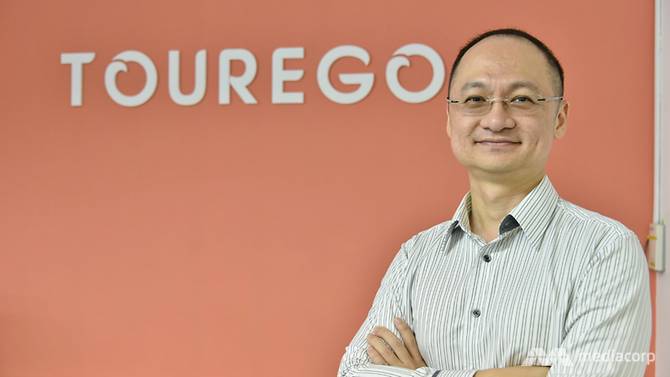
    When Tan Tie Wee, 40, heard complaints from his colleagues in China about the hassle of filing for tax refunds overseas, he was motivated to start up something that can help simplify this process.

    “Some said it was language difficulties. Some said they were pressed for time because they were in a tour group. So I suggested an app that could help them with the claims and they said if there was one, they would definitely use it,” Tan said.

    He was working as PwC’s senior manager for indirect tax practice then, and he had spent two years working in China.

    Tan was impressed by the country’s prevalent use of mobile payment apps and QR codes and figured that he could integrate it into his own venture.

    He ended up quitting his job in 2015 so he could work on realising this ambition amidst other big players such as Global Blue, Premier Tax Free, and Global Tax Free in Singapore.

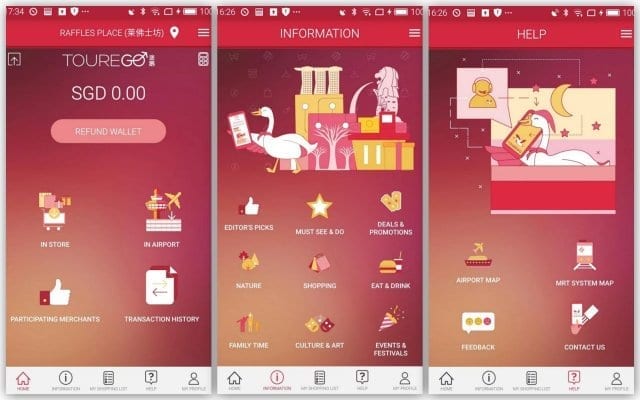
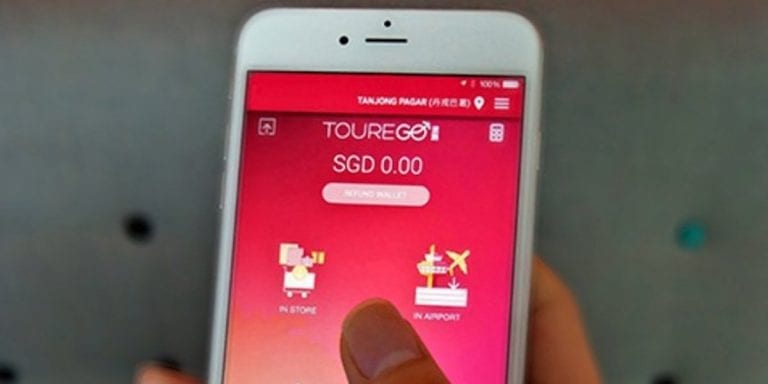
    He then worked on developing Tourego (short for ‘tourist refund on the go’), an all-in-one app that acts as a mobile passport and e-wallet that stores tax refund tickets.

    Launched just three months ago, the mobile app allows retailers to simply scan the QR codes which in turn generates digital tax refund tickets for tourists, replacing the current paper-based system.

    This means that retail staff no longer need to take down the particulars of tourists when they issue tax refund tickets, which helps to effectively save time and manpower.

    Senior Minister of State for Trade and Industry Sim Ann mentioned Tourego in her speech during the recent Committee of Supply debate, and said that such productive technologies allow staff to spend less time on routine or tedious tasks, and more time to provide better customer service.

    On the other hand, tourists can also easily submit claims by scanning these e-receipts at the tax refund kiosks upon reaching Changi Airport.

    With the digitisation of such process, tourists no longer need to worry about losing receipts when keeping track of their Goods and Services Tax (GST) refund claims.

    Challenges On Starting Up

    The traction of the mobile app has been enjoying positive traction so far.

    Although exact user numbers weren’t disclosed, Tourego said that it has gotten 150 retailers – such as Robinsons, Zara, 1872 Clipper Tea Co, and RISIS – onboard since its launch.

    But starting up the business wasn’t easy.

    The process was much more tedious than he expected.

    For starters, the startup needed to go through stringent checks before being given its license by the Inland Revenue Authority of Singapore (IRAS) last November.

    According to IRAS, all central refund agencies that participate in the Electronic Tourist Refund Scheme (eTRS) have to meet necessary requirements to ensure that the GST refunds are properly administered, and that their systems are robust.

    These include a technical certification process and IT audit.

    But the start-up also managed to tap on Government schemes for support.

    For instance, the Ministry of Trade and Industry’s Pro-Enterprise Panel facilitated cooperation with Government agencies to ensure Tourego’s solution complemented existing systems, said Ms Sim in her speech in Parliament.

    The Singapore Tourism Board (STB) also featured Tourego on its VisitSingapore website and inbound trade newsletter, as well as displayed the start-up’s brochures at the Singapore Visitor Centre.

    “With electronic payment platforms growing increasingly popular in Singapore, STB is pleased to support Tourego’s mobile application as it allows visitors to claim tax refunds in a more seamless and hassle-free manner in Singapore,” said STB.

    The eTRS system in place right now already seeks to make Singapore’s tourist tax refund system less reliant on paperwork.

    Since its roll-out in 2011, tourists no longer have to fill in different GST refund forms and queue at different counters to get the claims done.

    Now, visitors can choose to swipe their chosen credit card at the self-help kiosks to retrieve records of their purchases. Alternatively, they can scan the eTRS tickets individually before indicating their preference for the tax refund method.

    Competing Against Other Big Players

    Other technology players also seem to have set their sights on this space.

    China’s Alipay, for one, partnered Global Tax Free last year to allow Chinese tourists to make claims and have their tax refunds deposited directly into their Alipay accounts.

    This instant tax refund service through the Chinese mobile and online payment platform, was made available in Singapore earlier this year.

    Tourego App

    As such, Tourego is working to roll out its other features that would eliminate the need for its users to present their passports at the point of purchase and allow them to skip the queue at the airport.

    “We want everything to be done on the mobile phone,” said Tan.

    “For registration, all you have to do is to scan your passport using our app. At the retail store, flash your QR code and a digital receipt will be generated automatically.

    “Joining the queue at the airport is probably the most painful part of the refund process and we think this can be changed. My full solution will be to move the declaration process on to the app so that there will no need to stand in line at the various counters or in Singapore’s context, queue to scan your passport at a kiosk,” he added.

    The start-up founder is also aiming to expand beyond Singapore though the navigation of various tax systems could be a hurdle.

    “We have global ambitions to be a homogeneous global tax refund solution. It may be challenging but we will take one step at a time and first, we will show that it’s going to work here in Singapore.”

  • DBS launches Electricity Marketplace

    DBS launches Electricity Marketplace

    DBS announced the launch of the DBS Electricity Marketplace which will allow all households in Jurong (residents with postal code of 60, 61, 62, 63 and 64) to seamlessly switch to other retailers with the liberalisation of the retail electricity market in Singapore.

    Around 108,000 households in Jurong will stand to benefit in this pilot phase.

    As a start, DBS is working with two electricity retailers – iSwitch and Keppel Electric. During the pilot phase, all households in Jurong can search for various price plans that best suit their electricity needs on the DBS Electricity Marketplace. For DBS/POSB customers, they can apply directly with just a few simple clicks via DBS/POSB digibank and choose their preferred payment options. Once the switch is done, customers can look forward to their selected electricity plans provided by their new electricity retailer, without any service disruption.

    Said Jeremy Soo, DBS Head of Consumer Banking Group (Singapore), “DBS Electricity Marketplace exemplifies how we are reimagining banking, using digital technology and innovation to make life simpler for our customers. Through our partnerships with alternative electricity retailers, we want to enable our customers to enjoy savings on their bills easily. Our insights also indicate that consumers want a fuss-free process to sign up for other electricity retailers, and we have made it easier and convenient for them to make the switch with just a few simple clicks on DBS/POSB digibank.”

    Since 2001, the Energy Market Authority has been liberalising the electricity market in Singapore in phases and the pilot phase for residents in Jurong will start from April 2018. DBS is also working with other electricity retailers which will be made available to consumers at a later date.

  • Citi rolls out Facebook Messenger bot in Singapore

    Citi rolls out Facebook Messenger bot in Singapore

    Citi has launched its first natural language chatbot for Facebook Messenger in Singapore ahead of a wider roll out around the world.

    The bot uses natural language processing to communicate with customers in an intuitive way, addressing their everyday questions about things like real-time account and transaction information.

    Citi says that it has been piloting the bot with 600 customers and employees to refine the service, which also covers credit card bill summaries, rewards and points balances and frequently asked questions.

    The bank has previously said that it plans a second phase to introduce more features such as card activation, ability to lock and unlock credit cards and transaction alerts for cards among others.

    “Facebook Messenger is an exciting new way to access Citi and will greatly enhance our overall customer experience’” says Anand Selva, head, Asia Pacific consumer banking, Citi.

  • Supermarket chains dominate offline shopping

    Supermarket chains dominate offline shopping

    Scale continues to play a major part in attracting shoppers both online and offline, a recent survey showed, with supermarket chains and large open market platforms coming top in consumers’ preferred retail outlets.

    According to a joint survey conducted by research firm Consumer Insight and Hanyang University’s retail research center, at least 80 percent of consumers said they went to supermarkets within the last month. The survey was conducted on some 15,000 Koreans from July 2017 to the end of January this year.

    Convenience stores came in second at 68 percent, followed by local grocery stores (55 percent), brand stores (45 percent) and traditional markets (39 percent).

    The report said 44 percent of the respondents said they generally tended to choose supermarket chains for offline shopping, while less than other offline shopping channels picked up shares of less than 10 percent each.

    “Some of respondents said they visit supermarket chains because it is well-located and easy to find. Some of them also cited familiarity as another reason, because its category of products and even interior provide similar ambience throughout all chains,” said Jung Kyung-sik who participated in the study.

    E-mart, discount store chain under retail giant Shinsegae, currently operates 145 stores across the country, while Homeplus and Lotte Mart have 142 stores and 123 stores, respectively.

    In terms of customer loyalty, which the report calculated based on preference and actual use, supermarket chains topped the list at 55 percent, while department stores (17 percent) and midsize grocery stores (16 percent) operated by retail giants such as Shinsegae followed. Midsized grocery stores, also known locally as “super supermarkets,” are those between 1,000 and 3,000 square meters.

    “Supermarket chains are dominating offline shopping channels, while other shopping platforms such as local grocery stores, convenience stores and traditional markets are left as secondary options,” the report read.

    Meanwhile, among online shopping channels, customers used open markets the most, with 79 percent of shoppers having used one, followed by social commerce (51 percent), home shopping (35 percent) and individual retailers’ online sites (30 percent).

    Customer loyalty was the highest, again, for open markets at 64 percent, compared to other online shopping channels such as social commerce (35 percent) and online retailers (26 percent). Home shopping, duty-free stores and multiplex shopping malls showed low customer loyalty at 10 percent, 8 percent and 7 percent, respectively.

    “Competition in both offline and online retail industries is quite obvious, as supermarket chains are dominating offline shopping channels, while open markets are taking the lead in online shopping platforms. This structure is unlikely to change at the moment,” according to the report.

    “Only the aggressive and creative online marketing strategies from social commerce and retailers’ online sites can change the situation for online shopping channels.”

  • Geometry Malaysia appoints Michael Fillon as ECD

    Geometry Malaysia appoints Michael Fillon as ECD

    Geometry Malaysia has appointed Michael Fillon as its ECD. He reports to CEO Kenny Loh.

    In a statement, Loh said Fillon will be responsible for leading Geometry Malaysia’s creative output and taking it to the next level.

    Fillon replaces former ECD Mehdi Lamloum, who left the agency last year to join iris Worldwide as its ECD in Jakarta. The interim ECD for Geometry Malaysia was Daniel Comar, who is also the regional executive creative director for Geometry Global Asia Pacific.

    Prior to joining Geometry Malaysia, Fillon was creative director at Leo Burnett ARC based in Dubai, where he headed creative work for clients including Ferrero, VISA, P&G and Kellogg’s, according to his LinkedIn. Before that, he was creative director at J. Walter Thompson Dubai for about three years, where he was responsible for clients including Nike, HSBC and Nestle. Fillon also previously worked at Impact BBDO.

    “In an age where clients are becoming even more result-oriented, our work will present intelligent ways to get our audiences to act – to join movements, to engage in conversations, to try new things, and ultimately, to shop well,” Fillon said.

    “I’ll admit we searched high and low for this critical position and the wait has been worth it. Fillon’s energy is infectious, his talent undeniable. I’m looking forward to some really great work coming out of Geometry Malaysia,” Loh said.

    In a separate statement, Loh added that most agencies focus on consumer insights, but with Fillon on board, his expertise will enable Geometry Malaysia to place more focus on shopper insights and figure out consumers’ shopping behaviour.

    “What I like about Fillon is he understands shoppers’ behaviours and how they react to retail promotions, as well as his expertise in e-commerce. I think this knowledge is very important and e-commerce will be the future of Malaysia,” Loh added.

  • Harry Winston opens store in Switzerland

    Harry Winston opens store in Switzerland

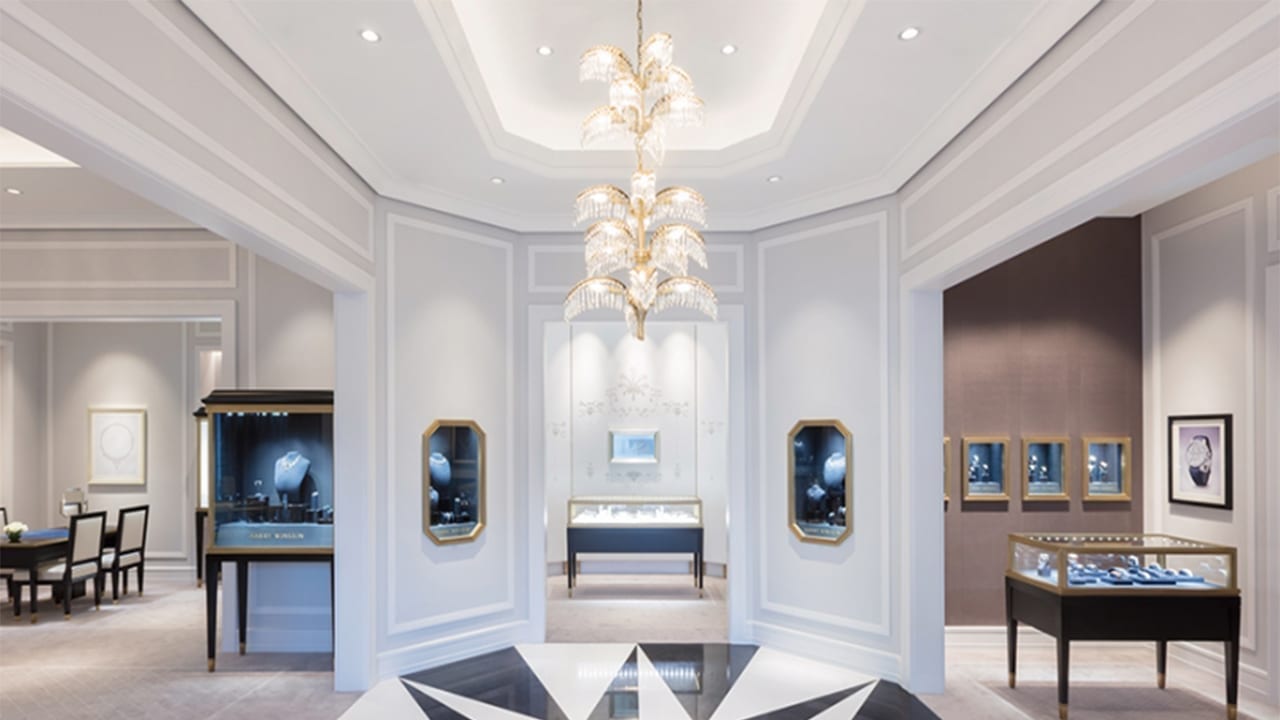
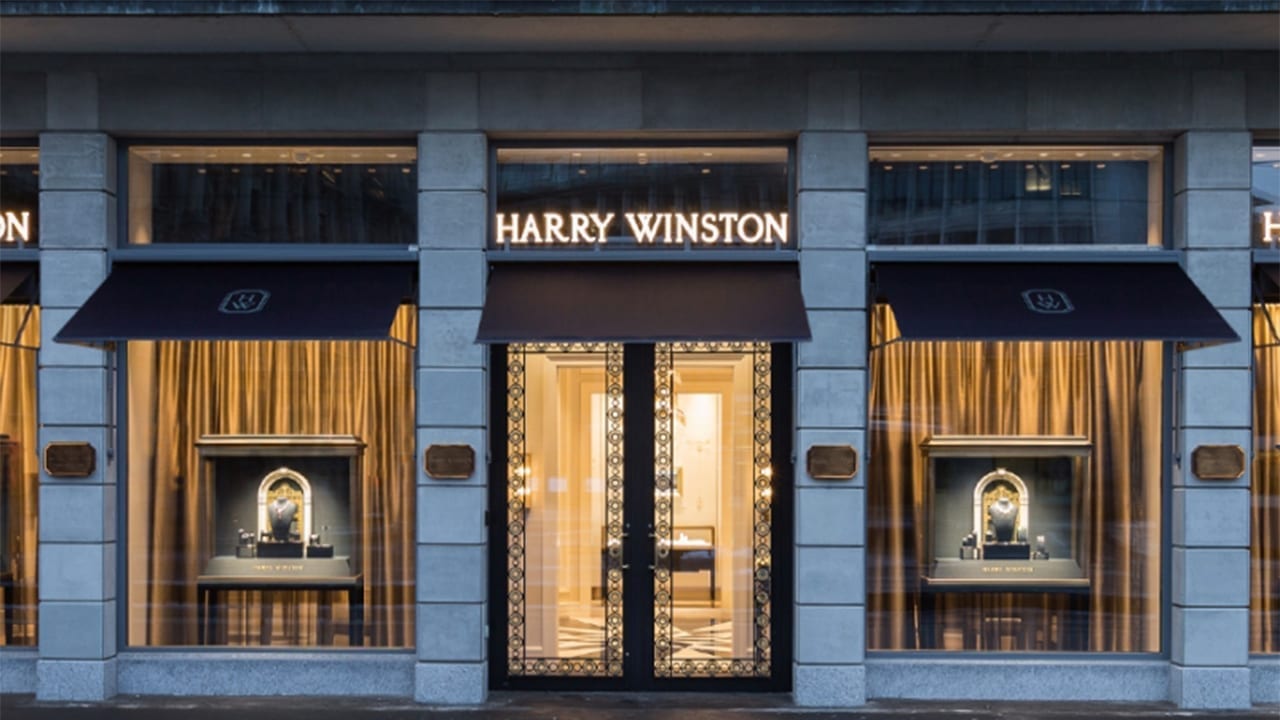
    Harry Winston has recenly opened a new salon in Zurich, the third in Switzerland.  Located on the famed Bahnhofstrasse shopping mile, the 146.2 square meter salon will house Harry Winston’s exquisite jewelry and timepiece collections, including the finest diamonds and rarest gemstones available today.

    “The opening of our Zurich Salon marks Harry Winston’s third location in Switzerland,” said Nayla Hayek, CEO of Harry Winston, Inc. “As the “King of Diamonds,” Harry Winston built his career around the world’s most sought-after diamonds and gemstones – a legacy we are proud to uphold today. With the opening of our new salon on Bahnhofstrasse, we are honored to bring the House’s tradition of excellence to one of the most exclusive retail destinations in the world and to share our commitment to incredible jewels with our new and existing clientele across the region.”

    Designed to capture the elegance and intimacy of a private estate, the new salon reflects a contemporary variation on the traditional Winston style. A soft taupe and grey color palette complements the custom designed black lacquer and antique bronze furniture, with bespoke chandeliers, hand-beaded silk walls and antique accents. A grand marble foyer, decorated with a striking black and white starburst motif, displays the House’s signature design collections. Dedicated areas for Harry Winston’s high jewelry, bridal, and state-of-the-art timepiece collections, ensure clients receive the discreet and highly personalized shopping experience that the House is known for, while private selling rooms provide a luxurious space for the ultimate in exclusivity.

    To commemorate the opening, the House hosted an exclusive cocktail reception for VIP guests, where it presented its most spectacular creations, from vintage Harry Winston designs, to the iconic Winston Cluster to the unparalleled Legacy Collection, to exemplary pieces inspired by the Harry Winston Archives.


  • Behind the glitz and glamour of ‘Monopoly City’

    Behind the glitz and glamour of ‘Monopoly City’

    Hong Kong has built its reputation as a free-wheeling, innovative and sophisticated city. Just like New York, it is known globally as a vibrant metropolis, which never sleeps and where money still talks.

    But is this view outdated, a facade constructed more from fantasy than reality? Certainly, business professionals, analysts and academics, who talked to Asia Times, are starting to voice serious concerns.

    They point to a myriad of problems, which are buried beneath the surface, such as monopolies in an array of sectors from transport to supermarkets.

    Underlining fears that “the rule of law” has been eroded by the “One Country, Two Systems” policy after Hong Kong was handed back to China by Britain in 1997 also loom large in the background.

    “In Western countries, the rule of law is a core value. But it is different in Hong Kong as it belongs to China,” Andy Kwan Cheuk-chiu, who runs ACE Center for Business and Economic Research, a Hong Kong think tank said.

    “Beijing’s reinterpretation of the Basic Law of Hong Kong might create certain political issues but it will not worry businesses as long as they make money,” Kwan, a former associate economics professor at the Chinese University, added.

    In the 2018 Economic Freedom Index rolled out by the Heritage Foundation, a conservative public policy think tank based in Washington, Hong Kong retained its No. 1 position.

    Yet even in a sanguine review, there was a caveat inserted into the section governing the “Rule of Law”, casting a shadow over the independence of the judiciary in the Special Administrative Region.

    “An exceptionally competitive financial and business hub, Hong Kong remains one of the world’s most resilient economies,” the Heritage Foundation study stated. “A high-quality legal framework provides effective protection of property rights and strongly supports the rule of law. There is little tolerance for corruption and a high degree of transparency.

    “The judiciary is independent, but Beijing reserves the right to make final constitutional interpretations, effectively limiting the power of Hong Kong’s Court of Final Appeal. Although the corruption rate is low, it is perceived as rising,” it added.

    With such a multi-layered society, perception is a crucial part of everyday life for the 7.4 million people who live in an area of 106 square kilometers or 41 square miles.  Alongside a dense population, property prices have soared at breakneck speed, leaving many unable to afford a home of their own.

    A report released in January by Demographia, entitled the International Housing Affordability Survey, showed Hong Kong was still the world’s “least affordable city” – a title it has held for seven straight years.

    The United States-based consultancy reported that prices were more than 18 times the median annual pretax household income. A score of more than five times is considered “severely unaffordable,” according to its website.

    “Hong Kong is like a confectioner’s jelly, it looks great from the outside but internally it is melting,” Neville Sarony, a practicing QC in Hong Kong and a former Professor of Law at the City University of Hong Kong said.

    “As I see it, there are two overarching but interconnected problems: 20 years of increasingly dysfunctional government and the paralyzing greed of the property developers,” he added.

    Similar concerns exist in the retail and transport sectors, which could squeeze growth and strangle competition.

    Despite what many consider a world-class metro system, road congestion and inadequate transportation in new towns have left parts of Hong Kong with a major gridlock headache, adding to the city’s pollution problems.

    Quentin Cheng has been an outspoken critic of Hong Kong’s transport policy and is convinced a lack of serious competition needs to be addressed.

    “Our town planning does not adopt a holistic approach, and only focuses on small areas of land. The Development Bureau just generates slogans and does not carry out the concepts. What we need is competition [in the industry],” Cheng, who is co-founder and spokesman for the Public Transport Research Team said.

    “Hong Kong’s rail networks are too small and inadequate. [They do] not cover a lot of areas, compared to other developed [cities and districts]. They should build more direct rail routes connecting different districts together,” he added.

    As for the highly vaunted retail industry, its veneer of choice has been peeled away to reveal a sector controlled by two supermarket chains.

    In a study compiled by Euromonitor, retail sales of food and beverages in Hong Kong reached US$11.9 billion “with supermarkets accounting for 55%” of the market.

    Two grocery groups, Dairy Farm International’s Wellcome brand and AS Watsons’ ParknShop, dominated the scene, accounting for about 75% of the revenue.

    “There is a monopoly in Hong Kong’s supermarket sector with Park’n Shop and Wellcome, [while] most of our pharmacies belong to Watsons and Mannings,” Ho Hei-wah, a veteran social activist and director of the Society for Community Organisation, a rights group for the disadvantaged said.

    “The elements of a monopoly exist in different industries [which means] small and medium-sized enterprises cannot bid [for] government projects because they haven’t worked on [them] before,” Ho, who is known as the “voice of the poor” in Hong Kong circles, added.

    “Monopoly” is a word that crops up often in a city which is not only struggling to retain its identity but its unique competitive spirit.

  • Issey Miyake Opens Traditional Kyoto “Machiya”

    Issey Miyake Opens Traditional Kyoto “Machiya”

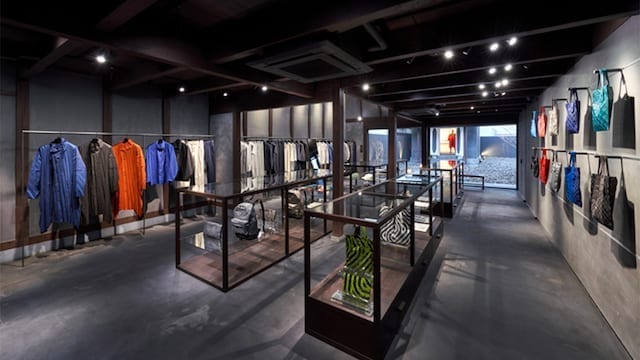
    Issey Miyake Japan has established a boutique in Kyoto, in a preserved traditional machiya (townhouse).

    Inspired by the classic japanese sumi, or ink colour, the interior has been created by designer and longtime collaborator Naoto Fukusawa. The retail setting is understated, balancing the structure’s original elements with modern interventions across two levels.

    Included in the store is a traditional kura, or storehouse, in a zen-like enclosed backyard. It will be used as a gallery space for Issey Miyake shows. The inaugural exhibition was dedicated to the third collection of Ikko Tanaka Issey Miyake, one of its many apparel lines that features the bold designs of graphic designer Ikko Tanaka (1930-2002).

    Check out the gallery below :

    The boutique stocks the men’s lines Homme Plisse Issey Miyake and Issey Miyake Men, as well as its Bao Bao Issey Miyake tote bags.

  • Government approves rights to purchase Vietnam Airlines’ shares

    Government approves rights to purchase Vietnam Airlines’ shares

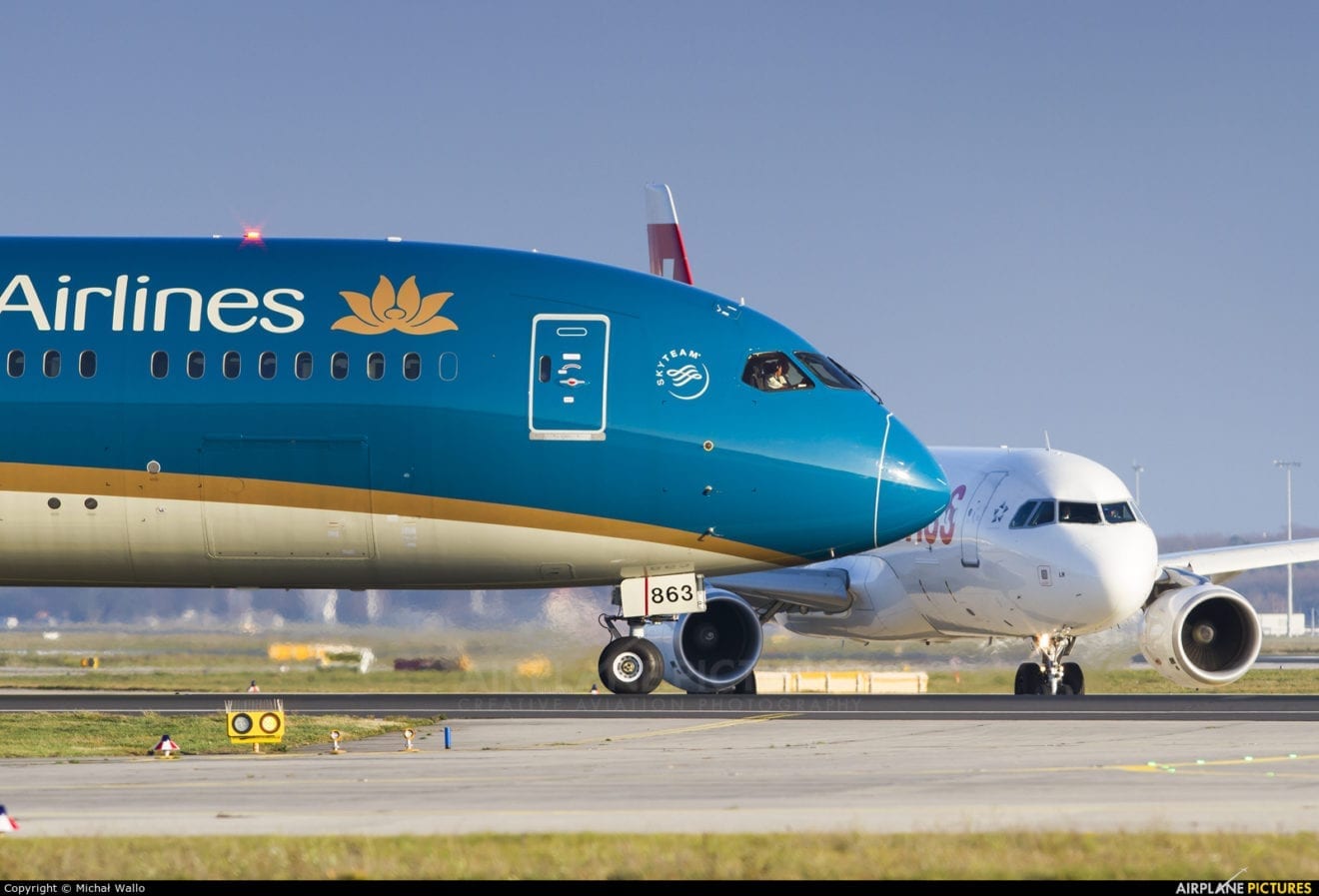
    The Ministry of Transport (MoT) will transfer its rights to purchase shares additionally issued by the Vietnam Airlines Corporation through auction at the Hà Nội Stock Exchange.

    Under its plan, the ministry, as Vietnam Airlines’ State stakeholder, will auction 371.5 million share purchase rights, an equivalent to 57.9 million additional shares in Vietnam Airlines’ upcoming share issue.

    Individual and organisations, including overseas Vietnamese and foreigners who meet the conditions as prescribed by the law, will be eligible to buy the rights.

    In July 2017, Vietnam Airlines decided to issue over 191 million shares to existing shareholders at the ratio of 15.57 per cent to raise charter capital. The issue, expected in the last quarter of 2017, however has yet to be implemented.

    The State now holds 86.16 per cent of Vietnam Airlines charter capital which is nearly VNĐ12.3 trilion after equitisation. If the State shareholder do not exercise their rights to purchase shares in Vietnam Airlines’ upcoming share issue, the State ownership in the national flag carriers will decrease.

    Vietnam Airlines shares, trading on the Unlisted Public Company Market (UPCoM) under the sticker HVN, close Tuesday’s trade at VNĐ48,100 (US$2.11) per share, down 5.9 per cent from the previous session.


  • Asian markets tumble with Wall St as Facebook breach hits tech

    Asian markets tumble with Wall St as Facebook breach hits tech

    Asian markets sank on Tuesday following sharp losses in New York as a massive data breach at Facebook fuelled fears of a regulatory crackdown on the technology sector.

    The scandal at the social media giant come as investors fret over a possible increase in the rate of US interest rate hikes and Donald Trump steps up his protectionist rhetoric that has sparked talk of a global trade war.

    Reports said Cambridge Analytica, the analysis firm hired by Donald Trump’s 2016 presidential campaign, stole data from 50 million Facebook user profiles to help design software to predict and influence voters’ choices.

    Stephen Innes, head of Asia-Pacific trading at OANDA, warned: “This security breach could end up being a significant turning point for the social media and network portal.”

    The news hammered tech giants with Facebook plunging 6.8 percent, while other household names were also hit — including Apple, Google-parent Alphabet and Netflix — by regulatory concerns.

    “The adults are starting to realise that the altruistic kids who started some of these tech behemoths are either unwilling or unable to deal with the fact that the companies they wrought and thought were a force for good can be manipulated by those who seek to do ill,” said Greg McKenna, chief market strategist at AxiTrader.

    The US losses filtered through to Asia, with Hong Kong-listed internet giant Tencent and AAC Technologies sharply lower. Samsung retreated in Seoul, while Sony was one percent lower in Tokyo.

    On broader markets Japan’s Nikkei went into the break more than one percent lower, while Hong Kong shed 0.6 percent and Sydney was off 0.5 percent.

    Shanghai dropped 0.3 percent, Singapore gave up 0.2 percent and Seoul retreated 0.4 percent, with Wellington, Manila, Taipei and Jakarta all sharply down.

    Investors are keeping a close watch on the Federal Reserve’s policy meeting this week looking for clues about its timetable for tightening monetary policy. Opinion is split on the number of rate hikes it will likely announce this year, with some forecasting three and others saying four.

    Market-watchers warn a G20 meeting of finance ministers in Argentina could also revive tensions on international trade after Trump unveiled his controversial tariffs this month.

    On currency markets the pound extended gains against the dollar after Britain and European Union leaders agreed a post-Brexit transition deal that will buy businesses and citizens time to adjust to life after the divorce.

  • Authentic Brands Group acquires Nautica

    Authentic Brands Group acquires Nautica

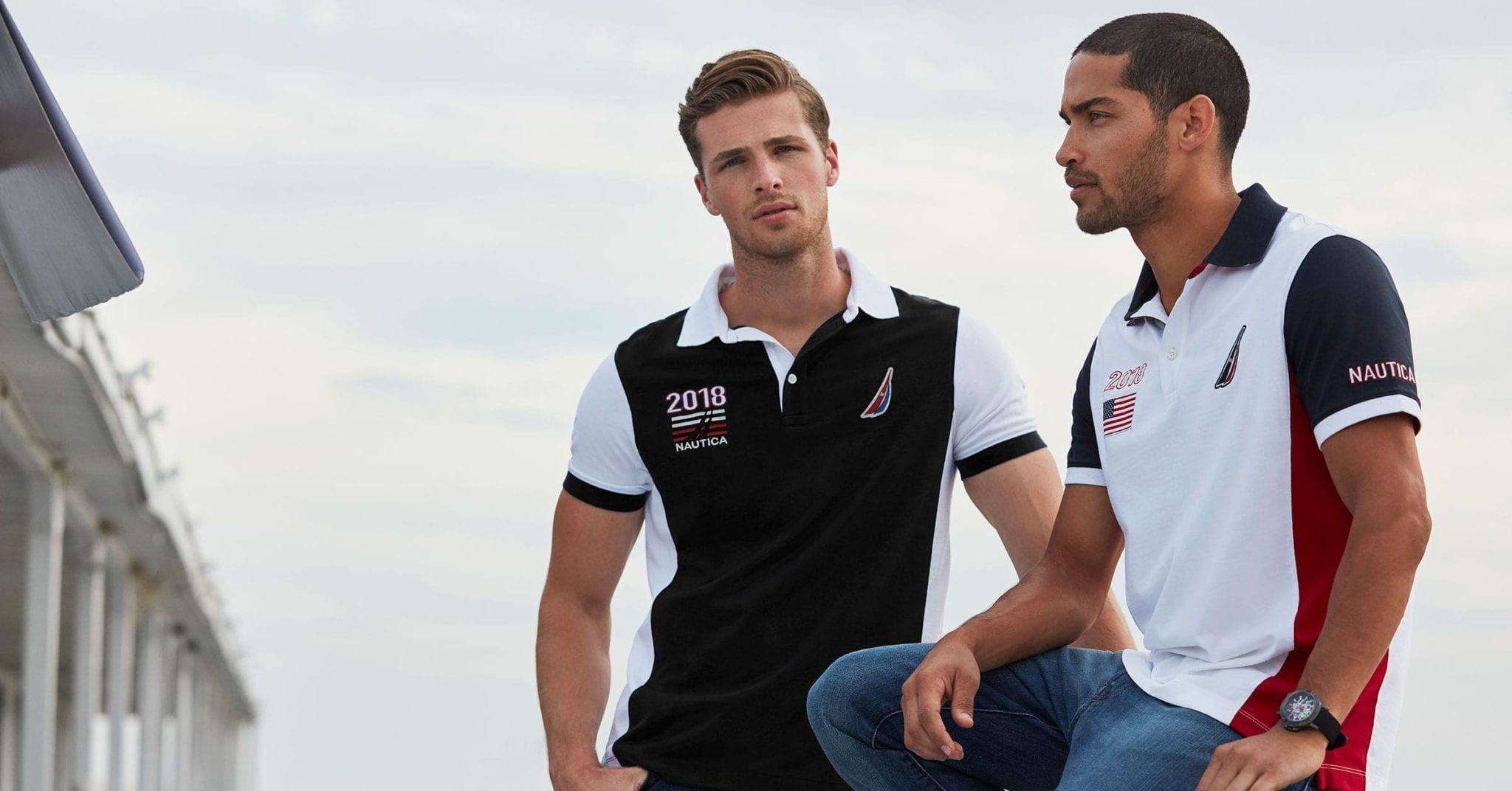
    Authentic Brands Group has bought the Nautica business from VF Corporation.

    The new owner, which lists Marilyn Monroe, Elvis Presley, Muhammad Ali, Greg Norman, Aeropostale, Juicy Couture and Frederick’s of Hollywood among an extensive portfolio, will take over the sports-inspired brand in the first half of this year. Terms of the deal have not been disclosed.

    VF chairman, president and CEO Steve Rendle said the company’s global business strategy is to actively manage its brand portfolio to ensure its composition allows strong growth.

    “This announcement marks yet another example of how we’re delivering on our commitment. We are pleased to have reached this agreement with Authentic Brands Group. The Nautica brand is an iconic, globally recognised brand, and Authentic Brands Group is the ideal owner to guide its next phase of growth and success.”

    Nautica, an American brand, has a strong nautical heritage, particularly associated with yachting. Besides producing clothing for men, women and children, it sells fragrances, watches and accessories.

    VF Corporation still owns the Vans, The North Face, Timberland, Wrangler and Lee brands.

  • Malaysian food delivery startup dahmakan acquires Thai competitor

    Malaysian food delivery startup dahmakan acquires Thai competitor

    Malaysian food-delivery startup Dahmakan, which raised US$2.6 million early this year, has acquired Bangkok-based competitor Polpa for an undisclosed amount.

    Dahmakan co-founder Jessica Li says Polpa has been integrated into the brand. The Thai startup’s founders, Dr Julian Timings and Prongfa Uennatornaranggoon, have joined Dahmakan’s executive team.

    “This will be the first of our three-city expansion in Southeast Asia this year, with Jakarta and Hong Kong slated for the third and fourth quarters.

    Dahmakan says demand for online food delivery in Southeast Asia grew 20-fold last year, with online spending projected to quadruple by 2025.

    CEO/co-founder Jonathan Weins says getting into Bangkok, the third-largest city in Southeast Asia, was strategic. “Bangkok has millions of office workers, high urban density and a lack of convenient food-delivery options that makes it an attractive market.”

    According to research firm Euromonitor International, Thailand’s online food-ordering market is on track to hit THB31.7 billion (about $1 billion) this year.

    Established in 2014, Polpa claims to be among the market leaders for healthy food delivery in Bangkok.

    Since launching in 2015, Dahmakan has raised more than $4 million in venture capital funding. It distinguishes itself from rivals – including Deliveroo, Foodpanda and UberEats – by delivering meals prepared in-house instead of picking up from restaurants and stalls.

    Meanwhile, Delivery Hero’s Foodpanda projects a surge in demand this year as competition intensifies.

    Thailand CEO Alexander Felde says he expects Foodpanda deliveries to roughly double this year to 16,000 a day.

  • HCMC Vietnam plans trading floor for pork

    HCMC Vietnam plans trading floor for pork

    HCM City plans to form a pork trading floor which will have advanced technology and careful control of pork origin to ensure quality.

    The city’s Department of Industry and Trade is working on forming the trading floor, which will allow direct purchases, without intermediaries, from pig farmers.

    Large, growing pork markets such as China and Japan have not bought pork from Việt Nam through large scale exporting, but instead through small border trade as international trade requires higher food safety standards.

    The city has begun a programme to keep better track of pork origin to ensure higher-quality products.

    By the end of 2017, 2,644 pig farms and 38 slaughterhouses had joined the programme, according to the city’s Department of Industry and Trade. The department has also held around 85 training sessions for farmers.

    As part of the programme, traders and consumers can look up information about the pork they have bought and their origin by scanning the QR code on each pork package which  has quality stamps.

    In HCM City, 7,500 to 8,000 pigs are supplied with a clear source of origin each day.

    The city plans to replace all manual slaughtering activities with machinery by the end of 2018, and make sure every slaughterhouse is equipped with freezers to store pork.

    According to the department, the city consumes US$500 million worth of pork every year.


  • Amorepacific’s Etude House opens store in UAE, first in Middle East

    Amorepacific’s Etude House opens store in UAE, first in Middle East

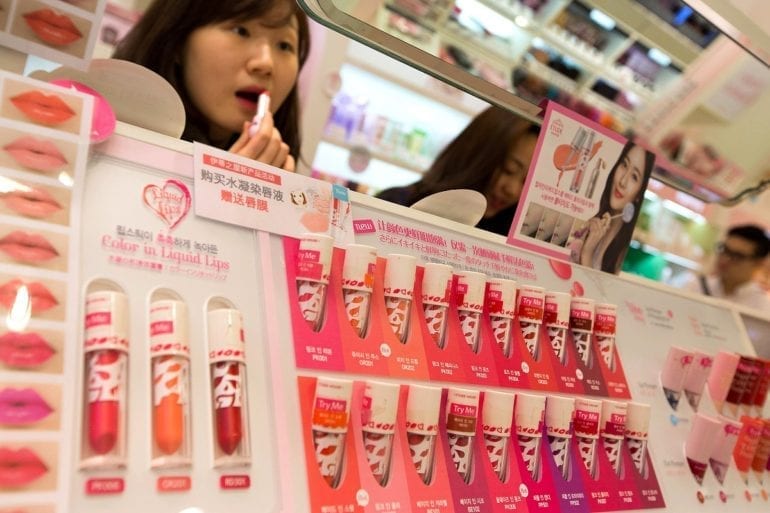
    Amorepacific-owned beauty brand Etude House has arrived in the Middle East with the first store opening in Dubai.

    The standalone store is located inside Dubai Mall, the world’s largest shopping centre, boasting 80 million visitors a year.

    All of Etude House’s best-selling products including Double Lasting Foundation, Dear My Blooming Lips and Real Powder Cushion are available at the store.

    For the Middle Eastern launch, Amorepacific said it studied makeup trends in the region for a long time to develop products tailored to locals.

    Etude House will open its first Kuwait store at the Avenues Mall on Thursday, followed by Saudi Arabia within the first half of this year.

    This year, Amorepacific has been boosting its international business. It has recently brought Mamonde to the US and Laneige to Australia.

    Its eco brand Innisfree also opened in Tokyo last Friday with a two-storey store.