Author: Mei Ling Tan

  • PM Vietnam expects huge investments from Australia

    PM Vietnam expects huge investments from Australia

    Prime Minister Vietnam Nguyễn Xuân Phúc said he expected a new wave of investments, both direct and indirect, from Australia to land in Việt Nam for win-win benefits.

    His statement comes after the newly established strategic partnership of which the two countries are the members.

    Phúc said the partnership would provide a favourable environment for Australian investors to enter Việt Nam faster and would create a crucial foundation for Việt Nam and Australia to lift their cross-the-board co-operation to the next level.

    He said this at a working session with leading financial groups and investors from both Australia and Việt Nam in Sydney on March 16.
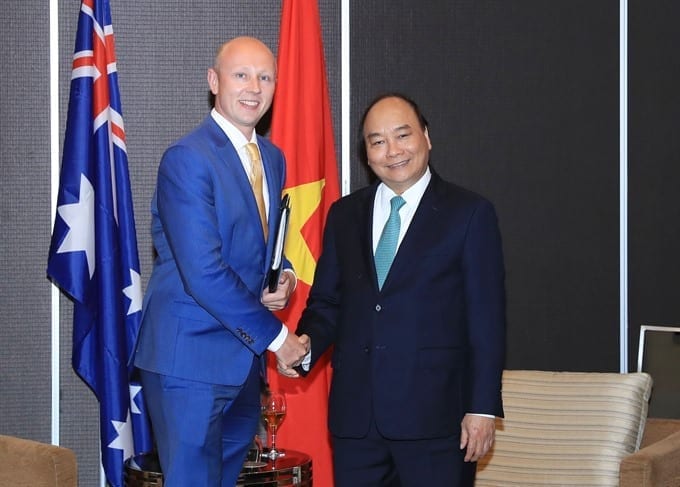
    The session was presided by 12 groups, finance investment funds and businesses managing an investment capital of worth over US$500 billion with keen interests in the Vietnamese market, along with nine prestigious financial groups of Việt Nam. The session was organised by VinaCapital and Macquarie Group.

    Macquarie Group Chairman Peter Warne showed great interest in Việt Nam’s priorities in infrastructure development. He said Việt Nam was urbanising strongly and thus its need for infrastructure, roads, transport and electricity was high.

    Meanwhile, VinaCapital CEO Don Lam said the Vietnamese Government had made great efforts to reform institutions and speed upequitisation of State-owned enterprises (SOEs). He hailed the Vietnamese Prime Minister for actively working to draw businesses and investment into the country.

    He said, as a result, Việt Nam’s business and investment environment had improved considerably, and the country’s market had become more attractive to international investors.

    PM Phúc welcomed the Australian groups’ interests in Việt Nam and spoke highly of the organisation of the session by VinaCapital and Macquarie.

    He told investors that 2017 was a successful year for Việt Nam as the country posted a growth rate of 6.81per cent, a record high in many years, maintained a stable exchange rate, soundly reined in inflation and achieved a record foreign reserve. The country also attracted $37 billion in foreign direct investment, the highest in a decade, and its stock market achieved a growth rate of 48 per cent, one of the highest rates in the global market.

    PM affirmed that the Vietnamese Government had undertaken many policies to ensure the sustainable development of the economy and safeguarding of the rights and benefits of investors.

    He further said Việt Nam had targeted to achieve a fast but sustainable growth on the basis of defending the rights of people and investors, and that the country had been persistent in pursuing the goal of building a facilitating, transparent and efficient government and continuing to improve the investment and business environment to meet OECD (Organisation for Economic Co-operation and Development) standards.

    He also told investors that the country would continue transforming its growth model, restructuring its economy, SOEs, human resources and other sectors.

    “Việt Nam is concentrating on developing a sustainable and healthy finance market that is friendly to investors,” he added.

    The country has so far signed 12 free trade agreements and the latest Comprehensive and Progressive Agreement for Trans-Pacific Partnership with Australia and is negotiating the Regional Comprehensive Economic Partnership with the aim of forming a large market to attract investors.

    During the intensive and extensive economic integration, Việt Nam had unceasingly worked to facilitate the development of the private economy, the Prime Minister told investors.

    At the session, Phúc, along with ministry and sector officials from Việt Nam, fielded questions pertaining to Việt Nam’s foreign investment attraction and agriculture development policies as well as its priorities in infrastructure development.

    Later, Phúc will chair the Việt Nam-Australia Business Forum.
     

  • Lotte to sell hypermarket chain in China

    Lotte China plans to wrap up the sales of its hypermarket chain in China within the next three months.

    Potential buyers have started to inspect the South Korean retail giant’s stores. While many have reviewed documents, Chinese retailer Liqun Group was the first to carry out on-site inspections of Lotte Mart’s Chinese stores.

    However, a Lotte Mart official says three or four other companies also also planning on-site inspections.

    He says Lotte’s aim is to complete the sales process by June, when about KW700 billion (US$653 million) of emergency funds it has injected into its Chinese retail business is expected to be run out.

    Lotte announced its decision to sell its Chinese stores in September after being hit by major losses in the wake of a diplomatic row between Seoul and Beijing over a US anti-missile system. The retailer bore the brunt of Beijing’s retaliation after signing a land-swap deal with the South Korean government to provide a golf course to host the missile shield system.

    Eighty-seven of its 99 Lotte Mart discount stores in China suspended trading, while sales at the few stores that managed to stay open tumbled more than 80 per cent. The group lost about KW1.2 trillion in lost sales in the process.

  • Japan Tobacco buys Russia’s fourth-largest cigarette maker

    Japan Tobacco buys Russia’s fourth-largest cigarette maker

    Japan Tobacco has agreed to buy Donskoy Tabak, Russia’s fourth-largest cigarette maker, for $1.6 billion in a bid to reinforce its leading position in the country.

    One of the world’s biggest tobacco companies, whose global brands include Winston and Camel, Japan Tobacco (JT) has set its sights on international markets to counter slowing sales at home and intensifying competition in the e-cigarette market.

    JT on Friday said the deal would boost its Russian market share to about 40% from the current 33%, which was already the largest in the country.

    The acquisition of Donskoy Tabak, whose brands include Donskoy Tabak, Kiss and Play, will be completed later this year, it said.

    “This acquisition demonstrates our commitment to reinforce our number one position in Russia,” JT executive vice president Mutsuo Iwai said in a statement.

    The deal will also include JT’s purchase of Greek cigarette maker SEKAP, it said, adding that it has no plan to revise its earnings forecast following the announcement.

    Last year JT spent some $2 billion on acquiring major tobacco manufacturers in Asia, including Mighty of the Philippines.

  • Buccellati opens new store in Macau’s MGM Cotai Mall

    Buccellati opens new store in Macau’s MGM Cotai Mall

    Buccellati Macau has opened a store at the new MGM Cotai Mall as a step forward in its global expansion.

    This follows the acquisition of 85 per cent shareholding of the Italian jewellery brand by China’s Gansu Gangtai Holding last year, and the opening of several stores in China, including its first boutique at Plaza 66 in Shanghai.

    Buccellati plans to open 88 stores in the next five years, 18 of which will be in Chinese cities.

    Founded in Milan in 1919, the brand is known for its traditional engraving techniques and Italian Renaissance-inspired designs. Buccellati also has stores in Japan, Europe and the US.

  • Vietnam tech firms to expand in Japan

    Vietnam tech firms to expand in Japan

    Japan, one of the global leaders in implementing the 4.0 industrial revolution, is witnessing strong investment from Vietnam’s information technology (IT) firms.

    Currently, there are some 20 IT companies in Vietnam with branches in Japan.

    The Japanese market holds tremendous potential for Vietnam’s information technology (IT) sector, said Trương Gia Bình, chairman of FPT Corporation.

    He said this at the inauguration ceremony of the firm’s sixth representative office in Japan’s Hamamatsu, Shizuoka Prefecture on Tuesday.

    Vietnam’s software exports turnover to Japan is expected to increase from US$300 million to $1 billion by 2020, while the number of programmers working for the Japanese market in the future may increase from 10,000 to 300,000, Bình said.

    For FPT, the Japanese market accounts for more than half of the company’s global sales.

    At present, FPT has more than 400 Japanese customers, including 50 companies on the list of the largest enterprises in the world. FPT’s annual growth rate in Japan is consistently around 30 per cent.

    The Vietnam Software and IT Services Association is encouraging the trend, which will hopefully lay the foundation for turning Vietnam into a software-export country, according to Bình.

    Regarding Vietnam’s advantages when investing in Japan, Bình said “the two countries have similar cultures and strong political and socio-economic relations”. Moreover, “Vietnam, with its young population and low-wage human resources, can help Japan rejuvenate its work force in the software industry. Vietnam is also the source for many Japanese companies in the latest technology fields, such as artificial intelligence, robotics and data analysis”.

    On November 7, 2017, the CMC Corporation opened its first office in Yokohama City, Kanagawa Prefecture. It is expected that by 2020, there will be some 1,000 Vietnamese employees working for the Japanese market.

    Smaller businesses, such as NAL Vietnam Joint Stock Company, are also planning to expand in Tokai after opening representative offices in Tokyo and Nagoya.

    “Vietnam has been the second-largest partner of Japan in software and service outsourcing since 2014”, FPT Software CEO Hoàng Nam Tiến spoke at the recent Việt Nam IT Day 2018 in Japan.

    According to statistics from the Japanese Ministry of Economy, Trade and Industry, the country lacks 100,000 technicians in the fields of information safety, cloud computing and mobile technology.

    In terms of new technology, including artificial intelligence, big data, Internet of Things and robotics, the country is estimated to be short of 600,000 information technology professionals by 2030.

    “It is a huge opportunity for Vietnamese enterprises to join hands with their Japanese counterparts to solve the problem of inadequate human resources in this field,” Tiến added.


  • Tiffany post a strong growth in 2017

    Tiffany post a strong growth in 2017

    Tiffany & Co worldwide has finished its latest year with solid sales growth, both geographically and across product categories, says CEO Alessandro Bogliolo.

    Strong sales growth in Mainland China was offset by lower sales in most other countries.

    “We are focused on six strategic priorities,” says Bogliolo, as the American luxury jewellery revealed it fourth-quarter/full-year figures to the end of January.

    He lists the priorities as:

      • Amplifying an evolved brand message
      • Renewing product offerings and enhancing in-store presentation
      • Delivering an exciting omnichannel customer experience
      • Strengthening the firm’s competitive position and lead in key markets
      • Cultivating a more efficient operating model
      • Inspiring an aligned and agile organisation.
        Total net sales in Asia-Pacific grew by 10 per cent to US$1.1 billion for the full year and 13 per cent to $320 million in the fourth quarter; comparable store sales declined 1 per cent and rose 3 per cent respectively.

    Total net sales growth reflected higher wholesale and retail sales, says the jeweller, while on a comparable store sales basis, the full-year decline reflected strong sales growth in China offset by lower sales elsewhere.

    Meanwhile, fourth-quarter sales growth benefited from performance across Greater China. On a constant-exchange-rate basis, total sales rose 8 per cent in the full year and 9 per cent in the final quarter, with comparable store sales declining 2 per cent and 1 per cent respectively.

    In Japan, total net sales of $596 million in the full year were 1 per cent below the prior year, while sales in the fourth quarter rose 2 per cent to $189 million; comparable store sales declined 1 per cent and rose 1 per cent, respectively.

    Tiffany worldwide net sales increased 4 per cent during the year to $4.2 billion, reflecting sales growth in most regions and across most jewellery categories. Net earnings of $370 million were 17 per cent below the previous year’s $446 million.

    For the fourth quarter, worldwide net sales rose 9 per cent to $1.3 billion, resulting from growth in all regions and across all product categories; comparable store sales rose 3 per cent.

  • Chatime Malaysia sues Tealive

    Chatime Malaysia sues Tealive

    Chatime Malaysia Sdn Bhd yesterday issued a legal letter to Loob Holding Sdn Bhd for the misrepresentation and defamation on Chatime implying that the brand had been replaced and renamed as Tealive.

    Chatime Malaysia group managing director Aliza Ali said Loob Holding had deliberately misrepresented and misled the public that Chatime had been renamed and is now operating as Tealive in Malaysia.

    It said this was done through headlines on the Loob Holding website, particularly two headlines “Chatime renamed as Tealive” and “Tealive replaced Chatime” that falsely indicate that Chatime was renamed to Tealive.

    “We have given them a considerably long grace period of one year to rectify the issue, unfortunately Loob Holding’s website still holds the two headlines ‘Chatime renamed to Tealive’ and ‘Tealive ganti Chatime’, with a new headline that reads ‘Tealive replaced Chatime’,” said Aliza.

    She said this was published as recent as February 2018; all of which have led the public to believe that Chatime has ceased to exist as a result.

    “These misleading statements from Loob Holding have cost us our goodwill and our brand, as such we felt obliged to address the confusion and safeguard Chatime’s reputation in both Malaysia, as well as at an international level,” said Chatime Malaysia executive director Widayu Latiff.

    A year after taking over the Chatime market in Malaysia as its master franchisee, Aliza said that it is now taking on necessary steps to protect the brand, which may include legal proceedings.

  • Dufry reports strong 2017 results from high growth in Asia

    Dufry reports strong 2017 results from high growth in Asia

    Swiss travel retail operator Dufry says its sales in its Asia-Australia-Middle East division rose 5.4 per cent last year with most markets contributing to the improvement.

    Turnover was CHF809.1 million (US$849 million) last year, up from CHF770.7 million the previous year.

    The company said both its Hong Kong and Macau businesses recorded a comeback, with double-digit growth in the second half of the year.

    Sales grew in South Korea, despite reduced visitor numbers from Mainland China.

    “Other operations including Cambodia and Bali also performed well, while Melbourne recovered in the second semester, after the implementation of the New Generation Store and the comprehensive refurbishment undergone in the first half year,” the company said.

    Globally, Dufry achieved sales of CHF8.377 billion, up 7 per cent year on year, while profit exceeded CHF1 billion for the first time in the company’s history.

  • Vietnam e-commerce grows but taxes hard to collect

    Vietnam e-commerce grows but taxes hard to collect

    Experts have recommended amending e-commerce regulations that would allow authorities to better manage and collect tax as well as develop the sector.

    Mạch Thị Tuyết Mai from the General Department of Taxation’s policy division, said: “We have encountered difficulties in tax collection.”

    The issuance of business licenses for e-commerce firms remains confusing because some kinds of e-commerce are not included on the tax list. Therefore, it is hard for tax authorities to determine the appropriate tax collection form.

    Most businesses in Việt Nam still use paper invoices, while some businesses have used e-invoices but do not have a system to connect with the tax agency.

    As a result, tax agencies found it hard to identify the revenue of these businesses, she told the Vietnam Online Business Forum held in HCM City on March 17.

    “We are now conducting an electronic invoice project to submit to the Government. The project will encourage all businesses to use e-invoices connected to tax agencies. This will make management easier and we will have to avoid using fake invoices,” she said.

    Another issue is tax collection from cross-border service providers and organisations that have income in Việt Nam, according to the official.

    The sale of products on Facebook, Zalo and websites has grown strongly, but sellers do not issue invoices and declare their revenue, leaving difficulties for tax agencies to collect tax.

    Nguyễn Thanh Hưng, deputy chairman of the Việt Nam E-Commerce Association, said that a number of significant issues in public administration occurred last year.

    He said that it was time for policy and law makers to create a more favourable macroeconomic environment for e-commerce to develop.

    The challenges for policymakers are clearly very different from than those in previous years, according to Hưng.

    Since e-transactions are now commonly used, direct participation of most government departments in developing e-commerce policies and laws is needed.

    “Along with development technology, many new and different kinds of businesses are based on cloud computing, mobile technology, big data, social networks, the Internet of Things, and blockchain technology,” he said, adding that these are all available in the country.

    He said Vietnam should urgently promote research on and application of blockchain technology, and at the same time, should not manage virtual currencies simply by prohibiting and then punishing violators.

    Virtual currencies should be controlled under methods that are in line with the market economy during the interim period as the business community waits for new legal documents on management of virtual assets and digital and virtual currencies, Hưng added.

    At the same time, accepting the experimental use of cryptocurrency in a few international transactions might be a careful but advantageous approach for the policy amendment process, he said.

    “If organisations and enterprises do not participate, they may become too slow in conducting research about and investing in blockchain applications, and Việt Nam could be quickly left behind if cryptocurrency becomes a significant payment method for e-commerce.”

    “In addition, Việt Nam needs to conduct research on the benefits of the sharing economy and make appropriate policies to encourage enterprises as well as other organisations to provide such services for the common purpose of raising socio-economic efficiency,” he said.

    Last year, the Ministry of Finance made public a draft of a proposal submitted to the Government to amend the Law on Tax Administration, which calls the law to be simple, clear, transparent, convenient and systematic.

    The proposal, which requires the use of international standards, electronic tax administration, and a more favourable environment for taxpayers, was an important first step in tax administration for e-commerce.


  • Ted Baker opening first Indian store in New Delhi

    Ted Baker opening first Indian store in New Delhi

    Ted Baker India is about to launch its first store for India, in the Chanakya Mall in New Delhi.

    Menswear, womenswear and accessory collections will feature in the UK clothing retailer’s 1600sqft (149sqm) store.

    All Ted’s store interiors are bespoke to their location, with the New Delhi outlet featuring rich jewel tones reflecting traditional Indian dress with inspiration drawn from the Crown Jewels for a British twist.

    A timber floor featuring a diamond formation welcomes guests to the space, while the ornate ceiling features three-dimensional diamond shapes of brushed and polished brass. The fitting rooms have intricate printed wallpaper and are upholstered in regal purple with gold trim, plus the walls feature hanging jewel pendants.

    Props referencing the British monarchy are displayed in ornate frames throughout the store, such as red-oak timber-topped tables with gold stylised legs.

    Ted Baker’s entry into India is a JV with Aditya Birla Fashion and Retail, which started its international brand portfolio a decade ago with The Collective.

  • “Harbour Art Fair” to showcase Hong Kong’s contemporary artwork

    “Harbour Art Fair” to showcase Hong Kong’s contemporary artwork

    Harbour City always strives to “Bring Art into Life” and become the venue for some of the most talked about and most visited art exhibitions in Asia. In March, the art month of Hong Kong, with the success of Harbour Art Fair 2017, Harbour City will present Harbour Art Fair 2018 from 23rd to 26th March 2018 at Marco Polo Hongkong Hotel, and it will extend its scope to embrace galleries from other Asian countries apart from Korea, exhibiting more than 50 emerging galleries and over a hundred art works. A promising line-up of galleries at the Hotel will be accompanied by art talks and docents, while different activities for kids will take place in the mall as an extension of the Fair.

    Solo exhibitions of three Korean artists will also be featured at Harbour City’s shopping mall and public space from 14th March to 3rd April 2018 as an extension of the art extravaganza. This year’s special exhibitions will bring the audience out of the box, reflecting the relationship between people, between humans and animals, and between humans and the nature: artist BYUN Dae-yong will showcase his series of “adorable but emaciated” polar bear sculptures at the Ocean Terminal Forecourt of Harbour City, leading the audience to ponder the effect of global warming on humans; Gallery by the Harbour will exhibit the artist ENJO’s works, which reverse the definitions of 2-dimension and 3-dimension; meanwhile at Atrium II of Gateway Arcade, there will be cute animal characters by the artist NOH Jun, bringing forth the message of “restoring relationships” and harmonious co-existence.

    Moreover, 「PERSPECTIVES OF LOVE GRAND ART BY GRAND MASTER CHAN」Contemporary Chinese Calligraphy on a giant traditional Chinese drawing paper (Xuan Paper) in 10m length and 3m by Mr. David Chan Tsze-wei, a well-known Hong Kong calligrapher, will be displayed at Atrium I of Gateway Arcade to uphold the universal message of “Love & Peace”.

    Harbour City even extends art to children’s life and teams up with CreativeKids to host the “Tire Painting Fun @Harbour City” Art Workshop at the Atrium, G/F, Ocean Terminal, Harbour City from 24 March to 8 April 2018.

  • Manhattan Associates Predicts 2018 Retail Technology Trends

    Manhattan Associates Predicts 2018 Retail Technology Trends

    Manhattan Associates, Inc. predicts five key technology trends will influence the Southeast Asia retail environment and business strategies in 2018:

    1. Increased personalisation of shopping experiences
    2. More flexible checkout experiences
    3. Accelerated automation integration
    4. Reimagined use of Artificial Intelligence (AI)-based technologies
    5. Greater implementation of employee engagement solutions

    “As consumer expectations continue to rise in a fast-changing retail environment, retailers are seeking new ways to succeed,” noted Richard Wright, Managing Director Southeast Asia, Manhattan Associates. “With the pace of innovation increasing, we anticipate retailers will double down on technology deployments in the year ahead.”

    Increased personalisation of shopping experiences

    Digitally-savvy consumers are demanding personalised shopping experiences from retailers. “Nearly 90 percent of organisations say they are focused on personalising customer experiences, yet only 40 percent of shoppers say that information they get from retailers is relevant to their tastes and interests,” according to Brendan Witcher, principal analyst at Forrester Research. However, store staff and call centre agents historically have been unable to offer a personalised experience, lacking an omnichannel view of the customer and their behaviour.

    In 2018, new technologies will enable retailers to combine unstructured customer conversation data with structured order information allowing store and call centre staff to improve service. Retailers have long struggled with multiple applications and disparate data points lacking a single, comprehensive view of the customer. Retailers are expected to harness new technologies to improve customer engagement which, alongside enterprise order management, will provide actionable insight into the omnichannel shopping experience for personalisation and optimisation across the buyer journey.

    More flexible checkout experiences

    Retailers are expected to move from traditional fixed POS systems to more flexible approaches as consumers increasingly adopt Apple Pay and innovative contactless payment experiences.

    Consumers increasingly desire fluid approaches to seeking advice or online browsing when interacting with store associates, and no longer want to be limited to traditional purchase methods. Retailers are expected to seek standardised mobile POS systems that enable payment throughout the store and act as a one-stop shop for inventory management, browsing, recommendations and customer data, driving engagement with fast, easy to use technology applications.

    Accelerated automation integration

    Retailers have delivered huge service level improvements and accelerated goods flows in recent years by deploying advanced warehouse management systems (WMS) and automated equipment within their warehouses. But long-term success is dependent on striking the right balance between man and machine and using centralised software that synchronises both human and technological capital.

    This year we will see retailers do more than just dip their toe in the water when it comes to software and automation adoption, but they must remember to start this process from the ground up. The machine will evolve over the course of many years which will mean the centralised software orchestrating everything – technologies, people and processes within the warehouse – will need to evolve with it. This is why retailers are seeking centralised cloud-based systems that can be upgraded to advance innovation.

    Reimagined use of AI-based technologies

    In 2017, some retailers experimented with AI and chatbots to engage consumers and provide customer service. This year, retailers are expected to pivot from futuristic AI, virtual reality (VR) and augmented reality (AR) technologies to embrace more pragmatic uses of machine learning within their back-end supply chain operations. Warehouse Management Systems will advance in 2018 with a machine-learning capability they can sense and learn, so retailers can optimise the release of work to the warehouse floor and when best to execute customer orders to maximise service levels and operational efficiency

    Greater implementation of employee engagement solutions

    Millennials are the new workforce and more of them than ever before are working in retail, presenting retailers with an engagement challenge. Employee engagement today requires more visual, graphic based content that is personal and digital. In 2018 retailers will look beyond traditional engagement channels to facilitate the sharing of thoughts and feedback in more creative and intuitive ways.


  • Vietjet announces plan to open direct flights from Vietnam to Australia

    Vietjet announces plan to open direct flights from Vietnam to Australia

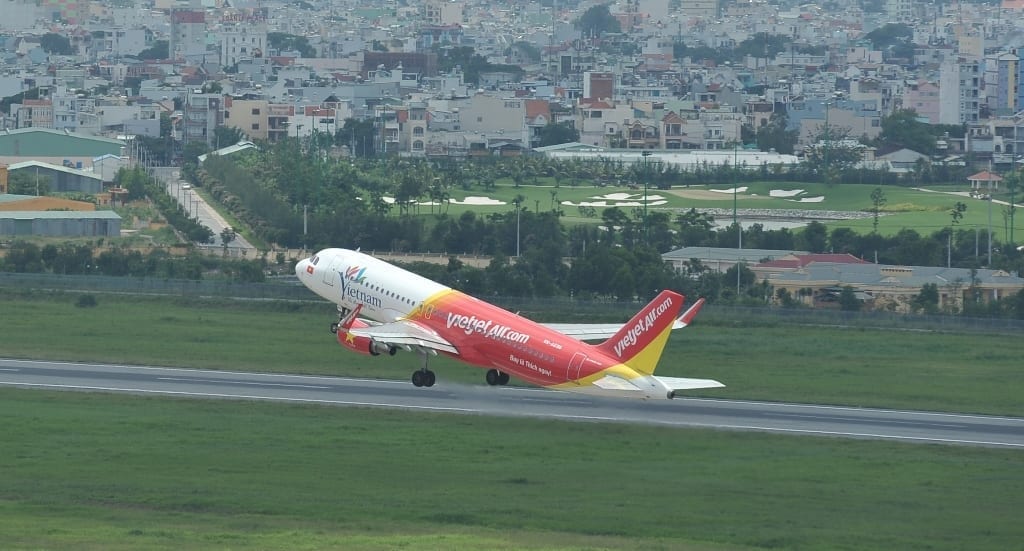
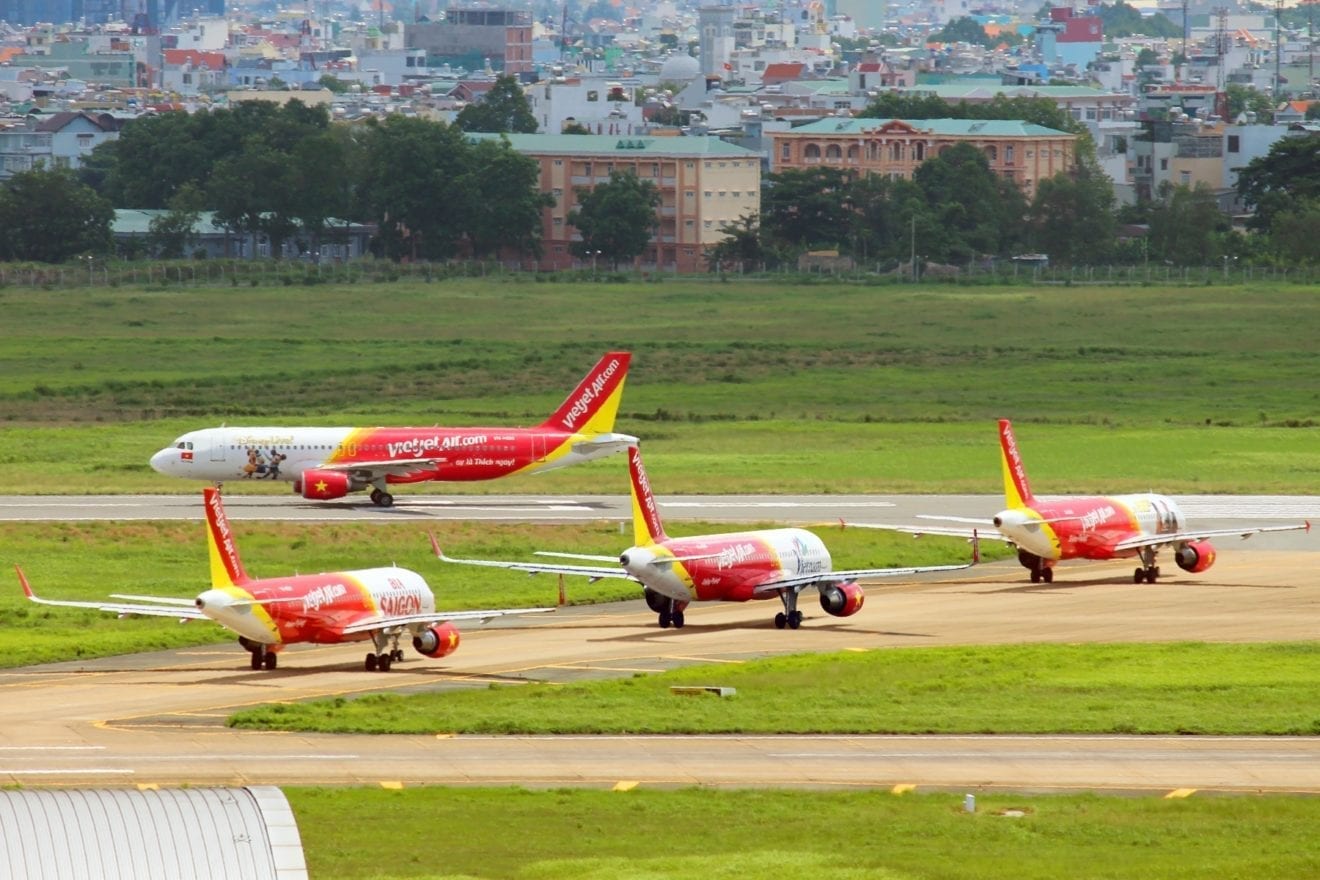
    Vietjet is set to make Brisbane its first Australian long haul destination following the signing of a Memorandum of Understanding (MoU) between the airline and Brisbane Airport Corporation (BAC), Queensland, Australia.

    Scheduled to commence in 2019, the non-stop service between Ho Chi Minh City and Brisbane is expected to boost trade integration and exchange, a move that will greatly serve the interests of the region.

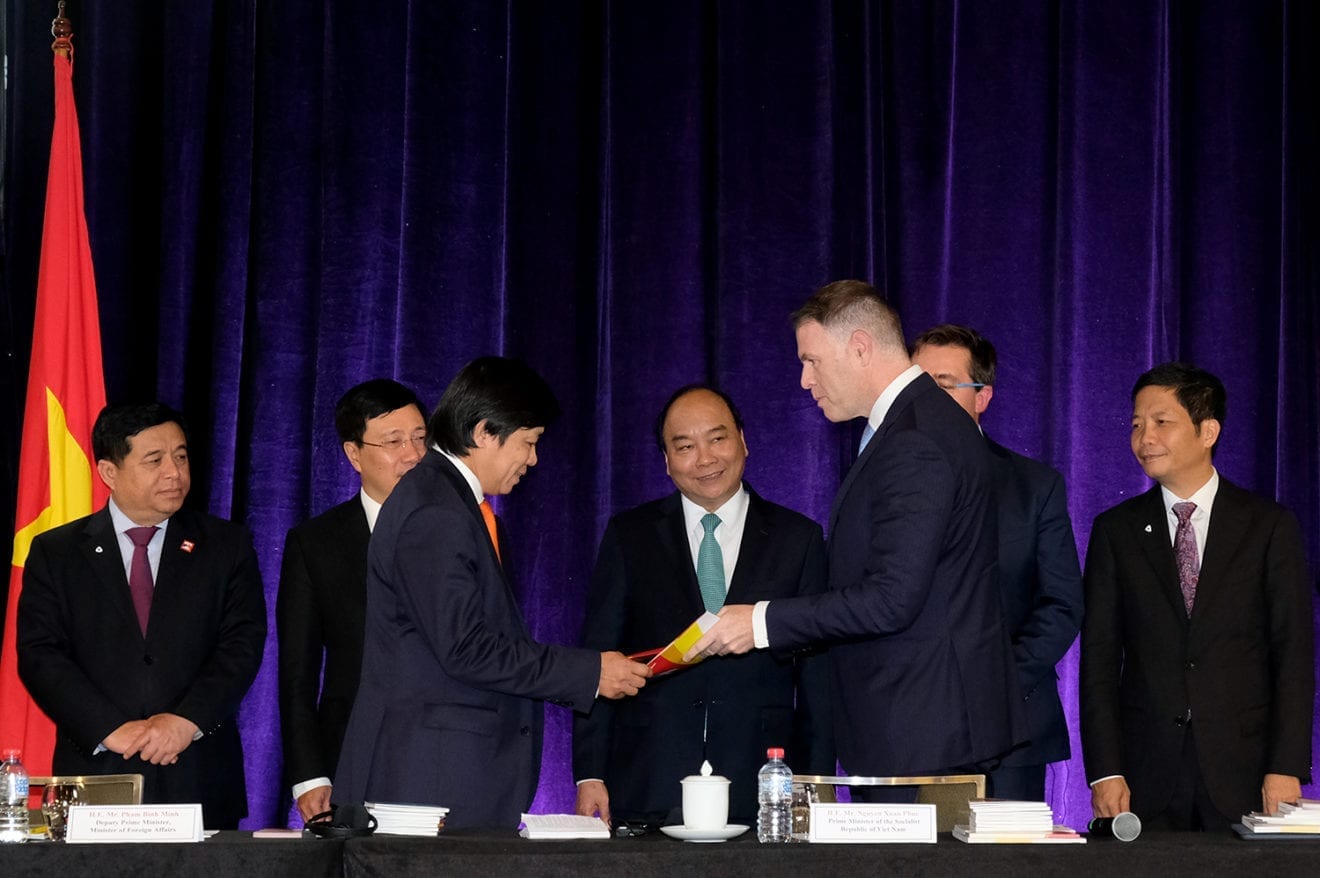
    The signing ceremony which took place in Sydney was witnessed by Vietnam Prime Minister Nguyen Xuan Phuc and other senior leaders of Vietnam and Australia. During which, Vietjet also signed a MoU worth US$609 million with Investec Bank PLC to finance the purchase of five Airbus A321 aircraft at manufacturers’ list price.

    Julieanne Alroe, CEO and Managing Director of BAC said travel between Queensland and Vietnam has been growing at an average 8 per cent per annum over the last five years and this new service would further stimulate the market. “It makes perfect sense for Vietjet to choose Brisbane, Queensland as its very first Australian port for direct flights given Ho Chi Minh City is one of Brisbane’s top five markets without non-stop services. We look forward to welcoming Vietjet to the Brisbane Airport family and further strengthening the ties between Queensland and Vietnam,” she said.

    Vietjet Vice President Nguyen Thi Thuy Binh said, “Vietjet has been well prepared with comfortable, high-quality and friendly services to expand its international flight network to top destinations, connecting Vietnam’s economic and tourism hubs with Asia Pacific countries, including Australia – a popular tourist and business hotspot”.

    “This new route addition presents us with an opportunity to better serve the demands of travelers in Vietnam and the region. We are proud to be the pioneer airline to operate direct services from Vietnam to Brisbane, a dynamic business centre that boasts friendly people, pleasant weather and living conditions that is very attractive for international travelers.”

    Located in Southeast Australia, Brisbane – the capital of the Sunshine State, boasts a population of over 2 million people, making it the third-largest city in Australia. Brisbane’s year-round idyllic subtropical weather, award-winning food and wine, adventurous activities and spectacular scenery has been a major draw-card for many domestic and international travelers, especially those from the Asia Pacific region, including Vietnam.

  • UnionPay To Launch E-Payment Solutions for SMEs at Bangkok Fintech Fair 2018

    UnionPay To Launch E-Payment Solutions for SMEs at Bangkok Fintech Fair 2018

    UnionPay International (UPI), a global payment network, will unveil its low-cost and easy implementable e-payment solutions at the Bangkok FinTech Fair 2018, held from 19 – 20 March 2018. Aimed at providing secure, cost effective and convenient payment solutions to empower small and medium-sized enterprises (SMEs) to capture the opportunities in a rapidly digitalising economy, UnionPay will be showcasing a range of mobile and wearable payment technologies that can be easily adopted by SMEs in Thailand.

    The e-payment solutions on show include:

    Wearable Payments: UnionPay provides a glimpse into the future of payments using Garmin, Huawei, Swatch and Tic wearable products. Consumers can easily digitise their credit or debit cards to enable hands-free payment with a tap of their wearable devices while leaving their cash and cards at home. Merchants can also streamline their payment operations by doing away with the use of cash, easing payment settlement for them.

    Quick Response (QR) Code Payments: QR Code payments offer a quick and easy way to process e-payments.. To make QR payments at participating merchants in Thailand, UnionPay Cardholders can simply download a mobile application that supports UnionPay QR Code payments, link their cards to the app, and use the app to scan the merchant-presented QR Code, or generate a dynamic consumer-presented QR Code to be scanned by the merchant.

    “As Thailand moves towards realising the vision of a cashless society, UnionPay International is working actively to develop and test more innovative e-payment solutions that are tailored to the needs of the SMEs,” said Mr. Wenhui Yang, General Manager, UnionPay International Southeast Asia. “These e-payment solutions are showcased at the Bangkok FinTech Fair 2018, and will pave the way for more payment innovations to come as we look to harnessing technologies like artificial intelligence, big data, biometric authentication and other innovations to enable quicker, safer and more seamless payments for consumers and small businesses alike,” he added.

    In May 2017, UnionPay International announced its plan for a standardised QR code in Thailand to support Bank of Thailand’s cashless drive. Following the announcement, UnionPay will launch a QR Code payment pilot at Soi La Lai Sap Market in Silom in the second quarter of 2018. The QR Code pilot will involve hundreds of merchants, enabling small businesses who traditionally accept cash payments to experience a new low-cost electronic payment alternative, to accelerate Thailand’s push towards a cashless society. With the launch of the pilot, consumers will also be able to enjoy quick, convenient and secure payments by scanning the QR Codes on display at the participating merchants’ outlets at Soi La Lai Sap Market.

    UnionPay has rolled out QR code payment at selected F&B outlets, hotels and retailers in Singapore, Vietnam and 10 other markets globally.

  • Vietjet Bags ‘Best Vietnam Deal’ Award for its Successful IPO in 2017

    Vietjet Bags ‘Best Vietnam Deal’ Award for its Successful IPO in 2017

    Vietjet Aviation Joint Stock Company (HOSE: VJC) was recently presented the ‘Best Vietnam Deal’ award in recognition of its successful IPO held in early 2017 by Finance Asia, Asia’s leading finance publication.

    A true testament to Vietjet’s well executed IPO as well as the airline’s subsequent accomplishments throughout the year, the award successfully lifts Vietjet and other Vietnam based companies’ position in the global capital market.

    The Finance Asia Awards, one of the world’s leading awards in the regional finance industry, recognises the region’s most significant transactions and the financial institutions that advised on them. Mr. Chu Viet Cuong, a member of Vietjet’s Board of Directors, received the award on behalf of the airline.

    Valued at a total of US$164 million, Vietjet’s IPO was executed under the guidance of widely acclaimed law firms and financial institutions over a period of nearly 800 days (listed on HOSE on 28 February 2017) and followed all international Regulation S IPO standards.

    Earlier last year, Vietjet was also honoured at the M&A Awards 2016-2017 as “The IPO Deal of the Year 2017” and “The Company with the Best M&A Information Disclosure” as part of the Vietnam M&A Forum 2017.

    Furthermore, Vietjet’s 2016 annual report also received the Platinum Award at the Vision Awards 2016 held by the League of American Communications Professionals (LACP) in the beginning of 2017. The airline ranked fourth amongst the nominees in the Asia Pacific region and 11th out of 100 worldwide participating businesses. Entitled ‘The Flight to the Future’, the 150-paged annual report, was graded with top scores under the criteria for First Impression, Letter to Shareholders, Report Financials, and sustainable development programs.