Author: Mei Ling Tan

  • Imported beer sales at convenience stores on rise

    Imported beer sales at convenience stores on rise

    Sales of imported beer at South Korean convenience stores have risen sharply, store operators Sunday, as more consumers opt for variety and a growing number of people drink at home.

    BGF Retail Co., the operator of CU, South Korea’s largest convenience store chain, said sales of foreign beer brands accounted for 60.2 percent of the total in the two months of this year.

    The figure has steadily increased from 58.3 percent in 2015, with numbers surpassing the 60 percent mark for the first time ever.

    Industry insiders said the rise of single-person households also boosted the trend of demand for light alcoholic beverages. This has resulted in rising demand for imported beer sales at discount chains and convenience stores.

    “A total of US$250 million worth of beer were imported last year to set a new record,” said a CU official, noting that discounts on imported beer have also reduced the price gap with domestic beers.

    Local convenience stores have recently offered aggressive price promotions for foreign beers to meet strong demand for various flavors beyond the lager-dominated domestic brands.


  • Huawei might rebrand Honor 8 Pro and launch it in China

    Huawei might rebrand Honor 8 Pro and launch it in China

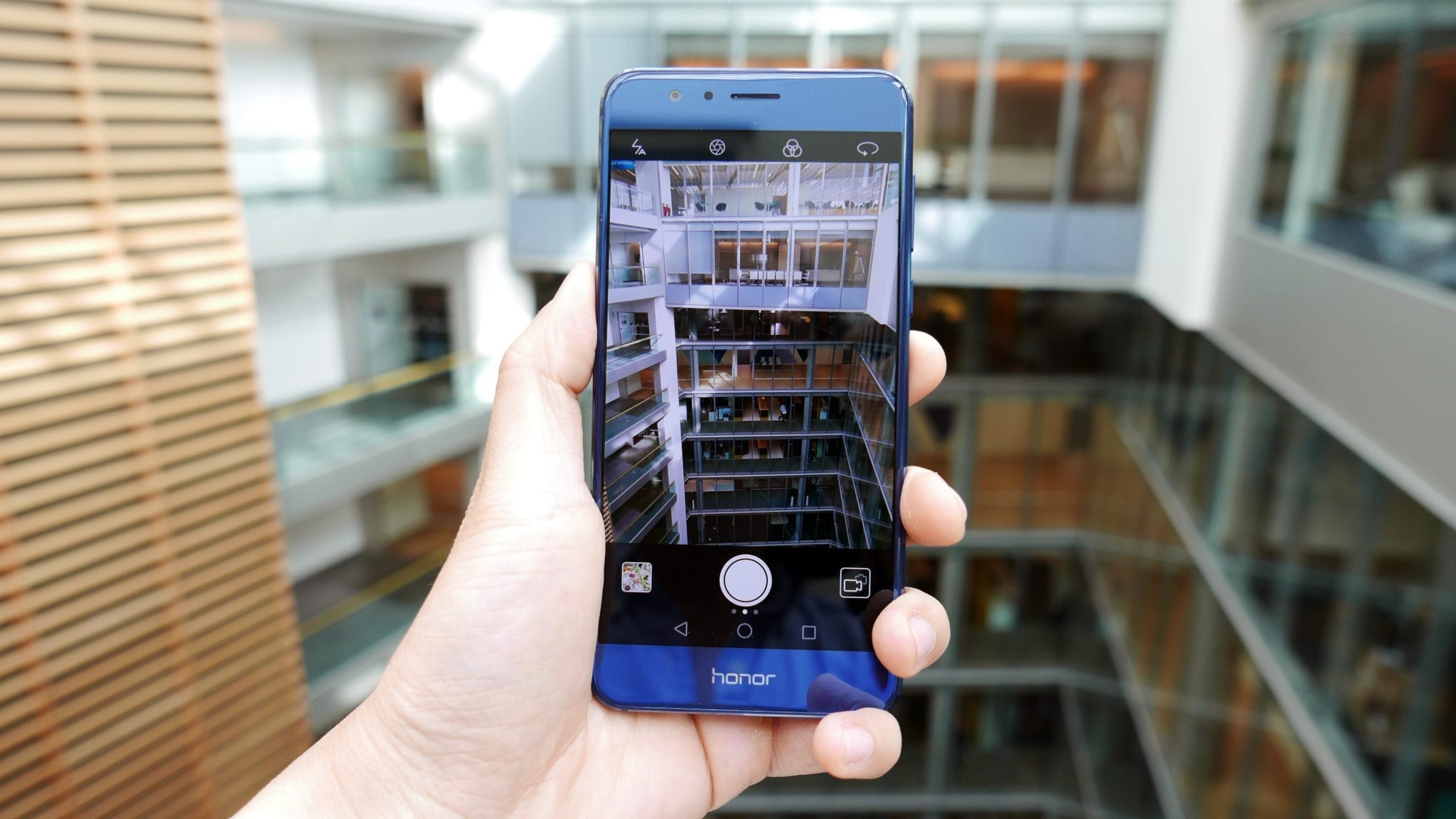
    Huawei, China’s leading smartphone maker, might be planning to rebrand Honor 8 Pro and relaunch it this year. Honor is Huawei’s online-only brand and the company might be putting its own branding on Honor 8 Pro at the time of its launch.

    The details of Huawei’s plan to launch a rebranded version of Honor 8 Pro were tweeted by Evan Blass. There is a possibility that the Chinese smartphone maker might be targeting the offline retail segment with its branding on Honor 8 Pro. To recall, Honor 8 Pro was launched in 2016 as company’s device competing with OnePlus 3 and OnePlus 3T in the premium mid-range segment.

    The Honor 8 Pro was one of the successful devices for Honor brand, and it helped the company establish itself in key markets including India. In terms of features, the Honor 8 Pro gets a 5.7-inch IPS LCD display with a resolution of 2560×1440 pixels. The smartphone is powered by company’s own Kirin 960 chipset coupled with 6GB RAM and 64GB storage.

    The Honor 8 Pro features a dual 12-megapixel rear camera setup with one color sensor and another monochrome sensor. It also offers an 8-megapixel selfie camera with f/2.0 aperture and support for 1080p video recording.

    Other features include Wi-Fi, Bluetooth, GPS, NFC, 4G LTE with VoLTE support. The smartphone was launched with EMUI 5.1 based on Android Nougat, but has since been upgraded to EMUI 8.0 based on Android 8.0 Oreo. The Honor 8 Pro packed a 4,000mAh battery, and was available in white, black and blue color variants.

    Huawei often rebrands Honor-branded smartphones in its home market, and targets them in the offline retail space since Honor already has strong presence in online segment. With rebranded version of Honor 8 Pro, Huawei might be planning to target those who are not getting Honor View10 and will fill a gap in the price segment.

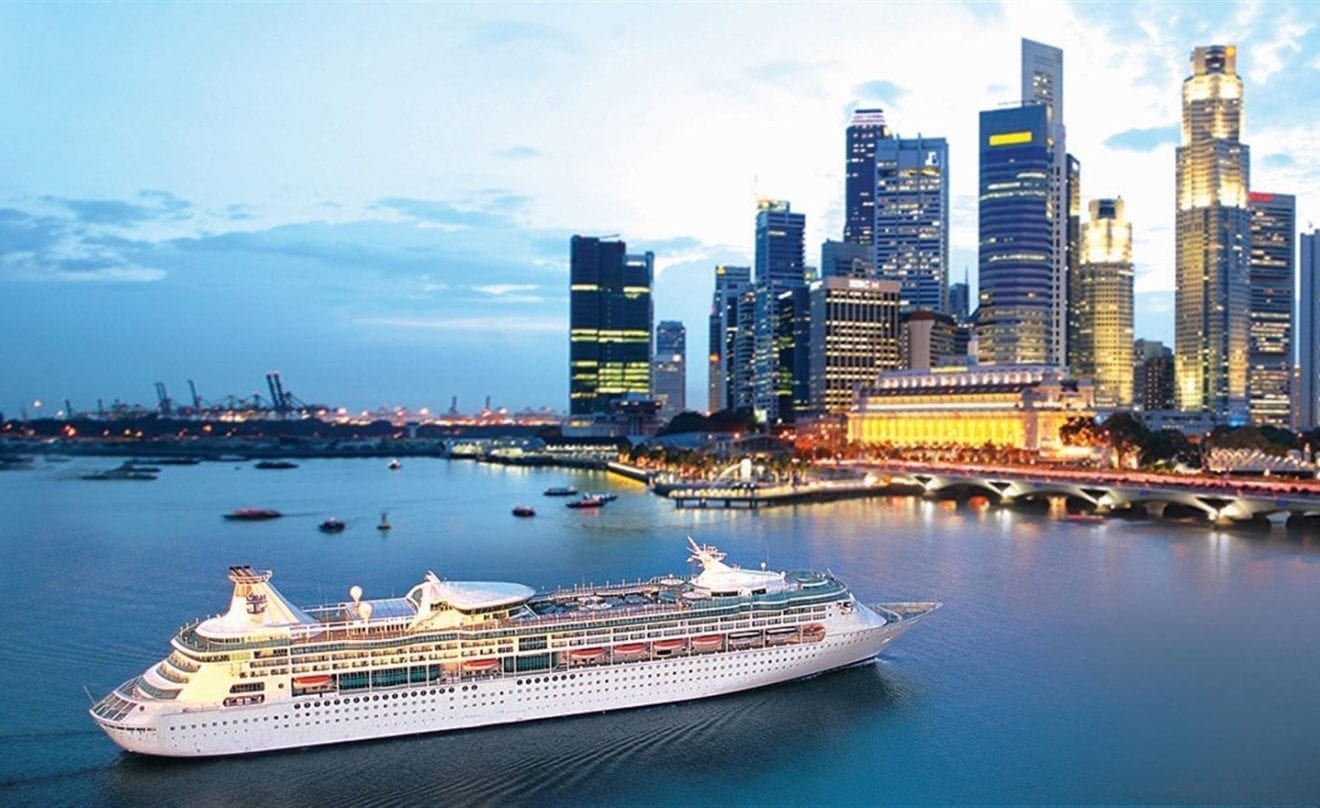
  • Singapore’s economy jumps by 3.6% in 2017

    Singapore’s economy jumps by 3.6% in 2017

    Goods producing industries push the growth with 5.7% increase.

    Singapore economy grew by 3.6% for the whole year of 2017, faster than 2.4% growth in 2016.

    Goods producing industries, which include manufacturing and construction, posted the highest growth with 5.7%.

    The manufacturing sector expanded by 10.1%, which is pushed by growth in the electronics and precision engineering clusters.

    The construction sector, on the other hand, shrank by 8.4% from 1.9% growth in 2016. The output was pulled down by 29.1% decline in private residential and private industrial construction works.

    Meanwhile, service producing industries grew by 2.8% driven by increase in the finance & insurance (4.8%), transportation & storage (4.8%), and wholesale & retail trade (2.3%).

  • Softbank 9m17 Profit Grows 20 Procent

    Softbank 9m17 Profit Grows 20 Procent

    Japan’s SoftBank has reported a solid 20% increase in net profit for the nine  months ending in December to 1.01 trillion yen ($9.35 billion), partly as a result of cost cutting at US subsidiary Sprint.

    Net sales for the first nine months of SoftBank’s financial year grew 3.5% to 6.58 trillion yen, with revenue increasing across all the company’s market segments.

    Domestic telecoms revenue grew slightly to 2.406 trillion yen despite a 1.4% decrease in telecoms service revenue to 1.8 trillion yen.

    Mobile service revenue fell 5% to 1.36 trillion yen, but broadband revenue improved 23.2% to 240.02 billion yen and fixed telecommunications revenue edged up 0.5% to 200.86 billion yen.

    Smartphone net additions for the nine-month period grew to 1.13 million, with the operator’s total mobile customer base growing to just under 33 million, while churn fell slightly to 0.84%.

    SoftBank’s FTTH subscriber base meanwhile reached 4.67 million, up from 3.14 million as of the end of 2016.

    Net sales at Sprint increased 2.6% to 2.72 trillion yen, while the unit’s adjusted ebitda grew 19.1% to 938.8 trillion won on the back of cost reduction efforts that resulted in nearly $1 billion in savings. Net sales from Yahoo Japan increased from 630.8 billion yen to 651.5 billion yen.

  • All International Flights From Jakarta Move to Soekarno-Hatta’s Terminal 3

    All International Flights From Jakarta Move to Soekarno-Hatta’s Terminal 3

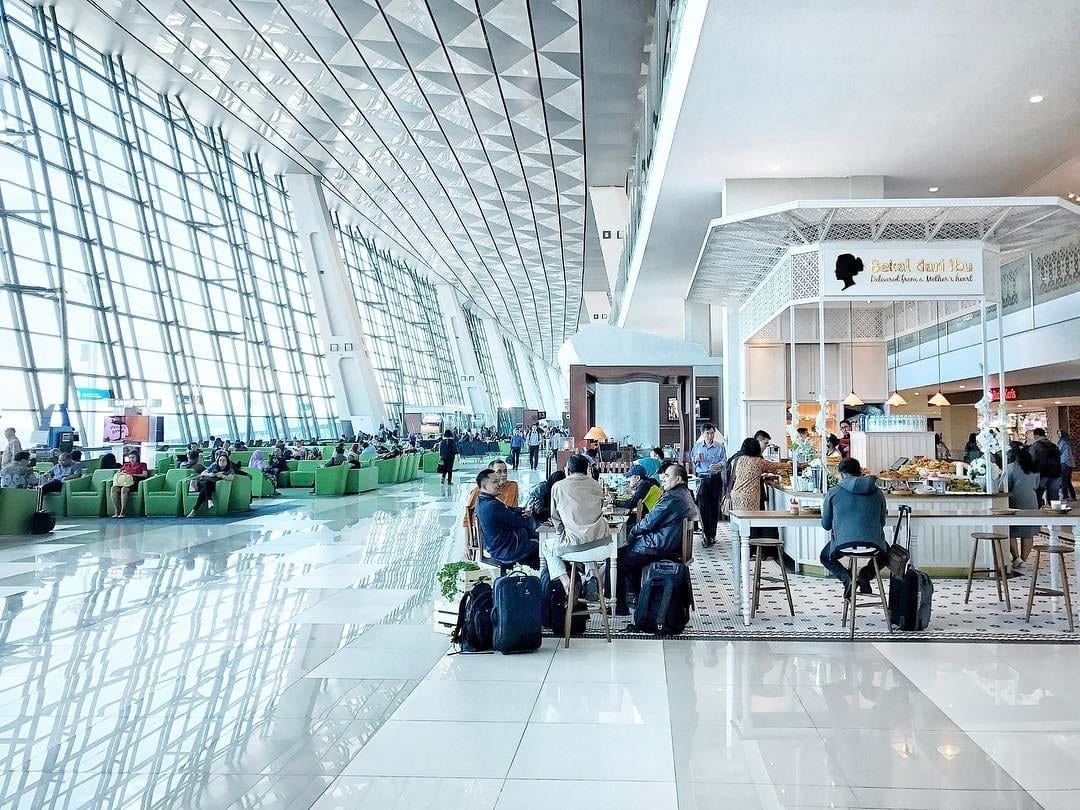
    Soekarno-Hatta International Airport, Indonesia’s largest and busiest hub near Jakarta, by June will move all international flights to Terminal 3.

    The terminal was opened in August, after three years of construction works to expand it, which cost Rp 7 trillion ($516 million). It is now significantly bigger than the other two terminals.

    It can serve up to 25 million flights a year, spans 420,000 square meters and is 2.4 kilometers long.

    “We’re are going to have all international flights moved to Terminal 3 by June,” Yado Yarismano, vice president of the airport’s operator Angkasa Pura II (AP II), said on Wednesday (14/02).

    He added that now, when all expansion works are complete, the terminal needs to be assessed by the Transportation Ministry’s directorate general of civil aviation to serve all international flights.

    Revamp of Terminal 1 and Terminal 2

    The airport’s Terminal 1 and Terminal 2 will also be expanded to accommodate together 36 million passengers a year — twice more than before.

    Contractors will soon be invited to bid to partake in the Rp 3.2 trillion project.

    “The bidding for Terminal 1 starts in March, while for Terminal 2 in May, so construction works at the first one will start sooner,” AP II president director Muhammad Awaluddin said.

    He added that both terminals will be finished by August 2019.

    “The revamp won’t disrupt our operations, as it will be done in sections, so the terminals will still serve passengers. We also won’t change their architecture, we will just add more room,” Awaluddin added.

    AP II is now also preparing to build Terminal 4 of the size and capacity of Terminal 3.

  • Disney And Alibaba’s Youku Sign Licensing Deal For Animation Shows

    Disney And Alibaba’s Youku Sign Licensing Deal For Animation Shows

    Chinese online retail giant Alibaba and U.S. media and entertainment giant Walt Disney have inked a licensing deal which will see animation series from the latter become available on the Youku online video streaming service owned by the former. The multi-year agreement was signed by a unit of Disney, Buena Vista International, and Alibaba Digital Media and Entertainment Group.

    Besides subscribers of the Youku streaming service, Chinese households numbering nearly 30 million who use the set-top boxes of Alibaba as well as SmartTV platforms will access the Disney content. Episodes numbering over 1,000 are expected to be streamed on Youku. Besides the television shows Disney films such as Mulan, Frozen, Beauty and the Beast, and Pirates of the Caribbean are also part of the deal.

    More international content

    “We look forward to further cooperation with global entertainment companies, which will help increase our penetration in the family entertainment segment and strengthen Youku’s position as a leading multi-screen entertainment and media platform in China,” Youku’s president, Yang Weidong, said in a statement.

    Other U.S. entertainment companies that Youku has previously struck licensing deals with include NBCUniversal, Fox, Paramount and Warner Bros. Youku also has a licensing deal with Sony Pictures Television. Last year in November Youku inked a licensing agreement with Netflix allowing its subscribers to view the show Day and Night on its platform. Per Alibaba, about 580 devices are reached by Youku daily and this translates to about 1.2 billion views.

    Joint venture

    Two years ago Walt Disney and Alibaba launched a joint venture known as DisneyLife which gave the Chinese online access to content from the media and entertainment giant. However regulators shut down DisneyLife after months after launch. Last year in May Walt Disney set up an online store on the Alibaba-owned e-commerce website, Tmall, to sell its merchandise in China.

    The deal with Youku comes at a time when Walt Disney is preparing to unveil an online video streaming service in the United States as consumers increasingly abandon traditional cable and satellite services for platforms such as Netflix. The chief executive officer of Walt Disney, Bob Iger, has indicated that the planned online streaming platform won’t be expensive to start since the media and entertainment giant already has lots of existing content.

    Alibaba’s licensing agreement with Disney coincides with the Chinese online retail giant acquiring a 15% in retail firm Easyhome as it expands on its ‘click and mortar’ retailing strategy. Easyhome has a total of 223 brick and mortar stores in China.

  • Bursa Malaysia to trade firmer this week

    Bursa Malaysia to trade firmer this week

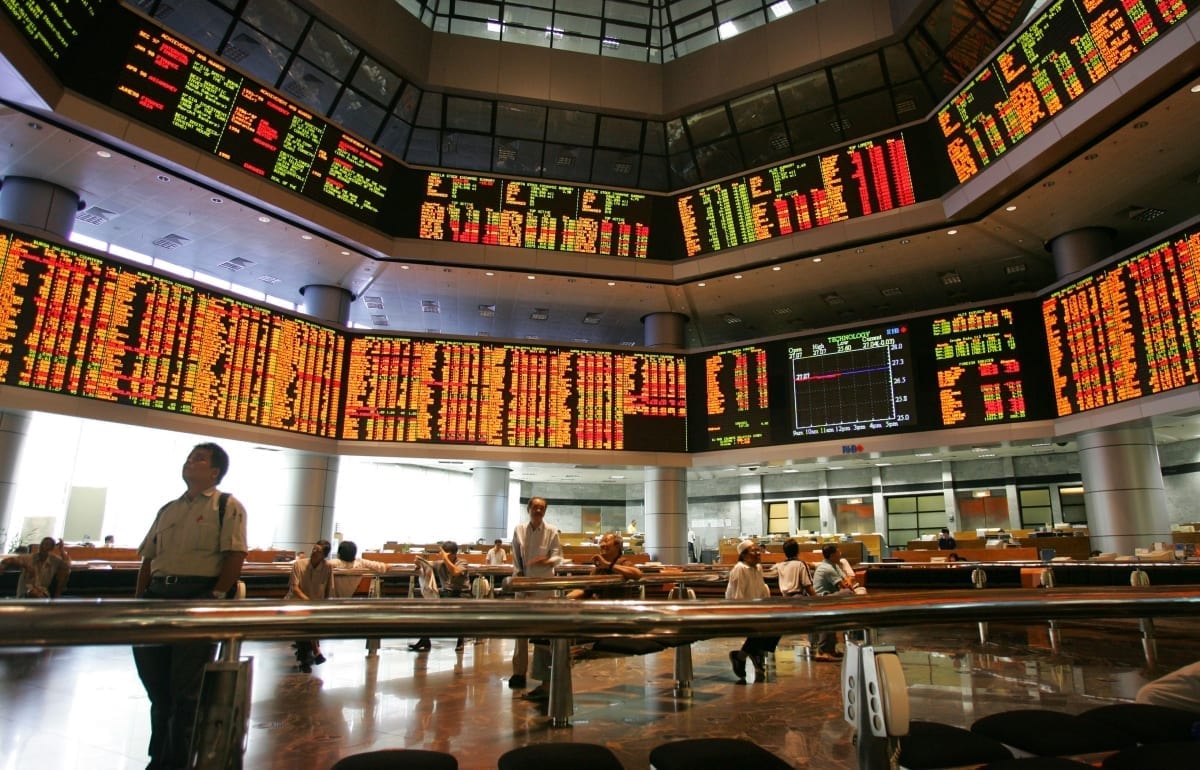
    Bursa Malaysia is expected to trade firmer next week, taking cue from the encouraging 2017 gross domestic product (GDP) data released on Wednesday.

    Affin Hwang Investment Bank Vice-President/Head of Retail Research, Datuk Dr Nazri Khan Adam Khan said the 5.9% GDP growth, deemed as positive and taking on the good momentum from last year, would improve investors’ appetite on the local bourse.

    “We can see that the volume has gone up too, which means we have the momentum to trend higher next week.

    “The benchmark FTSE Bursa Malaysia KLCI (FBM KLCI) is also likely to touch the 1,860 points level next week,” he said.

    Bank Negara Malaysia in a statement said Malaysia’s GDP expanded 5.9% in the fourth quarter of 2017 from a year earlier, driven mainly by private sector demand, with support from the external sector, while the 2017 full-year GDP grew 5.9% against the 4.2% expansion in 2016.

    The central bank said the outlook for 2018 remained favourable, supported by domestic demand.

    Nazri said that the ringgit is also expected to be higher next week amid a stronger current-account surplus of RM12.9 billion in the fourth quarter last year.

    “The rebound in the ringgit to currently quote at 3.8-level, recovery in oil prices as well as positive sentiment on global equity markets, will boost the FBM KLCI’s performance and increase investors’ confidence,” he added.

    Meanwhile, Maybank Investment Bank in a note said in the first half of 2018 (1H2018) Market Outlook session, it expects fiscal stimulus pre-GE14 (General Election-14) and Bank Negara’s overnight policy rate (OPR) hike to be the two main thematics driving investment.

    “But for the longer term play, the focus is on multi-year orderbook replenishment in infrastructure construction, tourism and Look East Malaysia.

    “Fiscal stimulus in the lead up to the general election will be those in the consumer sector as a boost to disposal income is expected to continue and will be front loaded in 1H2018.

    ‘While for the OPR, it will benefit banks and it is believed, contractors will have the highest potential of winning jobs for the upcoming megaworks,” it added.

    On a Thursday-to-Friday basis, the benchmark FTSE Bursa Malaysia KLCI (FBM KLCI) finished 18.46 points higher at 1,838.28.

    The FBM Emas Index jumped 142.43 points to 13,117.49, the FBMT100 Index appreciated 127.74 points to 12,829.58 and the FBM Emas Syariah Index fell 132.54 points to 13,145.10.

    On a sectoral basis, the Plantation Index gained 50.94 points to 7,996.97, the Industrial Index declined 18.70 points to 3,202.66, while the Finance Index increased 137.94 points to 17,594.41.

    Weekly turnover went down to 6.46 billion units worth RM7.76 billion from 15.68 billion units valued at RM16.43 billion.

    Main market volume fell to 4.08 billion shares valued at 7.30 billion from 10.01 billion units worth RM15.42 billion.

    Warrant turnover decreased to 1.24 billion units worth RM242.26 million from 2.79 billion units valued at RM566.26 million last week.

    The ACE market slipped to 1.10 billion shares worth RM205.73 million from 2.83 billion units worth RM432.96 million previously.

    The local market was closed on Friday for the Chinese New Year celebration.

    The gold futures contract on Bursa Malaysia Derivatives is likely to extend gains next week as investors remain cautious on global equity markets and a weaker US dollar, said an analyst.

    OANDA Corp Head of Trading for Asia Pacific, Stephen Innes said higher US inflation combined with the US dollar exhibiting zero correlation to higher interest rates amidst burdening dual deficits, should play out favourably for the gold markets.

    “Gold is in a perfect spot to extend gains. Higher US inflation as expressed through the higher consumer price index data is positive. We could see a more significant move into gold if equity prices start to lose traction,” he said.

    Another dealer said Bursa gold futures market might track closely the movement of COMEX gold’s Friday close to get direction of the week.

    The local gold market traded higher throughout the holiday shortened week in line with COMEX gold.

    The market was traded half-day on Thursday and closed on Friday for the Chinese New Year celebration.

    On a Thursday-to-Friday basis, February 2018 increased 46 ticks to RM169.40 a gramme, March 2018 rose 37 ticks to RM169.65 a grame, April 2018 jumped 49 ticks to RM170.45 a gramme and May 2018 went up 37 ticks to RM170.20 a gramme respectively.

    Weekly turnover eased to 15 lots worth RM286,365 from last week’s 26 lots valued at RM436,615, while open interest eased slightly to 72 contracts from 75 contracts.

  • From Smartphones To Smarthomes, Xiaomi’s Resurgence As A Global Hardware Leader

    From Smartphones To Smarthomes, Xiaomi’s Resurgence As A Global Hardware Leader

    Xiaomi relied a lot on online sales in its first years, selling competitively-equipped smartphones at cost. With that strategy, Xiaomi managed to rise to the top of the smartphone charts in China and India within four years of its establishment, becoming the third largest smartphone maker in the world by 2014.

    However, the rising giant hit a rough patch at home in 2015, dealing with a crowded, slowing Chinese market. Xiaomi’s smartphone shipments grew by 226 percent in 2014, slowing to just 17.6 percent growth in 2015. Shipment volume declined in 2016 to a rumored 41 million (down from over 70 million in 2015) scaling back global expansion and giving its investors something to worry about.

    That setback didn’t last. Xiaomi has since expanded its smartphone shipments to Europe, becoming the fourth largest company behind Samsung, Huawei, and Apple in Central and Eastern Europe in Q2 2017.

    But the world outside of China was not enough. As the world’s largest smartphone market, China is strategically important to Xiaomi, but its strategies for early success in this ever-changing region were unsustainable. Today we’ll explore how the combination of platform, offline retail, and marketing expansion has allowed Xiaomi to regain traction back in China and expand globally.

    Xiaomi’s China Struggle

    Xiaomi’s 2015 stagnation and 2016 shipment decline was due to a number of factors. Slowed growth in the Chinese smartphone market in 2015, for one, contributed to the setback. However, the changing competitive landscape in the region was possibly the unicorn’s biggest challenge.

    Competitive Advantage Disappears

    Xiaomi maintained a strategy of flash sales and relying on its loyal user base to bypass traditional marketing expenses combined with online sales to forgo the costs of brick and mortar retail stores.

    Xiaomi’s business strategy proved to be a strength in its first couple of years, but contributed to its struggle in 2015 and 2016 as the flash sales system has for other e-commerce companies in the past. Furthermore, with online sales its primary means of attracting users, Xiaomi potentially neglected key consumers in lower-tier cities and rural areas of China, where individuals relied more on local retailers because of logistical barriers.

    Emerging players like Oppo and Vivo filled the gap left by Xiaomi’s absence in these areas in 2015 and 2016, selling low-end smartphones, but also offering offline retail stores in rural areas. Oppo now has a reported 200,000 brick and mortar retailers in rural China.

    Furthermore, unlike Xiaomi, with an offline approach to sales and no online fanbase, Vivo and Oppo relied on aggressive advertising and retail subsidies to market their products and gain users. This strategy worked well for the two companies. Oppo became the leading smartphone supplier in China in 2016, with a year over year growth in shipments of 122.2 percent.

    After Xiaomi’s slowed growth in 2015, the company had to prove its viability to investors, especially with a $45 billion valuation riding on its back. It declined to release its sales numbers in 2016, with CEO Lei Jun admitting that the company “grew too fast and drew on some long-term growth.” Xiaomi refocused on switching strategies, playing off of its branding as a company for the Internet of Things (IoT), responding to retail challenges, and refocusing its marketing techniques.

    Xiaomi Responds With Investments, Brick And Mortar, And Celebrities

    As he stated stated in the early days of the company, Lei Jun always claimed to imagine Xiaomi as less of a smartphone provider and more of a smart home device innovator. Xiaomi started selling TVs back in 2014, adding to the list of non-smartphone items that it had already offered, including portable batteries, set-top boxes, and fitness trackers. The company also developed online media and gaming content.

    With players like Oppo, Vivo, Huawei, and Lenovo taking note of the company’s low-end smartphone approach, Xiaomi aimed to do more to brand itself as a tech company for the Internet of Things.

    In 2016, it launched a mobile payment service, an electric bicycle, a thin MacBook Air-like computer (the creatively-named Mi Notebook Air), a drone, a smartphone-connected rice cooker, a new, thinner MiTV, and an electric ukulele. Xiaomi’s Mainland China website is filled with connected devices, including everything from smartphone-controlled water purifiers and vacuum cleaners to story-telling kids toys and GoPro-like cameras—all connected through the Xiaomi Mi Home app exclusively on its smartphones.

    Xiaomi managed to build out its smart home platform by investing in hardware-focused startups and “giving them access to its designers, marketers, and massive supply chain in exchange for a 10- to 20-percent stake and the right to brand and sell those products.” This outsourcing strategy allowed the company to develop its smart home ecosystem. Further, the company maintained its goal of selling its flagship, increasingly innovative smartphones at lower prices than its competitors, as its earnings are driven by its other devices.

    Offering the lowest priced smartphone was key to smartphone shipment growth, but by linking its smart ecosystem exclusively through its smartphones, Xiaomi could drive growth even more. However, if the company wanted to compete with Oppo and Vivo, it could no longer neglect those retail customers outside of the urban landscape. The second part of Xiaomi’s comeback involved a huge platform shift.

    Brick And Mortar Expansion

    “Xiaomi has great ambitions, and we are not satisfied with just being an e-commerce smartphone brand,” Jun told Techcrunch in 2017. “So we have to upgrade our retail model, and incorporate offline retail for a new retail strategy.”

    The company that was built upon a platform that eschewed brick and mortar retail decided to bring its sales offline.

    Following through with this plan, by the end of 2016 Xiaomi opened more than 50 Mi Home stores in Mainland China. In 2017 it expanded that effort, opening stores in major metropolitan areas, like Beijing, with plans to launch 1,000 stores in China, and 2,000 stores globally by 2019.

    Xiaomi differentiated its brick and mortar effort from that of Oppo, Vivo, Lenovo and Huawei by essentially combining Apple’s physical retail setup with product variety. It packed its stores with its smartphones and new smart home devices to entice customers to return to the store frequently and spend more time and money buying its products.

    The People’s Smartphone

    Xiaomi met its new retail and platform expansion projects with a reinvigorated marketing approach– a marked shift from relying on its online fanbase. An IDC analyst said that the company is directing more of its funds to marketing and advertising.  In 2016, more billboards and ads popped up in public areas calling its Redmi line of smartphones the “People’s Smartphone.” In July 2017, the company unveiled its new dual-camera flagship the Mi 5X along with a flashy endorsement by Chinese musical sensation, Kris Wu.

    With its shifted strategy, Xiaomi began to regain some ground in the Chinese market in 2017.

    Looking at quarterly data in the Chinese smartphone industry, Canalys analyst Hattie He told Crunchbase News that the company led in the under $200 market in China in Q3 2017 with 22 percent of the market share in the segment. In Q4 it ranked second in that category by a small margin, with Huawei taking 25 percent and Xiaomi 24 percent, followed by Vivo and Oppo at 12 and 8 percent, respectively.

    Even so, Apple overtook Xiaomi in 2017 for fourth place in China. With a decline in smartphone sales in the region in 2017, competition is only going to heat up in the industry. Companies that heavily rely on their home market for cashflow will likely face significant difficulties in 2018, with Lenovo and ZTE refocusing on the Chinese market.

    Hattie expects Xiaomi to stick to its current strategy.

    “Xiaomi will keep paying attention to in-house hardware investments, including smartphones and IoT devices… [It] will partner with other well-known hardware and software companies to go into different sectors and provide customized experiences for [the Chinese] market,” Hattie explained.

    She also expects the company to continue its online-offline approach by establishing more MiHome stores in sub-tier cities in 2018 to reach a broad consumer base and build a reliable brand image.

    Xiaomi’s Global Expansion

    In 2017, Xiaomi’s rebound was mirrored in its efforts and successes abroad. After scaling back its global efforts in 2016, the company has since expanded again to markets in South East Asia and elsewhere, taking a top five spot in Central and Eastern Europe in 2017. It increased its offline activity and partnered with local smart device companies in India in 2017, and overtook Samsung as the lead player in the region that year.

    Of course, even with these global wins, the company has a long way to go to compete with Apple in the West. It launched an online store for the U.S. and has been selling its globally successful fitness wearable and battery packs in the U.S. since 2015. It started selling set-top boxes in Walmarts beginning in 2016, and in November 2017 released a few of its products on Amazon.

    However, expanding smartphone sales to the U.S. is something the company has considered carefully. If Xiaomi entered the U.S., it would compete with Apple and Google in their home markets, but that isn’t its biggest problem. Xiaomi’s past experiences with the companies regarding intellectual property and design theft mean that the company will have to come into the market patented up and prepared for legal backlash– something Xiaomi has dealt with before. When it entered India in 2014, its sales were initially halted when it was slapped with an IP lawsuit. Coming from China, where regulations surrounding IP are significantly more lax, to the U.S. will be quite a shift.

    Beyond IP, the company will also have to face the mounting security concerns surrounding Chinese tech companies which have intensified over the past few months. As we reported, a move to the U.S. didn’t work out for Xiaomi competitor Huawei, who was abandoned by AT&T before CES 2018. Xiaomi has made efforts in the past to overcome the narrative surrounding Chinese companies by placing the data of global users in data centers outside of China. However, with the U.S. government increasingly concerned about cybersecurity, it isn’t likely that carriers will be willing to partner with Chinese companies in the near future.

    Despite these challenges, Xiaomi may prove to be the dark horse in a global competition with Apple, Google, and Samsung, as it continues to dominate in markets like India where highly-priced devices aren’t the consumer’s choice. Focusing on becoming the “People’s Smarthome” of emerging communities around the world may very well be its winning

  • Spanish wine made for Asia

    Spanish wine made for Asia

    The practice of dining together and sharing plates is something Asian and Spanish cultures have in common.

    So Spanish winemaker Alejandro Garcia Lopez, director of Rioja winery Vina Pomal, wanted to make a wine to suit the shared dining experience in Asia. He created the Vina Pomal Edicion Limitada 2012, which will be sold exclusively in Asian markets, including Singapore, China, Japan and Indonesia.

    “In Asia, you have different profiles of food with spices, flavours and aromas, so to complement that, I wanted to make a special-edition wine with a good structure and body, and the potential to age,” he tells The Sunday Times during a promotional trip in Singapore last week. “We also wanted the wine to be easy to pair with food.”

    Vina Pomal is the flagship label of Bodegas Bilbainas, one of Rioja’s oldest wine estates. Only 10,000 bottles of the Edicion Limitada – made of 100 per cent Tempranillo grapes – have been produced.

    The grapes are sourced from only old vines that are between 45 and 55 years old and planted in the clay and limestone soil typical of the region. Some of the land on which they are grown has been worked by the winery since 1904.

    The climate of the Riojan capital of Haro, where the winery is located, is also influenced by the Atlantic Ocean, which lies 160km to the north.

    “So the grapes have a really long ripening process because of the climate, which makes the tannins very soft,” Mr Lopez, 40, says.

    The grapes are handpicked from three different vineyards – they add up to no more than 2ha of land – within the 250ha property. Each vineyard contributes a different quality, including fruitiness and minerality, to the blend.

    Even the ageing process had to be tailored to these grapes. Since the grapes were from old vines, Mr Lopez decided to age the wine in French oak barrels instead of American ones that are typically used for Rioja wines. For Edicion Limitada, 70 per cent of the wine is aged in new oak barrels and the remainder in barrels that have been used for a year.

    French oak, Mr Lopez notes, results in a wine “with more structure and flavours like tobacco, wood and spices”.

    After 18 months in the barrel, the wine spends another year ageing in the bottle.

    The result is a deeply aromatic Rioja with black fruits and spiced flavours on the nose, and a velvety soft texture and long finish on the palate. Even though Edicion Limitada has spent six years ageing, the wine still tastes fresh.

    It also does not adhere strictly to Rioja’s wine classification, which is based on how long the wine spends in the barrel. One that is labelled Rioja spends only a few months in oak before it is bottled, while Gran Reserva must be aged in oak for at least two years and then spend three more years in the bottle.

    But Mr Lopez did not want to feel restricted when creating the Edicion Limitada.

    “We wanted to feel free as winemakers to do what the wine needs, not what the rules require,” he says.

    While the wine can be drunk immediately, he adds that it also has great ageing potential.

    “It is made of a selection from our best vineyards and, because it spends such a long time in the barrel and bottle, it can also be opened in the next 10 to 20 years,” he says.

    Vina Pomal Edicion Limitada 2012 has a recommended retail price of $85 and can be ordered from its distributor, Singapore Beverages, or at Cellarbration stores in Circular Road, Seletar Mall, Ubi Road and Marina Square.

  • Chinese tourists drive WeChat Pay growth in Philippines

    Chinese tourists drive WeChat Pay growth in Philippines

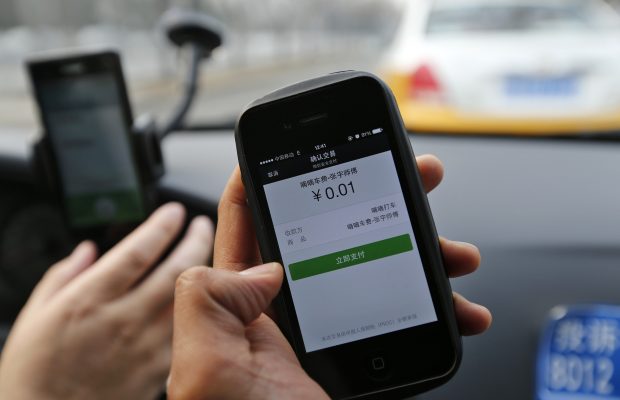
    Chinese tourists are helping drive the growth of cashless payments using Tencent’s WeChat in the Philippines, according to its Filipino partner, Asia United Bank.

    Chinese tourist arrivals are projected to hit 1 million. Staying in the country for 8 days on average, WeChat Pay in the Philippines can generate up to P48 billion in revenue, said AUB vice president and credit card business head Mags Vazquez Surtida.

    “The transaction counts are increasing. The transaction values are increasing. We can see more merchants. We see the growth happening on a daily basis,” Surtida said.

    WeChat Pay is accepted in 1,000 retail outlets in the Philippines, including hotels and restaurants, Surtida said. The number of daily transactions recently reached up to 2,500 in the run-up to the Chinese New Year, twice the average per day, she said.

    The value of single transactions were as high as P90,000, recorded in Boracay. Diners spend P6,000 to P12,000 while shoppers pay P4,000 to P7,000 using WeChat Pay, she said, Surtida said.

    Surtida said AUB hoped to grow the number of WeChat Pay merchants in the Philippines to 5,000 by March.

  • Aidijuma Colors Group, Hijup, acquire majority stake in United Kingdom’s e-commerce retailer, Haute Elan

    Aidijuma Colors Group, Hijup, acquire majority stake in United Kingdom’s e-commerce retailer, Haute Elan

    Aidijuma Colors Group of Companies — which owns the popular Malaysian ‘Bawal’ hijab range under the Aidijuma label — together with its modest wear e-commerce site Hijup have acquired a majority stake in UK-based modest fashion and e-commerce company Haute Elan ahead of Hijup’s expansion into the UK market.

    Established in 2012, modest fashion brand Aidijuma adopts the creative business model of online merging offline to offer the best possible experience to customers.

    With its omnichannel strategy, Aidjuma is the only brand in Malaysia that offers online shopping and owns 12 retail concept stores nationwide, complemented by 12 Scarf Machine.send.sell.story mobile concept stores to provide a seamless experience for consumers.

    With plans for listing by 2020, the latest venture capital investment for Aidijuma Colors Group is in Haute Elan, which is also the organiser of the London Modest Fashion Week – the UK’s very first modest fashion week — that was held for the first time last year that brought together more than forty designers from countries including the United Arab Emirates, Saudi Arabia, Egypt, Turkey and -Malaysia.

    Modest fashion has become increasingly popular among millennial Muslim women worldwide who see it as a way to dress stylishly.

    “Modest fashion is a growing trend that offers women options, choices and freedom to express themselves while being fashionable which mass-market retailers and designers are already taking notice of the market’s potential so we are investing in the future by taking a stake in it now. We look forward to build strategic business partnerships around the world to expand this business model for Modest Fashion globally,” said Aidijuma Colors Group Chief Executive Officer and founder, Datin Norjuma Habib Mohamed.

    The latest investment in Haute Elan brings Aidijuma Colors Group’s total venture capital investment amount to date to US$20 million, which includes stakes in Brunei’s event organising company and retailer BIFASH, Singapore e-retailer MODESTyle, Malaysian cosmetic and skincare brands Simplysiti and Zawara, as well as Indonesia’s Hijup.com in which it also controls.

  • Braccialini declared bankrupt

    Braccialini declared bankrupt

    A court in Florence has declared the Italian fashion brand Braccialini bankrupt after rejecting a request for an arrangement with creditors.

    The request was filed by the fashion house in June 2016 but the tribunal on Wednesday ruled that in Braccialini’s case there was the “technical impossibility” of managing a company that is “at this point insolvent”.

    The tribunal said that “several uncertainties weighed on the arrangement”, not enabling to “ensure the payment of the minimum 20%” to creditors. Luxury handbag-makers Braccialini and Tua in 2017 were bought by Arezzo-based jewelry and luxury brand Graziella Group, which is continuing production.

    Braccialini Spa had retained property of real estate, a depot and other brands after the acquisition, all assets that will now be managed by a trustee.

    The decision was reportedly affected by the issuing in 2016 of invoices to four suppliers, all Chinese creditors, according to court documents.

    The agreement included the “duplication of invoices” and delayed payment of money Braccialini owed to the four Chinese suppliers, among other things – “operations worth hundreds of thousands of euros” allegedly made right before and after the request for an arrangement with creditors, according to the ruling.

    Braccialini’s attorneys have denied that the company forged invoices, insisting it pursued the “interest of all creditors” and its over 80 employees.
    Meanwhile prosecutors in Florence are investigating 25 people, including members of the company’s board and trustees between 2011 and 2014, when the company’s crisis worsened.

    The label, known for its colorful and trendy handbags and accessories, celebrated its 60th anniversary in 2013 with a new museum inside its headquarters in Scandicci, near Florence.

    The family-run business was first launched by Carla Braccialini in 1953 with a collection that included dresses and hats, as well as bags.
    It quickly became popular thanks to its combination of different materials and bold take on patterns and color.

    Luxury purse maker was bought by Graziella Group in 2017

  • Further steps needed to thwart EU’s move to ban palm oil in biofuels

    Further steps needed to thwart EU’s move to ban palm oil in biofuels

    More engagements, consultations and follow-up actions are needed to remove the European Union’s (EU) threat to ban palm oil use in biofuels, said industry veteran Tan Sri Dr Yusof Basiron.

    The former Malaysian Palm Oil Council CEO said Malaysia’s stance was still not being heeded by the EU Parliament, despite various talks and engagements being undertaken and conducted at the government-to-government level.

    “There have been clear statements by the governments of major palm oil-producing countries to oppose the ban and even those hinting at possible trade actions or retaliation, including consulting the World Trade Organisation, to deter the EU from implementing the discriminatory ban on palm oil for biofuels,” he said.

    Yusof said the MPOC and the Malaysian Palm Oil Board representative offices in the EU recognised the need to counter the ban when the threat first emerged.

    As a result, many initiatives had been taken, including continuous talks with the EU countries, to oppose the proposed ban by the trading bloc.

    The EU Parliament voted on Jan 17, 2018, to ban palm oil-based biofuels by 2021, while other vegetable oil-based biofuels such as those from soya oil and rapeseed oil can continue to be used until 2030.

    Spain was the latest EU country to speak out against the resolution after France, Sweden, the United Kingdom (Conservative MPs who are part of the governing party of Prime Minister Theresa May), Germany and the Netherlands.

    Yusof said palm oil-producing countries had reacted to this singling out of palm biofuels for the ban as a trade discrimination that would affect the imports into the EU, because locally-produced soya and rapeseed oils were not similarly subjected to the ban.

    “There are also Members of the European Parliament (MEPs) who are sympathetic to maintaining good trade relations with palm oil-producing countries.

    “This is reflected in an amendment submitted by 57 MEPs to drop the ban on palm biofuels. Nevertheless, 492 MEPs voted in favour of the ban, although the number was far less than the 640 who had voted for it in April 2017,” he said.

    However, he said, it was common for the EU Parliament to vote based on popularity trends, knowing that the next round of scrutiny for approving the Renewable Energy Directive (RED) Bill would be done at the tripartite meeting or trilogue, where the council would discuss and recommend the final version of the RED Bill.

    The trilogue to be held soon will consist of government representatives of EU member countries, the Commission and Parliament.

    “It is already envisaged that the Council and Commission, being technically competent with the legal, economic and scientific ramifications of the proposed discriminatory ban on palm oil, are not supportive of the ban.

    “We are hopeful that any future ban on the use of biofuels to be approved in the RED Bill will not be discriminatory towards palm oil,” Yusof said.

  • Vietnam seeing a boom in renewable energy projects

    Vietnam seeing a boom in renewable energy projects

    Vietnam has seen a boom in renewable energy projects, in a bid to meet the nation’s future demands for power, after the Government scrapped plans to build a nuclear power plant in Ninh Thuận Province.

    Experts have noted that this is a golden opportunity for the country, which is confronted by environmental issues, to develop renewable energy, given the huge potential of wind and solar power.

    In 2015, the Prime Minister approved a renewable energy development strategy by 2030 with a vision to 2050, which targeted an increase in the ratio of power generated from renewable energy to 32 per cent by 2030 and 43 per cent by 2050.

    The national project for power development in 2011-20 also identified developing renewable energy as a breakthrough to ensure the security of the nation’s energy supplies, and reduce the negative impact of generating power on the environment.

    This could be regarded as a launching pad to promote investment in developing renewable energy in Việt Nam, according to Võ Tân Thành, deputy chairman of the Việt Nam Chamber of Commerce and Industry.

    There were some 50 wind power, and more than 100 solar power projects, along with a number of biomass projects being developed in the country.

    Hundreds of solar projects have been registered, as of July 2017, allowing them to seek investors, with a total capacity of up to 17,000 MW, according to an estimate by the Energy Programme’s officer under the US Agency for International Development.

    Also, many investors recently announced very large investments in renewable energy projects in Việt Nam.

    Thiên Tân Group announced it would invest US$2 billion in building five solar power projects in Ninh Thuận Province by 2020. The group also seeks to develop some 20 large-scale solar power plants in the northern provinces by 2020.

    In late January, BIM Group began construction of the BIM 1 solar power project in Ninh Thuận Province, with a planned annual electricity output of 50 million kWh, in cooperation with AC Energy, a subsidiary of Philippines’ Ayala Group.

    The group planned to develop the largest clean energy farm in Việt Nam in Ninh Thuận Province, with a total capacity of 300 MW, by the first quarter of 2019, with a target of producing 1,000 MW of clean energy by 2025.

    Besides Ninh Thuận, investors were also keen on developing solar power projects in other provinces, with a potential for generating solar power in Phú Yên, Bình Phước and Khánh Hòa.

    Recently, Asia infornet INC, a member of Japan’s AIN Group, began working with Bình Phước Province on the feasibility of developing a solar power project in Becamex Industrial – Urban Zone.

    The Phú Yên People’s Committee said that it allowed 17 investors to carry out field surveys and study the possible development of solar power projects, with a total capacity of 1,310 MW, in the province.

    Besides solar power, wind energy projects are also being developed, such as a 98 MW wind power plant by Super Wind Energy Công Lý Sóc Trăng in Sóc Trăng Province, the 373 million kWh Bạc Liêu wind power plant phase three, and phase two of the Đầm Nại wind power project in Ninh Thuận Province.

    Read more at https://vietnamnews.vn/economy/422909/vn-seeing-a-boom-in-renewable-energy-projects.html#72dOEXroH8LmVOYq.99

  • Valentine’s Day : who are the big spenders in Asia-Pacific?

    Valentine’s Day : who are the big spenders in Asia-Pacific?

    People who live in Mainland China are, on average, Asia’s biggest Valentine’s Day spenders, according to the results of a MasterCard poll which tracked spending around the romantic occasion in the Asia Pacific region.

    They are prepared to spend US$274 on Valentine’s Day (February 14) presents, with Taiwan and Hong Kong following closely on US$245 and US$231 respectively.

    The survey, conducted by the American multinational financial services firm, involved more than 9,100 respondents from 18 Asia Pacific markets and began last October. Singapore, with US$180, ranked fourth and Thailand completed the top five on US$145.

    The amount Chinese couples plan to fork out has dropped slightly from last year’s US$310, due to the strengthening of the Chinese yuan against the US dollar and the fact that Chinese Lunar New Year (February 16) falls just two days later in 2018—in 2017, Chinese New Year fell at the end of January 2018.

    The run-up to Valentine’s Day has also witnessed a decrease in the sales of fresh flowers in China.

    This is because of the unusually cold weather experienced by the country this winter and the aforementioned date clash, China Daily noted.

    China has its own equivalent to Valentine’s Day known as the Double Seventh Festival, as well as the Qixi Festival.