Author: Mei Ling Tan

  • Hay pop-up by BWI Furniture launched in Jakarta

    Hay pop-up by BWI Furniture launched in Jakarta

    BWI Furniture has to introduced Danish designer furniture brand Hay to Indonesia.

    It launched a pop-up store in Pacific Place Jakarta today, running until December 10.

    Furniture such as chairs, sofas, tables, lamps and bookshelves are available at the pop-up along with accessories.

    Copenhagen couple Rolf and Mette Hay worked with businessman Troel Holch Povlsen to establish Hay in 2002. The following year they launched their first first collection at the international furniture trade show IMM Cologne.

    With a vision to create attractive furniture at an affordable price, Hay has also collaborated with such designers as Clara von Zweigbergk, Doshi Levien, Iskos-Berlin, Ronan and Erwan Bouroullec, Scholten & Baijing and Shane Schneck.

    With its main office in Copenhagen, Hay has a presence in 50 countries including 30 mini-markets.

  • “Hong Kong International Boat Show 2017”  Top World Models on display

    “Hong Kong International Boat Show 2017” Top World Models on display

    The three-day Hong Kong International Boat Show 2017’, organized by Club Marina Cove, run until December 3. Now in its 23rd year, the Show is the most established platform in Southeast Asia for the international boating industry. Visitors are admitted free to explore a prize collection of designer exhibits from France, Italy, USA, Britain, Greece, Germany, Poland and Taiwan. A wide array of watersports equipment and accessories will also be displayed at the hardstand booths.

    This year’s Show will feature a spectacular display of yachts and boats, in which many of them will be presented for their first time in Hong Kong. A massive showing of award-winning boat models will also join the Show’s array of ships this year. One of the star exhibits is the 105ft Monte Carlo Yachts 105 from Italy, which is designed by Carlo Nuvolari and Dan Lenard and priced over HK$100 million.

    Ms. Winnie Ng, General Manager of Club Marina Cove, said “With the rapid expansion of the yacht industry in the Asia-Pacific region, boating and watersports enthusiasts are on the rise. As the Hong Kong market is relatively mature, industry practitioners are looking to expand into China, with the aim of promoting the long-term development of the industry in Asia. We also believe the Show will help promote an understanding of the global yacht industry, thereby encouraging youths to pursue their careers in the fast-growing pleasure craft sector.”

    Star exhibits include:-

    Yachts

    • Monte Carlo Yachts 105 (105ft) from Italy (HK$106,000,000), which is the work of Carlo Nuvolari and Dan Lenard

    https://drive.google.com/drive/folders/1FqBjIe05Y7cbvap3X0MzP1nx2uk0P58y?usp=sharing

    • Galeon 500 Fly (53ft) from Poland (HK$7,360,000), which was named the European Powerboat of the Year 2016 and recipient of several other accolades including the IBI Boat Builders Award

    https://drive.google.com/drive/folders/1zpBrZX4mhRwAns7FkmtOp_AluHdeZtwP?usp=sharing

    • Azimut Grande 27 Metri (88ft) from Italy (HK$50,500,000), which was the winner of the “Most Achieved Yacht Trophy” in the 80’-125’ category at the World Yacht Trophies 2017

    https://drive.google.com/drive/folders/1NWl9efTW4eyBLBVE0JIUW2UEKI4m4rvi?usp=sharing

    • Beneteau Swift Trawler 44 from France, a speedy trawler which is presented for its first time in Asia

    https://drive.google.com/drive/folders/19LUsw-zqEqexPIhWF-RLAuq7iJaqsNRa?usp=sharing

    • Princess 75 Motor Yacht (80ft) from UK, which won an Asia Boating Award (Best Production Motor Yacht (15m to 24m) in 2016 and Motor Boat & Yachting Award in 2017

    https://drive.google.com/drive/folders/1-R58kz_9oao_Pt4_ctWQc2JwyRDFw2YB?usp=sharing

    • Riva 100’ Corsaro (98ft) from Italy, which has many features that immediately remain impressed in one’s mind

    https://drive.google.com/drive/folders/1tfVxNRZCVRdxtJSumwYNkiBKhUK3tHuu?usp=sharing

    • Monte Carlo 6 from France, which is designed by Nuvolari Lenard and was awarded Motor Boat Award 2016 for its Monte Carlo DNA

    https://drive.google.com/drive/folders/1fLREF8HOSqzwKwYOQ5cppBZHpKwP2Qa_?usp=sharing

    • Ferretti Yachts 850 from Italy, triumphed in the category “Best Flybridge Yacht (above 80 feet)” at the Asia Pacific Boating Awards 2017

    https://drive.google.com/drive/folders/14Jn6EUfpKuoTm1x6WLtx-MiAF226aOc-?usp=sharing


    Sailboats

    • Fountaine Pajot Saba 50 catamaran sailboat from France (HK$7,450,000)

    https://drive.google.com/drive/folders/10vlSal10Ku698Yg7yqWtC3QJ2_p5lLHe?usp=sharing

    • Beneteau Sense 51 from France, which is designed to sail close to the water, while offering excellent

    comfort and safety while underway

    https://drive.google.com/drive/folders/1cStNt7RZT3dRqDuNIb1jDNqOZ22M9_9T?usp=sharing

    • Lagoon 560 (56ft) from France, which calls upon its French builder’s long expertise

    https://drive.google.com/drive/folders/1lxM3cod1dSnNHzbBGNt1Ur1Zt-nReZCu?usp=sharing


  • Kerry Logistics Garners Two Wins at Directors of the Year Awards 2017

    Kerry Logistics Garners Two Wins at Directors of the Year Awards 2017

    Kerry Logistics Network Limited (‘Kerry Logistics’; Stock Code 0636.HK) is pleased to announce that the Group has garnered two wins at the Directors of the Year Awards 2017 (the ‘Awards’) organised by The Hong Kong Institute of Directors (‘HKIoD’). The Board of Directors and Group Managing Director William Ma were selected as the winner in the Boards category and the Executive Directors category of the Listed Companies (SEHK – Hang Seng Indexes Constituents), respectively. The Awards presentation ceremony was held on 30 November 2017 at the Hong Kong Convention and Exhibition Centre, with Chief Executive of HKSAR Mrs Carrie Lam Cheng Yuet-ngor as the guest of honour.


    Organised annually by the HKIoD and co-organised by the Financial Services and the Treasury Bureau of HKSAR Government, Securities and Futures Commission, and Hong Kong Exchanges and Clearing Limited, the Awards aim to recognise outstanding boards and directors, and to promote good corporate governance and director professionalism. The Awards this year have set as its theme ‘Belt and Road: Corporate Governance in Times of Opportunities’, which highlights the importance of good director practices for companies to cope with the new opportunities and challenges derived from the Belt and Road initiative.


    The Board Award recognised the collective exemplary performance of the board of directors. The HKIoD judges commented that the Board of Kerry Logistics has been guiding the company to operate with integrity, transparency, and accountability. Its establishment and maintenance of risk management, internal control, and whistleblowing policies and systems were also commended.


    The Executive Director Award was conferred in appreciation of the effectiveness, contribution, leadership, and business ethics of the individual winner. William Ma attached great importance to those by applying his deep knowledge about the industry to set up strategy and manage risk from enterprise-wide perspective, the HKIoD judges remarked. His adherence to transparency when communicating with the Board and management team was likewise praised.


    “We are deeply honoured to receive the two prestigious awards from the HKIoD,” said William Ma. “These awards acknowledge the dedicated efforts of the Board and staff. The team has toiled over many years in places of different languages, cultures, religious beliefs, and political systems. Our journey has challenged us to move out of our comfort zones, and in the process, strengthened our core belief: quality governance is twinned with operational excellence, ensuring sustainable value to customers and shareholders.”


    “We are grateful to the awards committee for this encouragement. We remain committed in upholding our best practices in corporate governance. This will continue to drive Kerry Logistics’ vision to become Asia’s leading logistics service provider, enabling us to maintain our competitive advantage to capture opportunities in different markets globally and along the new Silk Road, as well as to create long-term value to our shareholders and stakeholders,” William Ma added.

  • Stagnate sales result for Sears

    Stagnate sales result for Sears

    Dire, dismal, terrible, horrendous, grim, appalling – over the past few years we’ve used up our stock of adjectives to describe Sears results. As the descriptors run dry, so the bad numbers keep on coming.

    This quarter is no exception.

    It is particularly worrying that the strength of declines across all parts of the business is intensifying. In this period, total sales were down by just over 27 per cent. To be fair, more than half of this is attributable to ongoing store closures. However, that program does not explain the slump in comparable sales which were down by 17 per cent and 13 per cent at Sears and Kmart, respectively.

    In essence, the whole group remains in a tailspin, and it is clear that there is no chance of even a levelling-off in sales anytime soon. The dramatic loss of customers at existing stores continues apace, and there is a danger this trend could accelerate into the new year.

    Much has been made of the improvement to the bottom line. But, these warm words – a bromide which has been trotted out at every results announcement for years – do not stack up against reality. It is true that losses have narrowed, but Sears was still in the red by well over US$500 million during the quarter. By no means is this a cause for celebration.

    One small bright spot comes from the agreement with the Pension Benefit Guaranty Corporation. Under this plan, Sears will make an upfront payment into the pension scheme, secured by real estate assets. This will eliminate contributions which were required in both 2018 and 2019. This will certainly take some pressure off the bottom line in those years, although we caution that it does very little to fix the fundamental issues with the business.

    The extent of Sears’ woes is best seen through the growing gap between its assets and its liabilities. Last year this deficit was around $3.4 billion; this year it has grown to just over $4 billion. Given that the group has been selling off assets to fund current operations, this is not particularly surprising. However, the continued growth of the deficit, at a time when the group is deeply unprofitable, simply isn’t sustainable.

    For all the criticism we throw at Sears, it is only fair to praise the initiatives the group is taking to try and bring itself back. While we lack faith that these things will be enough to revive the company’s fortunes, they are not entirely without merit.

    The first of these is the relatively recent decision to sell some Kenmore branded appliances on Amazon. This is a sensible move which should strengthen sales volumes which, in turn, should support the inherent brand value of Kenmore. Arguably, without seeking out alternative distribution channels, Sears’ brands are ultimately in danger of fading into obscurity. However, this move is also a tacit admission that its stores are simply not working effectively as a distribution channel for its own brands.

    The second interesting move was the whole store sale that the group initiated before Black Friday.

    While this was probably borne out of desperation, it did help to drive footfall and interest across many stores. Unfortunately, such a strategy is not sustainable on a permanent basis – but it can be used to give sales and cash-flow a short-term boost.

    Ultimately, Sears is a dying business. Whichever way you cut them, the fundamental economics of the business do not add up. Nothing in this latest set of Sears results changes that view.

  • Vietnam makes power price hike ahead of year-end production rush

    Vietnam makes power price hike ahead of year-end production rush

    Vietnam raised retail power prices by 6 percent on Friday, a decision that comes amid the peak year-end production season with little advanced notice.

    The Ministry of Industry of Trade issued an announcement late on Thursday that prices would be raised to VND1,721 (7.6 U.S. cents) per kWh. It said the first increase in three years was set based on “independent” audits of the power industry’s production costs and trade in 2016 and 2017.

    The ministry said earlier this year that the government would “carefully” consider any power price hikes because they could stand in the way of the country’s economic growth target of 6.7 percent this year.

    The decision has been described as a “surprise” by several media outlets, as no relevant plans or proposals have been reported in recent months.

    Vietnam Electricity (EVN), the state-owned power monopoly which also invests in power facilities, finance and labor training, reported a VND2.66 trillion ($117 million) profit in 2016, but said it lost nearly VND594 billion ($26 million) from electricity sales.

    EVN often claims losses when asking for permission to raise prices, and did so for the last increase of 7.5 percent to VND1,622 (currently 7.1 U.S. cents) per kWh in March 2015.

    Retail prices have stayed unchanged since then, but wholesale prices were lifted 2-5 percent in May last year.

    At a meeting in June, Vietnamese officials said that it’s not entirely convincing for EVN to keep justifying price hikes by claiming it is operating at a loss, given the fact that the company is also the country’s biggest debtor.

    It owed nearly VND487 trillion ($21.5 billion) at the end of last year, according to a government report issued in October.

    Deputy Minister of Home Affairs Nguyen Trong Thua has said the giant debt “definitely keeps prices high”.

  • Tokyo plan its permanent Pokemon cafe

    Tokyo plan its permanent Pokemon cafe

    While themed restaurants are usually temporary affairs in Japan, Tokyo is about to have its first permanent Pokemon diner.

    Opening in the Takashimaya department store in Nihonbashi, the cafe will feature food, drinks, and décor that draws on decades of Pokemon anime and videogame aesthetics.

    Scheduled to arrive at Takashimaya Nihonbashi at the same time is a Pokemon specialty shop, Pokemon Center Tokyo DX. Like similar Pokemon shops, it will offer exclusive merchandise related to the game character.

  • Tourism kicks up Hong Kong retail sales

    Tourism kicks up Hong Kong retail sales

    Continuing revival of inbound tourism and optimistic consumer sentiment drove a 3.9 per cent increase in Hong Kong retail sales in October.

    And two consecutive months of solid increases has lifted the year-to-date increase to 1.2 per cent.

    Official Census and Statistics Department figures estimate the total value of retail sales in October at $37.5 billion. The month’s rise followed a revised 5.7 per cent figure for September.

    C&SD said that after netting out the effect of price changes over the same period, the volume of retail sales in October increased by 3.6 per cent year-on-year and by 5.7 per cent in September.

    As expected, sales of jewellery, watches and luxury gifts drove the revival, rising 8.4 per cent year-on-year. Sales of medicines and cosmetics rose 9.9 per cent, of food, alcoholic drinks and tobacco by 8.5 per cent, apparel sales by 7 per cent and department store sales by 6.2 per cent.

    Sales of electrical goods and photographic equipment fell 2.2 per cent and of books, newspapers, stationery and gifts by 2.4 per cent.

    A government spokesman indicated that the favourable income and employment situation, together with the ongoing recovery of inbound tourism, should continue to render support to retail business in the near term.

  • Vietjet seeks shareholders opinion on dividend payout increase for 2017

    Vietjet seeks shareholders opinion on dividend payout increase for 2017

    he Board of Directors of Vietjet Aviation Joint Stock Company (stock code HoSE: VJC) approved on November 29, 2017 a resolution finalizing the shareholders list to collect shareholder opinion on increasing the 2017 estimated dividend payout ratio from 50% to 60%, including a maximum 40% cash dividend payment.

    If being approved, the 2017 estimated dividend payout ratio would be 60%, of which the cash dividend would rise from 30% to 40%. The purpose of this opinion collection exercise is to make necessary arrangements for the second dividend advanced payment in 2017.

    In addition, Vietjet will also collect the opinion of shareholders on the change of its business lines and the address of its headquarters to No. 302/3 Kim Ma Street, Ngoc Khanh Ward, Ba Dinh District, Hanoi City. The registration deadline for submitting opinion in writing is December 19, 2017.

    In mid-August this year, Vietjet advanced VND 645 billion (around USD 28.5 million) as 20% cash dividend payment for 2017. Before that, Vietjet also paid a 40% bonus share dividend and finalized the 2016 cash and bonus share dividend payment at the rate of 119%.

  • Bangkok could gain THB 126 billion of economic benefits by going cashless

    Bangkok could gain THB 126 billion of economic benefits by going cashless

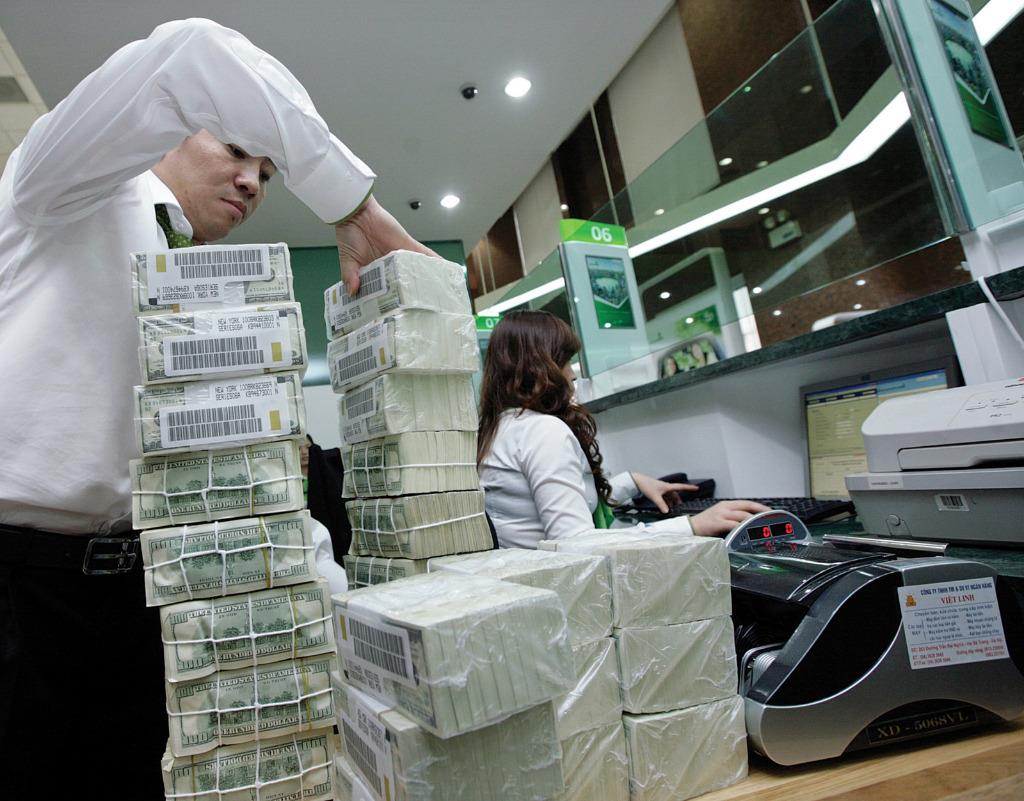
    Residents, businesses and government of Bangkok could realize THB 126 billion-worth of economic benefits by transitioning from physical money to digital payments, according to an independent study conducted by Roubini ThoughtLab and commissioned by Visa.

    The results examine the economic impact of increasing the use of digital payments in major cities around the world. As a “digitally transitioning” city, Bangkok is among the six global metropolises selected for the study, representing one of the five different stages of digital payment maturity.

    “As more people move from rural to urban areas, cities become the nexus for the adoption of electronic payments. This study is unique in that for the first time it looks at the net benefits associated with adopting digital payments at a city-level. The research shows that a shift to electronic payments will benefit people, businesses and government not just in big cities like Bangkok, but other urban centers such as Phuket and Khon Khaen as well,” said Suripong Tantiyanon, Country Manager, Visa Thailand.

    For Bangkok, widespread usage of electronic payments could generate an estimated increase of THB126 billion to the city’s economy – with consumers, businesses and government to realize net benefits of THB 3 billion, THB 73 billion, and THB 50 billion, respectively.

    Estimated net benefits are derived from factors including time savings while conducting and processing banking, retail and transit transactions; increased sales revenues from extended customer base both online and in-store; increased tax revenues and economic growth; cost savings; and reduced cash-related crime, among others.

    “There are many existing and emerging technologies in payment that will drive wider adoption of electronic payments. In cities like Bangkok, we will see new payments form factors such as standardized QR Code go beyond being just a money transfer tool and mainstream method such as debit chip card becoming widely used and accepted, giving consumers and businesses the choices on how to pay and get paid,” said Mr. Suripong.

    About the Cashless Cities Report

    Cashless Cities: Realizing the Benefits of Digital Payments”, is a unique study that quantifies the potential net benefits experienced by cities which move to an “achievable level of cashlessness”—defined as the entire population of a city moving to digital payment usage equal to the top 10% of users in that city today.  The study does not look at eliminating cash.  Rather, it seeks to quantify the potential benefits and costs of significantly increasing the use of digital payments.

    By reducing reliance on cash, the study estimates the immediate and long-term benefits for three main groups—consumers, businesses and governments. According to the study, these benefits could add up to combined direct net benefits of approximately U.S. $470 billion or equivalent to 3 percent of the average GDP of the 100 cities that were analyzed:

    • Consumers across the 100 cities could achieve nearly $28 billion per year in estimated direct net benefits. This impact would be derived from factors including up to 3.2 billion hours in time savings conducting banking, retail and transit transactions, in addition to a reduction in cash-related crime.
    • Businesses across the 100 cities could achieve more than $312 billion per year in estimated direct benefits. This impact would derived from factors including up to 3.1 billion hours in time savings processing incoming and outgoing payments and increased sales revenues stemming from extended online and in-store customer bases. The study also found that accepting cash and checks costs businesses 7.1 cents of every dollar received compared to 5 cents of every dollar collected from digital sources.
    • Governments across the 100 cities could achieve nearly $130 billion per year in estimated direct benefits. This impact would be derived from factors including increased tax revenues, increased economic growth, cost savings from administrative efficiencies and lower criminal justice costs due to reduced cash-related crime.

    “This study demonstrates the substantial upside for consumers, businesses and governments as cities move toward greater adoption of digital payments,” said Ellen Richey, Visa’s vice chairman and chief risk officer. “Societies that substitute digital payments for cash see benefits from greater economic growth, less crime, more jobs, higher wages, and increased worker productivity.”

    As cities increase use of digital payments, the positive impacts can extend beyond financial benefits to consumers, businesses, and government. The shift to digital payments also may have a catalytic effect on the city’s overall economic performance, including GDP, employment, wage, and productivity growth.

    “The use of digital technologies—from smart phones and wearables to artificial intelligence and driverless cars—is rapidly transforming how city dwellers shop, travel, and live,” said Lou Celi, Head of Roubini ThoughtLab. “Without a firm foundation in electronic payments, cities will not be able to fully capture their digital future, according to our analysis.”

    “Cashless Cities: Realizing the Benefits of Digital Payments” offers 61 recommendations for policymakers to help their cities become more efficient through greater adoption of digital payments. Recommendations include undertaking financial literacy programs to help move the unbanked into the banking system, implementing incentives to stimulate innovation focused on scaling new payment technologies, implementing secure open-loop payment systems across all transportation networks and more.

    Visa and Roubini Thoughtlab created an online data visualization tool as a companion to “Cashless Cities: Realizing the Benefits of Digital Payments.” Using the data visualization tool, individuals can increase or decrease the level of digital usage in each of the 100 cities included in the study to better explore the benefits of a world, less dependent on cash.  

    Methodology

    Roubini Thoughtlab, a leading economics and evidence-based research firm, surveyed 3,000 consumers and 900 businesses in 2016 across six cities (Tokyo, Chicago, Stockholm, Sao Paolo, Bangkok and Lagos) that represent different levels of digital payments maturity. These surveys examined the use, acceptance, and cost-benefit impact of physical and digital money. Researchers then extrapolated these survey results based on specific demographic and economic data to another 94 cities around the world to determine the net impact of moving toward a cashless economy on consumers and businesses in each location. Through other sources, the research was also able to identify expected impacts on government. Researchers used World Bank, Organisation for Economic Co-operation and Development, and other well-respected secondary data sources to augment the survey results and build the overall findings. An econometric model used by various central banks and other institutions – the National Institute Global Econometric Model (NiGEM) – was used to estimate the “catalytic” impacts (economic growth, productivity, employment and wages) that a move toward digital payments would have on each of the 100 cities analyzed. Visa commissioned the study.  Roubini Thoughtlab independently conducted the surveys, managed the research and developed the analysis.


  • Swiss watch exports rise 9% on strong Japan, China and Hong Kong

    Swiss watch exports rise 9% on strong Japan, China and Hong Kong

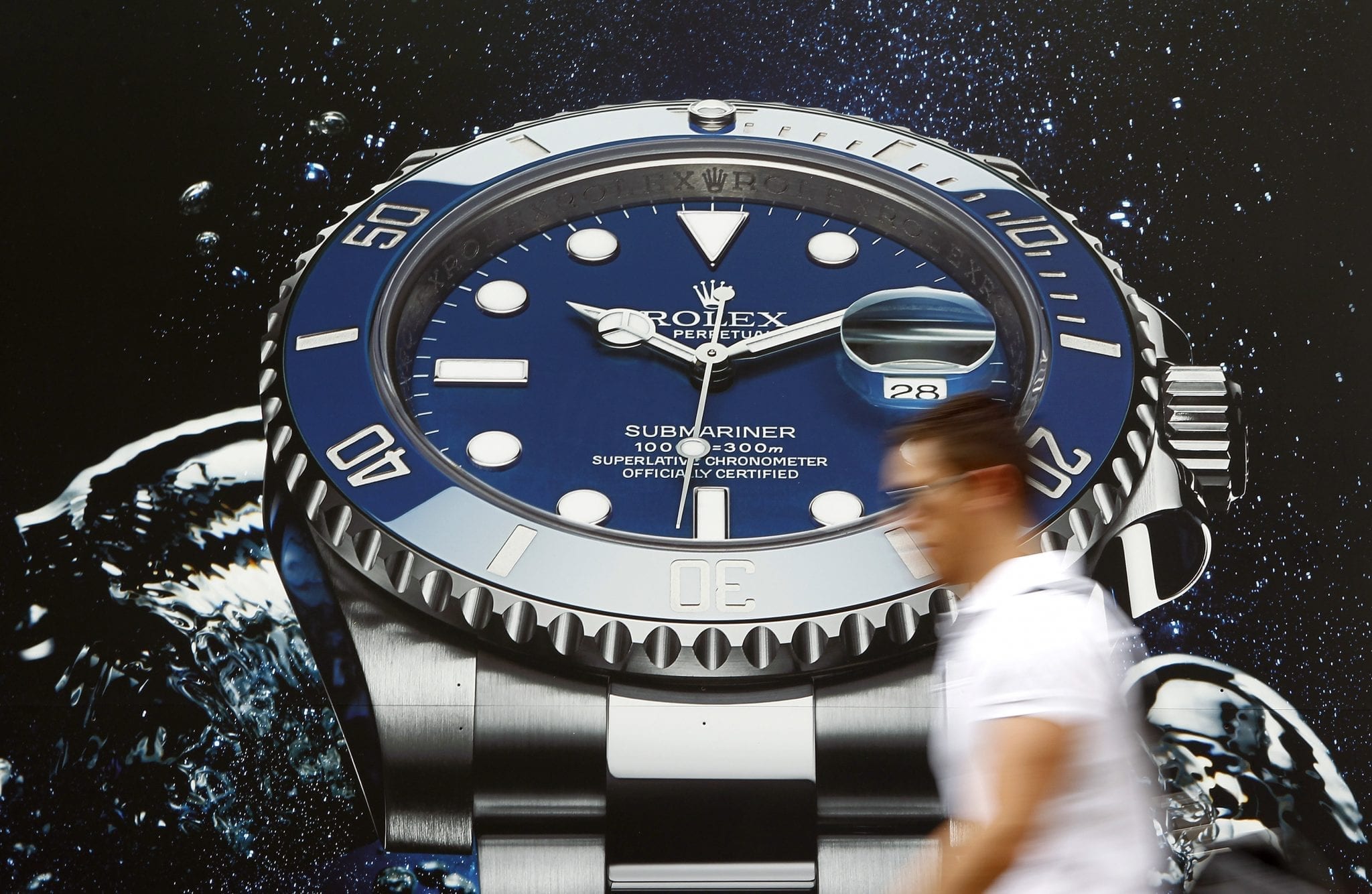
    Swiss watch exports jumped 9.3 percent in October 2017, on strong sales in Hong Kong and China, despite a lag in U.S. imports, according to the Federation of Swiss Watches.

    For the month-period, sales of Swiss watches totalled 1.85 billion Swiss francs, or $1.86 billion. The federation said that the monthly result confirms a solid improvement in the watch industry, with consolidated growth for the past ten months sitting at 2.4 percent.

    In September 2017, sales rose 3.7 percent and 4.2 percent in August.

    In October 2017, Japan recorded the fastest growth, where exports leapt 21.7 percent. Exports to China were up 18.2 percent, while Hong Kong, which is also the industry’s largest market, rose 15.8 percent.

    Outside Asia, the U.S. market remained dire, down 7.3 percent. Growth in Europe was a placid 5.9 percent, hurt by a 0.7 percent decline in Italy. Big player Britain inched forward 1.2 percent, showing signs of a slow down in October, said the federation.

    By watch category, exports of watches worth between 500 Swiss francs and 3,000 Swiss francs grew the fastest, up 20.3 percent in value terms, while watches priced between 200 Swiss francs and 500 Swiss francs rose 10.4 percent.

    The most expensive range, above 3,000 Swiss francs, rose 6.3 percent. Meanwhile, timepieces priced at below 200 Swiss francs dropped 3.4 percent, said the federation.

    Looking forward, the federation noted a “declining medium-term trend” in Japan.

    Analysts also fear that the ongoing weakness in exports of cheaper watches could prompt the resurgence of smartwatch domination over the longer term.

  • Amazon India to support female entrepreneurs

    Amazon India to support female entrepreneurs

    Amazon India has launched an exclusive online store for women entrepreneurs.

    It is rolling out it Amazon Saheli initiative in partnership with non-government social-service entities Impulse Social Enterprise and Self-Employed Women Association (Sewa). The store will enable women entrepreneurs to sell their products online (“saheli” is Hindi for “women’s friend”).

    “Through Amazon Saheli we aim to bring a change in the lives of thousands of women entrepreneurs with the help of our partners,” says Amazon India director/GM seller services Gopal Pillai.

    Sewa founder and social worker Reema Nanavati says the partnership will not only provide women entrepreneurs access to millions of new customers and become economically secure, but will also generate employment opportunities for many more young women.

    The store will feature exclusive products like handicrafts, apparel, handbags and home-decor items made by women entrepreneurs.

    Meanwhile, Amazon India has been running workshops across the country to familiarise women entrepreneurs with the benefits of e-commerce.

    For the Saheli store, the e-commerce firm is offering women vendors such benefits as subsidised product cataloguing, imaging, packaging and courier services, as well as basic online training.

    Pillai says he expects the workshop program to reach about 20,000 women entrepreneurs over the next few months.

    The program will eventually be expanded to empower women through other programs offered by Amazon India like ATES (Amazon-Trained E-commerce Specialists), IHS (I Have Space,) SPN (Service Provider Network) and Udaan.

  • Vietnam’s Jan-Nov FDI rises 11.9 pct on-year

    Vietnam’s Jan-Nov FDI rises 11.9 pct on-year

    Vietnam received an estimated $16 billion in foreign direct investment (FDI) in the first 11 months of this year, up 11.9 percent from the same period in 2016, the government said on Monday.

    FDI pledges for new projects, increased capital and stake acquisitions jumped 82.8 percent from a year ago to $33.09 billion, the investment ministry said in a report published on its website.

    The manufacturing and processing industry received the most foreign funds as of November, followed by the electricity and air production and distribution sector.

    South Korea, Japan and Singapore were the biggest investors in Vietnam.

    Vietnam’s FDI inflows hit a record high of $15.8 billion in 2016.

  • Philippines’ San Miguel says looking to bid for Vietnam’s Sabeco

    Philippines’ San Miguel says looking to bid for Vietnam’s Sabeco

    The Philippines’ San Miguel Corp (SMC.PS) is looking to bid for Vietnam’s largest brewer Sabeco (SAB.HM), the conglomerate’s president said on Wednesday.

    “Yes,” Ramon Ang said when asked if San Miguel is looking to join the bidding for the Vietnamese brewer.

    Vietnam said earlier on Wednesday it is open to selling a 54-percent stake in Saigon Beer Alcohol Beverage Corp, but capped foreign ownership at about 49 percent.

    Sabeco received a strong response from potential suitors at an investors’ roadshow in Singapore last week, its chairman Vo Thanh Ha said, as the government moves closer to finalizing a stake sale in the $9 billion maker of Bia Saigon and 333 brews.

    Ha said the government is due shortly to publish details of a divestment plan for its nearly 90 percent stake in Sabeco as part of a lengthy fund-raising exercise.

    The sale has attracted interest from brewers seeking access to one of Asia’s most-promising beer markets, which is already the second-most profitable for Dutch brewer Heineken NV (HEIN.AS).

    Vietnam is shaping up as a battleground for global brewers thanks to a youthful population and beer-drinking culture.

  • When Tiffany gasps chasing in modern luxury retail

    When Tiffany gasps chasing in modern luxury retail

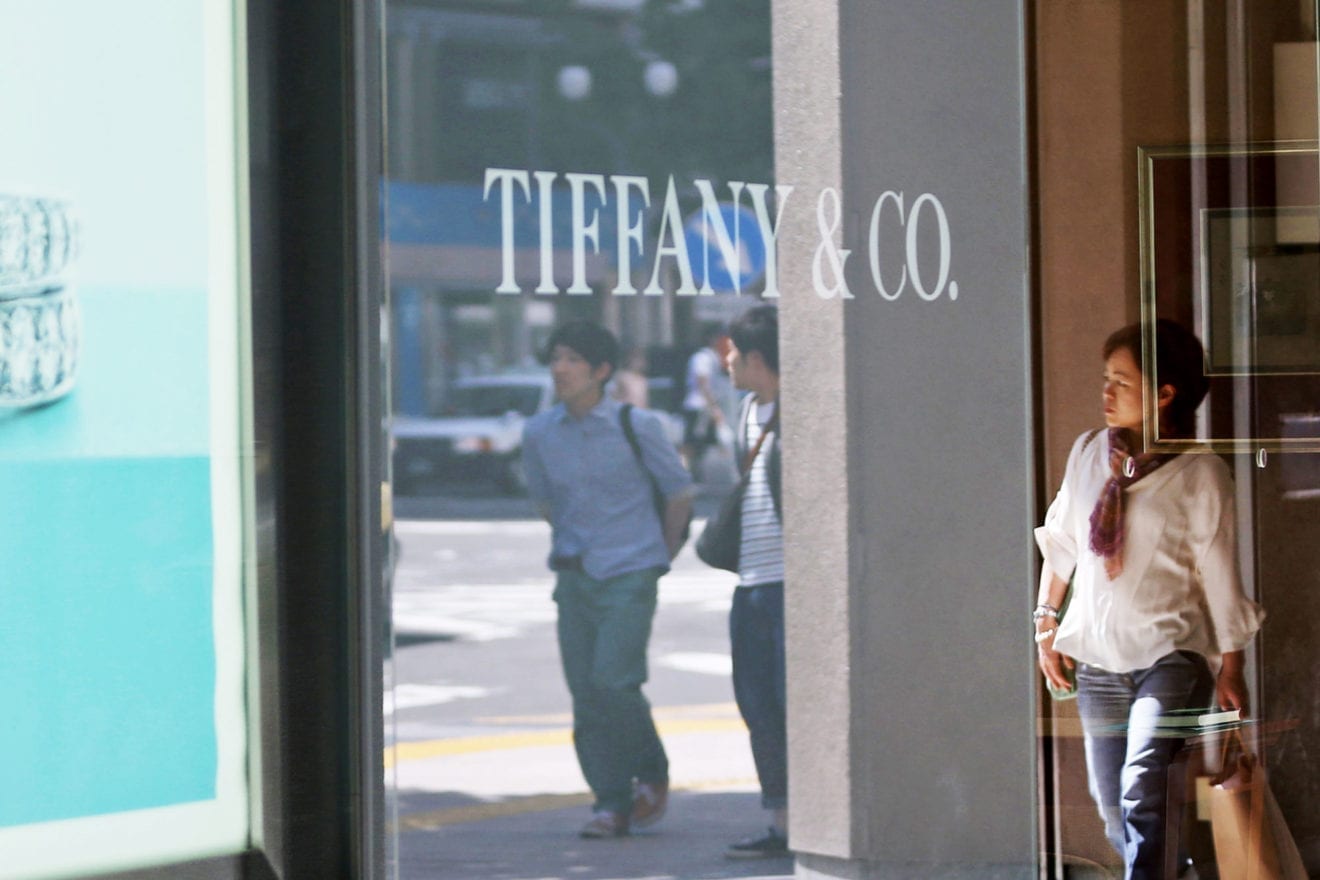
    At this time of year, New York City’s Fifth Avenue is a sparkling sea of holiday lights. There’s Cartier with its illuminated Panther; Harry Winston with its diamond-shaped orbs; and then there’s Tiffany, which seems to have decked its store with lights that Las Vegas discarded in the 1970s. It is a small point, but it is one that underscores the fact that parts of the Tiffany business remain firmly out of step with the modern world of luxury retail.

    Yet there is progress: only parts of the group are behind the curve. A year or so ago, the whole organisation appeared to be struggling to keep up, but a raft of initiatives have since helped to pull elements of the proposition into the 21st century.

    This work shows up in the latest numbers which continue along an improved trajectory. Total sales are up by a respectable 3 per cent, and while comparable sales remain in decline, it is encouraging to see this is no longer because of weakness in the North American market. On the bottom line, net income rose by 5.4 per cent.

    What has Tiffany done to engineer this improvement?

    The product has to be the starting point, with the greater emphasis on fashion and designer collections generating interest among younger consumer segments. The urban Tiffany HardWear range has performed particularly well, while Elsa Peretti’s assortment of pieces has added a gentler contemporary edge to the offer.

    Tiffany has recently followed up this success with the whimsical Everyday Objects collection of decorative accents. It is unlikely that the $9000 sterling silver ball of yarn nor the $1000 silver tin can will be to everyone’s taste or budget, although they generated some favorable publicity for the brand.

    Behind these headline items, more accessible pieces like the bone china ‘paper’ cups at $95 are likely to attract more interest. The point is that Tiffany is trying something new and is grabbing the attention of shoppers.

    As well as using its products to showcase the brand, Tiffany has also upped its game in general marketing and advertising. These have been more in vogue than past campaigns, and the use of celebrities like Janelle Monáe, Zoë Kravitz, & St. Vincent (Annie Clarke) is helping consumers to see the brand in a new, more modern light.

    Moving online

    One interesting consequence of this gentle repositioning is that many of the younger shoppers Tiffany is starting to attract are going online rather than into stores. This has resulted in some robust e-commerce numbers. It is to Tiffany’s credit that it has responded by improving the website experience and by increasing the amount of content across its platforms.

    This outperformance of online is likely to continue, which presents a dilemma to Tiffany. Many of its stores are in desperate need of refurbishment and ideally, need to be brought up to the same standard as the new Union Square shop in San Francisco. This is an expensive undertaking and one that the group may struggle to justify if more sales are migrating online.

    The new Blue Box Cafe in the New York flagship is a smart way of pulling people into the store, but this initiative can’t be easily replicated across the estate. Moreover, it is a shame to draw people into a shop that still feels dated and fusty.

    Despite all the progress, further change, especially in stores, is essential. For as much as Tiffany has made strides, it has not yet regained that full youthful vigour that so many of its peers exhibit. The gaudy, old-fashioned lights on its New York store underscore that there is much more thinking, and much more work, to do in the reinvention of this heritage brand.

  • Alibaba betting on long-term gain from eSports investment

    Alibaba betting on long-term gain from eSports investment

    The booming eSports industry may not yet attract the sponsors and television rights of real life sports, but Chinese e-commerce conglomerate Alibaba believes it is only a matter of time before its bet on competitive video gaming comes up big.

    Alibaba’s sports arm Alisports was opened in 2015 with the aim of cashing in on the rapidly growing world of electronic sports, where players square off in lucrative video game tournaments that draw millions of viewers online.

    “We are prepared to lose money. We can accept the losses now as we hope to promote this sport,” Alisports CEO Zhang Dazhong told AFP in an interview at the European final of the second edition of Alisports’ World Electronic Sports Games (WESG) in Barcelona, which wrapped up on Sunday.

    “For a sport that has a lot of participation, it must have a bright future. Even if for now you don’t make a lot of money, in the future, you’ll definitely be rewarded. This is something we firmly believe in.”

    In 2016, Alisports entered into an agreement with the International e-Sports Federation (IeSF) to create the WESG, a market-leading international tournament.

    The first edition of the WESG saw 63,000 participants from 125 countries battle for a share of the $5.5 million prize pot.

    Yet the results weren’t so lucrative for Alisports, who lost 70 percent of their investment.

    “We estimate that we will be losing money for the next five years,” admitted Zhang.

    Long-term returns

    Alisports’ strategy, though, is a long-term one.

    “We estimate that in five to ten years…the business model will be more complete. On top of the competitions, we have to bear in mind the electronics business and marketing related to eSports,” added Zhang.

    Participation in eSports has soared as virtual games gain traction with a worldwide fan audience now estimated at 400 million people according to a study by Deloitte, more than that for baseball or American football’s National Football League.

    The size of the eSports market will more than double to $696 million this year from $325 million in 2015, according to Deloitte’s study. It predicts the market will be worth $1.5 billion in 2020.

    But the market is fragmented, with different operators staging their own tournaments, and sales of television rights and merchandising remain weak.

    An eSport fan brings only three euros to the table annually on average, according to a recent study by market research group Nielsen Sports, compared to 30 euros for a football fan.

    Yet, Alibaba believes its position as the market leader in China, the worldwide powerhouse of eSports, ensures the return on eSports will be plentiful.

    “In China we have 1.8 million eSport fanatics and 65 percent of those are between 18 and 25,” continued Zhang.

    “They play video games, but they also buy all sorts of products from Alibaba. We understand them very well.”

    Olympic dream?

    The leap in popularity has helped fuel talk that professional gaming could become an Olympic discipline, but not everyone is convinced.

    “I think we have to differentiate eSports and gaming in general,” Zhang said when he was asked about the controversy.

    “Gaming of course isn’t a sport, but eSports involve high-level confrontation, teams, individual resistance, so I think it’s a sport. And I think that sport in general is evolving towards a combination of technology and physical activity.”

    Zhang said he hopes eSports will be part of the 2024 Olympics in Paris or the 2028 Olympics in Los Angeles.

    “It could happen, because at this year’s Asian Indoor and Martial Arts Games, we already gave a demonstration of games. In the Asian Games in Hangzhou in 2022, it’s already an official event,” he said.

    The director of the Paris 2024 Olympics committee said earlier this month that the door to the Games was “not closed” to eSports.