Author: Mei Ling Tan

  • Uber CEO says company failed to disclose massive breach in 2016

    Uber CEO says company failed to disclose massive breach in 2016

    Uber Technologies Inc failed to disclose a massive breach last year that exposed the data of some 57 million users of the ride-sharing service, the company’s new chief executive officer said on Tuesday.

    Discovery of the company’s handling of the incident led to the departure of two employees who led Uber’s response to the incident, said Dara Khosrowshahi, who was named CEO in August following the departure of founder Travis Kalanick.

    Khosrowshahi said he had only recently learned of the matter himself.

    The company’s admission that it failed to disclose the breach comes as Uber seeks to recover from a series of crises that culminated in the Kalanick’s ouster in June.

    “None of this should have happened, and I will not make excuses for it,” Khosrowshahi said in a blog post.

    According to the company’s account, two individuals downloaded data from a web-based server at another company that provided Uber with cloud-computing services.

    The data contained names, email addresses and mobile phone numbers of some 57 million Uber users around the world. The hackers also downloaded names and driver’s license numbers of some 600,000 of the company’s U.S. drivers, Khosrowshahi said in a blog post.

    Bloomberg News reported that Uber’s chief security officer Joe Sullivan and a deputy had been ousted from the company this week because of their role in the handling of the incident. The company paid hackers $100,000 to delete the stolen data, according to Bloomberg.

    Though such payoffs are rarely discussed in public, U.S. Federal Bureau of Investigation officials and private security companies have told Reuters in the past year that an increasing number of companies have made payments to criminal hackers who have turned to extortion.

    None have previously come to light that aimed to suppress breaches that would have required public disclosure, such as those involving protected personal information.

    Sullivan did not immediately return messages seeking comment.

    Sullivan, formerly the top security official at Facebook Inc , is a former federal prosecutor and one of the most admired security executives in Silicon Valley.

    Kalanick learned of the breach a month after it took place, in November 2016, as the company was in negotiations with the U.S. Federal Trade Commission over the handling of consumer data, according to Bloomberg.

    Uber representatives did not respond when asked to comment on the Bloomberg report.

    Khosrowshahi said he had hired Matt Olsen, former general counsel of the U.S. National Security Agency, to help him figure out how to best guide and structure the company’s security teams and processes.

    “While I can’t erase the past, I can commit on behalf of every Uber employee that we will learn from our mistakes,” he said. “We are changing the way we do business, putting integrity at the core of every decision we make and working hard to earn the trust of our customers.”

  • Kit Kat Japan and Tokyo Banana launch banana chocolate

    Kit Kat Japan and Tokyo Banana launch banana chocolate

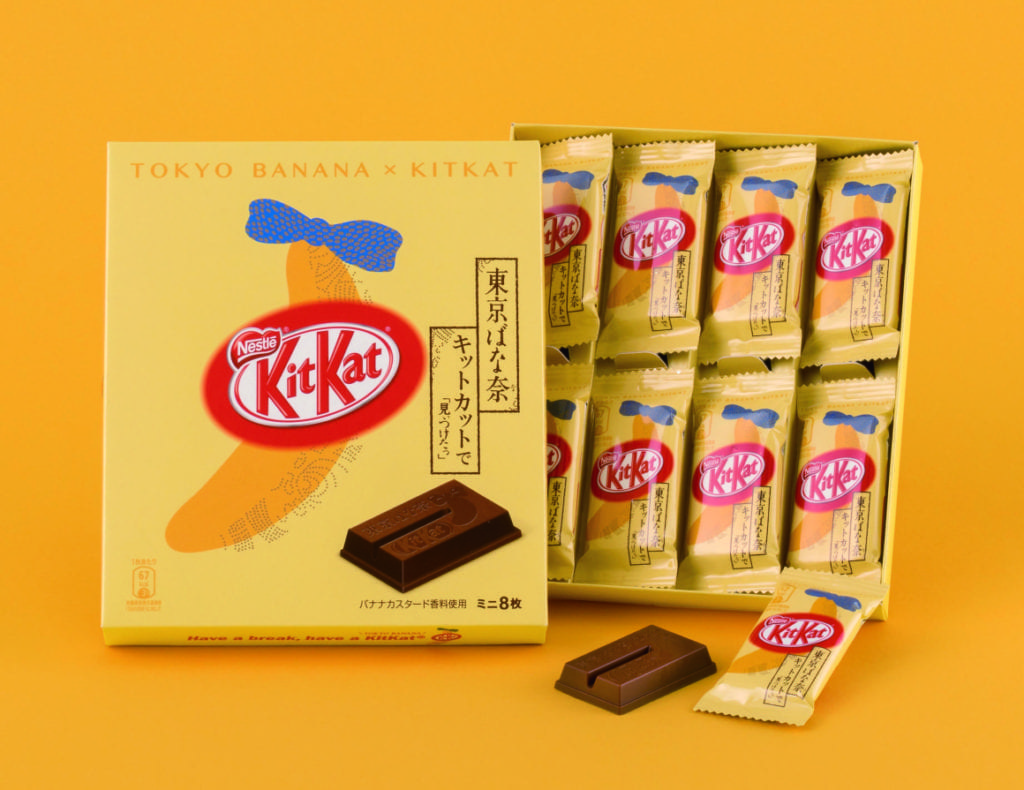
    Kit Kat and Tokyo Banana have released a limited-edition chocolate wafer only at Tokyo Okashi Land, Tokyo Station.

    The products combine milk chocolate and banana cream, recreating the flavour of Tokyo Banana. Chocolate boxes are also stamped with the distinctive Tokyo Banana bow logo.

    The local market-only release saw customers queuing outside the store to buy a box of the confectionery.

    The kiosk houses large screens showing the product and multi-lingual signage explaining the story behind it.

    Despite being limited edition, Nestle assures fans the Tokyo Banana Kit Kat is supplied in sufficient quantity to meet the huge demand.

    The product comes in two sizes, with packs of eight sold at ¥702 (US$6.24), and packs of 15 at ¥1296. The wrapped package includes a pair of chocolate wafer bars with a tiny banana mark, the words “Tokyo Banana” and bow logo on top.

    The product will be Introduced later at stores including airports, train stations and highway rest areas around the Kanto region.

  • Another Alibaba major step in China retail

    Another Alibaba major step in China retail

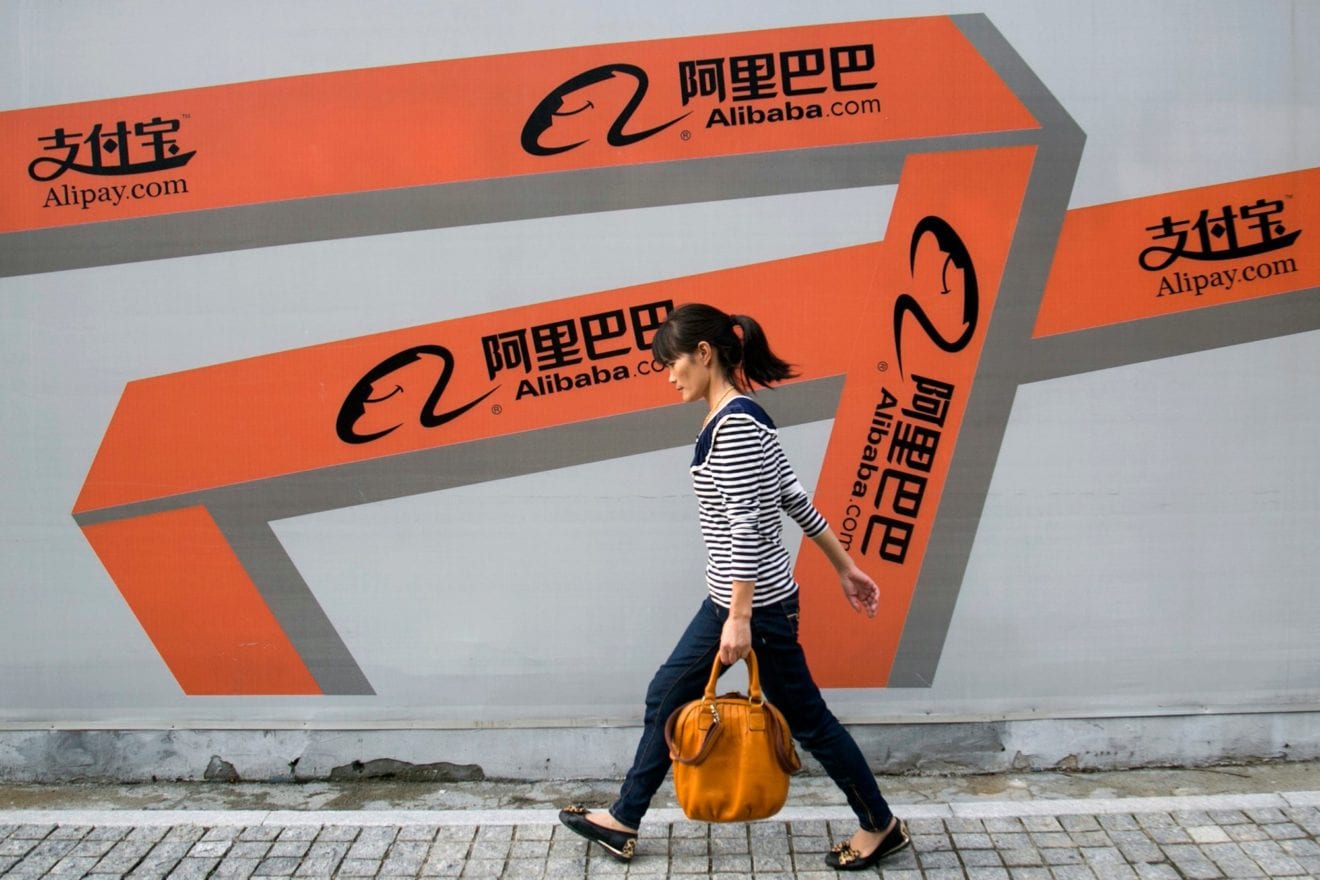
    This week’s Alibaba-Sun Art deal is a major step in the development of a new retail landscape in China, write Wai-chan Chan and Jacques Penhirin of Oliver Wyman.

    This is not a “real estate play” with Alibaba buying 446 grocery stores, but shows how serious Alibaba are in developing the “new retail” model combining the strengths of online and offline retail.

    The first winners from this alliance are likely to be consumers.  Alibaba will use its investment in Sun Art to improve its price, service levels and the range of products available. In addition, expect to see Alibaba add the ability to deliver a wide range of goods from these stores to consumers’ homes in super quick times. Today delivery time is the new battlefield but performance is still highly dependent on physical networks.

    In the context of retail this alliance is more important than Amazon’s acquisition of Whole Foods in the US.  Sun Art is the largest, and one of the most respected grocery players in China, while Alibaba already has a large grocery business, making it an alliance between two leading players in retail.

    Unlocking fresh

    Despite the huge advances in e-commerce in China, fresh food has been one of the areas that has been most difficult to convert to e-commerce.  Freshness is the key driver for consumers in grocery shopping. According to a survey of 1500 consumers Oliver Wyman conducted in August, consumers purchase fresh products 4.9 times per week on average, and ‘fresh’ is the number one criterion in grocery retailer selection regarding range, product quality, and value for money. However, 81 per cent of respondents do not think e-commerce provides good quality fresh products compared with offline hypermarkets.

    As one of the top two hypermarkets receiving the highest rating from consumers on their fresh offering, Sun Art has strong expertise in operating fresh categories, which will greatly unlock Alibaba’s capabilities.

    Ally or die

    It is becoming clearer that the endgame of two eco-systems being established by Alibaba and JD.com is inevitable in the retail landscape of China, which poses pressure on those ‘unallied’ retailers such as China Resources, Carrefour, WuMart, etc. For retailers, capturing traffic through their own e-commerce platform will become even more challenging. Traditional retailers must understand that they are competing with giants with unlimited abilities to invest and the ambition of integrating online and offline retail. O2O orders already contribute 30 per cent of sales of Alibaba’s Hema Fresh Supermarket – it is indeed transforming the economics of the offline shopping cart, which is challenged by the declining like-for-like growth over the past 12 successive quarters.

    Traditional retailers need to choose their battlefield very quickly, but expect compromise on bargaining power and decision-making in the long term.

    Bad news for second-tier brands

    The two ecosystems are not pure retailers anymore but integrated media and branding platforms. It does not leave Consumer Packaged Goods brands much of a choice but to closely coordinate with Alibaba and JD.com and learn their rules. Niche brands which understand both the ecosystem and consumers will take this opportunity to grow, and top-tier brands will continue to flourish if they learn how to effectively partner with Alibaba or JD, to have both parties learn from each other. By comparison, weak brands will suffer because the traditional retail stores they rely on are losing ground. Furthermore, as O2O develops, the terms and conditions will become more transparent within the two ecosystems. Promotional pressure will likely increase, requiring more diligence on the return on investment.

    Despite the prospects for this alliance, Alibaba and Sun Art need to start thinking how to effectively realise its potential. Operationally, there is huge complexity in integrating the two businesses and overcome barriers of management and culture. After all, it is more difficult to manage shoppers than to manage mobile devices.

  • Jack Ma : the internet rock star

    Jack Ma : the internet rock star

    In 1999, when Alibaba was founded, the first association people would make was “Ali Baba” from the Arabian literature masterpiece “One Thousand and One Nights”. Jack Ma said he chose it for this reason, it was a name able to resonate in people’s mind all over the world.

    In less than 3 years, the name Alibaba populated media all over the world and like the Arabian literary work acquired appeal internationally.

    How Jack Ma build his internet empire can be summarized in 4 pillars.

    1. The rock star billionnaire

    It is hard to find the words to describe the scale of Alibaba Group, the Chinese e-commerce business founded in 1999. It is probably best exemplified by the numbers: Every single day, 200 million people shop on Alibaba’s mobile sites and it sold $550 billion worth of merchandise in its last fiscal year.

    In May 2017, Alibaba Group announced annual revenues had gone up 56 percent to almost $23 billion, and in June investors literally gasped as it upped its growth forecast for 2017 from 45 percent to 49 percent. Its 2014 initial public offering (IPO) was the largest in history, raising $25 billion on the New York stock exchange.

    At the head of it all is Ma Yun, the 53-year-old entrepreneur known as Jack Ma, who started the company with 17 others and $50,000 in his apartment in Hangzhou, a mid-sized city near China’s east coast, known for its green hills and West Lake.

    But Ma’s childhood was frugal: he was born to a family that had very little, sharing an income of just $7 a month between six. He was 6-years-old when President Richard Nixon met Chairman Mao Zedong in 1972, a “geopolitical earthquake” event ,which opened up China to the U.S. and led to it becoming the world power it is today. It was also the start of Ma’s Chinese dream.

    His journey from rags to rock star billionaire – Ma appeared on stage dressed as Michael Jackson at Alibaba’s 18th birthday party in September 2017 in front of an audience of 40,000 – is beset with failure and rejection. Ma said he was a “loser” in his thirties, insists he is not a tech expert and was rejected from a job at KFC and as a hotel waiter and was turned down three times when he applied to university. He also claims to have little tech expertise.

    Ma’s secret? His understanding of the power of the internet in putting buyers and sellers together, and his obsession with helping small companies, via eBay-like marketplace Taobao, bulk supplier 1688.com and Alibaba.com, a business-to-business site for wholesalers. The group also has marketing services and a financial lending affiliate including PayPal-like Alipay, which has 520 million users around the world.

    Other ventures include a 51 percent stake in delivery company Cainiao, which ships an astonishing 55 million packages a day, and Alibaba Pictures, a joint venture with Steven Spielberg’s Amblin Partners.

    2. A small business vision 

    The first time Jack Ma went online was in 1995. He was at a friend’s home in Seattle and he approached the computer gingerly.

    So Ma — then an English teacher — read U.S. business books to learn about GE, Microsoft, IBM and Wal-mart. “I was so interested in English. People read books, my school mates, they read English just for learning English. I read English, because I learned so many interesting American ideas,” Ma told CNBC’s “The Brave Ones.”

    Four years after his first U.S. trip he founded Alibaba, but only three of his coworkers knew anything about technology. “I called myself at that time like a blind man riding on the back of blind tigers. Without knowing anything about technology or computer(s), we start the first company,” Ma said, speaking at an Asia Society event in 2009.

    Ma would travel across China on road shows where 100 or 200 people would turn up to listen to him, in a kind of “mass movement” to talk to business owners about why they needed to get online.

    3. Ma’s Chinese Dream

    Jack Ma was long inspired by Yahoo founder Jerry Yang and the two met when Ma was assigned by his then government employer to show him around Beijing in the 1990s.

    Ma built his vision on the American companies he saw succeeding like Yahoo and eBay, and moved its main operations to Silicon Valley around the year 2000 because he had been convinced that was the best way to build a global business.

    “Because it is so difficult to hire people who know trade in the Silicon Valley, San Francisco. So instead we hire people from New York, Miami, all arriving in San Francisco. After one month or two months, we realized that something (was) wrong …. because those people, they know trade, but they don not know anything about internet. Those people that do not know internet, they do not know anything about trade,” Ma said in an interview.

    That moment was one of the hardest for Ma. He realized as an English teacher you almost never have to say no. But as a CEO, you need to make the tough decisions. And in that case, bringing the company back to China was the tough decision that Jack Ma had to make.

    In 2003, Alibaba decided to launch an eBay-type marketplace: Taobao. To start with, it was a defensive move to slow down the American company’s march to China.

    Taobao’s major difference was that it did not charge sellers or buyers commission, so did not have a revenue model to start with. But Ma was convinced that if you put buyers and sellers together, and the sellers made money, then the site itself would too.

    4. The global dream

    Search for “lobster” on Alibaba.com and more than 1,200 products come up, from a red Canadian variety costing upwards of $1,100 per metric ton that ships live from the U.S., to frozen lobster tails for $195-plus. If a Chinese customer wants fresh cherries, they can get them sent from a company in Maryland for $300-$500 a ton.

    Ma sees a sea change in the way goods are consumed around the world. “I say, past 30 years, the domestic consumption of the United States drives the global economy and supports so many small businesses in America or China to sell things globally. Today, next 30 years, the domestic demand and power of China is going to drive millions and millions of small businesses globally,” he told Faber.

    But Ma is also worried about a world where artificial intelligence and robots take people’s jobs – and businesses must adapt. He is likely to fly for 1,000 hours next year, he said. “This is why I am traveling, talking to all the government and state leaders and telling them move fast. If they do not move fast, there’s going to be trouble. When we see something is coming, we have to prepare now. My belief is that you have to repair the roof while it is still functioning.”

    He warned that while large businesses currently dominate industry, the next century will be more about smaller companies. “So how we can empower the small businesses? You know, the small businesses, not only (can) they only sell things to their village or their own country or even their city. With the power of the internet, we can help them sell across the board,” he added.

    For Alibaba, as for Amazon, the future is not just about e-commerce. Alibaba’s cloud computing division made a modest $968 million in revenue in the year to the end of March 2017, up 121 percent year-on-year, while its digital media and entertainment businesses including YouTube-style site Youku Tudou and event ticketing agency Damai took $2.1 billion, up 271 percent.

    The aim is for people to spend more of their waking moments on the platform, according to Alibaba’s digital and entertainment chair and CEO Yu Youngfu. “To put it simply, our mission is to allow those who have fun shopping at Alibaba to truly live at Alibaba. So in addition to shopping, we would like them to spend more time watching videos with us, getting information from us and listening to music with us, to come and game with us, among many other things,” he said at an investor day in June 2017.

    Alibaba also announced a partnership with Steven Spielberg’s movie production company Amblin Partners in October 2016. Alibaba Pictures is 49.5 percent owned by Alibaba Group, and will be creating its own content as well as distributing it in China.

    Other types of business may follow, such as a QVC-style shopping site that might combine with a Netflix-type offering.

    Alibaba sees its scope far more broadly than, Amazon and eBay would. They see their scope as more like the combination of of Amazon, Facebook, Google and Netflix.

  • Is Watsons ripe for a spin-off?

    Is Watsons ripe for a spin-off?

    Hong Kong billionaire Li Ka-shing’s business empire Cheung Kong has been able to get the best price when offloading some assets. For instance, the Centre, its Grade A office building, was sold for over HK$40 billion early this month on the back of soaring land prices. Some buyers offered about HK$30 billion late last year.

    When Cheung Kong planned to spin off its retail outlets including Watsons and Parknshop in 2013, the deal was shelved as the company was unhappy with the price. The wind has shifted in recent years, and leading brick-and-mortar retailers are becoming desirable again. Cheung Kong owns more than 14,000 outlets worldwide.

    On Monday, Alibaba said it would invest 22.4 billion yuan for a 36.16 percent stake in the top Chinese hypermarket operator Sun Art.

    Sun Art operates 446 hypermarkets across China. The deal marks the internet giant’s move into offline retail. Omnichannel is essential in offering the new retail experience. The transaction values Sun Art at 62 billion yuan, which roughly puts each hypermarket at above 100 million yuan.

    It’s worth noting how Alibaba will transform classic retail by integrating technology in order to provide a seamless online and offline experience to customers. In fact, the deal marks Alibaba’s latest acquisition of a traditional retailer after Suning Commerce, Intime Retail Group and Lianhua Supermarket.

    Nonetheless, we have yet to see any major reform in these newly joined partners, although customers can make payment with Alipay or collect online orders.

    It’s obvious that the retail experiment has to connect online and offline realms. Market players are still trying out the system. Amazon spent US$13.7 billion to acquire Whole Foods in August, but it has yet to start an overhaul of the latter’s 500 outlets. Currently, Amazon has designated one shelve in each Whole Foods store to sell Echo or Kindle, and move some of the goods in-store to the online platform.

    The deep-pocketed e-commerce giants are aggressively acquiring offline retailers. But it remains unclear who will be able to integrate online and offline realms successfully.

    Certainly, the traditional retailer with massive outlet network will become sought-after. Walmart, the world’s largest retailer, has shown that it can hold on its own in a challenging retail environment. Its share price has soared nearly 80 percent over the past 12 months, and the retailer’s market value tops US$300 billion.

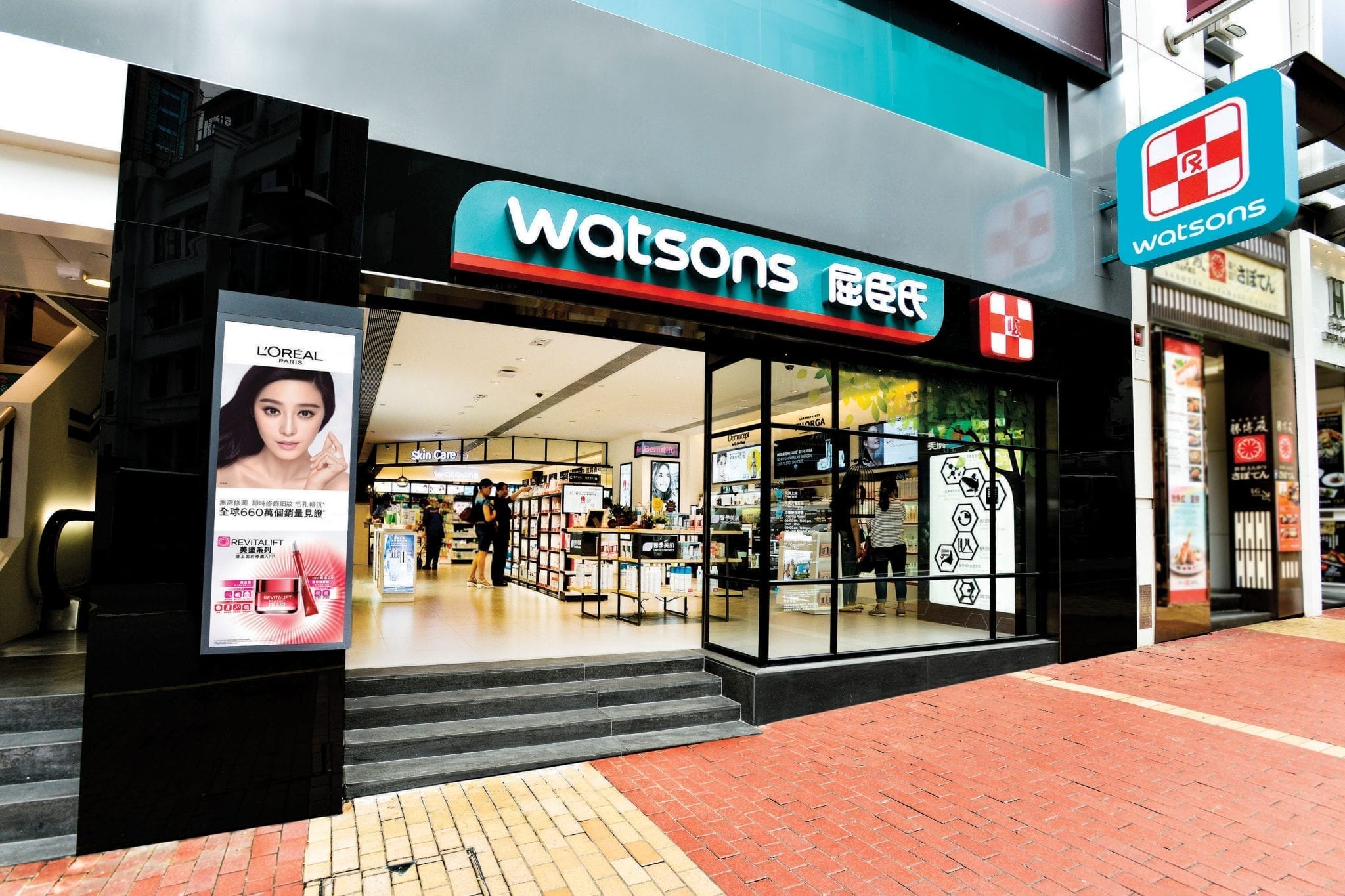
    In fact, Watsons Group is the world’s largest retailer in terms of the number of outlets. It operates more than 14,000 shops worldwide, including supermarkets and drug stores. Over 3,000 shops are in mainland China, and most of the rest are in Europe.

    Cheung Kong has put on hold a plan to spin off or sell the retail group after failing to fetch a good price in 2013. Back then, global offline retailers were struggling.

    The scale of Watsons is more than 10 times that of Whole Foods or Sun Art. And Cheung Kong would definitely try its best to get the best price. Therefore, it’s more likely that the conglomerate might cooperate with internet giants to leverage its massive network of offline stores.

    In September, CK Hutchison Holdings, Li’s flagship conglomerate, formed a joint venture with Ant Financial Services Group, an affiliate of Alibaba Group, to integrate online and offline Hong Kong dollar payments under the AlipayHK brand.

  • Fuel prices drop after five weeks of hikes

    Fuel prices drop after five weeks of hikes

    RON95 and RON97 petrol will be both be 8 sen cheaper at midnight, ending five consecutive weekly price increases.

    The Domestic Trade, Co-operatives and Consumerism Ministry announced today that RON95 will retail for RM2.30/L and RON97 for RM2.58/L, while diesel will drop by 2 sen to RM2.23/L.

    All prices are effective after midnight and valid until next Thursday.

    Fuel prices previously rose for five straight weeks as global oil prices spiked due to the unrest in the Middle East region.

    Putrajaya has pledged to intervene in the event RON95 and diesel exceed the RM2.50/L mark for three consecutive months.


  • Vietnam’s love for instant noodles rises to near-boiling point

    Vietnam’s love for instant noodles rises to near-boiling point

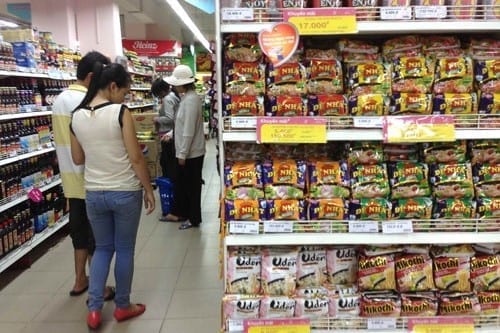
    Vietnamese people consumed more than 4.9 million packs of instant noodles last year, behind China, Indonesia and Japan, new data shows.

    Vienam has held fourth spot since 2012 in the rankings compiled annually by the World Instant Noodle Associations (WINA).

    On a per capita level with a population of over 93 million, the average Vietnamese person gobbled 53 packs of instant noodles in 2016, higher than Indonesians at 49, Japanese at 44 and Chinese people at 38.

    WINA said Vietnam’s instant noodle market recovered last year thanks to more diverse products that offer a wider range of choices for customers.

    Kajiwara Junichi, CEO of noodle producer Acecook Vietnam, said that the company’s revenue from instant noodles rose 5-20 percent during the second half of this year.

    Meanwhile, Masan Consumer and Asia Foods have been suffering from falling revenue.

    The three firms are the three biggest instant noodle producers in Vietnam and make up 70 percent of the domestic market share.

    Last year, The Washington Post cited a South Korean study that pointed out how harmful instant noodles can be for the health.

    “Although instant noodles are a convenient and delicious food, there could be an increased risk for metabolic syndrome given [the food’s] high sodium, unhealthy saturated fat and glycemic loads,” said Hyun Shin, a doctoral candidate at the Harvard School of Public Health and a co-author of the study.

    Doctor Dang Huy Quoc from the Ho Chi Minh City Oncology Hospital told Tuoi Trenewspaper that no studies have concluded that instant noodles can cause cancer, but high consumption of fat and salt can cause cancer and other heart diseases.

    Other experts suggest that people should only eat one or two packs of instant noodles per week.

    Many Vietnamese people are well aware of the harmful effects of instant noodles, but it’s common in Vietnam for people to snack on a pack of instant noodles between breakfast, lunch and dinner.

    The noodles are popular among college students, who often live far from home and lack the facilities to cook themselves a proper meal.

  • Is denim coming back?

    Is denim coming back?

    It began at Paris Fashion Week two in 2015, when Vetements sent its Autumn/Winter 2015 collection down the catwalk, full of its instantly familiar oversized silhouettes: grunge ditzy-print dresses, bulky bikers and bombers, thigh-high leather rodeo boots and those re-worked vintage Levi’s, now the brand’s signature jeans.

    Certainly, the denim market has been enjoying a long-awaited rebound. Sales in the $13.5 billion US women’s and men’s jeans market grew 4 percent in 2016, according to market research company the NPD Group — the category’s best performance in years.

    Globally, following three years of declines, the jeans market, valued at $92.9 billion, is also expected to grow this year, with men’s and women’s categories forecast to rise this by 4.2 percent and 3.7 percent respectively, according to Euromonitor.

    And as the athleisure trend begins to cool — presenting challenges for gym-to-street brands like Lululemon, Sweaty Betty and others — it would seem denim is clawing sales away from the sportswear category.

    According to data from retail technology company Edited, the first half of 2017 saw the women’s jeans market grow by 79 percent compared to the first half of 2016. Athleisure leggings, by comparison, grew just 35 percent.

    High-fashion brands such as Calvin Klein, Y/Project, Off-White, Balenciaga and, of course, Vetements, have helped along denim’s comeback, says Kurazawa, by catering to Millennial tastes, offering customization and a move away from the typical five pocket.

    Denim stalwart Levi’s is in a prime position to capitalize on consumer demand for vintage styles, given its 164-year heritage, recent collaborations with hot labels including Off-White, Gosha Rubchinskiy and Supreme, and a licensing agreement with luxury label Re/Done, which “up-cycles” vintage Levi’s denim, revamping old designs appeal to a younger generation. “We’re seeing a huge revival in ’90s-style fashion and ‘near-now nostalgia’ sentiment,” confirms Karyn Hillman, chief product officer at Levi’s, who points to the popular high-rise Wedgie model — inspired by the vintage 505, but updated with a little more stretch — as an example. “I think collaborations have really added some sort of equity to the brand,” adds chief marketing officer Jen Sey.

    In response to the success of re-worked styles, the heritage denim label is ramping up investment in customization services. This includes expanding in-store “tailor shops,” where shoppers can customize purchases. (Currently, tailor shops are in 100 percent of Levi’s UK doors with a heavy presence across Europe; the brand is now looking to recreate this success in the US.) Beyond stores, it has also installed customization pop-ups at key music festivals, from Glastonbury to Coachella. Sey says the activation “brings value to the consumer,” who, more often than not, is already wearing a pair of Levi’s.

    In November 2017, the company launched Levi’s Authorised Vintage, a collection of 50,000 pairs of dead-stock denim it bought back from the secondary market. “Levi’s has had the number one share of the vintage market forever,” Sey says. “We just haven’t actively participated in it [before], so we think it’s high time that we did.”

    Other denim brands are also capitalizing on the demand for an authentic, vintage-style product. Frame, for example, launched a limited Rigid Re-Release collection that catered to the nostalgia aesthetic in February 2017. While the limited-edition range will not continue into Spring/Summer 2018 due to limited availability, stiff fabrics will still be a key focus for next season’s denim collection.

    American brands Lee and Wrangler — both of which come under the umbrella of US apparel company VF Corp. — are also banking on reissues and archive-inspired designs to capture a younger consumer’s attention. “One of the latest capsules that we’ve done with Lee is we’ve gone into the archive to reproduce a retail product from 70, 80 years ago,” explains VF Corp’s jeanswear president Massimo Ferrucci. Wrangler’s Retro Glory collection boasts a similar missive; European stockists of the line include Asos, Urban Outfitters, De Bijenkorf and La Rinascente. “The younger consumer is attracted very much by Americana, by originality and authenticity, by product that comes from the archive.”

    But while retro silhouettes and rigid fabrics are on the rise in denim, it would seem that athleisure’s influence has had lasting impacts on the category’s basics, which account for the volume of the market.

    When the athleisure craze first blew up, many denim brands responded by investing heavily in stretch denims to try and compete with the fast-growing sector, a focus that continues to pay off. “Stretch is here to stay,” asserts Sey, who notes that Levi’s has actually seen an increase in demand for stretch denim as the fabric has transitioned into men’s lines.

    “Consumer preferences have changed — comfort has become much more important than in the past,” agrees Hillman. “Women generally wear their jeans a little tighter today compared to the past, so we’ve evolved the fits and fabrics to cater to these evolving tastes.” She notes that skinny jeans are still Levi’s best-selling style. “We don’t see that changing anytime soon,” she adds.

    Consumer desire for comfort has given birth to the rise of performance denim, another innovation that has become a growth driver for the denim sector. Brands that range from 7 For All Man Kind to Joe’s Jeans are utilizing new technologies to enhance existing fabrics and styles.

    VF Corp’s Ferrucci says that growth of performance denim at Wrangler — which includes a range of technical fabrics that are water resistant, insulating, cooling, or extremely flexible — has been accelerating fast, “because it is actually used as a workwear item.” Levi’s too has ramped up investment in similar initiatives, most notably its recent Commuter Trucker jacket, created in partnership with Google. “[It’s] about creating products that meet a consumer need,” says Hillman of the line that was originally created for cyclists in the noughts. “It is about purposeful design and creative lifestyle solutions to improve people’s lives.”

    The casualization of dress codes — not just in the workplace, but also for smarter occasions (one has four-figure jeans to thank for that) — has given denim a space to become an every-day go-to in a way that athleisure leggings may never be. “She might wear [leggings] to brunch with her friends on a Sunday, but she wasn’t going to wear them out on a date on a Saturday night, and she wasn’t going to wear them to work,” notes Sey.

    “Denim has a foothold in certain occasions that leggings never will,” she concluded.

  • Experience a tree-covered sky villa in southern Saigon with the EverGreen Project

    Experience a tree-covered sky villa in southern Saigon with the EverGreen Project

    experience-a-tree-covered-sky-villa-in-southern-saigon-with-the-evergreen-project

    Sky Villas Tower is at the heart of the EverGreen Project, ideally located on Nguyen Luong Bang Street in Phu My Ward, District 7 with 3 sides facing rivers. The project’s main investor is Tai Nguyen Company with total investment capital of about VND8 trillion ($350 million) for 208 villas. Spanning the area of 74,000 square meters, the project’s building density is 45 percent, land-use factor is at 2.0, creating a residential area for a maximum of 1,100 persons. The project has three kind of areas: Sky Villas, City Villas and Garden Villas. The apartments are designed based on a sky villas model to be as comfortable as a presidential suite in a 5-star hotel. Each villa has an average area of 250-280 square meters (300-335 square yards) with 2-5 parking spaces in the underground parking lot. Prices are projected at nearly $1 million each.

    experience-a-tree-covered-sky-villa-in-southern-saigon-with-the-evergreen-project-1

    The apartments’ winding balconies will be covered in trees, making the whole tower look like a waterfall. Every time the wind blows, the lines of ferns will sway gently, giving the impression that the entire tower is reaching out to the sky.

    experience-a-tree-covered-sky-villa-in-southern-saigon-with-the-evergreen-project-2

    The main investor has selected ferns to cover the entire front, back and roof of the tower, providing a green and effective cooling solution for the building.

    experience-a-tree-covered-sky-villa-in-southern-saigon-with-the-evergreen-project-3

    Ferns are suitable for the city’s humid tropical climate, where they can grow well without the need for frequent watering. It is therefore guaranteed that the apartments will enjoy a green space all year round without any significant effort from their owners.

    experience-a-tree-covered-sky-villa-in-southern-saigon-with-the-evergreen-project-4

    The architects drew inspiration from the patterns found on ferns to bring a touch of elegance and style to the balconies with strands of white concrete. All these decorative concrete strands have been imported from aboard.

    experience-a-tree-covered-sky-villa-in-southern-saigon-with-the-evergreen-project-5

    Each sky villa is spacious and isolated, ensuring privacy for their occupants. The villas have a wide open space with large glass doors, giving a full view of the outside. Depending on personal preferences, homeowners can also decorate their rooms with global brands such as Hermes, Jojo Armani or Versace.

    experience-a-tree-covered-sky-villa-in-southern-saigon-with-the-evergreen-project-6

    Another unique feature of the building is each villa has a separate floor. The height difference between two consecutive floors is 75 centimeters (29.5 inches), creating a soundproof space between villas. This unique feature allows homeowners to choose which direction their rooms are facing without affecting the general structure of the building.

    experience-a-tree-covered-sky-villa-in-southern-saigon-with-the-evergreen-project-7

    The complex also includes a wide variety of facilities with three community areas built over thousands of square meters. The Sky Club houses meeting rooms, conference halls, a children’s playground as well as wedding and family gathering halls. Marina Club, with the Bird’s Nest Restaurant as its highlight, is the perfect venue for hosting parties that require luxury and privacy. Finally, City Club is the complex’s central square, where everyone in the community can hang out and socialize.

    Outside Sky Villas is a USD18 million marina, which is built according to international standards and offers yacht maintenance services. This marine is built by Tai Nguyen company to meet the needs of EverGreen residents, who like to own a yacht.

    On November 25, EverGreen project will be open to interested buyers.

    experience-a-tree-covered-sky-villa-in-southern-saigon-with-the-evergreen-project-8
  • Chow Tai Fook sales is blooming

    Chow Tai Fook sales is blooming

    Growth momentum has continued for Chow Tai Fook sales as the group looks at further expansion in China.

    Revenue contribution from Mainland China has increased steadily over the past few years,
    and contributed more than 60 per cent of group revenue in the half-year to the end of September.

    China delivered 16.3 per cent growth while Hong Kong, Macau and other markets grew by 13.1 per cent.

    With improving consumer sentiment plus rising opportunities from the development of shopping malls, the company plans to expand its retail network on the mainland in the second half. With 11 point-of-sale openings, it had 2358 outlets at the end of September, including 95 outlets in Hong Kong and Macau, where 10 stores were closed during the six months, mainly in tourism areas, and two new ones opened in Tsuen Wan and Yuen Long.

    Chow Tai Fook plans to close more stores in tourist areas and open in selected residential neighbourhoods.

  • The five pitfalls that threaten FMCG brand growth in the SEA

    The five pitfalls that threaten FMCG brand growth in the SEA

    Asia’s developing markets are some of the most promising places on Earth to sell fast-moving consumer goods (FMCG).

    They can also be a place to fail fast: The rules of the game are changing at an ever-increasing pace, and many multinational and local brands are struggling to keep up.

    According to new analysis from Bain & Company, Turbocharging Consumer Products in Developing Asia, despite developing Asia’s massive opportunities, fewer than 20 percent of brands outgrow their categories in this region—roughly the same proportion as in low-growth developed markets. To successfully compete in these markets, brands need to push themselves more than ever to swiftly and continuously adapt to the new realities.

    Accelerating market changes, combined with a few basic challenges, serve as obstacles for brands aiming to achieve sustainable growth in developing Asia. Consumers in the region are increasingly willing to pay for convenience, and they are more digitally connected than ever.

    Each of these shifts has caused an accompanying change in retailing. For example, throughout developing Asia, consumers now make fewer trips to larger stores, instead flocking to convenience stores. Further, the steady rise in digital connectivity is fueling a boom in online sales and transforming the way brands talk to consumers to influence purchase decisions.

    Several fundamental factors have also made it tough for brands in developing Asia.

    Because the region’s distribution channels are highly fragmented, it is harder to gain household penetration, the most important contributor to brand growth. Another new complication for companies trying to plot a winning strategy is bifurcated demand. In the last 20 years, most value growth came from the “belly” of the market. Now the middle is shrinking, while a category’s premium and discount ends grow faster.

    “Fundamental consumer shifts in developing Asia have accelerated in the past few years, making it tougher for brands to survive and win in a region that remains critical for multinationals,” said Paolo Misurale, Partner and head of Bain & Company’s SEA consumer products practice. “All of this is altering the rules of the game for consumer products companies, requiring them to rethink their strategies from ‘where to play’ to ‘how to win’. Then they need to deliver the change, building new capabilities and forging alignment across stakeholders and functions. Those that fail to adapt – even large and establish brands – will be left gasping for air.”

    Amid these challenges, nimble local players manage to gain traction by revising their playbooks to new market realities. Developing Asia also offers huge opportunities for incumbents (whether local or multinational) that are able to adapt quickly and use their scale advantages to both capitalize on these emerging trends and further consolidate their competitive positions. Yet, even with the best plans, too many brands in the region get tripped up by predictable hazards.

    Through its extensive work with multinational, national and local brands across Asia’s developing markets, Bain has identified five common pitfalls and ways to overcome them.

    Pitfall 1: Sailing with outdated maps

    Bain finds that too many brands in developing Asia underinvest when it comes to learning the basics to support that big decision. They also fail to understand other essential elements of their category rules, such as whether the category is more repertoire or less repertoire. Successful companies know where they fit in, and then determine where and how to compete. They set growth initiatives that are consistent with category fundamentals and then translate those initiatives to operational metrics to track progress and capture value.

    Pitfall 2: Saying it wrong

    In developing Asia, it is easy to get brand messaging wrong. The goal is to anchor a brand (or a brand story) in consumers’ long-term memories. However, many brands have a relatively short history in these markets, and haven’t yet established and reinforced the kinds of memory structures that have worked so well for them in the developed world. Winning companies overcome this pitfall by understanding the guiding principles for building high-quality brand memorability.

    Pitfall 3: Succumbing to the lure of the new and different

    Traditional trade still abounds in developing Asia, and convenience stores are gaining in popularity. Both small formats offer limited shelf space. Yet, Bain finds that many brands are unwilling to reduce their product assortments (or tailor their ranges to unique channel needs) in order to focus on the proven and profitable hero SKUs with the highest velocity on the shelf, year after year. Winners invest to understand their heroes by brand and SKU, determining the value propositions they present over non-heroes. Then they look for the gaps in their current assortments, ultimately creating portfolio and investment strategies focused on the top sellers for target consumers and occasions.

    Pitfall 4: Losing at the first moment of truth

    Many brands, especially domestic brands selling in developing Asian markets, lack the abundance of data that allows for sophisticated account planning in developed markets. Without such data, FMCG players need to be as focused as they can on making their hero SKUs available and visible to fundamentally repertoire shoppers, while ensuring the retailer has incentives to push those SKUs. The most successful companies play by the real category rules: Solid consumer insights inform their priority in-store execution and activation moves. Winners are also clear about what matters most to increase sales on a channel-by-channel basis.

    Pitfall 5: Failing to build the right route to market

    In developing Asia’s fragmented retail environment, many brands fall short on their efforts to ensure that products get through the last mile and retain their ability to influence consumers’ decisions at the point of sale. The winners in this area are mostly “local champions” that use direct distribution (or a high-touch managed distribution model) in high-density areas, where modern trade is typically more established.

    At the same time, they build a multi-tiered distribution network and collaborate with hundreds of wholesalers in low-density rural areas, making the big trade-off between having influence over outlets and having penetration across outlets to maintain a sustainable cost to serve.

    “Brands can turbocharge their growth through a relentless focus on increasing penetration and consideration,” said Nader Stefano Elkhweet, Partner and head of Bain & Company’s Indonesian consumer products and retail practices. “This requires focusing on what shoppers actually do – as opposed to what they say they do in surveys – planning from the ‘shelf back’ to win the battle in stores, and relying heavily on advanced analytics tools to generate the insights that help brands make the smartest trade-off decisions.”

  • Toyota downshifts Lexus view

    Toyota downshifts Lexus view

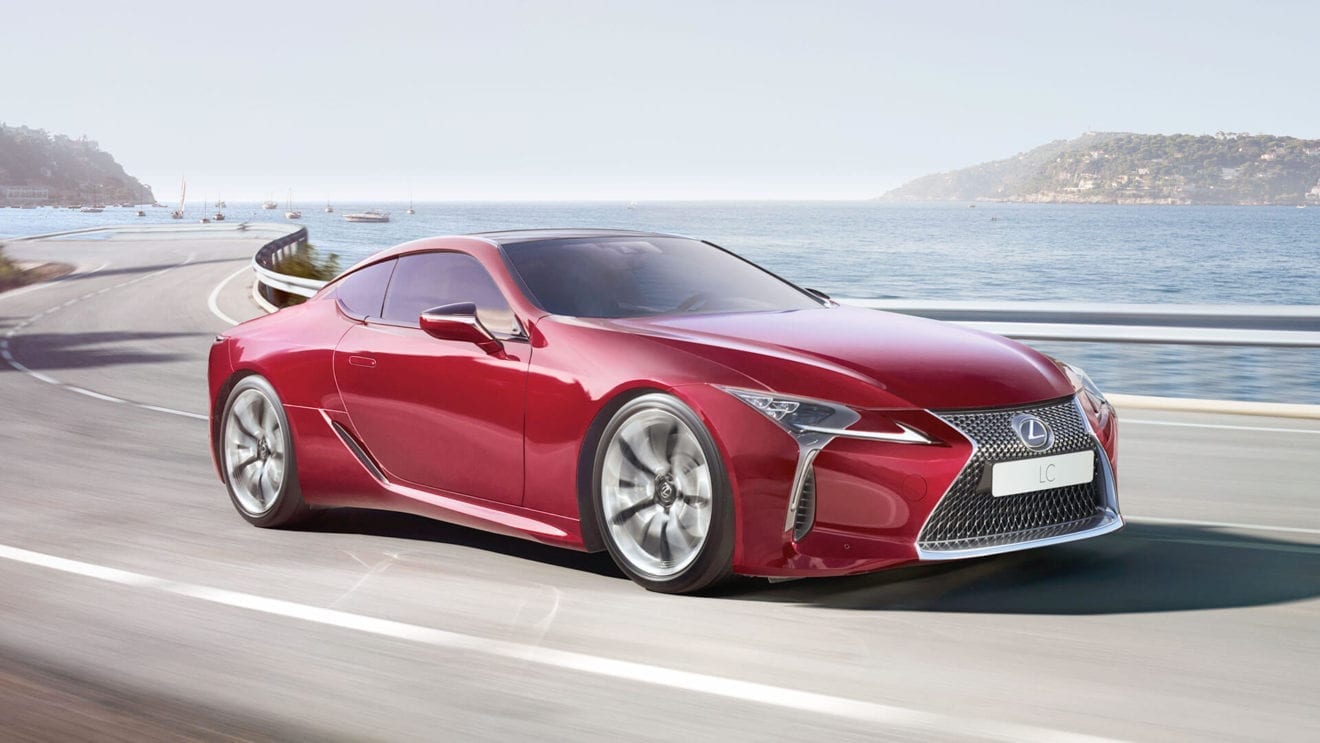
    Japanese car maker Toyota Motor Thailand is downbeat about sales prospects of its luxury brand Lexus this year, saying the price of imported cars make them less able to compete with locally made luxury brands.

    Toyota expects to sell 650 Lexus cars in 2017, a 24% drop year-on-year, said executive vice-president Vudhigorn Suriyachantananont.

    “We admit the Lexus brand is at a disadvantage in the luxury car market because they are imported from Japan, so their retail prices are much higher than local luxury brands,” he said.

    Cars imported from Japan are subjected to an import duty of 60% under the Japan–Thailand Economic Partnership Agreement, compared to the normal duty of 80%.

    Mr Vudhigorn said Lexus also has launched fewer models in the Thai market. It introduced the Lexus RX sport utility vehicle about two years ago, while the new Lexus LS sedan was launched locally yesterday, priced from 11.5-15.8 million baht, available with either an internal combustion engine or hybrid-electric platform.

    “For the new LS, we aim to sell about 30-40 cars annually,” he said.

    Lexus recorded its Thai sales record in 2015, selling 834 cars, up sharply by 46% from the previous year. But sales dropped to 770 cars in 2016.

    Lexus has sold 8,455 cars total in Thailand as of September this year.

    Mr Vudhigorn forecast the luxury market to grow by 20% to 26,000-27,000 cars sold in 2017 after sales from January to September tallied 20,056 cars.

    Two German brands — Mercedes-Benz and BMW — now control over 90% of the luxury car segment because both companies have their local assembly plants in Thailand, he said.

    Third-ranked is Sweden’s Volvo, while Lexus is in the fourth spot in the Thai luxury market.

    President Michinobu Sugata said Toyota does not have plans to localise Lexus’s assembly plant at Toyota’s passenger car factory in Chachoengsao, even though it would make retail prices more competitive in the Thai market.

    Lexus has three showrooms and service centres in Bangkok and 10 service centres in upcountry provinces.

    Toyota expects to sell 265,000 units this year, up 8% in line with the local car market, which is projected to grow by 8% to 830,000 units.

    Toyota plans to export 291,000 units from its Thailand operation, down by 9% from last year mainly because of a drop in sales from the Middle East and Latin America.

    On Friday, Toyota is scheduled to announce its plan to ship the Hilux Revo pickup to Japan for the first time.

  • Demand for gold in China lifts profit at world’s top jeweller

    Demand for gold in China lifts profit at world’s top jeweller

    Chow Tai Fook Jewellery Group’s profit increased for a second consecutive six-month period as demand for gold products lifted sales at the world’s leading jewellery retailer.

    Shares jumped after the company reported net income rose 46 per cent to HK$1.78 billion (S$308 million) in the six months through September. The stock rose 4.4 per cent to HK$9.19 as of 11.03am in Hong Kong on Wednesday (Nov 22), heading for its biggest two-day gain in a year.

    The results mirror the continued recovery in demand for luxury goods in China after a two-year slump amid a corruption crackdown in the country.

    Sales at the company’s stores are picking up and more customers are also purchasing its products online as the world’s second-largest economy is on track for its first full-year acceleration in seven years.

    Revenue climbed 15 per cent to HK$24.8 billion, the Hong Kong-based company said on Tuesday. Retail sales of Chow Tai Fook in mainland China increased 16 per cent, and 13 per cent in Hong Kong and Macau. Growth momentum was fuelled by gold products, the company said.

    The current financial year “will be a turning point for our business given the nascent jewellery market recovery”, the company said. “Although the recovery is gradual and mild, the industry is expected to return to a stable yet sustainable growth.”

    The retailer expanded the number of outlets in mainland China to 2,358 at the end of September. It will continue the expansion “in view of the improving general consumer sentiment, coupled with the rising opportunities from the development of shopping malls in the region”, Chow Tai Fook said.

    In Hong Kong and Macau, the company will optimise outlets in tourist centres and selectively open stores in residential neighbourhoods.

    The company expects its total rent cost declining 15 per cent in the current financial year, finance director Hamilton Cheng said at a press briefing in Hong Kong on Tuesday after the results.

    Demand for jewellery, watches and clocks, and valuable gifts has been picking up. Sales of these products in Hong Kong rose 4.3 per cent this year through September, compared with a 17 per cent plunge in all of 2016.

    Luxury-watch retailer Hengdeli Holdings said this month that it is boosting orders for the upcoming Chinese New Year, expecting stronger demand from shoppers in Hong Kong.

    Tourists from mainland China, who account for more than three quarters of arrivals to Hong Kong, grew in the nine months through September.

    With more Chinese tourists likely to travel to Hong Kong next year as the yuan strengthens against the Hong Kong dollar, retailers are poised to benefit from the rise in store sales and falling rents, according to Ms Catherine Lim, an analyst at Bloomberg Intelligence.

  • Some words from Jack Ma for successful start up business

    Some words from Jack Ma for successful start up business

    Jack Ma has some blunt advice to startups: “If it’s hot, forget it.”

    “By that time everyone is doing it. It’s too late,” Ma told attendees of the Jumpstarter 2017 finale at the Hong Kong Exhibition and Convention Centre last night.

    Ma, who shared the stage with Hong Kong chief executive Carrie Lam, was on hand to present US$1 million in funding to winning startups from medical, agricultural and energy sectors.

    Ma encouraged startups to pursue their dreams.

    “The advice is first you should be optimistic – a great entrepreneur is optimistic for the future. And you have to answer what problem will you solve. What way can you solve it which is different? Why are you better than anyone else?

    “The second is that you have to find a group of people who can work together. Those people who have the same ambition. Those people coming to join you not just because it is a job, but because they believe in you and they believe in the mission.

    “And the third is: What price are you going to pay for it. You don’t ask “What can I get?” You ask “What can I give?”. If you have a great idea, you may have to wait 10 years. If you think I will win this in three years, prepare for five years.”

    Ma said when he conceived Alibaba 18 years ago and went out to raise money from venture capitalists, he was rejected by all of them.

    “The first money I got from a capital fund was $50,000. I thought this would last 10 months. We even counted every cent we spent. But it lasted only four months. We were almost bankrupt.”

    He also warned startup founders to be patient.

    “Today if you are only a tractor, don’t try to put a Boeing 747 engine inside. It will destroy you. You should find the people who suit the company. I have hired a lot of vice presidents from big companies – they almost destroyed my company. I only had $5 million and a guy came in with a marketing plan $12 million. I said: How can you have $12 million? He said: “I have never made a plan below $20 million.

    “Find the right person,” said Ma.

    Tax breaks

    He urged governments if they cannot fund startups, why not reduce the tax to them.

    “I’m doing that,” interjected Lam, who has met with Ma four times since her election in July and enjoyed wide-ranging discussions on technology and business.

    Both people said they were “very optimistic” about Hong Kong’s future as a base for startups.

    Ma said that although the city is not a large market, Alibaba is interested in the talent that the city offers. Its capital and technology also appealed.

    “The reason why Hong Kong has been so successful in the past 50 years is because Hong Kong is very open-minded, and accommodates all kinds of cultures. [Hong Kong] should also welcome people from all over the world,” he said.

    “Young people in Hong Kong, don’t focus your eyes only on Hong Kong. America, Europe, anywhere there is opportunity, go there and build something and bring ideas back.”

    Lam said Hong Kong needed to review immigration policies to encourage entrepreneurs to come to the city.

    “We need more time to nurture local talent and [in the meantime] we need to bring in outside talent. Hong Kong remains very attractive to a lot of expatriates and people from the mainland,” she said.

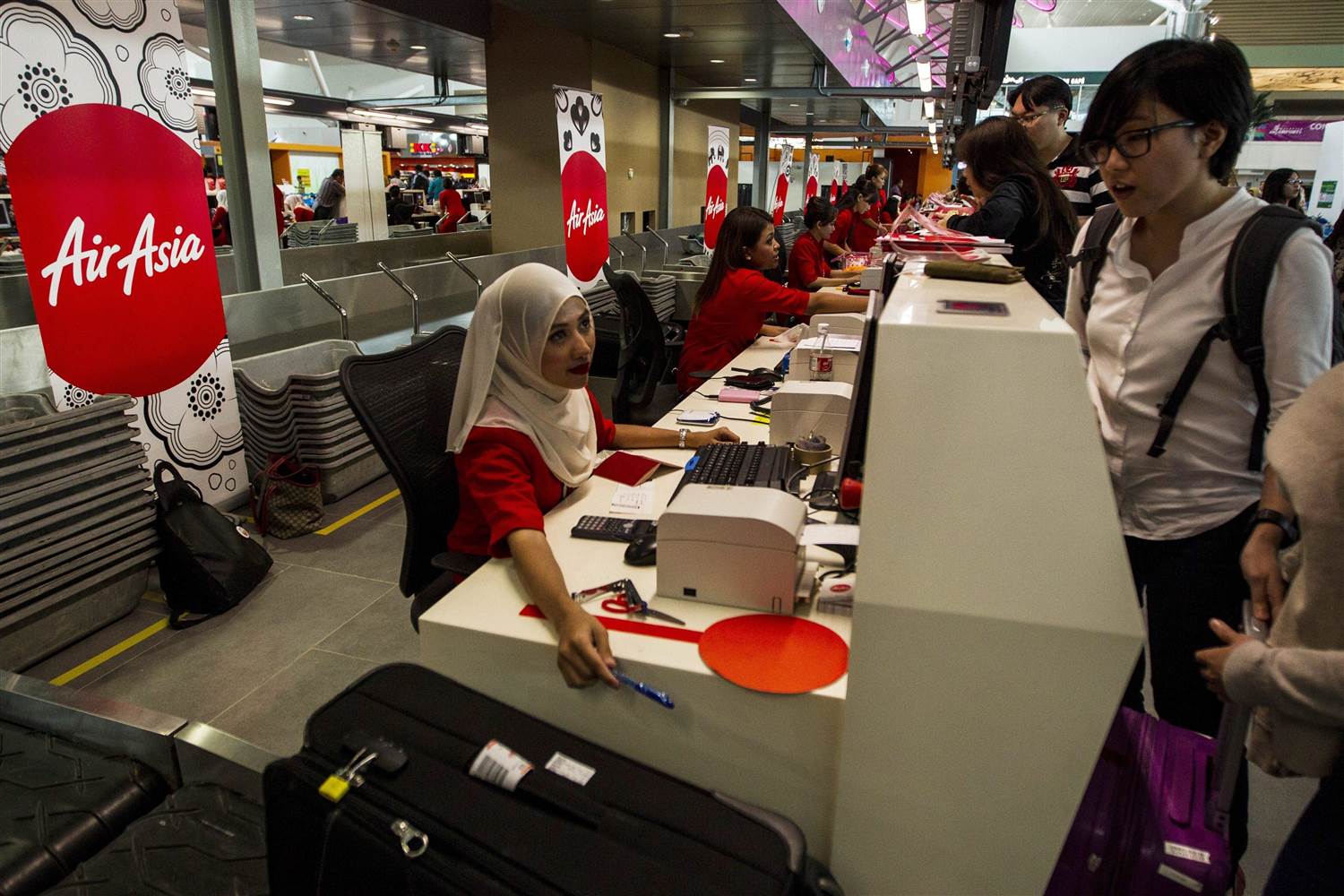
  • AirAsia opens new routes from Singapore to Medan and Padang

    AirAsia opens new routes from Singapore to Medan and Padang

    Low-cost airline AirAsia is opening two international routes from Singapore to Medan and Padang, respectively.

    The new round-trip flights will be available on Feb. 9, 2018.

    “We are interested in opening [new routes] in Tourism Ministry’s 10 Priority Destinations. We are currently assessing Silangit, Padang, Belitung, Labuan Bajo and Raja Ampat,” told AirAsia Indonesia commercial director, Rifai Taberi.

    Each of these routes will have seven flights in a week (one flight per day) using Airbus A320 that has the capacity of 180 seats.

    The flight time from Medan to Singapore will be at 05:50 a.m. and arrive at 08:15 a.m. while the flight from Singapore to Medan will be at 12:35 p.m. and arrive at 01:00 p.m.

    For the Padang – Singapore route, the plane will depart at 09:40 a.m. from Padang and arrive in Singapore at 11:55 a.m. Meanwhile, the flight from Singapore will depart at 08:55 a.m. and arrive in Padang at 09:15 a.m.

    Promotional tickets for these new routes are priced at Rp. 479,000 ($35.38) for Medan – Singapore route and Rp. 599,000 for Padang – Singapore route.

    Moreover, AirAsia is re-opening the Jakarta – Medan route and will be available on Feb. 9, 2018 with a promotional price of Rp. 659,000. These promotional fares are for flights between Feb. 9 until Nov. 21 next year.

    With the new international routes, AirAsia will have seven routes that connect Singapore and Indonesia. For domestic flights, AirAsia currently travels to-and-from Jakarta, Bandung, Semarang, Yogyakarta and Denpasar.