Author: Mei Ling Tan

  • Korean online mall sales lose traction

    Korean online mall sales lose traction

    South Korean online mall sales growth has decelerated as competition grows more fierce, government data shows.

    There was a 3.6 per cent increase in the combined revenue of 26 offline and online retailers to 10.22 trillion won (US$9 billion) in July, according to the Ministry of Trade, Industry and Energy. This gain marks a deceleration from 7.2, 6.3 and 7.2 per cent growth posted in April, May and June respectively.

    The slowdown is attributed largely to fewer sales on online open markets such as eBay and 11st.

    Sales at 13 major online shopping malls rose 4.4 per cent last month, following double-digit growth for five straight months since February. Meanwhile, the sales of the 13 offline retailers, including department stores, discount chains and convenience stores, rose 3.2 per cent on-year on the back of strong performance by convenience stores.

    Convenience stores saw their sales rise 11.1 per cent last month, with hypermarket chains posting 1.7 per cent growth and department stores having a 1.3 per cent revenue slide.

  • Hong Kong Post issuing shopping-street stamps

    Hong Kong Post issuing shopping-street stamps

    Hongkong Post is issuing a set of special stamps with Hong Kong’s shopping streets as their theme, together with associated philatelic products.

    The six stamps introduce shopping streets with a special local history and culture – in Mong Kok, shops in the Goldfish Market and others in the Flower Market; Chinese Medicine Street in Sheung Wan, which is more than a century old; Yau Ma Tei’s Jade Market; the wholesalers in Kitchenware Street; and the Yau Ma Tei Wholesale Fruit Market.

    The official first-day covers are available now at all post offices, while the stamps and associated products will be displayed at the General Post Office, Tsim Sha Tsui Post Office, Tsuen Wan Post Office, Sha Tin Central Post Office and Tuen Mun Central Post Office.

  • Old Navy Vietnam opens second store

    Old Navy Vietnam opens second store

    Old Navy Vietnam has opened its first store in Hanoi, three months after its debut in the country.

    The 655sqm store is located in Vincom Nguyen Chi Thanh and offers collections for men, women, kids and babies.

    Melissa Fehlman, GM of Old Navy Vietnam, said the brand aims to open more stores throughout Vietnam in coming years, with Ho Chi Minh City’s second shop scheduled this month.

    Acknowledging that Vietnamese customers are trendy, Old Navy commits to refreshing 70-80 per cent of its products every three months, alongside core, long-term lines such as denim wear.

    Old Navy came to Vietnam under a franchise agreement between Gap Inc and Vietnam IPP’s subsidiaries ACFC and CMFC, which also hold the Gap and Banana Republic franchises in Vietnam.

    The nation’s fashion market is booming, buoyed by the recent arrival of international brands, including Pull&Bear and Stradivarius on September 1.

    H&M opens its first store in Ho Chi Minh City on September 9 and Zara will open its first Hanoi store next month.

  • Nike India still feeling pinch

    Nike India still feeling pinch

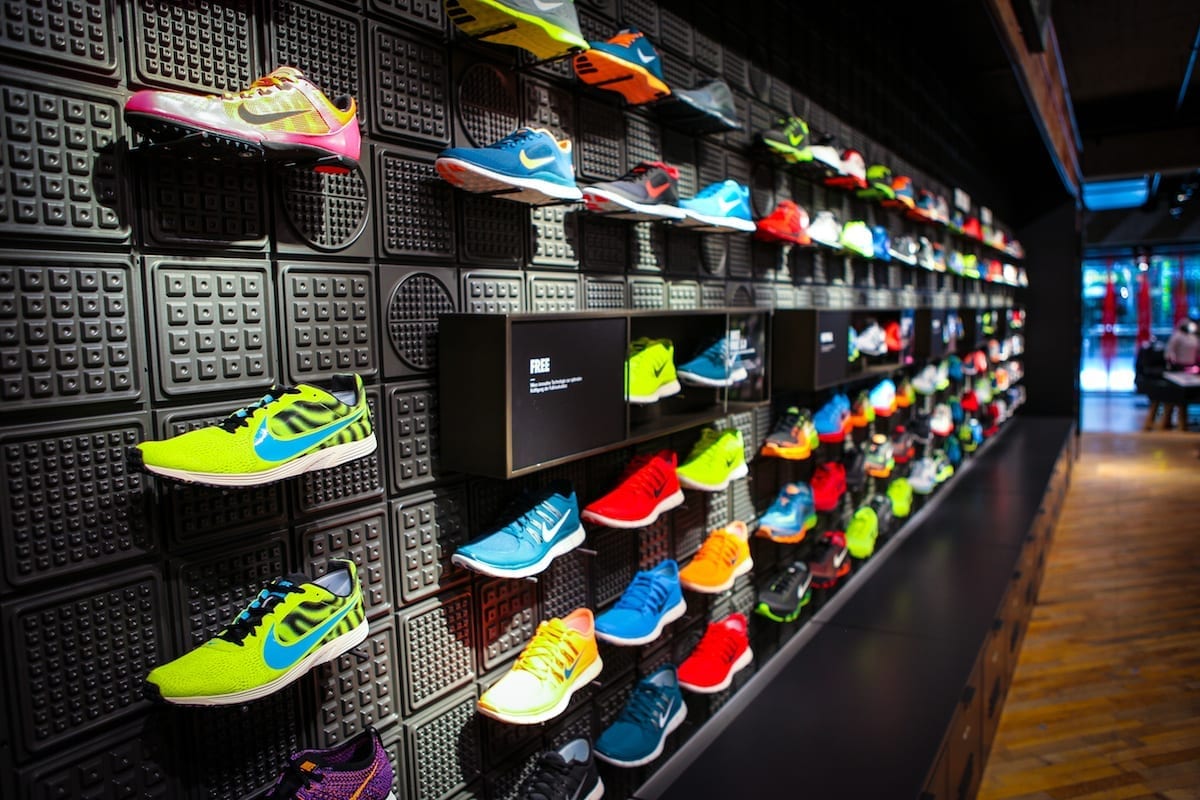
    Nike India is planning to further trim back its business activities to stem losses.

    A year ago the US sportswear major had already closed about 35 per cent of its stores, leaving it with about 200 outlets.

    While the sportswear market is expected to touch US$8 billion in sales by 2020, according to Euromonitor, global firms like Adidas and Nike are finding it hard to make profits in the otherwise lucrative Indian market, reports Fashion Network. Even the German sportswear maker Puma had losses in India this financial year, after three years of profits.

    Fashion Network says that while India is a booming market for sportswear, it is price sensitive and dominated by domestic brands like HRX, YWC and Zeven.

    Nike was an early entrant in the Indian market in 2005, but has had losses there for the past few years. It sales plummeted to Rs764 crore (about $119.2 million) last year from Rs803 crore, and its losses widened from Rs101 crore to Rs170 crore.

    In damage-control mode, the company is trying to minimise losses by trimming costs and cutting down on sponsorship deals. It has also let go of 20 per cent of its employees in India.

    It has its headquarters in Bangalore and offices in Delhi and Mumbai.

  • Toys R Us calls in restructuring advisors

    Toys R Us calls in restructuring advisors

    Toys R Us has appointed restructuring advisors as it struggles under a debt burden, suggesting it may be about to trim its store network.

    Neil Saunders says while the decision is not necessarily a sign of imminent bankruptcy, it is an indication the company is in “a very uncomfortable financial position”.

    “For a robust retailer, debt payments can be challenging. For a retailer struggling to generate sales growth while, at the same time, trying to invest to remain relevant – it can be the difference between success and failure.”

    Saunders says Toys R Us faces a pincer movement.

    “Firstly, it suffers competition from online and physical generalists who happily discount toys to drive customer traffic and sales for stores and websites. Toys R Us has little choice but to price match on some items but has no other categories with which it can balance out eroded margins. Where it fails to price match, it loses sales.

    “Secondly, Toys R Us has lost out in the digital space. Although recent digital investments have been made, the website and general e-commerce proposition are still below par. By our calculations, Toys R Us continues to lose online market share in toys.”

    A further complication for the toy giant is that it operates large and expensive stores.

    “These are increasingly unsuited to what consumers want and expect, and they are steadily becoming less productive and efficient,” says Saunders.

    “Against this backdrop, Toys R Us has to contend with the debt it accumulated as part of the leveraged buyout. In our view, this is an example of private equity damaging retailers by not running them as commercial trading entities but as ATMs.”

    Toys R Us in Asia is operated as a joint venture between the US parent and Fung Retailing. In April, it consolidated its operations in the region by merging the 160-strong Toys R Us Japan chain into the JV, which is 85 per cent owned by Toys R Us.

  • Apple China sets pertinent date for store opening

    Apple China sets pertinent date for store opening

    Apple China has set an opening date of September 16 for its Tianyi Square location in Ningbo – just in time for the iPhone 8 release.

    It will be the US technology brand’s 41st store in China, and appears to be geared toward Apple’s new retail vision with a large central gathering space with conventional retail on its periphery.

  • Thyssenkrupp sees boost for steel from shift to electric cars

    Thyssenkrupp sees boost for steel from shift to electric cars

    South Korea’s Hyundai Motor (005380.KS) said it had suspended production at one of its China factories on Tuesday after a supplier refused to provide parts due to delays in payment – its second such incident in as many weeks.

    Frayed relations with suppliers to its venture with BAIC Motor Corp Ltd (1958.HK) are adding to headaches for Hyundai in China, where it has seen sales slump due to diplomatic tensions between the two nations and fierce competition from local brands.

    Supplier sources familiar with the matter say that BAIC is in charge of payments and has been responsible for the delays.

    The partners are fighting over their supplier strategy with BAIC favoring shifting to cheaper Chinese firms in the face of intense competition, while Hyundai wants to protect its South Korean supply chain, people familiar with the dispute said.

    Hyundai declined to comment on the reason for the failure to pay suppliers. A representative for BAIC could not be immediately reached for comment.

    Their joint venture had only just resumed production at four China plants on Aug. 30 after a suspension of about a week because one French supplier refused to provide fuel tanks due to non-payment.

    This time, a German firm has refused to provide parts for air intake systems, a representative for Hyundai said, declining to identify the supplier. The joint venture’s three other Chinese factories remain operational.

    Any loss of production from this one factory is unlikely to have a major sales impact as Hyundai probably has sufficient inventory at the plant because its cars have not been selling well, said Ko Tae-bong, an analyst at Hi Investment & Securities.

    “That is manageable. But if Hyundai’s Chinese partner is refusing to make payments, that’s a different story,” he said, adding that the issue could occur time and time again.

    Scrambling to tackle problems in China, Hyundai said this week it had appointed a new head for its China operations. Tao Hung Than, who is of Chinese descent, took the helm effective Friday replacing Chang Won-shin, who lasted less than a year in the job.

    The new China CEO, however, has a huge task in front of him if he is going to get Hyundai back on track in the world’s biggest auto market – one that accounted for nearly a quarter of Hyundai’s revenue in the last financial year.

    A weakening brand image and a product line-up without attractive SUVs are only adding to pain from diplomatic tensions. Hyundai’s sales from its Chinese factories plummeted 64 percent in April-June first quarter, when the automaker posted its smallest quarterly net profit in five years.

    South Korean firms have been hit by a Chinese backlash over Seoul’s decision to deploy a U.S. missile defense system to counter threats from nuclear-armed North Korea. China says the system poses a threat to its national security.

    Hyundai and BAIC were also due to start operations at a fifth China car factory late last month but the timetable has been pushed back. Hyundai has declined to comment on the postponement.

    Hyundai Motor shared fell 1.4 percent to their lowest level since April 19 on Tuesday and have declined 4.2 percent since the first reports of the supply disruptions emerged a week ago.


  • Competition causes Yeli China to lose footing

    Competition causes Yeli China to lose footing

    While revenue rose 47.6 per cent for the quarter ended June 30 for China Sports International, its footwear subsidiary Yeli China is facing difficulties.

    The Singapore-listed company has changed its financial year end from December 31 to June 30, meaning its current period covers 18 months.

    For the latest quarter, revenue amounted to about RMB22.71 million (US$3.4 million). For the 18 months ended the same date, revenue grew by 4.8 per cent to about RMB358.8 million. The slender increase was mainly attributable to persistent and increasing competition in the sportswear industry.

    “Our distributors continued to be wary of the intensified competition and became even more prudent in placing their orders for footwear and apparel products,” says the company.

    However, an increase in OEM orders in first half enhanced revenue performance.

    Footwear sales for the 18 months grew only 2.6 per cent to about RMB345.4 million. The company says the poor economic outlook and lack of product improvement resulted in fewer orders from Yeli footwear distributors.

    Because of the persistent weakening retail sportswear market and intensified price competition, more than half the distributor sales outlets have been closed.

    During the 18 months, Yeli footwear sales were about RMB114.5 million, representing 33.1 per cent of the company’s footwear range, down from 53 per cent.

    For the sixth quarter, Yeli footwear revenue fell 25 per cent to about RMB15.8 million.

    Apparel sales were RMB13.4 million for the 18 months, up from RMB5.83 million, and for the sixth quarter were RMB1.9 million, down from RMB2.9 million.

    Overall gross profit was up 21.5 per cent to about RMB13.9 million for the 18 months, mainly because of the high sales volume from the OEM footwear segment.

    Overall gross profit margin edged up 3 per cent for the 18 months.

  • Dematic expands solution set to include AutoStore

    Dematic expands solution set to include AutoStore

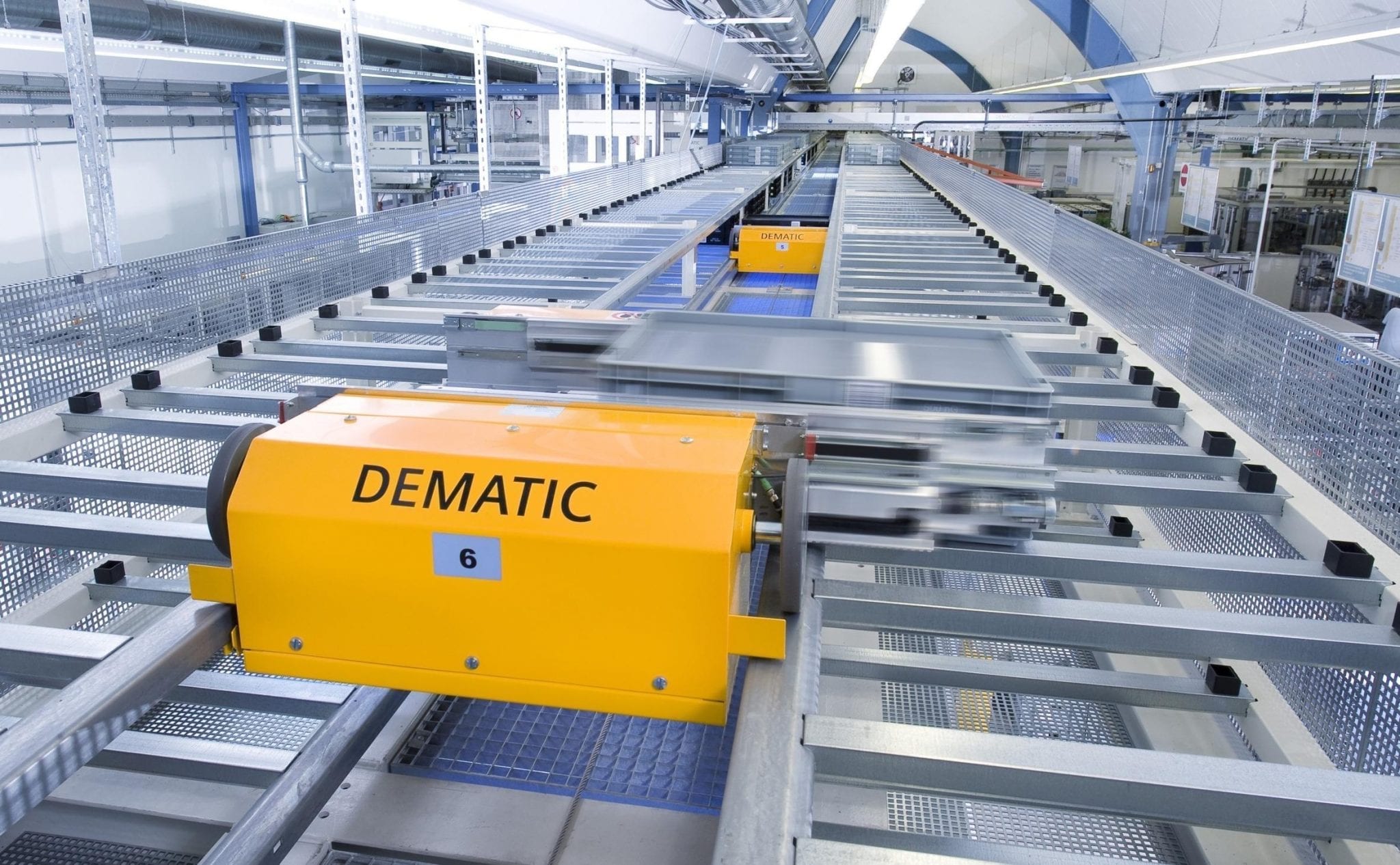
    Dematic has signed a global agreement with AutoStore. The agreement will enable Dematic to expand its omni-channel integrated solution offering with an ultra-high density storage and goods to person piece picking system to optimise order fulfilment and kitting. As a qualified system integrator, Dematic will design, configure, engineer, install and support AutoStore as a sub-system within an overall Dematic solution or as a standalone piece picking system throughout the globe.

    Dematic helps customers achieve operational excellence by offering the most appropriate solution for each application. Including the AutoStore system into the Dematic portfolio of solutions creates more choices for customers to optimise order fulfilment. For example, if storage density is the most important consideration, the AutoStore system may be the most effective option.

    With the AutoStore partnership, Dematic has the ability to provide scalable solutions that work across all elements of the dynamic order profiles and SKU velocities associated with e-commerce and omni-channel solutions. In addition, the Dematic iQ Warehouse Execution System (WES) will manage all functional areas of the operation including piece picking and the AutoStore system. This Dematic one source, solution provider capability, insures production and distribution operations employ a holistic integrated solution that harmonises information and material flow from receiving to shipping.

    “The Dematic suite of solutions is comprehensive; adding AutoStore to the mix enables users to obtain the ideal storage, buffering and piece picking solution” according to Jeff Moss, CEO, Dematic International. “The ability to design and implement a wide variety of system configurations is critical to effectively accommodate the growing demands of omni-channel distribution in this age of acceleration,” Moss continued. “The Dematic expanded solution will be a sure way for our customers to serve their customers better and faster.”

  • BluJay Solutions partners with NMB Solutions

    BluJay Solutions partners with NMB Solutions

    BluJay Solutions announced a strategic partnership with NMB Solutions, a Microsoft partner specialising in third-party parcel and LTL shipping integration with Dynamics AX/365 for Operations.

    NMB Solutions has been providing Dynamics AX integration for BluJay’s Parcel (formerly Kewill Flagship) and other third-party parcel solutions for nearly ten years, starting with Dynamics AX 4.0. NMB’s flagship product, the Packing Workbench, provides AX users with powerful tools that integrate BluJay’s Parcel directly into AX’s sales order, pick/pack, and finance functions.

    The partnership brings together BluJay’s global transportation management strength and experience with NMB’s robust Dynamics AX integration and in-depth knowledge of AX/365 for Operations, to create even more powerful solutions for the Microsoft Dynamics 365 community.

    “This is a really exciting time for us – the partnership allows us to focus our development on the integration of the incredible tools BluJay has to offer, not only for parcel shipping, but for TMS as well,” said Chris Morgan, Managing Director at NMB. “The ability to integrate features like AES filing, denied third-party screening, and hazardous material labeling will make our Packing Workbench even more efficient, and allows clients to realize their ROI faster.”

    BluJay is the only vendor that offers these supply chain solutions in a single platform, with connectivity to the world’s largest Global Trade Network.

    “Working with the BluJay team has been fantastic,” Morgan added. “As we move toward releasing our 365 for Operations version, we will have the capability to integrate into BluJay’s Parcel cloud offering. This enables us to offer a complete parcel shipping solution on the Microsoft Dynamics Marketplace.”

    In the next phase, NMB will provide similar integration to BluJay’s global Transportation Management platform, combining the full suite of BluJay’s shipping tools with the power, ease-of-use, and global reach of Microsoft Dynamics 365.

  • World debut for GrabPay retail payment in Singapore

    World debut for GrabPay retail payment in Singapore

    Grab plans to work with more than 1000 retailers in Singapore as it expands its business base from its ride-hailing app into e-payments, via GrabPay.

    The company has already expanded its payment services from allowing passengers to use GrabPay instead of cash when riding in Grab cars and taxis to letting friends and family members transfer cash to each other.

    Now it wants customers to buy goods, book cinema tickets and order food using the app.

    GrabPay chief Jason Thompson told the Straits Times that its primary target is hawker stalls and small retailers who do not currently accept cashless payments.

    “Rolling out peer-to-peer transfer first makes it easier for consumers. First, I am able to pay someone I trust, and the next step is paying a merchant with the same steps,” he said.

    “Our wallets already exist in Singapore and are already being used everyday here. We’re just allowing them to use it more,” he said.

    Singapore will be the first country in which GrabPay will operate outside its own ecosystem.  Payments will be facilitated by customers scanning QR codes on their mobile devices.

  • AirAsia profit falls 73% on higher operating costs

    AirAsia profit falls 73% on higher operating costs

    Malaysian budget airline AirAsia Bhd. (5099.KU) on Tuesday posted its weakest quarterly earnings in nearly two years, as second-quarter net profit was weighed down by higher operating expenses.

    Net profit for the April-June period fell 73% to 92.5 million ringgit ($21.7 million) from MYR342.1 million a year ago, according to a local stock-exchange filing Tuesday.

    Revenue for the quarter climbed 47% to MYR2.38 billion ($557.6 million) from MYR1.62 billion the previous year.

    AirAsia, Asia’s largest low-cost airline by passenger numbers, said it was optimistic about stronger results this year, citing strong demand and stable fuel prices and foreign-exchange rates. It said it expects to achieve an average load factor of 88% in the third quarter.

    The low-cost airline said it plans to add 22 more planes to its fleet through a combination of finance and operating leases in the second half of 2017.

    Shares of AirAsia traded 0.6% higher at MYR3.30 ahead of the earnings release, outperforming the local benchmark stock index’s 0.5% drop.

    The stock was suspended from trading Tuesday afternoon pending an announcement. In April, The Wall Street Journal reported that a sale of AirAsia’s leasing business, Asia Aviation, to Korea Transportation Asset Management was imminent.

  • Heuer Globetrotter exhibition rolls out in 10 global cities

    Heuer Globetrotter exhibition rolls out in 10 global cities

    Swiss watch brand Tag Heuer is launching simultaneous collections in 10 leading global cities from September 16.

    Dubbed the “Heuer Globetrotter” exhibition, it will feature a curated selection of more than 400 vintage timepieces, each of the 10 displays curated to the host city. Those cities are Hong Kong, Singapore, Tokyo, Paris, Geneva, Munich, Venice, Dubai, Sydney and Miami.

    The timepieces will be sourced from tag heuer’s museum in La Chau-de-Fonds, the Louis Vuitton-owned brand’s home city in Switzerland.

    The exhibitions are aimed at watch enthusiasts, collectors and the general public. They will feature all sorts of timepieces ranging from pocket watches to dashboard-inspired wristwatches – including the Heuer Monaco worn by Steve McQueen in the film Le Mans.

    Each city will also showcase a selection of 20 watches chosen by a local collector and sourced from collectors in the region.

    Singapore’s exhibition will include the brand’s long-running Formula One association, Hong Kong’s theme will be Automobiles Pilots, and Tokyo’s “Design throughout history”.

  • CSL launches inflight roaming day pass

    CSL launches inflight roaming day pass

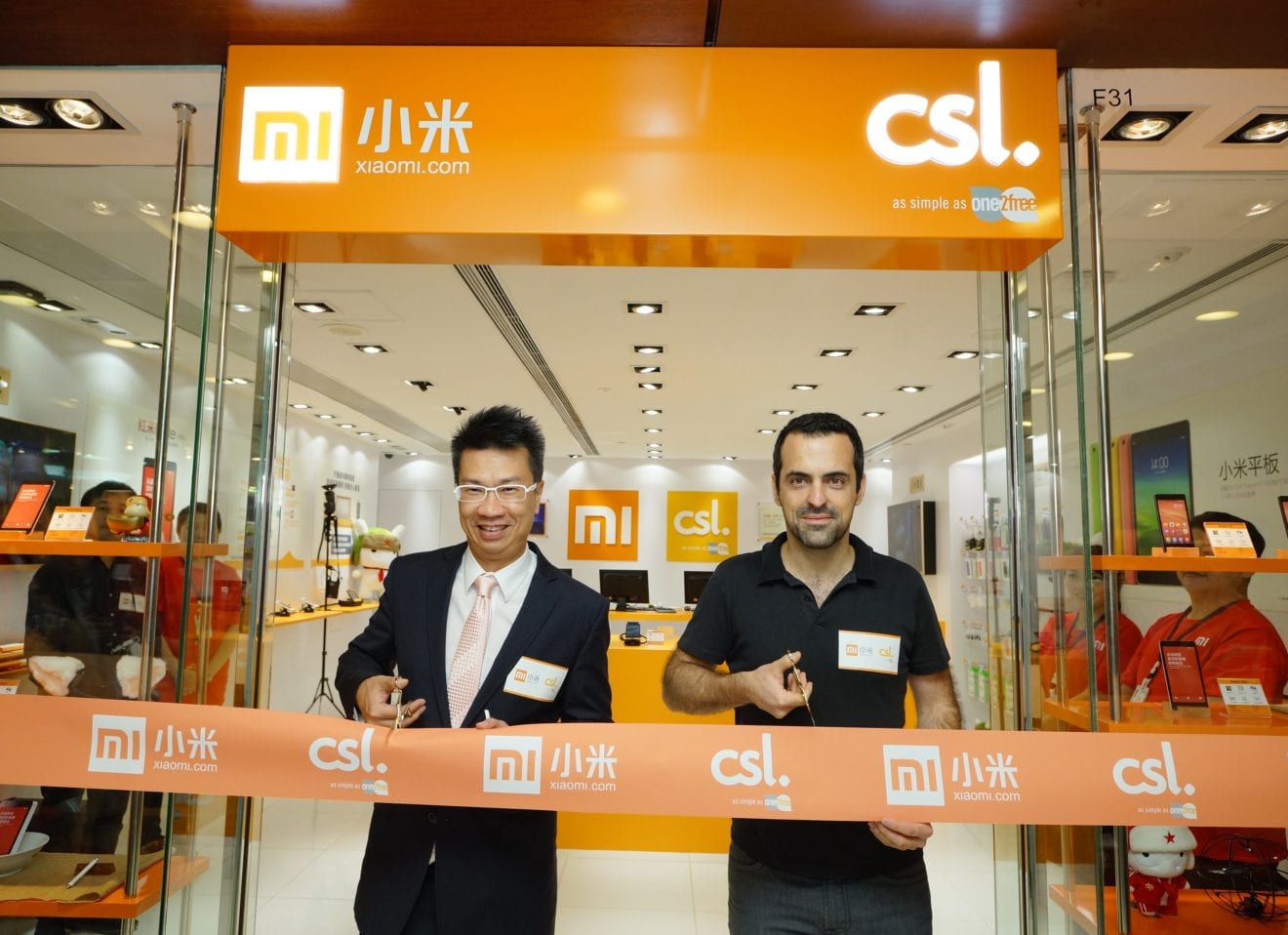
    Hong Kong’s CSL has launched a new inflight day pass service offering a daily fixed charge for data roaming while on board a plane.

    CSL is offering the service for a promotional rate of HK$98, to be increased to HK$178 from October 1.

    The service will be available on supported aircraft of a number of major international airlines including Cathay Pacific, Air France, British Airways, Emirates and Singapore Airlines, and CSL plans to add support for additional airlines in the future.

    “Hong Kong people are frequent travelers and they want to stay connected wherever they go. To best serve our customers, we are proud to add aircraft as a new day pass destination,” commented Richard Midgett, managing director of CSL parent HKT’s wireless business.

    “Customers can even set their own preference of when to start using data and when to be reminded of their usage via the CSL app. Data roaming is made easy, worry free and economical, even in the air.”

    In-flight Wi-Fi is becoming a hot commodity internationally, with two in three APAC travelers responding to a recent Inmarat commissioned survey indicating that they feel that the service is no longer a luxury but a necessity. The survey found that 79% are willing to pay for inflight connectivity even on short leisure flights.

  • Vans/Karl Lagerfeld collaborate on capsule collection Featuring 12 styles

    Vans/Karl Lagerfeld collaborate on capsule collection Featuring 12 styles

    Featuring 12 styles, the collection reinterprets the US skateboarding shoe brand’s classic styles through the lens of the iconic German fashion house. The designs were revealed at the Bread & Butter trend show in Berlin, and launches worldwide tomorrow at Karl Lagerfeld boutiques, select Vans accounts, Vans.com and Kar.com.

    Covering both apparel and accessories, the offering makes a bold statement with a black and white palette, says Vans. Styles include a t-shirt and sweatshirt with the Vans x Karl Lagerfeld logo, a t-shirt with an image of Lagerfeld wearing a checkerboard tie, a black-and-white raglan-sleeve bomber, a leather backpack with K-quilted stitching, and a cap with a checkerboard brim.

    For the footwear there are six interpretations of Vans Classic styles, including the debut of the SK8-Hi Laceless platform and the Old Skool Laceless platform, both outfitted in luxe leather with K-quilted stitching atop white platform soles.

    There is also a black leather Classic Slip-On finished with K-quilted details. The Old Skool and Sk8-Hi Reissue have leather uppers outfitted with bouclé fabric quarter-panels atop a black outsole.

    Rounding out the assortment, the Vans Checkerboard Classic Slip-On has been remastered with a Vans x Karl Lagerfeld cameo print.

    “Working in close partnership, our teams designed this collection to reflect the unique histories of our respective brands,” says Vans senior footwear designer Angie Dita. “As a tribute to Karl Lagerfeld’s fashion DNA, we highlighted elements like boucle fabric and K-quilted stitching, and we reinterpreted Vans’ signature checkerboard pattern with Karl’s cameo silhouette motif.”