Author: Mei Ling Tan

  • TOT wants telcos to be made to rent its pipes

    TOT wants telcos to be made to rent its pipes

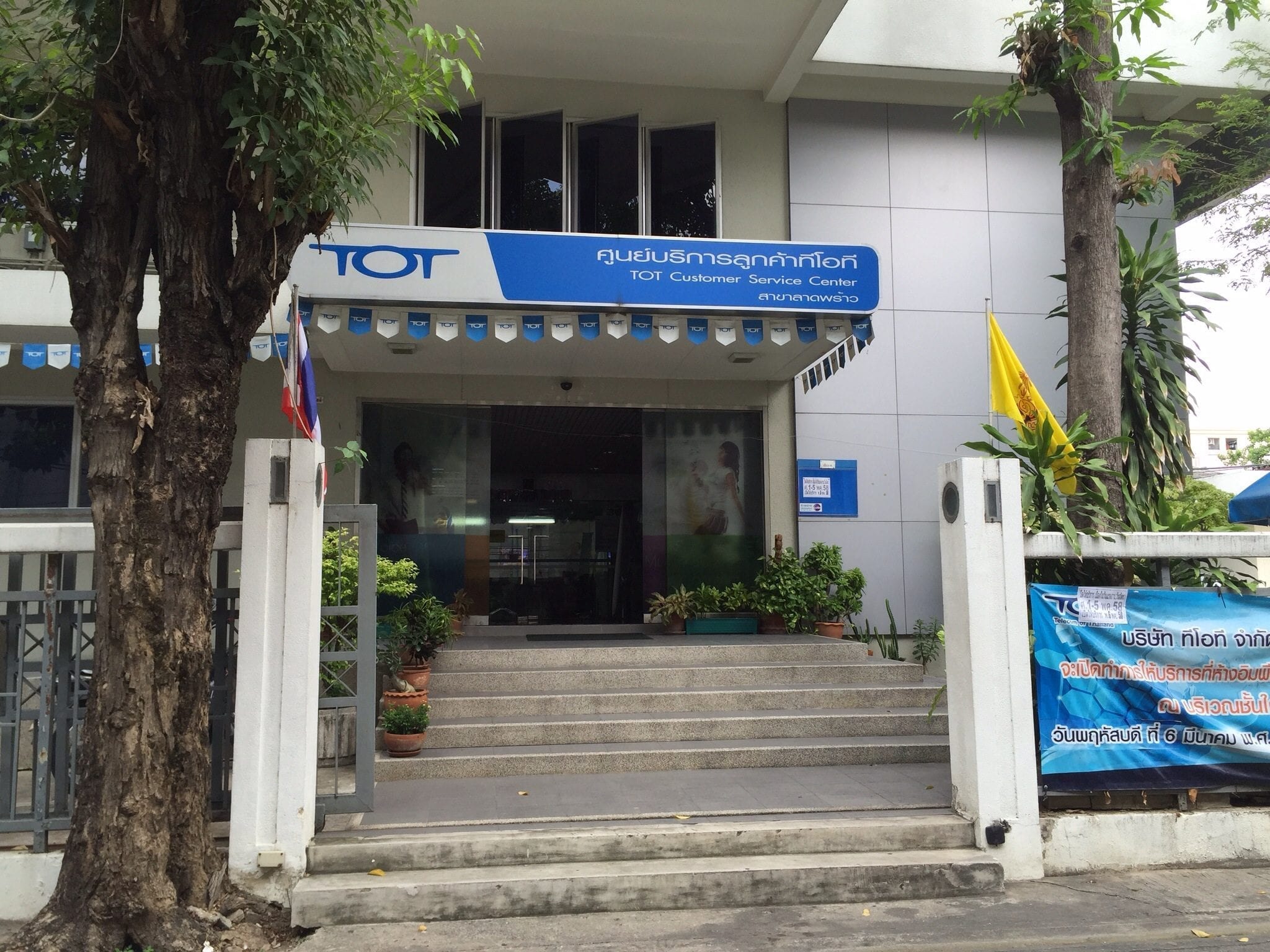
    Thai state-owned operator TOT is calling on the government to use its legislative powers to force telecoms and broadcasting companies to move their overhead cables in Bangkok into TOT’s underground pipes.

    The operator has argued that the move will accelerate the government’s target of removing all overhead power and telephone cables in three provinces to 2019, compared to the 2021 currently scheduled.

    The move to remove overhead cables in Bangkok, Samut Prakan and Nonthaburi is being managed by five state agencies – the Metropolitan Electricity Authority (MEA), TOT, National Broadcast and Telecommunication Commission, Bangkok Metropolitan Administration and the Royal Thai Police.

    Under the plan, MEA will be responsible for replacing all overhead power lines with underground lines, while TOT will be responsible for providing an underground duct system and grouping all existing telecoms and broadcast cables into these ducts.

    But TOT has argued that it lacks the authority to compel operators to relocate their cables, and that only the government can make an order.

    TOT wants the operator to be legally forced to rent the company’s pipes in the Bangkok. The company currently charges telecoms companies a monthly fee of 18,000 baht ($543) per km to access this underground infrastructure.

    TOT currently owns around 2,000km of the 5,000km worth of underground pipes in the Bangkok metropolitan area, and is set to inherit a further 1,500km next month after True Corporation’s existing fixed line phone build-operate-transfer concession with the state-owned company expires.

    The report states that TOT is ready to expand its pipe capacity to cover all 5,000km if it is assigned the installation of underground cables as part of the project.


  • DHL extends its European parcel network

    DHL extends its European parcel network

    Ireland and Romania are the two latest countries to join the DHL Parcel Europe network. DHL has added two more countries to its European parcel network for cross-border e-commerce through partnerships with Ireland’s state-owned provider of postal services An Post and the private Romanian parcel service Urgent Cargus. In November, DHL will also include Croatia and Bulgaria into its parcel network. The foundation for this is two partnerships: one with Croatian postal service Hrvatska Posta and the other with Bulgarian parcel service Rapido.

    The ongoing network expansion in cooperation with established local partners in the respective countries is in line with DHL’s strategy to continue its development in the European e-commerce market and offer customers the most extensive infrastructure possible. The clear goal is to establish a presence in all key European e-commerce markets by the end of 2018. “We believe in the European idea and we are aware that people in Europe are longing for community,” says Jürgen Gerdes, CEO Post – eCommerce – Parcel at Deutsche Post DHL Group. “The ‘United Shipping States of Europe’ are more than just a new logistics network. They contribute to creating a greater sense of community among European citizens.”

    Today, around six billion e-commerce parcels are shipped within Europe per year, with Germany, France and the UK being the largest e-commerce markets. And even if the industry is booming overall, the full potential is far from exhausted in the area of cross-border e-commerce. According to Eurostat, 55 percent of Internet users in Europe already shop online, but only 32 percent of them also do so outside of their country. By expanding its network, DHL Parcel Europe will be offering services that meet DHL’s standards in 26 countries, offering online merchants the benefits of a uniform network infrastructure and an expanded and standardized range of services in all of these markets.

    As a result of these new partnerships, DHL aims to promote long-term e-commerce growth in Croatia, Bulgaria, Ireland and Romania, in a targeted way and to tap into the resulting potential for cross-border commerce. To this end, DHL Parcel Connect has been defined as the service standard for cross-border B2C deliveries. In the future, online merchants will be able to receive the same high delivery quality in these four countries as they have already come to expect from DHL Parcel Europe. For example, delivery times for shipping and returns will be shortened thanks to Saturday deliveries and standardized processes. The four partners will also be introducing new services as well, such as notifying recipients of the expected delivery time for their orders and the option to request an alternative delivery date and location. A customer-friendly returns solution will be introduced as well.

    In the course of just three years and following the successful integration of the UK, Spain, Portugal and Russia in early 2017, DHL Parcel Europe’s network now encompasses 26 European countries with the latest expansion along with the domestic market in Germany. The network also includes the Netherlands, Belgium, Luxembourg, Poland, the Czech Republic, Slovakia, Austria, Sweden, France, Denmark, Norway, Finland, Estonia, Latvia, Lithuania, Hungary, Slovenia and now Ireland, Romania, Croatia and Bulgaria.

  • Kerry Logistics appoints new head of UK food and beverage division

    Kerry Logistics appoints new head of UK food and beverage division

    Kerry Logistics has appointed Claire Trench as Head of Food and Beverage (F&B), based at its Glasgow, Scotland office in the United Kingdom.

    Trench has over 17 years’ experience in forwarding, most recently in senior management positions working with leading brands in the beers, wines, and spirits industry. In her new role, she will support brands looking to export to the rapidly developing F&B market in Greater China, where Kerry Logistics offers complete cold chain logistics solutions, F&B trading, and production services.

  • Huawei promos cloud alliances with operators at annual event

    Huawei promos cloud alliances with operators at annual event

    “In 1943, IBM’s Thomas Watson said the world market for computers would be about five,” said rotating CEO Guo Ping during his keynote at Huawei Connect 2017.

    That number is significant, said Guo, as he spoke of Huawei’s vision to build one of the five major world clouds it predicts will be created in the future. The concept is based on airline alliances—Ping said that his firm would build a “cloud alliance” in partnership with operators like BT, Deutsche Telekom, Telefónica and Orange.

    “Only 2-3 companies can do what we do, he said.” About 50% of people globally use Huawei networks.”

    In a later press conference, Guo reiterated a point he made during his keynote. “The biggest difference between Huawei & traditional OTT companies is that Huawei does not monetize user data,” he said. “We monetize our technology.”

    Guo also provided details on Huawei’s hybrid cloud solutions that target the needs of governments and enterprises. “Huawei Cloud builds on the company’s decades of experience in devices, networks, clouds, and other digital domains, and is better equipped to achieve synergy between devices and the cloud,” said the company in a statement.

    Zheng Yelai, president of Huawei’s Cloud Business Unit, mentioned case studies from 12 automobile companies (including Volkswagen and Mercedes-Benz), Philips, ICBC, and several Chinese government service platforms currently using Huawei Cloud and cloud services from Huawei’s partners.

    “Our people have an in-depth understanding of our customers’ business scenarios,” said Zheng. The aim is to “help enterprises go digital more smoothly, and help ensure the success of more companies who are willing to innovate,” he said.

    At the event, Huawei also announced the launch of its new Enterprise Intelligence cloud services, which the company will provide with a platform of general and scenario-specific solutions. “To prevent vendor lock-in, Huawei offers hybrid cloud solutions that enable integration with third-party public cloud platforms, including those from Amazon and Microsoft,” said Huawei in a statement.

    “Huawei has worked with its partners to build a cloud network that has global coverage, providing complete solutions that help Chinese companies go global, and that also help companies outside China enter the Chinese market,” said the firm.

    Yang Xiaoling, CDO of China Pacific Insurance Company (CPIC), also spoke on his firm’s use of Huawei technology—specifically, using OCR technology to handle health insurance claims. Customers are able to take photos of their medical documents and upload the images to CPIC’s system, which will automatically read them and create structured claims documents.

    Li Qiang, division chief from the Shenzhen Traffic Police Bureau, referred to his analysis of intelligent urban transportation as Shenzhen’s “Traffic Brain.” Li claimed a ten-fold increase in image screening efficiency by using Huawei’s AI platform. “The intelligent traffic solution jointly developed by Huawei and the Shenzhen Traffic Police Bureau was honored with the ‘2017 Innovative Road Traffic Offering’ award from the Chinese Road Traffic Safety Association,” said Huawei.

  • Lego to cut 1400 jobs after sales drop

    Lego to cut 1400 jobs after sales drop

    Danish toy maker Lego will cut 1400 jobs, or about eight per cent of its global workforce, after reporting a rare decline in sales and profits in the first half of 2017.

    Revenue dropped five per cent to 14.9 billion kroner (A$3 billion) in the first six months of the year, mainly as a result of weakness in core markets like the US and Europe. Profits slipped three per cent to 3.4 billion kroner.

    “We are disappointed by the decline in revenue in our established markets, and we have taken steps to address this,” said Chairman Joergen Vig Knudstorp.

    He said the long-term aim is to reach more children in Europe and the United States and added there were “strong growth opportunities in growing markets such as China”.

    The company, he said, needs to simplify its business model to reduce costs. Since 2012, the group has built an increasingly complex organisation to support global double-digit growth.

    He told Denmark’s TV2 station that staff cuts would mainly affect administration and sales, not production.

    Last month, the maker of the famous coloured building blocks appointed Niels B. Christiansen, who headed thermostat-maker Danfoss for nine years, as its chief executive to replace interim CEO Bali Padda. Christiansen will start October 1.

    Based in western Denmark, Lego does not release quarterly figures. The group currently has about 19,000 employees around the world.

    The privately held firm said on Tuesday it is now preparing to ‘reset the company,” aiming to simplify the business after years of high growth and expansion into new ventures like film.

    Knudstorp said that the toy company had built an increasingly complex organisation over the last five years to support global double-digit growth, and in doing so had made further growth harder to achieve.

    “As a result, we have now pressed the reset-button for the entire group,” he said.

    “This means we will build a smaller and less complex organisation than we have today, which will simplify our business model in order to reach more children. It will also impact our costs. Finally, in some markets the reset entails addressing a clean-up of inventories across the entire value chain. The work is well under way.”

  • Uniqlo confirms Westfield Chermside launch date

    Uniqlo confirms Westfield Chermside launch date

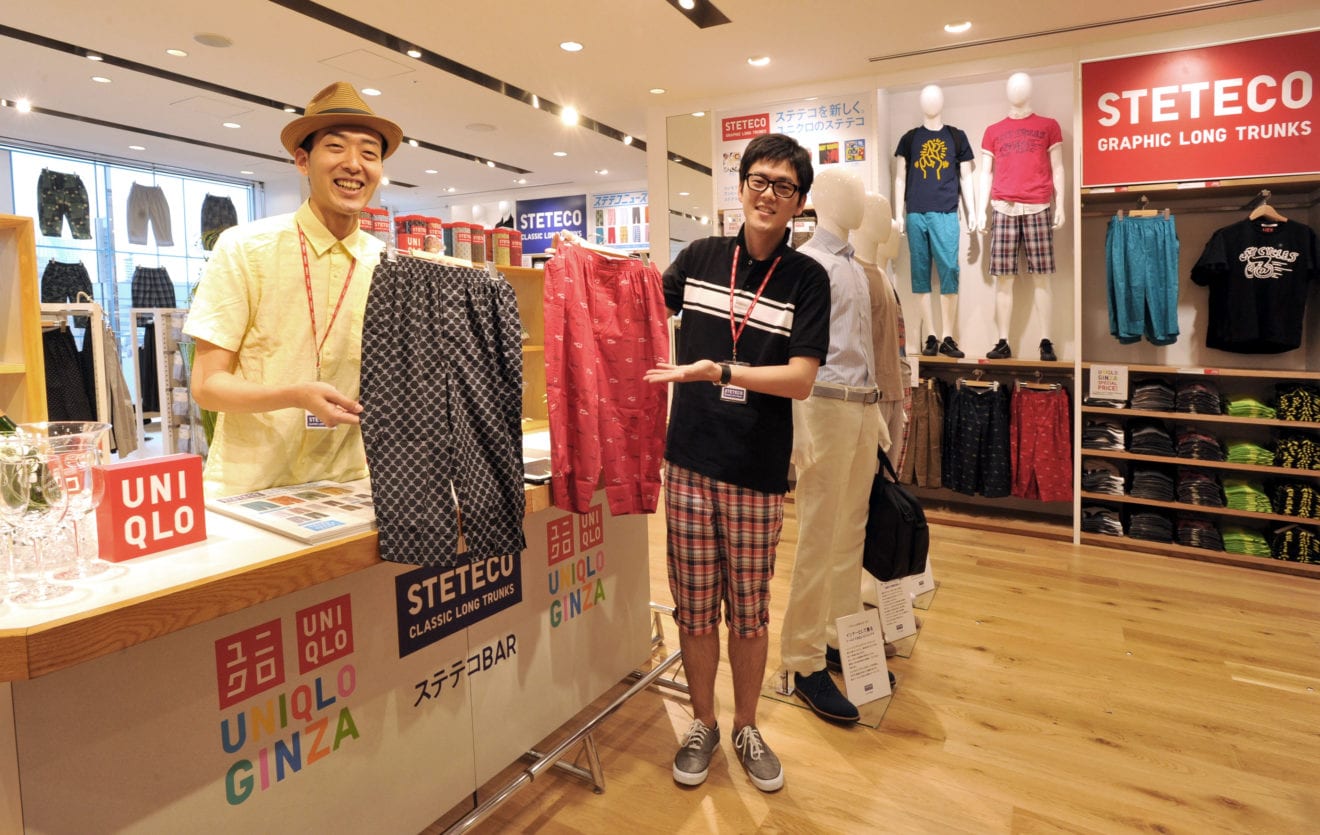
    Fast fashion chain, Uniqlo, will open its fourth Queensland store at Westfield Chermside on October 5.

    The store will cover a sales area of 792 square metres, and will be the global Japanese retailer’s fourth store in Queensland, and 13th store in Australia.

    Kenji Tsuji, chief operating officer at Uniqlo Australia, said he believes the new store will provide local shoppers with more variety as they look for high-quality yet affordable clothing.

    “Our growth strategy across Queensland has been a key focus and priority for the business since we opened our first store in Brisbane in 2015,” he said.

    “We’re thrilled to be making our products more accessible for shoppers in the city’s northern suburbs and for more locals to discover our range.”

    The store will be the first Uniqlo store in the southern hemisphere to feature the global chain’s range of Nintendo UT t-shirts.

    The range was designed as part of a global design competition that encouraged fans to submit t-shirt designs inspired by Nintendo, with over 16,000 entries received.

    Uniqlo said the Chermside location signalled the brand’s commitment to growing Australia as a key market in the Asia-Pacific region.

    In its third-quarter update, Fast Retailing, Uniqlo’s parent, reported a 9 per cent year on year rise in sales to 460 billion yen ($4.1 billion) for its March-May third quarter.

  • Gap to shift focus to Old Navy, Athleta

    Gap to shift focus to Old Navy, Athleta

    Gap Inc says it will shift its focus to its growing brands Old Navy and Athleta, and away from Gap and Banana Republic.

    The company said on Wednesday it will close about 200 Gap and Banana Republic stores in the next three years and open about 270 Old Navy and Athleta stores during the same period.

    Low-priced Old Navy has been a bright spot for the clothing retailer, posting rising sales even as they fell at the Gap and Banana Republic.

    The company says Old Navy is on track to surpass US$10 billion (A$13 billion) in sales in the next few years. And Athleta, which sells athletic clothing, is expected to exceed US$1 billion in sales. The company expects to reap about US$500 million in savings over the next three years by better taking advantage of its scale.

    The moves are the latest to reinvent the chain and are being spearheaded by chief executive Art Peck, who took the helm in 2015. The company is facing the same problems as other fashion retailers, as shoppers buy less clothing in general and shop more at off-price chains or buy online when they do. That has resulted in sluggish traffic at the stores.

    But Gap Inc also has long struggled with its own problems, mired in a sales slump as its clothes don’t stand out in an overcrowded landscape.

    Gap has been offering frequent discounts to get shoppers to buy. It’s also been working hard to improve fit – a problem that has long bedevilled the retailer- and it’s been trying to rework its fashions. The company has been cutting its store numbers over the past few years.

    “Over the past two years, we’ve made significant progress evolving how we operate – starting with getting great product into the hands of our customers, more consistently and faster than ever before,” said Peck, president and chief executive officer, Gap Inc.

    “With much of this foundation in place, we’re now shifting our focus to growth. We will leverage our iconic brands and significant scale to deliver growth by shifting to where our customers are shopping – online, value and active.”

    The company said it expects about $500 million in expense savings over the next three years by better leveraging its size and scale, cross-brand synergies and streamlining operations and processes.

  • Australia to remove 2-GHz spectrum cap

    Australia to remove 2-GHz spectrum cap

    The Australian government has announced plans to remove the current cap on spectrum holdings in the 2-GHz band to allow all operators to bid for leftover spectrum from previous actions.

    But the government, acting on the advice of competition regulator ACCC, has elected to retain the current allocation limits in the 1800-MHz band.

    Meanwhile there will continue to be no allocation limits on holdings in the 2.3-GHz and 3.4-GHz bands, communications minister Mitch Fifield announced.

    The government plans to hold a multiband residual lots auction late this year, and has decided to hold a single auction process for all four bands rather than several smaller auctions.

    Telecoms regulator ACMA will conduct the auction on behalf of the government.

    The government has meanwhile proposed a new spectrum management reform that will replace current legislative arrangements with new legislation that seeks to streamline licensing for a simpler and more flexible framework.

    Under the proposed reforms, spectrum pricing will be reviewed to “ensure consistent and transparent arrangements to support the efficient use of spectrum and secondary markets.”

    The draft law is currently undergoing a second round of consultation before it is finalized and sent to parliament.

  • Smart upgrades LTE in Cebu region

    Smart upgrades LTE in Cebu region

    The Philippines’ Smart Communications has completed an upgrade to its LTE and 3G networks in Cebu, the nation’s second largest urban hub.

    The upgrade has increased median download speeds of Smart’s LTE service in Cebu to 17.6Mbps, compared to the operator’s nationwide average of 11Mbps, Smart said.

    By the end of the year, Smart plans to roll out LTE in more than 25 areas in the Cebu province, including some of the province’s most popular tourist areas. Smart is meanwhile introducing LTE support for customers of its Sun Cellular brand, which has a plurality of its subscriber’s in Cebu.

    This will be accompanied by network expansions elsewhere. Smart has set a target of covering 70% of the Philippines’ population with LTE by the end of the year.

    “Smart is committed to bring LTE to more areas in the Philippines and to make it available to even more Filipinos. We are encouraging our customers to check their SIMs and upgrade them so they can fully enjoy our improved network,” commented Mario Tamayo, SVP for network planning and engineering at Smart and parent company PLDT.

    “We are also partnering with device vendors to make more LTE-capable handsets, especially those utilizing the 700 MHz frequency, available for those who already have LTE SIMs but may not have an LTE device just yet.”

  • Sigma looks to new year after rough half

    Sigma looks to new year after rough half

    Pharmacies and drug supplier Sigma Healthcare says the outlook for fiscal 2019 is more positive after a challenging first half in the current fiscal year.

    The operator of retail chains including Amcal and Discount Drug Stores has lifted its half-year net profit the six months to July 31 by 17.4 per cent to $27.8 million, but sales fell amid challenging industry conditions.

    Underlying earnings before interest and tax (EBIT) fell 8.7 per cent.

    Sigma said sales were impacted by a pull-back in sales of low-margin Hepatitis C medicines and softer consumer sentiment.

    Adjusting for the lower Hep C sales, sales revenue was down 1.4 per cent.

    Chief executive Mark Hooper says a number of factors point to a more positive outlook for fiscal 2019.

    “The signs are good that momentum is swinging back in our favour,” Hooper said in statement on Thursday.

    “This is supported by a combination of our pipeline of pharmacy brand members, service improvements and efficiency gains from Project Renew and the opening of our Berrinba distribution centre in Queensland, along with the ramp-up of new service contracts in hospitals and logistics.”

    Sigma confirmed its guidance, provided on August 11, of underlying EBIT of $90 million for the full 2018 fiscal year.

    It also has agreed to buy dose administration services provider Medication Packaging Systems (MPS) for $18.5 million.

    Hooper said the acquisition fits in with the company’s strategy of becoming a broader healthcare company and MPS provided another avenue of growth.

    “We have achieved a sustained period of above market growth over the past few years,” said Hooper. “So whilst the current year was influenced by some unexpected events, these are being addressed. This has intensified our focus on our strategy and business development pipeline, including today’s announcement of the acquisition of MPS. It also reinforces our belief that we are on the right track and can return to growth in FY19 and beyond.”

  • Seoul shares close slightly lower on geopolitical concerns

    Seoul shares close slightly lower on geopolitical concerns

    South Korean stocks closed 0.13 percent lower Tuesday on concerns over North Korea’s nuclear provocations, but the decline slowed compared to previous sessions as investors engaged in bargain hunting, analysts said. The Korean won sharply fell against the US dollar.

    The benchmark Korea Composite Stock Price Index dropped 3.03 points, or 0.13 percent, to 2,326.62. Trade volume was moderate at 317 million shares worth 4.81 trillion won ($4.25 billion), with losers outnumbering gainers at 569 to 239.

    On Monday, the main bourse sank more than 1 percent as retail investors dumped local shares after North Korea claimed a day earlier that it successfully tested a hydrogen bomb that can be mounted on an intercontinental ballistic missile.

    While the main bourse continued to lose ground on Tuesday, analysts said the downward pressure was limited as institutions scooped up underappreciated shares.

    Based on past examples, foreigners and institutions tend to consider the North Korean risk an opportunity to purchase bargain shares,” said Byun Joon-ho, a researcher from Hyundai Motor Investment & Securities Co.

    Institutions scooped up a net 242 billion won, while individual investors offloaded a net 65.5 billion won. Foreigners sold more shares than they bought at 213 billion won.

    Tech shares closed bullish, with Samsung Electronics moving up 1.56 percent to 2,338,000 won. Leading chipmaker SK hynix shot up 2.64 percent to 69,900 won. LG Electronics also jumped a whopping 4.59 percent to 86,500 won.

    Carmakers closed mixed, with Hyundai Motor backtracking 1.43 percent to 138,000 won while its auto parts arm Hyundai Mobis closed unchanged at 238,500 won. Kia Motors, the country’s second largest automaker shed 2.29 percent to 34,100 won.

    No. 1 steelmaker POSCO shed 0.72 percent to 342,500 won, while Korea Zinc climbed 1.37 percent to 517,000 won. Hyundai Steel moved down 1.55 percent to 57,000 won.

    The local currency closed at 1,131.10 won against the US dollar, up 1.90 won from the previous session’s close.

    Bond prices, which move inversely to yields, ended higher. The yield on three-year Treasurys shed 0.2 basis point at 1.780 percent and the return on the benchmark five-year government bonds also lost 0.5 basis point to 1.996 percent.

  • Retail industry gets boost from Hari Raya festival

    Retail industry gets boost from Hari Raya festival

    The retail industry has shown slight improvement in the months of April to June, as compared to the first three months of the year, with the Hari Raya festival in May boosting retail sales.

    The Retail Group Malaysia reports in its latest Malaysia Retail Industry Report that in the second quarter of 2017, Malaysia’s national economy recorded another sustainable growth rate of 5.6% as compared to 4.9% for retail sales, supported by domestic demand.

    “From the supply side, the improvement was driven by broad-based expansion across all major sectors,” said the report.

    The average inflation rate during the period under review slowed slightly to 4% with the two largest increases seen in the transport and food and non-alcoholic beverages sectors. This was mainly owing to a falling fuel prices.

    Private consumption climbed even higher by 7.1% with consumers spending more on dining out, services and Internet shopping.

    “During the latest quarter, the Consumer Sentiment Index (by MIER) improved slightly to 80.7. However, it was still below the threshold level of confidence. Malaysian consumers were still concerned on their rising cost of living and remained cautious in their monthly spending,” said the report.

    The unemployment rate improved marginally to 3.4%.

    Among the retail sub-sectors, the department store sub-sector was the strongest performer in the second quarter with a strong growth rate of 15.1%. The department store-cum-supermarket sub-sector also rebounded with a growth of 4.1% after a poor performance in the earlier quarter.

    The supermarket and hypermarket sub-sector improved slightly by 0.8% with heavy price discounts by grocery retailers depleting profit margins.

    The fashion and fashion accessories sub-sector returned to profitability with a growth rate of 2.5% as compared to the previous corresponding period.

    The pharmacy and personal care sub-sector also improved on-year with a growth rate of 7.9%.

    The Other specialty stores sub-sector reported a better growth rate of 6.3% during the second quarter of 2017 as compared to the same quarter last year. This sector includes photo shops, children-related stores, second-hand goods’ stores, TV shopping channels, toys’ stores as well as restaurants.

    The Retail Group Malaysia reports that the retailers’ association are not optimistic on their businesses over the next three months. They estimate an average growth rate of 2.9% in the third quarter of 2017.

    The department store-cum-supermarket operators and department store operators are expecting declines in their growth rates of 2.5% and 1.5% respectively.

    Supermarket and hypermarket operators are expecting to maintain a 0.8% growth rate for the quarter, while retailer in the fashion and fashion accessories sector expects a growth rate of 6.1%.

    Retailers in the pharmacy and personal care sub-sector expect to maintain growth at 7.2% while retailers in other speciality stores sector expect its business to expand by 5.6% over the same period last year.

    Based on these results, Retail Group Malaysia is revising its annual growth forecast downwards from 3.9% to 3.7% with the total sales turnover estimated at RM101.4bil.

    The third quarter growth rate estimate has also been revised from 5% to 4%.

    Retail Group Malaysia is maintaining its fourth quarter growth rate estimate at 5.5%, taking into consideration the 0.3% growth achieved in the same period last year.

    “For the rest of this year, the rise of our purchasing power will continue to fall behind the increase in prices of retail goods. More retail goods are expected to raise prices because of higher fuel prices in recent months.

    “The full recovery of the Malaysian retail market is highly dependent on external economic demand and ringgit performance for the rest of the year,” it said in its report.


  • Vietnamese retailers look to foreign retail markets

    Vietnamese retailers look to foreign retail markets


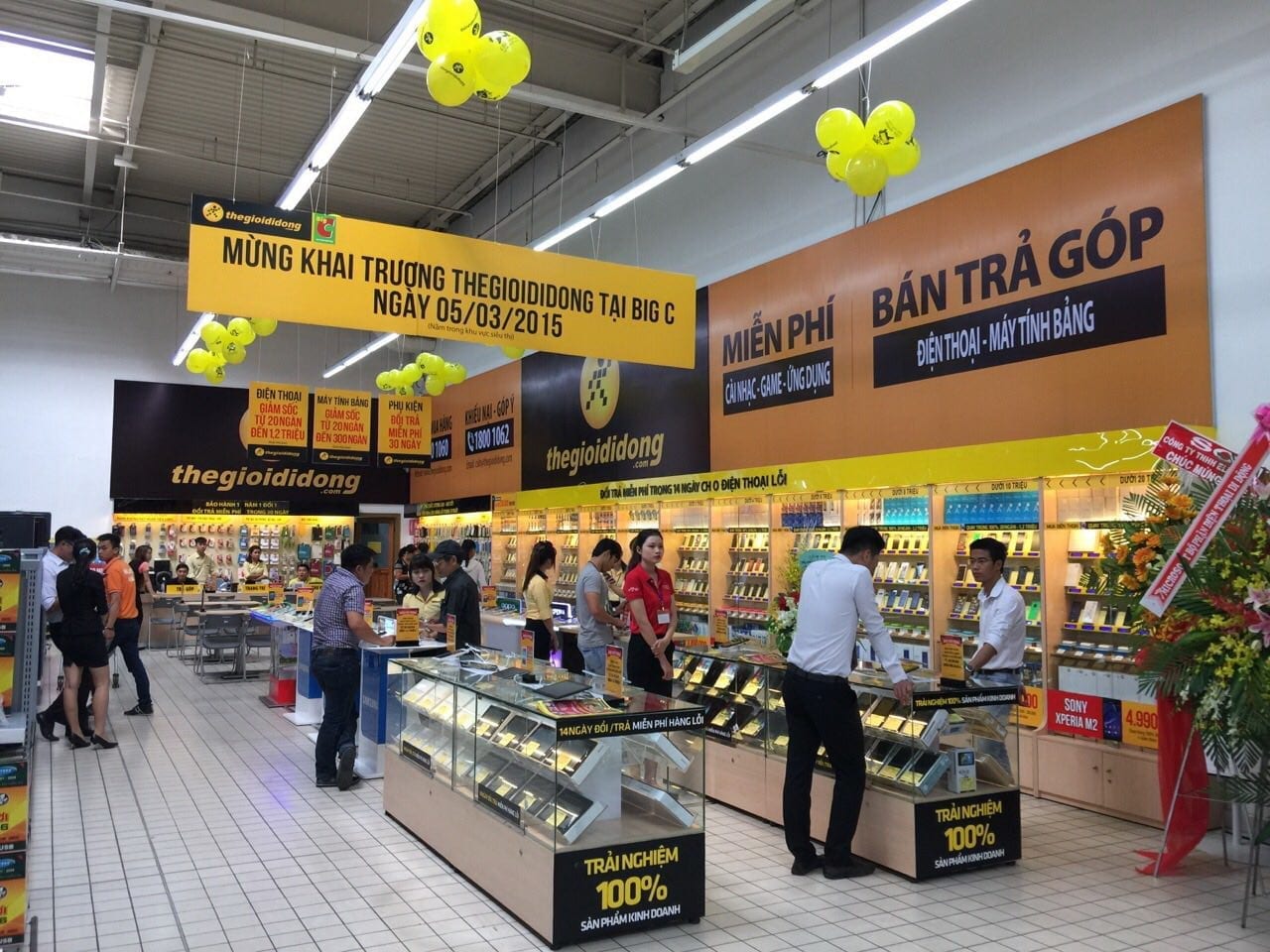
    In late June, The Gioi Di Dong JSC, which owns the largest mobile phone distribution chain in Vietnam, opened its first shop in Phnom Penh, Cambodia. The shop in Cambodia is named BigPhone, but it has a brand identity like The Gioi Di Dong shops in Vietnam.

    The Gioi Di Dong hopes it can earn $100,000 a month from the first shop, and plans to open 10-15 shops in Cambodia this year.

    A senior executive of Pico, a home appliance distribution chain, in early 2016 told the press that the chain was considering penetrating markets like Myanmar, Laos and Cambodia. Of the neighboring markets, Myanmar is the first choice because of favorable conditions of the market: it is easy to find retail premises, and there is less competition.

    Nguyen Ngoc Hoa, when he was chair of Saigon Co-op, affirmed the importance of foreign markets for Saigon Co-op, saying that the retail chain targets Laos and Cambodia for its plan to expand the network.

    “The most important thing in implementing the expansion plan is that Saigon Co-op find reliable partners in doing business overseas,” he said.

    A senior executive of Pico said he can see that there would be both economic and non-economic barriers in the Cambodia and Myanmar markets. He said it would take time to learn about the consumption habits, local culture, the laws and economic factors of the target markets.

    Ho Viet Dong, CEO of The Gioi Di Dong in Cambodia, said though the retail chain has good relations with mobile phone manufacturers, it still faces difficulties in doing business in Cambodia.

    “The mobile phone market here is very complicated,” he said. “Besides, the training of the labor force for long-term business plan also needs consideration.”

    Meanwhile, according to Saigon Co-op’s CEO Nguyen Thanh Nhan, the plan to open a supermarket in Cambodia has been delayed because of the change of the Cambodian partner.


  • MIDF: Foreign funds flow back to Bursa

    MIDF: Foreign funds flow back to Bursa

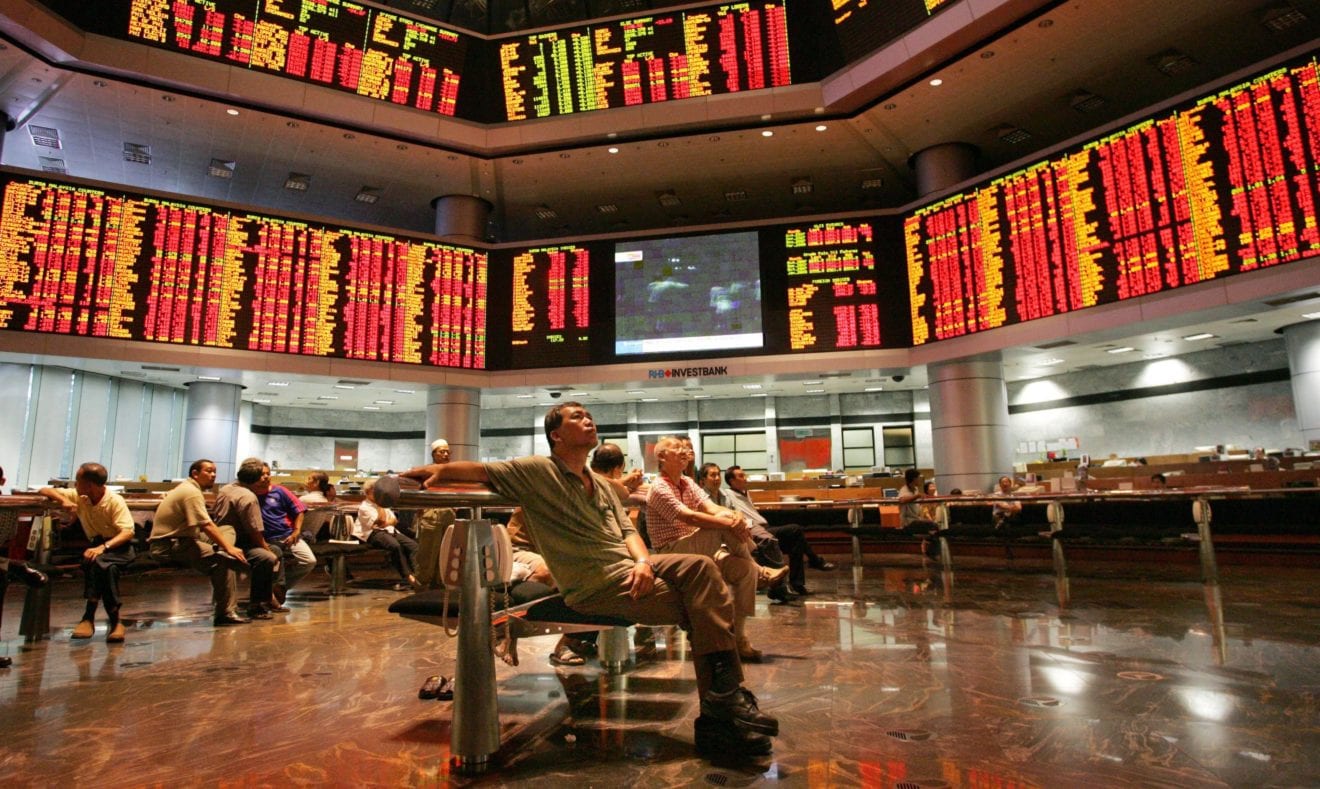
    Foreign tide has finally returned to Bursa Malaysia after three successive weeks of attrition, albeit only marginally.

    Foreigners turned net buyers last week despite the short trading week, according to MIDF Research in its weekly fund flow report today.

    Bursa was closed on Thursday, Friday and yesterday for the National Day, Aidul Adha festival and public holiday due to outstanding achievements by national athletes at the 2017 SEA Games.

    Last week, foreign funds acquired RM36.2 million net based on transactions in the open market, excluding off market deals. This is the lowest weekly foreign acquisition for the year.

    “We note that the six-day selling streak has snapped as global funds acquired RM7.1 million net on that day. Foreign buying momentum increased the next day by seven times to RM52.2 million net.

    “However last Wednesday, international fund managers cleared their positions ahead of the long weekend, disposing RM23.1 million net,” it explained.

    August turns out to be the first month of net outflows this year which amounted to RM241.9 million net. Nonetheless, cumulative year-to-date net infl ow still stands above the RM10 billion mark.

    Foreign participation rate was resilient for the week as foreign average daily trade value (ADTV) remains above RM800 million for the fifth week in a row.

    Retail participation, meanwhile, edged higher for the week. The retail ADTV increased by 25 per cent to RM865 million after three straight weeks being below RM700 million.

  • New McDonald’s set to expand faster in China

    New McDonald’s set to expand faster in China

    Some 2,000 quick service outlets to open by 2022 in small cities

    McDonald’s Corp, the global fast-food chain that has forged a new partnership in China last month, will expand faster by opening 2,000 new restaurants in the next five years.

    They will be set up mostly in third-and fourth-tier cities with a focus on take-aways and digitalized services.

    The company said it will increase its expansion pace from about 250 new outlets this year to 500 per year from 2022 onward.

    It did not disclose other details like the scale of new investments that would ensue.

    The new partnership, jointly established by CITIC Ltd, CITIC Capital, Carlyle Capital and McDonald’s, paid $2.08 billion for the US-based fast food chain’s business in the Chinese mainland and Hong Kong.

    The deal received regulatory approval and was completed on July 31.

    The new company will become McDonald’s largest franchisee outside of the United States.

    CITIC Ltd and CITIC Capital together hold a majority 52 percent stake in the new company, while Carlyle Capital will hold 28 percent, and McDonald’s 20 percent.

    Currently, McDonald’s operates and manages 2,500 restaurants in the Chinese mainland, including 600 franchises, and 240 restaurants in Hong Kong.

    The new company will manage all the 2,000 new restaurants directly.

    Despite McDonald’s global dominance, KFC, owned by Yum China, has bigger presence in the Chinese quick service restaurant. Yum China runs more than 5,000 KFC restaurants in over 1,100 cities and counties.

    KFC’s wide presence in China appears to have bolstered the confidence of McDonald’s investors in the new expansion plan, industry insiders said.

    The new partnership of McDonald’s aims to achieve double-digit sales growth annually in the next five years.

    The goal includes delivery coverage of 3,375 restaurants or over 75 percent of the total.

    “China will soon become our largest market outside of the United States,” said Steve Easterbrook, McDonald’s president and CEO.

    “The mainland and Hong Kong are leading the global system in capturing new consumer trends such as delivery and digitalization and it is driving strong performance and growth momentum.”

    Zhang Yichen, the new chairman of McDonald’s China, said restaurant ownership at the local level will foster entrepreneurial spirit within the company.

    For example, considering the strong demand for takeout food and the population density in China, Zhang emailed Easterbrook regarding the need to develop a customized software system for the Chinese market.

    The latter dispatched McDonald’s global IT team to support the China business. Now, the take away operation in China tops the global chain’s comparable systems across markets.

    Zhang said CITIC has more than 1,400 bank branches in China. Besides, CITIC and Carlyle’s extensive resources and market expertise in real estate, supply chains, retail, consumer goods and technology, coupled with the global quality standards and branding of McDonald’s, will prove to be a winning formula.

    Jason Yu, general manager of Kantar Worldpanel China, a firm that researches shopper behavior, said, “CITIC operates many branches in third-and fourth-tier cities, and they understand the local market, hence will be able to help McDonald’s to choose appropriate sites for new restaurants and also provide useful real estate information.”