Author: Mei Ling Tan

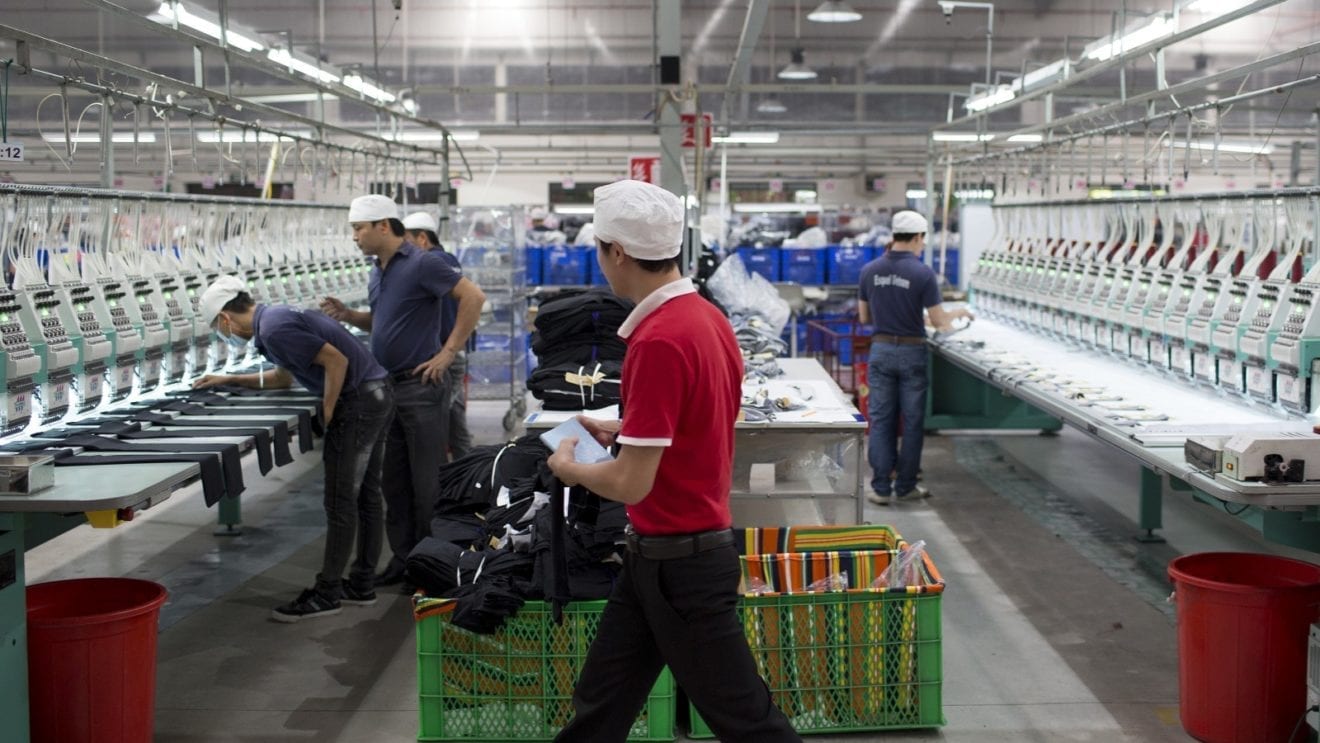
  • Vinatex invests in technology to expand market share

    Vinatex invests in technology to expand market share

    The Vietnam National Textile and Garment Group (Vinatex) must innovate its technologies as soon as possible in order to increase its market share, said Le Tien Truong, the group’s General Director, at its share-holders’ meeting held in Hanoi on June 29.

    Vinatex will focus resources on investing in technology during the 2017-2020 period

    Therefore, during the 2017-2020 period, Vinatex will focus resources on investing in technology, Truong affirmed.

    According to him, the world economy is likely to grow by 2-3 percent this year, while the world demand for garment and textiles may recover slightly, at about 0.5 percent.

    In addition, the US may adjust up import taxes on commodities from China, including garment and textiles, which can be a positive sign for Vietnam’s garment and textile export by expanding its market share in the US.

    However, the Vietnamese garment sector is facing fierce competition in attracting orders as domestic businesses are unable to provide package services and face difficulties in meeting importers’ shipping requirements.

    The country’s major competitors such as China, India, Bangladesh, and Indonesia continue attracting a lot of orders thanks to their preferential policies on tax and exchange rate, while the European Union-Vietnam free trade agreement (EVFTA) and Trans-Pacific Partnership (TPP), which are hoped to help with Vietnam’s exports, have yet to become effective in 2017.

    Other problems for the sector include rising input costs and falling selling prices, plus the lack of high-quality human resources who can operate modern machines, especially in weaving and dyeing phases.

    Therefore, the Vinatex will exert efforts to increase management capacity and administration in a modern and professional manner, while continuing to expand markets in East Europe, and optimise advantages offered by valid FTAs.

    In 2016, Vietnam’s apparel industry saw lower than expected results, with 28.3 billion USD in exports, up 5.7 percent year on year. Vinatex earned over 2.5 billion USD, an increase of 5 percent over 2015, with a pre-tax profit of over 41 trillion VND on a 5 percent year on year increase.

    In 2017, Vietnam’s textile-garment sector aims for a growth rate of 7-8 percent, and 30 billion USD in export earnings.

  • AWS to open Hong Kong infrastructure region next year

    AWS to open Hong Kong infrastructure region next year

    Amazon Web Services (AWS) is planning to open an infrastructure region in Hong Kong in 2018, making the city the eighth AWS Region in Asia Pacific.

    AWS’ launch of the Hong Kong infrastructure region will allow Hong Kong customers to store their data locally, and to build flexible, scalable, secure, and highly available applications.

    It will also enable Hong Kong customers to enjoy fast, low-latency access to websites, mobile applications, games, SaaS applications, big data analysis, Internet of Things (IoT) applications, and more.

    At launch, the new AWS Region will comprise three Availability Zones, said Alex Yung (pictured), corporate vice president and managing director of AWS Greater China, at the first AWS Summit hosted in Hong Kong today.

    According to an AWS spokesperson, Availability Zones (aka AZs) are isolated locations and are what each Region is made up of. AWS has three locations in Hong Kong for its AZs.

    “AZs allow customers to build highly available applications. They are distinct locations that are engineered to be insulated from failures in other AZs and provide inexpensive, low latency network connectivity to other AZs in the same region,” said the AWS spokesperson.

    “AZs are made up of one, and sometimes more, datacenters. AZs are also designed in such a way that if one AZ were to fall off the face of the earth for some reason, the other AZs would continue to function normally. This means customers can build their applications across multiple AZs so they are designed to handle failure and continue to operate uninterrupted.”

    Including Hong Kong, there will be eight AWS Regions in the Asia Pacific: Singapore, Tokyo, Sydney, Beijing, Seoul, and Mumbai, and an additional Region in China (Ningxia) which is expected to launch in the coming months. Together, these Regions will provide AWS customers with a total of 19 Availability Zones, and allow them to architect highly fault tolerant applications. (Click here to view AWS’ global infrastructure.)

    In 2008, two years after AWS made its global launch, the cloud company opened a CloudFront Point of Presence (PoP) in Hong Kong to enable customers to serve content to end users with low latency. Since then, AWS has added two more PoPs in Hong Kong, the latest going live in 2016.

    In 2013, AWS opened an office in Hong Kong which is staffed by a wide range of functions including sales, support, technology evangelists, and marketing.

    Hong Kong has a dynamic and vibrant business environment and is making progress toward becoming a digital city. An AWS Region here will enable our customers — from start-ups to large enterprises, and from financial institutions to government organizations — to enjoy cost and agility advantages across their entire IT operations, in compliance with local data regulations,” Yung said.

    Nicholas Yang, secretary for Innovation and Technology, Hong Kong government, welcomed AWS’s plan to open an infrastructure region in Hong Kong in 2018,” AWS’s global infrastructure coming to Hong Kong reaffirms Hong Kong’s status as the prime location for setting up data center facilities in the region and also a recognition of Hong Kong’s edge and strengths as an Asia hub for doing business and a regional data hub.”

    “The new AWS Region in Hong Kong will further accelerate cloud computing adoption and cloud-based system development in Hong Kong, facilitating the digital transformation of businesses in this city. Hong Kong is well-positioned to become a premier global data hub in the region. We will continue to promote our competitive advantages and encourage prospective operators to establish a presence in Hong Kong,” Yang added.

  • Amazon Prime Day will include China and India on July 11th

    Amazon Prime Day will include China and India on July 11th

    Amazon’s Black Friday-like event for the summer will be back for the third time. On July 11th, the e-commerce giant will hold the third annual “Prime Day,” and this time, more people will be able to take advantage of all the deals on offer.

    To start with, the event will last for 30 hours instead of the usual 24 and will begin at 9PM Eastern on July 10th. In addition, Amazon is launching the event for the first time in China, India and Mexico, which only recently joined the list of countries where the company’s Prime service is available. Customers in the US, UK, Spain, Japan, Italy, Germany, France, Canada, Belgium and Austria will be able to participate as always.

    While the event itself won’t begin until the evening of July 10th, Amazon will reveal exclusive promos for Prime members every day until then. It is possible to access the first batch of promotions starting today, which include access to Amazon Music Unlimited for 99 cents, 40 percent off Kindle Unlimited membership and 40 percent off Audible for your first six months on the audiobooks service. Alexa-exclusive deals are also to be checked out when having an Echo or a Tap speaker, a Fire TV or a Fire table, since they typically include bigger discounts than what you’ll find on the website.

  • Nornickel bets on battery materials as electric car sales rise

    Nornickel bets on battery materials as electric car sales rise

    Russian miner Norilsk Nickel wants to expand in the market for materials used to make batteries for the fast-growing electric vehicle (EV) sector, its head of marketing and sales told Reuters.

    Nornickel, the world’s second-largest nickel producer and a major cobalt producer, and German chemicals company BASF said on Tuesday they were in talks to supply nickel and cobalt, needed to make lithium-ion batteries, in Europe, as the car industry’s push into electric vehicles gathers pace.

    For Nornickel, this is just the start.

    “We are discussing…transactions with several manufacturers in the industry,” Nornickel’s Markus Meurer said in an interview with Reuters.

    Nornickel and BASF’s talks cover cooperation to set the foundation to supply battery cell producers for electric vehicles in Europe with regionally produced cathode materials, they said on Tuesday.

    Meurer said the project with BASF would be developed over the next few months and that it was too early to say how much metal and in which form it would be supplied.

    “Timing will depend a lot on market development and on technology….The important question is how to enable the ramp-up of production of battery raw materials in parallel with increasing demand,” Meurer said.

    The number of electric vehicles on roads worldwide rose to a record high of 2 million last year, the International Energy Agency (IEA) said this month, as governments clamp down on fossil fuels such as gasoline and diesel.

    UBS recently raised its forecasts for global sales of electric vehicles in 2021 to 3.1 million from 2.5 million and to 14.2 million by 2025 from 9.7 million. It expects electric vehicles to account for 3.1 percent of global car sales in 2021 and 13.7 percent in 2025, against 1 percent this year.

    Last year, nickel demand for electric vehicle batteries rose 20 percent to 15,000 tonnes, according to Nornickel.

    Meurer said he expected demand for nickel from the electric vehicle market to rise to 300,000 tonnes in 10 years from 20,000 tonnes in 2017, making it the second-largest segment for nickel demand after stainless steel.

    Global demand for cobalt, a by-product of nickel and copper, last year was about 100,000 tonnes, of which roughly half was used in batteries to power electric cars. Nornickel produces about 5,000 tonnes of cobalt a year.

    Prices for cobalt metal have nearly tripled to nine-year peaks above $27 a lb from below $10 a lb in Dec 2015.

  • Aloha! AirAsia X now flying to Hawaii

    Aloha! AirAsia X now flying to Hawaii

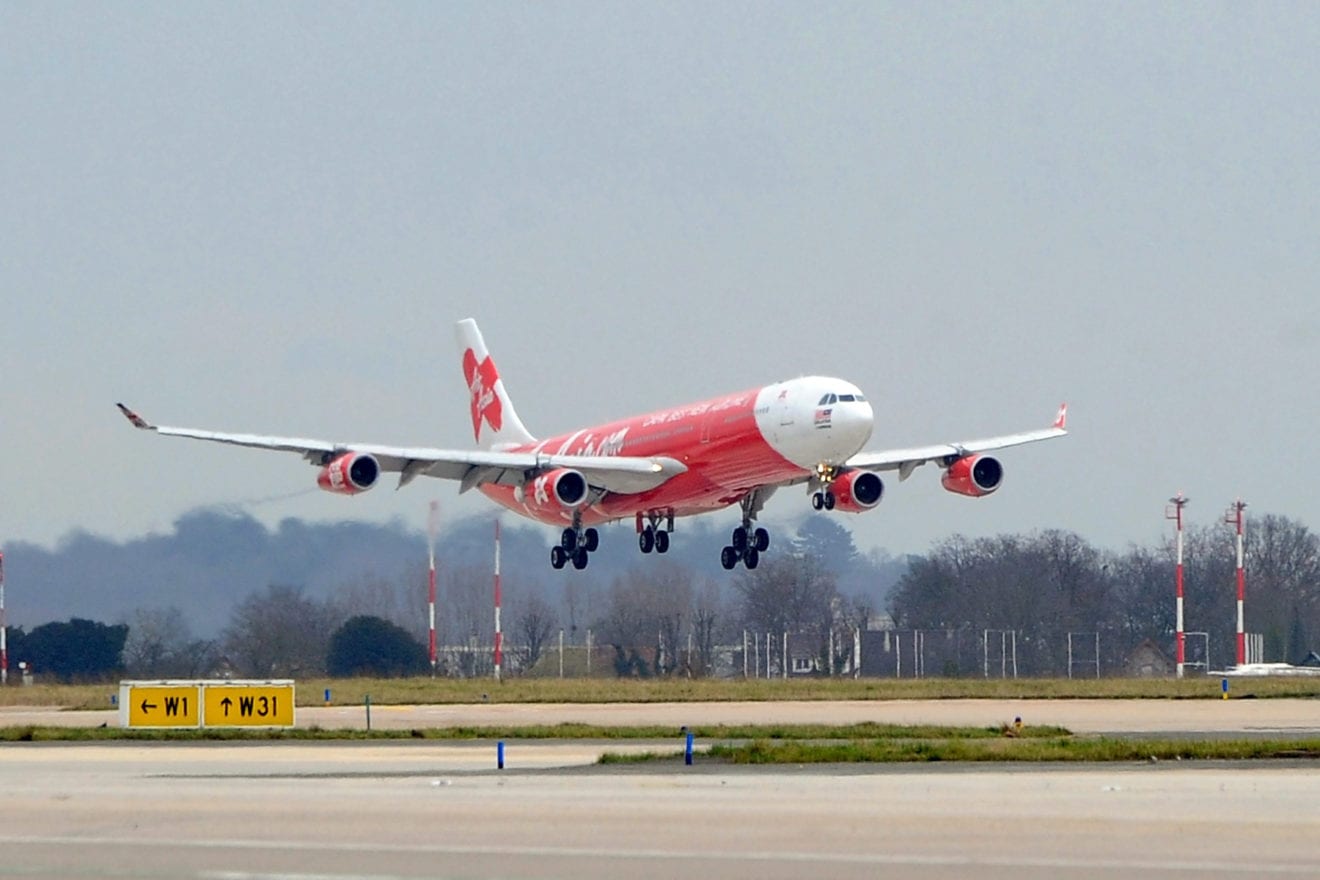
    AirAsia X, Malaysia’s award-winning long-haul, low-cost carrier, has launched its inaugural flight from Kuala Lumpur to Hawaii via Osaka, Japan.

    The departure lounge at KLIA2 where passengers boarded flight D7 001 was abuzz with excitement.

    Gracing the launch at KLIA2 was AirAsia X chairman Tan Sri Rafidah Aziz who adorned passengers with floral garlands.

    After the approximately six-hour flight to Osaka, the celebration continued with Rafidah and AirAsia X CEO Benyamin Ismail present at a ribbon-cutting ceremony at Kansai Airport.

    In Honolulu, State of Hawaii Chief of Staff Mike McCartney, Malaysian ambassador to the United States Tan Sri Dr Zulhasnan Rafique, and Hawaiian Tourism Authority (HTA) president and CEO George D. Szigeti also attended a press conference.

    AirAsia X Group CEO Datuk Kamarudin Meranun said when he founded AirAsia with partner Tan Sri Tony Fernandes, they dreamed of democratising air travel for everyone so flying would no longer be a luxury only a few could enjoy.

    “The landmark route to Hawaii is a bold new chapter in that quest to help more people travel farther for less. But this is just the beginning, and soon our guests will be able to enjoy flights to even more destinations in the US as we continue to grow our international footprint,” he said.

    HTA’s Szigeti said they were deeply honoured AirAsia X had chosen Honolulu as its initial destination to expand its service in the United States.

    “We appreciate how this route strengthens our ties with the people and culture of Malaysia.

    “AirAsia X customers in Kuala Lumpur and Osaka will enjoy the convenience of this direct service and how it connects them with the welcoming spirit of the Hawaiian culture, the spectacular natural beauty of our islands, and the diversity of Asia-Pacific influences that enriches the experience of being in Hawaii.”

    Last week, AirAsia was named the World’s Best Low Cost Airline for the ninth consecutive year, while AirAsia X won the World’s Best Low Cost Airline Premium Cabin and Premium Seat awards for the fifth year in a row at the Skytrax World Airline Awards held at the Paris Air Show.

    AirAsia X flies from Kuala Lumpur to Honolulu via Osaka four times a week.

    To celebrate the inaugural flight, AirAsia X is offering a one-way fare from RM899 for a standard seat or RM2,999 for the award-winning Premium flatbed, from Kuala Lumpur to Honolulu. The promotional fares are available on airasia.com now through July 2, for travel between Oct 1 and Aug 28, 2018.

  • Davidoff’s Martin Kaufmann on the new cigar consumer

    Davidoff’s Martin Kaufmann on the new cigar consumer

    Cigars have been enjoying a revival in recent years, boosted by younger smokers and emerging cigar markets such as China. We spoke with Martin Kaufmann, Oettinger Davidoff’s Senior Vice president of Europe and Global Travel Retail, on his recent trip to Hong Kong to learn more about trends in the cigar industry and how Davidoff is taking on a new generation of consumers.

    How have Davidoff’s customers changed in recent years? Can you tell us about the new generation of cigar consumers?

    Cigars have typically been seen in the older days as something for the more established gentlemen. That has changed a lot. The majority of our new consumers are actually coming in the age bracket of 30-plus and they are from very different walks of life. For the younger generation, it’s not all about an origin—it’s more about discovering different taste experiences from different parts of the world.

    Do trends like social media and pop-up stores play a part in travel retail?

    Social media definitely plays an increasing role. We’re in a highly regulated environment, so it’s less of us talking about ourselves on social media, and more of aficionados and consumers talking about us. It’s very important that we provide the content and the experiences so that they have stories to tell.

    Pop-up stores is something we haven’t done yet, but we have a couple of projects coming up where we’re going to test this in Europe.

    What kind of experiences do you try to create for consumers so that they’ll talk about it on social media?

    Pairings are an important part of cigar tastings, and it’s not only about spirits or wine, but also pairings with fine food. So we do a lot of collaborations with gastronomic tours, with star chefs and special menus. We have the Chefs Edition, which was actually created by cuisine chefs. And that entire experience makes people talk—it’s really all a lifestyle, more than a product.

    How do multi-sensory experiences get translated with travel retail in airports?

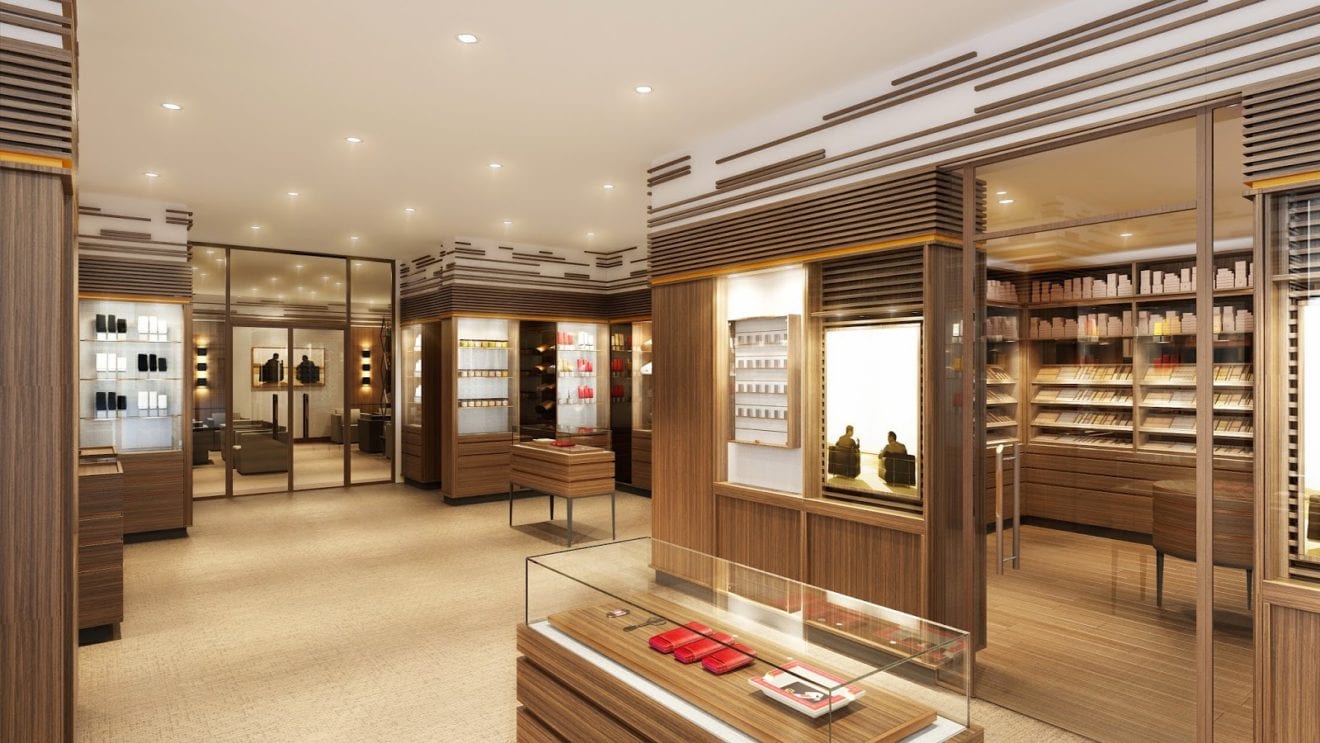
    It is quite dependent on the environment. For example, we might have the ingredients on display, such as pepper to show it’s spicy, and we often have leaves on the ceiling. In some locations we can provide a full fledged multi-sensory experience, like the new walk-in humidor we just opened in Paris.

    What cigar trends are you seeing worldwide?

    It really depends a lot on where you’re looking at. In the US, for example, very big formats are a trend. In other parts of the world, short smokes have been popular for a while, where you only have maybe 20 to 30 minutes [in a smoke], and that is something we don’t see so much in Asia. It has to do with the maturity of the market—whether you have a well established cigar culture, or a younger market where cigars are still developing.

    Which products are doing the best in Asia?

    A lot of Asians are traveling, so when we talk about travel retail, you would find, for example, Chinese travelers all over the world. Gifting remains very important for Chinese travelers. Over 50 percent of cigars that are bought by the Chinese are actually for gifting purposes. That would be way less if you look at the US or Europe, for example.

    How do you engage with Chinese customers?

    We try to educate about the category in customers’ home countries. That’s really where it starts. Ideally, we want people to have an idea of Davidoff and cigars already before they travel.

    We also do specific city and country special editions, such as our zodiac editions that come out every year. Being on WeChat is a breakthrough for us, and of course our brand ambassadors play a role—they can speak Chinese, but they also know how the Chinese shopper wants to be approached. We do a lot of research to understand how Chinese consumers think.

    Do you think that cigars should be grouped with other kinds of tobacco?

    I think that cigars couldn’t be more different from cigarettes. While it’s all tobacco, there’s a very different motivation as to why you smoke. Most cigar smokers don’t come from cigarettes. It’s more comparable with drinking wine or champagne. It’s very much a luxury good, and I don’t think cigarettes have anything to do with that type of market.

    Lastly, what is your personal favourite cigar blend?

    There are so many great cigars. I like the Winston Churchill very much, specifically when we relaunched it a little over two years ago. The Millennium blend I love a lot. My personal favourite, independent from those I’ve tried on testing panels, is the Davidoff Nicaragua Robusto format. That is definitely my favorite.

  • Samsung confirms launch of refurbished Galaxy Note 7s

    Samsung confirms launch of refurbished Galaxy Note 7s

    Samsung Electronics said Sunday it would start selling a refurbished version of its Galaxy Note 7 smartphone this week after an embarrassing recall over exploding batteries rocked the tech giant last year.

    The recall of millions of Galaxy Note 7 devices cost the world’s largest smartphone maker billions of dollars in lost profits and hammered its global reputation.

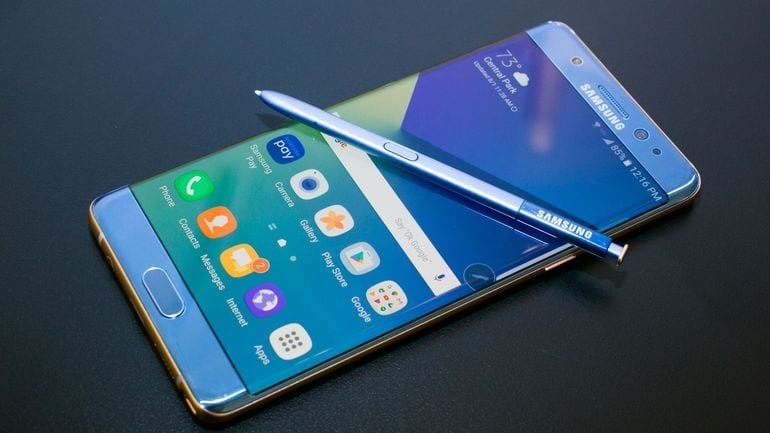
    The refurbished device, made of recalled, unsealed Note 7 handsets and unused components are outfitted with new batteries, Samsung said in a statement.

    The limited-edition phone — the Galaxy Note Fan Edition (FE) — will hit shelves in South Korea on July 7, Samsung said, adding it would only sell 400,000 units at home.

    The firm said it would decide later whether to release the refurbished edition elsewhere, which is priced at 699,000 won ($611) domestically, far lower than the previous version that was nearly $1,000.

    About three million Galaxy Note 7 handsets were returned to the firm last year, but campaign groups including Greenpeace have expressed concern that discarding the phones could harm the environment.

    “The latest launch of the Galaxy Note FE… has a significant meaning as an environment-friendly project that minimised the waste of resources,” Samsung said in a statement.

    The recall — the largest-ever by the South Korean tech giant — was deeply embarrassing for Samsung, but it has just launched a new flagship device, the Galaxy S8, to positive reviews and strong orders.

    In April Samsung posted its biggest quarterly net profit in more than three years, although the company has come under pressure on wider fronts.

    Lee Jae-Yong, the Samsung group’s vice-chairman and heir to its leadership, is on trial for bribery over his role in a massive corruption scandal that brought down impeached former president Park Geun-Hye.

    Lee is accused of bribing Park and her confidante Choi Soon-Sil with millions of dollars to seek regulatory favours.

  • China Mobile, SAIC, Huawei demo 5G remote driving

    China Mobile, SAIC, Huawei demo 5G remote driving

    China Mobile, SAIC Motor and Huawei have jointly demonstrated the first 5G-based remote driving technology with a consumer car.

    The demonstration at Mobile World Congress Shanghai involved using a Huawei-provided 5G solution connecting SAIC Motor’s smart concept car the iGS, with China Mobile providing the connectivity.

    The remote driving field test involved a driver located over 30km away from the vehicle, and used HD video cameras installed on the vehicle to send multiple real-time video feeds to provide the driver with a 240-degree view of the vehicle’s surroundings, more than the average binocular peripheral vision.

    Control signals for steering, acceleration and brakes were also transmitted over the 5G network in real time using 5G’s ultra-low latency capabilities.

    End-to-end latency for all vehicle control functions was less than 10 milliseconds, providing an eight centimeter distance between breaking and actual deceleration when the vehicle was traveling at 30km/h.

    Remote driving can be used to augment autonomous vehicles and has a range of potential applications, particularly in harsh or dangerous environments like mining or waste disposal sites, Huawei said.

    The technology could allow a single person to manage a fleet of autonomous vehicles, providing human intervention as needed such as in emergency situations.

  • YSL Beauty opens largest store in Kuala Lumpur

    YSL Beauty opens largest store in Kuala Lumpur

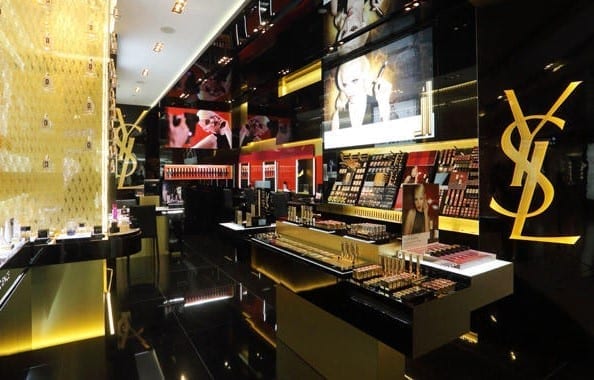
    YSL Beauté has officially opened its first flagship boutique in Malaysia, the luxury retailer’s flagship store for Asia.

    It’s a milestone move for YSL. Spanning over 1,057 square feet, the new boutique is currently the largest YSL Beauté boutique in the world and also the first in Asia to offer gifting and engraving services to its patrons.

    Conveniently located in the Pavilion Kuala Lumpur, the new French cosmetics store boasts glossy black panelling licked with the iconic YSL gold embellishments.

    Better still for local shoppers, it offers the full range of YSL Beauté products, including the bestselling YSL Touche Éclat concealer and its new summer 2017 collection.

    Dubbed “Solar Pop,” the new line features four of YSL’s flagship products revamped for the season with exclusive packaging and colours.

    This includes Yves Saint Laurent’s “Les Sahariennes Bronzing Stones,” a bronzing palette formulated with ultra-fine pigments to smooth and illuminate skin with a natural effect, and YSL’s “Full Metal Shadow” glossy eye colours, which get two new shades: Gold Source and Violet Wave.

    YSL classic “Baby Doll Kiss & Blush” comes in two bright new shades with Orange Intrépide and Mauve Aventureux, and for nails, the new Malaysia store will sell “Laque Couture” in two new colours: Jungle Green and Jungle Orange.

    With scores of YSL Beauté counters and concessions already open across Asia, including Hong Kong, Singapore, South Korea and Japan, no further indication has been given from the brand regarding more standalone boutique openings in the near future.

    The new YSL Beauté is located at Lot 3.63.00, Level 3, Pavilion Kuala Lumpur.

  • Prepare for a mobile payment revolution among Chinese travelling shoppers

    Prepare for a mobile payment revolution among Chinese travelling shoppers

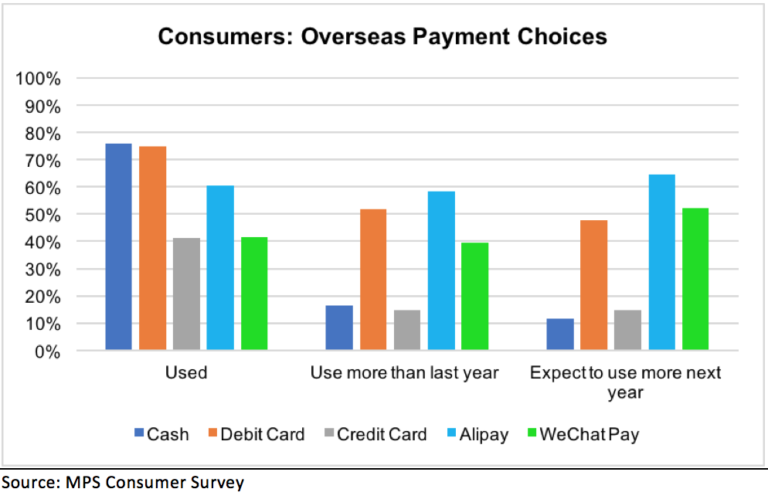
    Mobile payments will soon overtake cash and credit cards as the preferred payment choice for Chinese travellers shopping abroad, according to a new survey.

    Mobile payments specialist Cancan and financial research authority Kapronasia have published a global study, 2017 Mobile Payment Survey: Chinese Consumers Abroad, covering the impact of Asian mobile payment solutions at point-of-sale worldwide. Over 1,000  Chinese consumers and more than 60 C-level decision-makers from global merchant companies were surveyed.

    Among the key findings, the study found that Mainland Chinese consumers expect to spend more with mobile payments such as Alipay and WeChat Pay this year and next year than in 2016 when travelling abroad.

    Most Chinese travellers spent in the range of either US$393–US$786 or US$1,179–US$1,572 for retail purchases on their most recent overseas trip, the report found, while 5.7% spent more than US$6,288.

    Some 67% of respondents reported that they use mobile payments overseas. When consumers were asked about their primary method of payment while overseas, mobile payments represented about 41% of overseas consumption.

    Nearly half of the consumers surveyed made between 10-30% of their overseas shopping purchases with QR code-based mobile payment methods; one third of consumers paid over 50% of their purchases in China with mobile.

    chinese travellers mobile payments survey - Retail in Asia

    Fashion and cosmetics/skincare are among the categories consumers were most likely to purchase with mobile payment.

    The survey found that transaction convenience and the ability to track purchases in real time were the primary reasons for using mobile payments. Not needing to carry cash and credit cards was also appreciated. “You can easily spend days in China without opening your wallet, and consumers expect that too when they are shopping overseas,” the report said.

    The main reasons for not using mobile payments were merchants not offering the facility, as well as consumers’ ignorance that it was possible to use mobile payments when merchants do offer it.

    Alipay, WeChat Pay and Apple Pay are the most popular mobile payment methods. Over 75% of the surveyed merchants accepted Alipay. Over one third of merchants who do accept mobile payments indicated that it contributed to at least 3% or more of their global sales, with some experiencing a share as high as 15-25%.

    Although customer demand is primarily driving merchant adoption of mobile payment (over 80% of respondents agreed that they were reacting to customer demand), retailers also appreciate the speed of transaction and many desire to be seen to be “ahead of the game”.

    Cancan Managing Director Candice Koo: “Global merchants can profit from the mobile payments revolution storming out of the Far East, but they need to focus on the Chinese consumer”.

    “If the overseas market continues to mirror China’s mobile payment growth and development, this will likely change over time. Loyalty and points programmes in mainland China were slow to take off but are now informing an increasing number of merchant’s digital strategy, many of whom all have domestic WeChat official platforms.”

    Cancan and Kapronasia concluded that as well as there being continued growth in mobile spending, there will also be a change in what consumers buy using mobile payments.

    “Although they started out being used for smaller value purchases, mobile payments are increasingly being used for higher value and luxury items,” the report said. “The average transaction value on Alipay went from US$82 in 2015 to nearly US$100 in 2016, an increase of +22%.

    “The implications for overseas merchants are pretty clear: mobile payments have become a way of life for many Chinese and Asians and their habits are extending overseas.”

  • Why Hong Kong’s handover could be an opportunity for luxury retail

    Why Hong Kong’s handover could be an opportunity for luxury retail

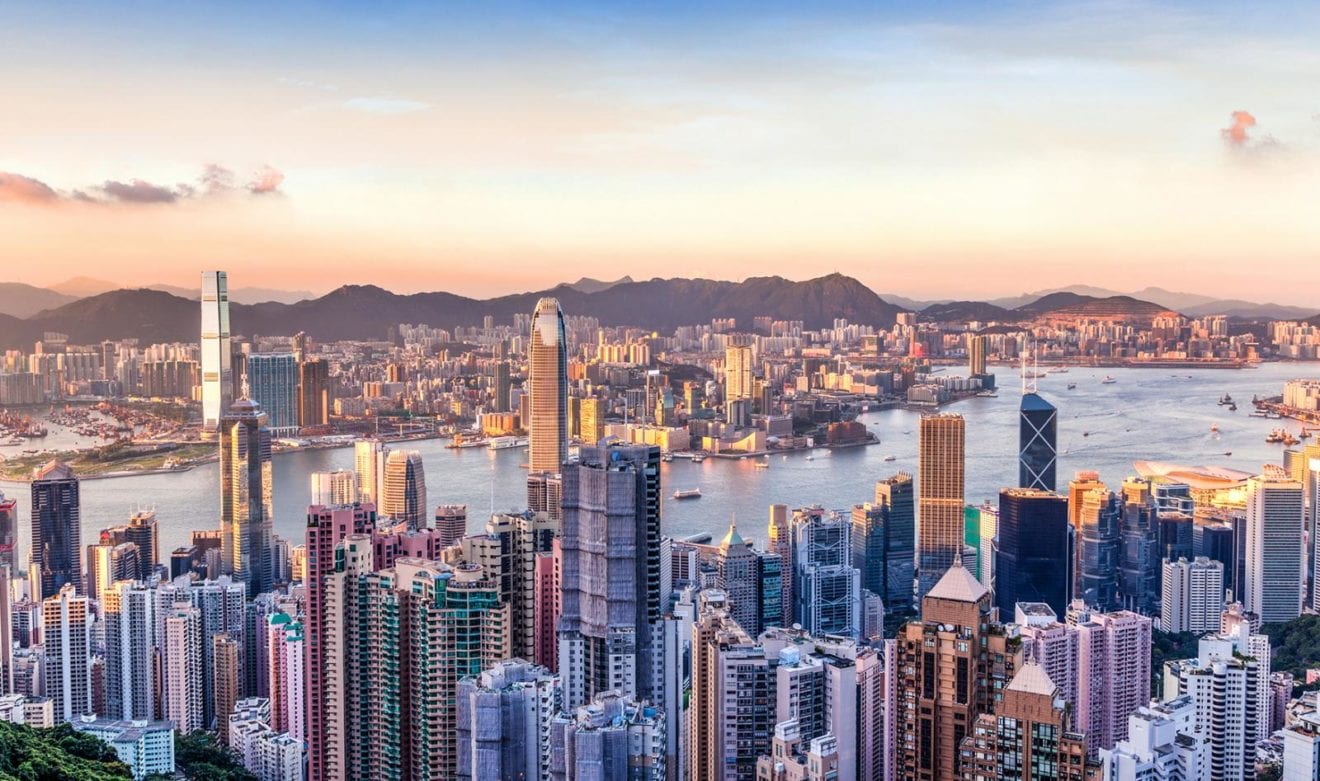
    On Saturday, Hong Kong kicks off a series of 320 events celebrating the anniversary of the region’s handover from British to Chinese governance of Hong Kong in 1997. With president Xi Jinping making his first official visit since taking office in 2013, over $80 million is being invested in the celebrations by the Chinese Government.

    Driving this investment is the promise of an influx of tourists from China’s Mainland, spelling an opportunity for luxury brands operating in the market. A potential economic boost sparked by the handover anniversary celebrations cannot come soon enough for Hong Kong. Luxury sales have been in steep decline, falling by as much 9 percent in 2016.

    Several international luxury brands, including Ralph Lauren, Prada and Tag Heuer shut stores in Hong Kong last year. Meanwhile, Burberry halved the size of its flagship in the city’s Pacific Place complex, while Gucci publicly demanded lower rents, threatening to close several stores.

    Recent accounts show that Hong Kong’s technology and property shares have risen, however, suggesting a renewed confidence in the market. Significant infrastructural developments are also underway. The Hong Kong International Airport is undergoing an $800 million expansion, adding a third runway, to bolster crucial tourist flow into the city — a move projected to boost Hong Kong’s economy by $235 billion by 2030. And the New World Development group has announced a $2.6 billion development, Victoria Dockside, which will span three million square-feet and aims to reinvigorate the Kowloon Waterfront.

    “We can see that Hong Kong is doing slightly better, but we can’t forget that, compared to its heyday in 2012 and 2013, it’s still very depressed,” warns Mario Ortelli, senior research analyst for luxury goods at Sanford C. Bernstein. “All the luxury companies are cautious about Hong Kong. Going forward, they are planning more store closures, not store openings.”

    Mainland Chinese Tourists

    Hong Kong’s struggle to maintain its position as one of the region’s most profitable luxury retail destinations is inextricably linked to tourism from Mainland China. Mainland Chinese tourists represented 76 percent of all visitors to the city in 2016, a significant drop of 6.7 percent from 2015. Mainland Chinese consumers are taking more overseas trips than ever before, and what they buy has evolved beyond Hong Kong’s retail offering.

    “For a younger crowd, they naturally relate more to contemporary fashion, and are more informed in making consumer choices,” says Anais Mak, who co-founded Hong Kong-based womenswear label Jourden in 2012, and counts luxury department store Lane Crawford among her stockists. “I also see more curiosity [among tourists] to discover many other aspects of the city apart from the sought-after luxury fashion products,” she adds.

    Competition from rival markets in the region continues to grow, despite Hong Kong’s key draws: prime geographical location and tax-free shopping. “Macau is currently more dynamic than Hong Kong because it’s cheaper,” explains Ortelli. “South Korea and Japan are also attractive alternative regional destinations, and there are many others that are growing, like Taiwan and Singapore.”

    Tourists have also been deterred by political tensions between the Chinese government and Hong Kong citizens, which hit boiling point in 2014. Meanwhile, the continued sabre-rattling by China and South Korea, surrounding the installation of an American missile defence system in the latter, has also impacted touristic flow.

    In Hong Kong, the attitude is positive. “The general cool down of domestic political tension as well as mixed sentiments between Hong Kong and Mainland China will account for an uptick [in tourist spending in Hong Kong],” says Mak. “Times have been tough in 2015 and 2016, but it seems people are experiencing a natural progression to regain confidence in the environment.”

    However, due to continuing store closures, it’s clear that international luxury brands continue to be far more cautious about Hong Kong’s potential for a turnaround. “There is potential for disruption,” insists Ortelli. “The celebrations are an opportunity for the luxury companies that could, perhaps, become another Occupy Hong Kong.”

  • Duty Free Americas set for Changi debut

    Duty Free Americas set for Changi debut

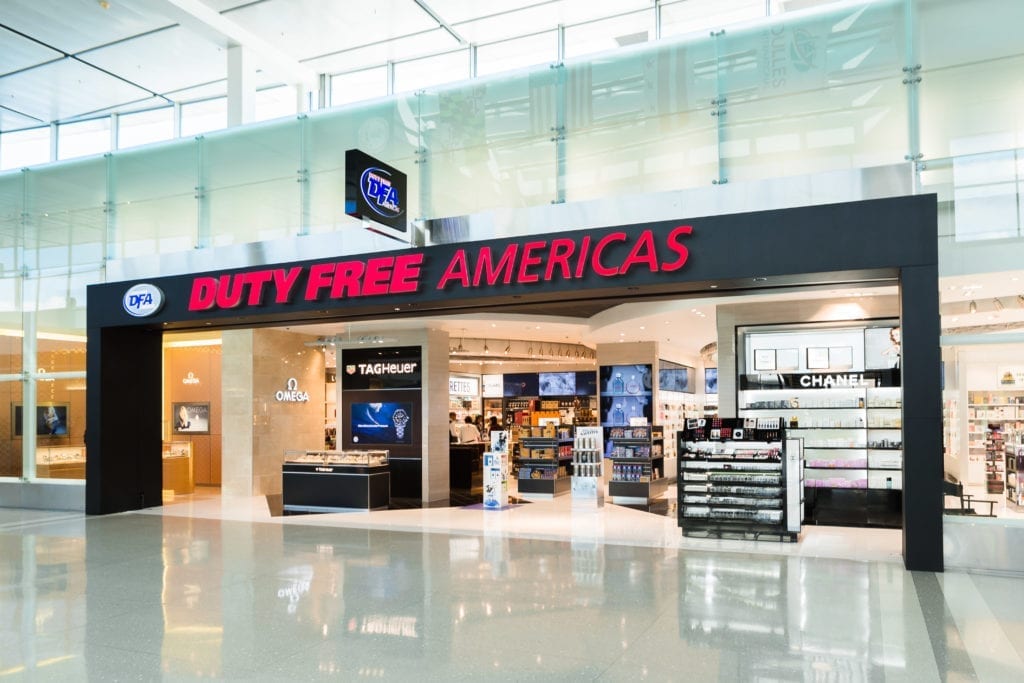
    Duty Free Americas (DFA) will open its first store at Singapore Changi Airport after capturing one of three recent speciality/brand name store concessions in Terminal 2.

    DFA will operate 46sq m unit under the ‘Black’ speciality store name in Departure/Transit Lounge South. The three-year contract runs for three years from 29 November, with no renewal option. It follows a Direct Marketing Exercise conducted by Changi Airport Group earlier this year as it sought partners for the concessions.

    The other two contracts, in 94sq m and 85sq m respectively, were won by RSH Singapore and Dufry. The former will run a Ted Baker store while the latter will run a new Tumi store in T2.

    The Dufry/Tumi three-year concession begins on 28 November while the RSH/Ted Baker concession takes effect from 1 March 2018. Duty Free Americas will take its brand of retailing to Singapore Changi Airport with its latest international contract.

  • Decathlon Opens First Store in the Philippines

    Decathlon Opens First Store in the Philippines

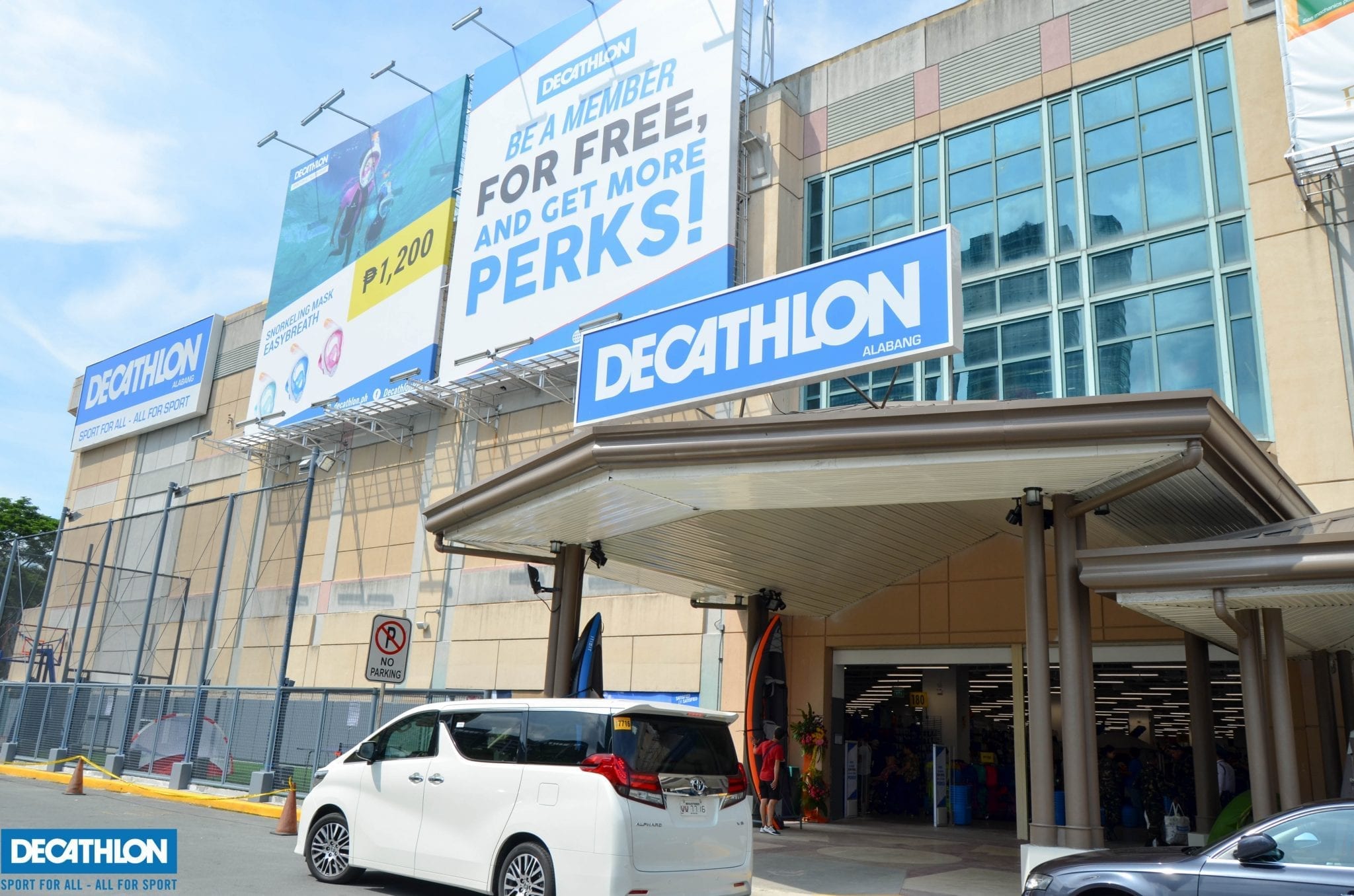
    Decathlon, one of the world’s largest sporting goods retailers, is taking another step to realizing its tagline—”Making Sports Accessible to the Many”—when it will officially open its first Philippine store in Manila on June 30.

    Founded in France in 1976, the retail giant currently has more than 1,200 stores and operates in over 30 countries. Decathlon’s Alabang branch in Muntinlupa City Metro Manila marks the company’s 16th store in Southeast Asia, and the first of many more stores the company plans to roll out in the Philippines.

    Over the next 10 years, Decathlon plans to expand to other key cities, such as Cebu, Davao, Iloilo, and Legazpi.

    “We have been interested in the Philippines for quite some time now,” says Hans Iff, CEO of Decathlon Philippines. “As the country’s economy has gotten more robust and consumers are becoming more wellness-conscious, it is the right time to invest.”

    According to a McKinsey report, the sports industry in the Philippines is projected to multiply four times over the next twenty years, reaching €1 billion by 2026. With a growing younger population, an emerging middle class, and increased infrastructure spending, the World Bank Group expects the country’s real GDP to grow at a rate of 6.9 percent in 2017 and 2018.

    A core part of Decathlon’s operations is an investment in in-house, consumer-focused products, called Passion Brands. Each of the company’s 40 Passion Brands represents a different sport or group of sports, with a dedicated team that is responsible for the research, design, development, and testing of their product.

    “We want Decathlon to become one of the most loved brands in the Philippines. Thanks to the innovation and unbeatable value of our passion brands, we will continue to deliver the best quality and safety to guarantee customer satisfaction,” says Iff.

    The company places particular emphasis on recruiting people that share our company values: passionate about sports, service-minded, and autonomous. Managers at Decathlon work closely with their staff, encouraging them to make decisions and take on more responsibilities. “We believe satisfied customers start with satisfied employees,” says Iff. “Our employees are given the room to make mistakes and grow in their roles.”

    Decathlon Philippines is also investing in the local ecommerce market, allowing customers to purchase goods from their website. “Our physical stores are part of our omni-channel strategy to help us interact and serve our customers better. As consumer shopping behaviours and expectations are changing, we want to offer a seamless user experience, both in-store and online.”

    Through all of its platforms and brands, Decathlon is committed to creating value for its end users, employees, partners, and citizens wherever the company is present.

    The company is also looking to manufacture some of its products in the Philippines. “We aim to setup factories in the near future for the production of goods sold locally,” says Iff. “The Philippines already has the infrastructure in place for certain processes, such as heavy stitching and injection moulding for shoes.  And we have already made plans to locally produce a Bluetooth communication kit for Easybreath —our innovative snorkelling mask that lets you breath through your nose.”

    Decathlon Philippines actively supports the local community by investing in community development programs and partnering with NGOs and non-profit organizations. The company also recruits local underprivileged youth who have the opportunity to become Decathlon employees after undergoing a series of training. As part of their long-term vision, the company is seeking to collaborate with such youth for the design and development of certain new goods tailored for the Philippine market.

    “In a country where natural resources are limited, we want our stores to be as eco-friendly as possible,” says Iff. “The objective in the middle term is to build our stand-alone concept store with a minimal impact on the environment, through the reduction of energy consumption, the optimization of waste treatments and other strategies.”

    Aside from the brand’s corporate responsibility initiatives, their stores are famous for the sheer variety. The 3,000-square-meter store occupies the ground floor of Festival Mall in Alabang and stocks goods for 70 different types of sports. Aside from popular sports like basketball, running, diving, hiking, and cycling, Decathlon will also provide products that support the Philippines’ national and traditional sports like Arnis and Sipa.

    Customers can even try out products before buying. All Decathlon stores in the Philippines will contain a large playground spanning more than 400 square meters, which will be free and accessible to all customers. Sports activities will also be organised onsite to promote healthy living and fitness for store visitors.

    “Ultimately, the store was designed to enhance customers’ brand experience, inviting them in to touch, feel and see the quality of our products, the latest innovations, while discovering new sports.”

  • No smoking in public spaces along Orchard Road area from July 1 next year

    No smoking in public spaces along Orchard Road area from July 1 next year

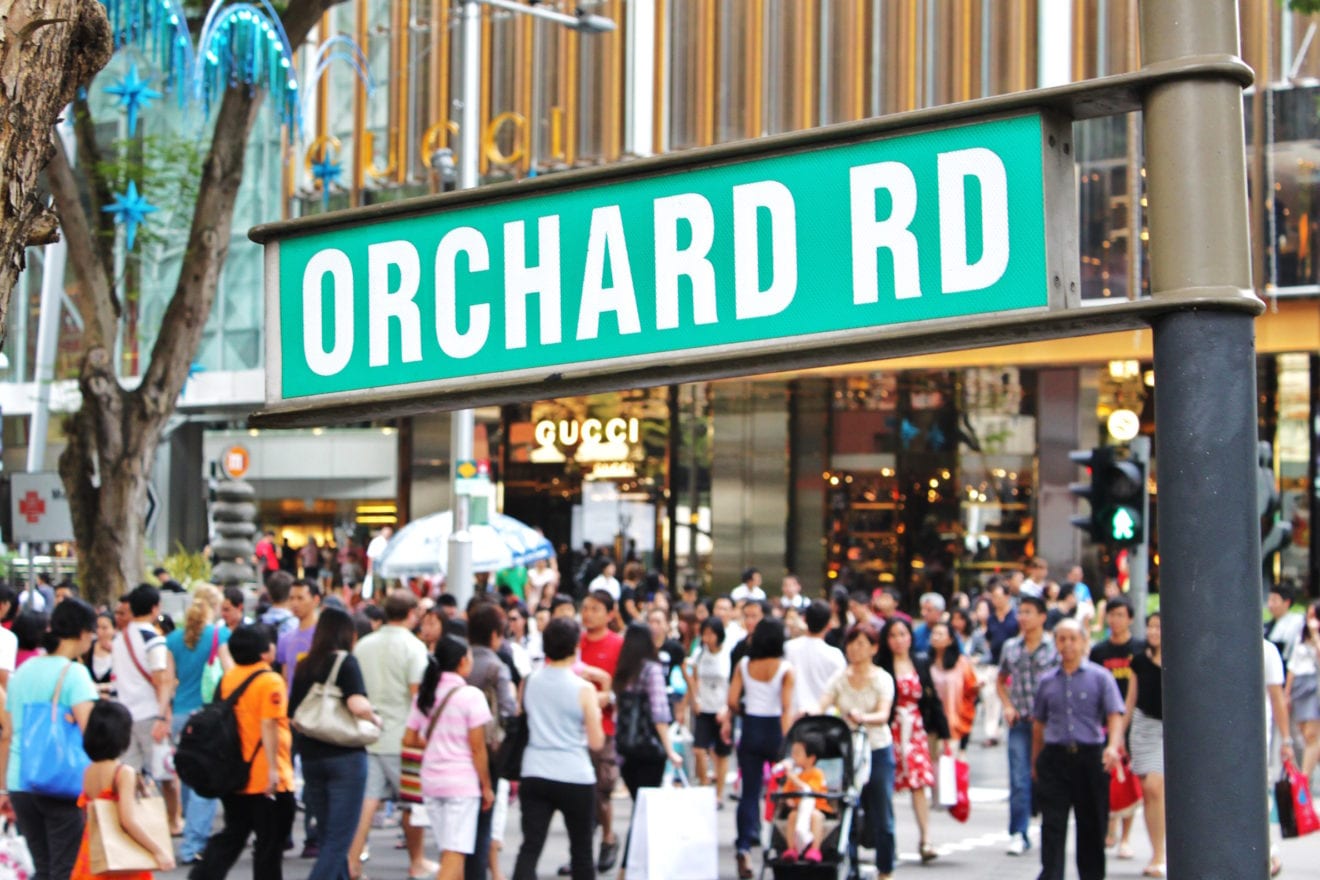
    Smoking will be prohibited in all public spaces in the Orchard Road area — from Tanglin to Dhoby Ghaut — from July 1 next year, said the National Environment Agency (NEA) on Friday (June 30).

    The existing 16 smoking corners, which exist within food retail establishments in the area, will be removed by June 30 next year. That means smoking will be permitted only at designated smoking areas within the Orchard Road smoke-free precinct, which is bordered by Tanglin Road to the west, Dhoby Ghaut MRT station to the east, and Goodwood Park Hotel to the north.

    There are currently five Government-owned designated smoking areas, which are part of an ongoing study led by the Ministry of Environment and Water Resources.

    The NEA also announced on Friday that it will no longer accept applications for smoking corners in all food retail establishments islandwide. Existing smoking corners will be allowed to remain, unless the current licence is terminated or cancelled.

    For Orchard Road, an “advisory approach” will be taken in the first three months after the no smoking ban kicks in, said the NEA. Those caught smoking in public areas will receive only verbal warnings between July 1 and Sept 30.

    Enforcement action — a fine of up to S$1,0000 — will be  taken against errant smokers in the zone from Oct 1 next year.

    Building owners within the smoke-free zone in Orchard Road, however, have the option of building their own designated smoking areas, which must meet certain guidelines, like not being situated beside main thoroughfares, and come with cigarette butt canisters or litter bins with ash trays, and display smoking cessation messages.

  • Almost 77,000 new enterprises operative in H1

    Almost 77,000 new enterprises operative in H1

    There were 61,276 newly-established enterprises in Vietnam in the first half of this year with total capital of VND596.196 trillion ($26.22 billion), according to the Ministry of Planning and Investment (MPI).

    Numbers were up 12.4 per cent year-on-year while capital was up 39.4 per cent. Average capital was VND9.7 billion ($42,600), a 24.3 per cent increase year-on-year.

    There were also 18,100 enterprises adding capital in the first half, totaling VND859.186 trillion ($37.7 billion), for new and additional capital of some VND1,455 trillion ($64 billion).

    MPI’s figures also reveal that the number of newly-established enterprises and capital grew each year in the first half from 2013 to 2017.

    The number of newly-established enterprises in the first half of 2017 increased 1.5-fold compared to the first half of 2013.

    Registered capital and average capital in the first half of this year rose three-fold and 1.8-fold, respectively, compared to the first half of 2013.

    Most sectors saw newly-established enterprises in the first half.

    There were almost 2,280 in real estate, up 68.3 per cent year-on-year, 679 in banking, finance and insurance, up 37.2 per cent, and 318 in healthcare and social assistance, up 30.9 per cent.

    In education and training, 1,597 enterprises were newly-established, an increase of 30.4 per cent, and in electricity, water, and gas production 442, a 23.1 per cent increase.

    Some 15,380 enterprises also returned to operations in the first half after temporarily suspending operations, up 3.2 per cent.

    There were also, however, 14,377 enterprises temporarily suspending operations in the first half, an increase of 17.8 per cent year-on-year.

    The number of enterprises ceasing business or waiting for dissolution was 23,530, up 24.4 per cent year-on-year.

    Of these, 5,443 enterprises completed procedures for dissolution, down 1.2 per cent.

    Some 91.5 per cent of enterprises ceasing operations or temporarily suspending operations had registered capital of less than VND10 billion ($439,800), up 23.1 per cent.