Author: Mei Ling Tan

  • Saha, Lazada unite for e-commerce expansion

    Saha, Lazada unite for e-commerce expansion

    Saha Group Fair is anticipated to attract over 1 million visitors, contributing more than 300 million baht in transactions. The fair runs until Sunday at the Queen Sirikit National Convention Center.

    Saha Pattana Inter-Holding Co, an investment company of Saha Group, has entered into a partnership with Lazada Thailand Co, aiming to use the e-commerce channel to explore its business at home and abroad.

    Saha Group chairman Boonsithi Chokwatana said the cooperation will fully take place this year after both parties started working together in 2014 to improve their selling platforms, warehouse systems, logistics management, payment methods and customer service centres.

    The companies have since signed a memorandum of understanding (MoU) enabling the Thai group to explore markets abroad, with Asean countries and China being targeted in particular.

    brands from Saha Group are now available via Lazada in various categories, including health and beauty products, lingerie and sport wears. More product categories will be added, including home and living products and groceries.

    Mr Boonsithi said Lazada is the leader in the Southeast Asian e-commerce market and seventh in terms of overall website popularity. It has a strong business base in Indonesia, Malaysia and other Asean market as well as China, the hometown of Alibaba, which is the parent company of Lazada.

    “This will help increase opportunities for our products to expand into the Asian market, particularly China, where customers are familiar with online shopping,” he said.

    Lazada expanded its online business into Asean five years ago in the Philippines, Malaysia, Indonesia, Vietnam, Singapore and Thailand.

    “One strong trend being seen among Thai consumers that is very positive for e-commerce is the higher penetration of mobiles,” said Alessandro Piscini, chief executive of Lazada Thailand.

    A lot of people access the internet for the first time through a mobile device and they are spending more time online for entertainment and various other content, he said.

    “E-commerce is not just about a website, but also the sub-businesses that complete the user experience i.e. payments or logistics,” said Mr Piscini, adding that Lazada will continue to invest in strengthening this ecosystem through its facilities to be put in the Eastern Economic Corridor.

    Lazada offers more than 10 million items in Thailand and 100 million items across Southeast Asia. The company plans to add two to three product categories including groceries.

    Saha Group has engaged in online business for a decade but sales remain sluggish, accounting for only 1% of Saha Group’s total.

    After partnering with Lazada, the group forecasts the sales contribution from online channels will rise to 10% in the next three years.

    The 75-year old group, which is Thailand’s leading consumer product conglomerate, has annual sales revenue of more than 200 billion baht from a variety of products, including food and drinks, household goods, clothes, leather goods, shoes, cosmetics and sports gear.

    “The cooperation with Lazada opens a new business chapter for our group,” said Mr Boonsithi.

    To support the online channel, Saha Group’s subsidiaries Tiger Distribution and Logistic Co yesterday signed a MoU with Paltac Corporation of Japan to strengthen its logistics businesses.

    Tiger Distribution is spending 1.8 billion baht to develop Tiger Suvarnnabhumi DC Project, a large scale warehouse building in Lat Krabang, Bangkok. It is expected to open this distribution centre in June next year.
  • Vietnam beats Thailand, Indonesia with big jump in global innovation ranking

    Vietnam beats Thailand, Indonesia with big jump in global innovation ranking

    The country, at number 47, is now only behind Singapore and Malaysia in Southeast Asia. Vietnam has been named the 47th most innovative economy in the world, its best performance to date, according to this year’s Global Innovation Index report.

    The country jumped 12 spots compared to last year, thanks to its efforts to improve business environment as well as competitiveness.

    Vietnam also ranked first among lower-middle income economies. Among Southeast Asian countries, it overtook Thailand to secure the third place, only behind Singapore and Malaysia.

    Global Innovation Index of Southeast Asian economiesSingapore (7th)Malaysia (37th)Vietnam (47th)Thailand (51st)Brunei (71st)Philippines (73rd)Indonesia (87th)Cambodia (101st)010203040506070Source: Global Innovation Index (GII)

    Knowledge and Technology Outputs, one of the main pillars of the index, was found to be Vietnam’s strong point.

    The country also performed well in Market Sophistication and in Creative Outputs. However, Vietnam’s performance was mediocre in the other pillars that measure institutional framework, human capital, infrastructures and business sophistication.

    “New Asian Tigers — such as Indonesia, the Philippines, and Vietnam — are emerging too, and they increasingly join not only Asian high-tech value chains but also other activities such as ICT offshoring. These and other countries in Asia are also active in improving their innovation performance,” the report said.

    The report, co-published by the World Intellectual Property Organization, Cornell University and the business school INSEAD, surveys the innovation performance of 127 economies around the world.

    Vietnam has been part of the index since its debut in 2007. The country has been climbing up since 2013, after several years of hovering just above the 70th place.

  • 7-Eleven outlets shutdown in Indonesia

    7-Eleven outlets shutdown in Indonesia

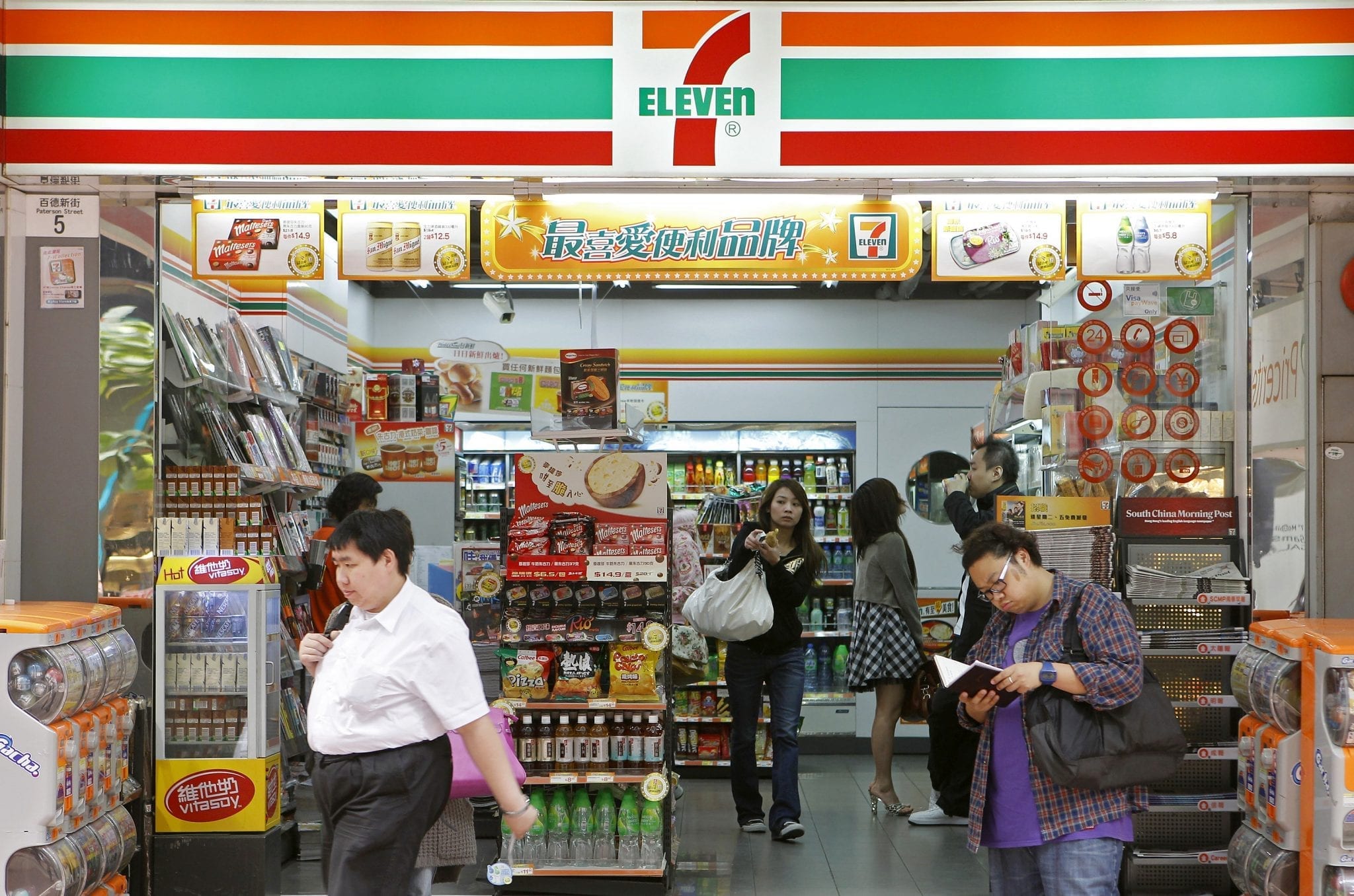
    The remaining 141 7-Eleven outlets in Indonesia will cease operations today (Friday), said franchise-owner of the 24-hour convenience store, Indonesia PT Modern Internasional.

    In a statement to the Bursa Efek recently, its Director, Chandra Wijaya, said the decision was taken given the limited resources to support operations and also to the sale and purchase of its shares.

    The company was reported to have agreed to sell the franchise to PT Charoen Pokphand Restu Indonesia but it was called off when both parties failed to reach a consensus on certain matters.

    There were some 175 7-Eleven outlets operating in Jakarta until September last year.

    At the end of 2016, more than 20 stores started closing down as they were not profitable.

    The chain outlets was first introduced in 2008 by PT Modern Internasional’s subsidiary, PT Modern Sevel Indonesia.

    However, PT Modern Internasional’s first quarter results for 2017 revealed that 7-Eleven stores incurred a a 37.17 per cent decline in total sales.

    Meanwhile, Indonesian Trade Minister Enggartiasto Lukita denied allegations that the shutdown in 7-Eleven’s operations displayed weakness in the Indonesian retail sector as many other 24-hour retail outlets were still operating as usual.

    He said the shut down was due to internal problems and the losses experienced by the company.

    Enggartiasto said he would meet the management to obtain more information on the closure of the franchise outlets.

  • Convenience stores seek ways to differentiate themselves from rivals

    Convenience stores seek ways to differentiate themselves from rivals

    In the past, convenience stores differentiated themselves from privately run groceries by position, diverse goods and modern services. Now, they tend to set up large stores integrated with fast food shops to attract youth and office workers.

    HCMC residents were reported as queuing up at the first 7-Eleven shop at Saigon Trade Center on June 15, the opening day of the shop.

    N.N. Huong, who visited with her teenage daughter, said she was curious about the new brand and she wanted to find out if there was any difference with the Ministop shop located next to her house.

    Seven System Vietnam said 7-Eleven offers hundreds of dishes suitable to Vietnamese taste, and provides lunches to office workers with 20 alternatives. Besides the products with private brands, 7-Eleven also provides facilities such as dining area, wifi and card payment services.

    After a decade of slow development, convenience stores have been developing strongly in the last three years.

    FamilyMart, Ministop and B’s, after changing the joint venture model, have been stepping up the expansion of the chains.

    Each of the brands has had 40-50 new shops set up every year. In the last three years, the network of 24/24 convenience stores has grown threefold and expanded to other provinces and cities besides Hanoi and HCMC.

    Analysts said though the high retail premises rent remains the biggest obstacle for the development of convenience stores (which accounts for 40 percent of operation costs), convenience stores have overcome a difficult period to form large-scale chains.

    Most convenience store chains are part of large corporations such as Aeon, Central Group, Saigon Co.op, Vingroup and SATRA.

    Aeon, for example, now owns many retail chains in Vietnam, including Ministop, which is open 24/24 hours, located in central districts; Aeon Fivimart, known as food shops; Aeon Citimart B&B, located in apartment blocks; and Daiso, the single-price chain, which all connect other models, from supermarkets, hypermarkets and shopping malls to other potential segments of the retail market.

    Zakkamart, a 100 percent Vietnamese owned chain, established three years ago, opens two new shops every month on average. The difference between Zakkamart and other convenience stores is that the chain sells fresh food, vegetables and fruits and frozen products.

    Nguyen Van Khoa, deputy general director of Satra, said Satra provides daily meals, and does not only focus on FMCG (fast-moving consumer goods).

  • Social media set to morph into shopping platform

    Social media set to morph into shopping platform

    China’s shoppers expect a more personalized customer experience in a new digital era where the distinction between online and offline matters less, a new report on Chinese consumer trends has found.

    McKinsey & Co released their report China iConsumer Research 2017 on the sidelines of the annual meeting of the New Champions 2017, also known as Summer Davos, in Dalian, Liaoning province.

    It found the primary shopping mode for Chinese customers has become the omni-channel experience that can offer both offline and online channels before making purchases.

    More than 95 percent of the 5,900 respondents said they either visited the physical stores before purchasing electronics online or bought them in stores after doing online research.

    The report predicted the e-commerce market in China would expand 19 percent in 2017, a relatively modest rate compared to six years of rapid growth including 74 percent in 2011.

    The report found that the solely online retail platforms are reaching their ceiling, but the full potential of the digital retail sector has not yet been fulfilled.

    “Having quickly evolved as a market for pure digital players, Chinese e-commerce is poised to enter a new retail era,” the report said.

    The term ‘new retail’ refers to a combination of the strengths of both online and offline retail.

    Founder of e-commerce giant Alibaba, Jack Ma, said new retail is wiping out the distinction between physical and virtual commerce.

    In addition to shoppers’ high expectations for omni-channel services, McKinsey suggested other major consumption trends are emerging in China in the new retail era.

    Chinese customers are pursuing scenario-triggered shopping – an e-commerce experience that adapts to whatever a shopper is doing and seeing at a given moment, the report said.

    The report also found various consumer activities such as discovering new products and making purchases are appearing on social media platforms.

    About 70 percent of the people surveyed by McKinsey who use WeChat, an instant messaging tool and social media app in China, showed interest in shopping through the platform if their favorite brands were available on it.

    The report also noted Chinese consumers’ rising enthusiasm for customized products and services.

    The report found existing online product recommendations received by consumers are far from personalized. They are based on consumers’ previous online search topics or shopping history but fail to indicate new items consumers would be interested in.

    Deeper personalization based on data and connecting online and offline experiences are key for brands and retailers in China’s new retail era, the reports said.

  • The next Silicon Valley? Where to place Vietnam on the global startup map

    The next Silicon Valley? Where to place Vietnam on the global startup map

    Vietnam is trying hard to become a startup nation. The country kicked off its own “Silicon Valley” with the hope of transforming from a software outsourcing haven to a major tech hub last year. This complex, with total investment of $21.5 million, is aimed at nurturing tech-incentive startups.

    However, when asked if Saigon could become the next Silicon Valley, entrepreneur Anh-Minh Do from the Singapore-based Vertex Venture, smiled and answered without hesitation: “I don’t think it will ever happen.”

    In the Global Startup Ecosystem Report 2017 released by U.S. research organization Genome, Saigon was not mentioned in its top 20.

    Meanwhile, Southeast Asian neighbor Singapore shocked the world by outperforming Silicon Valley as the world’s number one for tech talents, and was ranked 12th overall.

    Saigon became known to the global tech market nearly two decades ago as an outsourcing haven, together with Bangalore in India, which did secure a place in the top 20.

    When it comes to other up-and-coming tech hubs in Southeast Asia, Kuala Lumpur also has its name on the map.

    In another report released this month by consultancy firm A.T. Kearney, Saigon stood in 74th out of the 128 most innovative cities worldwide.

    Those rankings cast doubt on Saigon’s Silicon Valley dream. People are getting more realistic, saying it may be out of reach.

    People have been wondering where the second Silicon Valley will emerge, but even Singapore is not a safe bet, according to some investors. Singapore may have overtaken the California-based tech hub in some respects, but is still a long way from becoming a major rival.

    For some entrepreneurs, investors and developers, the term “Saigon Silicon Valley” comes as a surprise.

    “What do you mean Saigon Silicon Valley?” astonished Tuan Anh, a former Google intern in the U.S., asked with wide-open eyes at an Internet of Things conference held last month in Hanoi. He had no idea that Vietnam is constructing its own Silicon Valley, covering an area of over 11,000 square meters. “I am sorry, I didn’t know about the project. But considering the situation in Vietnam now, I think Silicon Valley is just a name reflecting a government dream.”

    It seems the Vietnamese government is obsessed with the term “Silicon Valley”. Nearly five years ago, the government also sponsored an accelerator based in Hanoi called Vietnam Silicon Valley, hosting bootcamps aimed at mentoring young startups and giving direction to the fragmented venture capital market.

    Tech talents

    Many investors agree that Vietnam is a great breeding ground for IT workers, and tech companies are constantly hunting for talented candidates.

    Domestic demand for techies has doubled over the past five years, according to a report by human resources firm VietnamWorks.

    Vietnam is recognized as one of the world’s top software outsourcing hubs. The appeal is bolstered by its tech-savvy workforce, which is cheaper than China’s and more productive than other countries in the ASEAN Economic Community.

    “But when it comes to sophisticated projects that require the ability to appreciate good and user-focused design and critical thinking, Vietnamese developers seem to be struggling,” Pham Quoc Dat, founder & CEO of Hatch Ventures Vietnam.

    “Vietnamese IT workers are just above average,” Dat added. “On a scale of 1 to 10, they score 7 to 8 in comparison to their Southeast Asian peers, but just 5 to 6 compared to the real Silicon Valley in the U.S.”

    Clearly, outsourcing is not enough for Vietnamese developers to make their Silicon Valley dream come true – it’s the matter of creating new things.

    “The world is now focused on artificial intelligence and automation, but Vietnam has virtually no home-grown talents in this field, only those who were educated overseas,” said Anh-Minh. “That means Vietnam is being left behind when it comes to education, which is a key component to keep up in this fast-paced world.”

    On the other hand, Vietnamese high school students have long been known for their excellent performances at math and science competitions, outscoring their U.S. and U.K. counterparts. It is this foundation for computer science that could give Vietnam an edge.

    “Vietnam has hidden tech potential, but it could take another five years to create massive companies that have global influence,” Anh-Minh added.

    The country is looking at ways to transform from an electronic component producer to a center for research, innovation and development.

    In early 2014, the world became addicted to mobile game Flappy Bird, developed by Vietnamese programmer Nguyen Ha Dong. He was said to have pocketed an estimated $50,000 a day thanks to the bird. Not even Mark Zuckerberg became rich that fast.

    Dong’s story is an encouraging example for his peers, but it seems that “Flappmania” was just a one-night hit for him. No more spotlight for descendents of this bird.

    Since then, no Vietnamese techies have been able to recreate that, not even Dong himself.

    When entrepreneurial spirit is not enough

    Setting up your own business is part of Vietnamese culture. Seven in 10 startups are family-run businesses, according to the “Vietnam –Promised Land for Entrepreneurship” report, conducted by USAID and the Vietnam Chamber of Commerce and Industry. They start small but hope to grow bigger.

    The average age of startup founders in Vietnam was 30, said the report, just slightly older than the 28 years reported in Singapore, the world’s youngest base.

    “Most young Vietnamese people want to be entrepreneurs,” said Chris Zobrist, an American entrepreneur and advisor on the Silicon Valley Project. “A lot of their parents started businesses that did really well, and that created an image in young people’s minds that being an entrepreneur is a real path to success in life.”

    Geektime, one of the biggest tech blogs focusing on global innovation, estimated the number of tech startups in Vietnam stood between 1,400 and 3,000 in 2016, making the country the third largest ecosystem in Southeast Asia, only behind Singapore and Indonesia. However, around 95 percent of startups die within 3-5 years.

    Vietnamese people are focusing more on commercial startups like coffee shops rather than doing something tech-related and revolutionary, said Truong Gia Binh, chairman of technology giant FPT Corporation. Binh said he would wholeheartedly support any projects that could make a breakthrough in the tech world. Startups that could go global should have technology as their foundation, he added.

    The startup trend has fired up in Vietnam for three years.

    The government has set a target of reaching one million newly established firms by 2020, but quantity should go together with quality.

    To become the “next” anything, the country needs bigger bets from founders, investors and regulators.

    Vietnamese startups enjoy significant government subsidies and the country’s strategists are working to establish local tech startups that can make it big on a global scale.

    “The law needs to regulate the money better. The government needs to be more supportive; there needs to be more interaction from Vietnamese-Americans, specifically Vietnamese-Californians because of the ‘Valley’ connection,” Anh-Minh said.

    Vietnamese startups struggle to succeed because they don’t have access to experienced professionals. In Silicon Valley, founders and entrepreneurs have a lot of people who have successfully started companies to go to for advice. Here in Vietnam, a relatively young market, it is not easy to find that depth of experience.

    Vietnam is a small country with big ambitions.

    Dat from Hatch Ventures said: “As the first entrepreneurial hub in Vietnam, Saigon is the first choice for investors looking for potential deals.”

    “If any city in Vietnam has the potential to become the next big tech hub, it’s Saigon,” Dat said.


  • Ford recalls 40000 big vans; cracked coupling can cause power loss

    Ford recalls 40000 big vans; cracked coupling can cause power loss

    Ford is recalling more than 400,000 Transit vans and buses to fix cracked drive shaft couplings that can cause the vehicles to lose power.

    The company says the recall covers North American vans, buses and chassis cabs with medium, long and extended wheelbases from 2015 to 2017.

    The coupling can separate from the drive shaft, causing loss of power or unintended movement when shifted into park. It also can damage surrounding parts including brake and fuel lines.

    The company says it’s not aware of any crashes or injuries from the problem.

    Ford says in a statement Wednesday that its data show the couplings won’t deteriorate enough to cause separation in vehicles with fewer than 30,000 miles. So drivers should schedule an appointment to get the coupling replaced after the vans hit that threshold. The company is still developing a permanent fix, and until that happens, drivers should have the couplings replaced every 30,000 miles.

    “We are working quickly to make it available as soon as we can,” spokeswoman Elizabeth Weigandt said.

    Owners will be notified by mail and will get another letter once the permanent repair is available.

  • Vietnamese consumers among most demanding on e-commerce

    Vietnamese consumers among most demanding on e-commerce

    Nielsen has forecast that the Vietnamese e-commerce market will grow 22 per cent this year and 13.2 per cent by 2020.

    According to the Vietnam E-commerce Association (VECOM), the local e-commerce sector will become a 10-billion-dollar business in the next five years.

    However, local consumers are also demanding, with many complaints about price, product information and authorisation, which should be addressed by merchants to improve customers’ trust.

    A research conducted by iPrice and Trusted Company based on more than 30,000 reviews on 5,000 websites in Viet Nam, Malaysia, Singapore, Indonesia and the Philippines found that Vietnamese customers have the lowest trust on e-commerce and spend less money on shopping online.

    Vietnamese customers complain the most about “fake products”, 15 per cent higher than Thailand, the country with the second maximum complaints, given that fact that Thailand ranked 4th worldwide in the fake goods trade.

    The second maximum complaints on e-commerce sites by Vietnamese customers are about the price of products. Despite being an aggressive promotion hunter, the Vietnamese still think products listed by e-commerce merchants are overpriced.

    Given that 80 per cent of consumers prefer cash on delivery (COD) payment, the country also has the highest order cancellation rate, with 30 per cent of products not being accepted due to product failure, the research said.

    Unlike consumers in other Southeast Asian countries such as Singapore and Indonesia that have shared concerns on buying products, the most common queries of the Vietnamese are on product authorisation (store address) and availability. They are revealed to often use feedback forms to ask about products.

    Of all Southeast Asian countries, Viet Nam has an average rating of 3.7 out of five stars, the research has revealed. This is due to the fact that only large merchants have developed a rating scheme for a better shopping experience for consumers.

  • China Telecom taps Silver Peak for managed SD-WAN services

    China Telecom taps Silver Peak for managed SD-WAN services

    China Telecom has forged a partnership with Silver Peak to provide its multinational enterprise customers with fully-managed software-defined wide area networking (SD-WAN) services using Silver Peak’s Unity EdgeConnectSP and Unity Boost SD-WAN products.

    The collaboration enables China Telecom to deliver managed SD-WAN services, including security services, SaaS optimization, cloud application performance, visibility and control to its large enterprise customers as well as existing enterprise customers with connectivity requirements.

    The partnership is signed between Silver Peak, a developer of SD-WAN technology and hybrid WAN products, and China Telecom Shanghai Ideal Information Industry Group, a wholly owned subsidiary under China Telecom.

    China Telecom Shanghai Ideal Information Industry is also partnering with Westcon-Comstor, a global distributor for Silver Peak, to help distribute the product globally.

    Westcon-Comstor has integrated EdgeConnectSP into China Telecom’s NetCare unified customer network monitoring and management platform using the EdgeConnect RESTful API. This enables China Telecom to offer real-time and proactive managed SD-WAN service monitoring and management to existing and new clients, according to Sliver Peak.

    “We are excited to partner with one of the world’s largest service providers, China Telecom, to bring fully managed tiered SD-WAN services to multi-national enterprises that are struggling with management challenges associated with cost effective global connectivity while maintaining WAN performance and security” said Shayne Stubbs, vice president service provider and cloud at Silver Peak.

    Stubbs said the new managed SD-WAN services help China Telecom cost effectively address the international connectivity, performance and security requirements for multinationals based in China seeking to expand out of region.

    Silver Peak’s SD-WAN solution also enables China Telecom to offer “tiered” managed SD-WAN services, including SLA-based performance for on premise and cloud-hosted applications, the executive added.

    He described the partnership with China Telecom as a “very strategic” move for Silver Peak’s expansion into the service providers market.

    In addition to China Telecom, Silver Peak has also worked with a handful of such service providers – including NTT Communications, Hyundai HCN in South Korea, TeliaSonera Finland and Interoute – to deliver managed SD-WAN services.

  • AirAsia X enters U.S. market with flights to Honolulu

    AirAsia X enters U.S. market with flights to Honolulu

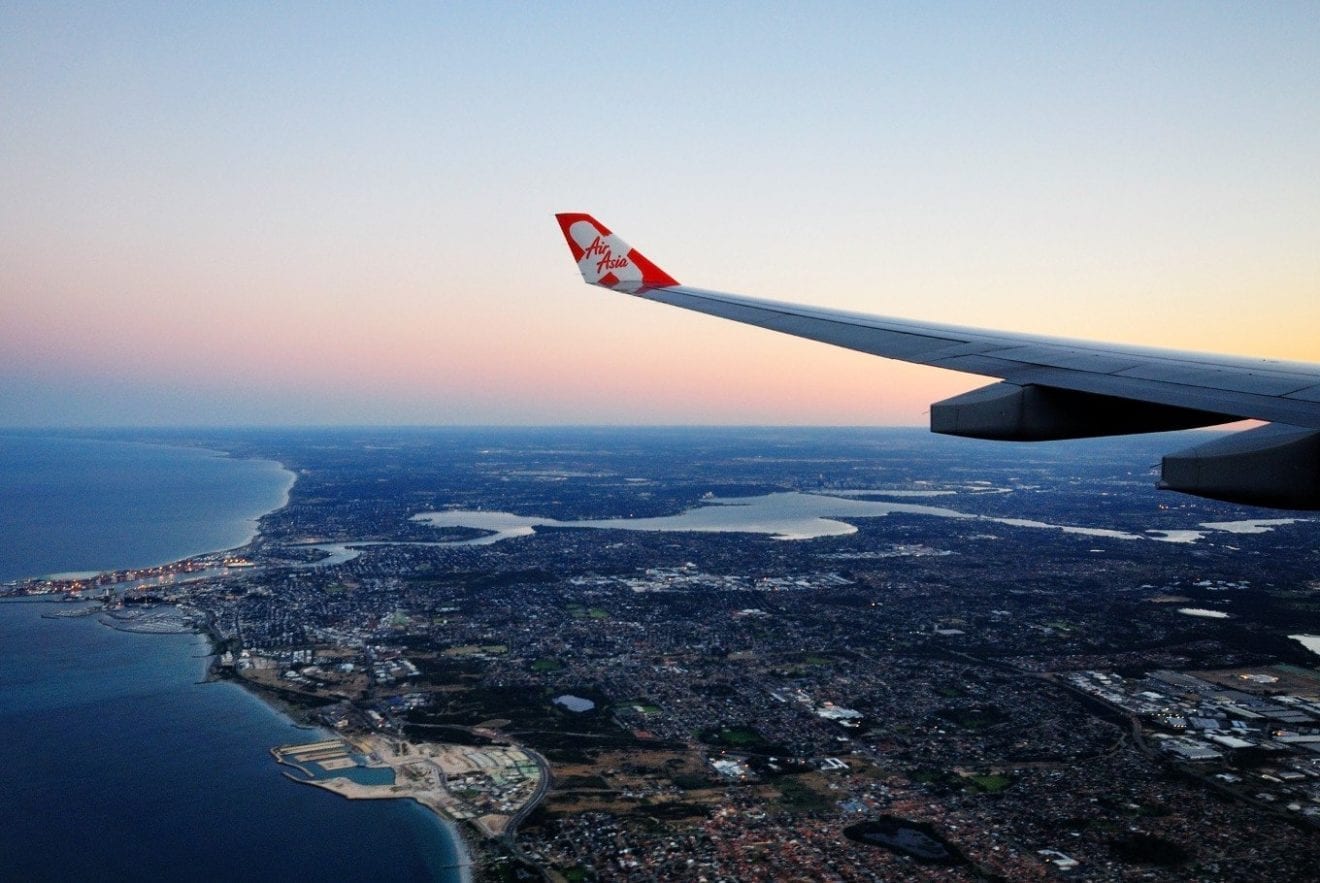
    Low-cost airline AirAsia X entered the U.S. market Wednesday, arriving in Honolulu on an inaugural flight for a new route between Malaysia and Hawaii.

    The AirAsia X flight departed Kuala Lumpur, Malaysia, and stopped in Osaka, Japan, before landing at Honolulu International Airport. The new flight will operate four times per week utilizing Airbus A330-300 aircraft with 12 premium flatbeds and 365 economy seats.

    “We are here to democratize air travel for everyone so flying long haul would no longer be a luxury only a few could enjoy,” AirAsia X Group Chairman Tan Sri Rafidah Aziz, who held a news conference at The Royal Hawaiian hotel after landing in Honolulu, said in a statement. “This landmark route to Hawaii is a bold new chapter in that quest to help more people travel farther for less.

    “But this is just the beginning, and soon our guests will be able to enjoy flights to even more destinations in the US as we continue to grow our international footprint.”

    AirAsia X, an affiliate of the AirAsia Group, operates in 24 destinations in Asia, Australia, New Zealand and the Middle East.

  • Vietnam Motor Show scheduled in August

    Vietnam Motor Show scheduled in August

    They include 12 brands of 10 members of the Viet Nam Automobile Manufacturers Association (VAMA) including Chevrolet, Ford, FUSO, Honda, Isuzu, Mercedes-Benz, Mitsubishi, Nissan, Suzuki, Toyota, and Do Thanh.

    The exhibition will also feature over 50 companies from supporting industries who will bring automobile parts and services.

    The event, which this year will have the theme “connected technology for smart moving”, will highlight the role of technology in modern life.

    Toru Kinoshita, chairman of VAMA, said: “The development of automobiles has had an enormous effect on people’s way of life all over the world. Advanced technology and innovation in the auto industry nowadays has given people incredible freedom of movement and influence over how they want to move, live and enjoy life.

    “Therefore we decided to choose this theme. We would like to express the impact of connected technology on Vietnamese life, thus enabling significant changes to patterns of living.”

    The exhibitors have said they will offer many promotions at the event.

    Also at the exhibition, conferences and forums will be held to discuss urgent issues facing the industry.

    The event, which will be held at the Sai Gon Exhibition and Convention Centre in District 7, expects to welcome 150,000-160,000 visitors.

  • Hong Kong’s millennials plan for retirement earlier than anybody else in Asia

    Hong Kong’s millennials plan for retirement earlier than anybody else in Asia

    Many see Hong Kong millennials as living from paycheck to paycheck and not committing to a long-term plan – but they actually lead their Asian peers in retirement planning, according to new research from BlackRock, the world’s biggest asset manager.

    Four out of five Hong Kong millennials (aged between 25 to 35) have already started preparing for retirement, the highest ratio across Asia-Pacific, with a majority of them betting their financial future on buying stocks, the study shows.

    The young Hongkongers’ high proclivity for retirement savings is against the backdrop of notoriously high living costs in the city and escalating global economic uncertainties, noted the report, which polled 28,000 investors across the world.

    “These findings are contrary to the common view that the city’s millennials would rather splurge on holidays and nice food than save for their long-term future,” said Julia Lee, BlackRock’s head of Hong Kong retail business.

    The study found that 81 per cent of Hongkongers aged between 25 to 35 said they had already begun retirement planning, compared with 69 per cent for their Asia-Pacific peers.

    They are also much more likely to take risks, with more than two thirds pouring money into equities in their investment portfolios, whereas only 42 per cent of their regional counterparts would do the same.

    Hong Kong runs a Mandatory Provident Fund (the MPF), a compulsory pension fund for residents with employees and employers required to contribute monthly.

    “The MPF scheme is good, while we also see local people’s need to achieve good returns from their personal financial investments,” Damien Mooney, BlackRock’s head of retail business for Asia-Pacific, said.

    Hongkongers have the world’s longest life expectancy, thanks to low smoking rates, with the average lifespan for women 87 years, and men 81 years, according to data released by Japan’s health and welfare ministry.

    The average retirement age is 58, meaning residents can be faced with over two decades relying on their savings, in what consistently ranks as one of the world’s most expensive cities to live.

    The BlackRock figures showed 86 per cent of Hong Kong investors, aged between 26-74, had managed to set money aside for retirement, and more are reducing their exposure to cash in the low interest rate environment. In spite of their high awareness, fewer than a half said they were confident in achieving their expected retirement income.

    The MPF delivered its best first-quarter results this year since 2013 with an average gain of 5.89 per cent, but it still lost out to pure stock market investment. For the same period, Hong Kong’s benchmark Hang Seng Index rose 10 per cent.

    That might help to explain why 49 per cent of Hong Kong investors polled by BlackRock said they preferred to buy dividend-bearing stocks, the most favourable asset class over real estate, government bonds and funds.

    When making investment decisions, the majority still rely on advice from online sources, including social media and websites of brokers and asset managers, instead of professional financial advisors that usually come with much higher charges.

  • Tourism plans in Mekong Delta called too ambitious

    Tourism plans in Mekong Delta called too ambitious

    Thirteen provinces and cities in Mekong Delta received 7.6 million travelers in 2016, including 900,000 foreign travelers, or 10 percent of total foreign travelers to Vietnam.

    Under the plan for Mekong Delta tourism development, the region would have turnover of VND25 trillion by 2020, or VND15.3 trillion higher than last year’s turnover.

    Some experts commented the plan is too ambitious, because the number of travelers to Mekong Delta has not increased sharply like other regions. With the overlap in tourism products, poor infrastructure and services, and bad marketing, Mekong Delta tourism agencies should not set a high target in the number of travelers.

    An analyst commented that there could be a ‘one for all’ tour, in which travelers visit one locality to experience all the products of the whole region.

    If travelers visit My Tho, they will not need to go to Can Tho, and if they visit Can Tho, they can go straight to Chau Doc or to Cambodia, and there would be no need to stop over in neighboring localities.

    My Tho and Ben Tre’s tourism has become nearly saturated as all tourism resources such as don ca tai tu (amateur music in southern Vietnam), hand rowing and craft villages.

    Travel firms report that travelers to Mekong Delta stay for 1-2 nights or go home within the day. While the central region can exploit its advantages to provide resort tourism or MICE, Mekong Delta has few large groups of 500-1,000 MICE travelers because of the lack of hotels and services.

    Nguyen Thi Hoa Le, CEO of Hoa Binh Tourism JSC, said that provinces and cities need to provide tourism products with ‘specific taste’.

    She has urged local authorities to make heavier investments in infrastructure and services. “All localities want to develop tourism, but how they can attract more tourists if they hesitate to make big investments?” she said.

    Some businesses think Mekong Delta has become less attractive because of rapid modernization. Many rural areas have lost the charm of the southern countryside.

    In Tien Giang and Can Tho provinces, for example, there are floating markets, an original characteristic of the southern region. However, the markets have become smaller as people now have other modern trade channels.

  • BMW, competing with Tesla, to introduce electric 3 Series

    BMW, competing with Tesla, to introduce electric 3 Series

    BMW plans to introduce an electric version of its popular 3 Series in September, a move designed to fend off rival Tesla.

    The German carmaker will present the vehicle at the IAA auto show in Frankfurt in September.

    The 3 series, which is a high volume sales model, will have a range of 400 km (248 miles) and is seen as a direct response to the success of Tesla’s Model 3, according to Handelsblatt.

    BMW declined to comment.

  • Louis Vuitton and Supreme to host first collaboration pop up in Sydney

    Louis Vuitton and Supreme to host first collaboration pop up in Sydney

    The long-awaited collaboration between Louis Vuitton and Supreme has finally come, and the two labels announced the location of the first collaboration pop up shop.The LVxSupreme collaboration debuted in January at the Louis Vuitton fall 2017 show.
    Louis Vuitton and Supreme fans in Sydney, Australia will be happy to hear that the world’s first LVx Supreme pop up will be located at 95 Roscoe St in Bondi Beach, and the pop up will be open from June 30 through July 13, 2017.

    The fashion world went into frenzy in January when the LVxSupreme collaboration collection debuted at the Louis Vuitton fall 2017 show in Paris.

    Rumors of a New York City pop up began circulating and looked real for a period of time, until a Manhattan community board unanimously voted against the idea, citing preparedness concerns. The board felt that those manning the event would not be ready for the number of shoppers that would line up for the pop up, which was originally planned to be located at 25 Bond Street.

    Since the possibility of a New York City pop up has been shut down, Sydney will host the first pop up for the collaboration, and more pop up locations are to be announced soon.