Author: Mei Ling Tan

  • Japan’s cellcos to invest over $45.5b in 5G

    Japan’s cellcos to invest over $45.5b in 5G

    Japan’s three major mobile operators plan to invest a combined 5 trillion yen ($45.5 billion) towards deploying 5G services nationwide, with NTT DoCoMo targeting nationwide coverage by as early as 2023.

    The Nikkei Asian Review reports that DoCoMo, KDDI and Softbank all plan to spend heavily on the commercialization of 5G, and are expected to work together on deployment to expedite the process.

    The report states that DoCoMo parent NTT has proposed to share 5G base stations with Softbank and KDDI to reduce the costs of a rollout. The two rivals are expected to agree, and particularly favor infrastructure sharing in urban areas.

    Meanwhile the three operators have a long-standing target of commercializing 5G in parts of Tokyo in time for the 2020 Tokyo Olympics and Paralympics. The operators also plan to start investing in 5G base station and related equipment as early as the 2019 financial year.

    The report notes that DoCoMo, KDDI and Softbank together spent over 6 trillion yen deploying 4G networks, but that the cost of the 5G migration will be less because some existing 4G base stations can be converted to 5G.

    The aggressive approach to rolling out 5G is reportedly motivated by slowing subscriber growth and growing competition from low-cost carriers.

  • Ericsson-led 5GCAR project to get EU funding

    Ericsson-led 5GCAR project to get EU funding

    A consortium of companies led by Ericsson known as the 5GCAR project will secure European Union funding as part of phase 2 of the 5G Infrastructure Public Private Partnership (5G PPP).

    The consortium, which also includes Huawei, Nokia and French operator Orange, will work to develop a 5G system architecture to provide optimized end-to-end vehicle-to-everything network connectivity.

    The 5GCAR Project will run for two years and have a budget of around €8 million ($9 million). It will employ around 30 full-time researchers.

    The EU has allocated a total budget of €154 million for phase 2 of the 5G PPP.

    According to Ericsson’s France head Franck Bouetard, the EU funding “will allow our initiative to further develop in order to meet the market needs by 2020. Having such projects in Europe is key in this worldwide race, as it will secure additional business and employment in the continent in the future.”

    The remaining members of the 14-partner consortium are Bosch, Centre Tecnològic de Telecomunicacions de Catalunya, Centro Tecnológico de Automoción de Galicia, Chalmers University of Technology, King’s College London, Marben, PSA group, Sequans, Viscoda and Volvo Cars.

  • YouAppi Strengthens Presence in Japan

    YouAppi Strengthens Presence in Japan

    YouAppi, a leading mobile growth marketing platform for premium mobile brands, today announced an integration with leading Supply Side Platforms for smartphone applications and web (SSPs) Ad Generation (Supership Inc.) and Geniee SSP (Geniee, Inc.). These leading Southeast Asian solutions serve publishers and digital marketers in Japan, Indonesia, Vietnam, Singapore, Thailand, and Malaysia.

    Initially, these partnerships will focus on Japanese inventory to support the growing needs of YouAppi’s recently announced Japanese office. Ultimately, these partnerships will also provide inventory for YouAppi’s global customers in Indonesia, Vietnam, Singapore, Thailand, and Malaysia.

    “By integrating with premium and respected SSPs including Ad Generation and Geniee SSP, YouAppi Japan will be able to offer our clients, both global and Japanese, better, more accurately targeted Japanese traffic,” said Yoshie Nakabayashi, the Country Manager for YouAppi Japan. “Following last year’s investment from Asian and Japanese investors, this announcement is the first in a series of partnerships from YouAppi Japan, which will establish YouAppi as a leading mobile growth solution in Japan.”

    Ad Generation and Geniee SSP will provide inventory for YouAppi clients interested in targeting Japan and Southeast Asia. These partnerships enable real-time optimization, maximization of fill rates to prevent inventory shortages, and monetization via a broad range of ad units across apps and via the mobile web.

    “We’re excited to be partnering with a pre-eminent mobile marketing solution like YouAppi,” said Mr. Yusuke Ono, Manager at Ad Technology Center/Advertising Business Unit, Supership Inc.

    “By partnering with a company that uses its proprietary technology based on AI and big data analysis, we will be able to maximize the revenue of publishers who are using Ad Generation.”


    Brand marketers seeking to acquire new users for their apps (or re-engage inactive users) will profit from a direct supply of traffic from Japan and other key Southeast Asian countries with global reach supporting a wide range of ad units, including rewarded videos and video interstitials. To ensure marketers acquire the right users at the optimal price, YouAppi’s optimizes performance based on Post-Install Events – the actions deemed valuable by the marketer that are taken after users install an app. This proprietary matching and predictive technology has been the cornerstone of YouAppi’s OneRun platform since the company’s founding.

    “These integrations with Ad Generation and Geniee SSP are the first of several announcements that will strengthen YouAppi’s offering for Southeast Asian clients as well as global marketers interested in targeting Southeast Asian users,” said Moshe Vaknin, CEO & co-founder, YouAppi. ”We announced our commitment to Asia with last year’s funding announcement and we’ll strengthen our presence in Southeast Asia by announcing new offices and more partnerships to support the strong growth YouAppi is experiencing in Asia.”

    By improving the mobile experience for publishers and marketers in Japan and Southeast Asia, YouAppi is experiencing strong global revenue growth driven by the company’s proprietary technology and OneRun platform. Proof of the company’s success can be found in the 16,600 campaigns for 470 leading advertisers via 115 billion monthly impressions served around the world over the last four years. YouAppi’s OneRun Platform offers one single point to streamline mobile media buying, combining the power of machine learning with the company’s proprietary predictive algorithms, which analyze over 250 terabytes of data every day.

  • Tellscore launches brands-meet-influencers platform in Thailand

    Tellscore launches brands-meet-influencers platform in Thailand

    Thailand’s first automated and one-stop micro-influencers-meet-brands platform, Tellscore, announces its official debut online today The powerful digital tool enhances business reach and conversion through social media channels. Tellscore enables micro-influencers to earn and brands to benefit by expressing genuine opinions and authentic branded content online.

    Tellscore utilizes micro-targeting technology, allowing brands to customize the number of micro-influencers they work with based on their areas of expertise, size of followers, and most importantly engagement rates that works as an automated system connecting brands and micro-influencers directly. The incorporation of algorithms creates a Tellscore scoring system that is not only effective but also measurable, projecting a preview of the exposure brands are likely to receive from the budget of their choice, with a wide yet precise digital targeting.

    Tellscore is designed with the insider’s knowledge and understanding that reach or visibilities can be mere quantitative figures in marketing performance but does not provoke shifts toward desired purchasing behavior. In truth, the key to a successful marketing campaign is heavily relying on the level of engagements, which is proven to be only garnered by micro-influencers.

    The brains behind the game-changing platform Tellscore are Suvita Charanwong and Amornthep Chimpleenapanont, the Co-Founders of Redlab Co., Ltd., a leading digital agency in Thailand, specializing in digital marketing. With over 20 years of industry experience, Suvita believes that the Asian market is ready to unlock the marketing potential of micro-influencers.

    “Micro-influencers relate and communicate directly with consumers because they are consumers and they speak from their perspective rather than being corporate mouthpieces. This is their real power. Compared to bigger marketing heavyweights there are many diverse and niche micro-influencers; offering a direct line of communication straight to markets that may be difficult to reach without the Tellscore system.

    “Micro-influencers are vital because of the extent of social-media engagement. In Asia, Thailand is leading the way with 47 million Facebook users which accounts for nearly 70% of the population. According to Facebook, in Southeast Asia, that figure is around 241 million users. In just over a year, Instagram users in Thailand have risen from 3.2 million to 9 million. Southeast Asia is gathering pace at an impressive speed when it comes to online and mobile connectivity.”

    Anyone with social media followers and an opinion can become a Tellscore micro-influencer and be notified of incoming campaigns from brands that are relevant to them, which they are then able to create and share meaningful stories that resonate amongst their followers, while they benefit from paid work. Micro-influencers add credibility to brands through their role of trusted friend that can earn them anywhere between THB 100 – 50,000 for a content share or product review depending on their level of engagement and number of followers.

    Tellscore’s campaign management tool assists both brands and influencers in managing their busy schedules when it comes to launching a campaign. The platform helps reduce campaign setup time for brands and provides influencers with a scheduled timeline to share their content. Both Thai and English language micro-influencers are being actively sought prior to the Thailand launch.

    Tellscore expects to reach up to 30 million reachable consumers by connecting micro-influencers with top brands via the platform. Tellscore’s widening their digital reach in Thailand and potentially beyond by the end of 2017.  Tellscore has invested THB 50 million towards this platform, which includes design and development, licensing costs, and other technology fees.

    Marketers signing up to Tellscore can start a campaign and collaborate with any number of micro-influencers of their choice immediately, with no tie-in obligations or locked-in contracts; ideal for product launches, marketing campaigns, breaking news and any campaign that seek to reach out to real audience instead of a temporary digital buzz. The Tellscore automated platform ensures that micro-influencer content is relevant and trusted so consumers listen rather than activating consumers’ default setting of ignoring branded content, loud advertisements and traditional advertorials. 

    Current brands marketing through Tellscore’s platform include Thai Wacoal and Dutchmill, with many other businesses getting online too. Meanwhile, micro-influencers range from individuals and bloggers with 500-10,000 followers and A-lists such as Nang-Prod-Kong-Kha-Prajao, movie review page (1,085,415 followers), Job-Khao, news synopsis page (563,750 followers), Sapai-Pae, travel page (500,324 followers), Tem-Khor, soccer fans page (263,045 followers), Pai-Donnnn, eat and travel page (112,251 followers), Cocopsyche, beauty blogger page (104,765 followers) and many more.  

    With micro-influencers reaching out to consumers in an engaging way, their opinion and content can prove to be invaluable, especially to those budget conscious brands or that looking for new ways to effectively influence their target markets.


  • AdColony Ups its Mobile Video Offering

    AdColony Ups its Mobile Video Offering

    AdColony, the largest independent mobile advertising platform, today announced the launch of Aurora™ HD Video, a suite of interactive mobile video creative products that fundamentally changes the way consumers can physically engage with video content. Aurora™ HD Video allows advertisers to immerse consumers into video content in a way never before seen in mobile advertising, delivering branding and engagement goals with TV-like reach.

    Powered by AdColony’s Instant-Play™ technology, the video gives marketers access to powerful graphic capabilities, interactive content that is enhanced with haptic effects and other native mobile capabilities that result in an experience for the viewer that is more immersive than anything else in market.

    “The future of Mobile Video is here, and, it is very different from what anyone has experienced yet,” explained Vikas Gulati, managing director of AdColony for Asia Pacific. “Video ads have always been a one-way street, yet, users want more than that. They want custom graphic effects that provide a life-like experience and content that rewards them for interacting with it.”       

    From creating fully shoppable video experiences, to changing backgrounds, to switching between concurrently-running videos, Aurora™ HD Video allows users a range of ways to interact and  personalise the experience on their screens.

    As one of its first advertisers, AdColony partnered with Disney to launch a mobile campaign for its global blockbuster release: Pirates of the Caribbean: Dead Men Tell No Tales which ran in the U.S. and APAC. 

    The campaign comprises an online treasure hunt that allows users to unlock rewards by engaging with the content in front of them. As a custom trailer for the film played, consumers tapped specific items on the screen, and were rewarded with exclusive video content from the film for everything they found. You can experience the video here.

    Added Gulati: “Mobile is no longer just an extension of TVs or digital videos. Mobile creative requires  crystal clear sound and picture quality, buffer-free video playback in apps, and a variety of post-video experiences to drive consumer actions. We are excited to have Disney as our very first Aurora™ advertiser and look forward to delivering results on brand and performance levels.”

    The Evolution of Instant-Play™ HD

    AdColony has been a leader in mobile video since 2011, when they launched Instant-Play™ HD video, a proprietary technology that ensures crystal clear, buffer-free video playback in apps. AdColony also pioneered the ability to engage with mobile video with their 2013 launch of dynamic end cards that provide the viewer with a variety of immersive, engaging post-video experiences to drive consumer actions. Since bringing these products to market, AdColony has run over 26 billion minutes of mobile video ads, and driven 78 billion impressions. 

    The Aurora™ video suite is powered by the AdColony 3.1 SDK. AdColony’s SDK is currently in more of the top 1,000 apps than anyone outside of Google, and this deep integration with top publishers allows advertisers to access the company’s latest and most innovative technology in the most popular apps in the world.

  • Chow Tai Fook to build membership management JV in China

    Chow Tai Fook to build membership management JV in China

    Chow Tai Fook‘s indirect wholly-owned subsidiary Solomon has signed a joint venture agreement with Golden, Edge, and Group Program Limited, aiming to develop and operate the group’s membership program in mainland China and Hong Kong.

    Solomon and Golden will each own a 40% stake in the new joint venture, while Edge will own the remaining 20%.

    Solomon will provide HKD40 million via share subscription and shareholder loan to the joint venture as initial capital. The initial capital will be used for information technology infrastructure development, marketing, and operation.

    Chow Tai Fook said the group will benefit from the joint venture. Its directors believe the group will be able to access more potential customers covered by its cooperating partners. Moreover, the group can use its loyalty marketing plan to explore the potential values of its members in China and promote cross-sales among cooperating partners to improve the sales of the group.

  • All terrain Michelin LTX Force SUV tyres launched in India

    All terrain Michelin LTX Force SUV tyres launched in India

    Tyre maker Michelin has today announced the availability of Michelin LTX Force range of SUV tyres in India. Designed for all types of terrain, Michelin LTX Force tyres offer durability, superior grip on-road and higher traction off-road, claims the company statement.

    The introduction of this new range in India helps the company further strengthen its product portfolio.

    Mohan Kumar, Commercial Director, Michelin India said, “The SUV market is one of the fastest growing segments in India. Industry estimates indicate one in four vehicles sold last year was an SUV and as more Indians opt for SUV’s, this segment is estimated to continue growing, both in cities and upcountry towns. Our LTX Force is an all-rounder and is ideal for SUV owners who regularly use their vehicle on both paved and unpaved road.”

    ” Innovation is at the heart of our product development and this tyre is a perfect example of it, where we showcase a seamless transformation from track to road. By using this range, the SUV users in India will benefit from the international technology that has enjoyed numerous podium finishes at grueling all terrain competitions such as Rally WRC.” he added.

    Michelin LTX Force uses compact tread technology which takes advantage of two contradictory performances: durability plus grip. The tread pattern inspired by endurance races is designed to provide a greater contact area thanks to higher tread blocks which favours both durability and traction.

    The comoany claims that the tyres are a result of tried and tested motorsport technologies

    Motorsport offers the ideal proving ground for Michelin to test tyres in the most extreme conditions. Michelin LTX Force tyre is yet another example of our from track to road philosophy. These tyres have been tested in extreme mining conditions to ensure off-road traction and robustness.

    The Michelin LTX Force range tyres are available nationally at Michelin premium dealerships – the Michelin Priority Partners, the TYREPLUS network and Michelin retailers.

  • Apple makes iPhone screen fixes easier as states mull repair laws

    Apple makes iPhone screen fixes easier as states mull repair laws

    Apple Inc customers will soon have more choices as the company looks to reduce long wait times for iPhone repairs at its retail stores.

    By the end of 2017, Apple will to put its proprietary machines for mending cracked iPhone glass in about 400 authorized third-party repair centers in 25 countries, company executives told.

    Among the first recipients is Minneapolis-based Best Buy, which has long sold and serviced Apple products. The electronics retailer already has one of the screen-repair machines at a Miami-area store and one coming soon to an outlet in Sunnyvale, California.

    Fixing cracked screens may seem like small potatoes, but it’s a multi-billion-dollar global business. The move is also a major shift for Apple. The company had previously restricted use of its so-called Horizon Machine to its nearly 500 retail stores and mail-in repair centers; and it has guarded its design closely.

    The change also comes as eight U.S. states have launched “right to repair” bills aimed at prying open the tightly controlled repair networks of Apple and other high-tech manufacturers.

    Apple said legislative pressure was not a factor in its decision to share its technology. It allowed us to view and photograph the machines in action at a lab near its Cupertino, California headquarters. Until now, Apple had never formally acknowledged the Horizon Machine’s existence.

    The initial rollout aims to put machines in 200, or about 4 percent, of Apple’s 4,800 authorized service providers worldwide over the next few months. The company plans to double that figure by the end of the year.

    “We’ve been on a quest to expand our reach,” said Brian Naumann, senior director of service operations at Apple. He said repair wait times have grown at some of the company’s busiest retail stores.

    Pilot testing started a year ago. In addition to Miami, a few machines already are operating at third-party repair centers in the Bay Area, London, Shanghai and Singapore. Shops in some countries where Apple has no retail presence will also be early recipients, including locations in Colombia, Norway and South Korea. Apple would not say how much its partners are paying for the equipment.

    To be sure, any mall repair kiosk can replace a cracked iPhone screen. Apple says its customers can get their devices fixed at non-authorized shops without voiding their warranties as long as the technician caused no damage.

    But the Horizon Machine is needed to remedy the trickiest mishaps, such as when the fingerprint sensor attached to the back of the glass gets damaged when a phone is dropped.

    For security, only Apple’s fix-it machine can tell the iPhone’s processor, its silicon brain, to recognize a replacement sensor. Without it, the iPhone won’t unlock with the touch of a finger. Banking apps that require a fingerprint won’t work either, including the Apple Pay digital wallet.

    “Right to repair” gaining steam

    Apple has sold more than 1 billion iPhones worldwide, many to customers who don’t live near an Apple Store or an authorized third-party repair center.

    For fixes, many have turned to mom-and-pop shops and independent technicians that now dominate the trade. Research firm IBISWorld estimates the global cell phone repair business generates about $4 billion in revenue per year.

    Many of these entrepreneurs do good work. Some don’t. All use copycat parts because Apple, like other major manufacturers, doesn’t supply original parts or repair manuals to anyone but authorized service partners.

    Big companies defend this arrangement as the only way they can guarantee high-quality repair work and keep hackers away from the proprietary software that makes their products tick.

    Consumer advocates, however, say their aim is to wring outsized profits from repairs. Independent technicians often charge less than the cost of a factory fix.

    Enter right-to-repair bills. New York, Massachusetts, Tennessee, Illinois, Minnesota, Nebraska, Kansas and Wyoming have introduced legislation looking to aid small shops and do-it-yourself tinkerers.

    These proposed measures would require manufacturers to supply repair manuals, diagnostic tools and authentic replacement parts at fair prices to independent technicians and the general public. Apple, heavy equipment manufacturer Caterpillar Inc and medical device maker Medtronic Plc have lobbied against New York’s bill. In Nebraska, Apple sent its state and local lobbying chief Steve Kester to visit the Republican lawmaker sponsoring that state’s measure.

    “Apple is telling me this is a bad thing because you’re going to have a mecca for hackers in Nebraska,” State Sen. Lydia Brasch said of Kester’s February visit.

    Apple hasn’t commented on the bills, but a trade group it belongs to contends the Nebraska measure would force the company to divulge how it secures sensitive data on the iPhone.

    “Think about how much of our personal lives are in this device,” said Mike Lanigan, head engineer for Apple’s service efforts.

    Inside the lab

    Apple got into the screen-fixing business just three years ago with the introduction of the iPhone 5. Up until then, customers whose phones were out of warranty paid a “repair” fee, but Applesimply replaced the entire phone.

    Lanigan said customers have been requesting repair service since shortly after the introduction of the iPhone in 2007, but the company waited until it could perfect the process.

    “We view the service aspect of this as all part of the overall Apple experience,” Lanigan said.

    Apple doesn’t break out repair revenue in its financial statements. Analysts estimate it at $1 billion to $2 billion annually for all products.

    As Apple’s screen mending has matured, its prices have dropped to $129 to $149, depending on screen size, from $229. That’s competitive with many independent shops for newer iPhones. Still, some technicians charge as little as $60 to fix older models.

    Apple says its process aims to make the display look like it just came out of the box. To demonstrate, the company allowed us to observe the Horizon Machine at a repair lab in Sunnyvale, California.

    In the cavernous, brightly lit lab painted in Apple’s signature sparkling white, two lab technicians clad in T-shirts, shorts and tennis shoes scurried between rows of long white metal tables stuffed with test equipment.

    Dozens of Horizon Machines lined the tables. The contraptions, gray metal boxes the size of a microwave with a swing-out windowed door, vary slightly in shape depending on the model of iPhone they repair. Apple would not say where the machines were made or by whom.

    In a smaller training room, a technician laid out the tools Apple uses to fix iPhone screens: special screwdrivers for the iPhone’s five- and three-lobed screws, a custom suction-cup for loosening the screen without tearing the delicate ribbon cables behind it, and a press to squeeze iPhone 7s to ensure waterproofing.

    Once the new screen is mounted, the iPhone goes into the Horizon Machine, which allows Apple’s software to communicate with the fresh hardware. Over the course of 10 to 12 minutes, the machine talks to the phone’s operating system to pair the fingerprint sensor to the phone’s brain.

    While that unfolds, a mechanical finger jabs the screen in multiple places to test the touch-sensitive surface. The machine also fine tunes the display and software to match the precise colors and calibration of the original.

    “We design for a customer experience that exceeds anything our competitors try to do,” said Naumann, Apple’s service chief. “We endeavor to make it right at the same standard as when the customer bought the product.”

  • How will Saigon track down Facebook retailers to collect tax?

    How will Saigon track down Facebook retailers to collect tax?

    Tax officials are reaching out to 13,500 retailers in their database, but they admit this will be a very tough task.

    For the first time Ho Chi Minh City has started a new tax collection campaign targeting retailers on Facebook, the most popular social network in Vietnam.

    Now tax officials are working to solve an anticipated problem: how to track down thousands of retailers across the city, many of whom are elusive, and how to calculate their earnings.

    Le Thi Thu Huong, a municipal tax official, said the city has a record of 13,500 retailers on Facebook and that the law only requires those with an annual revenue of VND100 million or $4,400 to declare tax.

    Tax officials will also need to figure out how to determine their taxable income, Huong said, noting that cash transactions are difficult to monitored.

    “Tax authorities will need the support and cooperation from relevant sectors such as banks, postal services and Facebook itself to collect tax effectively,” she said.

    District-level tax agents said they have been reaching out to the 13,500 retailers in the database, but to no avail.

    District 1 and Binh Thanh District have both sent out letters asking Facebook retailers to meet officials to discuss tax payments, only to find that many of the addresses listed on Facebook are fake.

    “If the retailers continue to keep quiet, we will come to them in person,” an official in Binh Thanh said.

    Another official said the database should be reviewed to remove inactive retailers first before district agents begin to send out requests.

    Nhung, an online retailer in Binh Tan District who sells clothes and cosmetics on Facebook, said her monthly revenue usually stays at VND30-40 million ($1,300-1,700) .

    She did not hide the fact that her address and phone number are not disclosed publicly on Facebook.

    “I think this is why the city’s tax department doesn’t have me in the database. So far I have not been contacted,” Nhung said. VnExpress chose not to publish her full name.

    “It’s not easy for tax authorities to have my personal information, unless they contact Facebook directly. But that is not likely to happen,” she said.

    Nhung also said most of her customers pay in cash.

    Mai, a cosmetics seller, said she has received a letter from District 1 even though she has a business license and has declared tax.

    She said she may just ignore the letter because it’s “not necessary.”

    Since February, Vietnam’s tax authorities have been looking at ways to collect taxes from online businesses that use Facebook and other social media sites such as Instagram and YouTube.

  • Siam Paragon, Siam Center, Siam Discovery Kick off the Tourist Mid-Year Promotion

    Siam Paragon, Siam Center, Siam Discovery Kick off the Tourist Mid-Year Promotion

    The exclusive cool deals await tourist shoppers as Siam Paragon, Siam Center, and Siam Discovery, Bangkok’s three major shopping destinations, has just launched
    the Tourist Mid-Year Promotion offering a lot of exciting deals and a rewarding experience from now until July 31, 2017.

    As the ultimate all-in-one-place shopping destination and entertainment attraction in Bangkok, Siam Paragon, Siam Center and Siam Discovery offer a truly remarkable experience for all walks of life

    while inviting tourist shoppers to enjoy exclusive tourist privileges and  a wide variety of special offers  from Tourist Mid-Year Promotion from now until the end of this July.

    Simply register “Tourist Card” and receive a complimentary voucher valued at Baht 200 to enjoy

    a world of flavours at My Kitchen located on the 4th Floor, Siam Discovery. My Kitchen offers everyone a new social dining experience with a variety of great taste from five well-known restaurants namely Nara, Kuppadeli, Café Chilli, Man Fu Yuan, Yuzu by Yuutaro and a super chic café Brix Dessert Bar.

    Moreover, making your vacation even more fulfilled by spending more to receive a value of money special gift. Just spend a minimum purchase of Baht 5,000, receive a limited edition elephant clutch while spending  a minimum purchase of Baht 10,000, receive a travelling bag and VIZ Titanium member card.

    Tourist shoppers just present their valid passport at any information counter at Siam Paragon, Siam Center, and Siam Discovery or Tourist Lounge located on G floor of Siam Paragon for registering “Tourist Card”. Tourist Card holders will enjoy up to 30% discounts  on regularly priced merchandises at participating shops ranging from fashion, beauty, wellness, lifestyle to dining at these 3 shopping centers. Tourist Card holders will be also entitled to up to 6% VAT refund for their purchases at these 3 locations.  Valid until the end of December 2017.

    Get ready for a great time of shopping and super savings.

  • China’s Tongfang Kontafarma to move into fitness

    China’s Tongfang Kontafarma to move into fitness

    Hong Kong-listed Tongfang Kontafarma will acquire a significant stake in Singapore’s True Group, which comprises True Yoga and True Fitness, according to a press release by the latter on Tuesday (May 30).

    The deal will see Tongfang Kontafarma, which is mainly engaged in the manufacturing and sales of prescription drugs, buy a 51 per cent stake in True Group’s Singapore and China businesses, and a 29 per cent stake in its Taiwan businesses, for US$36.7 million (S$51.2 million) in cash, the release said.

    True Group said the deal is so that it can pursue expansion in China, as it looks to tap on the fitness boom there. It also aims to conduct an initial public offering on the Hong Kong Stock Exchange.

    Both parties intend to grow its presence in China through corporate-owned and franchised clubs in tier one and tier two Chinese cities, with up to 20 new clubs to be opened by end-2019. This will be done through acquisitions and building new clubs, and an initial US$5 million will be set aside to help fuel its growth there, the company said.

    Gym membership in China has doubled since 2008 to 6.6 million in 2016, said the press release, citing the China Business Research Academy.

    The True Group currently owns and operates 26 fitness and yoga centres in the three countries and has an annual turnover of more than US$100 million.

  • Brookstone formally enters Hangzhou

    Brookstone formally enters Hangzhou

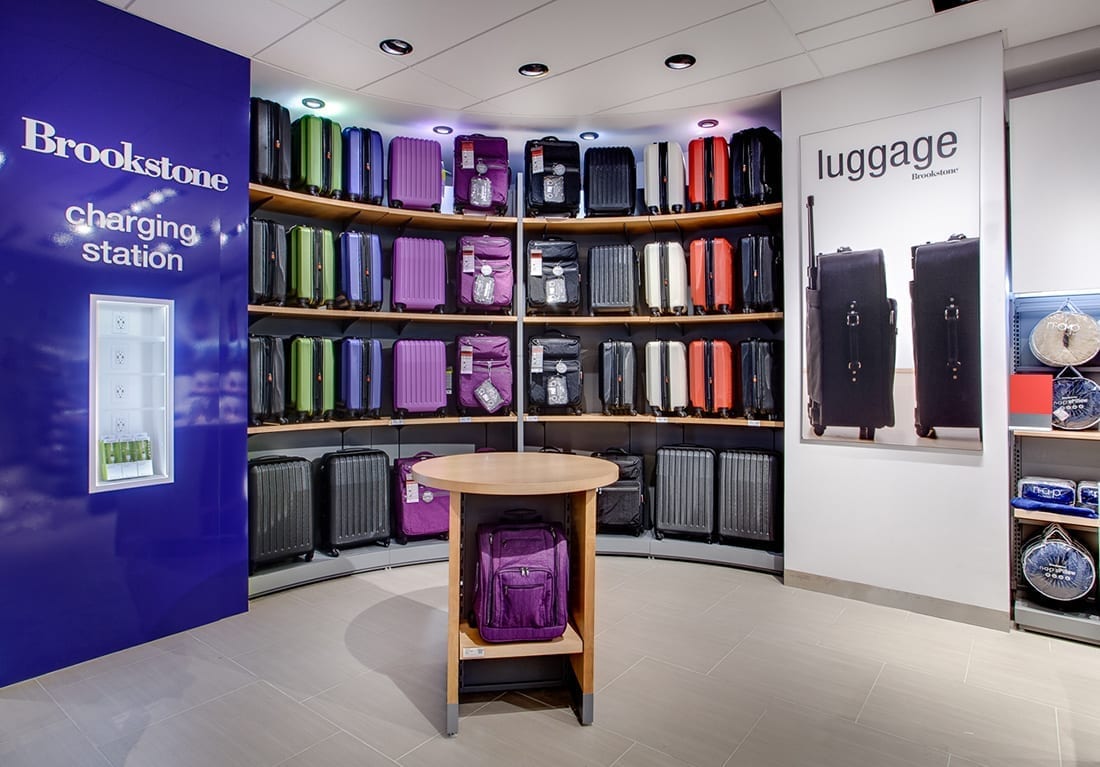
    Brookstone will formally enter the Hangzhou market with its first store opened at the Hangzhou GDA Plaza, which is Brookstone’s flagship store in the city.

    Ma Qihua, president of Hangzhou GDA Plaza, said that the cooperation with Brookstone is based on the common value of the two parties. Brookstone is seeking transformation as it faces more threats from e-commerce; while GDA Plaza is also exploring ways to truly return to market value to gain acceptance of the market and its customers.

    Xin Kexia, chief executive officer of Brookstone, is quoted in local media as saying that Brookstone has experienced many mistakes and corrections and has now discovered a new path. Now the industry pays more and more attention to Brookstone. With the opening of Brookstone store in Hangzhou, they are looking forward to sharing their business model with their peers in the city.

    Brookstone opened its first store at Nanjing Aqua City on January 1, 2016. On April 18, 2017, the company announced the start of its full expansion. So far, it has launched nearly 20 stores in over ten cities.

  • Singtel, SingPost launch e-waste recycling program

    Singtel, SingPost launch e-waste recycling program

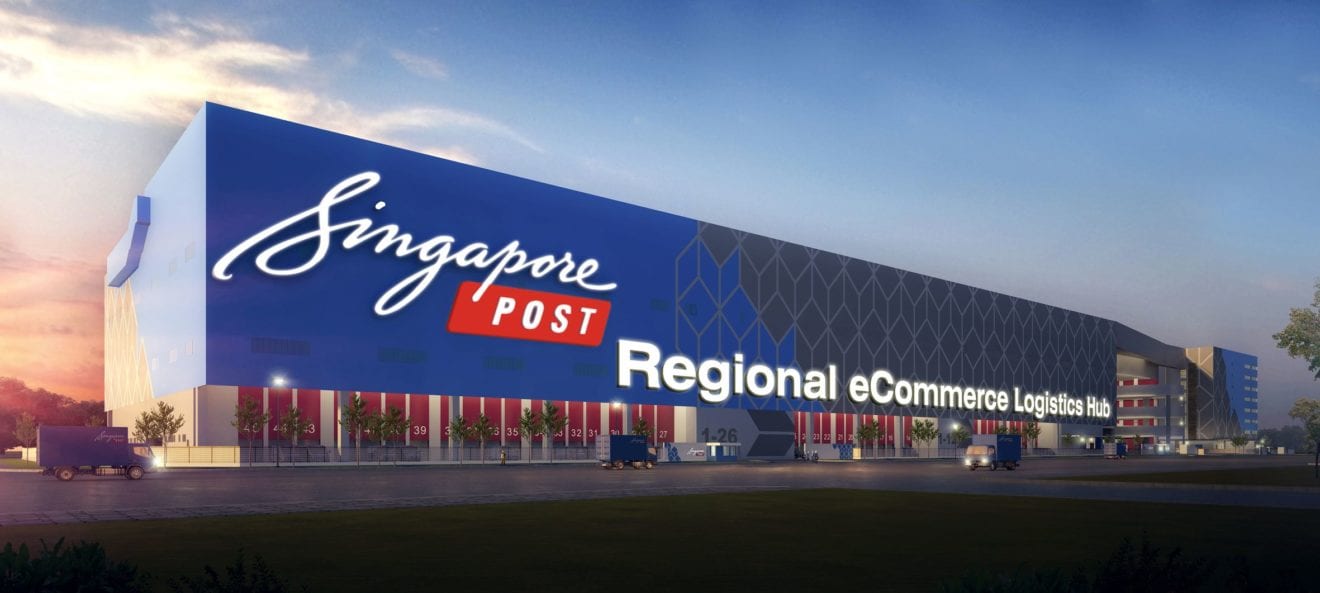
    Singtel has teamed up with SingPost to launch a nationwide e-waste recycling program in conjunction with World Environment Day.

    As part of the ReCYCLE initiative, Singtel will deploy e-waste recycling bins at selected Singtel shops and Singtel exclusive retailers for consumers to dispose of their obsolete mobile or internet-related devices. SingPost will also deploy the bins at post offices across Singapore.

    Singtel will also be providing special envelopes at all its eight shops and 58 Singtel exclusive retailers to allow residents to mail their recycleables.

    “E-waste is one of the fastest growing categories of waste as consumers dispose of electronic equipment even faster these days. According to the National Environment Agency, Singapore generates more than 60,000 tons of e-waste every year,” Singtel VP for group sustainability Andrew Buay said.

    “Most e-waste is still finding its way into landfills which pollutes the environment. With our partnership with SingPost, we’ve gone a step further to bring greater convenience to everyone by doubling our reach and touchpoints. We hope this will encourage more people to recycle and think twice before disposing their electronic devices down the rubbish chutes.”

  • PT Datacomm debuts hybrid cloud suite

    PT Datacomm debuts hybrid cloud suite

    PT Datacomm Diangraha, through Datacomm Cloud Business (DCB), has launched what it is touting as simple and secure hybrid cloud solutions for Indonesian enterprises.

    The new offering – which utilizes hybrid IT solutions from Hewlett Packard Enterprise (HPE) – aims to help Indonesian enterprise customers migrate to the cloud with technology that addresses the security and compliance standards stipulated by the Indonesian government.

    DCB aims to capitalize on the growing rate of cloud computing adoption to help, to help Indonesian enterprises source, manage and consume IT services. This includes the deployment of services across a mix of traditional IT, private cloud and public cloud (hybrid infrastructure) to create the optimal IT mix—where workloads are deployed and applications are sourced from the most appropriate platform, based on a customer’s unique requirements (e.g., performance, cost, compliance, location).

    The deployment, which includes HPE servers and all-flash storage, will provide flexibility for enterprise customers to choose the cloud deployment option that best suits their needs.

    Solutions provided by Datacomm Cloud Business will include private managed cloud, cloud management platforms, public cloud, disaster recovery-as-a-service and backup as-a-service.

    The offerings will be fully hosted in Indonesia to meet with Indonesian Government Regulation (PP) No. 82 in 2012 on data sovereignty requirements.

    “Through our participation in the HPE Partner Ready Service Providers Program, we are now empowered with the knowledge, expertise and technology innovation that can help our customers move beyond their traditional infrastructure and reap the benefits of the hybrid IT world,” Datacomm Cloud Business managing director Sutedjo Tjahjadi said.

    “Through our offerings, customers will be able to ensure they move at the speed of business while enjoying international service standards, meeting the Indonesian government local compliance requirement and having access to 24×7 local support as required.”

    DCB is expanding its investment in the cloud computing local infrastructure. DCB will also add two additional cloud node infrastructure projects between now and the end of the year in Bandung and Medan.

  • Jaguar Land Rover overall retail sales up 1.2 pct in May

    Jaguar Land Rover overall retail sales up 1.2 pct in May

    Jaguar Land Rover says overall retail sales for Jaguar Land Rover were 45,487 in May, up 1.2 percent year-on-year.

    Jaguar Land Rover says Jaguar May sales were 13,613 vehicles, up 28 percent year-on-year. Jaguar Land Rover says Land Rover retailed 31,874 vehicles in May, down 7.1 percent year-on-year.