Author: Mei Ling Tan

  • Cyber attack not disrupting stock market at IDX

    Cyber attack not disrupting stock market at IDX

    WannaCry malware attack has not disrupted the countrys share market, Tito Sulistio, President Director, Indonesia Stock Exchange (IDX), stated here, Monday.

    “The stock authority performs a routine check two hours before opening at 9 a.m. I directly oversaw todays monitoring system; I hope the market is protected from any threats, including the virus (ransomware),” Sulistio said in Jakarta.

    Some 88 countries, including Indonesia, have adopted a multi-layered security system which was already being used by US-based Nasdaq stock market.

    “We have Nasdaqs JATS-NextG (Jakarta Automated Trading System Next Generation) in our security protocols,” Sulistio revealed, while adding that the stock authority would continue to protect the system from any upcoming threats.

    During a separate occasion, earlier, Adena T Friedman, Nasdaq President, remarked her agency had committed to support IDXs trading and monitoring systems.

    “We have been partnering with Indonesia Stock Market to provide technology application for improving supervision and trading activities,” Friedman affirmed.

    Concerning the malware threat, the Indonesian Internet Service Providers Association (APJII) had suggested several preventive acts to reduce the impact of ransomware WannaCry.

    As the malware has infected only Microsoft-based computers, users have been asked to update the system by downloading Security Update Patch MS-17-010.

    “If the users are not aware about system updates, they can disconnect from any internet wires (LAN), or Wifi, and download the security patch from a non-Microsoft computer.

    Rifan has also recommended that users back up their files in a separate flash drive (USB) or a portable hard disk, before updating the security system on the computer.

    He further revealed that WannaCry malware had attacked computers in some 200 countries, including Indonesia.

    The malware works by locking the computers internal system and encrypting the file, after which the users are asked to pay a “ransom” in exchange for their data.


  • BMW 2 Series Coupe and Convertible updated for 2017

    BMW 2 Series Coupe and Convertible updated for 2017

    Baby sports car and open-top counterpart receive mid-life styling tweaks and optional all-wheel-drive in higher-end models. In the typical fashion of facelifted BMWs, changes in the new 2-series Coupe and Convertible are microscopic and would probably only be noticed by eagle-eyed enthusiasts.

    The front end, for one, has changed the most with bigger kidney grilles, restyled air vents and bi-LED lights made standard. While the M Sport trim sees more aggressive-looking bumper design, the lesser Luxury and Sport Lines get more subtle air intakes.
    Like in the recent facelift of the 4-series Coupe and Convertible, both 2-series models get more premium finish inside as well as a newly-designed instrument panel and central touchscreen.

    As the 2-series has no direct rival from Audi, Lexus or Mercedes-Benz – three other premium brands that make compact hatchbacks with front-wheel-drive – BMW is still keen in touting the 2-series as a genuine sports car for driving fans.
    However, the decision to offer xDrive all-wheel-drive in some potent models could be seen as an effort in broadening the appeal of the 2-series to another set of buyers wanting more driving security on slippery roads as well as more predictable manners under hard acceleration.

    The M240i, for one, has 340hp 3.0-litre turbocharged inline-six with eight-speed automatic transmission with optional xDrive system. Likewise, the other petrol and diesel engine variances remain unchanged all the way down to the 218i, featuring 136hp 1.5-litre three-pot turbo motor.

    For the past few years, BMW has tried to lower the price point of the 2-series Coupe as much as possible by merely offering the 218i M Sport in Thai showrooms at 2.599 million baht apiece. However, it is claimed that that the 4-series Coupe is still the favoured choice among Thais. As the pre-facelift 420d Coupe M Sport went for 3.999 million baht, customers thought it might be just better to go for a bigger car with a four-cylinder engine. After all, luxury imports like these aren’t aimed at budget-minded punters.

    The revised 2-series goes on sale in world markets from July, although the Thai BMW office would concentrate more on the facelifted 4-series later this year due to the aforementioned reasons.

  • Banks increase service fees

    Banks increase service fees

    The Bank for Investment and Development of Vietnam (BIDV) is officially applying a new fee schedule for e-banking.

    The fee on transfers via e-banking of less than VND10 million ($440) is up from VND6,600 (29 cents) to VND7,000 (31 cents), and for up to VND500 million ($22,000) from VND12,000 (52 cents) to VND15,000 (66 cents).

    TP Bank has also raised its fees for SMS Banking, from VND8,800 (38 cents) to VND11,000 (48 cents) per month.

    Eximbank’s have increased to VND16,000 (70 cents) per month and are to be paid every quarter.

    Explaining the increase, TP Bank said that it had to pay VND800 (3.5 cents) per SMS so it was losing money.

    The bank recently introduced eTokens for better security at no charge, but customers who still use OTP SMS must pay fees to cover costs, it said.

    Previously, the Saigon Thuong Tin Commercial Bank raised its internet banking fees for individual customers from VND33,000 ($1.5) to VND44,000 ($1.9) per quarter.

    Other commercial banks have sent proposals to the State Bank of Vietnam (SBV) over increases to ATM transaction fees to cover part of the cost of their investment in ATMs.

    Depending on the bank, the cost of an ATM withdrawal is around VND7,000 (31 cents), which is a loss.

    Such proposals have been met by public concern, however, as many cardholders claim that using ATM cards is burdened by many other types of fees, with some 20-25 basic service charges. Mr. Nguyen Toan Thang, General Secretary of the Vietnam Banks Association, said that customers should not have to pay all fees but only those for the services they use.

    The Department of Payments at the SBV said that domestic debit, or ATM, cards are subject to certain fees, such as ATM withdrawals, money transfers to the same or a different bank account, and statement printing.

    Some bank experts said that banks have to charge for ATM-related services because they have invested in ATM facilities in regard to installation, operations, maintenance, and security. ATM users should therefore pay a fee.

    In addition to increases in certain e-service fees, banks have also cut some charges. Eximbank, for example, reduced its interbank transfer fee from accounts to the Napas system from VND22,000 (96 cents) to VND11,000 (48 cents).

    BIDV offers free annual fees for e-banking customers. Other banks, such as TP Bank and Sacombank also offer free eTokens.

    Banks are improving such services as they move towards modern banking, increasing service revenues and reducing costs.

  • Peak Sport first Chinese firm to release 3D sneakers

    Peak Sport first Chinese firm to release 3D sneakers

    Sports brand Peak has released its first 3D printed running shoes in Beijing, the first-ever Chinese firm to successfully launch the innovative sneakers.

    Dubbed ‘Future I’, the sneakers are being sold on local e-commerce platform Tmall for RMB1299 (US$188).

    The 3D printed running shoes are based on the most popular Peak FLY V, with 3D printed technology applied to achieve technological innovation. Promoting comfort and breathability, the shoes are made with a special lattice structure insole made via 3D technology.

    In a press release, Peak said its “SLS laser sintering technology shapes the shoes with the more elastic TPU, to ensure the lightness and flexibility… bringing an extraordinary and excellent wearing experience.”

    Peak brought in 3D printing technology in 2013, and over the past 5 years, the firm has used 3D printing technology to produce shoe molds to make 3D printed versions to create exclusive design for athletes such as NBA player Dwight Howard.

    This latest design feat crowns Peak’s design efforts, and harks a promising future in innovative sportswear.

    “This pair of 3D printed shoes is Peak’s latest outcome of Peak Innovation Strategy, our goal is to build Peak as the most international, professional and innovative sports brand in China,” said Zhihua Xu, general manger of Peak Sport.

    Peak owns five research and technology centres in Beijing, Guangzhou, Quanzhou, Xiamen and Los Angeles, with 200 staff across all campuses.

    Based on 3D printed technology, Peak’s ‘Longji’ running shoes were awarded first prize in the first China Industrial Design Competition.

    “In the future, Peak will insist on technological innovation research and release more professional sports products to meet the mass requirements, and become the leading sports brand,” added Zhihua Xu.

    Peak is the third sports brand to release and sell 3D printed running shoes after Adidas and Under Armour.

  • Nokia drives T-Mobile’s 5G plans

    Nokia drives T-Mobile’s 5G plans

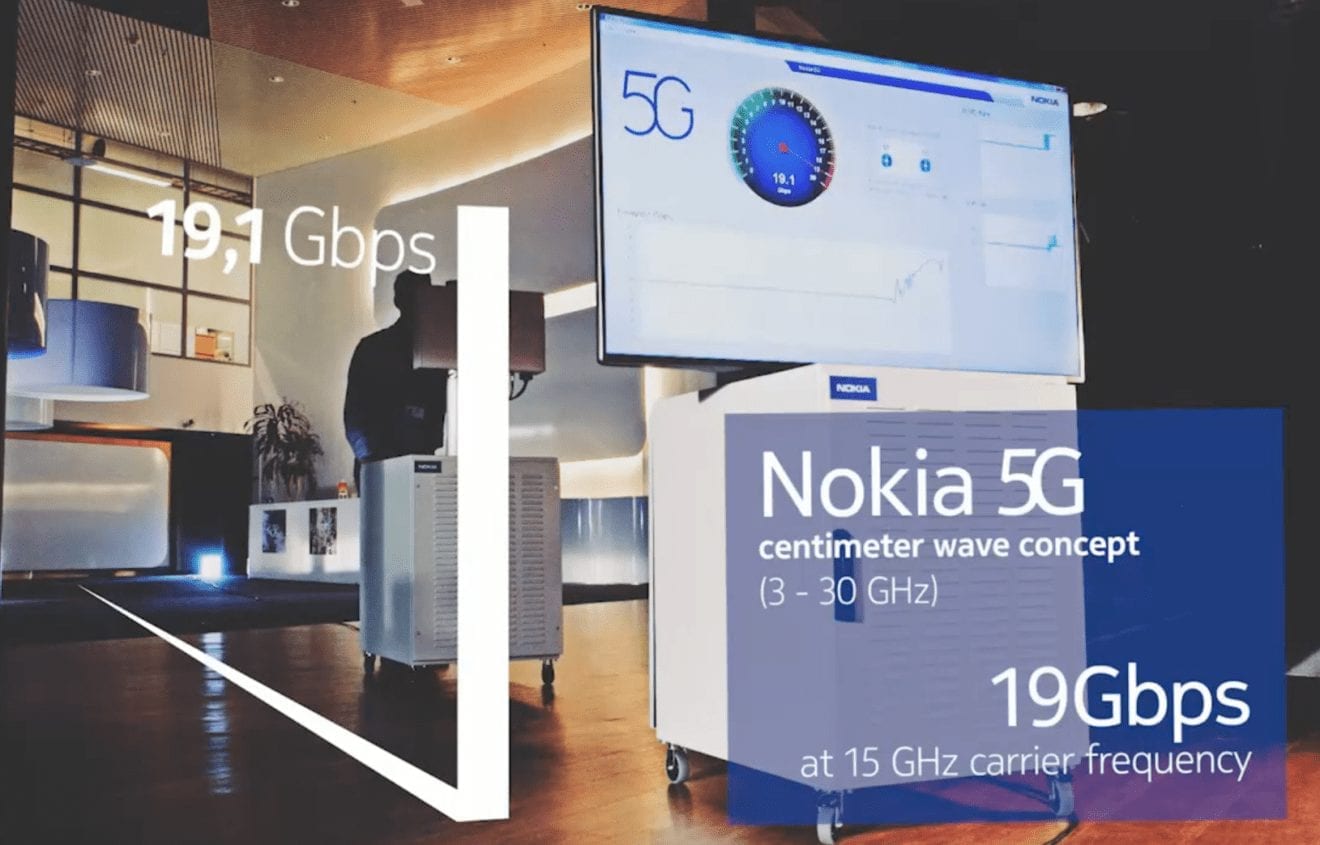
    Nokia said it was playing an integral role in T-Mobile’s plans to launch nationwide 5G coverage in the United States by 2020.

    Forthcoming 5G networks will bring many benefits to service providers and consumers, with exponential increases in bandwidth and massive throughput, along with advancements in vertical industries and new entrants — just a few of the myriad possibilities of these next-generation networks.

    T-Mobile’s announced plans to use all of its spectrum resources align strongly with Nokia’s strategy of multi-radio platforms and advanced antenna technologies.

    Specifically, this will bring 5G radio air interface improvements — particularly spectral efficiency — to low bands such as 600MHz, thus allowing for enhanced coverage benefits. Additionally, Nokia will look to enable the 5G network capabilities where 600MHz spectrum is the preferred coverage layer.

    One of the key benefits of 5G is enhanced mobile broadband that will allow users to consume content when and where they desire. Nokia, along with T-Mobile, will provide a multi-layer, cross-spectrum blueprint for how the networks of the future will come into existence.

    “Nokia and T-Mobile share a vision of innovating in mobile networks to deliver real benefits to consumers,” said Marc Rouanne, president of mobile networks business group for Nokia.

    “This collaboration to maximize spectrum is a very exciting development, and is a strong example of Nokia’s commitment to supporting its customers’ ambitions to create new capabilities to make 5G a reality, connecting everything to everything,” said Rouanne.

  • Bank Indonesia Issues Regulation on Carrying Foreign Banknotes of at Least IDR1 Bln

    Bank Indonesia Issues Regulation on Carrying Foreign Banknotes of at Least IDR1 Bln

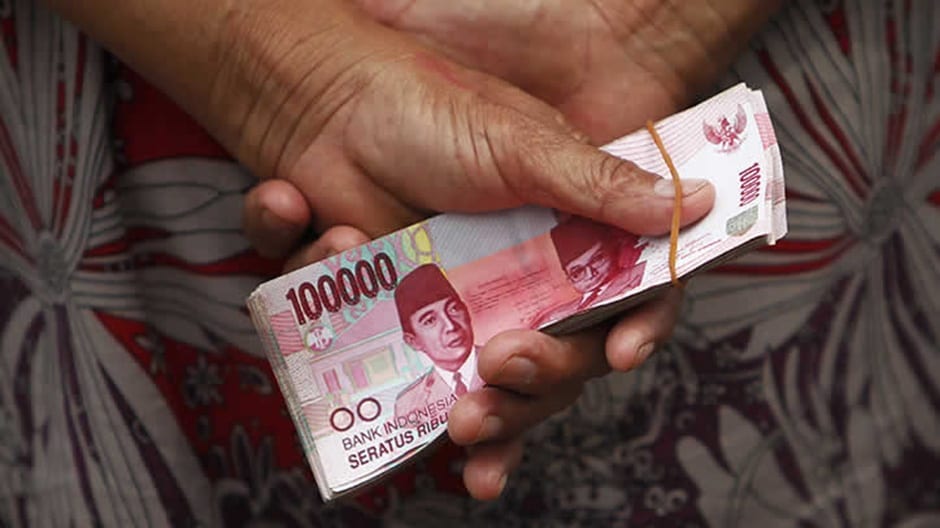
    There is a new regulation issued by Bank Indonesia (BI) on the carrying of foreign banknotes into and outside the country. This regulation is set forth in Bank Indonesia Regulation (PBI) No 197/7 / PBI / 2017 dated May 5, 2017.

    This regulation arranges that foreign banknote carriages within and outside the country of at least equivalent to IDR1 billion is only permitted by licensed entities, including banks and non-bank Foreign Exchange Business Activities that have obtained permits and approval from BI to carry foreign banknotes.

    In addition, a qualified Rupiah Money Processing Service Company (PJPUR) listed in BI may carry foreign banknotes across borders, but only as transporter.

    “The release of this regulation is in line with BI’s efforts to achieve and maintain the stability of the rupiah,” said Executive Director of BI’s Department of Foreign Exchange Management, Budianto at Thamrin Building, BI, Central Jakarta, Monday.

    The BI regulation is effective on March 5, 2018, but the imposition of new violation sanctions will be applied on May 7, 2018 or two months after the enactment of the PBI.

    The grace period for enforcement of the regulation to strengthen socialization aspects to the community before it is implemented.

    “This BI regulation is valid since March 5, 2018, the imposition of new sanctions will be effective on May 7, 2018. There is still a transition period of 10 months ahead,” said Budianto.

    This provision also relates to Law Number 8 Year 2010 concerning the Prevention and Eradication of Money Laundering Crime and Government Regulation No. 99 of 2016 concerning Cash Advance issued by the Financial Transaction Reporting and Analysis Center (PPATK). With the issuance of the new regulation, it will also strengthen the foreign banknotes cross country.

    As for sanctions provided if a party violates, ie prevention of the total number of foreign notes brought.

  • Thai Giant Rubber Maker’s Capacity in Indonesia Will be Raised by 60,000 Tons

    Thai Giant Rubber Maker’s Capacity in Indonesia Will be Raised by 60,000 Tons

    Sri Trang Agro-Industry, the world’s largest producer of natural rubber, plans to increase annual capacity by 20% to 2.9 million tons by year-end to take advantage of a market recovery.

    The company accounts for about 30% of output in its home market of Thailand, the largest rubber-producing country. It aims to expand its global market share from 12% now to 20% in two to five years, said Veerasith Sinchareonkul, an executive director.

    Sri Trang will invest 2.5 billion baht to 3 billion baht ($72.1 million to $86.5 million) in new production lines, including new manufacturing facilities for sheet, block and liquid rubber in northeastern Thailand with annual capacity totaling 86,000 tons.

    Capacity at Indonesian facilities will be raised by 60,000 tons. The company also intends to step up output of medical gloves made from natural rubber, of which it is among the top five manufacturers worldwide.

    Sri Trang operates 35 plants and owns rubber plantations spanning 80 million sq. meters. Consolidated sales grew 26% on the year to 77.2 billion baht for the fiscal year ended Dec. 31. The company booked a net loss of more than 700 million baht, down from a 1.1 billion baht profit in fiscal 2015.

  • Mercedes-Benz ditches E220d in favour of E350e in Thailand

    Mercedes-Benz ditches E220d in favour of E350e in Thailand

    Sales of the diesel-powered executive saloon cease as the German automaker wants plug-in hybrids to account for 30% of total annual sales.

    Mercedes-Benz (Thailand) has launched its fourth plug-in hybrid vehicle: the E350e which follows the C350e, S500e and GLE500e.

    Like the C350e, the E350e uses a 2.0-litre petrol-turbo engine in conjunction with an electric motor, whose power from the lithium-ion battery can also be revitalised from the wall socket. The S500e and GLE500e employ a bigger 3.0-litre V6 petrol motor.

    Combined outputs in the E350e are rated at 286hp and 550Nm, while the maximum all-electric driving range is claimed at 33km. As the E350e spews out 44g/km of CO2 on the combined cycle, it is eligible for the new 5% excise tax imposed on locally made plug-in hybrids producing no more than 50g/km.

    There are three trims for the E350e: Avantgarde 3.49 million baht, Exclusive 3.79 million baht and AMG Dynamic 4.09 million baht.

    The similarly priced E220d has been dropped from the Thai E-class model lineup as Mercedes-Benz wants to promote plug-in hybrids in the country.

    Mercedes-Benz hopes that plug-in hybrids will account for 30% of total annual sales which is why diesel versions and other pure petrol derivatives aren’t available anymore. The same has happened in the C, S and GLE model ranges.

    BMW, meanwhile, is gearing up to launch the 530e in Thailand at the end of this year to rival the E350e. Volvo is also said to be preparing the introduction of the S90 T8.

    Unlike Mercedes-Benz, BMW is still selling diesel versions of the X5, 3 and 7-series as it wants to offer Thai customers with two distinct types of propulsion. BMW hopes that plug-in hybrids will account for 15% of annual sales this year.

  • Decathlon opened its biggest Singapore store

    Decathlon opened its biggest Singapore store

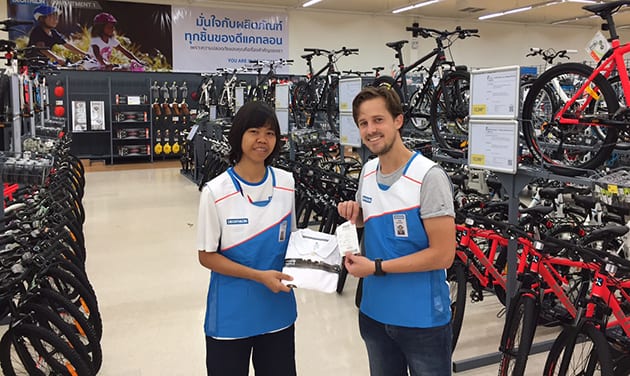
    Sporting goods retailer Decathlon‘s biggest store yet in Singapore has opened its doors on Saturday (May 13) morning.

    Already boasting two mega stores here in the Republic – one at City Square Mall and another at Bedok, its third and largest outlet is located at the FairPrice Hub, Joo Koon.

    Spanning 4,000 square metres of sporting retail space, the outlet will also be the site of Decathlon’s new e-commerce hub which will provide a multi-channel sales experience.

    Shoppers can order items online through its new website which will be launched in June. Sports advisers on site will pick the items directly in the store and package them for delivery within the same day. It is aiming for delivery within six hours.

    Shoppers can also opt for the “Click and Collect” option and pick items up from any of Decathlon’s three stores.

    Additionally, the store has 10 experience zones and Singapore’s first slack line, golf-putting green, mini-football arena and a running track with two different surfaces. Customers will be able to test equipment before purchasing them, and can return equipment if unhappy with the product.

    “Since we launched our first e-commerce and retail store in Singapore, we have seen a remarkable response from Singaporeans,” said Bastien Grandgeorge, Decathlon Singapore’s country leader.

    “Here we have 62 sports, and all under the same roof. We want the best experience for our customers and accessible sport for all.

    “Even if you’re not wealthy, anyone should be able to access sport.”

  • Philippine Airlines to increase capacity with new aircraft

    Philippine Airlines to increase capacity with new aircraft

    Philippine Airlines is to increase capacity on its London to Manila route.

    The airline is replacing its 254-seat Airbus A340 to a 370-seat Boeing 777 from mid-December.

    It will also take delivery of six new Airbus A350-900s over the next two years, one of which will serve the London route.

    From June 8 the airline is also set to resume flights to Kuala Lumpur after a three year respite.

    More fam trips are planned for later in the year following the success of a mega-fam it held in March which saw 50 UK agents tour the Philippines in partnership with the Philippines Department of Tourism.

    Senior assistant VP and EMEA division manager Genaro Velasquez said UK passenger figures were up 38% in the first quarter compared to last year.

    As well as increasing passenger numbers with the new aircraft planned, he said the next step was to promote the airline as a carrier to Australia.

    The airline flies to multiple destinations in Australia, including Sydney, Melbourne and Brisbane, via Manila.

  • Rakuten first-quarter profits surge on sales promotions, new tech investments

    Rakuten first-quarter profits surge on sales promotions, new tech investments

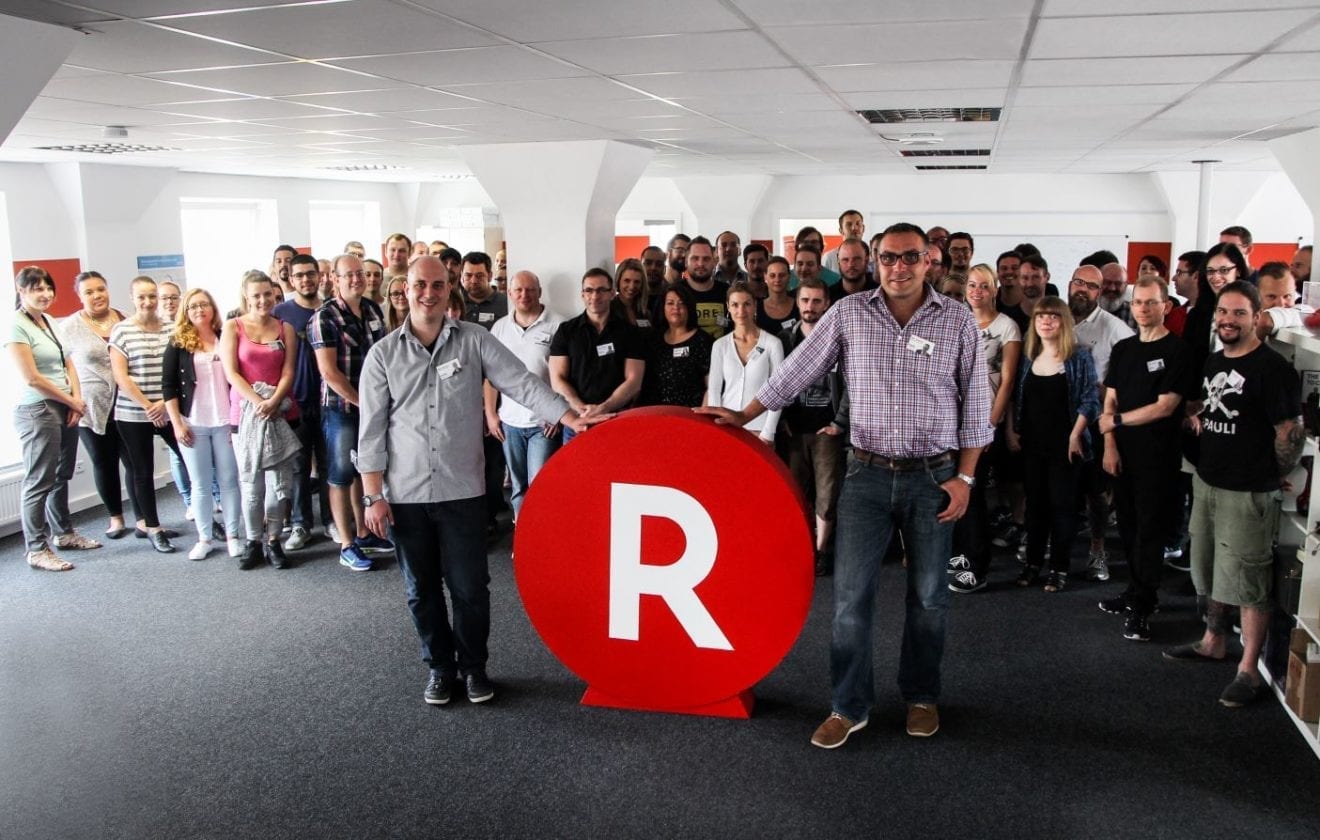
    Japanese e-commerce giant Rakuten said net income for the first-quarter of fiscal 2017 more than doubled for the three months ending March 31, on the back of a positive customer response to sales promotions and new technologies.

    Japan’s largest e-tailer said total quarterly net income reached 25.06 billion yen (US$220.3 million), up from 12.09 billion yen (US$104.7 million) for the same period a year earlier.

    The Tokyo-based company said its operating income rose 73.2% to 40.4 billion yen (US$355.3 million), while first-quarter sales jumped 17.6%, for a total of 212.08 billion yen (US$1.86 billion).

    The e-tailer currently offers customers up to seven times the typical rewards points, a bid to poach business from rivals Amazon.com and Yahoo.

    According to a press release, Rakuten said it has “cultivated loyal customers and conducted sales activities in order to win new users, as well as initiatives targeting greater customer satisfaction, strengthening services for smart devices and opening up the Rakuten ecosystem,” the company said.

    This incentive has increased membership in Rakuten-brand credit cards and the use of revolving balances, boosting the company’s financial business.

    “Results are on track for improvement in overseas internet services, due to contributions from the steady growth in U.S. subsidiary Ebates Inc. and other factors,” it added.

    In February, Rakuten invested $26 million in AirMap, a company working on a global airspace management platform for drones. Meanwhile, in September 2016, the company acquired Fablic, provider of the C2C marketplace app Fril.

    In the past year, it has also invested in American bot developer Run Dexter, digital content provider getAbstract AG, cross-border payment platform Currencycloud, and Japanese fintech company Folio – investments, which look to boost revenues further in the coming fiscal year.

    The firm said that for the twelve months ended December 31 it is targeting double-digit growth over the previous year.

    According to a recent report produced by JapanConsuming, e-commerce will be Japan’s largest single retail channel by 2022. In 2015, Japan generated roughly $80 billion in e-commerce sales. This compares to some $350 billion of e-commerce sales in the U.S. and China’s whopping e-commerce sales result, which exceeded $650 billion in 2015.

  • PAL suspends Cebu-Los Angeles service

    PAL suspends Cebu-Los Angeles service

    THE Philippine Airlines (PAL) announced Monday, that it will “temporarily suspend” its Cebu-Los Angeles service effective May 30. In its advisory, the airline company said “the suspension of the Cebu-Los Angeles service is being carried out as PAL rationalizes capacity on the route.”

    “PAL is seeking the kind understanding of affected passengers as the airline implements these operational adjustments,” it said. PAL said passengers with tickets of the Cebu-Los Angeles flights dated May 30 and onwards may re-route and/or rebook their flights to Cebu-Manila-Los Angeles flights.

    Those with Los Angeles-Cebu flights may re-route and/or rebok their flights to Los Angeles-Manila-Cebu. The company added that it can also refund the cost of tickets of those affected passengers. “Affected passengers are advised to avail themselves of any of these options within 30 days from original flight dates, with rebooking/refunding charges waived,” PAL said. It said it will “communicate with affected passengers via email notification and call-out.”

  • Shop at Lazada, pay at 7-Eleven

    Shop at Lazada, pay at 7-Eleven

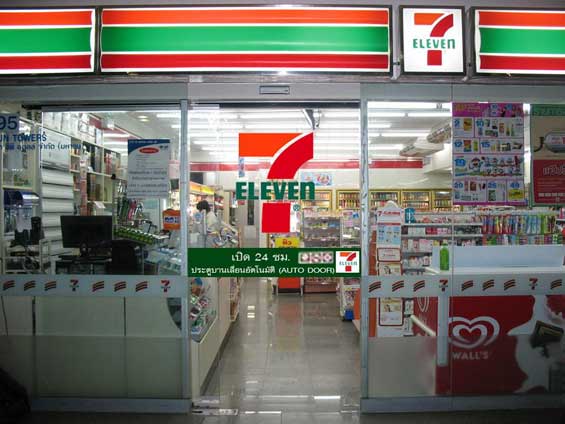
    Convenience store chain 7-Eleven Malaysia is now offering Lazada Malaysia offline payment services at its stores nationwide via its partnership with MOLPay.

    As the leading convenience store in the country, 7-Eleven is continuously making its way up by enhancing customers’ shopping experience and has added Lazada offline payment to its services.

    “It is clear that our main intention is to always remain number one and in order to do so, we are trying our best to give the best experience in true convenience to our customers,” said 7-Eleven Malaysia chief executive officer Gary Brown at the official launch of Lazada Offline Payment at Berjaya Times Square Hotel.

    With the new service, 7-Eleven Malaysia now allows customers to confirm orders from Lazada and proceed to checkout with 7-Eleven as the preferred payment option.

    Transactions can be completed by presenting a printed slip or SMS code of the online purchases to the cashier at any 7-Eleven stores nationwide.

    “The partnership is a strategic fit, benefiting both 7-Eleven and MOLPay’s individual strength.

    “This is also an alternative payment option for our online shoppers, enabling them to shop for over 12 million items that are available on our website and paying over the counter at any 7-Eleven stores nationwide,” said Lazada Malaysia chief executive officer Hans Peter Ressel.

    The aim of the new experience is to fulfil customer’s expectation and provide them with the best convenience possible.

    “As Malaysia still has a considerable number of people who do not have digital banking or have limited access to digital banking, this provides the flexibility in ensuring all households and businesses have access to Malaysia’s digital economy regardless of their income level,” said MOLPay chief executive officer Eng Sheng Guan.

    As the first free-standing convenience store chain in the country to provide such payment services, it aims to reach customers in the non-urban areas such as the east coast and Sabah and Sarawak.

    The newly introduced experience will also ease the process of online purchases as payment can be made offline, 24 hours and seven days a week.

  • Shilla duty free opens mobile app, online mall for Japanese clients

    Shilla duty free opens mobile app, online mall for Japanese clients

    Shilla Duty Free has launched a mobile app and an Internet website mall targeting Japanese clients to offset the decline in Chinese tourists triggered by the missile defense system row between Seoul and Beijing.

    It is Shilla Duty Free’s second mobile shopping mall for foreigners after one opened for Chinese customers in 2014.
    Chinese travel agencies have in recent months suspended sales of tour packages to South Korea as part of the Beijing government’s retaliation against Seoul’s decision to station the US Terminal High Altitude Area Defense system on its soil. China believes the missile system undermines its security interest. South Korea has maintained that THAAD’s sole aim is to counter North Korea’s evolving nuclear and missile threats.

    Shilla’s mobile app store and Internet shopping mall allow Japanese customers to use Naver Corp.’s flagship LINE messenger to carry out transactions.
    LINE has become a major mobile messenger platform with more than 200 million users around the world. It has a strong presence in Japan.

    The duty-free shop will also invite 1,000 Japanese clients to a fan meeting of popular K-pop boy group SHINee, the shop’s commercial model, in Seoul on May 13. The number of Japanese tourists rose 25 percent last year from the previous year, according to the Korea Tourism Organization. The figure also surged 13 percent and 28 percent in January and February of this year from the same period in 2016.

  • Samsung, Cisco, Verizon to pioneer multi-vendor 5G Trials

    Samsung, Cisco, Verizon to pioneer multi-vendor 5G Trials

    Samsung Electronics America and Cisco are working with Verizon in what they described as the successful deployment of the first multi-vendor end-to-end 5G field trial, which took place in Detroit, Michigan.

    Earlier this year, Verizon announced plans for customer trials of 5G technology for home broadband service (Fixed Wireless Access). Five US cities are scheduled to begin trials in the second quarter of 2017, with pilot trials in a total of 11 markets expected by midyear.

    Each location offers a unique set of test parameters, including vendors, geographies, population densities and demographics, and the Ann Arbor location in Detroit was the first to tackle a multi-vendor deployment of 5G.

    The solution includes a 5G virtualized packet core as part of the Cisco Ultra Services Platform with Cisco Advanced Services and Samsung virtual RAN solutions (vRAN), paired with Samsung’s 5G Radio base stations and 5G home routers that will deliver broadband services to Verizon’s trial customers.

    Based on Verizon’s 5G Technical Forum specification, the three companies followed a series of comprehensive network vendor interoperability tests (NVIOT) that demonstrated seamless interworking between core network, radio edge and user devices that showcased a core principle of next-generation network virtualization via multi-vendor support.

    This trial demonstrates that service providers can deploy 5G networks specialized to their unique market needs by selecting individual network infrastructure components from a selection of multiple vendors.