Author: Mei Ling Tan

  • AirAsia Cambodia to debut soon

    AirAsia Cambodia to debut soon

    Asia’s largest budget airline AirAsia, headquartered in Kuala Lumpur, plans to open a subsidiary company in Cambodia to handle an anticipated increase in the number of passengers travelling to Phnom Penh, Siem Reap and Sihanoukville from Malaysia.

    The subsidiary, said the Minister of Public Works and Transport Sun Chanthol yesterday, would be named AirAsia Cambodia.

    “The purpose of forming AirAsia Cambodia was brought up by AirAsia CEO Tony Fernandes in his meeting with Prime Minister Hun Sen last week at the sidelines of the World Economic Forum on Asean,” said Mr Chanthol.

    “Mr Fernandes told the prime minister that AirAsia Cambodia, as AirAsia’s new subsidiary company, would be needed to handle an increasing number of air travelers from Malaysia to Phnom Penh, Siem Reap and Sihanoukville,” he added.

    “The prime minister, in turn, replied that he was behind Mr Fernandes’s decision 100 percent.”

    Mr Chanthol said AirAsia’s decision to start a new subsidiary company in Cambodia reflected the aviation industry’s confidence in the country’s open skies policy.

    “Cambodia’s open skies policy promotes Asean connectivity and this in turn allows more goods to be transported and more people to travel to other countries,” he said.

    When asked by reporters when AirAsia Cambodia would start up in the country, Mr Chanthol said the proposal was now with the Council of Ministers for approval.

    The decision to form AirAsia Cambodia came after Mr Fernandes announced at a press conference on Thursday that his airline plans to launch a new service from Kuala Lumpur to Sihanoukville city.

    “There will be four AirAsia flights a week from Kuala Lumpur International Airport 2 to Sihanouk International Airport on the Airbus 320,” he said. The first flight is scheduled for August 9.

    Mr Fernandes said he recognised the potential of Cambodia’s international airports to handle an increased number of arrivals from overseas.

    “We think the Cambodian air travel market could be lucrative and the timing to expand our routes is perfect,” he said.

    AirAsia currently flies daily from Kuala Lumpur to Phnom Penh and Siem Reap.

    “We hope in time to come that people may come to Phnom Penh and then go to Sihanoukville,” Mr Fernandes said.

    “We are about to invest for the long term and see huge potential in these airports.

    “It is about connectivity and I think one of the most important aspects is for the people of Sihanoukville to have another option to fly.

    It is not just about tourism. We also hope small businesses can benefit by expanding their businesses into Asean.”

  • Boost for Sinarmas Land profit from Indonesian recovery

    Boost for Sinarmas Land profit from Indonesian recovery

    Propery developer Sinarmas Land saw its profits soar off the back of better sales from its joint venture developments. Net profit surged 136.6 per cent to S$37.2 million for the three months to March 31. This came off the back of higher revenue, which rose 31.8 per cent to S$237.1 million.

    It attributed its stellar performance to an increase in residential units handed over to home buyers in its mixed-use development BSD City in Indonesia, but said it was offset by lower sales of industrial land in Indonesia.

    It also recorded a share of profits in joint ventures of S$3.8 million for the first quarter, compared with a loss of S$3.1 million in the same period last year.

    Ms Margaretha Widjaja, executive director of SML and vice-chairman of Sinarmas Land Indonesia, said that Indonesia’s economic recovery has been aided by improved commodity prices, albeit at a gradual pace.

    While Indonesia’s property sector had been negatively impacted by extended periods of lackluster economic performance, consumer purchasing power is set to improve, she added.

    “The group is cautiously expecting a stronger recovering, following the Indonesian government’s larger infrastructure spending, increased direct investments, led by the implementation of economic stimulus packages,” she said.

    Earnings per share came in at 0.87 cents for the first quarter, compared with 0.37 cents for the same period a year earlier.

    Net asset value as at March 31 was S$0.44, down from S$0.47 three months earlier.

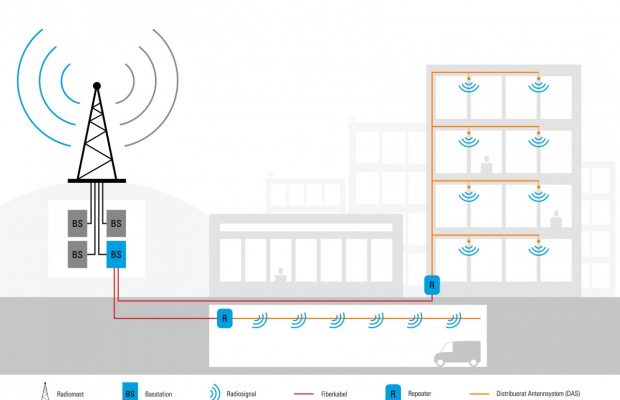
  • Cobham debuts 5G network test solution

    Cobham debuts 5G network test solution

    Cobham Wireless has made available of its new network test solution dubbed TM500 which can validate 5G network performance.

    Touted as an industry first, the TM500 provides operators and network equipment manufacturers with a scalable system to test network performance as experienced by end users.

    The TM500 5G test solution simulates multiple devices connecting to a 5G network, modelling real world conditions. When used in combination with Cobham Wireless’ application emulation and security performance solution, the company is providing a complete, end-to-end 5G test solution to the market.

    “Cobham Wireless’ 5G test solution directly addresses the immediate KPIs for 5G, helping the industry accelerate the development and deployment of next generation mobile and broadband services,” said Ian Langley, SVP and GM at Cobham Wireless.

    “Developing and validating their 5G networks using the TM500 will give our customers the confidence to deploy the infrastructure needed to support next generation technologies, such as mobile edge computing,” said Langley. “This will offer reduced latency and faster processing for new services, expediting the commercial roll-out of IoT applications such as connected cars, smart healthcare devices, and advanced AR and VR.”

    Easily incorporated into a user’s existing workflow, the TM500 solution facilitates the transition from legacy to future standards, in line with the industry’s progression to 5G.

    With flexible deployment options, it allows the user to upgrade or adapt functionality and test parameters, tailoring the solution to specific scenarios and requirements.

  • OCBC buys Australia bank’s retail, wealth business in Singapore, Hong Kong

    OCBC buys Australia bank’s retail, wealth business in Singapore, Hong Kong

    With Australian banks retreating from the retail business in Asia, OCBC has scooped up the retail and wealth business in Singapore and Hong Kong of Australia’s largest business bank, National Australia Bank (NAB), to bump up both its mortgage portfolio and customer base.

    Observers said the deal reflects the surging costs for foreign banks in competing against local players in the retail and wealth space in Asia.

    While there is undoubted growth in wealth in the region, non-domestic players would have to spend significantly to expand their product and services suite beyond a boutique presence.

    “In American football, there’s a phrase, ‘Go big or go home’. And based on a cost-benefit analysis, it was time to go home,” said one observer, pointing to NAB’s exit from the Asian wealth business.

    The negotiations for the profitable business unit took about three months, The Business Times understands. The acquisition, in effect, has Singapore’s second-largest bank buying up about US$1.7 billion of mainly residential mortgage loans, with more than half of the properties in the major Australian cities of Sydney, Melbourne and Brisbane, OCBC announced on Thursday. Notably, over 50 per cent of these mortgage loans are booked in Hong Kong.

    The purchase price will match the value of the loan-book at the time that the transaction closes, which is expected to be by the end of the year.

    To be clear, the purchase comes with a US$3.05 billion deposit portfolio comprising a mix of currencies that include the Australian, Hong Kong, Singapore and US dollar.

    OCBC will reach about 11,000 new customers, with more than 7,000 in Singapore and about 4,000 in Hong Kong. Most of the customers are Singapore and Hong Kong residents.

    With the mortgages increasing the bank’s overall mortgage portfolio by about 4 per cent, one analyst noted that the bump is “negligible”.

    “OCBC does get 11,000 customers out of it – though how sticky they are is another issue. (But) the low customer acquisition cost is probably the attraction for OCBC,” he said.

    OCBC said the acquired business will be earnings accretive to the bank within the first year of completion.

    The mortgage portfolio is made up of mainly home loans with an average loan-to-valuation ratio of below 60 per cent, as weighted according to the value of the loans. NAB also has a “strong track record with negligible delinquencies”, OCBC said.

    The business adds to the bank’s overseas property financing programme for real estate in Australian cities such as Sydney, Melbourne and Perth.

    “This deal makes financial and strategic sense to us,” said Ching Wei Hong, OCBC’s chief operating officer, noting that the mortgage loan book would have required “time and money” to grow via organic means.

    “The mortgage portfolio to be transferred to us is a high quality and well-supported one, (while) the customers are in the affluent segment that we have been building.”

    The deal also comes amid surging profit contribution of regional business for OCBC. The bank’s shares closed on Thursday at S$10.56, up 10 cents.

    The market is drawing comparisons between the NAB transaction and the one signed by DBS and ANZ in November, with ANZ selling most of its wealth and retail business in Asia for S$110 million to Singapore’s largest bank.

    That S$110 million represented about 0.5 per cent of the S$23 billion of assets under management from ANZ’s wealth business, mostly out of Singapore and Hong Kong.

    The ANZ sale to DBS also included loans and deposits, but was also in effect a self-funded loan book. At the point of announcement, DBS said it would take up about S$11 billion of loans once financed by ANZ, as well as S$17 billion in total deposits owed to former ANZ customers.

    It should also be noted that ANZ took a A$265 million (S$275 million) loss on the sale to DBS, reflecting write-offs taken for software, goodwill and fixed assets, as well as transaction costs. By contrast, NAB said the sale will not have a material financial impact on it. It is now focused on helping business customers in Australia and New Zealand access the Asian markets.

    In a media statement, Neil Parekh, NAB’s general manager for Asia (ex-Greater China) said: “We wanted a buyer that could meet our customers’ growing demand for a wide range of wealth management solutions in Asia. OCBC is uniquely qualified to do so.

    “We will work closely with OCBC during the transition to completion to ensure a smooth process for customers moving to a business with a comprehensive product offering and strong presence in Asia.”

  • Demand from China, Africa supports Vietnamese rice prices at harvest end

    Demand from China, Africa supports Vietnamese rice prices at harvest end

    Vietnamese rice is being offered at around $35-$40 a ton below Thai grain. China and several African countries have returned to Vietnam seeking fragrant and white rice, and the demand has helped stabilize export prices even though supply has risen at the end of a major harvest, traders said on Friday.

    They also said Vietnamese rice being offered for cheaper prices than Thai and Indian rice has also attracted buyers, mostly from Africa. Vietnam is the world’s third-largest rice exporter, behind India and Thailand.

    Farmers in the Mekong Delta, Vietnam’s food basket, have finished harvesting the winter-spring crop, the biggest of the country’s three annual crops. Paddy output eased 2 percent from last year to an estimated 9.8 million tons, based on government statistics. Most of the grain from this crop is being exported.

    Reuters cited Vietnamese traders’ quotations for five percent broken rice showing prices rose this week to $355-$360 a ton, free on board (FOB) basis, on more active trade.

    At $360 a ton, the price is at its highest since August 31, 2016.

    But traders at foreign firms and a dealer at a state-run export company in Ho Chi Minh City told VnExpress International that exporters are looking to sell the grade at around $355 a ton, while bids stood at $350-$352 a ton, similar to last week.

    “Rice exports to China are going well,” the dealer said. “Africa is also coming back with inquiries for the 5-percent and the 15 percent broken varieties, as well as fragrant rice.”

    He added that ample supplies are now available to state-owned export firms that have better access to bank loans, while private exporters are struggling to build stock due to weaker finances.

    Vietnamese prices are below those offered by Thailand, where the 5-percent broken rice rose this week to $387-$392 a ton, FOB basis, from $380-$390 last week and $360-$375 at the end of April due to loading demand during a slow off-season harvest, Reuters cited Thai traders in Bangkok as saying.

    Traders noted China, the biggest buyer of Vietnamese rice, has been taking more of the grain in the past month.

    China imported 288,000 tons of rice from Vietnam in April, way above the monthly average of 176,000 tons in the first quarter, Vietnam Customs data showed.

    That brought Vietnam’s total export volume to China in the January-April period to 815,000 tons, a rise of 16 percent from a year ago, based on data from the Finance Ministry-run customs agency.

    Earlier this year, China approved 22 Vietnamese rice export firms as official suppliers, but is also trying to limit rice purchases across the land border with Vietnam.

    China is projected to import 5 million tons of rice this year, up 8.7 percent from 2016, the U.S. Department of Agriculture said.

    Vietnam is forecast to export 5.6 million tons in 2017, up 10 percent from last year, the USDA said in a report on Wednesday.

    The USDA also forecasts both India and Thailand will export around double that amount this year.

  • Eye recognition set to rival fingerprints for biometrics

    Eye recognition set to rival fingerprints for biometrics

    ABI Research predicts in a new report that fingerprint sensors in smartphones will surge to reach a 95% penetration rate of smartphone shipments by 2022.

    This will prompt new opportunities for biometric technologies, such as eye recognition, to be utilized as part of novel identification and payment applications for both the banking and governmental markets.

    “While enterprise markets aggressively adopt vein recognition technologies in physical access control applications, eye recognition technologies will soon be one of the most secure modalities for consumer electronics authentication and secure mobile payments,” ABI Research industry analyst Dimitrios Pavlakis said.

    With each passing market quarter, biometric technologies are extending their reach in consumer electronics, while OEMs in the Asia-Pacific region are aggressively driving new implementations.

    This will fuel an exponential growth in mobile banking and payment apps as banks and financial organizations prove to be less timid when embracing new biometric implementations. ABI Research finds that OEMs and service providers are now actively targeting the emerging IoT, smart home, and automotive segments as future growth areas for biometrics.

    “Vein recognition workforce management software and access control solutions in the enterprise market depict an impressive 18% five-year growth rate, boosted by market leaders like Fujitsu and Hitachi,” concludes Pavlakis.

    “Innovative startups like HYPR are making strides in improving biometric blockchain capabilities, while wearable pioneers like Nymi are triggering a domino effect with heart rate-empowered payments.”

  • Etude House opened its flagship store in Seoul

    Etude House opened its flagship store in Seoul

    Etude House opened its flagship store in Myungdong on May 10. The flagship store was designed as part of a customer-focused campaign that embodied the brand’s slogan “Life is sweet”, which means positive energy and value in their twenties. A three stories Etude House flagship store provides various service. The store allows customers to have a variety of experiences by trying diverse colour and to purchase all products of Etude House.

    Under the theme of “House of Colour Play”, exterior design of trendy mood stands out. There is also a special photo zone inside and outside the elevator, where customers take a picture.

    On the first floor, customers can see all Etude house products and various beauty items. There is also a “FIND YOUR LOOK” corner, which are nine different looks of Etude House brand value. The “FIND YOUR LOOK” corner is made up of visuals that allows customers to look at the nine different looks, and the make-up products used in each look are displayed on the bottom of visuals so that customers can pick up their favorite look and experience make-up.

    “Personal Colour Studio” on the 2nd floor, customers can check their personal colour tones with the colour meter, and get recommendation for ‘four season worms and cool tone shadow palette”. Four seasonal worms and cool tone shadow palette with four colour eye shadows was rolled out in four different colour.

    The ‘Personal Colour Palette’, which is currently being sold as an online exclusive product, will be sold exclusively in the second floor of Myungdong flagship store.

    The ‘Colour Factory’ in the 3rd floor, which will be released from the first of the next month, is a space where customers experience the service to make your own lipstick by choosing your own colour and design. Personalised lipstick, which is the most noticeable service, can be booked in advance and Etude House artist recommends personal colour through colour meter and colour draping service.

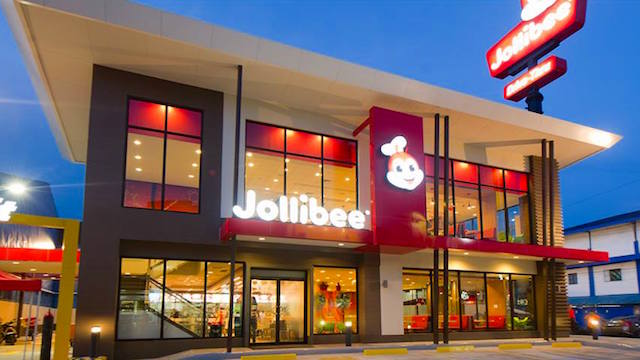
  • Jollibee gains control of SuperFoods Group

    Jollibee gains control of SuperFoods Group

    Jollibee Foods gained control of the joint venture behind the Highlands Coffee and Pho 24 brands ahead of a plan to list the latter in Vietnam’s stock market.

    In a disclosure, the homegrown fastfood giant said its subsidiary JSF Investments Pte. Ltd hiked its stake in the SuperFoods Group to 60%, while its partner Viet Thai International Joint Stock Co. (VTI) reduced its interest to 40% from the previous 50-50 ownership share.

    The adjustment was considered a “key step” in their plan to list SuperFoods Group in Vietnam’s equities market by July, 2019 and will allow JFC to include the joint venture in its financial consolidation, the Philippine company said.

    The SuperFoods Group owns and operates the brands Highlands Coffee and Pho 24 and is a franchisee of Hard Rock Cafe in Vietnam, Macau and Hong Kong. At end March, it had 216 stores across these three brands.

    JFC will take the lead in the capital raising activities for the joint venture and will work with various financial institutions in Vietnam and other parts of Asia to finance the aggressive expansion program of the SuperFoods Group.

    In the next three years, the SuperFoods Group plans to open 485 stores, mostly in Vietnam, while expanding the brands through franchising in other parts of Asia and in Australia.

    The SuperFoods Group gives JFC presence in four new foreign territories — Indonesia, Cambodia and Australia. The local food service company is now present in 17 countries outside the Philippines and plans to enter Malaysia as part of its expansion in Southeast Asia.

    The SuperFoods joint venture is one of the fastest growing businesses in the JFC Group. System wide sales hit $58 million in 2016, up 46% from the prior year, driven by the 73% expansion of Highlands Coffee.

    JFC plans to build a “significant” business in Vietnam given its potential to become a large consumer market. Like the Philippines, Vietnam has a high population at 95 million and has enjoyed robust economic growth, which stood at 6.2% last year.

    The listed company already owns and operates 84 restaurants under its flagship Jollibee brand in Vietnam at the close of 2016, with sales from these stores rising by an annual 47%.

    JFC operates the largest food service network in the Philippines. At end March, it had 2,684 restaurant outlets under the brands Jollibee, Chowking, Greenwich, Red Ribbon, Mang lnasal and Burger King. Abroad, it operated 620 restaurants, including the brands Yonghe King, Hong Zhuang Yuan and Dunkin’ Donuts.

    In addition, JFC maintains interest in joint ventures operating 611 stores worldwide. Aside from its interest in SuperFoods, it owns 40% of US chain Smashburger and 48% of 12 Hotpot.

  • Fiat Chrysler recalls 1.25 million trucks over software error

    Fiat Chrysler recalls 1.25 million trucks over software error

    Fiat Chrysler Automobiles said on Friday it would recall more than 1.25 million pickup trucks worldwide to address a software error linked to reports of one crash death and two injuries.

    The erroneous code could temporarily disable the side air bag and deployment seat of belt pretensioners – which reduce seat belt slack during impacts – during a vehicle rollover spurred by a significant underbody impact, such as striking onroad debris or driving off-road, the Italian-American automaker said.

    The company will reprogram computer modules in the affected vehicles to address this error.

    An FCA spokesman said the likelihood of an incident was very low because a sequence of events was needed to cause an incident.

    There is no definitive proof the error was involved in two accidents, one of which resulted in a fatality, but the automaker was conducting the recall proactively, he said.

    The spokesman declined to say whether the code was produced inhouse or by an FCA supplier, saying “we do not discuss supplier relationships.”

    Fiat Chrysler Automobiles said on Friday it would recall more than 1.25 million pickup trucks worldwide to address a software error linked to reports of one crash death and two injuries.

    The erroneous code could temporarily disable the side air bag and deployment seat of belt pretensioners – which reduce seat belt slack during impacts – during a vehicle rollover spurred by a significant underbody impact, such as striking onroad debris or driving off-road, the Italian-American automaker said.

    The company will reprogram computer modules in the affected vehicles to address this error.

    An FCA spokesman said the likelihood of an incident was very low because a sequence of events was needed to cause an incident.

    There is no definitive proof the error was involved in two accidents, one of which resulted in a fatality, but the automaker was conducting the recall proactively, he said.

    The spokesman declined to say whether the code was produced inhouse or by an FCA supplier, saying “we do not discuss supplier relationships.”

    Fiat Chrysler has been working to move faster to address vehicle issues after being fined twice in 2015 by the NHTSA.

    In December 2015, the company was fined $70 million for failing to report vehicle crash deaths and injuries since 2003.

    In July 2015, Fiat Chrysler agreed to a $105 million settlement with NHTSA for mishandling nearly two dozen recall campaigns involving 11 million vehicles.

    It agreed to a three-year consent agreement and monitoring by former Transportation Secretary Rodney Slater.

  • A 100ms website delay can turn away customers

    A 100ms website delay can turn away customers

    Website performance is critical to maintaining customer attention and completing online transactions, research from Akamai indicates.

    The company’s latest State of Online Retail Performance report finds that a mere 100-millisecond delay in website load time can hurt conversion rates by 7%.

    The data, gathered by SOASTA (now part of Akamai), represents one month’s worth of anonymous user data from top online retailers, equating to approximately 10 billion user visits. The team applied data analytics to generate insights into the intersection of IT, business, and user experience metrics.

    Half of consumers browse for products and services on their smartphones, while only one in five complete purchases using those phones. The study showed that a two-second delay in web page load time increases bounce rates by 103%. More than half (53%) of mobile site visitors will leave a page that takes longer than three seconds to load. Bounce rates were highest for mobile phone shoppers, while tablet shoppers had the lowest bounce rate.

    “Since my days as Executive Director at Shop.org I have seen how e-commerce businesses are impacted by performance challenges, yet struggle to identify and treat the root cause,” said Scott Silverman, co-founder of GrowCommerce and the Global e-Commerce Leaders Forum. “This research clearly shows the link and provides a methodology for retailers to systematically assess and address those issues.”

    The report identifies ways that high-performance web pages are different from poorly performing pages, looks at third-party scripts and other outside factors that can impact performance, and provides the reader with practical, actionable guidance on how they can compete in an ever-changing e-commerce landscape.

  • Hitachi deploying IoT solution for Curtin Univeristy

    Hitachi deploying IoT solution for Curtin Univeristy

    Australia’s Curtin University has selected Hitachi to deploy an IoT solution to advance its vision of a smart campus that enhances the student experience, improves classroom learning and ultimately attracts more industry to collaborate on data-driven research.

    Curtin will partner with Hitachi to co-create solutions that harness IoT data through advanced analytics to provide insight into the daily running and utilization of the campus.

    Curtin University has more than 60,000 students and 4,000 staff. It is Western Australia’s largest and most culturally diverse university, and has one of Australia’s largest international student populations.

    Ian Callahan, chief operating officer of Curtin University said: “Understanding our campus operations and building utilization has become a major factor in Curtin’s smart campus initiative. With the Hitachi IoT solution, we can collect data using a variety of sensors to gather information on building trends, study patterns, and course attendance that can ultimately be used to improve student experience and enhance learning.”

    Ultimately, these data insights allow Curtin University to generate contextual information about the lifecycle of the student, the day to day reality of a staff member, the activity pattern of a lecture theater, and the dynamics and environmental health of a library.

    Callahan added: “We are effectively creating a living laboratory that is an open invitation to our own researchers and scientists from other universities to use our campus to discover and innovate with data-driven research. Hitachi demonstrated not only technology leadership but approached us with a very open mind, to participate in that living environment and collaborate with others.”

    With the Hitachi solution, the university will be able to combine video data with operational data across its campus facilities to provide analytics that support a smart campus. This is achieved through the integration of Hitachi Visualization Suite, Hitachi Video Analytics, Pentaho, Live Face Matching and Hitachi Data Systems Infrastructure and Compute. The single analytics dashboard provides the real-time knowledge the university needs to make informed decisions about their classes, operations and future requirements.

    “Curtin University is a prime example of forward-thinking organizations that have challenged Hitachi to develop its video analytics solutions to go beyond surveillance and public safety. They are effectively pioneers of digital transformation,” said Mark Jules, vice president of public safety and smart city solutions at Hitachi Insight Group.

    “We’re excited to be co-creating a comprehensive IoT-enabled solution with them and we look forward to working with Curtin University and their research partners to accelerate future innovation through our ongoing collaboration.”

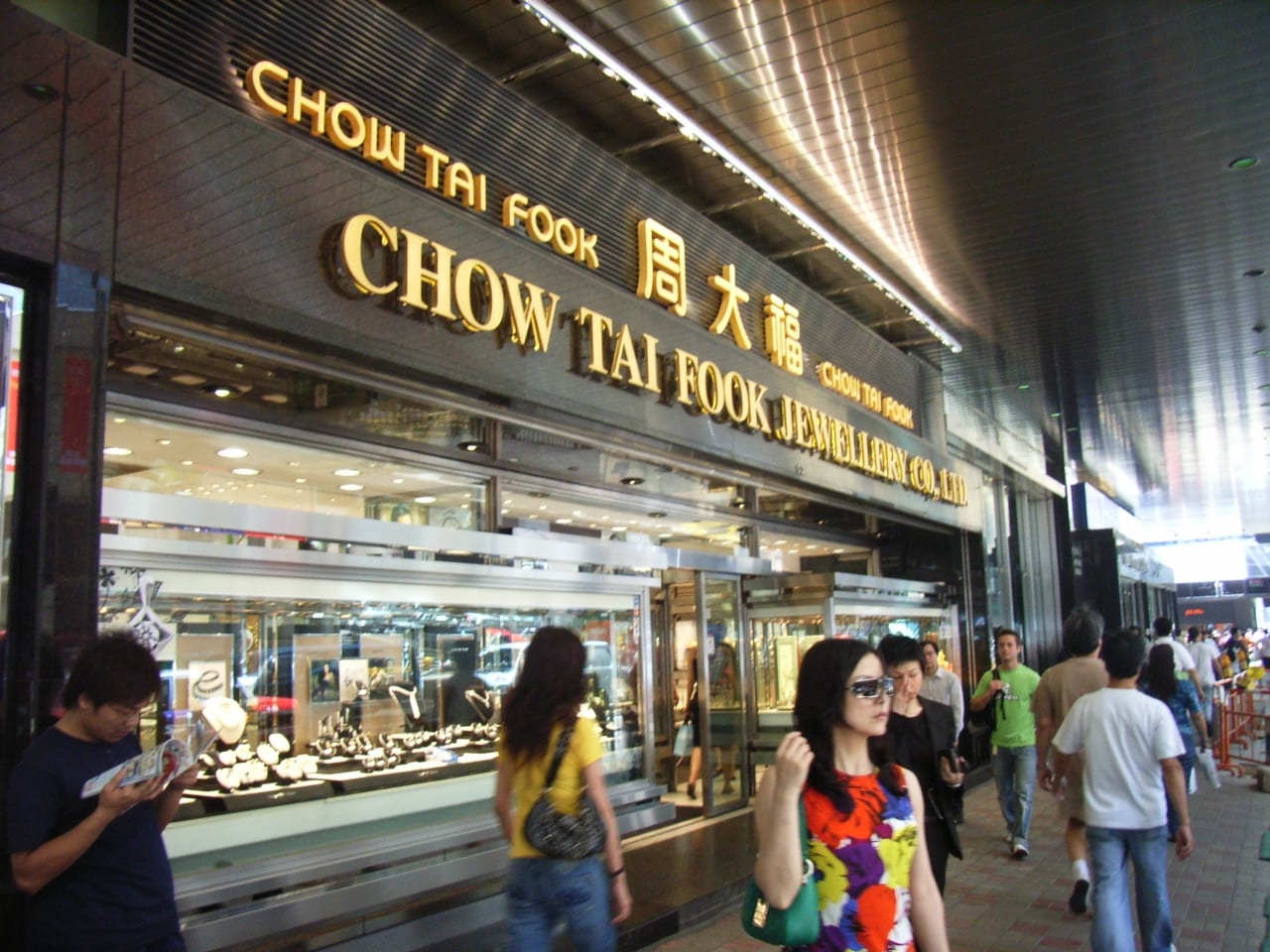
  • Chow Tai Fook announces cooperation with DFS Group

    Chow Tai Fook announces cooperation with DFS Group

    Chinese jewelry retailer Chow Tai Fook announced a cooperation agreement with DFS Group, an American luxury retailer catering to the traveling public.

    Under the agreement, Chow Tai Fook will open a store at DFS’ T Galleria Hawaii in May 2017. This is reportedly Chow Tai Fook’s second store in America. In November 2016, Chow Tai Fook launched its first U.S. store at Macy’s in Flushing, New York.

    The new store in Hawaii will offer jewelry inlaid accessories, gold products, platinum accessories, and K-gold accessories. In addition, it will provide Chow Tai Fook’s Hearts On Fire diamond accessories and wedding jewelry.

    Chow Tai Fook has been accelerating its expansion in the overseas markets. From March 2013 to March 2014, the company only had ten retail sites outside mainland China, Hong Kong and Macau. By September 2016, the number increased to 19.

    However, compared with its total 2,326 retail points, including 2,070 in mainland China, Chow Tai Fook still needs to enhance its overseas distribution.

  • Globe signs deal to link Palau to SEA-US cable

    Globe signs deal to link Palau to SEA-US cable

    The Philippines’ Globe Telecom and Indonesia’s Telin have signed agreements to  interconnect the Republic of Palau in Micronesia with the SEA-US cable.

    Globe and the Belau Submarine Cable Corporation (BSCC) have signed an agreement to interconnect a fiber spur under construction from Palau will be interconnected wit the SEA-US for onward transport to Guam.

    A similar agreement has been signed between representatives of Telin and the Federated States of Micronesia during a signing ceremony witnessed by Palau president Tommy Remengesau Jr.

    “We are excited about the commissioning of the SEA-US Cable because of its immense benefits to the Philippines. Additionally, we are proud to be able to provide the Republic of Palau with first world internet connectivity through this interconnection agreement,” Globe CEO Ernest Cu said.

    The interconnection agreements provide for five 100Gbps wavelengths between Palau and Guam, more than 1,000 times the current available capacity.

    “The submarine fiber network will be critical to so many aspects of our life in Palau, from healthcare to education, from social networking to business. With the BSCC network expected to be in service before the end of the year, Palau is on the move,” president Remengesau said.

    The $250 million SEA-US cable system will span 14,000km between California, Hawaii, Guam, the Philippines and Indoesia. Construction commenced on the cable in March 2015 and the system appears to be nearing completion.

  • Best place in Southeast Asia for cheap love

    Best place in Southeast Asia for cheap love

    No need to go ‘Dutch’ in a city of satisfied lovers. For a night out with a potential life-long love in Ho Chi Minh City, love birds have to shell out around $35, while in Singapore a date may cost them at least $80.

    A cheap date night combo consists of: dinner for two at a local pub, movie tickets and two cocktails.

    The findings were based on a cost of living index updated recently, a database that compiles the global cost of living.

    Date nights may be even cheaper in Hanoi where living costs are 2.62 percent lower than in Ho Chi Minh City.

    Instead of cocktails, Ho Chi Minh City is also the cheapest place for beer with half a liter costing just $1.5.

    However, if couples fancy a date at an Italian restaurant with appetizers, a main course, wine and dessert, then watch out, Ho Chi Minh City may not be a good choice, take a look at Manila instead.

    It seems that residents should choose their dates carefully, and marry young. It’s cheaper that way.

    Recently, Vietnam was named an ideal place to be in a relationship, with a new regional survey naming Vietnamese among the most satisfied lovers.

    If you’re looking for smooth sailing in a relationship, hook up in Vietnam.

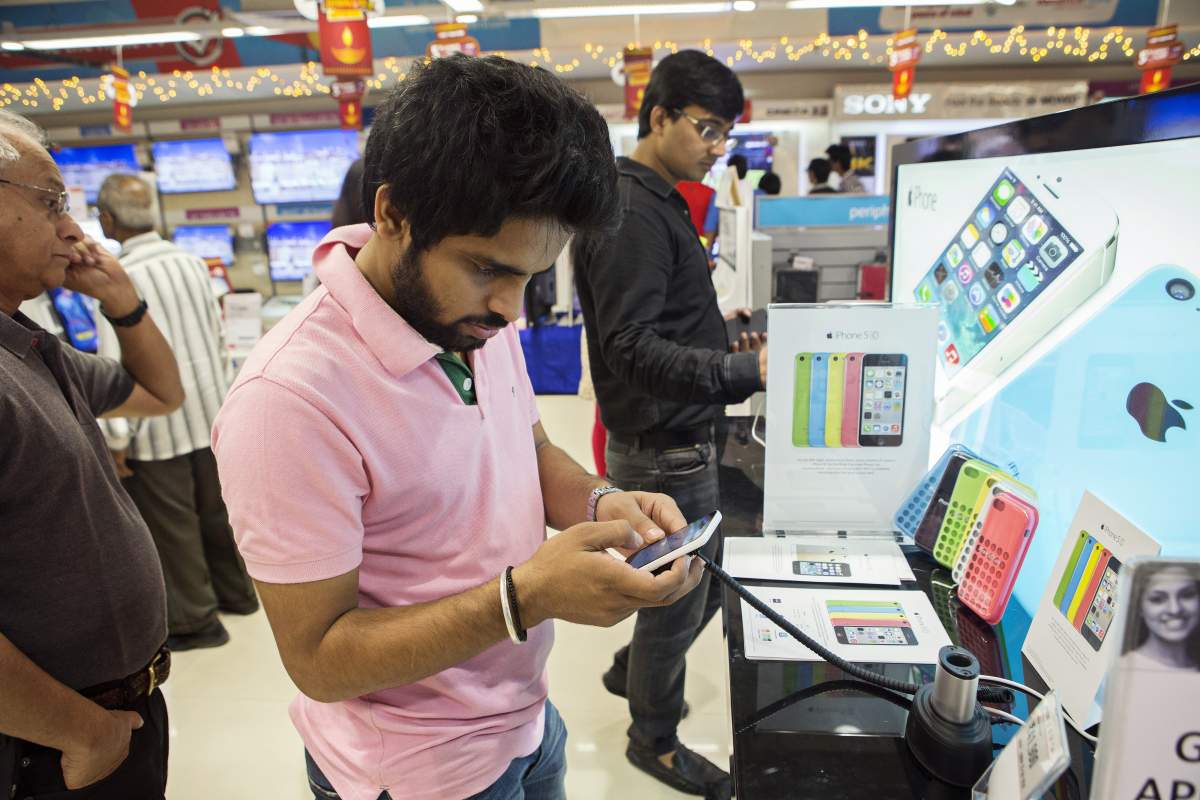
  • Word of mouth key to Indian smartphone sales

    Word of mouth key to Indian smartphone sales

    The most important factors influencing the sale of smartphones in India are point of sales (POS) techniques and word of mouth, according to research from IDC.

    The research firm’s new Smartphone PULSE (Indian smartphone end consumer research) study finds that 75% of Indian consumers take recommendations from family and friends.

    When it comes to smartphone purchases, 50% of buyers are under 25 years and two-thirds of consumers prefer making the purchase at a brick-and-mortar store where they can touch and feel the device. Also 40% of consumers depend on in-shop promoters and retailers to decide their preference for a brand.

    According to Himanshu Jain , Market Analyst, IDC India “Smartphone is now more of a status and style symbol than a mere communication and utilitarian device. Sheer number of smartphones choices in the market, peer pressure and the need to remain up to date with the latest technology are some of the factors driving the consumers in India to research, seek reviews and recommendations before buying a smartphone.”

    Offline retail is still the biggest sales channel in India contributing 2/3rd of smartphone sales in India. To address the width and depth of Indian market a few China-based vendors like vivo, OPPO, Gionee are investing a lot in branding and marketing campaigns to create brand awareness and availability in smaller towns and cities. Also, the nearest to home convenience of stores followed by retailer trust with wide variety of options gives consumers comfort to go for offline purchase of smartphones.

    Online channel is very competitive since smartphones contribute a large portion to overall sales for all e commerce players. The investments by Amazon and Flipkart to improve user experience, reduce delivery time and entering exclusive alliances with smartphone vendors clearly show that online players are making serious efforts to gain consumer trust.

    e-Commerce is a growing trend in India with 50% of online consumer preferring e-commerce due to the convenience and ease of comparing different smartphone models.

    “The Indian smartphone consumer is looking for value-for–money smartphones that fit their budget, while offering the latest technology. With more than 40% overall share of smartphone segment in India, China-based vendors are investing a lot in offline promotions and branding to lure consumers,” IDC India market analyst Sachin Mehta said.

    “These brands are now perceived to be offering great quality products, with good design, latest specifications and focused high decibel communication on features like selfie camera and extended battery life, these vendors are setting a new trend in the industry.”

    The smartphone demand from Tier 2&3 cities is outgrowing demand from Tier 1 cities as urban markets have begun to saturate. Vendors are looking to tap consumer base in Tier 2&3 and rural areas by setting up robust offline distribution network.

    One of the major drivers of this is rapid expansion and promotion of 4G network footprint by telecom operators in India, led by Reliance Jio. This is compelling customers across city tiers to be future ready, by choosing more 4G than 3G devices, with more than 80% of the smartphones being 4G compatible across all city tiers.

    China based vendors have understood this trend and are gradually building and investing significantly in the offline distribution network in Tier 2 cities and beyond. This shows that the offline channel remains significant and the vendors have understood to address the needs of a diverse Indian consumer base, offline must go hand in hand with the online channel.