Author: Mei Ling Tan

  • Dacia halts production after global cyber attack

    Dacia halts production after global cyber attack

    Romanian carmaker Dacia, owned by France’s Renault, said on Saturday some of its production had been hit by what appeared to be the global ransomware cyber attack that has infected computers in nearly 100 countries.

    Renault stopped production at several sites earlier on Saturday to prevent the spread of the cyber attack.

    “Part of Dacia’s production in Mioveni has been affected by disfunctionalities of IT systems and some employees were sent back home,” Dacia said in a statement. “The measure was taken to prevent extending the disfunctions, which at first glance are a consequence of the global cyber attack.”

  • DFS, Estée Lauder launch beauty tutorial-inspired WeChat campaign

    DFS, Estée Lauder launch beauty tutorial-inspired WeChat campaign

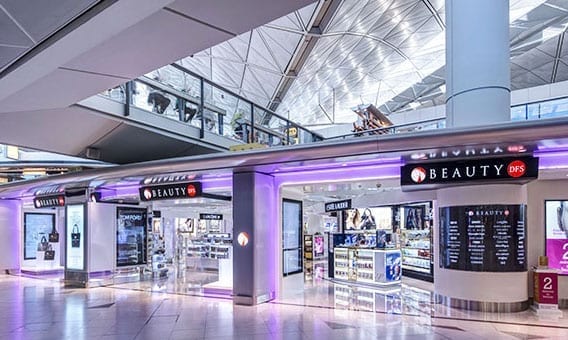
    LVMH-owned travel retailer DFS has teamed up with Estée Lauder to transform fans into influencers with an omnichannel initiative, the #BeautyAllNight campaign, which brings together in-store activations with digital touchpoints via Chinese messaging platform WeChat. Beauty marketers have embraced technology-enabled efforts to enhance traditional counter trials and experiences with great success.

    DFS and Estée Lauder were inspired by the popularity of online beauty tutorials. To bring the concept in-store DFS is leveraging the abilities of its WeChat to enhance consumer interaction with the #BeautyAllNight concept.

    The campaign follows three travelers visiting New York, Venice, Italy, and Hong Kong. The friends are shown unpacking, applying travel beauty essentials, and snapping selfies to share on social media. As a travel-based retailer, it is important for DFS to keep this authentic connection because consumers often come across its storefronts in airport terminals.

    In a digital beauty first, according to the brands, #BeautyAllNight uses WeChat’s facial recognition technology to apply a “staying in” or “going out” Estée Lauder beauty look on users’ faces. Once a look is selected, she can pick Estée Lauder products to virtually try on. Consumers can choose from the DFS-exclusive Love of Night set or Pure Color Love lipsticks. The completed virtual try-on selfie can be shared on WeChat Moments.

    “Today’s beauty shopper wants to see, test and share her next beauty look before even stepping into the store to purchase,” said Ariel Gentzbourger, senior vice president of beauty, fragrances and wellbeing at DFS, in a statement. “She crowdsources everything, from where she should stop to what are the must-have products, often trusting peer-to-peer recommendations above all else.

    “We’re proud to partner with Estée Lauder to harness the power of the social network and deliver this beauty digital first on WeChat with our #BeautyAllNight campaign,” she said. “We’re confident that through this innovative online approach we’ll drive awareness and engagement of these beauty essentials in-store with the growing millennial segment.”

    Aside from its digital efforts, DFS locations will hold dedicated #BeautyAllNight pop-ups at T Galleria by DFS locations in Hong Kong, Hawaii and Macau. Campaign activations will also be found at T Fondaco dei Tedeschi by DFS in Venice, Italy and DFS in Los Angeles.

    Estée Lauder’s exclusive Love of Night set, featuring its most popular skincare products from the Advanced Night Repair line, will be available at a 30 percent discount for the extent of the month-long campaign at DFS.

  • Tourism exec welcomes new Cebu Pacific routes in Clark

    Tourism exec welcomes new Cebu Pacific routes in Clark

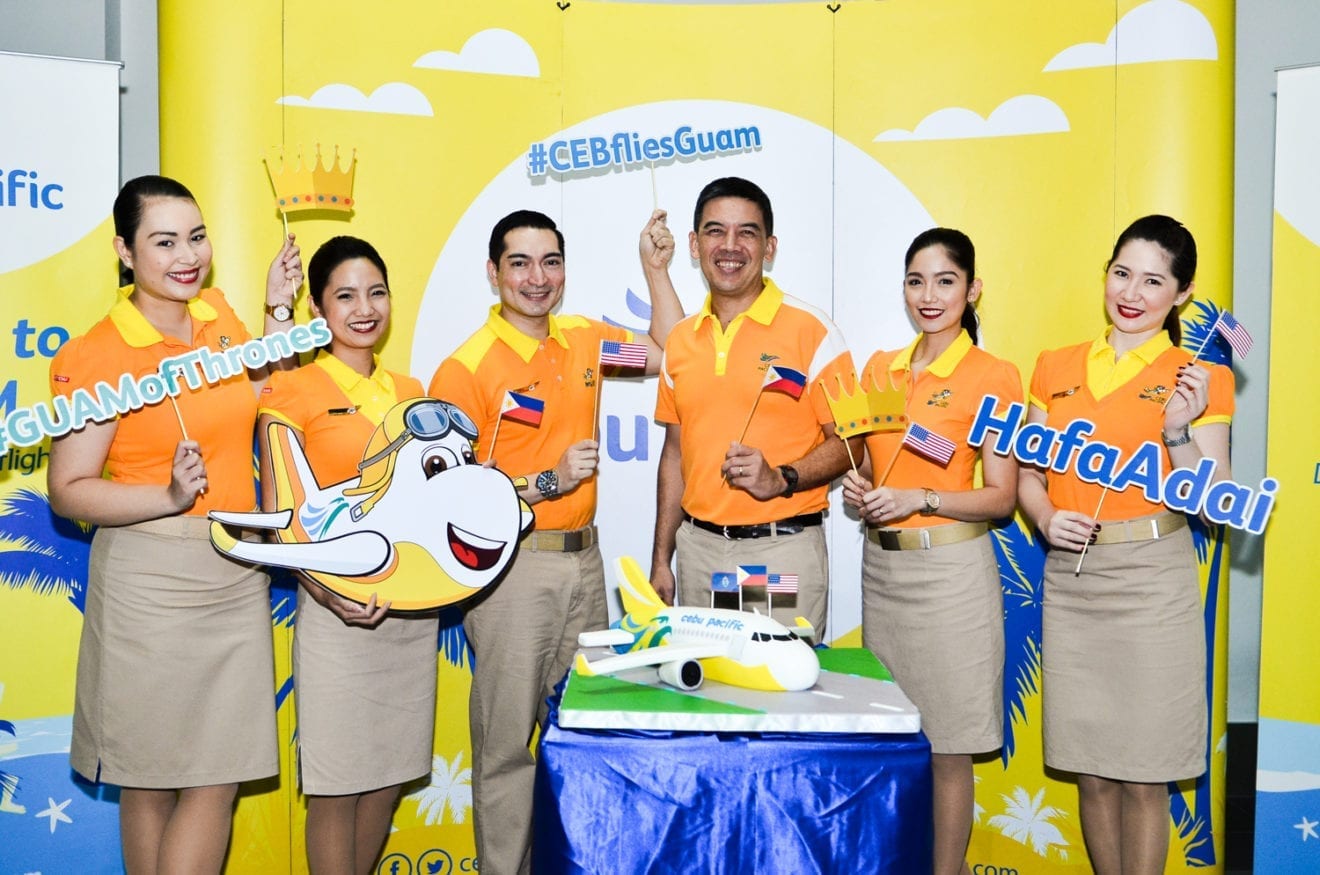
    The Department of Tourism (DOT) in Central Luzon welcomed the two new routes of Cebu Pacific which will commence on May 15. Ronnie Tiotuico, DOT-Central Luzon director, said the new routes will attract passengers from Central and Northern Luzon. “This is good for our tourism.

    People from Central and Northern Luzon will no longer have to travel to Metro Manila to get to their favorite destinations in Boracay and El Nido in Palawan,” Tiotuico said.

    Cebu Pacific set the new flights in line with its program to strengthen its domestic route network geared towards making inter-island travel more accessible to residents outside Metro Manila. Starting this May 15, Cebu Pacific’s wholly-owned subsidiary, Cebgo, will be flying daily between Clark and Caticlan (Boracay) and three times weekly on Monday, Wednesday, and Friday between Clark and Busuanga.

    “We believe that by opening these new routes, we are enabling more residents from Central and even North Luzon to travel to Palawan and Boracay — two of the world’s best islands, without having to make the trip to Metro Manila to catch their flights. Aside from boosting domestic tourism, our new routes will also enhance trade and investment as we also make available our cargo services,” Alexander Lao, Cebgo president and chief executive officer, said.

    Lao said that Cebu Pacific has remained true to its commitment of making air travel safe, affordable, reliable, and fun-filled for everyone. “Rest assured, we will continue expanding our network to enable even more of our kababayans to travel with our trademark lowest fares, not only within the Philippines, but also to international destinations,” added Lao. Cebu Pacific also operates flights out of four other strategically placed hubs in Manila, Davao, Kalibo, and Iloilo.

    The airline’s extensive network covers over 100 routes and 66 destinations, spanning Asia, Australia, the Middle East, and United States of America. F

  • ZTE completes 3D-MIMO test in Jiaxing

    ZTE completes 3D-MIMO test in Jiaxing

    China Mobile and ZTE announced they have completed the deployment and pre-test verification of Pre5G Massive MIMO technology 3D-MIMO in Jiaxing, a prefectural city in northern Zhejiang province in China.

    The testing, conducted in collaboration with China Mobile Zhejiang and the China Mobile Jiaxing Branch, included verification tests in scenarios including large-traffic scenarios in universities or 3D  in-depth coverage in high-rise residential buildings.

    It builds on the completion of the world’s first 3D-MIMO field verification conducted by the two companies in 2015.

    The 3D-MIMO technology increases downlink capacity by 3-5 times and uplink capacity by 4-6 times over traditional 4G networks, helping to address issues caused by the exponential growth in demand for traffic and growing 4G user base in dense areas such as universities.

    Using three carriers on a 3D-MIMO site downlink rates reached 1Gbps while uplink rates reached a peak of 237Mbps.

    Testing showed that 3D-MIMO increased uplink and downlink spectrum efficiency of small-packet services by 2-3 times on average compared to co-frequency eight-transmit macro base stations. The test involved up to 800 concurrent commercial users.

    The 3D beamforming technology also helped to suppress interference, enhance connections on cell edges and increases user traffic in the coverage area.

    Last year, China Mobile and ZTE completed 3D-MIMO pre-commercial verification in 29 provinces and 50 cities as part of their collaboration on the technology.

  • TOT ready to take over True’s fixed operations

    TOT ready to take over True’s fixed operations

    Thai state-owned operator TOT is ready to take over concessionaire True Corporation’s fixed line operations upon the expiry of the concession agreement in October.

    TOT has spent months preparing the operational procedures that will be needed to take over the provision of services to around 1.2 million customers.

    As part of Thailand’s transition to a licensing regime, the 25-year build-operate transfer concession agreement will be allowed to expire on October 26. True had been paying 18% of its total revenue to TOT under this concession.

    Once the concession expires True will transfer its fixed line network assets and customers to TOT.

    The operator will lose fixed line service revenue of around 2 billion baht ($57.7 million) per year, while TOT expects to be able to realise revenues of 2.8 billion baht per year from the assets.

    TOT plans to start writing to True customers in July informing them of the scheduled takeover of the fixed line operations. The state operator already has its own fixed line business, with around 3.4 million subscribers nationwide.

    According to the report, TOT meanwhile plans to spend around 400 million baht this year on fixed line maintenance and repair.

  • Swarovski launches WeChat Mini program for mother’s day campaign

    Swarovski launches WeChat Mini program for mother’s day campaign

    Since launching in early January 2017, WeChat mini programs offer brands an alternate avenue to develop advanced functionalities, whether it’s making purchases, finding up-to-the-minute information, or editing photos. Conceptually similar to Google’s instant apps, WeChat mini programs take away the barrier to download additional apps from an app store, and instead allow brands to offer users new and additional functionalities without having to leave the WeChat ecosystem. While it may not be relevant to serve all purposes, Swarovski is the first watch and jewelry brand to find a way to leverage the technology of mini programs and complement both their social and retail activities.

    To celebrate Mother’s Day, Swarovski launched a social media campaign on May 5, that speaks to all sons and daughters to celebrate their mother’s eternal beauty and share with them well wishes to continue living youthfully and differently. A vivid and beautiful garden design features Key Opinion Leaders’ (KOLs) wishes to their mothers and brilliant Swarovski products to inspire gift ideas among online audiences.

    “The Swarovski brand spirit of ‘Daring & Irresistible’ is not only reflected in the design of our products, but also ingrained in our marketing strategy,” said Donna Pang, managing director of Swarovski China. Pang continues to say that, “social media continuously evolves quickly, so it is important to us that we find new and innovative ways to use new technology and functionality to improve the consumer experience with Swarovski, from brand awareness to aspiration, to purchase.”

    Working together with Tencent and DLG China, Swarovski launched a mini program that serves as a 1-click solution to purchase the campaign’s featured Mother’s Day gift ideas, directly through their official WeChat account. “Working with Swarovski, a brand that embodies love and beauty, launching the ‘Swarovski’s Brilliant Gifts mini program for Mother’s Day created a smooth experience for users to express themselves on the occasion,” said Juliet Zhu, head of marketing at WeChat.

    The mini program can be shared like a contact and pinned like a chat, keeping consistent with native WeChat behaviors. Staying within WeChat means that users can also pay with their WeChat Pay for a complete consumer journey. Zhu elaborates that “thinking about the user experience at every step is a top priority. We are continuously striving to develop connections between brand products and services with users.”

    Additionally, leveraging their vast retail footprint in China, Swarovski stores are supporting the launch by driving foot traffic with key visuals featuring the scannable mini program QR code in stores.

    In the future, Swarovski plans to leverage further on its WeChat mini program and make it a sustainable component of the brand’s social media strategy. For WeChat, Zhu says they “hope to take this successful collaboration encourages more brands to leverage WeChat mini programs in their brand activities.”

  • AirAsia to launch new Chinese low cost carrier

    AirAsia to launch new Chinese low cost carrier

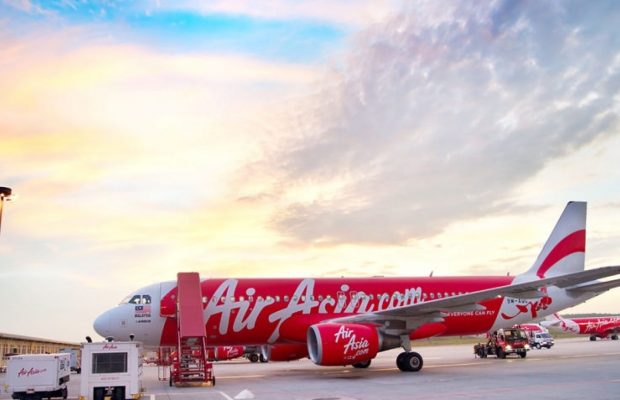
    AirAsia signed a joint venture agreement with China on Sunday to establish a low cost carrier (LCC), with a base in the east-central city of Zhengzhou. AirAsia (China) is a joint venture between AirAsia, Everbright Group and Henan Government Working Group, the airline said in a statement.

    AirAsia (China) will also invest in aviation infrastructure, including a dedicated LCC terminal at Zhengzhou airport and an aviation academy to train pilots, crew and engineers, as well as maintenance, repair and overhaul (MRO) facilities to service aircraft, the statement said.

    No further details of the LCC were provided.

    Malaysian Prime Minister Datuk Seri Najib Tun Razak, who is on a visit to China, witnessed the signing of the joint venture agreement.

    “This Chinese venture represents the final piece of the AirAsia puzzle,” said AirAsia Group CEO Tan Sri Tony Fernandes.

    “In just 16 years, we have successfully built a presence in Malaysia, Thailand, Indonesia, Philippines, India and Japan, with China closing the loop on all major territories in Asia Pacific.”

    AirAsia and AirAsia X currently fly to 15 destinations in China and the group is the largest foreign LCC operating into the country.

  • Hugo Boss opens menswear store at Singapore Changi

    Hugo Boss opens menswear store at Singapore Changi

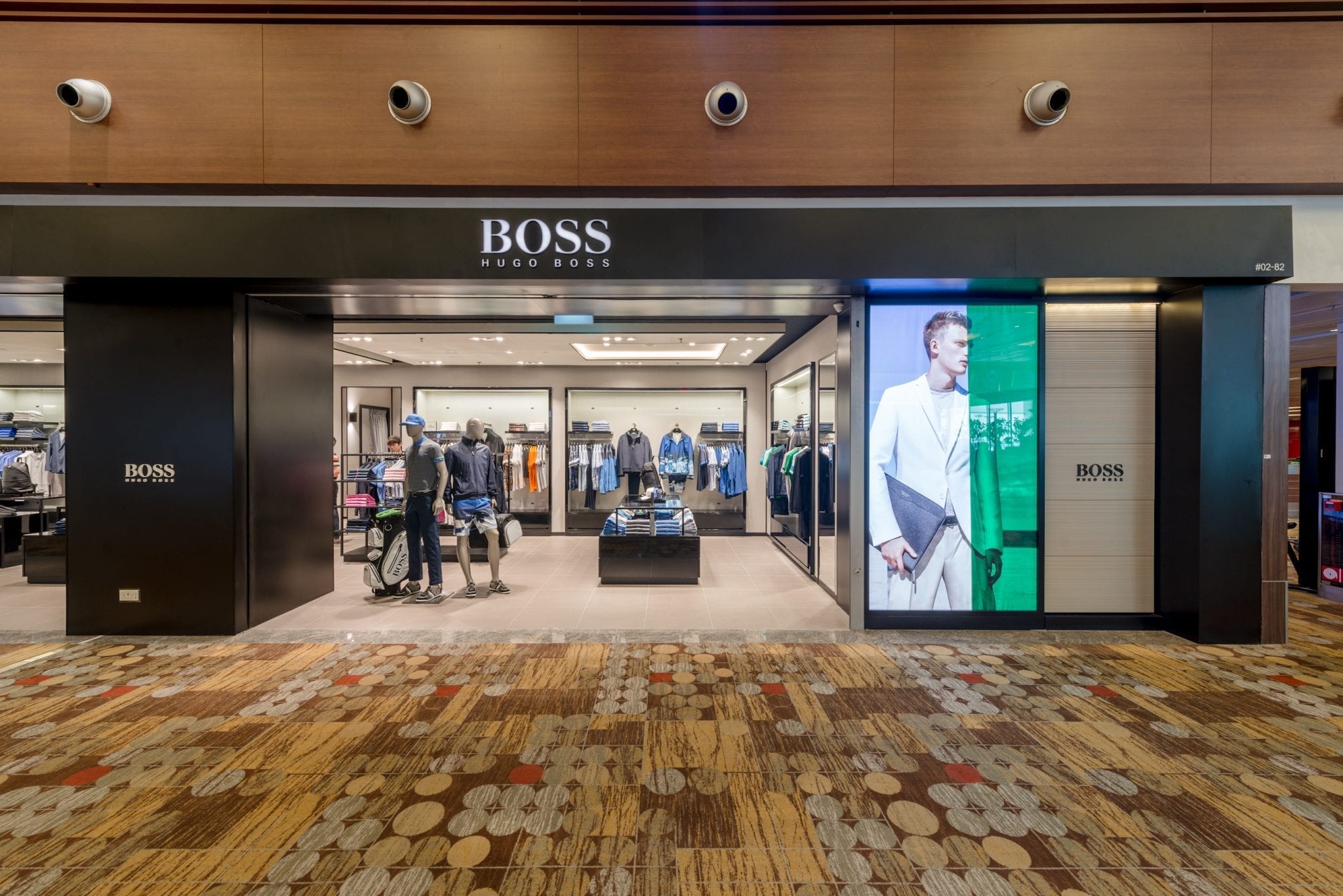
    Hugo Boss has opened a 95sq m store at Singapore Changi Airport Terminal 1.

    The Boss Menswear Store features a new interior concept featuring “clean, angular aesthetics” that has already been adopted by select stores in other cities.

    Hugo Boss considers the travel retail channel to be a dynamic part of the fashion business, and has opened its latest store at Changi Airport.

    The design is said to embrace harmony between lines, shapes and colours, and showcases the brand’s collections.

    “Throughout the store layout, matte and textile surfaces contrast with high-gloss and mirrored materials,” noted Hugo Boss. “The overall outcome is a refined space with a classic, yet airy, modern feel.”

    The store offers Boss Clothing, Boss Sportswear, Boss Green, and men’s shoes & accessories.

  • What retailers need to know about Artificial Intelligence marketing

    What retailers need to know about Artificial Intelligence marketing

    An influx of new technology and its impact on the retail sector in recent years has given rise to the use of artificial intelligence, bridging the gap between accruing big data and interpreting it for use as a marketing tool.

    According to research firm Emarsys, AI marketing will dominate the industry by mid-2017, meaning digital marketers should be using AI to build a clearer picture of their target audience, boost a campaign’s performance and ROI. And done correctly, it’s all without any extra effort. But, many brands don’t understand what AI is and how they can tap into it.

    What is AI?

    AI uses big data, or the aggregation of large data sets, which are then analysed via machine learning platforms to help identify consumer trends.

    These platforms identify insightful concepts and themes across huge data sets, via algorithms, and fast.  Essentially, the results are an interpretation of emotion and communication, “making these platforms able to understand open form content like social media, natural language, and email responses,” explains Lisa Manthei, marketing communications manager, Emarsys, in a blog post.

    This ensures “the right message is being delivered to the right person at the right time, via the channel of choice,” adds Manthei.

    What does AI look in marketing?

    A major function of AI is using data to break down and understand consumer search engine patterns and algorithms to help marketers identify key focus areas.

    As is, delivering smarter ad content to a brand’s target audience. With more data available, online ads can play off a “shopper’s key word searches, social profiles and other online data for a human-level outcome.”

    Thirdly, a target market –even with common interests and attributes – can be separated, and further targeted, at an individual consumer level. The data can be used to target existing and potential clients, delivering content that is customised to each person.

    Finally, AI plays a role in customer service and retention. Direct-to-consumer engagement channels, namely chat functions, can be run by Bots. Bot-run chat is more efficient and effective as the Bot has access internet data and learning algorithms, something that a human can physically tap in to so easily. With this, AI Bots save on a brand’s human resource power too, so it’s a win-win for brands.

  • NEC sets long-haul subsea cable record

    NEC sets long-haul subsea cable record

    Japan’s NEC has announced it has become the first vendor to achieve a transmission capacity of over 50Tbps over a distance greater than 10,000km using a single optical fiber.

    The new development could pave the way for significantly faster subsea cables spanning trans-Pacific distances, helping the industry meet surging traffic demands in the APAC region.

    NEC has demonstrated a speed of 50.9Tbps over a more than 11,000km span of cable using new C+L band erbium-doped fiber amplifier (EDFA) technology. The company said the performance translated to a record-breaking capacity of 570 petabits per second per kilometer.

    To push the capacity of the cable to close to the Shannon Limit – the spectral efficiency limit of optical communications, NEC researchers developed a new multilevel, linear and nonlinear constellation optimization algorithm.

    With this algorithm, NEC has achieved an optimized 32 quadrature amplitude modulation (32QAM) constellation with a higher nonlinear capacity limit and an unprecedented spectral efficiency over a trans-Pacific distance.

    In addition, NEC researchers developed a new bi-directional amplifier design to help maximize the capacity per fiber pair by reducing effective noise and device complexity.

  • Chorus commences stage two of UFB rollout

    Chorus commences stage two of UFB rollout

    New Zealand wholesale operator Chorus has commenced the second phase of the Ultra-Fast Broadband (UFB) initiative, which will involve the rollout of the national fiber network to 169 new areas including 18 towns.

    The build has commenced in the coastal town of Kokitika on the West Coast, and will be extended to other towns in the region including Westport, Reefton and Runanga.

    The state-led UFB program will deliver fiber broadband to around 1.3 million premises including households, businesses and schools, representing around 85% of the population – up from the initial target of 75%.

    Up to NZ$410 million ($280 million) in funding has been allocated for the second stage of the project. Chorus was selected as the main private partner for the rollout after agreeing to separate from what is now Spark as part of the break up of the former Telecom New Zealand’s wholesale and retail operations.

    The remaining areas of the country are receiving enhanced broadband under the concurrent Rural Broadband Initiative.

    “Today we’ve taken the first step toward bringing world-class connectivity to Hokitika,” Chorus general manager of infrastructure Ed Beattie said.

    “Fiber provides the broadband equivalent of an autobahn right to the door of homes and businesses, and it will future-proof Hokitika for the anticipated continued growth in data consumption for generations to come.”

  • DBS to reduce carbon footprint in 3-year partnership with DHL

    DBS to reduce carbon footprint in 3-year partnership with DHL

    DBS Bank will partner logistics company DHL Express Singapore to reduce its carbon footprint, according to a joint press release by the two firms on Tuesday.

    The three-year partnership will enable the bank’s global express shipments to become carbon neutral through DHL’s proprietary GoGreen Climate Neutral Service.

    Singapore’s largest bank will utilise the eco-friendly patented solution provided by DHL to calculate and estimate the carbon dioxide emissions of every DBS shipment based on weight and distance travelled.

    The emissions are then offset through reinvestments by the DHL carbon management programme into global climate protection projects. The entire process will be verified by an independent third party for accountability.

    “We believe that we have a role to play in promoting sustainable development,” said Ms Donna Trowbridge, group head of procurement services at DBS Bank.

    “Participating in this innovative initiative is another step we are taking to actively manage our carbon footprint, complementing ongoing efforts to cut our carbon emissions such as incorporating sustainable designs and practices into our offices and branches.”

    At the end of each year, DBS will receive an annual certificate that details the estimated carbon emissions from its GoGreen shipments that were neutralised in environmental protection projects.

    Examples of the global climate protection projects that are part of the carbon management scheme include a biomass power plant in India and wind farms in the eastern and north-central regions of China.

    “As large global companies, we have the power to make huge waves not only in the economy but also in the well-being of societies and the environment. Hence, we are obligated to utilise business practices that ensure both quality of service and future of our green environment,” said Mr Frank-Uwe Ungerer, senior vice-president and managing director of DHL Express Singapore.

    In 2016, DBS’ carbon emissions across its offices and branches in six key markets — Singapore, Hong Kong, China, India, Indonesia and Taiwan — fell by 4 per cent, said the bank.

    Other efforts to cut down on the bank’s carbon footprint include reducing air travel by encouraging video-conferencing and online collaboration tools.

    DBS was the first bank in Singapore to achieve the Green Mark certification endorsed by the National Environment Agency for its branch network in Singapore.

    The DHL GoGreen policy is part of the international group’s commitment to contribute to the communities and regions in which the company operates, and covers environmental management, waste consumption and sustainable sourcing.

    In Singapore, DHL Express tracks its annual carbon emissions and is the official logistics partner of the e-waste recycling Renew programme.

  • Duolingo Launches in Thailand With a Free English Language Course for Thai Speakers

    Duolingo Launches in Thailand With a Free English Language Course for Thai Speakers

    Duolingo, the most popular language-learning platform and most downloadededucation app in the world, announced today its launch in Thailand with a free English language course for Thaispeakers. Using Duolingo, Thai speakers can learn to read, write and speak English through fun, game-like lessons. Duolingo is available now as a free app on the App Store and Google Play, and on the web at Duolingo.com.

    With more than 170 million users worldwide, Duolingo stands out for its free learning content, game-like approach to teaching, and bite-sized lessons that can be done in five to ten minutes per day. This appeals to anyone in Thailand who lacks time and resources to sign up for expensive language classes.

    “Of the 1.2 billion people worldwide who are learning a foreign language, 800 million are learning English in order to improve their job prospects and gain access to better life opportunities,” said Luis von Ahn, CEO and co-founder of Duolingo. “We started Duolingo to make language education free and accessible to everyone, and are excited to now offer the first free online English language course for Thai speakers. We hope the course will help open up new educational and job opportunities for Thais, while providing a fun learning experience.”

    The Duolingo English course for Thai speakers is the first free language-learning program of its kind in Thailand. Like most of Duolingo’s courses, this one was created by a team of bilingual volunteers. The team behind this course includes Songphon Klabwong, chief technology officer of a Bangkok-based software company, who was previously a lecturer of Computer Science at Rajamangala University of Technology.

    “During the time I was teaching, I noticed that the language barrier among my students was one of the biggest challenges to their learning experience and encouraged my students to start learning English,” said Klabwong. “When I found out that Duolingo was developing an English course for Thai speakers, I was inspired by the company’s mission and decided to contribute to the course. I am hopeful that it will encourage more Thais to develop their English skills.”

    For Thais who already read, write and speak English, Duolingo currently offers 22 language courses, with plans to add Japanese, Korean and even Klingon, the extra-terrestrial lingo from Star Trek, this year, too.

    Based in Pittsburgh, Pennsylvania in the United States, Duolingo has raised USD $83.3 million in venture capital from investors including Google Capital, Union Square Ventures, New Enterprise Associates, Kleiner Perkins, Hollywood actor Ashton Kutcher and internationally renowned author Tim Ferriss. While all learning content on Duolingo is free, the company monetizes through optional in-app purchases, ads at the end of lessons and a relatively low-cost English language certification test that is widely accepted at universities and organizations around the world.

    Duolingo is available on Android, iOS, Windows devices and the Web with seamless switching between platforms.

  • Japan’s FamilyMart may limit investment in Vietnam following losses

    Japan’s FamilyMart may limit investment in Vietnam following losses

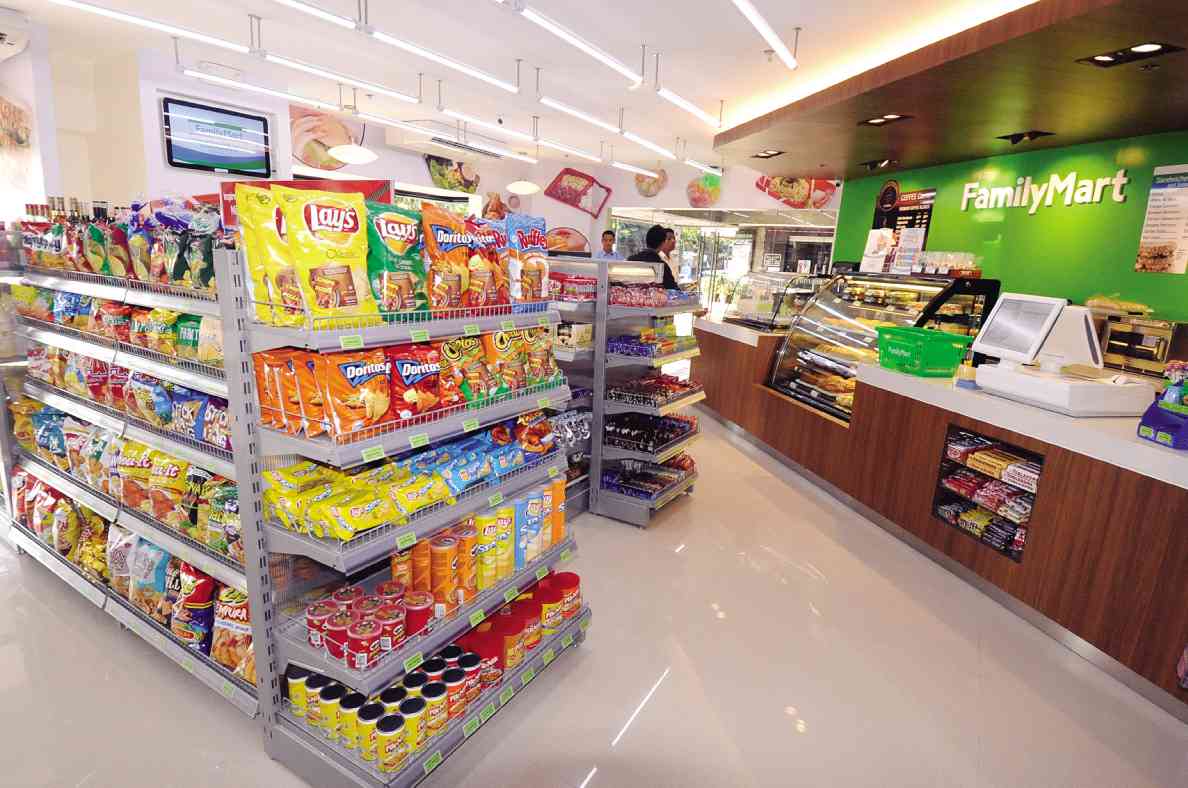
    ‘We cannot continue to pour in resources,’ its president says of business in the Southeast Asian market. Japan’s second largest convenience store chain FamilyMart plans to stay focused on domestic market as it reported losses in several Southeast Asian economies including Vietnam.

    Koji Takayanagi, the chain president, said the firm is reviewing loss-making businesses in Indonesia, Thailand and Vietnam. “If we can get them to rally we will, but we cannot continue to pour in resources,” as saying Tuesday.

    The Japanese franchise has forecast operating profit to grow by more than twice to 1,000 billion yen ($8.79 billion) in four years from 412 billion yen in the current fiscal year. But as the business is profitable in China and Taiwan, it is not doing well elsewhere.

    FamilyMart came to Vietnam in 2010 and had expected to open 300 stores in collaboration with local distributor Phu Thai Group.

    But the partnership ended in 2013, with the distributor taking over 42 FamilyMart stores and turning them into B’s Mart in collaboration with Thailand’s Beri Jucker Plc.

    The brand made a comeback in July 2013 and is now operating 130 stores in Ho Chi Minh City, the nearby resort town of Vung Tau and in Binh Duong Province, aiming to expand to 150 by the end of this year.

    Takayanagi said he finds it easier to achieve results at home, where worsening labor shortage is leaving convenience stores scrambling to find workers. “We know what to do,” he told, adding that the chain is ready to offer items with added value to serve its aging population.

    He also said his company is considering starting a new business with Hong Kong-based investment holding company CITIC Ltd. and Thailand’s largest private conglomerate Charoen Pokphand.

    Details are not revealed, but he said the companies are looking at a range of opportunities beyond convenience stores.

    The chain’s diversion comes as its rival Seven & i Holdings, which owns Japan’s largest convenience store chain 7-Eleven, keeps expanding overseas, most recently in the U.S.

    The first 7-Eleven store will open in Vietnam in February 2018, adding heat to the convenience store boom with entry and expansion from many local and foreign retailers in recent years.

    Vietnam’s retail market is listed in the top five in Southeast Asia and ranked 11th globally in terms of growth rate, based on the A.T. Kearny 2016 Global Retail Development Index.

    Vietnam’s trade ministry has projected the country’s retail market to hit $179 billion by 2020, a jump of 52 percent from last year, with foreign convenience store operators already holding a 70-percent market share.

    The sector has a lot room to grow in Vietnam, where more than half of a population of nearly 92 million are young and the annual average income expected to increase very fast, the ministry said.

  • Festival tourism market now being tapped

    Festival tourism market now being tapped

    Festivals take place throughout the year in different localities, but they are not organized in a professional way to achieve international stature. Meanwhile, tourism sites do not pay appropriate attention to festival tourism, though they can see the number of tourists increases in festival seasons.

    Da Nang, with one of the most beautiful beaches on the planet, is a rendezvous for travelers thanks to the Da Nang International Firework Competition (DIFC).

    However, as Huynh Van Hung, director of the Da Nang City Culture & Sports Department, said, since DIFC is a competition, letting off fireworks is the only activity of the event, while there was no extra activity on the occasion.

    DIFC only lasted two days and is organized once every two years. According to Ngo Quang Vinh, director of the Da Nang Tourism Department, a survey in 2015 found that after a firework competition, the Han Market’s management board reported a twofold increase in revenue.

    Da Nang has changed its approach. Having realized the great potential of festival tourism, the city’s authorities decided to turn DIFC into DIFF (Da Nang International Firework Festival) this year, which lasts from April 30 to June 24.

    As such, Vietnam, for the first time has a festival lasting throughout the summer.

    This is the biggest firework festival in SE Asia with five places for firework performances and a series of associated events, which all have made Da Nang busy throughout the summer.

    Da Nang hopes it would become an attractive destination point for about 2 million travelers in summer thanks to the ‘firework city’ brand.

    Among tourism complexes, Sun World Ba Na Hills can best exploit the potential of festivals to attract travelers. Visitors to the leading resort in Vietnam in any season can enjoy the festive atmosphere.

    In spring, Ba Na is brilliant with the colors of hundreds of flowers in Spring Flower Festival. In summer, the Wine Festival and beer- B’Festival are held. In autumn and winter, visitors will be able to enjoy the Halloween Festival and Christmas season.

    In 2016, the resort received 2 million visitors.