Author: Mei Ling Tan

  • Online grocery shopping on the rise in Korea

    Online grocery shopping on the rise in Korea

    Grocery shopping via online and mobile channels in Korea rose sharply in the first quarter from a year earlier, backed by robust demand for delivery services of fresh food amid a rise in the number of one-person households.

    The amount of transactions made for fresh produce through online shopping malls reached 2.18 trillion won (US$1.92 billion), up 35.6 percent from the first three months of 2016. Of the total, purchases made via mobile devices soared 56.7 percent on-year to 1.55 trillion won over the cited quarter.

    In March alone, grocery shopping accounted for 11.7 percent of all online purchases tallied, trailing behind travel and booking by just 3 percentage points. In terms of mobile purchases, food shopping took up the biggest portion at 14.5 percent. Analysts attributed the brisk growth to an aggressive expansion of online-based fresh food delivery services by key e-commerce companies and related start-ups.

    The diversification of fresh food supplies and shortened delivery periods due to heated market competition has led to the overall increase of the transactions and improvement of online shopping services for consumers. The growing number of single-person households is another factor that has fueled the demand for online grocery shopping.

    Along with many double-income families that have little time to shop at a supermarket, those who live and eat alone have shown a tendency to spend generously if they can have groceries delivered with a simple click. One-person households in Korea account for some 35 percent of the total population as of September 2016. The trend has prompted local retailers and e-commerce companies to scramble to launch fresh food delivery services.

    SK Planet, the operator of leading online shopping mall 11st, is running a wholly-owned subsidiary, Hello Nature, which offers compact package deliveries of groceries. Baemin Fresh is another player, run by mobile delivery app provider Woowa Brothers, which has been actively expanding its foothold in the mobile grocery shopping business. In a recent media release, it said the number of Baemin Fresh users has surpassed 240,000 since it launched its mobile app last February. Other e-commerce sites, including Ticket Monster and WeMakePrice, have also joined the bandwagon with their own delivery services of fresh food supplied by its partners based in provincial regions. Industry watchers said the popularity of online grocery shopping will likely continue for some time, given strong consumer demand and the country’s fast-growing mobile sector.

    South Korea’s online shopping transaction reached 18.2 trillion won in the first quarter, up 19.4 percent from a year ago, with the mobile shopping accounting for 58.6 percent of the total payments, according to government statistics.

  • Softbank Q4 profit surges on Sprint turnaround

    Softbank Q4 profit surges on Sprint turnaround

    Japan’s Softbank has reported a twelvefold increase in net profit for the March quarter as a result of a recovery at US mobile unit Sprint.

    Profit increased to 580.5 billion yen ($5.08 billion), on the back of a nearly 2% increase in revenue to 2.32 trillion yen.

    For the full year, profit grew to a record 1.4 trillion yen, up from 474 billion in the prior financial year, as the result of the divestment of part of the operator’s stake in Alibaba and cost reductions at Sprint.

    Total revenue increased from 8.88 trillion yen to 8.9 trillion yen over the same period, partly due to the addition of revenue from recent acquisition ARM.

    Sprint’s operating income increased to $1.8 billion for the year, from just $300 million in the prior year, while total costs were reduced to $15.9 billion, representing a $3.4 billion reduction over the past two years.

    Revenue from domestic telco operations meanwhile grew to 3.19 trillion yen from 3.14 trillion yen a year earlier. The company added 360,000 mobile subs during the year to take its total to 32.4 million, with FTTH subscribers roughly doubling to 3.59 million.

    SoftBank separately announced plans to collaborate with Qualcomm and Sprint to jointly develop technologies for 5G in the 2.5-GHz band, including developing the 3GPP new radio standard for the band.

    The companies plan to provide commercial services and devices based on the development activities in late 2019.

  • Malaysia Airlines Extends Cooperation With AFI KLM E&M

    Malaysia Airlines Extends Cooperation With AFI KLM E&M

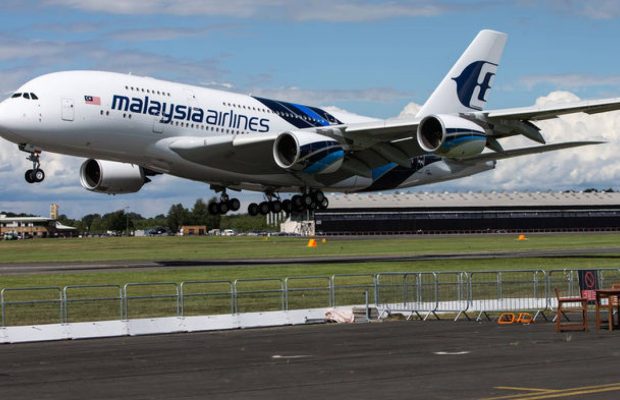
    Malaysia Airlines has decided to extend its long-running component support contract with AFI KLM E&M covering its fleet of Boeing Next-Generation 737-800 aircraft. The initial agreement was intended to cover 35 aircraft. The support provided by AFI KLM E&M today covers 54 aircraft and will involve a wider range of Part Numbers (P/N). The Malaysian Carrier has also extended the contract duration for the coming years.

    The component support solutions supplied to Malaysia Airlines are implemented via the Component Services Program (CSP) operated jointly by AFI KLM E&M and Boeing. Services include component repair and access to the local and main AFI KLM E&M spares pools located respectively in Kuala Lumpur and Amsterdam.
    The high quality of CSP, which combines the complementary expertise of an Airline MRO and the Airframer, along with the component availability solutions deployed in close proximity to the Malaysia Airlines facilities, have hitherto given the airline complete satisfaction.

    Paul Kear, Technical Director Malaysia Airlines, said: “The support implemented by AFI KLM E&M for our fleet of 737-800s stands out both for its service quality and its responsiveness. The Group has deployed tailored solutions, guaranteeing our operational continuity, so it was a logical decision to extend our cooperation.”

    Ton Dortmans, Executive Vice President KLM E&M, added: “We are delighted to see that Malaysia Airlines has maintained and even extended its trust in AFI KLM E&M services. This testifies to the quality of our services and foregrounds our ability to provide services backed by a global logistics network built around local facilities on our clients’ doorsteps.”

  • Smartphone owners use an average of 10 apps daily

    Smartphone owners use an average of 10 apps daily

    Time spent in apps has surged to nearly 1.7 billion hours during the first quarter, largely a result of an exploding global user base, according to App Annie’s latest Consumer App Usage report.

    The report reveals that despite each operating system having a separate top trending app category, there is actually no one size fits all app category.

    People now manage their lives with apps as an average of 10 apps are used each day. On average, only 25% to 50% of the apps downloaded are used regularly each month.

    Apps from the Utility and Tools category are most used due to them being pre-installed. This is followed by Social Networking, Communication and Social apps – these make up the largest category by average apps used.

    Android users have over 30% more games than iPhone users, however iOS still leads in gaming revenue due to their higher average revenue per user.

    Singaporeans use an average of 40 apps per month, with around 99 apps downloaded onto their phones. This brings the average daily usage to 12 apps per day – higher than the global average.

    Dating and Productivity apps saw the highest average sessions per day with around four minutes, while Finance and Productivity apps were used for less than one minute per session.

    App usage jumped 10% in the first quarter of 2017 compared to the same quarter of 2016, to reach an average of 192 minutes were spent on apps.

    On global average, over 80% of time spent in apps were spent outside of the country’s top app.

    Key learnings for publishers include, first, there is no one size fits all due to the huge variability across categories in user behaviours.

    Second, brands have to define their KPIs based on the app’s specific use by aligning their engagement strategy with their target users.

    Third, consumers prefer to manage their lives through apps and are increasingly becoming a must-have component for many companies across several industries.

    And fourth, Social Network and Communication apps have heavy influence over users, and underscores the continued importance for marketing efforts for all types of apps.

  • Amazon provides ideal channel for Vietnam’s apparel sale in EU

    Amazon provides ideal channel for Vietnam’s apparel sale in EU

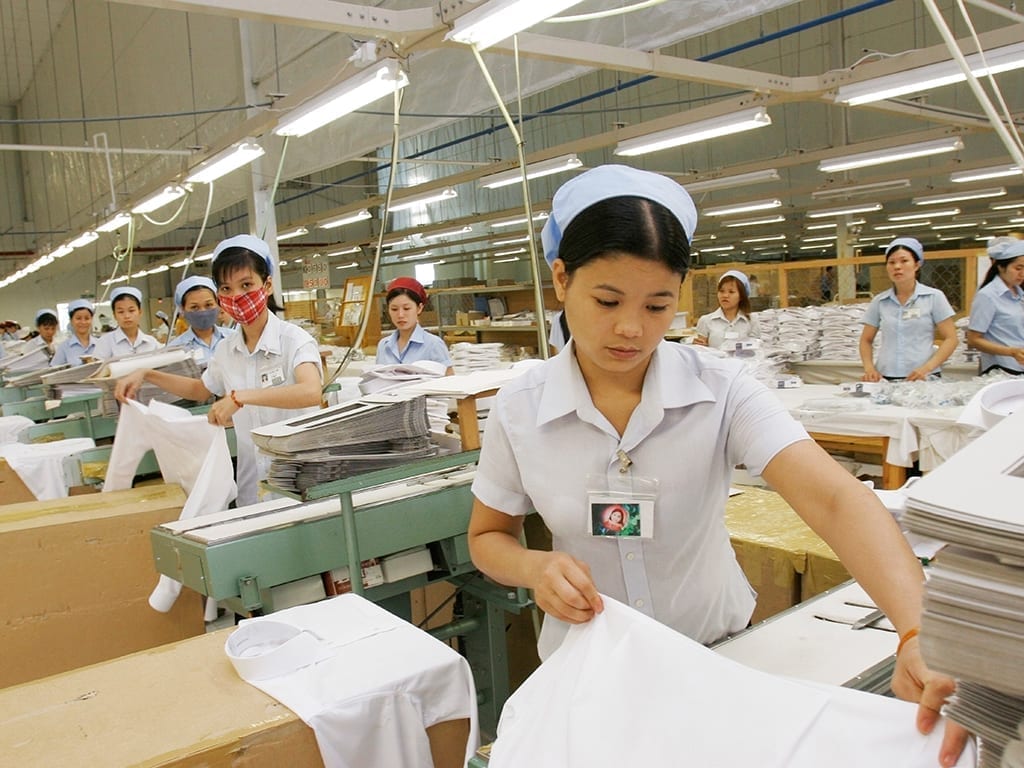
    At the event, held by the Vietnam Textile and Apparel Association, Vietnamese businesses were provided with advice about e-commerce trends via Amazon by experts from Germany’s Vorwarts GmbH company.

    Vorwarts GmbH CEO André M. Åslund cited statistics that up to 76 percent of consumers use mobile phones to shop online, and 50 percent of mobile phone users shop via Amazon.

    He said the quality of Vietnam’s garment products completely satisfies EU consumers. Many enterprises in Vietnam and Asia often sell their products to the EU via intermediaries or outlets. However, they can cut down this intermediary step if products are sold on Amazon, thereby reducing cost and improving Vietnamese apparel’s competitiveness in EU markets.

    Consumers’ behaviours have changed much, he noted, elaborating that instead of being solely based on the prestige, their trust in a product is now based on many other tools such as the product review and description, or other consumers’ assessment.

    Therefore, businesses should pay more attention to quality information provision and product quality so as to increase good assessments. Those evaluations will in turn encourage EU consumers to buy Vietnamese products, Åslund said.

    He also noted some challenges facing businesses when they want to sell goods via Amazon. He asked them to comply with regulations of EU markets and improve product design to meet consumers’ taste.

    Once consumers are satisfied, they will introduce products they bought to others, making Vietnamese goods known more widely, the German expert added.

  • Galaxy S8 to use Gemalto Secure Element in some markets

    Galaxy S8 to use Gemalto Secure Element in some markets

    Samsung’s flagship Galaxy S8 smartphone will be equipped with Gemalto’s embedded Secure Element, a smart chip with a secure OS and applications, in selected markets.

    The smart chip can secure various application types including Samsung Pay (Samsung’s contactless payment solution), couponing, transport, access control, ticketing, corporate, cloud computing and e-government.

    This integration is expected to help Samsung deploy its services worldwide, due to Gemalto’s connections with multiple service providers via its Trusted Services Hub (TSH).

    The chip has already been integrated into other Samsung smartphones including the Galaxy A series globally and the Galaxy C series in China.

    “Gemalto is thrilled to be selected as one of Samsung’s providers for the new Galaxy S8 and other smartphones. We are delighted to provide them with an end-to-end solution, which proves that our strategy based on our state-of-the-art embedded secure elements is successful,” Gemalto SVP of Greater China and Korea for mobiles services and IoT and China country head Suzanne Tong-Li said.

    “[The element] supports a unique combination of features, and our TSH offering delivers a single entry point to link device manufacturers and service providers.”

  • LVMH confirms launch of multi-brand fashion site

    LVMH confirms launch of multi-brand fashion site

    LVMH is launching a multi-brand e-commerce website inspired by its exclusive Parisian department store Le Bon Marche, as the world’s biggest luxury goods group steps up the digital side of its business.

    The new website, named “24 Sevres” after the Rue de Sevres location of Le Bon Marche in the chic 7th arrondissement, will offer fashion, cosmetics and luggage products from LVMH’s own portfolio as well as brands from outside the group.

    Overall more than 150 labels, including 20 of LVMH’s own stable such as Louis Vuitton, Dior, or Fendi, will be featured.

    The size of the investment amounted to several million euros and marks the biggest digital initiative taken by LVMH since it hired former Apple music executive Ian Rogers in 2015 to craft its digital strategy and capitalise on the luxury sector’s online sales expansion.

    LVMH, controlled by French billionaire Bernard Arnault, said the new site would go live on June 6 in more than 70 countries.

    Competing with established rivals such as Yoox Net-a-Porter , MyTheresa, Matchesfashion.com or LuisaViaRoma, it echoes the high-end positioning of the Le Bon Marche store.

    It will give international clients “very Parisian choices” in the selection of exclusive products, Rogers told Reuters.

    “The idea is to be attractive with unique products, not necessarily have a huge offering,” said Rogers.

    E-commerce is still a relatively small part of the global luxury goods market, representing 7 percent of industry sales, but this is expected to rise to 12 percent of industry sales by 2020, according to the Boston Consulting Group.

    Luxury goods companies face a dilemma over trying to reach young Internet-savvy shoppers while preserving the sense of exclusivity that drives up the value of their products.

    LVMH has already tapped into the increasing importance of online social media by setting up LVMH Luxury Ventures to invest in start-up luxury goods projects.

    Until now each LVMH brand has had its own separate digital strategy, with some brands such as Fendi and Kenzo putting significant resources into this area while other brands such as Celine had no E-commerce website of their own.

    The new website will complement the offering available on the respective websites of the LVMH brands, Rogers said.

    Big fashion brands such as Prada, Gucci or Valentino will be sold on the site as well as Maison Margiela, seen as a more cutting-edge label, or others such as Kitsune or APC.

    LVMH’s online sales of €2 billion ($2.2 billion) last year equated to 5.3 percent of overall group revenues.

  • Video ads a menace to brand safety in Vietnam

    Video ads a menace to brand safety in Vietnam

    Regional rankings place Vietnam as the second-most at risk country from harmful content in Southeast Asia. Video advertisements in Vietnam, mostly on YouTube, are a serious threat to brand safety, and the second most dangerous in Southeast Asia after Indonesia, according to global technology and data company Integral Ad Science (IAS).

    Indonesia’s video ads were at the highest risk, with 15.3 percent of ad impressions flagged for appearing alongside content deemed unsafe, while its display ad risk was second highest in the region at 5 percent after Malaysia, citing IAS data on brand risk in the online environment during the second half of 2016.

    Following closely behind Indonesia for video brand safety risks was Vietnam, with 13.2 percent of video ads dubbed as a risk to brand safety, while its display ad risk was relatively low at 4.2 percent, the report said.

    Malaysia’s brand safety risk was the highest for display ads at 6.7 percent, while its brand safety risk for video ads was also relatively high at 7.1 percent.

    Thailand’s online environment posed the lowest threat to brand safety in Southeast Asia, with only 1.6 percent of display and 2.2 percent of video ads appearing on unsafe websites.

    Singapore had the second safest online environment after Thailand, with only 2.7 percent of its display ads and 4.6 percent of its video ads featuring in unsafe environments.

    In February, Vietnam’s Ministry of Information and Communications found more than 8,000 videos containing distorted historical facts about the country on YouTube. These videos featured advertisements for several major Vietnamese brands but the companies in question said they did not control where there ads appeared.

    The government subsequently called on all companies doing business in the country to stop advertising on YouTube, Facebook and other social media until they find a way to halt the publication of “toxic” anti-government information.

    “We withdrew our ads from YouTube as soon as we were being warned by the authorities. We do not want our brands to appear alongside toxic content,” Nguyen Tran Hung Long, senior media manager at Masan Group Corporation, told VnExpress.

    These warnings have reminded businesses to pay more attention to brand safety on the internet, said Vinamilk marketing manager Pham Minh Tien.

    Nearly 49 million people in Vietnam, or more than half of the country’s population, are online. A Nielsen survey released last September found that 92 percent of them watch online videos at least once a week, and 64 percent are daily viewers.

    YouTube and Facebook account for two-thirds of the digital media market share in Vietnam, according to Nguyen Khoa Hong Thanh, operations director at digital marketing agency Isobar Vietnam.

  • Airtel to invest $2.5b in India this year

    Airtel to invest $2.5b in India this year

    Bharti Airtel has revealed plans to invest $2.5 billion in India during the current financial year as the company seeks to build out its 4G network to improve its dominant market position.

    During an earnings call for the company’s recent financial results, Airtel revealed it doesn’t plan to let its 71.7% decline in Q4 profit hamper its growth ambitions.

    Airtel plans to continue to focus on acquiring market share despite the impact on ARPU in the short term, Airtel’s CEO for India and South Asia Gopal Vittal said.

    The company’s ARPU shrank to 158 rupees ($2.45) during the fourth quarter from 194 rupees a year earlier, largely as a result of the price war triggered by the entry of Reliance Jio Infocomm to the market.

    Airtel has been strongly opposed to what it called Jio’s “predatory pricing” practices of offering free services as promotions to rapidly attract new users.

    Goppal said India’s smartphone penetration is expected to double in the next three years to up to 700 million, which is set to significantly impact data growth and validate the operator’s decision to focus on market share in the near term.

    Airtel also plans to invest around $500 million this financial year to develop its African operations, the report adds.

  • Paul & Shark opens stores in Singapore and takes control of Asian business

    Paul & Shark opens stores in Singapore and takes control of Asian business

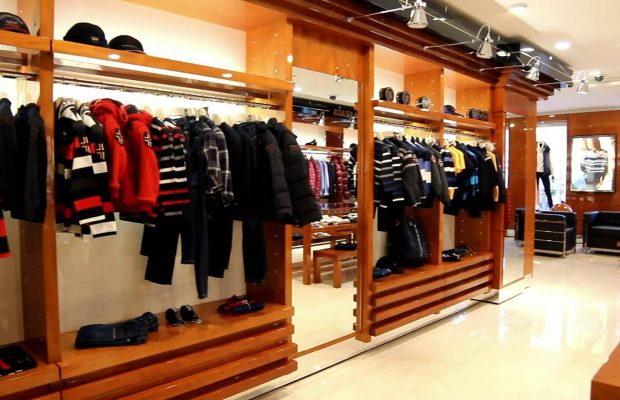
    Italian sportswear label Paul & Shark, produced and distributed by Dama Ltd, has opened two new monobrand stores: one in London, its first in the UK, and another in Singapore.

    The 200 m2 London store is located inside St. James’s Market, a newly re-developed business and retail complex in the West End featuring starred restaurants and a luxury shopping parade. The Paul&Shark store overlooks Regent St. and showcases the label’s men’s, women’s and children’s collections.

    The Singapore store, also extending over 200 m2, is instead located inside the Marina Bay Sands shopping mall, one of the city’s most popular retail destinations. “This is more than just a new opening, it is where we will directly manage our Asia business,” said Andrea Dini, CEO and owner of Paul & Shark, at the store’s inauguration, which marked the operational debut of the Paul & Shark Asia Pacific company.

    From January 2017, the newly created company manages the label’s Asian operations, having taken over the franchised stores opened by Paul&Shark’s former local partner, the ImagineX Group, a satellite of the Lane Crawford Joyce Group.

    The Italian label celebrated its new Typhoon 20000 technology, with three performances staged at the Singapore Wine Vault, inside refrigerated cells recreating different climactic conditions, and presenting a trailer of the ‘Typhoon Planet’ short film by director Wong Kar-wai.

    Paul&Shark is distributed in 73 countries via over 250 monobrand stores, featuring men’s, women’s and children’s total-look collections and several capsule collections inspired by the world of sailing and adventure.

  • Malaysia Airlines closes Kuala Lumpur lounges for upgrades

    Malaysia Airlines closes Kuala Lumpur lounges for upgrades

    Malaysia Airlines is temporarily closing two of its home hub lounges in Kuala Lumpur as it completes extensive refurbishment works to breathe new life into the spaces.

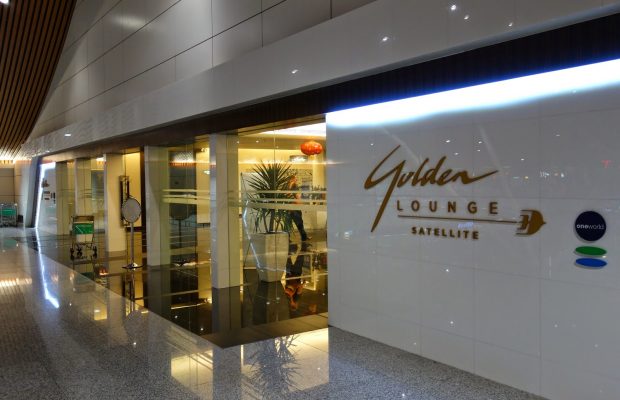
    MAS’ regional Golden Lounge in KLIA’s Main Terminal is up first – primarily used by passengers on shorter international flights such as to Singapore – closing its doors from May 12 until August 15 2017, with eligible passengers instead directed to the airport’s Satellite Terminal for lounge access.

    There, business class guests and Oneworld Sapphire/Emerald frequent flyers (including Qantas Gold and Platinum cardholders) can choose to visit either Malaysia Airlines’ international Golden Lounge (open 24 hours) or the Malaysia Airport CIP Lounge near gates 31-37 (open 6am-10am and then 6pm-10pm).

    Under Oneworld’s lounge access rules, a third option is also available in the Cathay Pacific First and Business Class Lounge: again found in the Satellite Terminal, which is accessible from the Main Terminal via Aerotrain.

    Malaysia Airlines’ domestic Golden Lounge will also be shuttered from June 2 until August 15 2017, but as these passengers cannot access the airport’s international departures area where the other lounges are located, a temporary lounge space will be created at gate B3.

    There, lounge-eligible travellers will find light refreshments available along with dedicated seating, wireless Internet, newspapers, magazines and flight information screens.

    Toilets, showers and prayer rooms won’t be offered within this temporary space, although the nearest restrooms can be found just outside the gate area, with the closest prayer room aside the Malaysia Airlines Gate A transfer desk.

    Refurbishments to these lounges were originally due for completion by “late 2016”, being approximately eight months behind schedule.

    Qantas partner Malaysia Airlines will reinvigorate its business class and first class airport lounges in Kuala Lumpur and at London’s Heathrow Airport over the coming year with an all-new design and premium amenities for business and high-end leisure travellers.

    Central to the Golden Lounge upgrades are new demonstration kitchens, where chefs will whip up Malaysian and international gourmet dishes while interacting with guests and customising meals to their personal tastes.

    Joining that is a “bistro service” in the business lounges and a revamped fine dining experience in the Kuala Lumpur first class lounge, with all locations also receiving faster wireless Internet and additional universal power sockets, allowing visitors to easily recharge their devices without an adaptor.

    Adopting a design created by internationally-renowned firm Duoz – the same company behind the Ritz-Carlton Kuala Lumpur and the Marriott Sydney Harbour at Circular Quay – guests will notice patches of greenery for a touch of colour throughout.

    “Delivering a holistic experience for our guests which starts from the lounge lies at the heart of the redesign,” said Malaysia Airlines’ CCO Paul Simmons.

    “We want the space to encapsulate the richness of travel with the airline, a luxurious contemporary Malaysian style that our guests will be able to experience when they enter any Malaysia Airlines Golden Lounge around the world,” Simmons added.

    Malaysia Airlines’ regional and domestic lounges at Kuala Lumpur will be first with the new design and amenities by late 2016, followed by the international business and first class lounges in the KLIA Satellite terminal and also the airline’s London Heathrow lounge in mid-2017.

    The carrier’s ambitious lounge overhaul follows the debut of all-new business class seats on Malaysia Airlines’ Airbus A330 flights between Australia and Kuala Lumpur, with the fully-flat seats fitted to all MH A330s by late September this year.

  • Nvidia says Toyota will use its AI technology for self-driving cars

    Nvidia says Toyota will use its AI technology for self-driving cars

    Nvidia announced a partnership with Toyota Motor Corp on Wednesday, saying the Japanese car maker would use Nvidia’s artificial intelligence technology to develop self-driving vehicle systems planned for the next few years.

    Toyota will use Nvidia’s Drive PX artificial intelligence platform for its autonomous vehicles planned for market introduction, Nvidia Chief Executive Jensen Huang said in his opening keynote at the company’s GPU Technology Conference in San Jose.

    Nvidia came to prominence in the gaming industry for designing graphics processing chips, but in recent years has been a key player in the automotive sector for providing the so-called “brain” of the autonomous vehicle.

    Nvidia, which also has partnerships with Audi and Mercedes, is among the more popular technology partners in the self-driving car race. Its partnership with Toyota is the latest in a string of alliances between tech companies, automakers and suppliers in the fast-growing sector.

    Nvidia’s Drive PX supercomputer fuses incoming data from the car’s hardware such as cameras and radar and uses artificial intelligence to help the car understand and react to its environment.

    “We’re talking about not just development now but the introduction of vehicles into the market,” said Danny Shapiro, Nvidia’s senior director of automotive. “Now we have the biggest (automaker) in Japan using our Drive PX platform.”

    In January, Nvidia and Audi (VOWG_p.DE) said the German automaker would use the Drive PX to help it put autonomous vehicle on the road starting in 2020. Nvidia is also co-developing with Mercedes a project to come to market within the next 12 months, both companies said in January.

    Toyota, which last year set up a U.S.-based Toyota Research Institute (TRI) to focus on AI and robotics, envisions a dual-track development of autonomous technology. It is simultaneously developing full self-driving cars while also working on what it calls “guardian angel” partially autonomous technology that may still require involvement from drivers.

  • ZTE’s TECS passes OpenStack Interop Challenge

    ZTE’s TECS passes OpenStack Interop Challenge

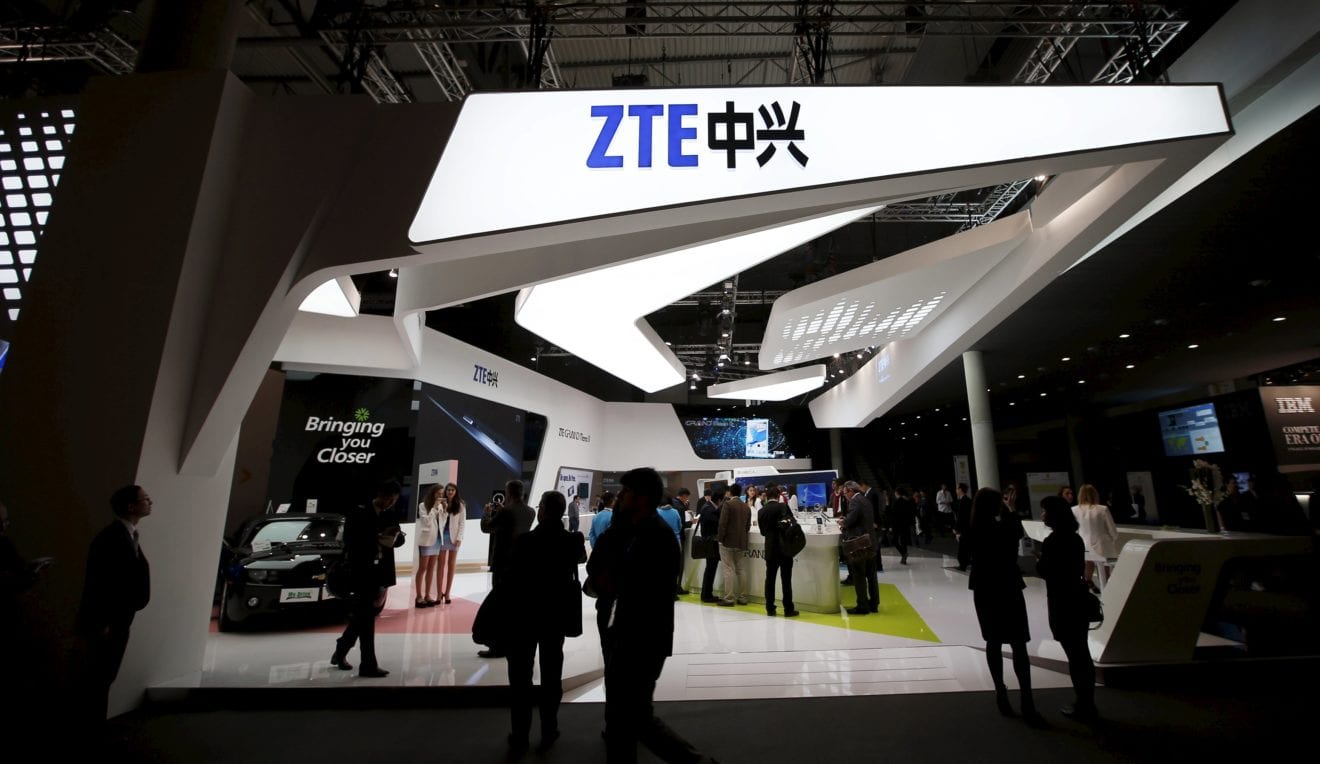
    ZTE has announced that its OpenStack-based cloud management platform has passed the Interop Challenge at the OpenStack Summit 2017.

    The Tulip Elastic Cloud System (TECS) platform successfully passed the challenge by deploying a standard Kubernetes workload, indicating that it meets the OpenStack interoperability requirements for commercial releases.

    Kubernetes is an open-source system for automating deployment, scaling, and management of containerized applications.

    The TECS platform has previously been involved in three Interop Challenge pre-test scenarios, covering the LAMP model of web service stacks and the Dockerswarm software container engine configuration as well as Kubernetes.

    The Interop Challenge was started in the OpenStack community in July last year to act as a set of common workload standards to be executed across the cloud environments of multiple vendors. The aim is to demonstrate that vendors’ OpenStack-powered releases are consistent and interoperable.

    ZTE is actively involved in the challenge project as part of its involvement as a key member of the OpenStack community.

    The vendor announced it plans to further promote contributions of NFV interoperability application scenarios in the OpenStack community, and to continue to participate in the Interop Challenge.

  • 2017 Mekong Beauty Show eyes four emerging markets

    2017 Mekong Beauty Show eyes four emerging markets

    Mekong Beauty Show, which will be held on an area of 10,000 square metres at the Saigon Exhibition and Convention Center (SECC) in District 7, will be an exclusive opportunity to gain exposure, find new partners and set up strategic global alliances in the four emerging Mekong countries: Viet Nam, Cambodia, Laos, and Myanmar.

    According to an IMF forecast, the four countries are expected to have a combined GDP of US$441 billion by 2020. The region is also an emerging market in the consumer beauty and personal care products, with average annual growth of 30 per cent in the last few years.

    The only international business-to-business beauty exhibition in Viet Nam will feature more than 200 exhibitors from Europe, South Korea, Thailand, Singapore, Japan, China, Taiwan, and Viet Nam. The expo will be a comprehensive international business platform for industry players in the entire supply chain covering beauty and cosmetics, hair and nails, herbal and health, and OEM and packaging.

    The Korean beauty industry will be among the most important drivers of the event. South Korea is the leader in the Asian beauty market based on its reputation for quality and safe ingredients and trendsetting marketing and packaging.

    A delegation of 300 brands from South Korea will showcase K-beauty at the exhibition. There will be various interesting onsite activities to explore the international beauty world.

    The expo from June 15 to 17 is expected to attract more than 10,000 trade visitors and 120 VIP buyers.

    K-Beauty trend

    The Korea Health Industry Development Institute (KHIDI) is going to launch its 2017 K-Beauty Global Empowerment Conference in Việt Nam at the Mekong Beauty Show.

    The annual event, which gathers Korean pop stars, top Korean cosmetics brands and others will hold forth on the latest K-beauty trends and analyse Korean beauty stars’ styling.

    “K-Beauty exhibitors have already achieved remarkable success at K-Beauty Expo’s first international foray in Bangkok,” Dominic OH, division director of KINTEX, said.

    “The Mekong Beauty Show will be the best opportunity to showcase the latest K-beauty and global beauty trends to the four Mekong countries.”

    Top South Korean models will perform at the show using the most popular K-beauty make-up styles and also hold onsite fitness sessions.

    Viet Nam Beauty Distributor & Retailer Club

    With support from Saigon Cosmetics Corporation, Medicare, Nielsen Vietnam, Beautystreams and Centdegrés, Mekong Beauty Show is aiming to gather top retailers and distributors and provide them with information and opportunities for co-operation.

    It is important to create a strong community of distributors and retail chains in Viet Nam. Consumers are changing every day and to catch their attention and build brand awareness, all products should focus on the marketing and branding strategy. So the expo plans to bring in Beautystreams, a leading international beauty consultancy and Centdegres, which has great expertise in design, to educate the market.

    The topics on the agenda will include building a collaborative relationship between beauty brands and conventional/online retailers, digital marketing as a key pillar of the marketing campaign, case studies from international beauty retail experience, and the Viet Nam retail market annual report and trends. www.mekongbeautyshow.com

  • Sunway Reit Advocates For Clean Air

    Sunway Reit Advocates For Clean Air

    Sunway Real Estate Investment Trust (Sunway REIT or Trust), one of the largest retail-focused real estate investment trusts (REITs) in Malaysia, has embarked on a sustainability campaign, “Clean Air – A Smoke Free Environment Project” at Sunway REIT’s flagship asset, Sunway Pyramid Shopping Mall.

    As part of the effort, three local artists who have been internationally-recognised for their murals and installations – Kenji Chai, Caryn Koh and Louise Low – came together to support the campaign and create public awareness on smoking hazards. Each of them had put their imagination to work and created wall murals which uniquely expressed their hopes and wishes for cleaner air on three exterior walls around Sunway Pyramid.

    CEO of Sunway REIT, Dato’ Jeffrey Ng Tiong Lip, said, “We would like to encourage the public to come join us in this journey to make Sunway City Malaysia the first sustainable and smoke-free city by 2018 where all Sunway-owned premises within the township will be declared smoke-free. We hope that the beauty of these masterpieces will discourage smoking in those areas and inspire our community to help us clear the air of cigarette-smoke for the 200,000 people, including 40,000 students, who reside within the city,” he said.

    Sunway City has transformed from a tin-mining wasteland into Malaysia’s first fully-integrated green township as accredited by Green Building Index, and the nation’s first low-carbon city as awarded by the Malaysian Institute of Planners. Sunway City is the first smart sustainable city in Malaysia driven by a private corporation.

    In 2013, Sunway Group’s Founder and Chairman, Tan Sri Dr Jeffrey Cheah, roadmapped a five-year plan to culminate in 2018, where all Sunway-owned premises would be 100% smoke-free. Over the years, in the first and second phases of the roadmap, the Sunway Group have partnered up with various government agencies including the Ministry of Health and My Sihat as well as the World Health Organisation towards realising the vision of a smoke-free nation.

    To-date, Sunway City has gazetted six premises within the City, namely Monash University, Sunway University, Sunway Medical Centre, Sunway Resort Hotel and Spa, Sunway Pyramid Hotel and Sunway Pyramid Shopping Mall as smoke-free zones. Sunway City is working to gazette the Menara Sunway and The Pinnacle to be smoke-free as well.

    In support of the United Nations Sustainable Development Goal 11 : Sustainable Cities and Communities, Sunway City is intensifying its efforts through various initiatives which will set the blueprint for future smart cities in Malaysia and the ASEAN region.

    Sunway Group is committed to the United Nations 17 Sustainable Development Goals, and creates positive and long-term impact on its economy, environment and society through #sunwayforgood programmes. For more information, please follow Sunway Group’s Facebook page

    During the duration of the campaign, from 8 May 2017 to 30 June 2018, members of the public are also invited to sign up for the fully-sponsored Sunway REIT Smoking Cessation Programme which is supported by Sunway Medical Centre and Johnson and Johnson. Participants will receive free active behavioural counselling by Sunway Medical Centre’s professionals who are committed to bring participants through their smoking cessation journey. The pilot run of the project is open to 250 participants.

    For the first week of the campaign, 8 May 2017 to 14 May 2017, Sunway REIT will also be conducting various activities for the public at the LG2 Orange Avenue, Sunway Pyramid Shopping Mall. Shoppers can drop by for complimentary consultations for a smoking cessation programme and smokerlyzer tests. Consultation sessions will be held from 11.30 am – 2.30 pm from Monday to Friday and 11.30 am – 3.30 pm on Saturday and Sunday.