Author: Mei Ling Tan

  • Singaporeans feel ignored by retailers 40% of the time

    Singaporeans feel ignored by retailers 40% of the time

    Qualtrics conducted a recent survey of 1,700 shoppers including respondents from Singapore. Findings show that 40% of the time, shoppers in Singapore believe that feedback never reaches the relevant department or right employee that would be able to assist them, while online shoppers believe the same holds true 39% of the time.

    Singaporean shoppers see little distinction between the efficiency of feedback channels and believe that complaining via social media, surveys or directly to an employee has no significant impact to their feedback reaching the right people within the company.

    Despite that, Singaporeans still expect retailers to respond promptly to their questions and complaints especially on social media. When sharing feedback on an offline retailer’s social media page, 31% of shoppers expect a response on the same day, and 78% expect a response within a few days. For online retailers, 36% of shoppers expect a response on the same day and 74% expect a response within a few days.

    Creating a positive retail experience for shoppers is key to customer acquisition. With 61% of shoppers stating that their expectations of offline retailers are shaped by social media, friends and family referrals, retailers need to be able to live up to customers’ perceptions. When it comes to online retailers, 68% of shoppers indicated that their expectations are influenced by social media, friends and family referrals.

    The Qualtrics survey reveals that delivering an ideal brick-and-mortar experience lies in the availability of a wide selection of products and the least important is automatically emailed receipts. The most important element that makes for a stellar online shopping experience is easy-to-see product pictures and details while the least important factor is the ability to receive email support.

    Other data points reinforce the urgency for online retailers to listen to and act upon customer feedback:
    • 16% of shoppers expect retailers to respond to their email question or complaint same day while 22% of shoppers expect the same from online retailers
    • 28% of shoppers will drop a retailer without notice if they experience a major service failure while 29% of shoppers will do the same when it comes to an online retailer
    • 50% of shoppers like a retailer more than before if their problem is quickly resolved while 51% of shoppers would feel the same when it comes to an online retailer
    • 72% of shoppers blame a retailer if one of their employees provides unfriendly or unhelpful service while 68% of shoppers would blame an online retailer for the same incident

    “Companies are witnessing what we call an “experience gap” which refers to the gap between the experience that companies believe they are delivering and the experience their customers are actually receiving, said Bill McMurray, Managing Director for Asia-Pacific and Japan at Qualtrics. “The challenge for companies is to close this gap through the use of an experience management solution, which makes it easy to capture, gain insights and take actions from experience data. There are two sets of data: operational data “O data” and experience data “X data”. X data is the human-factor data, the beliefs, emotions and sentiments that tell you why things are happening and that help predict what will happen next. For too long organisations have only focused on collecting O data, and often fail by not leveraging their X data. To address the experience gap, shown in the survey results above, the retail industry must improve the level of customer experience they provide. When they are able to do this, they will satisfy and retain their customers, generate increased revenues and grow faster than their competitors.”


  • Nissan Motor begins mass production of new Navara pickup truck in China

    Nissan Motor begins mass production of new Navara pickup truck in China

    Nissan Motor’s manufacturing joint venture Zhengzhou Nissan Automobile began production of its new Navara pickup truck Monday, in China.

    Nissan Motor’s manufacturing JV, Zhengzhou Nissan, plans to begin sales of the Navara in June, but has not released price or sales target.

  • Unilever Foundry launches co-working space in Singapore

    Unilever Foundry launches co-working space in Singapore

    Unilever Foundry, a Unilever-lead initiative for start-ups and innovators, has opened a collaborative working space at the firm’s regional office in Singapore – the first of its kind for Unilever.

    Dubbed Level3, the new collaborative space was launched by the Unilever Foundry to provide startups with the opportunity to interact and partner with Unilever and other ecosystem partners to solve business challenges. This ranges from marketing to finance, logistics, supply chain and customer development.

    “Level3 offers our business a direct connection with disruptive technologies and changemakers to shape the way we work — ultimately impacting people’s lives,” said Pier Luigi Sigismondi, president, South East Asia and Australasia. “Level3 is the springboard for startups to scale and build successful businesses.”

    Opening February 14, within the Unilever regional headquarters in Singapore, the 22,000 square foot workspace aims to connect startups to Unilever brands, and give them access to existing Unilever Foundry programs.

    Fifteen international and local startups are taking part, including Adludio, ConnectedLife, Datacraftt, EcoHub, GetCraft, Next Billion, Olapic, Snapcart, TaskSpotting and Try and Review.

    It comes at a time when industry experts are attempting to foster relations in Singapore between big multinationals and innovators.

    “The set-up of Level3 in Singapore — a global first for Unilever — is a strong testament to the growing vibrancy of Singapore’s startup ecosystem,” said Dr Beh Swan Gin, Chairman, Singapore Economic Development Board. “Level3 represents an emerging corporate innovation model that is aligned with EDB’s efforts to encourage collaborations between multinational companies and other enterprises such as startups.”

    Unilever tapped Padang & Co to design the building and manage all programs within the space. The innovation experts will host learning and networking opportunities, such as fireside chats, sharing sessions, mentoring programs and access to training and resources offered by technology partners.

    “We envision Level3 as a vibrant workspace offering global opportunities for entrepreneurs. We are passionate about connecting members of the startup ecosystem to spark collaboration and ignite innovation,” said Derrick Chiang, CEO, Padang & Co.

  • Laneige opens first flagship store in Beijing

    Laneige opens first flagship store in Beijing

    Cosmetics brand Laneige opened its first brand image concept flagship store at Beijing apm.

    With an area of 139 square meters, Laneige’s new flagship store at apm features the design elements of water and light and the base tone of its overall internal design is blue and pink, which highlights the two product lines of Laneige. Blue represents skin care and it emphasizes water technologies; while pink represents the company’s makeup products series.

    In addition, the store uses popular geometric line elements and spotlights in the display area, aiming to attract young customers.

    There is an exclusive beauty class area in the store and it will hold regular activities for members of Laneige, including brand introductions, new product launches, and popular makeup tutorials. In this area, Laneige will also provide afternoon tea appointment services to VIP customers.

    Moreover, the Beijing apm Laneige flagship store will provide exclusive limited products which are only available in flagship stores. Those products will have unique package designs to provide a unique buying component for high-end consumers.

  • Subaru sees flat profit this year on higher costs, below expectations

    Subaru sees flat profit this year on higher costs, below expectations

    Subaru on Tuesday forecast a flat operating profit this year, undershooting market estimates and sending its share price lower, as the Japanese automaker expects rising incentive-related costs and research expenses to offset higher sales.

    Subaru, which changed its name from Fuji Heavy Industries in April, said it expected operating profit to ease 0.2 percent to 410.0 billion yen ($3.62 billion) in the year to March. That was below a mean estimate of 538.5 billion yen from 19 analysts polled by Thomson Reuters I/B/E/S.

    Shares in Japan’s No. 7 automaker fell 4.2 percent after the announcement, hitting their lowest in nearly two weeks.

    Subaru posted an operating profit of 410.8 billion yen in the year ended March, down 27.4 percent on the year, as higher costs from the recall of Takata Corp’s air bags and a stronger currency offset a jump in sales.

    Subaru said it expected net profit of 285.0 billion yen this year, up 0.9 percent from last year.

    It expects to sell around 1.11 million vehicles globally this year, a record high and up from around 1.07 million in the year just ended. The automaker sees a 3 percent rise in sales in the United States, where the automaker has carved out a niche in family cars.

    The maker of the Outback SUV crossover and the Legacy and Impreza sedans has ramped up production of its cars in the United States, where it sells around 60 percent of its global production.

    Subaru is assuming an average dollar rate of 110 yen for the current year, anticipating a stronger yen over the year compared with the currency pair’s trading rate of around 113 yen on Tuesday.

    While the automaker has been increasing localised production in the United States, it continues to produce the majority of its vehicles in Japan, making it vulnerable to currency swings.

  • Decathlon will open first Australia store in October, plans 100 stores

    Decathlon will open first Australia store in October, plans 100 stores

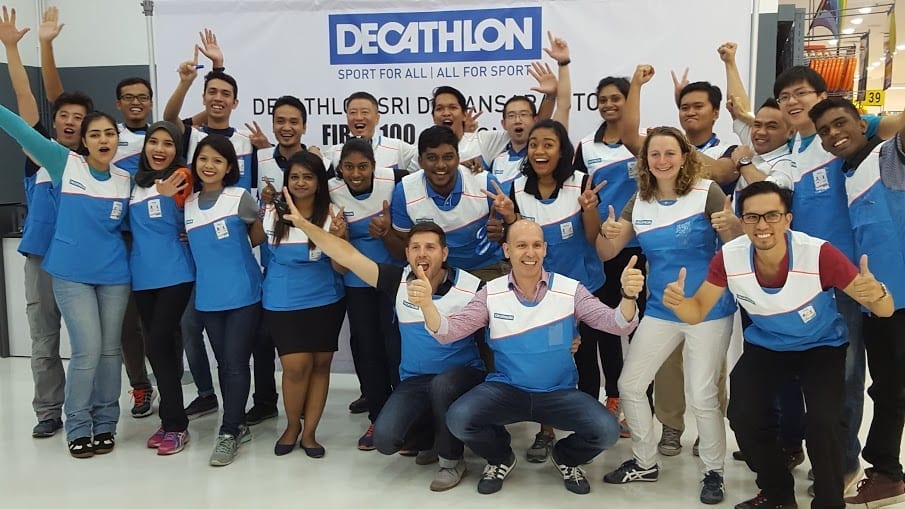
    Decathlon will open its first Australian store this October in Sydney, with plans to have 100 operating stores downunder in the next five to ten years.

    The sporting goods and apparel retailer will open its first Australian flagship store in Sydney. Located in the suburb of Tempe, the 3,800 square-metre space will be sat next to furniture giant Ikea. The lot is currently under construction, with plans to open this October, Decathlon executives told local media this week.

    According to an article published by Australian Financial Review on Tuesday, Decathlon Australia‘s chief executive Olivier Robinet confirmed that the French firm hopes to open between two and five stores a year for the next few years.

    Decathlon first entered the Australian market back in February 2016, with the launch of an Australia-dedicated website and e-commerce platform.

    The Australian sporting goods market is currently fed by locals Rebel Sport, Athletes Foot, and New Zealand outdoorwear firm Kathmandu, a market Decathlon wants to crack.

    In February 2017, Decathlon reported a 12% lift in revenues during 2016 (+4.4% on a like-for-like basis), reaching 10 billion euros, excluding taxes.

    Earlier in the year, it launched sub-brands Itiwit — a paddle-board line, and Subea — an underwater sports brand, to bolster its current sporting goods offering.

    A recent report published by corporate finance advisory firm Capitalmind pinned the global sporting goods market at $388 billion in 2015, up 5%. The report said Intersport, Decathlon and Foot Locker currently dominate the sporting goods distribution market worldwide.

  • Siam Piwat reinforces its position as ‘the Icon of Innovative lifestyle’ with another success

    Siam Piwat reinforces its position as ‘the Icon of Innovative lifestyle’ with another success

    Siam Piwat, owner and operator of the world-renowned retail destinations such as Siam Paragon, Siam Center, and Siam Discovery as well as main partner and owner of ICONSIAM, the iconic landmark of Thailand’s prosperity by the Chao Phraya River, has further cemented its position as ‘the Icon of Innovative lifestyle’ in the retail and real estate business after Thailand’s only hybrid retail store Siam Discovery – The Exploratorium has won the World Retail Award for Store Design of the Year — another testament to the company’s success in retail business expansion, ushering in new chapter in the history of Thailand’s retail industry by becoming the first and only corporate from Thailand to receive such accolade from this prestigious award show.

    In winning the World Retail Award for Store Design of the Year, Siam Discovery – The Exploratorium not only beat its world-class competitors but was also the only Asian mall to rank in the top ten for the Best Experience Initiative category.

    Chadatip Chutrakul, Chief Executive Officer of Siam Piwat Co., Ltd., stated, “After having launched our five-year policy and investment plan in 2014, Siam Piwat has consolidated its position as the ‘thought-leader’ and aims to incorporate ‘novel experiences that meet the customers’ needs’ in its every core business. We have invested in new businesses, especially retail businesses, and introduced new ideas to expand the success of the retailers and our business allies, so that we can always offer fresh and exciting experiences.

    Following the core investment plan, Siam Piwat has written a new phenomenal chapter in Thailand’s retail history by relaunching Siam Discovery as the country’s largest lifestyle specialty store. Siam Discovery – The Exploratorium is a conceptual twist on medium-size retail business by incorporating innovative ideas, a proof of Siam Piwat’s much-coveted success in making a difference in retail industry.

    “We understand that the life cycle of retail business has been shortened considerably: some product categories/ brands achieve huge popularity for only a limited period of time due to consumers’ continuous search for newness as well as the rise of e-commerce and online shopping. Siam Piwat puts each and every detail into consideration for each and every project. All the projects that have been developed during the past 3 years follow 4 key strategic rules to ensure long-term success: 1) To innovate and stay ahead of others  2) Being customer-centric  3) The Creation of Shared Values and 4) Building Partnerships,” added Chadatip.

    To Innovate and Stay Ahead of Others

    Creating innovations and offering different, exhilarating experience has been the core of Siam Piwat’s development projects. Each and every project comes with a new, unique modern lifestyle concept that belongs to a class of its own and at times, is the first of its kind in Thailand or even in the world.

    Being Customer-Centric

    Technology has brought a dramatic change in consumer behaviors, most notably higher competition as a result of fast connectivity and accessibility and long-term consumer behavior has become much more difficult to predict. Siam Piwat has readied our operation in preparation for those rapid changes and an understanding of consumer group and their diverse needs is essential for our business development.

    The Creation of Shared Values

    Siam Piwat has set a goal in creating brand value for not just Siam Piwat’s own business, but also brands and products of tenants and partners by revolutionizing the marketing plan. Transforming “shared values” into “commercial values” is the heart and soul of successful brand management, hence the utmost need to create bond and loyalty among customers by making it relevant to their fast-changing everyday life.

    Building Partnerships

    Siam Piwat believes that through partnership and collaboration with stakeholders, we will create a long-term engagement that leads to healthy growth of business. If we do it in the right way, it can bring about business sustainability.

  • In-flight hackathon held between Hong Kong – London

    In-flight hackathon held between Hong Kong – London

    Travel fare aggregator website Skyscanner has completed the world’s first in-flight hackathon on an 80-hour trip between Hong Kong and London.

    A total of 32 entrepreneurs, engineers and designers took place in the hackathon, which commenced on May 5 and involved the use of Skyskanner’s Flights API.

    The hackathon also gave participants access to Skyscanner’s Travel Insight product, which provides  routes and pricing data and insights from the website’s more than 50 million monthly users, and access to real life travel customers to test their assumptions while building an app.

    Skyscanner was founded in Scotland in 2001, and was acquired by China’s largest travel company Ctrip in November last year for $1.75 billion.

    The company said the novel hackathon was designed to allow developers to immerse themselves in the travel experience while building an app. Last year, the company also launched its Build with Skyscanner competition aimed at aspiring entrepreneurs.

    “We are delighted to be supporting Hack Horizon and the 32 finalists chosen for this innovative event,” Skyscanner commercial director Paul Whiteway said.

    “We are always keen to support great start-ups with our APIs, and are excited to see the results from the new products – particularly with the immersive and totally unique experience this hack provides for the developers involved.”

  • Uniqlo wants to double EU store count by 2020

    Uniqlo wants to double EU store count by 2020

    Uniqlo said it plans to take its European store count to 100 outlets over the next three years, in a bid to strengthen its retail presence outside of Asia.

    In doubling its current store number from 50 to 100, the fast-fashion chain will make its first foray into Spain and Italy, according to local media.

    A planned Barcelona location will mark Uniqlo’s entry into Spain this autumn, while a Milan store will open in Italy, according to a report by the Nikkei Review.

    The Fast Retailing-owned brand already operates some 50 stores in France, Russia, Germany, the UK and Belgium.

    The firm said it would be opening new locations in regional cities in some European countries too, those it is already selling in. This includes regional stores in smaller French cities such as Bordeaux and Toulouse.

    With the store openings in the EU, Uniqlo will be facing stiff competition from two global fast-fashion moguls. Namely Zara, which is operated by Spain’s Inditex, and Sweden’s H&M, both of which have a solid history on the continent and a loyal consumer following.

    The Japanese chain told the Nikkei Review that demand for its highly functional basic apparel, however, is strong enough to warrant such fast-paced and vast expansion. This is particularly apparent now, given the Japanese firm’s domestic sales growth has plateaued.

    “Overseas operations are what our growth hinges on,” said Fast Retailing CEO Tadashi Yanai.

    However, Uniqlo is heavily reliant on Asia.

    Overseas sales came to 655 billion yen in 2016, with China accounting for half of the firm’s fiscal 2016 revenues made in foreign markets.

    Yanai said Uniqlo is eyeing global sales of 3 trillion yen ($26.6 billion) by the fiscal year ending August 2020. Japanese sales lifted just 3% to around 800 billion yen in fiscal 2016. Meanwhile, the number of stores in Japan has remained steady at around 840 for several years.

  • Changi Airport Group names DHL Partner of the Year

    Changi Airport Group names DHL Partner of the Year

    Changi Airport Group (CAG) recognized its top airline partners at the Changi Airline Awards 2017, where a total of 25 awards were presented to airlines whose efforts over the past year contributed significantly to the growth and development of the Singapore air hub.

    The Partner of the Year award was presented to DHL Express, in recognition of their strong partnership with CAG to grow and strengthen Changi Airport’s air cargo hub status. DHL Express launched their fully-automated South Asia Hub at Changi Airfreight Centre in October 2016, which tripled their cargo handling capacity to 628 tonnes during the peak processing window, and increased their parcel-sorting speed by six-fold  to 24,000 shipments and documents per hour.

    DHL Express also added new flights through its joint venture (JV) airlines and other airline partners. Last year, with the expansion of the DHL Express operations, Changi Airport welcomed Neptune Air and the return of K-Mile.  As of April 2017, the company’s JV and partner freighter flights at Changi Airport totalled over 30 weekly services or about 12% of Changi’s total weekly freighter services.

    Sean Wall, Executive Vice President, Network Operations and Aviation, DHL Express Asia Pacific said, “The successful launch of our South Asia Hub last year was made possible thanks to the close collaboration we had with Changi Airport Group as well as the Singapore Government. As the heart of our DHL network in South and Southeast Asia, the South Asia Hub in Singapore has allowed us to add more network flights in and out of the country to meet our customers’ needs, and to further capitalize on the country’s prime position for regional and global trade. Singapore remains a strategic node in our global network and we are honored to be named Partner of the Year by the Changi Airport Group.”

    Speaking at the awards event, Mr Lee Seow Hiang, CEO of CAG said, “As we celebrate our successes, we will continue to transform Changi Airport, in preparation for challenges in the future. We will do so by catering supply for future growth, as well as working with our partners to grow sustainable demand for aviation services. Mr Lee mentioned the Airport Collaborative Decision Making (ACDM) initiative as an example of Changi Airport adding capacity to the existing airport eco-system. He said, “ACDM was only possible with the strong support and commitment of all our airline, ground handling and airport partners. As a result, there has been a reduction of 90 seconds in the average taxing time for departing flights during peak hours, translating into fuel savings for airlines.”

    2016 was a positive year for the aviation industry, with lower oil prices offering some respite amidst a highly competitive environment. Changi Airport saw a record-breaking 58.7 million passengers passing through its gates, a growth of 5.9% year-on-year. Changi also welcomed four new airline partners and eight new city links during the year. The airport is on track to receive 60 million passengers in 2017.

  • Interpol op unveils thousands of C2 servers in Asean

    Interpol op unveils thousands of C2 servers in Asean

    Nearly 9,000 botnet command and control (C2) servers and hundreds of compromised websites – including government portals – were identified during a groundbreaking INTERPOL-led cybercrime operation involving public and private sectors across ASEAN.

    The operation was carried out from the INTERPOL Global Complex for Innovation (IGCI) in Singapore, the research and development facility of the world’s largest police organization.

    Cybercrime investigators from Indonesia, Malaysia, Myanmar, Philippines, Singapore, Thailand, and Vietnam gathered together at the IGCI to exchange information on specific cybercrime situations in their respective countries. An additional cyber intelligence report was contributed by China.

    Experts from Kaspersky Lab cooperated with the INTERPOL to share fresh cyberthreat discoveries and to formulate recommended actions along with six other private companies, namely Cyber Defense Institute, Booz Allen Hamilton, British Telecom, Fortinet, Palo Alto Networks, and Trend Micro.

    Being the only vendor able to detect the infection at the time, Kaspersky Lab provided the INTERPOL team with an exclusive report on a WordPress plugin vulnerability that has affected thousands of websites in the region, including those belonging to government agencies, universities, NGOs, and private businesses.

    The vulnerability allowed perpetrators to inject malicious codes to over 5,000 legitimate webpages around the globe and redirect the users to advertising pages of counterfeit goods. The vulnerability also allowed other types of malicious activity such as potentially unwanted programs (PUP) downloads, password brute-forcing, and proxy among others.

    Kaspersky Lab has also furnished the IGCI with an extensive list of 8,800 botnet C2 servers found to be active in ASEAN countries, as retrieved from the Kaspersky Security Network and Botnet C&C Threat Feed. Formed from the words “robot” and “network”, a botnet is a zombie network of thousands or millions of Internet-connected devices (such as PCs, smartphones, tablets, routers, smart toys, or other gadgets) that are hacked and infected with a special malware so that these could be controlled by a cybercriminal to deliver cyberattacks.

    The botnets data shared by Kaspersky Lab covered various malware families, specifically those targeting financial organizations, spreading ransomware, launching distributed-denial-of-service (DDoS) attacks, distributing spam, and enabling other criminal activities. Investigations into the C2 servers are currently ongoing.

    The operation’s findings also include the confirmation of nearly 270 websites infected with a malware code which exploited a vulnerability in the website design application. Among the victims of malware infection were several government websites which may have stored some personal data of its citizens.

    A number of phishing website operators were also discovered such as one with links to Nigeria. One cybercriminal based in Indonesia selling phishing kits via the Darknet had been ascertained to have posted tutorial videos on YouTube showing customers how to use the illegal software.

    According to IGCI Executive Director Noboru Nakatani, the operation was ideal as it demonstrated a highly effective and beneficial public-private partnership in the fight against cybercrime. “Sharing intelligence was the basis of the success of this operation, and such cooperation is vital for long term effectiveness in managing cooperation networks for both future operations and day-to-day activity in combating cybercrime,” said Nakatani.

  • Korean-themed mall opens in Bangkok

    Korean-themed mall opens in Bangkok

    Hoping to capitalise on growing regional interest in South Korean pop culture, a Thai company opened a $275-million Korean-themed shopping mall and entertainment complex in Bangkok on Monday.

    The 180,000 square metre (1.9 million square feet) building targets both Thai fans of K-Culture and foreign visitors. It hopes to get 10 million visitors a year and become a major attraction in what was the world’s most visited city last year.

    “A lot of Asian people are fans of Korea,” said Chayaditt Hutanuwatra, chairman of privately-owned SHOW D.C. Corp Ltd. “Thailand is the place where people can just fly in.”

    The mall has stores with clothing, cosmetics and restaurants from Korean brands and K-pop artists. It has statues and palm prints of Korean stars and plans to bring Korean performers in to the floor it has dedicated as a concert hall.

    South Korea’s Lotte Group is among the companies that will open a store there, the mall said.

    Around a third of the more than 34 million tourists forecast to visit Thailand this year are from China – where interest in K-Culture has been driven underground by a recent row over Seoul’s deployment of a missile defence system.

  • Mobitel to be split from SLT and publicly listed

    Mobitel to be split from SLT and publicly listed

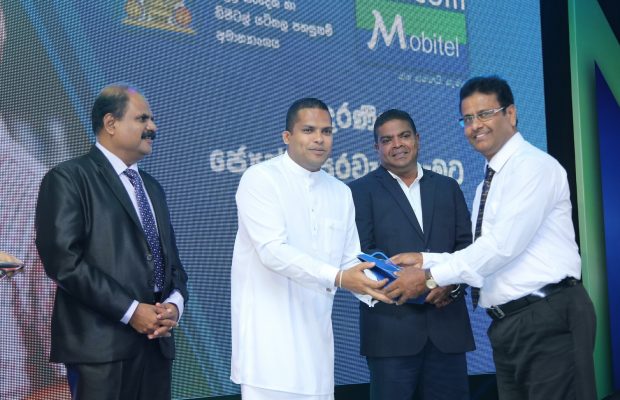
    Sri Lanka’s Mobitel plans to separate from parent company Sri Lanka Telecom (SLT) and list on the Colombo Stock Exchange.

    The operator is gearing up for a public listing this year with the goal of diversifying its ownership beyond SLT, citing official sources.

    The government of Sri Lanka, which owns a 49.5% stake in SLT, plans to exit partially or fully from Mobitel as part of a broader sell-off of its investments in state-owned enterprises.

    The government is seeking to raise at least $1 billion to settle what it says is uneconomical debt it inherited from its predecessor.

    Minister of telecommunications and digital infrastructure Harin Fernando meanwhile told that the separation is also aimed at helping tackle overcrowding in the nation’s telecoms industry and improving the competitiveness of Mobitel.

    Mobitel commenced operations in 1993 and became a fully-owned subsidiary of SLT in 2002. The company currently accounts for around 45% of SLT’s annual revenues, the highest contribution among the group’s eight subsidiaries.

  • Muji opens first store in New Delhi

    Muji opens first store in New Delhi

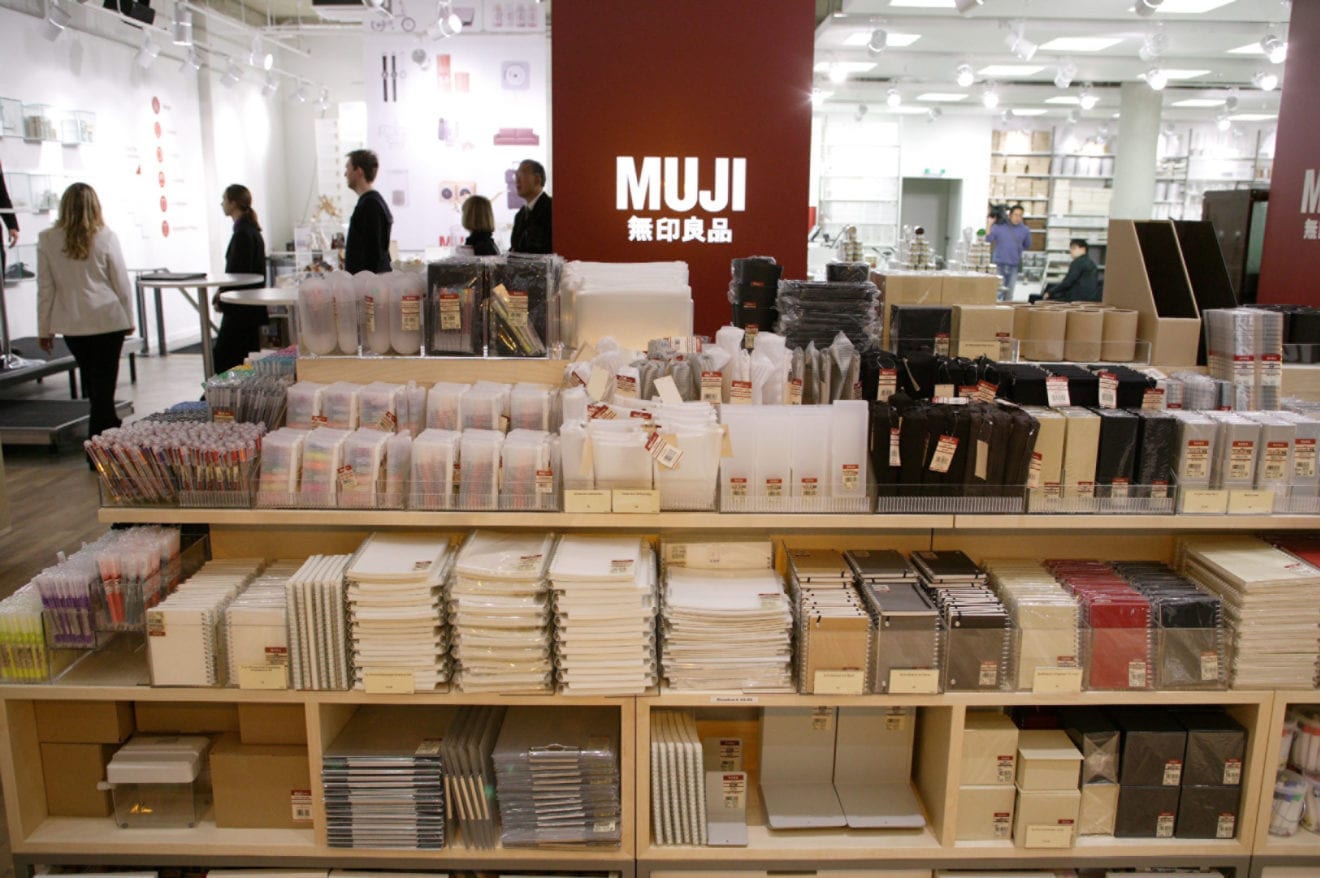
    Fashion and lifestyle retailer Muji has opened its debut store in New Delhi, as the Japanese firm looks to increase its retail footprint in India.

    Located in the Indian capital’s Select Citywalk mall, the maiden Muji store follows successful store openings in Bengalaru and Mumbai in 2016

    Satoru Matsuzaki, president of Ryohin Keikaku, Muji’s parent company, attended the New Delhi opening, and praised Muji’s success in India, after opening two hit stores in the nation back in August and September, respectively.

    “After a tremendous response in Bengaluru and Mumbai, we are very excited to begin a new chapter of our Indian story with the launch of this store,” said Matsuzaki.

    In April 2016, Ryohin Keikaku announced it had entered into a joint venture with Reliance Brands for the distribution of Muji in India. Ryohin Keikaku also announced that it had become the first-ever Japanese retailer to receive individual approval for Foreign Direct Investment from the Indian government’s Foreign Investment Promotion Board.

    However, India’s domestic regulations do not permit Reliance to open formats like Muji cafes locally.

    At the New Delhi opening, Reliance Brands, president and CEO, Darshan Mehta said: “Muji’s unparalleled brand offering, both in terms of use and price appeal, is sure to attract consumers across age groups and mind sets, making it the go-destination store.”

    Based in Tokyo, Ryohin Keikaku Co founded Muji in 1980. The Japanese brand offers an extensive range of furniture, homeware, stationery, electronics, travel goods, beauty products and apparel and maintains low price-points by cutting costs in its packaging and processing, adding to the appeal of its minimalist aesthetic.

    Today, Muji boasts more than 700 stores worldwide, 13 of which are in the US. It plans to increase its shop count to 800, mostly by opening stores outside of Japan. Muji has already said it plans an aggressive expansion in China, where it will add 72 stores in the next year.

    According to the company’s midterm business plan, revealed in April, overseas stores’ contribution to total sales is expected to rise to 42% in 2020, from 35% today.

    Earnings released at the same time showed strong momentum, with group net profit growing 18.9% on the year to 25.8 billion yen ($235 million), and sales rising 8.3% to 332.5 billion yen.

  • StarHub Q1 profit falls 21%

    StarHub Q1 profit falls 21%

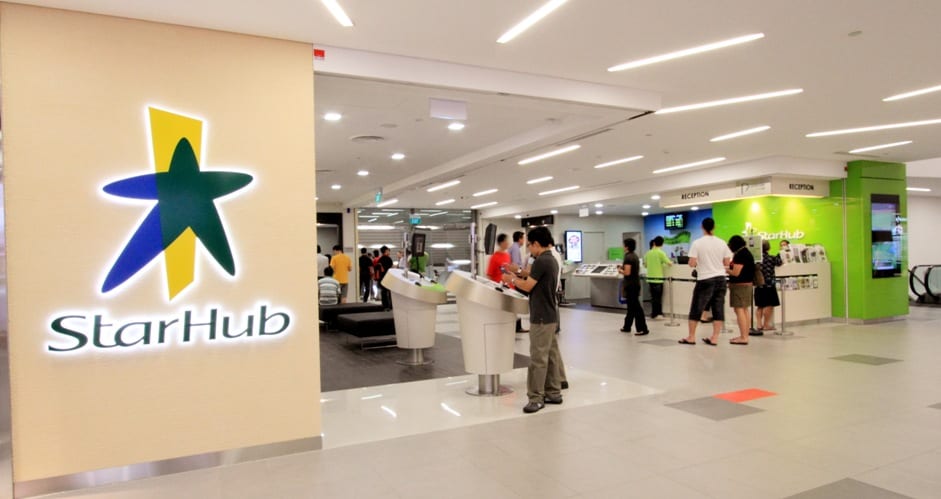
    Singapore’s StarHub has reported a 21% year-on-year decline in net profit for the first quarter to S$73 million ($51.9 million), partly as a result of declining revenue from pay TV and mobile services.

    Revenue for the quarter increased marginally to S$592 million, but service revenue declined 1% to S$537 million, the company said.

    Mobile revenue was down 1% to S$296 million, despite net additions of 43,000 pre-paid customers and 48,000 post-paid subscribers. Prepaid and post-paid ARPU also both declined by S$2, to S$15 and S$67 respectively.

    StarHub’s Pay TV revenue meanwhile fell 7% to S$88 million as a result of a decrease in the operator’s total pay TV subscriber base of 41,000 to around 487,000 households. This was despite a low 0.9% churn rate.

    Broadband revenue increased slightly to S$54 million, even as residential broadband customers fell by 3,000 to 470,000 households.

    Enterprise fixed revenue increased 3% year-on-year to S$99 million, with data and internet services contributing S$88 million of this while enterprise voice revenue fell 19% to S11 million.

    The declining pay TV subscriber base meanwhile led to a roughly 12,000 household reduction in StarHub’s triple play or higher customer base to 338,000.

    Based on the results and the current economic outlook, StarHub said it expects service revenue for the year to be roughly flat, and has set a projected capex budget of around 13% of total revenue.

    “We have made the necessary investments in the recent spectrum auction to continue delivering quality mobile services to our increasing Mobile base. The acquired spectrum will also facilitate our roadmap towards 5G,” StarHub CEO Tan Tong Hai said.

    Driving growth in the enterprise business remains our priority and we are on track to introduce new cyber security, IoT and smart retail solutions to the market. We will grow our enterprise digital services offerings with our latest strategic management addition.”