Author: Mei Ling Tan

  • AEON in Collaboration with Big C to Launch “Big C Platinum pay”

    AEON in Collaboration with Big C to Launch “Big C Platinum pay”

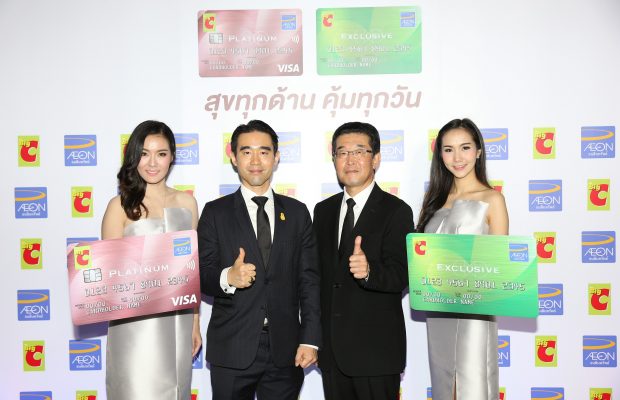
    AEON Thana Sinsap (Thailand) Public Company Limited, a leading retail finance company, in collaboration with Big C Supercenter Public Company Limited, a leading hypermarket retailer, has announced cooperation to launch the new “Big C Platinum payWave Credit Card and Big C Exclusive Card” to offer exclusive privileges under the concept “Daily happiness for shopping at Big C”.

    Mr. Kiyoyasu Asanuma, Managing Director of AEON Thana Sinsap (Thailand) Public Company Limited said AEON has a strong commitment to develop credit cards that fulfil the changing lifestyle of consumers. The Big C Platinum Credit Card and Big C Exclusive Card offers exclusive privileges under the “Daily happiness for shopping at Big C” concept. These new cards give Big C customers nationwide freedom when spending. This collaboration is a combination of strength between AEON and Big C to deliver the best service and goods to customers. We expect to reach 100,000 new cardholders within the first year from Big C store over Thailand and online channel.

    Mr. Aswin Techajareonvikul, Chief Executive Officer & President of Big C Supercenter Public Company Limited said that Big C Platinum Credit Card and Big C Exclusive Card are products that emphasize the position of Big C as a Thai supermarket that is concerned about its customers and always provides the best price to its customers. Big C is a leading hypermarket retailer in Thailand with Big C Supercenter, Big C Extra, Big C Market, Mini Big C, around 673 branches over Thailand. When Big C customers spend via Big C Platinum Credit Card and Big C Exclusive Card, they get the best price along with exclusive privileges.

    The Big C Platinum Credit Card is the first and only card that offers cardholders 3% discount on purchases straight away with a maximum discount of 1,500 Baht per month or 18,000 Baht per year when purchasing selected items at Big C Supercenter, Big C Extra, Big C Market, Mini Big C, and Big C Online Shopping. Cardholders are also eligible to pay by installments with 0% interest rate for 6 months when purchasing items priced over 5,000 Baht. In addition, the cards give other privileges, i.e. exclusive car park at 10 branches of Big C, Travel Accident Insurance with a limit of 31 million Baht, a redeemable Big C voucher with AEON Happy Points with every 1,000 points equal to 100 Baht.

    The Big C Exclusive Card also offers 0% interest rate for 3 months when purchasing electronic appliances priced over 5,000 Baht or 0.59% interest rate for 18 months when purchasing electronic items priced over 10,000 Baht or purchasing a mobile phone over 15,000 Baht at every branches of Big C.

    Big C Platinum Credit Card and Big C Exclusive Cardholders can also receive special privilege as a member of BIG CARD, and discounts from leading stores. Annual fees for Big C Platinum Credit Cards and Big C Exclusive Cardholders are free for the first year, and free for another year, with at least one purchase.

    Those who sign up for a Big C Platinum Credit Card before August 31 will get a 20 inch piece of CAGGIONI luggage valued at 4,990 Baht with accumulated purchases of over 10,000 Baht or when making payments on a credit installment plan of 20,000 Baht. Cardholders are also able to get a Big C voucher valued of 400 baht with accumulated purchases of 5,000 Baht via Big C Platinum Credit Card, or when making payments on a credit installment plan of 10,000 Baht via Big C Exclusive Card. Cardholders have to register for the program to enjoy exclusive privileges.

    “We are now focusing on a marketing campaign to reach our target by launching a new TVC, with over 50 million baht budget. The new TVC under the concept “Get the best price with Big C Platinum Credit Card” that we are so delighted to have Kong – Saharat Sangkapricha as a presenter. We hope that the launch of the new cards will increase the number of our target groups at 100,000 new cardholders within the first year”

  • The Serious Fraud between Roll Royce with Countries Including Indonesia

    The Serious Fraud between Roll Royce with Countries Including Indonesia

    Rolls-Royce Holdings doesn’t expect to take a hit from the investigation into the company’s audits, according to finance chief Stephen Daintith. The Financial Reporting Council, the U.K. regulator for corporate governance and reporting, said Thursday it has commenced an investigation into the conduct of KPMG Audit PLC related to the auditing of financial statements for two company entities over a four year time period.

    The FRC decision follows an announcement by the Serious Fraud Office in January of a deferred prosecution agreement between the SFO and Rolls-Royce. U.K. fraud investigators said at the time Rolls-Royce engaged in illegal business practices over a period spanning three decades and would pay more than $800 million in fines. The SFO has done a “thorough piece of work”, Mr. Daintith said.

    In February, the company reported a record loss of £4.03 billion ($5.2 billion). KPMG said Thursday it was “confident in the quality of all the audit work” it performed for the aircraft engine maker.

    “It is important that regulators acting in the public interest should review high profile issues. We will co-operate fully with the FRC’s investigation, which follows the SFO’s investigations into Rolls-Royce,” said the auditor in a statement. Jimmy Daboo, partner at KPMG, said “we have confidence in the audits we’ve done.”

    The illegal payments would have been hard for an external auditor to spot, said Sandy Morris, an equity analyst at Jefferies International Ltd. in London. “Most of these payments were small and it is very unlikely KPMG would have selected these cash transactions to be tested during their audit,” Mr. Morris said.

    On average, Rolls-Royce made payments between $1 million and $4 million, he said. As KPMG only tested a proportion of Rolls-Royce transactions during its audit, chances are high it would have missed these payments, especially as they were often obfuscated and conducted by middle managers, Mr. Morris said.

    The Serious Fraud Office said the January agreement covers 12 counts of conspiracy to corrupt, false accounting and failure to prevent bribery. Wrongdoing took place in business dealings in Indonesia, Thailand, India, Russia, Nigeria, China and Malaysia, the U.K. government said.

  • DHL Parcel offers Alexa interaction

    DHL Parcel offers Alexa interaction

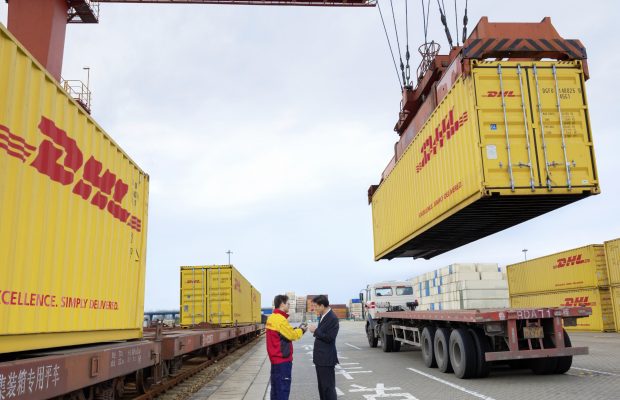
    DHL Parcel’s customers can now use Amazon’s digital smart speaker “Alexa” for updates on their parcels’ delivery status and location.

    “We want to continually expand and improve service levels for our customers, so of course we’re going to take a close look at any new and innovative technologies available. As an innovation leader in the industry, this is the standard we set for ourselves,” said Michaela Lukas, who heads DHL Parcel’s customer service for private customers. “Voice enabled technologies, including hands-free interaction with online apps, will become more and more prevalent in the future.”

    Depending on user feedback, DHL plans to extend the new voice-controlled service later this year to include information on outlet locations, opening hours, products and prices.

    A number of other delivery companies- including DPD – have also been rolling out applications for Alexa on the Amazon Echo and Amazon Dot platforms.

  • More Pinoy men now shop for groceries, says survey

    More Pinoy men now shop for groceries, says survey

    Grocery stores are typically the turf of women in the Philippines, but the presence of men is increasingly being felt, according to the latest survey conducted by market research firm Nielsen.

    Men now make up as much as 40 percent of shoppers in supermarkets, or a 6-percentage point increase from last year, signaling a continuing shift in trends for the industry, Nielsen said.

    “The perception that buying groceries is only women’s work is now inaccurate,” Nielsen Philippines’ consumer insights head Carlo Santos said in a statement.

    “Women remain the key stakeholders in grocery shopping in many homes, but as more men play an active role, marketing strategies need to reflect a more balanced approach—from product innovations to marketing messages,” he said.

    The study is part of a syndicated annual report that Nielsen conducts across 54 markets globally. It provides a comprehensive overview of retail environment trends and an understanding of shopping behavior across the different trade channels.

    It also provides insights into where, when and how often people shop, and their emotional commitment and perceptions about key modern trade retailers.

    In examining the male shopper, the report said growth came from the more affluent Metro Manila residents.

    An estimated 53 percent of urban male shoppers are married and 29 percent reside in Metro Manila, with 68 percent being gainfully employed.

    Being relatively new household shoppers, men prefer to shop in retailer shops that are familiar to them, the study found. Hence, if they are not aware of the retailer or do not have an affinity for the retailer, they are not likely to shop in those stores.

    Women, on the other hand, are more likely to be persuaded by their perception of a retailer. For instance, they are more likely to go to stores that they think offer affordable prices and provide convenience.

    Convenience means ease in getting to the store, finding everything they need under one roof, and being able to quickly find the items.

    While 30 percent of male supermarket shoppers either go up and down the aisles or browse all parts of the store, similar to what females do, they do so at a quicker pace.

    Hurried pace

    Men spend only a little over an hour or 64 minutes in stores on average, about 15 minutes shorter than a year ago. Women tend to linger, averaging 74 minutes.

    “With males spending less time in-store and doing it at a hurried pace, manufacturers should think of ways to disrupt these shoppers to notice their brands in-store,” Santos said.

    “If male shoppers hurry through their shopping experience, they are not likely to spend more. Manufacturers will have to reach to male shoppers before they visit the store, which means media advertising.”

  • Indonesia’s Uber rival Go-Jek raises $1.2 billion led by Tencent at a $3 billion valuation

    Indonesia’s Uber rival Go-Jek raises $1.2 billion led by Tencent at a $3 billion valuation

    Go-Jek, the motorbike on-demand startup that is battling Uber and Grab in Indonesia, has closed a new round of $1.2 billion led by Chinese internet giant Tencent, two sources close the company told. The deal, which we understand was signed last week, values the company at $3 billion post money. It is expected to be officially announced “soon.”

    Go-Jek raised $550 million as recently as August 2016, when it commanded a valuation of $1.3 billion so this new deal has pushed that figure up considerably over a short period of time. The Information previously reported that Tencent was considering an investment in Go-Jek. Other investors in the round are not clear at this stage, but we believe them to be from the existing pool of backers.

    One source told that Alibaba and its financial services spin-out Ant Financial held talks with the startup, but were ultimately unsuccessful. Ant Financial has since partnered with media firm Emtek to enter Indonesia. Alibaba and Tencent are fierce rivals that are not known for co-investing in deals, although both hold equity in Didi Chuxing after investing separately in Didi Kuaidi and Didi Dache which ultimately merged to create Didi (and is buying Uber’s China business).

    Go-Jek claims to have over 200,000 drivers across some 25 cities in Indonesia. It started out as a pure bike taxi player — because two wheels are an efficient way to navigate the congested streets of Asian mega-cities like Jakarta — but it has since expanded into four wheels with its GoCar private car service and a partnership with taxi firm Blue Bird. In contrast, Uber and Grab have both introduced motorbike taxi services in Indonesia to crank up the competition.

    Focused on the Indonesian market only, Go-Jek is involved in a dog fight with Uber and Singapore-headquartered Grab. Uber has, of course, raised more than $8 billion from investors — at a valuation that has surpassed $60 billion — while Grab is reportedly working on a new $1.5 billion funding round. Its most recent raise was $750 million at a $3 billion valuation in September 2016, but you can expect that figure to increase in the near future. Our sources told us that Go-Jek’s new fundraising is principally focused on increasing its war chest in order to continue to battle Uber and Grab on driver and passenger subsidies, develop its mobile payment business — Go-Pay — and expand its services business, which allows customers to get services such as shopping, massages and more on demand.

    Last year, Go-Jek hinted that it would expand its business overseas, but to date it has remained in Indonesia. One source told us that Go-Jek has considered partnerships or investments to expand to markets where other bike on-demand services exist, such as India or Sri Lanka, but it is staying focused on the battle in Indonesia. Aside from being Southeast Asia’s largest economy and population — Indonesia is home to over 250 million people — the country is tipped to be Southeast Asia’s largest internet economy by some margin.

    The region’s ride-sharing market itself is predicted to grow from $2.5 billion in 2015 to $13 billion by 2025, according to a report co-authored by Google. Indonesia’s share of that segment is forecast to jump from an estimated $0.8 billion to $5.6 billion over that same period.

    Grab is making a big push to win the opportunty. The company recently pledged to invest $700 million into its Indonesia operations, which includes building out its team, localizing its tech and making investments. Grab recently snapped up Kudo Payments in an undisclosed deal which sources told us is in the region of $80 million to $100 million. The acquisition is designed to boost Grab’s own payment platform, GrabPay, which is following GoPay’s footsteps and taking Grab into services beyond just car rides.

    The new Go-Jek deal also marks Tencent’s first investment in Indonesia, and the latest in a flurry of startup deals from the company, which is best known for operating China’s top messaging platform, WeChat. Tencent bought five percent of Tesla in March for just over $2 billion, and it has since done deals with Chinese streaming service Kuaishou and cross-border payment provide Airwallex.

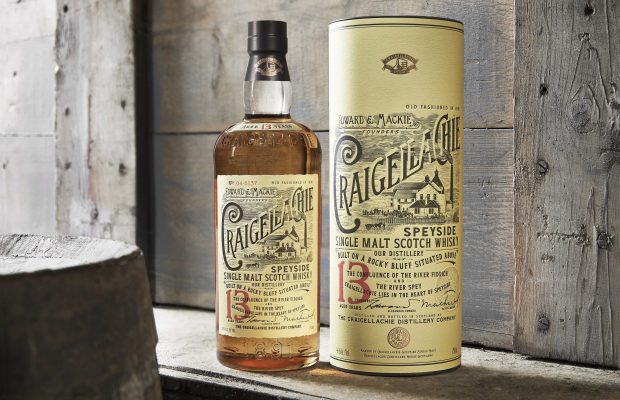
  • Bacardi to showcase highly limited Craigellachie 31 Year Old

    Bacardi to showcase highly limited Craigellachie 31 Year Old

    Stephanie MacLeod, Malts Master and Master Blender for John Dewar & Sons, describes Craigellachie 31 Year Old as “beautifully balanced, smooth and rich”

    Bacardi is making highly limited stocks of its popular Craigellachie 31 Year Old single malt whisky available on allocation in travel retail.

    Visitors to Bacardi Global Travel Retail’s stand (D10) at next week’s TFWA Asia Pacific Exhibition in Singapore will be able to discuss opportunities.

    Bacardi Regional Director Asia Pacific, Middle East & Africa Vinay Golikeri stated the spirits company would also be announcing an upcoming older age statement of Craigellachie at the show, as well as a new limited-edition in the region.

    Bacardi said global supplies of Craigellachie 31 Year Old surged after it was awarded the World’s Best Single Malt at the World Whiskies Awards 2017, meaning global supplies are now limited.

    “Craigellachie was first launched in select customers in global travel retail in 2015 and accelerated rapidly to gain a tremendous following amongst connoisseurs in a short space of time, winning two prestigious global whisky awards within two years,” said Golikeri. “We’re delighted to have secured highly limited stock for our high net worth and discerning travellers, especially given the popularity we have seen for Craigellachie in the region to date.

    “Emerging market consumers, at the second stage of luxury, are highly motivated by the discovery of new-to-market single malts like this. Craigellachie has particular appeal to more experienced Chinese and Indian travellers, many of whom are whisky collectors and connoisseurs.

    “These shoppers are motivated by products that help them express their individuality and, in whisky, this means they seek aged stock, rarity, limited-editions, exclusivity and award-winning status. Craigellachie ticks all these boxes.”

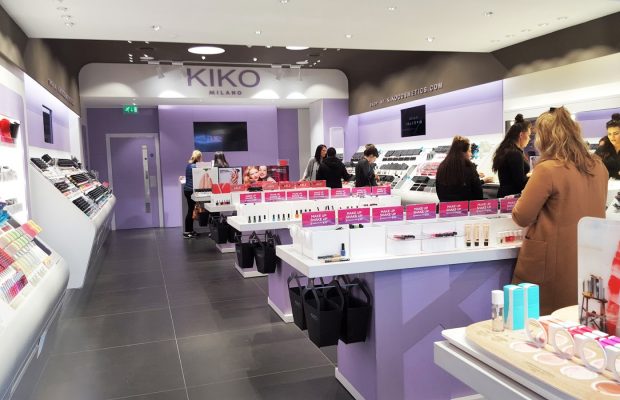
  • Kiko Milano seeks to open 100 stores in India

    Kiko Milano seeks to open 100 stores in India

    Beauty isn’t skin-deep: It’s mega business for specialist cosmetics brands such as Kiko Milano. The Italian company, at the forefront of Europe’s expanding beauty and wellness industry, now seeks to harness an increasingly affluent India’s desire to look better, and would invest about GBP 25 million to open 100 stores in the country in the next five years.

    Millennials’ obsession with digital platforms and more disposable cash with them would be the ideal investment draw-cards for Kiko Milano, which expects the South Asian nation to be among its top ten markets in a decade.

    “Potentially, India is absolutely huge and I don’t think it is an immediate market and it is changing, and it will take 6-8 years,”said Stefano Percassi, founder of the 20-year-old specialist cosmetics company Kiko. “In the next ten years, India will be among the top ten markets for us. But it depends on the availability of malls and the (overall) economic situation.”

    Like Europe, where the number of new beauty and wellness shops exceeded that of any other type of retailing outlet in 2016, India is witnessing a boom in the fashion and beauty industries. Beauty salons are now ubiquitous across most Indian towns and cities, with larger shopping malls in metropolitan centres stocking beauty products of major mainstream cosmetic brands.

    The demand for beauty and wellness products has risen exponentially as telecom tariffs reduce in India, and the social media become available to its 1.3-billion people.

    “In countries with not much entertainment or low access to entertainment, people take to the social media dramatically,” Percassi said.

    “For example, in the Middle East, it is either shopping centres or their homes. So, what they do is a lot of social media: They have look good and that means more and more business for us.” Euromonitor expects India’s beauty and personal care market to swell 67 per cent to Rs.1.43 lakh crore by 2020 from about Rs.85,414 crore in 2016.

    Kiko entered India in September last year in a 51-49 per cent joint venture with DLF Brands, and has so far opened three outlets here. Percassi is in New Delhi to roll out its 1,000th global outlet at Ambience Mall in Gurgaon, on the outskirts of the capital. Kiko chose India over the Netherlands for opening its 1,000th shop.

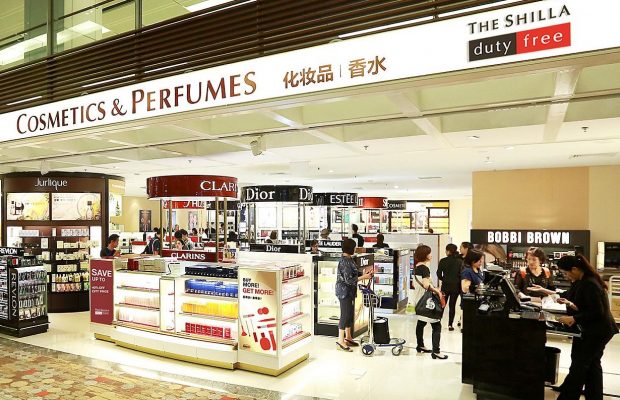
  • KAC to launch first nationwide duty free review

    KAC to launch first nationwide duty free review

    State-run Korea Airports Corporation (KAC) is preparing to launch its first nationwide review of its airport duty free concession contracts and merchandise offer following two license awards last year.

    This is part of its long-term efforts to boost revenue from travel retail concession fees and other commercial activities, including restaurants and airport car park services.

    “This year we are looking at our new concession fee system,” reveals Kim Su Min, Korea Airports Corporation’s Commercial Facilities Team Assistant Manager, in an exclusive interview.

    “Sales are important to us and to the airport concession operators. We are bringing in a South Korean consultancy, Samil PWC, to review all our commercial contracts.

    IN-DEPTH PASSENGER SURVEY

    “Another company, Urban Property, is reviewing duty free merchandise in every one of our airport terminals.

    Duty-free-revenue-at-Gimhae-Airport-totalled-about-$140m-last-year.

    Duty free revenue at Gimhae Airport totalled about $140m last year.

    “We have a fixed annual rental fee and calculate the payment depending on the operator’s total annual sales.

    “The fixed rental is the MAG payment. If they exceed the agreed amount then they pay the higher concession fee rate.

    “Last year DufryThomasJulie at Busan Gimhae Airport and Kookmin at Muan Airport paid extra as they had good sales.”

    KAC’s review of airport commercial operations will include an in-depth survey of passenger attitudes as part of wider efforts to modernise and upgrade each airport’s public interface.

    WEBSITE MAKEOVER

    “Our strategy also includes the renovation of our websites – at the moment they only show the airport’s location information and contact telephone numbers,” Kim said.

    “We are thinking about providing more duty free shopping information including details about different brands and sales promotions.

    ‘This year we are doing a focus group survey to better understand our duty free customers.

    Jeju International is one of KAC’s best-performing airports for duty free sales.

    “Usually we just have regular passenger questionnaires, so it is the first time for us to do focus groups on all our international airports.”


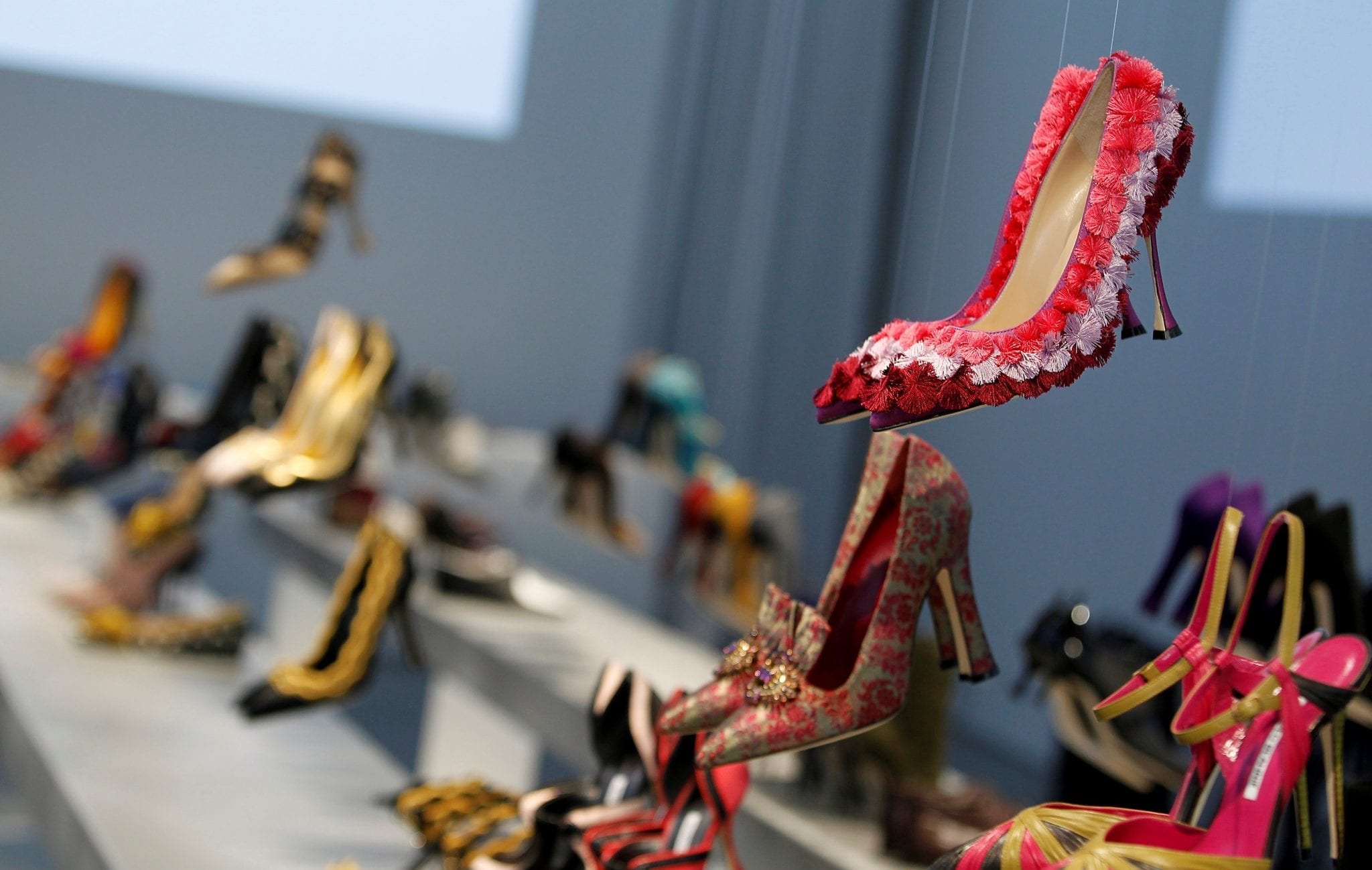
  • Manolo Blahnik opens Tokyo Ginza Six store

    Manolo Blahnik opens Tokyo Ginza Six store

    Luxury footwear brand Manolo Blahnik has opened a new store in Tokyo at the new Ginza Six luxury shopping mall.

    Artfully designed by architect Nick Leith-Smith, and covering 60 square metres, the retail boutique’s interior design emulates that of Japanese tradition and culture, but in a modern form.

    The focal element is the wall installation. Reflective of timber and bamboo scaffold structures, the new Ginza Six store boasts contemporary crisscrossed and folded wooden slats, which interlace and connect the walls and
    ceilings, acting as shelves and hanging places for shoes and accessories.

    Fusing the industrial with the elegant, opposing walls are cast concrete reliefs with a curve pattern inspired by the gingko leaf. The back wall is painted in a striking blue, inspired by the traditional Japanese indigo plant dye.

    The complete Manolo Blahnik collections and products will be available at the new Tokyo flagship.

    Manolo Blahnik has seen recent success in Asia. The Spain-born, UK-based designer has launched three new retail spaces in Japan in the last 12 months in partnership with local luxury specialist Bluebell Group.

    The Ginza Six store is the third Japan location to open for Manolo Blahnik. It follows the opening of a store in the Matsuya Ginza department store in Tokyo and a second space in Umeda Hankyu department store in Osaka, late last year.

    In November, Bluebell Group also partnered with Manolo Blahnik to bring the brand to Malaysia, opening a new 1,022 square foot store in Pavilion Kuala Lumpur in Malaysia.

  • Juul-Mortensen is awarded Singapore Tourism accolade

    Juul-Mortensen is awarded Singapore Tourism accolade

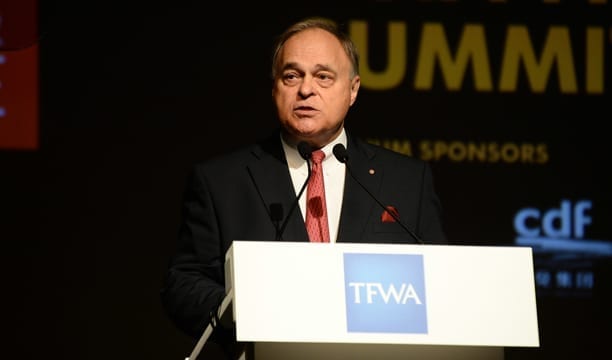
    The President of Tax Free World Association (TFWA) Erik Juul-Mortensen has been named as the Singapore Tourism Board’s (STB) Best Business Event Champion at its recent prestigious Singapore Tourism Awards.

    The STB says the award was made in recognition of his ‘instrumental role at TFWA’ amongst several other category awards which recognise the best and most significant contributions made by individuals and organisations to Singapore’s tourism sector.

    Commenting after the awards ceremony, Erik Juul-Mortensen said: ‘I am honoured to receive this accolade and am thrilled to see recognition that TFWA Asia Pacific Exhibition & Conference is valued not only by our duty free and travel retail industry, but also by its host, Singapore.

    “I would like to thank all the TFWA team that work so hard to ensure that standards are constantly high at our flagship event in Asia, as well as our colleagues across the industry who support it year after year.

    “Singapore has proved, over and over again, to be a successful and popular venue for the TFWA Asia Pacific Exhibition & Conference and we were also very pleased that TFWA was named Best Exhibition Organiser at the 2016 Singapore Tourism Awards for TFWA Asia Pacific Exhibition & Conference 2015.”

    Adding his comments, Oliver Chong, Executive Director, Communications & Marketing Capability, Singapore Tourism Board said; ‘The Singapore Tourism Awards aim to raise industry standards through showcasing the best of what Singapore has to offer.

    “We would like to congratulate Best Business Events Champion recipient Mr Erik Juul-Mortensen, whose efforts have enhanced Singapore’s appeal as an attractive, compelling business events destination.”

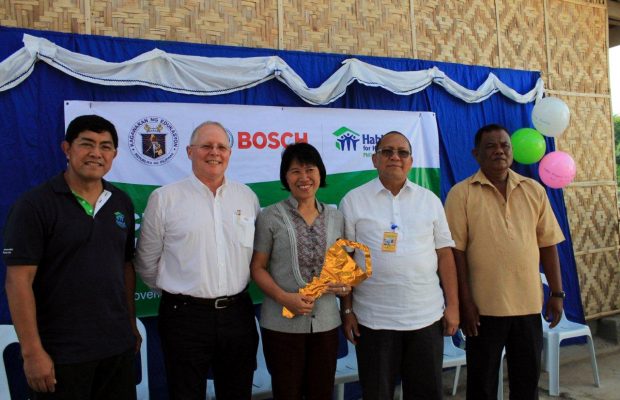
  • Bosch store boosts Cebu’s top retail market status

    Bosch store boosts Cebu’s top retail market status

    The store opening of a high-end kitchen appliance brand in Cebu proves its position as a primary retail market for top-of-the line products.

    This also means that Cebu’s buying population has a discriminating taste for brands that last for longer period, said Efren Reyes, sales manager, kitchen and appliance division of Hafele Philippines Inc.

    “This signals our company’s confidence in the Cebuanos as the biggest market outside Metro Manila. Cebu is a primary market … it is a growing and booming metropolis with a population that has more disposable cash who are loyal to brands that offer superior quality,” said Reyes.

    Häfele Philippines is the exclusive distributor of Bosch products in the Philippines. It is a subsidiary of the German-based Häfele Group. Häfele has been in Cebu since 1995. The Bosch-Häfele store in Mandaue is the first Bosch retail store outside of Manila.

    Reyes said they hope to “cover the market” as Cebu progresses as the site of condominium developments.

    “We are going out there to make ourselves known because Bosch is currently known as the maker of power tools and spark plugs. Our presence here hopes to be the spark that will enliven your kitchen and your home,” he said during the press conference before the grand store opening last May 5 at the Design Center Cebu.


  • Hyundai shows twin headlights on Kona

    Hyundai shows twin headlights on Kona

    The upcoming Hyundai Kona, the South Korean brand’s attempt to break into the hot subcompact crossover segment, will get “twin headlamps” with running lights positioned above the main lights as Hyundai looks to set its entry apart from an increasingly crowded field.

    A teaser photo of the Kona released April 28 shows a frontal view with sliver-thin chains of LED running lights up high near the seams of the hood. The unorthodox arrangement is reminiscent of the funky placement on the Nissan Juke, another subcompact crossover known for its edgy styling.

    “The new twin headlamp enhances the visual impact, with the LED daytime running lights positioned on top of the LED headlights,” Hyundai Motor Co. said in a release. “The separated lights at the front deliver a confident, progressive appearance with sleek and sharp shapes.”

    Hyundai said the Kona will launch this summer.

    The U.S. version, also named Kona in keeping with a Hyundai crossover nomenclature based on travel destinations, is expected to go on sale in the first quarter of 2018.

    Kona takes its name from the lava-lined coastal district of Hawaii’s Big Island.

    The vehicle fills another gap in Hyundai’s lineup.

    Subcompact crossover sales in the U.S. climbed 15 percent in the first quarter, while compact crossovers were up 11 percent, even as the overall market retreated 1.5 percent.

    Hyundai, a latecomer to the small crossovers, has been unable to tap that growth.

    The Kona will deliver good driver visibility and comfort, with agile handling, Hyundai said.

    “The imminent arrival of Kona,” Hyundai said, “marks Hyundai Motor’s bold first move into the B-SUV segment and leads the wider expansion of its SUV range.”

  • Garena rebrands as Sea, plans to conquer Indonesian e-commerce

    Garena rebrands as Sea, plans to conquer Indonesian e-commerce

    Garena, widely considered to be Southeast Asia’s most valuable startup, has rebranded itself as Sea Ltd. as the first step in an expansion plan to compete with China’s Alibaba and gain some ground in the untapped, but lucrative, Indonesian market.

    The company’s new name is a popular acronym for Southeast Asia, but is also meant to represent Garena’s regional aspirations. Under the new name will be their existing businesses: online games brand Garena, e-commerce platform Shopee and AirPay, a digital payments service.

    News of the company’s name change follows the announcement of the company’s latest funding round, which helped them secure US$50 million from a handful of investors that include some of the region’s wealthiest dynasties, such as GDP Venture – led by Martin Hartono, son of Indonesia’s richest man – and JG Summit Holdings Inc. – founded by Philippine billionaire John Gokongwei.

    Other investors in the round include Farallon Capital Management, Hillhouse Capital, Cathay Financial Holding Co. and an investment arm of Taiwanese food conglomerate Uni-President Enterprises Corp.

    There are reports the company is preparing to list in the United States, a move that could value them at around US$1 billion. Word is that the company has engaged Goldman Sachs Group to help them oversee their IPO.

    The company got a huge boost when Chinese digital conglomerate, Tencent Holdings Ltd., began investing in the company in 2013. Tencent remains one of their biggest backers and its support has not only been financial. The Chinese techno-giant has given Garena a vision of how to expand out from gaming into other industries that could help it woo investors and get new users onboard with their diversity of services.

    Garena was founded by China-born entrepreneur Forrest Li in 2009. It has since grown to be one of the most significant e-commerce and gaming players in the region. It is estimated Southeast Asia’s gaming market will be worth US$4.7 billion in the next two years. Sea seems to be taking a similar strategy as Tencent, who started with a messaging software and quickly expanded into gaming, e-commerce and (now) artificial intelligence.

    Sea is paying particular attention to the increasingly competitive e-commerce market, where Alibaba and its competitor JD.com are duking it out for dominance. Huge consolidation and acquisitions are beginning to take place, with the latest being JD.com’s investment in Tokopedia, an Indonesian e-commerce platform. Rumors of Amazon’s arrival in the region are still swirling around, so you can be sure the market is only going to keep heating up.

    The big trophy everyone seems to be angling for is Indonesia’s largely untapped market. Though it’s not quite yet at the maturity levels of the Singaporean or Malaysian markets, Indonesia has an Internet-savvy population and a reputation for adopting innovative tech early on and quickly.

    Currently, the e-commerce market is expected to hit US$130 billion in value, only a third behind China and India’s markets – for comparison, Indonesia is home to around 250 million people, compared to China and India’s one billion each.

    The plan for Sea’s expansion into Indonesia includes using the new funds to build up Shopee’s infrastructure in Indonesia. According to the company, Shopee’s annual market value has more than doubled in the last nine months to reach US$3 billion. Other strategies include some significant Indonesia-related hires, such as former Singaporean foreign minister George Yeo, former Indonesian trade minister, Mari Pangestu and the director of an Indonesian coal producer, Pandu Sjahrir.

  • Apple plans new store in Red Dot Centre Singapore

    Apple plans new store in Red Dot Centre Singapore

    Apple is getting ready to open its first Apple Store in Singapore on the island’s prime Orchard Road shopping boulevard.

    The storefront at Knightsbridge Mall is covered by a white facade with a large red Apple logo next to a heart and red dot above the store name “Apple Orchard Road”.

    Singaporeans often refer to their city state as a “little red dot” on the map of Southeast Asia.

    Barricades outside the store were removed on Wednesday night, suggesting the store would open soon. In the Asia-Pacific region the Cupertino, California-based company already operates retail stores in China, Japan, Hong Kong, Macau and Australia.

  • Launch of inaugural Café Cambodia 2017 and Franchise & Licensing Cambodia 2017

    Launch of inaugural Café Cambodia 2017 and Franchise & Licensing Cambodia 2017

    Phnom Penh took center stage as the host for the inaugural Café Cambodia 2017 and Franchise & Licensing Cambodia 2017. The exhibitions mark one of largest gathering of visitors from the local business community and the region and members of the coffee industry including baristas, café and coffee purveyors, coffee roasters, equipment distributors and members of the public. Malaysia is the shows’

    Official Country Partner, supported by Perbadanan Nasional Berhad (PNS). The inaugural shows were officially opened by His Excellency Cham Prasidh, Senior Minister, Ministry of Industry and Handicraft, Cambodia. The official opening this morning was also graced by the presence of Yang Berhormat Dato’ Henry Sum Agong, Deputy Minister, Ministry of Domestic Trade, Co-operatives and Consumerism (MDTCC),Malaysia, Dato’ Sri Hasan Malek, Malaysia Ambassador to Cambodia, Yang Berbahagia Dato’ Sri Jamil bin Salleh, Secretary General, Ministry of Domestic Trade, Co-operatives and Consumerism, Malaysia and His Excellency, Mr Pak Sokhom, Secretary of State, Ministry of Tourism, Cambodia.

    Franchise and Licensing Cambodia 2017 and Café Cambodia 2017 offer exhibitors and participants a hub and a B2B platform for key decision makers to source for new business opportunities and explore new collaborations. Franchise & Licensing Cambodia 2017 will showcase well known Asian and international brands in various industries such as F&B as well as the educational and services sectors.

    This hub also serves the industry as a source for café supplies and equipment to cater to the demands of the rising number of specialty coffee drinkers. The show will gather coffee and tea industry players showcasing products such as coffee beans, specialty coffee, specialty tea and beverages, juices, coffee machine, roasting machines and equipment.

    Cambodia has enjoyed steady economic growth in the last two decades. This growth, the favourable investment climate, supportive infrastructure, the presence of established banking and financial institutions and a large domestic consumer market of 16 million population are important reasons why the two shows are timely and will be well received as Cambodia has been attracting an increasing number of international franchise brands and operators especially those in the food and beverage business.

    Café Cambodia plays host to the Cambodia National Barista Championship (CNBC) presented by Gourmet Beverage Solutions (GBS). This inaugural championship brings together Cambodia’s top baristas to showcase their talents and compete for the coveted title of National Champion. The competition focuses on promoting excellence in coffee and seeks to advance the barista profession regionally and globally.

    Positioned as the perfect place to meet coffee professionals of Cambodia and the ASEAN region and to understand the growth of Asia’s franchise, licensing and coffee industries under one roof, the shows boast of a comprehensive programme for visitors who can look forward to learn from franchising and licensing experts, attend an exciting line-up including live presentations, demonstrations and workshops on every aspect of the coffee, tea, gelato and baked goods industries. There is also an extensive range of specialty coffees and teas from around the world to sample. The 3-day exhibition will also be teeming with networking and business opportunities for trade visitors who are looking to elevate their business aspirations. Franchise & Licensing Cambodia exposition offers abundant opportunities for entrepreneurs and prospective franchisees to meet face to face with representatives of international brand concepts across various industries.

    Café Cambodia and Franchise & Licensing Cambodia are co-organized by Conference and Exhibitions Management Services (CEMS) with CamGlobe Business & Investment Consultancy, and are supported by the Cambodia’s Ministry of Commerce, the Ministry of Industry & Handicraft, and the Ministry of Tourism.

    Franchise and Licensing Cambodia is supported by Asiawide Franchise, Cambodia Franchise Association and World Franchise Associates. The Cambodia National Barista Championship is presented by Gourmet Beverage Solutions.