Author: Mei Ling Tan

  • Walmart India wants 50 more stores

    Walmart India wants 50 more stores

    Supermarket giant Walmart is reportedly opening fifty more stores in India over the next three years, as the US retailer looks to expands its cash-and-carry segment and food retail arm.

    Walmart hopes to open nearly half of its 50 India stores in Uttar Pradesh and Uttarakhand, two of the country’s northern states, a company spokesperson told the Times of International.

    In addition, the cost-savvy retailer plans to open ten stores each in Maharashtra, Andhra Pradesh and Telangana, and two more stores in Lucknow. Other cities include Ghaziabad, Noida, Kanpur, Allahabad, Haridwar, Dehradun and Haldwani.

    With each store providing jobs for 2,000-2,500 persons, the company has the potential to create over 40,000 jobs in Uttar Pradesh and Uttarakhand, said the spokesperson.

    “Our commitment to the country is very deep and we are growing our footprints in India further by opening 50 more cash-and-carry stores in next few years across key focus states, including AP, Telangana, UP, Uttarakhand, Haryana, and Maharashtra,” said a Walmart India spokesperson.

    “Our development team is growing this store pipeline for last couple of years and we’re confident of continuing our contribution to the creation of thousands of skilled jobs, helpings kiranas, farmers & SME suppliers succeed through our cash & carry business.”

    Walmart India parted ways with Bharti in 2013, and had put its store expansion on hold. The news signals new opportunities for the retailer, especially in UP and Uttarakhand, where there is little competition Metro AG and Reliance, rivals chains which also operate the cash-and-carry format.

    Walmart is also awaiting clarity on the food retail guidelines. They want international food products rather than limiting themselves to domestically produced and manufactured food products, which is part of India’s guidelines.

    “As we’ve said earlier, allowing 100% FDI in food retail is a very progressive step, but having a certain percentage of non-food items in this policy will make it economically viable,” said the company’s spokesperson. food retail is a very progressive step, but having a certain percentage of non-food items in this policy will make it economically viable,” said the company’s spokesperson.

  • DHL opens China Rail Competence Center

    DHL opens China Rail Competence Center

    HL Global Forwarding has opened a central China Rail Competence Center in Stuttgart to help with the coordination of freight transported between Germany and Asia by rail.

    Rail freight volumes between Germany and Asia have increased 10-fold in just one year. In order to meet ever-increasing demand, the onus is on us to grow, optimize processes and create synergies. It is for this very reason that we decided to establish a central China Rail Competence Center,” said Volker Oesau, CEO DHL Global Forwarding Germany and Central Europe.

    In a statement issued today (8 May), DHL said that staff at the Stuttgart Rail Competence Center will develop “appropriate multi-modal transport solutions and coordinating end-to-end transport processes, from collection, export and transit formalities, and the Euro-Asian rail service, right through to customs clearance in the land of arrival and delivery by truck or combined rail transport”.

    DHL Global Forwarding current offers 15 rail connections between Germany and the Far East. The trains follow the course of the trans-Kazakh western corridor and the trans-Siberian northern corridor with a network of rail hubs in the major economic centres of China, Taiwan, Japan and South Korea.

  • China tops US as Swarovski’s largest market

    China tops US as Swarovski’s largest market

    China has surpassed the US to become the biggest market for the Austrian crystal producer Swarovski, CEO Robert Buchbauer told Ladymax in an interview. Buchbauer also said that sales in China for the company’s goods reached RMB 1.7 billion ($247 million) in 2016, a 13-percent increase from the year before.

    The brand has long placed great emphasis on Chinese consumers, according to Buchbauer, and has strategically grown and nurtured the market by focusing on three aspects: products, market distribution, and online sales.

    In recent years, China has become a key playground for the brand to gauge consumer sentiment towards their new offerings. When Swarovski decided to launch a fine jewelry line in 2015, it chose China and the US as its testing grounds. The CEO also mentioned that there is a Chinese team devoted to understanding the local culture and clients’ preferences for the products and designs.

    Swarovski has made efforts to exploit business opportunities both online and offline in China, which has greatly contributed to its growth there. Apart from opening stores in major cities like Beijing and Shanghai, the brand is active in expanding to second- and third-tier cities like Ningbo and Suzhou by building networks of local agents. According to Chinese domestic media, Swarovski opened its first flagship store in 2010 at Peace Hotel, the iconic building on the Bund, Shanghai. However, the family-run brand, which was founded in Austria in 1895, made its first entry into Chinese markets much earlier, back in the 1970s.

    Among the first wave of Western luxury brands taking advantage of China’s vibrant e-commerce market, Swarovski opened a flagship store on Alibaba’s Tmall in 2015. It is currently setting up a presence on JD.COM, another key player in the market but has been met with some setbacks, like the sale of counterfeit merchandise.

    In January this year, Alibaba sued two Tmall merchants for allegedly circulating fake Swarovski watches on the platform and claimed that it caused a loss of RMB 1.4 million. Counterfeit sales pose a potential loss to the reputation of the brand, making it imperative for Swarovski to cooperate with Alibaba to combat it. But, overall, Buchbauer sees the issue from a surprising perspective.

    “Many brands in Europe think that fake products in China have caused a billion-dollar loss to their businesses,” Buchbauer said. “But I don’t think so. Those customers who purchase knock-off goods actually do not intend to buy the real ones, that’s why I will not call it a ‘real’ loss.”

    Swarovski’s China expansion isn’t without its challenges. As Chinese luxury consumers have become more sophisticated and millennials are playing a much bigger role in the market, the brand has garnered a crop of rivals such as the Danish jeweler Pandora, which is winning the hearts of young Chinese consumers with its signature customizable charm bracelet.

    Identifying the need to appeal to younger audiences, Swarovski has appointed the supermodel Karlie Kloss to be its ambassador with the hope of leveraging her popularity among millennials.

    And of course, social media is on Buchbauer’s mind. “WeChat is everywhere in China,” he said. “We have to embrace it and make full use of it.”

  • Ferrari Q1 beats expectations, shares up by 3%

    Ferrari Q1 beats expectations, shares up by 3%

    Italian luxury sportscar maker Ferrari reported a better-than-expected 36 percent rise in first-quarter core earnings on Thursday and confirmed its full-year guidance, lifting shares up more than 3 percent.

    Ferrari said adjusted earnings before interest, tax, depreciation and amortisation (EBITDA) in January-March rose to 242 million euros ($265 million), above a Thomson Reuters SmartEstimate consensus of 222 million euros.

    Quarterly revenues were up 22 percent to 821 million euros, above expectations of 767 million euros, helped by sales of its 12 cylinder models such as the GTC4Lusso and the newly-launched LaFerrari Aperta hybrid convertible.

  • NVIDIA, Facebook team up on AI

    NVIDIA, Facebook team up on AI

    NVIDIA and Facebook are working together to advance artificial intelligence with Caffe2, a new AI deep learning framework contributed by Facebook to the open-source community.

    Facebook is developing new AI systems to help manage this information so people can better understand the world and more effectively communicate, even as the volume of information increases.

    Caffe2 allows developers and researchers to create large-scale distributed training scenarios and build machine learning applications for edge devices.

    Increasingly, the processing of lightning-fast AI services requires GPU-accelerated computing, such as that offered by Facebook’s Big Basin servers, as well as highly optimized deep learning software that can leverage the full capability of the accelerated hardware.

    “NVIDIA and Facebook are delivering AI acceleration through our work on the Caffe2 deep learning framework,” said Kristin Bryson, PR director for the data center business at NVIDIA.

    “Thanks to our joint engineering, we’ve fine-tuned Caffe2 from the ground up to take full advantage of the NVIDIA GPU deep learning platform,” said Bryson.

    Caffe2 uses the latest NVIDIA Deep Learning SDK libraries — cuDNN, cuBLAS and NCCL — to deliver high-performance, multi-GPU accelerated training and inference.

    Bryson said Caffe2 is designed to be a fast, scalable and portable deep learning framework. It delivers near-linear scaling of deep learning training with 57x throughput acceleration on eight networked Facebook Big Basin AI servers with 64 NVIDIA Tesla P100 GPU accelerators. This means developers can train and iterate AI models faster than ever.

    As part of the two companies’ collaboration, the NVIDIA DGX-1 AI supercomputer will be the first AI system to offer Caffe2 within the optimized software stack for deep learning. Together, DGX-1 and Caffe2 deliver high performance and fast training.

    “Through NVIDIA’s Deep Learning Institute, we’ve helped more than 10,000 developers worldwide learn to use frameworks to design, train and deploy neural network-powered machine learning for a variety intelligent applications and services,” said Bryson.

  • Topshop launches e-commerce platform for Australia

    Topshop launches e-commerce platform for Australia

    British fashion retailer Topshop has officially launched an Australian-dedicated online store, meaning local shoppers can bypass the generic Topshop international site.

    The new Topshop Australia platform allows Australians to browse and shop prices in Australian dollars and pass for free shipping when the total purchase is over AU$75.

    When shopping via the international store, prices are in British pounds and pricey international postage costs are incurred.

    Another feature for Australians is Topshop’s click-and-collect services, next-business-day express shipping and easy postal returns.

    The move sees Topshop’s retail reach extend beyond major capital cities and into remote areas where customers don’t have access to one of the fast-fashion retailer’s physical stores.

    Topshop has also tapped payment service Afterpay for its online store, allowing shoppers to buy now and pay later for purchases. Topshop Australia has offered Afterpay for several months in store.

    Topshop opened its first Australia store in 2011 in Melbourne. Topman went on to open a flagship store in Sydney’s Pitt Street Mall. Today it boasts 57 points of sale across Australia in cities Brisbane, Perth, Adelaide, Sydney and Melbourne, among others.

    It also has concession corners in department store Myer.

    Topshop is part of Sir Philip Green and his Arcadia Group, which also owns Burtons, Dorothy Perkins and Miss Selfredges.

  • Ultrafast Fibre taps Dimension Data for cloud services

    Ultrafast Fibre taps Dimension Data for cloud services

    New Zealand’s Ultrafast Fibre Limited, one of the companies building the nationwide Ultrafast Broadband (UFB) fiber network, has appointed Dimension Data as its sole provider of cloud services.

    The company is consolidating its cloud provider base in order to reduce costs, increase information security, and to optimize compute flexibility across the business.

    Dimension Data will host all of Ultrafast Fibre’s data assets and applications within their Managed Cloud Platform (MCP) in Hamilton, including communications, business process applications, data warehouse and geographic information systems.

    Hamilton-based Ultrafast Fibre – which built and operates the UFB across the Waikato, Bay of Plenty and Taranaki – recently embarked on a process to select a single provider for all cloud services.

    “Working with Dimension Data as our single cloud provider has delivered less complexity, an increased platform control and improved cost management by having all of our assets in one place by making things simple and fast,” Ultrafast Fibre business support manager Peter Knedler said.

    “The ability to control platforms and data assets through Dimension Data’s Self Service Real Time Cloud Control Portal has already delivered business benefits which is a real bonus, because it allows Ultrafast Fibre to directly control our cloud assets in real time without the need for additional professional service requests,” Knedler said.

    Ultrafast Fibre also required the flexibility to scale up or down its cloud capacity on demand and only pay for what it used.

    This project to simplify and secure Cloud assets coincides with Ultrafast Fibre entering an exciting phase of fiber connections growth, having already successfully completed deployment of approximately 3,000 kilometers of fiber to eight central North Island cities and towns under the first tranche of the government’s

    Ultrafast Broadband initiative. Ultrafast Fibre has recently been awarded a new contract to connect a further 12 central North Island communities as part of the UFB2 rollout.

  • Why supply chain integration is crucial in the Industry 4.0 era

    Why supply chain integration is crucial in the Industry 4.0 era

    Local Motors is a carmaker with a difference. Rather than following the traditional vehicle design process, the Arizona-based micro-multinational instead crowd-sources its car designs from an online community. Once the design is chosen, the company harnesses advances in translating data from the digital to the virtual world to build cars almost entirely by 3D printing. This innovative process enables it to build a completely new model of car from scratch in just one year – far less than the industry average of six.

    This is a great example of the revolution that is sweeping the world of manufacturing. Not since the ‘lean revolution’ of the 1970s, often dubbed the ‘third industrial revolution’, have such radical changes been made to the way production is designed, monitored and executed, and the repercussions of this sea-change are being felt all the way down the value chain right into the hands of the end-customer. Today’s always-on, e-commerce-driven global economy is creating a brave new world known as the fourth industrial revolution, or ‘Industry 4.0’ – and businesses need to rapidly adapt  to avoid being left behind.

    Industry 4.0 is shorthand for applying new, digitally-driven capabilities to manufacturing and at each subsequent stage in the value chain. At its simplest, it can mean applying technology to a single stage in the chain – a gold mine in Africa leveraged big data from its sensors to discover an irregularity at a particular point in its production process, for example. Fixing this increased yield by 3.7 percent – or US$20 million – each year.

    However, to realize the full potential of Industry 4.0, companies are looking more holistically at their value chains. With four decades of experience in supporting customers’ supply chains, our business is uniquely positioned to observe how these changes are impacting supply chains everywhere. I believe that a rethink of supply chain management is needed if manufacturers and retailers are to successfully harness the possibilities of Industry 4.0.

    Making supply chains customer-centric

    Once viewed purely in terms of its potential to yield cost efficiencies, supply chain management has evolved. Thanks to big data analytics and changing customer expectations, demand forecasting is more sophisticated. This means that modern supply chains now have a vital additional role in ensuring customer satisfaction and retention.

    To achieve this goal, logistics now needs to work across the company from the front-end to the back-end, seamlessly integrating production, inventory, marketing, sales, payments, distribution and product returns to optimize the supply chain model that balances cost efficiencies with keeping customers happy.

    Embracing innovation

    Achieving this degree of integration is complex – in a recent research study, only 7 percent of business executives believed they had created fully-integrated businesses that could be regarded as Industry 4.0-ready. Access to the right technology is only one part of the puzzle; businesses also need a culture that embraces innovation and a workforce – from c-suites to general staff – that is willing to innovate to drive change.

    However, these barriers to implementing an Industry 4.0-ready supply chain have to be weighed against the potential benefits – and when they are, an almost unassailable business case emerges in favor of making the leap for businesses large and small. Consider the aircraft maker Airbus. The company has invested significantly in creating a “Factory of the Future” by building aircraft in virtual reality, with production lines that include computer-suited personnel and robots working side by side. As a result of these changes, which the company dubs ‘smart production’, Airbus is able to keep pace with increased demand, and also now manufactures its products in a more sustainable way.

    Moreover, the benefits of Industry 4.0. are certainly not confined to large multinational corporations. Closer to home, China-based furniture retailer Markor realized that it could innovate its supply chain to identify trends in customer purchasing behavior. The company created a smartphone app that interrogates big data to identify these trends, then make personalized recommendations to customers on product designs. Using mobile devices, sales staff can show products demos and 3D images of custom furniture. When sales are made, customer preferences and purchase details are saved automatically, and the company uses the information to drive future business.

    The next frontier for competition

    Of course, these are just some examples of technology overhauling the supply chain. Touch-screens, robotics and augmented reality can all be orchestrated to achieve value-creating supply chains capable of responding automatically to changes in end-demand. The central question is not what technology is harnessed, but whether you work with the right manufacturing, technology or logistics providers to enable your supply chain to be truly integrated and demand-driven.

    Get it right, and you’ll be on the way to achieving efficiencies, reduced time-to-market, cost savings, improved productivity and revenue gains. Despite the substantial investment involved, more than half of the respondents in a recent Industry 4.0 global survey anticipated return on investment in just two years.

    In a world where business is increasingly transacted digitally, preparing your supply chain for Industry 4.0 represents the next frontier in the battle for competitive edge.

  • LVMH to launch its eCommerce site

    LVMH to launch its eCommerce site

    Luxury goods group LVMH will reportedly launch its own multi-brand e-commerce site in March and offer all 70 of its brands on one site, according to the Financial Times. The site will be part of Le Bon Marché, the Parisian department store acquired by LVMH in 1984, and also sell other brands from outside the conglomerate.

    This is not LVMH’s first foray into multi-brand fashion online retail. In 2000, the company — which counts Louis Vuitton, Fendi, Céline and other brands in its portfolio — launched eLuxury as a platform for luxury designer apparel, accessories, beauty and children’s collections. However, in 2009, LVMH announced that it would shutter the retailer as its brands began to launch standalone e-commerce operations. (eLuxury was, in turn, relaunched as editorial platform Nowness).

    The new e-commerce site will mark LVMH’s most significant digital investment since hiring Ian Rogers as chief digital officer in 2015, which signaled to many in the industry that the conglomerate was finally ready to integrate digital into its business. “The luxury business is in a great position relative to where the world is going,” said Rogers, describing the luxury business as a “mass [market] of niches.”

    LVMH’s re-entry into the online market now is very late to the game. However, it is indicative of a higher priority afforded to digital operations and e-commerce channels since Rogers joined the company.

    It is unclear if the new online iteration of Le Bon Marché will operate on a wholesale or marketplace model, although wholesale is the likely avenue. The wholesale model requires inventory risk and having high working capital, but the company will still capture the full retail margins. The drop-ship marketplace model, in which the platform usually takes a commission on sales in order to generate revenue, makes ensuring a consistent shipping experience difficult. Working predominately with its own brands would ease some of those challenges, however.

    In fiscal 2016, LVMH saw revenue increase 5 percent to €37.6 billion ($40.2 billion) and profits increase 6 percent to €7 billion ($7.1 billion). Its selective retailing category, which includes Sephora, duty free retailer DFS and Le Bon Marche — all multi-brand retailers — saw the highest growth at 7 percent.

    While e-commerce still only makes up a small percentage of overall luxury goods sales, online sales grew four times faster than offline sales between 2009 and 2014. However, McKinsey & Company predicts it will triple to €70 billion by 2025 — representing 18 percent of total luxury sales — and then plateau. Overall, growth in luxury goods has slowed down since 2015 as Chinese demand lessened. The market is expected to grow only 0.5 to 1 percent in 2017, versus the 8 percent compound annual growth rate between 2010 and 2015.

    But a slowdown in overall growth hasn’t stopped several major industry players from getting into the multi-brand e-commerce game over the past two years, including Galeries Lafayette and Condé Nast (with its relaunch of Style.com). As competition heats up, established players have turned to consolidation — see Yoox’s merger with Net-a-Porter and Neiman Marcus Group’s acquisition of MyTheresa.com — in order to scale further.

  • VW brand targets productivity gains through 2020

    VW brand targets productivity gains through 2020

    Volkswagen has set itsef fixed targets for raising productivity at its troubled core division through 2020 by pushing cost savings, stemming overseas losses and launching more higher-margin cars.

    Volkswagen’s namesake VW brand is targeting an operating margin at the upper end of a 2.5 to 3.5 percent range this year, with revenue expected to exceed 2016 levels by around 10 percent, the carmaker said on Friday.

    Europe’s biggest carmaker said it expects its largest division to continue to improve financially over the course of the year after a strong first quarter, and will increase guidance on key targets if necessary.

  • Lazada opens Coca-Cola, Nestle, Redmart shop-in-shops

    Lazada opens Coca-Cola, Nestle, Redmart shop-in-shops

    Lazada Singapore has unveiled three new shops on its online marketplace, in a bid to bolster its e-tail offering and win consumers during its ‘birthday sale’.

    Lazada has launched ‘shop-in-shops’ for international heavyweights Coca-Cola, Nestle and Redmart, each of which allows the brands to keep their identity across online and offline channels, while giving shoppers a way to connect with them.

    Earlier this year, Lazada acquired RedMart, marking their move into the grocery category, specifically fresh and frozen products. The new addition will also see Singapore shoppers gain access grocery products from RedMart directly via Lazada Singapore, the first step towards a larger partnership between the two companies.

    “We are excited about working together with Lazada Singapore, especially at a time that marks their third year serving shoppers in the country. RedMart will be offering exclusive promotions on everything from Extra Virgin Olive Oil to Sauvignon Blanc, as special deals just for shoppers celebrating Lazada’s birthday,” said Penny Cox, VP Commercial and Marketing at RedMart.

    Both Coca Cola and Nestle will also stock a select range of food and beverages via Lazada Singapore.

    In the lead up to its third birthday and sale, the marketplace has also launched official shop-in-shops for bookstore MPH, SK Jewellery, Chow Tai Fook, South Korean and Mamonde, as well as fashion labels Esprit, Doc Martens and Bonia.

    “Setting up shop-in-shops in time for our birthday sale has really been part of a larger step towards bridging shoppers in Singapore with the brands they know and love. This, combined with a consistent free delivery and 14 days free returns policy, give shoppers best of everything — ease along with great deals and the widest range of products to choose from, be it electronics or groceries,” said Alexis Lanternier, CEO, Lazada Singapore.

    The Lazada birthday sale kicks of March 21 to 23 and will see discounts of up to 90% across its entire platform.

    Launched in 2012, as a part of Lazada Group, Lazada Singapore currently hosts over 300 official brand stores. Lazada also has an e-commerce presence in Thailand, Indonesia, Malaysia and Vietnam.

  • Orange Business launches public cloud suite in APAC

    Orange Business launches public cloud suite in APAC

    Orange Business Services, a subsidiary of French multinational telecoms operator Orange, has launched its suite of global public cloud services in Asia Pacific.

    The new suite consists of three pillars – the Flexible Engine IaaS/PaaS public cloud platform developed in partnership with Huawei, professional services to assist customers in their migration, and managed services to operate customer applications and legacy systems.

    The suite will enable enterprises to digitally transform their business operations and support Asian businesses in their expansion plans across China, Southeast Asia and Europe. It also supports European companies with their business development across Southeast Asia and China.

    Already available in Europe, the services will continue to be rolled out in the US in 2017 and in the Middle East and Africa in 2018.

    “Businesses around the globe recognize that it is imperative for them to digitally transform in order to remain competitive,” says Helmut Reisinger, executive vice president for International Business, Orange Business Services.

    “Cloud adoption continues to be one of their top technology focus for 2017 as they seek to digitally transform their infrastructure. However, this has become a significant challenge due to infrastructure constraints, security concerns and limits in scalability especially for multinational enterprises.”

  • Longchamp opens Shanghai flagship, plans more China stores

    Longchamp opens Shanghai flagship, plans more China stores

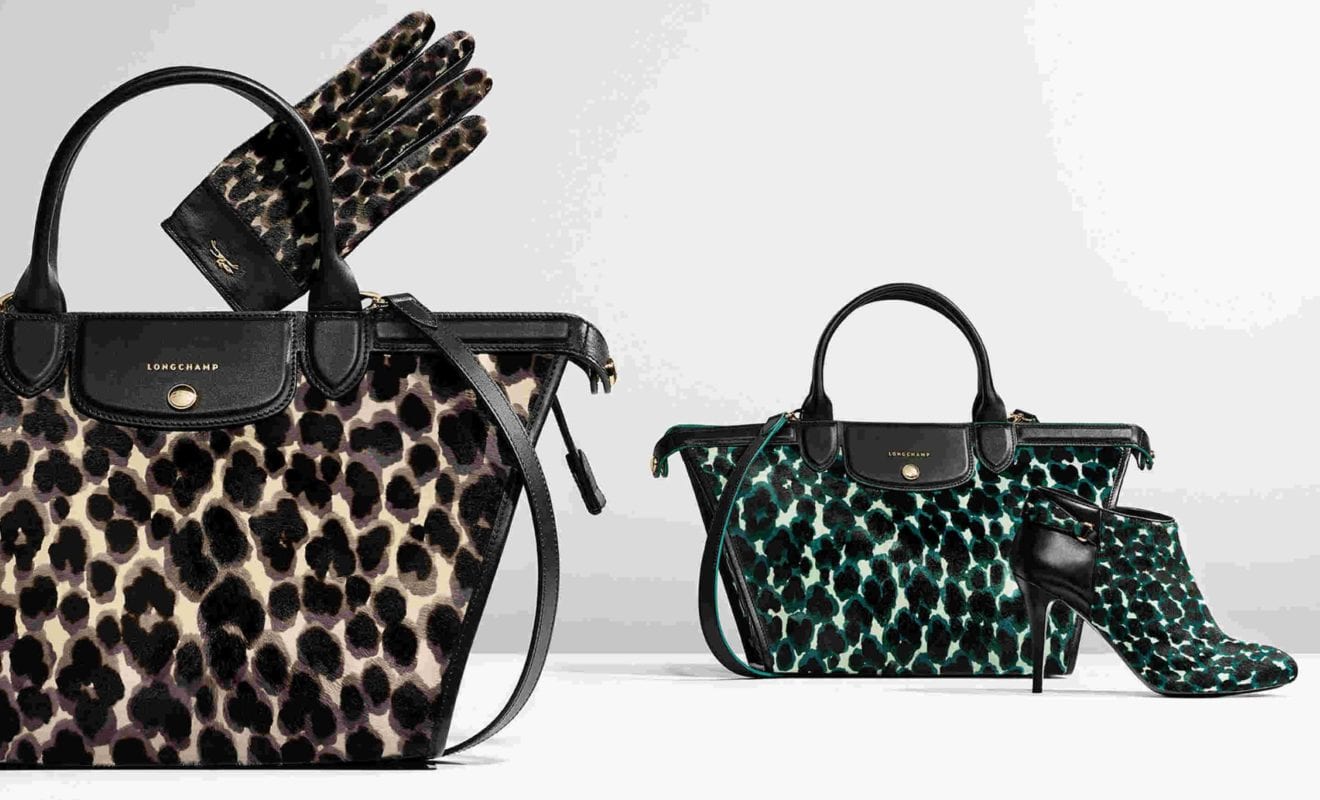
    Longchamp has opened a new China flagship store in Shanghai, with plans for the French luxury brand to open another flagship store in Beijing later in the year.

    Located at the Jing An Kerry Centre on Shanghai’s Nanjing Road West, the new Longchamp flagship offers the biggest selection of fashion, bags and accessories from the Parisian leathergoods brand. This includes women’s ready-to-wear, shoes, handbags, leather accessories, as well as men’s collections and luggage bags.

    According to Longchamp CEO Jean Cassegrain, the luxury brand is considering opening stores in the country’s capital, and in second-tier cities such a Changsha.

    “There is a potential for us to open stores at new locations and there are still cities where we are not present,” Cassegrain told China Daily this week.

    “In October, we will open a new store in Beijing, at a landmark shopping mall on Wangfujing Street,” he added.In addition to physical stores, Longchamp products are available for purchase in China on social media platform, WeChat, via the Longchamp account. According to the CEO, e- and m-commerce are yet to be fully explored in the Asian market.

    “It is our plan to continue developing online channels in China,” he said.

    Longchamp’s retail push comes as experts predict the return of luxury spending in China over the next three years. In a report, Bain Consulting Group said the proportion of global luxury consumption accounted for by Chinese consumers would increase from the current 30% to 35% by 2020.

    Longchamp currently has 18 stores in China. It counts 1,500 points of sale across 80 countries spanning exclusive brand and franchise stores, department store concessions, multibrand leathergoods stores, airport stores and online sales. The brand directly manages more than 300 points of sale through 21 distribution subsidiaries.

  • AirAsia to fly directly from Kuching to Pontianak

    AirAsia to fly directly from Kuching to Pontianak

    AirAsia will now fly to Pontianak, Indonesia, from Kuching with direct daily flights starting June 5.

    This marks AirAsia’s 10 route from Kuching and the airline’s second route from Malaysia into Pontianak.

    “We are excited to launch our second international flight from Kuching, which will further grow our connectivity between Malaysia and Indonesia for all our guests.

    “Pontianak offers a unique experience for travellers with it being one of the 12 cities that straddle the Equator,” said its head of commercial Spencer Lee in a statement.

    “We are confident this new route will contribute to the five million tourists target for Sarawak this year aside from boosting the local economy and trade sector,” he added.

    In celebration of the new route, travellers can look forward to all-in-fares from RM89 one-way, which are available from now until April 2, 2017 for the travel period from June 5 to Sept 30 this year.

    AirAsia BIG members who book during the promotion period can also earn two times AirAsia BIG points on the base fare.

    As the capital city of West Kalimantan, Indonesia, Pontianak is also known as Kota Khatulistiwa (Equator City) for being the only city in the world situated right on the Equator that divides the northern and southern hemispheres.

  • Tata Communications posts $32.5m Q4 loss

    Tata Communications posts $32.5m Q4 loss

    Tata Communications has reported a 2.09 billion rupee ($32.5 million) net loss for the fourth quarter, with earnings impacted by issues including the impact of the demonetization of India’s 500 and 1000 rupee banknotes.

    Gross revenue fell 10% year-on-year to 43 billion rupees, with ebitda down 35.9% over the same period to 5.03 billion rupees.

    Besides the effect of demonetization, revenue was negatively impacted by the loss of revenue arising from the sale of 17 data centers in India and Singapore for $663 million in May last year.

    Cable repair costs, employee-related expenses and legal fees associated with the court battle over NTT DoCoMo’s stake in the Tata DoCoMo joint venture also contributed to the decline.

    With the Delhi High Court recently declaring the validity of the settlement agreement between Tata Teleservices, holding company Tata Sons and DoCoMo, entitling the Japanese operator to collect the $1.18 billion award reached in an earlier settlement agreement, Tata Communications said it has made a provision of 8.72 billion rupees for the current quarter.

    For the full year, Tata Communications reported a net profit of 12.23 billion rupees, or $184 million in US dollar terms, as well as 5.2% lower gross revenue of 194.9 billion rupees.

    “Market demand for our services remain strong and we continue to increase our wallet share with large global enterprises,” Tata Communications CEO Vinod Kumar commented.

    “The conclusion of the Data Center and Neotel deals makes us stronger, more agile. This will help drive focus and momentum into our evolution from a traditional telco to a next generation digital enablement provider.”