Author: Mei Ling Tan

  • Lacoste unveils expanded retail space at Don Mueang International Airport

    Lacoste unveils expanded retail space at Don Mueang International Airport

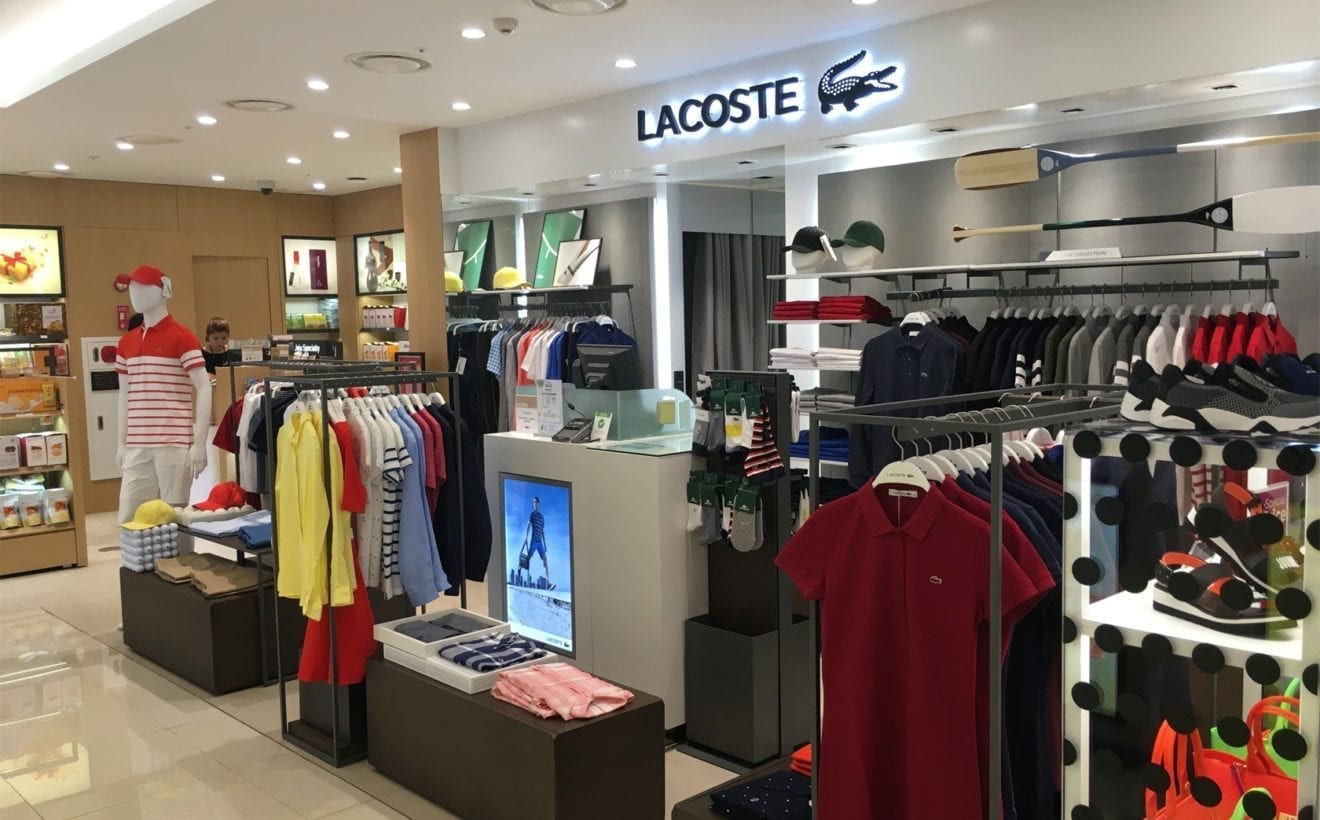
    Lacoste has opened its revamped Sport corner at Don Mueang International Airport Terminal 1.

    Lacoste kicks off its new Sport concept at Don Mueang Airport.

    The space has been enlarged and upgraded to feature Lacoste’s new Sport concept. It now offers additional options for customers alongside the brand’s signature polo shirts and leathergoods ranges.

    Don Mueang International Airport, Asia’s oldest international airport, recorded 35 million passengers in 2016.

  • PLDT secures 25-year franchise extension

    PLDT secures 25-year franchise extension

    The Philippines’ PLDT has announced that wireless subsidiary Smart has secured a 25-year extension to its franchise.

    President Rodrigo Duterte has signed into law a new Act that effectively extends Smart’s franchise until 2042.

    The franchise allows Smart to deploy, maintain, lease and operate integrated domsetic and international telecommunications services nationwide.

    New details have also reportedly been added to ensure Smart receives equal access to any future incentives granted to new players in the market and to exempt the operator from paying duties or taxes on telecoms equipment.

    The extension will take effect 15 days after publication of the franchise law in a newspaper of general circulation, something PLDT said it intends to effectuate.

    As half of the Philippines’ duopoly of mobile operators, PLDT’s Smart is a major player with around 63 million mobile subscribers as of the end of last year.

    But the Philippines has long been seeking to have a third player enter the market to enhance competition, and is planning to conduct a spectrum auction open only to potential new market entrants later this year.

    Rival operator Globe Telecom’s current concession runs until 2030.

  • Vietjet continues to offer “zero-fare” tickets under “Free summer, Fly for free” campaign

    Vietjet continues to offer “zero-fare” tickets under “Free summer, Fly for free” campaign

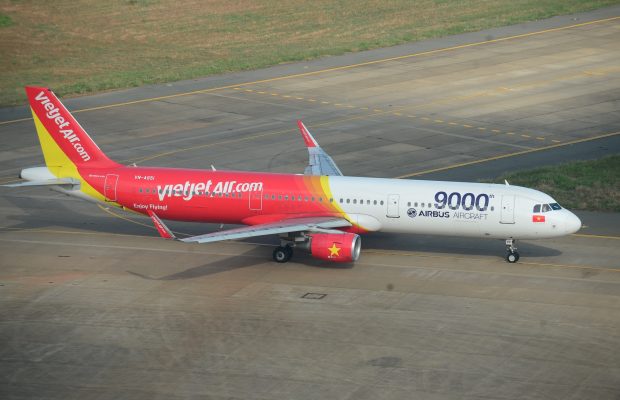
    Vietjet announced the launch of another three-golden-day promotion as the exciting “Free summer, Fly for free” campaign has proven to be very popular among passengers. The campaign offers millions of promotional tickets priced from only HKD 0 within the golden hours 13:00 to 15:00 from May 9 to May 11, 2017 at www.vietjetair.com.

    The promotion applies for all international routes from Ho Chi Minh City to Hong Kong, Seoul (South Korea), Kaohsiung, Taipei, Taichung and Tainan (Taiwan), Singapore, Bangkok (Thailand), Kuala Lumpur (Malaysia) and Yangon (Myanmar); and from Hanoi to Seoul, Busan, Taipei, Bangkok, Singapore and Siem Reap (Cambodia) with travel time being within August 1, 2017 and December 31, 2017 (except public holidays). The “Free summer, Fly for FREE” campaign is being held from April 25 to June 15, 2017 and in celebration of the opening of the new Hanoi to Singapore and Siem Riep routes, a three-golden-day promotion was offered earlier.

    Especially, from now to June 4, 2017, participants of “Free summer – Fly for Free” game at www.freesummer.vietjetair.com will have the chances of winning a weekly award of 5 free return flights, each flight with 5 free tickets for a five-person group and a grand award of a free package tour to an optional destination.

    Also, all customers successfully booking tickets with instant payment within the golden hours from now to June 15, 2017 will also have the chances to join the lucky draw for the gifts of mobile phone’s top-up cards and air ticket promotion codes (*) at www.summerwin.vietjetair.com. Besides, the summer campaign will launch a series of activations including interactive games, amazing performances by Vietnamese and international celebrities, “Vietjet Bikini” challenge at some domestic airports and onboard Vietjet flights, which are expected to “heat up” the coming summer.

    With its high-quality services, special low-fare tickets and diverse ticket classes, Vietjet offers its passengers enjoyable flights with dynamic and friendly flight crew, comfy seats, amazing hot meals and special surprises from the airline’s inflight activities.

  • Telco API revenues set to reach $207b by 2022

    Telco API revenues set to reach $207b by 2022

    Global revenues from telecommunications application programming interfaces (APIs) is on track to reach $207 billion worldwide by 2022, Research and Markets has predicted.

    A new report from the research firm finds that the telco API market has significantly matured in recent years. But much of the market activity has so far been limited to larger operators in developed countries, leaving significant room for growth in emerging markets.

    During the past five years, operators have leveraged APIs to derive wholesale transaction revenues from third-parties such as OTT providers and enterprises, as well as communication-enabled application revenue, the report states.

    Operators have the potential to achieve incremental growth by providing a variety of services and application support, such as robo and unwanted call blocking services to support do not call registries and compliance with consumer protection regulation.

    But in the long term, revenue from traditional consumer centric services supported from telecom APIs is expected to level off, with revenue associated with IoT services becoming the new markte driver.

    The report predicts that communication-enabled network revenue will plateau as IoT network support revenue becomes a more substantial revenue component for Telecom APIs by 2025.

  • Carrefour China opens its 27th store

    Carrefour China opens its 27th store

    On March 23rd 2017, Carrefour successfully opened its 27th Easy Carrefour Store in Shanghai, China.

    Sitting on Long Dong Avenue, the newly-opened Easy store covers an area of approximately 332 square meters with over 4,000 items.

    The first convenience store under Easy banner opened its door in 2004, and Carrefour China has now a total of 27 stores in Shanghai.

    At Carrefour, we are committed to facilitate our consumers with a more convenient lifestyle to the surrounding consumers by offering an abundance of goods and quality services to meet the daily necessities of community residents.

  • Louis Vuitton plans first airport duplex boutique for Changi

    Louis Vuitton plans first airport duplex boutique for Changi

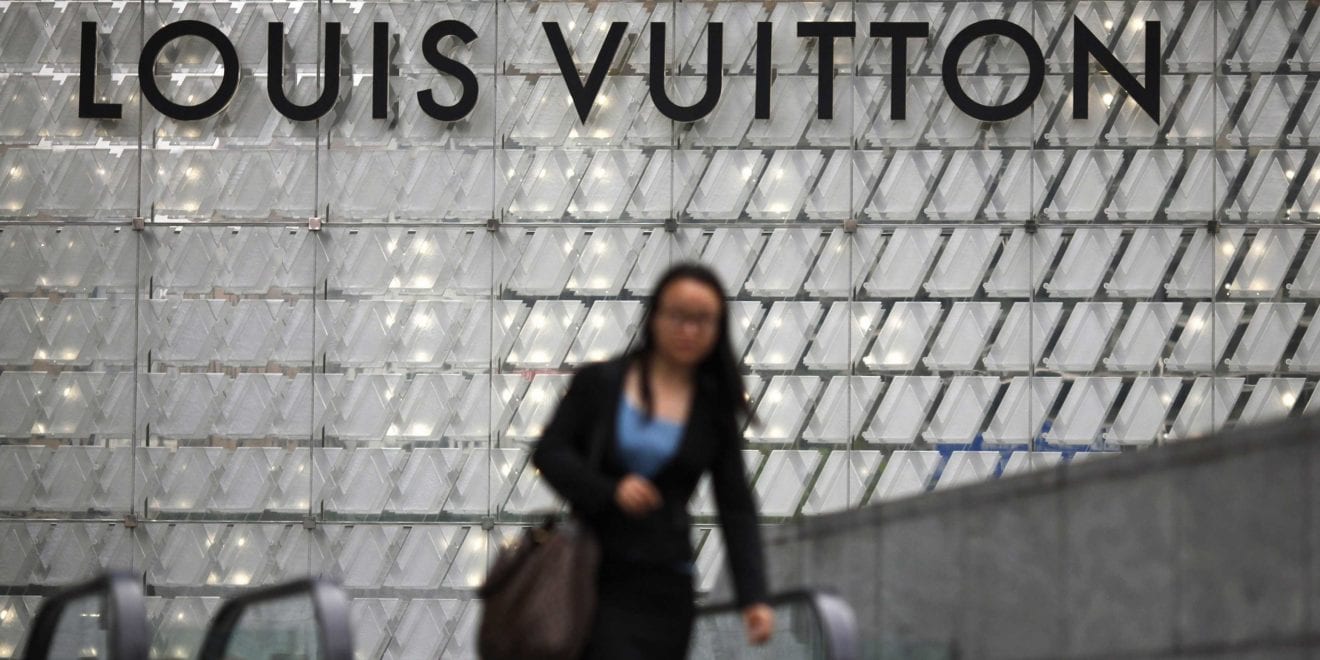
    French luxury maison Louis Vuitton will open its first duplex boutique in an airport early next year, opting to bow the store inside Singapore’s Changi Airport.

    Opening January 2018, the duplex boutique will be located in Changi’s new ‘Crystal Garden’ in Terminal 3’s Departure Transit Hall.

    Covering 530 square metres and two levels, the new space will feature tiered garden beds with a selection of flora and spheres of artisan glass sculptures. It is the first time the airport is integrating a feature garden with a retail store, and first airport boutique for Louis Vuitton to span two levels.

    The Changi debut is also the first airport store in Asia Pacific to be directly managed by Louis Vuitton.

    “Singapore Changi Airport is such an important location for us, and we are happy to offer this new store, not only to our Asian customers but also the international travelers who transit by this airport,” said Michael Burke, Chairman and CEO of Louis Vuitton, via a press release.

    Louis Vuitton will be the latest addition to Changi Airport’s retail fold, which boasts more than 360 retail stores sprawled over 76,000 square metres of floor space.

    “We are thrilled to partner with Louis Vuitton, who shares our vision to redefine the future of luxury retail in an airport,” said Changi Airport Group chief executive officer Lee Seow Hiang.

    “The revolutionary duplex store, set amidst an elegant Crystal Garden, will become a distinctive attraction for passengers who fly through Changi Airport, and we look forward to embarking on an exciting journey of discovery with them when the store opens.”

    Changi Airport generated retail sales of S$2.3bn in 2016.

  • Chloé opens a new store in Singapore

    Chloé opens a new store in Singapore

    To inaugurate the opening of the first Chloé boutique in Singapore at The Shoppes at Marina Bay Sands, the Maison has created a limited edition Faye bag inspired by the iconic local symbols of the orchid and the phoenix.

    The Faye, adorned with a colourful, decorative patchwork crafted from smooth calfskin and supple suede, is finished with light gold and silver hardware. Only eight pieces of the exquisite bag are available for sale.

    The boutique it celebrates is no less gorgeous. Situated on Level One of The Shoppes, the 184 meters square space boasts an expansive glass storefront, robust architectural details, and a play of rough and delicate textures. Also, expect Chloé’s signature palette to be present: from powdery rose beige to shades of white and a touch of mustard, all brought to life by the glow of brushed or polished natural brass.

    Accessories are the first thing you will see upon stepping into the store; handbags and small leather goods are presented in luminous shelving framed in brushed brass, or beneath the glass cabinets..

    Ready-to-wear is separated from accessories by warm wooden archways and several steps. Here, the stone floors meet a central ‘carpet’ of golden spider marble. Ready-to-wear styles are suspended on oxidised brass racks or presented on white mannequins suspended from the ceiling, with jewellery, sunglasses, and scarves displayed nearby.

    And if you are keen to try on anything, boudoir-style fitting rooms hidden behind sliding doors feature elegant textile screens for added intimacy. Very Chloé.

  • Singapore establishes data science consortium

    Singapore establishes data science consortium

    Singapore’s National Research Foundation (NRF) will set up the Singapore Data Science Consortium, a national partnership that aims to improve strengths in data science and analytics.

    The consortium includes the National University Singapore (NUS), the Nanyang Technological University (NTU), the Singapore Management University (SMU) and the Agency for Science, Technology and Research (A*STAR).

    The consortium will strengthen collaborative research between institutes of higher learning, research institutes and industry in data science R&D, with the aim of facilitating industry adoption of the latest data science and analytics technologies to address real-world challenges. It will also train Singapore’s pipeline of talents with data science capabilities.

    The consortium will help the industry to identify and shape their data science problem statements, match companies to potential R&D partners, and conduct industry engagement events and workshops, in order to facilitate adoption and commercialization of data science technologies.

    Companies in six sectors will be engaged – finance, healthcare, retail, manufacturing, logistics and transport. Through the consortium, companies will be able access the latest data science technologies and expertise from academia, access publicly-funded intellectual property to develop new products and services, or create solutions to existing market challenges.

    Data has been identified as a significant growth multiplier for Singapore. Regionally, more than 50% of Southeast Asia’s data centers are located in Singapore. The ability to analyze complex data and predict relationships will build on Singapore’s existing strengths, creating data-driven solutions that can improve the lives of citizens or build products and services for regional or global markets.

    “The Singapore Data Science Consortium will build stronger public-private R&D collaboration by bringing together the key stakeholders – public agencies, data scientists and companies – in the data science ecosystem to realize innovation from the knowledge generated by our research efforts,” NRF CEO professor Low Teck Seng said.

    “It is through this synergy that we create solutions that have direct relevance to meeting industry needs or in addressing our national challenges.”

  • Furla buys back Australian distribution from Luxury Retail Group

    Furla buys back Australian distribution from Luxury Retail Group

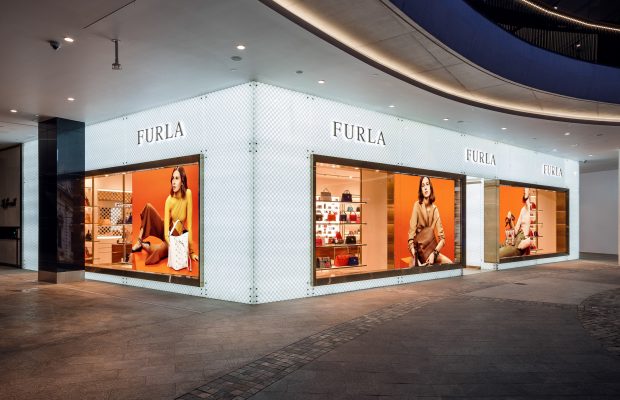
    Furla Group announced the buyback of the Australian distribution network from its distributor, Luxury Retail Group (LRG). Furla opened the first boutique in Westfield Sydney in December 2013, and now has 15 stores in Melbourne, Sydney, Brisbane and Gold Coast.

    Furla acquires 100% of the distribution network, reaffirming the brand’s vision of further strengthening its presence in Australia and New Zealand. This year, Furla plans to open 5 more stores in Australia and New Zealand, beside enlarging the existing Westfield Sydney boutique: by the end of 2017, the network will be made up of 20 Furla stores.

    “Australian market is very important for Furla and crucial in our expansion plan. Since 2013, Luxury Retail Group has been the best key partner to work with as it perfectly embodies the Furla vision, values and DNA: this is the reason why the two LRG directors will remain as board members of Furla Australia” said Alberto Camerlengo, Furla Group CEO, “We expect that in 2017 Australian business will represent the 5% of the global revenues, we are very proud to announce this acquisition. We aim to enhance the distribution in this Country given the success of the Furla retail strategy and the very positive response of Australian customers”.

    “We believe the timing makes sense for Furla to reacquire its distribution.” Nelson Mair, Managing Director of LRG also added, “After having achieved 95% sales growth in 2016, this vertical integration of Furla Australia will better equip the business for the next phase of its growth. I am extremely proud of my team and what they have been able to achieve in such a short space of time and thankful to Furla for trusting their wonderful brand to us”.

    Furla has a direct presence in 100 countries; with 444 monobrand stores that are split evenly between directly-owned boutiques and franchises. The Company also has distribution in multibrand and department stores in 1,200 international locations.

  • Under Armour braces for first loss since IPO

    Under Armour braces for first loss since IPO

    Under Armour is poised to report its first quarterly loss since going public in 2005, a setback for a high-flying growth company that’s already had a tumultuous start to the year.

    The sports-apparel maker in January cut its growth forecast, sending the stock plummeting. Soon after, Chief Executive Officer Kevin Plank’s favorable comments about President Donald Trump sparked a consumer backlash. Plank, who founded the company, also raised eyebrows this month when a proxy filing showed that businesses he controls received $73 million in payments from Under Armour.

    “Under Armour has gone from being an incredibly loved stock to now having a lot of concern around it,” said Simeon Siegel, an analyst at Instinet LLC. Negative sentiment on Wall Street, he said, “has hit a fever pitch.”

    On Thursday, the athletic brand will probably post a loss of about 4 cents a share in the first quarter, according to the average of analysts’ estimates. Revenue projections call for 5.9 percent growth to $1.11 billion. That would mark the company’s first dip below double-digit gains since the height of the recession in 2009.

    Under Armour’s prospects have done an about-face as it struggles to recapture the rapid growth that saw revenue double about every three years. Plank has blamed the company’s woes on overall retail weakness and store closings, including the liquidation of key customer Sports Authority. The result has been a glut of merchandise, meaning profit margins took a hit as discounting was needed to clear it. In January, the company lowered its forecast of 2017 revenue growth to as much as 12 percent from the low-20-percent range.

    Under Armour shares have fallen 33 percent this year after dropping 30 percent in 2016. They slid 0.5 percent to $19.44 at 9:35 a.m. in New York on Wednesday, with its price trading at about half the level of seven months ago.

  • Coca-Cola to restructure company and cut costs

    Coca-Cola to restructure company and cut costs

    Coca-Cola’s sales declined in the first quarter as it restructured its business, and the world’s biggest beverage maker said it will cut 1,200 jobs starting later this year as it deepens its cost-cutting.

    The maker of Fanta, Sprite and Smartwater said the job cuts will come from its corporate staff around the world. That would represent about a 22-per-cent reduction of its corporate staff of about 5,500, or a 1-per-cent reduction in its total workforce of 100,300 employees, according to FactSet.

    Coca-Cola Co. said the cuts would help it find another $800 million (U.S.) in annualized savings, in addition to the $3 billion the company previously said it is trimming. Most those savings are expected to be realized in 2018 and 2019, it said.

    The cuts are part of a comprehensive review and won’t be concentrated in any one place, the company said.

    The company has also been reshaping its business by selling back its bottling and distribution operations to independent bottlers. That means Coke is becoming more focused on selling concentrates to bottlers and marketing for its brands as its No. 2 executive, James Quincey, prepares to officially take over as CEO next week.

    Quincey has said he plans to focus on making Coke a “total beverage company,” meaning it will more aggressively seek growth in promising drinks other than soda to better reflect changing tastes. The efforts have included putting more marketing behind options like Smartwater, including a carbonated variety of the bottled water.

    When excluding the impact of refranchising, a negative impact from foreign currency exchanges and other structural changes, Coke said its revenue was flat.

    On a global basis, the Atlanta-based company said total sales volume was flat. That reflected a 1-per-cent decline in sodas, and a 3-per-cent increase for the category including water, enhanced water and sports drinks. Volume rose 2 per cent in the category including tea and coffee.

    For the first three months of the year, the company earned $1.18 billion, or 27 cents per share. Excluding one-time gains and costs, it said it earned 43 cents per share, a penny less than analysts expected, according to Zacks Investment Research.

    Total revenue was $9.12 billion in the period, topping analyst forecasts for $8.96 billion.

  • Vietnam’s life insurance market faces challenges

    Vietnam’s life insurance market faces challenges

    Twenty-four-year-old Ms. Trinh Van Anh, the manager of an international school in Hanoi, does not have a life insurance policy and hasn’t thought about getting one, even though her monthly salary of $1,000 is higher than most of her peers.

    “No one recommends I take out a policy,” she said. “No one knows what life insurance covers, what it gives the policyholder, or what the benefits are.”

    Like Ms. Anh, many other Vietnamese people remain confused about what life insurance can actually bring.

    Even though premiums in Vietnam are on track for yet another record year, the gains are coming from a very low base and foreign insurers have yet to truly crack the market despite dominating.

    It should take only a few more years, though, for them to make more substantial headway.

    Foreign insurers’ playground

    2016 continued to see robust growth in Vietnam’s insurance market, with the life insurance segment reaching a ten-year high.

    Insurance premiums totaled around VND86.6 trillion ($3.8 billion), representing an increase of 22.74 per cent against 2015.

    Total revenue in life insurance was over VND49.2 trillion ($2.2 billion), an increase of 30.5 per cent, while revenue in non-life insurance was VND36.4 trillion ($1.6 billion), up nearly 12.5 per cent, according to data from the Insurance Supervisory Authority (ISA) under the Ministry of Finance (MoF).

    Eighteen life insurers are competing fiercely in the market. Eight of the 18 increased their charter capital in 2016 to improve financial capacity during expansion and business development.

    Manulife Vietnam, for example, raised its charter capital to VND1.82 trillion ($80 million), while Chubb Life Vietnam increased its by VND150 billion ($6.5 million) to more than VND1.55 trillion ($69.5 million).

    According to an assessment from Vietnam Report, among the five largest life insurers, which hold 86 per cent of the market share, are four foreign companies and only one domestic company, Bao Viet Life, which has a foreign strategic shareholder, Sumitomo Life from Japan.

    Prudential Vietnam leads the life insurance market with a share of 29.9 per cent, followed by Bao Viet Life with 25.7 per cent, Manulife 12.1 per cent, AIA Vietnam 9.2 per cent, Dai-ichi Vietnam 9.1 per cent, Chubb Life Vietnam 4.4 per cent, and PVI Sun Life 2.3 per cent.

    The remainder share 7 per cent. The five largest life insurers are believed to have posted premium revenue of VND5.8 trillion ($254.7 million) in the opening two months of this year, an increase of 30 per cent year-on-year and accounting for 80 per cent of all revenue, according to the ISA.

    Due to market regulations, it is impossible to compete in Vietnam’s life insurance market solely by premiums.

    All products are subject to close scrutiny from the MoF before being launched and premium levels are set.

    There is no way to cut premiums to attract buyers, and players must instead compete in service quality or the provision of value-added packages.

    All life insurers have headquarters in Hanoi in the north and Ho Chi Minh City in the south, with most also having branches and representative offices in major cities and provinces.

    Dai-ichi has 53 branches and representative offices, Manulife Vietnam 22, Prudential Vietnam 21, and AIA 14.

    Bao Viet Life remains the only player to cover all 63 cities and provinces in the country. Most companies over the last ten to 15 years started with agencies and this represents about 90 to 95 per cent of the industry in Vietnam today, with ISA’s figures showing there are currently some 1,000 representative offices and general insurance agencies of life insurers nationwide.

    Besides traditional sales methods, life insurers have also started partnering with commercial banks to increase sales and promote products.

    The sluggishness in the bancassurance market in Vietnam over the last few years can be attributed to a lack of service and low awareness among customers about the benefits of bancassurance products, with it only contributing 2 per cent to total turnover.

    Still, analysts believe that the channel holds great potential, with some 35 commercial banks and financial institutions now cooperating with insurers.

    Impediments remain

    “The penetration rate of life insurance, usually measured as the number of individuals who actually own life insurance, is still low in Vietnam relative to other Southeast Asian countries,” Mr. Steve Clark, Country Head of Prudential Vietnam, told VET.

    Average insurance premiums stand at only $30 in Vietnam, much lower than the global average of $595 and $74 in Southeast Asia.

    Only 7 per cent of Vietnam’s 90+ million people have life insurance and the sector contributes a modest 2 per cent to GDP, compared with more than 2.6 per cent in Indonesia and 11-14 per cent in South Korea and Singapore.

    The obstacles are many. According to Mr. Phung Quoc Khanh, Director of the ISA, awareness among Vietnamese people about life insurance may have increased but most still don’t think it’s worth it.

    Almost all Vietnamese people are wary or believe it unnecessary to buy insurance because they don’t have a thorough understanding of its importance.

    Life insurance products usually involve a long contract term, so many customers are concerned about their ongoing financial capacity.

    At the same time, doubts about foreign life insurers’ commitment to permanent operations in Vietnam add to the low penetration rate.

    Many potential Vietnamese consumers still see insurance as an investment rather than a device to share financial losses caused by poor fortune.

    They prefer bank savings or investing in gold or real estate, where they earn a higher rate of return, than buying insurance.

    The low penetration rate also comes from the fact that life insurers have only focused their operations in big cities while overlooking the 70 per cent of the population that still live in rural areas.

    They are also still separating themselves from the general activities of the sector, missing out on promotional opportunities and not playing a role in trying to increase awareness.

    “Life insurers have only focused on building their brand and image and not on activities to promote basic insurance knowledge,” Mr. Khanh said.

    While life insurers focus on implementing their own strategies to gain more market share and sign up more customers, their ambitious plans may fail due to problems relating to human resources.

    The rising number of insurance companies in recent years along with a lack of quality insurance training has created a serious shortage of skilled human resources for the sector.

    This has led to unfair competition in attracting experienced employees and insurance agents, one insider said.

    While acknowledging the increasing number of life insurance products, Mr. Khanh believes that these are mainly for high-income earners.

    Lower premiums to mid and low-income earners are yet to be introduced, even though they are the majority of the population and are vulnerable to financial incidents.

    Potential enormous

    The penetration rate may well change soon, however.

    An emerging middle class with more money to spend and a desire to spend that money to improve their lifestyles are driving a lot of activity in Vietnam.

    The young middle class and rising wages all round are creating demand for consumer products, credit, and investment.

    Soon enough, they will turn to life insurance products, with health now being one of the leading concerns among Vietnamese people, according to a February report released by global market researchers Nielsen.

    According to the ISA, life insurers have mainly focused on three of the seven life insurance products in Vietnam: term life insurance, endowment insurance, and universal life insurance.

    This again presents opportunities for others in unit linked and pension insurance products, which can meet the differing requirements of customers.

    With Vietnam’s stock market now being increasingly stable, the possibility exists for the creation of hybrid products, using an asset-based approach to funding long-term care.

    With Vietnam now participating in a host of free trade agreements (FTAs) and bilateral agreements, demand for life insurance is set to be boosted by the growing number of expats in the country.

    The arrival of foreign firms seeking to take advantage of preferential policies is also expected to boost demand for goods and services related to property, social security, and health coverage, among others, generating knock-on opportunities for insurers.

    A strengthened economy and new innovations from continued FDI should also impact positively on household confidence and future demand for insurance products, according to Mr. Phung Dac Loc, former Secretary General of Vietnam Insurance Association  (AVI).

    In a move to facilitate the growth of the insurance sector in general and life insurance in particular, Decree No.73 came into force on July 1, 2016, prescribing new regulations on the licensing, organization, and operations of financial institutions, with specific regulations on investment portfolios and ratio and reserves.

    This requires that life insurers consider investment strategies to ensure customer benefits together with risk management and liquidation, which hint at greater competitiveness.

    Key regional players already eye Vietnam as a potential avenue for growth.

    The Hong Kong-based FWD Group, for example, which has operations in Macau, Thailand, Indonesia and the Philippines, broke into Vietnam in November last year.

    South Korea’s Samsung has also expressed an interest in expanding its footprint in the life segment. Last September, General Director of Samsung Vietnam Mr. Han Myoung Sup told the Ministry of Information and Communications that two local units, Samsung Life Insurance and Samsung Fire and Marine Insurance, were currently exploring investment plans.

    Mr. Wilfred Blackburn, CEO of Prudential Vietnam, believes that Vietnam’s life insurance market is far from saturated. In fact, he believes there is still time for new companies to enter the country.

    “The life insurance market wants new players that are able to grow and bring a fresh approach to the industry,” he said.

    “This also requires that current players be more dynamic and innovative to expand the scope of the market.”

  • Dior launched new Tokyo store

    Dior launched new Tokyo store

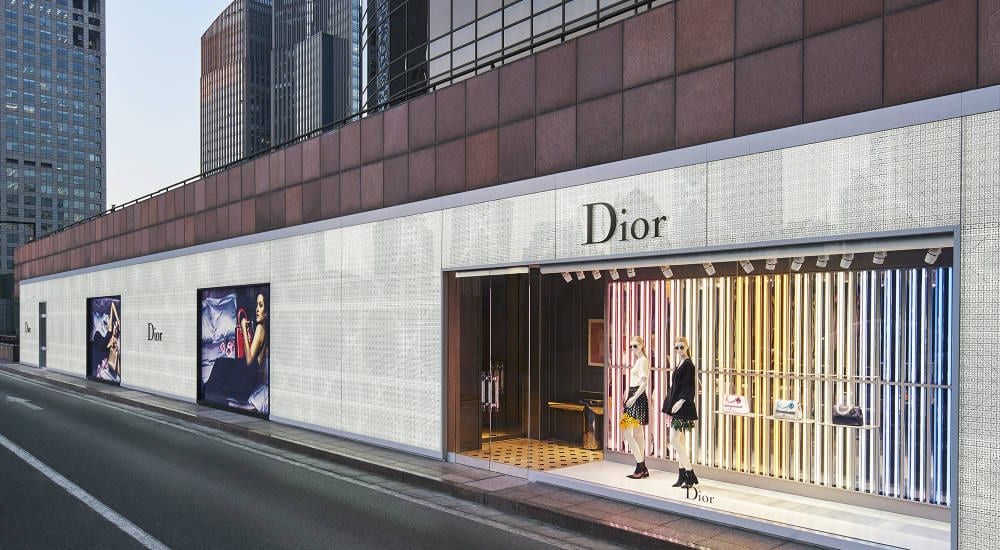
    Christian Dior launched its new Tokyo store with a fashion show in the rooftop gardens of a luxury mall, where models showed new looks from its creative director Maria Grazia Chiuri.

    Underlining Dior’s connection with Japan, which is an “important market” for the fashion brand, Chiuri drew her inspiration from cherry blossoms and Christian Dior’s 1953 “Jardin japonais” dress for her latest creations.
    Dior Ginza’s champagne-fuelled opening on Wednesday came as spending by visitors to Japan reached record levels, but growth has slowed due partly to Chinese tourists buying less.

    But Sidney Toledano, chief executive of Christian Dior Couture, said on Wednesday he was not concerned about cycles in tourism, which he has seen go through many phases during two decades running the French fashion house.

    “What we want to do in Japan is look for the local market. We look for the Japanese customers,” who have long been “super customers for luxury and high fashion,” he said.

    “Our business is not based on the tourist business … my objective always in a country is to have a very strong local plan,” said Toledano, who is also CEO of Christian Dior SE, the holding company for luxury group LVMH.

    As well as revealing the eight new lines from Chiuri, Dior used the occasion to present the autumn 2017 collection from Dior Homme for the first time.

    The new boutique occupies five floors in Ginza Six, the largest retail facility in the popular Tokyo shopping district with 241 stores, half of which are flagships. Other luxury brands’ stores include Celine, Saint Laurent and Valentino.

    Ginza Six sees tourists as a key target as the Japanese government aims to nearly double the number of overseas visitors to an annual 40 million by 2020, when Tokyo hosts the Olympics.

    Japan‘s market for personal luxury goods was worth €22 billion ($23 billion) in 2016, ranked second after the United States, with tourists accounting for 30% of revenue, according to Bain & Company.

  • Axiata to lease capacity on IPSTAR-1 for Indonesia

    Axiata to lease capacity on IPSTAR-1 for Indonesia

    Malaysia’s Axiata Group has signed a four-year agreement to lease capacity over Thaicom’s IPSTAR-1 satellite for the provision of broadband services in Indonesia.

    Subsidiary Axiata Business Services will purchase the remaining capacity on the broadband satellite, located at 119.5° east.

    Thaicom’s IPSTAR unit will provide multi-transponder 1Gbps high throughput satellite (HTS) capacity under the contract.

    As well as direct home and enterprise broadband access, Axiata plans to use the capacity for mobile backhaul.

    “We are leveraging on Thaicom’s capabilities in Asia to grow our enterprise business quickly and flexibly while providing reliable broadband services to all potential customers regardless of location,” said Axiata group chief business operations officer Asri Hassan Sabri said.

    “Where terrestrial-based connectivity is limited or unavailable, HTS connectivity serves as an enabler to unlock the digital ecosystem for new market opportunities… Thaicom’s IPSTAR helps us to connect users in remote and underserved areas of Indonesia cost-effectively. We are confident that the partnership will enable us to continue to grow our business faster without infrastructure limitations.”

    IPSTAR-1, also known as THAICOM-4, was the first HTS satellite launched worldwide in 2005, with a capacity of 45Gbps. It includes 87 Ku-band transponders and 10 Ka-band transponders.

  • Pandora opens first store in India

    Pandora opens first store in India

    Denmark-based jewellery brand Pandora has entered India’s jewellery market by opening its first store in the country. Pandora has granted exclusive distribution rights for their jewellery in India to Pan India Charms & Jewellery Private Limited (Pan India).

    The concept store is located on the ground floor of DLF Mall in Noida and carries Pandora’s jewellery collections, including the brand’s Moments collection, the Essence collection as well as the Rose collection.

    “The modern aspirational Indian woman is a section that represents the veering away from wearing predominantly gold jewellery and becoming more fashion conscious and finding unique ways to express their style. Making the brand Pandora accessible to these very customers is what excited us to pursue this business,” Devika Bakshi and Kanika Bakshi Talwar, Managing directors of Pan India, said in a joint statement.

    Through its distribution partner Pan India, Pandora is aiming to establish branded sales distribution focusing on concept stores and shop-in-shops, initially in Delhi, Mumbai and Bangalore.

    Pan India is expected open around 50 concept stores in India over a three year period, with around five stores expected to be opened in 2017.

    The jewellery market in India, which is predominantly a gold and diamond market, is one of the largest jewellery market in the world and in 2015 had a value of INR 2,947 billion (approximately DKK 300 billion), corresponding to an increase of 18% compared to 2014.

    In the period 2016-2021, the market is expected to grow with a compound annual growth rate (CAGR) of 7%, according to Euromonitor.