Author: Mei Ling Tan

  • Chopard Malaysia reopens Suria KLCC store

    Chopard Malaysia reopens Suria KLCC store

    Chopard Malaysia has reopened its store in Kuala Lumpur, showcasing a refurbished space in Suria KLCC.

    Located on the ground floor of the shopping mall, the boutique is one of three Malaysian stores for the high-end Swiss jeweller, with the other two located in the Starhill Gallery and Pavilion KL.

    Upon entry, a display island sits in the centre of the boutique, crowned by a chandelier, hanging over the cabinet. The new store, which features mid-century wooden colours and diamond-y white lights, is sectioned by both men’s and women’s corners of the store.

    The updated store returns with Chopard’s classic pieces such as Happy Diamonds and Happy Sport, featured alongside the newest Chopard collections, Happy Dreams. The latter is a classy interpretation of cloud shapes, accentuated with diamonds and mother-of-pearl.

    His Excellency the Ambassador of Switzerland Michael Winzap attended the store reopening, alongside Francis Tan, COO of Suria KLCC, and Chopard Malaysia’s general manager Karen Teh.

    Suria KLCC is Malaysia’s premier shopping destination located at Kuala Lumpur prestigious commercial address, the Kuala Lumpur City Centre (KLCC). Set over six levels, it offers an array of goods and services including fashion, food and entertainment.

    Chopard was founded some 160 years ago and remains as one of the last jewellery and watchmakers to be family owned. It is currently helmed by siblings and co-presidents Karl-Friedrich and Caroline Scheufele.
  • Kao’s net income up 16% in Q1, yearly forecasts confirmed

    Kao’s net income up 16% in Q1, yearly forecasts confirmed

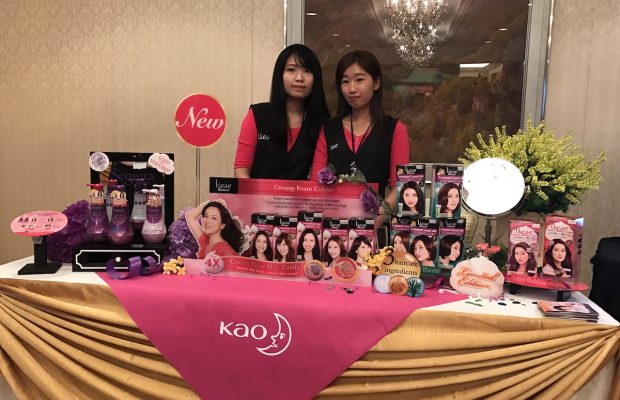
    Japanese cosmetics group Kao has posted a 16% rise in net income in the first quarter 2017, boosted by rising sales in Asia and reductions in costs, and has confirmed its prudent annual forecast.

    Between January and March, the group’s net income rose to JPY24.17 billion (nearly €200 million based on the exchange rates applied by Kao), while EBIT grew 12% reaching JPY38.6 billion.

    The profitability results come on the back of a 3% rise in revenue for Kao, up to JPY345.18 billion. Excluding exchange rate effects, revenue was actually up 8.6%, driven by solid skincare and personal care product sales in Japan and Asia.

    In Japan, where the group generates two thirds of its revenue, sales slumped slightly within a stagnating market. Demand by tourists, especially Asian ones, also recorded a shortfall, having been very strong in the last few years but being very sensitive to exchange rate fluctuations. The group is hoping to improve its performance thanks to a series of new cosmetics launches in the second part of the year.

    Elsewhere in Asia, revenue rose by 11.4%, with “solid growth in China, Indonesia and other countries.” At constant exchange rates, the increase was as high as 23.4%.

    Revenue was on the up in other regions too, growing 10.8% in the Americas and 2.2% in Europe.

    Kao’s consumer goods brands (beauty, house cleaning and diet food) were flat overall, but the chemical products division was very positive, up 14.7% as the trend of the infrastructure market improved in Japan, and Chinese automotive production was also buoyant.

    In terms of annual results, Kao has confirmed the forecasts published in February, with sales growing 0.9% to JPY1.470 trillion, a net income of JPY138 billion (+9%) and an EBIT of JPY200 billion (+7.8%), all of this within a “tough competitive environment.”

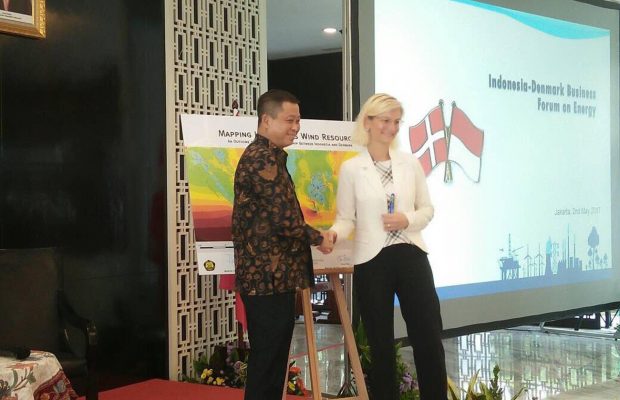
  • Indonesia-Denmark launch wind power map

    Indonesia-Denmark launch wind power map

    The Energy and Mineral Resources Ministry and Denmark’s Development Cooperation Ministry launched on Tuesday a map pinpointing the wind power potential for electrification in Indonesia.

    Denmark Development Cooperation Minister Ulla Tørnæs said this was part of a six-month cooperative engagement between the two governments, during which they exchanged their experiences in developing renewable energy sources for electrification.

    “Today, we are launching a new wind map that shows the vast potential for utilizing wind in Indonesia,” Tørnæs said in her opening speech at the Energy and Mineral Resources Ministry in Central Jakarta on Tuesday.

    “A number of visits to Denmark by Indonesian officials over the past six months has deepened the discussion and insight into waste-to-energy solutions, the use of biomass and how to accommodate fluctuating markets.”

    The map displays the hot spots for wind power potential in Indonesia. It is expected to help the government and investors decide the best locations to develop wind turbines.

    The map was also launched alongside a book titled Integration of Wind Energy in Power Systems, which will serve as a guide for policymaking and the integration of electricity into state-owned electricity firm PLN’s existing system. The book was written based on Denmark’s experiences in wind power development.

  • Memebox will no longer sell Korean beauty products to the US

    Memebox will no longer sell Korean beauty products to the US

    Online Korean beauty shop Memebox was known for selling popular K-beauty products to the United States. However, the retailer revealed it will change its model from selling beauty products to focusing on educating consumers about Korean products through information, reviews and tutorials.

    Though it will continue selling K-beauty products to Korea and China, the site will send its US customers to Amazon to shop. According to Memebox founder Dino Ha, the restructuring will turn Memebox into an educational site and search function rather than online shop. “What we learned is that what we really need is the education and the content piece to let the users know what K-beauty really means,” he said. Memebox’s new model will also integrate YouTube tutorials and Instagram posts featuring K-beauty products into its search function, and allow users to search for products based on ingredient or skin type.

    With the new model, Memebox will earn money through affiliate links rather than direct sales. It currently has an affiliate agreement with Amazon, and Ha says the brand is in talks to create a similar deal with Sephora.

    Ha also says Memebox has seen longer engagement from visitors since introducing YouTube videos to the site. Though the site currently has no official agreement with YouTube or Instagram personalities, Ha says he has received requests from influencers to make their content more visible on Memebox. Eventually, the site may add a live chat feature with influencers.

    Memebox still maintains its four private beauty labels, and will soon introduce a fifth, but the site will send US shoppers to Amazon to purchase the products.

    Currently, Memebox has 1.5 million customers, and wishes to increase its customer base to 10 million by the end of the year. Ha says the site might see its profits dip with the new model, but hopes to see more engaged users and fruitful partnerships. “Whoever can do the best job sending these products to users is where we’ll partner as much as we can.”

  • Opel to build new Corsa model with Peugeot technology

    Opel to build new Corsa model with Peugeot technology

    Car maker Opel, which PSA Group has agreed to buy from General Motors, will use the French carmaker’s technology in the next generation of its best-selling Corsa model, a company spokesman said, confirming a report.

    The current Corsa model is built with GM technology. Opel had previously said its new Corsa, slated to be launched in 2019, would also be built with GM technology but has now decided to use Peugeot technology, allowing for higher margins, Allgemeine Zeitung Mainz reported in its online edition on Monday.

    PSA, which agreed to buy Opel in March, was not immediately available for comment.

    The new Corsa will be Opel’s fourth joint project with PSA after Opel models Crossland X, Grandland X and Combo. The Corsa will be built at Opel’s largest manufacturing site, in Saragossa, Spain.

  • Adidas China to open 2,000 new stores by 2020

    Adidas China to open 2,000 new stores by 2020

    Adidas AG plans to open 2,000 new stores in China by 2020, after the sports group’s business in the Asian nation grew nearly 30% last year, making it the second-largest market in the world after Western Europe.

    According to local media reports, Adidas AG – which covers Reebok, TaylorMade and Reebok-CCM Hockey, as well as the its namesake Adidas – is eyeing 12,000 stores in China by 2020, adding to the 10,000 stores it already has there.

    Adidas’s Reebok brand also plans to open 500 new stores in China by 2020, as per reports.

    In 2016, Adidas recorded sales of 3 billion euros ($3.26 billion) in China on the back of updated products, new stores (Adidas opened 1,000 stores in the country), and the development of e-commerce.

    Colin Currie, managing director of Adidas in China told China Daily that round 50% of the group’s revenue comes from 23 major cities in China. Adidas is present in more than 1,000 cities, and in therefore, wants to open stores across 2,000 cities in China.

    “We believe smaller cities will give us 50% of our growth in the coming years,” Currie said.

    Moving forward, Adidas CEO Kasper Rorsted also said on a recent visit to China in late April that e-commerce would be a huge driver for its business going forward in China.

    “China has one of the most sophisticated e-commerce and digital landscapes in the world, which we plan to make extensive use of,” said Rorsted.
    Adidas sold 43 million euros worth of product over China’s Singles Day last year. Rorsted said Adidas is intent on learning how to connect its physical locations to digital channels, for a smoother customer experience.

  • Robi completes LTE trial in Dhaka

    Robi completes LTE trial in Dhaka

    Bangladesh’s Robi Axiata is gearing up to launch 4G services after completing a successful trial of the technology in conjunction with Ericsson.

    The operator conducted an LTE demonstration using a combination of 1800-MHz and 2100-MHz spectrum in Bangladesh’s capital Dhaka, achieving download speeds of over 90Mbps.

    Ericsson provided cutting-edge base station, radio units and baseband technologies for the trial, the companies said.

    The demonstration was also intended to explore how the technology can help facilitate adoption of high-speed broadband applications including HDTV and videoconferencing.

    “Although there are some barriers to the adoption of 4G/LTE technology such as low penetration of compatible smartphones, we recognize and appreciate our customers’ growing demand for high speed internet which can only be served using this technology,” Robi Axiata CEO Mahtab Uddin Ahmed said.

    “Unfortunately, we feel the licensing framework proposed by the government make the business case for 4G unviable in Bangladesh. However, we are very keen on introducing this technology in our telecom market considering the customers’ interest… We hope the government will kindly consider revising the licensing framework to make it more enabling for 4G business.”

    Last month, Bangladesh’s regulator prepared its guidelines for the proposed 4G licensing regime for the nation.

    These include requiring operators to pay a 15% gross revenue share – compared to 5.5% for 2G and 3G services – as well as a 150 million taka ($1.8 million) 15-year license fee and a further 75 million taka in annual fees.

    Bangladesh is the only country among its neighbors to have yet to introduce 4G services.

  • Chinese digital payments reach nearly $2.9tr in 2016

    Chinese digital payments reach nearly $2.9tr in 2016

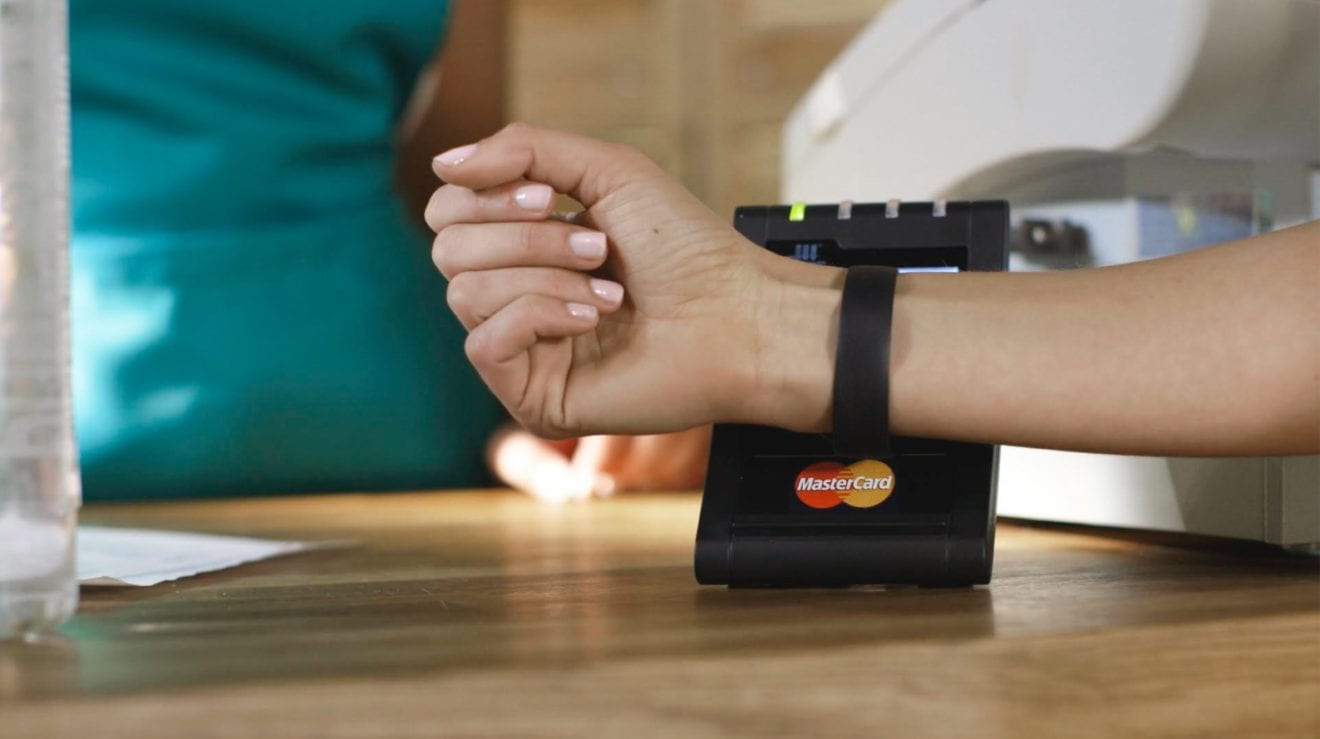
    Alipay and WeChat Pay enabled $2.9 trillion in Chinese digital payments in 2016, up twenty-fold increase in the past four years, according to a new UN study.

    The data show that digital payments, using existing platforms and networks, provide access to a wider range of digital financial services, expanding financial inclusion and economic opportunity throughout China and neighboring countries.

    In India, both Ant Financial and Tencent have bought into the Indian mobile payments market, which is enjoying rapid growth under new regulation.

    Ant Financial and Alibaba invested up to $900 million in PayTM, as well as sharing staff and technical expertise. The result: PayTM has grown from 5 million to around 200 million users in just the last few years.

    Indonesia was the fastest-growing m-commerce market in the world in 2016, the report showsexpanding 155% from January 2016 to January 2017.

    Some of this growth may be due to the release in 2015 of BBM Pay’s Instant Mobile Payments. The popular BBM chat app has over 55 million users in Indonesia and continues to develop.

    The new report by the UN-based Better Than Cash Alliance contains key lessons to help other countries include more people in the economy by transitioning from cash to digital payments.

    This shift could increase GDP across developing economies by 6% by 2025, adding US$3.7 trillion and 95 million jobs, according to a McKinsey Global Institute report.

    “Social networks and e-commerce platforms are growing in every economy, whether large or small,” said Ruth Goodwin-Groen, Managing Director at the Better Than Cash Alliance.

    “In China digital payments are thriving from these channels, bringing millions of people into the economy. This matters because we know that when people – especially women – gain access to financial services, they are able to save, build assets, weather financial shocks, and have a better chance to improve their lives.”

  • DHL launches e-commerce services in Malaysia

    DHL launches e-commerce services in Malaysia

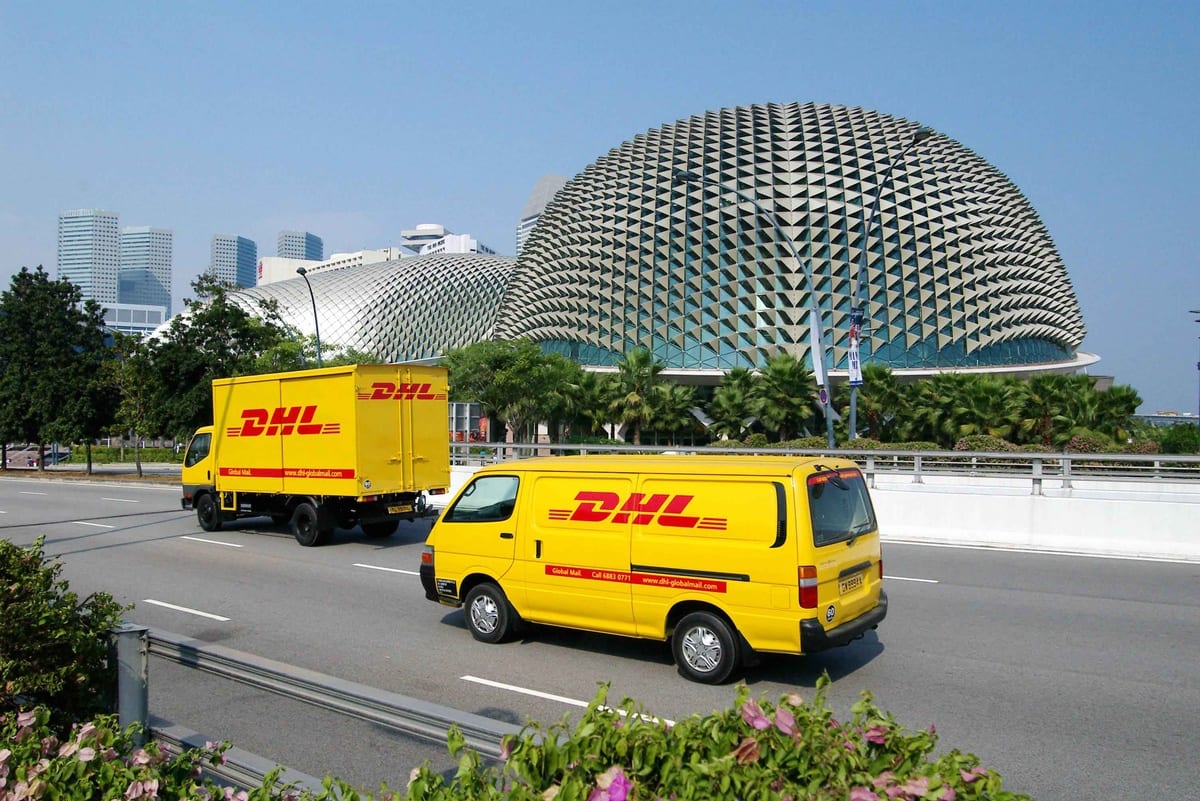
    DHL e-Commerce has launched its domestic delivery operations in Malaysia, as online shopping gets set to grow rapidly in the Asian nation.

    The investment, from the German-based division of global logistics company Deutsche Post DHL Group, includes a 48,000-square foot distribution centre in Puchong, depots in other critical urban areas such as Penang, Johor Bahru, Cheras and Puchong, and a fleet of 2-wheel and 4-wheel vehicles.

    According to a press release, DHL’s end-to-end domestic delivery solutions will offer pick-up services, track and trace, reverse logistics, cash on delivery with daily remittance and call centre capabilities for deliveries within Malaysia. DHL aims to provide timely delivery and predictive, secure delivery, it said in a statement.

    “E-commerce has become a way of life for Malaysians, with 47% already using their smartphones to shop online,” said Malcolm Monteiro, CEO, Asia Pacific, DHL e-Commerce.

    “Approximately 7 million are already shopping online every month, and with the industry expected to grow to €1bn by 2020 in Malaysia and globally to $1trn in the same year, businesses need high-quality logistics solutions to leverage this immense growth and meet the rapidly changing needs of online shoppers. This makes the need for a tailored e-commerce delivery service greater than ever before.”

    The Malaysian government has more recently been driving e-commerce growth through schemes such as the National E-commerce Strategic Roadmap and the new Digital Free Trade Zone, added Monteiro.
    “Logistics is a key component of this ecosystem, and e-commerce is a vital component of the growth agenda, so we will continue to invest in e-commerce here and worldwide,” he said.

    The Malaysia debut comes as DHL continues to expand its reach in Asia. In March, the company opened a new Fulfillment Centre in Hong Kong, adding to its global fulfillment network in U.S, Mexico, India, Europe and Australia.

    Elsewhere, in December 2016, the firm launched DHL Express Thailand, in a bid to capitalise on the nation’s growing e-commerce business.

  • Peugeot gears up with nuTonomy for self-driving car test

    Peugeot gears up with nuTonomy for self-driving car test

    French carmaker Peugeot is partnering with Boston, Massachusetts-based tech firm nuTonomy to test self-driving cars in Singapore. NuTonomy’s software, sensors and computing platforms will be installed in Peugeot 3008 models as part of plans to develop the technology needed for large fleets of autonomous cars, PSA and nuTonomy said in a statement on Wednesday.

    The latest PSA Group project seeks to work on “level 5” autonomous capable vehicles, which require no driver input, and will allow both companies to study how an “on-demand autonomous vehicle mobility service” performs, they said.

    The combination is the latest between technology and automotive companies after Daimler, which owns Mercedes-Benz, last month unveiled an autonomous cars development partnership with supplier Robert Bosch, while BMW has announced an alliance with chip maker Intel and Israel’s Mobileye.

    Autonomous driving in urban areas requires a more radical approach to vehicle design, particularly for software and sensors, to help a car navigate inner city obstacles, said Anne Laliron, Head of the Business Lab at PSA Group.

    “That is the reason we jump on the opportunity to work with nuTonomy,” Laliron told.

    PSA Group will use the project to learn about what components make sense, and which suppliers are available, Laliron said.

    Following the initial phase of this partnership, the companies will consider expanding their on-road AV testing initiative to other major cities.

    nuTonomy, a software company founded by Massachusetts Institute of Technology (MIT) academics and McKinsey management consultants was the first to begin on the road testing of driverless taxi services in Singapore last year.

    It raised $16 million last May in a funding round led by Highland Capital Partners and has backing from Singapore government authorities and Samsung Ventures, among others.

  • Cisco to buy Viptela for $610m

    Cisco to buy Viptela for $610m

    Cisco’s has announced plans to acquire Viptela and combine the San-Jose-based vendor’s SD-WAN technology with its own efforts, moving further toward a software model that produces more reliably recurring revenue.

    SD-WAN is emerging as this year’s big networking, taking the fabric of software defined networking and turning it into an enterprise-focused product.

    SD-WANs promise to redefine the way enterprises build and operate their wide area networks, making it easier to to hook up branch locations, data centers, and company headquarters with flexible infrastructure.

    Cisco will be paying $610 million in cash and assumed equity awards for the acquisition. Viptela’s talent will join the company’s Enterprise Routing team, working with them to enhance Cisco’s SD-WAN technology with their own.  The deal is expected to close in the second half of 2017.

  • More AirAsia flights take off from secondary hub

    More AirAsia flights take off from secondary hub

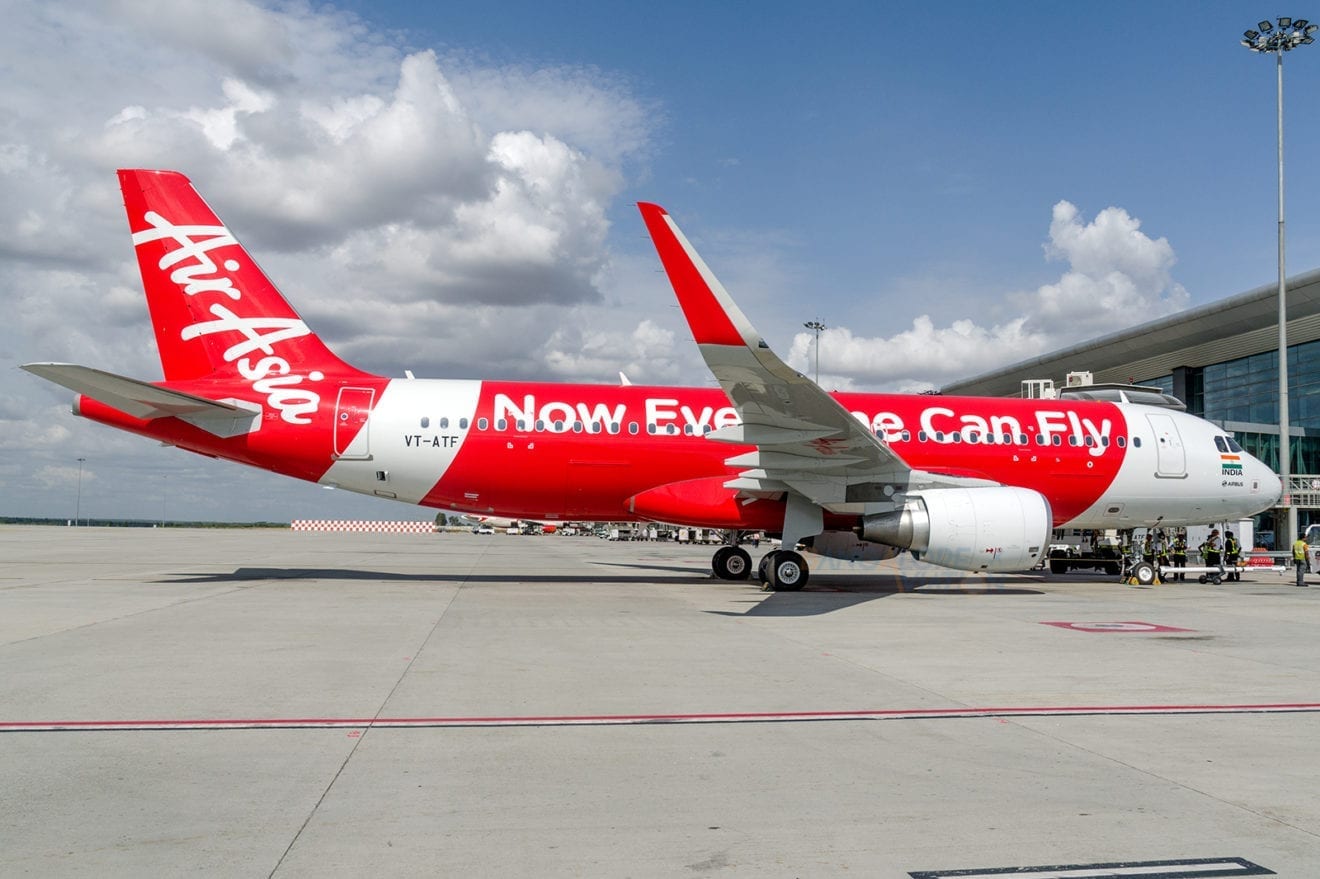
    AirAsia has unveiled more domestic routes from its secondary hubs in Malaysia as well as several new connections to China and India launching this year.

    The Malaysian LCC commenced a Kuala Lumpur-Bhubaneswar (India) flight on April 26, the first international airline to fly into the east Indian city and capital of Odisha, which Malaysian agents expect to spur FIT demand.

    “Prior to the opening of this route, travellers from Bhubaneswar and surrounding areas would have to take flights from Chennai, Mumbai or Kolkata to travel to Malaysia,” A Aruldas, managing director of Tourland Travel, said. “The new flights are also timely with Malaysia’s relaxation of the visa facility for Indian tourists.”

    Come August 9, AirAsia will begin a thrice-weekly service connecting Langkawi to Shenzhen for the first time and four-times weekly flights between Langkawi and Kuching that same day.

    Other new domestic routes include the inaugural Johor Bahru-Langkawi service launched since April 28, in addition to the upcoming Johor Bahru-Kuala Terengganu flights commencing June 22.

  • Efacec Handling Solutions is now Consoveyo

    Efacec Handling Solutions is now Consoveyo

    Consoveyo, a global expert for automated material handling and storage systems, officially announces its name change. Formerly known as Efacec Handling Solutions S.A. (EHS), Consoveyo previously belonged to the Efacec Group, the largest Portuguese corporation in the field of electromechanics and electronics, with a strong presence across various international markets.

    Acquired by the international technology group, Körber AG, Consoveyo has been part of the Group’s Business Area Logistics Systems since September 2015. All subsidiaries under the company in Europe and Asia will now bear its new name. In Southeast Asia, Consoveyo Singapore Pte. Ltd. will continue to provide automated systems support to its customers in the region.

    Alluding to the Portuguese words, ‘aconselhar’ (for consulting), ‘consenso’ (for consent), and ‘consolidar’ (for strengthening and reinforcing), Consoveyo pays homage to the company’s origins in Porto, Portugal, and underlines the company’s competencies and engineering expertise. Consoveyo is also associated to the word ‘convey’ in English, which describes the act of transporting products, communicating, and advising. The new name aims to bind Consoveyo together with the other brand names within the Business Area Logistics Systems, to achieve better synergy within the Körber Group.

    With more than 30 years of experience, Consoveyo is a global leader for automated material handling and storage systems. The company will continue to supply its customers in Europe and Asia with automated systems for intralogistics.

    “The name change symbolizes an important milestone of our integration into the Business Area Logistics Systems and the Körber Group,” Jorge Couto, Chief Sales Officer at Consoveyo, explained. “Being part of this economically strong and successful Group provides Consoveyo with sustainable and comprehensive future growth prospects – both as a business and as an employer. Our staff are excited about the prospects of this new chapter, where we can leverage on the Group’s international customer network, technologies, and the know-how of our sister companies within the Körber Logistics Systems, all while giving back by supporting them with Consoveyo’s solutions and business relations.”

  • Chow Tai Fook to open its first branded boutique in the US

    Chow Tai Fook to open its first branded boutique in the US

    With Hong Kong-listed jeweler Chow Tai Fook recently laying claim to the world’s most expensive cut diamond ever—sold at a Sotheby’s auction on April 4—the increasingly iconic Jewellery Group this week announced the further expansion of its global footprint, with the opening of its second American retail outlet, and the company’s first own-branded boutique in the United States.

    Chow Tai Fook, who last November opened its first stateside store in Macy’s NYC, revealed on Monday that the second store will be opening in the heart of Honolulu, Hawaii, situated at T Galleria by DFS. The LVMH-owned duty-free retailer rebranded its worldwide T Galleria stores back in 2013, with the hope of attracting China’s increasingly sophisticated millennial consumers—and chose its Hawaii location in which to announce the renaming of its non-airport Galleria locations. Four years on, and the duty-free mall will next month be the location for the opening of Chow Tai Fook’s 970-square-foot-store, looking to capture the attention of wealthy travelers visiting the surrounding luxury resorts and beaches.

    With Chinese tourists recently reported as the only group of travelers for whom Donald Trump’s presidency has made it more likely than ever for them to visit the United States, the current political climate encourages luxury outlets to increasingly target Chinese consumers from within America. The Chow Tai Fook Jewellery Group currently boasts an extensive network consisting of over 2,300 retail points globally, with more than 2,000 jewelry and luxury watch outlets in Greater China.

    According to company Managing Director, Kent Wong, Chow Tai Fook will be “looking to capture the vast growth potential of leisure spending in the Hawaii market” and take advantage of the Hawaiian capital of Honolulu as both a popular holiday location, and a frequent luxury honeymoon and wedding destination. Aiming to entice consumers from both home and abroad with the opening of their first ever own-branded boutique in the United States, the agreement signed with the world’s leading luxury travel retailer promises the support of T Galleria’s 50 years of experience in the Hawaiian market.

    The news, however, comes after reports earlier this year of Chow Tai Fook choosing to target younger consumers within China, opening outlets stocking jewelry at about a third of the price of that sold at the company’s flagship Chow Tai Fook-branded stores. With jewelry at these outlets sold at an average price of 2,000 RMB ($291), Chow Tai Fook seem to be turning their attention overseas to the more affluent Chinese traveler. The Chow Tai Fook boutique in Haiwaii will offer a range of luxury products including gem-set jewelry, fixed-price gold products and platinum and karat gold jewelry, alongside exclusive collections such as Oriental Blessings and Jardin Magique. The store will also stock exclusive wedding jewelry.

    After the announcement of the store this Monday, there won’t be long to wait before the Jewellery Group can begin to determine whether its changing marketing strategy will pay off—Chow Tai Fook’s Hawaiian boutique will open this May at T Galleria, Honolulu.

  • Axiata taps Thaicom satellite to connect remote areas of Indonesia

    Axiata taps Thaicom satellite to connect remote areas of Indonesia

    The deal allows Axiata Business Services to purchase the remaining capacity on the IPSTAR-1 broadband satellite so that its operating company, PT XL Axiata Tbk (XL), can deliver more than one gigabit per second of High Throughput Satellite (HTS) capacity for broadband services in Indonesia.

    Axiata Business Services will use up to seven Ku-band shaped and spot beams on IPSTAR-1 located at 119.5 degree east to provide services including broadband access directly to residential and enterprise premises.

    “We are leveraging Thaicom’s capabilities in Asia to grow our enterprise business quickly and flexibly while providing reliable broadband services to all potential customers, regardless of location,” said Axiata group chief business operations officer Asri Hassan Sabri.

    “Where terrestrial-based connectivity is limited or unavailable, HTS connectivity serves as an enabler to unlock the digital ecosystem for new market opportunities,” he said. “As the world’s first-ever HTS, launched in 2005, Thaicom’s IPSTAR helps us connect users in remote and underserved areas of Indonesia cost-effectively. We are confident that the partnership will enable us to continue to grow our business faster without infrastructure limitations.”

    XL chief executive Dian Siswarini noted that many areas and islands in Indonesia are still without Internet access.

    “We believe the availability of HTS will help us to cover these unserved areas with considerable economic potential. On top of that, it will enable us to support the local community’s economic growth and the Indonesian government’s vision to accelerate the national development of digital economy across Indonesia.”

    Thaicom chief commercial officer Patompob Suwansiri thanked Axiata for its “trust” in inking the deal.

    “We are committed to working with leading mobile-network operators throughout Asia-Pacific to facilitate the growth of wireless broadband and other digital services in remote and underserved areas.”