Author: Mei Ling Tan

  • IMDA to hold 5G consultation this year

    IMDA to hold 5G consultation this year

    Singapore’s Infocomm and Media Development Authority (IMDA) plans to hold a public consultation covering 5G mobile networks later this year.

    The regulator will hold the consultation as part of its efforts to facilitate the commercialization of 5G services in Singapore.

    The IMDA is strongly urging the mobile industry to participate in the consultation to help the regulator better understand the industry’s needs, as well as the optimal spectrum roadmap and regulatory framework that will allow innovation to flourish.

    Other initiatives the IMDA will take during the transition to 5G will include the promotion of real-world trials to better understand how 5G will fit into Singapore’s business environment, as well as optimal deployment scenarios for operators.

    Singapore’s mobile operators are meanwhile themselves conducting preparatory work for the introduction of 5G – Singtel, for example, recently upgraded its LTE network nationwide to support the pre-5G technology 256 quadrature amplitude modulation (256 QAM), giving the network a peak speed of 450Mbps.

  • Innisfree collaborates with POSPi and Bank of China to launch mobile payment in China

    Innisfree collaborates with POSPi and Bank of China to launch mobile payment in China

    Mintel reports that in 2017, brands will be looking for innovative ways to use data to proactively assist consumers in all aspects of the sales journey to optimise customer service.

    The trio hopes that by adopting the innovative concept and technology, it will enable them to provide a personalised, more engaged and more convenient service to maximise the customer experience.

    Digital growth

    Innisfree, which promotes green sustainability and eco-friendliness, has ploughed resources into presenting its brand as a progressive, authentic and digitally-savvy leading destination.

    To date, it is the natural beauty name’s entry into the Chinese beauty arena that has proved the most lucrative step for the company. Since its expansion into the Chinese market in 2011, it has gone on to open 300 outlets and achieved an annual sales revenue of RMB 5.7 bn (€776 mn).

    “Innisfree, as one of the fastest growing brands under AmorePacific, has inherited the spirit of innovation and achieved a geometric growth over the past 4 years, especially in the Chinese market,” said Cai Jianren, General Manager of Innisfree.

    Celebrating its 17th birthday this year, Innisfree has an e-commerce site to help build brand awareness throughout APAC, secure a global following and increase sales by connecting online marketing efforts with an offline presence.

    With stores located throughout the APAC region, including South Korea, Hong Kong, China, Japan, Taiwan, India, Singapore, Malaysia, and Vietnam, Innisfree has positioned itself as a strong adopter of the online-to-offline (o2o) commerce trend.

    On-the-go service

    “The application of mobile POS allows us to offer a personalised service to our customers at retail stores. Each of our salespersons is now equipped with a mobile POS which has successfully eliminated queuing and empowered them to respond to customer’s various requests anywhere, anytime on the floor,” Jianren added.

    Based in Shanghai, POSPi, researches and develops mobile retail technology solutions to help brands move into a smart and intuitive retail environment.

    Feng Yanrong, Senior Manager of Bank of China, highlighted the impact this collaboration is expected to have on the business landscape: “This project marks a new step of Bank of China in the field of mobile POS, which will help multinational retailers enter the smart retail era.”

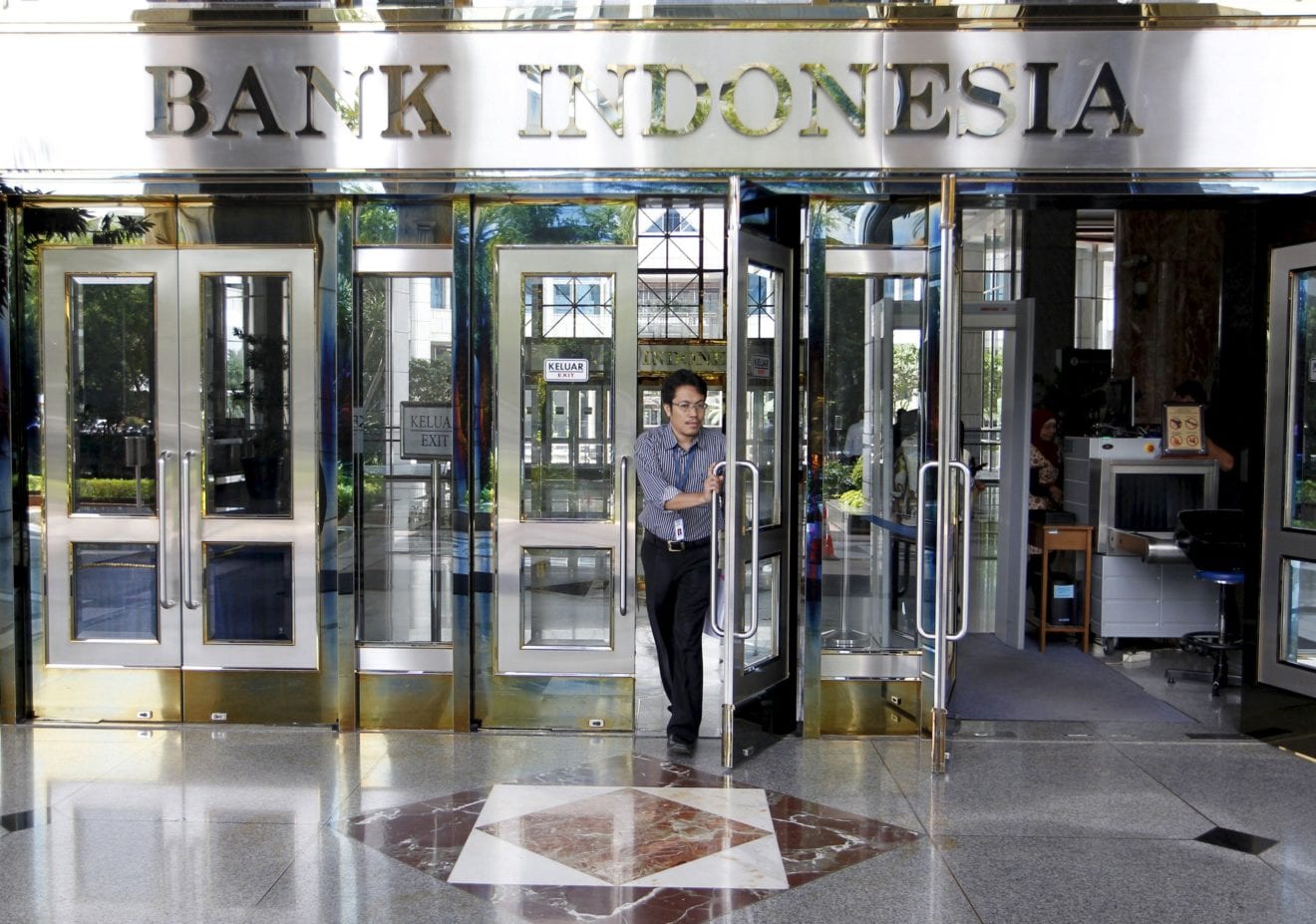
  • Bank Indonesia Keeps Benchmark Rate

    Bank Indonesia Keeps Benchmark Rate

    Bank Indonesia (BI) has kept its 7-days reverse repo rate at 4.75 percent. Other monetary benchmark rates such as deposit facility rate and lending facility rate have also been kept at 4 and 5.5 percent. “The decision was made by BI to preserve domestic macroeconomic stability,” Bank Indonesia spokesman Tirta Segara said yesterday.

    As such, the BI has maintained its benchmark rate since October 2016. Tirta did not deny that economic policy uncertainty in the United States future following Donald Trump’s victory in the US presidential election in November have also come into play. However, he said that domestic inflation rate is positive at around 3.02 percent.

    Indonesian economy will also be affected by China’s economy. The United States and China are Indonesia’s major trade partner. “BI and the government will continue to collaborate to monitor every development,” Tirta said.

    Finance Minister Sri Mulyani Indarwati said global economic outlook may not improve this year. “Economic growth in developed countries, such as the United States, Japan and European countries, may not be as rapid as expected,” Minister Sri said.

    Sri said the United States is the only developed country that may recover from the economic downturn. However, at the same time, the US economic recovery may pose new problems to the global economy. The Fed, according to Sri, may increase interest rates should the US manages to achieve economic growth.

    The Fed itself had said that it plans to increase interest rates. However, it would await Trump’s policy on tax cuts and increased infrastructure and defense spending that may lead to increase in inflation.

  • Dalian Wanda revenue drops 14pc

    Dalian Wanda revenue drops 14pc

    Dalian Wanda Group’s revenue has fallen for the first time in at least 11 years after a slump in its property business outweighed growth from its entertainment interests.

    Sales last year fell 14 per cent from 2015, while revenue at  Dalian Wanda Commercial Properties, the group’s real-estate unit, dropped 25 per cent to 143 billion yuan (US$20.8 billion).

    Wanda’s operating income rose 3.4 per cent to 255 billion yuan, while profit grew more than 10 per cent, it said, without giving details.

    Wanda’s owner billionaire Wang Jianlin, China’s second-richest man, has been acquiring Hollywood assets – he bought movie production company Legendary Entertainment last year – to help Wanda diversify away from its real-estate roots.

    He told employees at Wanda’s annual meeting in Hefei, the capital city of Anhui province in eastern China, that Ffan.com, a unit that includes internet financing and credit-rating businesses, will raise 10 billion yuan via a private placement this year. He ultimately plans to list the unit by 2020 and target profit of more than 10 billion yuan.

    Wang delisted Dalian Wanda Commercial Properties in Hong Kong last year with the idea of eventually seeking a listing in mainland China, where valuations tend to be higher. He has taken an “asset-light” strategy for his real-estate business in recent years, reducing reliance on property sales and increasing his focus on leasing and management.

    Wanda Cultural Industry Group, which oversees most of Wanda’s theme parks, film production and exhibition businesses, saw sales climb 25 per cent to 64.1 billion yuan last year.

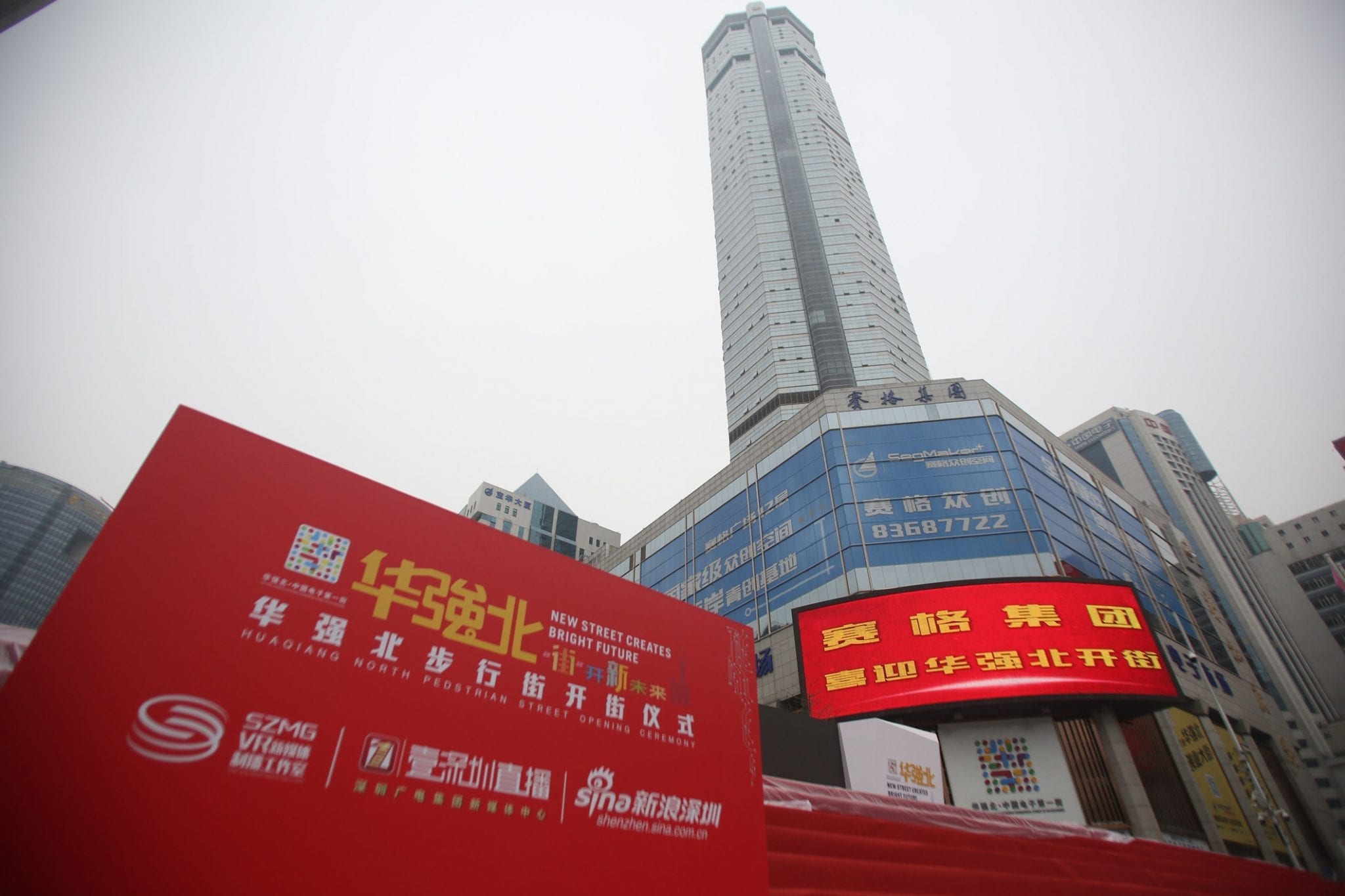
  • Huaqiang North hub new huge change

    Huaqiang North hub new huge change

    After four years of being blocked off by construction walls and scaffolding, electronics hub Huaqiang North in Shenzhen has reopened as a pedestrian street.

    Following a grand reopening ceremony, the thoroughfare has been transformed into a 930m pedestrian street with more than 4000 sqm of new business spaces in a new sublevel. The vision is to have a street that integrates fashion and technology.

    About 500,000 people shop at Huaqiang North every day, altogether spending more than 200 billion yuan (US$29.1 billion) each year.

    Many streets and thoroughfares in Huaqiang North have been closed off to pedestrians since March 2013 because of the construction of Line 7 of the Shenzhen Metro. During this time, the Futian district committee and government as well as the Futian Huaqiang North subdistrict office have taken measures to help affected merchants maintain their businesses.

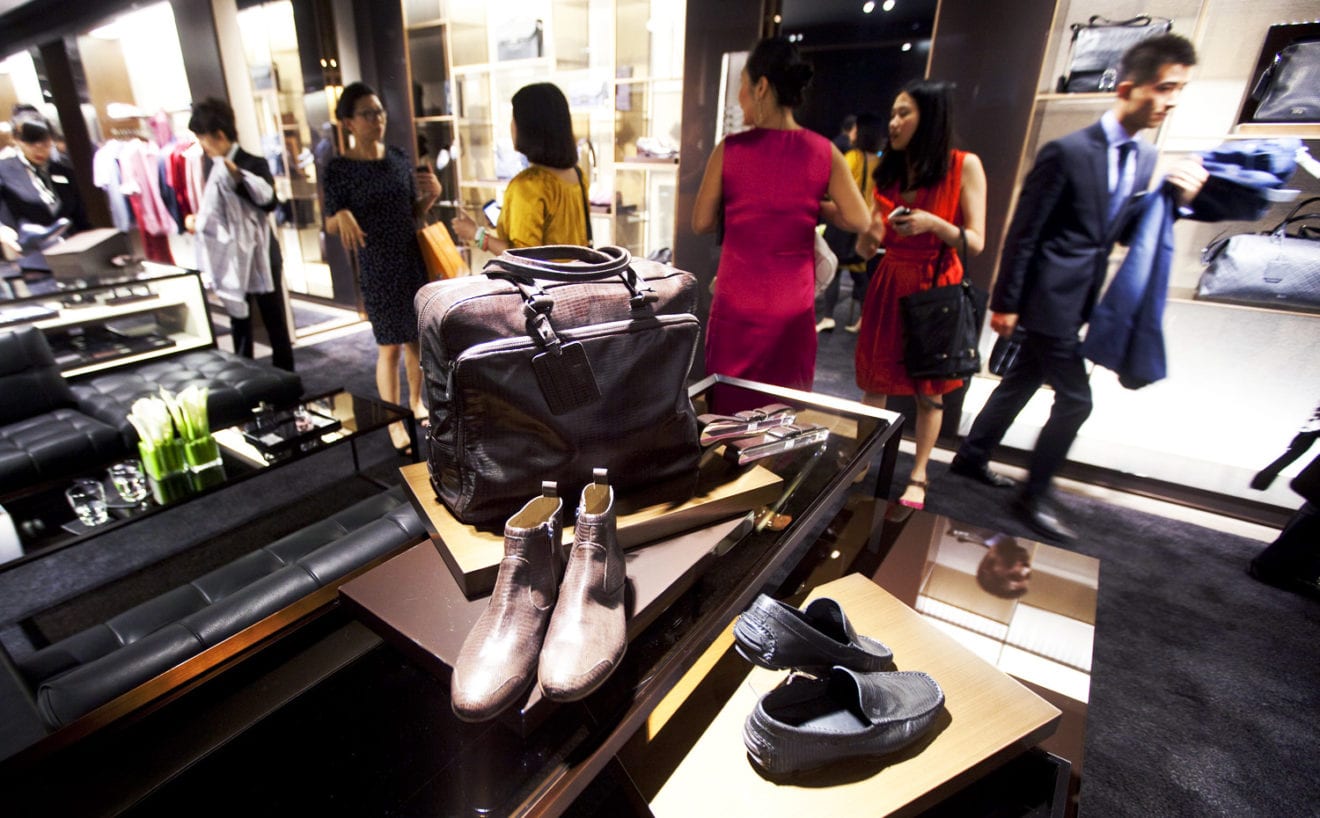
  • Hugo Boss Asia sales rebound

    Hugo Boss Asia sales rebound

    Rebounding Hugo Boss Asia sales have prompted the German fashion retailer to revise its profit outlook.

    The company’s stock price soared as much as 10 per cent after management said improved sales in Asia and Britain mean its profit decline will be less than previously predicted in the current financial year.

    Hugo Boss Asia like-for-like sales soared 20 per cent in the latest quarter, after currency adjustments.

    Asia accounts for about 20 per cent of Hugo Boss’ global sales and after currency adjustment, regional revenues rose 5 per cent in the fourth quarter – a significant turnaround from the 3 per cent decline of the previous quarter. The increase was aided by adjusting pricing more into line with those of the US and Europe.

    It is now forecasting an operating profit for 2016 which is better than the previously predicted  decline of between 17 and 23 per cent. Final results will be revealed on March 9.

    Rival fashion retailers Gucci and Louis Vuitton have also recently  reported improving sales in Mainland China as consumers open their wallets again, encouraged by government policies aimed at boosting local consumption rather than shopping abroad.

    CEO Mark Langer said in a statement that fourth-quarter results underline the company is on the right track.

    Total sales fell 3 per cent to 725 million euros (US$769 million), down 1 per cent on a currency adjusted basis, but a far better result than the third-quarter’s fall of 6 per cent. The damage was done in the US where sales fell 14 per cent on a currency-adjusted basis, partly due to the brand’s decision to stop selling in discount and outlet stores.

    Sales in Europe rose 2 per cent.

  • Fashion chain Hobbs builds global footprint

    Fashion chain Hobbs builds global footprint

    UK fashion chain Hobbs has reported a significant boost in sales driven by impressive international performances in the US and Germany.

    While same-store sales rose 3.9 per cent in the 13 weeks to December 31, total sales rose 14.3 per cent due to international expansion. Retail Week said the improvement reflected investment in product range and customer experience. Online sales grew 26.7 per cent.

    Hobbs joins other premium clothing retailers such as Reiss, Joules and Superdry to report positive trading results over the Christmas period.

    “This shows the opportunity and success in the premium fashion market despite 2016 being an incredibly tough year for mass market clothing retailers,” observes analyst Charlotte Pearce.

    Last year saw Hobbs open its first international solus store in Westchester, New York and further expansion across Bloomingdales’ store network and on bloomingdales.com. International sales rose by 97.9 per cent as a result.

    “Hobbs’ entry into Germany will prove worthwhile due to its strong British heritage and focus on quality and fit of products,” said Pearce.

    “Outerwear has been reported as a resounding success for Hobbs throughout the UK and its international markets, but as we move into spring/summer 2017 and put our coats to the back of the closet, CEO Meg Lustman and her team will need to close in on who Hobbs is targeting and which key trends will resonate best among its core shopper base to continue this run of better sales.”

    Hobbs is rumoured in the financial press to be up for sale after more than a decade under 3i’s ownership.

    “As we head into a difficult few years of trading, potential new owners must recognise that Hobbs is not yet out of the woods despite a better Christmas trading period.  It must firm up its place in the market and improve brand appeal and awareness to secure a loyal customer base,” concluded Pearce.

  • India, Myanmar top Consumer Confidence rankings

    India, Myanmar top Consumer Confidence rankings

    India tops the Mastercard Index of Consumer Confidence rankings as the most optimistic market in Asia Pacific, with Myanmar, Vietnam, Philippines and Bangladesh rounding off the top five.

    Overall, consumer confidence in Asia Pacific continues to hold steady, showing stability (within plus or minus five points from the previous survey) in nine out of 17 markets. With an increase of 1.2 points in the overall score from the first half of 2016 to 60.9 points in the second half, Asia Pacific sits just above the 60 point optimistic mark.

    However, the overall stability masks some significant movements across five markets in the region compared to the previous six months. Hong Kong, Thailand and Bangladesh saw more than 10 point improvements, while Malaysia and Taiwan saw more than 10 point decreases.

    Bangladesh recorded the largest gain of 11.2 points to 82.8 points – a significant improvement in overall consumer confidence compared to the first half of 2016 where it saw a relatively smaller increase of 4.2 points. Bangladesh’s increase in score was backed by an improvement in all components, the largest coming from heightened expectations in stock market movements (+24.6 points). Both Thailand and Hong Kong also saw a large improvement of 10.1 points, putting Thailand in optimistic territory and Hong Kong in neutral territory.

    On the other hand, eight of the 17 markets saw a deterioration in confidence levels. The biggest decline in optimism levels was observed in Taiwan, followed by Malaysia, and Myanmar. According to the survey, prospects for the stock market was the key driver of the decline.

    Between November and December 2016, 8723 respondents, aged 18 to 64 in 17 Asia Pacific markets, were asked to give a six-month outlook on five economic factors including the economy, employment prospects, regular income prospects, the stock market and their quality of life. The Index is calculated on a scale of 0 to 100, with zero as the most pessimistic, 100 as the most optimistic and between 40 and 60 as neutral.

  • Greenpeace Claims HSBC Helped Financing Deforestation

    Greenpeace Claims HSBC Helped Financing Deforestation

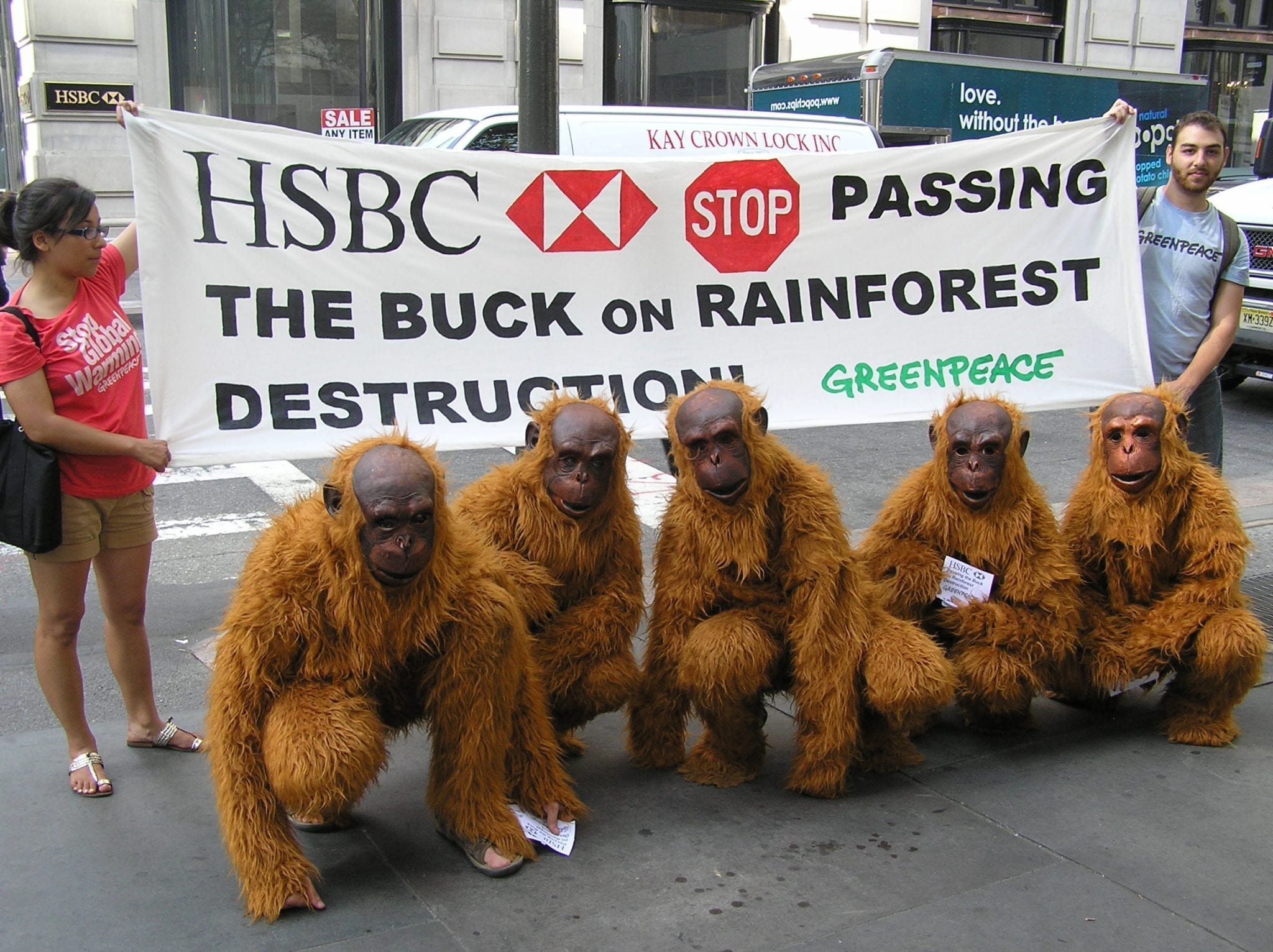
    Greenpeace International launched a new report on Tuesday, January 17, 2017, accusing British HSBC of supporting deforestation. The report stated that British HSBC provided financial services to palm oil companies that are causing rainforest destruction and human rights abuses in Indonesia.

    The report titled “Dirty Bankers: How HSBC is financing forest destruction for palm oil“, claimed that HSBC has been involved in arranging US$16.3 billion of loans and credit facilities to six palm oil firms. In addition, the is also said to have raised US$2 billion bonds for these firms.

    The palm oil companies listed in the report are Malaysian firm IOI; Indonesian Bumitama Agri and Salim Group; Singapore incorporated Goodhope Asia; Hong Kong-based and Singapore-listed Noble Group; and Korea’s Posco Daewoo Corporation.

    Greenpeace argued that HSBC has violated its policies of responsible lending by helping to finance the above-mentioned companies.

    Annisa Rahmawati, Greenpeace Southeast Asia senior campaigner said that although HSBC claimed to be a respectable bank with responsible policies on deforestation, “somehow these fine words get forgotten when it’s time to sign the contracts.”

    Not only HSBC, the report also listed several other banks claimed to be related to case studies in the report, including Japan’s Sumitomo and Tokyo Mitsubishi banks; Singaporean bank DBS; and the Australia and New Zealand Banking Group (ANZ).

    Despite the heavy criticism, the report did acknowledge HSBC as a “relatively progressive” bank that has shown a willingness to engage with criticism, and noted that the bank has a responsibility to set high standards for the rest of the sector.

  • EazyDiner plans to dig into online restaurant booking in Indonesia, Thailand

    EazyDiner plans to dig into online restaurant booking in Indonesia, Thailand

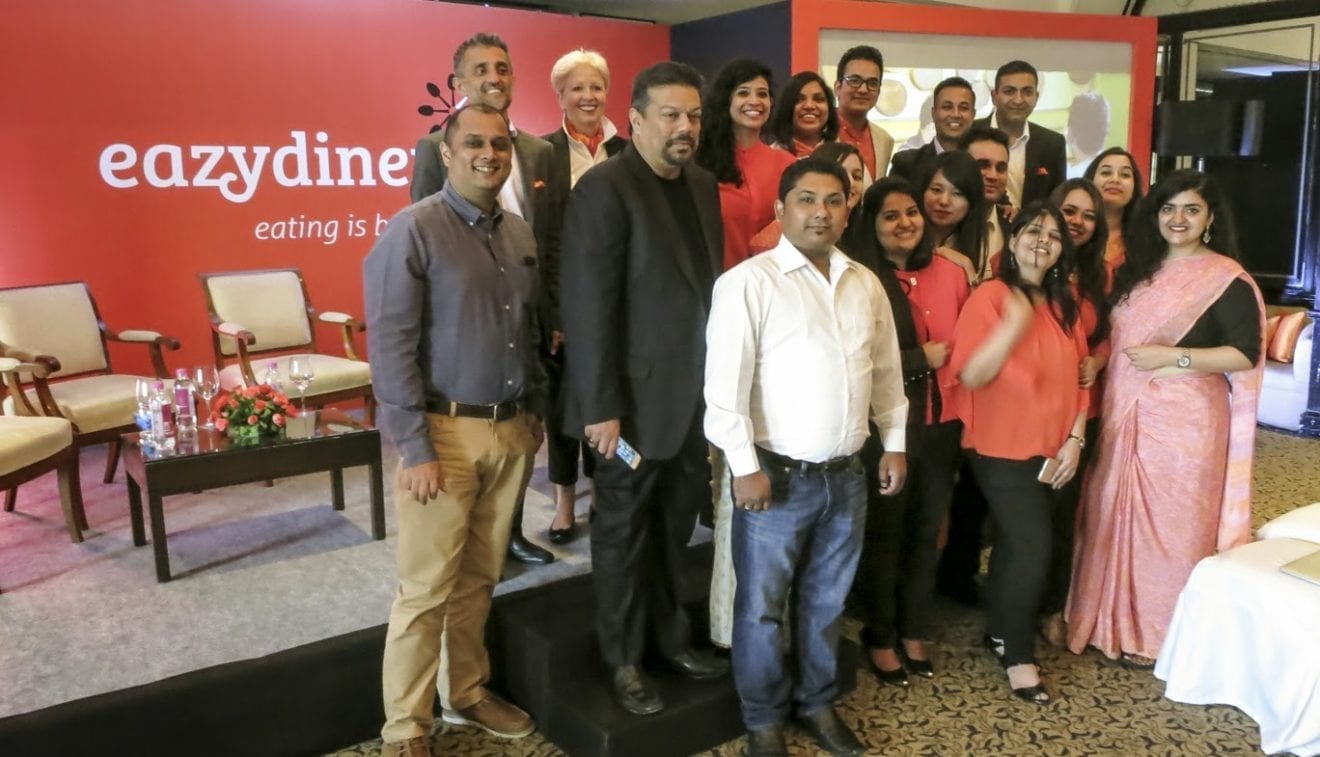
    EazyDiner, a restaurant booking and reviews platform, is in talks with potential investors to raise a fresh round of funding to expand its international footprint in the New Year.

    The two-year-old company, which was co-founded by media personality Vir Sanghvi and six professionals with a background in food, beverages and hospitality sectors, has targeted Indonesia and Thailand as its next two markets.

    While company officials declined to share details of the upcoming equity financing round, they confirmed plans of entering the South East and South Asian markets over the next 12 months.

    EazyDiner launched services in Dubai in December. The startup, which combines the services of Google-owned dining guide Zagat, NYSE-listed restaurant review firm Yelp and Priceline-owned restaurant booking service OpenTable, is also backed by two consumer-focused venture capital firms, DSG Consumer Partners and Saama Capital.

    The funding and expansion come when investor interest in India’s broader foodtech space has waned, with the startup ecosystem littered with the still-smoking embers of ventures that promised to deliver exceptional dining experiences to the notoriously fickle-minded and priceconscious Indian consumer.

    The combination of wafer-thin margins on offer, coupled with low entry barriers and lack of sustainable business models, saw investors curtail their appetite for the ventures.

    EazyDiner has charted a different path for itself. The platform, which also provides content and reviews, operates one of the country’s largest dining loyalty programmes as well. “We were never, and in fact, will never get into food delivery. The economics just don’t make sense, at least in a market like India…We believe it requires a very different skill-set,” pointed out Aman Kapur, one of the cofounders.

    EazyDiner has raised about $4 million in funding till date and counts Gurpreet Kohli, former managing director of Chrys Capital, as one of its early backers. The company operates in seven locations – the National Capital Region, Mumbai, Bengaluru, Kolkata, Pune, Chennai and Goa.

    “The focus is to go deeper into our existing markets and really establish our footprints in each of them rather than just go on an unrestrained growth across geographies,” pointed out Shruti Kaul, another cofounder.

    The platform lists about 2,000 restaurants, with more than 500 spread across NCR. EazyDiner has provided most establishments with its proprietary SaaS-based table reservation platform and has a guaranteed inventory with the rest, enabling them to provide bookings to consumers on an immediate basis.

    Gurgaon, where the company is headquartered and where it first launched operations, has played a critical role. The NCR’s startup hub, which rivals Bengaluru in its concentration of the country’s new economy ventures, has played a significant part in its growth.

    “Gurgaon, possibly, deserves its own mention alongside Mumbai and Delhi. It’s the third-largest contributor after the two metros,” said Kaul. According to her, Gurgaon contributes 15% of the company’s business across the country, outpacing Bengaluru. “For a small suburb, it’s huge. We have about 275 restaurants in Gurgaon on our platform, ranging from luxury establishments to budget restaurants,” Kapur said.

    According to both founders, emergence of the Haryana city as a startup destination has played a role in defining, as well as evolving, consumer behaviour, particularly when it comes to dining habits. “The ability to experiment there is phenomenal and probably much more than the other metros… We also see that people living to working in Gurgaon, while traveling, indulge in a lot more cross-dining than any other city in India,” Kaul said.

    Analyses drawn from consumer behaviour in one of its earliest markets has prompted the founders to look for similar characteristics in every new area it enters. “We’ve actually learned alongside the consumer and the company’s grown even as the consumer has evolved and experimented,” Kapur said.

  • Indosat Ooredoo ready to launch 4.5G technology

    Indosat Ooredoo ready to launch 4.5G technology

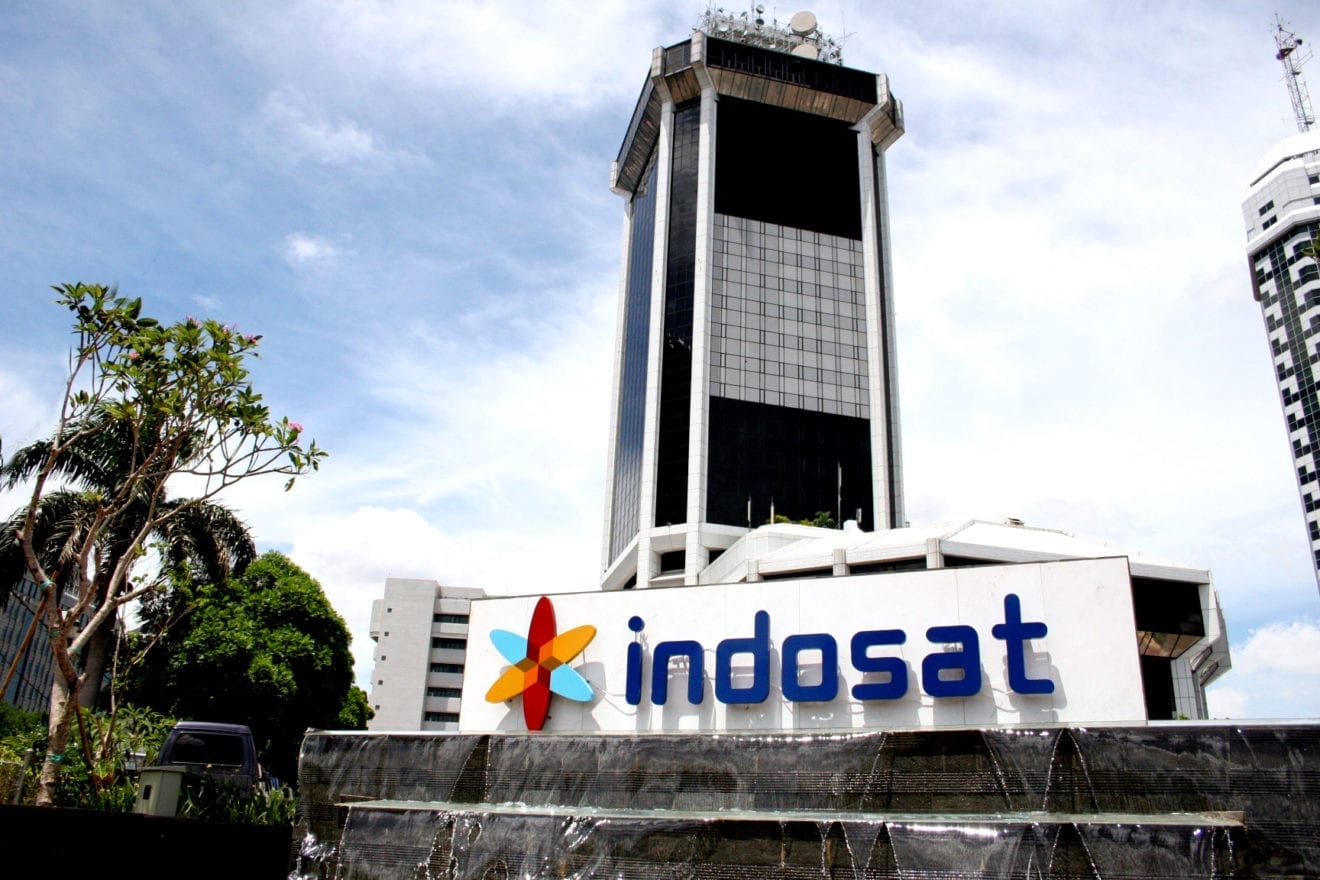
    PT Indosat Ooredoo is ready to launch its 4.5G technology in 2017 that is two times faster than its 4G predecessor, said a company spokesman.

    “We have been developing the 4.5G technology since 2012 and we are ready to launch this year, starting with the introduction of new technological infrastructures such as modernized BTS (Base Transceiver Station) in several regions,” according to its Group Head of Network Strategy and Solution, Yune Marketatmo, on Wednesday.

    Singapore and Malaysia are already ahead of Indonesia in launching the 4.5G technology, along with some European and Middle Eastern countries.

    Marketatmo also noted that in order to prepare for its introduction, the company has been working to place 4.5G data centers in several areas around Java since 2016, while the headquarters will be in Jakarta.

    “The data centers will be built in strategic locations close to customers so they can communicate easily and take advantage of this new technology,” he added.

    Marketatmo further explained that existing customers who are currently using 4G would be automatically upgraded to 4.5G. This will also apply to mobile devices that are compatible with the 4.5G technology.

    Indosat Ooredoo currently has 81.6 million customers and the company saw an increase of their data usage by 114.2 percent compared to previous years.

  • KBank keen to buy Indonesian banks

    KBank keen to buy Indonesian banks

    The regulations require foreign banks to buy more than one bank, and that the targets must not be strong institutions.

    KBank president Pipit Aneaknithi said yesterday that the bank currently had partnerships with two banks in Indonesia, and was prepared in terms of facilities and capital to establish its own footprint in the Indonesian market.

    While Indonesia has very high potential for KBank and the takeover of local banks is an option, the requirement that foreign banks have to purchase more than one bank is something that it might not be particularly comfortable with, he said.

    The Bank of Thailand acknowledges this concern, he said, adding that market entry via the Qualified Asean Banks (QAB) scheme is another potential solution for KBank.

    The bank is therefore interested in applying for QAB status if the scheme’s framework is implemented.

    Meanwhile, the establishment of a physical branch in Indonesia is likely to be more difficult than doing so in Vietnam, which is another focus country for KBank, the president said.

    The best solution right now for KBank is therefore seen as the continued partnership with two local banks in Indonesia, he explained.

    Elsewhere in Asean, KBank currently has physical branches in two markets, one each in Cambodia and Laos.

    The Cambodian branch will be officially opened on February 8, with the Vientiane branch in Laos due to be opened later this year.

    With the presence of a physical branch in a foreign market not always the best solution, and the cost of establishing such an operation today a major matter, partnering with local banks is a tangible way to conduct business, he said.

    However, the difficulty is whether the bank and its partners have the same policy direction and share a similar interest in accommodating clients, he added.

    KBank, meanwhile, has been active in terms of international banking business in the past seven years by focusing on China, where it is upgrading to local banking this year.

    The market share of KBank in trade finance between Thailand and China has risen from 5 per cent to 15 per cent in seven years, Pipit said.

    He said the next step for KBank in tapping a regionalised trade-finance market dominated by China would be for the bank to facilitate financial services to Thai clients for business between one foreign country and another. “We should open a letter-of-credit service to our clients in China who want to run a business in Myanmar,” he said by way of example.

    Furthermore, KBank must embrace the digital platform in order to integrate its regional operating model.

    Under its banking-platform plan for 2016-2017, KBank must be able to service cross-border mobile transfers, multicurrency transactions and cross-border direct settlement, he stressed.

    KBank yesterday reported a 2016 net profit of Bt40.17 billion, some 1.77 per cent higher than the previous year’s level.

    The bank and its subsidiaries set aside a loan-loss reserve of Bt33.75 billion at the year’s end, up 28 per cent from Bt26.37 billion the year before.

    The higher reserve reflects the rise in non-performing loans last year, from 2.7 per cent to 3.32 per cent.

    Lending growth, meanwhile, supported net interest income, for which KBank recorded year-on-year growth of 5.5 per cent to Bt89.67 billion.

  • Tax office to summon Google to clarify data on revenue

    Tax office to summon Google to clarify data on revenue

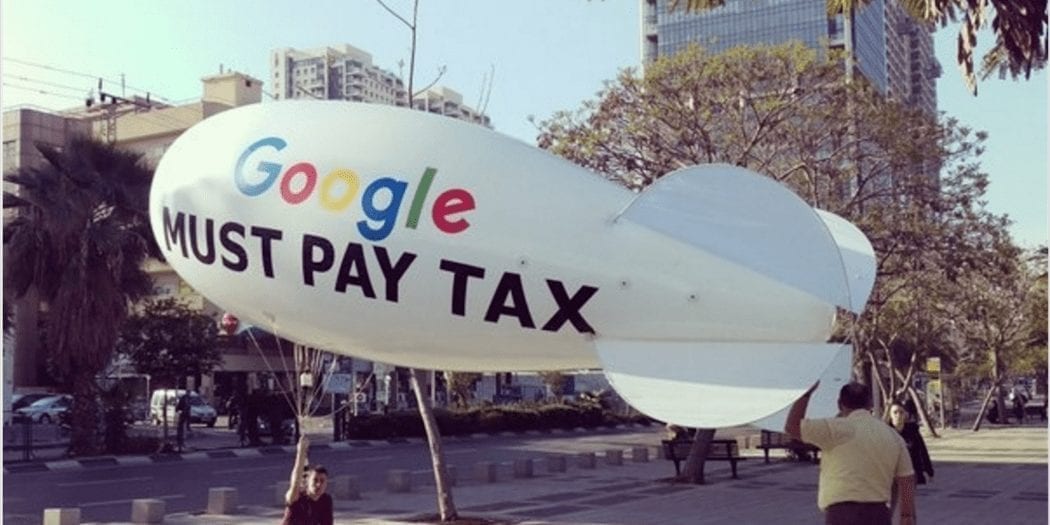
    Director General of Tax Ken Dwijugiasteadi gave an assurance on Wednesday that he would summon Google representatives to confirm data that it submitted regarding the companys revenue in Indonesia.

    “I have the data, so I will ask for their confirmation on whether the figures that they submitted are accurate,” said Dwijugiasteadi.

    He did not mention when the summons would be made, but the agenda for the meeting has been decided due to Googles history of tax avoidance. The authorities have requested for a copy of electronic data relating to revenues from advertisements.

    He also hoped that Google will respond to the summons so the process of paying income tax on their revenues, which had already been significantly delayed, can be completed quickly.

    Dwijugiasteadi said that every company that operate and collect revenues in Indonesia are obliged to meet their tax obligations and contribute appropriately by paying the correct taxes to the state.

    “Regulations must be met and my job is to enforce them accordingly. I do not threaten or use force,” he added.

    The head of the Jakarta regional office of the Directorate General of Tax, Muhammad Haniv, said that Google has yet to submit additional financial reports that they requested regarding revenue collected in Indonesia.

    “We cannot fully trust their statements as we are still waiting for further supporting documents. Their income from sources such as pay per click and other applications are yet to be accounted for,” he added.

    He further questioned Googles reluctance to be listed as a permanent company in Indonesia as the company is already operating many of its servers in the country.

    “They already have servers in Indonesia. That is the physical evidence. Being permanently established requires a physical presence,” said Haniv.

    According to the Directorate General of Tax, Google was registered as a legal entity in Indonesia at Tanah Abang Tax Office III in Central Jakarta as a foreign investment company in September 15, 2011 as subsidiary of Google Asia Pacific in Singapore.

    Based on Indonesian income tax law, Google must be declared as a permanent company and all its revenue or income within Indonesia must be taxed.

    However, Google has rejected further tax inspections from the authorities and it will not take the status of a permanent company, despite its revenue being in the trillions with the majority coming from advertisements.

  • South Korean home appliance and IT giant opens new store in Genting

    South Korean home appliance and IT giant opens new store in Genting

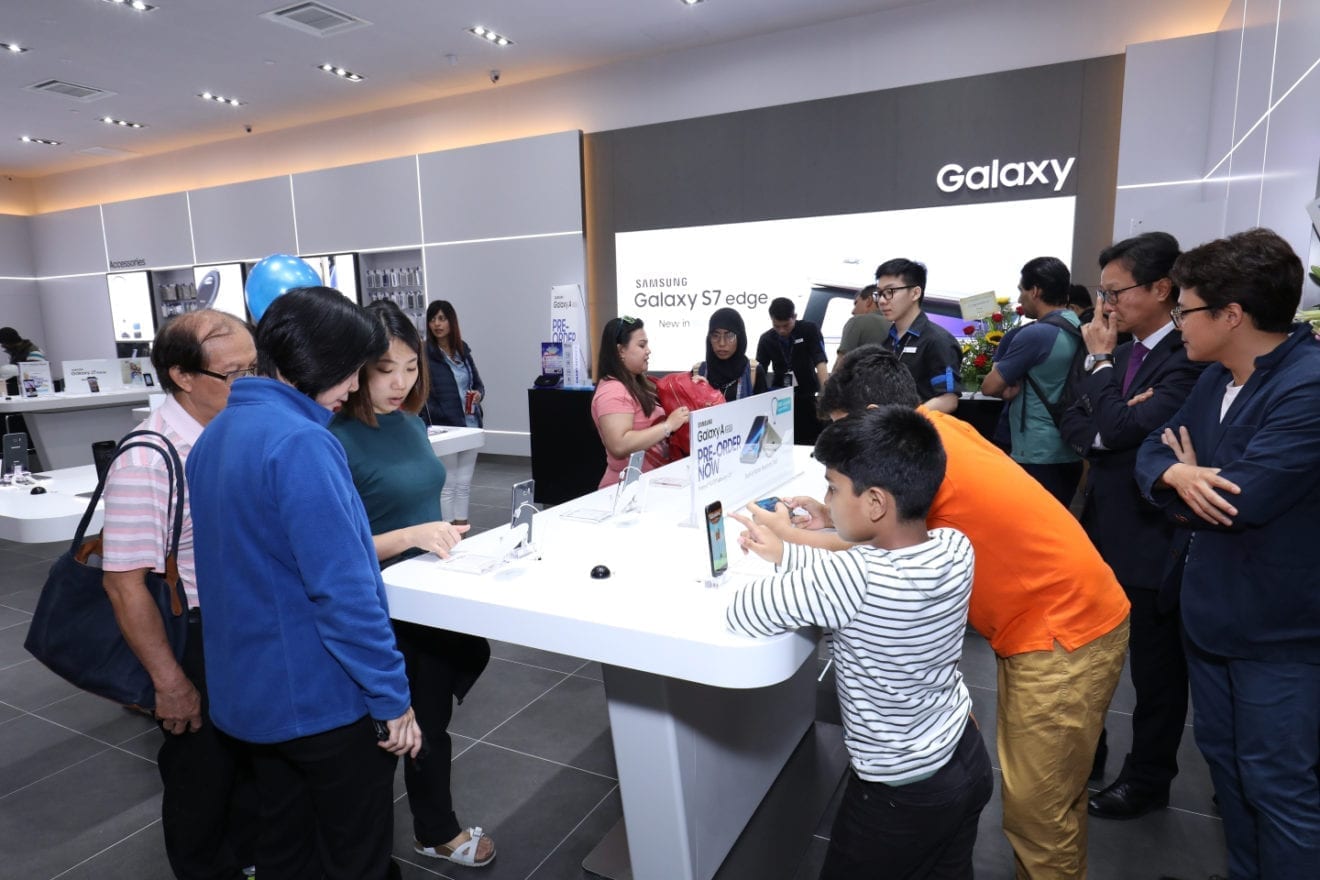
    Samsung Malaysia Electronics has launched its first Samsung Experience Store (SES) in Genting Highlands at the Sky Avenue mall, offering a wide range of the Samsung Galaxy mobile phones as well as a variety of wearables.

    The SES outlet is a one-stop shop that provides customer satisfaction with the best products and services.

    “The opening of the SES is another step forward in our expansion plans to different regions of Malaysia,” said Samsung Malaysia Electronics IT & mobile business unit vice-president Lee Jui Siang.

    “Our aim is to continuously expand our channel coverage, providing consumers a revolutionary digital convergence experience.

    Visitors to Genting Highlands can now experience the full Galaxy ecosystem at the newly opened Samsung Experience Store in the prestigious Sky Avenue mall.

    “With this expansion to Genting Highlands, we want to bring our innovations closer to locals as well as those visiting the country,” he said.

    In celebration of the store’s opening, Samsung offered customers a chance to take home a personalised caricature mug specially drawn using a Galaxy Note5 with purchase of any Samsung product on Jan 14.

    The company also gave away a special edition umbrella for the purchase of any Samsung product.

    Located at Lot T2B-57, Level T2B, Sky Avenue, Genting Highlands Resorts, the SES is now open every day from 10am to 10pm.

    Samsung Malaysia Electronics president Lee Sang Hoon (right) presenting a specially designed caricature mug, drawn using the Galaxy Note5, to Netcom Mobility Sdn Bhd director Elvis Chew as a token of appreciation.

    Samsung Malaysia Electronics president Lee Sang Hoon (right) presenting a specially designed caricature mug, drawn using the Galaxy Note5, to Netcom Mobility Sdn Bhd director Elvis Chew as a token of appreciation.
  • Celebrate Chinese New Year with Festive Promotions at  Hong Kong International Airport

    Celebrate Chinese New Year with Festive Promotions at Hong Kong International Airport

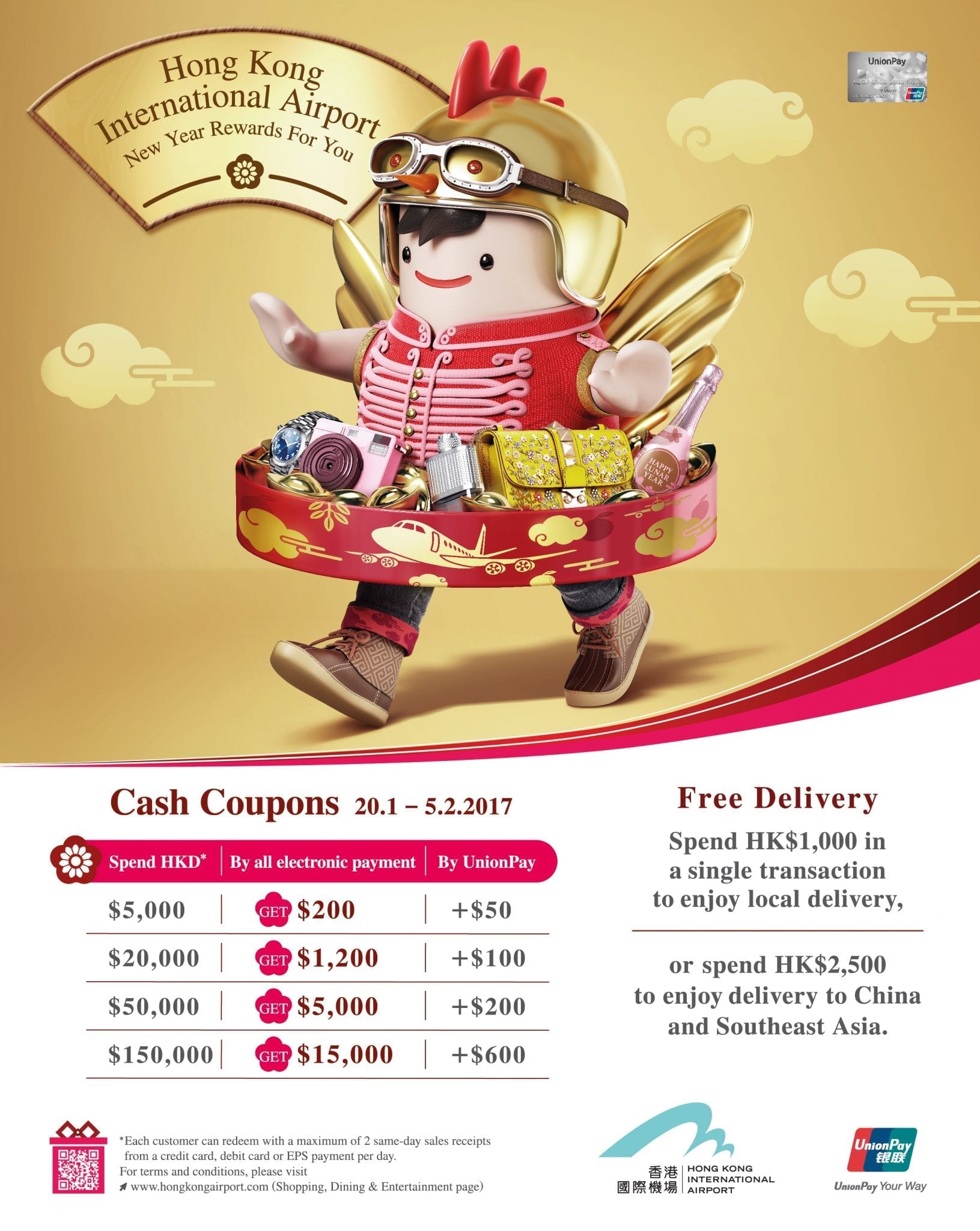
    To welcome the Year of the Rooster, Hong Kong International Airport (HKIA) is launching a series of Chinese New Year promotional activities and offers, including an instant rebate of HKIA cash coupon worth up to HK$15,600.

    Instant Rebate Promotion: From 20 January to 5 February 2017, travellers spending a specific amount by electronic payment at HKIA can redeem cash coupons worth up to HK$15,600. UnionPay cardholders, who make purchases with their cards, can enjoy additional rebates.

    Please refer to the following table for details:

    Spending by Electronic Payments of  

    HKIA Cash Coupons Redemption

    By UnionPay card

    HK$5,000

    HK$200

    Additional HK$50 HKIA Cash Coupon

    HK$20,000

    HK$1,200

    Additional HK$100 HKIA Cash Coupon

    HK$50,000

    HK$5,000

    Additional HK$200 HKIA Cash Coupon

    HK$150,000

    HK$15,000

    Additional HK$600 HKIA Cash Coupon

    Chinese New Year Promotions

    During Chinese New Year, shoppers can enjoy complimentary gift wrapping services at the Departures East Hall redemption counters in the restricted area (near Tiffany & Co.) and take red packets at redemption counters. To heighten the festive spirit, HKIA’s mascot will tour around the seasonally decorated airport in full Chinese New Year attire to meet and greet travellers and take snapshots with them. In addition, a lion dance extravaganza will be held on 1 February, featuring impressive lion dances and showcasing traditional Chinese culture and tradition.