Author: Mei Ling Tan

  • SuperGroup thrives after downsizing logos

    SuperGroup thrives after downsizing logos

    SuperGroup was a clear winner last Christmas as it benefitted from the weak pound and the opening of net nine new stores in the 10-week Christmas period helping to boost revenue to £162.1 million.

    SuperGroup’s conventional approach to discounting, with a series of online category specific promotions before Christmas and a clearance sale after, drove full price sales throughout most of the trading period.

    SuperGroup’s deliberate move away from the heavy logoed product of the past and investment in its womenswear ranges and premium menswear collection means Superdry has become a more fashion focused brand that has greater mass appeal – albeit its distinctive design flair still helps differentiate its offer from rivals.

    Communication of its updated ranges to new consumers is now imperative to its success. For females its investment in making stores more gender neutral will help shift views that it is a male brand, but with almost 50 per cent of women shopping menswear, it should consider assigning prime floorspace to womenswear to make it more appealing to browse collections when instore.

    In menswear it continues to outperform the sector boosted by its sportswear range and the prolonged athleisure trend. Despite its strong performance it still needs to shift perceptions that it is solely a casualwear retailer. The Idris Elba premium collection presents clothing that aligns it with new competitors such as Ted Baker, Whistles and Reiss; however winning the attention of these shoppers will remain difficult as merchandising, even in newer formats, still primarily focuses on casualwear.

    Dedicated window displays of the premium collection is one way Superdry can tempt new shoppers who have more tailored tastes in store and away from established smarter casualwear menswear retailers.

  • Versace Hong Kong opens flagship store

    Versace Hong Kong opens flagship store

    Versace Hong Kong has opened a flagship store in the Shanghai Commercial Bank Tower in Central.

    Covering about 743 sqm, it features men’s and women’s ready-to-wear and accessories. It joins standalone stores for the Italian fashion house at Gateway Arcade, MixC Mall, Pacific Place and Sogo Causeway Bay.

    versace-hong-kong-shanghai-commercial-bank-central-2

    The flagship incorporates traditional Italian architectural values with modern touches. Architectural elements include Fior di Bosco marble flooring and brass features, while the facade features backlit onyx.

    versace-hong-kong-shanghai-commercial-bank-central-1

    “For me, the boutique suggests an uninterrupted dialogue between our past and our future, between Versace and our clients,” says Versace Group VP and chief designer Donatella Versace.

    To celebrate, Versace has designed a limited-edition mini Palazzo Empire handbag especially for the store. It is embellished with silver Swarovski crystals and includes a detachable leather shoulder strap and a palladium Medusa head, the symbol of Versace. There is also a metallic tag inscribed “The Palazzo Empire celebrating Hong Kong”.

    versace

    Also at the boutique is a limited number of medium and large Palazzo Empire handbags in exotic skins in various colours. These handbags include a removable interior metallic tag reading “Versace for Shanghai Commercial Bank Tower, Hong Kong”.

  • Ethiopian cargo terminal set for operation by April ‘17

    Ethiopian cargo terminal set for operation by April ‘17

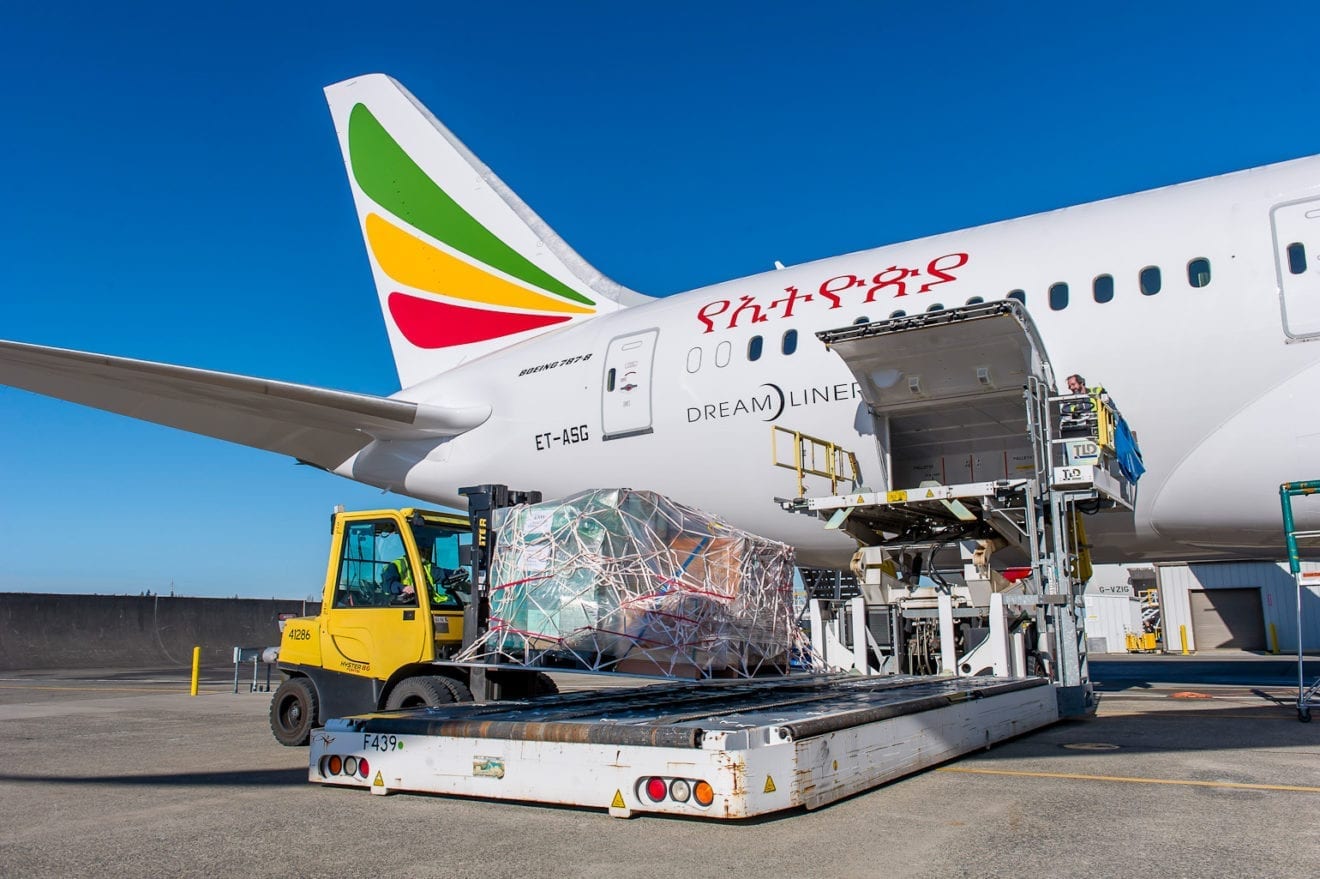
    Ethiopian Airlines Cargo Terminal, which is under construction currently, has reached 82 per cent completion and it is scheduled to be operation by April 2017, the African carrier said. The first phase of the Addis Ababa terminal cost around US$150 million.

    The terminal will have an capacity of 1.2 million tonnes of cargo including facilities for perishable goods. The facility can also handle up to eight B747-400 freighters at one time. Commenting on the the new facility, Ethiopian Airlines Group CEO Tewolde Gebremariam said: “Upon completion, our uplifting capability will be equivalent to the cargo terminals at Amsterdam Schiphol, Singapore Changi or Hong Kong.”

    The new cargo terminal is part of Ethiopian Cargo’s Vision 2025, aimed to support the country’s export of perishables including flowers, fruits, vegetables and meat. That plan includes expansion of its freighter network to eighteen aircraft serving 37 international cargo destinations by 2025.

    “At Ethiopian, we are very proud of the new heights Ethiopian has flown in the year,” Gebremariam said. “We celebrated our 70th anniversary, inaugurated the largest and the finest Aviation Academy in Africa and a state-of-the-art In-flight Catering facility which is the largest in the continent of Africa, introduced Africa’s first Ethiopian Airbus A350, and spread our wings to more countries on five continents”.

    Ethiopian has also constructed a flight simulator building and installed five of the latest full flight simulators, which includes Boeing 787, 777, 757, 767, 737NG and the Bombardier Q400. It plans to add simulators for the Airbus A350 XWB and Boeing 737 MAX aircraft.

  • Online marketing essential for enterprises in digital era

    Online marketing essential for enterprises in digital era

    Despite a large number of Internet users, investment for online advertisement in Việt Nam remains modest, a conference heard on Thursday.

    The Institute for Brand and Competitiveness strategy co-ordinated with the Việt Nam Internet Association and Việt Nam Digital Communication Association to organise a conference on building enterprise branding in the digital era in Hà Nội.

    Over the past decade, the Internet boom has had a significant impact on marketing activities, as well as the building and positioning of brands in the market.

    Internet has also created stronger brand awareness than ever before and increased the number of people who know brands. According to the Institute for Brand and Competitiveness strategy, Việt Nam ranks 16th among the top 20 countries with the highest number of Internet users, with nearly 50 million people, of which, 60 per cent are young.

    The Internet has become a popular source of advertising to users who want to search for product information. Seventy-three per cent of Vietnamese consumers seek out information on the Internet before making purchase decisions.

    Most consumers in Việt Nam choose products and services based on brand identities.

    Therefore, experts advised businesses to make changes to their business operations, adjusting brand identity to avoid falling behind compared to rivals.

    To build brands in the digital era, businesses need to increase interaction in different environments, including the online environment, said Nguyễn Quốc Thịnh, an advisor for the National Trademark Programme.

    “Businesses should not skip electronic branding, a strong interactive environment with low associated costs,” said Thịnh.

    Enterprises need to rethink the way they build their brands, not just their logos or advertising in the media, he said.

    Currently, the application of the Internet in general, and digital technology in particular, to create and develop brands is still limited.

    Data from Cimigo, a market research firm, showed that investment for online advertising in Việt Nam was only US$15 million in the past year.

    Meanwhile, according to statistics from TNS Media Vietnam, the cost of online advertising accounts for less than 5 per cent of the total advertising costs, while 95 per cent of advertising spending is still through television, newspapers, magazines, even though these forms are more expensive.

    Vũ Xuân Trường from the Institute for Brand and Competitiveness strategy said that many businesses were paying attention to profits and business strategy, while their strategies for branding remained “vague”.

    Therefore, businesses need a better strategy in branding in the digital era. In particular, businesses should focus on social networks due to their widespread use.

    Experts said that businesses need to take advantage of opportunities afforded by the Internet to build their brands. Enterprises also need to increase connections with consumers, while ensuring the quality of goods and services.

  • Axis Bank enters blockchain alliance with Ripple

    Axis Bank enters blockchain alliance with Ripple

    Axis Bank, India’s third largest private sector bank, has entered a collaboration with distributed FinTech company Ripple to offer cross-border payments solution through Blockchain technology.

    Ripple is a blockchain-based financial settlements solution that aims to reduce the time and cost of transactions. Axis is the first bank in India to partner with Ripple.

    The technology can enable instant international money transfers, compared to the 3 – 5 day norm for international remittances, and improve efficiency of payments for Axis Bank through instant and automated reconciliation with partner banks.

    “We are committed to using innovation in technology to make banking simple and convenient for our customers,” said V Srinivasan, Deputy Managing Director, Axis Bank.

    “Remittances have been a key strategic area for us, we at Axis are excited with the tie-up and the potential that the use of Blockchain technology could deliver in enabling real-time affordable money transfers.”

    “Given its status as the fastest-growing major economy in the world and the top market for remittances, India is a very important market that is ripe for payments innovation,” said Brad Garlinghouse, CEO of Ripple. “As an early adopter of Ripple, Axis Bank will set a new standard for cross-border payments services and help us continue to grow our global network in a key region of the world.”

  • As Vietnamese banks digitise, customer service key

    As Vietnamese banks digitise, customer service key

    Customers must be at the centre of banks’ attention as they make a move towards digital transformation in an effort to adapt to a changing landscape of financial innovation and disruptive technologies.

    This was said by head of Retail Banking at VP Bank, Sandeep Deobhakta, at a conference held in Hà Nội on Thursday, titled, ‘The Future of Finance in Việt Nam 2017.’

    Deobhakta, who has been holding this position since May 2015, said customers in Việt Nam are very open to new technologies and the nascent retail banking industry in Việt Nam can also adopt these technologies faster than other markets if they put customers first.

    In the future, traditional banks might lose business to companies that employ disruptive innovations if they failed to deliver better, simpler and faster solutions to customers, Deobhakta cautioned.

    VP Bank has been working with Timo, Việt Nam’s first mobile-only bank, giving customers better solutions to manage their money, bills and the ability to top up their mobile cards through the Timo app. At Timo Hangouts, one can forget about a typical bank branch and instead enjoy a coffee as one opens an account and uses bank services.

    Timo has about 4,000 customers in the HCM City and opened a Timo Hangout in Hà Nội last October, looking to attract more than 100,000 users by next year.

    Việt Nam has a huge untapped market for financial innovation, with only 20 per cent of the population having bank accounts and 3 per cent owning credit cards, Foo Boon Ping, managing editor of The Asian Banker, said at the conference.

    “The stable GDP growth of around 6 to 7 per cent, low wages, a large population with a high savings and strong innovative approach are crucial factors that will accelerate the financial and industrial development in the Vietnamese market,” he said.

    “Digital transformation is driven by real business needs to transform to become more cost efficient and to serve your customers as their behavior and preferences change,” he added.

    There are only about 36 fin-tech companies in Việt Nam, with most focusing on providing consumers and merchants with online and digital payment solutions.

  • Time spent on social, messaging apps grew fourfold in 2016

    Time spent on social, messaging apps grew fourfold in 2016

    Yahoo’s Flurry this week released its annual State of Mobile report, which found that social and daily habits apps dominated time spent on mobile apps in 2016.

    Specifically, the study found that the time spent in social and messaging apps grew by four times (394%) over the last year, compared to an average growth of 69% across all tracked segments.

    In its eighth year, the study offers insights on global mobile app usage and trends gleaned from over 2.1 billion smart devices and 3.2 trillion sessions. Phablets continue to dominate with 41% of market share, while small phones now account for just 1% of the market share, said the report.

    “Over the last year, the Flurry footprint grew to track more than 940,000 applications, across 2.1 billion devices, in 3.2 trillion sessions. In this context, we define app usage as a user opening an app and recording what we call a ‘session,’ as well as the amount of time spent in the application.” said Simon Khalaf, a senior VP at Yahoo. “Compared to the year prior, overall app usage grew by 11% and time-spent in apps grew by 69%.

    Khalaf noted that not all app categories grew in tandem in 2016, observing that certain categories of mobile apps have continued growing in terms of session and time-spent at the expense of others.

    For instance, a steep decline in usage is evidenced in the personalization category, which the report attributed to diminishing value for users of these products. Ultimately, the decelerating rate of growth could signal market maturity, saturation or simply the end of the app gold rush.

    “But let us put things in perspective. The gold rush in California ended in 1855. A lot of wealth has been generated since then. We are excited to see what app developers do in the next decade and which industry they chose to disrupt, again,” Khalaf said.

  • 200 Vietnamese firms in Samsung chain

    200 Vietnamese firms in Samsung chain

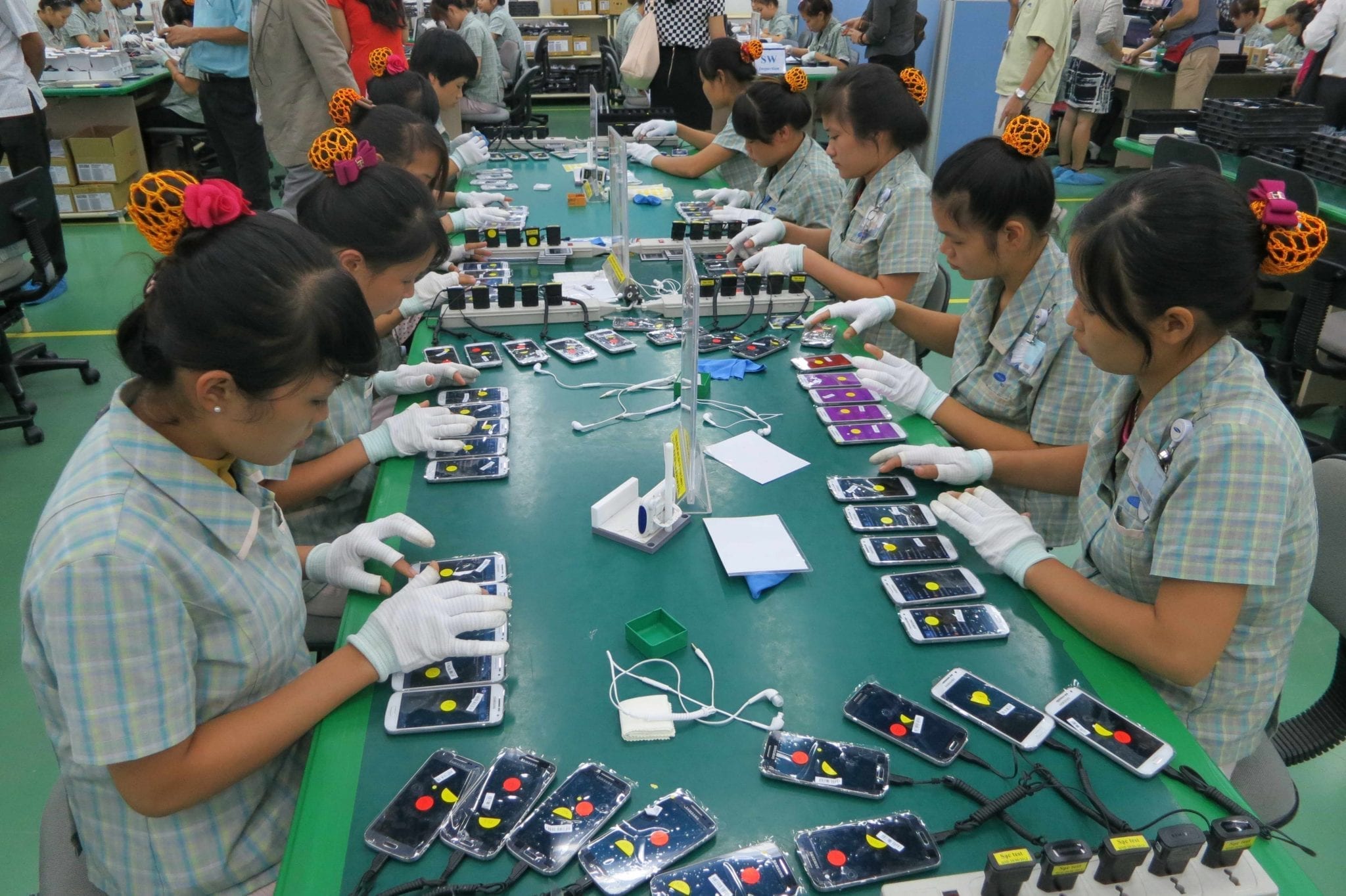
    Nearly 200 Vietnamese enterprises are participating in the component supply chain used by three Samsung plants in Việt Nam, including 20 tier-1 vendors and 178 tier-2 vendors.

    Also, Samsung plans to raise the number of level-1 suppliers in Việt Nam to 29 this year, said Han Myoungsup, President of Samsung Complex Việt Nam.

    Several local companies were able to join Samsung’s production chain, showing that Việt Nam’s support industry could be developed if domestic firms know how to take advantage of the opportunities provided by large enterprises.

    Samsung Việt Nam’s management board last week visited and surveyed the two companies, An Lập Plastic Co Ltd in Hà Nội’s Long Biên District and Việt Hưng Plastic Co Ltd in Hưng Yên Province. It also worked directly with three other suppliers, including PTE Company, Minh Nguyên Company and Việt Hưng Plastic Co Ltd in HCM City.

    This field survey is part of Samsung’s programme to provide experts to help Vietnamese vendors improve their capacity to join Samsung’s supply chain.

    “Samsung Việt Nam has also recorded a significant breakthrough in raising the localisation rate of products, from 35 per cent in 2014 to 51 per cent in 2016. This is a great contribution that helps made-in-Việt Nam products become popular worldwide,” Han said.

    Samsung’s five-vendor visit is part of the supporting programme of Samsung’s experts for Vietnamese businesses. Accordingly, Samsung’s experienced experts from South Korea have directly assisted the five enterprises in the past three months to improve their production process to assure they meet Samsung’s criteria. They are also five of 14 Vietnamese vendors who have received Samsung’s direct assistance since September 2015.

    This supporting programme has also confirmed a strong commitment of Samsung, in response to a call by the Government of Việt Nam, which is increasing the localisation rate and the presence of Vietnamese enterprises in Samsung’s component supply chain.

    “I do hope that, through Samsung’s supporting programme, Vietnamese enterprises could gain the knowledge and experience to enhance their capacities. Samsung believes that if a product can be localised, we will maximize its localised content,” Han added.

    Hoàng Anh Tuân, President of Việt Hưng Plastic Company, said their turnover has seen rapid growth since they have been supplying packaging to Samsung. Last year, their sales to Samsung accounted for half of their total VNĐ2 trillion (US$88.9 million) turnover.

    “Our largest advantage from Samsung’s supporting programme is the change in mindset. We commit to always learning and changing in order to apply experience from Samsung in the best way,” Tuân added.

    “Being suppliers to Samsung could be a quality measurement to help local firms easily participate into other value chains. We are also a packaging supplier to LG and Canon,” he noted.

    He emphasised that joining the supply chain for Samsung has been transparent and open to all businesses. Those seek to participate in the chain without sufficient capacity would be immediately removed.

    Trương Quang Khởi, An Lập’s director, said they have opportunities to modernise their company after joining the Samsung production chain.

    “We have received support from Samsung to upgrade our workshops, equipment and technology, as well as to learn effective management models,” he added.

    Samsung Electronics is one of the largest foreign investors in Việt Nam, with three manufacturing plants in Bắc Ninh (SEV), Thái Nguyên (SEVT) and HCM City (SEHC). With an export turnover of over $37 billion in 2016, Samsung Electronics in Việt Nam contributed 20 per cent to Việt Nam’s exports.

    This year, Samsung Electronics in Việt Nam has set a target of 7-10 per cent growth in export turnovers. Samsung aims to not only turn Việt Nam into the world’s smartphones and electronic appliance production base, but also create more opportunities for Vietnamese enterprises in the field of supporting industries to become involved in Samsung’s global supply chain.

  • Takata to pay $1 billion to settle U.S. air bag probe

    Takata to pay $1 billion to settle U.S. air bag probe

    Japan’s Takata is expected to plead guilty to criminal wrongdoing as early as Friday as part of a $1 billion settlement with the U.S. Justice Department over its handling of air bag ruptures linked to 16 deaths worldwide, sources said.

    The settlement includes a $25 million criminal fine, $125 million in victim compensation and $850 million to compensate automakers who have suffered losses from massive recalls, the sources said.

    The settlement also calls for an independent monitor of the Japanese auto parts manufacturer. It could help Takata win financial backing from an investor to potentially restructure and pay for massive liabilities from the world’s biggest auto safety recall.

    The company is poised to plead guilty to wire fraud, or providing false test data to U.S. regulators, according to the sources, who were not authorized to discuss the settlement publicly.

    In 2015, Takata admitted in a separate $70 million settlement with U.S. auto safety regulators that it was aware of a defect in its air bag inflators but did not issue a timely recall.

    It admitted it provided the regulator, the National Highway Traffic Safety Administration (NHTSA), with “selective, incomplete or inaccurate data” dating back at least six years and also provided automakers with selective, incomplete or inaccurate data.

    The wire fraud charge is expected to be filed in U.S. District Court in Detroit. The Justice Department is considering naming Ken Feinberg, a longtime compensation adviser, to oversee the Takata settlement funds. He declined to comment on Thursday.

    The settlement is expected to include restitution to some victims and automakers, who have been forced to recall vehicles with the defective inflators. Honda Motor Co (7267.T) and Takata have settled nearly all lawsuits filed in connection with fatal crashes. The recall impacts 19 automakers including Ford Motor Co (F.N), General Motors Co (GM.N), Toyota Motor Corp (7203.T), Volkswagen AG (VOWG_p.DE) Fiat Chrysler Automobiles NV (FCHA.MI).

    Takata spokesman Jared Levy declined to comment.

    Deaths linked to the company’s air bag inflators include 11 in the United States – nearly all in Honda vehicles. Regulators have said recalls would eventually affect about 42 million U.S. vehicles with nearly 70 million Takata air bag inflators, making this the largest safety recall in U.S. history.

    Takata is expected to agree to come up with the $1 billion within a year or when it secures a financial backer.

    Senators Richard Blumenthal of Connecticut and Edward Markey of Massachusetts backed a Takata deal but said in a joint statement they were “deeply concerned that the DOJ settlement appears to only target Takata Corporation and no executives.” The senators also said that if the company “files for bankruptcy, its new creditors, and not Takata, would be responsible for paying criminal fines on the company’s behalf.”

    Reuters reported in November Takata was considering a bankruptcy filing for its U.S. unit as the air bag maker looks for a sponsor to help pay for liabilities related to its faulty air bag inflators.

    The inflators can explode with excessive force, launching metal shrapnel at passengers in cars and trucks. Many of those killed were involved in low-speed crashes that they otherwise may have survived, including a 17-year-old high school senior in Texas killed last year. At least 184 people have been injured in the United States as well.

    In November 2015, Takata agreed to pay a $70 million fine for safety violations with U.S. auto safety regulators and could face deferred penalties of up to $130 million under a NHTSA settlement.

    The agency named a former U.S. Justice Department official to oversee the Takata recalls and the company’s compliance with the safety settlement.

    Last month, NHTSA said it would press the auto industry to accelerate the pace of replacements for defective Takata inflators and signaled a likely widening of the safety recall. Only about one third of the inflators recalled have been replaced, leaving more than 30 million to be fixed.

    In June, NHTSA warned that Takata air bag inflators on more than 300,000 unrepaired recalled Honda vehicles showed a substantial risk of rupturing, and urged owners to stop driving the “unsafe” cars pending a fix.

  • China Mobile to cooperate with Ericsson on IoT

    China Mobile to cooperate with Ericsson on IoT

    China Mobile and Ericsson have signed an agreement to cooperate on the Internet of Things as part of China Mobile’s Big Connectivity strategy.

    The companies signed a strategic collaboration agreement at the China Mobile Global Partner Conference in Guangzhou, China last month, and announced the development last week.

    As part of the agreement, China Mobile will use the Ericsson Device Connectivity Platform to streamline the provisioning process for IoT services and deploy services to capitalize on potential new business opportunities.

    The operator plans to use the platform to integrate resources from roaming partners and offer enterprise customers worldwide reliable connectivity based on service level agreements.

    “China Mobile expects to have 200 million IoT connections by 2017. We stick to the strategy of open cooperation with our partners for win-win results,” China Mobile EVP Yuejia Sha commented.

    “China Mobile strengthens the collaboration with global leading enterprises of advanced platform, application and intelligent hardware to drive the rapid development of our industry, and provides superior applications and services to our customers.”

    Ericsson said the Device Connectivity Platform has been adopted by more than two dozen operators since it launched in 2008, supporting 1,700 industry customers.

  • McDonald’s McMasala Breakfast Menu Options Meet ‘Meh’ Response in India

    McDonald’s McMasala Breakfast Menu Options Meet ‘Meh’ Response in India

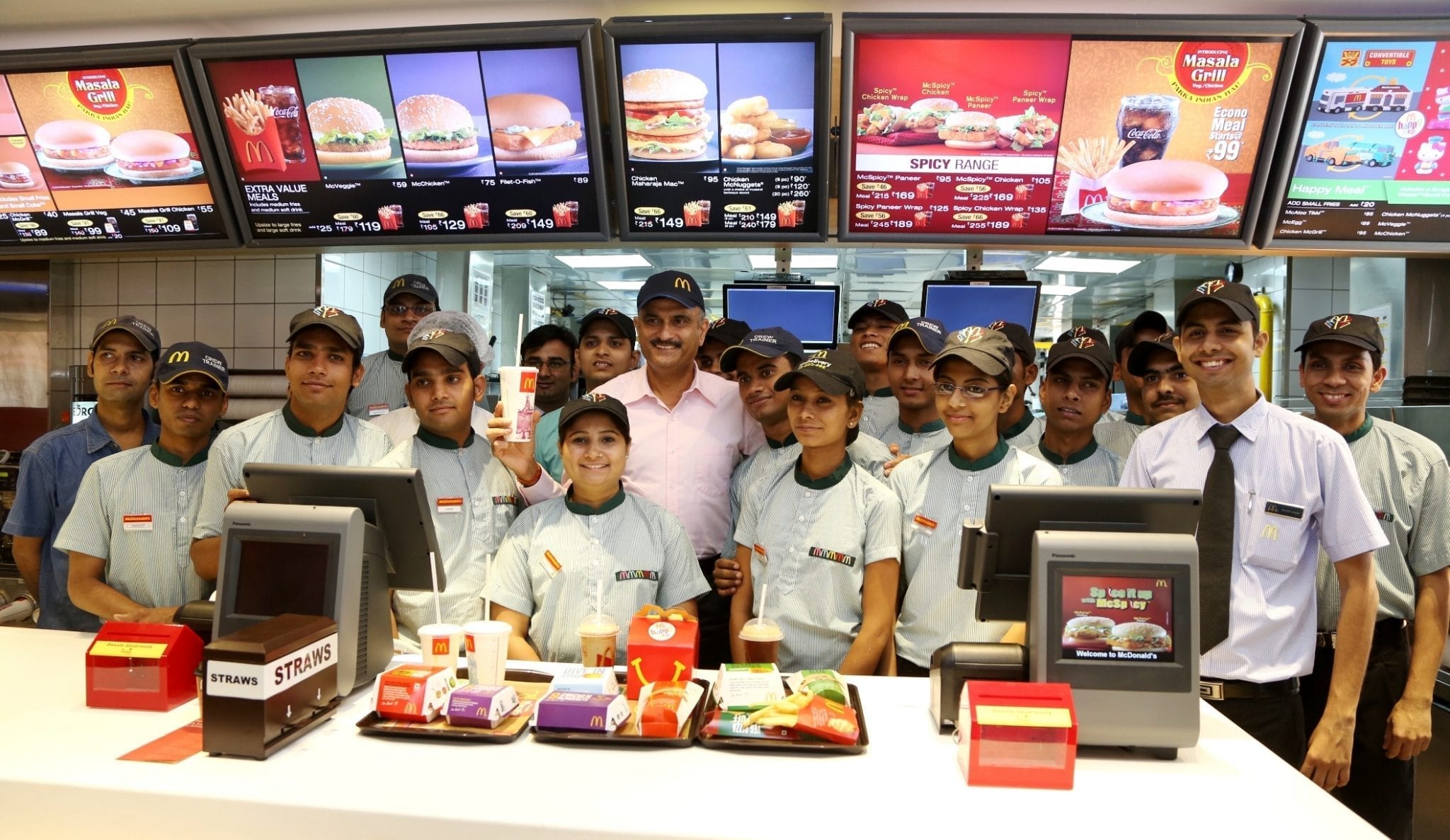
    McDonald’s India has added two new breakfast burgers, the “Masala Dosa Brioche” and “Masala Scrambled Eggs” burgers, to its product line-up to woo local customers amid rising competition from Domino’s and Burger King.

    The two new products will be served alongside more familiar fare such as vegetarian and non-vegetarian burgers, waffles, hotcakes and hash browns.
    The Masala Dosa Brioche burger features a grilled vegetable patty topped with molaga podi chili sauce, a flavor popular in the southern state of Tamil Nadu. The other burger features spiced scrambled eggs on a bun.

    The expanded menu has been rolled out across 44 restaurants, starting with Mumbai on January 13. Items on the McBreakfast menu cost between 30 rupees ($0.50) for a hash brown and 213 rupees ($3) for a meal.

    These items will also be served through McDelivery and takeaway kiosks. The menu will gradually be introduced across India.

    “Breakfast convenience on the go will increase as more people enter the segment. As a western quick service restaurant, we are going to grow the Indian breakfast market dramatically,” Amit Jatia, vice-chairman of Westlife Development, which runs over 240 McDonald’s restaurants throughout western and southern India, told the media.

    McDonald’s first launched its breakfast menu in India back in 2010. Six years later, the fast-food chain is anticipating a good response from its fans. However, initial reactions to the “Masala Dosa Burger” were lukewarm on Twitter, as well as outside its restaurants in Delhi’s Connaught Place where the product has yet to be launched.

    ​A regular McDonald customer told Sputnik, “If I have to east Masala Dosa, why would I come to McDonald’s. I will go to one of those south Indian cuisine restaurants.” Yet another said, “it is worth trying but it is not exactly a masala dosa, which is served with coconut chutney and sambar (a curry).”

  • Easy Pass users can now top up with MasterCard via “easyBills”

    Easy Pass users can now top up with MasterCard via “easyBills”

    2C2P, Expressway Authority of Thailand (EXAT) and MasterCard have partnered to launch a new top-up channel for Electronic Toll Collection System for Easy Pass users in Thailand. Easy Pass users can now top up their cards easily with their MasterCard via easyBills’ mobile application or its website (www.easyBills.in.th), without having to pre-register their cards with the respective issuing banks. They will enjoy benefits including points accumulation upon card usage, extended due dates for payments made through the credit card, convenient storage of their favorite billers for repeat usage and checking their historical transactions, as well as the ability to set bill alerts on their calendar.  A thousand gift cards worth 500 baht each will be given away to the top 1,000 MasterCard cardholders who accumulate the highest Easy Pass top-up value via easyBills from now till 28 February 2017.

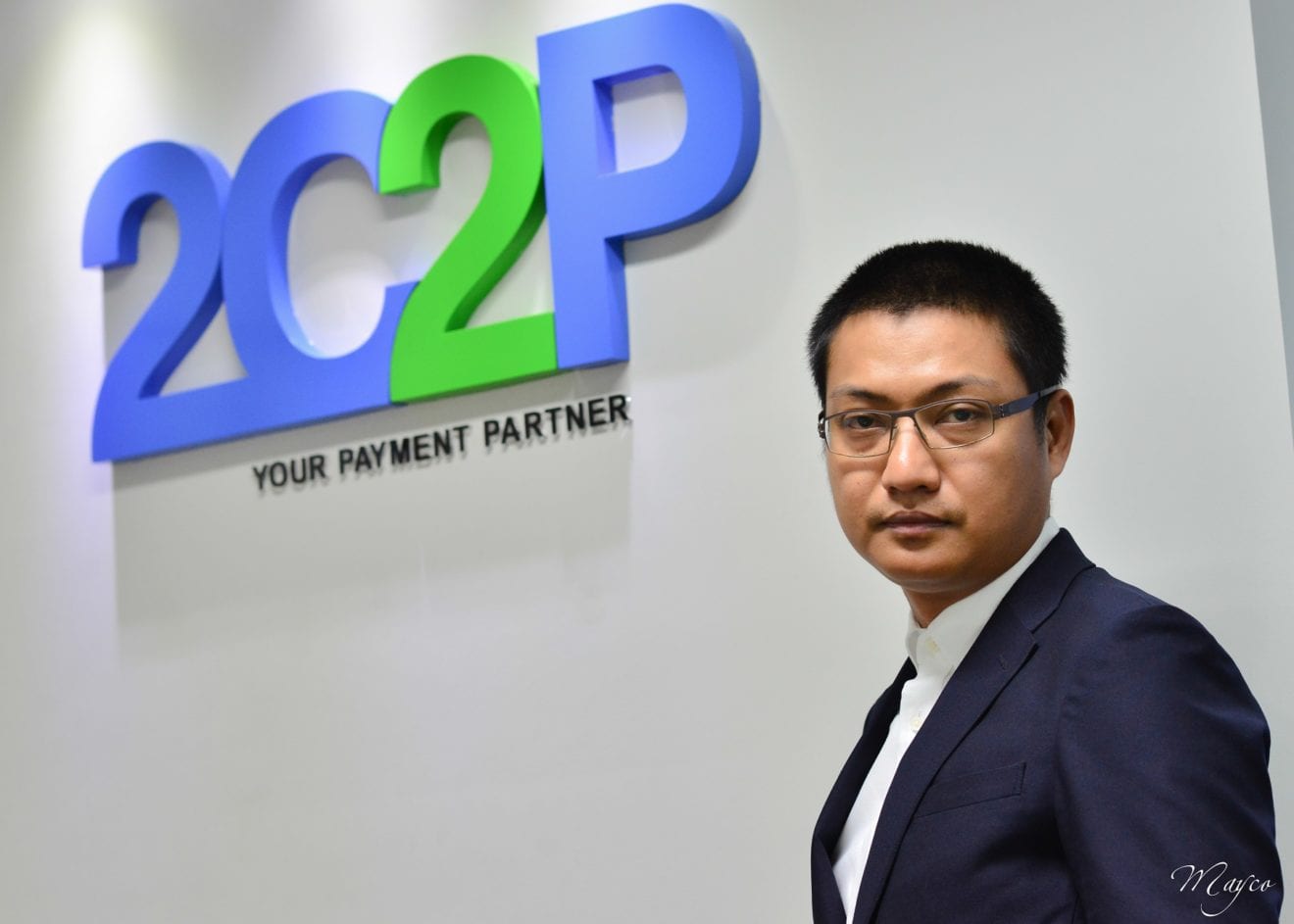
    Mr. Piyachart Ratanaprasartporn, Chief Executive Officer of 2C2P (Thailand) Co., Ltd., said:  “easyBills is an innovative payment service catered to digital users who are familiar with the online platform. The collaboration marks the first time that Easy Pass users can easily and conveniently top up their cards without cash, using their MasterCard without pre-registering with their banks, simply by downloading and using the easyBills mobile application on either iOS or Android, or by visiting easyBills’ website.

    easyBills helps consumers pay their bills easily, bringing convenience to everyone. It is equipped with special features that enable users to store their favorite billers for future usage, store their credit card details securely for future payments with 2C2P’s PCIDSS Level 1 certification and set biller alerts on their calendar to remind them of the payment due. Users will receive their payment confirmation via their emails,” Mr. Piyachart added. 

    Mr. Antonio Corro, Country Manager for Thailand & Myanmar, MasterCard, said, “MasterCard is very pleased to join our partners to increase convenience to our customers. They can now top up their Easy Pass card through the easyBills mobile application and website, with their MasterCard that is issued by all the banks in Thailand. They can be assured that all the online transactions are secure, while enjoying the privileges from using MasterCard. We believe this service will pave the way for Thailand to become a cashless society soon.”

    Mr.Narong Gieddech, Governor of Expressway Authority of Thailand (EXAT) said: “Since 2010 we have provided our service for the Electronic Toll Collection (ETC) system;  there are 1.3 million Easy Pass card users. We are excited to join hands with MasterCard and 2C2P who developed easyBills. easyBills’ application and website will be the 12th top-up channel for Easy Pass. This service will be bolstered by Thailand’s National e-Payment system, which the government is set to launch to transform Thailand into a cashless society.”

    easyBills “Pay Bill Easily…Get More Easier”, is developed by 2C2P in collaboration with MasterCard. Through this service, cardholders can pay utility bills, such as electricity, water supply, telephone, mobile phone top-up and e-wallet, as well as for insurance premium, online products, games, books and several other bills all in one app, anywhere anytime. Most importantly, security meets the international standard of 3D Secure.

    There will be a giveaway of a thousand Tesco Lotus gift cards worth 500 baht each. The prizes will be awarded to the top 1,000 MasterCard cardholders who accumulate the highest top-up value on their Easy Pass via easyBills from now until February 28, 2017.

  • PappaRich Malaysia considering IPO

    PappaRich Malaysia considering IPO

    Food chain PappaRich Malaysia is considering a Singapore IPO, possibly this year.

    Insiders say the company, which opened its first restaurant in Malaysia in 2006, aims to achieve a valuation of at least S$200 million (US$140 million) in the share sale.

    PappaRich would follow other Southeast Asia-based restaurant chains including ABR Holdings, which runs Swensen’s ice cream parlours, and kopi tiam restaurant chain Oldtown in gaining a listing to fund expansion.

    paparich-logo


    A PappaRich representative says a listing has always been a consideration as the company considers fundraising options to support its expansion plans.

    Oldtown, which makes instant coffee and runs cafes, has risen 18 per cent in Kuala Lumpur trading over the past 12 months, and shares of Thai dessert chain After You, which raised US$21 million in a Bangkok IPO last month, have surged 167 per cent from their offer price.

    More than a million customers dine at the PappaRich outlets monthly, according to its website. The company has about 100 outlets globally including Australia, China, New Zealand, Singapore and the US.

  • Cebu Pacific collects donation for sick children

    Cebu Pacific collects donation for sick children

    Low-cost airline Cebu Pacific strengthens its partnership with the United Nations Children’s Fund to reach millions of undernourished children in the country.

    The endeavor is a part of the global organization’s Change for Good program which accepts contributions from passengers on board flights of partner airlines.

    Proceeds contribute to the UN children’s agency’s First 1,000 Days campaign which provides optimal nutrition, from a mother’s pregnancy to a child’s second year of life.

    Since July 1, 2016, Cebu Pacific began accepting contributions of all currencies from passengers. The contributions are being used to fund nutritional supplements distributed to poor households with pregnant mothers or malnourished children. A portion of the funds also support barangay-level information drives on nutrition in Unicef’s focus areas in Northern Samar, Zamboanga and Maguindanao.

    “We are very pleased with how warmly our passengers are receiving the Change for Good Program. Thank you for sharing in our vision of a better future for our children and in Unicef’s advocacy of uplifting lives through the First 1,000 Days campaign,” says Cebu Pacific president and chief executive Lance Gokongwei.

    “Children have the right to survive and thrive. It is important for all of us to pitch in and lift each other up, so that every Filipino child grows up happy and healthy. Your continued support to UNICEF will help make this happen,” says Unicef Philippines representative Lotta Sylwander.

    Sylwander explains the transformative impact of these small acts of generosity. “The nutrition received by children from the womb to their second birthday is crucial for their physical and intellectual development. If these children are able to grow to their full extent, they perform better in school and eventually get better jobs as adults.” A healthy and productive workforce, Sylwander says, is key to nation-building.

    In the Philippines, around four million Filipino children are “stunted.” These children are undernourished, causing irreversible damage to their health, physical growth and brain development.

    The global program Change for Good targets these children by cashing in donations for life-saving materials and services for vulnerable children in more than 150 countries.

    Cebu Pacific has piloted the program in the East Asia and the Pacific region and focuses its collection efforts exclusively to Unicef Philippines’ First 1000 Days program.

  • M1, StarHub may share more mobile infrastructure

    M1, StarHub may share more mobile infrastructure

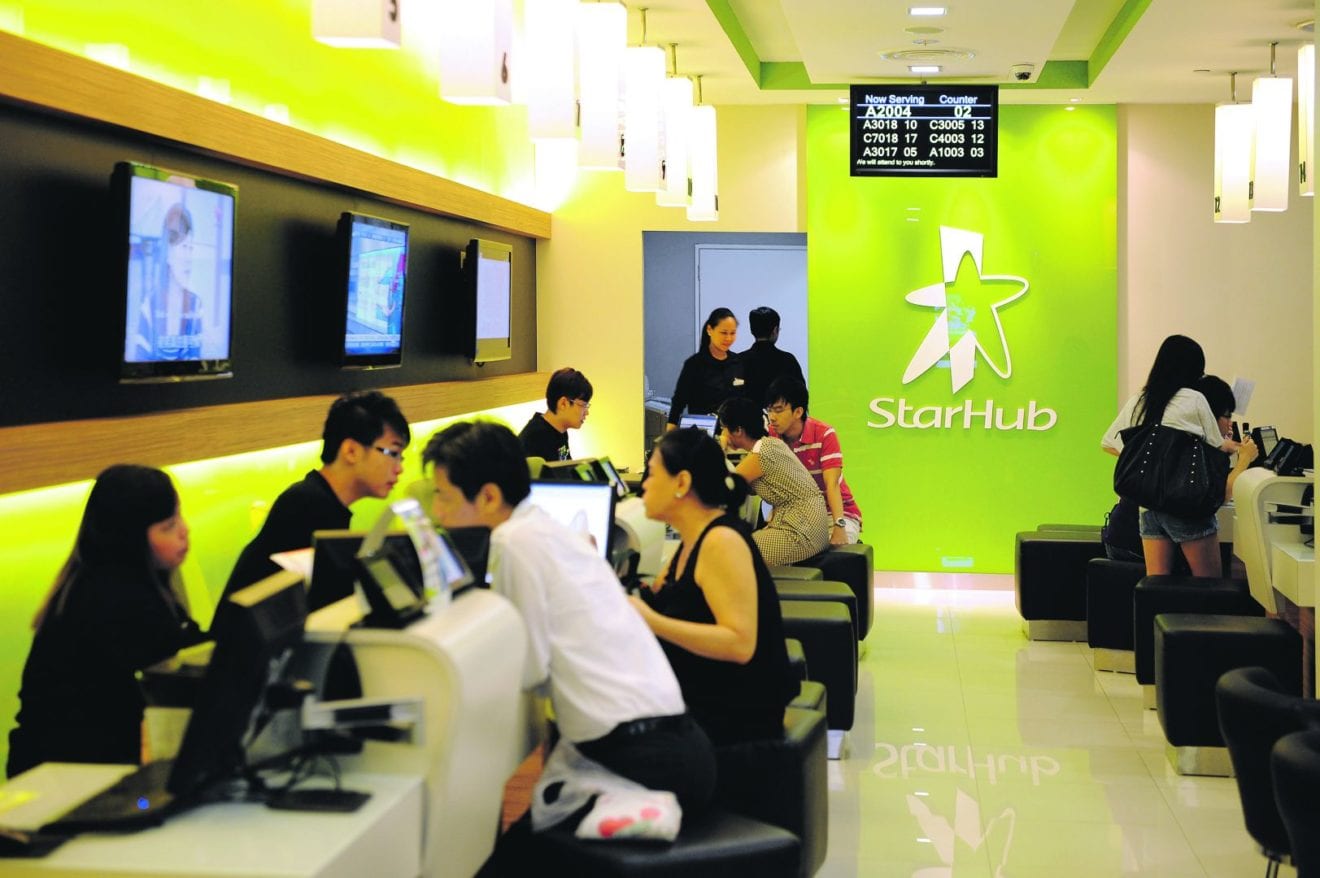
    Singapore’s M1 and StarHub are considering expanding their mobile infrastructure sharing arrangements to gain a greater competitive edge against new market entrant TPG Telecom.

    The companies announced they have signed a memorandum of understanding covering the evaluation of potential further collaboration in network infrastructure sharing.

    M1 and StarHub have been sharing infrastructure including combined antenna systems, in-building fiber and tunnel cables for many years.

    Now the operators are exploring a deeper collaboration focused on sharing radio access network, backhaul and access assets.

    The collaboration is aimed at enabling both operators to optimize the use of a number of network elements while improving coverage and capacity for customers. The companies plan to continue to manage network traffic independently.

    StarHub CEO Tan Tong Hai said pooling network resources will allow both operators to roll out more cost effective next-generation networks to manage the exponential growth in demand for mobile data.

    “We are cooperating to bring the Singapore infocomm industry to the next level, to compete not on pure infrastructure ownership, but at a higher level of customer service and innovative value creation,” he said.

    “Sharing mobile network radio elements with M1, but keeping our individual mobile core networks, will allow StarHub to provide better mobile service (in particular, mobile coverage) and still be able to differentiate ourselves.”

    M1 CEO Karen Kooi added that the agreement could lower both operators’ operational and capital expenditures, allowing them to invest in the future technologies needed to keep Singapore at the forefront of the ICT industry.

    Singapore recently granted a fourth mobile license to TPG Telecom, after the Australian fixed line operator won a new entrant spectrum auction with a bid of S$105 million ($72.8 million).

    The terms of the allocation call for TPG to provide nationwide street level 4G coverage within 18 months of the license coming into effect, meaning the company will soon be a competitive threat for StarHub, M1 and incumbent Singtel.