Author: Mei Ling Tan

  • Citilink Serves 745,187 Passengers during Xmas and New Year Holidays

    Citilink Serves 745,187 Passengers during Xmas and New Year Holidays

    Low-cost carrier Citilink Indonesia carried 745,187 passengers during Christmas and New Year holidays, a 2% increase compared to the same period last year of 730,925 passengers.

    Citilink Indonesia president director Albert Burhan said that the increase was made possible thanks to Citilink’s proposal for extra seats ahead of the peak season at the end of 2016.

    “Amid heavy passenger traffic in airports during the peak season, Citilink was capable of scoring high percentage of on-time departure, i.e. above 88% percent,” he said on Tuesday.

    Citilink noted the most popular flight routes during Christmas and New Year holidays were Jakarta-Surabaya v.v., Jakarta-Medan v.v. and Jakarta-Denpasar v.v.

    “We would like to express our gratitude to all customers for their thrust to fly with Citilink Indonesia,” Albert said.

    Citilink claims that it carried 11.08 million passengers in 2016, or a 16.6% increase compared to the preceding year figure of 9.5 million.

    In the same period, Citilink also served 58 flight routes, of which 9 are new routes opened in 2016. Citilink also served carter flight from Indonesia to Jeddah in Saudi Arabia and China.

    Meanwhile, Citilink is set to fly above Papua sky on January 23 this year in a bid to expand connectivity in eastern Indonesia, having failed to do so last year.

  • Bosch’s new electric power steering system offers new level of safety

    Bosch’s new electric power steering system offers new level of safety

    German automotive components technology supplier Bosch has announced the global debut of its Electric Power Steering (EPS) system with fail-operational function at the North American International Auto Show.

    The system, which enables either a driver or auto pilot system to make a safe stop in the rare case of a single failure, is a key requirement on the path to fully automated driving.

    The fail-operational technology will enable OEMs to comply with the fall back strategies as proposed in the Federal Automated Vehicles Policy documents from the US Department of Transportation (DOT) and National Traffic Highway Safety Association (NHTSA).

    “Highly automated driving can make a significant contribution to improving road safety and we’ve seen great interest from our OEM customers as well as the public in this technology,” said Mike Mansuetti, president of Robert Bosch LLC.

    “The addition of automotive steering after the acquisition of our former joint venture ZF Lenksysteme GmbH allows us to better serve our customers with integrated system solutions on the path to highly automated driving. The new EPS with fail-operational function represents a milestone of the integration of automotive steering into our mobility solutions portfolio and is an essential technology to safely realize automated driving.”

    EPS with fail-operational function from Bosch enables an independent return to a minimal risk condition with about 50 percent electric steering support via an electrical fallback solution, claims the company.

    The system is able to detect a failure in the steering system and move to the electrical fallback solution. If the driver is still in the loop, they can safely steer the vehicle without the sudden increase in steering force.

    For highly automated driving, the EPS with fail-operational function will enable the system to recognize the situation and automatically steer the vehicle to a safe stop without bringing the driver back into the loop.

    Bosch has designed the system in a highly integrated way that leads to a costeffective solution for OEMs. Start of production for the EPS with fail-operational function in a scalable modular kit is planned for 2020.

  • Ford bets on Mustang to power up China profits

    Ford bets on Mustang to power up China profits

    Ford Motor is betting on one of its most distinctively American models, the Mustang muscle car, to boost the company’s sales and profits in China.

    Ford began selling the Mustang in China in early 2015, and it is a niche vehicle, selling at a rate of about 3,000 cars a year. Still, that makes the Mustang, which starts at 399,800 yuan ($57,670) the top-seller in a sporty car segment against more expensive vehicles like the Audi TT and the Nissan Skyline GT-R. Mustang last year outsold the Chevrolet Camaro from General Motors Co by nearly 15 to one.

    With styling that harks back to 1960s Detroit muscle cars, the Mustang stands out in a Ford lineup dominated by practical sedans and sport utility vehicles. Ford’s sales in China grew by 50 percent in 2013 and 20 percent in 2014, but in 2015 the pace slowed to 3 percent. In 2016, Ford added the Lincoln luxury brand to its China lineup and expanded sales by 14 percent.

    Industry analysts said Ford’s China market profits and profitability were relatively healthy, with operating margins for Ford’s joint ventures with Chongqing Changan Automobile Co Ltd (000625.SZ) and Jiangling Motors Corp (JMC) (000550.SZ) in the 14-16 percent range over the past three years.

    But competition in the world’s largest car market continues to heat up as global automakers, from GM to Volkswagen AG to Toyota Motor Corp, add more models to product ranges. Indigenous Chinese automakers, too, are launching models that can compete more head-on with global carmakers’ products.

    Ford officials said the company’s China operations did not have specific profit objectives but were trying to keep margins in their current “healthy” range.

    “In terms of having a pricing power on your brand, you want people to be choosing your brand for rational reasons, but if you could also (combine) that with emotional reasons, that’s when you get some pricing power,” Peter Fleet, Ford’s executive in charge of sales and marketing for the Asia-Pacific region told Reuters.

    The Mustang and the F-150 Raptor, a high performance version of Ford’s F-150 large pickup truck, provide the emotion, he said.

    The formula works for Dong Zirui, a 27-year-old small rental car business owner in the northeastern China city of Tangshan who bought a Mustang late last year.

    “The Mustang is a rear-wheel-drive car,” said Dong who decided to buy the Mustang when he spotted photos of it online. “It’s a savage when you try some drifting stunts with the car.” But Dong said he can fit his wife and young son in the car when he needs to.

    Dealers say the Mustang brings in two types of buyers to Ford stores: younger drivers, mostly younger than 30 years of age, from upper-middle class families, who have recently finished their studies and have financial support from their parents, as well as drivers in their 30s and 40s who have work or life experience outside China.

    “Ford has a cleaner sheet in China, so there might be an opening for those halo cars to help the company improve its brand image,” said James Chao, Asia-Pacific chief for consulting and research firm IHS Markit Automotive, referring to China being a relatively young market.

    As Chinese consumers typically make car purchasing decisions based on word-of-mouth advice from their family and friends, Mustang buyers can be influential opinion leaders for Ford.

    Guo Xin, a 30-year-old rally car racer and stunt driver for films and commercials in Beijing, said he liked the Mustang so much that in 2011 he helped form a Mustang Club of China which now has some 2,000 members.

    “Growing up I used to see the Mustang in movies,” said Guo who drives a 2006 Mustang and also owns a 1966 Mustang.

    Guo’s classic Mustang would turn heads even in Detroit. But he cannot take it out on public roads. Used cars brought in from outside China cannot be registered in the country.

  • Cebu Pacific requests flights to India

    Cebu Pacific requests flights to India

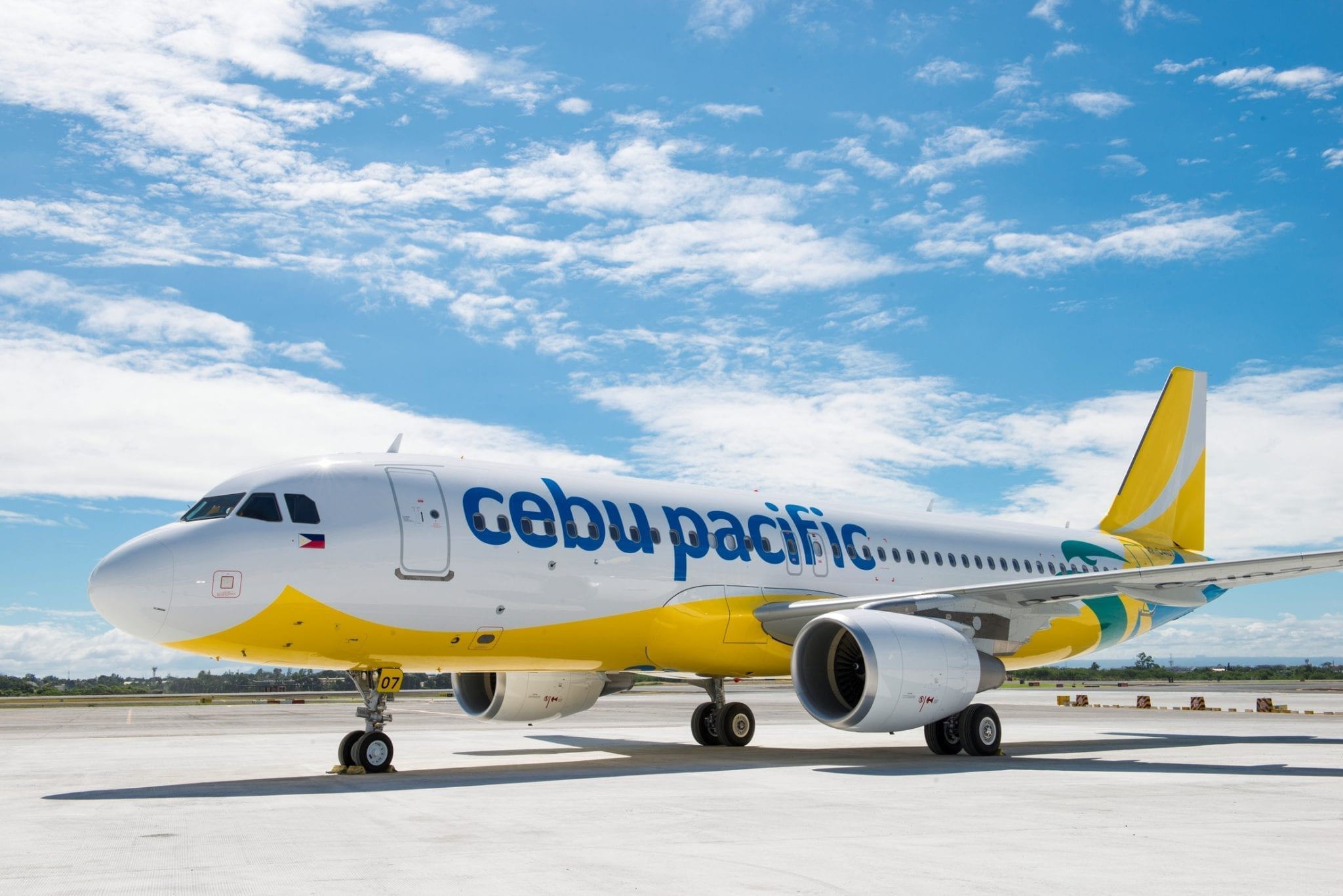
    Cebu Air, operator of Cebu Pacific, wants the Civil Aeronautics Board to reallocate the unused flight frequencies of rival Philippine Airlines to India. The Gokongwei-owned airline filed with the CAB an application for allocation and re-allocation of entitlements to India from PAL.

    Cebu Air’s request made the request in accordance to the existing air agreement between the governments of the Philippines and India.

    PAL flights to New Delhi were stopped in June 2013 amid low demand from local travelers.

    No Philippine carriers fly between Manila and India now.

    Philippines Air Asia Inc. filed with the CAB an application for designation as official Philippine carrier and grant of seven weekly flights to New Delhi, nIndia.

    Cebu Pacific earlier said it was studying to acquire an Airbus 350 and Boeing 788 in the third quarter this year for its long haul operation.

    Cebu Pacific launched its long haul operation in 2013, with A330-300 services to Dubai. It now operates five long haul routes to the Middle East and Australia and also uses its A330 fleet on several short haul routes.

    The airline last March launched four times weekly flights between Manila and Guam, its first US destination.

    Cebu Pacific currently offers flights to a total of 36 domestic and 30 international destinations, operating an extensive network across Asia, Australia, the Middle East, and USA.

    Its 58-strong fleet is comprised of six Airbus A319, 36 Airbus A320, six Airbus A330, eight ATR 72-500, and two ATR 72-600 aircraft.

    Between 2016 and 2021, Cebu Pacific expects delivery of two more brand-new Airbus A330, 32 Airbus A321neo, and 14 ATR 72-600 aircraft.

    Cebu Pacific earlier reported a net income of P7.09 billion in the January to September period, up 99.6 percent from P3.56 billion in the same period last year.

    Revenues increased 10.5 percent to P46.69 billion from P42.30 billion last year.

  • Consumers willing to accept ads on IoT devices

    Consumers willing to accept ads on IoT devices

    The majority of consumers, at least in the US, are fine with the idea of ads on IoT devices, according to an Interactive Advertising Bureau (IAB) study on consumer adoption patterns and trends.

    In the survey of 1,200 US adults, 65% of IoT device owners said that they are willing to see ads on their IoT screens. What’s more, 62% already do, the study added.

    Devices examined in the study included connected cars, internet-enabled home control devices, internet-enabled appliances, smart watches, wearable health trackers, internet-enabled voice command systems, smart TVs, VR headsets and smart glasses.

    Incentives are the prime motivators.

    The report showed that 55% browsed through ads get coupons, while 30% searched for extra features and 22% loved playing exclusive games.

    Affluence and age matter when gauging consumers’ willingness to see ads on their IoT devices.

    According to the report, 69% of those who earn $100,000 or more and 68% of those aged 18-34 years are “more likely to see the value exchange of receiving such ads on their devices.”

    While the above results cater to only US consumers, it does indicate a growing willingness among consumers to view ads if the rewards are clear.

    It also offers valuable clues for CMOs who are looking to cash in the upcoming IoT boom and get into the living spaces of consumers.

  • SmarTone enters IoT alliance with Cisco Jasper

    SmarTone enters IoT alliance with Cisco Jasper

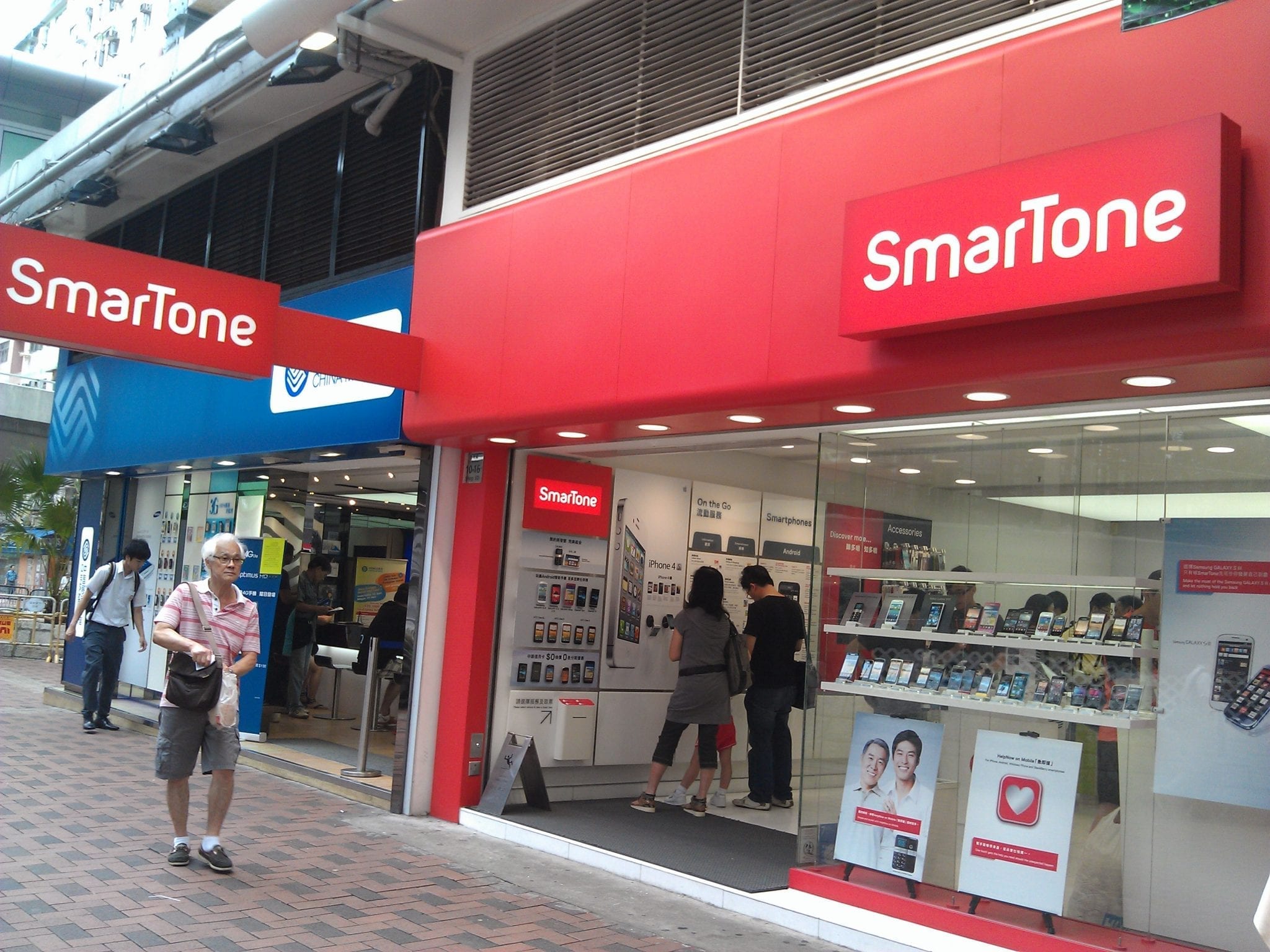
    Hong Kong’s SmarTone has teamed up with Cisco Jasper, Cisco’s IoT division, to launch IoT services in the market.

    The companies will offer Hong Kong businesses the opportunity to leverage SmarTone’s mobile network and Cisco Jasper’s Control Center managed connectivity platform for their IoT-based services.

    Announcing the deal, Cisco Jasper managing director for China and APJ Hong Lu said the company sees SmarTone as an ideal partner for the Hong Kong market due to its status as a total service provider, including cloud, mobile, fixed line, ICT and IoT services.

    “For more than 10 years we have been helping businesses across every industry automate the delivery of IoT services that have a direct impact on their bottom line,” Lu said.

    “Today, more than 6,500 companies in over 100 countries use Cisco Jasper Control Center to automate the connectivity management of their IoT devices around the world.”

    Customers include 23 of the world’s major auto makers leveraging the platform for their connected car initiatives. Cisco Jasper is also particularly targeting smart cities, as well as the industrial manufacturing, retail, security and smart home sectors.

  • Travel with AirAsia for Rs 99

    Travel with AirAsia for Rs 99

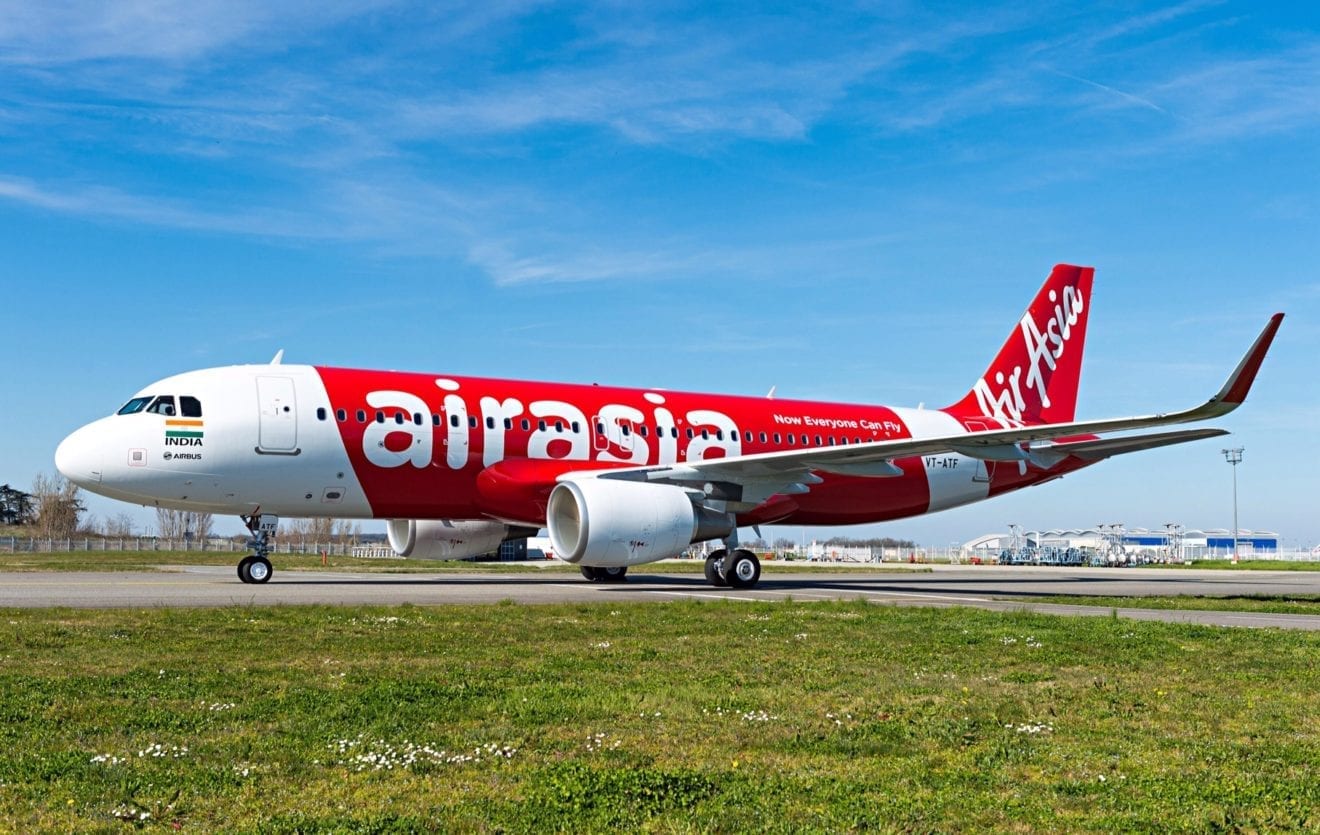
    Budget carrier AirAsia India on Saturday announced special low fares one way to select destinations across its network in the country.

    “Starting at Rs 99 one-way, the special fares can be booked between January 16 and January 22 for travelling from May 1 to February 6, 2018,” said the airline in a statement.

    The airline operates services to 11 destinations — Bengaluru, Chandigarh, Goa, Guwahati, Hyderabad, Imphal, Jaipur, Kochi, New Delhi, Pune and Vizag, with Bengaluru and New Delhi as its hubs.

    It has a fleet of eight Airbus A320 aircraft.

    The carrier’s parent company AirAsia is also offering promotional fares to Kuala Lumpur in Malaysia and Bangkok in Thailand from India on its Southeast Asia network, with one-way tickets priced at Rs 999.

    “The travel period for overseas destinations is from January 16 to July 31, and tickets can be booked between January 16 and January 22,” said the statement.

    The three-year-old low-cost airline is a joint venture between Tata Sons Ltd and AirAsia Berhad, with each holding 49 per cent equity stake, while its Chairman S Ramadorai and Director R Venkataraman hold 0.5 per cent and 1.5 per cent shareholding respectively.

  • Airtel launches India’s first payments bank

    Airtel launches India’s first payments bank

    India’s largest mobile operator Bharti Airtel has launched the nation’s first payments bank in all 29 states, using its extensive network of retail stores as banking points.

    The operator will invest an initial 30 billion rupees ($440.3 million) to develop a pan-India banking network and payments ecosystem for its mobile customers. Customers’ mobile number will serve as their banking numbers.

    At launch, the Airtel Payments Bank will use Airtel’s retail network of around 250,000 stores in all 29 states of India as banking points. This is more than the total number of ATMs currently operating in the country.

    Airtel plans to develop a nationwide digital payments ecosystem consisting of over 5 million merchants. The operator said 1 million are already on board.

    The bank offers an interest rate of 7.25% per annum on deposits in saving accounts, and Airtel mobile customers will receive equivalent talk time for every rupee they deposit at the time of opening a savings account.

    Airtel also rolled out its payments bank app for Android and iOS, accessible via the MyAirtel app.

    “Just like mobile telephony leapfrogged traditional telecom networks to take affordable telecom services deep into the country, Airtel Payments Bank aims to take digital banking services to the unbanked over their mobile phones in a quick and efficient manner. Millions of Indians in rural areas will get their first formal banking experience with Airtel Payments Bank,” Bharti Enterprises chairman Sunil Bharti Mittal said.

    “We are fully committed to… Prime Minister Shri Narendra Modi’s call to build a Digital India and lay a strong foundation for India’s transition to a cashless economy. Airtel Payments Bank will invest towards building a vast digital payments ecosystem with millions of merchants, and allow customers to make convenient cashless payments for good and services with their mobile phones.”

  • South Korea approves VW recall of Tiguan vehicles

    South Korea approves VW recall of Tiguan vehicles

    South Korea said on Thursday it has approved Volkswagen’s (VOWG_p.DE) plan to fix 27,000 Tiguan sports utility vehicles to ensure they comply with emissions standards, after previously rejecting the German automaker’s proposals three times.

    Government tests showed the proposed fix to remove software that cheats emissions tests did not affect fuel economy or performance, the environment ministry said in a statement.

    The vehicles comprising two Tiguan variants were among the 125,522 vehicles South Korea ordered Volkswagen to recall in November 2015 after it admitted to cheating emissions tests around the world.

    Plans to fix the remaining 99,000 vehicles will be reviewed, the ministry said.

    South Korea has taken a tough line on Volkswagen, slapping it with a record fine, suspending sales and on Wednesday indicting seven current and former executives and employees in the wake of the emissions-test cheating.

    Volkswagen’s sales in Asia’s fourth-biggest economy slumped to their first annual decline in 12 years in 2016 as a result of the sales suspension.

    The carmaker has also recently received approvals from U.S. and German authorities for vehicle fixes.

    In the United States, Volkswagen on Wednesday agreed to pay the largest ever U.S. criminal fine levied on an automaker to settle charges that it conspired for nearly 10 years to cheat on diesel emission tests.

    U.S. prosecutors also charged six current and former senior Volkswagen executives for their roles in the scheme.

  • Singtel launches 450Mbps LTE-A nationwide

    Singtel launches 450Mbps LTE-A nationwide

    Singtel has announced the nationwide deployment of its 450Mbps LTE-Advanced service as part of the operator’s journey to 5G.

    The company has upgraded its LTE network in Singapore to support the pre-5G technology 256 quadrature amplitude modulation (256 QAM).

    The technology is designed to increase the number of unique waveform shapes to allow the carriage of up to a third more data, as well as increased spectral efficiency.

    Singtel will make the 450Mbps service available to all its 4G customers with compatible devices at no extra cost.

    Customers with Galaxy S7 and S7 Edge smartphones can take advantage of the faster speeds already, and Samsung plans to release a software update to also support the LG V20. More compatible smartphone models are expected to reach the market early this year.

    “Singtel is investing ahead to deliver faster speeds and wider connections with the steady deployment of innovative technologies on our live network,” Singtel CEO consumer Singapore Yuen Kuan Moon said.

    “With more customers consuming and sharing mobile videos, 450Mbps speeds will enable them to download movies in a flash and give them a better entertainment experience while on the go.”

    Singtel also announced it teamed up with Ericsson to demonstrate download speeds of 1Gbps in a live 4G network pilot at two sites. The speed was achieved by combining 256 QAM with 4×4 MIMO and tri-carrier aggregation technologies.

    The operator plans to roll out 4×4 MIMO technology on its network from next year. The first compatible devices are expected to be ready for launch by the end of 2017.

  • Indonesia`s palm oil exports down 2 percent in 2016

    Indonesia`s palm oil exports down 2 percent in 2016

    Indonesias export of crude palm oil (CPO) and its derivatives fell by nearly 2 percent to 25.7 million tons in 2016 from 26.2 million tons in 2015 from after-effects of the El Nino weather phenomenon.

    “At the end of 2015, oil palm fruit production fell due to the El Nino-induced drought for all of 2015. Exports fell 2 percent by volume as production dropped by 7 to 30 percent,” President Director of the Oil Palm Plantation Fund Managing Board (BPDP) Bayu Krisnamurthi said at a press conference here Tuesday.

    Although the export volume of CPO, palm kernel oil (PKO) and their derivatives went down by 2 percent, the export value of palm oil rose by 8 percent to US$17.8 billion or Rp240 trillion from $16.5 billion or Rp220 trillion a year earlier, he said.

    The increase in the export value was caused by the improving global CPO prices which increased by 41.4 percent in 2016. The CPO prices stood at $535 per ton in June 2015, rose to $558 per ton in January 2016 and further moved up to $789 per ton in December 2016.

    Yet, the BPDP has asked exporters to pay attention to the latest CPO price which is too high because it can reduce Indonesias competitive edge in the vegetable oil market.

    “We know that Indonesian palm oil has to compete with soybean oil, so if the palm oil price is too close to the soybean oil price, our competitive edge will decline,” he said.

    Indonesia is currently the worlds biggest CPO producer.

    In 2015, Indonesias CPO production reached 32.5 million tons, with exports reaching 26.4 million tons. The export value went down from $21.1 billion in 2014 to $18.6 billion in 2015.

  • Luxury Cartier pop-up opens in Macau

    Luxury Cartier pop-up opens in Macau

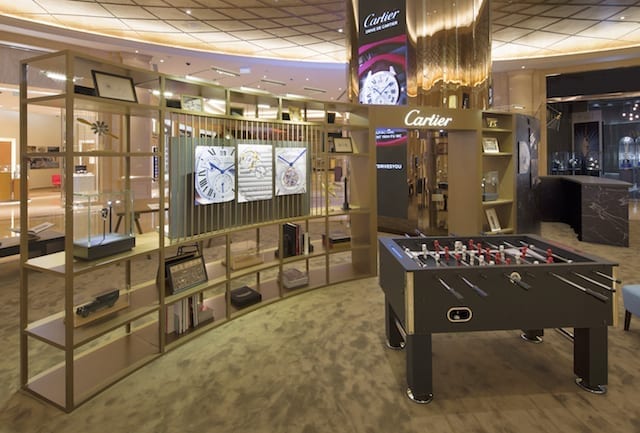
    Cartier has unveiled its first-ever lifestyle pop-up store with experiential display to exhibit the Drive de Cartier Watch Collection.

    The pop-up, located in the Macau Four Seasons T-Galleria by DFS, opened this month and will remain until the end of February.

    cartier-macau-1

    “Visitors will immerse in the cultivated and contemporary universe that is inhabited by gentlemen who wear Drive de Cartier watches,” said a Cartier spokesman.

    cartier-macau-2

    Cartier will transform the Shoppes at Four Seasons exhibition area into an “animated open home,” a retail display concept designed to reveal different aspects of the Drive de Cartier lifestyle. Each space will provide an interactive experience, combining the latest digital technology with specialist workshops conducted by a host of prestigious partner companies, creating the perfect space for Cartier’s guests to enjoy a vibrant experience blending dolce vita and celebration.

    Two distinct areas will be set up. A Library Lounge will display a miscellany of objects and collectibles such as books, music, one-of-a-kind figurines and the latest techie gadgets, alongside the new Drive de Cartier collection. It will also provide gaming platforms (including a new version of the classic Pacman) and a design bar area.

    cartier-macau-7

    In the second area, the Atelier, guests will discover holograms and design sketches of the Drive de Cartier collection, and the inspirations behind the watches, drawing their attention to the balanced aesthetic of the distinctive cushion-shaped case, and the refined detailing of the precision Manufacture movements.

    cartier-macau-4

    cartier-macau-5

    Guests will be invited to take part in workshops on craft beer and wine tasting, calligraphy and artisan leather stamping.

    cartier-macau-8

    The full Drive de Cartier collection will be showcased during the two months of the animation, but a particular highlight will be the horological wonder that is the Drive de Cartier Flying Tourbillon. This prestigious timepiece is fitted with the manufacture calibre 9452 MC mechanical movement with manual winding. Certified Poinccon de Geneeve, the Flying Tourbillon is a testimony to Cartier’s excellence in fine watchmaking.

  • Forever 21 expand on activewear

    Forever 21 expand on activewear

    US fast-fashion retailer Forever 21 has launched its activewear collection globally at its stores and on its website.

    The Forever 21 Activewear Collection provides low-, medium- and high-impact pieces in an array of soft and neon hues.

    forever-21-activewear-collection-2

    The Fit and Run assortment is designed for high-impact activity and features bold prints, sweat resistance, matching sets and lightweight jackets.

    The Booty Sculpt assortment is designed for medium-impact activity and aims to highlight and define curves. It features black and charcoal hues, with high-waisted shorts, capris and leggings with power mesh inserts.

    forever-21-activewear-collection-1

    For low-impact activity, the Dance and Yoga assortment features soft tones and delicate styles such as loose-fitting joggers and wrap-around tops designed for layering.

    With its headquarters in Los Angeles, Forever 21 was founded in 1984 and has more than 730 stores in 48 countries including Australia, China, Hong Kong, India, Japan, Korea and the Philippines.

  • A cloud of dispute above McDonald’s Korea franchisee

    A cloud of dispute above McDonald’s Korea franchisee

    McDonald’s Korea has become mired in a high-profile dispute with a franchisee.

    The local arm of the US restaurant operator terminated the franchise agreement with McDonald’s Mangwon branch on December 1 of last year. According to McDonald’s, the restaurant owner had been failing to fulfill the terms of agreement, including paying the company franchise commissions amounting to a total of about 700 million won ($586,264).

    The owner retaliated by claiming he suffered losses from another McDonald’s restaurant opening nearby, refused to pay the overdue amount and shuttered the restaurant on December 4 after firing some 60 employees who were owed 50-million-won ($41,865) in unpaid wages.

    This week, former employees and members of the Alba Organization, Korea’s labor union for part-time workers, protested in front of the now-closed Mangwon outlet, affixing signs festooned with angry slogans to the front of the building.

    In an official statement, the Alba Organization demanded that McDonald’s advance the overdue wages and severance pay to the former employees, then demand indemnity from the owner. It also requested that the company provide jobs to employees who wish to continue working at McDonald’s.

    “For part-timers, wages are essential to survival. We demand that McDonald’s resolve this matter as soon as possible,” said a spokesperson.

    McDonald’s Korea responded by saying  it was doing its best to help the employees, and claimed to have already hired 19 of the former Mangwon outlet workers at other McDonald’s restaurants.

    However, as for unpaid wages, officials said, “we need the work data for the part-timers to pay their overdue wages, but only the owner can access the data,” adding that “trying to access the information without the owner’s consent is a violation of the law.”

  • Korea food delivery app popularity booms

    Korea food delivery app popularity booms

    Food delivery has become more accessible than ever in South Korea.

    Korea food delivery apps have brought together thousands of restaurants across the country into a single location-based platform, growing significantly over the past few years.

    According to Woowa Brothers Corp., which operates the leading food delivery app Baedal Minjok, the monthly number of delivery orders exceeded 10 million for the first time last month at 10.7 million, which was an increase from 5.2 million in December 2014 and 7.12 million in 2015.

    Woowa Brothers added that the average number of orders per customer is also increasing steadily, from 3.2 orders per month in 2014 to 3.6 orders in 2015.

    Industry watchers expect the market to continue its growth, taking into consideration new types of food delivery apps with differentiated services entering the market, such as Shikshin Hero, which delivers food from famous restaurants that typically don’t provide delivery services.

    Newly emerging dining trends like eating or drinking alone are also expected to add to the continued growth of delivery apps.

    The Ministry of Agriculture, Food and Rural Affairs and the Korea Agro-Fisheries & Food Trade Corporation predicted last year that “do it yourself hype” and “more food options for take-out or delivery” would drive Korea’s dining trends in 2017, forecasting a positive outlook for the food delivery industry.

    “A greater number of single-person households gave birth to more people drinking and dining alone, and a greater variety of food options are now available for delivery,” said a Woowa Brothers official. “Such factors led to the rapid expansion of the market.”