Author: Mei Ling Tan

  • Deja vu? Malls reuse Xmas decor for CNY

    Deja vu? Malls reuse Xmas decor for CNY

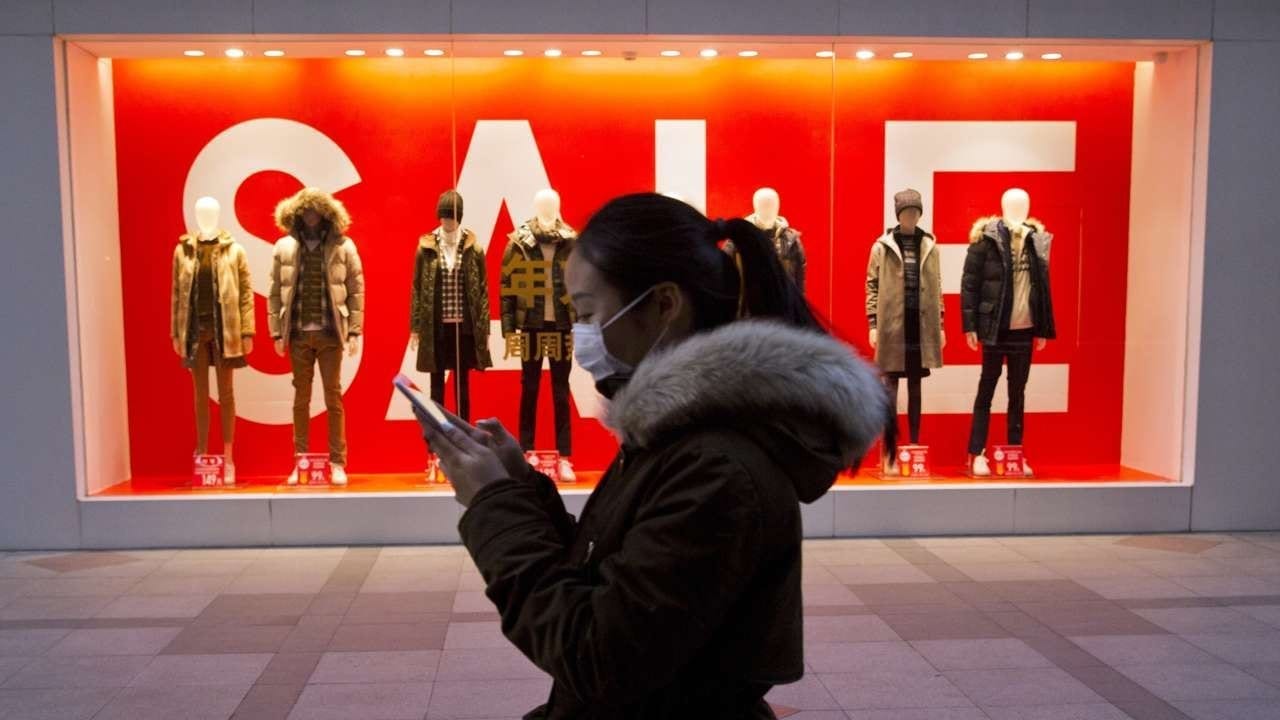
    If Chinese New Year decorations at shopping malls are looking somewhat familiar, it is likely because they have been up since Christmas.

    Malls have transformed their Christmas ornaments and themes into Chinese New Year trimmings.

    By doing so, the malls say they have saved money, reduced waste and managed to turn over the decorations in a shorter time.

    Orchardgateway’s fantasy underwater world decor was planned to cover both festivals, as the dates were almost “back to back”. This year, Chinese New Year falls on Jan 28, just a month after Christmas.

    “We maintained the fantasy underwater world setting but added koi fish to bring out the Chinese New Year flavour and mood,” said its spokesman.

    Orchard Central said it saved up to 60 per cent in cost from repurposing its Christmas ornaments for the upcoming Chinese New Year, instead of replacing them with a new set-up. It has even combined its Chinese New Year decorations with Valentine’s Day decorations, with a turquoise and pink theme. 313@Somerset (above) has also changed its decorations. 

    She added that koi fish, which were added to a seascape of corals, symbolise good fortune, prosperity, longevity and success. The mall managed to save 30 to 40 per cent in cost and wastage as a result.

    Orchard Central, which is owned by Far East Organization, said it saved up to 60 per cent in cost by repurposing Christmas ornaments, instead of putting up a new set-up.

    In fact, the mall has combined its Chinese New Year decorations with Valentine’s Day decorations with a turquoise and pink theme, featuring cages and artificial flowers.

    More than half of the materials from the decor can be recycled. Far East’s other malls, such as Clarke Quay Central and Square 2, are also repurposing decorations.

    Over at CapitaLand Malls’ Bugis Junction, the Christmas tree is now a giant spiral bamboo plant.

    “What used to be whimsical waxed moustaches – not unlike the kind Santa typically sports – have now been turned into the upturned branches of the bamboo arrangement, signifying good luck for the coming Year of the Rooster,” said CapitaLand Mall Asia’s head of retail management in Singapore, Ms Teresa Teow.

    Farther west, the Star Vista converted its larger-than-life Christmas bauble centrepiece into a tangerine, signifying prosperity and fortune.

    The mall has donated some of its Christmas decorations to the Singapore General Hospital, which will sell them to raise funds for the hospital’s Needy Patients Fund.

    Ms Valerie Toh, 29, an office manager, said she did not notice the similarities in the decorations.

    “Given the not-so-good economy, I think people will appreciate the malls cutting down on wastage rather than spending needlessly,” she said.


  • Apple confirms plan to open its first ever retail store in Samsung’s home city of Seoul

    Apple confirms plan to open its first ever retail store in Samsung’s home city of Seoul

    Apple published a total of 15 retail job listings to its corporate website today seeking candidates for the Apple Store Leader Program, business managers, Genius Bar staff and marketing, among other positions.

    As expected, the job postings seek employees for an outlet in South Korea’s capital of Seoul. The city also happens to be the hometown of Apple ally and competitor, Samsung.

    “We’re excited about opening our first Apple Store in Korea, one of the world’s economic centers and a leader in telecommunication and technology, with a vibrant K-culture,” Apple said in a statement on Friday, local time. “We’re now hiring the team that will offer our customers in Seoul the service, education and entertainment that is loved by Apple customers around the world.”

    Apple has not officially stated where it plans to build its first Korean flagship, but it is claimed construction is already underway in a southern district of Seoul. That report, also filed on Friday, suggests work at the site will be completed in November. Previous rumors suggested Apple was looking at sites in Gangnam and the busy Garosu-gil shopping street.

    For Apple, a brick-and-mortar outlet in Seoul represents more than an opportunity to grow international sales. A retail presence in Samsung’s backyard could go a long way in winning mindshare in the South Korean market, which is currently served by third-party resellers and Apple’s online store.

  • US to help Korea’s egg shortage crisis

    US to help Korea’s egg shortage crisis

    The U.S. Department of Agriculture said Friday it is discussing with Korea ways for American egg producers to tap into the Korean market that is suffering from an egg shortage as a result of a massive outbreak of avian influenza.

    Amid the rising egg prices due to the outbreak of bird flu that was detected in November, the department spokesperson said that the U.S. and Korea are “engaged in technical discussions to provide access for U.S. egg producers to the Korean liquid egg market.

    “Imports from the U.S. could help limit escalating production costs for processed food manufacturers in Korea and shield consumers from soaring egg prices,” the official added.

    He did not mention when the U.S. will start exporting eggs to Korea.

    Starting Saturday, the Korean discount store chain Homeplus raised the retail price of 30 eggs by 9.6 percent to 7,990 won ($6.67) at its 142 stores. Homeplus has increased its egg prices five times in a month and retail prices have jumped 31.4 percent over the month.

    The latest price hike by Homeplus came a day after its rival Emart increased the price of 30 eggs by 8.6 percent to 7,580 won.

    Officials of the companies expect egg prices to go up again ahead of the Lunar New Year holiday later this month.

    The American spokesperson also said that the U.S. Department of Agriculture is working with the Korean government and U.S. industry associations to facilitate and expedite registration of additional U.S. suppliers of table eggs to the Korean market.

    “In the U.S., many government agencies cooperate to ensure the safety of U.S. egg products including the Agricultural Marketing Service, the Animal and Plant Health Inspection Service, the Food Safety and Inspection Service, and the Food and Drug Administration,” the official said.

    Since the bird flu outbreak, Korea’s quarantine officers have culled more than 30 million birds, including 25.8 million chickens, which has resulted in the reduction of the country’s daily egg output by about 30 percent.

    To encourage imports, the Korean government decided earlier this week to remove import tariffs on egg products until Jun. 30. Currently, Korea imposes tariffs of 8 to 30 percent on imported egg products.

  • Why obsessing over GDP is no longer in China’s best interests

    Why obsessing over GDP is no longer in China’s best interests

    China’s leadership has always seen gross domestic product (GDP) numbers as the most important indicator of their ability of govern; thus their whole apparatus does whatever it can, in terms of policies, to make sure a politically acceptable growth rate is achieved.

    With a persistent slowdown, the government has to adjust its target to a maximised but achievable goal. Between 2010 and 2015, the world’s second-largest economy witnessed a steady slowdown, with annual percentage growth rates of 10.5, 9.5, 7.9, 7.8, 7.3 and 6.9, respectively. Averaged annual GDP growth rates between 1989 and 2009 were around 10 per cent.

    Last year, the government set a range of 6.5 per cent to 7 per cent as a growth target, the lowest in decades. As expected, China is on track to meet that 2016 goal after three straight quarters of 6.7 per cent expansion.

    However, such growth was achieved with an expansive fiscal policy, higher government spending, a housing rally, ultra-loose monetary conditions and record bank lending, which have also led to an explosive increase in debt.

    Government spending from January to September 2016 was 12.5 per cent up on the same period a year earlier, while revenues increased by 5.9 per cent. Of the 8.2 per cent overall growth in fixed-asset investment in the period, state firms jumped by 21.1 per cent and private firms rose 2.5 per cent.

    In the previous year, state firms registered a much more moderate 10.9 per cent in fixed-asset investment, year on year, while private investment went up by 10.1 per cent.

    Recent growth has been achieved with the help of record bank lending, which is on pace to top 2015’s record 11.71 trillion yuan (HK$12.2 trillion). Last year, the central bank injected a net 1.5 trillion yuan into money markets through open market operations, many multiples of its net 10 billion yuan injection in 2015.

    The eased monetary policy helped stoke a housing boom that saw prices rise to a historic 12.6 per cent year on year in November and made houses in Chinese cities among the least affordable in the world.

    The state investment-fuelled growth led to alarming combined public and private debt of 260 per cent of GDP by the end of last year, the highest debt-to-GDP ratio in the world. The Bank for International Settlements (BIS) recently warned this was excessive and dangerous. In the first six months of last year, China’s domestic debt ratio rose by an astonishing 28 per cent of GDP.

    Last year the party set a target of 6.5 per cent annual growth for five years through to 2020, in its 13th five-year plan, just to meet the leadership’s promise of doubling the country’s economic size and per capita income from 2010 to 2020, a political symbol of building a “moderately prosperous society”.

    To support such short-term growth, the government had to delay, stall or even hold back some sorely needed reform measures which will help regain long-term growth momentum.

    Realising the challenge of taming asset bubbles, solving rising bad debt and checking unbalanced growth, the leadership recently pledged to shift its focus away from growth towards dealing with risks this year.

    If the leadership makes good on what they claimed – giving market forces a decisive role in the distribution of resources – they should abandon arbitrary growth targets, a remnant a Stalinist command economy.

    China’s economy is going through a critical transition, from manufacturing-oriented and state investment-fuelled expansion to service-centred and consumption-driven growth. What the government should do is push forward reforms that remove the obstacles to such transitions.

  • China ivory ban a big win for elephants , if done properly

    China ivory ban a big win for elephants , if done properly

    At the end of 2016, elephants made headlines around the world as China finally announced a timeframe for closing its domestic ivory market – long affirmed by many conservationists to be the single biggest step that could be taken to end the slaughter of elephants.

    The news represents a major win for elephant conservation and the Chinese government deserves commendation. However, close examination of the recent announcement gives some potential causes for concern – it is now imperative that the ban be strongly publicised and enforced, and that any potential loopholes be closed.

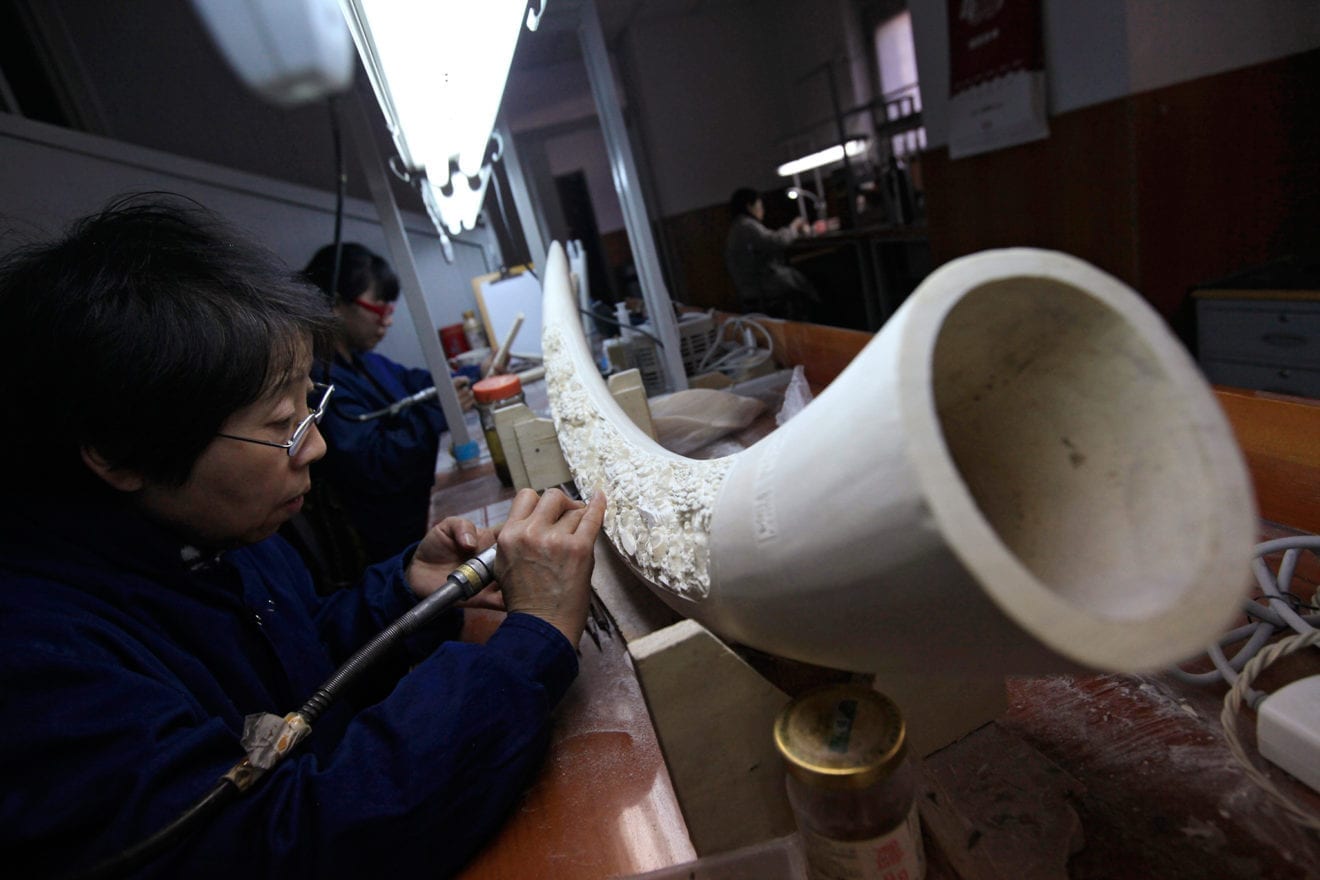
    Carved-ivory-legally-on-sale-in-China_2017_01_06.jpg
    Carved ivory legally on sale in China.

    China is by far the world’s biggest contemporary market for elephant ivory and the final destination for the majority of ivory from poached elephants. The continued existence of a legal ivory trade in China has been a major hindrance in combatting this illegal trade.

    As of the end 2016, there were 34 licensed ivory carving facilities and 130 licensed retail outlets in China permitted to process and trade in “legal” ivory derived from either old (pre-CITES) stock or a CITES-sanctioned one-off sale in 2008.

    However, EIA investigations and research by other groups documented widespread abuse of this poorly regulated system, which enabled the laundering of illegally sourced ivory. Closing this loophole could massively simplify enforcement operations – with no legal market to launder ivory, any processing or sale is illegal and can be immediately dealt with as such.

    China’s intention to close its domestic market was first announced in May 2015 and was restated by President Xi Jinping the following September. On December 28, 2016 a notification of plans to close the domestic market in its entirety by the end of 2017 was finally published.

    Looking into the detail of the document, there is potential for both celebration and concern.

    First, the positives. The notification sets out an impressively ambitious timescale for stopping all ivory carving and retail activities in previously licensed facilities by the end of 2017. Unlike the upcoming ban in Hong Kong, traders have not been given an unnecessary five-year grace period to dispose of stock – stock which should have been exhausted long ago and the imminent illegality of which was well known.

    Ivory-on-sale-in-China_2017_01_06.jpg
    Ivory on sale in China.

    Secondly, a compromise appears to have been reached to maintain the cultural heritage of ivory carving – the main argument from opponents of an ivory ban in China. The notification commits to “proactively guiding the transition of ivory carving techniques”, including providing guidance in using alternative materials and encouraging master carvers to move into museum restoration.

    However, the notification contains a worrying potential loophole which requires urgent clarification. It states that “cultural relics made of ivory that are of legal origin and have been verified by a specialist appraisal body may … be auctioned under strict supervision, to demonstrate their cultural value.” The term translated here as “cultural relic” usually refers to antiques, but not explicitly so. This indicates that limited sales of ivory antiques – and, possibly, even any item judged to have artistic merit created or sold under the previous licensing system and regardless of age – may be allowed to continue. Indeed, the potential loophole has already been interpreted as such by the antiques industry. The current language sends an ambiguous message to markets and risks undermining the effectiveness of the ban and demand-reduction campaigns.

    Also, the Chinese government and the international community must ensure that the ivory market does not simply shift to other areas with weak enforcement or lax legislation, especially in countries bordering China. The open sale of huge amounts of nominally illegal wildlife products – including ivory and tiger products – has been documented in border regions of Vietnam, Laos and Myanmar. In many of these markets, Chinese citizens represent the vast majority of buyers and trade is conducted in Chinese, often with Chinese currency. Targeted collaborative enforcement efforts are urgently required to close these markets and ensure illegal ivory cannot leak across the border into China.

    Overall, the Chinese domestic ivory ban is a major cause for celebration and optimism as we begin 2017. Although the potential loopholes need clarifying and closing, this notification sends a strong and timely signal that the global ivory market is progressively shutting up shop.


  • Aape popping up with New Year offers

    Aape popping up with New Year offers

    Aape by A Bathing Ape, a diffusion label under the Japanese streetwear brand, is launching its Chinese New Year collection at a week-long pop-up store at Ion Orchard in Singapore.

    Running from January 14 to 22, the store will offer exclusive merchandise and a limited-edition womenswear range with such items as t-shirts and hoodies.

    The line focuses on relaxed, casual separates with a youthful, sporty vibe, says Female magazine. The women’s range features a camouflage print in pink and red, plus a black, gold and white version.

  • Martell launches fiery new edition of its Cordon Bleu cognac

    Martell launches fiery new edition of its Cordon Bleu cognac

    Pernod Ricard Travel Retail Asia Pacific has launched Martell Cordon Bleu Intense Heat Cask Finish – a limited edition reinterpretation of the Martell Cordon Bleu — featuring an eye-catching new package design.

    Martell Cordon Bleu Intense Heat Cask Finish is created through a toasting and six month finishing process never before used by Martell, which it says results in heightened fruit and spice taste notes. By increasing the heat applied to Martell Oak casks in a technique called ‘chauffe crocodile’, the new cognac “boasts intense aromas, a fruity citrus sweetness, a toasted nuttiness and robust spice”, the company added.

    The new limited edition is presented in a deep blue box, artfully embossed to replicate a charred wood effect. Aditionally, invisible thermochromic inks, which react with body temperature, turn fiery red when the box is rubbed, creating the illusion of glowing embers.

    Throughout January and February 2017, travellers in Hong Kong International Airport, Singapore Changi Airport, Taiwan Taoyuan International Airport, China and Malaysia airports as well as Hong Kong border shops will be able to experience Martell Cordon Bleu Intense Heat Cask Finish through tasting activities in store.

    In addition, to celebrate the Chinese New Year, Asia Pacific travel retail customers who purchase Martell Cordon Bleu Intense Heat Cask Finish will also receive a complimentary special edition red shopping bag.

  • Fashion chain Next faces crossroads

    Fashion chain Next faces crossroads

    Fashion chain Next needs to carefully rethink who its customers are and how best to attract them to avoid falling into the same trap as M&S, says a retail analyst.

    The UK-based retailer has released its fourth quarter results for 2016, described by Emily Stella, analyst with Verdict Retail, as “poor” against a weak comparative.

    “The retailer admits it expected more from its Christmas sales. Next’s underwhelming performance was not isolated to the fourth quarter: 2016 has been a difficult year for the retailer, with full price sales for the year to date down 1.1 per cent on last year.”

    The company said it expected profits to fall in its 2017-18 financial year by between 2 per cent and 14 per cent due to “tougher times” ahead. A 0.4 per cent quarterly increase in total sales was achieved purely through discounting, which means narrower margins. Price rises, already flagged, may reduce revenue in the year ahead by a further 0.5 per cent.

    “Next has long been a retail star, seemingly unable to do wrong,” observed Stella. “However, the retailer acknowledges that 2017 could be a challenging year as consumers continue to restrict spending and a devalued pound forces price rises.”

    She said the recent results may mark the start of a difficult period for the retailer.

    “As it stands, Next’s current shoppers aren’t buying into its proposition – perhaps an indication that Next is failing to identify with its target market. To avoid falling into the same trap as M&S, Next will need to carefully rethink who its customer is and how to best attract them.”

    Next’s share price fell by 14 per cent after its gloomy projections.

  • Online retailers move to sell new cars on web

    Online retailers move to sell new cars on web

    Brick-and-mortar shops will no longer be the only go-to place for buying new automobiles, as online e-commerce shops are stepping into the industry as well.

    Interpark said Wednesday it would start a retail service for imported vehicles with local company D.parts, which delivers foreign cars to Korean customers and assists with paperwork, tax issues and delivery.

    To avoid conflict with local car dealers, the company will offer models that are not included in the list of products officially imported to Korea.

    “Buying foreign brand cars that are not dealt by official dealers can be a nuisance for general consumers,” said Cho Jin-hyuk, manager for Interpark’s electronics division. “Because our service is based on collaboration with an experienced company, customers can now buy such products with credibility and convenience on the internet.”

    “We’re looking for a way to talk directly with headquarters without going through any intermediate agents,” said a Tmon spokesman.E-commerce site Ticket Monster (Tmon) is also beginning to sell vehicles online, offering inventory from auto manufacturers inside and outside borders. The company’s brief experience in the market may offer clues about demand. The retailer sold Jaguar XE models in August, for which orders were filled in the first three hours. However, only one eventually completed a purchase after Tmon and SK Encar, agent supplier for the project, bumped heads with Jaguar Land Rover’s Korean office and official dealer Aju Networks.

    Online is the main sales channel for the global electric car brand Tesla Motors which has two showrooms in Korea but doesn’t have an official brick-and-mortar store. Tesla’s stores serve only as showrooms and clients must use the website to order. Demand in Korea was evident last year when pre-orders of the automaker’s Model 3 surpassed 325,000 in the first week.

    Although most sales offers are temporary, online retailers are eyeing expansion into domestic car brands. In September, Auction placed 10 models of Chevrolet’s Aveo on its platform, in a deal with GM Korea. The models sold out within one minute, as Auction offered a credit of five million won ($4,195) to buyers on the website.

    “We already saw potential, so the company is open for collaboration suggestions as long as the manufacturer is willing to do so,” said Lee Jin-young, a manager for Auction.

    Starting next year, domestic cars will be sold on television home shopping channels as laws that prohibited the practice were eased in November.

    New sales channels may prove favorable for consumers, as fierce competition will prompt companies to offer discounts or interest-free installment plans, which were common when imported car sales on television were popular in the early 2000s.

    “Online sales of automobiles may be a chance to enhance consumers’ convenience and improve the ambiguous structure of domestic vehicle sales,” said Kim Pil-soo, an automotive engineering professor at Daelim University College.

    Industry insiders, however, say that there are still many obstacles. E-commerce and home shopping networks equally say that although they are interested in launching online auto sales, the final decision is up to manufacturers and official importers.

    Decision makers are not enthusiastic about the idea, as sales online would eventually hurt brick-and-mortar stores and their sales force.

    “Realistically speaking, going online is not an easy option as it is a matter likely to be attacked by our labor union,” said a source from Hyundai Motor. GM Korea employees also criticized the Aveo sale on Auction, calling it a death sentence for sales people.

    Foreign car brands don’t seem too excited about the idea either, even though they may be able to save 15 percent on the commission fees they pay dealers. Most foreign car brands sign contracts with local dealers. One source pointed out that those vehicles require service after the purchase.

    “Dealers have connections to competent car service providers and quality after-service is an essential in this industry, therefore going online may be a risky decision for brand image,” the source added.

  • Thai telcos bracing for a challenging 2017

    Thai telcos bracing for a challenging 2017

    After a rough 2016 there is no respite in sight for Thailand’s telecoms sector, with operators still dealing with heavy costs accrued from recent 4G auctions, strict competition and OTT challengers.

    AIS CEO Somchai Lertsuthivong as stating that he has never seen as challenging a year for the mobile sector as 2016, after nearly three decades of experience.

    AIS and DTAC, which together have a revenue market share of around 80%, have both cut their financial forecasts for 2016 as a result of these challenges.

    AIS expects to report an eibtda margin decline of between 37% and 38% in 2016 from 45.6% in 2015 due to the rising costs as well as one-off expenses related to the shutdown of its 2G network. Dtac expects its ebitda margin to decline to 27% to 30% compared to 31.8% in 2015.

    Operators expect 2017 to be just as challenging. As well as high spectrum costs, operators have had to grapple with a surge in operating costs as they offered heavy subsidies including free 4G handsets to lure customers.

    The sector will also have to deal with surging data consumption as 4G take-up increases. According to the report, Dtac plans to transition away from competing on price with heavy subsidies, and instead compete by offering a superior customer experience.

    AIS is meanwhile responding to the OTT threat by pursuing more digital partnerships with local content providers and businesses. Operators are also exploring partnering with cable providers to offer triple-play services bundling internet, telephone and TV.

  • Kimia Farma to open 100 new outlets

    Kimia Farma to open 100 new outlets

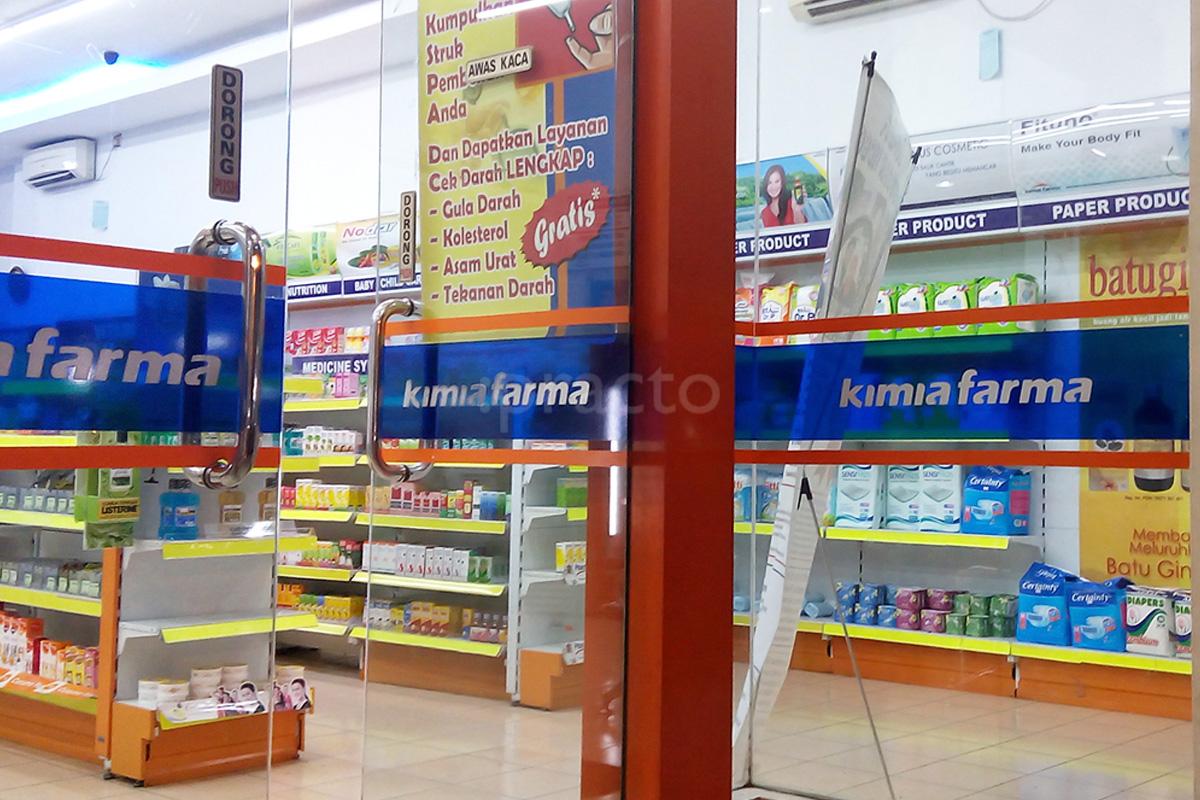
    Kimia Farma Apotek, the operator of hundreds of dispensaries all over the country, will open 100 more dispensary outlets this year. The subsidiary of the state owned pharmaceutical company Kimia Farma said the new outlets would bring the total number of the companys dispensaries to 1,000 units this year.

    Chief Executive of Kimia Farma Apotek Imam Fathorrahman said the management has set aside Rp20 billion for the plan to increase the number of its outlets.

    “Currently the company already has 900 dispensaries with sales valued at a round Rp1.3 trillion last year,” Imam said here on Sunday.

    He said to coincide with its 14th anniversary in January, Kimia Farma Apotek will start entering the market of e-commerce.

    “Holders of smart phones have reached 126 percent of the total population and internet owners around 52 percent. This is an extraordinarily big e-commerce market,” he said.

    In the first phase, the company will eye the Jabodetabek (Greater Jakarta) market and cooperate with order shopping service between Go-Mart.

    “In principle through this service we could be accessed by customers in the Jabodetabek area, Bandung, Surabaya, Bali, and Makassar with more than 250 selected locations of our dispensaries,” he said.

    The digital service, however, is only for non-ethical medicines that could be sold without doctors prescription.

    “This access has become a requirement . People dont have to go to dispensary for cosmetics and drugs that could be bought without doctor prescription,” he said.

  • DHL eCommerce offers e-commerce expertise and logistics services to help Thai rice farmers

    DHL eCommerce offers e-commerce expertise and logistics services to help Thai rice farmers

    DHL eCommerce, a division of Deutsche Post DHL Group, has collaborated with the Ministry of Commerce in Thailand to offer e-commerce expertise and logistics services free of charge for a period of four months to help Thai farmers grow their business and reap the benefits from selling on e-commerce platforms. This follows recent challenging market conditions which have seen an oversupply of rice and strong export competition.

    do_download

    Partnering with the Thailand Ministry of Commerce’s Department of International Trade Promotion (DITP), DHL eCommerce works with farmer co-ops across Thailand to help set up and enable an easy and streamlined process to manage their online inventory and ship to consumers domestically. Experts from DHL eCommerce advise and support farmers by integrating their sales processes with e-commerce portals on BentoWeb, a local e-commerce services provider which has been pre-integrated with the DHL eCommerce Customer Web Portal. Once on BentoWeb, farmers will be able to easily arrange for deliveries and shipments quickly at a click of a button, allowing rice goods to be picked and dispatched to end consumers located in Thailand.

    The collaboration combines the global logistics experience of DHL with the in-depth local market knowledge from DHL eCommerce Thailand, the Ministry of Commerce Thailand and BentoWeb, allowing farmers to benefit from solutions that are tailored to their specific needs. The Ministry of Commerce will work on promoting and registering farmers on www.thaitrade.com/rice while BentoWeb will enable the online order process and inventory management for the farmers. DHL eCommerce will pick up the products from the farms and deliver them free of charge to the consumers directly.

    “We are extremely honored to have this opportunity to use our e-commerce expertise and logistics services to make a positive impact on the farmers’ businesses and their livelihoods. As an organization operating in Thailand, providing both domestic as well as international delivery services to the local businesses, we are committed to the Thailand market. Wherever and whenever we can contribute to the local communities, we will do our utmost best to support,” said Kiattichai Pitpreecha, Managing Director, DHL eCommerce Thailand.

    Thailand is one of the world’s leading rice exporters with an expected output of 25 million tonnes of rice expected in the 2016/17 production year. “The Ministry of Commerce has been rolling out a series of programs aimed at helping the local farmers and one such initiative is this collaboration with DHL eCommerce Thailand to help farmers sell their produce online. We have been working together in the past three weeks to onboard these farmers onto the e-commerce platform so that domestic consumers can place orders and have DHL eCommerce deliver to their doorsteps. We are extremely heartened that an organization such as DHL eCommerce is putting their foot forward to help the local communities,” said Mrs Apiradi Tantraporn, Minister of Commerce, the Royal Thai Government.

    For farmer co-ops like Ban Um-sang Rice Community, they have managed to take the matter of the rice supply glut in their stride and tap onto the opportunities of e-commerce thanks to DHL eCommerce. Ban Um-sang Rice Community explained, “The internet has opened up more possibilities for us farmers to do business. We can communicate and connect with customers directly, previously impossible with more traditional methods. We don’t have to worry about organizing our deliveries too, as they are taken care of by experienced logistics specialists. By giving us more options, e-commerce makes us less affected by existing market forces and gives us the freedom to improve our sales in new ways.”

    In addition to DHL eCommerce’s international delivery capabilities, it has since the beginning of this year been offering domestic delivery services in the Thai market. Identifying the country as one of the fast-growing e-commerce markets, DHL eCommerce established end-to-end domestic and international delivery solutions for Thai e-commerce merchants. The company has a 3,000 sqm central distribution center in Bangkok and a network of over 40 depots located throughout the country for nation-wide logistics connectivity. By 2017, DHL eCommerce aims to more than double the number of depots and enhance its fleet with two-wheel vehicles that can surmount Thailand’s complex last-mile delivery challenges.

  • Nissan’s premium brand Infiniti sells 230,000 vehicles in 2016

    Nissan’s premium brand Infiniti sells 230,000 vehicles in 2016

    Nissan Motor’s premium brand Infiniti sold more than 230,000 vehicles globally in 2016, a 7 percent annual rise, Infiniti said on Wednesday, a record year for a marque that trails rivals in the increasingly crowded premium market.

    The brand distantly lags German luxury competitors like BMW, which can sell almost as many vehicles in a single month, and second-tier luxury leaders like Toyota’s Lexus, which sells at least twice as many cars each year.

    Infiniti annual sales grew 4 percent year-on-year in the United States, its largest market, to more than 138,300, while China sales rose 3 percent to 41,590.

    In December, Infiniti sold 27,200 vehicles globally.

  • Singapore eyes increased investments, more flights to Manila

    The government of Singapore has expressed interest in further increasing its investments in the Philippines, as well as adding more flights to Manila in anticipation of increased demand in air travel between the two countries.

    In a recent meeting with Finance Secretary Carlos Dominguez III, Singaporean Ambassador to Manila Kok Li Peng said Singapore’s private sector would like to explore new growth opportunities in the Philippines, particularly in the retail, transportation, infrastructure and tourism sectors.

    Ambassador Kok said Singaporean businessmen were planning to schedule the next meeting of the Philippines-Singapore Business Council (PSBC) in Davao City and, if possible, meet with President Rodrigo Duterte to discuss new business and investment activities in the Philippines.

    “We’re trying to get a mixed meeting of the PSBC here. They want to bring the members to Davao to meet with the President,” Kok said, to which Dominguez responded that a possible date for such a dialogue could be in February.

    Singapore’s investments in the Philippines–valued at P16.8 billion in 2015–are mostly in real estate activities, electricity, gas, steam and air conditioning supply, and manufacturing.

    Singapore was the Philippines’ fourth largest trading partner in 2015. The country’s total exports reached $3.8 billion in 2015, mainly comprising electronic products, petroleum products, and electronic equipment and parts.

    The Philippines, in turn, imported a total of $5 billion worth of goods from Singapore in 2015, mostly mineral fuels, lubricants, food and live animals, and industrial machinery and equipment.

    Kok also said that Singapore was looking at the Philippines in exploring more markets for its airline industry.

    “More competition is good for the consumer,” Kok said in explaining Singapore’s plan for its airline companies—Singapore Airlines, SilkAir and Tiger Airways—to add more flights to the Philippines.

    In response, Dominguez, a former chairman of the Philippine Airlines, agreed that opening the Philippines’ air travel industry to competition and even partnerships with other airlines would benefit the economy and boost the growth of the tourism sector.

    Dominguez said the Duterte administration was “engaging more with ASEAN and countries around Asia” as a way to “move forward” and achieve a balance in strengthening the Philippines’ diplomatic ties with other nations across the globe.

    In Beijing last October, Dominguez and Socioeconomic Planning Secretary Ernesto Pernia, who were part of President Duterte’s delegation on his state visit to China, jointly announced that while the Philippines would maintain its good relations with Western economies, it pushed for “stronger integration” with its neighbors in the region.

    The move, they said, would open for the Philippines countless opportunities for trade and investment in a market of 1.8 billion people across the region, especially now that other ASEAN economies had also committed to greater integration and China had pledged to open its capital markets.

    ASEAN groups the Philippines, Malaysia, Singapore, Brunei, Thailand, Indonesia, Laos, Cambodia, Myanmar and Vietnam.

    Both Dominguez and Kok agreed that technology and innovation are indispensable to sustaining growth under the current knowledge-based global economy.

    “We’re now [living under] a knowledge-based economy. We think innovation is the way to go in the future,”Kok said.

    Dominguez said the rapid growth of online-based businesses and investments was among the reasons the Duterte administration considered it a priority to improve “interconnectivity and internet speeds” in the country.

    “The structure of the industry in the Philippines right now is really holding us back. And it’s becoming quite obvious that the system now we have, where we basically have two service providers, is not really working,” Dominguez told Kok.

    In the meeting, Kok also informed Dominguez of Singapore’s request to review and update the terms of its 40-year old double taxation agreement with the Philippines.

    Dominguez assured Kok that he would discuss Singapore’s concerns regarding the double taxation agreement with the Bureau of Internal Revenue.

  • Why omni-channel payments need to be the new norm in retail

    Why omni-channel payments need to be the new norm in retail

    Electronic payments account for 69%1 of consumer transactions in Singapore – just slightly higher than the global average of 65%. The country’s e-commerce market, valued at US$1.39b in 2015, is predicted to exceed S$7b in 2025 with 60% of consumers saying they bought products online at least once a month2 – some even showing a growing preference to shop online and pick up their purchases in-store.

    Consumer buying habits aren’t rooted solely at retail locations or online. They shift between retail stores at malls, smartphones, laptops, and transient, yet trendy, pop-ups. In other words, consumers are omni-channel shoppers. So why haven’t payment systems followed in the same direction?

    In Singapore, it’s a common sight to see retail counters with multiple terminals serving different modes of payment: one for credit cards, another for debit cards, yet another for contactless payments. On the back-end, business owners spend hours liaising with various vendors, different banks, grappling with multiple platforms and numerous devices.

    Businesses could instead integrate payments across multiple platforms – increasing efficiency and profits by adopting a seamless, omni-channel payments system. In doing so, they would be able to process payments with greater speed and efficiency saving time and resources in their back-offices, leverage integrated data for actionable insights, and offer customers a seamless, integrated experience.

    1. Greater efficiency
    70% of businesses surveyed in a KPMG report agreed that there are simply too many payment methods to deal with. Many retailers have multiple banking contracts and relationships across Singapore to manage, each of which provides part of the company’s in-store payment solution. This represents an enormous investment in managing reports and financial flows.

    By adopting omni-channel payments, businesses will be able to work across a single centralised platform that enables businesses to accept and process payments across multiple markets. In doing so, retailers can drastically simplify these processes, cut down on the human resource and financial investments needed to manage their payment acceptance.

    2. Leverage data for actionable insights
    The use of technology and data allows local retailers to gain business intelligence and insights into areas such as purchasing habits. Integrating payments from the point-of-sale (POS) system with accounting software or customer relationship management (CRM) systems to capture disparate pieces of information enables retailers to better serve their customers. Leveraging insights gleaned from payment information, retailers can decide when and who to offer discounts and deals to drive sales.

    Having access to cross-channel shopper data gives merchants a treasure trove of information that can be analysed for patterns online and offline. They can then mine this information for customer retention and loyalty marketing. Many merchants are already beginning to offer their customers an omni-channel shopping experience and in doing so significantly improve the shopper experience.

    An example: a shopper makes a number of purchases from an e-commerce site. Several months later, she goes shopping whilst on vacation. At the checkout, the terminal recognises the shopper’s card, and the staff member adds a discount and a personal thank you thus delighting the customer with an even more seamless, personalised experience.

    3. Seamless customer experience
    Businesses need to recognise that the customer journey today is fluid, accessible, and continuous. Shoppers can, and want, to purchase whatever they want, without restrictions on time, location, and across social, online, and mobile channels.

    Businesses too need to provide a seamless experience and allow customers to start a purchase in the channel of their choice and complete it in a potentially different channel of their choice.

    Here’s what a customer journey might look like: a shopper goes into a store and wants a shirt in a different colour than what’s currently available in-store. If a store has adopted an omni-channel approach, the shopper can go to the in-store tablet-assisted sales terminal that carries the entire web-based inventory, choose the colour they want, make the payment on the spot, and have it delivered to the address of their choice.

    Omni-channel payments enable retailers to service customers across multiple channels (in-store, online, or mobile); retail sectors, payment types (NETS or debit and credit cards), and payment methods (contactless, chip and PIN, magnetic and online) through mobile point-of-sales devices, payment gateway, or virtual terminal. In doing so, the store has gained a purchase rather than losing an opportunity.

    With discerning consumers becoming increasingly accustomed to omni-channel payment capabilities, it will transform “the next big trend” into “the new norm” for consumers in Singapore.

    1.https://newsroom.mastercard.com/asia-pacific/press-releases/singapore-among-top-markets-in-asiapacific-advancing-towards-a-cashless-society-new-mastercard-report/
    2.https://www.pwc.com/sg/en/publications/assets/total-retail-sea-2016.pdf