Author: Mei Ling Tan

  • Indian telcos square off over interconnection rates

    Indian telcos square off over interconnection rates

    Indian operators Bharti Airtel and Vodafone are squaring off with Reliance Jio Infocomm and Tata Teleservices in court over regulator Trai’s recent decision to fix interconnection rates.

    Trai recently set interconnection rates at zero for landline to wireless calls and 14 paise ($0.002) per minute for wireless to wireless calls. Airtel and Vodafone subsequently filed a court challenge to this decision.

    Now Reliance Jio and Tata Teleservices have filed court briefs opposing this legal challenge, The Telegraph India reported.

    Incumbent operators Airtel and Vodafone are opposing the order on the grounds that it unfairly penalises larger players. In Vodafone’s court filing in November, the operator said the regulations are illegal, arbitrary and beyond the functions of Trai to implement.

    The operators have also argued that the order is unfair because they should be compensated for rival operators using their infrastructure. Airtel is meanwhile calling on Trai to fix termination rates on a cost-based and work-done basis.

    Reliance Jio is a disruptive newcomer to the market, currently offering services for free as a promotional offer to lure customers from rival networks, while Tata Teleservices is one of the market’s smaller operators.

  • Indonesia to set up agency to combat fake news

    Indonesia to set up agency to combat fake news

    Indonesia is setting up an agency that will tackle fake news after a flood of untrue stories on social media, an official said Thursday, including claims China was waging biological warfare against the country using contaminated chilli seeds.

    The new cyber agency will also seek to protect state institutions from hackers, said presidential spokesman Johan Budi.

    Chief Security Minister Wiranto said that the move was necessary to combat a flood of news on social media that was “slanderous, fake, misleading and spread hate”.

    “Freedom (of speech) is a right in a democracy but there is also an obligation to obey the law,” he said.

    Officials said among the agency’s tasks would be to monitor news circulating online to check for false stories. It will be overseen by the security ministry and will work alongside other government agencies, they said, without giving further details.

    It came after President Joko Widodo declared his intention at a cabinet meeting in December to combat fake news in a country where people are rapidly getting online for the first time, with over 130 million out of 255 million inhabitants now estimated to be internet users.

    One of the most high-profile cases in recent times was a false claim circulating on social media in December that Beijing was seeking to wage biological warfare against Indonesia, after a true story that four Chinese citizens were arrested for using imported chilli seeds infected with bacteria on a farm south of Jakarta.

    The Chinese embassy in Jakarta was forced to issue a statement saying that the reports were “misleading and have caused great concerns”.

    Another fake story that spread online said that millions of Chinese workers had entered Indonesia to replace local workers. It comes as anti-Chinese sentiment is running high with Jakarta’s ethnic Chinese governor standing trial for alleged blasphemy.

    Indonesian internet expert Nukman Luthfie said he hoped the new agency would not breach people’s privacy, but added it was too early to tell.

    “It would be really unfortunate if it was going to be used to monitor public discussions because that’s people’s right,” he said.

    There has been growing global concern about the spread of fake news, with some critics claiming a flood of false stories circulating online may have helped brash billionaire Donald Trump win the US election.

  • Equinix deploys Facebook-designed optical switches

    Equinix deploys Facebook-designed optical switches

    Equinix is collaborating with Facebook and the Telecom Infra Project (TIP) to deploy and test Voyager, the Facebook-designed packet optical switches, inside two of its IBX data centers.

    As part of the TIP “Open Optical Packet Transport” project group, Equinix is working closely with Facebook to field-test this next-generation packet optical networking technology.

    Voyager is the first step in Facebook and Equinix’s goal of developing the next-generation network ecosystem for hardware and software.

    Equinix said it will continue to work with Facebook and other vendors to include TIP-based hardware and software in their architectures as they deploy inside Equinix and develop the TIP ecosystem.

    By working as part of TIP, Equinix is helping to define the deployment, operational and support models for the new disaggregated and virtual networking infrastructure.

    Initial testing of the Voyager open packet-optical switch took place in Equinix’s SV3 and SV8 IBX data centers in Silicon Valley. Voyager is a combination of compute, switch, router and DWDM transport technologies. Preliminary results showed zero packet loss and significant overall cost savings due to this disaggregated hardware and software networking model.

    “This emerging world of disaggregated optical networking will need a physical aggregation point where all the hardware and software can come together,” Equinix CTO Ihab Tarazi said.

    Facebook director of engineering Hans-Juergen Schmidtkeat added that the Voyager ecosystem will serve as a first ever white box for switching, routing and DWDM in the wide area networks to exemplify a new way of open collaboration and innovation and has been contributed to the TIP community.

  • Indonesian Bitcoin Market Rises, Rapid Increase in User Base Reported

    Indonesian Bitcoin Market Rises, Rapid Increase in User Base Reported

    Bitcoin Indonesia, a prominent online Bitcoin marketplace for Indonesian traders and investors, revealed a rapid development in its user base after adding over 170,000 members within 12 months.

    At the beginning of 2016, Bitcoin Indonesia served 80,000 active users on its marketplace. Tens of thousands of members purchased and sold Bitcoin through Bitcoin Indonesia through simplistic deposit and withdrawal methods such as bank over-the-counter cash settlement and online transfer.

    Over the past year, Bitcoin Indonesia’s user base grew from 80,000 to more than 250,000 active members. In January of 2015, Bitcoin Indonesia operated a platform with less than 50,000 members, thus, in essence, throughout the entire year of 2015 the platform only added 30,000 consumers.

    In comparison, this year’s growth is equivalent to nearly 6x of the average user base growth of last year, which can be considered to be an optimistic sign for the long-term development of Bitcoin Indonesia and the Indonesian Bitcoin market in general.

    Massive increase in daily trading volume

    Bitcoin Indonesia revealed a massive increase in its daily transaction volume, which currently stands at $1.48 mln. While the platform’s trading volume is only a fraction of other major Bitcoin exchanges, it is substantially larger than other markets such as the Philippines and Thailand.

    Suasti Atmastuti Astaman, the business development manager at Bitcoin Indonesia, attributed the growth of the platform’s user base and trading volume to the legalization of Bitcoin in various countries including China, the US and Russia.

    The clear regulatory framework and policies on Bitcoin are allowing local Indonesian users to better understand the benefits and advantages of using Bitcoin instead of fiat or other banking services.

    Astaman said in an interview with a local publication:

    “Bitcoin’s value completely depends on supply and demand in the market. At present, as more and more countries have relaxed their stances on the digital currency, including the United States, China and Russia, more and more people are putting their trust in it. That’s why Bitcoin’s value has been rapidly surging.”

    However, the operators of Bitcoin Indonesia and other startups in the region must attempt to educate users on the basic concepts of Bitcoin to prepare for the inevitable legal conflicts that will arise in the future.

    If certain governments such as China attempt to ban Bitcoin and the entire motivation of using Bitcoin relies on the current regulatory frameworks, it may significantly affect the long-term survivability of the company.

  • Retailer Transmart Carrefour to open 30 new stores in 2017

    Retailer Transmart Carrefour to open 30 new stores in 2017

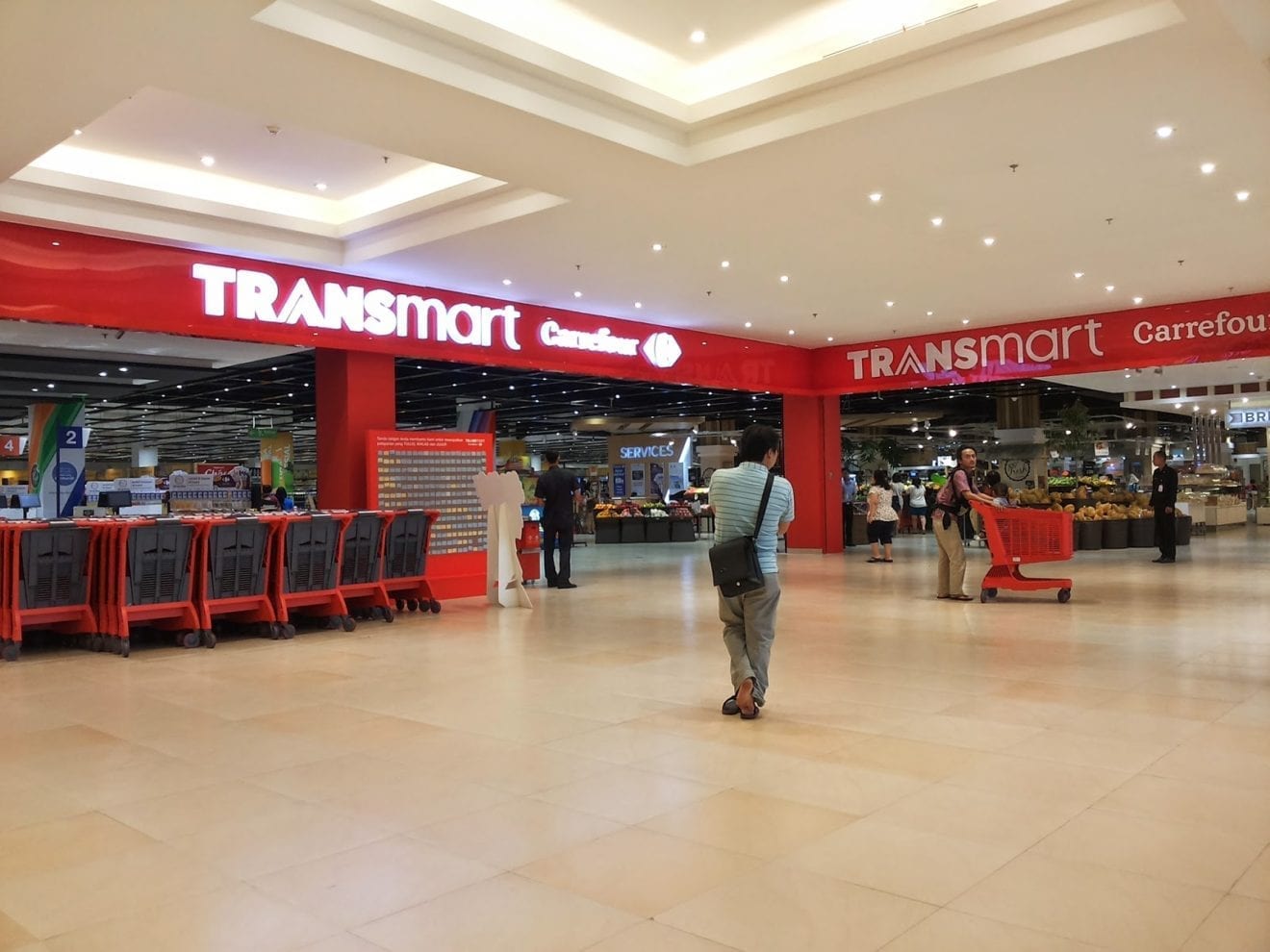
    Major retailer Trans Retail Indonesia will open dozens of new stores this year in a bid to attract more visits to its physical stores despite the booming online retail industry.

    “We will open 30 new stores under the Transmart Carrefour brand in 2017,” Transmart Carrefour corporate communications general manager Satria Hamid told on Friday. However, he declined to mention the amount of capital expenditure (capex) that the firm had earmarked to support the expansion.

    Despite Indonesia’s surging domestic retail business, Trans Retail Indonesia, part of business tycoon Chairul Tanjung’s CT Corp business group, has decided to step up to the challenge posed by the burgeoning online retail business.

    The retailer says it is determined to be more creative by way of promotional activities, intensive marketing and sales of fresh products to lure customers to its stores.

    “We will refresh several stores with a new concept,” Satria said, in reference to a combination of retail and culinary experience, department stores and child play areas.

    Currently, the company operates 94 Carrefour stores nationwide, of which 15 stock the Transmart Carrefour brand and the remainder will gradually follow suit.

  • Apple to invest $1b in SoftBank tech fund

    Apple to invest $1b in SoftBank tech fund

    Apple has revealed plans to invest $1 billion in Japanese telecom behemoth SoftBank’s $100 billion technology venture capital fund.

    Apple will join a list of investors that are also expected to include Foxconn Technology Group and Oracle chairman Larry Ellison. Companies including Qualcomm have already committed to the fund.

    The $100 billion SoftBank Vision Fund will invest in strategic technology areas such as the IoT and AI as part of efforts by SoftBank CEO Masayoshi Son to help the company capitalize on emerging opportunities.

    The report quotes a market analyst as stating that that the investment could be aimed at helping Apple’s core smartphone business stay competitive as the IoT market expands, and could also reflect the company’s increasing interest in partnering with other companies for growth.

    Apple does not have a track record of investing in venture capital funds, but the company has been changing its investment strategy recently to reflect evolving market dynamics.

    This change in strategy and growing interest in partnerships was reflected by the company’s $1 billion investment in China’s home-grown Uber alternative Didi Chuxing last year.

  • JPMorgan lashing by Indonesia signals global threat to analysts

    JPMorgan lashing by Indonesia signals global threat to analysts

    The world is getting more hazardous for skeptical analysts, the banks that employ them and investors who rely on their published research.

    Even by the rough-and-tumble standards of emerging markets, Indonesia’s punishment of JPMorgan Chase & Co this week for a bearish analysis of the nation’s stock market stands out. The country’s finance ministry cut business ties with America’s biggest bank, telling reporters on Tuesday that the firm’s November research note wasn’t “accurate or credible.”

    Official attempts to deter such research are nothing new in developing economies, but rarely do governments retaliate against a Wall Street powerhouse for publishing opinions that contradict official views. The move builds on a trend: In July, Turkey’s banking regulator issued an industry-wide warning to avoid negative reports. In 2014, Brazil President Dilma Rousseff chastised an analyst for suggesting her election would hurt the economy.

    “It’s definitely been getting more aggressive recently,” said Paul McNamara, a London-based emerging markets fund manager at GAM Ltd, which oversees client assets of about US$65bil.

    As money managers around the world pull capital from developing economies on concerns over rising US interest rates and a stronger dollar, policymakers are becoming especially sensitive to critical analyst opinions, according to Medley Global Advisors. The risk for Indonesian authorities is that their actions backfire by undermining investor confidence in the country’s market research.

    “Published research is already a diluted view, but these kinds of actions will make it even more bland,” McNamara said. “Retail investors will have no idea what analysts are really thinking because the written reports won’t say anything real.”

    JPMorgan downgraded Indonesia’s equity market by two notches to underweight from overweight in a Nov 13 report, calling it a “tactical response” to Donald Trump’s election win. The bank also cut its rating on Brazil, while noting that both countries may provide a “better buying opportunity” later.

    Indonesia’s finance ministry said on Tuesday it would stop using JPMorgan as a primary dealer and as an underwriter of its sovereign bonds. While Finance Minister Sri Mulyani Indrawati said the government is open to improvement and respects the assessments of research providers, she said banks should take responsibility for economic reports that “could influence fundamentals and psychology.”

    “The finance ministry and the government are very open to criticism, but JPMorgan’s research result was pretty weird and unfair,” Sofjan Wanandi, head of the experts team at the vice-president’s office, said in an interview on Wednesday.

    JPMorgan’s business in Indonesia continues to operate as normal, the bank said in an e-mailed statement on Tuesday. “The impact on our clients is minimal and we continue to work with the Ministry of Finance to resolve the matter,” the bank said. On Wednesday, the finance ministry clarified that it won’t stop JPMorgan from conducting private-sector business in the country.

    Government retaliation for negative research can have a chilling effect on market analysis.

    Some investment banks in Turkey scaled back commentary on sensitive political subjects after the banking regulator warned brokerages last July against publishing “reports that would turn expectations and the atmosphere negative.”

    That same month, the head of research at one of Turkey’s largest brokerages was stripped of his professional license and charged criminally over a report analysing the impact of a failed July 15 coup targeting President Recep Tayyip Erdogan. The criminal charge was later dropped, but an investigation started by the capital markets regulator is still ongoing. An official for the Ankara-based market regulator SPK, who asked not to be named citing the institution’s policy, declined to comment on the investigation.

    In 2014, Rousseff publicly shamed an analyst at Banco Santander Brasil SA for forecasting a deterioration in the country’s currency and stock markets if she were re-elected. The firm later said it fired the analyst, disowning the remarks as that person’s opinion, not necessarily reflecting the company’s view. The episode spooked other analysts, according to Klaus Spielkamp, head of fixed-income sales at Bulltick LLC. “If anybody had anything bad to say about Brazil at the time, they wouldn’t say it,” he said. “Everybody was afraid.”

    Rousseff’s campaign press office declined to comment at the time, as did the nation’s banking association, Febraban. Rousseff was replaced as president last year after being impeached for breaking budget laws.

    Other governments’ moves also have stoked concerns among research analysts. China’s crackdown on hedge funds and broker-dealers for alleged trading abuses during its 2015 stock market rout was seen by some as targeting negative financial views. And in Italy prosecutors accused Fitch in 2012 of mismanaging its analysis of the eurozone debt crisis. The firm disputed the claim, and the case against it was later dismissed.

    While governments usually go after negative research during political or economic turbulence at home, the biggest concern for emerging markets today is capital outflows tied to the prospect of faster interest rate increases under a Trump presidency. International investors pulled US$23bil from developing-nation funds from the start of October through mid-December, according to the Institute of International Finance.

    “Governments are sensitive to criticism, especially in countries where there are large capital inflows that can quickly turn into outflows and prompt a currency sell-off,” said Nigel Rendell, London-based senior analyst at Medley Global Advisors.

    Yet even the most developed market isn’t immune to concerns that free speech is being stifled. S&P Global Ratings initially claimed that the US government’s 2013 lawsuit against the firm for allegedly inflating ratings on subprime-mortgage bonds was in retaliation for S&P’s downgrade of America’s sovereign credit rating. The firm dropped that accusation when settling the government’s case in 2015, acknowledging in a statement of facts that it hadn’t found evidence to support the claim. The company didn’t admit wrongdoing in agreeing to pay US$1.375bil to federal and state authorities.

    Still, Indonesia relies on international securities firms to market its sovereign bonds to overseas investors, who accounted for about 40% of local government debt holdings as of September, according to the Asian Development Bank. If policymakers were to alienate more banks with similar spats, they might undermine the government’s ability to finance its spending plans.

    “JPMorgan has been in the country for a very long time,” said Christopher Wheeler, an analyst at Atlantic Equities in London. “It will blow over them, but probably do more harm to Indonesia.”

  • Nissan halts joint development of luxury cars with Daimler

    Nissan halts joint development of luxury cars with Daimler

    Nissan is halting joint development of luxury cars with Daimler’s Mercedes-Benz, sources close to the companies told Reuters, suspending a key project in their seven-year partnership and potentially hitting profitability at a new shared factory in Mexico.

    Nissan (7201.T) decided in October its premium Infiniti brand would not use “MFA2”, an upgraded Daimler (DAIGn.DE) car platform that the companies have jointly funded, in part because Infiniti was not performing well enough to absorb Mercedes technology costs, the sources said.

    “It wasn’t possible to close a deal on the basis of MFA2,” said one of the people. “The targets set by Infiniti were too difficult to achieve.”

    The move could reduce efficiency at a $1 billion shared factory opening this year in Aguascalientes, Mexico, where the companies had planned to use the same compact car architecture to cut complexity and production costs, two of the sources said.

    It could also ultimately force Nissan to write down part of a 250 million pound ($306 million) investment at its UK plant that included Mercedes-based tooling, they added.

    Daimler and Nissan pursue joint programs only when “beneficial for both sides”, the companies said in separate statements to Reuters, without directly addressing emailed questions about their plans for MFA2 vehicles.

    Projects are constantly reviewed against targets to account for “developments beyond the control of management”, they added, and discussions about joint development of future premium compact cars are ongoing.

    Nissan’s decision deals a blow to the broad cooperation deal struck between Renault-Nissan boss Carlos Ghosn and his Daimler counterpart Dieter Zetsche in 2010.

    It also underscores the mixed results of Nissan’s battle over almost three decades to transform Infiniti into a significant global player in the lucrative luxury car market.

    The decision predates Donald Trump’s election as the next U.S. president, the sources said, and was unrelated to campaign vows to penalize Mexican imports that have rattled the auto industry. Ford (F.N) on Tuesday scrapped a planned compact car plant in the country.

    Nissan and Daimler are pushing ahead with Aguascalientes, where they will build Infiniti and Mercedes models for the U.S. and other markets from a single assembly line opening in 2017.

    The project nonetheless faces weakening U.S. demand for smaller cars that contributed to Ford’s cancellation and has further raised profitability hurdles for new Infiniti compacts.

    Persistently low oil prices accelerated the market shift to larger vehicles in 2016, Ford sales chief Mark LaNeve said on Wednesday. “All the growth was SUVs and trucks.”

    PREMIUM STRUGGLE

    Infiniti has struggled outside the United States, last year selling 16,000 vehicles in Western Europe and 230,000 globally – less than 5 percent of Nissan’s overall tally and barely one-tenth of Mercedes’s expected 2 million deliveries.

    The first Infiniti appeared in 1989, the same year as the launch model for Toyota’s (7203.T) upscale Lexus brand – which has since grown three times bigger by sales.

    Modern carmakers pursue economies of scale by increasing the number of models built on each underlying platform – an adaptable chassis accommodating different body sizes, engines and alternative component sets for every part of the vehicle.

    The retreat on luxury compacts leaves intact the sharing of engines between Infiniti and Mercedes, and small cars between Renault and Daimler’s Smart. The three groups also collaborate on vans and pickups.

    But joint premium car development for Mexican production was “one of the largest projects between the Renault-Nissan alliance and Daimler”, Ghosn said when unveiling the program in 2014.

    A year later, after upgrading its plant in Sunderland, England, Nissan began building the Infiniti Q30 hatchback on the current MFA architecture developed for the Mercedes A-Class and derivatives. The plant added the QX30 SUV in 2016, extending Infiniti’s push into smaller vehicles.

    Nissan has now ditched plans to use the updated Mercedes platform for successors to those models planned for Aguascalientes, the sources said – or for any future Infinitis. Other cancellations include a compact Mercedes-based Infiniti Q40 sedan earmarked for the plant in 2018.

    Instead the single, less efficient assembly line will build Mercedes cars including an A-Class sedan and subsequent mini-SUV alongside Infiniti vehicles based on Renault-Nissan architecture, starting with a new QX50 SUV this year.

    PRICING POWER

    Nissan was forced to conclude that the Infiniti brand would not command the higher prices required to turn a profit on vehicles stuffed with Mercedes technology, one source explained.

    “One of the lessons learned is that if you have the costs of a luxury vehicle but not the pricing, it’s hard to be profitable,” he said.

    Nissan may end up writing down some Sunderland investment in Mercedes-based tooling that had been intended to outlast the current Q30 and QX30, people with knowledge of the matter said.

    The company is still paying its share of MFA2 development costs running to hundreds of millions of euros for a platform it no longer plans to use, they said, but will leave Daimler with a higher share of some production costs in Aguascalientes.

    The setback may also show the limits of Ghosn’s consensual approach to economies of scale as head of both Renault (RENA.PA) and Nissan, whose 18-year-old alliance is underpinned by significant cross-shareholdings.

    The slow pace of integration has contributed to upheaval at the recently created alliance powertrain division, charged with converging Renault and Nissan engineering.

    Plans to build Infinitis on Mercedes technology had encountered resistance at Nissan from the start, one source said. “Once again, Ghosn has been unable to break through the wall of engineers to force commonality.”

  • Special dividend in the offing for AirAsia investors?

    Special dividend in the offing for AirAsia investors?

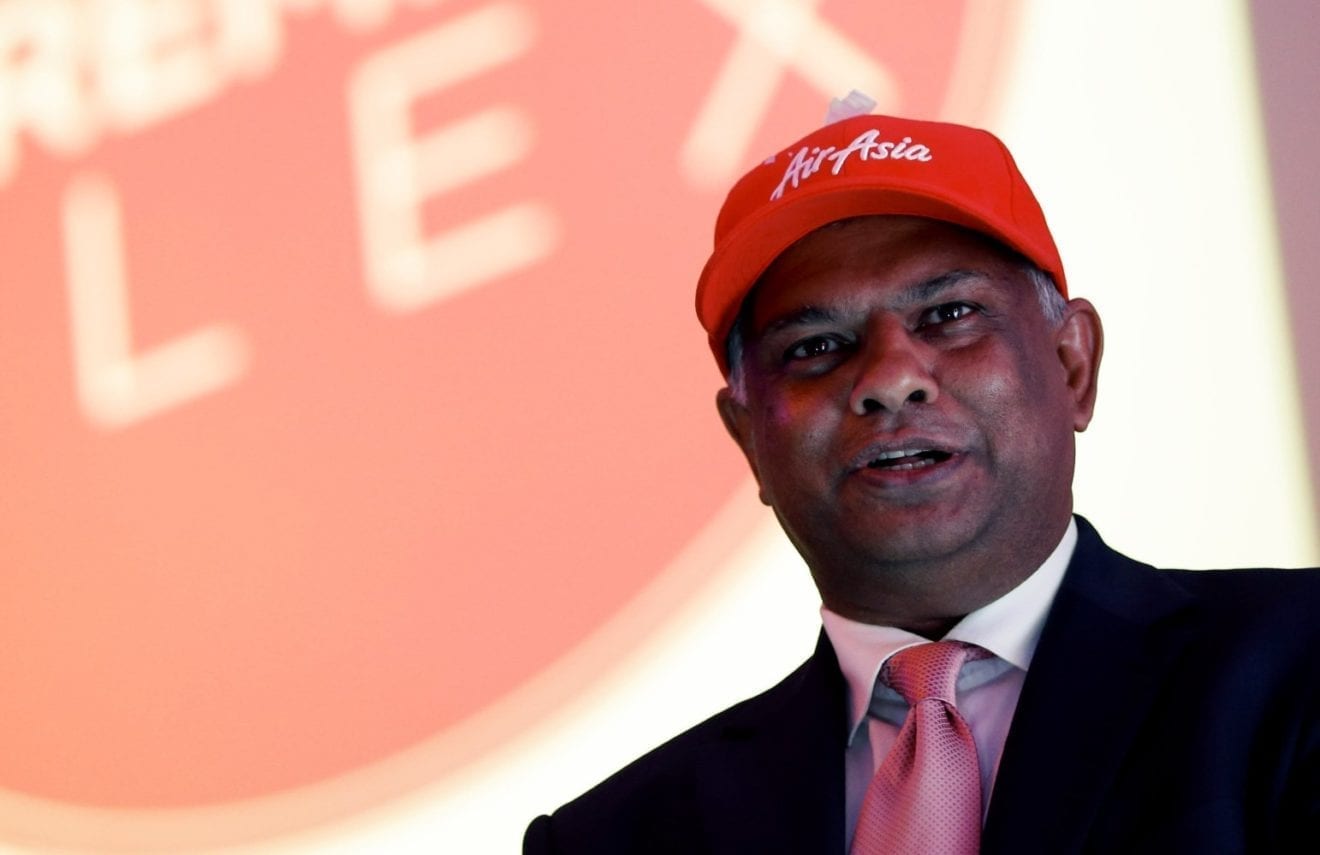
    Two days after Deutsche Bank Group called a “sell” on AirAsia that led to a slight dip in its share price, two local brokerages have issued research reports maintaining a “buy” call on the airline.

    The rationale for the sell call is essentially stiff competition that will push passenger yields down over the next 12-18 months, overcapacity, the weaker ringgit and higher jet fuel prices.

    It also questioned how the US$1bil price tag was derived for its leasing unit, Asia Aviation Capital (AAC) that AirAsia plans to sell in the middle of this year.

    Maybank IB Research senior analyst Mohshin Alias is more bullish about AirAsia’s fortunes.

    He maintains a buy on the stock and predicts a special dividend of 40-50 sen a share from the sale of AAC to investors.

    “Coupled with the customary 20% dividend payout which is roughly 7 sen in 2017, AirAsia could be your biggest dividend yield stock in 2017,’’ said Mohshin.

    Kenanga Research has brushed off overcapacity and other issues and has a 12-month target price of RM3.82 a share.

    Its rationale was based on higher ancillary income with a target of RM60 per passenger in the long-term, healthy loads of about 85% led by strong travel demand coupled with fleet expansion.

    It says even though fuel cost was rising, but it will be mitigated as AirAsia has hedged 74% of its fuel requirements for 2017 at US$59 per barrel.

    Mohshin expects unit costs to improve on the entry of new Airbus A320 NEOs and believes the fourth quarter 2016 financial results to be “spectacular and says “don’t be surprised if they churn out RM400-500mil of net profit.’’

    He adds that “apart from that, it is trading at only 7x 2017 PER with stellar 15% ROEs.’’

    His 12 month target price is RM3.17 a share. AirAsia closed 6 sen lower in yesterday’s trading at RM2.17 a share.

    Deutsche in its report said “weaker ringgit will filter through to higher costs, and higher fuel prices will also hurt. We have cut our core net profit forecast for 2017-2018 estimates by 1.3% and 16.2% over 2017-2018 estimate respectively.

    As at third quarter 2016, associates in the Philippines, India and Japan were still losing money. In Indonesia, AirAsia is converting its debt into perpetual capital securities to comply with local regulations,’’ Deutsche said.

    It adds that as the market becomes aware of the earnings decline that AirAsia is expected to see over 2017-2018E, we expect the stock to de-rate to the lower end of its historical valuation range.

    Our target price (12 month – RM1.75 a share) is based on an adjusted EV/EBITDAR of 5 times for the Malaysian operations, which is similar to other full service carriers (Cathay Pacific and Singapore Airlines) in the region who are battling similar yield pressures.

    But Deutsche also expects a lift if there is less intense competition in the market, pushing up yields to levels higher than expected, the sale of AAC resulting in a higher-than expected exceptional profit and this results in a positive sentiment lift for the stock, currencies in South-East Asia appreciating against the US dollar, especially the ringgit, and a significant decline in jet fuel prices.

  • Indonesia introduces new regulations for fintech startups

    Indonesia introduces new regulations for fintech startups

    Indonesia’s financial services authority (OJK) has issued its first regulations relating to financial technology, or fintech, companies running peer to peer (P2P) lending services, Deal Street Asia has reported.06 Jan 2017

    The regulation lays out minimum capital requirements, interest rate provision and education and consumer protection rules.

    Every fintech P2P lending firm must now register and secure a business licence from the authority, the report said.

    A company must have Rp1 billion (£61,000) in capital to register, and a further Rp2.5 billion to apply for a business licence. These figures are approximately half those that had been proposed in draft regulations, the news site said.

    Foreign ownership is limited to 85%, Deal Street Asia said.

    No maximum interest rate has been set, which again contradicts previous drafts of the regulations which set a cap of seven times Bank Indonesia’s seven-day reverse purchase rate per annum, the news site said.

    Muliaman Hadad, chair of OJK, told that the regulation was only an initial step in the authorities’ efforts to regulate and supervise the business.

    “What’s important is they get onto our radar because we don’t want to regulate the prudential aspects hastily. We want to provide business transparency guidelines first,” Hadad said.

    The OJK also has implemented a regulatory sandbox for firms to test services for consumers, the newspaper said.

    Bryan Tan of Pinsent Masons MPillay, the Singapore joint venture partner of Pinsent Masons, the law firm behind Out-Law.com said: “The Indonesian fintech market is one which has huge potential for its large consumer base and the unbanked, which is different from the financial service hub role that Singapore, Hong Kong and London play.”

    “This means that fintech regulations on payments and digital banking would be more keenly looked at, as opposed to fund-raising type activity,” Tan said.

    “A large potential customer base that is largely unbanked is a huge attraction for banks looking to expand and technology may be an enabler to that. The Indonesian regulation is clearly an evolving one and picking a leaf from the markets around it,” he said.

    Bank Indonesia set up a dedicated office and regulatory sandbox in November 2016 to help fintech developers.

    It will also provide services to help developers to understand Indonesia’s regulatory policies on fintech, gather and disseminate information on developments, and hold regular meetings with authorities and international bodies interested in the use of technology in finance, Bank Indonesia said.

    Indonesia’s launch of a regulatory sandbox for fintech follows similar announcements from Singapore and Hong Kong, with both countries following the lead taken by the UK’s Financial Conduct Authority (FCA) in developing a regulatory sandbox initiative.

    Singapore launched a sandbox in June, and released updated guidelines for the service this month.

  • Indonesia seeks to re-brew its coffee glory

    Indonesia seeks to re-brew its coffee glory

    Wake up and smell the coffee. After four years of posting lower production volume and shrinking plantation area, Indonesia is finally making a move to reverse the situation.

    Despite being the world’s fourth largest coffee producer, the country produces mainly Robusta coffee beans that are of lower quality than Arabica, and its own production volume has been falling over the past few years.

    The fact has prompted the government to rejuvenate 8,850 hectares of unproductive coffee plantations and open 200 ha of new ones in Central Kalimantan.

    For 2017, Rp 35.51 billion (US$2.66 million) has been allocated for that purpose, said the Agriculture Ministry’s plantation director general, Bambang.

    “Our vision is to increase plantation size, supported by programs from the government and various stakeholders. We need support from the latter because the state budget is limited,” he said on Friday.

    Ministry data shows overall plantation size has been steadily shrinking every year since 2013. The figure stood at 1.24 million ha back then and is predicted to have fallen to 1.22 million ha in 2016, with further reduction expected this year.

    Seasonal changes, combined with frequent volcanic eruptions, have been named as culprits behind the falling plantation size.

    With diminishing plantations, production volume has declined as well. While the volume reached 675,881 tons in 2013, it is predicted to have dropped 5 percent to 639,305 tons in 2016 and to slump to 637,537 tons in 2017.

    Bambang acknowledged the rejuvenation program would not yield instant results, as coffee plantations normally take three years to harvest and assured that the government had a few more tricks up its sleeves to improve the situation.

    It is in the process of registering more coffee products under the geographical indication (GI) scheme and specialty coffee to the Law and Human Rights Ministry’s Directorate General of Intellectual Property Rights.

    It is also supporting more farmers to plant Arabica coffee plants, as they only account for 30 percent of total plantations. Arabica coffee and those labeled GI, as well as specialty coffee — such as Gayo, Mandailing, Kintamani, Temanggung,

    Ciwidey, Manglayang, Wamena, Toraja and Gowa — are priced higher than Robusta. Arabica is planted on high land of 600 to 2,000 meters above sea surface, while Robusta, with its low acidity and bitterness, is planted on low land of 200 to 800 m above sea surface.

    Yusriadi, a 37-year-old coffee farmer from Bondowoso, East Java, is among farmers that have enjoyed the benefits of planting Arabica coffee. He has a monthly income of more than Rp 10 million, as Arabica sells higher than Robusta.

    “The central government and regional administration introduced Arabica coffee planting with good SOP [standard operating procedures] in 2011, so we can increase productivity and sell the harvest at a much higher price,” he said.

    Meanwhile, M. Kirom of the Indonesian Coffee Exporters and Industry Association (AEKI) said Indonesia still had room to improve its productivity, which stood at around 700 kg per ha compared to Vietnam with 3 tons per ha.

    “We can increase it to 1.5 tons per hectare and still have better quality than Vietnamese coffee because our soil is just naturally suitable for coffee,” he said.

    Separately, Indonesian Coffee Farmers Association (Apeki) chairman Sumarhum lauded the government’s move.

    “In the past, the government was half-hearted toward this commodity, but that’s not the case now. Coffee prices are good and global demand is huge, there’s no way the government is closing its eyes to it,” he said.

  • Agriculture ministry to stop corn imports in 2017

    Agriculture ministry to stop corn imports in 2017

    Indonesias Agriculture Ministry has targeted to stop the import of corn that is used as raw material for producing livestock feed in 2017, an official of the ministry stated.

    The ministry has expanded the corn plantation area by two million hectares and has encouraged feed producers to buy corn produced locally, an official of the Ministrys Directorate General of Animal Feed Triastuti Andajani said in a statement.

    Corn is the largest component in livestock feed production.

    “With the increasing population of poultry, including broilers, hens, local chicken, and ducks, the demand for corn has also increased,” she pointed out.

    The Indonesian Feed Millers Association (GPMT) has forecast that feed production in 2017 could reach 18.5 million tons, and it would need 9.25 million tons of corn.

    Independent farmers will need some 3.6 million tons of corn based on the assumption of 300,000 tons of consumption per month.

    Corn demand for animal feed in 2017 is estimated to reach 12.85 million tons, or 1.1 million tons per month on an average.

    In September, the ministry and GPMT had signed a memorandum of understanding, which was followed by cooperation between the agriculture offices in 33 provinces and local feed producers to buy corn produced locally.

    The cooperation is aimed at ensuring that animal feed producers buy locally produced corn, with price reference based on Trade Ministers Regulation No. 21 of 2016.

    The ministrys data revealed that corn imports in 2016, as of December, had declined to 884,679 tons, or 68 percent as compared to imports during the last five years.

    The country had imported 3 million tons of corn in 2011, 1.5 million tons in 2012, 2.95 million tons in 2013, 3.1 million tons in 2014, and 2.74 million tons in 2015.

  • Ban on plastic bags going well in Selangor

    Ban on plastic bags going well in Selangor

    Most folks in Selangor are responding well to the ban on plastic bags despite some feeling that they still need more time to get used to it.

    Some however felt more awareness must be created as to why it is necessary to ban plastic bags.

    Copywriter Trinity Alexandra, said she fully supports the ban as it “forces” her to do her part for mother nature but admitted it has been a challenge.

    “Even though I have recycle bags or containers in my car, I sometimes forget to take it out so I am forced to pay the 20 sen charge for the plastic bags,

    “So the challenge is mainly to remind myself to lug the bags and containers around,” said Trinity.

    Writer P. Deepika, 28, said more should be done on creating awareness about the reason for the ban.

    “People need to know why they are doing something, otherwise you are not addressing the issue. We won’t achieve much at the end of the day.

    “Having said that, I do think the ban is a necessary move,” she said.

    Praveen Reginald, 33, said she has practised packing food in her own containers and bringing along cloth bags even before the ban was enforced.

    She, however, felt merchants who are providing plastic bags with a price should be made to give out paper bags instead.

    “I think it’s a good effort to ban plastic as it is very timely but I think the Government should pressure merchants to provide paper bags,” she said.

    Selangor state exco member Elizabeth Wong said ample time had been given to retailers, traders and even consu­mers to get used to the No Plastic Bag Day campaign.

    “Our enforcement units from the local councils will begin their rounds very soon,” she said.

    “The maximum compound of RM1,000 will be imposed as it is the standard amount for any breach of licensing by-laws,” said Wong.

    The campaign, she added, was “encouraging and positive so far”.

    Malaysia Retail Chain Association president Datuk Garry Chua said its members were getting used to the ban, some of whom were now using environmentally-friendly bags.

    However, he hoped that there would be a grace period for retailers and consumers to get adjusted to the ruling.

    Fomca deputy president Mohd Yusof Abdul Rahman said the ban should be extended to all states via its local authorities.

    “This is an important environmental issue and I don’t see why it should not be implemented nationwide,” said Mohd Yusof.

    Ecotourism and Conservation Society Malaysia co-founder Andrew Sebastian said he hoped that any savings that the retailers and traders make from not giv­­­­­­­ing out plastic bags could be channelled back to the environment.

    Malaysian Nature Society president Henry Goh said it was in full support of using less plastic, adding that this should eventually lead to a total ban.

  • Uniqlo China launches click and collect

    Uniqlo China launches click and collect

    Fast Retailing’s Uniqlo China casual-clothing chain has launched its click-and-collect service so online customers can pick up their orders at a store.

    Already working in the UK and the US, the service lets shoppers nominate a store where they want to pick up their orders. It also helps the Japanese chain boost traffic in its stores, and will probably be rolled out in other countries.

    Initially, online items can be picked up at any one of about 400 of Uniqlo’s 500 stores in China. Customers can also choose to have their orders home delivered.

    With delayed deliveries a problem in China, Uniqlo says it sees a lot of promise in the new service.

    Its sales in China, including Hong Kong and Taiwan, reached ¥332.8 billion (US$48 billion) for the fiscal year ended August last year, up 9.3 per cent from the previous 12 months.

    Uniqlo opens about 100 new stores a year in China, and at home in Japan last year began allowing online customers to pick up orders at 7-Eleven convenience stores.

  • Troubled Agent Provocateur may go on market

    Troubled Agent Provocateur may go on market

    British lingerie retailer Agent Provocateur is being prepared for a possible sale.

    This follows the company’s private equity owners late last year reporting accounting issues, a restructuring and the need for new investment into the high-end lingerie firm.

    Agent Provocateur was founded in London in 1994 by Joseph Corre and Serena Rees, and has about 100 stores in 13 countries, including Singapore and Hong Kong.

    Private equity group 3i has owned Agent Provocateur for the past decade and has been calling in experts in recent months, hiring investment bank Rothschild to handle a possible sale, The Times and Sunday Times report.

    Meanwhile, KPMG has been going through the company’s books and restructuring firm Alix Partners has been engaged to develop a turnaround plan before any possible auction.

    However, 3i may not be totally committed to an outright sale, and options include bringing in a new investor, reports CPP-Luxury.com. With an 80 per cent stake in the company, 3i reported the accounting issues when it released its own interim results in November. It said it had written down its investment in the firm by £39 million (US$48 million).

    That writedown was also attributed to the luxury slowdown as well as Agent Provocateur’s badly timed expansion program.

    As well as the writedown, the company also invested an extra £4 million in the label and non-executive chairman Chris Woodhouse was replaced by 3i partner Ian Lobley last month. Several other executives also left last year.

    After paying £60 million for its stake in 2007, 3i tried to sell it in 2014. But it could be now worth only £15 million, says a Sunday Times report.