Author: Mei Ling Tan

  • Fintech Innovations Steal the Spotlight in APAC’s Thriving Card Payment Landscape

    Fintech Innovations Steal the Spotlight in APAC’s Thriving Card Payment Landscape

    In the fast-paced arena of Asia-Pacific’s bustling $24.7 trillion card payment market, fintech firms are carving out a competitive edge with their tech-savvy agility. Unlike traditional banks and platform giants who command significant portions of the landscape, these nimble fintech players are redefining digital payments and accelerating innovation across both mature and emerging markets.

    Fintechs Outpace Traditional Banks

    Sean Fu, Senior Vice President for Greater China at Global Payments, provides insight into this evolving competition, observing that fintech firms excel due to their scalability and technological leverage. “Among these three, I see the FinTech players as more competitive in the market,” he remarked, citing their ability to expand rapidly across borders.

    While banks continue to hold sway with their established reputation and control over card issuance, Fu notes that their outdated infrastructure can hinder their efficiency. “Their disadvantages are obvious—slow processing and higher operational costs,” he added. In essence, while banks can subsidize acquiring costs to attract major merchants, they often grapple with cumbersome legacy systems that stifle speed and innovation.

    Platform Giants Navigate Their Own Challenges

    On the other hand, platform companies enjoy high levels of user engagement and app stickiness. However, they are not immune to challenges, facing significant technology costs along with regulatory and security hurdles similar to those encountered by fintechs. Even so, it’s the fintechs that are driving the game forward with pioneering solutions in buy-now-pay-later schemes, contactless payments, and integrated wallets—attributes that make them remarkably agile and expansive in scope.

    A Competitive Landscape Unfolds

    Assistant Professor Ruan TienYue from the Department of Finance at NUS Business School highlights the distinct lanes of competition arising from these dynamics. “Banks are fiercely competing on card issuance as well as acquiring merchants, while fintechs are leading different innovations. Meanwhile, platform companies are integrating card payments into their own digital ecosystems,” Ruan explained.

    This seismic shift in competitive strategies is particularly evident in emerging markets like the Philippines and Malaysia, where fintechs are gaining traction. For instance, in the Philippines, where a staggering 99% of the market consists of small and medium-sized businesses, the government is promoting an alternative payment method known as QR PH, fueling fintech growth. Similarly, Malaysian fintechs are zeroing in on the tourist-driven hospitality sector with tailored digital solutions.

    While mature markets like China and Australia currently dominate in terms of card penetration, Ruan notes that emerging economies are catching up with impressive growth rates in digital payments. “Emerging economies are following very fast growth in terms of these digital payments,” he observed.

    The Road Ahead: Collaboration Is Key

    To boost card payment adoption, especially in rural areas, both experts advocate for public-private collaborations. “First of all is education—then infrastructure—then customized solutions,” Fu stated, listing mobile banking and alternative payments as vital tools for expanding reach. Ruan echoed this sentiment, suggesting that governments should spearhead investment in infrastructure and launch campaigns aimed at promoting the usage of bank accounts and cards.

    Questions & Answers

    How are fintechs gaining an edge in the card payment market?
    Fintechs leverage their technology-driven agility, allowing for faster scalability and the ability to innovate in ways traditional banks cannot, particularly in areas like buy-now-pay-later and integrated wallets.

    What challenges do platform companies face in this competitive landscape?
    Platform companies benefit from user engagement but struggle with high technological costs and face regulatory hurdles similar to those encountered by fintechs.

    Why is public-private collaboration important for expanding card payment adoption?
    Collaboration is crucial for improving education, infrastructure, and customized solutions, particularly in reaching rural areas where traditional banking services may be limited.

  • South Korea’s Nuclear Power Output Set to Hit 222.7 TWh by 2035: A Bright Energy Future Ahead!

    South Korea’s Nuclear Power Output Set to Hit 222.7 TWh by 2035: A Bright Energy Future Ahead!

    South Korea is gearing up for a significant boost in its nuclear power generation, with projections indicating an increase to 222.7 terawatt-hours by 2035. This growth reflects a compound annual growth rate (CAGR) of 2.4% from 2024 to 2035, according to insights from GlobalData.

    Rising Nuclear Capacity Amid Energy Demands

    The recent report titled “South Korea Power Market Outlook to 2035, Update 2025 – Market Trends, Regulations, and Competitive Landscape” reveals that the nation’s nuclear power capacity rose to 24.4 gigawatts (GW) in 2024, up from 23.2 GW in 2020. This capacity is expected to expand further to 29.8 GW by 2035, marking a steady growth of 1.8% over the same period.

    Nuclear Power: A Key Player in Electricity Consumption

    Nuclear energy plays a crucial role in fueling nearly one-third of South Korea’s electricity needs. Currently, the country operates 25 reactors, with four more under construction to help meet the escalating energy demands. Attaurrahman Ojindaram Saibasan, a senior power analyst at GlobalData, highlighted South Korea as a major energy consumer and one of the world’s top greenhouse gas emitters.

    Transitioning from Fossil Fuels

    Saibasan pointed out that while the nation depends heavily on both thermal and nuclear power to meet its electricity requirements, this approach contributes to rising emissions. The country’s reliance on fossil fuels for thermal power—compounded by limited natural resources—forces South Korea to import coal and gas, which can be a costly endeavor. It seems some compromises will have to be made on the path to cleaner energy.

    Aiming for Nuclear Leadership

    In line with its ambitious energy strategy, the South Korean government plans to enhance the share of nuclear power in its electricity generation to 35.2% by 2038. This target will be supported by the construction of three additional reactors along with a small modular reactor, contributing an extra 4.4 GW to the grid. Notably, South Korea is not just looking inward; the country aims to become a global leader in nuclear energy, aspiring to secure contracts for the construction of ten nuclear reactors overseas by 2030.

    Questions & Answers

    What is the projected nuclear power generation for South Korea by 2035?
    South Korea is expected to increase its nuclear power generation to 222.7 terawatt-hours by 2035.

    How much does nuclear energy currently contribute to South Korea’s electricity needs?
    Nuclear energy accounts for nearly one-third of South Korea’s electricity consumption.

    What are South Korea’s plans for nuclear energy exports by 2030?
    The country aims to become a leading exporter of nuclear energy, targeting contracts for the construction of ten nuclear reactors overseas by 2030.

  • DBS and UOB Earnings Reveal How SORA and Rising Credit Costs Shape the Banking Landscape

    DBS and UOB Earnings Reveal How SORA and Rising Credit Costs Shape the Banking Landscape

    As the financial world eagerly anticipates this week’s earnings reports from major banks, all eyes are on DBS and UOB, particularly regarding their net interest margins and credit costs tied to Hong Kong property exposure. Michael Makdad, a senior equity analyst at Morningstar, shared insights that shed light on what investors can expect.

    DBS Earnings Could Shine Amid Challenges

    Makdad remains optimistic about DBS, forecasting positive earnings that he believes will emerge without significant spikes in credit costs or major drops in net interest margins. However, one pivotal query lingers: will DBS face increased credit costs stemming from its Hong Kong property operations, a concern that has raised eyebrows, especially in comparison to HSBC and its subsidiary, Hang Seng Bank?

    “OCBC has thus far escaped these pressures, and DBS’ operations in Hong Kong have yielded impressive returns without encountering similar issues,” Makdad noted. “Yet, it’s prudent to keep an eye on this factor.” The analyst hinted that while DBS appears well-positioned, tracking these credit costs remains essential as the full impact of Hong Kong’s real estate market unfolds.

    UOB’s Hefty ASEAN Exposure Sparks Questions

    For UOB, the stakes are equally intriguing. Makdad is particularly interested in the impact of the declining Singapore Overnight Rate Average (SORA) on UOB’s net interest margins. With UOB having a more substantial footprint in some ASEAN countries compared to DBS and OCBC, he speculated, “It will be telling to see if economic slowdowns in regions like Thailand influence their overall performance.”

    As the week progresses, the financial sector waits with bated breath. Will the results reflect the resilience of these banks or expose vulnerabilities in a shifting economic landscape? One thing’s for sure: the market’s pulse beats in sync with these earnings disclosures.

    Questions & Answers

    What factors are influencing the upcoming earnings reports for DBS and UOB?
    Key variables include credit costs related to Hong Kong property exposure and the impact of declining net interest margins, particularly with the recent drop in SORA.

    What is the outlook for DBS’s earnings according to Michael Makdad?
    Makdad expresses optimism about DBS’s earnings, expecting them to be positive without significant credit cost flare-ups or drastic reductions in net interest margins.

    Why is UOB’s situation particularly noteworthy during this earnings season?
    UOB has greater exposure to ASEAN markets compared to its peers, raising questions about the potential impact of economic slowdowns in those regions, particularly in Thailand.

  • Morgan Stanley Sees Potential in Pop Mart’s Labubu Amid Recent Stock Decline

    Morgan Stanley Sees Potential in Pop Mart’s Labubu Amid Recent Stock Decline

    Morgan Stanley maintains a bullish outlook on Pop Mart International Group, even as the company experiences a 10% dip in its stock price. The U.S. investment bank sees this slump as a potential buying opportunity, driven by Pop Mart’s robust growth trajectory fueled by exciting new product launches.

    Understanding Demand Amidst Market Fluctuations

    Despite a reduction in store lines and resale prices, Morgan Stanley asserts that this doesn’t reflect a drop in consumer interest. According to a recent report, most of Pop Mart’s offerings are mass-market items rather than scarce collectibles, which the Singapore-based investment platform Moomoo highlighted.

    This year has seen the LaBubu line—a collection designed by Dutch-Hong Kong artist Kasing Lung—continue to captivate children and collectors alike, while emerging toy lines such as Crybaby and Twinkle Twinkle are also generating buzz and showing promising sales.

    Power of Direct Sales

    Pop Mart’s direct-to-consumer model, which accounts for 90 to 95% of sales, enables the company to gather valuable real-time data. This agility allows them to adjust supply effectively, ensuring that inventory levels align closely with consumer demand.

    Impressive Projections Amid Challenges

    Morgan Stanley has ambitious forecasts for Pop Mart’s future, projecting sales to reach an impressive US$4.3 billion by 2025, escalating to US$6 billion in 2026. Notably, overseas operations could contribute as much as 60% of the company’s profit this year. Despite this optimistic outlook, the stock has suffered, dropping from a peak of HK$269.60 since July 8, largely due to a scarcity of near-term growth catalysts.

    “Market sentiment towards the company has yet to fully recover in the short term, given the high base last year,” noted Richard Lin, chief consumer analyst at SPDB International. “For the stock to rebound, the company will need to provide greater visibility on potential earnings drivers.”

    The Allure of the Labubu Toy

    The Labubu toys, featuring adorable yet cheeky creatures with a mix of soft fur and sharp teeth, have ignited a collector’s frenzy, prompting fans to queue for hours to snag the latest releases. Sold in blind boxes, these toys add an element of surprise, heightening the thrill of the collectable culture and motivating collectors to seek rare models, often marking them up for resale at enticing prices.

    This phenomenon has sent Pop Mart’s valuation soaring beyond US$40 billion, with its Hong Kong-listed shares skyrocketing an astonishing 588% in the past year, according to Bloomberg.

    Questions & Answers

    How is Morgan Stanley viewing Pop Mart’s recent stock price drop?
    Morgan Stanley views the 10% decline as a buying opportunity, emphasizing the company’s strong growth potential driven by new product launches.

    What factors contribute to Pop Mart’s success in the toy market?
    Pop Mart’s success stems from its popular toy lines, particularly Labubu, and its direct-to-consumer sales model that allows for real-time inventory management.

    What challenges does Pop Mart face in the near term?
    The company faces challenges such as a need for clearer visibility on earnings drivers to boost market sentiment and share price recovery after a significant peak loss.

  • Bharti Airtel Launches Exciting ‘Airtel Cloud’ in Collaboration with Singtel, Globe, and Airtel Africa

    Bharti Airtel Launches Exciting ‘Airtel Cloud’ in Collaboration with Singtel, Globe, and Airtel Africa

    Bharti Airtel has unveiled an innovative AI-powered cloud and software platform for enterprises, launching it through its wholly owned subsidiary, Xtelify. The platform, named ‘Airtel Cloud,’ is poised to accelerate digital transformation for Indian businesses and global telecom operators, delivering robust security, scalability, and intelligence on a large scale. In a marketplace where digital prowess is the new currency, Airtel has positioned itself as a formidable player.

    Transforming Airtel’s Offerings for the Global Market

    Xtelify represents a pivotal shift for Airtel, as the company expands its in-house digital platforms—which have previously supported its large-scale operations—into external markets. The Airtel Cloud platform is accessible to enterprises throughout India, capable of processing a staggering 140 crore transactions per minute. Backed by a team of 300 certified cloud experts, the platform is housed in next-generation sustainable data centers and utilizes generative artificial intelligence (GenAI) for provisioning. Its services include infrastructure-as-a-service (IaaS), platform-as-a-service (PaaS), and advanced connectivity, with secure migration and zero vendor lock-in being standout features.

    A Vision for Secure Digital Growth

    Gopal Vittal, Vice Chairman and Managing Director of Bharti Airtel, expressed enthusiasm for this development, stating, “Within Airtel, we have been actively harnessing digital innovations at unmatched scale to transform our services and enhance customer experience for many years. This involves powering over 590 million customer touchpoints and addressing some of the most intricate telecom challenges globally. All our applications run at a competitive cost on Airtel Cloud. Today, we’re excited to extend our telco-grade, sovereign-cloud platform, enabling Indian businesses to innovate faster, scale smarter, and remain secure in an ever-evolving digital landscape.” Vittal assured that all cloud controls will remain strictly within India, eliminating any risk of external access to sensitive data.

    Empowering Telecom Operations with AI

    Xtelify has also launched an AI-driven software suite designed to optimize telecom operations and enhance customer journeys, ultimately improving average revenue per user (ARPU). This comprehensive suite includes Xtelify Work for real-time workforce management, Xtelify Data Engine for operational intelligence, Xtelify IQ for customer experience analytics, and Xtelify Serve for personalized engagement and resolution. It’s as if the future of telecom is knocking on the door, demanding an innovative response.

    International Collaborations Amplify Global Reach

    In a noteworthy international initiative, Xtelify has formed partnerships with Singtel, Globe Telecom, and Airtel Africa. These agreements are set to implement various aspects of Xtelify’s offerings across multiple operations. Singtel will harness Xtelify Work for increased frontline efficiency, Globe Telecom plans to utilize Xtelify Serve to enhance customer service, and Airtel Africa will incorporate Xtelify Data Engine, Work, and IQ into its operations.

    Ng Tian Chong, CEO of Singtel Singapore, articulated the platform’s benefits, stating, “We are constantly seeking ways to better equip our field engineers to provide exceptional customer experiences. This platform allows us to reimagine our workflows with AI at the core, leading to improved efficiency and customer service.” The emphasis on optimizing dispatch and resource management not only expedites engineer response times but also contributes to lowering the carbon footprint—a win-win in today’s eco-conscious world.

    Jacques Barkhuizen, Group CIO of Airtel Africa, noted the transformative potential of this partnership, highlighting how it will enhance digital progress and uplift millions across Africa. Globe Telecom’s president and CEO, Carl Cruz, echoed this sentiment, explaining that integrating Xtelify’s AI-driven Case Management Platform reinforces their commitment to exceptional service from the initial customer contact to resolution. “We are proud to collaborate with Airtel and Xtelify,” Cruz added, “as we aim to elevate global customer experience standards.”

    Questions & Answers

    What is Airtel Cloud and what does it offer to enterprises?
    Airtel Cloud is an AI-powered cloud and software platform designed to facilitate digital transformation for Indian businesses and global telecom operators. It provides infrastructure-as-a-service (IaaS), platform-as-a-service (PaaS), and advanced connectivity while ensuring secure migration and zero vendor lock-in.

    How does Xtelify enhance telecom operations?
    Xtelify’s AI-driven suite optimizes telecom operations by improving workforce management, operational intelligence, customer experience analytics, and personalized engagement, ultimately boosting average revenue per user (ARPU).

    What international partnerships has Xtelify established?
    Xtelify has formed significant partnerships with Singtel, Globe Telecom, and Airtel Africa, enabling various implementations of Xtelify’s offerings to enhance operational efficiency and customer service across these companies.

  • Mcdonald’s To Boost Ai Investment By 2027, Eyes India As Data Governance Hub

    Mcdonald’s To Boost Ai Investment By 2027, Eyes India As Data Governance Hub

    McDonald’s, the renowned fast-food chain, has announced its intention to significantly increase its investment in artificial intelligence (AI) by 2027, foreseeing India as a principal center for data governance, engineering, and platform architecture. The news was delivered by Deshant Kaila, McDonald’s Head of Global Business Services Operations, last Friday.

    India as a Key Player

    McDonald’s, which made its foray into India in 1996, has a wide network of restaurants across the nation. The company recently opened a global office in the southern city of Hyderabad, which they plan to expand into their largest international office outside of the United States.

    While the company is still in the early phases of this AI-focused initiative, the exact amount of intended investment remains undisclosed. However, Kaila has given some insights into how McDonald’s is utilizing AI technologies to enhance its operations and services.

    Artificial Intelligence in Operations

    At present, McDonald’s is leveraging AI to corroborate orders at 400 of its restaurants, mitigating errors before orders reach customers. The company has set ambitious plans to extend this AI-driven order verification system to 40,000 of its locations worldwide by 2027, as revealed by Durga Prakash, Head of Technology (Global Offices).

    Moreover, AI tools are being employed by McDonald’s to project sales, determine pricing, and evaluate product performance. The fast-food chain is also developing a personalized app that customers can use globally. As per Kaila, the strategic push in India will be primarily focused on building its AI team, with more investment directed towards technology and tools rather than personnel.

    Expansion of Global Offices

    McDonald’s is also considering establishing another global office in Poland, similar to the ones in India and Mexico. Earlier this year, it was reported that the company would inaugurate a global capability center in Hyderabad, India, which is expected to employ about 2000 individuals.

    India’s global capability centers, formerly cost-effective outsourcing hubs for global businesses, have evolved and now provide support to their parent organizations across diverse areas, including operations, finance, research, and development.

    Questions & Answers

    What is McDonald’s strategy for AI investment by 2027?

    McDonald’s plans to significantly increase its investment in artificial intelligence (AI) by 2027. The company aims to utilize AI to improve operations, predict sales, set pricing, and evaluate product performance.

    How does McDonald’s plan to utilize AI in its operations?

    The fast-food chain is currently using AI to verify orders at certain locations to prevent errors before handing them over to customers. It is also using AI tools for sales forecasting, pricing decisions, and product performance assessments.

    Why is India a focus in McDonald’s AI strategy?

    India is a key focus in McDonald’s AI strategy due to its potential as a hub for data governance, engineering, and platform architecture. In addition, the company has recently opened a global office in Hyderabad, India, with plans to make it the largest outside the U.S.

  • Punkverse To Launch Revolutionary Flagship Store In Vietnam, Eyes Global Expansion

    Punkverse To Launch Revolutionary Flagship Store In Vietnam, Eyes Global Expansion

    Punkverse, a retail arm of the China-based collectible toy company PunkCode, is primed to launch its first international flagship store in Ho Chi Minh City, Vietnam. The specifics of the location, however, remain unknown as of now.

    Revolutionizing Retail

    The forthcoming Vietnam outlet is set to revolutionize the retail market with a unique combination of original intellectual property (IP), extended reality (XR) experiences, and a groundbreaking participatory retail model. This new approach to retail will empower consumers to become part-owners in the store, sharing in its profits.

    PunkCode has earned a reputation for its intriguing characters, namely Space Ape and Punk Ape. The company has also forged partnerships with highly esteemed artists from China like Zhang Daqian and Guan Shanyue.

    The Strategic Role of Punkverse

    Punkverse plays a vital role in PunkCode’s international strategy, intertwining toy manufacturing, artist collaborations, immersive technologies, and worldwide distribution. The company sees itself as a pioneering entity in the realms of the “Art Toy Culture Stock” and “XR Technology Stock.”

    According to PunkCode, Vietnam was selected as the location for their flagship store because of its young, technologically-adept population, a burgeoning middle class, substantial acceptance of mobile payments, and an expanding market for collectibles. The company has bold plans to inaugurate flagship stores in Singapore, Thailand, South Korea, and Dubai by the coming year, as part of their ambitious “1000 Store Plan”.

    Public Listing

    In addition to its retail expansion, PunkCode has also solidified its Nasdaq listing structure under the ticker symbol “PKCD”, with intentions to become a publicly-traded company by the following year.

    Questions & Answers

    What is the unique approach to retail proposed by PunkCode’s Punkverse?
    Punkverse is set to introduce a retail model combining original IP, extended reality experiences, and a participatory retail model that allows customers to share in store ownership and profits.

    Why was Vietnam chosen as the location for PunkCode’s first international flagship store?
    Vietnam was selected due to its young, tech-savvy population, a burgeoning middle class, high adoption of mobile payments, and a growing collectibles market.

    What are PunkCode’s future plans?
    PunkCode aims to open flagship stores in Singapore, Thailand, South Korea, and Dubai as part of its ambitious “1000 Store Plan”. The company also plans to go public next year under the ticker symbol “PKCD”.

  • Apparel Giants Adidas And Uniqlo Grapple With Rising Tariffs On Asian Imports

    Apparel Giants Adidas And Uniqlo Grapple With Rising Tariffs On Asian Imports

    Adidas and Fast Retailing have joined the ranks of apparel magnates grappling with the reality of increased product costs in the United States due to new import tariffs levied on key Asian manufacturing nations.

    The Impact of Rising Tariffs

    The US has instigated reciprocal import duties of 20 per cent on Vietnam, 35 per cent on Bangladesh, 36 per cent on Cambodia, and 19 per cent on Indonesia and the Philippines. These tariffs target those countries that rule the roost in the worldwide apparel sourcing industry.

    Adidas CEO, Bjorn Gulden, has indicated that these tariffs could hike the company’s product costs in the US by a staggering US$218 million for the remainder of the year. “The tariffs will directly increase the cost of our products for the US,” Gulden commented. He added that Vietnam is Adidas’ chief production hub for the American market. The company has already felt the sting of tariff-related losses amounting to “double-digit euro millions” in the second quarter.

    Price Adjustments and Strategy

    Fast Retailing CFO, Takeshi Okazaki, confirmed that Uniqlo is set to raise prices to counteract escalating costs. “We will adjust prices flexibly, considering tariffs and other costs to strike a balance between price and value,” he stated. Fast Retailing oversees 74 Uniqlo stores in the US and sources extensively from Southeast Asia, including 60 factories in Vietnam, 27 in Bangladesh and 19 in Cambodia.

    Other world-class corporations are also bracing for the cost surge. Nike, which manufactures half its footwear in Vietnam and 27 per cent in Indonesia, previously announced its anticipation of an additional $1 billion in tariff-related costs and has already initiated price increases. Gap had previously forecasted $250 million to $300 million in extra costs, and H&M has hinted at contemplating price adjustments.

    The Apparel Trade Landscape

    According to the US International Trade Commission, apparel imports into the country amounted to $79.3 billion last year, equivalent to one-fifth of the global total. Vietnam was responsible for 18 per cent of the US market, followed by Bangladesh (9 per cent), India (6 per cent), and Indonesia (5 per cent).

    Questions & Answers

    What is the projected increase in Adidas’ product costs in the US due to the new tariffs?
    Adidas CEO, Bjorn Gulden, estimates that the tariffs could increase the company’s US product costs by up to US$218 million for the rest of the year.

    How is Fast Retailing planning to handle the rising costs due to tariffs?
    Fast Retailing CFO, Takeshi Okazaki, has confirmed that Uniqlo will raise prices to offset the rising costs. He stated that the company will adjust prices flexibly, considering tariffs and other costs to strike a balance between price and value.

    What is the value of apparel imports into the US according to the US International Trade Commission?
    The US International Trade Commission reports that the value of apparel imports into the country last year was $79.3 billion, which is equal to one fifth of the global total.

  • Chinese Apparel Brand Benlai Debuts Serene, Design-led Outlet In Hong Kong, Marking Continued Asian Expansion

    Chinese Apparel Brand Benlai Debuts Serene, Design-led Outlet In Hong Kong, Marking Continued Asian Expansion

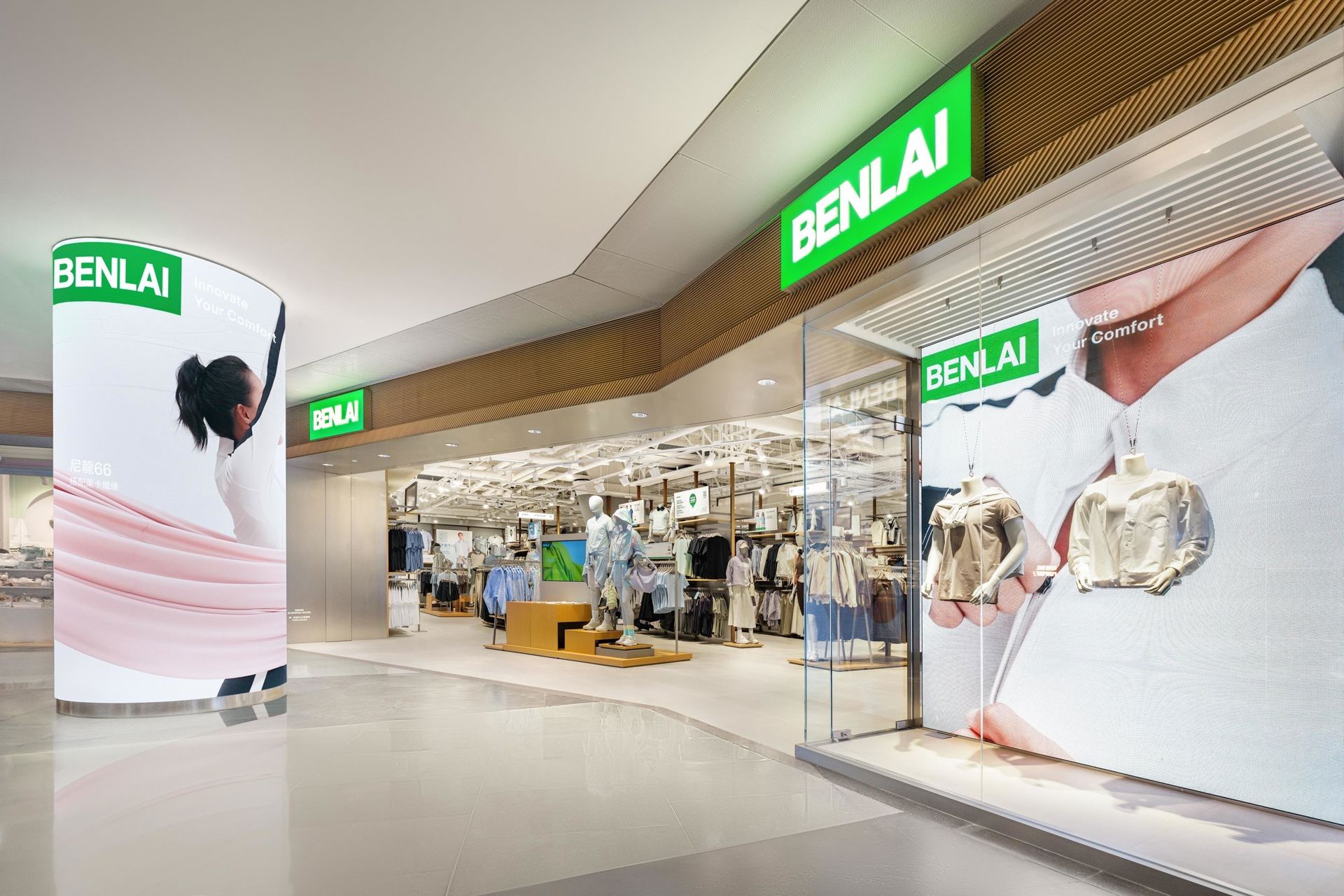
    Benlai, a Chinese brand specializing in technical apparel, has recently inaugurated its first outlet in Langham Palace, Hong Kong. This move comes as the brand’s second venture outside China, following its successful establishment in Bangkok last year, demonstrating its ongoing expansion throughout Asia.

    A Tranquil, Design-Inspired Space

    The Hong Kong store stands as a design-led, tranquil oasis amid the bustling atmosphere of the region. The exterior of the Langham Palace outlet, situated in Mong Kok, one of the most frequented and easily accessible shopping hotspots, merges warm wooden textures with a cutting-edge LED screen.

    The store’s interior employs natural materials and the brand’s signature green color scheme to create a calming ambiance, encouraging customers to unwind and take their time.

    Positioning Hong Kong as a Key Market

    Vivian Chen, CEO of the International Business Unit at FMG Group, the parent company of Benlai, maintains that Hong Kong’s unique fusion of Eastern and Western influences make it a critical fashion and lifestyle hub in Asia. After a fruitful launch in Thailand, establishing their first store in Hong Kong was a logical progression in their mission to deliver technical, comfortable fashion to a worldwide audience.

    New Store Offerings

    The store will showcase a variety of men’s and women’s apparel, as well as accessories designed for seamless transitioning between office, social, and outdoor settings, catering to all age groups. The selection will feature the brand’s Cool Breeze °C collection, characterized by quick-drying, UV-resistant, ultra-light fabrics, its plush, fluffy line, and its range of wrinkle-resistant clothing.

    Benlai has set its sights on further growth in Asia’s critical lifestyle markets, leveraging its existing network of 35 stores worldwide.

    Questions & Answers

    What is the main focus of Benlai’s offerings?
    Benlai focuses on delivering technical, comfortable fashion suitable for a variety of settings, from office environments to social gatherings and outdoor activities.

    What is unique about the brand’s new Hong Kong store?
    The new store in Hong Kong features a tranquil, design-inspired space that provides a contrast to the city’s fast-paced atmosphere. It aims to create a calming shopping experience for customers.

    What is the future plan for Benlai’s expansion?
    The brand plans to continue its expansion in Asia’s significant lifestyle markets, leveraging its already established network of 35 stores across the globe.

  • VN-Index Soars to Its Largest Gain in Four Months: Retail Market Celebrates Strong Recovery!

    VN-Index Soars to Its Largest Gain in Four Months: Retail Market Celebrates Strong Recovery!

    The index closed 32.98 points higher, rebounding from a prior drop of 7.31 points. This encouraging shift reflects a resurgence of investor confidence in the Vietnamese stock market.

    Trading volume on the Ho Chi Minh Stock Exchange surged by approximately 9.2%, reaching VND42.6 trillion (US$1.63 billion), a clear sign of renewed activity.

    Most stocks in the VN-30 basket, representing the 30 largest companies, ended the day on a high note. Four notable stocks—VJC from budget airline Vietjet, VIC from conglomerate Vingroup, SHB of Saigon Hanoi Commercial Bank, and TPB from TPBank—hit their ceiling prices, illuminating a robust market sentiment.

    However, not every blue chip could bask in the glow; FPT of tech giant FPT Corporation slid slightly, closing down by 0.4%. It’s almost as if FPT was the lone wolf at a party of jubilant investors.

    Foreign investors took a different stance, emerging as net sellers with VND10.26 trillion in sales, predominantly offloading stocks like VIC and SSI of SSI Securities Corporation.

    Meanwhile, the HNX-Index on the Hanoi Stock Exchange, which tracks mid and small-cap stocks, climbed 1.29%, while the UPCoM-Index for unlisted public companies advanced by 0.66%, demonstrating that the upward momentum was widespread.

    Questions & Answers

    What was the performance of the VN-Index on August 4, 2025?
    On August 4, 2025, the VN-Index saw a significant increase of 2.21%, closing at 1,528.19 points—its most substantial gain in nearly four months.

    Which stocks hit their ceiling prices during this trading session?
    Four stocks achieved ceiling prices: VJC of Vietjet, VIC of Vingroup, SHB of Saigon Hanoi Commercial Bank, and TPB of TPBank, highlighting a thriving market environment.

    How did foreign investors react during this trading session?
    Foreign investors were net sellers, offloading VND10.26 trillion, primarily selling shares of VIC and SSI Securities Corporation, indicating a cautious approach amidst the market’s rising trend.

  • Islamic Finance Market Set to Reach $7.7 Trillion by 2033: A Future of Growth and Opportunity

    Islamic Finance Market Set to Reach $7.7 Trillion by 2033: A Future of Growth and Opportunity

    The Islamic finance market is poised for remarkable growth, projected to reach an astonishing $7.7 trillion by 2033, according to a report by Allied Market Research. This translates to a compound annual growth rate (CAGR) of 12% over the next decade, scaling from a valuation of $2.5 trillion in 2023.

    The surge in cashless transactions and the rise of digital banking are key drivers behind this expansion. Innovations such as real-time payment systems and AI-enhanced fraud detection are not just buzzwords; they are pivotal in shaping consumer preferences and ensuring secure financial interactions. “By emphasizing risk-sharing models and providing alternatives to interest-based lending, Islamic financial institutions have been successful in reaching underserved populations, particularly in developing economies,” the report emphasizes.

    Rooted in Shariah law, Islamic finance has distinctive principles that prohibit interest (riba) and speculative practices (maysir), favoring instead profit-sharing and asset-backed financing. These concepts resonate particularly well in regions where conventional banking systems may not adequately serve the community. Governments in many Muslim-majority countries and prominent financial hubs are stepping up their support for Islamic finance, leveraging favorable policies and regulatory reforms to foster growth.

    Clear legal frameworks that align with Sharia principles are being established, creating a safe and secure landscape for Islamic banking, investment, and insurance products. “This not only enhances trust but also attracts a growing base of consumers who are seeking ethical investment options,” the report notes. It seems that Islamic finance is not just about numbers; it’s crafting a narrative where ethics meets commerce.

    However, the journey is not without its hurdles. The lack of standardization and regulatory consistency can shadow market players, while complex product structuring poses additional challenges. To navigate these waters, institutions are increasingly turning to AI-driven solutions for fraud prevention and blockchain technologies to secure transactions, ensuring smoother operations and increased consumer confidence.

    Questions & Answers

    What is the projected growth of the Islamic finance market over the next decade?
    The Islamic finance market is projected to grow to $7.7 trillion by 2033, achieving a compound annual growth rate of 12%.

    What are some key factors driving the growth of Islamic finance?
    The shift towards cashless transactions, advancements in digital banking, real-time payment systems, and AI-driven fraud detection are significant factors propelling the market.

    What challenges does the Islamic finance market face?
    Challenges include a lack of standardization, regulatory harmonization, and the complexity of product structuring. Institutions are seeking to address these issues through AI technology and blockchain for secure transactions.

  • Nobu Danang Launches Exciting Branded Studio and One-Bedroom Residences for Luxury Living

    Nobu Danang Launches Exciting Branded Studio and One-Bedroom Residences for Luxury Living

    According to Savills, the past year has witnessed a remarkable occupancy rate of over 80% for studio and one-bedroom units in primary resort areas. What distinguishes these accommodation options? A significant cost advantage, with prices 30–50% lower than those of two- and three-bedroom apartments, while rental rates remain surprisingly competitive. This potent combination is driving exceptional rental profit margins and attractive returns on investment.

    At the forefront of this trend is Nobu Danang, leveraging its globally acclaimed brand to ensure superior operational performance. As international tourism rebounds, Nobu Danang’s studio and one-bedroom units stand out for their high-yield potential and flexible size, tailored for premium short-term stays. Investors looking for sustainable, long-term strategies are likely to find enticing opportunities here.

    Promising Profit Margins on the Horizon

    Profitability projections for Nobu Danang are optimistic, with studio units anticipated to generate about 3.7% yield in the first year, given a 50% occupancy rate. As operations mature and occupancy stabilizes at around 70%, returns could rise to a robust 6.4% by year five. Similarly, one-bedroom units are projected to begin with an attractive 3.2% yield, steadily increasing to 5.5% by year five. These figures underline the stable profitability and growth prospects for savvy investors.

    Robust Revenue Estimates

    With projected rental rates starting at VND 3.8 million (US$145) per night for studios and VND 5.5 million (US$220) for one-bedroom units, cumulative profits over a decade are estimated at an impressive 59.7%—equivalent to more than VND 5 billion in revenue, excluding potential asset appreciation.

    Nobu Danang underscores that these profit margins derive from a well-structured operational strategy responsive to genuine demand for quality accommodations, rather than speculative trends. As the market enters a new phase of scrutiny, such fundamentals become increasingly vital for prudent investment decisions.

    Luxury Living for the Discerning Elite

    For business elites, a studio residence at Nobu Danang isn’t just real estate; it’s a haven that transforms high-pressure trips into rejuvenating escapes. Owners enjoy exclusive access to an array of luxurious services, including 24/7 concierge support, entry to the renowned Nobu restaurant, a serene heated infinity pool, stringent security measures, and gourmet in-residence dining prepared by a Nobu chef—all at no additional charge.

    Emphasizing Elegant Space Management

    These studio and one-bedroom residences exemplify modern, efficient living that does not compromise on space. While the market standard for studios typically hovers between 30 to 35 square meters, Nobu Danang offers a generous 38–42 square meters. One-bedroom apartments provide even more expansive options, ranging from 60.6 to 68 square meters, catering to those who seek comfort and style in equal measure.

    Elevated by refined interiors that embrace the Japandi design aesthetic—a seamless blend of Japanese minimalism and Scandinavian comfort—these units maximize natural light and ocean views, crafting spaces that feel both luxurious and refreshingly close to nature. It’s a cocoon of elegance that might make you forget the hustle and bustle outside.

    “The studio and one-bedroom units here transcend the notion of merely high-performing investment assets. They are symbols of prestige and refined taste,” a representative from Nobu Danang remarked. “Each unit serves as a private retreat, designed to enrich life’s most inspiring journeys.”

    Flexible Financial Solutions

    Nobu Danang offers tailored payment options to meet diverse financial goals. Clients may choose a standard plan with 14 scheduled installments leading up to the issuance of ownership certificates, or opt for an accelerated payment plan that offers discounts of up to 10%. To further enhance investor confidence, Nobu Danang guarantees a 6% annual rental return for the first two years, transitioning to a profit-sharing model from the third year onwards. These dynamic financial policies empower buyers to secure premium branded real estate while maximizing cash flow and minimizing risk.

    Questions & Answers

    What kind of rental yields can investors expect from Nobu Danang’s units?
    Investors can anticipate a yield of approximately 3.7% for studio units in the first year, potentially increasing to 6.4% by the fifth year. One-bedroom units are projected to achieve yields starting from 3.2% and rising to 5.5% over the same period.

    How does Nobu Danang ensure high occupancy rates?
    A combination of its prestigious brand recognition, strategic pricing, and a location appealing to both leisure and business travelers contributes to the strong demand and occupancy rates of its units.

    What amenities do owners of Nobu Danang residences enjoy?
    Owners benefit from exclusive perks, including 24/7 concierge service, access to the famed Nobu restaurant, a heated infinity pool, enhanced security, and gourmet dining options, all designed to create a unique living experience.

  • Takashimaya’s 2024 Flagship Store: Redefining Luxury Shopping In Tokyo’s Shinjuku District

    Takashimaya’s 2024 Flagship Store: Redefining Luxury Shopping In Tokyo’s Shinjuku District

    The bustling streets of Tokyo are set to welcome a new gem in the retail scene as luxury department store Takashimaya prepares to unveil its latest flagship store in early 2024. This ambitious project, situated in the heart of Shinjuku, promises to redefine the shopping landscape in the world-renowned Shinjuku Gyoen district, an area famed for its blend of urban life and natural beauty.

    Takashimaya’s impending opening is poised to captivate retail enthusiasts with its innovative blend of high-end fashion, gourmet food options, and cutting-edge technology. A striking feature of the flagship store will be its transparent escalators, offering customers a unique view of the multiple levels while they make their ascent through the store. It’s as if shoppers will be gliding up through a stylish art installation—what a way to shop!

    The design, marked by elegant lines and spacious layouts, reflects the aesthetic preferences of modern consumers who seek both luxury and comfort. The store will feature an impressive array of global brands alongside exclusive Japanese labels, ensuring that it caters to both local shoppers and international visitors alike.

    As the retail sector continues to evolve, Takashimaya’s focus on sustainability and local culture stands out. The store will incorporate environment-friendly materials and showcase products from regional artisans, highlighting Japan’s rich craft traditions. In a move designed to foster a strong community connection, Takashimaya will also offer rotating exhibitions of local artists’ work throughout the year, giving visitors a reason to return and engage with both the store and wider creative scene.

    This flagship opening comes at a time when the retail industry is rebounding from the challenges posed by the pandemic. With increased foot traffic as travel restrictions ease, Takashimaya is betting on a resurgence of luxury shopping—an experience that more than ever includes entertainment, culture, and a strong sense of place.

    The department store’s management team expresses excitement about the upcoming launch, seeing it as a pivotal moment for the brand as it not only re-establishes its presence in a competitive market but also fortifies its commitment to delivering unforgettable shopping experiences.

    As Takashimaya gears up for this iconic opening, one thing is crystal clear: the retail landscape in Asia is evolving, and this flagship store might just write a new chapter in the story of luxury shopping.

    Questions & Answers

    What makes the Takashimaya flagship store unique?
    The store will feature transparent escalators for a distinctive shopping experience along with a mix of high-end fashion, gourmet food, and technology, creating an engaging environment for shoppers.

    How does Takashimaya plan to connect with the local culture?
    Takashimaya will highlight local artisans and sustainable practices through rotating exhibitions and eco-friendly materials, thereby reinforcing its bond with the community.

    What recent trends have impacted Takashimaya’s decision to open this flagship store now?
    As the retail sector rebounds post-pandemic and travel restrictions ease, Takashimaya aims to capitalize on the resurgence of luxury shopping, merging entertainment and culture into the retail experience.

  • Italy Penalizes Shein $1.15M for Deceptive Eco-Friendly Claims: A Retail Wake-Up Call!

    Italy Penalizes Shein $1.15M for Deceptive Eco-Friendly Claims: A Retail Wake-Up Call!

    In a decisive move underscoring the growing scrutiny on corporate sustainability claims, Italy’s Competition Authority has levied a hefty fine of $1.15 million (€1 million) against Infinite Styles Services Co. Ltd, the company behind Shein’s European websites. This penalty stems from the publication of misleading environmental claims related to the fast-fashion giant’s clothing lines, sending ripples through the already tumultuous waters of ethical retail practices.

    Misleading Environmental Messaging

    The regulator’s investigation revealed that Shein relied on vague, generic, and often exaggerated assertions about its sustainability efforts on various digital platforms, particularly in sections like #SHEINTHEKNOW, evoluSHEIN, and Social Responsibility. These claims raised eyebrows, suggesting a level of environmental commitment that appeared more like window dressing than a genuine effort.

    Confusing Claims About Sustainability

    Focusing on the #SHEINTHEKNOW section, the authority criticized Shein for promoting the idea of a “circular system” and the recyclability of its products, labeling these statements as either misleading or outright confusing. Furthermore, the evoluSHEIN by Design line, advertised as utilizing “green” fibers, fell short of providing substantive information about tangible environmental benefits, all while failing to clarify that this line constitutes only a fraction of Shein’s vast product range.

    Vagueness About Emission Goals

    Among the contested claims was Shein’s assertion of cutting emissions by 25% by 2030, coupled with a goal of achieving net-zero emissions by 2050. The authority found these statements lacking in specificity and unsupported by factual evidence. Alarmingly, it noted an uptick in Shein’s emissions in 2023 and 2024. The watchdog highlighted the brand’s significant responsibility as a player in the highly pollutive fast fashion industry, suggesting that the façade of environmental stewardship does not align with actual practices.

    As consumers become more discerning and demand transparency from brands, Shein’s recent missteps serve as a cautionary tale within the retail sector, reminding companies that authenticity, rather than glossy claims, is the best policy—after all, consumers might not be quick to forgive when the trust is breached.

    Questions & Answers

    Why did Italy’s Competition Authority fine Shein?
    The fine was imposed because Shein was found to be using misleading environmental claims to promote its clothing, including vague assertions about sustainability and inaccurate statements regarding recycling and carbon emissions.

    What was misleading about the claims made by Shein?
    Shein’s claims included the promotion of a “circular system” and the recyclability of its products, which were found to be either confusing or false. Additionally, their marketing of “green” fibers in certain lines lacked clarity on actual environmental benefits.

    What has been the impact on Shein’s emissions trajectory?
    Contrary to its assertions of reducing emissions, Shein’s actual emissions have increased in 2023 and 2024, which has raised concerns about the validity of their sustainability commitments.

  • Vietjet Launches 8/8 Super Sale: Up to 80% Off Flights Plus Exclusive Hotel Discount

    Vietjet Launches 8/8 Super Sale: Up to 80% Off Flights Plus Exclusive Hotel Discount

     Vietjet is turning up the heat this August with its limited-time 8/8 Super Sale, offering travellers up to 80% off Eco fares across its entire international and domestic network. Singapore-based adventurers can now snap up incredible flight deals to Hanoi, Da Nang, Ho Chi Minh City and Phu Quoc.

    For just 23 hours, from 01:00 to 24:00 (GMT+8) on 8 August 2025, guests can enter promo code “VJ80” when booking Eco tickets or the Vietjet Air mobile app to enjoy the 80% discount (excluding taxes and fees). The promotion is valid for travel between 15 September 2025 and 27 May 2026 (terms and conditions apply).

    As a special bonus, the first 500 passengers booking international flights to Hanoi (HAN) or Van Don (VDO) during the promotion period will receive a 20% discount on a one-night stay (terms and conditions apply) at the luxurious Royal Ha Long Hotel. This offer is valid for flight bookings made between 8–15 August 2025, exclusively via Vietjet’s website or app.

    From tropical beach retreats to vibrant city adventures and cultural discoveries, Vietjet offers travellers convenient access to Vietnam’s most captivating destinations — all at exceptional value.

    Onboard, passengers can indulge in Vietjet’s signature experience featuring a modern, warm and professional cabin crew, and a mouthwatering menu of Vietnamese and international favourites including Pho, Banh Mi, iced milk coffee, and more. 

    Seats are limited –  act fast! Fly smart, save big, and discover a whole new world with Vietjet.

    A whole new world, a whole new me – Let’s Vietjet!