Author: Mei Ling Tan

  • Manchester United stars to introduce Cafe Football

    Manchester United stars to introduce Cafe Football

    Former Manchester United stars Ryan Giggs and Gary Neville will open a football-themed cafe in Singapore next year as part of a business venture with real-estate firm Rowsley.

    rmp_cafe_football_0823-1280x853-

    Gary Neville (left) and Ryan Giggs team up.

    Cafe Football is the first overseas venture for the UK franchise, which also includes Hotel Football just beside Old Trafford in Manchester.

    Cafe Football and Hotel Football were initially set up by Singaporean businessman Peter Lim along with five of the Manchester United’s “Class of 92” cohort, which includes Giggs, the Neville brothers Gary and Philip, Paul Scholes and Nicky Butt. Rowsley last year acquired the majority share of both Cafe Football and Hotel Football, as well as hotel management company GG Collections.

    The company has just revealed its intention to bring the franchise to Asia, as well as Europe, over the next decade. It has identified China and India as the main markets it is targeting for expansion.

    “We’ve been approached quite a lot by partners to expand,” says Gary Neville, who played 602 games for the club. “Knowing there’s quite a lot of excitement in the market, we’re filtering down to the best opportunities that support our brand and product.

    “So far, we’ve had fantastic reviews in Manchester, with a more than 80 per cent occupancy rate even during non-match days. Now we are looking for a UK, Europe and Asian expansion over the next 12 to 18 months to add multiple properties.”

    Neville says they hope to build more than 5000 rooms over the next 10 years. They are hoping to open in Indonesia, Malaysia and Thailand, with some developments including both a hotel and cafe, while others will be a cafe only.
    There are currently two Cafe Football outlets in the UK, in Manchester and London. The cafes feature menus divided into “defence, midfield and attack”, with dishes named after football phrases such as “The Special One”, “Mexican Wave” and “El Classico”.

    Lim previously was involved in a football-themed eatery in Singapore. Fashion brand distributor FJ Benjamin, of which Lim is a shareholder, co-owned the now-defunct Devil’s Bar, a sports pub with a Manchester United theme, at Orchard Parade Hotel.

  • M1 equips first building with fiber under FRS

    M1 equips first building with fiber under FRS

    Singapore’s M1 has been selected as the Fibre Ready Scheme (FRS) partner for property developer Ascendas-Singbridge, and has completed the first commercial fiber upgrade installation under the deal.

    The companies have equipped seven-storey integrated business park Ascent with fiber, making the Singapore Science Park facility the first FRS-enabled building.

    M1 and Ascendas-Singbridge plan to install and enhance fiber infrastructure at 70 commercial deals by 2018 as part of the alliance.

    “M1 was the first to launch commercial fiber broadband service in 2010, and we are pleased to build on that effort to partner Ascendas-Singbridge to install and upgrade the fiber infrastructure across its commercial buildings island-wide,” M1 chief corporate solutions and sales officer Willis Sim said.

    “This will enable even more corporates to rapidly enjoy M1’s innovative, competitively priced, and highly effective business connectivity service and corporate solutions such as cyber security and unified communications.”

    The FRS is an initiative of the Infocomm Media Development Authority (IMDA) as part of an S$200 million fund to help owners of commercial buildings enhance the location’s telecoms infrastructure. It involves offering a one-time subsidy to defray the costs of an upgrade.

    “With the addition of Ascendas-Singbridge’s 70 buildings, close to 200 buildings have applied for FRS to date,” IMDA assistant CEO Khoong Hock Yun said.

    “We strongly encourage more commercial building developers and owners to leverage on the FRS to enhance and future-proof its buildings’ fiber infrastructure before the program and funding ends in March 2018.”

    strongly encourage more commercial building developers and owners to leverage on the FRS to enhance and future-proof its buildings’ fibre infrastructure before the programme and funding ends in March 2018,”

  • Art feature of Gentle Monster flagship

    Art feature of Gentle Monster flagship

    Luxury eyewear brand Gentle Monster from South Korea has opened a flagship store, The Artisan, in Shanghai.

    It is on a tree-lined stretch of Huaihai Zhong Lu, an artery road in the former French Concession.

    Gentle Monster flagship - Shanghai 8

    Gentle Monster has opened several flagship stores in the past two years, in Seoul, Beijing, Hong Kong and New York City.

    Supervised by creative director Hankook Kim, the design concept for the store is loosely inspired by an artisan’s workshop, and features several rooms each with a distinctly different design. The settings are either functional or experiential, but always feature specially designed fixtures and furnishings to give each flagship store an individual touch.

    Gentle Monster flagship - Shanghai 1

    Looking more like an art gallery than an eyewear shop, it includes kinetic art that produces sound, with a multi-layered entrance.

    A feature is a motorised installment of wood and metal, appropriately named Sound Wave, that produces a repetitive dull sound with its flowing movement.

    Gentle Monster flagship - Shanghai 6

    Gentle Monster flagship - Shanghai 5With a distressed wall, the Carpenter Artisan space holds a tree trunk on its side, its top resting on a pile of bricks from a broken wall. It is dissected by metal boxes, and expresses the process of crafting via a gradual transition from tree to lumbar. Other features include a fanned “stairway” of plans, a table full of wood shavings and timber “artworks”.

    Gentle Monster flagship - Shanghai 2

    Gentle Monster flagship - Shanghai 4

    Behind the entrance ceiling light is a triangular wooden roof structure, formerly supported by the bricks that now lay under the tree in the wooden artisan space. It expresses the passion of artisans and their willingness to deconstruct and tear down in order to create something new.

    Gentle Monster flagship - Shanghai 7

    With two circular rooms, the Metal Atelier of Artisan space features lines flowing in from the stairs and the black walls, expressing the processing of metal. The larger room shows raw metal with repetitive images of pipes, while the smaller room displays polished and machined metal.

    Gentle Monster flagship - Shanghai 9

    To highlight the contrast between metal and wood, an installation inspired by the intangible sounds on the first floor features vertical boards on a stairway, indicating crafts flowing through the corridors and representing the resting mind of a troubled artisan.

    gentle-monster

    Amid all this, the Shanghai store displays the brand’s full range of prescription eyewear and sunglasses, as well as collaboration models with brands such as Hood by Air, Opening Ceremony and Six Lee.

  • Business council expects 100 thousand Russian tourists to Indonesia

    Business council expects 100 thousand Russian tourists to Indonesia

    Russia-Indonesia Business Council expects an increase in the number of Indonesian tourists to Russia and vice versa in 2016 and the coming years, in order to strengthen relations and economic cooperation between the two countries.

    A statement from the Russia-Indonesia Business Council received by ANTARA here on Thursday said that tourism was a topic of particular concern at the annual Business Forum held on October 31 in Jakarta.

    Mikhail Kuritsyn, the CEO of Russia-Indonesia Business Council, expected 100 thousand Russian tourists to visit Indonesia in the coming years, and 18 thousand Indonesian tourists to visit Russia in 2016.

    He also called for the diversification of tourism in Indonesia, so that Russian tourists would not only visit Bali Island but also other tourist destinations, which are spread across various islands in the country.

    Direct flights from Jakarta to Moscow will be the first step in enhancing the tourism cooperation.

    The national flight carrier, Garuda Indonesia, is expected to become the operator for Indonesia – Moscow flight before the second quarter of 2017.

    The Russia-Indonesia Business Forum was attended by the Russian Federation Minister of Industry and Trade, Denis Manturov; the Indonesian Minister of Maritime Affairs and Fisheries, Susi Pudjiastuti; the Indonesian Coordinating Minister for Economic Affairs, Darmin Nasution; and the Russian Federation Ambassador Extraordinary and Plenipotentiary to Indonesia, Mikhail Galuzin.

    The forum was participated by 150 delegates from Indonesian companies and 100 representatives from Russian companies, including Russian Railways, United Shipbuilding Corporation, Rosneft, Rusal, Rusnano and Rostech.

    The Russia-Indonesia Business Council is a non-governmental organization which was established to bring together Russian and Indonesian businesses.

    Its main mission was to develop a mutually beneficial business relationship in order to strengthen and expand economic trade, investment and scientific cooperation between the two countries.

  • Alibaba momentum builds ahead of Singles Day

    Alibaba momentum builds ahead of Singles Day

    Despite its already significant scale, Alibaba continues to grow rapidly, thanks in part to its acquisitions of Chinese video site Youku Tudou and e-commerce business Lazada. Much like Amazon, the e-marketplace’s success this quarter was tethered by strong support from its cloud computing operations, which increased 130% year-over-year to RMB1,493 million (US $224 million).

    “Beyond the strong performance of our core commerce business, we are pleased with the continued rapid growth of our cloud computing business,” Alibaba Group CEO Daniel Zhang said in a statement. “We also see huge potential in our newly integrated digital media and entertainment unit. By combining engaging online experiences with highly relevant content, we delivered impressive financial and operational results in the quarter across the company.”

    The company said it will continue with acquisitions that it believes will contribute to its growth, and Alibaba Group executive vice chairman Joe Tsai told investors that Alibaba’s patience with such companies will eventually pay off, according to Alibaba spokesperson Erica Matthews. Alibaba’s investment in Lazada, and Lazada’s reported acquisition of RedMart, is part and parcel of that strategy.

    “The investment cycle for incubating businesses that eventually become massive value drivers can take seven to 10 years,” Matthews said. “This is a pattern that was repeated with Taobao, Alipay and Alibaba Cloud, all of which were developed organically in-house. We believe Alibaba’s ability to remain patient and invest with a long-term view is a huge competitive advantage.”

    The conglomerate’s strong quarterly results come just ahead of its blockbuster Singles Day event. While the online shopping bonanza won’t take place until Nov. 11, the e-commerce goliath rolled out deals three weeks early, much in the same way that retailers like Amazon have launched early Black Friday promotions well ahead of the holiday.

  • Amazon coming to South-east Asia via Singapore, says report

    Amazon has plans to expand to South-east Asia, and there are signs the online retail giant is enteringhe region through Singapore, Techcrunch reported on Wednesday (Nov 2).

    Amazon is acquiring assets, and hiring new employees in Singapore, the tech news website said, citing two sources close to the company.

    There has been no official announcement by Amazon.

    The report said that Amazon may debut its Prime delivery service and its AmazonFresh grocery service, perhaps as soon as early 2017.

    Amazon’s possible South-east Asian foray comes soon after aggressive moves to enter India and China. In China, it started offering its Prime free-shipping service last month.

    Prime gives members in the US perks like free delivery and access to a growing library of videos and music.

    The US company has also pumped $3 billion more into its Indian e-commerce operation.

    Amazon’s entry to the region, if it materialises, may heat up competition in the online retail market.

    On Wednesday, Singapore-based e-commerce company Lazada announced that it will acquire Redmart, an online grocery retailer.

    Sometimes called South-east Asia’s Amazon, Lazada was started by Rocket Internet. Chinese e-commerce leader Alibaba bought a controlling stake in Lazada in April this year in a US$1 billion deal.

  • Indonesia provides free domain names for SMEs

    Indonesia provides free domain names for SMEs

    The Communications and Information Ministry is trying to propel small and medium enterprises (SMEs) into regional and global markets, by providing free domain names to help them take advantage of the country’s growing e-commerce sector.

    The government will provide the free domain names to about 8 million SMEs in all parts of the country until 2020, Communications and Information Minister Rudiantara said on Wednesday.

    In the first stage, the ministry would provide free domain names to 1 million SME customers of stateowned Bank Rakyat Indonesia (BRI) by 2018, he said. The ministry, in partnership with BRI, has also developed a digital platform for SMEs.

    “We want to speed up the [1 million free domain name] program and BRI has a lot of SME customers,” Rudiantara said on the sidelines of the signing of the memorandum of understanding (MoU) in Jakarta, adding that that it might collaborate with other companies if necessary.

    Under the current cooperation with BRI, the SMEs will be given a free domain name for a year. At present, a commercial domain name in Indonesia costs between US$10 and $20 a year.

    BRI president director Asmawi Syam said the free domain would directly involve SMEs in the e-commerce business and expand their market, while the digital platform would help transform the SMEs which are the backbone of the Indonesian economy.

    Currently, BRI has 9.5 million SME debtors in total. The program, launched in August, has managed to facilitate free domain names for 5,000 of them. As of September, BRI’s outstanding loans to SMEs stood at Rp 397 trillion ($30.4 billion).

    According to data from the Central Statistics Agency (BPS), there are more than 54.5 million SMEs in Indonesia. Accounting for around 60 percent of the country’s gross domestic product (GDP), they provide jobs for almost 99 percent of Indonesian workers.

    BRI consumer banking director Sis Apik Wijayanto explained that not all of the lender’s clients in the SME segment would participate in the program, as it was only aimed at companies with good business prospects.

    The domain names, he further said, would allow them to sell their products nationwide and even abroad.

    “If they are growing, it will be also good for BRI. When they have wider market, their turnover will increase and they will need bigger financings or loans from BRI to expand their business,” Sis said.

    The ministry’s target of 1 million domain names, he added, could be easily achieved due to the large number of BRI’s SME customers.

    The lender has been disseminating information related to the program in its 12 regional offices in 10 provinces and aiming to do so in all 34 provinces in the country. It has also provided training for its clients in Yogyakarta, and in seven cities of West Java, on how to manage a website.

  • Garuda Indonesia Posts Strong Net Income Growth in Q3

    Garuda Indonesia Posts Strong Net Income Growth in Q3

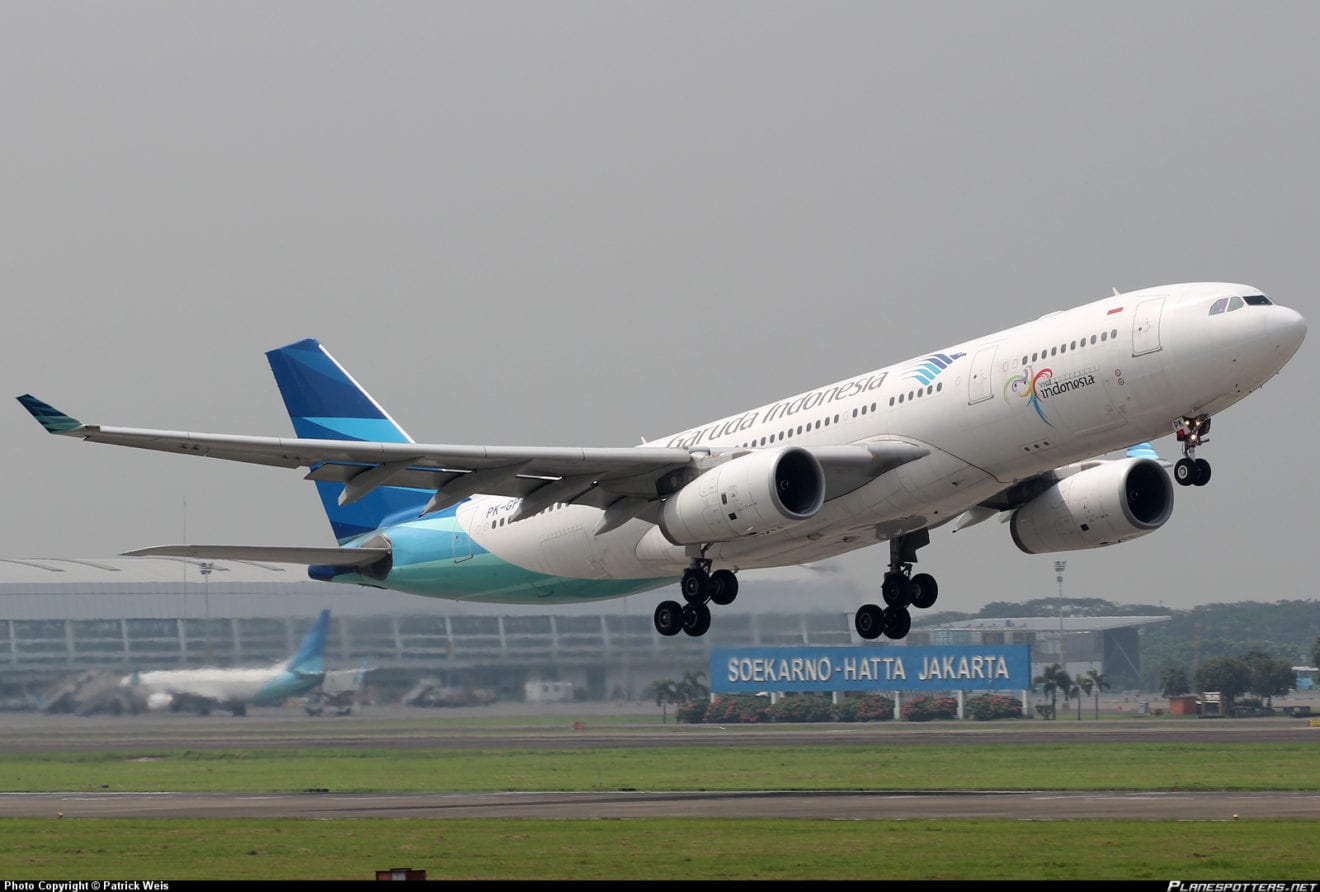
    Indonesia’s flag carrier, Garuda Indonesia, posted net income of US$19.6 million during the third quarter of this year as an outcome of the initial implementation of the ‘Sky Beyond’ strategy, with a focus on Return Maximization as well as the continuous proportional implementation of the financial efficiency policy.

    “This positive result was achieved through non-stop hard work in implementing the ‘Sky Beyond’ business expansion strategy, which played an essential role in promoting the company’s performance the quarter,” said M. Arif Wibowo, President & CEO of Garuda Indonesia, at the media conference after the regular analyst meeting, in Garuda Indonesia’s headquarters in Jakarta.

    He added that despite the highly competitive season in the aviation industry, including the global economic deceleration which affected the national economic situation, Garuda is quite optimistic of maintaining the positive growth of the company up to the end of this year.

    Arif explained that since the beginning of year 2015, Garuda Indonesia had been constantly implementing the proportional financial efficiency program. The predicted loss in the first semester of 2016 was projected to turn around in the next quarter by improving the whole performance during the peak season.

    The continuous financial efficiency program and the performance improvement in other aspects such as operational, services and commercial, are believed to have strengthened the company to achieve positive growth until 2020.

    Arif, accompanied by the entire Board of Directors of Garuda Indonesia and the president directors of the subsidiaries, also explained that the company had succeeded in increasing total revenue from US$2.845 billion in Q3 2015 to US$2.865 billion during the same period of 2016.

    Up to the third quarter of 2016, Garuda Indonesia Group (including Citilink) carried 26,043,138 passengers, which was an increase of 6.1 percent from the 24,551,594 passengers carried in the same period in 2015.
    From the total amount, Garuda Indonesia carried 17.81 million passengers (comprising 14.55 million domestic passengers and 3.26 million international passengers). Meanwhile, its subsidiary, Citilink Indonesia, transported 8.23 million passengers between January – September 2016, which was an increase of nearly 20 percent from the 6.86 million passengers carried over the same period in 2015.

    As a result of the cargo-focused strategy that commenced in early 2016 to strengthen the company’s cargo business in addition to passenger business, mainly by a new Director of Cargo who had only been serving for less than six months (a new tenure on the Board of Directors since April 2016), the amount of cargo transported in January – September period was 295,217 tons, or an increase of 14.7 percent from the same period in 2015 of 257,304 tons.

    Garuda Indonesia and Citilink’s flight frequency in the domestic and international sectors during the January – September period rose to 204,182 flights, with an increase of 9.7 percent from the same period in 2015 with 186,052 flights. In addition, Availability Seat Kilometer/ASK increased by 13.3 percent to 43.91 billion from 38.75 billion ASK in the same period of 2015.

    Despite the challenging situation in operational aspects such as the domestic flights operations at the new Terminal 3 Soekarno-Hatta in early August, and the force majeur by unpredictable weather, Garuda Indonesia also suceeded in increasing its on time performance / OTP to 90.1 percent in the January – September period, from 88.2 percent in same period last year. The seat load factor / SLF of the period was 73.4 percent, with an aircraft utilization amount of 09:12 hours.

    In line with the continuous network expansion plan, in the third quarter of 2016, Garuda Indonesia started to serve new destinations in east Indonesia, namely Nabire, which was served directly from Biak, Papua, and Maumere, which served directly from Denpasar, Bali. The opening of these new routes was a strategic step to improve the connectivity between cities in Indonesia, as well as to strengthen its network in the domestic market.

    Concerning the highly competitive situation in the aviation industry – mainly in the Asia Pacific region – which influenced both domestic and international networks, Garuda Indonesia’s market share for domestic reached 41.2 percent, and 26.7 percent for international market share.

    “We still have time to maximize the power and potency of our strategy, particularly in facing this coming end of year peak season period. We believe that we can reach the continuous positive growth in the coming years, including our strategic plan for international network expansion in the near future,” Arif added.

    Garuda Indonesia Group operates a total of 194 aircraft, consisting of ten (10) Boeing 777-300ER, twenty-five (25) Airbus A330-200/300, two (2) Boeing 747-400, seventy-six (76) Boeing 737-800NG, eighteen (18) Bombardier CRJ1000 NextGen, and fifteen (15) ATR72-600, with a 146 aircraft operated by Garuda Indonesia, and forty (40) Airbus A320 and eight (8) Boeing 737-300/500, or 48 aircraft operated by Citilink, with an average aircraft age of 4.6 years.

  • Security is key for mobile wallet adoption in Thailand

    Security is key for mobile wallet adoption in Thailand

    Whether paying with contactless cards or mobile wallets, Thais prioritize security over convenience and are more likely to use contactless payment methods when they know strong security measures are in place, according to a recent study conducted by Visa.

    The Visa Mobile Wallet and Contactless Study found that the majority of Thais (82 percent) believe security is more important than convenience when it comes to mobile and contactless payments.[1] With accelerated growth in financial technology (FinTech), public and private sectors are grappling with ways to increase consumer confidence in electronic payments, particularly when it comes to transactions carried out on mobile devices.

    The average Thai spends around 160 minutes a day on their mobile devices.[2] By the end of 2016, it is estimated that around 20 million people will own smartphones in Thailand, a figure expected to rise to 24.8 million by 2019.[3] Although internet access and mobile device ownership among Thais are on the rise, uptake of mobile financial services has been gradual, partly due to Thai consumers being unaware of advancements in cyber security, and technology. 

    Suripong Tantiyanon, Visa Country Manager, Thailand said: “Based on our study, the more secure the mobile payment experience is, the more willing Thai consumers will be to use it. We’re confident this cautious yet optimistic attitude, coupled with Visa’s multilayered approach to security, will drive the uptake of mobile transactions in Thailand.” 

    The Visa study, independently conducted by YouGov on behalf of Visa, examines Thais’ attitudes towards mobile and contactless payments alongside those of other Southeast Asian markets, namely Singapore and Malaysia. It finds that the three biggest fears in mobile wallet security are hacking of mobile phone (73 percent), theft of mobile phone (65 percent) and getting charged for unintended purchases (63 percent). 

    “Among the respondents, only 39 percent said they would consider using third-party mobile wallets. But within this particular group of potential adopters 74 percent are already aware of how encrypted tokens eliminate the risk of personal data theft,” added Mr. Suripong.

    Visa Token Service (VTS) ensures mobile and contactless payments are secure as well as convenient. VTS replaces cardholder information, such as account numbers and expiration dates, with a unique digital identifier (a “token”) that can be used for payment, via a user’s mobile wallet, without exposing the cardholders’ more sensitive account information.

    Tokenization hides consumers’ confidential account information during digital transactions, making digital payments more secure. According to the study, approximately 55 percent of Thais are familiar with VTS, with awareness highest among those that are also familiar with mobile wallet technology.

    Just under half of Thais (46 percent) believe paying with a mobile device is as safe as with physical cards; a figure likely to increase in the future, as people become more familiar with advancements in Visa’s mobile payment systems. 

    Three in five Thais (61 percent) believe that one day they will no longer need to carry a card or cash and will instead be able to use their mobile wallets for everyday spending.

    “Once Thais become familiar with innovative security measures, such as encrypted tokens, they are much more likely to use mobile and contactless payments more regularly,” said Mr. Suripong.

  • Labuan duty-free shops not ready

    Labuan duty-free shops not ready

    Shops that applied for the Customs Kedai Bebas Cukai (Duty-free Shop) licence to enable them to continue being engaged in the sale of duty-free cigarettes, liquor and beer, have not been successful in obtaining approval.

    An observation of the premises operated by the applicants showed that the applicants had failed to meet the main requirements needed before a licence could be issued.

    The three main requirements are: 1. A desk at the premises for a Customs official to be stationed to monitor the daily sales of the items. 2. A computer 3. Internet connection

    Failure to comply with these requirement will result in the application for licence not being approved.

    This was stated in a circular issued by Customs officer Hjh Mirani Hj Majidi who signed on behalf of the Labuan Customs Department Director. The circular was issued to all applicants.

    Labuan Chinese Chamber of Commerce (LCCC) Chairman Datuk Wong Kii Yii (pic) said it is obvious that the market is not ready for the implementation of the new system to monitor sales at the point of sale.

    He suggested that under the circumstances, it was best the new rules be deferred until such time when the applicants were ready to invest in the fittings and space as required by the department.

    Wong said in the meantime the department could beef up its enforcement at well-known spots on the island where contraband cargoes were loaded into small boats.

    “This will cost less money for the department than basing an official in all the duty-free shops which could be about 20.

    This is a simple solution. We support the Government and public,” said Wong. The new Customs rules on retail sales of cigarettes, liquor and beer should have been effective from yesterday (Nov 1).

    A random survey showed most of the shops were selling the items as before. Some, however, took them off their shelves for fear.

  • Nearly 30 speakers lined up for Property Report Congress Singapore 2016

    Nearly 30 speakers lined up for Property Report Congress Singapore 2016

    Singapore is the next stop of the Property Report Congress in Singapore, where the acclaimed conference series hosted by Property Report, Asia’s leading luxury real estate, architecture and design media platform, began last year.

    This year’s two-day Property Report Congress Singapore event on 23-24 November 2016 at the Shangri-La Hotel will bring together nearly 30 experts from Singapore and around around the world to discuss the current state of the region’s real estate markets.

    Crucial issues to be discussed include: the cooling measures in Singapore, infrastructure and branded projects in the Philippines, transit-oriented development and property market consolidation in Malaysia, the impact of tax and property law in Indonesia, potential oversupply in Cambodia, Bangkok’s changing urban skyline and land tax policy in Thailand, foreign investment and joint ventures in Vietnam, and affordability issues and the emerging market of Myanmar.

    Among the confirmed speakers at Property Report Congress Singapore 2016 are respected industry leaders from Asia and beyond, such as Kent Wertime, co-CEO of Ogilvy and Mather Asia Pacific, who will give the opening keynote address “Future Markets: Accessing the Next One Billion Middle Class Consumers.”

    Other panel moderators will come from eight countries of the South East Asia Property Awards, including: Simon Griffiths, senior associate director, CBRE Cambodia; Rudolf Hever, executive director, Alternaty Real Estate (Vietnam); Richard Emerson, managing director, Emerson Real Estate (Myanmar); Prem Kumar, executive director, Jones Lang Wootton; Suphin Mechuchep, managing director, Jones Lang LaSalle Thailand; Hendra Hartono, CEO, Leads Property Services Indonesia; Cyndy Tan Jarabata, president, TAJARA Leisure & Hospitality Group Inc (Philippines); and luxury expert Alexander Karolik-Shlaen, managing director, Panache Management (Singapore).

    Conference delegates will have a chance to meet and learn from Asia’s industry leaders who are redefining the property landscape in ASEAN and Asia Pacific. There will also be a dedicated panel session with the Real Estate Personality of the Year winners from Southeast Asia in 2016, including: Cambodia’s Rithy Sear, chairman of Worldbridge Group of Companies; Thailand’s Suriya Poolvaralaks, managing director at Major Development PLC; Indonesia’s Herman Nagaria, director of property and business development at PT Summarecon Agung Tbk; and Singapore’s Francis Koh, managing director and CEO of Koh Brothers Group Limited.

    As always, the opening and closing remarks will be given by Liam Aran Barnes, brand director and editor-in-chief of Property Report, while digital editor Pippa Woodhead will moderate the panel discussion featuring the Real Estate Personality of the Year 2016 winners.

    Since debuting in Singapore in October 2015, five successful Property Report Congress events have been held in Manila, Ho Chi Minh City, Yangon, Kuala Lumpur and most recently in Bangkok, which welcomed the series’ biggest audience in 2016 of about 140 delegates, speakers and media.

    Property Report Congress has been described as “a great networking event and platform for people in the real estate industry to come together and share ideas,” according to Bertil De Kleynen, sector director for Architecture, Interiors & Landscape at Atkins Global, and featured speaker at the Ho Chi Minh City conference.

    Day 1 of Property Report Congress Singapore 2016 will discuss the current state of the region’s key and emerging markets. It will run from 08:00 to 17:30 (including networking lunch and coffee break), followed by the cocktail networking reception in the evening from 17:30 to 19:00.

    Day 2 will run from 08:00 to 13:00 and include activities such as a country break-out sessions, networking lunch and networking session. Discussions on Day 2 will focus on real estate trends in 2017 and the industry’s future.

    Organised by PropertyGuru, Asia’s leading online property group, the conference will followed by the annual South East Asia Property Awards 2016 grand finals on the 24th, where around 600 of the region’s top real estate developers, executives and industry professionals will gather to reward the finest developers and projects in eight ASEAN countries.

    Property Report Congress Singapore 2016 is supported by official property portal PropertyGuru.com.sg, the country’s leading property website, and top media partners such as the Oxford Business Group and Retail Asia. OBG members are entitled to a discount of 30 percent on ticket prices.

    For registration and enquiries, email conference director at [email protected] or visit the official website: AsiaPropertyAwards.com/Congress/

  • Ciena aims to usher in age of self-driving network

    Ciena aims to usher in age of self-driving network

    Ciena has unveiled WaveLogic Ai, a programmable coherent modem that aims to serve as a  foundational enabling technology for a self-driving network.

    WaveLogic Ai sets new performance benchmarks designed to improve transport network economics and flexibility across a broad set of network applications.

    In metro and DCI applications, it drives 400G single carrier transmission with power and density metrics. In regional and long-haul networks, WaveLogic Ai establishes 200G and 300G as the new reference line rates for backbone transmission, doubling capacity and dramatically lowering cost per bit. In submarine networks, it provides maximum capacity with ultimate reach at distances up to 14,000 kilometers.

    WaveLogic Ai offers enhanced intelligence for new levels of visibility into the network that enables autonomous decisions to further improve network performance.

    Through open interfaces, it monitors and gathers critical networking data, including embedded real-time link measurements, to make intelligent capacity decisions in real time. For instance, WaveLogic Ai helps determine the optimal capacity for any path across the network and can tune to different capacity levels from 100G to 400G in 50G increments.

    WaveLogic Ai uses an advanced 400G-optimized technology engine with a higher baud rate to drive twice the capacity per channel, three times the distance at the equivalent capacity, and four times the service density at less than half the power. This scalability supports 400GE and flexible client services to best match service throughput to flexible line capacity.

    WaveLogic Ai is designed to calculate and then make available massive amounts of optical networking performance data through open interfaces that can be mined to build on-demand, programmable networks.

    To better match capacity to system margin, WaveLogic Ai provides unprecedented tweakability via open software interfaces that help drive automated and intelligent decisions to reduce operational expense and avoid manual errors.

    WaveLogic Ai provides access to real-time link monitoring information, thereby giving operators new levels of network visibility and the ability to accurately engineer the network for optimal capacity and maximum efficiency.

    The company says WaveLogic Ai will be available in the second quarter of 2017.

  • Broadcom to acquire Brocade for $5.9b

    Broadcom to acquire Brocade for $5.9b

    Chipmaker Broadcom has announced a $5.9 billion deal to acquire network equipment manufacturer Brocade to enhance its position in the storage networking business.

    The acquisition, which involves $5.5 billion in cash and the assumption of $400,000 in debt, includes the assets of Ruckus Wireless, which Brocade purchased for $1.2 billion earlier this year.

    But Broadcom has announced that it intends to divest Brocade’s IP networking business, which includes wireless and campus networking, data center switching and routing, as well as SDN. This represents a substantial part of the Ruckus Wireless assets.

    Broadcom anticipates that Brocade’s remaining fiber channel storage area network (FC SAN) business will contribute around $900 million to the company’s ebitda for its 2018 fiscal year.

    “This strategic acquisition enhances Broadcom’s position as one of the leading providers of enterprise storage connectivity solutions to OEM customers,” Broadcom president and CEO Hock Tan said.

    “With deep expertise in mission-critical storage networking, Brocade increases our ability to address the evolving needs of our OEM customers. In addition, we are confident that we will find a great home for Brocade’s valuable IP networking business that will best position that business for its next phase of growth.”

  • SingPost opens regional ecommerce logistics hub in Singapore

    SingPost opens regional ecommerce logistics hub in Singapore

    Singapore Post Limited (“SingPost”) announced the launch of its Regional eCommerce Logistics Hub (“eComm Log Hub”) located at the Tampines Logistics Park. The S$182 million facility is SingPost’s largest eCommerce logistics investment in Singapore to date.

    The eComm Log Hub is officially opened by Singapore’s Deputy Prime Minister and Coordinating Minister for Economic and Social Policies, Mr Tharman Shanmugaratnam.

    SingPost’s eComm Log Hub is a three-storey facility housing two warehousing floors, 150 simultaneous loading bays as well as an office block. The ground floor of the building houses a fully automated parcel sorting facility with a capacity of up to 100,000 parcels a day, and end-to-end sorting, shipping and returns management capabilities that enable quicker order fulfilment. The total built-up area is 553,000 square feet.

    Automation plays a big part in the eComm Log Hub – beyond the fully automated parcel sorting system on the first floor of the facility, the second floor warehouse is also automated, resulting in the entire eComm Log Hub being integrated end-to-end from the eCommerce front-end platform to delivery. The eComm Log Hub will process parcels for delivery within Singapore and those to be shipped to destinations worldwide.

    Said Mr Chua Taik Him, Deputy Chief Executive Officer of IE Singapore, “IE Singapore has been working closely with SingPost on strategies to scale its business in the region, facilitating its projects and partnerships with both brand owners and last mile fulfilment players. Given the strong growth of eCommerce in Southeast Asia, the launch of SingPost’s facility will further support its local and overseas growth. This will also enhance Singapore’s capabilities in fulfilment and facilitate more regional eCommerce trade flows.”

    The Management Team of Sephora Asia said, “This October, SingPost has begun providing us with warehousing services in Australia to handle our beauty and fragrance products. At Sephora, we believe in giving our customers a great end-to-end experience from the time they log in to the moment they receive their purchases. SingPost’s support is critical to delivering that flawless customer experience. With their new eCommerce Log Hub and great solutions like POPStations, we recognise that SingPost is propelling the eCommerce industry forward. We have found SingPost’s professionals to be very conscious of accuracy, cost and service quality.”

    Mr Simon Israel, SingPost’s Chairman, said, “The opening of our Regional eCommerce Logistics Hub is another milestone in the expansion of SingPost’s eCommerce logistics network, which now spans 19 markets across Asia Pacific, Europe and the US. Singapore’s regional connectivity makes it ideally positioned to be a centre for eCommerce. Our Regional eCommerce Logistics Hub leverages on this geographic and infrastructural advantage. Everything in this building is scalable, which means we can keep upgrading it to meet the needs of the future.”

    He added, “With the Regional eCommerce Logistics Hub, our POPStation network and our investments into technologies for new postal and logistics solutions, we are prepared for a sustainable future of car-lite cities and the sharing economy. SingPost is therefore able to shape and play a broader role in how urban logistics is done in Singapore.”

    SingPost’s Centre of Innovation

    At the opening ceremony, SingPost also launched its Centre of Innovation (“COI”).

    The COI was set up in August 2015, with support from the Economic Development Board, to carry out research into new logistics and postal services and products, in collaboration with research institutions and institutions of higher learning.

    Emphasis will be placed on new technologies such as robotics and automation to meet the needs of future customers and markets as well as becoming the tools for SingPost’s next generation of employees.

    Some initiatives now being carried out by the SingPost COI are:

     Deliver significant enhancements to the eCommerce logistics platform which will help support the smart logistics and smart nation initiative;

     Roll out a new version of the Self-service Automated Machine (SAM) platform to enhance customer experience and provide a seamless omni-channel experience encompassing the kiosk and the digital postal office;

     Bring the online and offline world of retail shopping to the SingPost mall, which will provide exciting merchant offerings and delivery options to the customer. Retail merchants will be able to experiment with unique ways of interacting with customers to boost revenue and increase loyalty;

     A digital transformation of the post office to provide customers options to transact with greater ease and pace; and

     Innovate last mile delivery options through building the next generation of POPStations and experimenting with drone delivery across the island.

  • Myanmar’s hyper growth era has ended according to Telenor

    Myanmar’s hyper growth era has ended according to Telenor

    Telenor Myanmar will shift focus towards data services as the era of rapid initial subscriber growth comes to a close.

    Telenor Myanamar CEO Lars Erik Tellmann told that the competitive environment is rapidly changing, with operators targeting internet service use.

    Since launching services in September 2014, Telenor Myanmar’s subscriber base has rapidly increased to 18 million, making the operator the second largest industry player. Myanmar’s telecoms market has been experiencing unprecedented growth after the sector was liberalized in 2011.

    But Tellmann said this growth has slowed significantly now that anybody who wants to own a SIM has now purchased one, so the fight is turning to existing customers. “Super hyper growth has flattened,” Tellman told.

    As of the third quarter, around 40% of Telenor Myanmar’s revenue was generated from data services. In a market with very low fixed line penetration and few PCs, smartphones are the primary way Myanmar consumers are accessing the internet, he said.

    Social media is helping drive increased data consumption, with Facebook, WhatsApp and Viber proving particularly popular in the market.